
Acknowledgements
My thanks go to the British Academy whose Mid-Career Fellowship award allowed me to devote time to writing and researching for this book.
Behind the scenes, Florence Hodous has been a constant help not only in checking my proofs but in assisting me in accessing obscure Chinese texts and putting her considerable linguistic expertise at my disposal.
I would like to express my appreciation for the patience and understanding of my son Oscar, who earned his degree in music from Falmouth University; my daughter Ella, who successfully completed her A levels to gain admission to Newcastle University – this all while I was selfishly engrossed in the machinations and intrigues of the medieval Chinggisids; and my wife Assumpta, whose quiet encouragement and uncomplaining support enabled me to complete this project.
Thanks also to the friends and colleagues who have offered advice, knowledge, practical help and suggestions over the years as I amassed the material for this compact little volume and whom I can blame for any mistakes and inaccuracies which might remain.
Finally a word of thanks to Alex Wright whose persistence, patience, and plauditory encouragement made this volume a reality.
|
?1167 |
Birth of Temujin (Chinggis Khan); |
|
1174 |
Temujin engaged to Borte, daughter of Daisechen of the Onggirat; |
|
1180 |
Temujin murders half-brother Bekter. Later held in captivity by Tayichi’uts |
|
1183/4 |
Borte abducted by Merkits; |
|
1187 |
Temujin defeated at the Battle of Dalan Balzhut; |
|
1198 |
Death of medieval Andalusian Islamic polymath Ibn Rushd (Averroes) (b.1126) |
|
1200 |
Accession of ʿAla’ al-Din Muhammad II, Khwarazmshah |
|
1201 |
Temujin attacked by Jamuka |
|
1203 |
Toghril forces Temujin to flee. Later returns to victory |
|
1205–87 |
Rise of Delhi Sultanate |
|
1206 |
Temujin (Chinggis Khan) proclaimed supreme ruler of the tribes at quriltai in Mongolia |
|
1207 |
Mongols annex lands of Oirats, Kirghiz and Uyghurs |
|
1209 |
Mongols invade Tangut (Xixia), followed by a peace treaty; |
|
1211 |
Mongols invade Jin (Jurchen) Empire of northern China; |
|
1215 |
Jin capital, Zhongdu, falls to Mongols; |
|
1216 |
Chinggis destroys the Merkits; |
|
1218 |
Mongol troops under Jebe occupy Qara-Khitai; |
|
1219 |
Chinggis Khan invades empire of the Khwarazmshah; |
|
1220 |
Utrar, Bokhara and Samarqand taken |
|
1221 |
Mongols take the ancient city of Merv, capital of the last Great Saljuq, Sultan Sanjar (d.1157); |
|
1221–3 |
Journey of Chang Chun from China to Hindu Kush; |
|
1223 |
Chinggis Khan returns to Mongolia |
|
1227 |
Death of Chinggis Khan. Final conquest of Xixia |
|
1229 |
Election of Ogodai as Great Khan |
|
1231 |
Death of Jalal al-Din Khwarazmshah |
|
1234 |
End of Jin resistance to Mongols |
|
1235 |
Ogodai builds walls of Qaraqorum, Mongol imperial capital |
|
1237–42 |
Mongol campaigns, under Batu, take place in Russia and eastern Europe; |
|
1238 |
Mongols take Vladimir, capital of north-east Russia |
|
1239 |
Invasion of what is now Ukraine. Kiev taken |
|
1240 |
Death of Ibn ʿArabi (b.1165); |
|
1241 |
Battles of Liegnitz and River Sajo. Battle of Mohi, Hungarian army defeated. Gran on the Danube sacked; |
|
1243 |
Battle of Kose Dagh, eastern Rum; |
|
1245–7 |
Journey of John of Plano Carpini to Mongolia |
|
1246 |
Election of Guyuk as Great Khan |
|
1248 |
Death of Guyuk |
|
1250 |
Mamluks seize effective power in Egypt, under the amir ʿIzz al-Din Aybak (r.1250–57); |
|
1250 |
Death of Frederick II; |
|
1251 |
Election of Mongke, Tolui’s son, as Great Khan |
|
1252–79 |
Conquest of Song dynasty in southern China by the Mongols |
|
1253–5 |
Journey of William of Rubruck to Mongolia |
|
1253 |
Hulegu’s forces set off for Persia |
|
1254 |
ʿIzz al-Din Aybak assumes full powers in Egypt; |
|
1255 |
Death of Batu, first khan of the Golden Horde |
|
1256 |
Hulegu takes Assassin castles in north Persia. Fall of Alamut; |
|
1257 |
Accession of Berke, Khan of the Golden Horde; |
|
1257–8 |
Failed Mongol invasion of Dai Viet (Vietnam); |
|
1258 |
Fall of Baghdad to Hulegu. Death of last ʿAbbasid caliph |
|
1259 |
Death of Mongke; |
|
1259 |
Mamluk Qutuz assumes power in Egypt |
|
1260 |
Ket Buqa invades Syria with a small force, then withdraws. Battle of Ayn Jalut. Rival quriltais elect Qubilai and Ariq Buqa as Great Khan: civil war ensues; |
|
1260 |
al-Malik al-Zahir Baybars I al-Bunduqdari assumes Mamluk throne; |
|
1261 |
Byzantines re-take Constantinople from Crusader ‘Latin’ Empire |
|
1261/2 |
Outbreak of warfare between Hulegu and Berke |
|
1264 |
Qubilai victorious over Ariq Buqa |
|
1265 |
Death of Hulegu, first Ilkhan. Accession of Abaqa |
|
1266 |
Building begins at new Mongol capital of China, Khanbaliq |
|
1267 |
Death of Berke, Khan of the Golden Horde |
|
1271 |
Marco Polo sets off for China, with his father and uncle; |
|
1272 |
Qubilai adopts Chinese dynastic title, Yuan |
|
1274 |
First Mongol expedition against Japan; |
|
1276 |
Hangzhou, capital of the Song Empire, falls to Mongols |
|
1277 |
Mongol invasion of Pagan |
|
1279 |
End of Song resistance to Mongols; |
|
1281 |
Second Mongol expedition against Japan |
|
1285–8 |
Mongol invasion of Dai Viet |
|
1287 |
Rabban Sauma, a bishop and Qubilai Khan’s envoy, dispatched to Tabriz and then sent to Europe by Ilkhan Arghun |
|
1292–3 |
Mongol expedition to Java |
|
1294 |
Death of Qubilai. Arrival of John of Monte Corvino in China; |
|
1295 |
Accession of Ghazan as Ilkhan. Mongols in Persia become Muslim |
|
1299–1300 |
Major Mongol invasion of Syria: briefly occupied by Ilkhanid forces |
|
1300 |
The appearance of a small tribe of Turks, who would become the Ottomans; |
|
1304 |
Death of Ghazan. Accession of Uljaytu |
|
1313 |
Accession of Özbeg, under whose rule the Golden Horde becomes Muslim |
|
1325–54 |
Travels of Ibn Battuta |
|
1326 |
Ottomans capture Bursa; |
|
1335 |
Death of Abu Saʿid, last Ilkhan of line of Hulegu |
|
1346 |
Outbreak of Black Death in Mongol force besieging Caffa, in the Crimea; from there it spreads to Europe |
|
1353–4 |
Major outbreak of disease in China |
|
1368 |
Mongols driven from China by Ming forces |
|
1370 |
Death in Qaraqorum of Toghan Temur, last Yuan emperor |
|
c.1378 |
Emergence of Timurlane; |
|
1381 |
Timurlane takes Herat |
|
1385 |
Timurlane takes Tabriz |
|
1387 |
Timurlane takes Isfahan and Shiraz |
|
1389 |
Battle of the Field of Blackbirds in Kosovo; |
|
1393 |
Timurlane occupies Baghdad |
|
1396 |
Ottoman victory over European forces at the Battle of Nicopolis |
|
1398–9 |
Timurlane invades India, takes Delhi |
|
1405 |
Death of Timurlane; |
|
1453 |
Mehmed Fatih (the Conqueror) captures Constantinople; |
|
1478 |
Ivan III throws off Mongol suzereinty |
|
1498 |
Vasco de Gama rounds the Cape of Good Hope |
|
1501 |
Sultan Ismaʿil Safavi assumes power in Tabriz; |
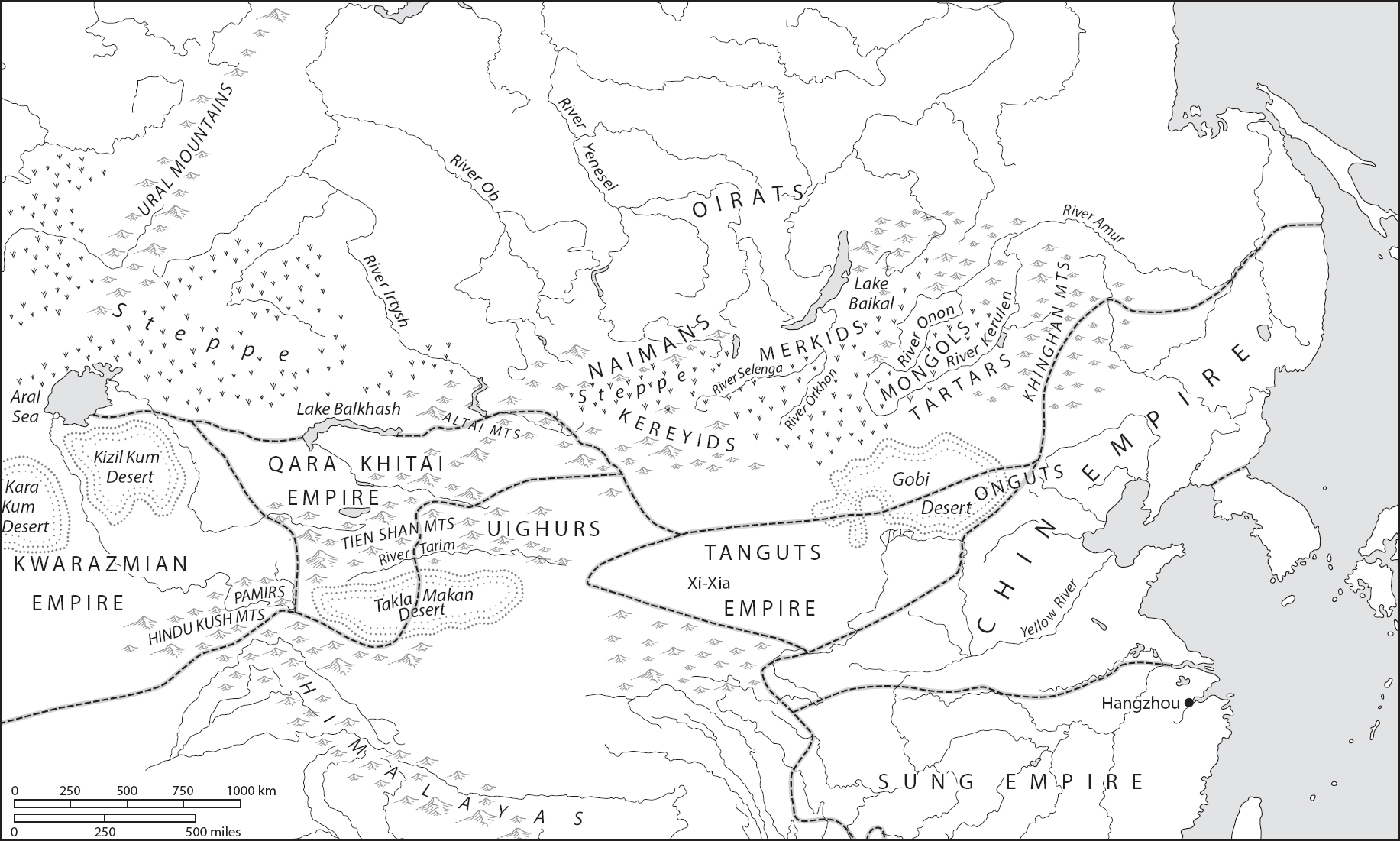
Map 1: Turco-Mongol tribes and their neighbours c.1200 on the eve of the irruption of Chinggis Khan in 1206
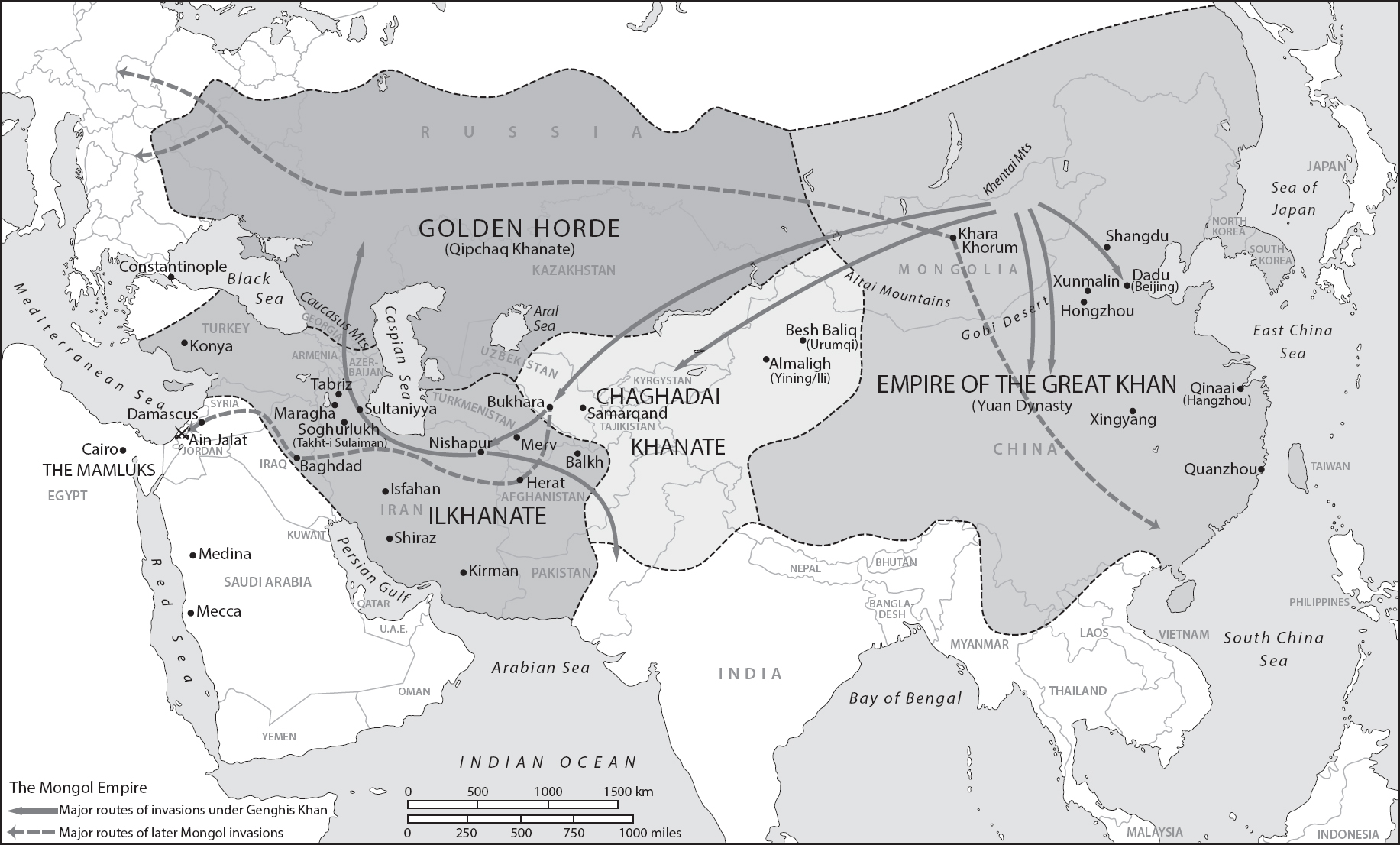
Map 2: The Chinggisid Empire and its Khanates c.1280
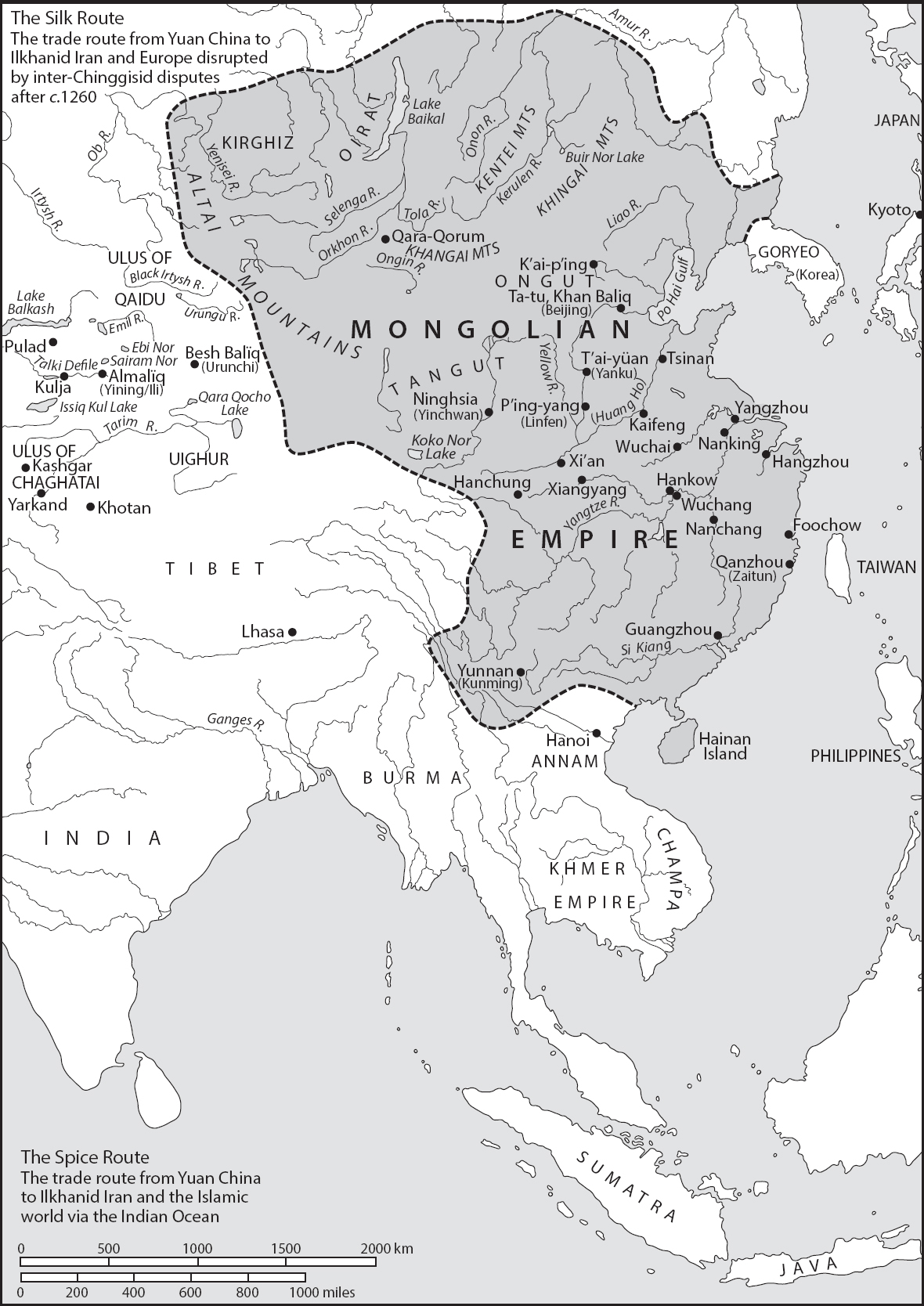
Map 3: The Yuan Empire 1261–1369, founded by Qubilai Khan after the fall of the Song in 1279
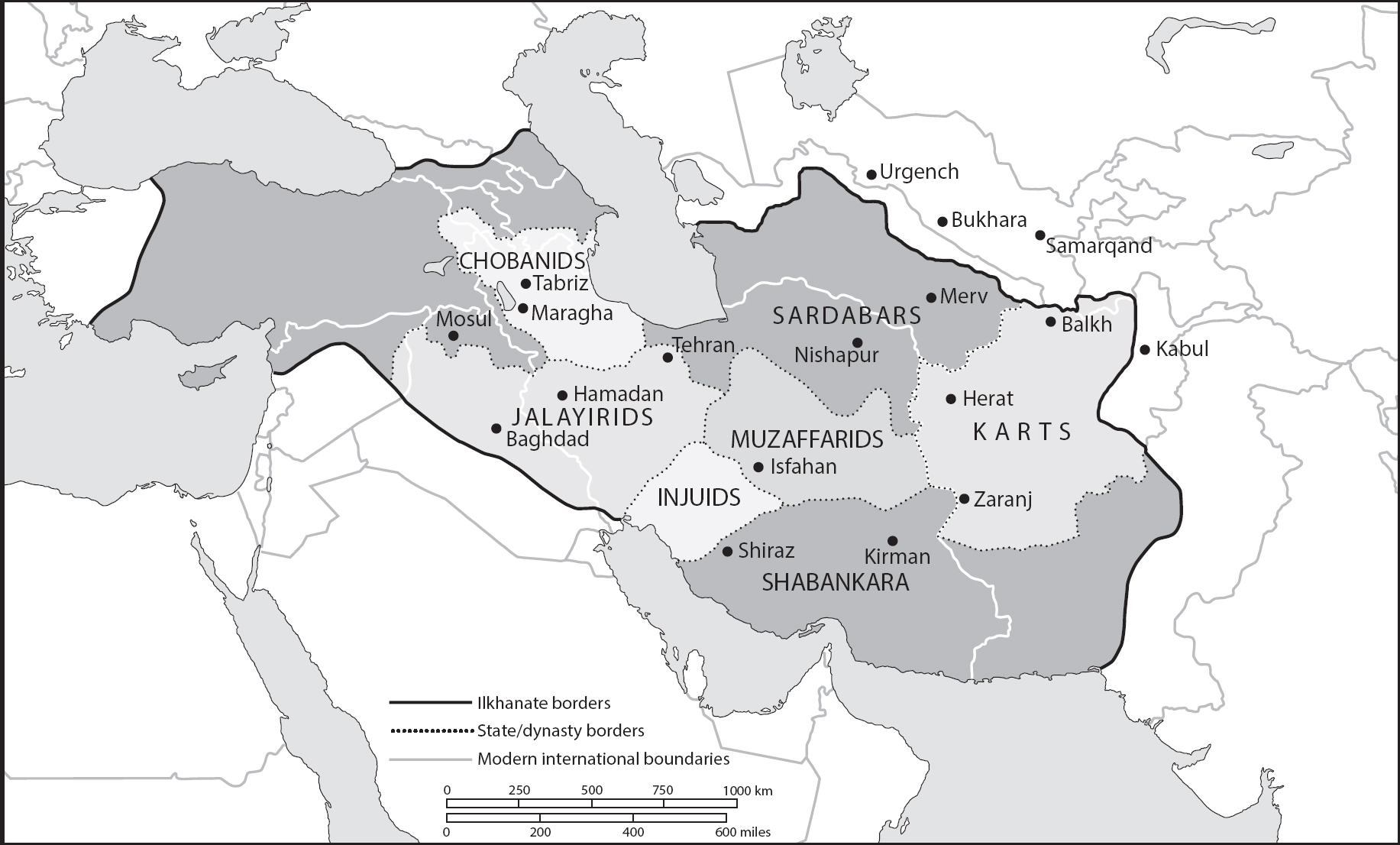
Map 4: Post-Ilkhanid Iran: the mini-states that emerged after the collapse of the Ilkhanate in 1335