
On 29 September Colonel Ugo Cavallero presented his four-point plan for an Italian offensive. Speed, surprise and the minimum forces for maximum results, all of which constituted the fourth point, led to the decision to focus on the Veneto plain. Cavallero’s plan foresaw an attack along twenty kilometres from the Montello salient to the islets of Papadopoli, with the main thrust being Ponte della Priula-Conegliano-Vittorio Veneto so as to divide the adversary’s 6th Army from its 5th. This plan was immediately modified by General Enrico Caviglia, commander of the 8th Army, the main agent of the attack on the Piave, who wanted to cross the river at more points so as to reduce risk. He also extended the attack further north to Vidor and moreover suggested, and received approval for, diversionary attacks by the 4th Army (General Giardino) on Mount Grappa. Diaz accepted the general thrust of this plan, though in his update of 13 October he added that the 4th Army on the Grappa was to be ready to receive orders to reach the Primolano-Arten line. He created two small armies, the 10th and the 12th. The former, under the command of Count Frederick Rudolph Lambert of Cavan, a British General, was to be inserted on the right of Caviglia’s 8th Army, while the latter, under the command of General Jean-Cesar Graziani, a Frenchman, was to be inserted on Caviglia’s left.
On the very day that Diaz presented his plan Germany announced that it was ready to accept an armistice on the basis of Wilson’s fourteen points. On 16 October the end of the Dual Monarchy was officially recognized by the Emperor Karl. Clearly, the Italian offensive had to get underway, and quickly. Yet the Piave was flowing too strongly (2-3 metres per second) for an attack to begin in the planned direction. All attention was therefore turned to Mount Grappa. In the new plan dated 21 October Diaz’ immediate objective was now the Primolano Arten Feltre line (4th and 12th Armies under the command of the former). Everything had to be ready for the evening of 23 October. But this meant that there were now two plans: one for the Grappa, the other for the Piave. It also meant that there was little time to adequately prepare what was now a full-scale offensive on the Grappa. On 20 October Wilson declared that his fourteenth point (the autonomy of peoples in Austria-Hungary) had been overtaken by events and that it was now up to those peoples themselves to decide their future. Non-German-speaking units on the Italian front began to dissolve, as the right to self-determination had now superseded talk of federation. Two days later a Croat brigade on the Grappa refused to go into the line, while the day after that, on the Altopiano dei Sette Comuni, two Hungarian divisions rebelled, declaring that they wanted to return home to defend their country against Serbia. By the morning of 24 October Hungary was independent. There was effectively no Austrian or Hungarian government, and, as Rajecz Stephan von Burian had resigned, no Foreign Minister.
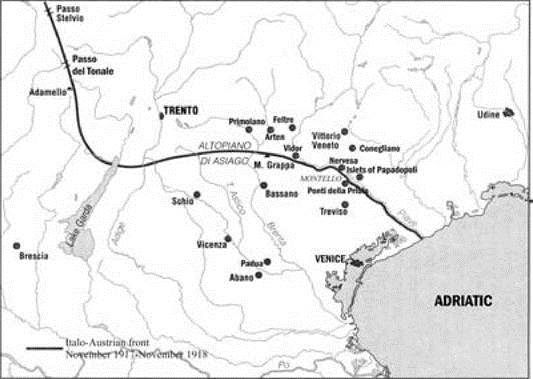
Figure 7.2 The final year November 1917 - November 1918
When the Italian offensive finally began on the Grappa on 24 October the political circumstances to which it responded meant that Italy paid dearly both in human and political terms. On the plain it heavily outnumbered the adversary: between Vidor and the islets of Papadopoli about twenty divisions were facing nine, while 3,570 pieces of artillery were up against 835. On the Grappa, however, it was an altogether different story, since eleven divisions and 1,385 pieces of artillery faced eight front line divisions and three reserve divisions, plus 1,460 pieces of artillery. With rain and fog having exacerbated already badly aimed artillery fire, Italian troops on the Grappa went over the top at 07.15 on 24 October. The names of the Asolone, the Pertica, the Prassolan, the Col della Berretta, the Col del Cuc, the Valderoa and the summits of the Solaroli are associated with heavy fighting that led to nothing. By 26 October it was evident that if victory was to be achieved it could only be on the Piave. Cavan’s men in fact gained control of the islets of Papadopoli that day, though more serious manoeuvres were blocked by the fast-moving river. Meanwhile, the Austro-Hungarian Empire continued to disintegrate. Reserve troops were beginning to rebel, particularly Hungarians and especially the marching formations. On 28 October the peoples of the Empire learnt that the alliance with Germany had been broken, that a separate peace had been proposed to Wilson, and that Czechoslovak and Yugoslav independence had been recognised. The 26th reserve division (Czech) refused to carry out the order to attack Cavan, and in the 6th Army, stationed further north, more and more front line troops rebelled.
On the evening of 29 October the whole of Caviglia’s 8th Army could finally cross the river at Nervesa and at the Ponti della Priula. But there was to be no major battle. Orders from the Austro-Hungarian General Staff to counter-attack against the British failed due to low troop numbers (only eight battalions) and refusal. Only on the Grappa was there any resistance. BoroeviC advised the Austrian High Command to inform the Italians that he intended removing his troops from the Veneto. However, at this stage there was no effective army whose retreat could be organized. When the Italian Bisagno and Sassari brigades entered Conegliano the strategic objective of the offensive had been reached: the Austro-Hungarian 6th and 5th Armies had been separated on the plain. In the back lines the enemy formations dissolved and at Pola its navy declared non-belligerency. The Austrians called a halt to hostilities at 03.30 on 3 November, and the armistice was signed at 15.00 that same day, to become operative twenty-four hours later. This latter stipulation gave the Italians the time to round up retreating Austro-Hungarian soldiers. In the meantime, Trieste was occupied by sea without resistance (Mangone, 1987: Ch. 7 and Appendix pp. 191-8 for the complete texts of Cavallero’s and Diaz’ plans dated 2 September and 12 October 1918 respectively; Cervone, 1994: Chs 4-5; Isnenghi and Rochat, 2000: 460-62; Schindler, 2001: 297-311).
All this meant that there were no enemy forces to confront the 8th Army once it had crossed the river. Where, then, was the military ‘victory’, so vital for the consecration of Italian territorial ‘rights’ as per the Pact of London, to be found? Certainly not on the Grappa where the Italians had been fought to a standstill. What the Grappa offensive did offer, however, was a serious fight which, if linked to the crossing of the Piave, would lend greater credibility to the ‘victory’ on the plain. Yet to achieve this link it would need to be demonstrated that the Grappa offensive was subordinated to the one on the Piave. This explains the desperate 29 October telegram from Orlando to Diaz.
I believe it opportune that the cycle of our actual offensive be brought to 24 October. It seems to me that the link can be easily accounted for in terms of the need for strong pressure on the enemy in the mountain zone as a necessary preparation for the action on the Piave. The reason for which it has so far been unmentioned can be easily attributed to motives of strategic discretion, that is so as not to let the enemy know of the real nature of our intentions. This concept can be explained in supplementary communications of the Command, organizing their diffusion not only among Italian correspondents but above all foreign ones. I do not need to explain the importance of this backdating of our offensive in relation to the increasing news of an imminent armistice. (Quoted in Melograni, 1969: 505)
According to Caviglia’s re-elaboration of Cavallero’s original plan this was in fact the case, as the offensives on the Grappa were deemed purely diversionary. But by the time the 8th army had crossed the Piave it was clear that the offensive on the Grappa was no longer secondary. As Pier Paolo Cervone (1994: 179-80) points out, a problem with characterizing the Grappa offensive as subordinate is that 67 per cent of all Italian, French and British casualties, that is 25,000 out of 37,461, were on that mountain.
Before coming back to Mussolini, it is worth briefly examining Diaz’ 4 November victory bulletin, which dated the battle from 24 October onwards, hence linking the Grappa battle with the more general ‘victory’. Interestingly, Diaz stressed neither the Grappa nor the Piave, preferring to highlight the ‘highly daring lightning advance of the XXIX army corps on Trento, blocking the retreat routes of the enemy armies in the Trentino’. Victory is here associated with the rounding up of retreating, non-combative enemy troops, and the ‘collapse of the enemy front’ is then said to have been ‘determined’ in the west by the 7th Army and in the east by the 1st, 6th and 4th Armies. In other words, the ‘highly daring lightning advance’ moved westward towards the Trentino, not eastward towards Conegliano and Vittorio Veneto. The truth is that the 1st Army, of which the XXIX corps was a unit, suffered only 292 dead and the 7th Army only forty. The 6th lost more (567) but only began operations on the Altopiano on 1 November. None of this bore comparison with the losses of the 4th Army on the Grappa. The emphasis on the ‘highly daring lightning advance’ in the Trentino and the manner in which it ‘determined the collapse of the enemy front’ did have the benefit, however, of inventing a victorious military offensive and removing the ‘victory’ from the area where British and French troops were involved. Indeed, it should be noted that in the final battle the most significant progress was made by the 10th Army under Cavan, who arguably commanded the crossing of the Piave. Granted, both the 12th and 10th Armies are mentioned in the bulletin alongside the 8th Army of Caviglia. ‘From the Brenta to the Torre’, it states, ‘they continue to push back the fleeing enemy’. But when all the forces of the British, French, Czechoslovak and American contingents are totalled (three divisions, two divisions, one division and one regiment respectively), they are greatly overshadowed by the fifty-one Italian divisions mentioned in the same line. Victory, in Diaz’ bulletin, is an essentially Italian, royal and military affair, the last of these being especially evident in the fact that the government, the population and the navy are not cited (Isnenghi, 1989: 62-6; Isnenghi and Rochat, 2000: 462-4, esp. n. 71). The King and the Duke of Aosta are the only two people mentioned. The former is said to have guided the army to victory when at no stage in the war had he commanded the armed forces. As regards Aosta, he had a relatively negligible role in the final battle and appears in the bulletin to affirm that the 3rd Army was ‘returning to the positions previously conquered, and which it had never lost’. This was an allusion to the Duke’s blamelessness in relation to Caporetto, since, as we have seen, the 3rd Army retreated without having been defeated on the Carso. At the time of the Caporetto rout Diaz himself was commander of the XXIII army corps, which formed part of the 3rd Army. Diaz’ bulletin is therefore a potion of rhetoric and exaggeration: apart from the ‘highly daring lightning advance’, he grossly augmented the number of enemy divisions (declaring seventy-three when there were only fifty-seven) by including transferred or dissolved divisions, and counting as divisions some brigades stationed between the Stelvio and Lake Garda (Cervone, 1994: 232). All this combined with a massive geographical shift from the river to the mountains in order to establish a military ‘victory’ where there was none.
In what way can Mussolini’s writings of this period aid our understanding of the character of Italy’s ‘victory’ in November 1918 and its subsequent codification in the Diaz bulletin? As the final battle began Mussolini was unaware of any attack having begun on the Grappa. His 24 October piece, which called on Italy to ‘Give back Caporetto’ to the Austro-Hungarians one year to the day after the defeat, was undoubtedly written on 23 October and hence was oblivious of any offensive (OO, XI: 436-8). But even articles published on 25, 26 and 27 October knew nothing of the fighting on the Grappa. All were dedicated, rather, to Germany’s requests to America for peace and Wilson’s diplomatic but negative response to them. What is clear from these articles, however, is that Mussolini was for the rejection of a diplomatic armistice and for the resolution of the conflict on the battlefield (OO, XI: 439-41, 442-3, 444-6). Even when he discussed the Italian offensive on 29 October he did not mention the Grappa, focusing all attention on the crossing of the Piave. Other major concerns were, however, also aired. First, there is the date of the beginning of the offensive, which Mussolini tied in with the dramatic events of the previous year: ‘On 24 October 1917 it was the enemies who from Plezzo to Tolmino broke through our lines and reached the inviolate and inviolable Piave; on 24 October 1918 it is the Italians who move to the attack, placing their feet once again on the soil contaminated by the barbarian and hunting away the invader.’ Secondly, like Diaz, whose victory bulletin spoke of the Austro-Hungarian Army as ‘one of the strongest armies in the world’, Mussolini was keen to establish the strength of the enemy faced by the Italians once they had finally crossed the water. He wrote: ‘The Austro-Hungarian army still represents perhaps the only efficient force among all those upon which the Danubian empire rests.’ Unaware of (and most likely unconcerned about) the facts, he stated also that ‘the merit of our troops is increased by the fact that they find themselves faced with an enemy that is not disbanding’. Finally, he thanked the High Command ‘for having taken note of the moral discomfort which, little by little, with the exchange of various “notes” [between Wilson and the Central Powers], was making itself felt among conscious and hopeful public opinion which “rightly” feared that a possible armistice would take us by surprise on the Piave, with the enemy on our soil’ (OO, XI: 447-8).
On 31 October he dealt with Austria-Hungary’s requests to Wilson for an armistice. He asked why the Emperor had turned to the United States ‘instead of to Diaz or Franchet d’Esperey’. His answer was that they did so ‘to avoid confessing their military defeat to the world . . . Our enemies intend to defraud us of our military victory’ (OO, XI: 449-51; Mussolini’s emphases). The following day, Mussolini’s article mentioned the offensive on the Grappa but in such a way as to separate it from what was happening on the east bank of the Piave. He noted that the Austro-Hungarian war bulletins spoke of Austro-Hungarian victory on the Grappa given that the Italians had failed to make a breakthrough on that mountain, but that their tone changed once the Italians had managed to cross the river. In other words, Mussolini’s perception of the Grappa offensive was not that of a preparatory manoeuvre to facilitate the Piave offensive, but of another action whose effective failure was secondary in any case to the victory on the Piave. He was, however, keen to establish that even on the Piave the Austro-Hungarians were continuing to put up a hard fight:
The Austro-Hungarians have not ‘fraternized’. They have fired off thousands of cannons and unleashed thousands of machine guns. After bitter fighting they have been overcome. Our advance is not but the consequence of our success achieved with living force; that is with living blood, at extremely high risk and with a daring and superb tenacity. The military rout may determine the collapse in morale of the whole Austro- Hungarian army, but till now the phenomenon is of a military character. (OO, XI: 452-3)
The territorial corollary of this ‘military victory’ was not long in coming. On 1 November Mussolini wrote that ‘it is with the sword that Italy will enter Trento, Gorizia, Trieste, Pola, Fiume and Zara. It is with blood that Italy marks her borders on the Alps and again baptizes as nostrum the no longer “bitter” Adriatic’ (OO, XI: 454). On 3 November he argued that ‘the consequences of this event, even from the point of view of our relations with the Slav world which will share borders with us, are incalculable’ (OO, XI: 455-7). On 7 November Mussolini’s insistence on Italy’s territorial rights as a consequence of ‘victory’ brought him into contact with that all-important geographical shift effected in the Diaz bulletin. From the British press he had found a number of quotations from Austro-Hungarian bulletins between 26 and 28 October. In order to establish that the enemy had fought to the bitter end, and hence that Italy’s ‘victory’ was of a military character, we find Mussolini journeying through the Grappa, not the plain: ‘The one of 26 October reads: “To the east of the Brenta the desperate struggle continued until the early hours of the morning. The sector of combat was again Mounts Asolone and Pertica, which fell several times into enemy hands but which were reconquered by our counter-attacks . .. The conduct of our fine soldiers was beyond all praise.”’ Mussolini went on: ‘Another enemy bulletin of 28 says: “In the mountains and to the east of the Brenta (Grappa front) the battle raged with equal intensity all day.” Having narrated the phases of the struggle around Col Aprile, the Asolone, the Pertica and the Spinoncia, the Austrian communique of 28 October declares: “The conduct of our troops was absolutely equal to that of the previous battles.”’ Mussolini claimed that this proved ‘the character of the battle which was taken up and won by the Italian army’. At the very end of the article the reader was alerted to the fact that ‘the world is watching us and so are the combatants of the Piave!’ (OO, XI: 464-5). But this is the only time the river is mentioned in this piece.
When it came to consecrating territorial claims with the Italian dead, Mussolini would later find more evidence in the mountains and on the plateaus than on the water. On 1 February 1919 he responded to a Manifesto of Serb intellectuals circulated at the Paris conference, which gave Serbia credit for the defeat of Austria due to the rebellion of the Viennese Caesar regiments. Against this Mussolini quoted the Austro-Hungarian war bulletins which showed the tenacity and sacrifice of the Italian troops between 24 and 31 October as decisive at the so-called Battle of Vittorio Veneto. His point was that the Serb regiments only ‘rebelled’ once they had been defeated by the Italians at the cost of 30,000 Italian dead. He concluded his article: ‘Dead, magnificent dead of the Grappa, of Montello, of the Pertica, of the Solarolo, of the Asolone, of the Col Rosso, and all you dead of 40 months of war do you not hear? The peoples who have seen their freedom flower from your blood today insult you. Today they throw the stones of their profound profanation on your graves. Today they try to dirty your flags and your glory’ (OO, XII: 187-92). It is important to note here that in order to highlight Italy’s high casualty rates Mussolini pointed almost exclusively to the Grappa (Pertica, Solarolo, Asolone), the Altopiano dei Sette Comuni (Col del Rosso) and the west bank of the Piave (Montello, no doubt in reference to the June 1918 defence of the Piave). The east bank of the Piave, where the ‘victory’ purportedly took place, is again unmentioned.
It is therefore evident that in 1918 Mussolini still understood the war as offensive in both political and military terms. In order to safeguard the territorial ambitions contained in the Pact of London and beyond it had to culminate in an Italian military victory which would undo the Caporetto defeat. Yet as we have seen, there was also a domestic social dimension to the San Sepolcro programme. How was this dealt with by Mussolini in the last year of the war? Interestingly, Mussolini paraphrased a section of the Diaz bulletin, replacing the defeated external enemy with the enemy within. The Diaz bulletin reads: ‘The remnants of what was one of the strongest armies in the world climb back in disorder and without hope through those valleys which they had descended with such proud surety.’ On 6 November Mussolini wrote that ‘the enemies of Italy are in full rout. The remnants of what was official Italian socialism climb back without hope through the valleys that they had descended with such proud surety with the stupid and criminal illusion of “Caporettozing” the magnificent people of the new Italy’ (OO, XI: 461-3). It is to the implications of Mussolini’s treatment of the internal enemy after Caporetto that we now turn in the final chapter.