
I. PREHISTORY
|
|
||||
|
PERIOD |
MESOPOTAMIA |
TECHNICAL AND |
||
|
DATES |
NORTH |
SOUTH |
||
|
|
||||
|
c. 70000 |
MIDDLE |
Barda Balka |
Neanderthal hunter-gatherers living in caves and rock shelters. |
|
|
Shanidar D |
||||
|
Hazar Merd |
||||
|
35000 |
||||
|
UPPER |
Shanidar C |
Homo sapiens sapiens. Improvement and diversification of stone implements. Wider food spectrum. |
||
|
25000 |
||||
|
(Hiatus) |
||||
|
12000 |
||||
|
Shanidar B2 |
||||
|
Zarzi. Palegawra |
||||
|
9000 |
||||
|
MESOLITHIC |
Shanidar B1 |
Microlithic tools and weapons. Obsidian imported. Bone work. First clay figurines. First groups of dwellings. Beginnings of animal domestication. |
||
|
Zawi Chemi Shanidar |
||||
|
8000 |
Karim Shehir |
|||
|
Mureybet |
Bus Mordeh |
|||
|
7000 |
||||
|
NEOLITHIC |
Jarmo |
Ali Kosh |
Progressive domestication of animals and edible plants. Villages. Invention of pottery. First baked bricks. |
|
|
6000 |
||||
|
CHALCOLITHIC |
Umm Dabaghiuah |
Use of copper. First mural paintings. Irrigation agriculture. First seals. First temples. Decorated luxury ware. Clay and alabaster figurines. Wide use of brick. |
||
|
HASSUNA |
||||
|
5500 |
SAMARRA |
|||
|
HALAF |
OUEILI (Ubaid O) |
|||
|
5000 |
ERIDU (Ubaid 1) |
|||
|
Choga Mami |
||||
|
4500 |
HAJJI MUHAMMAD |
|||
|
NORTH UBAID |
SOUTH UBAID |
|||
|
4000 |
Tepe Gawra |
el-‘Ubaid, Ur |
Temples and houses of increasing size and complexity. |
|
|
3750 |
and numerous other sites |
and numerous other sites |
Terracotta sickles and pestles. |
|
|
URUK PERIOD |
||||
|
Tepe Gawra |
Urbanization. Potter's wheel. Swing-plough. Sail. Metal work (bronze, gold, silver). First cylinder-seals. Invention of writing (c. 3300). Development of sculpture. Expanding trade. |
|||
|
Qalinj Agha, Grai |
Uruk, Tell ‘Uqair |
|||
|
ANCIENT BRONZE |
||||
|
Tell Brak |
--------------------- |
|||
|
3000 |
NINEVEH V |
JEMDAT NASR |
||
|
Early Dynastic I |
SUMERIAN CIVILIZATION |
|||
|
2700 |
City-states. Fortified towns. Development of writing. |
|||
|
Early Dynastic II |
Administrative archives from Fara and Abu Salabikh. |
|||
|
HISTORIC |
||||
|
2500 |
Early Dynastic III |
|||
|
|
||||
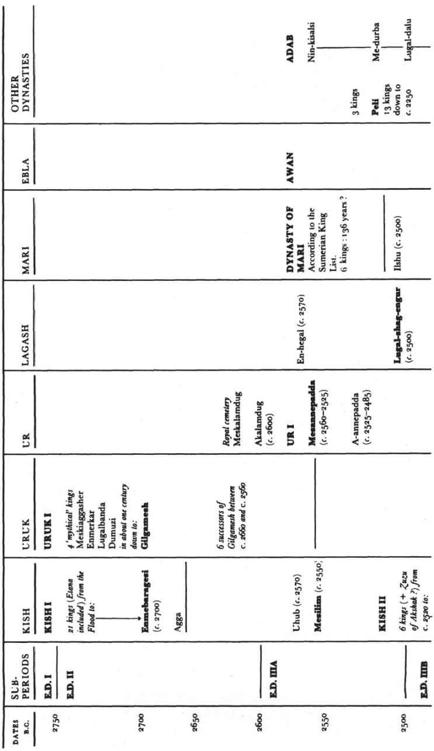
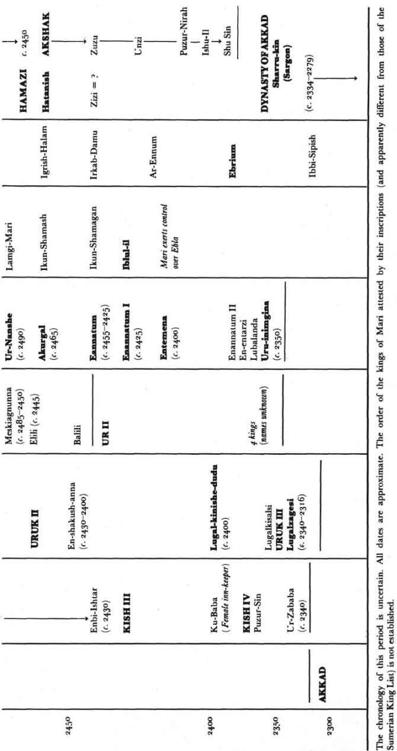
II. EARLY DYNASTIC PERIOD (c. 2900 – 2384 B.C.)
III. DYNASTIES OF AKKAD, GUTIUM AND UR III (c. 2334–2004 B.C.)
|
|
|||||
|
DATES |
AKKAD/UR |
URUK/ISIN |
GUTI/LARSA |
LAGASH |
MARI |
|
|
|||||
|
DYNASTY OF AKKAD |
Lugalzagesi |
||||
|
Sharru-kîn (Sargon) |
Sargon takes Mari and Ebla |
||||
|
2300 |
Rimush (2278–2270) |
||||
|
2250 |
Narâm-Sîn (2254–2218) |
|
Narâm-Sîn conquers |
||
|
2200 |
Shar-kalli-sharri |
DYNASTY OF GUTIUM |
SHAKKANAKKU |
||
|
Anarchy |
URUK IV |
The Guti invade |
ENSI OF LAGASH |
Nur-Mêr |
|
|
2150 |
|
Ur-nigina (2153–2147) |
Gudea (2141–2122) |
Ishkun-Addu |
|
|
UR III |
URUK V |
Tiriqan (x-2120) |
Apil-Kin |
||
|
Ur-Nammu (2112–2095) |
|
|
|
||
|
2100 |
GOVERNORS OF LAGASH VASSALS OF UR |
||||
|
Shulgi (2094–2047) |
Ur-Ninsuna |
Iddin-Ilum |
|||
|
2050 |
Amar-Sîn (2046–2038) |
DYNASTY OF ISIN |
DYNASTY OF LARSA |
Ir-Nanna |
Puzur-Ishtar |
|
2000 |
Fall of Ur (2004) |
Emisum (2004–1977) |
Lagash becomes independent |
Hanun-Dagan |
|
|
|
|||||
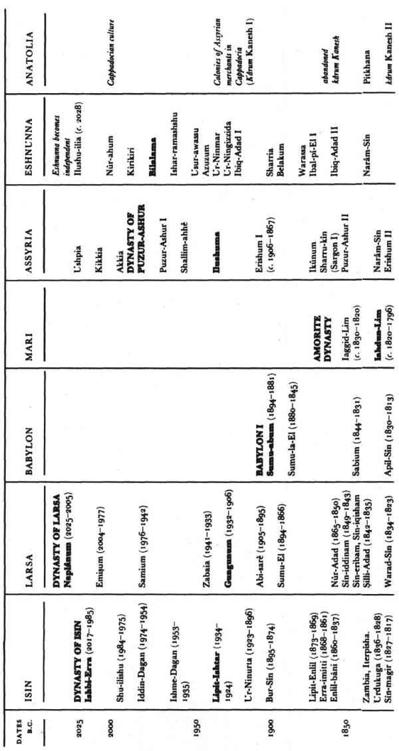
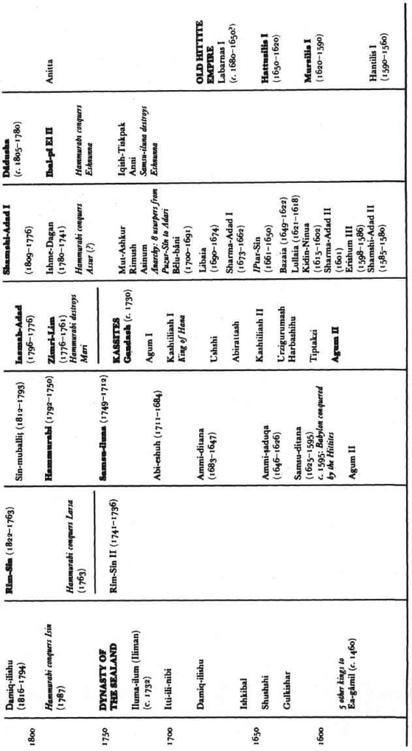
IV. ISIN-LARSA, OLD BABYLONIAN AND OLD ASSYRIAN PERIOD (c. 2000 – 1600 B.C.)
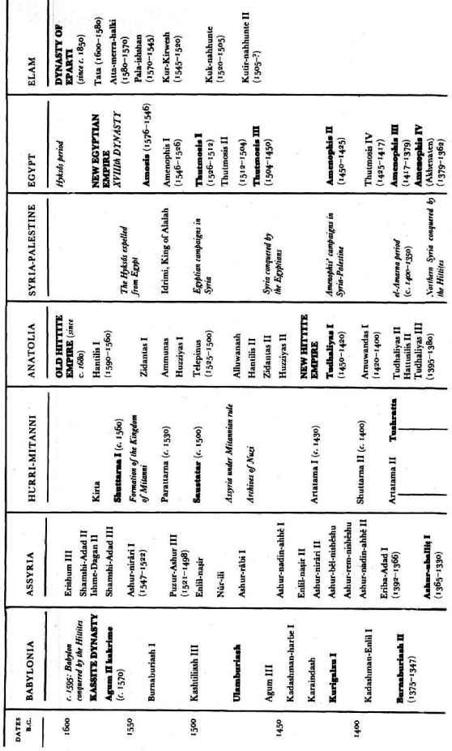
V. KASSITE PERIOD (c. 1600 – 1200 B.C.)
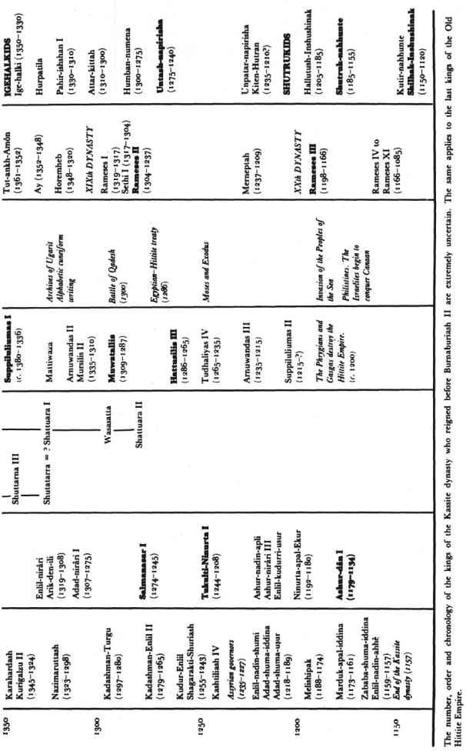
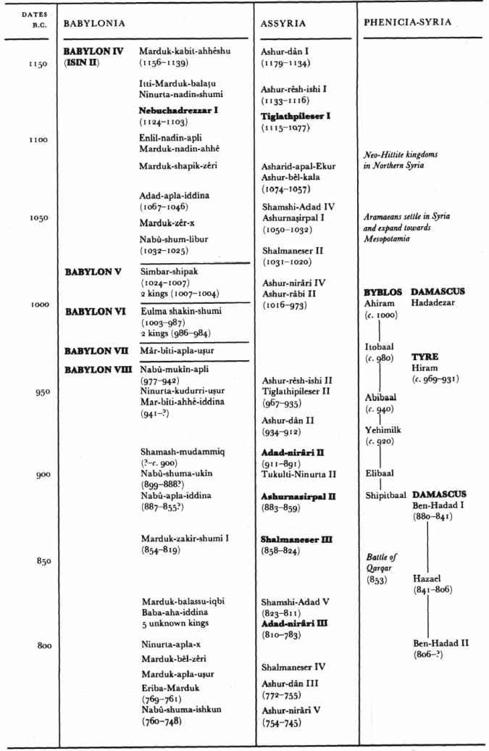
VI. MIDDLE BABYLONIAN AND MIDDLE ASSYRIAN PERIODS (c. 1150 – 750 B.C.)
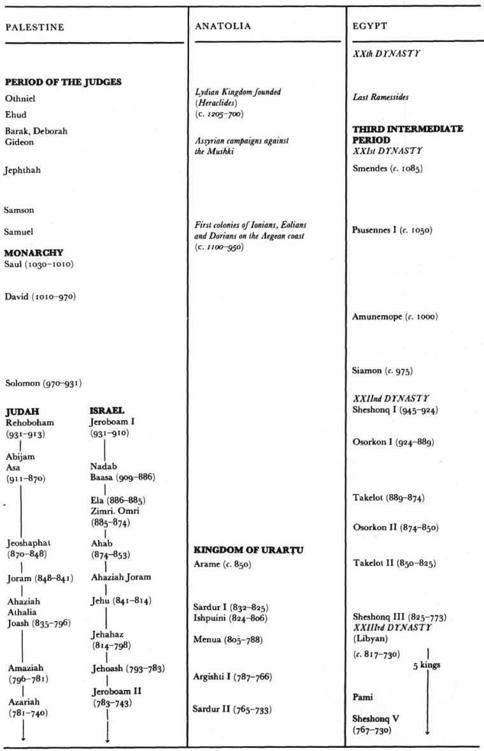
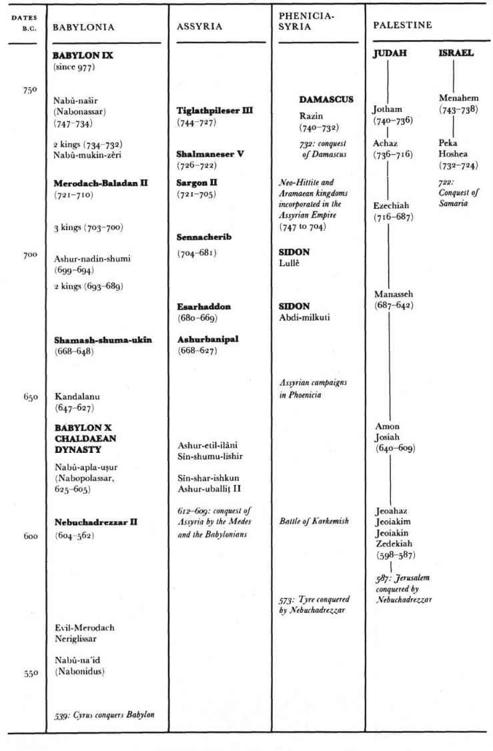
VII. NEO-ASSYRIAN* AND CEO-BABYLONIAN PERIODS (744–539 B.C.)
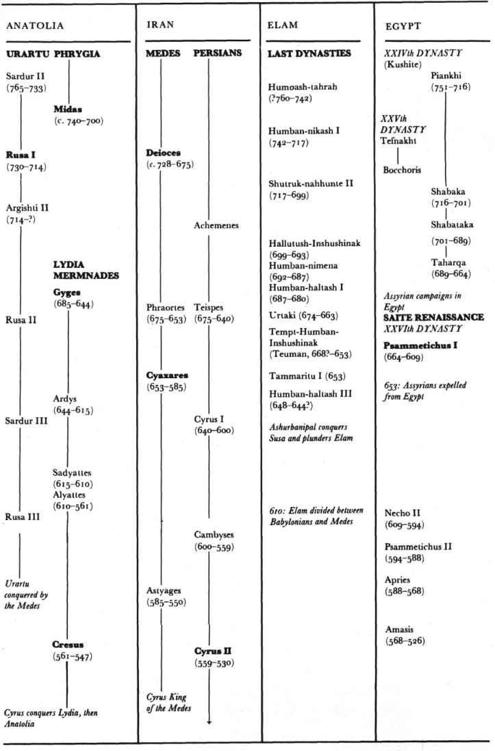
VIII. ACHAEMENIAN AND HELLENISTIC PERIODS (539–126 B.C.)
|
|
|||
|
DATES |
GREECE |
IRAN |
MESOPOTAMIA |
|
|
|||
|
Solon, archon (since c. 620) |
ACHAEMENIDS (since c. 700) |
||
|
550 |
539: Cyrus conquers Babylon |
||
|
Pisistratus (tyrant) (539–528) |
Cambyses II (530–522) |
ACHAEMENIAN PERIOD Revolts of Nebuchadrezzar III and Nebuchadrezzar IV (522–521) |
|
|
500 |
Median wars (490–478) |
Xerxes I (485–465) |
Revolts of Bêl-shimanni and Shamash-erîba (482). Xerxes sacks Babylon |
|
Artaxerxes I (464–424) |
c. 460: Herodotus in Babylon? The Murashû family, bankers at Nippur (455–403) |
||
|
450 |
Pericles (strategus) (443–430) |
||
|
Peloponnesian war (431–404) |
Darius II (423–405) |
Nabû-rimânni and Kidinnu astronomers |
|
|
400 |
Artaxerxes II (404–359) |
401: Xenophon in Babylonia |
|
|
Philip of Macedonia (359–337) |
Artaxerxes III (358–338) |
||
|
350 |
Alexander the Great (336–323) |
Darius III (335–331) |
Gaugameles (331), Alexander enters Babylon and dies there in 323 |
|
DIADOCHI |
HELLENISTIC PERIOD |
||
|
300 |
c. 300, Seleucia-on-the-Tigris founded |
||
|
Antiochos I (281–260) |
Last royal inscriptions in Akkadian (Antiochos I) |
||
|
Antiochos II (260–246) |
Berossus writes the ‘Babyloniaca’. |
||
|
250 |
ARSACID PARTHIANS |
||
|
Seleucos II (245–226) |
Tiridates I (248–211) |
||
|
Antiochos III (222–187) |
Temples built in Uruk |
||
|
200 |
Artabanus I (211–191) |
||
|
Antiochos IV (175–164) |
Mithridates I (171–138) |
Greek theatre at Babylon |
|
|
150 |
Demetrios II (145–126) |
Artabanus II (128–124) |
144: Mithridates founds Ctesiphon Demetrios reconquers Babylonia |
|
Antiochos VIII (126–96) |
Mithridates II (123–88) |
126: Artabanus II snatches Babylonia from the Seleucids |
|
|
100 |
PARTHIAN PERIOD |
||
|
Orodes I (80–76) |
Assyria repopulated |
||
|
Antiochos XIII (69–65) |
Phraates III (70–57) |
Kingdoms of ADIABENE |
|
|
50 |
Crassus defeated at Carrhae (Harran) (53 B.C.) |
||
|
|
|||
IX. PARTHIAN AND SASSANIAN PERIODS (126 B.C.–637 A.D.)
|
|
|||
|
DATES |
ROME |
IRAN |
MESOPOTAMIA |
|
|
|||
|
50 |
Caesar and Antony |
||
|
Phraates IV (37–2) |
38: Labienus' war against the Parthians |
||
|
ROMAN EMPIRE |
|||
|
A.D. |
|||
|
Tiberius (14–37) |
Artabanus III |
||
|
Caligula (37–41) |
|||
|
50 |
Vologazes I (51–78) |
||
|
Nero (54–68) |
Foundation of Hatra |
||
|
Vespasian (70–79) |
Pacorus II |
74/75: Last known cuneiform text |
|
|
Trajan (98–117) |
|||
|
100 |
Osroes (109–128) |
Temple of Gareus at Uruk (c. 110) |
|
|
Hadrian (117–138) |
114–117: Trajan’s campaigns in Mesopotamia takes Ctesiphon and reaches the Arabo-Persian Gulf |
||
|
Antoninus (138–161) |
Mithridates IV |
||
|
150 |
Marcus Aurelius (161–180) |
Vologazes III |
Kingdom of HATRA |
|
Commodus (180–192) |
164: Cassius, legate of Syria, conquers Nisibin and Ctesiphon |
||
|
Septimus Severus |
Vologazes IV |
197: Septimus Severus conquers Ctesiphon Caracalla murdered at Carrhae (Harran) |
|
|
200 |
Caracalla (211–217) |
Artabanus V |
SASSANIAN PERIOD |
|
Alexander Severus |
Ardeshir I |
226: Ardeshir conquers Mesopotamia |
|
|
250 |
Valerian (253–260) |
240: Ardeshir destroys Hatra |
|
|
Aurelian (270–275) |
Bahram II |
262: Odenath (Palmyra), allied to the Romans, marches on Ctesiphon |
|
|
Diocletian (285–305) |
|||
|
300 |
Narses (293–302) |
296: War against Narses, then peace. Rome gains provinces in Mesopotamia |
|
|
Constantine (312–337) |
Shapur II |
||
|
Constantius II (337–361) |
338–350: Wars, then peace between Constantius and Shapur II. |
||
|
350 |
The Romans invade Mesopotamia, then withdraw because of starvation. |
||
|
Julian the Apostate |
|||
|
Jovian (363–364) |
Jovian evacuates Roman strongholds in Northern Mesopotamia. |
||
|
Theodosus (379–395) |
Bahram IV |
Floruit of Christian literature in Syriac at Edessa, Nisibin and Arbela (Erbil) |
|
|
400 |
BYZANTINE EMPIRE |
Yezdegerd I |
Intermittent wars between Byzantines and Sassanids. Economic decline of Mesopotamia. |
|
651 |
637: Beginning of the conquest of Mesopotamia by Moslem Arabs. |
||