
23
PEACE DOES NOT APPEAR SO DISTANT AS IT DID. I HOPE IT WILL COME SOON, AND COME TO STAY; AND SO COME AS TO BE WORTH THE KEEPING IN ALL FUTURE TIME.
ABRAHAM LINCOLN
Speech to the Springfield rally, September 3, 1863
 URING HIS FIRST TWO YEARS AS PRESIDENT, LINCOLN TURNED DOWN all invitations to speak outside Washington. He believed he could not spare the time away; as he expanded his role as commander in chief, he wanted to stay close to the White House and the War Department in order to communicate with his generals and monitor the ebb and flow of military battles.
He broke his silence in 1863 in response to a deafening volley of criticism. The contest for public opinion escalated in May as rallies were organized in Detroit, Indianapolis, New York, and other Northern cities to protest Lincoln’s handling of the arrest and trial of Vallandigham. Copperheads led the way, but conservative Democrats, who did not approve of the actions of the Ohio congressman, saw this episode as an opportunity to attack an administration weakened by defeats at Fredericksburg and Chancellorsville. On May 19, 1863, Erastus Corning, wealthy iron manufacturer, railroad owner, and conservative Democratic politician, forwarded to Lincoln the “Albany Resolves,” ten resolutions from a boisterous public meeting in Albany, New York, on May 16. The resolutions called upon the president to “be true to the Constitution” and “maintain the rights of States and the liberties of the citizen.”
Lincoln could easily have been defensive at the tone of the protests but as a political leader, he realized they presented an opportunity for him to make his case, not simply to a local group of New York Democrats, but to a national audience. He replied to Corning on May 28, 1863, that he intended to “make a respectful response.”
By the early summer of 1863, Lincoln began to take considerable care in drafting his “public letters.” Although he worked hard in the last days of May on his response to Erastus Corning, he told Congressman James F. Wilson of Iowa that when he started to write the letter, “I had it nearly all in there,” pointing to the drawer in his desk, “but it was in disconnected thoughts, which I had jotted down from time to time on separate scraps of paper.” Lincoln was referring to the notes to himself he had been writing for decades. He told Wilson it was by this method that “I saved my best thoughts on the subject.” He added, “Such things often come in a kind of intuitive way more clearly than if one were to sit down and deliberately reason them out.”
A measure of Lincoln’s seriousness was that he took the unusual step of bringing his letter to a cabinet meeting on June 5, 1863. Lincoln read it in its entirety, which, at more than 3,800 words, would have taken at least twenty-five minutes. Navy Secretary Gideon Welles wrote in his diary, “It has vigor and ability and with some corrections will be a strong paper.” One week later, on June 12, Lincoln mailed the letter to Corning, sending it at the same time to Horace Greeley’s New York Tribune, which published it on June 15.
Lincoln began his letter not with confrontation but with commendation. He lauded those who met in Albany for “doing their part to maintain our common government and country.” He described their intention as “eminently patriotic.” He sought to stand with them in their commitment to the Union. “My own purpose is the same.” Lincoln sounded like he was back in Illinois putting the arguments of the opposing lawyer in their own words. He emphasized their common purpose at the very moment when his opponents were seeking to incite division. He lowered his voice even as his opponents were raising theirs. He finally joined the fray when he said, “The meeting and myself have a common object, and can have no difference, except in the means or measures for effecting that object.”
The “except” was the transition to the purpose of the letter. The “means” became the occasion for Lincoln’s disquisition on the meaning and proper interpretation of the Constitution. The supplicants “assert and argue, that certain military arrests and proceedings following them for which I am ultimately responsible, are unconstitutional. I think they are not.”
Lincoln, in this public letter, did not allow his opponents to set the agenda. Although he had addressed the question of civil liberties in his message to Congress in July 1861, Lincoln now used Corning’s complaints to put the issue into a much larger context. He started with what he declared were the real origins of the war. “The insurgents had been preparing for it more than thirty years, while the government had taken no steps to resist them.” The South, he argued, had set out on “an unrestricted effort to destroy Union, constitution, and law,” whereas the government was “restrained by the same constitution and law, from arresting their progress.”
Once the war started, everyone, including the South, knew that there must be detentions to thwart the actions of “a most efficient corps of spies, informers, suppliers, and aiders and abettors.” They fully understood, Lincoln said, that habeas corpus would be suspended, and then his opponents would set up a “clamor” of protests. Lincoln’s only apology, ironically, was that “thoroughly imbued with a reverence for the guaranteed rights of individuals, I was slow to adopt strong measures.”
At this point, Lincoln made a telling comment on the judicial system. He argued that the courts worked well in peacetime for cases involving individuals, but in “a clear, flagrant, and gigantic case of Rebellion,” the ordinary courts were often “incompetent” to deal with whole classes or groups of individuals. By way of example, he said it was common knowledge in the first days after his inauguration that many leading officers, including Robert E. Lee, Joseph E. Johnston, and John B. Magruder, were about to defect from their military obligations to the Union. In hindsight, Lincoln said, they could have been arrested as traitors. If this had been done, “the insurgent cause would be much weaker.” Lincoln declared, “I think the time not unlikely to come when I shall be blamed for having made too few arrests rather than too many.”
When Lincoln turned to the case of Ohio Peace Democrat Clement Vallandigham, he argued that the resolutions from Albany had it all wrong. The former Ohio congressman “was not arrested because he was damaging the political prospects of the administration, or the personal interests of the commanding general; but because he was damaging the army, upon the existence, and vigor of which, the life of the nation depends.” It was his attack on the military that gave the military “constitutional jurisdiction to lay hands on him.” Lincoln even offered to review the case if it could be shown that Vallandigham “was not damaging the military power of this country.” He knew his opponents had no such proof.

Lincolns letter to Erastus Corning, the first of a number of public letters published in newspapers across the country in 1863, allowed Lincoln to communicate his views on the meaning of the Civil War to a wider public.
To embody his logic, Lincoln offered one of his favorite literary devices—a dramatic contrast: “Must I shoot a simple-minded soldier boy who deserts, while I must not touch a hair of a wiley agitator who induces him to desert?” One of Lincoln’s great agonies in the war was signing off on an execution order as the punishment for desertion. Lincoln brought into sharp focus not simply the sympathetic picture of the “soldier boy,” but a portrait of a Copperhead fomenting such desertions. Lincoln’s term “wiley agitator” stuck with the public. “I think that in such a case, to silence the agitator, and save the boy, is not only constitutional, but withal, a great mercy.” Lincoln’s opponents had been arguing for justice for Vallandigham; he inverted their argument by putting the focus on the real victims, young soldiers, and calling for the Christian virtue that was higher than justice—mercy. This empathic figure immediately became the “sound bite” of his public letter.
At this point, Lincoln pasted a scrap of paper to his draft, wanting to use an argument that probably had been sitting as a note in his desk drawer for some time. He invoked Democratic president Andrew Jackson in order to make his case against his Democratic critics. Lincoln grew into political manhood in steadfast opposition to Jackson. He may have chuckled as he brought into his letter an episode that followed Jackson’s victory over the British at New Orleans in 1815. Lincoln recounted how, after the battle was over, the hero of New Orleans “maintained martial, or military law” by making a number of crucial arrests.
Lincoln understood that his critics were foisting upon the public the notion that the president was changing the understanding of the Constitution and the rule of law in American society. He was at pains to disabuse them of the notion that “throughout the indefinite peaceful future” the American people will lose the basic freedoms enumerated in the Bill of Rights. Lincoln would not admit this danger because he was not able to believe “that a man could contract so strong an appetite for emetics during temporary illness, as to persist in feeding upon them through the remainder of his healthful life.” Where were the government printer, John D. Defrees, and the National Intelligencer literary editor, James C. Welling, who both had tried to talk Lincoln out of indelicate language in previous communications? One of the marks of Lincoln’s communication skills was his ability to combine in the same speech or public letter various styles of language and analogies that helped him appeal to a wide audience.
Lincoln wrote his letter to Corning at a time of rapidly diminishing confidence in himself and his administration. He knew he needed to calm the fears of the nation. Even though he thought the letter to be one of his best efforts, he must have been surprised by the responses to it. John W. Forney, editor of the Washington Chronicle, wrote, “God be praised the right word has at last been spoken by the right man, at the right time, and from the right place. It will thrill the whole land.” It was “timely, wise, one of your best State Papers,” was the response of New York senator Edwin D. Morgan. Roscoe Conkling, born in Albany, one of the founders of the Republican Party in New York who had been defeated for reelection to Congress in the fall of 1862, wrote to thank Lincoln for a letter that “covered all essential ground in few words, and in a temper as felicitous and timely, as could be.” Secretaries Nicolay and Hay recalled, “There are few of the President’s state papers which produced a stronger impression upon the public mind.”
Wanting this letter to be read by as wide an audience as possible, Lincoln had John Nicolay send it to leading Republicans. Francis Lieber, law professor at Columbia, and president of the recently formed Loyal Publication Society of New York, wrote Lincoln telling him that he was planning to print an initial installment of ten thousand copies. “The Publication Society will do it with great pleasure.” At least five hundred thousand copies of the public letter to Corning were read by upward of ten million people. The letter served to damp down, for the moment, the pervasive despair and fear across the North. Most important, it lifted Lincoln’s standing among members of his own Republican Party. Comfortable with pen and ink, and perhaps surprised by the results of the letter, Lincoln learned an important lesson about public communication that he would apply again and again in the coming months.
The letter did not, however, put an end to dissent. On June 25, 1863, Lincoln received a delegation from Ohio who came to protest the treatment of Vallandigham. They were coming fresh from a June 11 state Democratic convention where they had nominated Vallandigham, in absentia, for governor. David Tod, the present Republican governor of Ohio, had written Lincoln on June 14, “Allow me to express the hope that you will treat the Vallandigham Committee about to call on you with the contempt they richly merit.” Tod did not know Lincoln.
The lobbying group arrived with the advantage of having read the Corning letter. They were more strident in their criticisms of Lincoln than their New York co-belligerents. Cabinet secretaries Chase and Stanton, both Ohioans, having witnessed the positive reactions to Lincoln’s public letter to Corning, advised the president not to reply to the committee in person, but to tell them he would write a public letter.
Lincoln, buoyed up by the response to the Corning letter, was much more forceful in his letter to Matthew Birchard and the Ohio delegation. He challenged their misrepresentations of his previous comments on the subject. He disputed their “phraseology calculated to represent me as struggling for an arbitrary personal prerogative.” As for Vallandigham, Lincoln went further than he had in the Corning letter, charging that the acts against the military were “due to him personally, in a greater degree than to any other one man.” In his conclusion, Lincoln offered to return Vallandigham to Ohio, provided each member of the delegation would sign a pledge “to do all he can to have the officers, soldiers, and seamen of the army and navy, while engaged in the effort to suppress the rebellion, paid, fed, clad, and otherwise well provided and supported.”
The delegation would not accept this responsibility. They replied on July 1, 1863, that to do so would be at the “sacrifice of their dignity and self-respect.” They offered a defensive response to a president who was now on the offensive. In this second public letter, Lincoln again forcefully enunciated his principles, which began to win the day with Unionists across the North.
IN MAY 1863, Lincoln studied the framed and rolled-up maps in his office. In the East, Joseph Hooker had been beaten at Chancellorsville. In the West, Grant was stalled, and Lincoln did not know where, near Vicksburg. The president knew that Lee’s next high-stakes gamble was yet to be revealed.
By the middle of 1863, Lincoln had settled into a pattern of leadership both as commander in chief and, in effect, general in chief. Halleck may have held that title, but Lincoln had decided to ride both horses with a tight rein. As irritated as Lincoln may have been with “Old Brains’s” passivity, Halleck’s inaction created space for Lincoln’s action.
During the next two months, two decisive battles would be fought in the war’s eastern and western theaters. In Washington, the gaunt man in the White House often worked eighteen hours a day, walking back and forth to the War Department several times daily.
Lincoln typically downplayed his contribution. He closed a letter to Hooker by recalling the story of Jesus’s commendation of the widow who willingly gave out of her poverty an ancient coin called a mite, saying that he, although less qualified than his generals, would continue to contribute “his poor mite.”
At each crucial moment of the war, Lincoln sought face-to-face communication with his key generals. On May 6, 1863, within only one hour of learning of the retreat of the Army of the Potomac back across the Rappahannock, Lincoln traveled to Hooker’s headquarters at Fal-mouth. To the surprise of Hooker and his senior officers, Lincoln did not come to question or to criticize. He was sympathetic to the fact that Hooker had been injured and perhaps not able to be in full command of his troops. He was distressed to hear Hooker’s criticisms of his key officers—Stoneman, Leftwich, Reynolds—blaming them for missteps in his battle plan. During Lincoln’s visit, and in subsequent meetings and letters, he learned that many of the senior officers blamed Hooker for the defeat. “I have some painful intimations that some of your corps and division commanders are not giving you their entire confidence. This would be ruinous, if true.” Lincoln was doing his own reconnaissance.
Lincoln always followed up a personal conversation with a letter that usually combined both commendation and questions. On May 7, 1863, the president expressed his confidence in Hooker but encouraged him to plan to move forward. “Have you already in your mind a plan wholly or partially formed?” Lincoln let Hooker know he wanted to stay involved, but he expressed his wish in a winsome self-deprecation. “If you have, prossecute it without interference from me. If you have not, please inform me, so that I, incompetent as I may be, can try [to] assist in the formation of some plan for the Army.”
LINCOLN WAS RESTLESS to hear any news about Grant and Vicksburg. Having heard nothing at the telegraph office, and with no news from war correspondents in the Northern newspapers, on May 11, 1863, he telegraphed General John A. Dix at Fortress Monroe, Virginia, “Do the Richmond papers have anything about Grand Gulf or Vicksburg?”
On May 19, 1863, unbeknownst to Lincoln, Grant attacked Confederate general John Pemberton’s garrison at Vicksburg. At 2 p.m. Pemberton ordered three volleys fired from each piece of artillery high atop the bluffs. Union forces advanced but, met by an overwhelming barrage of cannon and bullets, fell back.
Three days later, on May 22, 1863, Grant’s men mounted a second attack, applying the force of two hundred pieces of artillery plus one hundred guns from Admiral Porter’s ironclads, only to be repulsed again. The Union forces sustained almost four thousand casualties in these two days of fighting. Grant, though stymied, knew he was not to be stopped. He prepared to lay siege to Vicksburg. Grant wrote Halleck on May 24, “The fall of Vicksburg, and the capture of most of the garrison, can only be a question of time.”
Meanwhile, time was passing slowly for Lincoln in Washington. More oppressive than the onset of warm, humid weather was the sense of despair about Union armies east and west. Finally, word of Grant’s advance on Vicksburg began filtering into the capital. Lincoln, who was learning not to make predictions, could not contain his jubilation upon hearing the news that Grant was now investing the Southern Gibraltar. On May 26, 1863, the president replied to a letter from Chicago congressman Isaac Arnold, “Whether Gen. Grant shall or shall not consummate the capture of Vicksburg, his campaign from the beginning of this month to the twenty second day of it, is one of the most brilliant in the world.” Lincoln, despite his many misgivings about Grant’s strategy, was eager to salute him for his efforts.
WHILE JOSEPH HOOKER STRUGGLED with his own plan, Robert E. Lee was sure of his next move. He determined that he could not remain below the Rappahannock River in Virginia and wait for the Army of the Potomac to attack him yet a third time. Lee regularly scanned Northern newspapers. Heartened by victories at Fredericksburg and Chancellorsville, he became convinced that the way forward against a larger and better-equipped foe was to move north again in another daring military move that might convince the North that they could not win. Lee had come to believe that the more the Confederacy was successful on the battlefield, the greater the chance for anti-Lincoln forces to be successful at the ballot box in the elections of 1863 and 1864. On April 19, 1863, Lee wrote his wife, Mary Anna, “I do not think our enemies are so confident of success as they used to be. … If successful this year, next fall there will be a great change in public opinion at the North. The Republicans will be destroyed & I think the friends of peace will become so strong that the next administration will go in on that basis.” Lee, always realistic about the odds his smaller armies faced, believed the road to a third morale-crushing victory lay in another invasion of the North.
However, the whole South had heard the story of their greatest loss at Chancellorsville. On the evening of May 2, 1863, just before 9:30 p.m., Stonewall Jackson, with a few of his officers, rode beyond Confederate lines to try to gain information about Union positions. As he and his party rode back toward their lines, in the darkness they were mistaken for Union cavalry and fired upon. Three bullets struck Jackson. Initially there was hope that he would recover, but he died on Sunday, May 10. His death took away Lee’s right-hand man and severely tested the South’s belief that God was on their side.
Three days later, Lincoln read in the Washington Chronicle an appreciative editorial on Jackson. That same day, Lincoln wrote editor John W. Forney, “I wish to lose no time in thanking you for the excellent and manly article in the Chronicle on ‘Stonewall Jackson.’ ” Lincoln’s respect for a Christian gentleman and soldier knew no borders.
Lee began his next march north on June 3, 1863. For several days, the Northern intelligence service, the Bureau of Military Information, struggled to discern his intentions. What was his objective? Baltimore? Philadelphia? Harrisburg? Anxious crowds gathered at the Willard Hotel hoping for some credible information.
On the morning of June 5, 1863, Hooker sent a telegram to Lincoln proposing a response. As Lee moved north, Hooker wanted “to pitch into his rear.” Lincoln, seeing more clearly than Hooker, believed Lee was “tempting” Hooker and saw this offensive as an opening. After first stating his objection in military language, Lincoln employed a colorful analogy to make his point. “I would not take any risk of being entangled upon the river, like an ox jumped half over a fence, and liable to be torn by dogs, front and rear, without a fair chance to gore one way or kick the other.”
Hooker, not convinced that Lee intended to take his whole army on a raid into Maryland or Pennsylvania, presented a plan to Lincoln and Halleck on June 10, 1863. He believed he could strike a mortal blow by crossing the Rappahannock at Fredericksburg and marching directly to Richmond, which he believed was defended by only 1,500 men.
Lincoln replied within ninety minutes. “I would not go South of the Rappahannock upon Lee’s moving North of It.” Furthermore, “If you had Richmond invested to-day, you would not be able to take it in twenty days; meanwhile, your communications, and with them, your army, would be ruined.” The president told Hooker what he had told McClellan and Burnside. “I think Lee’s Army, and not Richmond, is your true objective point.” He then offered military advice. “If he comes towards the Upper Potomac, follow on his flank, and on the inside track, shortening your lines, while he lengthens his. Fight him when opportunity affords. If he stays where he is, fret him, and fret him.” With his growing sense of military strategy, Lincoln was out-generaling one of his leading generals.
As Lee’s divisions moved north down the Shenandoah Valley, Jeb Stuart’s cavalry guarded the passes and gaps of the Blue Ridge to screen these movements from federal eyes. Hooker had been instructed by Lincoln and Halleck to keep the bulk of his army between Lee and Washington in order to protect the capital from any sudden Confederate incursion. Lee skillfully had his division commanders move their troops at different times and in different directions.
Lincoln, listening to the chatter at the telegraph office, understood that Lee’s line of march must be strung out over many miles. Accordingly, on June 14, 1863, he wrote to Hooker, “If the head of Lee’s army is at Martinsburg and the tail of it on the Plank road between Fredericksburg and Chancellorsville, the animal must be very slim somewhere. Could you not break him?”
That same Sunday, Gideon Welles wrote in his diary, “Scary rumors abroad of army operations and a threatened movement of Lee upon Pennsylvania.” In the evening, Welles found Lincoln and Halleck at the War Department. The president told Welles “he was feeling very bad.” Welles volunteered that if Lee was moving, this could be an opportunity for Hooker to “take advantage and sever his forces.” Lincoln agreed, replying that “our folks … showed no evidence that they ever availed themselves of any advantage.”
The next day, June 15, 1863, Lincoln learned that the Union garrison at Winchester, Virginia, had fallen to Confederate general Richard Ewell’s troops. He also received reports that the advance units of Lee’s army were beginning to cross the Potomac into Maryland and Pennsylvania.
Growing more upset with Hooker, on June 16, 1863, Lincoln told him that his strategy “looks like defensive merely, and seems to abandon the fair chance now presented of breaking the enemy’s long and necessarily thin line.” In Lincoln’s third communication of the day to Hooker, the president, exasperated, placed Hooker under Halleck’s direct command.
This break was the beginning of the end for Hooker. Lincoln made a mistake at the outset in allowing him to go around Halleck and report directly to the president. In the next ten days, Hooker quarreled with Halleck, especially over Hooker’s request to have the troops guarding Harpers Ferry transferred to his command. The break was painful. On June 26, 1863, Welles confided in his diary that “the President in a single remark to-day betrayed doubts about Hooker, to whom he is quite partial.”
The next evening, Lincoln, Stanton, and Halleck, agreeing that Hooker was no longer the man to face Lee, selected General George Gordon Meade to replace him. A native of Pennsylvania, Meade “would fight well on his own dunghill,” Lincoln remarked. The next day, June 28, 1863, Lincoln pulled from his pocket a resignation letter from Hooker that he had accepted and told his cabinet he had “observed in Hooker the same failings that were witnessed in McClellan after the battle of Antietam—a want of alacrity to obey, and a greedy call for more troops which could not, and ought not to be taken from other points.” He announced that the new commander would be Meade.
Even before informing the cabinet, Stanton and Lincoln had dispatched Colonel James A. Hardie to Pennsylvania with orders for Meade. Clad in civilian clothes, Hardie persuaded Meade’s staff members to let him enter the general’s tent at three o’clock in the morning. Waking Meade, Hardie’s first words to him were that he had come from the War Department to bring him trouble. Startled out of his sleep, hearing this ill-timed humor, Meade later wrote his wife that his first thought was that Hooker had sent this man to arrest him.
George Meade was born in 1815 in Cadiz, Spain, where his father was an agent for the navy. Young George, tall and slender, graduated from West Point in 1835. At the outbreak of the Civil War, he was appointed brigadier general of the Pennsylvania Reserves. He fought under McClellan on the Virginia peninsula campaign in 1862 and was seriously wounded at Glendale when a musket ball hit him above his hip and just missed his spine. An additional bullet struck his arm, but Meade had stayed on his horse and persisted in commanding his troops until his loss of blood forced him to retire from the field.
After recuperating in a Philadelphia hospital, Meade led his Pennsylvania troops at South Mountain and Antietam. As a corps commander at Chancellorsville, he was dismayed by Hooker’s defensive tactics, but he led his own troops with great skill. In the aftermath of the battle, when Hooker’s leading generals believed their leader had lost his nerve in battle, the talk in the officers’ tents was that they wanted Meade to replace Hooker as commander of the Army of the Potomac, but he had refused to be part of any uprising.

Lincoln appointed George Meade to succeed Joseph Hooker as commander of the Army of the Potomac at the end of June 1863.
Lincoln dealt differently with this new commander. Perhaps learning a lesson after trying to offer fatherly advice to Burnside and Hooker, he let his intentions be communicated through Halleck. Meade, at age forty-seven, was in no danger of being mistaken for a prima donna. Competent, if colorless, he gained the nickname “the Old Snapping Turtle” because he was short-tempered, especially with civilians and newspapermen. Unlike Hooker at Chancellorsville, Meade always led from the front.
AS ROBERT E. LEE invaded Pennsylvania, Lincoln stepped up his monitoring of the telegraph traffic. But he did not simply receive information; he constantly asked for updates. On June 24, 1863, he wired General Darius N. Couch, in command of the Department of the Susquehanna, “Have you any reports of the enemy moving into Pennsylvania?” On the day that Meade assumed command, he asked Couch, “What news now? What are the enemy firing at four miles from your works?”
Although Lincoln’s steady stream of telegrams might sound like he was pushing a panic button along with everyone else in Washington, his true beliefs were revealed in an exchange of letters with Governor Joel Parker of New Jersey. Parker wrote on June 29, 1863, “The people of New Jersey are apprehensive.” The governor insisted on telling the president what to do. McClellan should be reinstated as commander of the Army of the Potomac and “the enemy should be driven from Pennsylvania.” Lincoln responded on the day before the commencement of the battle at Gettysburg with the exact opposite opinion. “I really think the attitude of the enemies’ army in Pennsylvania, presents us the best opportunity we have had since the war began.” Lincoln, almost alone, saw Lee’s invasion not as a dire tragedy, but as an opportunity. The president was also fully aware that he was placing Meade in command of a recently twice-beaten army whose morale, from fighting for so long in Virginia, was fragile. His basic concern was that Meade’s Army of the Potomac needed to fulfill two functions at once: protect Washington and Baltimore and strike at Lee and the Army of Northern Virginia as they entered Pennsylvania.
THE STRIKE CAME SOONER than Meade or Lee or even Lincoln expected. On the morning of June 30, 1863, John Buford, one of the best intelligence men in the Union army, rode into Gettysburg, a market town and county seat of 2,400 residents 75 miles north of Washington, 115 miles west of Philadelphia, and only 8 miles across the Maryland border. Brigadier General Buford rode at the head of 2,950 men in two divisions of the Eighth Illinois Cavalry. At 12:20 p.m. he wrote General Alfred Pleasanton, “I entered this place to-day at 11 a.m. Found everybody in a terrible state of excitement on account of the enemy’s advance upon this place.” Buford, carefully reconnoitering the countryside, deployed his horse soldiers in ever-wider arcs of defensive pickets seven miles long around the town.
On the morning of July 1, 1863, with a “blood red sunrise” in the east, A. P. Hill, one of Lee’s senior commanders, sent one of his divisions led by Major General Henry Heth down the Chambersburg Pike toward Gettysburg, where information said there was a supply of shoes. As his men approached this hub town, where twelve roads converged, the two armies simultaneously spied each other. At 7:30 a.m., Lieutenant Marcellus E. Jones of the Eighth Illinois Cavalry borrowed his sergeant’s carbine, steadied it on a fence rail, and fired the first shot of what would become the largest battle ever fought in the Western Hemisphere.
Both sides had stumbled into what the military textbooks called a “meeting engagement.” Neither side was prepared to fight at this place at this time; the approaching battle was “unintended;” neither side held an obvious advantage. General Meade, on only the fourth day of his command, would discover that 165,000 soldiers would soon converge on a town of 2,400.
The engagement, like a spontaneous three-act play, grew as more and more actors converged on Gettysburg. Meade, perched on “Old Baldy,” his hat pulled low over his face, was by nature a cautious general, and once engaged, fought mostly from a defensive posture. Lee, who had invaded the North to pull the Union troops away from Washington and to relieve the pressure upon Virginia, wanted to fight in Pennsylvania at a time and a place of his own choosing. He did not choose Gettysburg.
Seventy-five miles away, Washington watched and waited. Lincoln now believed a battle was looming. He did not attend the regularly scheduled cabinet meeting on June 30, 1863, but camped out at the War Department with Stanton and Halleck.
Early on the morning of July 2, 1863, Lincoln read the incoming dispatches from General Meade. The Confederate attacks were uncoordinated and disjointed, whereas the Union leaders acted with initiative and self-assurance. Yet there was no clear outcome of the battles on this second day of fighting.
With Lincoln busy at the War Department, word came that Mary Lincoln, while being driven in her carriage from the Soldiers’ Home to the White House, had been involved in an accident. The driver’s seat became detached from the carriage, frightening the horses; Mary was tossed from the coach and hit her head on a rock. Although injured, Mary would make a full recovery.
On the morning of July 3, 1863, as preparations in Washington for the Independence Day celebration were in full swing, the battle at Gettysburg turned. Lee, against the counsel of his most trusted generals, decided to attack the center of the Union line. The plan was to overwhelm the Union artillery with Confederate cannon followed by a charge of 13,000 soldiers—ever after known as “Pickett’s charge.” The advance led to a crushing defeat, with approximately 6,600 Confederate casualties and half again that number taken prisoner. Meade, with the advantage shifted to his side, did not counterattack. An evening rain helped end three of the most deadly days in the war.

On July 3, 1863, at Gettysburg, Mathew Brady photographed the dead of the First Minnesota near the Peach Orchard.
On July 4, 1863, Meade’s headquarters issued a congratulatory declaration to the army. He did not write it but must have approved it. “Our task is not yet accomplished, and the commanding general looks to the army for greater efforts to drive from our soil every vestige of the presence of the invader.” Lincoln surely winced when he read Meade’s declaration. Once again, a Union commander revealed that he did not understand that his task was to destroy the army, not drive it from Union soil, where it could only restore itself once again.
—
BY THE END OF MAY 1863, Lincoln believed that the fall of Vicksburg was just a matter of time. Grant, having suffered more than 3,000 casualties in his initial assaults, and with an overwhelming advantage in manpower, decided to settle into a siege. Confederate general John Pemberton pleaded for relief, but with Sherman guarding the Union rear with six divisions, no relief would be forthcoming.
As the days turned into weeks, Grant’s 80,000 men, with limitless ammunition, slowly squeezed the 30,000 defenders of Vicksburg into submission. Finally, on July 3, Pemberton, who had served in the same division with Grant in the Mexican War, sent his aide-de-camp to discuss terms of surrender with Grant. Lincoln’s leading general offered his standard reply: unconditional surrender.
After a siege of forty-seven days, as the Confederate soldiers stacked their rifles in defeat, there was no cheering but silent respect by the victors. The unconditional Grant, out of respect for the bravery of the defenders, granted the condition to the defenders not of a Union prison but of parole. On July 4, at 10 a.m., twelve hundred miles from Gettysburg, the Stars and Stripes was raised over Vicksburg.
FOR THREE DAYS, Washington had waited as incomplete reports trickled in about the battle at Gettysburg. Finally, at 10 p.m. on July 3, the Washington Star issued a bulletin of Meade’s victory. The next day, the Fourth of July, amid firecrackers and rockets, the U.S. Marine Band played “The Star-Spangled Banner” over and over again. At 10 a.m., the president issued an announcement. He wished the nation to know that the victory at Gettysburg “is such to cover that Army with the highest honor, and to promise a success to the cause of the Union.” The an nouncement concluded, “He especially desires that on this day, He whose will, not ours, should ever be done, be everywhere remembered and reverenced with profoundest gratitude.”
On July 7, Secretary Welles received word from Admiral Porter that Vicksburg had fallen on July 4, 1863. The celebration started up again. At 8 p.m. on July 7, 1863, a huge throng assembled at the National Hotel and marched up Pennsylvania Avenue to the Executive Mansion. Reaching the White House, the crowd serenaded the president until Lincoln appeared at a window and offered an impromptu response. After thanking both the assemblage and “Almighty God,” Lincoln asked a question. “How long ago is it?—eighty odd years—since on the Fourth of July for the first time in the history of the world a nation by its representatives, assembled and declared as a self-evident truth that ‘all men are created equal?’ ” The sentence was too long and complex, but he would tuck the idea away for later use.
UNBEKNOWNST TO THE PUBLIC that festive evening, but known to members of his cabinet who had met earlier that day, Lincoln was deeply disturbed that Meade, flushed with victory and attending to housekeeping duties of his battered troops, had failed to go after Lee. The rains that fell on Gettysburg on the evening of July 3, 1863, kept falling, so Lee was stuck in Pennsylvania, unable to ford the raging Potomac River. Meade’s infantry skirmished with some of Lee’s rearguard troops on July 11, 12, and 13, more than a week after the victory celebrations in Washington. Finally, on the morning of July 14, at 6 a.m., the Union forces mounted their long-awaited offensive. But when they approached the river, there was no one to fight. The last of Lee’s troops had crossed over during the night.
That day, Halleck wrote Meade, “The enemy should be pursued and cut up, wherever he may have gone.” He went on to say, “I need hardly say to you that the escape of Lee’s army without another battle has created great dissatisfaction in the mind of the President.”
Meade could not bear this censure and immediately offered to resign his command. Lincoln took up his pen to reply that very day, although his letter may have taken several days to compose. After thanking Meade for what he did at Gettysburg and recapitulating the strength of Meade’s forces and the weakness of Lee’s forces, he concluded:
I do not believe you appreciate the magnitude of the misfortune involved in Lee’s escape—He was within your easy grasp, and to have closed upon him would, in connection with our other late successes, have ended the war—As it is, the war will be prolonged indefinitely. If you could not safely attack Lee last Monday, how can you possibly do so South of the river, when you can take with you very few more than two thirds of the force you then had in hand? It would be unreasonable to expect, and I do not expect you can now effect much. Your golden opportunity is gone, and I am distressed immeasurably because of it.
This was a strong letter from the commander in chief to the commander of the Army of the Potomac. Too strong. Lincoln never sent it, understanding that if he sent it he would lose the services of a hard-working commander. Lincoln folded the letter and placed it in an envelope, on which he wrote, “To Gen. Meade, never sent, or signed.”
Lincoln recognized, even if many did not, that the victory at Vicksburg was at least equal to the accomplishment at Gettysburg.
One day before writing Meade, Lincoln took up his pen to write a very different letter to Grant. On July 13, 1863, he began, “I do not remember that you and I ever met personally.” After acknowledging “the almost inestimable service you have done the country,” Lincoln said he wished “to say a word further.”
When you first reached the vicinity of Vicksburg, I thought you should do what you finally did—march the troops across the neck, run the batteries with the transports and thus go below; and I never had any faith, except a general hope that you knew better than I, that the Yazoo-Pass expedition, and the like could succeed. When you got below, and took Port Gibson, Grand Gulf and vicinity, I thought you should go down the river and join Gen. Banks; and when you turned Northward, East of the Big Black, I feared it was a mistake.
Lincoln, after this detailed recitation of his disagreements with Grant’s strategy, concluded: “I now wish to make the personal acknowledgement that you were right and I was wrong.”
In two days, Lincoln wrote two completely different letters to the commanders who had won victories at Gettysburg and Vicksburg. The letters reflected his quite different views of the two generals. Meade had fought well in a defensive posture in a battle he had not sought, but had failed to follow up that victory. Grant had continuously sought the initiative and, in the face of many setbacks, against massive fortifications, de termined to achieve nothing but unconditional surrender of the enemy.
The Union victories at Gettysburg and Vicksburg marked a turning point in the war, but Lincoln understood that the South was far from defeated and that there would be much hard fighting ahead. Lincoln, confronting a North tiring of war, had much to do to convince them that the fight to preserve the Union was worth the sacrifice.
—
IN AN AUGUST 9, 1863, letter to Ulysses S. Grant, Lincoln brought up the possibility of the arming of black troops. He noted that General Lorenzo Thomas was recruiting black troops. “I believe it is a resource which if vigourously applied now, will soon close the contest.”
Yet, Frederick Douglass was discouraged. He had discovered the Union army was treating black soldiers poorly and not providing equal pay. Draft riots had erupted in New York City in early July. The mostly black victims were beaten to death while their homes and churches were burned. Lincoln had to deploy federal troops to restore order. Major George Luther Stearns, a wealthy Boston abolitionist, had appointed Douglass as an agent for recruitment and now encouraged him to present his concerns to Lincoln.
On August 10, 1863, Douglass arrived at the White House in hopes of seeing Lincoln, but when he entered, he saw a large number of people waiting with the same intent. To his surprise, within minutes, a door opened and Douglass was ushered into Lincoln’s office. The president stood to welcome him. Douglass pressed upon Lincoln the need for more official recognition of black troops. They spoke about the troublesome issue of unequal pay for blacks.
Douglass was taken aback by the tone and substance of their conversation. Later, in Philadelphia, he spoke about his meeting with Lincoln. “I never met with a man, who, on the first blush, impressed me more entirely with his sincerity, with his devotion to his country, and with his determination to save it at all hazards.”
On August 23, 1863, Grant replied to Lincoln, “I have given the subject of arming the negro my hearty support. This, with the emancipation of the negro, is the heaviest blow yet given the Confederacy.” The exchange with Grant and the meeting with Douglass prompted the president to seek out a public opportunity to defend both emancipation and the courage of the black soldiers.
So when he was invited to speak at a “Grand Mass Meeting” in Springfield, Illinois, on September 3, 1863, his heart must surely have leapt.
Lincoln’s old Springfield neighbor James C. Conkling had tendered the invitation. He wrote, “It would be gratifying to the many thousands who will be present on that occasion if you will also meet with them.” He concluded with a plea, “Can you not give us a favorable reply?”
Conkling made Lincoln a tempting offer. After victories at Gettysburg and Vicksburg, Conkling believed the Springfield meeting offered Lincoln the opportunity to speak about his policies at a crucial moment. Lincoln could expect that vindication would be his traveling companion on the train trip home to Springfield.

Frederick Douglass, abolitionist editor and reformer, strongly disapproved of Lincoln’s First Inaugural Address. Douglass’s meeting with Lincoln at the White House in August 1863 began a series of significant conversations between the two leaders.
Six days later Lincoln replied: “Your letter of the 14th is received. I think I will go, or send a letter—probably the latter.”
Lincoln’s secretaries, John Nicolay and John Hay, both from Illinois, appreciated the emotional tug-of-war they observed in their boss. “For a moment the President cherished the hope of going to Springfield, and once more in his life renewing the sensation, so dear to politicians, of personal contact with great and enthusiastic masses, and of making one more speech to shouting thousands of his fellow-citizens.”
Conkling wrote again on August 21, 1863. “While it would afford the many thousands of loyal men assembled together on that occasion, great pleasure to hear from you, by Letter … they would infinitely prefer to see you in person.”
With little time before the event, Lincoln had to make a decision. On August 26, 1863, he gave his answer. “It would be very agreeable to me, to thus meet my old friends, at my own home; but I can not, just now, be absent from here, so long as a visit there, would require.”
The next day, Lincoln wrote on War Department stationery, “I cannot leave here now. Herewith is a letter instead. I have but one suggestion—read it very slowly.”
William O. Stoddard witnessed the composition of the letter. As a young newspaper editor from Champaign, Illinois, he was one of the first to champion Lincoln for the Republican nomination in 1859. He now served as an additional secretary, assisting Nicolay and Hay, from 1861 to 1864. Stoddard entered Lincoln’s office on or about August 23, 1863, and the president asked him if he could read what he was writing aloud, saying, “I can always tell more about a thing after I’ve heard it read aloud, and know how it sounds.”
The September 3, 1863, meeting was in part a response to a large “peace meeting” that had been held in Springfield on June 17. On a warm summer’s day, a Democratic antiadministration crowd of upward of forty thousand had listened to heated oratory critical of Lincoln, the Emancipation Proclamation, and the arming of black troops. The culmination of the day’s events was the adoption of twenty-four resolutions, highlighted by what became known as the famous twenty-third resolution, declaring, “Further offensive prosecution of this war tends to subvert the constitution and the government, and entail upon this Nation all the disastrous consequences of misrule and anarchy.” In Lincoln’s hometown, the boisterous assemblage churned out anti-Lincoln sentiment as it called for peace.
Expecting a huge crowd for the September meeting, organizers arranged for speeches to take place into the twilight at a half dozen stands. Conkling drew out Lincoln’s letter and started to read—slowly.
Lincoln did not usually respond to critics, especially Peace Democrats or Copperheads, but he began this speech by addressing them as well as his supporters, not simply at Springfield but in the nation. “There are those who are dissatisfied with me. To such I would say: You desire peace; and you blame me that we do not have it.”
The victories at Gettysburg and Vicksburg, hailed by most Republicans, were understood quite differently by Peace Democrats, War Democrats, and some conservative Republicans. They greeted these victories as an opportunity to bargain for peace and end the war.

Lincoln, invited to speak in Springfield on September 3, 1863, sent a letter read by his friend James Conkling to the largest Union rally of the war.
But, to be plain, you are dissatisfied with me about the negro. Quite likely there is a difference of opinion between you and myself upon that subject. I certainly wish that all men could be free, while I suppose you do not. … You dislike the emancipation proclamation; and, perhaps, would have it retracted. You say it is unconstitutional—I think differently, I think the Constitution invests its commander-in-chief, with the law of war, in time of war.
Lincoln recognized that their conflict with him was over African-Americans and slavery. He knew that there were few abolitionists in the West. Most who united with the Republican Party in the 1850s shared his rejection of the expansion of slavery, but were not committed to its obliteration.
Lincoln used here almost the same words with which he had ended his public letter to Horace Greeley: “I certainly wish that all men could be free.” In his response to Greeley, written one year before, he had made a distinction between his personal wish and his duty under the Constitution. A year later, this division between personal and public views was no longer present.
You say you will not fight to free negroes. Some of them seem willing to fight for you; but, no matter. Fight you, then, exclusively to save the Union. I issued the [Emancipation] proclamation on purpose to aid you in saving the Union. Whenever you shall have conquered all resistance to the Union, if I shall urge you to continue fighting, it will be an apt time, then, for you to declare you will not fight to free Negroes.
Lincoln had concluded his letter to Greeley by stating, “I shall adopt new views so fast as they appear to be true views.” His affirmation of black soldiers here demonstrates how far he had traveled in the eight months since January 1, 1863.
These fiery words gave the Springfield letter its identity, but nowhere is Lincoln’s political and military strategy expressed in more picturesque language. Instead of detailing a list of military battles and victories, Lincoln invited his audience to stand with him on the mighty Mississippi. For Western people whose lives radiated around rivers, Lincoln could not have chosen a more open metaphor. He wanted this Illinois audience to appreciate all the partners in making the Mississippi free again.
The signs look better. The Father of Waters again goes unvexed to the sea. Thanks to the great North-West for it. Not yet wholly to them. Three hundred miles up, they met New-England, Empire, Keystone, and Jersey, hewing their way right and left. The Sunny South too, in more colors than one, also lent a hand. On the spot, their part of the history was jotted down in black and white.
Lincoln’s rhetoric soared when he allowed his imagination free rein. A sign signifies something that points beyond itself. What did these signs point toward? The preservation of the Union. If Lincoln told Greeley he would save the Union, he told Conkling what kind of Union was worth saving.
Lincoln used images to describe these allies working together. He also doffed his tall stovepipe hat to the “Sunny South.” Up until now, the images had all been geographical, one kind of diversity. Lincoln now changed the metaphors of diversity in his word picture: “in more colors than one.” He said to the naysayers and doubters in the audience that even the South has “lent a hand” and that this part was acted out by both “black and white.”
Douglass had once accused Lincoln of fighting with his white hand while his black hand was tied behind his back. Lincoln now used the same metaphor to affirm the black hand and point to the courageous actions of black soldiers. The great majority of black soldiers who would fight for the Union were from the South.
In a grand transitional sentence, Lincoln moved from images of space to images of time.
Peace does not appear so distant as it did. I hope it will come soon, and come to stay; and so come as to be worth the keeping in all future time. It will then have been proved that, among free men, there can be no successful appeal from the ballot to the bullet; and that they who take such appeal are sure to lose their case, and pay the cost.
Lincoln allowed himself to think in the future tense about the shape of peace. He expressed his sense of hope by repeating the image of “come” three times: “come soon,” “come to stay;” “come as to be worth keeping in all future time.”
This balanced sentence created in the listener a crescendo of expectation toward the future.
Finally, Lincoln presented a contrast between the courage of black soldiers and the malevolence of some whites. Lincoln had previously commended the use of black soldiers in private letters, and he now did so, dramatically, in a public letter and speech.
And then, there will be some black men who can remember that, with silent tongue, and clenched teeth, and steady eye, and well-poised bayonet, they have helped mankind on to this great consummation; while, I fear, there will be some white ones, unable to forget that, with malignant heart, and deceitful speech, they have strove to hinder it.
His words were powerful because he did not rely on analysis but on description. The “black men” that Lincoln extols are portrayed “with silent tongue, and clenched teeth,” “and well-poised bayonet.” Whereas the white men are pictured “with malignant heart,” “and deceitful speech.”
Lincoln worked with contrasts to heighten his message. The black men are “silent” whereas the “white ones” are noisy with “deceitful speech.” The black soldiers, who had won Lincoln’s admiration, he praised because “they have helped mankind on to this great consummation;” whereas some white men “have strove to hinder it.”
Lincoln did not just praise the courage of blacks; he did so in contrast to the reticence of whites.
Because Conkling read Lincoln’s words, it would seem we cannot know how Lincoln would have spoken these words to a real audience. But we can, through Stoddard’s recollections of Lincoln reading the letter aloud in his office.
Stoddard described the metamorphosis in Lincoln when he was roused from writer to speaker. “He is more an orator than a writer, and he is quickly warmed up to the place where his voice rises and his long right arm goes out, and he speaks to you somewhat as if you were a hundred thousand people of an audience, and as if he believes that fifty thousand of you do not at all agree with him. He will convince the half of you, if he can, before he has done with it.”
Stoddard “noted the singular emphasis which he put upon the words: ‘And there will be some black men who can remember with silent tongue, and clenched teeth, and steady eye, and well poised bayonet, they have helped mankind on to this great consummation.’ ”
He was a witness to the weight that Lincoln gave to these words—even if he was speaking to an audience of one.
The mass meeting in Springfield was a huge success. Conkling wrote to Lincoln on September 4, 1863, “The Letter was received by the Convention with the greatest enthusiasm.”
In the following days a wide circle of people commended the letter. Greeley, one year later, appreciated that Lincoln had used a rally to defend the Emancipation Proclamation. “ ‘God Bless Abraham Lincoln!’ The Promise must be kept!”
Abolitionists offered enthusiastic praise not accorded earlier Lincoln speeches. Senator Charles Sumner wrote from Boston, “Thanks for your true and noble letter. It is an historical document.” Sumner’s Massachusetts colleague, Senator Henry Wilson, wrote, “God Almighty bless you for your noble, patriotic, and Christian letter.” Wilson understood the public letter’s importance in the crosscurrents of conversation. “It will be on the lips, and in the hearts of hundreds of thousands this day.” John Murray Forbes, a railroad magnate and abolitionist, who had helped to organize African-American troops in Massachusetts, wrote to Lincoln on September 8, 1863. “Your letter to the Springfield Convention … will live in history side by side with your [Emancipation] proclamation.” Forbes believed Lincoln’s letter to Conkling spoke to a wide audience. “It meets the fears of the timid and the doubts of the reformer.”
On September 10, 1863, George Opdyke, the mayor of New York, stopped at the White House. Opdyke was a wealthy merchant who had joined the Republican Party in large measure because of its antislavery posture. Only three weeks before, on the evening of August 18, a group of twenty-five radical Republicans had met at Opdyke’s home to explore the possibility of convening a convention to nominate a candidate for president in 1864 other than Lincoln. Opdyke now came to thank the president “for his recent admirable letter to the Springfield Convention.”
IN SEPTEMBER 1863, Lincoln understood more than ever that his task was to convince more than half of a wearying Northern public that this terrible war was worth fighting. His words at Springfield on September 3 were his pledge that he intended to follow through on the full meaning of the promise of the Emancipation Proclamation. Surprised by the public response to his words, as summer turned into fall, Lincoln was more alert than ever for other occasions where he could convey his vision and influence public opinion about the meaning and purpose of the war.
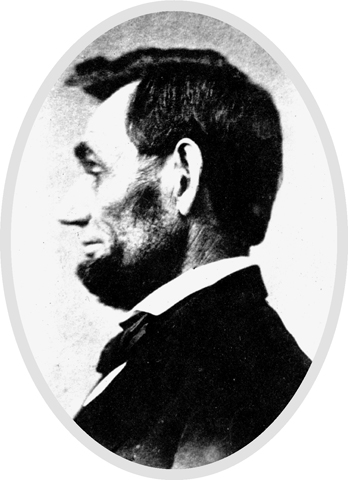
This photograph by Alexander Gardner was taken on November 8, 1863, ten days before Lincoln traveled to Gettysburg to deliver his address.