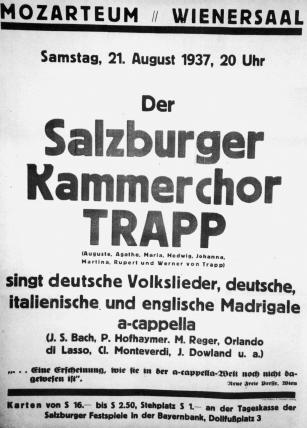
Papá was an enthusiastic and experienced sailor. During his years in the navy, he went sailing whenever he had free time, even taking his mother out on a sailboat to give her the benefit of the healthy sea air. When Papá considered us old enough to enjoy a cruise, he decided to give us a special vacation in the summer of 1932.
Since Italy had finally canceled the black list, it was safe for Papá to return to his “old territory,” which he had called home for most of his life. His plan was to sail along the coast of the Adriatic Sea to introduce us to the area where he had lived since his childhood and where he had spent time when he was in the navy.
The type of vessel that Papá decided to rent for this voyage was a Trabakel. It was a primitive, native cargo vessel, dating back to ancient times, heavily built and decorated on the upper part of the hull with stripes of bright colors. The large sails were mostly bright red, orange, or yellow. The black hull was wide and roomy inside. Some Trabakels had been transformed into tourist sightseeing boats for the warm summer months and could be rented for any length of time. Papá hired the Archimede, complete with an Italian-speaking crew, consisting of the captain, a sailor, and a cook we called “Cogo,” who doubled as a sailor.
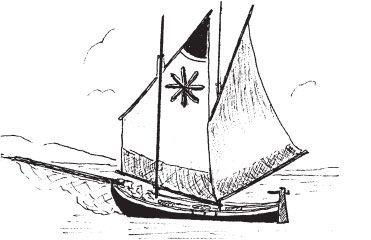
A Trabakel
We anticipated this coming vacation with enthusiasm. It was going to be a wonderful summer, full of adventure and beautiful sights to see. The plan was to board the Archimede in Trieste, cruise down the coast, visit Venice, and then return to Trieste. There we would take a train to Pola and spend a few weeks camping on an island before going back home.
Our two little ones, Rosmarie and Lorli, were left at home in the care of a nanny so that Mother could come with us. A young woman and family friend, Renate Ross, and a seventeen-year-old boy, Peter Hanns Paumgartner, were invited to join us. Papá gladly added these two to his already large family; our group totaled eleven. Peter’s father was the director of the Academy of Music in Salzburg. Peter had studied Italian in school, and his father hoped that the trip would give him a chance to practice his newly acquired language. Peter was exceptionally tall and thin with a pale complexion. In order to avoid sunburn, he wore a white linen hat with an unusually wide brim. He was good-natured, but quite awkward. It seemed that he was not yet able to coordinate his long, thin arms and legs. Among ourselves, we called him the “the Praying Mantis.”
Since summer in the Adriatic Sea is warm with little rain, there was no need to take a lot of clothing. We packed our sleeping bags, hammocks, cooking utensils, folding boats,1 and a change of clothing for sightseeing and church. With our knapsacks on our backs, we headed for the train station, which was just opposite our property in Aigen.
The train took us to Trieste, where we boarded the Archimede. Thus, our adventure began. The red sails went up, and the proud symbol of our commandant unfolded. As I look back, these symbols remind me of the Pennsylvania “hex signs.” Slowly the vessel moved away from the pier as we headed out to sea. The crew was introduced to us, and throughout the trip, they assumed a kind, fatherly attitude toward their passengers—us. We were shown our “bedroom” below in the large, empty hull. We hung our hammocks and left our knapsacks under them, but we never actually slept there. We girls changed into our training suits, which consisted of long, loose-fitting pants made of dark blue cotton knit and blouses with long sleeves and collars made of the same material. These outfits were similar to the sportswear of today. The boys wore shorts and white shirts, their regular summer outfits.
The deck of the vessel was large. As long as we stayed clear of the ropes, we were permitted to place our sleeping bags wherever we wanted and move freely about the ship. At first our only occupation was to look: look here, look there, look everywhere. As we headed south, the land lay on our left, and the sea stretched out on our right. Little fishing villages came into view, allowing us to hear soft sounds drifting over from the land. It was a new feeling for me to be gliding over the water in this open boat, which was larger than any boat I had been on before. The air was fresh and clear with the scent of the sea.
The nights were warm and balmy, so we slept on deck in our sleeping bags rather than in the musty-smelling hull below. On deck we could see the stars in the dark southern sky twinkling brightly. The moon presided over the entire scene. I could hear the ripple of the waves as they lapped against the sides of the boat, making their own music.
Morning arrived and with it a cup of hot coffee with sugar and condensed milk and a hard sea biscuit handed out by Cogo. As the new day began, Mother was sorting out maps, brochures, and books about all the worthwhile sights, ancient buildings, and museums that we could visit. Mother thought that this vacation trip should add to our education. Personally, I knew I would enjoy seeing the remnants of the ancient Roman civilization about which I had studied in high school.
Whenever we went on land, our new mother bought fruits and wonderful, fresh Italian bread to enhance our meals. While Mother was busy shopping, Peter Hanns was trying to communicate with the crew using the Italian he had learned in school. To his amazement, he found that they did not understand him because they spoke a local Italian dialect, which was not what he had learned.
One beautiful summer afternoon when we were all standing on the deck admiring the sea with its little ripples glistening in the sun, someone called out, “Man overboard!” Peter Hanns’s white hat could be seen floating on the water far behind our ship. Papá asked the commandant to turn the ship around because someone had fallen overboard. Since the commandant did not know how to manage this maneuver, Papá quickly took over the ship, and with full sails he turned, sailing toward the white hat. Peter Hanns was rescued and pulled back on deck. He did not know how he had suddenly landed in the water. It was a good thing that he always wore his white hat with the large brim. This time it had saved his life.
Soon after the rescue of Peter Hanns, we anchored in the harbor of Zara, the city where Papá had been born. An account of what happened there, according to my sister Maria’s memories, follows:
We noticed a small white house on the shore. In front of the house, a little yacht lay safely behind a wharf, which protected it from the oncoming sea. A brilliant idea came to Mother’s mind. “Why don’t we rent this house for the winter?” she said, not even knowing if it was for rent. So Papá and Mother took the dinghy from the Archimede and rowed over to the house. They knocked on the door, and a lady answered who was astonished to see two strangers. Papá knew Italian and asked if he could rent the house for the winter. This took the lady by surprise, and she answered, “No, I’m sorry, it is not for rent.” I am not sure of the exact conversation that followed, but Mother probably used her charm. After the woman consulted with her family, she came out and told Papá, “Yes, we decided that you may rent the house for the winter.” So it happened that we would return there that September.
We then left the harbor of Zara to continue south. Later that same day, we were all standing on the deck, and Papá spied an unusual object in the distance. It turned out to be a folding boat, paddled by two men heading south. Papá knew they were heading for trouble; if they were to continue in that direction crossing the Albanian border, they were at risk of being arrested and imprisoned as spies. Another danger was the coast that had sharp rock formations, some of which were hidden just below the surface of the water. A folding boat could easily be punctured.
Papá gestured for them to steer over to our ship. They understood, and after they came alongside, Papá invited them on board. He discovered that they were students from Oxford, England, who were on an excursion to Greece. They thought that going in a folding boat would be economical and enjoyable. They had no idea of the dangers that awaited them. Papá found that they had no knowledge of the Greek language or the other languages they would need as they traveled south. They told Papá, “If you speak English clearly and distinctly, you will be understood everywhere.” This misconception has remained a joke in our family ever since. Papá invited them to bring their folding boat onto the deck of the Archimede and join our group as far as Venice. They accepted the invitation gratefully. Our group of passengers was now thirteen!
After the English students were on board, we continued to the Bocche di Cattaro, the most southern port of Austria before World War I. We anchored for the night, planning to head for Venice the next morning. I looked forward to seeing this famous city.
As we were approaching Venice, a heavy storm came up. The wind increased; the white caps lay in front of the Archimede, and its bow rose and sank with the waves. It was the first storm we had encountered on our trip. We neared Venice at sunset, and the skyline was shrouded in mist. We could see the spires, domes, and buildings as if through a thin veil. This sight immediately transported me into the atmosphere of a fairyland.
We arrived in Venice a bit shaken but intact. Although we were ready to walk on firm ground again, this was difficult, for there is little firm ground in Venice and the streets are mostly waterways. As the Archimede lay alongside the pier, she was tied loosely because of the waves. She came close to the pier as the waves pushed her there. Then the waves moved her away. Back and forth she went in a constant rhythm. In order to disembark, one had to step from the rim of the deck directly onto the pier. One had to decide exactly the right moment to step over before the ship moved away from the pier.
When I looked down, I could see the water. It was not at all like the mountain lakes in the Alps but more like a liquid garbage dump, filled with melon rinds and other items that had been tossed there. When it was my turn to jump from the ship to the pier, I jumped just a split second too late and, of course, I landed not on the pier but in the liquid garbage dump! I found myself deep down between the hull of the ship and the wall of the pier. My good Sunday dress and my shoes were soaked with horrible-smelling water, making me unfit to go on land. The members of the crew pulled me out, and I had to change my clothes and jump to the pier again. This time I made it!
To go anywhere in Venice, one took a gondola. The gondolier stood in the back, maneuvering the boat with a single long oar, operating it with great skill. He knew every canal. Being very proud of Venice, he acted as a representative of his city and told of its history.
Sightseeing in Venice was truly worthwhile. I marveled at the unique buildings that actually stood in the water. We saw the famous Cathedral of San Marco and fed the pigeons on the square in front of the cathedral. The square was lined with all kinds of shops to entice tourists to buy a souvenir or two. The glass factory on the Isle of Murano especially impressed me. I watched the glass being blown by methods that were centuries old.
As soon as dusk set in, the city changed. Lights appeared along the canals. One could hear music and gondoliers calling to each other. Forgotten were the melon rinds and the dirty water. One could only feel the mysterious atmosphere that pervaded the evenings. Venice then became a place of song, romance, and poetry.
At the end of our sightseeing, we said good-bye to our friends from England and boarded the Archimede for the last time. The students sent us a nice letter of thanks from England. In Trieste we bade farewell to our wonderful crew and took the train to Pola, where our camping equipment was waiting for us at the freight station. The rest of the summer vacation passed quickly. We camped for a few weeks on the island of Veruda before returning home to Aigen with a wealth of beautiful memories that have lasted a lifetime.
We were home just long enough to reunite with the two little ones, hire two teachers and a nanny, and get ready for our trip to Zara that September, back to the white house that Papá had rented for the winter. At this point I am relating an experience that my sister Maria still remembers in detail. The following adventure took place in December of 1932:
The small yacht, Alba Maris, came with the house in Zara. The yacht could only sleep four people, so Papá divided us into groups to take us on trips. I was chosen for the crew with Papá, Mother, and Martina. We left in the afternoon and arrived in a beautiful bay to spend the night. Martina, who was eleven years old at the time, made sketches of the scenery. The next morning, looking forward to what the day would bring, we hoisted the anchor and raised the sails. It did not take long before we sighted a Yugoslavian patrol boat, which was heading toward us. Coming alongside the Alba Maris, the Yugoslavian patrol officers boarded and asked for our passports. They also asked many questions. At that time Zara was an Italian free port surrounded by Yugoslavia, with some of the surrounding sea being Italian and the rest being Yugoslavian. Since we were already in Yugoslavian waters, these officers had the right to inspect us. When the officers heard us speaking German, they became very friendly. Their tone, however, changed once they saw our Italian passports.
Since Papá was a citizen of Trieste, which belonged to Austria before the First World War, and was given to Italy afterward, our family woke up one day and discovered that we had become Italian citizens! The Yugoslav patrolmen thought that Papá was a spy, using his family as a camouflage. When they saw the camera, they wanted to know if any photographs had been taken, to which Papá answered, “No.” The patrolmen then opened the camera to see if Papá had told the truth. Although they were satisfied that no photos had been taken, Martina’s sketches had aroused suspicion. Therefore they decided that the family had to follow them to their Main Station, which was on an island right across the water from Zara.
Two soldiers with bayonets were ordered to come on board the boat in order to take Martina, Mother, Papá, and me to the village dock where the patrol station was. Wanting to show the patrol that we were not afraid, Mother, Martina, and I started to sing, but we were soon told to be quiet because the mayor of the village had died. On the boat, the two soldiers with bayonets watched over our sleeping family, making sure we did not escape. The next morning, we were all taken to the main patrol station. Papá was told to follow the soldiers. We did not know where they had taken him.
Mother summoned all her courage and, with the little Italian she knew, persuaded one of the soldiers to take her to where Papá was. Later, Mother gave us an account of what happened next. After much discussion with Mother, the official put on his cape and white gloves, and tried to lock her in a room. Mother, however, quickly put her foot between the door and the doorframe so he could not close the door. Then she acted as though she was very frightened, arousing his protective instincts. He finally took her to the prison and what did she see? Papá was calmly playing cards with the only other inmate—a murderer!
Finally Papá was freed and the patrol officers led him back to the Alba Maris. We were very glad to see him! But the ordeal was not yet over. The Yugoslavian officers wanted Papá to go back to the patrol station to sign a paper. Certain that this was a trick, Papá told them to bring the paper to the boat. Miraculously they did! At this point, we were allowed to leave. I was the mechanic on board and tried to crank the engine, but it would not start. Again and again I tried. Finally after a few tries it started and we left the harbor. The mystery of the troublesome engine later became clear; Papá had put new filters in, but had forgotten to perforate them to let the fuel flow through. Little by little, we finally made it home. Of course, at the time the rest of the family at the house in Zara had no idea of what had happened.
Thus ended Maria’s account of their adventure.
While Papá, Mother, Maria, and Martina had their encounter with the Yugoslavian border patrol, I was at the house with Hedwig, Johanna, Rupert, Werner, Rosmarie, Lorli, the nanny, and the two teachers. It was Christmas Eve, and I was baking cookies. Earlier we had played Christmas carols on the record player. As the day went on and Papá and his crew did not come back as expected, we wondered what could have happened. We started to pray for their safety. There was nothing else we could do. Finally, to our great relief, we spotted the Alba Maris in the distance.
Upon their return to the house, we heard the whole hair-raising story. We then sang “Now Thank We All Our God.” After all this excitement, we had a wonderful Christmas together and remained in the rented house in Zara until April, at which time we returned to Aigen. We did not stay at home in Aigen for long. Soon Papá had an idea for another adventure.
In Salzburg the annual summer music festival brought music lovers and performers from all over the world. For two months, every July and August, music enthusiasts streamed into the city, and the hotels and guest houses were filled to the brim. Some visitors looked for large homes to rent where they could stay and entertain guests. Our house in Aigen, outside Salzburg, was perfect for this purpose.
During the summer of 1933, Papá decided to rent our house, with our servants included, to guests of the festival. The renters turned out to be the owners of the Weyerhaeuser Lumber Company of the United States. So where would our family go? It was a time of peace in Europe. Papá was lured by the thought of camping with us on the island of Veruda, off the coast of Italy in the Adriatic Sea.
Veruda was part of the territory that Papá knew so well from his younger years. Along the coast of the Adriatic Sea are strewn cities and towns dating back to the Roman Empire. In Pola, now Croatian but formerly an Austrian harbor, one can still find a well-preserved stadium and other ruins from Roman times.
In this mixture of cultures and population, Papá grew up. Fifteen years earlier, he had lived and worked there to defend his country. He had become acquainted with the local Italian dialect and native way of living. This area had changed after World War I, but the memory of a land of unique beauty remained. Papá remembered the blue skies and soft breezes from the south and the sweet fragrance of aromatic shrubs and herbs brought out by the noontime heat. He yearned to show all of us this wonderful place that he loved so much—the memories of which he silently carried in his heart. He arranged with his friend Mr. Pauletta, who owned a hardware store in Pola, for us to camp on his island, Veruda.
Papá had ordered tents, hammocks, and two folding boats from his cousin, who owned a tent and boating factory in Bavaria. Papá specified that the boats were to be made exceptionally strong; the rubberized canvas was to be seven times stronger than usual. Each boat was equipped with two sails, two paddles, seats for two, and a rudder.
When we were properly outfitted for our trip, Papá shipped our gear by train to Pola. He followed by car with our baggage, and the rest of us took the train to Pola. When we arrived, we went by rowboat the short distance to the island of Veruda.
The family—two parents and nine children—made quite a procession when we arrived with all of our camping gear. We settled on the south side of the island near a cluster of young pines, setting up our tents, hammocks, sleeping bags, and other camping equipment. This part of the island sloped down toward sea level. The entire hill was overgrown with small bushes, which the local people called “bosco.” Small as they were, the pines gave enough shade to protect us from the merciless midday sun.
Camp life was not a new experience for us, but camping on an island was. The only way to reach it was by boat. We could walk the circumference of the island in an hour, yet we did not feel confined there. Years before, Rupert and I had imagined living on an island and had wanted to build a raft. Now, the idea of life on an island became a reality for our family, at least for a few weeks!
In the northern part of Veruda high cliffs rose out of the sea. Only one water hole escaped from the ever-pounding surf upon the rocks, which made it perfect for swimming and diving. This spot, elevated high above the sea, gave us a magnificent view of the site that the monks had chosen for their monastery years ago. From its ruins, Mr. Pauletta built a summer cottage for his family. His wife and two daughters came there occasionally during the hottest summer days. Mrs. Pauletta once invited us to an Italian meal in their cottage. She not only cooked it but also, at Mother’s request, showed us how to make special fish dishes.
At night we gazed at the stars from our hammocks and listened to the waves lazily lapping the shore. From the sea came the smell of seaweed drying in the sandy bays. Way out at sea, fishermen’s songs drifted into our sleepy ears.
In the early morning hours, a voice came across the bay. “Lattee-e-e-e…Lattee-e-e-e,” it called. Then “Pesch-e-e” and “Calamari…” Papá signaled that he wanted to buy milk and occasionally a fresh fish.
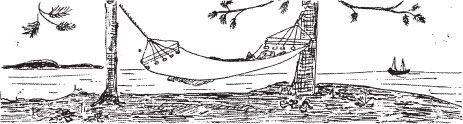
For all other commodities, we had to go by boat across the water. When we reached the land, we walked or rode our bicycles into Pola. On Sundays the family went to church there. Afterward, a cone of gelato (Italian sherbet) sweetened our return to the island in the hot midday sun.
We cooked over open fires with pots and pans that became black with soot. Soap did not dissolve in seawater, so we had to find a new method of cleaning the pots. We found the answer on the shore. It was not a box of Spic and Span floating on the water but shallow shells from the shore that were filled with calcium deposits. These shells were left by cuttlefish. We scraped the calcium off the shells and cleaned our pots and pans with the powdered calcium.
One day Papá announced that he would like to take a trip along the coast in our folding boats. Hedwig, Werner, and I signed up. Papá and Hedwig manned one boat; Werner captained the second one, with me as his sailor. It would become an unforgettable trip. Our folding boats glided along the coast of the Adriatic, and even though we were aware of the danger of the sharp rocks, which could puncture the canvas, we had no fear. Papá was an excellent sailor and knew the coast of Istria and Dalmatia like his own backyard, or as they say in Austria, “Wie seine Westentasche” (like the pocket of his vest). He knew every island by name and every hidden rock under water along the coast. He was familiar with each bay and even a freshwater stream that issued from the rocks at sea level.
I really learned to know Papá’s personality during our trip. He was daring but also cautious when necessary and quietly alert. His directions were specific, drawing upon his knowledge of every part of this area. Werner was just as alert and helpful. We sailed along in perfect harmony, with no fear or anxiety. The deep water was a safe place to be, so we stayed away from the rugged coast. Our first stop was at a freshwater spring. There we filled our containers with ice cold water. As the sun set, we arrived in a bay surrounded by high rocks, which was to be our overnight stopping place.
We pulled the boats onto the land and laid out our sleeping bags. That was no easy task because the shore was covered with stones the size of large baking potatoes. We had to move the stones to make a smooth place for our sleeping bags. As we ate the evening meal, a peasant woman in native Croatian dress carried a huge bale of hay on her head as she came down the steep rocks. She walked erect, even when ascending the steep rock on the other side of the beach. She greeted us, and Papá replied with a few words of local dialect.
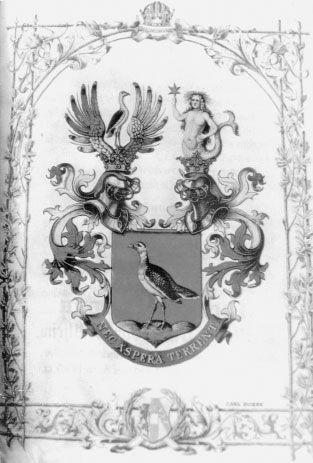
The von Trapp coat of arms.
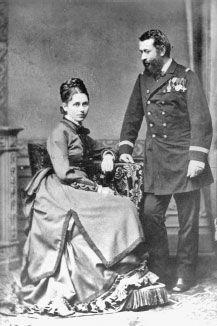
My paternal grandparents, August Ritter von Trapp and Hedwig Wepler, engagement photo, 1875.
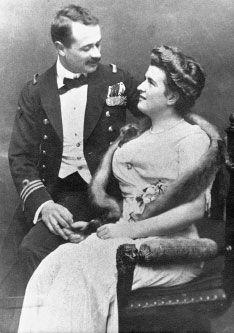
My parents. Georg and Agathe von Trapp, after the wedding, 1911.

My father, Georg Ritter von Trapp, in uniform, 1916.
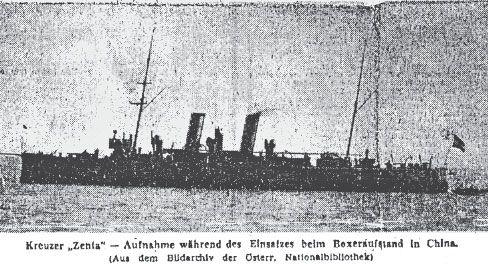
The battleship Zenta.
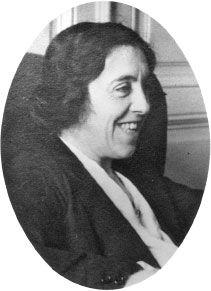
Tante Connie von Trapp, Uncle Werner’s wife.
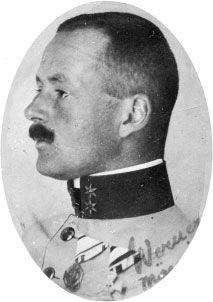
Our father’s brother, Uncle Werner von Trapp circa 1914.
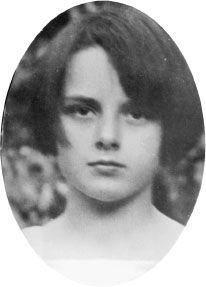
Constance von Trapp, our cousin, known as Connie Baby.
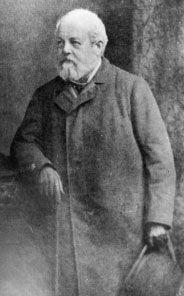
My maternal great-grandfather, Robert Whitehead, inventor of the torpedo, circa 1900.
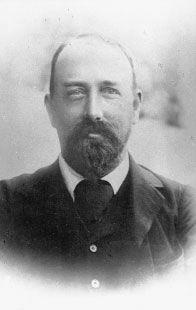
My maternal grandfather, John Whitehead (1854–1902).
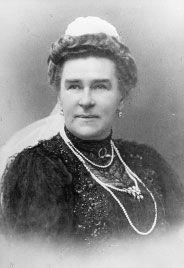
My maternal grandmother, (Gromi) Agathe Breuner Whitehead, 1911.

Gromi and her children. Left to right—John, Agathe (my mother), and Frank (top). Mary, Bobby, and Joan (bottom).
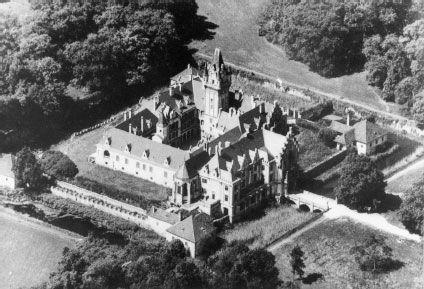
Castle Grafenegg, Gromi’s childhood home in lower Austria.
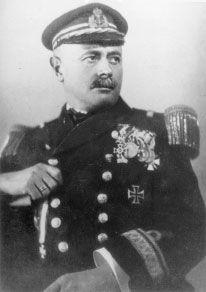
Papá in uniform, circa 1935.
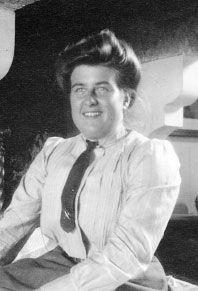
My mother, Agathe Whitehead von Trapp, 1914.
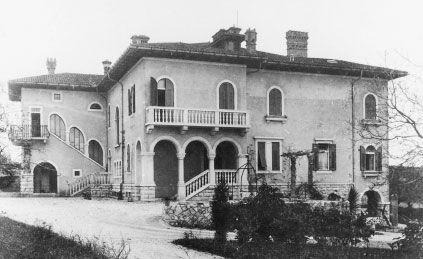
Villa Trapp in Pola, the first home of my parents.
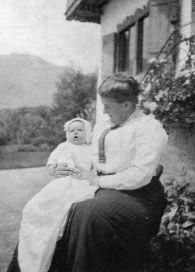
Mamá with Agathe at the Erlhof, 1913.
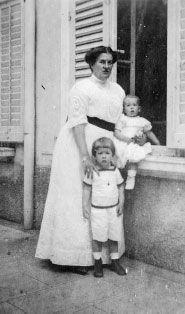
Mamá with Rupert and Agathe, 1914.
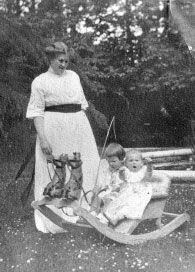
Mamá with Rupert and Agathe in Fiume, 1914
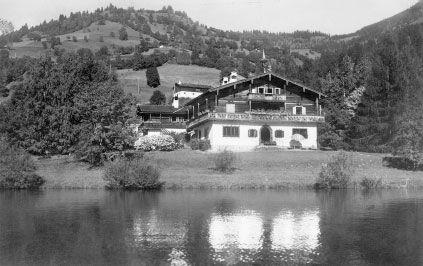
The Erlhof, our home with Gromi during World War I.
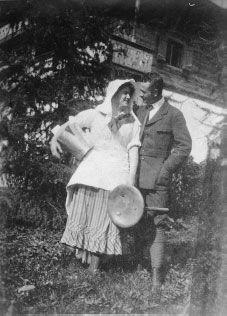
Papá and Mamá Erlhof, circa 1912.
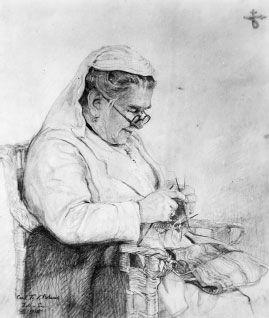
Gromi, pencil drawing by Tante Joan, 1935.
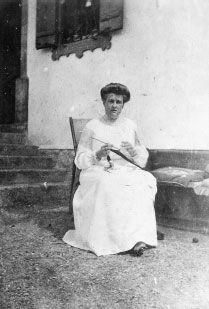
Mamá knitting in front of the Erlhof, 1915.
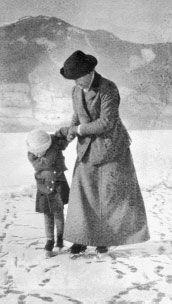
My first ice-skating lesson with Nenni on Zeller Lake, 1917.
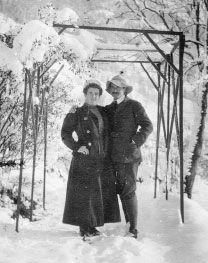
Mamá and Papá, Winter 1912.
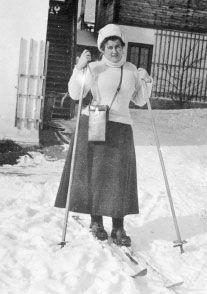
Mamá on skis, Erlhof, circa 1912.
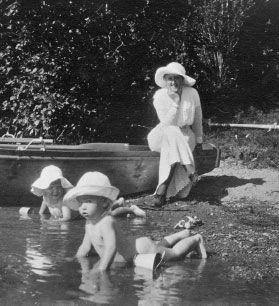
Tante Mary with Rupert and Agathe, Zeller Lake, circa 1915.
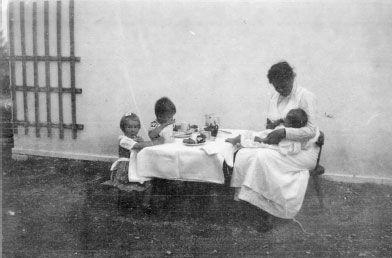
Lunch with Nenni holding Maria, circa 1915.

The four Agathes, 1913. Left to right—Mamá Great-Grandmother Agathe Breuner holding Agathe, and Gromi.
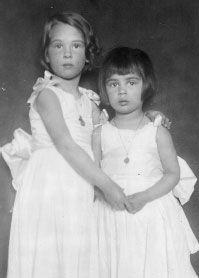
Agathe and Maria on the occasion of Great-Grandmother Agathe Breuners eighty-fifth birthday, 1918.
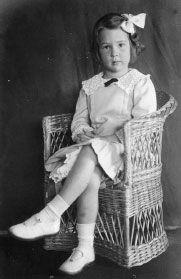
Agathe at age 5, 1918.
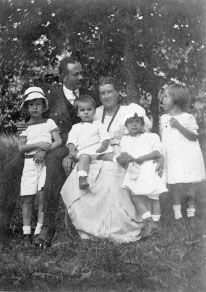
Papá and Mamá with Rupert, Werner, Maria, and Agathe, 1916.
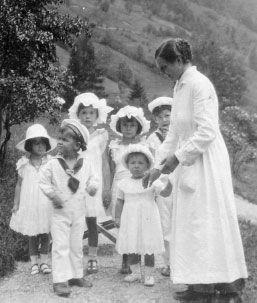
Nenni with Connie Baby, Agathe, Maria, and Rupert (back), Werner and Hedwig (front), 1918.
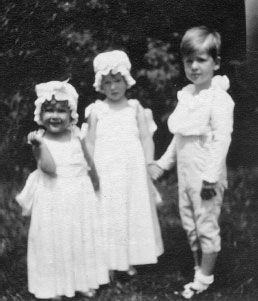
Maria, Agathe, and Rupert dressed for Great-Grandmothers eighty-fifth birthday, 1918.
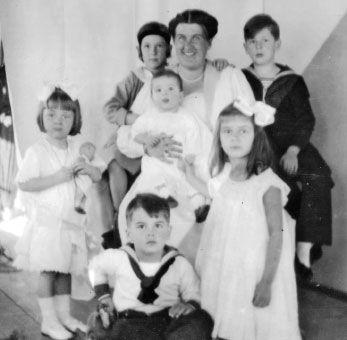
Mamá and her children, 1919. Left to right—Hedwig, Agathe, Mamá holding Baby Johanna, Rupert (back). Werner and Maria (front).
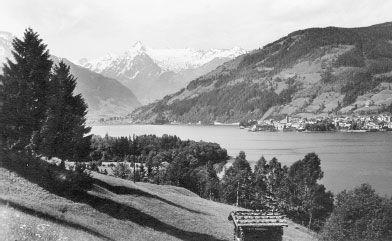
View from the Hotel Kitzsteinhorn.

The seven von Trapp children in Klosterneuburg, 1922. Left to right—Rupert, Maria, Agathe, and Werner (back). Johanna, Martina, and Hedwig (front).
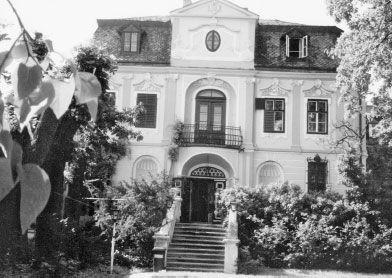
The Martinschlössl in Klosterneuburg, our home near Vienna from 1921–1925.
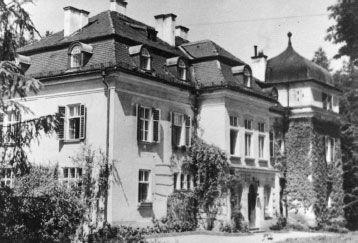
Our home in Aigen, near Salzburg, 1925.
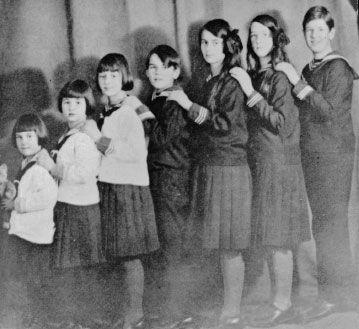
We call this photo “The Organ Pipe,” circa 1927. Left to right—Martina, Johanna, Hedwig, Werner, Maria, Agathe, and Rupert.
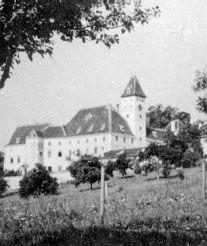
Castle Goldegg, the home of our cousins, the Auerspergs.
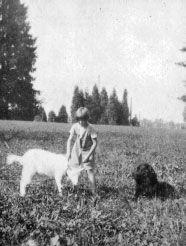
Hedwig with her goat in our garden and Gombo watching, Aigen, 1926.
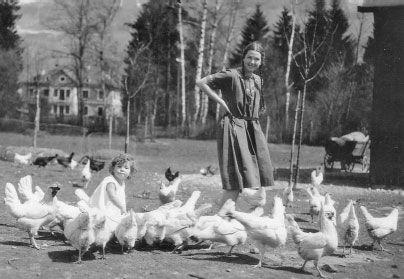
Agathe, age 18, feeding the chickens with Rosmarie in Aigen, circa 1931.
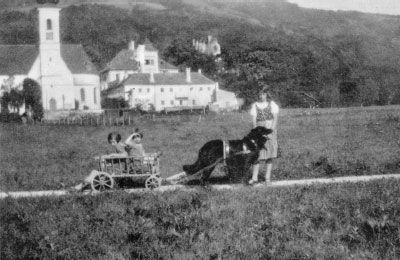
Agathe standing next to Gombo with Martina and Johanna in the cart, Aigen, 1925.
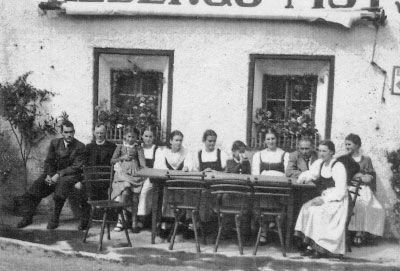
The von Trapp family in St. Georgen, Italy, after leaving Austria, 1938.
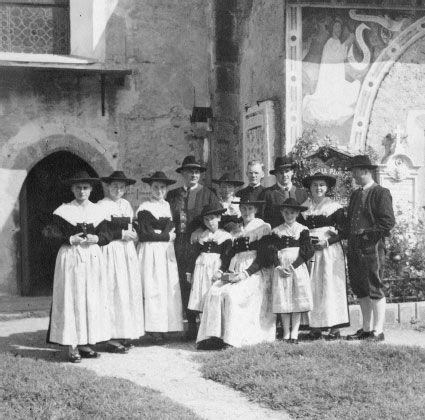
The von Trapp family in Italy, 1938.
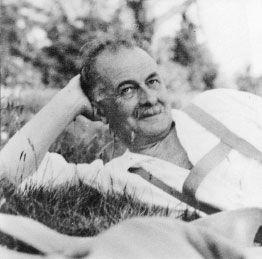
Papá in Aigen, 1927.
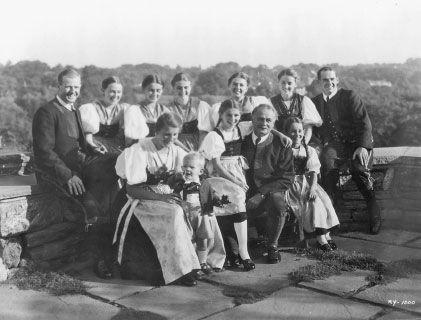
The von Trapp Family in Merion, Pennsylvania, 1941. Left to right—Rupert, Agathe, Maria, Johanna, Martina, Hedwig, and Werner (back). Mother, Johannes, Rosmarie, Papá, and Eleonore (Lorli) (front).
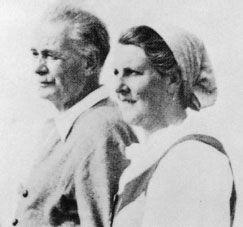
Georg and Maria von Trapp, circa 1943.
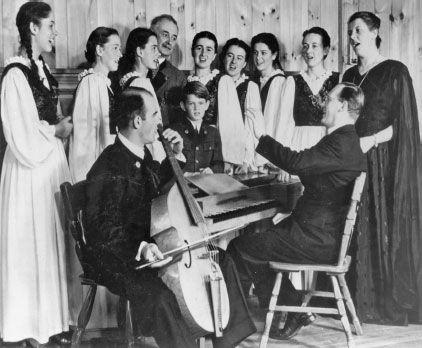
Trapp Family Singers rehearsing, 1946. Left to right Eleonore (Lorli), Agathe, Maria, Papá, Johanna, Martina, Rosmarie, Hedwig, Mother, and Johannes (standing). Werner playing the viola da gamba and Father Wasner on the spinet (seated). Rupert was in medical school.
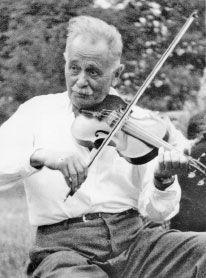
Papá playing the violin at our music camp, circa 1945.
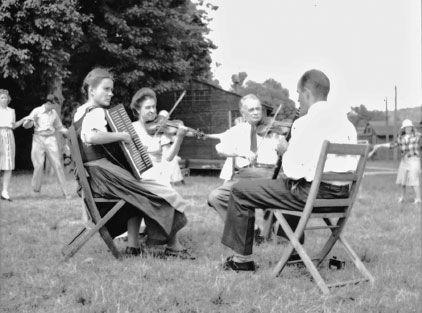
Dance music at our summer camp. Left to right—My sister Maria, a camp guest, Papá, and Werner, circa 1945.
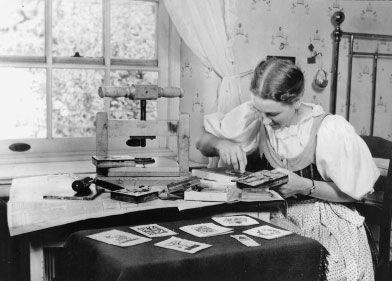
Agathe designing linoleum block prints, circa 1941.
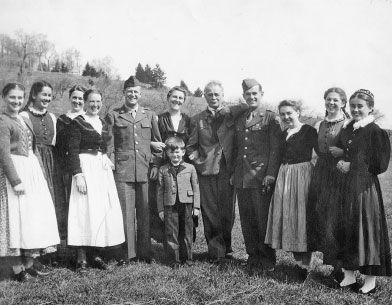
World War II ends; Rupert and Werner return safely to Vermont, 1945.
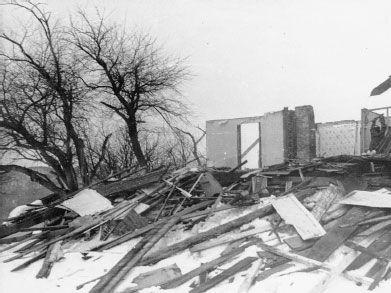
Our new home in Vermont after the blizzard, 1942.
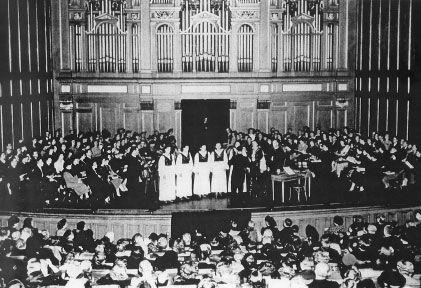
One of several concerts we gave in Jordan Hall, Boston, Massachusetts, mid-1940s.
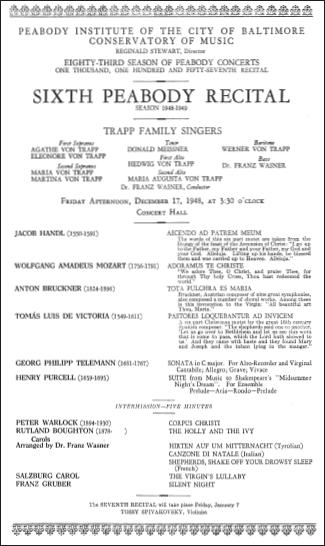
Program, Peabody Conservatory of Music, Baltimore, Maryland, December 1948.
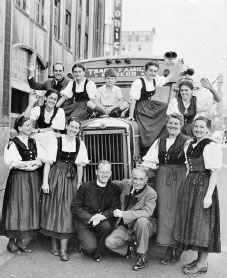
The family on tour in the United States, 1946. Agathe is on the far right, first row.
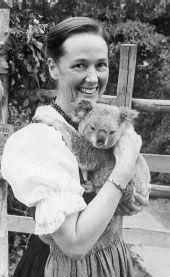
Agathe holding a koala bear, Australia, 1955.
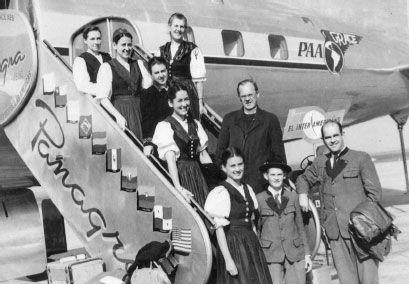
International tour, 1950.
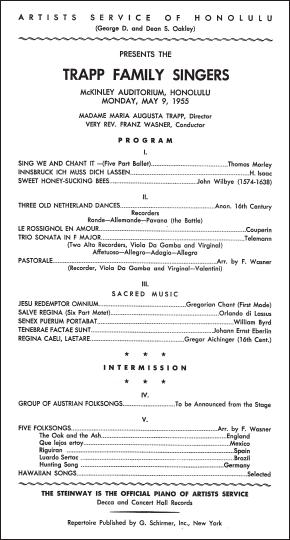
Concert program, Honolulu, Hawaii, 1955.
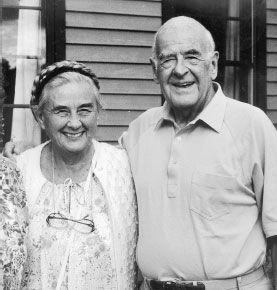
Maria and Rupert, Vermont, 1991.
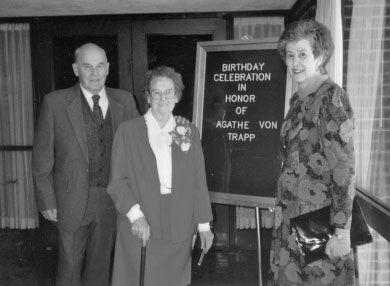
Agathe with Werner and Mary Lou at Agathe’s eightieth birthday celebration, March 12, 1993.
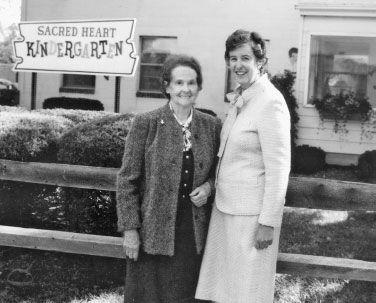
Agathe and Mary Lou at their kindergarten in Maryland, late 1980s.
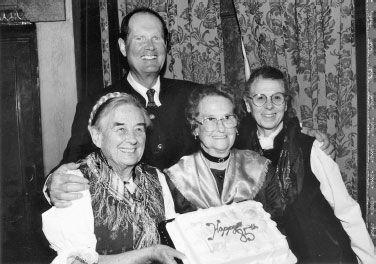
Agathe’s eighty-fifth birthday, the Martin Beck Theatre, New York City, March 12, 1998. Left to right—Maria, Johannes, Agathe, and Rosmarie.
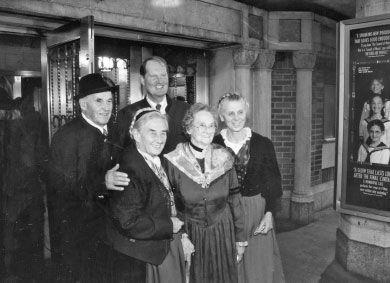
Attending The Sound of Music, New York City, December 1998. Left to right—Werner, Maria, Johannes, Agathe, and Rosmarie.
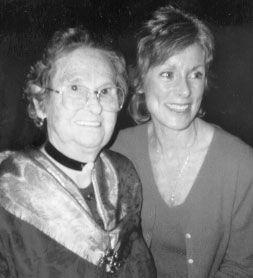
Agathe and Charmian Carr (Liesl in the movie The Sound of Music), December 1998.
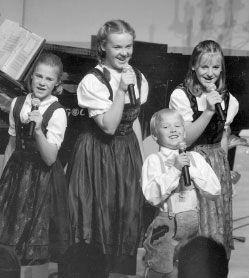
The von Trapp children in concert, Foy Hall, Bethlehem, Pennsylvania, August 2002. Left to right Amanda, Sofia, Justin, and Melanie. Photo by Ryan Hulvat.
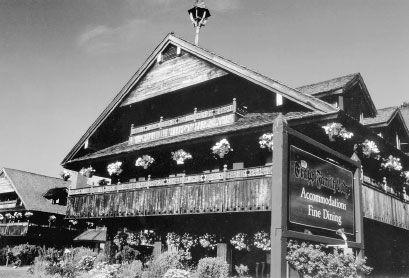
The Trapp Family Lodge, Stowe, Vermont.
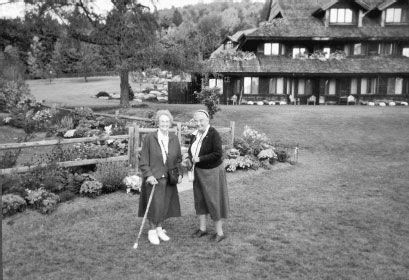
Agathe and Maria in front of the family cemetery, the Trapp Family Lodge, Stowe, Vermont, 2000.
As we were about to retire for the night, a sailing ship anchored in the bay. To us, it looked like a storybook pirate ship. Papá was worried; I guess he had visions of a confrontation with these strangers. But to his relief, they remained on board, and in the morning, the ship had left.
The next day, the water was calm, and we paddled most of the time. By late afternoon, we reached the next town, the small seaside resort of Lovrano. As we approached the town, I saw a group of young men diving from the steep rocks into the deep water below. Before they dove, they made the sign of the cross. This impressed me deeply. Papá bought provisions, but he wanted to move on since the evening was warm and the sea still calm.
On the beach, we met two German students who offered to tow us out to the deep water. They had an outboard motorboat and were also getting ready to leave. Papá deliberated: Are these young people trustworthy? Perhaps they are fifth columnists?(Adolph Hitler had become chancellor of Germany earlier that year. Youthful supporters were often sent in small groups to stir up support for the Nazi Party. They became known as “fifth columnists.”) After some hesitation, he accepted their offer, and sure enough in no time at all, we were a half mile out at sea. We waved a “thank you” to them and sailed on.
It was already getting dark, and the island of Kerso stood out as a silhouette against the evening sky. The sea was still calm, the air balmy. Soon the full moon appeared, and the stars came out one by one. We could hear songs coming from fishing boats in the distance as they lit their torches for the night catch. A school of porpoises accompanied us close to our boats on either side. They seemed to enjoy our company. They did not try to overturn our boats or jump over them. Perhaps they thought our boats were some kind of larger dolphin.
The wind freshened. As it did, the canvas that covered our boats started to vibrate. The wind came from behind, and our boats flew over the waves as if we were surf riding. Later in a light breeze, we were able to set sail. We started to sing and moved our boats closer together for better harmonizing. At 2:00 a.m., we arrived at a small island that was owned by a friend of Papá’s. It was too early in the morning to make our presence known, so we took our boats on land and slept in our sleeping bags on the pier until the sun awakened us.
Around eight o’clock in the morning, we ventured up the steep path to the house of Papá’s friend. At breakfast he told us that the only other inhabitants of the island were a Croatian peasant family who tended sheep, goats, and the orchard. They all seemed to be content living in this splendid isolation away from virtually all civilization.
In the afternoon, he introduced us to the peasant family. They were very friendly and invited us into their home. According to their ancient tradition, these people lived the same life and had the same arrangement in their house as their ancestors had a thousand years before them. The animals lived downstairs, and the family lived above the stable, connected by a primitive staircase. The warmth of the stable rose through the cracks of the floorboards.
The mother of the family showed us their only room, which had beds and some simple pieces of furniture, among them a chest in which she kept their festive attire. She took out the garments of her two daughters for us to admire the intricate embroidery they had done in their spare time. Then she insisted that we try on these clothes. This seemed to be their way of honoring their guests. Of course, Hedwig and I had no choice but to put on these beautiful garments. They consisted of a long black pleated skirt and white linen blouse, embroidered around the wide-open sleeves and around the neck. Over the blouse went a heavily embroidered vest. Every bit of clothing was immaculately clean. The woman took great pleasure in viewing us in her daughters’ clothes. Then we returned them to her.
She gave us some special goat cheese called “buina.” We took it along to Papá’s friend’s house. He insisted we try it, telling us how wonderful it tasted. It was sweet and soft with a very fine texture and a somewhat nutty taste. Papá, Werner, and Hedwig had no trouble enjoying this specialty. Only to please our host did I take a tiny piece. Usually I dislike cheese! But I was immediately converted. It really tasted good. I can only compare it to cream cheese, except it had more flavor. Papá’s friend also gave us peaches, plums, and grapes from his orchard.
As the day wore on, the wind became stronger, causing white caps to form on the waves. Papá wanted to continue toward Lussin Piccolo, the small island where the widow of a former navy officer, Mrs. Simonić, lived and operated a small pension. But as Papá and his friend watched the waves getting rougher, they decided it would be unsafe for us to continue our trip. Papá’s friend invited us to stay on his island until the storm subsided. Papá knew we were being delayed on our adventure, and he wanted to communicate with Mother as to our whereabouts. He sent a telegram back to Pola, thinking it would be delivered to our campsite in Veruda where we had left Mother and the rest of the family.
We spent two days waiting for the wind to calm down, and on the third day, it finally did. We then sailed through another night, arriving early at the pier of Pension Simonić. There we tried to catch a few hours’ sleep. Instead, two Italian policemen tried to arrest us as spies! Papá’s native dialect and his acquaintance with Mrs. Simonić saved us from an unwelcome delay.
Mrs. Simonić and her daughter, Dori, greeted us like long-lost relatives and gave us a plentiful breakfast. There were other guests at her pension, among them three German students and a young boy who spoke Italian. The three German boys were self-assured, sophisticated, and obviously in sympathy with the Nazi Party.
After dinner, they suggested that the young people take a walk, so Werner, Hedwig, and I went with the Italian boy and the Germans. We ended up at the swimming beach. It was closed for the night, but despite the locked gates, the Germans said, “Let’s go swimming!” We pointed out that the gates were locked. “Never mind. We can climb over the fence,” they replied. “But we have no bathing suits with us,” we objected. “Never mind. It’s dark and we’ll just go into the water without them.” No one said a word until the Italian boy announced, “That is against our religion.” I was grateful for that boy’s response! With a sigh of relief, the whole group turned and trooped back to the pension.
Before we could start our trip back to Veruda to return to the rest of our family, we had to wait for calm weather. We left from Mrs. Simonić’s pension with some of her wonderful whole wheat bread. Papá knew of an island with a lighthouse that lay between Lussin Piccolo and Veruda, and we headed for it. It was too far to sail from Lussin Piccolo to Veruda in one day. We arrived at the lighthouse as a thunderstorm was forming. We just made it to the pier before the first raindrops fell.
The crew from the lighthouse stood on the pier as we arrived. They gesticulated and spoke excitedly in the local Italian dialect. Suddenly one of the men, who had served under Papá’s command, recognized him. All of the faces lit up, and the commander of the lighthouse took us in. Only then did Papá reveal the fact that he had an intestinal virus and was in misery. They brought him some medicine and showed us an empty ammunition storage shed where we could spend the night in our sleeping bags.
The next morning one of the crew brought us a huge jug of hot coffee, sugar, a small can of condensed milk, and sea biscuits. It was a wonderful awakening. Papá felt much better by then, and we felt refreshed. The storm raged for two more days. Papá sent a second telegram to Veruda to let the rest of the family know that we were safe but delayed due to stormy weather.
Since we had to wait for better weather, we took a walk around the island. The commander showed us through the tower of the big lighthouse all the way from the bottom to the very top, explaining everything. He also permitted us to look through his telescope, which gave us a full view over the stormy sea. The crew tried to entertain us as well as they could. One member of the crew showed us a tiny seagull standing on his open hand. The men told us that the day we had arrived, they had seen our sails but could not see any boats or people. Their first thought was that we might be spies. They were greatly surprised to see our folding boats, a type of boat they had never seen.
On the third day, a fishing boat was seen coming toward the lighthouse. It was hailed, and when it reached us, Papá asked in Italian if the owner would take us back across the stretch of sea to Veruda. “Yes,” he said, “that could be done for a fee.” Our boats would not fit on the deck of his boat; however, they could be towed. Papá and Werner manned the folding boats, after tying them to the fishing boat. Hedwig and I were allowed to stay on deck for the voyage back.
Finally Veruda was in sight. But when we arrived, there was no eager waving to greet us or a joyful welcome. When we saw the rest of our family, we could not understand the somber climate that prevailed until Mother said, “Georg, how could you do this to us?”
Papá countered, “But I sent you two telegrams!”
The telegrams were never delivered. The part of our family who had remained behind had been trembling in fear, wondering whether we were dead or alive. Maria later told me that she had prayed fervently for our safety when we did not return on time.
And so our glorious adventure with Papá ended safely. Despite the worries of the rest of the family, the adventure was one of the most beautiful times I can remember with Papá. It was the best introduction to the land he loved. Today Veruda is a fashionable resort with a hotel and a bridge to the mainland, but in our memories, it is still the “Sleeping Beauty” in the sunshine of the Adriatic Sea.