
At the time of this writing, despite all his legal travails, Benjamin Netanyahu is still prime minister of Israel. He reacts with surprise when foreign guests occasionally inquire politely whether he has any retirement plans (Israelis know better than to ask that question). The fact that Netanyahu has been prime minister for over a decade is proof to him that he should remain in office for the foreseeable future. He sees no one capable enough or worthy of replacing him and fails to understand how anyone could contemplate someone else leading Israel.
To be the prime minister of Israel, he believes, one needs a grasp of history, a vision for the future, and the fortitude to withstand unbearable pressures. He knows only one man with these qualities. The idea of one of his long list of political rivals (including all his senior Likud colleagues) occupying his office is not just laughable but a threat to the nation’s survival, in his opinion. The Jewish state has existed for seven decades now, but to Netanyahu its existence remains as precarious as that of the Hasmonean dynasty of Judea, constantly at risk from the Roman Empire. One wrong turn and Israelis in the twenty-first century could face a similar fate to the Jews of Europe in the Holocaust.
Netanyahu’s unique awareness of imminent destruction is why he believes, despite Israel being a democracy, that any challenge to his leadership is a threat to national security. He brands any legitimate attempt, real or perceived, to topple his government as a “putsch against an elected leader.” This is in contradiction to Israel’s parliamentary system, whereby the prime minister is elected, and can at any time be deposed, by a majority of the members of the Knesset, especially as Likud under his leadership has never received more than a quarter of the votes in an election.
Indeed, although Netanyahu may soon surpass David Ben-Gurion as Israel’s longest-serving prime minister, he has also constantly been the prime minister with the smallest proportion of the national vote. He has ruled for so long only thanks to the splintered Israeli consensus and his knack for inciting certain communities and sections of society against one another. He has built unhappy coalitions of dissatisfied politicians who are convinced, like him, that no matter how much time they spend in power, they are still outsiders facing a mythological elite.
Netanyahu didn’t create the divisions in Israeli society. Likud inherited those from Israel’s founding fathers. But whereas the party’s first leader, Menachem Begin, who was so despised by Bibi and Benzion for his perceived weakness, dedicated his career to trying to bridge those gaps and unify the nation, Netanyahu has prised open every possible crack.
In Netanyahu’s Israel, the economy has never been so successful. But he has done nothing to address the growing inequality. Israel’s neighbors have never been as weak and the IDF so powerful. But Netanyahu, who inherited the most favorable conditions for peace with the Palestinians, has never tried to grasp the opportunity. The only peace he has been willing to consider is one where Israel bullies the Palestinians into submission. Until that happens, he will continue building walls.
Netanyahu is no warmonger. For all his talk of confronting the Iranian threat, he has been too risk-averse to launch any wars—which is to his credit. He is the prime minister with the lowest casualty rates in Israel’s history.1 But Netanyahu’s Israel is living on borrowed time. Even if the Palestinians are too weak to rise up again and the world has ceased to care, the occupation of another nation, nearly of equal size, is eroding Israeli democracy and human rights at an alarming rate. Netanyahu has no plans to deal with that erosion, save for stoking racism and fear.
Netanyahu has no plans because his policies are tailored for his daily political preservation and inspired only by a bleak view of Jewish history. There is nothing in between immediate survival and centuries of jeopardy. Bibi inherited from Benzion a deep disdain for what he sees as an inherent weakness in the Jewish character. Only a strong leader, capable of withstanding unbearable pressure to concede, can safeguard Jewish sovereignty for another generation. But their lack of faith in the Jews runs counter to every intellectual, spiritual, and material achievement of Jews around the world, and of course the foundation and success of Israel long before Bibi came along.
Israel turns seventy in 2018. Netanyahu will be seventy in 2019. He is convinced that no one else but he is qualified to lead the nation into its eighth decade and beyond. But sooner or later, Netanyahu will be forced to leave. He will lose an election, or his rivals will finally muster the courage and a majority to depose him in the Knesset. He may even hang on long enough for the wheels of justice to finally turn him out for incurable corruption. Israel will have other competent leaders, and despite Netanyahu’s dire predictions, it will survive without him. They may lack his intellect, powers of analysis, and burning sense of destiny, but they will likely be less suspicious and more conscious of everyday life in the Jewish state.
Perhaps Israel’s next leader will be a less safe pair of hands and Netanyahu’s sad legacy will have been to pave the way for an even less tolerant and much more dangerous Israel. Hopefully, however, the next leader will embark upon a necessary process of healing and building afresh—because on the day after Benjamin Netanyahu leaves, his ultimate legacy will not be a more secure nation, but a deeply fractured Israeli society, living behind walls.
Jerusalem,
February 2018
Acknowledgments
“Let me tell you my Bibi story”—I can’t count the number of times an Israeli, upon hearing I was writing a biography of Benjamin Netanyahu, wanted to tell me his or her recollection of meeting Bibi at some point. It was hardly surprising, considering Israel’s small size and the length of time Netanyahu has been involved in its public life. Their story told, they would invariably ask to remain anonymous. Netanyahu is still prime minister, and many of the interviewees for this book were anxious not to incur his displeasure. I thank them all for sharing their experience and insight.
One Israeli who refused to cooperate with this book was Benjamin Netanyahu. My formal and informal requests for interviews were ignored. I did visit him in his office twice during the period of research, in meetings together with senior editors of The Economist, a newspaper Bibi much admires. The contents of those meetings were off-record but I will reveal that each time, as we entered his office, Netanyahu turned to my bosses saying, “This is Mr. Pfeffer who’s writing a book about me. He doesn’t know anything about me. It will be a cartoon.” You, dear reader, will be the judge.
Despite Netanyahu’s incessant efforts to muzzle it, Israeli journalism remains as defiant and combative as ever. In writing this book, I have continuously been proud, as an Israeli journalist, to encounter the constant reminders of just how thoroughly my colleagues have covered Netanyahu’s career. This book would have been impossible without the fruits of their labor, and I am indebted to all those tireless reporters who have spent decades burrowing away, unveiling the truth and safeguarding Israel’s increasingly fragile and limited democracy.
I have been fortunate for most of the past two decades to have written for the Haaretz Group. It has been my journalism school, my workplace, and a bastion of all that is best in Israel. I am grateful to our publisher Amos Schocken, without whom this unique institution would not have survived and prospered. My bosses, the editors of Haaretz’s English edition, my undying ally Charlotte Hallé, Noa Landau, and Avi Scharf gave me crucial support and the leave to complete this book. Many other Haaretz colleagues gave me invaluable insight and information, particularly Aluf Benn, Barak Ravid, Gidi Weitz, and Amir Oren.
For the past three years I have had the privilege of reporting from Israel for The Economist. Anton La Guardia, who as Middle East editor hired me, gave me extremely useful advice for writing this book and was good enough to read some of its earlier drafts. Other early readers who helped with advice and encouragement were Lea Rappaport-Geller, Rokhl Kafrissen, and Bret Stephens.
This book would never have even been born without three people in particular. My wonderful agent, Deborah Harris, gave me the first push to write it and has continued faithfully pushing all the way. Jackie and David Landau assured me it was a task within my abilities and continued supporting me. Sadly, David’s battle with cancer ended in January 2015. This book is dedicated to his memory. Jackie kindly gifted me David’s writing desk and a portion of his library, which have been my constant companions in writing this book. David’s research assistant, Shira Philosof, gave me access to David’s archives, which were very helpful.
My editor at Basic Books, Dan Gerstle, had faith in this project and was a terrific guide throughout the entire process. He had near-infinite patience with the continuous delays and changes of course until completion.
I am nothing without the love and support of my parents, Miryam and David, and my children, Adam, Noam, Tamar, Eitan, and Gilad.
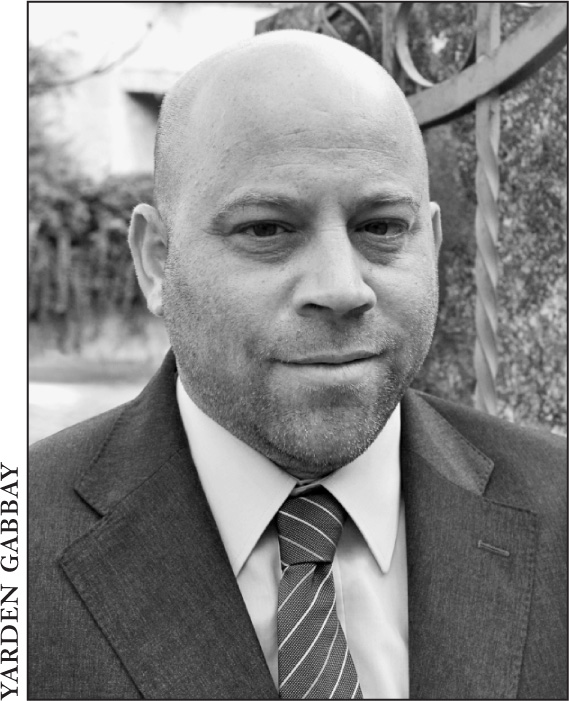
ANSHEL PFEFFER has covered Israeli politics and global affairs for two decades. He is a senior correspondent and columnist for Haaretz and Israel correspondent for The Economist. He lives in Jerusalem.
A Note on Sources
FOR ALL THE INTENSE INTEREST IT GENERATES, THERE ARE RELATIVELY FEW GOOD books and biographies on Israeli politics and political figures. Israeli political journalists work daily, feeding the beast and the small Hebrew-speaking audience; the investment of labor in political books is not very rewarding financially.
Thankfully, these political journalists more than make up for the lack of books in their daily output. A great many of them have done enough work to lay the foundations for any serious research in the Netanyahu period. The work of five of these journalists in particular is invaluable to any understanding of this era: Haaretz’s Yossi Verter; Nahum Barnea of Yedioth Ahronoth; Ben Kaspit of Maariv; Channel 10’s Raviv Drucker; and Channel 2’s Amit Segal. To this must be added the more specialized work of my Haaretz colleagues Aluf Benn and Barak Ravid on diplomacy; Gidi Weitz on corruption; Guy Rolnik on the economy; and Amos Harel and Amir Oren on security policy. Outside Israel, the one journalist who best chronicled the eight stormy years of the Netanyahu-Obama relationship is Jeffrey Goldberg of The Atlantic.
Of the biographies that have been written during the Netanyahu years, the first two, published in 1997, are very useful—Ronit Vardi’s Bibi—Who Are You Mr. Prime Minister? (in Hebrew) (Jerusalem: Keter, 1997), and Ben Kaspit and Ilan Kfir’s Netanyahu: The Road to Power (in Hebrew) (Tel Aviv: Alpha, 1997).
Other useful books on Israeli politics include Dan Margalit’s I Saw Them (in Hebrew) (Or Yehuda: Kinneret Zmora-Bitan, 1997), and Nahum Barnea’s Netanyahu Days (in Hebrew) (Or Yehuda: Kinneret Zmora-Bitan, 1999). The Princes: The Sons and Daughters of the Begin Generation Who Became Leaders (in Hebrew), by Gil Samsonov (Or Yehuda: Kinneret Zmora-Bitan, 2015), offers a rare insider’s view of the evolution of Likud’s leadership, and Arieh Eldad’s How Things Are Seen from Here: What Happens to the Leaders of the Right When They Come to Power (in Hebrew) (Or Yehuda: Kinneret Zmora-Bitan, 2016) is a fascinating right-wing perspective on the failings of Likud prime ministers. Sayeret Matkal: The Elite Unit of Israel (in Hebrew) (Jerusalem: Keter, 2000), by Moshe Zonder, is a groundbreaking history of the unit in which the Netanyahu brothers served. Among the Israeli political biographies, David Landau’s Arik: The Life of Ariel Sharon (New York: Knopf, 2013) is a rare masterpiece.
Important aspects of Israeli politics and Netanyahu’s career are covered in Generals in the Cabinet Room: How the Military Shapes Israeli Policy, by Yoram Peri (Washington, DC: United States Institute of Peace Press, 2006), and The Worst Kept Secret: Israel’s Bargain with the Bomb, by Avner Cohen (New York: Columbia University Press, 2010). Of the handful of books written about specific Israeli elections, the two written by Daniel Ben Simon on the 1996 and 1999 campaigns—Another Land—Victory of the Margins: How the Left Collapsed and the Right Arose (in Hebrew) (Tel Aviv: Arye Nir, 1997), and Disenchanted Tribes: Israel Goes to Elections ‘99 (in Hebrew) (Jerusalem: Carmel, 1999)—are by far the most perceptive and informative.
For an understanding of America’s role in Middle East diplomacy and the frequent clashes between Netanyahu and US administrations, Aaron David Miller’s The Much Too Promised Land (New York: Bantam, 2009) and Dennis Ross’s The Missing Peace (New York: Farrar, Straus and Giroux, 2004) and Doomed to Succeed (New York: Farrar, Straus and Giroux, 2015) are indispensable. Peter Beinart’s The Crisis of Zionism (New York: Times Books, 2012) makes a start on understanding the growing divide between Netanyahu’s Israel and the Jews of the Diaspora.
Adi Armon’s research in the early years of Benzion Netanyahu and the ideological struggles that formed his worldview appeared in Haaretz and are key to understanding his formative years. Profiles of Netanyahu appearing in the American press over the years that have the rare distinction of withstanding the test of time are David Remnick’s “The Outsider” in The New Yorker, May 25, 1998, and “Star of Zion,” by David Margolick, in Vanity Fair, June 1996, along with the chapter on Netanyahu in Views in Review: Politics and Culture in the State of the Jews (New York: Farrar, Straus and Giroux, 1998), by Avishai Margalit.
An extremely useful guide for the non-initiated to Israeli politics and the fundamentals of the Israeli-Palestinian conflict is Anton La Guardia’s Holy Land, Unholy War: Israelis and Palestinians (London: John Murray, 2001). The indispensable books on Israeli and Zionist history during the lives of Bibi and his father and grandfather are Tom Segev’s One Palestine, Complete: Jews and Arabs Under the British Mandate (New York: Metropolitan Books, 2000); 1949: The First Israelis (New York: Free Press, 1986); The Seventh Million: The Israelis and the Holocaust (New York: Hill and Wang, 1993); and 1967: Israel, the War, and the Year That Transformed the Middle East (New York: Metropolitan Books, 2007); Avi Shlaim’s The Iron Wall: Israel and the Arab World (New York: Norton, 2000); Benny Morris’s Righteous Victims: A History of the Zionist-Arab Conflict, 1881–1998 (New York: Knopf, 1999) and Enemies and Neighbours, by Ian Black (London: Allen Lane, 2017).