
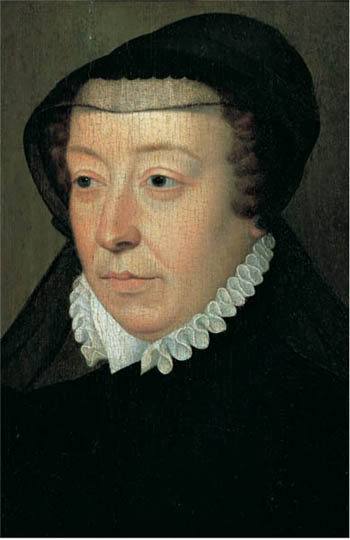
Catherine de Medici during her long widowhood.
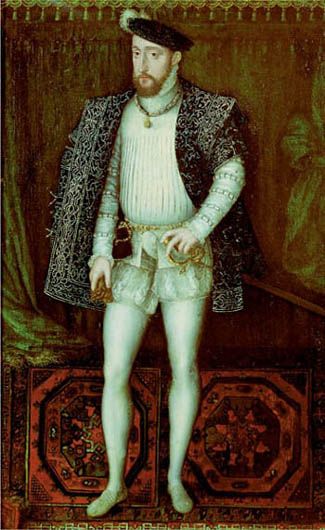
Catherine’s husband, King Henry II, in 1547, the year he ascended the throne of France.
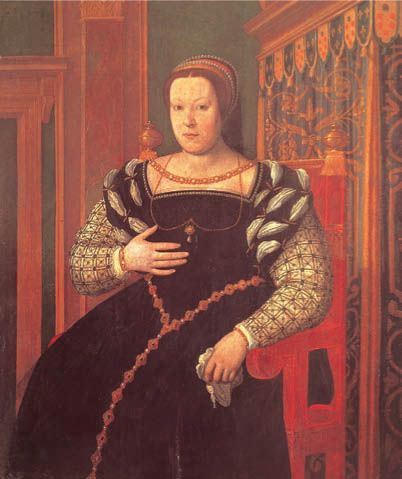
Catherine as a young woman, from a portrait in the Uffizi Gallery, Florence.
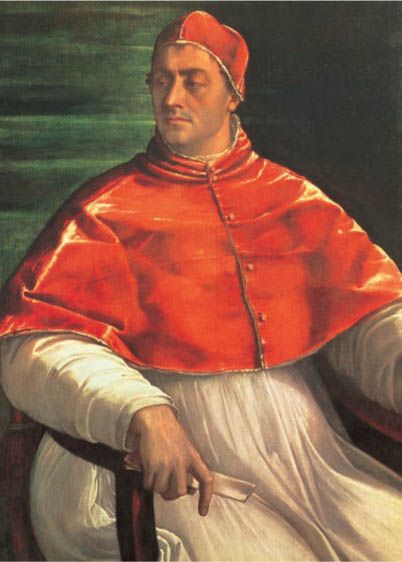
Pope Clement VII, c.1526, by Sebastiano del Piombo.
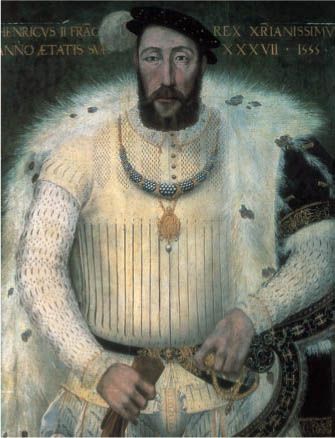
King Henry II later in his reign.
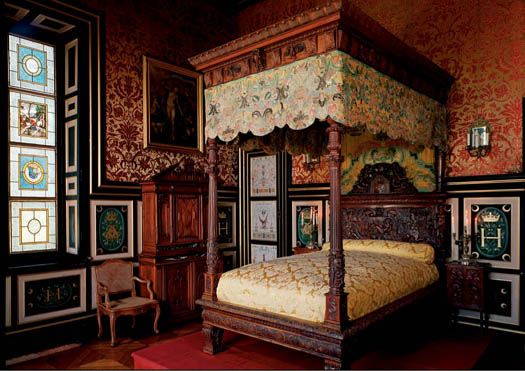
The bedroom at the Château d’Anet that Henry II shared with his lifelong mistress Diane de Poitiers.
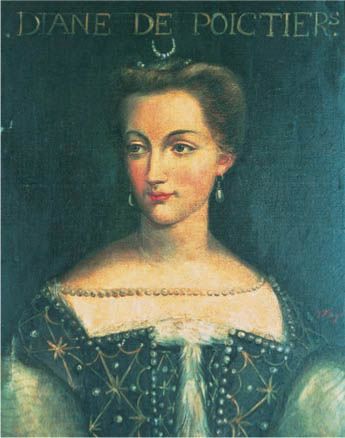
Diane de Poitiers, the legendary beauty – the crescent moon in her hair an allusion to the chaste goddess of the hunt.
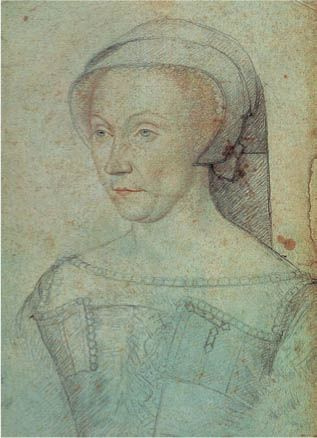
Diane de Poitiers as she was more accurately depicted by the court painter François Clouet.
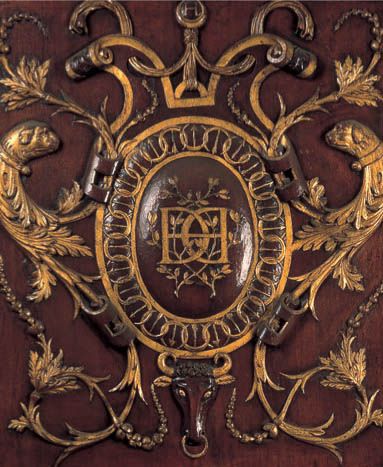
The ubiquitous device adopted by Henry and Diane intertwining their initials in a way that could nonetheless also be interpreted to include two back-to-back ‘C’s, as a sop to Catherine’s pride. From a panelled door originally in the Château d’Anet.
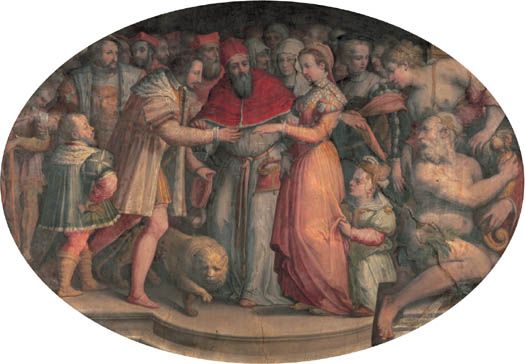
Giorgio Vasari’s allegorical portrayal of Catherine and Henry’s wedding in 1533. Pope Clement VII is marrying the couple.
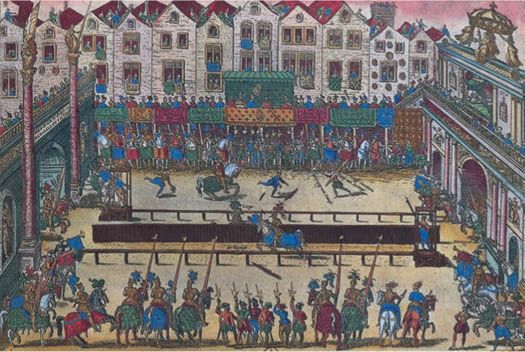
The tournament at which Henry II was mortally wounded by a splintered jousting lance to the eye.
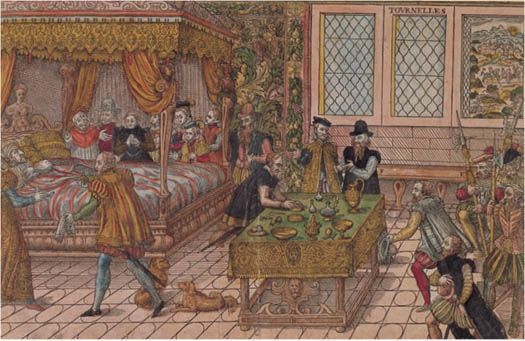
Catherine with other members of the royal family and senior courtiers attend the deathbed of Henry II. Note the surgeons’ futile and grisly experiments on a nearby table.
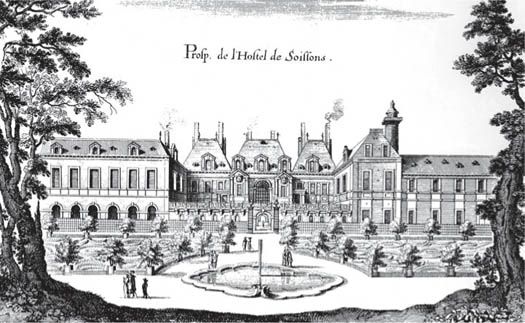
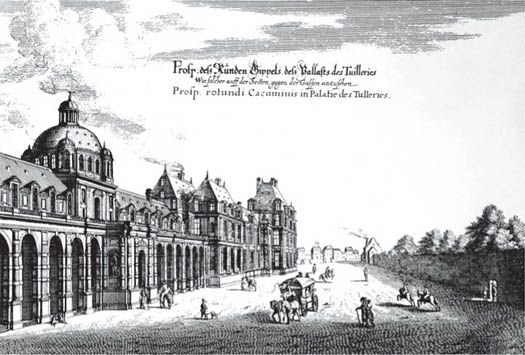
Two of Catherine’s architectural triumphs in Paris: the Hôtel de la Reine (featuring the Colonne de l’Horoscope, which is all that survives today), and the Tuileries Palace in about 1650, home to every French monarch until Napoleon III.
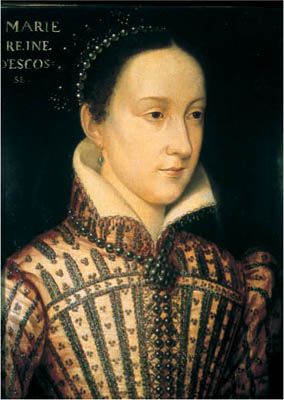
The young Mary, Queen of Scots, who married Catherine’s eldest son the Dauphin Francis.
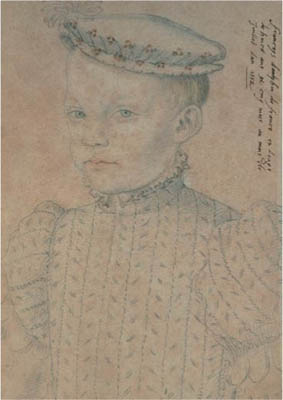
Francis, later King Francis II, as a boy of eight.
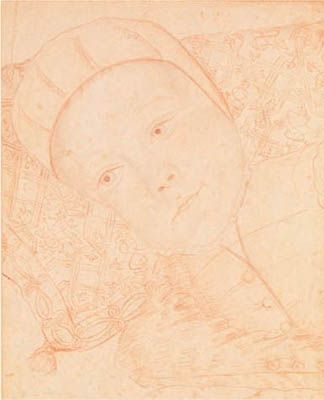
One of Catherine’s and Henry’s children, believed to be Charles-Maximilien (later Charles IX), by Clouet.
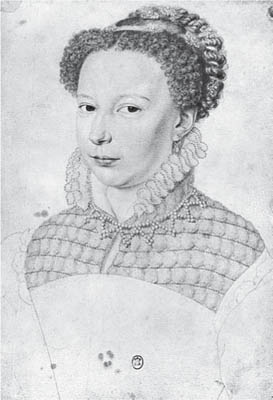
The magnetic Marguerite of Valois, later known as ‘La Reine Margot’, also by Clouet.
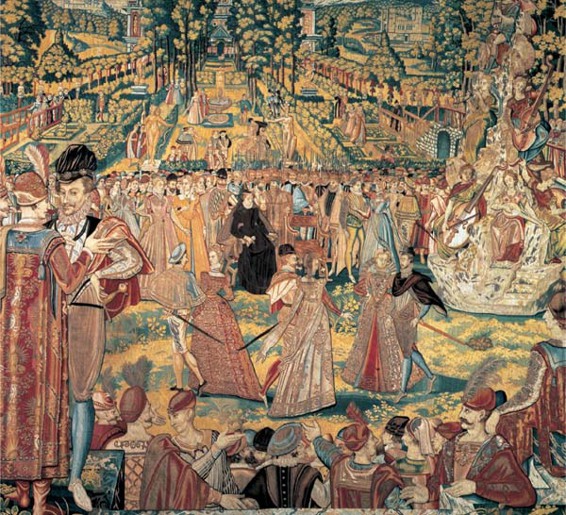
A ‘magnificence’ in Paris in 1573 in honour of the Polish ambassadors, celebrating Catherine’s son Henri III’s election as King of Poland. Note Catherine’s black-clad figure in the centre of the tapestry.
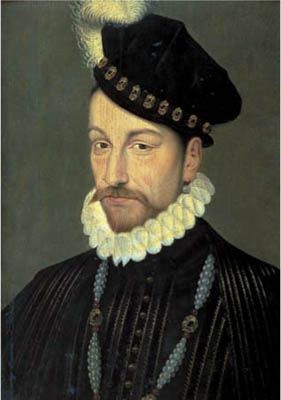
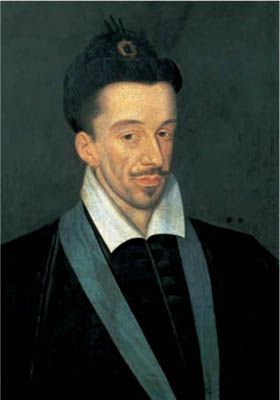
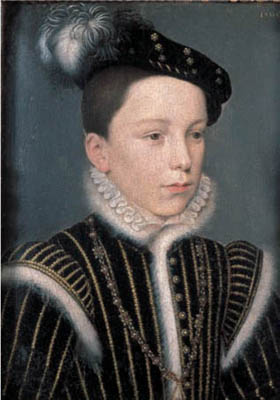
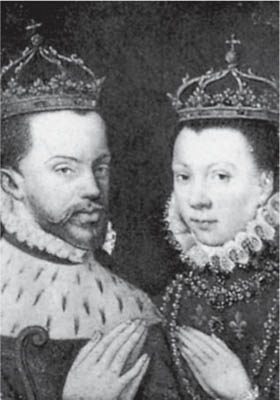
Clockwise from top left: Charles IX as King; Hercules, later Francis, Duke of Alençon, the runt of Catherine’s litter; King Philip II of Spain and his wife Elisabeth, Catherine’s eldest daughter; Catherine’s favourite son, the Duke of Anjou, shortly before his accession as Henri III.
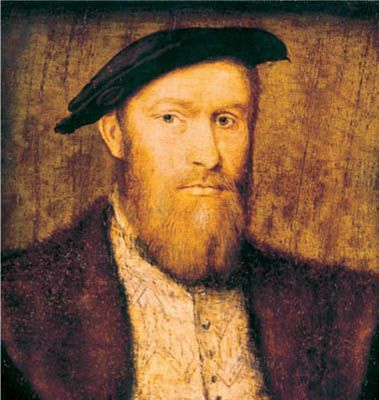
The rival factions: Anne de Montmorency, Constable of France, and Henry II’s mentor.
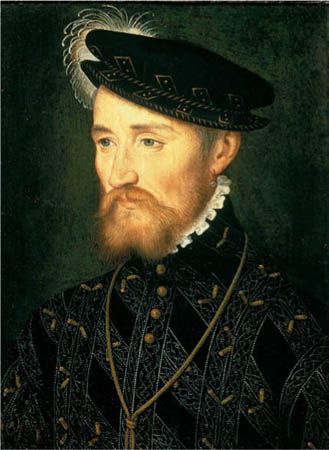
François, 2nd Duke of Guise: soldier-statesman who masterminded the 1559 coup.
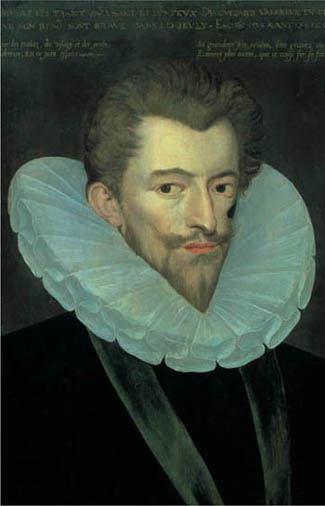
The Catholic Paladin: Henri, 3rd Duke of Guise, ‘le balafré’, later known as ‘The King of Paris’ (scar clearly evident in this portrait).
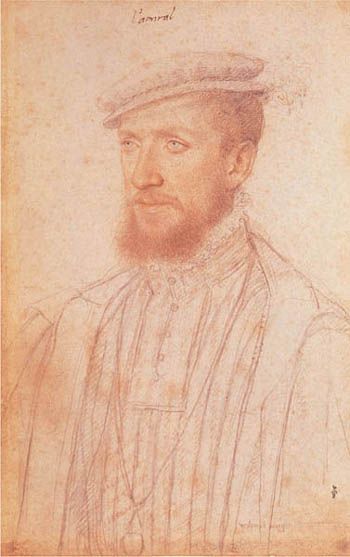
Admiral Gaspard de Coligny, leader of the Huguenots.
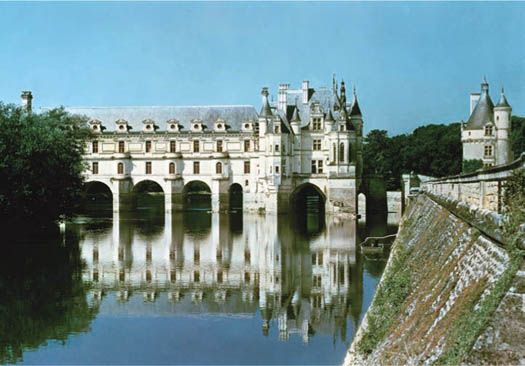
The exquisite Château of Chenonceau, originally a gift from Henry to Diane, which Catherine finally appropriated.
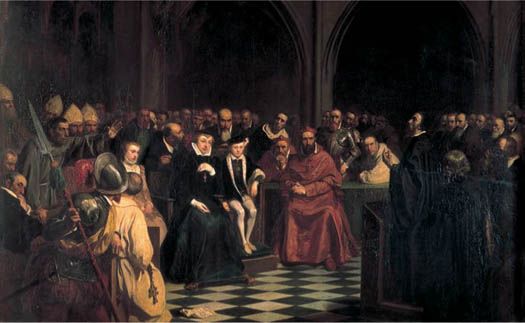
A romanticised portrayal of the 1561 Colloquy of Poissy. Catherine, seated beside her son Charles IX, attempts to reconcile Catholics with Protestants.
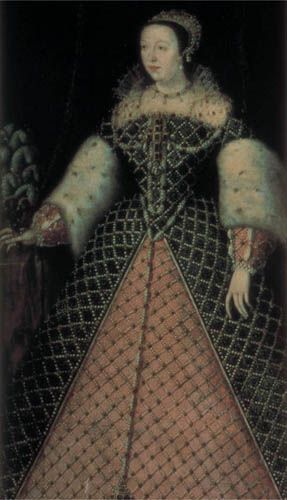
Catherine as Queen of France, the image of majesty.
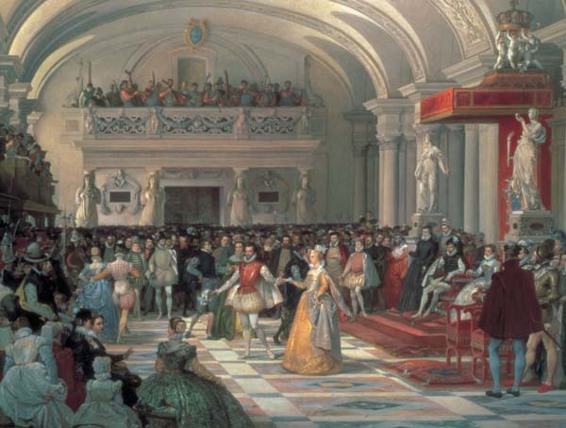
A nineteenth-century depiction of the wedding celebrations of Henri de Bourbon, King of Navarre (later Henri IV) and Margot, some days before the Massacre of St Bartholemew. Note Catherine standing beside King Charles IX.
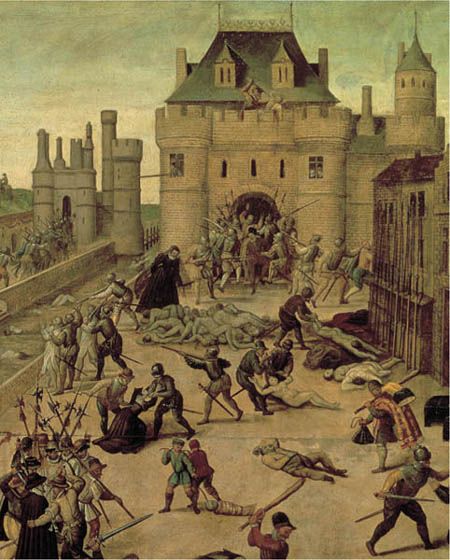
Catherine standing over corpses after the massacre of St Bartholomew – probably a piece of Protestant propaganda.
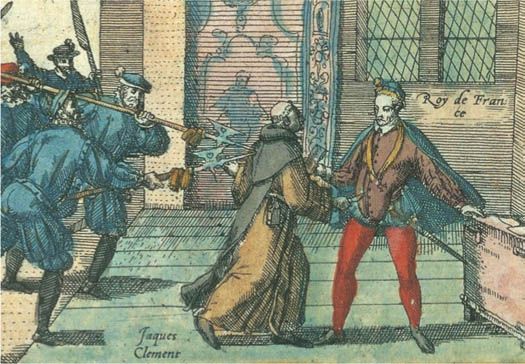
The Valois dynasty ended with the assassination of Henri III in 1589, depicted in this contemporary engraving.
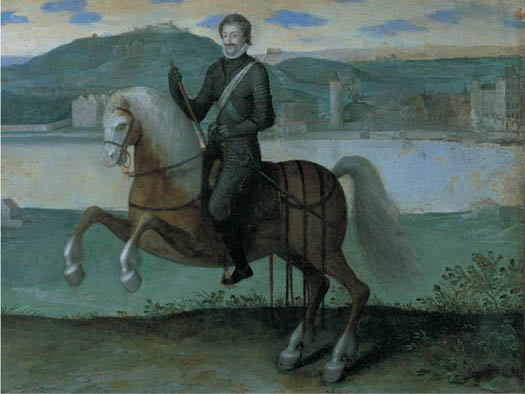
The future: Henry IV, King of France and Navarre. ‘I rule with my arse in the saddle and my gun in my fist.’
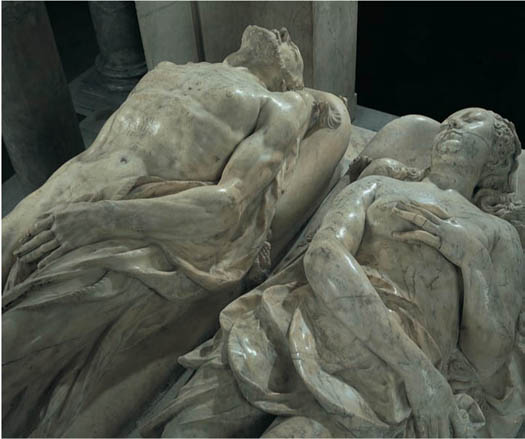
The ‘gisants’ of Henry II and Catherine at the Cathedral of St Denis. Henry’s agonised expression reflects the horror of his dying moments.