
Einstein’s letters and writings through 1920 have been published in The Collected Papers of Albert Einstein series, and they are identified by the dates used in those volumes. Unpublished material that is in the Albert Einstein Archives (AEA) is identified using the folder (reel)-document numbering format of the archives. For some of the material, especially that previously unpublished, I have used translations made for me by James Hoppes and Natasha Hoffmeyer.
EPIGRAPH
1. Einstein to Eduard Einstein, Feb. 5, 1930. Eduard was suffering from deepening mental illness at the time. The exact quote is: “Beim Menschen ist es wie beim Velo. Nur wenn er faehrt, kann er bequem die Balance halten.” A more literal translation is: “It is the same with people as it is with riding a bike. Only when moving can one comfortably maintain one’s balance.” Courtesy of Barbara Wolff, Einstein archives, Hebrew University, Jerusalem.
CHAPTER ONE: THE LIGHT-BEAM RIDER
1. Einstein to Conrad Habicht, May 18 or 25, 1905.
2. These ideas are drawn from essays I wrote in Time, Dec. 31, 1999, and Discover, Sept. 2004.
3. Dudley Herschbach, “Einstein as a Student,” Mar. 2005, unpublished paper provided to the author. Herschbach says, “Efforts to improve science education and literacy face a root problem: science and mathematics are regarded not as part of the general culture, but rather as the province of priest-like experts. Einstein is seen as a towering icon, the exemplar par excellence of lonely genius. That fosters an utterly distorted view of science.”
4. Frank 1957, xiv; Bernstein 1996b, 18.
5. Vivienne Anderson to Einstein, Apr. 27, 1953, AEA 60-714; Einstein to Vivienne Anderson, May 12, 1953, AEA 60-716.
6. Viereck, 377. See also Thomas Friedman, “Learning to Keep Learning,”New York Times, Dec. 13, 2006.
7. Einstein to Mileva Mari , Dec. 12, 1901; Hoffmann and Dukas, 24. Hoff-mann was Einstein’s friend in the late 1930s in Princeton. He notes, “His early suspicion of authority, which never wholly left him, was to prove of decisive importance.”
8. Einstein message for Ben Scheman dinner, Mar. 1952, AEA 28-931.
CHAPTER TWO: CHILDHOOD
1. Einstein to Sybille Blinoff, May 21, 1954, AEA 59-261; Ernst Straus, “Reminiscences,” in Holton and Elkana, 419; Vallentin, 17; Maja Einstein, lviii.
2. See, for example, Thomas Sowell, The Einstein Syndrome: Bright Children Who Talk Late (New York: Basic Books, 2002).
3. Nobel laureate James Franck quoting Einstein in Seelig 1956b, 72.
4. Vallentin, 17; Einstein to psychologist Max Wertheimer, in Wertheimer, 214.
5. Einstein to Hans Muehsam, Mar. 4,1953, AEA 60-604. Also: “I think we can dispense with this question of heritage,” Einstein is quoted in Seelig 1956a, 11. See also Michelmore, 22.
6. Maja Einstein, xvi; Seelig 1956a, 10.
7. www.alemannia-judaica.de/synagoge_buchau.htm.
8. Einstein to Carl Seelig, Mar. 11, 1952, AEA 39-13; Highfield and Carter, 9.
9. Maja Einstein, xv; Highfield and Carter, 9; Pais 1982, 36.
10. Birth certificate, CPAE 1: 1; Fantova, Dec. 5, 1953.
11. Pais 1982, 36–37.
12. Maja Einstein, xviii. Maria was sometimes used as a stand-in for the name Miriam in Jewish families.
13. Frank 1947, 8.
14. Maja Einstein, xviii–xix; Fölsing, 12; Pais 1982, 37.
15. Some researchers view such a pattern as possibly being a mild manifestation of autism or Asperger’s syndrome. Simon Baron-Cohen, the director of the Autism Research Center at Cambridge University, is among those who suggest that Einstein might have exhibited characteristics of autism. He writes that autism is associated with a “particularly intense drive to systemize and an unusually low drive to empathize.” He also notes that this pattern “explains the ‘islets of ability’ that people with autism display in subjects like math or music or drawing—all skills that benefit from systemizing.” See Simon Baron-Cohen, “The Male Condition,”New York Times , Aug. 8, 2005; Simon Baron-Cohen, The Essential Difference (New York: Perseus, 2003), 167; Norm Ledgin,Asperger’s and Self-Esteem: Insight and Hope through Famous Role Models (Arlington,TX: Future Horizons, 2002), chapter 7; Hazel Muir, “Einstein and Newton Showed Signs of Autism,”New Scientist , Apr. 30, 2003; Thomas Marlin, “Albert Einstein and LD,”Journal of Learning Disabilities , Mar. 1, 2000, 149. A Google search of Einstein + Asperger’s results in 146,000 pages. I do not find such a long-distance diagnosis to be convincing. Even as a teenager, Einstein made close friends, had passionate relationships, enjoyed collegial discussions, communicated well verbally, and could empathize with friends and humanity in general.
16. Einstein 1949b, 9; Seelig 1956a, 11; Hoffmann 1972, 9; Pais 1982, 37; Vallentin, 21; Reiser, 25; Holton 1973, 359; author’s interview with Shulamith Oppenheim, Apr. 22, 2005.
17. Overbye, 8; Shulamith Oppenheim, Rescuing Albert’s Compass (New York: Crocodile, 2003).
18. Holton 1973, 358.
19. Fölsing, 26; Einstein to Philipp Frank, draft, 1940, CPAE 1, p. lxiii.
20. Maja Einstein, xxi; Bucky, 156; Einstein to Hans Albert Einstein, Jan. 8, 1917.
21. Hans Albert Einstein interview in Whitrow, 21; Bucky, 148.
22. Einstein to Paul Plaut, Oct. 23, 1928, AEA 28-65; Dukas and Hoffmann, 78; Moszkowski, 222. Einstein originally wrote that music and science “complement each other in the release they offer,” but he later changed that to Befriedigung, or satisfaction, according to Barbara Wolff of Hebrew University.
23. Einstein to Otto Juliusburger, Sept. 29, 1942, AEA 38-238.
24. Clark, 25; Einstein 1949b, 3; Reiser, 28. (Anton Reiser was the pseudonym of Rudoph Kayser, who married Ilse Einstein, the daughter of Einstein’s second wife, Elsa.)
25. Maja Einstein, xix, says he was 7; in fact he enrolled on Oct. 1, 1885, when he was 6.
26. According to the version later told by his stepson-in-law, the teacher then added that Jesus was nailed to the cross “by the Jews”; Reiser, 30. But Einstein’s friend and physics colleague Philipp Frank makes a point of specifically noting that the teacher did not raise the role of the Jews; Frank 1947, 9.
27. Fölsing, 16; Einstein to unknown recipient, Apr. 3, 1920, CPAE 1: lx.
28. Reiser, 28–29; Maja Einstein, xxi; Seelig 1956a, 15; Pais 1982, 38; Fölsing, 20. Maja again has him only 8 when he enters the gymnasium, which he actually did in Oct. 1888, at age 9 and a half.
29. Brian 1996, 281. A Google search of Einstein failed math, performed in 2006, turned up close to 648,000 references.
30. Pauline Einstein to Fanny Einstein, Aug. 1, 1886; Fölsing, 18–20, citing Einstein to Sybille Blinoff, May 21, 1954, and Dr. H. Wieleitner in Nueste Nachrichten, Munich, Mar. 14, 1929.
31. Einstein to Sybille Blinoff, May 21, 1954, AEA 59-261; Maja Einstein, xx.
32. Frank 1947, 14; Reiser, 35; Einstein 1949b, 11.
33. Maja Einstein, xx; Bernstein 1996a, 24–27; Einstein interview with Henry Russo, The Tower , Princeton, Apr. 13, 1935.
34. Talmey, 164; Pais 1982, 38.
35. The first edition appeared in twelve volumes between 1853 and 1857. New editions, under a new title that is referred to in Maja’s essay, appeared in the late 1860s. They were constantly updated. The version likely owned by Einstein had twenty-one volumes and was bound into four or five large books. The definitive study of this book’s influence on Einstein is Frederick Gregory, “The Mysteries and Wonders of Science: Aaron Bernstein’s Naturwissenschaftliche Volksbücher and the Adolescent Einstein,” in Howard and Stachel 2000, 23–42. Maja Einstein, xxi; Einstein 1949b, 15; Seelig 1956a, 12.
36. Aaron Bernstein, Naturwissenschaftliche Volksbücher , 1870 ed., vols. 1, 8, 16, 19; Howard and Stachel 2000, 27–39.
37. Einstein 1949b, 5.
38. Talmey, 163. (Talmud wrote his small memoir after he had changed his name to Talmey in America.)
39. Einstein, “On the Method of Theoretical Physics,” Herbert Spencer lecture, Oxford, June 10, 1933, in Einstein 1954, 270.
40. Einstein 1949b, 9, 11; Talmey, 163; Fölsing, 23 (he speculates that the “sacred” book may have been another text); Einstein 1954, 270.
41. Aaron Bernstein, vol. 12, cited by Frederick Gregory in Howard and Stachel 2000, 37; Einstein 1949b, 5.
42. Frank 1947, 15; Jammer, 15–29. “The meaning of a life of brilliant scientific activity drew on the remnants of his fervent first feelings of youthful religiosity,” writes Gerald Holton in Holton 2003, 32.
43. Einstein 1949b, 5; Maja Einstein, xxi.
44. Einstein, “What I Believe,”Forum and Century (1930): 194, reprinted as “The World As I See It,” in Einstein 1954, 10. According to Philipp Frank, “He saw the parade as a movement of people compelled to be machines”; Frank 1947, 8.
45. Frank 1947, 11; Fölsing, 17; C. P. Snow, “Einstein,” in Variety of Men (New York: Scribner’s, 1966), 26.
46. Einstein to Jost Winteler, July 8, 1901.
47. Pais 1982, 17, 38; Hoffmann 1972, 24.
48. Maja Einstein, xx; Seelig 1956a, 15; Pais 1982, 38; Einstein draft to Philipp Frank, 1940, CPAE 1, p. lxiii.
49. Stefann Siemer, “The Electrical Factory of Jacob Einstein and Cie.,” in Renn 2005b, 128–131; Pyenson, 40.
50. Overbye, 9–10; Einstein draft to Philipp Frank, 1940, CPAE 1, p. lxiii; Hoff-mann, 1972, 25–26; Reiser, 40; Frank 1947, 16; Maja Einstein, xxi; Fölsing, 28–30.
51. Einstein to Marie Winteler, Apr. 21, 1896; Fölsing 34;The Jewish Spectator , Jan. 1969.
52. Frank 1947, 17; Maja Einstein, xxii; Hoffmann 1972, 27.
53. Einstein, “On the Investigation of the State of the Ether in a Magnetic Field,” summer 1895, CPAE 1: 5.
54. Einstein to Caesar Koch, summer 1895.
55. Albin Herzog to Gustave Maier, Sept. 25, 1895, CPAE 1 (English), p. 7; Fölsing, 37; Seelig 1956a, 9.
56. This process of envisaging is what Kantian philosophers call Anschauung. See Miller 1984, 241–246.
57. Seelig 1956b, 56; Fölsing, 38.
58. Miller 2001, 47; Maja Einstein, xxii; Seelig 1956b, 9; Fölsing, 38; Holton, “On Trying to Understand Scientific Genius,” in Holton 1973, 371.
59. Bucky, 26; Fölsing, 46. Einstein provides a fuller description in his “Autobiographical Notes,” in Schilpp, 53.
60. Gustav Maier to Jost Winteler, Oct. 26, 1895, CPAE 1: 9; Fölsing, 39; High-field and Carter, 22–24.
61. Vallentin, 12; Hans Byland, Neue Bündner Zeitung , Feb. 7, 1928, cited in Seelig 1956a, 14; Fölsing, 39.
62. Pauline Einstein to the Winteler family, Dec. 30, 1895, CPAE 1: 15.
63. Einstein to Marie Winteler, Apr. 21, 1896.
64. Entrance report, Aarau school, CPAE 1: 8; Aarau school record, CPAE 1: 10; Hermann Einstein to Jost Winteler, Oct. 29, 1995, CPAE 1: 11, and Dec. 30, 1895, CPAE 1: 14.
65. Report on a Music Examination, Mar. 31, 1896, CPAE 1: 17; Seelig 1956a, 15; Overbye, 13.
66. Release from Würtemberg citizenship, Jan. 28, 1896, CPAE 1: 16.
67. Einstein to Julius Katzenstein, Dec. 27, 1931, cited in Fölsing, 41.
68. Israelitisches Wochenblatt , Sept. 24, 1920; Einstein, “Why Do They Hate the Jews?,”Collier’s, Nov. 26, 1938.
69. Einstein to Hans Muehsam, Apr. 30, 1954, AEA 38-434; Fölsing 42.
70. Examination results, Sept. 18–21, 1896, CPAE 1: 20–27.
71. Overbye, 15; Maja Einstein, xvii.
72. Einstein to Heinrich Zangger, Aug. 11, 1918.
CHAPTER THREE: THE ZURICH POLYTECHNIC
1. Cahan, 42; editor’s note, CPAE 1 (German), p. 44.
2. Einstein 1949b, 15.
3. Record and Grade Transcript, Oct. 1896–Aug. 1900, CPAE 1: 28; Bucky, 24; Einstein to Arnold Sommerfeld, Oct. 29, 1912; Fölsing, 50.
4. Einstein to Mileva Mari, Feb. 1898; Cahan, 64.
5. Louis Kollros, “Albert Einstein en Suisse,”Helvetica Physica , Supplement 4 (1956): 22, in AEA 5-123; Adolf Frisch, in Seelig 1956a, 29; Cahan, 67; Clark, 55.
6. Seelig 1956a, 30; Overbye, 43; Miller 2001, 52; Charles Seife, “The True and the Absurd,” in Brockman, 63.
7. Record and Grade Transcript, CPAE 1: 28.
8. Seelig 1956a, 30; Bucky, 25 (a slightly different version); Fölsing, 57.
9. Seelig 1956a, 30.
10. Einstein to Julia Niggli, July 28, 1899.
11. Seelig 1956a, 28; Whitrow, 5.
12. Einstein 1949b, 15–17.
13. Einstein interview in Bucky, 27; Einstein to Elizabeth Grossmann, Sept. 20, 1936, AEA 11-481; Seelig 1956a, 34, 207; Fölsing, 53.
14. Holton 1973, 209–212. Einstein’s stepson-in-law Rudolph Kayser and colleague Philipp Frank both say that Einstein read Föppl in his spare time while at the Polytechnic.
15. Clark, 59; Galison, 32–34. Galison’s book on Poincaré and Einstein is a fascinating exposition on how they developed their concepts and how Poincaré’s observations were “an anticipatory note to Einstein’s special theory of relativity, a brilliant move by an author lacking the intellectual courage to pursue it to its logical, revolutionary end” (Galison, 34). Also very useful is Miller 2001, 200–204.
16. Seelig 1956a, 37; Whitrow, 5; Bucky, 156.
17. Miller 2001, 186; Hoffmann, 1972, 252; interview with Lili Foldes, The Etude , Jan. 1947, in Calaprice, 150; Einstein to Emil Hilb questionnaire, 1939, AEA 86-22; Dukas and Hoffmann, 76.
18. Seelig 1956a, 36.
19. Fölsing, 51, 67; Reiser, 50; Seelig 1956a, 9.
20. Clark, 50. Diana Kormos Buchwald points out that a careful examination of the picture of him at the Aarau school shows holes in his jacket.
21. Einstein to Maja Einstein, 1898.
22. Einstein to Maja Einstein, after Feb. 1899.
23. Marie Winteler to Einstein, Nov. 4–25, 1896.
24. Marie Winteler to Einstein, Nov. 30, 1896.
25. Pauline Einstein to Marie Winteler, Dec. 13, 1896.
26. Einstein to Pauline Winteler, May 1897.
27. Marie Winteler to Einstein, Nov. 4–25, Nov. 30.
28. Novi Sad, the cultural center of the Serbian people, had long been a “free royal city,” then part of a Serbian autonomous region of the Hapsburg Empire. By the time Mari was born, it was in the Hungarian part of Austria-Hungary. Approximately 40 percent of the citizens there spoke Serbian when she was growing up, 25 percent spoke Hungarian, and about 20 percent spoke German. It is now the second largest city, after Belgrade, in the Republic of Serbia.
29. Desanka Trbuhovic-Gjuric, 9–38; Dord Krstic, “Mileva Einstein-Mari,” in Elizabeth Einstein, 85; Overbye, 28–33; Highfield and Carter, 33–38; Marriage certificate, CPAE 5: 4.
30. Dord Krstic, “Mileva Einstein-Mari,” in Elizabeth Einstein, 88 (Krstic’s piece is based partly on interviews with school friends); Barbara Wolff, an expert on Einstein’s life at the Hebrew University archives, says, “I imagine that Einstein was the main reason Mileva fled Zurich.”
31. Mileva Mari to Einstein, after Oct. 20, 1897.
32. Einstein to Mileva Mari, Feb. 16, 1898.
33. Einstein to Mileva Mari, after Apr. 16, 1898, after Nov. 28, 1898.
34. Recollection of Suzanne Markwalder, in Seelig 1956a, 34; Fölsing, 71.
35. Einstein to Mileva Mari, Mar. 13 or 20, 1899.
36. Einstein to Mileva Mari, Aug. 10, 1899, Mar. 1899, Sept. 13, 1900.
37. Einstein to Mileva Mari, Sept. 13, 1900, early Aug. 1899, Aug. 10, 1899.
38. Einstein to Mileva Mari, ca. Sept. 28, 1899.
39. Mileva Mari to Einstein, 1900.
40. Intermediate Diploma Examinations, Oct. 21, 1898, CPAE 1: 42.
41. Einstein to Mileva Mari, Sept. 10, 1899; Einstein 1922c (see bibliography for explanation about this Dec. 14, 1922, lecture in Kyoto, Japan).
42. Einstein, 1922c; Reiser, 52; Einstein to Mileva Mari, ca. Sept. 28, 1899; Renn and Schulmann, 85, footnotes 11: 3, 11: 4. Wilhelm Wien’s paper was delivered in Sept. 1898 in Düsseldorf and published in the Annalen der Physik 65, no. 3 of that year.
43. Einstein to Mileva Mari, Oct. 10, 1899; Seelig 1956a, 30; Fölsing, 68; Over-bye, 55; final diploma examinations, CPAE 1: 67. The essay marks as recorded in CPAE are multiplied by 4 to reflect their weight in the final results.
44. Final diploma examinations, CPAE 1: 67.
45. Einstein to Walter Leich, Apr. 24, 1950, AEA 60-253; Walter Leich memo describing Einstein, Mar. 6, 1957, AEA 60-257.
46. Einstein, 1949b, 17.
47. Einstein to Mileva Mari, Aug. 1, 1900.
CHAPTER FOUR: THE LOVERS
1. Einstein to Mileva Mari, ca. July 29, 1900.
2. Einstein to Mileva Mari, Aug. 6, 1900.
3. Einstein to Mileva Mari, Aug. 1, Sept. 13, Oct. 3, 1900.
4. Einstein to Mileva Mari, Aug. 30, 1900.
5. Einstein to Mileva Mari, Aug. 1, Aug. 6, ca. Aug. 14, Aug. 20, 1900.
6. Einstein to Mileva Mari, Aug. 6, 1900.
7. Einstein to Mileva Mari, ca. Aug. 9, Aug. 14?, Aug. 20, 1900.
8. Einstein to Mileva Mari, ca. Aug. 9, ca. Aug. 14, 1900. Both of these letters came from this visit to Zurich.
9. Einstein to Mileva Mari, Sept. 13, 1900.
10. Einstein to Mileva Mari, Sept. 19, 1900.
11. Einstein to Adolf Hurwitz, Sept. 26, Sept. 30, 1900.
12. Einstein to Mileva Mari, Oct. 3, 1900; Einstein to Mrs. Marcel Grossmann, 1936; Seelig 1956a, 208.
13. Einstein’s municipal citizenship application, Zurich, Oct. 1900, CPAE 1: 82; Einstein to Helene Kaufler, Oct. 11, 1900; minutes of the naturalization commission of Zurich, Dec. 14, 1900, CPAE 1: 84.
14. Einstein to Mileva Mari, Sept. 13, 1900.
15. Einstein to Mileva Mari, Oct. 3, 1900.
16. Einstein, “Conclusions Drawn from the Phenomena of Capillarity,”Annalen der Physik , CPAE 2: 1, received Dec. 13, 1900, published Mar. 1, 1901. “The paper is very difficult to understand, not least because of the large number of obvious misprints; from its lack of clarity we can only assume that it had not been independently refereed ... Yet it was an extraordinarily advanced paper for a recent graduate who was receiving no independent scientific advice.” John N. Murrell and Nicole Grobert, “The Centenary of Einstein’s First Scientific Paper,”The Royal Society (London), Jan. 22, 2002, www.journals.royalsoc.ac.uk/app/home/content.asp.
17. Dudley Herschbach, “Einstein as a Student,” Mar. 2005, unpublished paper provided to the author.
18. Einstein to Mileva Mari, Apr. 15, Apr. 30, 1901; Mileva Mari to Helene Savi, Dec. 20, 1900.
19. Einstein to G. Wessler, Aug. 24, 1948, AEA 59-26.
20. Maja Einstein, sketch, 19; Reiser, 63; minutes of the Municipal Naturalization Commission of Zurich, Dec. 14, 1900, CPAE 1: 84; Report of the Schweitzerisches Informationsbureau, Jan. 30, 1901, CPAE 1: 88; Military Service Book, Mar. 13, 1901, CPAE 1: 91.
21. Mileva Mari to Helene Savi, Dec. 20, 1900; Einstein to Mileva Mari, Mar. 23, Mar. 27, 1901.
22. Einstein to Mileva Mari, Apr. 4, 1901.
23. Einstein to Heike Kamerlingh Onnes, Apr. 12, 1901; Einstein to Marcel Grossmann, Apr. 14, 1901; Fölsing, 78; Clark, 66; Miller 2001, 68.
24. Einstein to Wilhelm Ostwald, Mar. 19, Apr. 3, 1901.
25. Hermann Einstein to Wilhelm Ostwald, Apr. 13, 1901.
26. Einstein to Mileva Mari, Mar. 23, Mar. 27, 1901; Einstein to Marcel Grossmann, Apr. 14, 1901.
27. Einstein to Mileva Mari, Mar. 27, 1901; Mileva Mari to Helene Savi, Dec. 9, 1901.
28. Einstein to Mileva Mari, Apr. 4, 1901; Einstein to Michele Besso, June 23, 1918; Overbye, 25; Miller 2001, 78; Fölsing, 115.
29. Einstein to Mileva Mari, Mar. 27, Apr. 4, 1901.
30. Einstein to Marcel Grossmann, Apr. 14, 1901; Einstein to Mileva Mari, Apr. 15, 1901.
31. Einstein to Mileva Mari, Apr. 30, 1901. The official translation is “blue nightshirt,” but the word that Einstein actually used, Schlafrock , translates more accurately as “dressing gown.”
32. Mileva Mari to Einstein, May 2, 1901.
33. Mileva Mari to Helene Savi, second half of May, 1901.
34. Einstein to Mileva Mari, second half of May, 1901.
35. Einstein to Mileva Mari, tentatively dated in CPAE as May 28?, 1901. The actual date is probably a week or so later.
36. Overbye, 77–78.
37. Einstein to Mileva Mari, July 7, 1901.
38. Mileva Mari to Einstein, after July 7, 1901 (published in CPAE vol. 8 as 1: 116, because it was discovered after vol. 1 had been printed).
39. Mileva Mari to Einstein, ca. July 31, 1901; Highfield and Carter, 80.
40. Einstein to Jost Winteler, July 8, 1901; Einstein to Marcel Grossmann, Apr. 14, 1901. The comparison to the compass needle comes from Overbye, 65.
41. Renn 2005a, 109. Jürgen Renn is the director of the Max Planck Institute for the History of Science in Berlin and an editor of the Collected Papers of Albert Einstein. I am grateful to him for help with this topic.
42. Einstein to Mileva Mari, Apr. 15, 1901; Einstein to Marcel Grossmann, Apr. 15, 1901.
43. Renn 2005a, 124.
44. Einstein to Mileva Mari, Apr. 4, ca. June 4, 1901. The letters to and from Drude no longer exist, so it is not known precisely what Einstein’s objections were.
45. Einstein to Mileva Mari, ca. July 7, 1901; Einstein to Jost Winteler, July 8, 1901.
46. Renn 2005a, 118. Renn’s source notes say, “I gratefully acknowledge the kindness of Mr. Felix de Marez Oyens, from Christie’s, who pointed my attention to the missing page of the letter by Einstein to Mileva Mari, ca. 8 July 1901. As, unfortunately, no copy of the page is available to me, my interpretation had to be based on a raw transcription of the passage in question.”
47. Einstein to Marcel Grossmann, Sept. 6, 1901.
48. Overbye, 82–84. This includes a good synopsis of the Boltzmann-Ostwald dispute.
49. Einstein, “On the Thermodynamic Theory of the Difference in Potentials between Metals and Fully Dissociated Solutions of Their Salts,” Apr. 1902. Renn does not mention this paper in his analysis of Einstein’s dispute with Drude, and instead focuses only on the June 1902 paper.
50. Einstein, “Kinetic Theory of Thermal Equilibrium and the Second Law of Thermodynamics,” June 1902; Renn 2005a, 119; Jos Uffink, “Insuperable Difficulties: Einstein’s Statistical Road to Molecular Physics,”Studies in the History and Philosophy of Modern Physics 37 (2006): 38; Clayton Gearhart, “Einstein before 1905: The Early Papers on Statistical Mechanics,”American Journal of Physics (May 1990): 468.
51. Mileva Mari to Helene Savi, ca. Nov. 23, 1901; Einstein to Mileva Mari, Nov. 28, 1901.
52. Einstein to Mileva Mari, Dec. 17 and 19, 1901.
53. Receipt for the return of Doctoral Fees, Feb. 1, 1902, CPAE 1: 132; Fölsing, 88–90; Reiser, 69; Overbye, 91. From Einstein to Mileva Mari, ca. Feb. 8, 1902: “I’m explaining to [Conrad] Habicht the paper I submitted to Kleiner. He’s very enthusiastic about my good ideas and is pestering me to send Boltzmann the part of the paper which relates to his book. I’m going to do it.”
54. Einstein to Marcel Grossmann, Sept. 6, 1901.
55. Einstein to Mileva Mari, Nov. 28, 1901.
56. Mileva Mari to Einstein, Nov. 13, 1901; Highfield and Carter, 82.
57. Einstein to Mileva Mari, Dec. 12, 1901; Fölsing, 107; Zackheim, 35; High-field and Carter, 86.
58. Pauline Einstein to Pauline Winteler, Feb. 20, 1902.
59. Mileva Mari to Helene Savi, ca. Nov. 23, 1901.
60. Einstein to Mileva Mari, Dec. 11 and 19, 1901.
61. Einstein to Mileva Mari, Dec. 28, 1901.
62. Einstein to Mileva Mari, Feb. 4, 1902, Dec. 12, 1901.
63. Einstein to Mileva Mari, Feb. 4, 1902.
64. Mileva Mari to Einstein, Nov. 13, 1901. For some context, see Popovi, which includes a collection of letters between Mari and Savi collected by Savi’s grandson.
65. Einstein to Mileva Mari, Feb. 17, 1902.
66. Swiss Federal Council to Einstein, June 19, 1902.
67. See Peter Galison’s treatment of the synchronization of time in Europe at that period, in Galison, 222–248. Also, see chapter 6 below for a fuller discussion of the role this might have played in Einstein’s development of special relativity.
68. Einstein to Hans Wohlwend, autumn 1902; Fölsing, 102.
69. Einstein interview, Bucky, 28; Reiser, 66.
70. Einstein to Michele Besso, Dec. 12, 1919.
71. Einstein interview, Bucky, 28; Einstein 1956, 12. Both say essentially the same thing, with variations in wording and translation. Reiser, 64.
72. Alas, as a rule, all applications were destroyed after eighteen years, and even though Einstein was by then world-famous, his comments on inventions were disposed of during the 1920s; Fölsing, 104.
73. Galison, 243; Flückiger, 27.
74. Fölsing, 103; C. P. Snow, “Einstein,” in Goldsmith et al., 7.
75. Einstein interview, Bucky, 28; Einstein 1956, 12. See Don Howard, “A kind of vessel in which the struggle for eternal truth is played out,” AEA Cedex-H.
76. Solovine, 6.
77. Maurice Solovine, Dedication of the Olympia Academy, “A.D. 1903,” CPAE 2: 3.
78. Solovine, 11–14.
79. Einstein to Maurice Solovine, Nov. 25, 1948; Seelig 1956a, 57; Einstein to Conrad Habicht and Maurice Solovine, Apr. 3, 1953; Hoffmann 1972, 243.
80. The editors of Einstein’s papers, in the introduction to vol. 2, xxiv–xxv, describe the books and specific editions read by the Olympia Academy.
81. Einstein to Moritz Schlick, Dec. 14, 1915. In a 1944 essay about Bertrand Russell, Einstein wrote, “Hume’s clear message seemed crushing: the sensory raw material, the only source of our knowledge, through habit may lead us to belief and expectation but not to the knowledge and still less to the understanding of lawful relations.” Einstein 1954, 22. See also Einstein, 1949b, 13.
82. David Hume, Treatise on Human Nature , book 1, part 2; Norton 2005a.
83. There are varying interpretations of Kant’s Critique of Pure Reason (1781). I have tried here to stick closely to Einstein’s own view of Kant. Einstein, “Re-marks on Bertrand Russell’s Theory of Knowledge,” (1944) in Schilpp; Einstein 1954, 22; Einstein, 1949b, 11–13; Einstein, “On the Methods of Theoretical Physics,” the Herbert Spencer lecture, Oxford, June 10, 1933, in Einstein 1954, 270; Mara Beller, “Kant’s Impact on Einstein’s Thought,” in Howard and Stachel 2000, 83–106. See also Einstein, “Physics and Reality” (1936) in Einstein 1950a, 62; Yehuda Elkana, “The Myth of Simplicity,” in Holton and Elkana, 221.
84. Einstein 1949b, 21.
85. Einstein, Obituary for Ernst Mach, Mar. 14, 1916, CPAE 6: 26.
86. Philipp Frank, “Einstein, Mach and Logical Positivism,” in Schilpp, 272; Overbye, 25, 100–104; Gerald Holton, “Mach, Einstein and the Search for Reality,”Daedalus (spring 1968): 636–673, reprinted in Holton 1973, 221; Clark, 61; Einstein to Carl Seelig, Apr. 8, 1952; Einstein, 1949b, 15; Norton 2005a.
87. Spinoza, Ethics, part I, proposition 29 and passim; Jammer 1999, 47; Holton 2003, 26–34; Matthew Stewart, The Courtier and the Heretic (New York: Norton, 2006).
88. Pais 1982, 47; Fölsing, 106; Hoffmann 1972, 39; Maja Einstein, xvii; Overbye, 15–17.
89. Marriage Certificate, CPAE 5: 6; Miller 2001, 64; Zackheim, 47.
90. Einstein to Michele Besso, Jan. 22, 1903; Mileva Mari to Helene Savi, Mar. 1903; Solovine, 13; Seelig 1956a, 46; Einstein to Carl Seelig, May 5, 1952; AEA 39-20.
91. Mileva Mari to Einstein, Aug. 27, 1903; Zackheim, 50.
92. Einstein to Mileva Mari, ca. Sept. 19, 1903; Zackheim; Popovi; author’s discussions and e-mails with Robert Schulmann.
93. Popovi, 11; Zackheim, 276; author’s discussions and e-mails with Robert Schulmann.
94. Michelmore, 42.
95. Einstein to Mileva Mari, ca. Sept. 19, 1903.
96. Mileva Mari to Helene Savi, June 14, 1904; Popovi, 86; Whitrow, 19.
97. Overbye, 113, citing Desanka Trbuhovic-Gjuric, Im Schatten Albert Einstein (Bern: Verlag Paul Haupt, 1993), 94.
CHAPTER FIVE: THE MIRACLE YEAR
1. This quote is attributed in a variety of books and sources to an address Lord Kelvin gave to the British Association for the Advancement of Science in 1900. I have not found direct evidence for it, which is why I qualify it as “reportedly” said. It is not in the two-volume biography by Silvanus P. Thompson, The Life of Lord Kelvin (New York: Chelsea Publishing, 1976), originally published in 1910.
2. Pierre-Simon Laplace, A Philosophical Essay on Probabilities (1820; reprinted, New York: Dover, 1951). This famous statement of determinism comes in the preface of a work devoted to probability theory. The fuller line is that in ultimate reality we have determinism, but in practice we have probabilities. The achievement of full knowledge is not reachable, he says, so we need probabilities.
3. Einstein, Letter to the Royal Society on Newton’s bicentennial, Mar. 1927.
4. Einstein 1949b, 19.
5. For the influence of Faraday’s induction theories on Einstein, see Miller 1981, chapter 3.
6. Einstein and Infeld, 244; Overbye, 40; Bernstein 1996a, 49.
7. Einstein to Conrad Habicht, May 18 or 25, 1905.
8. Sent on Mar. 17, 1905, and published in Annalen der Physik 17 (1905). I want to thank Yale professor Douglas Stone for help with this section.
9. Max Born, obituary for Max Planck, Royal Society of London, 1948.
10. John Heilbron, The Dilemmas of an Upright Man (Berkeley: University of California Press, 1986). Lucid explanations of Einstein’s quantum paper, from which this section is drawn, include Gribbin and Gribbin; Bernstein 1996a, 2006; Overbye, 118–121; Stachel 1998; Rigden; A. Douglas Stone, “Genius and Genius2: Planck, Einstein and the Birth of Quantum Theory,” Aspen Center for Physics, unpublished lecture, July 20, 2005.
11. Planck’s approach was probably a bit more complex and involved assuming a group of oscillators and positing a total energy that is an integer multiple of a quantum unit. Bernstein 2006, 157–161.
12. Max Planck, speech to the Berlin Physical Society, Dec. 14, 1900. See Light-man 2005, 3.
13. Einstein 1949b, 46. Miller 1984, 112; Miller 1999, 50; Rynasiewicz and Renn, 5.
14. Einstein, “On the General Molecular Theory of Heat,” Mar. 27, 1904.
15. Einstein to Conrad Habicht, Apr. 15, 1904. Jeremy Bernstein discussed the connections between the 1904 and 1905 papers in an e-mail, July 29, 2005.
16. Einstein, “On a Heuristic Point of View Concerning the Production and Transformation of Light,” Mar. 17, 1905.
17. “We are startled, wondering what happened to the waves of light of the 19th century theory and marveling at how Einstein could see the signature of atomic discreteness in the bland formulae of thermodynamics,” says the science historian John D. Norton. “Einstein takes what looks like a dreary fragment of the thermodynamics of heat radiation, an empirically based expression for the entropy of a volume of high-frequency heat radiation. In a few deft inferences he converts this expression into a simple, probabilistic formula whose unavoidable interpretation is that the energy of radiation is spatially localized in finitely many, independent points.” Norton 2006c, 73. See also Lightman 2005, 48.
18. Einstein’s paper in 1906 noted clearly that Planck had not grasped the full implications of the quantum theory. Apparently, Besso encouraged Einstein not to make this criticism of Planck too explicit. As Besso wrote much later, “In helping you edit your publications on the quanta, I deprived you of a part of your glory, but, on the other hand, I made a friend for you in Planck.” Michele Besso to Einstein, Jan. 17, 1928. See Rynasiewicz and Renn, 29; Bernstein 1991, 155.
19. Holton and Brush, 395.
20. Gilbert Lewis coined the name “photon” in 1926. Einstein in 1905 discovered a quantum of light. Only later, in 1916, did he discuss the quantum’s momentum and its zero rest mass. Jeremy Bernstein has noted that one of the most interesting discoveries Einstein did not make in 1905 was the photon. Jeremy Bernstein, letter to the editor, Physics Today , May 2006.
21. Gribbin and Gribbin, 81.
22. Max Planck to Einstein, July 6, 1907.
23. Max Planck and three others to the Prussian Academy, June 12, 1913, CPAE 5: 445.
24. Max Planck, Scientific Autobiography (New York: Philosophical Library, 1949), 44; Max Born, “Einstein’s Statistical Theories,” in Schilpp, 163.
25. Quoted in Gerald Holton, “Millikan’s Struggle with Theory,”Europhysics News 31 (2000): 3.
26. Einstein to Michele Besso, Dec. 12, 1951, AEA 7-401.
27. Completed Apr. 30, 1905, submitted to the University of Zurich on July 20, 1905, submitted to Annalen der Physik in revised form on Aug. 19, 1905, and published by Annalen der Physik Jan. 1906. See Norton 2006c and www.pitt.edu/~jdnorton/Goodies/Einstein_stat_1905/.
28. Jos Uffink, “Insuperable Difficulties: Einstein’s Statistical Road to Molecular Physics,”Studies in the History and Philosophy of Modern Physics 37 (2006): 37, 60.
29. bulldog.u-net.com/avogadro/avoga.html.
30. Rigden, 48–52; Bernstein 1996a, 88; Gribbin and Gribbin, 49–54; Pais 1982, 88.
31. Hoffmann 1972, 55; Seelig 1956b, 72; Pais 1982, 88–89.
32. Brownian motion introduction, CPAE 2 (German), p. 206; Rigden, 63.
33. Einstein, “On the Motion of Small Particles Suspended in Liquids at Rest Required by the Molecular-Kinetic Theory of Heat,” submitted to the Annalen der Physik on May 11, 1905.
34. Einstein 1949b, 47.
35. The root mean square average is asymptotic to ff2n/?. Good analyses of the relationship of random walks to Einstein’s Brownian motion are in Gribbin and Gribbin, 61; Bernstein 2006, 117. I am grateful to George Stranahan of the Aspen Center for Physics for his help on the mathematics behind this relationship.
36. Einstein, “On the Theory of Brownian Motion,” 1906, CPAE 2: 32 (in which he notes Seidentopf ’s results); Gribbin and Gribbin, 63; Clark, 89; Max Born, “Einstein’s Statistical Theories,” in Schilpp, 166.
CHAPTER SIX: SPECIAL RELATIVITY
1. Contemporary historical research on Einstein’s special theory begins with Gerald Holton’s essay, “On the Origins of the Special Theory of Relativity” (1960), reprinted in Holton 1973, 165. Holton remains a guiding light in this field. Most of his earlier essays are incorporated in his books Thematic Origins of Scientific Thought: Kepler to Einstein (1973), Einstein, History and Other Passions (2000), and The Scientific Imagination, Cambridge, Mass.: Harvard University Press, 1998.
Einstein’s popular description is his 1916 book, Relativity: The Special and the General Theory , and his more technical description is his 1922 book, The Meaning of Relativity.
For good explanations of special relativity, see Miller 1981, 2001; Galison; Bernstein 2006; Calder; Feynman 1997; Hoffmann 1983; Kaku; Mermin; Penrose; Sartori; Taylor and Wheeler 1992; Wolfson.
This chapter draws on these books along with the articles by John Stachel; Arthur I. Miller; Robert Rynasiewicz; John D. Norton; John Earman, Clark Glymour, and Robert Rynasiewicz; and Michel Jannsen listed in the bibliography. See also Wertheimer 1959. Arthur I. Miller provides a careful and skeptical look at Max Wertheimer’s attempt to reconstruct Einstein’s development of special relativity as a way to explain Gestalt psychology; see Miller 1984, 189–195.
2. See Janssen 2004 for an overview of the arguments that Einstein’s attempt to extend general relativity to arbitrary and rotating motion was not fully successful and perhaps less necessary than he thought.
3. Galileo Galilei, Dialogue Concerning the Two Chief World Systems (1632), translated by Stillman Drake, 186.
4. Miller 1999, 102.
5. Einstein, “Ether and the Theory of Relativity,” address at the University of Leiden, May 5, 1920.
6. Ibid.; Einstein 1916, chapter 13.
7. Einstein, “Ether and the Theory of Relativity,” address at the University of Leiden, May 5, 1920.
8. Einstein to Dr. H. L. Gordon, May 3, 1949, AEA 58-217.
9. See Alan Lightman’s Einstein’s Dreams for an imaginative and insightful fictional rumination on Einstein’s discovery of special relativity. Lightman captures the flavor of the professional, personal, and scientific thoughts that might have been swirling in Einstein’s mind.
10. Peter Galison, the Harvard science historian, is the most compelling proponent of the influence of Einstein’s technological environment. Arthur I. Miller presents a milder version. Among those who feel that these influences are overstated are John Norton, Tilman Sauer, and Alberto Martinez. See Alberto Martinez, “Material History and Imaginary Clocks,”Physics in Perspective 6 (2004): 224.
11. Einstein 1922c. I rely on a corrected translation of this 1922 lecture that gives a different view of what Einstein said; see bibliography for an explanation.
12. Einstein, 1949b, 49. For other versions, see Wertheimer, 214; Einstein 1956, 10.
13. Miller 1984, 123, has an appendix explaining how the 1895 thought experiment affected Einstein’s thinking. See also Miller 1999, 30–31; Norton 2004, 2006b. In the latter paper, Norton notes, “[This] is untroubling to an ether theorist. Maxwell’s equationsdo entail quite directly that the observer would find a frozen waveform; and the ether theorist does not expect frozen waveforms in our experience since we do not move at the velocity of light in the ether.”
14. Einstein to Erika Oppenheimer, Sept. 13, 1932, AEA 25-192; Moszkowski, 4.
15. Gerald Holton was the first to emphasize Föppl’s influence on Einstein, citing the memoir by his son-in-law Anton Reiser and the German edition of Philipp Frank’s biography. Holton 1973, 210.
16. Einstein, “Fundamental Ideas and Methods of the Theory of Relativity” (1920), unpublished draft of an article for Nature, CPAE 7: 31. See also Holton 1973, 362–364; Holton 2003.
17. Einstein to Mileva Mari, Aug. 10, 1899.
18. Einstein to Mileva Mari, Sept. 10 and 28, 1899; Einstein 1922c.
19. Einstein to Robert Shankland, Dec. 19, 1952, says that he read Lorentz’s book before 1905. In his 1922 Kyoto lecture (Einstein 1922c) he speaks of being a student in 1899 and says, “Just at that time I had a chance to read Lorentz’s paper of 1895.” Einstein to Michele Besso, Jan. 22?, 1903, says he is beginning “comprehensive, extensive studies in electron theory.” Arthur I. Miller provides a good look at what Einstein had already learned. See Miller 1981, 85–86.
20. This section draws from Gerald Holton, “Einstein, Michelson, and the ‘Crucial’ Experiment,” in Holton 1973, 261–286, and Pais 1982, 115–117. Both assess Einstein’s varying statements. The historical approach has evolved over the years. For example, Einstein’s longtime friend and fellow physicist Philipp Frank wrote in 1957, “Einstein started from the most prominent case in which the old laws of motion and light propagation had failed to yield to the observed facts: the Michelson experiment” (Frank 1957, 134). Gerald Holton, the Harvard historian of science, wrote in a letter to me about this topic (May 30, 2006): “Concerning the Michelson/Morley experiment, until three or four decades ago practically everyone wrote, particularly in textbooks, that there was a straight line between that experiment and Einstein’s special relativity. All this changed of course when it became possible to take a careful look at Einstein’s own documents on the matter ... Even non-historians have long ago given up the idea that there was a crucial connection between that particular experiment and Einstein’s work.”
21. Einstein 1922c; Einstein toast to Albert Michelson, the Athenaeum, Caltech, Jan. 15, 1931, AEA 8-328; Einstein message to Albert Michelson centennial, Case Institute, Dec. 19, 1952, AEA 1-168.
22. Wertheimer, chapter 10; Miller 1984, 190.
23. Robert Shankland interviews and letters, Feb. 4, 1950, Oct. 24, 1952, Dec. 19, 1952. See also Einstein to F. G. Davenport, Feb. 9, 1954: “In my own development, Michelson’s result has not had a considerable influence, I even do not remember if I knew of it at all when I wrote my first paper on the subject. The explanation is that I was, for general reasons, firmly convinced that there does not exist absolute motion.”
24. Miller 1984, 118: “It was unnecessary for Einstein to review every extant ether-drift experiment, because in his view their results were ab initio [from the beginning] a foregone conclusion.” This section draws on Miller’s work and on suggestions he made to an earlier draft.
25. Einstein saw the null results of the ether-drift experiments as support for the relativity principle, not (as is sometimes assumed) support for the postulate that light always moves at a constant velocity. John Stachel, “Einstein and Michelson: The Context of Discovery and Context of Justification,” 1982, in Stachel 2002a.
26. Professor Robert Rynasiewicz of Johns Hopkins is among those who emphasize Einstein’s reliance on inductive methods. Even though Einstein in his later career wrote often that he relied more on deduction than on induction, Rynasiewicz calls this “highly contentious.” He argues instead, “My view of the annus mirabilis is that it is a triumph of what can be secured inductively in the way of fixed points from which to carry on despite the lack of a fundamental theory.” Rynasiewicz e-mail to me, commenting on an earlier draft of this section, June 29, 2006.
27. Miller 1984, 117; Sonnert, 289.
28. Holton 1973, 167.
29. Einstein, “Induction and Deduction in Physics,”Berliner Tageblatt , Dec. 25, 1919, CPAE 7: 28.
30. Einstein to T. McCormack, Dec. 9, 1952, AEA 36-549. McCormack was a Brown University undergraduate who had written Einstein a fan letter.
31. Einstein 1949b, 89.
32. The following analysis draws from Miller 1981 and from the work of John Stachel, John Norton, and Robert Rynasiewicz cited in the bibliography. Miller, Norton, and Rynasiewicz kindly read drafts of my work and suggested corrections.
33. Miller 1981, 311, describes a connection between Einstein’s papers on light quanta and special relativity. In section 8 of his special relativity paper, Einstein discusses light pulses and declares, “It is remarkable that the energy and the frequency of a light complex vary with the state of motion of the observer in accordance with the same law.”
34. Norton 2006a.
35. Einstein to Albert Rippenbein, Aug. 25, 1952, AEA 20-46. See also Einstein to Mario Viscardini, Apr. 28, 1922, AEA 25-301: “I rejected this hypothesis at that time, because it leads to tremendous theoretical difficulties (e.g., the explanation of shadow formation by a screen that moves relative to the light source).”
36. Mermin, 23. This was finally proven conclusively by Willem de Sitter’s study of double stars that rotate around each other at great speeds, which was published in 1913. But even before then, scientists had noted that no evidence could be found for the theory that the velocity of light from moving stars, or any other source, varied.
37. Einstein to Paul Ehrenfest, Apr. 25, June 20, 1912. By taking this approach, Einstein was continuing to lay the foundation for a quandary about quantum theory that would bedevil him for the rest of his life. In his light quanta paper, he had praised the wave theory of light while at the same time proposing that light could also be regarded as particles. An emission theory of light could have fit nicely with that approach. But both facts and intuition made him abandon that approach to relativity, just at the same moment he was finishing his light quanta paper. “To me, it is virtually inconceivable that he would have put forward two papers in the same year which depended upon hypothetical views of Nature that he felt were in contradiction with each other,” says physicist Sir Roger Penrose. “Instead, he must have felt (correctly, as it turned out) that ‘deep down’ there was no real contradiction between the accuracy—indeed ‘truth’—of Maxwell’s wave theory and the alternative ‘quantum’ particle view that he put forward in the quantum paper. One is reminded of Isaac Newton’s struggles with basically the same problem—some 300 years earlier—in which he proposed a curious hybrid of a wave and particle viewpoint in order to explain conflicting aspects of the behavior of light.” Roger Penrose, foreword to Einstein’s Miraculous Year (Princeton: Princeton University Press, 2005), xi. See also Miller 1981, 311.
38. Einstein, “On the Electrodynamics of Moving Bodies,” June 30, 1905, CPAE 2: 23, second paragraph. Einstein originally used V for the constant velocity of light, but seven years later began using the term now in common use, c.
39. In section 2 of the paper, he defines the light postulate more carefully: “Every light ray moves in the ‘rest’ coordinate system with a fixed velocity V, independently of whether this ray of light is emitted by a body at rest or in motion.” In other words, the postulate says that the speed of light is the same no matter how fast the light source is moving. Many writers, when defining the light postulate, confuse this with the stronger assertion that light always moves in any inertial frame at the same velocity no matter how fast the light source or the observer is moving toward or away from each other. That statement is also true, but it comes only by combining the relativity principle with the light postulate.
40. Einstein 1922c. In his popular 1916 book Relativity: The Special and General Theory, Einstein explains this in chapter 7, “The Apparent Incompatibility of the Law of Propagation of Light with the Principle of Relativity.”
41. Einstein 1916, chapter 7.
42. Einstein 1922c; Reiser, 68.
43. Einstein 1916, chapter 9.
44. Einstein 1922c; Heisenberg 1958, 114.
45. Sir Isaac Newton, Philosophiae Naturalis Principia Mathematica (1689), books 1 and 2; Einstein, “The Methods of Theoretical Physics,” Herbert Spencer lecture, Oxford, June 10, 1933, in Einstein 1954, 273.
46. Fölsing, 174–175.
47. Poincaré went on to reference himself, saying that he had discussed this idea in an article called “The Measurement of Time.” Arthur I. Miller notes that Einstein’s friend Maurice Solovine may have read this paper, in French, and discussed it with Einstein. Einstein would later cite it, and his analysis of the synchronizations of clocks reflects some of Poincaré’s thinking. Miller 2001, 201–202.
48. Fölsing, 155: “He was observed gesticulating to friends and colleagues as he pointed to one of Bern’s bell towers and then to one in the neighboring village of Muri.” Galison, 253, picks up this tale. Both cite as their source Max Flück iger, Einstein in Bern(Bern: Paul Haupt, 1974), 95. In fact, Flückiger merely quotes a colleague saying that Einstein referred to these clocks as a hypothetical example. See Alberto Martinez, “Material History and Imaginary Clocks,” Physics in Perspective 6 (2004): 229. Martinez does concede, however, that it is indeed interesting that there was a steeple clock in Muri not synchronized with the clocks in Bern and that Einstein referred to this in explaining the theory to friends.
49. Galison, 222, 248, 253; Dyson. Galison’s thesis is based on his original research into the patent applications.
50. Norton 2006a, 3, 43: “Another oversimplification pays too much attention to the one part of Einstein’s paper that especially fascinates us now: his ingenious use of light signals and clocks to mount his conceptual analysis of simultaneity. This approach gives far too much importance to notions that entered briefly only at the end of years of investigation . . . They are not necessary to special relativity or to the relativity of simultaneity.” See also Alberto Martinez, “Material History and Imaginary Clocks,”Physics in Perspective 6 (2004): 224–240; Alberto Martinez, “Railways and the Roots of Relativity,”Physics World ,Nov. 2003; Norton 2004. For a good assessment, which gives more credit to Galison’s research and insights, see Dyson. Also see Miller 2001.
51. Einstein interview, Bucky, 28; Einstein 1956, 12.
52. Moszkowski, 227.
53. Overbye, 135.
54. Miller 1984, 109, 114. Miller 1981, chapter 3, explains the influence of Faraday’s experiments with rotating magnets on Einstein’s special theory.
55. Einstein, “On the Electrodynamics of Moving Bodies,” Annalen der Physik 17 (Sept. 26, 1905). There are many available editions. For a web version, see www.fourmilab.ch/etexts/einstein/specrel/www/. Useful annotated versions include Stachel 1998; Stephen Hawking, ed., Selections from the Principle of Relativity (Philadelphia: Running Press, 2002); Richard Muller, ed., Centennial Edition of The Theory of Relativity (San Francisco: Arion Press, 2005).
56. Einstein, unused addendum to 1916 book Relativity, CPAE 6: 44a.
57. Einstein 1916.
58. Bernstein 2006, 71.
59. This example is lucidly described in Miller 1999, 82–83; Panek, 31–32.
60. James Hartle, lecture at the Aspen Center for Physics, June 29, 2005; British National Measurement Laboratory, report on time dilation experiments, spring 2005, www.npl.co.uk/publications/metromnia/issue18/.
61. Einstein to Maurice Solovine, undated, in Solovine, 33, 35.
62. Krauss, 35–47.
63. Seelig 1956a, 28. For a full mathematical description of the special theory, see Taylor and Wheeler 1992.
64. Pais, 1982, 151, citing Hermann Minkowski, “Space and Time,” lecture at the University of Cologne, Sept. 21, 1908.
65. Clark, 159–60.
66. Thorne, 79. This is also explained well in Miller 2001, 200: “Neither Lorentz, Poincaré, nor any other physicist was willing to grant Lorentz’s local time any physical reality . . . Only Einstein was willing to go beyond appearances.” See also Miller 2001, 240: “Einstein inferred a meaning Poincaré did not. His thought experiment enabled him to interpret the mathematical formalism as a new theory of space and time, whereas for Poincaré it was a generalized version of Lorentz’s electron theory.” Miller has also explored this topic in “Scientific Creativity: A Comparative Study of Henri Poincaré and Albert Einstein,” Creativity Research Journal 5 (1992): 385.
67. Arthur Miller e-mail to the author, Aug. 1, 2005.
68. Hoffmann 1972, 78. Prince Louis de Broglie, the quantum theorist who theorized that particles could behave as waves, said of Poincaré in 1954, “Yet Poincaré did not take the decisive step; he left to Einstein the glory of grasping all the consequences of the principle of relativity.” See Schilpp, 112; Galison, 304.
69. Dyson.
70. Miller 1981, 162.
71. Holton 1973, 178; Pais 1982, 166; Galison, 304; Miller 1981. All four authors have done important work on Poincaré and the credit he deserves, from which some of this section is drawn. I am grateful to Prof. Miller for a copy of his paper “Why Did Poincaré Not Formulate Special Relativity in 1905?” and for helping to edit this section.
72. Miller 1984, 37–38; Henri Poincaré lecture, May 4, 1912, University of London, cited in Miller 1984, 37; Pais 1982, 21, 163–168. Pais writes: “In all his life, Poincaré never understood the basis of special relativity . . . It is apparent that Poincaré either never understood or else never accepted the Theory of Relativity.” See also Galison, 242 and passim.
73. Einstein to Mileva Mari, Mar. 27, 1901.
74. Michelmore, 45.
75. Overbye, 139; Highfield and Carter, 114; Einstein and Mileva Mari to Conrad Habicht, July 20, 1905.
76. Overbye, 140; Trbuhovic-Gjuric, 92–93; Zackheim, 62.
77. The issue of whether Mari’s name was in any way ever on a manuscript of the special theory is a knotted one, but it turns out that the single source for such reports, a late Russian physicist, never actually said precisely that, and there is no other evidence at all to support the contention. For an explanation, see John Stachel’s appendix to the introduction of Einstein’s Miraculous Year, centennial reissue edition (Princeton: Princeton University Press, 2005), lv.
78. “The Relative Importance of Einstein’s Wife,”The Economist , Feb. 24, 1990; Evan H. Walker, “Did Einstein Espouse His Spouse’s Ideas?”, Physics Today , Feb. 1989; Ellen Goodman, “Out from the Shadows of Great Men,”Boston Globe , Mar. 15, 1990;Einstein’s Wife , PBS, 2003, www.pbs.org/opb/einsteins wife/index.htm; Holton 2000, 191; Robert Schulmann and Gerald Holton, “Einstein’s Wife,” letter to the New York Times Book Review, Oct. 8, 1995; Highfield and Carter, 108–114; Svenka Savi, “The Road to Mileva Mari-Einstein,” www.zenskestudie.edu.yu/wgsact/e-library/e-lib0027.html#_ftn1; Christopher Bjerknes, Albert Einstein: The Incorrigible Plagiarist , home.com cast.net/~xtxinc/CIPD.htm; Alberto Martínez, “Arguing about Einstein’s Wife,”Physics World , Apr. 2004, physicsweb.org/articles/world/17/4/2/1; Alberto Martínez, “Handling Evidence in History: The Case of Einstein’s Wife,”School Science Review , Mar. 2005, 51–52; Zackheim, 20; Andrea Gabor, Einstein’s Wife: Work and Marriage in the Lives of Five Great Twentieth-Century Women (New York: Viking, 1995); John Stachel, “Albert Einstein and Mileva Mari: A Collaboration That Failed to Develop,” in H. Prycior et al., eds., Creative Couples in Science(New Brunswick, N.J.: Rutgers University Press, 1995), 207–219; Stachel 2002a, 25–37.
79. Michelmore, 45.
80. Holton 2000, 191.
81. Einstein to Conrad Habicht, June 30–Sept. 22, 1905 (almost certainly in early September, after returning from vacation and getting to work on the E=mc 2paper).
82. Einstein, “Does the Inertia of a Body Depend on Its Energy Content?,”Annalen der Physik 18 (1905), received Sept. 27, 1905, CPAE 2: 24.
83. For an insightful look at the background and ramifications of Einstein’s equation, see Bodanis. Bodanis also has a useful website that includes further details: davidbodanis.com/books/emc2/notes/relativity/sigdev/index.html. The calculation about the mass of a raisin is in Wolfson, 156.
CHAPTER SEVEN: THE HAPPIEST THOUGHT
1. Maja Einstein, xxi.
2. Fölsing, 202; Max Planck, Scientific Autobiography and Other Papers (New York: Philosophical Library, 1949), 42.
3. More precisely, the definition that Richard Feynman uses in his Lectures on Physics (Boston: Addison-Wesley, 1989), 19-1 is, “Action in physics has a precise meaning. It is the time average of the kinetic energy of a particle minus the potential energy. The principle of least action then states that a particle will travel along the path that minimizes the difference between its kinetic and potential energies.”
4. Fölsing, 203; Einstein to Maurice Solovine, Apr. 27, 1906; Einstein tribute to Planck, 1913, CPAE 2: 267.
5. Max Planck to Einstein, July 6, 1907; Hoffmann 1972, 83.
6. Max Laue to Einstein, June 2, 1906.
7. Hoffmann 1972, 84; Seelig 1956a, 78; Fölsing, 212.
8. Arnold Sommerfeld to Hendrik Lorentz, Dec. 26, 1907, in Diana Kormos Buchwald, “The First Solvay Conference,” in Einstein in Context (Cambridge, England: Cambridge University Press, 1993), 64. Sommerfeld is referring to the German physicist Emil Cohn, an expert in electrodynamics.
9. Jakob Laub to Einstein, Mar. 1, 1908.
10. Swiss Patent Office to Einstein, Mar. 13, 1906.
11. Mileva Mari to Helene Savi, Dec. 1906.
12. Einstein, “A New Electrostatic Method for the Measurement of Small Quantities of Electricity,” Feb. 13, 1908, CPAE 2: 48; Overbye, 156.
13. Einstein to Paul and/or Conrad Habicht, Aug. 16, Sept. 2, 1907, Mar. 17, June, July 4, Oct. 12, Oct. 22, 1908, Jan. 18, Apr. 15, Apr. 28, Sept. 3, Nov. 5, Dec. 17, 1909; Overbye, 156–158.
14. Einstein, “On the Inertia of Energy Required by the Relativity Principle,” May 14, 1907, CPAE 2: 45; Einstein to Johannes Stark, Sept. 25, 1907.
15. Einstein to Bern Canton Education Department, June 17, 1907, CPAE 5: 46; Fölsing, 228.
16. Einstein 1922c.
17. Einstein, “Fundamental Ideas and Methods of Relativity Theory,” 1920, unpublished draft of a paper for Nature magazine, CPAE 7: 31. The phrase he used was “glücklichste Gedanke meines Lebens.”
18. “Einstein Expounds His New Theory,”New York Times , Dec. 3, 1919.
19. Bernstein 1996a, 10, makes the point that Newton’s thought experiments involving a falling apple and Einstein’s involving an elevator “were liberating insights that revealed unexpected depths in commonplace experiences.”
20. Einstein 1916, chapter 20.
21. Einstein, “The Fundaments of Theoretical Physics,”Science , May 24, 1940, in Einstein 1954, 329. See also Sartori, 255.
22. Einstein first used the phrase in a paper he wrote for the Annalen der Physik in Feb. 1912, “The Speed of Light and the Statics of the Gravitational Field,” CPAE 4: 3.
23. Janssen 2002.
24. The gravitational field would have to be static and homogeneous and the acceleration would have to be uniform and rectilinear.
25. Einstein, “On the Relativity Principle and the Conclusions Drawn from It,” Jahrbuch der Radioaktivität and Elektronik, Dec. 4, 1907, CPAE 2: 47; Einstein to Willem Julius, Aug. 24, 1911.
26. Einstein to Marcel Grossmann, Jan. 3, 1908.
27. Einstein to the Zurich Council of Education, Jan. 20, 1908; Fölsing, 236.
28. Einstein to Paul Gruner, Feb. 11, 1908; Alfred Kleiner to Einstein, Feb. 8, 1908.
29. Flückiger, 117–121; Fölsing, 238; Maja Einstein, xxi.
30. Alfred Kleiner to Einstein, Feb. 8, 1908.
31. Friedrich Adler to Viktor Adler, June 19, 1908; Rudolph Ardelt, Friedrich Adler (Vienna: österreichischer Bundesverlag, 1984), 165–194; Seelig 1956a, 95; Fölsing, 247; Overbye, 161.
32. Frank 1947, 75; Einstein to Michele Besso, Apr. 29, 1917.
33. Einstein to Jakob Laub, May 19, 1909; Reiser, 72.
34. Friedrich Adler to Viktor Adler, July 1, 1908; Einstein to Jakob Laub, July 30, 1908.
35. Einstein to Jakob Laub, May 19, 1909.
36. Alfred Kleiner, report to the faculty, Mar. 4, 1909; Seelig 1956a, 166; Pais 1982, 185; Fölsing, 249.
37. Alfred Kleiner, report to faculty, Mar. 4, 1909.
38. Einstein to Jakob Laub, May 19, 1909.
39. Einstein, verse in the album of Anna Schmid, Aug. 1899, CPAE 1: 49.
40. Einstein to Anna Meyer-Schmid, May 12, 1909.
41. Mileva Mari to Georg Meyer, May 23, 1909; Einstein to Georg Meyer, June 7, 1909; Einstein to Erika Schaerer-Meyer, July 27, 1951; Highfield and Carter, 125; Overbye, 164.
42. Mileva Mari to Helene Savi, late 1909, Sept. 3, 1909, in Popovi, 26–27.
43. Seelig 1956a, 92; Dukas and Hoffmann, 5–7.
44. Einstein to Arnold Sommerfeld, Jan. 14, 1908. I am grateful to Douglas Stone of Yale, who helped me with Einstein’s early work on the quanta.
45. Einstein lecture in Salzburg, “On the Development of Our Views Concerning the Nature and Constitution of Radiation,” Sept. 21, 1909, CPAE 2: 60; Schilpp, 154; Armin Hermann, The Genesis of the Quantum Theory (Cam-bridge, Mass.: MIT Press, 1971), 66–69.
46. Einstein to Arnold Sommerfeld, July 1910. As Einstein’s friend Banesh Hoffmann quipped in The Strange Story of the Quantum (New York: Dover, 1959), “They could but make the best of it, and went around with woebegone faces sadly complaining that on Mondays, Wednesdays, and Fridays they must look upon light as a wave; on Tuesdays, Thursdays and Saturdays, as a particle. On Sundays they simply prayed.”
47. Discussion following Sept. 21, 1909, lecture in Salzburg, CPAE 2: 61.
48. Einstein to Jakob Laub, Nov. 4 and 11, 1910.
49. Einstein to Heinrich Zangger, May 20, 1912.
CHAPTER EIGHT: THE WANDERING PROFESSOR
1. The best and original work about Duhem’s influence on Einstein is by Don Howard. See Howard 1990a, 2004.
2. Friedrich Adler to Viktor Adler, Oct. 28, 1909, in Fölsing, 258.
3. Seelig 1956a, 97.
4. Seelig 1956a, 113.
5. Seelig 1956a, 99–104; Brian 1996, 76.
6. Seelig 1956a, 102; Einstein to Arnold Sommerfeld, Jan. 19, 1909.
7. Overbye, 185; Miller 2001, 229–231.
8. Hans Albert Einstein interview, Gazette and Daily (York, Pa.), Sept. 20, 1948; Seelig 1956a, 104; Highfield and Carter, 129.
9. Einstein to Pauline Einstein, Apr. 28, 1910.
10. Student petition, University of Zurich, June 23, 1910, CPAE 5: 210.
11. Repeated in lecture by Max Planck, Columbia University, spring 1909; Pais 1982, 192; Fölsing, 271.
12. Einstein to Jakob Laub, Aug. 27, Oct. 11, 1910; Count Karl von Stürgkh to Einstein, Jan. 13, 1911; Frank 1947, 98–101; Clark, 172–176; Fölsing, 271–273; Pais 1982, 192.
13. Frank 1947, 104. Frank has the visit occuring in 1913, but in fact it occurred in Sept. 1910 when Einstein was in Vienna for his official interview about the Prague professorship. See notes in CPAE 5 (German version), p. 625.
14. Einstein to Hendrik Lorentz, Jan. 27, 1911.
15. Einstein to Jakob Laub, May 19, 1909.
16. Einstein to Hendrik Lorentz, Feb. 15, 1911.
17. Pais 1982, 8; Brian 1996, 78; Klein 1970a, 303. The Ehrenfest description is from a draft of his eulogy for Lorentz.
18. Einstein, “Address at the Grave of Lorentz” (1928), in Einstein 1954, 73; Einstein, “Message for Hundredth Anniversary of the Birth of Lorentz” (1953), in Einstein 1954, 73. See also Bucky, 114.
19. Mileva Mari to Helene Savi, Jan. 1911, in Popovi, 30; Einstein to Heinrich Zangger, Apr. 7, 1911.
20. Frank 1947, 98.
21. Max Brod, The Redemption of Tycho Brahe (New York: Knopf, 1928); Seelig 1956a, 121; Clark, 179; Highfield and Carter, 138.
22. Einstein to Paul Ehrenfest, Jan. 26, Feb. 12, 1912.
23. Einstein, “Paul Ehrenfest: In Memoriam,” written in 1934 for a Leiden almanac and reprinted in Einstein 1950a, 132.
24. Klein 1970a, 175–178; Seelig 1956a, 125; Fölsing, 294; Clark, 194; Brian 1996, 83; Highfield and Carter, 142.
25. Einstein to Paul Ehrenfest, Mar. 10, 1912; Einstein to Alfred Kleiner, Apr. 3, 1912; Einstein to Paul Ehrenfest, Apr. 25, 1912. Einstein to Heinrich Zangger, Mar. 17, 1912: “I would like to see him my successor here. But his fanatical atheism makes that impossible.” Zangger’s letter was part of material released in 2006 and is published as CPAE 5: 374a in a supplement to vol. 10.
26. Dirk van Delft, “Albert Einstein in Leiden,”Physics Today , Apr. 2006, 57.
27. Einstein to Heinrich Zangger, Nov. 7, 1911.
28. An invitation from Ernest Solvay, June 9, 1911, CPAE 5: 269; Einstein to Michele Besso, Sept. 11, Oct. 21, 1911.
29. Einstein, “On the Present State of the Problem of Specific Heats,” Nov. 3, 1911, CPAE 3: 26; the quote about “really exist in nature” appears on p. 421 of the English translation of vol. 3.
30. Discussion following Einstein lecture, Nov. 3, 1911, CPAE 3: 27.
31. Einstein to Heinrich Zangger, Nov. 7 and 15, 1911.
32. Einstein to Michele Besso, Dec. 26, 1911.
33. Bernstein 1996b, 125.
34. Einstein to Heinrich Zangger, Nov. 7, 1911.
35. Einstein to Marie Curie, Nov. 23, 1911. (This letter is included at the beginning of CPAE vol. 8, not vol. 5, where it would have fit chronologically had this letter been available when that volume was published.)
36. Mileva Mari to Einstein, Oct. 4, 1911.
37. Overbye, 201. Einstein’s quote is from a letter to Carl Seelig, May 5, 1952.
38. Reiser, 126.
39. Highfield and Carter, 145.
40. Einstein to Elsa Einstein Löwenthal, Apr. 30, 1912; regarding her keeping the letters, CPAE 5: 389 (German edition), footnote 12.
41. Einstein to Elsa Einstein, Apr. 30, 1912; Einstein “scratch notebook,” CPAE 3 (German edition), appendix A; CPAE 5: 389 (German edition), footnote 4.
42. Einstein to Elsa Einstein, May 7 and 12, 1912.
43. Einstein to Michele Besso, May 13, 1911; Einstein to Hans Tanner, Apr. 24, 1911; Einstein to Alfred and Clara Stern, Mar. 17, 1912.
44. Mileva Mari to Helene Savi, Dec. 1912, in Popovi, 106.
45. Willem Julius to Einstein, Sept. 17, 1911; Einstein to Willem Julius, Sept. 22, 1911.
46. Heinrich Zangger to Ludwig Forrer, Oct. 9, 1911; CPAE 5: 291 (German edition), footnote 2; CPAE 5: 305 (German edition), footnote 2.
47. Einstein to Heinrich Zangger, Nov. 15, 1911.
48. Einstein to Willem Julius, Nov. 16, 1911.
49. Marie Curie, letter of recommendation, Nov. 17, 1911; Seelig 1956a, 134; Fölsing, 291; CPAE 5: 308 (German edition), footnote 3.
50. Henri Poincaré, letter of recommendation, Nov. 1911; Seelig 1956a, 135; Galison, 300; Fölsing, 291; CPAE 5: 308 (German edition), footnote 3.
51. Einstein to Alfred and Clara Stern, Feb. 2, 1912.
52. Articles appeared in Vienna’s weekly paper Montags-Revue on July 29, 1912, and Prague’s Prager Tagblatt on May 26 and Aug. 5, 1912. CPAE 5: 414 (German edition), footnotes 2, 3, 11; Einstein statement, Aug. 3, 1912.
53. Einstein to Ludwig Hopf, June 12, 1912.
54. Overbye, 234, 243; Highfield and Carter, 153; Seelig 1956a, 112.
55. In a letter from Einstein to Elsa Einstein, July 30, 1914, he recalls how she kidded him for including his new address in the May 7, 1912, letter in which he declared they must quit corresponding.
56. Einstein to Elsa Einstein, ca. Mar. 14, 1913.
57. Einstein to Elsa Einstein, Mar. 23, 1913.
58. Seelig 1956a, 244; Levenson, 2; CPAE 5: 451 (German edition), footnote 2; Clark, 213; Overbye, 248; Fölsing, 329. The editors of the collected papers use the white handkerchief, based on a letter by Nernst’s daughter, while other accounts use the red rose, based on the account that Seelig was given.
59. Max Planck, Walther Nernst, Heinrich Rubens, and Emil Warburg to the Prussian Academy, June 12, 1913, CPAE 5: 445.
60. Seelig 1956a, 148.
61. Einstein to Jakob Laub, July 22, 1913.
62. Einstein to Paul Ehrenfest, late Nov. 1913.
63. Einstein to Hendrik Lorentz, Aug. 14, 1913.
64. Einstein to Heinrich Zangger, June 27, 1914, CPAE 8: 5a, released in 2006 and published as a supplement to CPAE vol. 10.
65. Einstein to Elsa Einstein, July 14, 19, before July 24, and Aug. 13, 1913.
66. Einstein to Elsa Einstein, after Aug. 11, 1913.
67. Einstein to Elsa Einstein, after Aug. 11 and Aug. 11, 1913.
68. Eve Curie, Madame Curie (New York: Doubleday, 1937), 284; Fölsing, 325; Highfield and Carter, 157.
69. The baptism took place at the St. Nicholas Church in Novi Sad on Sept. 21, 1913. Hans Albert Einstein to Dord Krstic, Nov. 5, 1970; Elizabeth Einstein, 97; Highfield and Carter, 159; Overbye, 255; Einstein to Heinrich Zangger, Sept. 20, 1913; Seelig 1956a, 113.
70. Einstein to Elsa Einstein, Oct. 10, 1913.
71. Einstein to Elsa Einstein, Oct. 16, 1913.
72. Einstein to Elsa Einstein, before Dec. 2, 1913.
73. Einstein to Elsa Einstein, after Dec. 21 and Aug. 11, 1913.
74. Einstein to Elsa Einstein, after Dec. 21, 1913.
75. Einstein to Elsa Einstein, after Feb. 11, 1914; Lisbeth Hurwitz diary, cited in Overbye, 265.
76. Marianoff, 1; Einstein to Mileva Mari, Apr. 2, 1914.
77. Einstein to Paul Ehrenfest, ca. Apr. 10, 1914; Paul Ehrenfest to Einstein, ca. Apr. 10, 1914; Highfield and Carter, 167.
78. Whitrow, 20.
79. Einstein to Heinrich Zangger, June 27, 1914, CPAE 8: 16a, made available in 2006 and printed in a supplement to vol. 10.
80. Einstein, Memorandum to Mileva Mari, ca. July 18, 1914, CPAE 8: 22. See also appendix, CPAE 8b (German edition), p. 1032, for a memo from Anna Besso-Winteler to Heinrich Zangger, Mar. 1918, about the Einstein breakup.
81. Einstein to Mileva Mari, ca. July 18 and July 18, 1914.
82. CPAE 8a: 26 (German edition), footnote 3; memo from Anna BessoWinteler to Heinrich Zangger, Mar. 1918, CPAE 8b (German edition), p. 1032; Overbye, 268.
83. Einstein to Elsa Einstein, July 26, 1914.
84. Einstein to Elsa Einstein, after July 26, 1914.
85. Einstein to Elsa Einstein, July 30, 1914 (two letters); Michele Besso to Einstein, Jan. 17, 1928 (recalling the breakup); Pais 1982, 242; Fölsing, 338.
86. Einstein to Elsa Einstein, after Aug. 3, 1914.
87. Einstein to Mileva Mari, Sept. 15, 1914, contains the poisoning allegation. Many other letters in 1914 detail their struggle over money, furniture, and treatment of the children.
CHAPTER NINE: GENERAL RELATIVITY
1. Renn and Sauer 2006, 117.
2. The description of the equivalence principle follows the formulation that Einstein used in his yearbook article of 1907 and his comprehensive general relativity paper of 1916. Others have subsequently modified it slightly. See also Einstein, “Fundamental Ideas and Methods of Relativity Theory,” 1920, unpublished draft of a paper for Nature magazine, CPAE 7: 31.
Some of this chapter draws from a dissertation by one of the editors of the Einstein Papers Project: Jeroen van Dongen, “Einstein’s Unification: General Relativity and the Quest for Mathematical Naturalness,” 2002. He provided a copy to me along with guidance and editing for this chapter. This chapter also follows the research findings of other scholars studying Einstein’s general relativity work. I am grateful to van Dongen and others who met with me and helped me on this chapter, including Tilman Sauer, Jürgen Renn, John D. Norton, and Michel Janssen. This chapter draws on their work and also that of John Stachel, all listed in the bibliography.
3. Einstein, “The Speed of Light and the Statics of the Gravitational Field,”Annalen der Physik (Feb. 1912), CPAE 4: 3; Einstein 1922c; Janssen 2004, 9. In his 1907 and 1911 papers, Einstein refers to it as the “equivalence hypothesis,” but in this 1912 paper, he raises it to the status of an Aequivalenzprinzip.
4. Einstein, “On the Influence of Gravitation on the Propagation of Light,”Annalen der Physik (June 21): 1911, CPAE 3: 23.
5. Einstein to Erwin Freundlich, Sept. 1, 1911.
6. Stachel 1989b.
7. Record and grade transcript, CPAE 1: 25; Adolf Hurwitz to Hermann Bleuler, July 27, 1900, CPAE 1: 67; Einstein to Mileva Mari, Dec. 28, 1901.
8. Fölsing, 314; Pais 1982, 212.
9. Hartle, 13.
10. Einstein to Arnold Sommerfeld, Oct. 29, 1912.
11. Einstein, foreword to the Czech edition of his popular book Relativity, 1923; see utf.mff.cuni.cz/Relativity/Einstein.htm. In it Einstein writes, “The decisive idea of the analogy between the mathematical formulation of the theory and the Gaussian theory of surfaces came to me only in 1912 after my return to Zurich, without being aware at that time of the work of Riemann, Ricci, and Levi-Civita. This was first brought to my attention by my friend Grossmann.” Einstein 1922c: “I realized that the foundations of geometry have physical significance. My dear friend the mathematician Grossmann was there when I returned from Prague to Zurich. From him I learned for the first time about Ricci and later about Riemann.”
12. Sartori, 275.
13. Amir Aczel, “Riemann’s Metric,” in Aczel 1999, 91–101; Hoffmann 1983, 144–151.
14. I am grateful to Tilman Sauer and Craig Copi for help with this section.
15. Janssen 2002; Greene 2004, 72.
16. Calaprice, 9; Flückiger, 121.
17. The Zurich Notebook is in CPAE 4: 10. An online facsimile is available at echo.mpiwg-berlin.mpg.de/content/relativityrevolution/jnul. See also Janssen and Renn.
18. Norton 2000, 147. See also Renn and Sauer 2006, 151. I am grateful to Tilman Sauer for his editing of this section.
19. Einstein, Zurich Notebook, CPAE 4: 10 (German edition), p. 39 has the first notations of what became known as the Einstein tensor.
20. An explanation of this dilemma is in Renn and Sauer 1997, 42–43. The mystery of why Einstein in early 1913 could not find the correct gravitational tensor—and the issue of his understanding of coordinate condition options—is addressed nicely in Renn 2005b, 11–14. He builds on, and suggests some revisions to, the conclusions of Norton 1984.
21. Norton, Janssen, and Sauer have all suggested that Einstein’s bad experience in 1913 of abandoning a mathematical strategy for a physical one, and his subsequent belated success with a mathematical strategy, is reflected in the views he expressed in his 1933 Spencer lecture at Oxford and also his approach in the later decades of his life to finding a unified field theory.
22. Einstein, “Outline [Entwurf ] of a Generalized Theory of Relativity and of a Theory of Gravitation” (with Marcel Grossmann), before May 28, 1913, CPAE 4: 13; Janssen 2004; Janssen and Renn.
23. Einstein to Elsa Einstein, Mar. 23, 1913.
24. Einstein-Besso manuscript, CPAE 4: 14; Janssen, 2002.
25. Einstein, “On the Foundations of the General Theory of Relativity,”Annalen der Physik (Mar. 6, 1918), CPAE 7: 4. A vivid explanation of Newton’s bucket and how it connects to relativity is in Greene 2004, 23–74. Einstein is largely responsible for inferring how Mach would regard an empty universe. See Norton 1995c; Julian Barbour,“General Relativity as a Perfectly Machian Theory,” Carl Hoefer, “Einstein’s Formulation of Mach’s Principle,” and Hubert Goenner, “Mach’s Principle and Theories of Gravity,” all in Barbour and Pfister.
26. Janssen 2002, 14; Janssen 2004, 17; Janssen 2006. Janssen has done important work analyzing the Einstein-Besso collaborations of 1913. Reproductions of the Einstein-Besso manuscript and other related documents, along with an essay by Janssen on their significance, is in a 288-page catalogue from Christie’s, which auctioned the originals on Oct. 4, 2002. (The 50-page Einstein-Besso manuscript sold for $595, 000.) For an example of how Einstein dismissed Besso’s suggestion that the Minkowski metric in rotating coordinates wasn’t a valid solution to the Entwurf field equations—and how Einstein kept feeling that the Entwurf did indeed comply with Mach’s principle—see Einstein to Michele Besso, ca. Mar. 10, 1914.
27. Einstein to Ernst Mach, June 25, 1913; Misner, Thorne, and Wheeler, 544.
28. Einstein to Hendrik Lorentz, Aug. 14, 1913. But two days later, he writes Lorentz again to say that he has resigned himself to the belief that covariance is impossible: “Only now, after this ugly dark spot seems to have been eliminated, does the theory give me pleasure.” Einstein to Hendrik Lorentz, Aug. 16, 1913.
29. The hole argument basically said that a generally covariant gravitational theory would be indeterministic. Generally covariant field equations could not determine the metric field uniquely. A full specification of the metric field outside of some small region that was devoid of matter, known as “the hole,” would not be able to fix the metric field within that region. See Stachel 1989b; Norton 2005b; Janssen 2004.
30. Einstein to Ludwig Hopf, Nov. 2, 1913. See also Einstein to Paul Ehrenfest, Nov. 7, 1913: “It can be proved that generally covariant equations that determine the field completely from the matter tensor cannot exist at all. Can there be anything more beautiful than this, that the necessary specialization follows from the conservation laws? Thus, the conservation laws determine the surfaces that, from among all the surfaces, are to be privileged as coordinate surfaces. We can designate these privileged surfaces as planes, since we are left with linear substitutions as the only ones that are justified.” Einstein’s clearest explanation of the hole argument is “On the Foundations of the Generalized Theory of Relativity and the Theory of Gravitation,” Jan. 1914, CPAE 4: 25.
31. When Einstein appeared at the annual convocation of German-speaking scientists in Sept. 1913, the rival gravitation theorist Gustav Mie rose to launch a “lively” attack on him and subsequently published a violent polemic that displayed a vitriol far beyond anything explained by scientific disagreements. Einstein also engaged in a bitter debate with Max Abraham, whose own gravitational theory Einstein had attacked with great relish throughout 1912. Report on the Vienna conference, Sept. 23, 1913, CPAE 4: 17.
32. Einstein to Heinrich Zangger, ca. Jan. 20, 1914.
33. Einstein to Heinrich Zangger, Mar. 10, 1914. Jürgen Renn has pointed out that the 1913–1915 period of defending and refining the Entwurf, even though it did not save that theory, did help Einstein to better understand the difficulties that seemed to bedevil the tensors he had explored in the mathematical strategy. “Practically all of the technical problems Einstein had encountered in the Zurich notebook with candidates derived from the Riemann tensor were actually resolved in this period in the course of his examination of problems associated with the Entwurf theory.” Renn 2005b, 16.
34. Einstein to Erwin Freundlich, Jan. 8, 1912, mid-Aug. 1913; Einstein to George Hale, Oct. 14, 1913; George Hale to Einstein, Nov. 8, 1913.
35. Clark, 207.
36. Einstein to Erwin Freundlich, Dec. 7, 1913.
37. Einstein to Erwin Freundlich, Jan. 20, 1914.
38. Fölsing, 356–357.
39. Einstein to Paul Ehrenfest, Aug. 19, 1914.
40. Ibid.
41. Einstein to Paolo Straneo, Jan. 7, 1915.
42. For a good description from which this is drawn, see Levenson, especially 60–65.
43. Elon, 277, 303–304.
44. Fölsing, 344.
45. Einstein to Hans Albert Einstein, Jan. 25, 1915.
46. Nathan and Norden, 4; Elon, 326. Also translated as the “Manifesto to the Civilized World.”
47. Einstein to Georg Nicolai, Feb. 20, 1915. The full text is in CPAE 6: 8, and Nathan and Norden, 5. Clark, 228, makes the case that some of the writing was Einstein’s. See also Wolf William Zuelzer, The Nicolai Case (Detroit: Wayne State University Press, 1982); Overbye, 273; Levenson, 63; Fölsing, 346–347; Elon, 328.
48. Nathan and Norden, 9; Overbye, 275–276; Fölsing, 349; Clark, 238.
49. Einstein to Romain Rolland, Sept. 15, 1915; CPAE 8a: 118 (German edition), footnote 2; Romain Rolland diary, cited in Nathan and Norden, 16; Fölsing, 366.
50. Einstein to Paul Hertz, before Oct. 8, 1915; Paul Hertz to Einstein, Oct. 8, 1915; Einstein to Paul Hertz, Oct. 9, 1915.
51. Einstein, “My Opinion on the War,” Oct. 23–Nov. 11, 1915, CPAE 6: 20.
52. Einstein to Heinrich Zangger, after Dec. 27, 1914, CPAE 8: 41a, in supplement to vol. 10.
53. Hans Albert Einstein to Einstein, two postcards, before Apr. 4, 1915, part of the family correspondence trust that was under seal until 2006. CPAE 8: 69a, 8: 69b, in supplement to vol. 10.
54. Einstein to Hans Albert Einstein, ca. Apr. 4, 1915.
55. Einstein to Heinrich Zangger, July 16, 1915.
56. Einstein to Elsa Einstein, Sept. 11, 1915; Einstein to Heinrich Zangger, Oct. 15, 1915; Einstein to Hans Albert Einstein, Nov. 4, 1915. For Einstein’s complaint that he was barely able to see his boys during the Sept. 1916 visit, see Einstein to Mileva Mari, Apr. 1, 1916: “I hope that this time you will not again withhold the boys almost entirely from me.”
57. Einstein to Heinrich Zangger, Oct. 15, 1915; Michele Besso to Einstein, ca. Oct. 30, 1915.
58. Once again, I have drawn on the works of Jürgen Renn, Tilman Sauer, John Stachel, Michel Janssen, and John D. Norton.
59. Horst Kant, “Albert Einstein and the Kaiser Wilhelm Institute for Physics in Berlin,” in Renn 2005d, 168–170.
60. Wolf-Dieter Mechler, “Einstein’s Residences in Berlin,” in Renn 2005d, 268.
61. Janssen 2004, 29.
62. Einstein to Heinrich Zangger, July 7, ca. July 24, 1915; Einstein to Arnold Sommerfeld, July 15, 1915.
63. Specifically, the issue was whether the Entwurf field equations were invariant under the non-autonomous transformation to rotating coordinates in the case of the Minkowski metric in its standard diagonal form. Janssen 2004, 29.
64. Michele Besso memo to Einstein, Aug. 28, 1913; Janssen 2002; Norton 2000, 149; Einstein to Erwin Freundlich, Sept. 30, 1915.
65. Einstein to Hendrik Lorentz, Oct. 12, 1915. Einstein describes his October 1915 breakthroughs in a subsequent letter to Lorentz and another one to Arnold Sommerfeld. Einstein to Hendrik Lorentz, Jan. 1, 1916: “Trying times awaited me last fall as the inaccuracy of the older gravitational field equations gradually dawned on me. I had already discovered earlier that Mercury’s perihelion motion had come out too small. In addition, I found that the equations were not covariant for substitutions corresponding to a uniform rotation of the new reference system. Finally, I found that the consideration I made last year on the determination of Lagrange’s H function for the gravitational field was thoroughly illusory, in that it could easily be modified such that no restricting conditions had to be attached to H, thus making it possible to choose it completely freely. In this way I came to the conviction that introducing adapted systems was on the wrong track and that a more broad-reaching covariance, preferably a general covariance, must be required. Now general covariance has been achieved, whereby nothing is changed in the subsequent specialization of the frame of reference ...I had considered the current equations in essence already three years ago together with Grossmann, who had brought my attention to the Riemann tensor.” Einstein to Arnold Sommerfeld, Nov. 28, 1915: “In the last month I had one of the most stimulating and exhausting times of my life, and indeed also one of the most successful. For I realized that my existing gravitational field equations were untenable! The following indications led to this: 1) I proved that the gravitational field on a uniformly rotating system does not satisfy the field equations. 2) The motion of Mercury’s perihelion came to 18” rather than 45” per century. 3) The covariance considerations in my paper of last year do not yield the Hamiltonian function H. When it is properly generalized, it permits an arbitrary H. From this it was demonstrated that covariance with respect to ‘adapted’ coordinate systems was a flop.”
66. Norton 2000, 152.
67. There is a subtle divergence of opinion among the group of general relativity historians about the extent of his purported shift from the physical to the mathematical strategy in Oct.–Nov. 1915. John Norton has argued that Einstein’s “new tactic was to reverse his decision of 1913” and go back to a mathematical strategy, emphasizing a tensor analysis that would produce general covariance (Norton 2000, 151). Likewise, Jeroen van Dongen says the shift in tactics was clear: “Einstein immediately got hold of the way out of the Entwurf ’s quagmire: he returned to the mathematical requirement of general covariance that he had abandoned in the Zurich notebook” (van Dongen, 25). Both scholars produce quotes from Einstein’s later years in which he claims that the big lesson he learned was to trust a mathematical strategy. On the other side, Jürgen Renn and Michel Janssen say that Norton and van Dongen (and the older Einstein in his hazy memory) make too much of this shift. Physical considerations still played a major role in finding the final theory in Nov. 1915. “In our reconstruction, however, Einstein found his way back to the generally-covariant field equations by making one important adjustment to the Entwurf theory, a theory born almost entirely out of physical considerations . . . That mathematical considerations pointed in the same direction undoubtedly inspired confidence that this was the right direction, but guiding him along this path were physical not mathematical considerations” (Janssen and Renn, 13; the quote I use in the text is on p. 10). Also, Janssen 2004, 35: “Whatever he believed, said, or wrote about it later on, Einstein only discovered the mathematical high road to the Einstein field equations after he had already found these equations at the end of a poorly paved road through physics.”
68. Einstein to Arnold Sommerfeld, Nov. 28, 1915.
69. Einstein, “On the General Theory of Relativity,” Nov. 4, 1915, CPAE 6: 21.
70. Einstein to Michele Besso, Nov. 17, 1915; Einstein to Arnold Sommerfeld, Nov. 28, 1915.
71. Einstein to Hans Albert Einstein, Nov. 4, 1915.
72. Einstein to David Hilbert, Nov. 7, 1915.
73. Overbye, 290.
74. Einstein, “On the General Theory of Relativity (Addendum),” Nov. 11, 1915, CPAE 6: 22; Renn and Sauer 2006, 276; Pais 1982, 252.
75. Einstein to David Hilbert, Nov. 12, 1915.
76. Einstein to Hans Albert Einstein, Nov. 15, 1915; Einstein to Mileva Mari, Nov. 15, 1915; Einstein to Heinrich Zangger, Nov. 15, 1915 (released in 2006 and printed in supplement to vol. 10).
77. Einstein to David Hilbert, Nov. 15, 1915.
78. Einstein, “Explanation of the Perihelion Motion of Mercury from the General Theory of Relativity,” Nov. 18, 1915, CPAE 6: 24.
79. Pais 1982, 253; Einstein to Paul Ehrenfest, Jan. 17, 1916; Einstein to Arnold Sommerfeld, Dec. 9, 1915.
80. Einstein to David Hilbert, Nov. 18, 1915.
81. David Hilbert to Einstein, Nov. 19, 1915.
82. The equation has been expressed in many ways. The one I use follows the formulation Einstein used in his 1921 Princeton lectures. The entire left-hand side of the equation can be expressed more compactly as what is now known as the Einstein tensor: Gμν..
83. Overbye, 293; Aczel 1999, 117; archive.ncsa.uiuc.edu/Cyberia/NumRel/Ein steinEquations.html#intro. A variation of Wheeler’s quote is on p. 5 of the book he coauthored with Charles Misner and Kip Thorne, Gravitation.
84. Greene 2004, 74.
85. Einstein, “The Foundations of the General Theory of Relativity,”Annalen der Physik (Mar. 20, 1916), CPAE 6: 30.
86. Einstein to Heinrich Zangger, Nov. 26, 1915; Einstein to Michele Besso, Nov. 30, 1915.
87. Thorne, 119.
88. For an analysis of Hilbert’s contribution, see Sauer 1999, 529–575; Sauer 2005, 577–590. Papers describing Hilbert’s revisions include Corry, Renn, and Stachel; Sauer 2005. For a flavor of the controversy, see also John Earman and Clark Glymour, “Einstein and Hilbert:Two Months in the History of General Relativity,”Archive for History of Exact Sciences (1978): 291; A. A. Logunov, M. A. Mestvirishvili, and V. A. Petrov, “How Were the Hilbert-Einstein Equations Discovered?,”Uspekhi Fizicheskikh Nauk174, no. 6 (June 2004): 663–678; Christopher Jon Bjerknes, Albert Einstein:The Incorrigible Plagiarist , available at home.comcast.net/~xtxinc/AEIPBook.htm; John Stachel, “Anti-Einstein Sentiment Surfaces Again,”Physics World , Apr. 2003, physicsweb.org/articles/review/16/4/2/1; Christopher Jon Bjerknes, “The Author of Albert Einstein: The Incorrigible Plagiarist Responds to John Stachel’s Personal Attack,” home.comcast.net/~xtxinc/Response.htm; Friedwardt Winterberg, “On ‘Belated Decision in the Hilbert-Einstein Priority Dispute,’ ”Zeitschrift fuer Naturforschung A, (Oct. 2004): 715–719, www.physics.unr.edu/faculty/winterberg/Hilbert-Einstein.pdf; David Rowe, “Einstein Meets Hilbert: At the Crossroads of Physics and Mathematics,”Physics in Perspective 3, no. 4 (Nov. 2001): 379.
89. Reid, 142. Although this comment is cited in other secondary sources as well, Tilman Sauer of the Einstein Papers Project, who is writing a book on Hilbert, says he has never found a primary source for it.
90. Einstein to David Hilbert, Dec. 20, 1915.
91. Einstein to Arnold Sommerfeld, Dec. 9, 1915; Einstein to Heinrich Zangger, Nov. 26, 1915.
92. It is a contentious question as to whether general relativity actually succeeds in making all forms of motion and all frames of reference equivalent. It can certainly be said that two observers in nonuniform relative motion can each legitimately view himself as “at rest” and the other as affected by a gravitational field. That does not necessarily mean (as Einstein sometimes seemed to believe and at other times not) that two observers in nonuniform relative motion are always physically equivalent, especially when it comes to rotation. See, for example, Norton 1995b, 223–245; Janssen 2004, 8–12; Don Howard,“Point Coincidences and Pointer Coincidences,” in Goenner et al. 1999, 463; Robert Rynasiewicz, “Kretschmann’s Analysis of Covariance and Relativity Principles,” in Goenner et al. 1999, 431; Dennis Diek, “Another Look at General Covariance and the Equivalence of Reference Frames,”Studies in the History and Philosophy of Modern Physics 37 (Mar. 2006): 174.
93. Fölsing, 374; Clark, 252.
94. Einstein to Michele Besso, Dec. 10, 1915.
CHAPTER TEN: DIVORCE
1. Michele Besso to Einstein, Nov. 29, 1915; Einstein to Michele Besso, Nov. 30, 1915; Neffe, 192.
2. Hans Albert Einstein to Einstein, before Nov. 30, 1915; Einstein to Hans Albert Einstein, Nov. 30, 1915.
3. Michele Besso to Einstein, Nov. 30, 1915. See also Einstein to Heinrich Zangger, Dec. 4, 1915: “The boy’s soul is being systematically poisoned to make sure that he doesn’t trust me.”
4. Einstein to Mileva Mari, Dec. 1 and 10, 1915.
5. Einstein to Hans Albert Einstein, Dec. 23 and 25, 1915. Einstein wrote a similar postcard to Hans Albert on Dec. 18, 1915. Einstein to Hans Albert Einstein, Mar. 11, 1916.
6. Einstein to Heinrich Zangger, Nov. 26, 1915; Einstein to Michele Besso, Jan. 3, 1916.
7. Overbye, 300.
8. Einstein to Mileva Mari, Feb. 6, 1916.
9. Einstein to Mileva Mari, Mar. 12, Apr. 1, 1916; Neffe, 194.
10. Einstein to Mileva Mari, Apr. 1 and 8, 1916; Einstein to Michele Besso, Apr. 6, 1916; Michele Besso to Heinrich Zangger, Apr. 12, 1916, CPAE 8: 211 (German edition), footnote 2.
11. Einstein to Elsa Einstein, Apr. 12 and 15, 1916. See also Einstein to Elsa Einstein, Apr. 10, 1916, in the sealed family correspondence released in 2006, CPAE 8: 211a: “My relationship with him is becoming very warm.”
12. Einstein to Elsa Einstein, Apr. 21, 1916. See also Einstein to Heinrich Zangger, July 11, 1916: “Following an exceedingly nice Easter excursion, the subsequent days in Zurich brought on a complete chilling in a way that is not quite explicable to me.”
13. Einstein to Heinrich Zangger, July 11, 1916; Einstein to Michele Besso, July 14, 1916. See CPAE 8: 233 (German edition), footnote 4, for Zangger being the other person referred to in the letter.
14. Pauline Einstein to Elsa Einstein, Aug. 6, 1916, in Overbye, 301.
15. Einstein to Michele Besso, July 14, 1916; Michele Besso to Einstein, July 17, 1916; CPAE 8: 239 (German version), footnote 2.
16. Einstein to Michele Besso, July 21, 1916, two letters.
17. CPAE 8: 241 (German edition), footnotes 3, 4; Einstein to Heinrich Zangger, July 25, 1916; Heinrich Zangger to Michele Besso, July 31, 1916.
18. Einstein to Heinrich Zangger, Aug. 18, 1916; Einstein to Hans Albert Einstein, July 25, 1916. See also Einstein to Heinrich Zangger, Mar. 10, 1917.
19. Einstein to Michele Besso, Aug. 24, 1916; Einstein to Hans Albert Einstein, Sept. 26, 1916.
20. Hans Albert Einstein to Einstein, before Nov. 26, 1916.
21. Einstein to Michele Besso, Oct. 31, 1916.
22. Einstein to Helene Savi, Sept. 8, 1916.
23. Einstein, “The Foundation of the General Theory of Relativity,” Mar. 20, 1916, CPAE 6: 30.
24. Einstein, On the Special and the General Theory of Relativity , Dec. 1916, CPAE 6: 42, and many popular editions; Michelmore, 63. For an Internet version of Einstein’s book, see bartleby.com/173/or www.gutenberg.org/etext/5001.
25. Einstein, “Principles of Research,” 1918, in Einstein 1954, 224.
26. Einstein to Heinrich Zangger, Jan. 16, 1917; Clark, 241.
27. Clark, 248; Highfield and Carter, 183; Overbye, 327; Einstein to Paul Ehrenfest, Feb. 14, 1917; Einstein to Heinrich Zangger, Dec. 6, 1917.
28. Einstein to Michele Besso, Mar. 9, 1917; Einstein to Heinrich Zangger, Feb. 16 and Mar. 10, 1917.
29. Einstein to Paul Ehrenfest, May 25, 1917.
30. Einstein to Heinrich Zangger, June 12, 1917.
31. Einstein to Mileva Mari, Jan. 31, 1918.
32. Mileva Mari to Einstein, Feb. 9, 1918, from family trust correspondence, CPAE 8: 461a, in supplement to vol. 10.
33. Mileva Mari to Einstein, after Feb. 6, 1918. The Feb. 9 letter from the family trust correspondence, footnote 32 above, was unsealed in 2006. It clearly comes before the one that was dated “after Feb. 6” by the Einstein papers editors.
34. Overbye, 338–339.
35. Mileva Mari to Einstein, Apr. 22, 1918.
36. Einstein to Mileva Mari, Apr. 15, 23, 26, 1918.
37. Maja Winteler-Einstein to Einstein, Mar. 6, 1918, family foundation correspondence, unsealed in 2006, CPAE 8: 475b, in supplement to vol. 10.
38. Einstein to Anna Besso, after Mar. 4, 1918.
39. Anna Besso to Einstein, after Mar. 4, 1918.
40. Mileva Mari to Einstein, before May 23, 1918; Einstein to Mileva Mari, June 4, 1918. See also Vero Besso (Anna and Michele’s son) to Einstein, Mar. 28, 1918, family trust correspondence: “The postcard you sent to my mother was really not nice . . . Her words would not have offended you in any way if you had heard them yourself; you would just have laughed and would have toned down their sense a little.”
41. Mileva Mari to Einstein, Mar. 17, 1918: “My state of health is now such that I can lie down quite well at home; although I can’t get up, I can very well occupy myself quite a considerable amount with the children, and this makes me very happy and contributes much to my well-being.” Einstein to Heinrich Zangger, May 8, 1918.
42. Einstein to Heinrich Zangger, May 8, 1918.
43. Einstein to Max Born, after June 29, 1918; Einstein to Michele Besso, July 29, 1918.
44. Einstein to Hans Albert Einstein, after June 4, 1918.
45. Einstein to Hans Albert Einstein, after June 19, 1918.
46. Hans Albert Einstein to Einstein, ca. July 17, 1918; Einstein to Eduard Einstein, ca. July 17, 1918.
47. Edgar Meyer to Einstein, Aug. 11, 1918; Einstein to Michele Besso, Aug. 20, 1918.
48. Einstein to Heinrich Zangger, Aug. 16, 1918; Einstein to Michele Besso, Sept. 6, 1918; Fölsing, 424.
49. Reiser, 140.
50. Nathan and Norden, 24. See also Rowe and Schulmann.
51. Born 2005, 145–147. My description relies on Born’s recollection, which accompanies Einstein’s references to the event in a letter to Born, Sept. 7, 1944. See also Bolles, 3–11; Seelig 1956a, 178; Fölsing, 423; Levenson, 198.
52. Einstein, “On the Need for a National Assembly,” Nov. 13, 1918, CPAE 8: 14; Nathan and Norden, 25. Otto Nathan says that Einstein delivered these remarks to the student radicals at the university. There is no evidence of this, and Born does not mention it. The newspapers report it as a New Fatherland League speech later that day. See CPAE 8: 14 (German edition), footnote 2.
53. Einstein to Max Born, Sept. 7, 1944.
54. Einstein, Deposition in Divorce, Dec. 23, 1918, CPAE 8: 676.
55. Einstein to Mileva Mari and Hans Albert Einstein, Jan. 10, 1919; Einstein to Hedwig and Max Born, Jan. 15 and 19, 1919; Theodor Vetter to Einstein, Jan. 28, 1919. Vetter was the president of Zurich University, and he responded to Einstein’s complaint about a guard being posted at the door of the lectures.
56. Divorce Decree, Feb. 14, 1919, CPAE 9: 6.
57. Overbye, 273–280.
58. Einstein to Georg Nicolai, ca. Jan. 22 and Feb. 28, 1917; Georg Nicolai to Einstein, Feb. 26, 1917.
59. Ilse Einstein to Georg Nicolai, May 22, 1918, CPAE 8: 545.
60. Einstein to Elsa Einstein, July 12 and 17, 1919.
61. Einstein to Elsa Einstein, July 28, 1919.
62. “Professor Einstein Here,”New York Times , Apr. 3, 1921.
63. “Pronounced Sense of Humor,”New York Times , Dec. 22, 1936.
64. Fölsing, 429; Highfield and Carter, 196.
65. Reiser, 127; Marianoff, 15, 174. Both of these authors married daughters of Elsa. Reiser’s real name was Rudolph Kayser.
66. Elias Tobenkin, “How Einstein, Thinking in Terms of the Universe, Lives from Day to Day,”New York Evening Post , Mar. 26, 1921.
67. Frank 1947, 219; Marianoff, 1; Fölsing, 428; Reiser, 193.
CHAPTER ELEVEN: EINSTEIN’S UNIVERSE
1. Overbye, 314; Einstein to Karl Schwarzschild, Jan. 9, 1916.
2. Einstein, “On a Stationary System with Spherical Symmetry Consisting of Many Gravitating Masses,”Annals of Mathematics , 1939.
3. For a description of the history, math, and science of black holes, see Miller 2005; Thorne, 121–139.
4. Freeman Dyson in Robinson, 8–9.
5. Einstein to Karl Schwarzschild, Jan. 9, 1916.
6. CPAE vol. 8 brings together all of the correspondence between Einstein and de Sitter, with a good commentary on the dispute. Michel Janssen (uncredited author), “The Einstein–De Sitter–Weyl–Klein debate,” CPAE 8a (German edition), p. 351.
7. Einstein to Willem de Sitter, Feb. 2, 1917.
8. Einstein to Paul Ehrenfest, Feb. 4, 1917.
9. Einstein, “Cosmological Considerations in the General Theory of Relativity,” Feb. 8, 1917, CPAE 6: 43.
10. Einstein 1916, chapter 31.
11. Clark, 271.
12. For a delightful fictional tale along these lines (so to speak), see Edwin Abbott’s Flatland, first published in 1880 and available in many paperback editions.
13. Edward W. Kold, “The Greatest Discovery Einstein Didn’t Make,” in Brock-man, 205.
14. Lawrence Krauss and Michael Turner, “A Cosmic Conundrum,”Scientific American (Sept. 2004): 71; Aczel 1999, 155; Overbye, 321. Einstein’s famous blunder quote is from Gamow, 1970, 44.
15. Overbye, 327.
16. Einstein 1916, chapter 22.
17. There is a wonderful reprint now available in paperback of Eddington’s classic book first published in 1920: Arthur Eddington, Space, Time and Gravitation: An Outline of the General Relativity Theory (Cambridge, England: Cambridge Science Classics, 1995). Page 141 describes the Principe expedition. See also an award-winning article: Matthew Stanley, “An Expedition to Heal the Wounds of War: 1919 Eclipse and Eddington as Quaker Adventurer,”Isis 94 (2003): 57–89. A comprehensive account of all the tests is in Crelinsten.
18. Douglas, 40; Aczel 1999, 121–137; Clark, 285–287; Fölsing, 436–437; Over-bye, 354–359.
19. Douglas, 40.
20. Einstein to Pauline Einstein, Sept. 5, 1919; Einstein to Paul Ehrenfest, Sept. 12, 1919.
21. Einstein to Pauline Einstein, Sept. 27, 1919; Bolles, 53.
22. Ilse Rosenthal-Schneider, Reality and Scientific Truth: Discussions with Einstein, von Laue, and Planck (Detroit: Wayne State University Press, 1980), 74. She reports mistakenly that the telegram was from Eddington when it was from Lorentz. Einstein’s remark is famous, and is translated in many ways. The German sentence, as recorded by Rosenthal-Schnieder, is “Da könnt’ mir halt der Liebe Gott leid tun, die Theorie stimmt doch.”
23. Max Planck to Einstein, Oct. 4, 1919; Einstein to Max Planck, Oct. 23, 1919.
24. Zurich Physics Colloquium to Einstein, Oct. 11, 1919.
25. Einstein to Zurich Physics Colloquium, Oct. 16, 1919.
26. Alfred North Whitehead, Science and the Modern World (1925; New York: Free Press, 1997), 13. See also pp. 29 and 113.
27. The Times of London, Nov. 7, 1919; Pais 1982, 307; Fölsing, 443; Clark, 289.
28. The Times of London, Nov. 7, 1919.
29. Einstein 1949b, 31. Purchase of violin is in Einstein to Paul Ehrenfest, Dec. 10, 1919.
30. Douglas, 41; Subrahmanyan Chandrasekhar, Truth and Beauty: Aesthetics and Motivations in Science (Chicago: University of Chicago Press, 1987), 117. (David Hilbert certainly would have been a third, though there were, of course, many others.) Chandrasekhar, who later worked with Eddington, told Jeremy Bernstein he heard this directly from Eddington; Bernstein 1973, 192.
CHAPTER TWELVE: FAME
1. Clark, 309. For a good overview, see David Rowe, “Einstein’s Rise to Fame,” Perimeter Institute, Oct. 15, 2005, www.mediasite.com.
2. “Fabric of the Universe,”The Times of London, editorial, Nov. 7, 1919.
3. New York Times , Nov. 9, 1919.
4. Brian 1996, 100, from Meyer Berger, The Story of the New York Times (New York: Simon & Schuster, 1951), 251–252.
5. New York Times , Nov. 9, 1919.
6. The New York Times deserves praise, of course, for taking the theory seriously.
7. “Einstein Expounds His New Theory,”New York Times , Dec. 3, 1919.
8. Einstein to Heinrich Zangger, Dec. 15, 1919.
9. Einstein to Marcel Grossmann, Sept. 12, 1920. Einstein went on to make the point to Grossmann that the issue, amid rising nationalism and antiSemitism, had become politicized: “Their conviction is determined by what political party they belong to.”
10. Leopold Infeld, “To Albert Einstein on His 75th Birthday,” in Goldsmith et al., 24.
11. New York Times , Dec. 4 and 21, 1919.
12. The Times of London, Nov. 28, 1919.
13. Paul Ehrenfest to Einstein, Nov. 24, 1919; Maja Einstein to Einstein, Dec. 10, 1919.
14. Einstein to Max Born, Dec. 8, 1919; Einstein to Ludwig Hopf, Feb. 2, 1920.
15. C. P. Snow, “On Einstein,” in The Variety of Men (New York: Scribner’s, 1966), 108.
16. Freeman J. Dyson, “Wise Man,”New York Review of Books , Oct. 20, 2005.
17. Clark, 296.
18. Born 2005, 41.
19. Hedwig Born to Einstein, Oct. 7, 1920.
20. Max Born to Einstein, Oct. 13, 1920.
21. Max Born to Einstein, Oct. 28, 1920.
22. Einstein to Max Born, Oct. 26, 1920. Einstein wrote to Maurice Solovine, when the book actually appeared a few months later, that Moszkowski was “abominable” and “wretched” and that “he committed a forgery” by using some of Einstein’s letters in an unauthorized way to imply that Einstein had written an introduction to the book. Einstein to Maurice Solovine, Mar. 8 and 19, 1921. He was also dismayed when he heard that Hans Albert had bought it, and said, “I was unable to prevent its publication, and it has caused me a lot of grief ”; Einstein to Hans Albert Einstein, June 18, 1921. See also Highfield and Carter, 199.
23. Brian 1996, 114–116; Moszkowski, 22–58.
24. Born 2005, 41.
25. Frank 1947, 171–174.
26. Michelmore, 95; Fölsing, 485.
27. Einstein to Heinrich Zangger, Dec. 24, 1919.
28. Einstein, “My First Impressions of the U.S.A.,”Nieuwe Rotterdamsche Courant , July 4, 1921, CPAE 7, appendix D; Einstein 1954, 3–7.
29. Einstein, “Einstein on His Theory,”The Times of London, Nov. 28, 1919.
30. Einstein to Hedwig and Max Born, Jan. 27, 1920; Einstein to Arthur Eddington, Feb. 2, 1920. Einstein graciously told an embarrassed Eddington, “The tragicomical outcome of the medal affair [is] insignificant compared to the self-sacrificing and fruitful labors you and your friends devoted to the theory of relativity and its verification.”
31. Frida Bucky, quoted in Brian 1996, 230.
32. Einstein, “The World as I See It” (1930), in Einstein 1954, 8. A different translation is in Einstein 1949a, 3.
33. This appraisal appears with slight variations in Infeld, 118; Infeld, “To Albert Einstein on His 75th Birthday,” in Goldsmith et al., 25; and in the Bulletin of the World Federation of Scientific Workers, July 1954.
34. Editorial note by Max Born in Born 2005, 127.
35. Abraham Pais, “Einstein and the Quantum Theory,”Reviews of Modern Physics (Oct. 1979). See also Pais, “Einstein, Newton and Success,” in French, 35; Pais 1982, 39.
36. Einstein, “Why Socialism?,”Monthly Review , May 1949, reprinted in Einstein 1954, 151.
37. Erik Erikson, “Psychoanalytic Reflections on Einstein’s Centenary,” in Holton and Elkana, 151.
38. This idea is from Barbara Wolff of the Einstein archives at Hebrew University.
39. Levenson, 149.
40. Einstein to Paul Ehrenfest, Jan. 17, 1922; Fölsing, 482.
41. Einstein to Eduard Einstein, June 25, 1923, Einstein family correspondence trust, unpublished, letter in possession of Bob Cohn, who provided me a copy. Cohn is a collector of Einstein material. The letters in his possession have been translated by Dr. Janifer Stackhouse. I am grateful for their help.
42. Michelmore, 79.
43. Einstein to Mileva Mari, May 12, 1924, AEA 75-629.
44. Einstein to Michele Besso, Jan. 5, 1924, AEA 7-346; Einstein to Hans Albert Einstein, Mar. 7, 1924.
45. Einstein to Heinrich Zangger, Mar. 1920; Fölsing, 474; Highfield and Carter, 192; Clark, 243.
46. Paul Johnson, Modern Times (New York: HarperCollins, 1991), 1–3. This section is adapted from an essay I wrote when Einstein was chosen as Time’s Person of the Century: “Who Mattered and Why,”Time , Dec. 31, 1999. For a critique of this idea, which I also draw on in this section, see David Greenberg, “It Didn’t Start with Einstein,”Slate , Feb. 3, 2000, www.slate.com/id/74164/. Miller 2001 is also an important resource.
47. Charles Poor, professor of celestial mechanics, Columbia University, in the New York Times, Nov. 16, 1919.
48. New York Times , Dec. 7, 1919.
49. Isaiah Berlin, “Einstein and Israel,” in Holton and Elkana, 282. See also, from his stepson-in-law Reiser, 158: “The word relativity was confused in lay circles and, today, is still confused with the word relativism. Einstein’s work and personality, however, are far removed from the ambiguity and the concept of relativism, both in the theory of knowledge and in ethics . . . Ethical relativism, which denies all the generally obligatory moral norms, totally contradicts the high social idea which Einstein stands for and always follows.”
50. Haldane, 123. For a contemporary book treating, in more sophisticated depth, many of the same topics, and sharing a title, see Ryckman 2005.
51. Frank 1947, 189–190; Clark, 339–340.
52. Gerald Holton, “Einstein’s Influence on the Culture of Our Time,” in Holton 2000, 127, and also Holton and Elkana, xi.
53. Miller 2001, especially 237–241.
54. Damour 34; Marcel Proust to Armand de Guiche, Dec. 1921.
55. Philip Courtenay, “Einstein and Art,” in Goldsmith et al., 145; Richard Davenport-Hines, Proust at the Majestic (New York: Bloomsbury, 2006).
CHAPTER THIRTEEN: THE WANDERING ZIONIST
1. The Times of London, Nov. 28, 1919.
2. Kurt Blumenfeld, “Einstein and Zionism,” in Seelig 1956b, 74; Kurt Blumenfeld, Erlebte Judenfrage (Stuttgart: Verlags-Anstalt, 1962), 127–128.
3. Einstein to Paul Epstein, Oct. 5, 1919.
4. Einstein to German Citizens of the Jewish Faith, Apr. 5, 1920, CPAE 7: 37.
5. Einstein, “Anti-Semitism: Defense through Knowledge,” after Apr. 3, 1920, CPAE 7: 35.
6. Einstein, “Assimilation and Anti-Semitism,” Apr. 3, 1920, CPAE 7: 34. See also Einstein, “Immigration from the East,” Dec. 30, 1919, an article in Berliner Tageblatt, CPAE 7:29.
7. Einstein, “Anti-Semitism: Defense through Knowledge,” after Apr. 3, 1920, CPAE 7: 35; Hubert Goenner, “The Anti-Einstein Campaign in Germany in 1920,” in Beller et al., 107.
8. Elon, 277.
9. Hubert Goenner, “The Anti-Einstein Campaign in Germany in 1920,” in Beller et al., 121.
10. New York Times , Aug. 29, 1920.
11. Frank 1947, 161; Clark, 318; Fölsing, 462; Brian 1996, 111.
12. “Einstein to Leave Berlin,”New York Times , Aug. 29, 1920; the story, datelined Berlin, begins, “Local newspapers state that Professor Albert Einstein will leave the German capital on account of the many unfair attacks made against his relativity theory and himself.”
13. Einstein, “My Response,” Aug. 27, 1920, CPAE 7: 45.
14. See, in particular, Philipp Lenard to Einstein, June 5, 1909.
15. Einstein, “My Response,” Aug. 27, 1920, CPAE 7: 45.
16. Seelig 1956a, 173.
17. Hedwig Born to Einstein, Sept. 8, 1920.
18. Paul Ehrenfest to Einstein, Sept. 2, 1920.
19. Einstein to Max and Hedwig Born, Sept. 9, 1920.
20. Einstein to Paul Ehrenfest, before Sept. 9, 1920.
21. Arnold Sommerfeld to Einstein, Sept. 11, 1920.
22. Jerome, 206–208, 256–257.
23. Born 2005, 35; Einstein to Max Born, Oct. 26, 1920.
24. Clark, 326–327; Fölsing, 467; Bolles, 73.
25. Fölsing, 523; Adolf Hitler, Völkischer Beobachter , Jan. 3, 1921.
26. Dearborn (Mich.) Independent, Apr. 30, 1921, on display at the “Chief Engineer of the Universe” exhibit, Kronprinzenpalais, Berlin, May–Sept. 2005. A headline at the bottom of the page reads, “Jew Admits Bolshevism!”
27. Einstein to Paul Ehrenfest, Nov. 26, 1920, Feb. 12, 1921, AEA 9-545; Fölsing, 484. The Einstein letters after 1920 have not yet been published in the CPAE series, and I identify these unpublished letters by the Albert Einstein Archives (AEA) call numbers.
28. Clark, 465–466.
29. Einstein to Maurice Solovine, Mar. 8, 1921, AEA 9-555.
30. Einstein statement to Abba Eban, Nov. 18, 1952, AEA 28-943.
31. Fritz Haber to Einstein, Mar. 9, 1921, AEA 12-329.
32. Einstein to Fritz Haber, Mar. 9, 1921, AEA 12-331.
33. Seelig 1956a, 81; Fölsing, 500; Clark, 468.
34. New York Times , Apr. 3, 1921.
35. Illy, 29.
36. Philadelphia Public Ledger , Apr. 3, 1921.
37. These quotes and descriptions are taken from the Apr. 3, 1921, stories in the New York Times, New York Call, Philadelphia Public Ledger, and New York American.
38. Weizmann, 232.
39. “Einstein Sees End of Time and Space,”New York Times , Apr. 4, 1921.
40. “City’s Welcome for Dr. Einstein,”New York Evening Post , Apr. 5, 1921.
41. Talmey, 174.
42. New York Times , Apr. 11 and 16, 1921.
43. The memorial, at the corner of Constitution Avenue and Twenty-second Street N.W.near the Mall, is a hidden treasure of Washington.(See picture on p.605.) The sculptor was Robert Berks, who also did the bust of John Kennedy at the Kennedy Center nearby, and the landscape architect was James Van Sweden. On the tablet that Einstein holds are three equations, describing the photoelectric effect, general relativity, and of course E=mc2. On the marble steps where the statue reclines are three quotes, including: “As long as I have any choice in the matter, I shall live only in a country where civil liberty, tolerance, and equality of all citizens before the law prevail.” See www.nasonline.org.
44. Washington Post , Apr. 7, 1921;New York Times , Apr. 26 and 27, 1921; Frank 1947, 184. An account of the Academy dinner by Caltech astronomer Harlow Shapley is at the Einstein papers in Pasadena.
45. Charles MacArthur, “Einstein Baffled in Chicago: Seeks Pants in Only Three Dimensions, Faces Relativity of Trousers,”Chicago Herald and Examiner ,May 3, 1921.
46. Chicago Daily Tribune , May 3, 1921.
47. Memorandum of Agreement, Einstein and Princeton University Press, May 9, 1921. The deal was an exclusive one; no other venue in the United States was permitted to publish any of his lectures. The four lectures appeared as The Meaning of Relativity. It is now in its fifth edition.
48. Philadelphia Evening Bulletin , May 14, 1921.
49. Einstein to Oswald Veblen, Apr. 30, 1930, AEA 23-152. Pais 1982, 114, gives a history of this phrase, which is recounted in a memo prepared for the Einstein archives by Einstein’s secretary Helen Dukas. The fireplace is in room 202, the faculty lounge of what is now called Jones Hall at Princeton and was earlier known as Fine Hall, until that name moved to a newer math building.
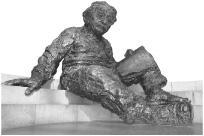
50. Seelig 1956a, 183; Frank 1947, 285; Clark, 743.
51. New York Times , July 31, 1921.
52. Einstein to Felix Frankfurter, May 28, 1921, AEA 36-210.
53. See Ben Halpern, A Clash of Heroes: Brandeis, Weizmann and American Zionism (New York: Oxford University Press, 1987).
54. Boston Herald , May 19, 1921.
55. New York Times , May 18, 1921; Frank 1947, 185; Brian 1996, 129; Illy, 25–32.
56. Hartford (Conn.) Daily Times, May 23, 1921. Also, Hartford Daily Courant , May 23, 1921.
57. Cleveland Press , May 26, 1921.
58. Illy, 185.
59. Fölsing, 51.
60. Einstein, “How I Became a Zionist,” interview in Jüdische Rundschau, June 21, 1921, conducted on May 30, CPAE 7: 57.
61. Einstein to Mileva Mari, Aug. 28, 1921, Einstein family trust correspondence, letter in possession of Bob Cohn. On this trip, in deference to Elsa’s feelings, he decided at the last moment not to stay at Mari’s apartment.
62. Einstein to Walther Rathenau, Mar. 8, 1917; Walther Rathenau to Einstein, May 10, 1917.
63. Reiser, 146, describes the Weizmann-Rathenau-Einstein discussions. See also Fölsing, 519; Elon, 364.
64. Weizmann, 288; Elon, 268.
65. Frank 1947, 192.
66. Reiser, 145.
67. Milena Wazeck, “Einstein on the Murder List,” in Renn 2005d, 222; Einstein to Max Planck, July 6, 1922, AEA 19-300.
68. Einstein to Maurice Solovine, July 16, 1922, AEA 21-180.
69. Einstein to Marie Curie, July 4, 1922, AEA 34-773; Marie Curie to Einstein, July 7, 1922, AEA 34-775.
70. Fölsing, 521.
71. Nathan and Norden, 54.
72. Hermann Struck to Pierre Comert, July 12, 1922; Nathan and Norden, 59. (Einstein sent word to League press official Comert through their mutual friend, the painter Struck.)
73. Nathan and Norden, 70.
74. Einstein, “Travel Diary: Japan-Palestine-Spain,” AEA 29-129. All quotes in this section from Einstein’s diary are from this document.
75. Joan Bieder, “Einstein in Singapore,” 2000, www.onthepage.org/outsiders/einstein_in_singapore.htm.
76. Fölsing, 527; Clark, 368; Brian 1996, 143; Frank 1947, 199.
77. Einstein to Hans Albert and Eduard Einstein, Dec. 12, 1922, AEA 75-620.
78. Frank 1947, 200.
79. Einstein, “Travel Diary: Japan-Palestine-Spain,” AEA 29-129.
80. Clark, 477–480; Frank 1947, 200–201; Brian 1966, 145; Fölsing, 528–532.
CHAPTER FOURTEEN: NOBEL LAUREATE
1. Svante Arrhenius to Einstein, Sept. 1, 1922, AEA 6-353; Einstein to Svante Arrhenius, Sept. 20, 1922, AEA 6-354.
2. Pais 1982, 506–507; Elzinga, 82–84.
3. R. M. Friedman 2005, 129. See also Friedman’s book, The Politics of Excellence: Behind the Nobel Prize in Science (New York: Henry Holt, 2001), especially chapter 7, “Einstein Must Never Get a Nobel Prize!”; Elzinga; Pais 1982, 502.
4. Pais 1982, 508; Hendrik Lorentz and Dutch colleagues to the Swedish Academy, Jan. 24, 1920; Niels Bohr to the Swedish Academy, Jan. 30, 1920; Elzinga, 134.
5. Brian 1996, 143, citing research and interviews by the writer Irving Wallace for his novel The Prize.
6. Elzinga, 144.
7. R. M. Friedman, 130. See also Pais 1982, 508.
8. Arthur Eddington to the Swedish Academy, Jan. 1, 1921.
9. Pais 1982, 509; R. M. Friedman, 131; Elzinga, 151.
10. Marcel Brillouin to the Swedish Academy, Jan. 1922; Arnold Sommerfeld to the Swedish Academy, Jan. 11, 1922.
11. Christopher Aurivillius to Einstein, Nov. 10, 1922. In another translation and version, the actual Nobel citation sent to Einstein includes the phrase “independent of the value that (after eventual confirmation) may be credited to the relativity and gravitation theory.”
12. Elzinga, 182.
13. Svante Arrhenius, Nobel Prize presentation speech, Dec. 10, 1922, nobel prize.org/physics/laureates/1921/press.html.
14. Einstein, “Fundamental Ideas and Problems of the Theory of Relativity,” Nobel lecture, July 11, 1923.
15. Einstein to Hans Albert and Eduard Einstein, Dec. 22, 1922, AEA 75-620. The full story of the Nobel money was complex and over the years caused considerable disputes, as became clear in letters between Einstein and Mari released in 2006. According to the divorce agreement, the Nobel money was to go to a Swiss bank account. Mari was supposed to have use of the interest, but she could spend the capital only with Einstein’s consent. In 1923, after consultation with a financial adviser, Einstein decided to place only part of the money in Switzerland and have the rest invested in an American account. That scared Mari and caused frictions that were calmed by friends. With Einstein’s consent she bought a Zurich apartment house in 1924 using the Swiss money and a big loan. The rents covered the loan payments, as well as the maintenance of the house and a part of the family’s livelihood. Two years later, again with Einstein’s consent, Mari bought two more houses using another 40,000 Swiss francs from the Nobel money and an additional loan. The two new houses turned out to be bad investments and had to be sold to avoid endangering ownership of the first house, where Mari lived with Eduard. In the meantime, the Great Depression in America reduced the value of the account and investments made there. Einstein continued to pay considerable sums to Mari and Eduard, but Mari’s fears for her financial security were understandable. At the end of the 1930s, Einstein created a holding company to buy from Mari the remaining apartment house, where she still lived, and to take over her debts in order to save the house from being repossessed by the bank. Mari could continue to live in the same apartment and receive the excess rental proceeds. In addition, Einstein sent a monthly contribution for Eduard’s support. This arrangement lasted until the late 1940s, when Mileva was no longer able to care for the house and the income from the rents no longer covered the expenses. With Einstein’s consent Mari sold the house but not the right to her apartment. The money from that sale was eventually found under Mari’s mattress. Some critics have accused Einstein of allowing Mari to die impoverished. Although Mari at times certainly felt impoverished, Einstein did try to protect her and Eduard from financial worries, not only by paying what he was obliged to pay, but also by subsidizing their living expenses. I am grateful to Barbara Wolff of the Hebrew University Einstein archives for help researching this topic. See also Alexis Schwarzenbach, Das verschmähte Genie: Albert Einstein und die Schweiz (Berlin: DVA, 2003).
16. Einstein to Heinrich Zangger, Dec. 6, 1917.
17. “All the really great discoveries in theoretical physics—with a few exceptions that stand out because of their oddity—have been made by men under thirty.” Bernstein 1973, 89, emphasis in the original. Einstein finished his work on general relativity when he was 36, but his initial step, what he called his “happiest thought” about the equivalence of gravity and acceleration, came when he was 28. Max Planck was 42 when, in Dec. 1900, he gave his lecture on the quantum.
18. Einstein to Heinrich Zangger, Aug. 11, 1918; Clive Thompson, “Do Scientists Age Badly?,”Boston Globe , Aug. 17, 2003. John von Neumann, a founder of modern computer science, once claimed that the intellectual powers of mathematicians peaked at the age of 26. One study of a random group of scientists showed that 80 percent did their best work before their early forties.
19. Einstein to Maurice Solovine, Apr. 27, 1906.
20. Aphorism for a friend, Sept. 1, 1930, AEA 36-598.
21. Einstein to Hendrik Lorentz, June 17, 1916; Miller 1984, 55–56.
22. Einstein, “Ether and the Theory of Relativity,” speech at University of Leiden, May 5, 1920, CPAE 7: 38.
23. Einstein to Karl Schwarzschild, Jan. 9, 1916.
24. Einstein, “Ether and the Theory of Relativity,” speech at University of Leiden, May 5, 1920, CPAE 7: 38.
25. Greene 2004, 74.
26. Janssen 2004, 22. Einstein made this clearer in his 1921 Princeton lectures, but also continued to say, “It appears probable that Mach was on the right road in his thought that inertia depends on a mutual action of matter.” Einstein 1922a, chapter 4.
27. Einstein, “Ether and the Theory of Relativity,” speech at University of Leiden, May 5, 1920, CPAE 7: 38.
28. Einstein, “On the Present State of the Problem of Specific Heats,” Nov. 3, 1911, CPAE 3: 26; the quote about “really exist in nature” appears on p. 421 of the English translation of vol. 3.
29. Robinson, 84–85.
30. Holton and Brush, 435.
31. Lightman 2005, 151.
32. Clark 202; George de Hevesy to Ernest Rutherford, Oct. 14, 1913; Einstein 1949b, 47.
33. Einstein, “Emission and Absorption of Radiation in Quantum Theory,” July 17, 1916, CPAE 6: 34; Einstein, “On the Quantum Theory of Radiation,” after Aug. 24, 1916, CPAE 6: 38, and also in Physikalische Zeitschrift 18 (1917). See Overbye, 304–306; Rigden, 141; Pais 1982, 404–412; Fölsing, 391; Clark, 265; Daniel Kleppner, “Rereading Einstein on Radiation,”Physics Today (Feb. 2005): 30. In addition, in 1917 Einstein wrote a paper on the quantization of energy in mechanical theories called “On the Quantum Theorem of Sommerfeld and Epstein.” It shows the problems that the classical quantum theory encountered when applied to mechanical systems we would now call chaotic. It was cited by earlier pioneers of quantum mechanics, but has since been largely forgotten. A good description of it and its importance in the development of quantum mechanics is Douglas Stone, “Einstein’s Unknown Insight and the Problem of Quantizing Chaos,”Physics Today (Aug. 2005).
34. Einstein to Michele Besso, Aug. 11, 1916.
35. I am grateful to Professor Douglas Stone of Yale for help with the wording of this.
36. Einstein to Michele Besso, Aug. 24, 1916.
37. Einstein, “On the Quantum Theory of Radiation,” after Aug. 24, 1916, CPAE 6: 38.
38. Einstein to Max Born, Jan. 27, 1920.
39. Einstein to Max Born, Apr. 29, 1924, AEA 8-176.
40. Niels Bohr, “Discussion with Einstein,” in Schilpp, 205–206; Clark, 202.
41. Einstein to Niels Bohr, May 2, 1920; Einstein to Paul Ehrenfest, May 4, 1920.
42. Niels Bohr to Einstein, Nov. 11, 1922, AEA 8-73.
43. Fölsing, 441.
44. John Wheeler, “Memoir,” in French, 21; C. P. Snow, “Albert Einstein,” in French, 3.
45. Bohr’s quip is often quoted. One source I can find for it, in a less pithy fashion, is from Bohr’s own descriptions of being with Einstein at the 1927 Solvay Conference: “Einstein mockingly asked us whether we could really believe that the providential authorities took recourse to dice-playing (‘. . . ob der liebe Gott würfelt’), to which I replied by pointing at the great caution, already called for by ancient thinkers, in ascribing attributes to Providence in everyday language.” Niels Bohr, “Discussion with Einstein,” in Schilpp, 211. Werner Heisenberg, who was at these discussions, also recounts the quip: “To which Bohr could only answer: ‘But still, it cannot be for us to tell God how he is to run the world.’ ” Heisenberg 1989, 117.
46. Holton and Brush, 447; Pais 1982, 436.
47. Pais 1982, 438. Wolfgang Pauli recalled, “In a discussion at the physics meeting in Innsbruck in the autumn of 1924, Einstein proposed to search for interference and diffraction phenomena with molecular beams.” Pauli, 91.
48. Einstein, “Quantum Theory of Single-Atom Gases,” part 1, 1924, part 2, 1925. This quote occurs in part 2, section 7. The manuscript of this paper was found in Leiden in 2005.
49. I am grateful to Professor Douglas Stone of Yale for helping to craft this section and explaining the fundamental importance of what Einstein did. A theoretical condensed matter physicist, he is writing a book on Einstein’s contributions to quantum mechanics and how far-reaching they really were, despite Einstein’s later rejection of the theory. According to Stone, “99% of the credit for this fundamental discovery called Bose-Einstein condensation is really owed to Einstein. Bose did not even realize that he had counted in a different way.” Regarding the Nobel Prize for achieving Bose-Einstein condensation, see www.nobelprize.org/physics/laureates/2001/public.html.
50. Bernstein 1973, 217; Martin J. Klein, “Einstein and the Wave-Particle Duality,”Natural Philosopher (1963): 26.
51. Max Born, “Einstein’s Statistical Theories,” in Schilpp, 174.
52. Einstein to Erwin Schrödinger, Feb. 28, 1925, AEA 22-2.
53. Don Howard, “Spacetime and Separability,” 1996, AEA Cedex H; Howard 1985; Howard 1990b, 61–64; Howard 1997. The 1997 essay identifies the philosophy of Arthur Schopenhauer as an influence on Einstein’s theories of spatial separability.
54. Bernstein 1996a, 138.
55. More precisely, it is the square of the wave function that is proportional to the probability. Holton and Brush, 452.
56. Einstein to Hedwig Born, Mar. 7, 1926, AEA 8-266; Einstein to Max Born, Dec. 4, 1926, AEA 8-180.
57. aip.org/history/heisenberg/p07.htm; Born 2005, 85.
58. Max Born to Einstein, July 15, 1925, AEA 8-177; Einstein to Hedwig Born, Mar. 7, 1926, AEA 8-178; Einstein to Paul Ehrenfest, Sept. 25, 1925, AEA 10-116.
59. Werner Heisenberg to Einstein, June 10, 1927, AEA 12-174.
60. Heisenberg 1971, 63; Gerald Holton, “Werner Heisenberg and Albert Einstein,”Physics Today (2000), www.aip.org/pt/vol-53/iss-7/p38.html.
61. Frank 1947, 216.
62. Aage Petersen, “The Philosophy of Niels Bohr,” Bulletin of the Atomic Scientists (Sept. 1963): 12.
63. Dugald Murdoch, Niels Bohr’s Philosophy of Physics (Cambridge, England: Cambridge University Press, 1987), 47, citing the Niels Bohr Archives: Scientific Correspondence, 11: 2.
64. Einstein, “To the Royal Society on Newton’s Bicentennial,” Mar. 1927.
65. Einstein to Michele Besso, Apr. 29, 1917; Michele Besso to Einstein, May 5, 1917; Einstein to Michele Besso, May 13, 1917. For a good analysis, see Gerald Holton, “Mach, Einstein, and the Search for Reality,” in Holton 1973, 240.
66. “Belief in an external world independent of the perceiving subject is the basis of all natural science.” Einstein, “Maxwell’s Influence on the Evolution of the Idea of Physical Reality,” 1931, in Einstein 1954, 266.
67. Einstein to Max Born, Jan. 27, 1920.
68. Einstein’s introduction to Rudolf Kayser, Spinoza (New York: Philosophical Library, 1946). Kayser was married to Einstein’s stepdaughter and wrote a semi-authorized memoir of Einstein.
69. Fölsing, 703–704; Einstein to Fritz Reiche, Aug. 15, 1942, AEA 20-19.
70. Einstein to Max Born, Dec. 4, 1926, AEA 8-180.
CHAPTER FIFTEEN: UNIFIED FIELD THEORIES
1. Einstein, “Ideas and Problems of the Theory of Relativity,” Nobel lecture, July 11, 1923. Available at nobelprize.org/nobel_prizes. This section draws from these papers on Einstein’s unified field quest: van Dongen 2002, courtesy of the author; Tilman Sauer, “Dimensions of Einstein’s Unified Field Theory Program,” forthcoming in the Cambridge Companion to Einstein, courtesy of the author; Norton 2000; Goenner 2004.
2. Einstein, “The Principles of Research,” a toast in honor of Max Planck, Apr. 26, 1918, CPAE 7: 7.
3. Einstein to Hermann Weyl, Apr. 6, 1918.
4. Einstein to Hermann Weyl, Apr. 8, 1918. In a letter to Heinrich Zangger, May 8, 1918, Einstein called Weyl’s theory “ingenious” but “physically incorrect.” It did, however, later become one of the recognized precursors of Yang-Mills gauge theory.
5. My description of the work of Kaluza and Klein relies on Krauss, 94–104, which is an engaging book on the role extra dimensions have played in explaining the universe.
6. Einstein to Theodor Kaluza, Apr. 21, 1919.
7. Einstein to Niels Bohr, Jan. 10, 1923, AEA 8-74.
8. Einstein to Hermann Weyl, May 26, 1923, AEA 24-83.
9. Einstein, “On the General Theory of Relativity,” Prussian Academy, Feb. 15, 1923.
10. New York Times , Mar. 27, 1923.
11. Pais 1982, 466; Einstein, “On the General Theory of Relativity,” the Prussian Academy, Feb. 15, 1923.
12. Einstein, “Unified Field Theory of Gravity and Electricity,” July 25, 1925; Hoffmann 1972, 225.
13. Steven Weinberg, “Einstein’s Mistakes,”Physics Today (Nov. 2005).
14. Einstein, “On the Unified Theory,” Jan. 30, 1929.
15. Einstein to Michele Besso, Jan. 5, 1929, AEA 7-102.
16. New York Times , Nov. 4, 1928; Vallentin, 160.
17. Clark, 494;London Daily Chronicle , Jan. 26, 1929.
18. “Einstein’s Field Theory,”Time , Feb. 18, 1929. Einstein also appeared on Time’s cover on Apr. 4, 1938, July 1, 1946, and posthumously Feb. 19, 1979, and Dec. 31, 1999. Elsa appeared on the cover Dec. 22, 1930.
19. Fölsing, 605; Clark, 496; Brian 1996, 174.
20. New York Times , Feb. 4, 1929.
21. Einstein to Maja Winteler-Einstein, Oct. 22, 1929, AEA 29-409.
22. Wolfgang Pauli to Einstein, Dec. 19, 1929, AEA 19-163.
23. New York Times , Jan. 23, Oct. 26, 1931; Einstein to Wolfgang Pauli, Jan. 22, 1932, AEA 19-169.
24. Goenner 2004; Elie Cartan, “Absolute Parallelism and the Unified Theory,” Review Metaphysic Morale (1931).
25. For a two-minute home movie of the conference shot by Irving Langmuir, the 1932 Nobel Prize winner in chemistry, see www.maxborn.net/index.php? page=filmnews.
26. Einstein to Hendrik Lorentz, Sept. 13, 1927, AEA 16-613.
27. Pauli, 121.
28. John Archibald Wheeler and Wojciech Zurek, Quantum Theory and Measurement (Princeton: Princeton University Press, 1983), 7.
29. Fölsing, 589; Pais 1982, 445, from Proceedings of the Fifth Solvay Conference.
30. Heisenberg 1989, 116.
31. Niels Bohr, “Discussion with Einstein,” in Schilpp, 211–219, offers a detailed and loving description of the Solvay and other discussions; Otto Stern recollections, in Pais 1982, 445; Fölsing, 589.
32. “Reports and Discussions,” in Solvay Conference of 1927 (Paris: GauthierVillars, 1928), 102. See also Travis Norsen, “Einstein’s Boxes,”American Journal of Physics, vol. 73, Feb. 2005, pp. 164-176.
33. Louis de Broglie, “My Meeting with Einstein,” in French, 15.
34. Einstein, “Speech to Professor Planck,” Max Planck award ceremony, June 28, 1929.
35. Léon Rosenfeld, “Niels Bohr in the Thirties,” in Rozental 1967, 132.
36. Niels Bohr, “Discussion with Einstein,” in Schilpp, 225–229; Pais 1982, 447–448. I am grateful to Murray Gell-Mann and David Derbes for the phrasing of this section.
37. Einstein, “Maxwell’s Influence on the Evolution of the Idea of Physical Reality,” 1931, in Einstein 1954, 266.
38. Einstein, “Reply to Criticisms” (1949), in Schilpp, 669.
39. A fuller discussion of Einstein’s realism is in chapter 20 of this book. For contrasting views on this issue, see Gerald Holton, “Mach, Einstein, and the Search for Reality,” in Holton 1973, 219, 245 (he argues that there is a very clear change in Einstein’s philosophy: “For a scientist to change his philosophical beliefs so fundamentally is rare”); Fine, 123 (he argues that “Einstein underwent a philosophical conversion, turning away from his positivist youth and becoming deeply committed to realism”); Howard 2004 (which argues, “Einstein was never an ardent ‘Machian’ positivist, and he was never a scientific realist”). This section also draws on van Dongen 2002 (he argues, “Broadly speaking, one can say that Einstein moved from Mach’s empiricism, earlier in his career, to a strong realist position later on”). See also Anton Zeilinger, “Einstein and Absolute Reality,” in Brockman, 121–131.
40. Einstein, “On the Method of Theoretical Physics,” the Herbert Spencer lecture, Oxford, June 10, 1933, in Einstein 1954, 270.
41. Einstein 1949b, 89.
42. Einstein, “Principles of Theoretical Physics,” inaugural address to the Prussian Academy, 1914, in Einstein 1954, 221.
43. Einstein to Hermann Weyl, May 26, 1923, AEA 24-83.
44. John Barrow, “Einstein as Icon,”Nature , Jan. 20, 2005, 219. See also Norton 2000.
45. Einstein, “On the Method of Theoretical Physics,” the Herbert Spencer lecture, Oxford, June 10, 1933, in Einstein 1954, 274.
46. Steven Weinberg, “Einstein’s Mistakes,”Physics Today (Nov. 2005): “Since Einstein’s time, we have learned to distrust this sort of aesthetic criterion. Our experience in elementary-particle physics has taught us that any term in the field equations of physics that is allowed by fundamental principles is likely to be there in the equations.”
47. Einstein, “Latest Developments of the Theory of Relativity,” May 23, 1931, the third of three Rhodes Lectures at Oxford, this one coming on the day he was awarded his honorary doctorate there. Reprinted in the Oxford University Gazette, June 3, 1931.
48. Einstein, “On the Method of Theoretical Physics,” Oxford, June 10, 1933, in Einstein 1954, 270.
49. Marcia Bartusiak, “Beyond the Big Bang,”National Geographic (May 2005). Elsa’s quip is widely reported but never fully sourced. See Clark, 526.
50. Associated Press, Dec. 30, 1930.
51. Einstein to Michele Besso, Mar. 1, 1931, AEA 7-125.
52. Greene 2004, 279: “That would certainly have ranked among the greatest discoveries—it may have been the greatest discovery—of all time.” See also Edward W. Kolb, “The Greatest Discovery Einstein Didn’t Make,” in Brock-man, 201.
53. Einstein,“On the Cosmological Problem of the General Theory of Relativity,” Prussian Academy, 1931; “Einstein Drops Idea of ‘Closed’ Universe,”New York Times , Feb. 5, 1931.
54. Einstein 1916, appendix IV (first appears in the 1931 edition).
55. Gamow 1970, 149.
56. Steven Weinberg, “The Cosmological Constant Problem,” in Morris Loeb Lectures in Physics (Cambridge, Mass.: Harvard University Press 1988); Steven Weinberg, “Einstein’s Mistakes,”Physics Today (Nov. 2005); Aczel 1999, 167; Krauss 117; Greene 2004, 275–278; Dennis Overbye, “A Famous Einstein ‘Fudge’ Returns to Haunt Cosmology,”New York Times , May 26, 1998; Jeremy Bernstein, “Einstein’s Blunder,” in Bernstein 2001, 86–89.
57. Lawrence Krauss of Case Western Reserve and Michael Turner of the University of Chicago have argued that an explanation of the universe requires use of a cosmological term that is different from the one Einstein added into his field equations and then discarded. Their version arises from quantum mechanics, not general relativity, and is based on the premise that even “empty” space does not necessarily possess zero energy. See Krauss and Turner, “A Cosmic Conundrum,”Scientific American (Sept. 2004).
58. “Einstein’s Cosmological Constant Predicts Dark Energy,”Universe Today , Nov. 22, 2005. This particular headline was based on a research project known as the Supernova Legacy Survey (SNLS). According to a press release from Caltech, SNLS “aims to discover and examine 700 distant supernovae to map out the history of the expansion of the universe. The survey confirms earlier discoveries that the expansion of the universe proceeded more slowly in the past and is speeding up today. However, the crucial step forward is the discovery that Einstein’s 1917 explanation of a constant energy term for empty space fits the new supernova data very well.”
CHAPTER SIXTEEN: TURNING FIFTY
1. Vallentin, 163.
2. New York Times , Mar. 15, 1929.
3. Reiser, 205.
4. Reiser, 207; Frank 1947, 223; Fölsing, 611.
5. www.einstein-website.de/z_biography/caputh-e.html; Jan Otakar Fischer, “Einstein’s Haven,”International Herald Tribune , June 30, 2005; Fölsing, 612; Einstein to Maja Einstein, Oct. 22, 1929; Erika Britzke, “Einstein in Caputh,” in Renn 2005d, 272.
6. Vallentin, 168.
7. Reiser, 221.
8. Einstein to Betty Neumann, Nov. 5 and 13, 1923. These letters are part of a set given to Hebrew University and are not catalogued in the Einstein archives.
9. Einstein to Betty Neumann, Jan. 11, 1924; Pais 1982, 320.
10. Einstein to Elsa Einstein, Aug. 14, 1924, part of sealed correspondence released in 2006; Einstein to Betty Neumann, Aug. 24, 1924. I am grateful to Ze’ev Rosenkranz of the Einstein archives in Jerusalem and Caltech for helping me find and translate these letters.
11. Einstein to Ethel Michanowski, May 16 and 24, 1931, in private collection.
12. Einstein to Elsa Einstein and Einstein to Margot Einstein, May 1931, part of sealed correspondence released in 2006. I am grateful for the help of Ze’ev Rosenkranz of the Einstein Papers Project for providing context and translation.
13. Einstein to Margot Einstein, May 1931, sealed correspondence released in 2006.
14. This is a sentiment that lasted through his life. Einstein to Eugenia Anderman, June 2, 1953, AEA 59-097: “You must be aware that most men (and many women) are by nature not monogamous. This nature is asserted more forcefully when tradition stands in the way.”
15. Fölsing, 617; Highfield and Carter, 208; Marianoff, 186. (Note: Fölsing spells her name Lenbach, which is not correct according to the Einstein archive copies.)
16. Elsa Einstein to Hermann Struck, 1929.
17. George Dyson, “Helen Dukas: Einstein’s Compass,” in Brockman, 85–94 (George Dyson was the son of Freeman Dyson, a physicist at the Institute for Advanced Studies in Princeton, and Dukas worked as his babysitter after Einstein died). See also Abraham Pais, “Eulogy for Helen Dukas,” 1982, American Institute of Physics Library, College Park, Md.
18. Einstein to Maurice Solovine, Mar. 4, 1930, AEA 21-202.
19. Einstein to Mileva Mari, Feb. 23, 1927, AEA 75-742.
20. Ibid.
21. Einstein to Hans Albert Einstein, Feb. 2, 1927, AEA 75-738, and Feb. 23, 1927, AEA 75-739.
22. Highfield and Carter, 227.
23. Einstein to Eduard Einstein, Dec. 23, 1927, AEA 75-748.
24. Einstein to Eduard Einstein, July 10, 1929, AEA 75-782.
25. Eduard Einstein to Einstein, May 1, Dec. 10, 1926. Both are in sealed correspondence folders that were released in 2006 and not catalogued in the archives.
26. Eduard Einstein to Einstein, Dec. 24, 1935. Also in the sealed correspondence folders released in 2006 and not catalogued in the archives.
27. Sigmund Freud to Sandor Ferenczi, Jan. 2, 1927. For an analysis of the interwoven influence of Freud and Einstein, see Panek 2004.
28. Viereck, 374; Sayen, 134. See also Bucky, 113: “I have many doubts about some of his theories. I think Freud placed too much emphasis on dream theories. After all, a junk closet does not bring everything forth . . . On the other hand, Freud was very interesting to read and he was also very witty. I certainly do not mean to be overly critical.”
29. Einstein to Eduard Einstein, 1936 or 1937, AEA 75-939.
30. Einstein to Eduard Einstein, Feb. 5, 1930, not catalogued; Highfield and Carter, 229, 234. See translation in epigraph source note on p. 565.
31. Einstein to Eduard Einstein, Dec. 23, 1927, AEA 75-748.
32. Einstein to Mileva Mari, Aug. 14, 1925, AEA 75-693.
33. Marianoff, 12. He apparently mistakes the year of his own wedding, as he refers to the fall of 1929 when it was in fact just before Einstein’s second visit to the United States in late 1930. Barbara Wolff of the Einstein archives at Hebrew University says she believes this anecdote to be embellished.
34. Elsa Einstein to Antonina Vallentin, undated, in Vallentin, 196.
35. Einstein, Trip Diary to the U.S.A., Nov. 30, 1930, AEA 29-134.
36. “Einstein Works at Sea,”New York Times , Dec. 5, 1930.
37. “Einstein Puzzled by Our Invitations,”New York Times , Nov. 23, 1930.
38. “Einstein Consents to Face Reporters,”New York Times , Dec. 10, 1930.
39. Einstein, Trip Diary, Dec. 11, 1930, AEA 29-134.
40. “Einstein on Arrival Braves Limelight for Only 15 Minutes,”New York Times , Dec. 12, 1930.
41. “He Is Worth It,”Time , Dec. 2, 1930.
42. Brian 1996, 204; “Einstein Receives Keys to the City,”New York Times , Dec. 14, 1930.
43. “Einstein Saw His Statue in Church Here,”New York Times , Dec. 28, 1930.
44. George Sylvester Viereck, profile of John D. Rockefeller, Liberty , Jan. 9, 1932; Nathan and Norden, 157. Einstein also mentions his visit to Rockefeller in a letter to Max Born, May 30, 1933, AEA 8-192.
45. Einstein, New History Society speech, Dec. 14, 1930, in Nathan and Norden, 117; “Einstein Advocates Resistance to War,”New York Times , Dec. 15, 1930, p. 1; Fölsing, 635.
46. “Einstein Considers Seeking a New Home,” Associated Press, Dec. 16, 1930.
47. Einstein,Trip Diary, Dec. 15–31, 1931, AEA 29-134; “Einstein Welcomed by Leaders of Panama,”New York Times , Dec. 24, 1930; “Einstein Heard on Radio,”New York Times , Dec. 26, 1930.
48. Brian 1996, 206.
49. Hedwig Born to Einstein, Feb. 22, 1931, AEA 8-190.
50. Amos Fried to Robert Millikan, Mar. 4, 1932; Robert Millikan to Amos Fried, Mar. 8, 1932; cited in Clark, 551.
51. Brian 1996, 216.
52. Seelig 1956a, 194. At the movie, Einstein “stared bewildered, utterly absorbed, like a child at a Christmas pantomime,” according to a vivid report by Cissy Patterson, an ambitious young journalist who had also described him sun-bathing nude. She would later own the Washington Herald. Brian 1996, 214, citing Washington Herald, Feb. 10, 1931.
53. Einstein address, Feb. 16, 1931, in Nathan and Norden, 122.
54. “At Grand Canyon Today,”New York Times , Feb. 28, 1931; Einstein at Hopi House, www.hanksville.org/sand/Einstein.html.
55. “Einstein in Chicago Talks for Pacifism,”New York Times , Mar. 4, 1931; Nathan and Norden, 123.
56. Fölsing, 641; Einstein talk to War Resisters’ League, Mar. 1, 1931, in Nathan and Norden, 123.
57. Nathan and Norden, 124.
58. Marianoff, 184.
59. Einstein to Mrs. Chandler and the Youth Peace Federation, Apr. 5, 1931; Nathan and Norden, 124; Fölsing, 642. For an image of the note, see www.alberteinstein.info/db/ViewImage.do?DocumentID=21007&Page=1.
60. Einstein interview with George Sylvester Viereck, Jan. 1931, in Nathan and Norden, 125.
61. Einstein to Women’s International League, Jan. 4, 1928, AEA 48-818.
62. Einstein to London chapter of War Resisters’ International, Nov. 25, 1928; Einstein to the League for the Organization of Progress, Dec. 26, 1928.
63. Einstein statement, Feb. 23, 1929, in Nathan and Norden, 95.
64. Manifesto of the Joint Peace Council, Oct. 12, 1930; Nathan and Norden, 113.
65. Einstein, “The 1932 Disarmament Conference,”The Nation , Sept. 23, 1931; Einstein 1954, 95; Einstein, “The Road to Peace,”New York Times , Nov. 22, 1931.
66. Nathan and Norden, 168; “Einstein Assails Arms Conference,”New York Times , May 24, 1931.
67. Einstein to Kurt Hiller, Aug. 21, 1931, AEA 46-693; Nathan and Norden, 143.
68. Jerome, 144. See in particular chapter 11, “How Red?”
69. Einstein, “The Road to Peace,”New York Times , Nov. 22, 1931; Einstein 1954, 95.
70. Thomas Bucky interview with Denis Brian, in Brian 1996, 229.
71. Einstein to Henri Barbusse, June 1, 1932, AEA 34-543; Nathan and Norden, 175–179.
72. Einstein to Isaac Don Levine, after Jan. 1, 1925, AEA 28-29.00 (for image of handwritten document, see www.alberteinstein.info/db/ViewImage.do? DocumentID=21154&Page=1; Roger Baldwin and Isaac Don Levine, Letters from Russian Prisons (New York: Charles Boni, 1925); Robert Cottrell, Roger Nash Baldwin and the American Civil Liberties Union (New York: Columbia, 2001), 180.
73. Einstein to Isaac Don Levine, Mar. 15, 1932, AEA 50-922.
74. Einstein, “The World As I See It,” originally published in 1930, reprinted in Einstein 1954, 8.
75. “Ask Pardon for Eight Negroes,”New York Times , Mar. 27, 1932; “Einstein Hails Negro Race,”New York Times , Jan. 19, 1932, citing an Einstein piece in the forthcoming Crisis magazine of Feb. 1932.
76. Brian 1996, 219.
77. Einstein to Chaim Weizmann, Nov. 25, 1929, AEA 33-411.
78. Einstein, “Letter to an Arab,” Mar. 15, 1930; Einstein 1954, 172; Clark, 483; Fölsing, 623.
79. Einstein to Sigmund Freud, July 30, 1932, www.cis.vt.edu/modernworld/d/Einstein.html.
80. Sigmund Freud to Einstein, Sept. 1932, www.cis.vt.edu/modernworld/d/Einstein.html.
CHAPTER SEVENTEEN: EINSTEIN’S GOD
1. Charles Kessler, ed., The Diaries of Count Harry Kessler (New York: Grove Press, 2002), 322 (entry for June 14, 1927); Jammer 1999, 40. Jammer 1999 provides a thorough look at the biographical, philosophical, and scientific aspects of Einstein’s religious thought.
2. Einstein, “Ueber den Gegenwertigen Stand der Feld-Theorie,” 1929, AEA 4-38.
3. Neil Johnson, George Sylvester Viereck: Poet and Propagandist (Iowa City: University of Iowa Press, 1968); George S. Viereck, My Flesh and Blood: A Lyric Autobiography with Indiscreet Annotations (New York: Liveright, 1931).
4. Viereck, 372–378; Viereck first published the interview as “What Life Means to Einstein,”Saturday Evening Post , Oct. 26, 1929. I have generally followed the translation and paraphrasing in Brian 2005, 185–186 and in Calaprice. See also Jammer 1999, 22.
5. Einstein, “What I Believe,” originally written in 1930 and recorded for the German League for Human Rights. It was published as “The World As I See It” in Forum and Century, 1930; in Living Philosophies (New York: Simon & Schuster, 1931); in Einstein 1949a, 1–5; in Einstein 1954, 8–11. The versions are all translated somewhat differently and have slight revisions. For an audio version, see www.yu.edu/libraries/digital_library/einstein/credo.html.
6. Einstein to M. Schayer, Aug. 5, 1927, AEA 48-380; Dukas and Hoff-mann, 66.
7. Einstein to Phyllis Wright, Jan. 24, 1936, AEA 52-337.
8. “Passover,”Time , May 13, 1929.
9. Einstein to Herbert S. Goldstein, Apr. 25, 1929, AEA 33-272; “Einstein Believes in Spinoza’s God,”New York Times , Apr. 25, 1929; Gerald Holton, “Einstein’s Third Paradise,”Daedalus (fall 2002): 26–34. Goldstein was the rabbi of the Institutional Synagogue in Harlem and the longtime president of the Union of Orthodox Jewish Congregations of America.
10. Rabbi Jacob Katz of the Montefiore Congregation, quoted in Time, May 13, 1929.
11. Calaprice, 214; Einstein to Hubertus zu Löwenstein, ca. 1941, in Löwenstein’s book, Towards the Further Shore (London: Victor Gollancz, 1968), 156.
12. Einstein to Joseph Lewis, Apr. 18, 1953, AEA 60-279.
13. Einstein to unknown recipient, Aug. 7, 1941, AEA 54-927.
14. Guy Raner Jr. to Einstein, June 10, 1948, AEA 57-287; Einstein to Guy Raner Jr., July 2, 1945, AEA 57-288; Einstein to Guy Raner Jr., Sept. 28, 1949, AEA 57-289.
15. Einstein, “Religion and Science,”New York Times , Nov. 9, 1930, reprinted in Einstein 1954, 36–40. See also Powell.
16. Einstein, speech to the Symposium on Science, Philosophy and Religion, Sept. 10, 1941, reprinted in Einstein 1954, 41; “Sees No Personal God,” Associated Press, Sept. 11, 1941. A yellowed clipping of this story was given to me by Orville Wright, who was a young naval officer at the time and had kept it for sixty years; it had been passed around his ship and had notations from various sailors saying such things as, “Tell me, what do you think of this?”
17. “In the mind there is no absolute or free will, but the mind is determined by this or that volition, by a cause, which is also determined by another cause, and this again by another, and so on ad infinitum.” Baruch Spinoza, Ethics , part 2, proposition 48.
18. Einstein, statement to the Spinoza Society of America, Sept. 22, 1932.
19. Sometimes translated as “A man can do what he wants, but not want what he wants.” I cannot find this quote in Schopenhauer’s writings. The sentiment, nevertheless, comports with Schopenhauer’s philosophy. He said, for example, “A man’s life, in all its events great and small, is as necessarily predetermined as are the movements of a clock.” Schopenhauer,“On Ethics,” in Parerga and Paralipomena: Short Philosophical Essays (New York: Oxford University Press, 2001), 2:227.
20. Einstein, “The World As I See It,” in Einstein 1949a and Einstein 1954.
21. Viereck, 375.
22. Max Born to Einstein, Oct. 10, 1944, in Born 2005, 150.
23. Hedwig Born to Einstein, Oct. 9, 1944, in Born 2005, 149.
24. Viereck, 377.
25. Einstein to the Rev. Cornelius Greenway, Nov. 20, 1950, AEA 28-894.
26. Sayen, 165.
CHAPTER EIGHTEEN: THE REFUGEE
1. Einstein trip diary, Dec. 6, 1931, AEA 29-136.
2. Einstein trip diary, Dec. 10, 1931, AEA 29-141.
3. Flexner, 381–382; Batterson, 87–89.
4. Abraham Flexner to Robert Millikan, July 30, 1932, AEA 38-007; Abraham Flexner to Louis Bamberger, Feb. 13, 1932, in Batterson, 88.
5. Einstein trip diary, Feb. 1, 1932, AEA 29-141; Elsa Einstein to Rosika Schwimmer, Feb. 3, 1932; Nathan and Norden, 163.
6. Einstein to Paul Ehrenfest, Apr. 3, 1932, AEA 10-227.
7. Clark, 542, citing Sir Roy Harrod.
8. Flexner, 383.
9. Einstein to Abraham Flexner, July 30, 1932; Batterson, 149; Brian 1996, 232.
10. Elsa Einstein to Robert Millikan, June 22, 1932, AEA 38-002.
11. Robert Millikan to Abraham Flexner, July 25, 1932, AEA 38-006; Abraham Flexner to Robert Millikan, July 30, 1932, AEA 38-007; Batterson, 114.
12. “Einstein Will Head School Here,”New York Times , Oct. 11, 1932, p. 1.
13. Frank 1947, 226.
14. Woman Patriot Corporation memo to the U.S. State Department, Nov. 22, 1932, contained in Einstein’s FBI file, section 1, available at foia.fbi.gov/foiaindex/einstein.htm. This episode is nicely detailed in Jerome, 6–11.
15. Reprinted in Einstein 1954, 7. Einstein’s relationship with Louis Lochner of United Press is detailed in Marianoff, 137.
16. New York Times , Dec. 4, 1932.
17. “Einstein’s Ultimatum Brings a Quick Visa,” “Consul Investigated Charge,” and “Women Made Complaint,” all in New York Times, Dec. 6, 1932; Sayen, 6; Jerome, 10.
18. This was uncovered by Richard Alan Schwartz of Florida International University, who did the original research into Einstein’s FBI files. The versions he received were redacted by 25 percent. Fred Jerome was able to get fuller versions under the Freedom of Information Act, which he used in his book. Schwartz’s articles on the topic include “The F.B.I. and Dr. Einstein,”The Nation , Sept. 3, 1983, 168–173, and “Dr. Einstein and the War Department,” Isis (June 1989): 281–284. See also Dennis Overbye, “New Details Emerge from the Einstein Files,”New York Times , May 7, 2002.
19. “Einstein Resumes Packing,”New York Times , Dec. 7, 1932; “Einstein Embarks, Jests about Quiz” and “Stimson Regrets Incident,”New York Times , Dec. 11, 1932.
20. Einstein (from Caputh) to Maurice Solovine, Nov. 20, 1932, AEA 21-218; Frank 1947, 226; Pais 1982, 318, 450. Both Frank and Pais recount Einstein’s prophetic words to Elsa about Caputh, and each likely heard the anecdote directly from them. Pais, among others, says they carried thirty pieces of luggage. Elsa, in her call to reporters after the U.S. consulate interrogation, said she had packed six trunks, but she may not have been finished packing, or may have been referring only to trunks, or may have understated the number so as not to inflame German authorities (or Pais may have been wrong). Barbara Wolff of the Einstein archives in Jerusalem thinks the tale that she packed thirty trunks is a fabrication, as is the tale that Einstein told her to “take a very good look at it” when they left Caputh (private correspondence with the author).
21. “Einstein Will Urge Amity with Germany,”New York Times , Jan. 8, 1933.
22. Nathan and Norden, 208; Clark, 552.
23. “Einstein’s Address on World Situation” (text of speech) and “Einstein Traces Slump to Machine,”New York Times , Jan. 24, 1933.
24. Fölsing, 659.
25. Einstein to Margarete Lebach, Feb. 27, 1933, AEA 50-834.
26. Evelyn Seeley, interview with Einstein, New York World-Telegram , Mar. 11, 1933; Brian 1996, 243.
27. Marianoff, 142–144.
28. Michelmore, 180. Michelmore got much of his material from Hans Albert Einstein, though this quote may have been exaggerated.
29. Einstein, Statement against the Hitler regime, Mar. 22, 1933, AEA 28-235.
30. Einstein to the Prussian Academy, Mar. 28, 1933, AEA 36–55.
31. Max Planck to Einstein, Mar. 31, 1933.
32. Max Planck to Heinrich von Ficker, Mar. 31, 1933, cited in Fölsing, 663.
33. Prussian Academy declaration, Apr. 1, 1933. The exchanges are reprinted in Einstein 1954, 205–209.
34. Einstein to Prussian Academy, Apr. 5, 1933.
35. Frank 1947, 232.
36. Prussian Academy to Einstein, Apr. 7 and 13, 1933; Einstein to Prussian Academy, Apr. 12, 1933.
37. Max Planck to Einstein, Mar. 31, 1933, AEA 19-389; Einstein to Max Planck, Apr. 6, 1933, AEA 19-392.
38. Einstein to Max Born, May 30, 1933, AEA 8-192; Max Born to Einstein, June 2, 1933, AEA 8-193.
39. Einstein to Fritz Haber, May 19, 1933, AEA 12-378. For a good profile of the Einstein-Haber relationship and this final episode, see Stern, 156–160. Also very useful is John Cornwall, Hitler’s Scientists (New York: Viking, 2003), 137–139.
40. Fritz Haber to Einstein, Aug. 1, 1933, AEA 385; Einstein to Fritz Haber, Aug. 8, 1933, AEA 12-388.
41. Einstein to Willem de Sitter, Apr. 5, 1933, AEA 20-575; Frank 1947, 232; Clark, 573.
42. Vallentin, 231.
43. Frank 1947, 240–242.
44. Einstein to Maurice Solovine, Apr. 23, 1933, AEA 21-223.
45. Einstein to Paul Langevin, May 5, 1933, AEA 15-394.
46. “Einstein Will Go to Madrid,”New York Times , Apr. 11, 1933; Abraham Flexner to Einstein, Apr. 13, 1933, AEA 38-23; Pais 1982, 493.
47. Abraham Flexner to Einstein, Apr. 26 and 28, 1933, AEA 38-25, 38-26.
48. “Einstein Lists Contracts; Princeton, Paris, Madrid, Oxford Lectures Are Only Engagements,”New York Times , Aug. 5, 1933; Einstein to Frederick Lindemann, May 1, 1933, AEA 16-372.
49. Hannoch Gutfreund, “Albert Einstein and Hebrew University,” in Renn 2005d, 318.
50. Einstein to Fritz Haber, Aug. 9, 1933, AEA 37-109; Einstein to Max Born, May 30, 1933, AEA 8-192.
51. Jewish Chronicle , Apr. 8, 1933; Chaim Weizmann to Einstein, Apr. 3, 1933, AEA 33-425; Einstein to Paul Ehrenfest, June 14, 1933, AEA 10-255.
52. Einstein to Herbert Samuel, Apr. 15, 1933, AEA 21-17; Einstein to Chaim Weizmann, June 9, 1933, AEA 33-435.
53. “Weizmann Scores Einstein’s Stand,”New York Times , June 30, 1933.
54. “Albert Einstein Definitely Takes Post at Hebrew University,” Jewish Telegraphic Agency, July 3, 1933; Abraham Flexner to Elsa Einstein, July 19, 1933, AEA 33-033; “Einstein Accepts Chair: Dr. Weizmann Announces He Has Made Peace with Hebrew University in Jerusalem,”New York Times , July 4, 1933.
55. Einstein to the Rev. Johannes B. Th. Hugenholtz, July 1, 1933, AEA 50-320.
56. Nathan and Norden, 225.
57. The queen’s name has been spelled Elizabeth in many books, but as carved on her statue and national monument in Brussels, and in most official sources, it is Elisabeth.
58. Einstein to Elsa Einstein, Nov. 1, 1930, uncatalogued new material provided to author.
59. Einstein to King Albert I of Belgium, Nov. 14, 1933, in Nathan and Norden, 230.
60. Einstein to Alfred Nahon, July 20, 1933, AEA 51-227.
61. New York Times , Sept. 10, 1933.
62. Einstein to E. Lagot, Aug. 28, 1933, AEA 50-477.
63. Einstein to Lord Ponsonby, Aug. 28, 1933, AEA 51-400.
64. Einstein to A. V. Frick, Sept. 9, 1933, AEA 36-567.
65. Einstein to G. C. Heringa, Sept. 11, 1933, AEA 50-199.
66. Einstein to P. Bernstein, Apr. 5, 1934, AEA 49-276.
67. Romain Rolland, Sept. 1933 diary entry, in Nathan and Norden, 232.
68. Michele Besso to Einstein, Sept. 18, 1932, AEA 7-130; Einstein to Michele Besso, Oct. 21, 1932, AEA 7-370.
69. Einstein to Frederick Lindemann, May 9, 1933, AEA 16-377.
70. Einstein to Elsa Einstein, July 21, 1933, AEA 143-250.
71. Locker-Lampson speech, House of Commons, July 26, 1933; “Einstein a Briton Soon: Home Secretary’s Certificate Preferred to Palestine Citizenship,”New York Times , July 29, 1933; Marianoff, 159.
72. New York World Telegram , Sept. 19, 1933, in Nathan and Norden, 234.
73. “Dr. Einstein Denies Communist Leanings,”New York Times , Sept. 16, 1933; “Professor Einstein’s Political Views,”Times of London, Sept. 16, 1933, in Brian 1996, 251.
74. Einstein, Appreciation of Paul Ehrenfest, written in 1934 for a Leiden almanac and reprinted in Einstein 1950a, 236.
75. Clark, 600–605; Marianoff, 160–163; Jacob Epstein, Let There Be Sculpture (London: Michael Joseph, 1940), 78.
76. Dukas and Hoffmann, 56.
77. Einstein, “Civilization and Science,” Royal Albert Hall, Oct. 3, 1933;Times of London, Oct. 4, 1933; Calaprice, 198; Clark, 610–611. Clark’s version is more faithful to the way the speech was given than the written version, which had two references to Germany that Einstein, diplomatically, decided to omit.
CHAPTER NINETEEN: AMERICA
1. Abraham Flexner telegram to Einstein, Oct. 1933, AEA 38-049; Abraham Flexner to Einstein, Oct. 13, 1933, AEA 38-050.
2. “Einstein Arrives; Pleads for Quiet / Whisked from Liner by Tug at Quarantine,”New York Times , Oct. 18, 1933.
3. “Einstein Views Quarters,”New York Times , Oct. 18, 1933; Rev. John Lampe interview, in Clark, 614; “Einstein to Princeton,”Time , Oct. 30, 1933.
4. Brian 1996, 251.
5. “Einstein Has Musicale,”New York Times , Nov. 10, 1933. The sketches that Einstein made for Seidel are now in the Judah Magnes Museum, endowed by the president of Hebrew University with whom Einstein fought.
6. Bucky, 150.
7. Thomas Torrance,“Einstein and God,” Center for Theological Inquiry, Princeton, ctinquiry.org/publications/reflections_volume_1/torrance.htm. Torrance says a friend related the tale to him.
8. Eleanor Drorbaugh interview with Jamie Sayen, in Sayen, 64, 74.
9. Sayen, 69; Bucky, 111; Fölsing, 732.
10. “Had Pronounced Sense of Humor,”New York Times , Dec. 22, 1936.
11. Brian 1996, 265.
12. Abraham Flexner to Einstein, Oct. 13, 1933, in Regis, 34.
13. “Einstein, the Immortal, Shows Human Side,” (Newark) Sunday Ledger, Nov. 12, 1933.
14. Abraham Flexner to Elsa Einstein, Nov. 14, 1933, AEA 38-055.
15. Abraham Flexner to Elsa Einstein, Nov. 15, 1933, AEA 38-059. Flexner also wrote to Herbert Maass, an Institute trustee, on Nov. 14, 1933: “I am beginning to weary a little of this daily necessity of ‘sitting down’ on Einstein and his wife. They do not know America. They are the merest children, and they are extremely difficult to advise and control. You have no idea the barrage of publicity I have intercepted.” Batterson, 152.
16. Abraham Flexner to Einstein, Nov. 15, 1933, AEA 38-061.
17. “Fiddling for Friends,”Time , Jan. 29, 1934; “Einstein in Debut as Violinist Here,”New York Times , Jan. 18, 1934.
18. Stephen Wise to Judge Julian Mack, Oct. 20, 1933.
19. Col. Marvin MacIntyre report to the White House Social Bureau, Dec. 7, 1933, AEA 33-131; Abraham Flexner to Franklin Roosevelt, Nov. 3, 1933; Einstein to Eleanor Roosevelt, Nov. 21, 1933, AEA 33-129; Eleanor Roosevelt to Einstein, Dec. 4, 1933, AEA 33-130; Elsa Einstein to Eleanor Roosevelt, Jan. 16, 1934, AEA 33-132; Einstein to Queen Elisabeth of Belgium, Jan. 25, 1934, AEA 33-134; “Einstein Chats about Sea,”New York Times , Jan. 26, 1934.
20. Einstein to Board of Trustees of the IAS, Dec. 1–31, 1933.
21. Johanna Fantova, Journal of conversations with Einstein, Jan. 23, 1954, in Calaprice, 354.
22. Einstein to Max Born, Mar. 22, 1934; Erwin Schrödinger to Frederick Linde-mann, Mar. 29, 1934, Jan. 22, 1935.
23. Einstein to Queen Elisabeth of Belgium, Nov. 20, 1933, AEA 32-369. The line is usually translated as “puny demigods on stilts.” The word Einstein uses, stelzbeinig, means stiff-legged, as if the legs were wooden stilts. It has nothing to do with height. Instead, it evokes the gait of a peacock.
24. Einstein, “The Negro Question,”Pageant , Jan. 1946. In this essay, he was juxtaposing the generally democratic social tendency of Americans to the way they treated blacks. That became more of an issue for him than it was back in 1934, as will be noted later in this book.
25. Bucky, 45; “Einstein Farewell,”Time , Mar. 14, 1932.
26. Vallentin, 235. See also Elsa Einstein to Hertha Einstein (wife of music historian Alfred Einstein, a distant cousin), Feb. 24, 1934, AEA 37-693: “The place is charming, altogether different from the rest of America . . . Here everything is tinged with Englishness—downright Oxford style.”
27. “Einstein Cancels Trip Abroad,”New York Times , Apr. 2, 1934.
28. Marianoff, 178. Other sources report that Ilse’s ashes, or at least some of them, were brought to a cemetery in Holland, to a place chosen by the widower Rudi Kayser.
29. This entire story is from an interview given by the Blackwoods’ son James to Denis Brian on Sept. 7, 1994, and is detailed in Brian 1996, 259–263.
30. Ibid. See also James Blackwood, “Einstein in the Rear-View Mirror,”Princeton History , Nov. 1997.
31. “Einstein Inventor of Camera Device,”New York Times , Nov. 27, 1936.
32. Bucky, 5. Bucky’s book is written, in part, as a running conversation, though there are sections that actually draw from other Einstein interviews and writings.
33. Bucky, 16–21.
34. New York Times , Aug. 4, 1935; Brian 1996, 265, 280.
35. Vallentin, 237.
36. Brian 1996, 268.
37. Fölsing, 687; Brian 1996, 279.
38. Calaprice, 251.
39. Bucky, 25.
40. Clark, 622.
41. Pais 1982, 454.
42. Jon Blackwell, “The Genius Next Door,”The Trentonian , www.capitalcentury.com/1933.html; Seelig 1956a, 193; Sayen, 78; Brian 1996, 330.
43. Einstein to Barbara Lee Wilson, Jan. 7, 1943, AEA 42-606; Dukas and Hoff-mann, 8; “Einstein Solves Problem That Baffled Boys,”New York Times , June 11, 1937.
44. “Einstein Gives Advice to a High School Boy,”New York Times , Apr. 14, 1935; Sayen, 76.
45. Elsa Einstein to Leon Watters, Dec. 10, 1935, AEA 52-210.
46. Vallentin, 238.
47. Bucky, 13.
48. Einstein to Hans Albert Einstein, Jan. 4, 1937, AEA 75-926.
49. Hoffmann 1972, 231.
50. Einstein, “Lens-like Action of a Star by Deviation of Light in the Gravitational Field,”Science (Dec. 1936); Einstein with Nathan Rosen, “On Gravitational Waves,”Journal of the Franklin Institute (Jan. 1937). The gravitational wave paper was originally submitted to Physical Review. Editors there sent it to a referee, who noted flaws. Einstein was outraged, withdrew the paper, and had it published instead by the Franklin Institute. He then realized he was wrong after all (after the anonymous referee indirectly let him know), and he and Rosen juggled many modifications, just as Elsa was dying. Daniel Kinneflick uncovered the details of this saga and provides a fascinating acount in “Einstein versus the Physical Review,”Physics Today (Sept. 2005).
51. Einstein to Max Born, Feb. 1937, in Born 2005, 128.
52. Einstein, “The Causes of the Formation of Meanders in the Courses of Rivers and of the So-Called Baer’s Law,” Jan. 7, 1926.
53. “Dr. Einstein Welcomes Son to America,”New York Times , Oct. 13, 1937.
54. Bucky, 107.
55. Einstein to Mileva Mari, Dec. 21, 1937, AEA 75-938.
56. Einstein to Frieda Einstein, Apr. 11, 1937, AEA 75-929.
57. Robert Ettema and Cornelia F. Mutel, “Hans Albert Einstein in South Carolina,”Water Resources and Environmental History , June 27, 2004; “Einstein’s Son Asks Citizenship,”New York Times , Dec. 22, 1938. He applied for citizenship on Dec. 21, 1938, at the U.S. District Court in Greenville, S.C. Some biographies have him living in Greensboro, N.C., at the time, but that is incorrect.
58. Einstein to Hans Albert and Frieda Einstein, Jan. 1939; James Shannon,“Einstein in Greenville,”The Beat (Greenville, S.C.), Nov. 17, 2001.
59. Highfield and Carter, 242.
60. “Hitler Is ‘Greatest’ in Princeton Poll: Freshmen Put Einstein Second and Chamberlain Third,”New York Times , Nov. 28, 1939. The story reports that this was for the second year in a row.
61. Collier’s , Nov. 26, 1938; Einstein 1954, 191.
62. Sayen, 344; “Einstein Fiddles,”Time , Feb. 3, 1941. Time reported of a little concert in Princeton for the American Friends Service Committee: “Einstein proved that he could play a slow melody with feeling, turn a trill with elegance, jigsaw on occasion. The audience applauded warmly. Fiddler Einstein smiled his broad and gentle smile, glanced at his watch in fourth-dimensional worriment, played his encore, peered at the watch again, retired.”
63. Jerome, 77.
64. Einstein to Isaac Don Levine, Dec. 10, 1934, AEA 50-928; Isaac Don Levine, Eyewitness to History (New York: Hawthorne, 1973), 171.
65. Sidney Hook to Einstein, Feb. 22, 1937, AEA 34-731; Einstein to Sidney Hook, Feb. 23, 1937, AEA 34-735.
66. Sidney Hook, “My Running Debate with Einstein,”Commentary , July 1982, 39.
CHAPTER TWENTY: QUANTUM ENTANGLEMENT
1. Hoffmann 1972, 190; Rigden, 144; Léon Rosenfeld, “Niels Bohr in the Thirties,” in Rozental 1967, 127; N. P. Landsman, “When Champions Meet: Re-thinking the Bohr–Einstein Debate,”Studies in the History and Science of Modern Physics 37 (Mar. 2006): 212.
2. Einstein 1949b, 85.
3. Ibid.
4. Einstein to Max Born, Mar. 3, 1947, in Born 2005, 155 (not in AEA).
5. Einstein to Erwin Schrödinger, June 19, 1935, AEA 22-47.
6. New York Times , May 4 and 7, 1935; David Mermin, “My Life with Einstein,” Physics Today (Jan. 2005).
7. Albert Einstein, Boris Podolsky, and Nathan Rosen, “Can Quantum-Mechanical Description of Physical Reality Be Regarded as Complete?,” Physical Review, May 15, 1935 (received Mar. 25, 1935); www.drchinese.com/David/EPR.pdf.
8. Another formulation of the experiment would be for one observer to measure the position of a particle while at the “same moment” another observer measures the momentum of its twin. Then they compare notes and, supposedly, know the position and momentum of both particles. See Charles Seife, “The True and the Absurd,” in Brockman, 71.
9. Aczel 2002, 117.
10. Whitaker, 229; Aczel 2002, 118.
11. Niels Bohr, “Can Quantum-Mechanical Description of Physical Reality Be Regarded as Complete?,”Physical Review , Oct. 15, 1935 (received July 13, 1935).
12. Greene 2004, 102. Note that Arthur Fine says that the synopsis of EPR used by Bohr “is closer to a caricature of the EPR paper than it is to a serious reconstruction.” Fine says that Bohr and other interpreters of Einstein feature a “criterion of reality” that Einstein in his own later writings on EPR does not feature, even though the EPR paper as written by Podolsky does talk about determining “an element of reality.” Brian Greene’s book is among those that do emphasize the “criterion of reality” element. See Arthur Fine, “The Einstein-Podolsky-Rosen Argument in Quantum Theory,”Stanford Encyclopedia of Philosophy , plato.stanford.edu/entries/qt-epr/, and also: Fine 1996, chapter 3; Mara Beller and Arthur Fine, “Bohr’s Response to EPR,” in Jann Faye and Henry Folse, eds., Niels Bohr and Contemporary Philosophy (Dordrecht: Kluwer Academic, 1994), 1–31.
13. Arthur Fine has shown that Einstein’s own critique of quantum mechanics was not fully captured in the way that Podolsky wrote in the EPR paper, and especially in the way that Bohr and the “victors” described it. Don Howard has built on Fine’s work and emphasized the issues of “separability” and “locality.” See Howard 1990b.
14. Einstein to Erwin Schrödinger, May 31, 1928, AEA 22-22; Fine, 18.
15. Erwin Schrödinger to Einstein, June 7, 1935, AEA 22-45, and July 13, 1935, AEA 22-48.
16. Einstein to Erwin Schrödinger, June 19, 1935, AEA 22-47.
17. Erwin Schrödinger, “The Present Situation in Quantum Mechanics,” third installment, Dec. 13, 1935, www.tu-harburg.de/rzt/rzt/it/QM/cat.html.
18. More specifically, Schrödinger’s equation shows the rate of change over time of the mathematical formulation of the probabilities for the outcome of possible measurements made on a particle or system.
19. Einstein to Erwin Schrödinger, June 19, 1935, AEA 22-47.
20. I am grateful to Craig Copi and Douglas Stone for helping to compose this section.
21. Einstein to Erwin Schrödinger, Aug. 8, 1935, AEA 22-49; Arthur Fine, “The Einstein-Podolsky-Rosen Argument in Quantum Theory,”Stanford Encyclopedia of Philosophy , plato.stanford.edu/entries/qt-epr/. Note that Arthur Fine uncovered some of the Einstein-Schrödinger correspondence. Fine, chapter 3.
22. Erwin Schrödinger to Einstein, Aug. 19, 1935, AEA 22-51.
23. Erwin Schrödinger, “The Present Situation in Quantum Mechanics,” Nov. 29, 1935, www.tu-harburg.de/rzt/rzt/it/QM/cat.html.
24. Einstein to Erwin Schrödinger, Sept. 4, 1935, AEA 22-53. Schrödinger’s paper had not been published, but Schrödinger included its argument in his Aug. 19, 1935, letter to Einstein.
25. en.wikipedia.org/wiki/Schrodinger’s_cat.
26. Einstein to Erwin Schrödinger, Dec. 22, 1950, AEA 22-174.
27. David Bohm and Basil Huey, “Einstein and Non-locality in the Quantum Theory,” in Goldsmith et al., 47.
28. John Stewart Bell, “On the Einstein-Podolsky-Rosen Paradox,”Physic 1, no. 1 (1964).
29. Bernstein 1991, 20.
30. For an explanation of how Bohm and Bell set up their analysis, see Greene 2004, 99–115; Bernstein 1991, 76.
31. Bernstein 1991, 76, 84.
32. New York Times , Dec. 27, 2005.
33. New Scientist , Jan. 11, 2006.
34. Greene 2004, 117.
35. In the decoherent-histories formulation of quantum mechanics, the coarse graining is such that the histories don’t interfere with one another: if A and B are mutually exclusive histories, then the probability of A or B is the sum of the probabilities of A and of B as it should be. These “decoherent” histories form a tree-like structure, with each of the alternatives at one time branching out into alternatives at the next time, and so forth. In this theory, there is much less emphasis on measurement than in the Copenhagen version. Consider a piece of mica in which there are radioactive impurities emitting alpha particles. Each emitted alpha particle leaves a track in the mica. The track is real, and it makes little difference whether a physicist or other human being or a chinchilla or a cockroach comes along to look at it. What is important is that the track is correlated with the direction of emission of the alpha particle and could be used to measure the emission. Before the emission takes place, all directions are equally probable and contribute to a branching of histories. I am grateful to Murray Gell-Mann for his help with this section. See also Gell-Mann, 135–177; Murray Gell-Mann and James Hartle, “Quantum Mechanics in the Light of Quantum Cosmology,” in W. H. Zurek, ed., Complexity, Entropy and the Physics of Information (Reading, Mass.: Addison-Wesley, 1990), 425–459, and “Equivalent Sets of Histories and Multiple Quasiclassical Realms,” May 1996, www.arxiv.org/abs/gr-qc/9404013. This view is derived from the many-worlds interpretation pioneered in 1957 by Hugh Everett.
36. The literature on Einstein and realism is fascinating. This section relies on the works of Don Howard, Gerald Holton, Arthur I. Miller, and Jeroen van Dongen cited in the bibliography.
Don Howard has argued that Einstein was never a true Machian nor a true realist, and that his philosophy of science did not change much over the years. “On my view, Einstein was never an ardent ‘Machian’ positivist, and he was never a scientific realist, at least not in the sense acquired by the term ‘scientific realist’ in later twentieth-century philosophical discourse. Einstein expected scientific theories to have the proper empirical credentials, but he was no positivist; and he expected scientific theories to give an account of physical reality, but he was no scientific realist. Moreover, in both respects his views remained more or less the same from the beginning to the end of his career.” Howard 2004.
Gerald Holton, on the other side, argues that Einstein underwent “a pilgrimage from a philosophy of science in which sensationalism and empiricism were at the center, to one in which the basis was a rational realism ... For a scientist to change his philosophical beliefs so fundamentally is rare” (Holton 1973, 219, 245). See also Anton Zeilinger, “Einstein and Absolute Reality,” in Brockman, 123: “Instead of accepting only concepts that can be verified by observation, Einstein insisted on the existence of a reality prior to and independent of observation.”
Arthur Fine’s The Shaky Game explores all sides of the issue. He develops for himself what he calls a “natural ontological attitude” that is neither realist nor antirealist, but instead “mediates between the two.” Of Einstein he says, “I think there is no backing away from the fact that Einstein’s so-called realism has a deeply empiricist core that makes it a ‘realism’ more nominal than real.” Fine, 130, 108.
37. Einstein to Jerome Rothstein, May 22, 1950, AEA 22-54.
38. Einstein to Donald Mackay, Apr. 26, 1948, AEA 17-9.
39. Einstein 1949b, 11.
40. Gerald Holton, “Mach, Einstein and the Search for Reality,” in Holton 1973, 245. Arthur I. Miller disagrees with some of Holton’s interpretation. He stresses that Einstein’s point was that for something to be real it should be measurable in principle, even if not actually measurable in real life, and he was content using thought experiments to “measure” something. Miller 1981, 186.
41. Einstein 1949b, 81.
42. Einstein to Max Born, comments on a paper, Mar. 18, 1948, in Born 2005, 161.
43. Einstein, “The Fundamentals of Theoretical Physics,”Science , May 24, 1940; Einstein 1954, 334.
44. For example, Arthur Fine argues, “Causality and observer-independence were primary features of Einstein’s realism, whereas a space/time representation was an important but secondary feature.” Fine, 103.
45. Einstein, “Physics, Philosophy and Scientific Progress,”Journal of the International College of Surgeons 14 (1950), AEA 1-163; Fine, 98.
46. Einstein, “Physics and Reality,”Journal of the Franklin Institute (Mar. 1936), in Einstein 1954, 292. Gerald Holton says that this is more properly translated: “The eternally incomprehensible thing about the world is its comprehensibility”; see Holton, “What Precisely Is Thinking?,” in French, 161.
47. Einstein to Maurice Solovine, Mar. 30, 1952, in Solovine, 131 (not in AEA).
48. Einstein to Maurice Solovine, Jan. 1, 1951, in Solovine, 119.
49. Einstein to Max Born, Sept. 7, 1944, in Born 2005, 146, and AEA 8-207.
50. Born 2005, 69. He put Einstein in the category of “conservative individuals who were unable to free their minds from the prevailing philosophical prejudices.”
51. Einstein to Maurice Solovine, Apr. 10, 1938, in Solovine, 85.
52. Einstein and Infeld, 296.
53. Ibid., 241.
54. Born 2005, 118, 122.
55. Brian 1996, 289.
56. Hoffmann 1972, 231.
57. Regis, 35.
58. Leopold Infeld, Quest (New York: Chelsea, 1980), 309.
59. Brian 1996, 303.
60. Infeld, introduction to the 1960 edition of Einstein and Infeld; Infeld, 112–114.
61. Pais 1982, 23.
62. Vladimir Pavlovich Vizgin, Unified Field Theories in the First Third of the 20th Century (Basel: Birkhäuser, 1994), 218. Matthew 19:6, King James Version: “What therefore God hath joined together, let not man put asunder.”
63. Einstein to Max von Laue, Mar. 23, 1934, AEA 16-101.
64. From Whitrow, xii: “Einstein agreed that the chance of success was very small but the attempt must be made. He himself had established his name; his position was assured, so he could afford to take the risk of failure. A young man with his way to make in the world could not afford to take a risk by which he might lose a great career, so Einstein felt that in this matter he had a duty.”
65. Hoffmann 1972, 227.
66. Arthur I. Miller, “A Thing of Beauty,”New Scientist , Feb. 4, 2006.
67. Einstein to Maurice Solovine, June 27, 1938. See also Einstein to Maurice Solovine, Dec. 23, 1938, AEA 21-236: “I have come across a wonderful subject which I am studying enthusiastically with two young colleagues. It offers the possibility of destroying the statistical basis of physics, which I have always found intolerable. This extension of the general theory of relativity is of very great logical simplicity.”
68. William Laurence, “Einstein in Vast New Theory Links Atoms and Stars in Unified System,”New York Times , July 5, 1935; William Laurence, “Einstein Sees Key to Universe Near,”New York Times , Mar. 14, 1939.
69. Hoffmann 1972, 227; Bernstein 1991, 157.
70. William Laurence, “Einstein Baffled by Cosmos Riddle,”New York Times , May 16, 1940.
71. Fölsing, 704.
72. Pittsburgh Post-Gazette , Dec. 29, 1934.
73. William Laurence, “Einstein Sees Key to Universe Near,”New York Times , Mar. 14, 1939.
CHAPTER TWENTY-ONE: THE BOMB
1. FBI interview with Einstein regarding Leó Szilárd, Nov. 1, 1940, obtained by Gene Dannen under the Freedom of Information Act, www.dannen.com/ein stein.html. It is ironic that the FBI had such an extensive and friendly interview with Einstein to check out Szilárd’s worthiness for a security clearance, because Einstein had been denied such a clearance himself. See also Gene Dannen, “The Einstein-Szilárd Refrigerators,”Scientific American (Jan. 1997).
2. Recollections of Chuck Rothman, son of David Rothman, www.sff.net/peo ple/rothman/einstein.htm.
3. Weart and Szilard 1978, 83–96; Brian 1996, 316.
4. An authoritative narrative is in Rhodes, 304–308.
5. See Kati Marton, The Great Escape: Nine Hungarians Who Fled Hitler and Changed the World (New York: Simon & Schuster, 2006).
6. Leó Szilárd to Einstein, July 19, 1933, AEA 76-532.
7. Some popular accounts suggest that Einstein merely signed a letter that Szilárd wrote and brought with him. Along these lines, Teller told the writer Ronald W. Clark in 1969 that Einstein had signed, with “very little comment,” a letter that Szilárd and Teller had brought that day. See Clark, 673. This is contradicted, however, by Szilárd’s own detailed description of that day and the notes of the conversation made by Teller that day. The notes and new draft letter in German as dictated by Einstein are in the Teller archives and reprinted in Nathan and Norden, 293. It is true that the letter dictated by Einstein was based on a draft Szilárd brought that day, but that was a translation of the one Einstein had dictated two weeks earlier. Some accounts, including occasional comments made later by Einstein himself, try to minimize his role and say he simply signed a letter that someone else wrote. In fact, even though Szilárd prompted and propelled the discussions, Einstein was fully involved in writing the letter that he alone signed.
8. Einstein to Franklin Roosevelt, Aug. 2, 1939. The longer version is in the Franklin Roosevelt archives in Hyde Park, New York (with a copy in AEA 33-143), the shorter one in the Szilárd archives at the University of California, San Diego.
9. Clark, 676; Einstein to Leó Szilárd, Aug. 2, 1939, AEA 39-465; Leó Szilárd to Einstein, Aug. 9, 1939, AEA 39-467; Leó Szilárd to Charles Lindbergh, Aug. 14, 1939, Szilárd papers, University of California, San Diego, box 12, folder 5.
10. Charles Lindbergh, “America and European Wars,” speech, Sept. 15, 1939, www.charleslindbergh.com/pdf/9_15_39.pdf.
11. Leó Szilárd to Einstein, Sept. 27, 1933, AEA 39-471. Lindbergh later did not recall getting any letters from Szilárd.
12. Leó Szilárd to Einstein, Oct. 3, 1939, AEA 39-473.
13. Moore, 268. The Napoleon tale is clearly one that Sachs or someone garbled, as Robert Fulton did in fact work on building ships for Napoleon, including a failed submarine; see Kirkpatrick Sale, The Fire of His Genius (New York: Free Press, 2001), 68–73.
14. Sachs told this tale to a U.S. Senate special committee on atomic energy hearing, Nov. 27, 1945. It is recounted in most histories of the atom bomb, including Rhodes, 313–314.
15. Franklin Roosevelt to Einstein, Oct. 19, 1939, AEA 33-192.
16. Einstein to Alexander Sachs, Mar. 7, 1940, AEA 39-475.
17. Einstein to Lyman Briggs, Apr. 25, 1940, AEA 39-484.
18. Sherman Miles to J. Edgar Hoover, July 30, 1940, in the FBI files on Einstein, foia.fbi.gov/einstein/einstein1a.pdf. A good analysis and context for these files is Jerome.
19. J. Edgar Hoover to Sherman Miles, Aug. 15, 1940.
20. Einstein to Henri Barbusse, June 1, 1932, AEA 34-543. The FBI refers to this conference with a different translation of its name, the World Congress against War.
21. Jerome, 28, 295 n. 6. The Miles note is on the copy in the National Archives but not the FBI files.
22. Jerome, 40–42.
23. Einstein, “This Is My America,” unpublished, summer 1944, AEA 72-758.
24. “Einstein to Take Test,”New York Times , June 20, 1940; “Einstein Predicts Armed League,”New York Times , June 23, 1940.
25. “Einstein Is Sworn as Citizen of U.S.,”New York Times , Oct. 2, 1940.
26. Einstein, “This Is My America,” unpublished, summer 1944, AEA 72-758.
27. Frank Aydelotte to Vannevar Bush, Dec. 19, 1941; Clark, 684.
28. Vannevar Bush to Frank Aydelotte, Dec. 30, 1941.
29. Pais 1982,12; George Gamow, “Reminiscence,” in French, 29; Fölsing, 715.
30. Sayen, 150; Pais 1982, 147. The manuscripts were purchased by the Kansas City Life Insurance Co. and were subsequently donated to the Library of Congress.
31. Einstein to Niels Bohr, Dec. 12, 1944, AEA 8-95.
32. Clark, 698.
33. Einstein to Otto Stern, Dec. 26, 1944, AEA 22-240; Clark, 699–700.
34. Einstein to Franklin Roosevelt, Mar. 25, 1945, AEA 33-109.
35. Sayen, 151.
36. Time , July 1, 1946. The portrait was by the longtime cover artist for the magazine, Ernest Hamlin Baker.
37. Newsweek , Mar. 10, 1947.
38. Linus Pauling report of conversation, Nov. 16, 1954, in Calaprice, 185.
CHAPTER TWENTY-TWO: ONE-WORLDER
1. Brian 1996, 345; Helen Dukas to Alice Kahler, Aug. 8, 1945: “One of the young reporters who was a guest at the Sulzbergers from the New York Timescame over late at night ... Arthur Sulzberger also called constantly for a statement. But no dice.” Arthur Ochs Sulzberger Sr. told me that his father, Arthur Hays Sulzberger, and uncle David summered at Saranac Lake and knew Einstein.
2. United Press interview, Sept. 14, 1945, reprinted in New York Times, Sept. 15, 1945.
3. Einstein to J. Robert Oppenheimer (care of a post office box in Santa Fe near Los Alamos), Sept. 29, 1945, AEA 57-294; J. Robert Oppenheimer to Einstein, Oct. 10, 1945, AEA 57-296.
4. When he realized that Oppenheimer had not written the statement he considered too timid, Einstein wrote to the scientists in Oak Ridge, Tennessee, who actually had. In the letter, he explained his thoughts about what powers a world government should and should not have. “There would be no immediate need for member nations to subordinate their own tariff and immigration legislation to the authority of world government,” he said. “In fact, I believe the sole function of world government should be to have a monopoly over military power.” Einstein to John Balderston and other Oak Ridge scientists, Dec. 3, 1945, AEA 56-493.
5. It is reprinted in Nathan and Norden, 347, and Einstein 1954, 118. See also Einstein, “The Way Out,” in One World or None, Federation of Atomic Scientists, 1946, www.fas.org/oneworld/index.html. The book is an important look at the ideas of scientists at the time—including Einstein, Oppenheimer, Szilárd, Wigner, and Bohr—on how to use world federalism to control nuclear arms.
6. Einstein realized there was no lasting “secret” of the bomb to protect. As he said later, “America has temporary superiority in armament, but it is certain that we have no lasting secret. What nature tells one group of men, she will tell in time to any other group.” Einstein, “The Real Problem Is in the Hearts of Men,”New York Times Magazine , June 23, 1946.
7. Einstein, remarks at the Nobel Prize dinner, Hotel Astor, Dec. 10, 1945, in Einstein 1954, 115.
8. Einstein, ECAS fund-raising telegram, May 23, 1946. Material relating to this is in folder 40-11 of the Einstein archives. The history and archives of the ECAS can be found through www.aip.org/history/ead/chicago_ecas/20010108_content.php#top.
9. Einstein, ECAS letter, Jan. 22, 1947, AEA 40-606; Sayen, 213.
10. Newsweek , Mar. 10, 1947.
11. Richard Present to Einstein, Jan. 30, 1946, AEA 57-147.
12. Einstein to Dr. J. J. Nickson, May 23, 1946, AEA 57-150; Einstein to Louis B. Mayer, June 24, 1946, AEA 57-152.
13. Louis B. Mayer to Einstein, July 18, 1946, AEA 57-153; James McGuinness to Louis B. Mayer, July 16, 1946, AEA 57-154.
14. Sam Marx to Einstein, July 1, 1946, AEA 57-155; Einstein to Sam Marx, July 8, 1946, AEA 57-156; Sam Marx to Einstein, July 16, 1946, AEA 57-158.
15. Einstein to Sam Marx, July 19, 1946, AEA 57-162; Leó Szilárd telegram to Einstein, and Einstein note on reverse, July 27, 1946, AEA 57-163, 57-164.
16. Bosley Crowther, “Atomic Bomb Film Starts,”New York Times , Feb. 21, 1947.
17. William Golden to George Marshall, June 9, 1947, Foreign Relations of the U.S.; Sayen, 196.
18. Halsman’s quote from Einstein, recounted by Halsman’s widow, is in Time’s Person of the Century issue, Dec. 31, 1999, which has the portrait he took (shown on p. 487) as the cover.
19. Einstein comment on the animated antiwar film, Where Will You Hide?, May 1948, AEA 28-817.
20. Einstein interview with Alfred Werner, Liberal Judaism , Apr.–May 1949.
21. Norman Cousins, “As 1960 Sees Us,”Saturday Review , Aug. 5, 1950; Einstein to Norman Cousins, Aug. 2, 1950, AEA 49-453. (A weekly magazine is actually published one week earlier than it is dated.)
22. Einstein talk (via radio) to the Jewish Council for Russian War Relief, Oct. 25, 1942, AEA 28-571. See also, among many examples, Einstein unsent message regarding the May-Johnson Bill, Jan. 1946; in Nathan and Norden, 342; broadcast interview, July 17, 1947, in Nathan and Norden, 418.
23. “Rankin Denies Einstein A-Bomb Role,” United Press, Feb. 14, 1950.
24. Einstein to Sidney Hook, Apr. 3, 1948, AEA 58-300; Sidney Hook, “My Running Debate with Einstein,”Commentary (July 1982).
25. Einstein to Sidney Hook, May 16, 1950, AEA 59-1018.
26. “Dr. Einstein’s Mistaken Notions,” in New Times (Moscow), Nov. 1947, in Nathan and Norden, 443, and Einstein 1954, 134.
27. Einstein, Reply to the Russian Scientists, Bulletin of Atomic Scientists (the publication of the Emergency Committee that he chaired), Feb. 1948, in Einstein 1954, 135; “Einstein Hits Soviet Scientists for Opposing World Government,”New York Times , Jan. 30, 1948.
28. Einstein, “Atomic War or Peace,” part 2, Atlantic Monthly , Nov. 1947.
29. Einstein to Henry Usborne, Jan. 9, 1948, AEA 58-922.
30. Einstein to James Allen, Dec. 22, 1949, AEA 57-620.
31. Otto Nathan contributed to this phenomenon with the 1960 book of excerpts he coedited from Einstein’s political writings, Einstein on Peace. Nathan, as the coexecutor with Helen Dukas of Einstein’s literary estate, had a lot of influence over what was published early on. He was a committed socialist and pacifist. His collection is valuable, but in searching through the full Einstein archives, it becomes noticeable that he tended to leave out some material in which Einstein was critical of Russia or of radical pacifism. David E. Rowe and Robert Schulmann, in their own anthology of Einstein’s political writings published in 2007, Einstein’s Political World , provide a counterbalance. They stress that Einstein “was not tempted to give up free enterprise in favor of a rigidly planned economy, least of all at the price of basic freedoms,” and they also emphasize the realistic and practical nature of Einstein’s evolution away from pure pacifism.
32. Einstein to Arthur Squires and Cuthbert Daniel, Dec. 15, 1947, AEA 58-89.
33. Einstein to Roy Kepler, Aug. 8, 1948, AEA 58-969.
34. Einstein to John Dudzik, Mar. 8, 1948, AEA 58-108. See also Einstein to A. Amery, June 12, 1950, AEA 59-95: “However much I may believe in the necessity of socialism, it will not solve the problem of international security.”
35. “Poles Issue Message by Einstein: He Reveals Quite Different Text,”New York Times , Aug. 29, 1948; Einstein to Julian Huxley, Sept. 14, 1948, AEA 58-700; Nathan and Norden, 493.
36. Einstein to A. J. Muste, Jan. 30, 1950, AEA 60- 636.
37. Today with Mrs. Roosevelt, NBC, Jan. 12, 1950, www.cine-holocaust.de/cgibin/gdq?efw00fbw002802.gd;New York Post , Feb. 13, 1950.
38. D. M. Ladd to J. Edgar Hoover, Feb. 15, 1950, and V. P. Keay to H. B. Fletcher, Feb. 13, 1950, both in Einstein’s FBI files, box 1a, foia.fbi.gov/foiaindex/einstein.htm. Fred Jerome’s book The Einstein File offers an analysis. Jerome says that when making Einstein the Person of the Century, Time refrained from noting that he was a socialist: “As if the executives at Time decided to go so far but no farther, their article makes no mention of Einstein’s socialist convictions.” As the person who was the magazine’s managing editor then, I can attest that the omission may indeed have been a lapse on our part, but it was not the result of a policy decision.
39. Gen. John Weckerling to J. Edgar Hoover, July 31, 1950, Einstein FBI files, box 2a.
40. See foia.fbi.gov/foiaindex/einstein.htm. Herb Romerstein and Eric Breindel in The Venona Secrets (New York: Regnery, 2000), an attack on Soviet espionage based on the “Venona” secret cables sent by Russian agents in the United States, have a section called “Duping Albert Einstein” (p. 398). It says that he was regularly willing to be listed as the “honorary chairman” of a variety of groups that were fronts for pro-Soviet agendas, but the authors say there is no evidence that he ever went to communist meetings or did anything other than lend his name to various worthy-sounding organizations, with names like “Workers International Relief,” that occasionally were part of the “front apparatus” of international Comintern leaders.
41. Marjorie Bishop,“Our Neighbors on Eighth Street,” and Maria Turbow Lampard, introduction, in Sergei Konenkov, The Uncommon Vision (New Brunswick, N.J.: Rutgers University Press, 2000), 52–54, 192–195.
42. Pavel Sudoplatov, Special Tasks , updated ed. (Boston: Back Bay, 1995), appendix 8, p. 493; Jerome, 260, 283; Sotheby’s catalogue, June 26, 1988; Robin Pogrebin, “Love Letters by Einstein at Auction,”New York Times , June 1, 1998. The role of Konenkova has been confirmed by other sources.
43. Einstein to Margarita Konenkova, Nov. 27, 1945, June 1, 1946, uncatalogued.
44. Einstein, “Why Socialism?,”Monthly Review , May 1949, reprinted in Einstein 1954, 151.
45. Princeton Herald , Sept. 25, 1942, in Sayen, 219.
46. Einstein, “The Negro Question,”Pageant , Jan. 1946, in Einstein 1950a, 132.
47. Jerome, 71; Jerome and Taylor, 88–91; “Einstein Is Honored by Lincoln University,”New York Times , May 4, 1946.
48. Einstein,“To the Heroes of the Warsaw Ghetto,” 1944, in Einstein 1950a, 265.
49. Einstein to James Franck, Dec. 6, 1945, AEA 11-60; Einstein to James Franck, Dec. 30, 1945, AEA 11-64.
50. Einstein to Verlag Vieweg, Mar. 25, 1947, AEA 42-172; Einstein to Otto Hahn, Jan. 28, 1949, AEA 12-72.
51. Brian 1996, 340; Milton Wexler to Einstein, Sept. 17, 1944, AEA 55-48; Roberto Einstein (cousin) to Einstein, Nov. 27, 1944, AEA 55-49.
52. Einstein to Clara Jacobson, May 7, 1945, AEA 56-900.
53. Sayen, 219.
CHAPTER TWENTY-THREE: LANDMARK
1. Seelig 1956b, 71.
2. Pais 1982, 473.
3. See Bird and Sherwin.
4. J. Robert Oppenheimer to Frank Oppenheimer, Jan. 11, 1935, in Alice Smith and Charles Weiner, eds., Robert Oppenheimer: Letters and Recollections (Cam-bridge, Mass.: Harvard University Press, 1980), 190.
5. Sayen, 225; J. Robert Oppenheimer,“On Albert Einstein,”New York Review of Books , Mar. 17, 1966.
6. Jim Holt, “Time Bandits,”New Yorker , Feb. 28, 2005; Yourgrau 1999, 2005; Goldstein. Yourgrau 2005, 3, discusses the connections of incompleteness, relativity, and uncertainty to the zeitgeist. Holt’s piece explains the insights they shared.
7. Goldstein, 232 n. 8, says that, alas, various research efforts have failed to discover the precise flaw Gödel thought he had discovered.
8. Kurt Gödel, “Relativity and Idealistic Philosophy,” in Schilpp, 558.
9. Yourgrau 2005, 116.
10. Einstein, “Reply to Criticisms,” in Schilpp, 687–688.
11. Einstein to Han Muehsam, June 15, 1942, AEA 38-337.
12. Hoffmann 1972, 240.
13. Einstein 1949b, 33.
14. Einstein and Wolfgang Pauli, “Non-Existence of Regular Solutions of Relativistic Field Equations,” 1943.
15. Einstein and Valentine Bargmann, “Bivector Fields,” 1944. He is sometimes referred to as Valentin, but in America he signed his name Valentine.
16. Einstein to Erwin Schrödinger, Jan. 22, 1946, AEA 22-93.
17. Erwin Schrödinger to Einstein, Feb. 19, 1946, AEA 22-94; Einstein to Erwin Schrödinger, Apr. 7, 1946, AEA 22-103; Einstein to Erwin Schrödinger, May 20, 1946, AEA 22-106; Einstein, “Generalized Theory of Gravitation,” 1948, with subsequent addenda.
18. Einstein, The Meaning of Relativity , 1950 ed., appendix 2, revised again for the 1954 ed.; William Laurence, “New Theory Gives a Master Key to the Universe,”New York Times , Dec. 27, 1949; William Laurence, “Einstein Publishes His Master Theory: Long-Awaited Chapter to Relativity Volume Is Product of 30 Years of Labor; Revised at Last Minute,”New York Times , Feb. 15, 1950.
19. Einstein to Maurice Solovine, Nov. 25, 1948, AEA 21-256; Einstein to Maurice Solovine, Mar. 28, 1949, AEA 21-260; Einstein to Maurice Solovine, Feb. 12, 1951, AEA 21-277.
20. Tilman Sauer, “Dimensions of Einstein’s Unified Field Theory Program,” courtesy of the author; Hoffmann 1972, 239; I am grateful for the help of Sauer, who is doing research in Einstein’s late work on field theories.
21. Whitrow, xii.
22. Niels Bohr, “Discussion with Einstein,” in Schilpp, 199.
23. Abraham Pais, in Rozental 1967, 225; Clark, 742.
24. John Wheeler, “Memoir,” in French, 21; John Wheeler, “Mentor and Sounding Board,” in Brockman, 31; Einstein quoted in Johanna Fantova journal, Nov. 11, 1953. In letters to Besso in 1952, Einstein defended his stubbornness. He insisted that a complete description of nature would describe reality, or a “deterministic real state,” rather than merely describe observations. “The orthodox quantum theoreticians generally refuse to admit the notion of a real state (based on positivist considerations). One thus ends up with a situation that resembles that of the good Bishop Berkeley.” Einstein to Michele Besso, Sept. 10, 1952, AEA 7-412. A month later he noted that quantum theory declared that “laws don’t apply to things, but only to what observation informs us about things ... Now,I can’t accept that.” Einstein to Michele Besso, Oct. 8, 1952, AEA 7-414.
25. Einstein to Mileva Mari, Dec. 22, 1946, AEA 75-845.
26. Fölsing, 731; Highfield and Carter, 253; Brian 1996, 371; Einstein to Karl Zürcher, July 29, 1947.
27. Einstein to Hans Albert Einstein, Jan. 21, 1948, AEA 75-959.
28. Einstein to Carl Seelig, Jan. 4, 1954, AEA 39-59; Fölsing, 731.
29. Sayen, 221; Pais 1982, 475.
30. Sarasota Tribune, Mar. 2, 1949, AEA 30-1097; Bucky, 131. Jeremy Bernstein writes, “Anyone who spent five minutes with Miss Dukas would understand what a lunatic accusation this is.” Bernstein 2001, 109.
31. Hans Albert Einstein interview, in Whitrow, 22.
32. “Trouble is brewing between Maja and Paul. They ought to divorce as well. Paul is supposedly having an affair and the marriage is quite in pieces. One shouldn’t wait too long (as I did) ... No mixed marriages are any good (Anna says: oh!).” Einstein to Michele Besso, Dec. 12, 1919. The half-joking reference to Anna was about Anna Winteler Besso, who was Michele Besso’s wife and Paul Winteler’s sister. The Wintelers were not Jewish; Besso and the Einsteins were.
33. Highfield and Carter, 248.
34. Einstein to Solovine, Nov. 25, 1948, AEA 21-256; Sayen, 134.
35. Einstein to Lina Kocherthaler, July 27, 1951, AEA 38-303; Sayen, 231.
36. “Einstein Repudiates Biography Written by His Ex-Son-in-Law,”New York Times , Aug. 5, 1944; Frieda Bucky, “You Have to Ask Forgiveness,”Jewish Quarterly (winter 1967–68), AEA 37-513.
37. “Einstein Extolled by 300 Scientists,”New York Times , Mar. 20, 1949; Sayen, 227; Fölsing, 735.
38. Einstein to Queen Mother Elisabeth of Belgium, Jan. 6, 1951, AEA 32-400; Sayen, 139.
39. Einstein to Max Born, Apr. 12, 1949, AEA 8-223.
40. “3,000 Hear Einstein at Seder Service,”New York Times , Apr. 18, 1938; Einstein, “Our Debt to Zionism,” in Einstein 1954, 190.
41. “Einstein Condemns Rule in Palestine,”New York Times , Jan. 12, 1946; Sayen, 235–237; Stephen Wise to Einstein, Jan. 14, 1946, AEA 35-258; Einstein to Stephen Wise, Jan. 14, 1946, AEA 35-260.
42. “Einstein Statement Assails Begin Party,”New York Times , Dec. 3, 1948; “Einstein Is Assailed by Menachim Begin,”New York Times , Dec. 7, 1948.
43. Einstein to Hans Muehsam, Jan. 22, 1947, AEA 38-360, and Sept. 24, 1948, AEA 38-379.
44. Einstein to Lina Kocherthaler, May 4, 1948, AEA 38-302.
45. Dukas interview, in Sayen, 245; Abba Eban to Einstein, Nov. 17, 1952, AEA 41-84; Einstein to Abba Eban, Nov. 18, 1952, AEA 28-943.
46. Einstein’s travails with Hebrew University are recounted in Parzen 1974. For his relationship with Brandeis, see Abram Sacher, Brandeis University (Waltham, Mass.: Brandeis University Press, 1995), 22. The one place with which he had a great relationship was Yeshiva University. He was made the honorary chair of the fund-raising drive to build the College of Medicine there in 1952, and the following year allowed the medical college to be named after him. I am grateful to Edward Burns for providing information. See www.yu.edu/libraries/digital_library/einstein/panel10.html.
47. Einstein to Maariv newspaper editor Azriel Carlebach, Nov. 21, 1952, AEA 41-93; Sayen, 247; Nathan and Norden, 574; Einstein to Joseph Scharl, Nov. 24, 1952, AEA 41-107.
48. Yitzhak Navon, “On Einstein and the Presidency of Israel,” in Holton and Elkana, 295.
CHAPTER TWENTY-FOUR: RED SCARE
1. Einstein to Queen Mother Elisabeth of Belgium, Jan. 6, 1951, AEA 32-400.
2. Einstein to Leopold Infeld, Oct. 28, 1952, AEA 14-173; Einstein to Russian students in Berlin, Apr. 1, 1952, AEA 59-218.
3. Einstein to T. E. Naiton, Oct. 9, 1952, AEA 60-664.
4. Einstein to Judge Irving Kaufman, Dec. 23, 1952, AEA 41-547.
5. Newark FBI Field Office to J. Edgar Hoover, Apr. 22, 1953, in Einstein FBI files, box 7.
6. Einstein to Harry Truman, with fifteen lines of equations on the other side, Jan. 11, 1953, AEA 41-551.
7. New York Times , Jan. 13, 1953.
8. Marian Rawles to Einstein, Jan. 14, 1953, AEA 41-629; Charles Williams to Einstein, Jan. 17, 1953, AEA 41-651; Homer Greene to Einstein, Jan. 15, 1953, AEA 41-588; Joseph Heidt to Einstein, Jan. 13, 1953, AEA 41-589.
9. Einstein to William Douglas, June 23, 1953, AEA 41-576; William Douglas to Einstein, June 30, 1953, AEA 41-577.
10. Generosa Pope Jr. to Einstein, Jan. 15, 1953, AEA 41-625; Daniel James to Einstein, Jan. 14, 1953, AEA 41-614.
11. Einstein to Daniel James, Jan. 15, 1953, AEA 60-696;New York Times , Jan. 22, 1953.
12. Einstein, Acceptance of the Lord & Taylor Award, May 4, 1953, AEA 28-979. In a letter to Dick Kluger, then a student editor of The Daily Princetonian,he wrote: “As long as a person has not violated the ‘social contract’ nobody has the right to inquire about his or her convictions. If this principal is not followed free intellectual development is not possible.” Einstein to Dick Kluger, Sept. 17, 1953, in Kluger’s possession.
13. Einstein to William Frauenglass, May 16, 1953, AEA 41-112; “Refuse to Testify Einstein Advises,”New York Times , June 12, 1953;Time , June 22, 1953.
14. All of these editorials ran on June 13, 1953, except the Chicago editorial, which ran on June 15.
15. Sam Epkin to Einstein, June 15, 1953, AEA 41-409; Victor Lasky to Einstein, June 1953, AEA 41-441; George Stringfellow to Einstein, June 15, 1953, AEA 41-470.
16. New York Times , June 14, 1953.
17. Bertrand Russell to New York Times, June 26, 1953; Einstein to Bertrand Russell, June 28, 1953, AEA 33-195.
18. Abraham Flexner to Einstein, June 12, 1953, AEA 41-174; Shepherd Baum to Einstein, June 17, 1953, AEA 41-202.
19. Richard Frauenglass to Einstein, June 20, 1953, AEA 41-181.
20. Sarah Shadowitz, “Albert Shadowitz,”Globe and Mail (Toronto), May 26, 2004. The author is the subject’s daughter.
21. Sayen, 273–276; Permanent Subcommittee on Investigations, Committee on Government Operations, “Testimony of Albert Shadowitz,” Dec. 14, 1953, and “Report on the Proceedings against Albert Shadowitz for Contempt of the Senate,” July 16, 1954; Albert Shadowitz to Einstein, Dec. 14, 1953, AEA 41-659; Einstein to Albert Shadowitz, Dec. 15, 1953, AEA 41-660. Shadowitz was cleared in July 1955, two years after his testimony, after the fall of McCarthy.
22. Jerome and Taylor, 120–121.
23. Bird and Sherwin, 133, 495.
24. Ibid., 495.
25. James Reston, “Dr. Oppenheimer Suspended by A.E.C. in Security Review,” New York Times, Apr. 13, 1954. On Sunday, Apr. 11, Joseph and Stewart Alsop, in their New York Herald Tribune column, had speculated that “leading physicists” were now a target of security investigations, but they did not mention Oppenheimer by name.
26. Pais 1982, 11; Bird and Sherwin, 502–504.
27. Johanna Fantova’s journal, June 3, 16, 17, 1954, in Calaprice, 359.
28. Einstein to Herbert Lehman, May 19, 1954, AEA 6-236.
29. Johanna Fantova’s journal, June 17, 1954, in Calaprice, 359.
30. Einstein to Norman Thomas, Mar. 10, 1954, AEA 61-549; Einstein to W. Stern, Jan. 14, 1954, AEA 61-470. See also Einstein to Felix Arnold, Mar. 19,1954,AEA 59-118:“The current investigations are an incomparably greater danger to our society than those few communists in the country could ever be.”
31. Johanna Fantova journal, Mar. 4, 1954, in Calaprice, 356; Einstein to Queen Mother Elisabeth of Belgium, Mar. 28, 1954, AEA 32-410.
32. Theodore White, “U.S. Science,”The Reporter , Nov. 11, 1954. White went on to write The Making of the President series of books.
CHAPTER TWENTY-FIVE: THE END
1. Johanna Fantova journal, Mar. 19, 1954, in Calaprice, 356.
2. Einstein eulogy for Rudolf Ladenberg, Apr. 1, 1952, AEA 5-160.
3. Einstein to Jakob Ehrat, May 12, 1952, AEA 59-554; Einstein to Ernesta Marangoni, Oct. 1, 1952, AEA 60-406; Einstein to Queen Mother Elisabeth of Belgium, Jan. 12, 1953, AEA 32-405.
4. Einstein interview with Lili Foldes, The Etude , Jan. 1947; Calaprice, 150. Information about his repeated playing of this record was given to me by someone who knew Einstein in his later years.
5. Einstein to Hans Muehsam, Mar. 30, 1954, AEA 38-434.
6. Einstein to Conrad Habicht and Maurice Solovine, Apr. 3, 1953, AEA 21-294; Einstein to Maurice Solovine, Feb. 27, 1955, AEA 21-306.
7. Sayen, 294.
8. Einstein to Hans Albert Einstein, May 1, 1954, AEA 75-918.
9. Einstein to Hans Albert Einstein, unfinished letter, Dec. 28, 1954, courtesy of Bob Cohn, purchased at Christie’s sale, Einstein Family Correspondence.
10. Gertrude Samuels, “Einstein, at 75, Is Still a Rebel,”New York Times Magazine , Mar. 14, 1954.
11. Johanna Fantova journal, 1954, in Calaprice, 354–363.
12. Wolfgang Pauli to Max Born, Mar. 3, 1954, in Born 2005, 213.
13. Einstein to Michele Besso, Aug. 10, 1954, AEA 7-420.
14. Einstein to Louis de Broglie, Feb. 8, 1954, AEA 8-311.
15. Einstein 1916, final appendix to the 1954 ed., 178.
16. Bertrand Russell to Einstein, Feb. 11, 1955, AEA 33-199; Einstein to Bertrand Russell, Feb. 16, 1955, AEA 33-200.
17. Einstein to Niels Bohr, Mar. 2, 1955, AEA 33-204.
18. Bertrand Russell, “Manifesto by Scientists for Abolition of War,” sent to Einstein on Apr. 5, 1955, AEA 33-209, and issued publicly July 9, 1955.
19. Einstein to Farmingdale Elementary School, Mar. 26, 1955, AEA 59-632; Alice Calaprice, ed., Dear Professor Einstein (New York: Prometheus, 2002), 219.
20. Einstein to Vero and Bice Besso, Mar. 21, 1955, AEA 7-245.
21. Eric Rogers, “The Equivalence Principle Demonstrated,” in French, 131; I. Bernard Cohen,“An Interview with Einstein,”Scientific American (July 1955).
22. Whitrow, 90; Einstein to Bertrand Russell, Apr. 11, 1955, AEA 33-212.
23. Einstein to Zvi Lurie, Jan. 5, 1955, AEA 60-388; Abba Eban, An Autobiography (New York: Random House, 1977), 191; Nathan and Norden, 640.
24. Helen Dukas, “Einstein’s Last Days,” AEA 39-71; Calaprice, 369; Pais 1982, 477.
25. Helen Dukas, “Einstein’s Last Days,” AEA 39-71; Helen Dukas to Abraham Pais, Apr. 30, 1955, in Pais 1982, 477.
26. Michelmore, 261.
27. Nathan and Norden, 640.
28. Einstein, final calculations, AEA 3-12. The final page can be viewed at www.alberteinstein.info/db/ViewImage.do?DocumentID=34430&Page=12.
EPILOGUE: EINSTEIN’S BRAIN AND EINSTEIN’S MIND
1. Michelmore, 262. Einstein’s will, which was witnessed by the logician Kurt Gödel, among others, gave Helen Dukas $20,000, most of his personal belongings and books, and the income from his royalties until she died, which she did in 1982. Hans Albert received only $10,000; he died while a visiting lecturer in Woods Hole, Mass., in 1973, survived by a son and daughter. Einstein’s other son, Eduard, received $15,000 to assure his continued care at the Zurich asylum, where he died in 1965. His stepdaughter Margot got $20,000 and the Mercer Street house, which was actually already in her name, and she died there in 1986. Dukas and Otto Nathan were made literary executors, and they guarded his reputation and papers so zealously that biographers and the editors of his collected papers would for years be stymied when they attempted to print anything verging on the merely personal.
2. “Einstein the Revolutionist,”New York Times , Apr. 19, 1955;Time , May 2, 1955. The lead story in the extra edition of The Daily Princetonian was written by R. W. “Johnny” Apple, a future Times correspondent.
3. The weird tale has produced two fascinating books: Carolyn Abraham’s Possessing Genius, a comprehensive account of the odyssey of Einstein’s brain, and Michael Paterniti’s Driving Mr. Albert, a delightful narrative of a ride across America with Einstein’s brain in the trunk of a rented Buick. There have also been some memorable articles, including Steven Levy’s “My Search for Einstein’s Brain,”New Jersey Monthly , August 1978; Gina Maranto’s “The Bizarre Fate of Einstein’s Brain,”Discover , May 1985; Scott McCartney, “The Hidden Secrets of Einstein’s Brain Are Still a Mystery,”Wall Street Journal , May 5, 1994. In addition, Einstein’s ophthalmologist Henry Abrams happened to wander into the autopsy room, and he ended up taking with him his former patient’s eyeballs, which he subsequently kept in a New Jersey safe deposit box.
4. Abraham, 22. Abraham interviewed the grown girl in 2000.
5. “Son Asked Study of Einstein’s Brain,”New York Times , Apr. 20, 1955; Abraham, 75. Harvey had indicated that he was going to send the brain to Montefiore Medical Center in New York to oversee the studies. But as doctors there waited in anticipation, he changed his mind and decided to keep it to himself. The dispute made headlines. “Doctors Row over Brain of Dr. Einstein,” reported the Chicago Daily Tribune. Abraham, 83, citing Chicago Daily Tribune, Apr. 20, 1955.
6. Levy 1978. See also www.echonyc.com/~steven/einstein.html.
7. See Abraham, 214–230, for an account of this issue.
8. Bill Toland, “Doctor Kept Einstein’s Brain in Jar 43 Years: Seven Years Ago, He Got ‘Tired of the Responsibility,’ ”Pittsburgh Post-Gazette , Apr. 17, 2005.
9. Marian Diamond, “On the Brain of a Scientist,”Experimental Neurology 88 (1985); www.newhorizons.org/neuro/diamond_einstein.htm.
10. Sandra Witelson et al., “The Exceptional Brain of Albert Einstein,”Lancet , June 19, 1999; Lawrence K. Altman, “Key to Intellect May Lie in Folds of Einstein’s Brain,”New York Times , June 18, 1999; www.fhs.mcmaster.ca/psychiatryneuroscience/faculty/witelson; Steven Pinker, “His Brain Measured Up,”New York Times , June 24, 1999.
11. Einstein to Carl Seelig, Mar. 11, 1952, AEA 39-013. See also Bucky, 29: “I am not more gifted than anybody else. I am just more curious than the average person, and I will not give up on a problem until I have found the proper solution.”
12. Seelig 1956a, 70.
13. Born 1978, 202.
14. Einstein to William Miller, quoted in Life magazine, May 2, 1955, in Calaprice, 261.
15. Hans Tanner, quoted in Seelig 1956a, 103.
16. André Maurois, Illusions (New York: Columbia University Press, 1968), 35, courtesy of Eric Motley. Perse was the pseudonym of Marie René Auguste Alexis Léger, who won the Nobel Prize for literature in 1960.
17. Newton’s Principia, book 3; Einstein, “On the Method of Theoretical Physics,” the Herbert Spencer lecture, Oxford, June 10, 1933, in Einstein 1954, 274.
18. Clark, 649.
19. Lee Smolin, “Einstein’s Lonely Path,”Discover (Sept. 2004).
20. Einstein’s foreword to Galileo Galilei, Dialogue Concerning the Two Chief World Systems (Berkeley: University of California Press, 2001), xv.
21. Einstein, “Freedom and Science,” in Ruth Anshen, ed., Freedom, Its Meaning (New York: Harcourt, Brace, 1940), 92, reprinted in part in Einstein 1954, 31.
22. Einstein to Phyllis Wright, Jan. 24, 1936, AEA 52-337.
23. Einstein to Herbert S. Goldstein, Apr. 25, 1929, AEA 33-272. For a discussion of Maimonides and divine providence in Jewish thought, see Marvin Fox, Interpreting Maimonides (Chicago: University of Chicago Press, 1990), 229–250.
24. Banesh Hoffmann, in Harry Woolf, ed., Some Strangeness in the Proportion (Saddle River, N.J.: Addison-Wesley, 1980), 476.