
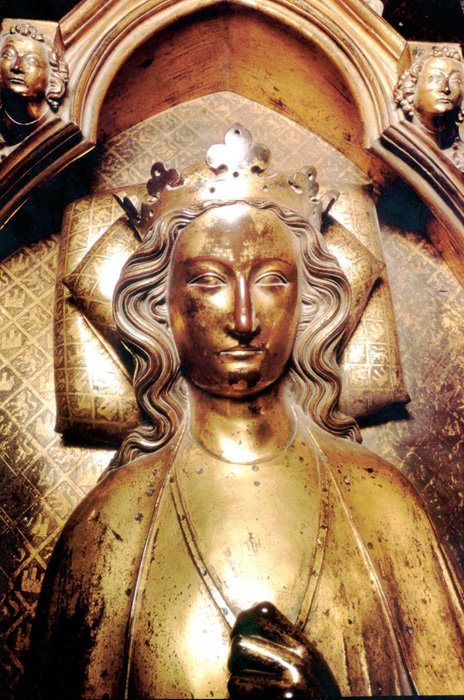
1. The clearest picture we have of Eleanor; it characteristically invokes her heritage, in the repeated patterns of castles and lions on the cushion beneath her head.
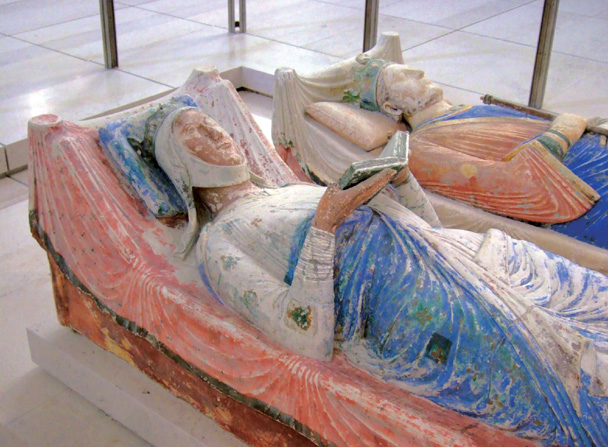
2. Eleanor and Edward’s common ancestors, the formidable Eleanor of Aquitaine and Henry II, buried together at the Plantagenet family burial site of Fontevrault Abbey.
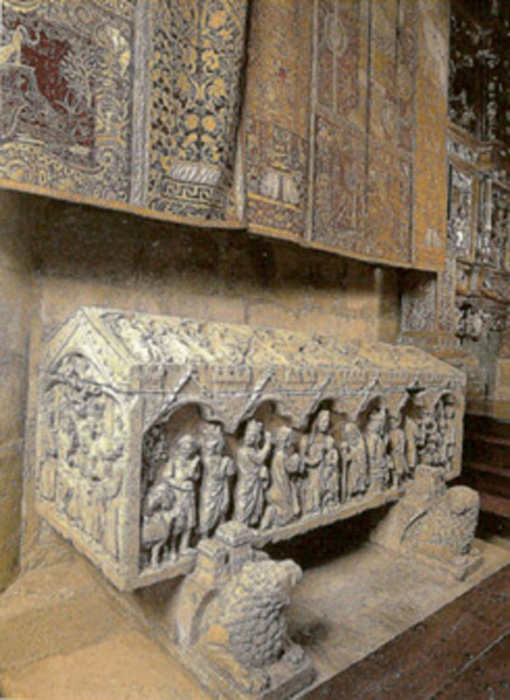
3. The tomb of Eleanor’s grandmother, Berengaria ‘the Great’. A key adviser to her son, also accompanying him to war and managing politically vital properties, she will have been held up to Eleanor as the perfect model of a Castilian princess.
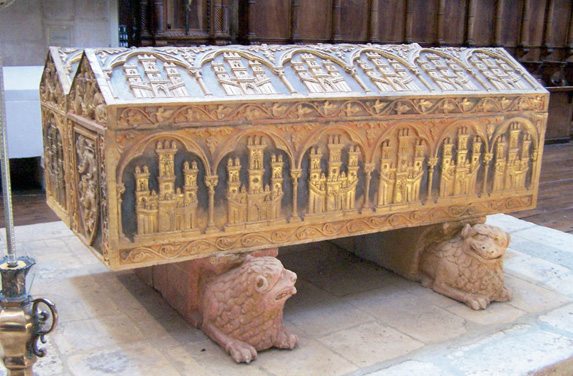
4. The resting place of Eleanor’s great-grandparents Eleanor of England and her devoted husband Alfonso VIII of Castile at the Castilian necropolis of Las Huelgas Abbey. It was here that Eleanor and Edward married in 1254. The artistic link between this tomb and Eleanor’s is clear.
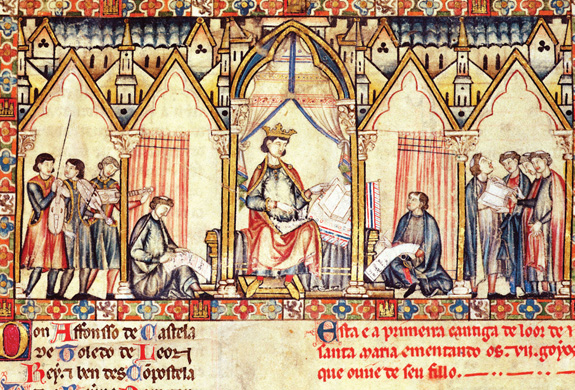
5. The court of Eleanor’s brother Alfonso X ‘the Learned’, depicted, probably accurately, as a luxurious but work-hard-play-hard environment.
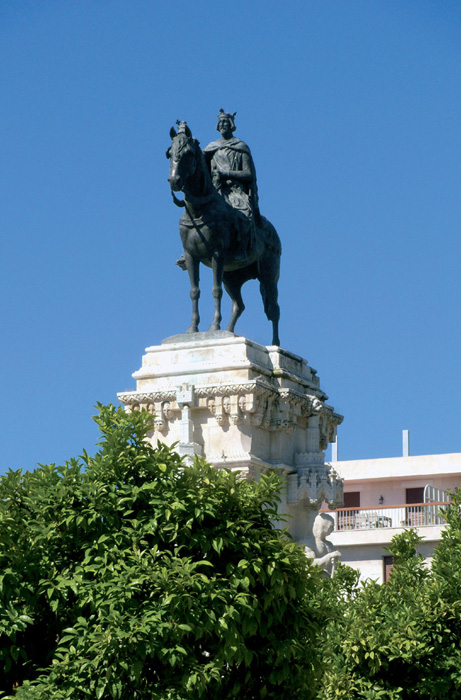
6. The man who bestrode Eleanor’s childhood – her father, Ferdinand III, ‘El Santo’. The hero of the Reconquista, but also a wise man and a scholar, who believed it was a king’s duty to devote himself to the good of his country.
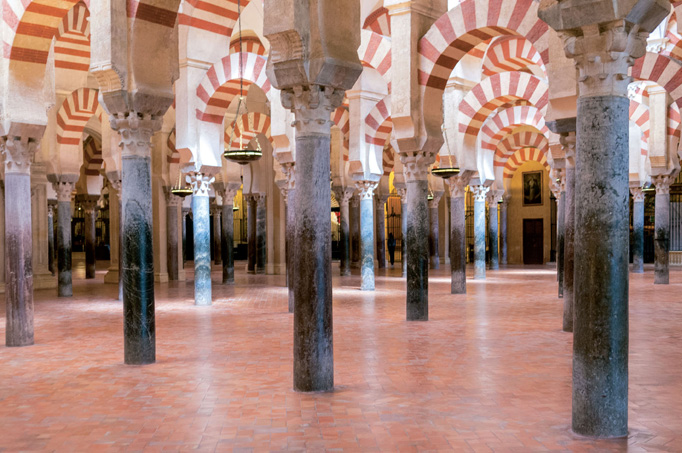
7. One of the wonders of the world – Eleanor was familiar with the fabulous beauties of such buildings as the Cathedral/Mosque of Cordoba, with its forest of pillars.
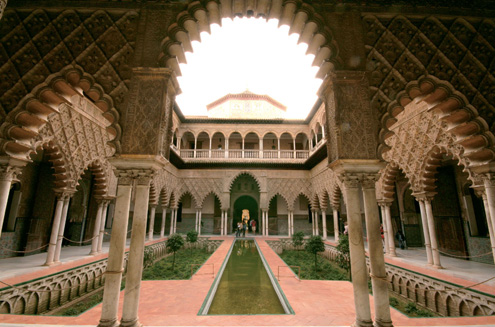
8. The famed Patio de Doncellas; stunning, but only a pale shadow of the beautiful gardens with which Eleanor grew up.
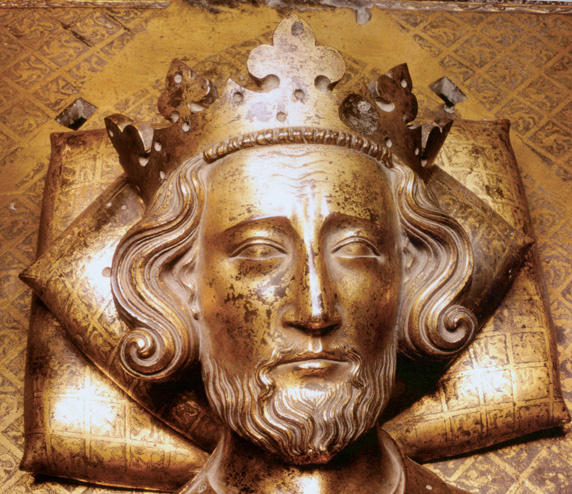
9. The unhappy king. Henry III lacked nearly all the attributes of a successful king.
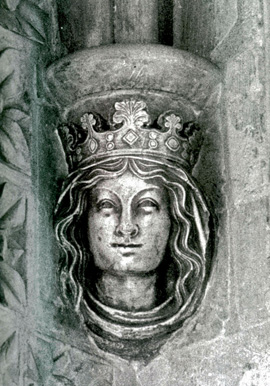
10. Elegant, charming and determined to control her son Edward, Eleanor of Provence never entirely accepted Eleanor’s place in Edward’s life.
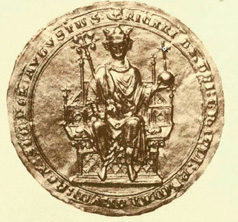
11. Richard of Cornwall, Henry’s younger brother. A talented diplomat and businessman, his clash with Alfonso made Eleanor’s first years in England miserable. He was, however, the person Eleanor trusted with her children when she departed on Crusade.
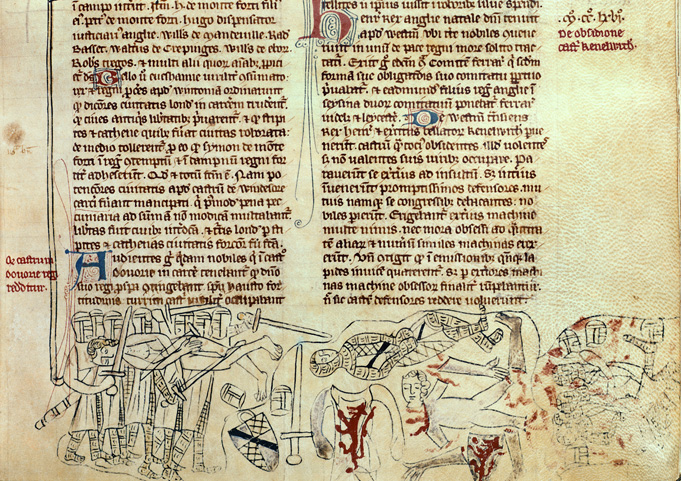
12. A man of exceptional abilities, Simon de Montfort brought England to civil war and held Eleanor captive for a year. His epochal death restored her to fortune, but cast a long shadow.
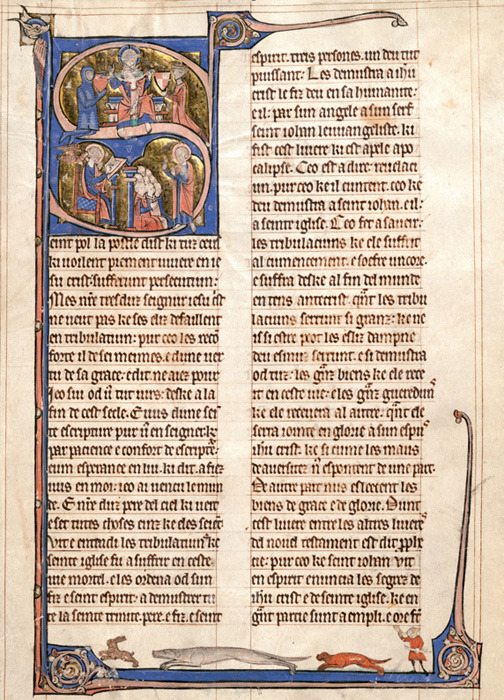
13. A product of troubled times – the Douce Apocalypse. Eleanor and her arms appear with Edward in the initial capital, proof that even with limited resources Eleanor could not resist commissioning books …
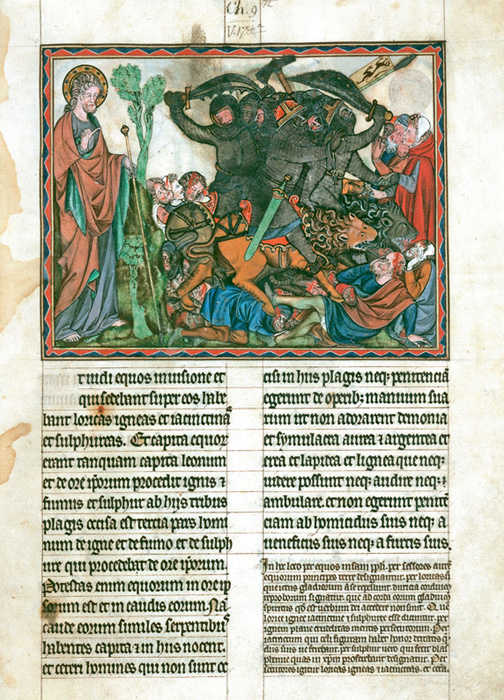
14. Or making jokes – here highlighting her least favourite people: Simon de Montfort (with his banner of a forked-tailed lion) fighting for the beast …
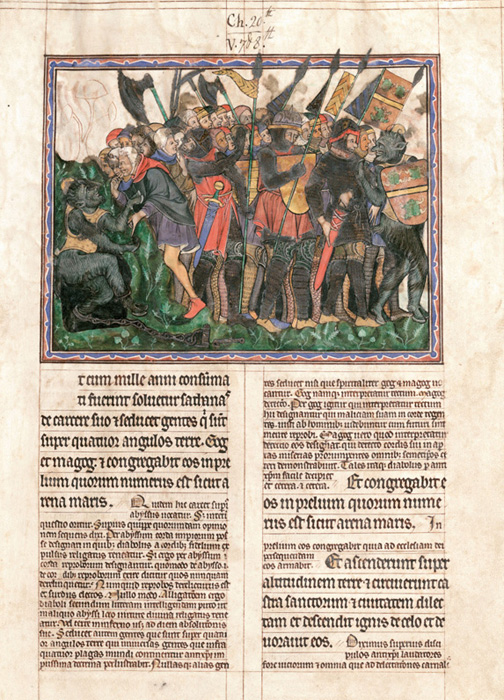
15. … and Gilbert of Gloucester, whose arms fly above the forces of darkness. The later unacceptability of this joke may explain why the book was never completed.
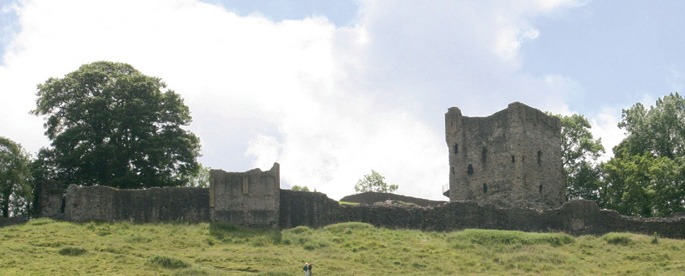
16. The castle and town of the Peak (Peveril Castle and Castleton) was the only part of Eleanor’s property empire to remain with her from the first dower to her death.
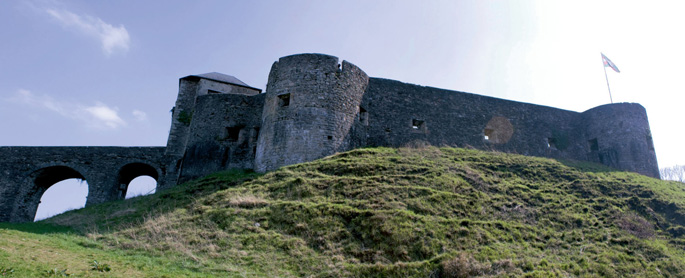
17. The Chateau of Mauléon. Acquired by Edward during a period of exile in the troubled years of the early 1260s, it was the location for his first venture into bastidisation. Eleanor and Edward would later return here with their son-in-law designate, the King of Aragon.
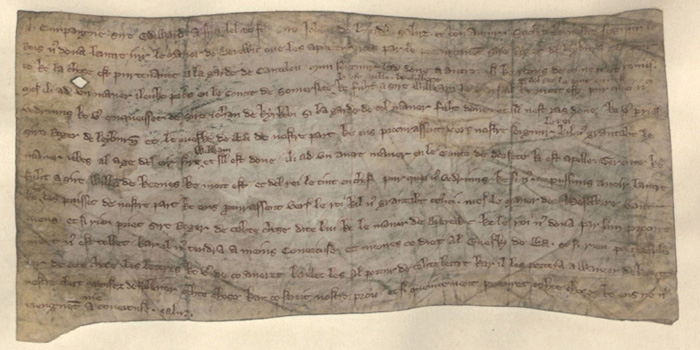
18. Eleanor commences her property business after the Barons’ War. This is a draft letter explaining her planning and may even be in her own hand ...
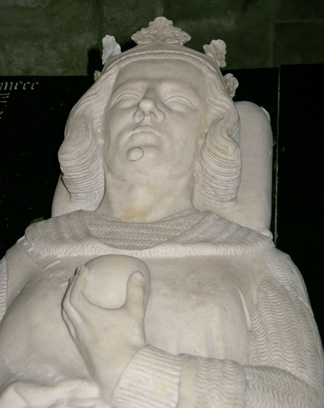
19. Europe’s foremost troublemaker – Charles of Anjou, younger brother of Louis IX. Diverting the Crusade to his own ends (with fatal results), holding Eleanor’s brother prisoner and employing the young Montforts were just some of his sins.
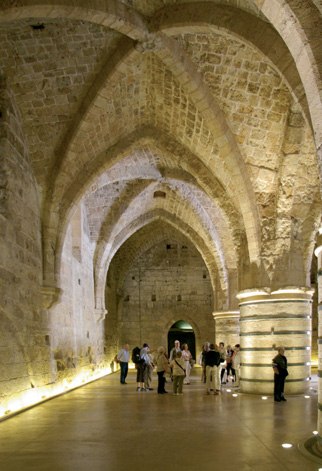
20. Part of the immense complex of the Knights Hospitallers, where Eleanor spent over a year and gave birth to Joan ‘of Acre’.
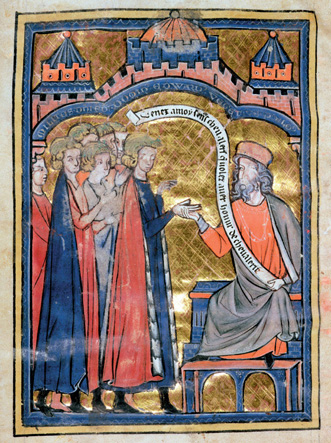
21. A thoughtful commission by Eleanor while at Acre, The Lord Edward’s Vegetius is the first translation into Anglo-Norman of this key military manual. It conveys a subtle hint that Edward (pictured here with Vegetius) would learn from studying it. And the Welsh wars were to prove that he did just that …
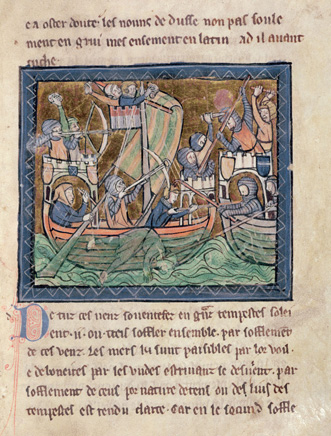
22. This lively sea battle is possibly intended as a depiction of Hugh of Cyprus’ rout of Sultan Baibars’ fleet, and is characteristic of the books which Eleanor commissioned.
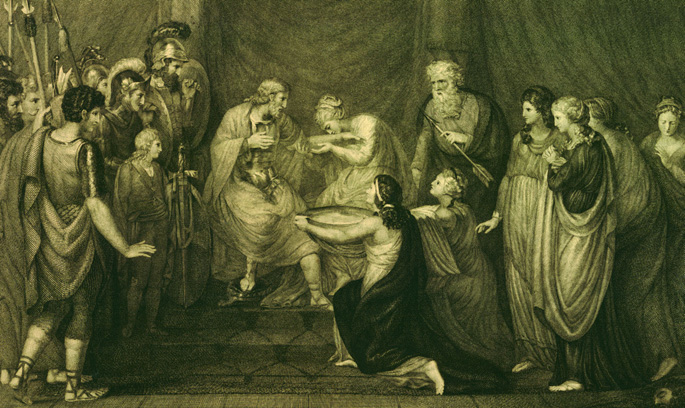
23. The Acre myth, at its most romantic, thanks to William Blake. There are plenty of other versions of the scene – some even more ridiculous …
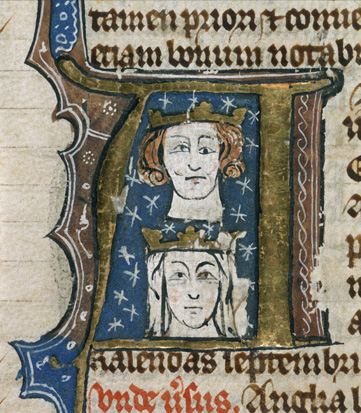
24. These sketches in the Cotton Manuscript are not the most flattering depictions, but they are plainly intended to offer some form of resemblance.
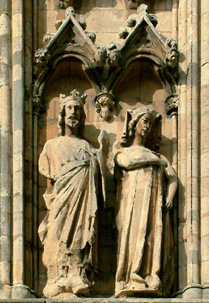
25. These figures at Lincoln, however, though often referred to, are no safe guide. They have been restored extensively.
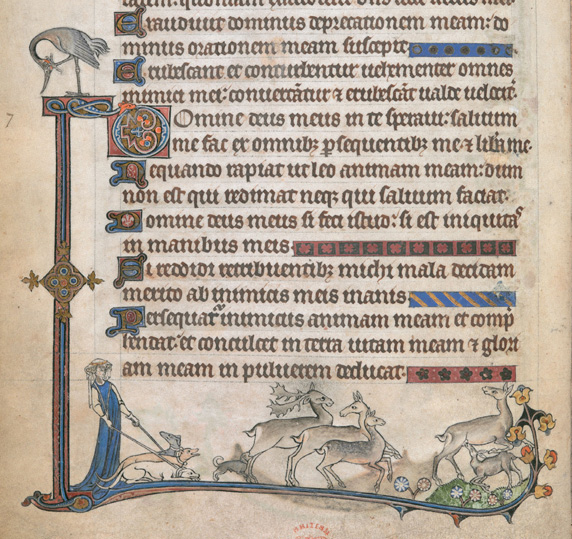
26. The hunting lady with dogs in the Alphonso Psalter – a commission by Eleanor for her son Alphonso – may well have been intended as a depiction of Eleanor. She shares face and eye shape with both the tomb effigy and the Cotton depictions.
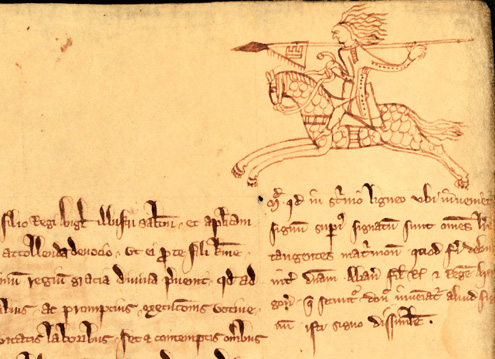
27. A marvellous testament to the tight ship Eleanor ran in business, this picture of one of her couriers explains their reputation for expedition. Note not only the speed, but also the use of Eleanor’s Castilian arms.
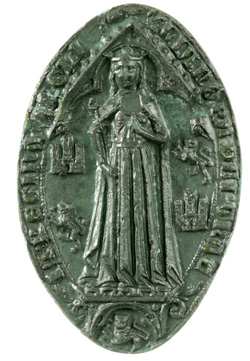
28. In contrast with earlier queens, Eleanor emphasised her power on her seal. Instead of the accepted floriated sceptre and an orb with peaceful dove, she adopts a position of power with a conventional sceptre, and the background is larded with references to her heritage. She is herself, not ‘a queen’.
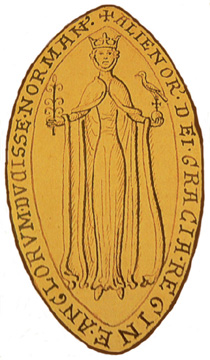
29. Eleanor of Aquitaine’s seal.
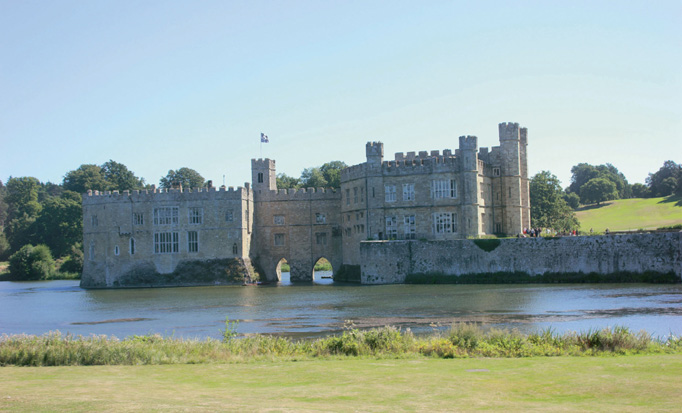
30. Eleanor’s pet project – Leeds Castle. Though much changed over the years, her original concept of the ‘gloriette’, possibly derived from the ‘pavilion on pool’ type of Castilian garden, remains one of its notable charms.
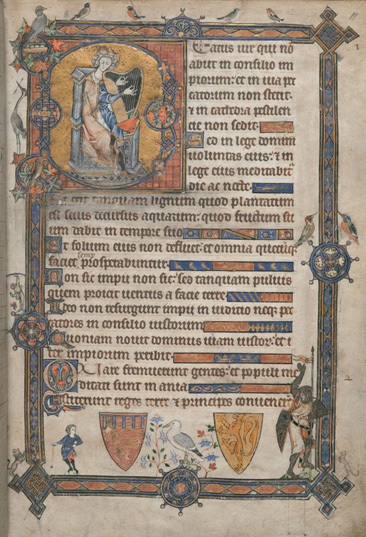
31. The whole family loved birds – and Eleanor made sure that Alphonso would have enjoyment in his psalter, with amusing pictures of many varieties. The arms at the bottom reference Alphonso’s projected marriage to the daughter of the Count of Holland.
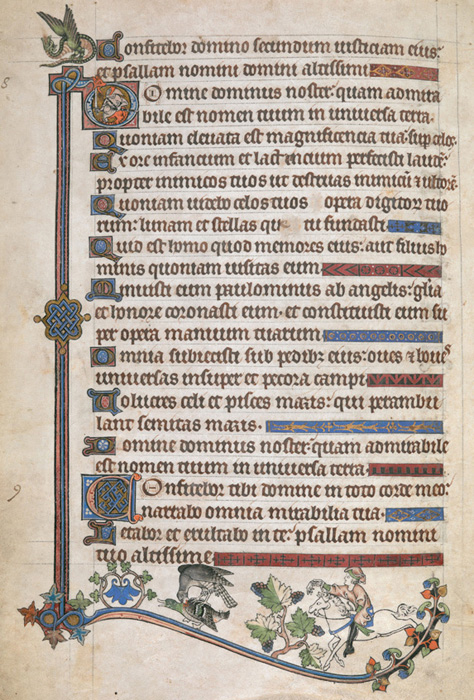
32. The young boy hunting is very possibly young Alphonso, who was just emerging into public view at the time of his death on the tenth anniversary of his parents’ coronation.
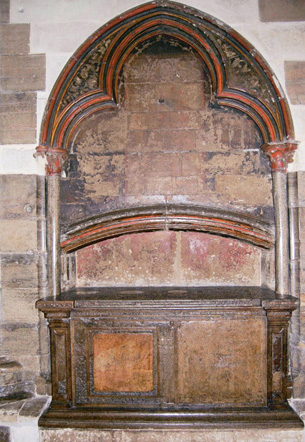
33. He was buried at Westminster Abbey, and probably lies today here, where the bones of all Eleanor and Edward’s dead children were joined with those of their aunt Katherine. The ‘tomb’ is in fact probably the original altar from St Edward the Confessor’s shrine.
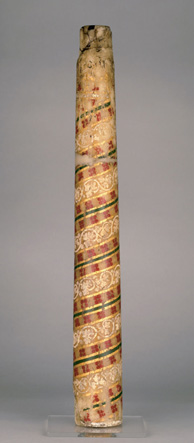
34. Despite her taste for outdoor pursuits, and peripatetic life, Eleanor had a clear taste for domestic luxury. Records remain of her commissioning candles decorated in red and green, just like this one in the British Museum.
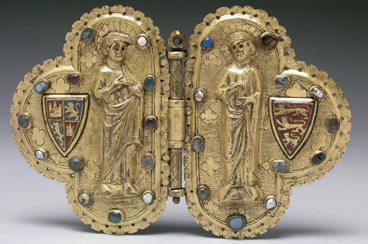
35. She even took her own goldsmith on campaign to Wales. This, however, is French work. The clasp, marked with Eleanor’s arms, may have been a thoughtful Christmas gift from one of her inner circle.
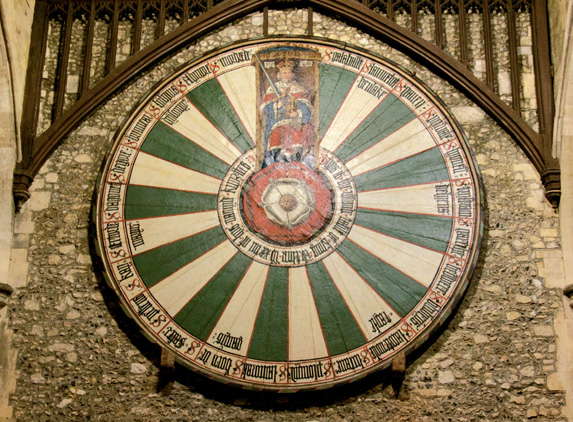
36. Produced for an event in 1285 designed to encourage men to take up knighthood, the Winchester round table still graces the hall where it first was used. The Arthurian themes may well have been Eleanor’s idea.
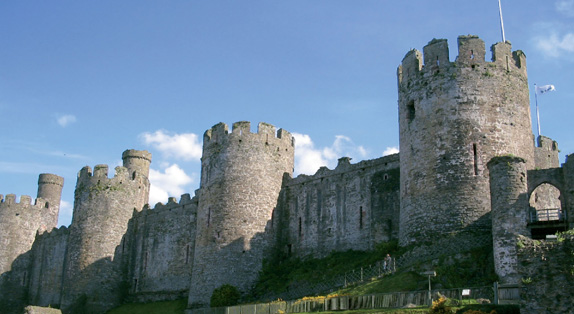
37. An unsubtle reminder that the Plantagenets had arrived, Conwy Castle played host to Eleanor during the course of its construction and was the site of one of the many gardens made especially for her.
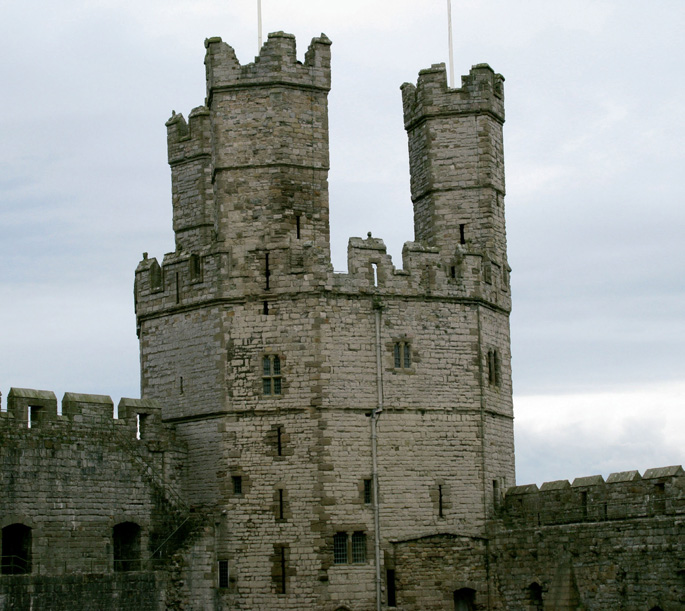
38. But it is at Caernarfon that Eleanor’s influence is most clearly felt. The Eagle Tower is plainly intended to reference ‘The Dream of Macsen Wledig’ in the Mabinogion (exactly the kind of tales in which Eleanor took an interest) – but it also bears a more than passing resemblance to the Castilian castle on Eleanor’s arms.
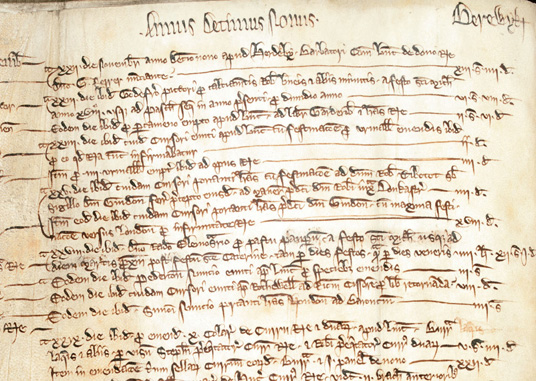
39. Eleanor’s wardrobe book shows the small doings of her household. Here we see them brought to a grinding halt by the words ‘Decessus Regine’, marking Eleanor’s death.
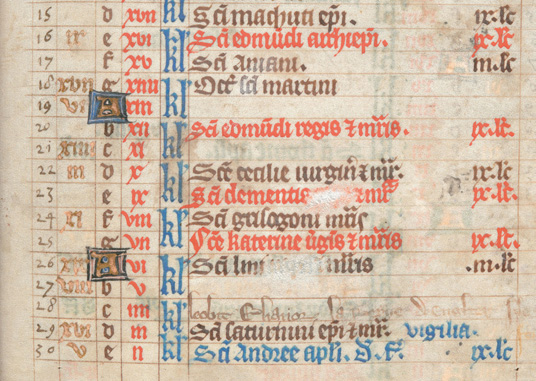
40. Eleanor’s death continued to be marked by her family and friends for years to come. Here it is inserted into the calendar in the Alphonso Psalter, which passed to her daughter Elizabeth, and from her to Eleanor’s faithful servants, the Haustede family.
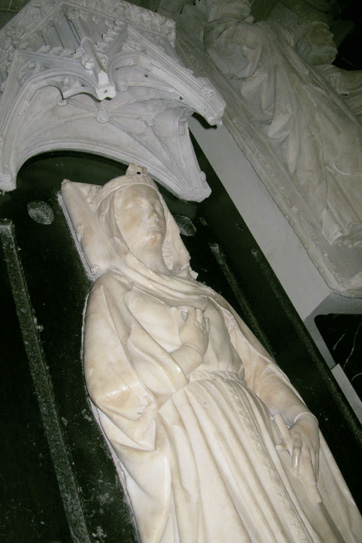
41. The tomb of Eleanor’s childhood acquaintance Isabelle of Aragon gives the lie to the suggestion that portraiture was not intended (note her sweet, dimpled hands). It also provides fascinating contrasts with Eleanor’s tomb.
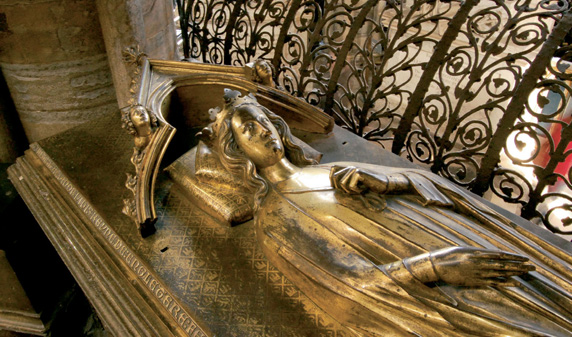
42. Eleanor’s effigy is gilt bronze, like a great king, and she is presented as if for coronation, with flowing robes and loose hair. The full view of her tomb shows a striking resemblance between her seal and her final effigy.
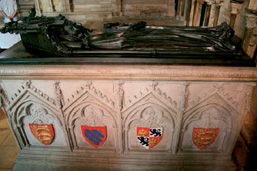
43. This modern reproduction of the lost Lincoln viscera tomb provides an impression of how the shields would have appeared in the Westminster Abbey tomb.
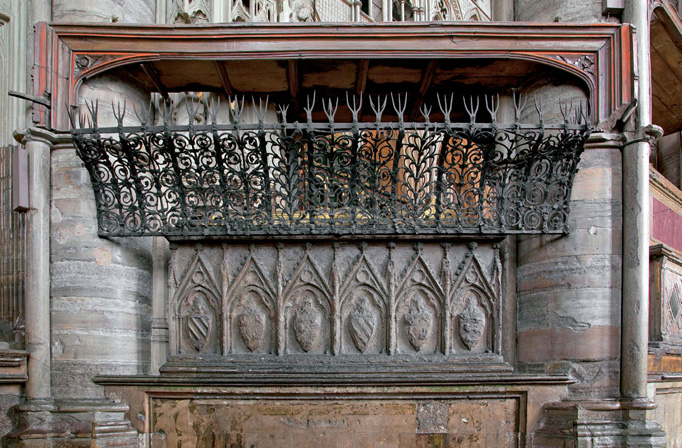
44. Sheltered from public view, the ambulatory side of Eleanor’s tomb echoes her tendency to hide away. But again, her full heritage is emphasised in the shields. that decorate the sides of the tomb.
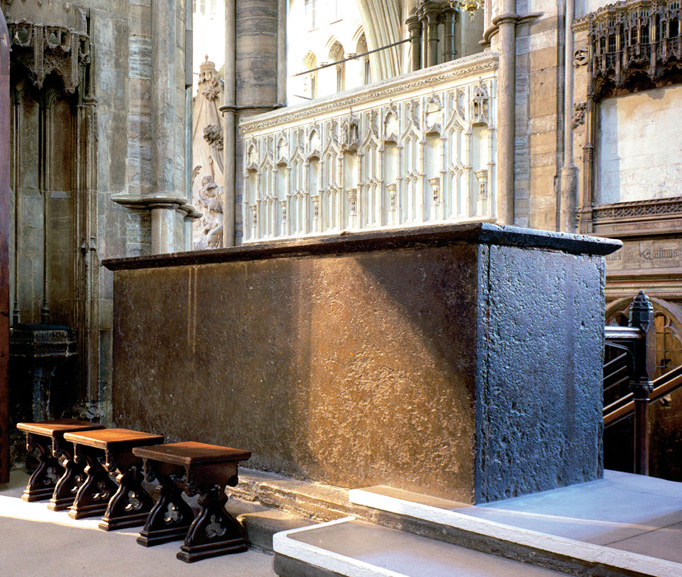
45. A few feet away and standing guard over Eleanor’s tomb is that of Edward. Amusingly, he achieved the simple tomb to which Ferdinand, Berengaria and Louis IX had all aspired.
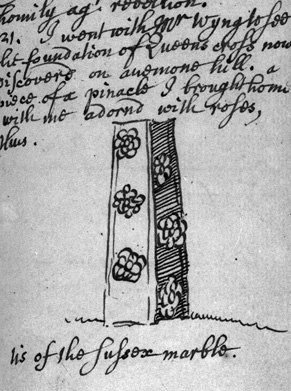
46. The one depiction which remains of the Stamford Cross: The Revd Dr William Stukeley’s diary sketch of the excavated top portion, with its roses.
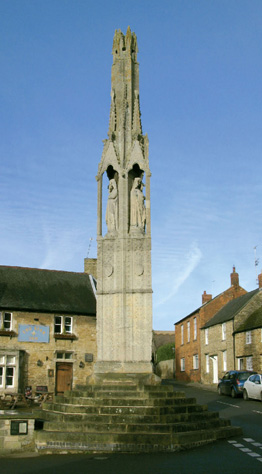
47. The first and least obviously lovely of the surviving crosses, the Geddington Cross, situated near the site of one of Eleanor’s favourite hunting areas as well as many of her properties, has an idiosyncratic charm.
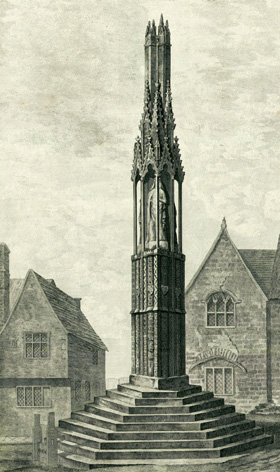
48. It is little changed from how it appears here, lovingly recorded by the Society of Antiquaries in their Vetusta Monumenta in the late eighteenth century.
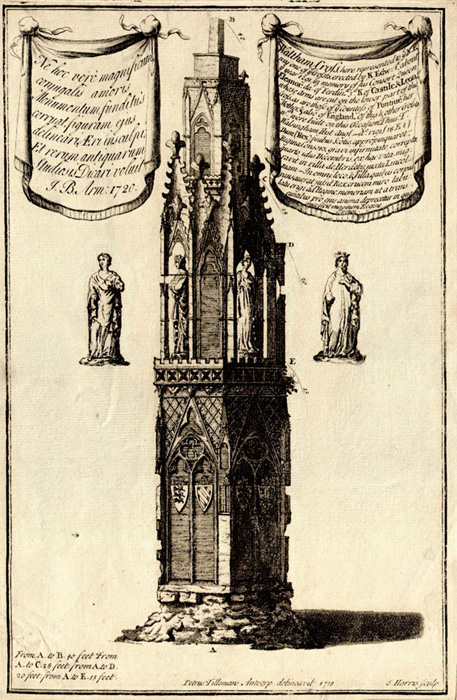
49. One of the first prints of an Eleanor cross, this 1716 depiction of the Hardingstone Cross marks the turning point for the fortunes of the crosses.
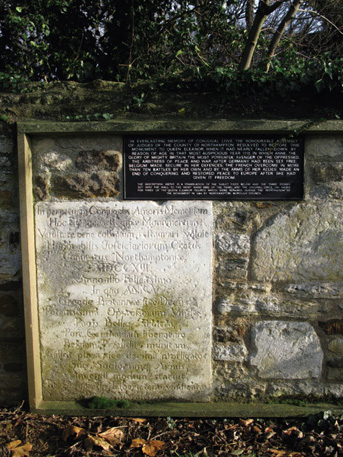
50. The record of the Hardingstone Cross’s restoration in 1713, now sited to one side of the cross, with some of the remants of the repaired statues.
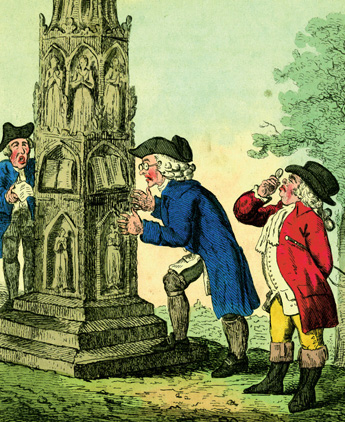
51. By the end of the century the crosses were fawned over by antiquarians, as Cruikshank mockingly shows …
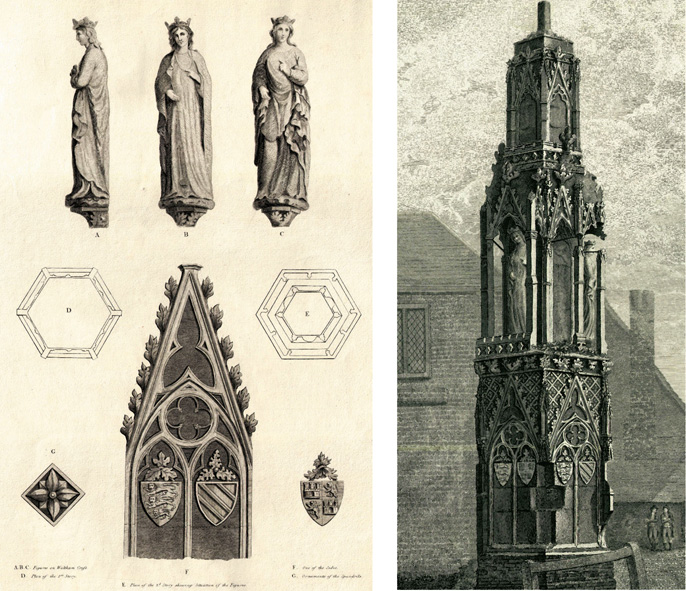
52 & 53. But restoration was needed: the tender attentions of the passing carriages are all too apparent in the Vetusta Monumenta depiction of Waltham Cross. Each Vetusta Monumenta depiction also showed details of the crosses, enabling the layouts to be discerned and details of the figures appreciated.
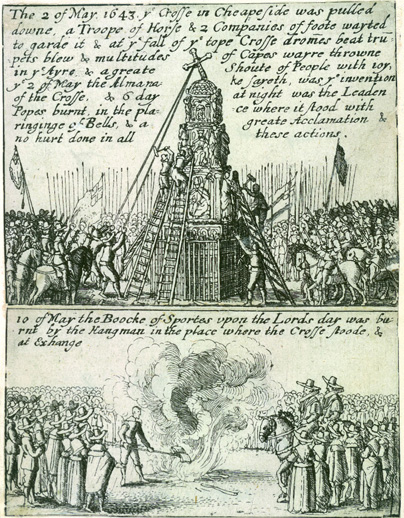
54. The object of a hate campaign for years, the Cheapside Cross is destroyed – to great acclaim – in 1643.
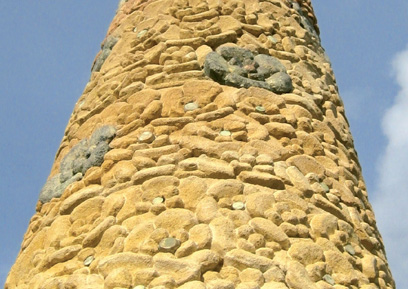
55. But modern homages continue to be made. The nineteenth-century Charing Cross is the most famous, but this tribute in Stamford was raised at the start of the twenty-first century. The surviving rose detail on the original Stamford Cross forms the basis of the design.
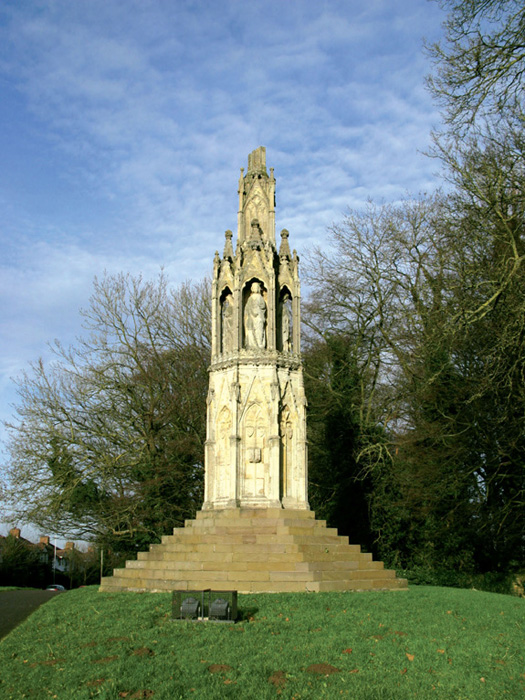
56. And, now rescued from the more obtrusive attentions of restorers, the Hardingstone Cross still stands by the A45 (London Road), reminding passers-by of one of England’s most remarkable queens.