
GABRIEL GARCÍA MÁRQUEZ, born in Colombia in 1927, is the best-known writer to have emerged from the “Third World” and the best-known exponent of a literary style, “magical realism,” which has proved astonishingly productive in other developing countries and among the novelists who write about them—like Salman Rushdie, to quote just one obvious example. García Márquez is perhaps the most widely admired and most representative Latin American novelist of all time inside Latin America itself; and even in the “First World” of Europe and the United States, in an era in which universally acknowledged great writers have been difficult to find, his reputation over the last four decades has been second to none.
Indeed, if we look at the novelists of the twentieth century we discover that most of the “great names” on which critics currently agree belong to its first forty years (Joyce, Proust, Kafka, Faulkner, Woolf); but in the second half of the century perhaps only García Márquez has achieved true unanimity. His masterpiece, One Hundred Years of Solitude, published in 1967, a book which appeared on the cusp of the transition between “modernist” and “postmodernist” fiction, may be the only novel between 1950 and 2000 to have found large numbers of enthusiastic readers in virtually every country and culture of the world. In that sense, in terms of both its subject matter—broadly, the clash between “tradition” and “modernity”—and its reception, it is probably not an exaggeration to claim that it was the world’s first truly “global” novel.
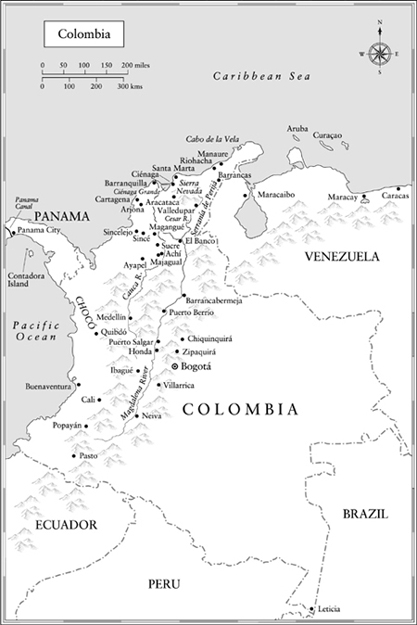
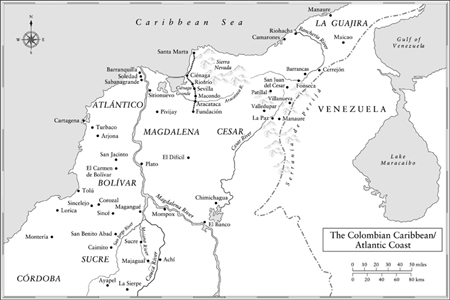
In other ways, too, García Márquez is a rare phenomenon. He is a serious but popular writer—like Dickens, Hugo or Hemingway—who sells millions of books and whose celebrity approaches that of sportsmen, musicians or film stars. In 1982 he was the most popular winner of the Nobel Prize for Literature in recent times. In Latin America, a region that has never been the same since García Márquez invented the small community of “Macondo,” he is known everywhere by his nickname, “Gabo,” like silent cinema’s “Charlie” or soccer’s “Pele.” Although one of the four or five biggest personalities of the twentieth century in his continent, he was born in the proverbial “middle of nowhere,” in a town of less than ten thousand mainly illiterate inhabitants, with unpaved streets, no drainage and a name, Aracataca, aka “Macondo,” which makes people laugh when they first hear it (though its closeness to “Abracadabra” should perhaps make them cautious). Very few famous writers from any part of the world have come from such a small-town background, and yet fewer have lived their era, both culturally and politically, as fully and intimately as this one.
García Márquez is now a wealthy man, with seven homes in glamorous locations in five different countries. In recent decades he has been able to demand (or, more usually, refuse) $50,000 for a half-hour interview. He has been able to place his articles in almost any newspaper in the world and receive huge sums for them. Like those of Shakespeare, the titles of his books appear in ghostly fashion in headlines all over the planet (“one hundred hours of solitude,” “chronicle of a catastrophe foretold,” “autumn of the dictator,” “love in the time of money”). He has been forced to confront and endure an astonishing level of celebrity for half a lifetime. His favours and his friendship have been sought by the rich, the famous and the powerful—François Mitterrand, Felipe González, Bill Clinton, most of the recent presidents of Colombia and Mexico, and many other celebrities besides. Yet despite his dazzling literary and financial success, he has remained throughout his life a man of the progressive Left, a defender of good causes and a constructor of positive enterprises, including the founding of influential institutes of journalism and film. At the same time his close friendship with another political leader, Fidel Castro, has been a constant source of controversy and criticism for more than thirty years.
I have been working on this biography for seventeen years.* Contrary to what I was told by everyone I spoke to in the early days (“You’ll never get to see him and if you do he won’t cooperate”), I got to meet my man within a few months of starting work and, although he could not be said to have been brimming with enthusiasm (“Why do you want to write a biography? Biographies mean death”), he was friendly, hospitable and tolerant. Indeed, whenever I have been asked if my biography is an authorized one my reply has always been the same: “No, it is not an authorized biography, it’s a tolerated biography.” Yet to my mingled surprise and gratitude, in 2006 García Márquez himself told the world’s press that I am his “official” biographer. Probably that makes me his only officially tolerated biographer! It has been an extraordinary privilege.
As is well known, the relationship between biographer and biographee is invariably a difficult one, but I have been extremely fortunate. As a professional journalist and a writer who himself uses the lives of those he has known in the elaboration of his fictions, García Márquez has been forbearing, to say the least. When I first met him in Havana in December 1990, he said that he would go along with my proposal on one condition: “Don’t make me do your work.” I think he would agree that I have not made him do my work and he has responded by helping when I have really needed his assistance. I have carried out some three hundred interviews in order to produce this biography, many of them with crucial interlocutors who are no longer with us, but I am aware that Fidel Castro and Felipe González might not have been among the list if “Gabo” had not given some sign to say that I was “OK.” I hope he still thinks I am OK now that he is in a position to read the book. He has always declined to give me the kind of “heart to heart” that biographers inevitably dream of, on the grounds that such interaction is “indecent,” yet we must have spent a total of one full month together at different times and in different places over the past seventeen years, in private and in public, and I believe that few other people have heard some of the things that he has said to me. Yet he has never tried to influence me in any way and he has always said, with the combined ethic and cynicism of the born journalist: “Just write what you see; whatever you write, that is what I will be.”
This biography was researched in Spanish, the works all read in Spanish, most of the interviews conducted in Spanish, yet it has been written and is now published in English (though the Spanish translation will appear in 2009). Moreover, it goes without saying that the more normal procedure is for a biography, especially the first complete biography, to be written by a compatriot who knows the country of origin as well as the subject himself and who understands the smallest nuances of every communication. That is not my case—besides, García Márquez is an international figure, not just a famous Colombian—but, as the man himself, perhaps not altogether sincerely, once sighed when my name was mentioned in conversation: “Oh well, I suppose every self-respecting writer should have an English biographer.” I suspect that my only virtue in his eyes was my obvious lifelong love for and attachment to the continent in which he was born.
It has not been easy to find my way through the multiple versions that García Márquez has given of almost all the important moments in his life. Like Mark Twain, with whom he can profitably be compared, he loves a good yarn, not to mention a tall tale, and he likes a story to be satisfyingly rounded off, not least the formative incidents that make up the story of his own life; at the same time he is also playful, antiacademic and strongly in favour of mystification and downright mischief-making when it comes to putting journalists or professors off the scent. This is part of what he calls his mamagallismo (more of this later; for the moment one may discreetly translate it with the British term “piss-taking”). Even when you can be sure that any particular anecdote is based on something that “really” happened, you still cannot pin it down to a single shape because you find that he has told most of the well-known stories about his life in several different versions, all of which have at least an element of truth. I have personal experience of this mythomania, by which I too have become joyfully infected (in my own life, though not, I hope, in this book). The García Márquez family were always impressed by my tenacity and preparedness to engage in the kinds of investigation to which only mad dogs and Englishmen would resort. Thus I have found it quite impossible to kill off the myth which García Márquez himself has disseminated, and evidently believes, to the effect that I—and this is apparently characteristic of my manias—once spent a rain-drenched night on a bench in the square at Aracataca in order to “soak up the atmosphere” of the town in which my subject was, reputedly, born.
After so many years I can hardly believe that the book finally exists and that I am here writing its preface. Many burned-out biographers much more illustrious than I have concluded that the time and effort invested in such a labour are not worth the candle and that only the foolish and the deluded would begin such a task, led on, perhaps, by the possibility of communing and identifying with the great, the good or the merely famous. I might have been tempted to agree with this conclusion; but if ever a subject was worth investing a quarter of one’s own life in, it would undoubtedly be the extraordinary life and career of Gabriel García Márquez.
Gerald Martin, July 2008
* I had reached over two thousand pages and six thousand footnotes when I finally realized that perhaps I would never finish the project. What lies before the reader, then, is the abbreviated version of a much longer biography, almost completed, which I intend to publish in a few more years, if life is kind. But it seemed sensible to delay that gargantuan task and to distil my discoveries and such knowledge as I have accumulated into a brief, relatively compact narrative while the subject of this work, now a man past eighty, is still alive and in a position to read it.