
Hollywood usually kept their gangster movies and Nazi movies separate, and an unofficial survey revealed only one feature film, All Through the Night, made in 1942 by Warner Brothers, in which both groups were central to the plot.
The stars were Humphrey Bogart, William Demarest, Jackie Gleason, and Phil Silvers. It was a comedy. There was even a scene in which the gangsters infiltrated and busted up a meeting of American Nazis.
In a weird piece of slapstick, the hoods confused the assembled Nazis by shouting German-sounding double-talk. Studio bigwigs hated the scene and wanted it cut, but a test audience thought it was a riot, so it stayed in the picture.
At the end of World War II, Judge Nathan Perlman, the catalyst behind the gangsters versus Nazis war, became a consultant to Supreme Court Justice Robert H. Jackson, who’d been appointed by President Harry S Truman to prosecute Nazi war criminals.
Judge Perlman died at the age of sixty-four on June 29, 1952, of heart failure at Beth Israel Hospital in Manhattan. A small street outside Beth Israel was later renamed Nathan D. Perlman Place.
He was buried in Mount Hebron Cemetery in Flushing, Queens, also the final resting place of Louis “Lepke” Buchalter and Emanuel “Mendy” Weiss from Murder, Inc.
Judge Perlman’s gravestone reads:
JURIST—LEGISLATOR—HUMANITARIAN
HIS LIFE WAS FULL OF KIND WORDS
AND GENTLE DEEDS
And as we now know, sometimes not-so-gentle deeds. The stone also features an incorrect birthdate—January 1, 1890—that chops three years off his age.
At the time of his death, he was best remembered as being instrumental in establishing a probationary system in federal courts for first offenders, thus relieving overcrowded jails.
Today, we remember him for so much more—for thinking outside of the box and teaching anti-Semites that Jews were tough and it could be dangerous to be a Nazi.
During World War II, Meyer Lansky, Bugsy Siegel, and Charles “Lucky” Luciano had a contract out on Hitler, but they couldn’t get a hit man inside enough to do the job. American mobsters continued to show their patriotism, with Luciano himself helping the war effort by supplying geographic and social intelligence regarding Sicily and Italy, where US troops would eventually invade.
In the meantime, Jewish kids who grew up during that era would always have Jewish gangsters as their heroes, the tough guys who confronted evil head-on and kicked its ass—without a single fatality.
Meyer Lansky, the giver of giant gift baskets, lived to be old and was never convicted of anything more serious than illegal gambling. How did he stay out of trouble? Author Anthony Summers wrote that Lansky possessed compromising photos of J. Edgar Hoover and his close aide Clyde Tolson.
The closest Lansky came to prison came in the late 1960s, when he was investigated by the IRS for tax evasion. The probe must have had some substance because Lansky fled to Israel in 1970, was deported back to the United States in 1972, and was acquitted at a trial in 1974.
He spent his last years relaxing in Hallandale, Florida. Most of his money and property were in other people’s names, but he had access to all of it when he was alive. The trouble was, his widow and three kids discovered his personal estate to be worth only fifty-three thousand dollars.
Lansky survived being a gangster but not a smoker, dead from lung cancer in 1983 at the age of eighty.
Louis “Lepke” Buchalter, on the lam during the Nazi-busting era, eventually found himself in the death house at Sing Sing. A fellow resident was Mendy Weiss, veteran of the Yorkville Casino riot. Both were scheduled to be executed on the same night. The executions were delayed four times, but finally, on March 4, 1941, no one called to save them.
One of the cruelest features of the Sing Sing death house was that when another prisoner was fried, the large draw of current for the electric chair caused the lights to dim and flicker in the cells. Even the toughest hoods winced at the sight of that flickering light.
As the final hours approached, the men, the former backbone of Murder, Inc., started their final countdown. Lepke was visited by his wife, Betty, and twenty-year-old son, Harold.
Another hood in the death house at that time was Louis Capone, of the Italian wing of Murder, Inc. All three veterans of Midnight Rose’s back room would be executed together. That night, around eleven o’clock, they took the long walk.
Capone and Lepke were stoic, tight-lipped, and silent. Lepke glanced briefly at the gallery of thirty-four spectators when he entered, sat in the chair without assistance, and kept his eye on every movement as he was strapped in—right up until the moment they pulled the hood over his head.
Mendy, on the other hand was a mess. Chewing gum, accompanied by Rabbi Jacob Katz, he entered screaming, “I’m innocent. This was a frame up! I’m innocent and Governor Dewey knows it! The only reason I am going is because I am a Jew. I’ve been framed because I’m a Jew!” And then exhausted, he added, “Give my love to my family and everybody else. I am innocent.”
Each hood got four jolts of juice, after which Dr. Charles Sweet opened their shirts, listened with a stethoscope, and said, “This man is dead.” Capone, it was said, was the five hundredth person to be executed in Sing Sing’s electric chair. Quite an honor.
Abraham “Kid Twist” Reles, Buggsy Goldstein, and Harry “Pittsburgh Phil” Strauss beat up Nazis together, performed hits together, and went to trial for murder together. The hit job in question was that of Irving “Puggy” Feinstein, who was running a gambling house in the wrong neighborhood.
The three men had a hard time killing Feinstein and created a messy crime scene that made veteran cops gag. The body was dumped in a vacant lot in the Flatlands section of Brooklyn.
It was Kid Twist who ratted them out. The trick was to keep Kid Twist alive long enough to testify, an impossible task as it turned out, as Twist fell, jumped or was pushed out of the sixth-floor window of Coney Island’s Half Moon Hotel, leading to the line, “The canary who could sing but couldn’t fly.”
At the trial of Buggsy and Pittsburgh Phil, Blue Jaw Magoon turned state’s evidence. Buggsy and Phil stayed together right to the end, executed at Sing Sing on June 12, 1941.
Blue Jaw Magoon’s downfall was a femme fatale. Cops questioned his yakety-yak girlfriend, Evelyn Mittleman—a woman with a kiss-of-death reputation. The twenty-five-year-old Mittleman was reliably affectionate toward generous hoods. Three men had been murdered over her, it was said.
Soon after turning rat, Magoon disappeared, and no one knew where he was until 2003, when his skeleton was found partially buried in the desert sand outside Las Vegas.
Tic Toc Tannenbaum also vanished. Some say he lived under a new identity for a while in Georgia before being taken on a one-way boat ride on the Atlantic Ocean.
Jacob Drucker’s gangster life didn’t make it through the war years, either. He was arrested by feds in 1943, extradited to New York, and became a weenie at Thomas Dewey’s racket-busting weenie roast.
Charles “Bug” Workman was arrested during the winter of 1940 in the Brighton Beach section of Brooklyn and charged with the murder of Dutch Schultz in New Jersey. Unlike his old Murder, Inc. pals Buggsy Goldstein and Pittsburgh Phil, the thirty-four-year-old Workman wasn’t executed, but he was sentenced to a life of hard labor at Trenton State Prison.
Workman became a model prisoner and, after twenty-three years, was released on parole in 1964. He went straight, took a job in the garment district, and lived out the rest of his life without discussing his violent past. He died sometime in the mid-1970s. His proudest achievement, Bug said late in life, was keeping his son Chuck out of the mob. Chuck only whacked golf balls, touring as a PGA golf pro for ten years.
During the summer of 1939, “Midnight Rose” Gold was busted for racketeering and perjury. Cops said she ran a brothel upstairs from her candy store, kept a policy bank, gave out loans to suckers, and helped distribute the locations for a floating crap game.
The indictment for Mrs. Gold boasted seventeen counts, and the old lady was facing a prison sentence of eighty-five years and fines of eighty-five thousand dollars. Lucky for Mrs. Gold, she knew people.
Powerful legal aid rushed to her rescue, and she was quietly released. The official reason was that she was old and sick and the justice system had been unnecessarily harsh on her. In jail, her health grew worse, but once she was out, it improved dramatically.
Judd Teller, the journalist who supplied Murder, Inc. with the list of “Nazi scumbags,” became an advisor to national Jewish groups and an assistant professor at Yeshiva University. He was the political secretary of the World Zionist Organization and a consultant to the Conference on Jewish Material Claims Against Germany. He died after a brief illness in 1972 at the age of fifty-nine. At the time, he lived on the East Side of Manhattan, in the Gramercy Park area.
Jake Guzik, the man Judge Perlman called in Chicago, the man who was called Greasy Thumb because he was always counting Al Capone’s money, lived to age sixty-nine. In 1959, he dropped dead in a restaurant over his lamb chops. He was given a lavish funeral with a coffin that cost five grand.
Guzik was eulogized by Rabbi Noah Ganze of the Chicago Loop Synagogue as a generous man whose “vast contributions” to charities large and small over the years had greatly helped the community.
Herb Brin, the Chicago reporter who infiltrated the Bund, survived his undercover stint without ever being outed as Jewish. The biggest difficulty he had while spying on the anti-Semites was romantic, not political. There was a woman named Kathleen who attended the meetings, and he became expert at parrying and ducking her advances as she plied him with Rhine wine and seltzer. Maintaining his virtue proved to be more of a challenge than the task at hand.
Herb and his longtime girlfriend, Selma, were married on December 25, 1940, in the YMCA hall. “A complete Jewish move,” laughed Herb’s son Dan in a recent interview. “Christmas Day in a Christian organization hall. They knew it would be available for cheap!”
Brin was one of millions of American boys who enlisted in the US Army after Pearl Harbor. His dreams of fighting Nazis with a gun in his hand died when he badly injured his lower extremities in an accident during basic training.
Rather than discharging him, the army—aware of his journalistic skills—gave him a job writing for Yank magazine. He took the job but wasn’t happy, later telling his son that interviewing celebrities on USO trips seemed weak when he knew his fellow Jews were being murdered by Hitler.
Brin returned to reporting after the war and became famous when he exposed Chicago Mayor Ed Kelly’s corruption in what became known as the Consumer Coal Company scandal. When Kelly promptly wrote out his letter of resignation, he gave it to Brin.
In 1947, Brin moved to Los Angeles and took a reporting job for the Glendale News-Press, but he quit after the paper’s exposé of L.A.’s Communist Party turned out to be no more than a gathering of local Democrats.
He moved to the Los Angeles Times, where he was the only reporter at Union Station to cover Charlie Chaplain’s departure from L.A.
During the Cold War, he mortgaged his home to start up his own periodical, the Heritage Jewish News, and when America had its eyes on the so-called Red Menace, itself a movement that smacked of anti-Semitism, Brin continued to focus on the reactionary right, covering American Nazi leaders such as Wesley “Shifty Legs” Swift and George Lincoln Rockwell. He wrote scathing reviews of Willis Carto, whose Liberty Lobby proclaimed the Holocaust to be a myth. His scope became global, and he wrote about the Soviet Union’s suppression of Jewish culture.
In 1968, he was in the Ambassador Hotel when Robert Kennedy was assassinated.
Brin continued his anti-Nazi work for his entire life. When he was close to eighty years old he drove to an Aryan nation camp, a place where White supremacy was preached and the Holocaust denied. He went into the camp’s front office and talked to a lady there. He identified himself and asked nicely if he could have a tour of the place. She was cautious but said all right. When the tour was complete, they were back in the office and Brin noticed the “Aryan Nation” coffee cup that someone had left on a small table.
“Hey, that’s a great mug. I’d love to have one. How much do they cost?”
“It will be complimentary, but I have to find one. Give me a moment?”
“Of course.”
The lady left the room, and Brin worked quickly, especially for a man his age. He opened drawers, grabbed documents, and stuffed as much as he could in his pockets. The woman returned with the mug, he thanked her, and he left.
Brin made a series of exposés out of those stolen documents, and today the papers live in the Western States Jewish History Archives at UCLA.
He lived to be eighty-eight and died in 2003.
Boxing champ Barney Ross became a Marine after Pearl Harbor and was sent to the Pacific Theater, where he fought in the battle of Guadalcanal. He and two other Marines were on patrol one night when they were attacked by a squadron of Japanese with machine guns. His three buddies were seriously wounded.
Ross managed to pull them into a foxhole and single-handedly returned fire to keep the Japanese from advancing. When he had fired all four hundred bullets he had, he threw twenty-two hand grenades at the machine-gun positions and managed to keep the enemy at bay until dawn.
Ross later recalled that he forgot he’d renounced his religion that night and prayed all night long in that foxhole, “most of it in Hebrew.” By that time, two of the Marines in his foxhole were dead.
Still at his fighting weight, 138 pounds, he picked up the 230-pound survivor and carried him to safety. He was shot twice during that process, once in the leg and once in the foot, and when help arrived, they found thirty pieces of shrapnel embedded in Ross’s helmet.
Sadly for Ross, along with a Silver Star Medal for heroism, he also picked up a nasty morphine addiction during his recovery. He kicked the habit (a subject later turned into the 1957 United Artists movie Monkey on My Back, starring Cameron Mitchell as Ross) and continued living an exemplary life.
He died of throat cancer in 1967 in his hometown of Chicago at age fifty-seven.
Jacob “Sparky” Rubenstein missed the first two years of World War II, classified 1-H for being too old (thirty as of Pearl Harbor) and 3-A for financial hardship at home. But by 1943, it was all hands on deck, and he was drafted into the Army Air Force that May.
He never made it overseas. After five months of training in Farmingdale, Long Island, he spent the remainder of his military service down South, where he once got in trouble for breaking the teeth of a sergeant who called him a “Jew bastard.”
He cried when FDR died, cheered on V-E and V-J Days, and was sent home to Chicago in 1946, where he spent a couple of years in business selling stuff with his brothers.
He was fired by his brothers—allegedly for selling items from other companies—and in 1947, he left Chicago forever and went to Dallas to help his sister Eva manage a couple of nightclubs.
Sparky enjoyed brawling just as much in 1950 as he had in 1938. He could fight with or without a cause. During one fight in 1950, his opponent bit his right forefinger off at the first knuckle—which was why when it came time for him to commit his most notorious act, he had to pull the trigger on his .38 snub with his middle finger.
By 1953, the man formerly known as Sparky was in the Dallas nightclub business himself, and in 1963, he operated two clubs, the most famous of which was a strip joint on Main Street called the Carousel Club. He’d changed his name to the less ethnic Jack Ruby and as part of his service as a strip-club operator, he supplied “girls” to parties thrown by the rich and powerful men of Dallas.
He became globally famous on Sunday morning November 24, 1963, when, on live TV, he shot and killed alleged presidential assassin Lee Harvey Oswald in the basement of the Dallas Police Station. He’d gained access to the heavily guarded area because of two rules of behavior he’d learned years before. He was friendly with the cops, and he knew the guy guarding the back door.
He told police he shot Oswald to prove that Jews were tough, a line that came right out of the Judge Nathan Perlman playbook. He was tried and convicted of murder despite an insanity defense conjured up by his flamboyant attorney, Melvin Belli.
Barney Ross, Sparky’s friend to the end, paid his legal bills. While they were investigating the assassination, US Congressman (later president) Gerald Ford and US Supreme Court Chief Justice Earl Warren traveled on behalf of the Warren Commission to Dallas and interviewed him in jail.
Ruby told Ford and Warren that he was a true patriot at heart. He loved America. And to demonstrate that, he told his distinguished interrogators about Chicago in the old days when he and his pals would bust up Bund meetings. “I cracked a few Nazi heads,” Ruby boasted.
He also told Ford and Warren that he believed the assassination had been carried out by the right-wing John Birch Society, a plot hatched by “Johnson and the others.” That meant President Johnson, who became president the instant JFK’s head exploded. Sparky’s quote was not heavily publicized because LBJ was the leader of the free world at the time.
The last interview Ruby gave was with newspaper columnist and TV game-show panelist Dorothy Kilgallen—Barney Ross knew both Ruby and Kilgallen—who said she was going to “blow the lid off the assassination.” However, she died suddenly before she had a chance to publish what he’d said.
Sparky himself died in prison not long after his conviction, killed by a historically aggressive cancer.
Chicago fight club operator Davey Miller remained a referee until December of 1949 at age sixty-one. His last fight featured a blubbery and balding Joe Louis taking out a “crude” opponent as a step toward a comeback that never happened. After the fight, Miller had nothing but nice things to say about the ex-champ and announced his own retirement, telling the boys from the press that thirty-five years in the ring was enough.
Davey wasn’t a gangster, but gangsters usually surrounded him, and that was what eventually did him in. He went to a Chicago movie theater with his brother Max. Coming out of the theater, the brothers faced immediate incoming, just like Dillinger, from a gunman who was supposed to whack Max but shot and killed Davey instead. Max ended up dying of TB.
In 1939, not long after the campaign against the Nazis, Longie Zwillman married divorcee Mary Steinbach, who had a son. Important men—politicians, millionaires—came to the wedding, while outside, feds wrote down license plate numbers.
After the war, Zwillman partnered up with Willie Moretti and ran the Marine Room, a plush gambling parlor inside the Palisades Hotel. In 1956, the feds came after Zwillman for tax evasion, but Zwillman, an expert at bribing jurors, beat the rap.
Zwillman and Willie Moretti shared Newark’s gambling rackets. Both came to bad ends years later. Moretti was shot to death on October 4, 1951, at Joe’s Elbow Room on Palisades Avenue in Cliffsdale Park, New Jersey.
On the morning of February 26, 1959, Zwillman was found hanging from the rafters of his twenty-room mansion in West Orange, New Jersey. He was wearing a bathrobe, pajamas, slippers, and socks. He had a half-full bottle of tranquilizers in his pocket, and a half-drunk bottle of booze was nearby. His funeral was a great event in Newark, with a full synagogue and a crowd outside clogging traffic. He was interred in a concrete vault at B’nai Abraham Memorial Park in Union, New Jersey.
Zwillman’s widow remarried in 1962 to Harry Wismer, owner of the New York Titans (now the Jets) of the then American Football League.
Puddy Hinkes went to jail soon after his days of busting up Bund meetings. He was sent to a minimum-security facility in Leesburg, New Jersey, where he had several guards in his hip pocket. He had food, drink, and women delivered to him, and he wined and dined in a “private room” above the barracks where the other prisoners were kept.
When he got out, he ran Longie Zwillman’s policy bank and was in charge of bribing the politicians who ran Newark. As a cover and for added income, Puddy and his brothers operated the Hinkes Brothers Trucking Company.
Hinkes and Zwillman had dinner together at a restaurant in Westwood on the night before Longie died. After Zwillman’s death, Puddy’s days as a gangster were through. He lived to age seventy-four, dying in 1985.
In 1992, the Synagogue of the Suburban Torah Center in Livingston, New Jersey, held a dinner to honor Hinkes for the manner in which he “wrecked havoc” on those who would “do harm to Jews.”
Boxer Nat Arno, leader of the Newark Minutemen, joined the army ten months before Pearl Harbor and eventually fought with the Twenty-ninth Infantry Division. He was a celebrity and even fought some exhibition bouts during his time in the service. But the great majority of his fighting was done with his gun. He crossed Europe the hard way, from D-Day to V-E Day, Normandy to Berlin. He was wounded five times but never out of action for long. Nobody fought more Nazis than Arno. Twice, he claimed, he recognized German POWs, and they recognized him, all veterans of the Newark war.
Arno retired as a pro boxer after the war and taught boxing for a while. Then he reverted to his gangster ways, shook guys down, and in 1947 was popped for extortion. Lucky for Arno, Zwillman was still his friend, and the trial was fixed in Arno’s favor.
But his time in Newark was through. He spent his remaining years operating a liquor store in California and died in 1973 at age sixty-three. In 2002, he was inducted into the New Jersey Boxing Hall of Fame.
Hymie “the Weasel” Kugel, one of the best fighters among the Newark Minutemen, was inducted into that same hall of fame in 1986 as a referee. His final arbitration came on August 3, 1938, during the Newark war: Fritzie Zivic versus Joe Lemieux at the Meadowbrook Bowl in Newark. Kugel was born and lived and died in 1945 at the age of fifty-six—all of it in Newark. Officially, he refereed eighty-four bouts, all of them held in New Jersey.
Minuteman Abie Bain fought in World War II and afterward headed west to Hollywood, where he worked as an adviser on boxing movies, including the great Requiem for a Heavyweight (1962), in which actor Anthony Quinn patterned the voice and movements of his character Mountain Rivera on those of Bain, who had a small role in the movie as well.
“I talk this way because I been hit a million times,” Bain explained in his urgent whisper.
Bain’s daughter Babette Bain became a show-biz kid, her career highlighted by her roles as Miriam in the 1956 version of The Ten Commandments and as a teenager in Bye Bye Birdie (1963). Her dad was inducted into the New Jersey Boxing Hall of Fame in 1976. In 1984, he retired to Florida and died there in 1993 at the age of eighty-six.

Harry “the Dropper” Levine, the largest of Arno’s crew, was drafted not long after Pearl Harbor and served as a member of the military police. After the war, he returned to Newark and became a Newark cop. According to his niece, he rarely spoke about his days as a Nazi buster.
Today, Camp Nordland is known as Hillside Park, its Nazi past all but unknown to the New Jerseyites who picnic there.
The Radio Priest, Father Charles E. Coughlin, was another pro-Nazi whose freedom of speech turned to sedition as soon as the Japanese bombed Hawaii. What was once called isolationism was now sympathizing with the enemy.
Coincidentally, in some cities, it was Coughlin’s program that was interrupted on Sunday afternoon, December 7, 1941, for the bulletin that America was at war. After Pearl Harbor, FDR wasted no time shutting down Coughlin’s radio program and forbade the distribution of his periodical, Social Justice.
Coughlin continued to preach hate until Bishop Edward Aloysius Mooney, later Cardinal Mooney, told Coughlin that only if he discontinued his politics would he remain pastor of the Church of the Little Flower. Coughlin took the deal and said mass in Royal Oak until 1966.
After a brief illness, Father Coughlin passed away in 1979 at the age of eighty-eight. He’s buried in Holy Sepulchre Cemetery in Southfield, Michigan.
With America at war, William Dudley Pelley was convicted of sedition and thrown in the slammer. Released in 1950, Pelley returned to the world of publishing, with his new fixation being UFO stories.
He never stopped talking to the dead, however, and claimed that during séances he frequently had conversations with the prophet Nostradamus and through him had met George Washington and Mark Twain, great Americans who enthusiastically told him to keep up the “good” work, which he did right up until his death in 1965.
In 1939, “Davey the Jew” Berman married a professional dancer named Gladys Evans. After Pearl Harbor, Berman tried to enlist in the US military but was rejected because he was a convicted felon.
Undeterred, he crossed the border into Canada, enlisted in the Canadian army, and saw action in Europe with the Eighteenth Armoured Car Regiment, also known as the Twelfth Manitoba Dragoons.
After the war, he and Gladys had their only child, a daughter named Susan. Despite his active gangster life, he managed to keep his business separate from his home life. His wife and daughter knew he was a businessman but were unclear on the details.
He returned to his role as Minnesota’s gambling czar until his operation was dismantled by the state’s star gangbuster, future Vice President Hubert Humphrey. Berman then moved to Las Vegas, where he operated a series of casinos with Moe Sedway of the Genovese family, including the El Cortez hotel and the Flamingo.
Siegel, Sedway, Lansky, and “Ice Pick Willie” Alderman all owned pieces of the Vegas project with Berman. But the pie had been cut into too many pieces, and consolidation was achieved in the usual manner.
After Siegel was murdered, Sedway and Berman walked into the Flamingo and announced that they were now in control of the hotel and casino’s operations. Berman later became involved with the Riviera Hotel as well.
Berman died on Father’s Day 1957 during a colon operation. He’s interred in a mausoleum along the Corridor of Eternal Life at the Home of Peace Memorial Park in East Los Angeles.
After Berman’s sudden death, his daughter Susan came to live with her uncle, Chickie Berman, also a Nazi buster, in Lewiston, Idaho—a bit of a culture shock after living in L.A. Her mother was ill and unable to care for her. She attended Lewiston Junior High School and was remembered as a smart girl who enjoyed writing. When Susan’s mom died not long after Susan’s dad, classmates remember buying flowers for her.
Susan was sent away to boarding school. In 1963, Uncle Chickie was sentenced to six years in Terminal Island federal prison and ordered to pay a thirty-five-thousand-dollar fine for a five-million-dollar stock swindle. Susan ended up earning a bachelor’s degree at UCLA and then a master’s at UC Berkeley. In the 1970s and 1980s, she worked as a print and electronic journalist and wrote two books, Easy Street: The True Story of a Mob Family (adapted into a movie) and Lady Las Vegas. One chapter of Easy Street involved her dad telling her what to do in case she was kidnapped. Another told of the year that Liberace played at her birthday party.
A sad and bizarre footnote: Susan Berman was murdered on Christmas Eve 2000 in her Benedict Canyon two-bedroom house at the age of fifty-five. After neighbors found her door open and one of her dogs loose, they investigated and found her dead with a single bullet wound to the head.
At first, of course, the suspicion was that Susan had been killed because she’d written about mobsters. Friends said that couldn’t be true because everyone she wrote about was already dead. Still, she had been working at the time of her murder on a TV project about Vegas wiseguys.
As it turned out, the mob had nothing to do with it. Her murder was allegedly committed by alleged multiple murderer and millionaire Robert Durst. In theory, he killed her because she knew too much about the suspicious death of one of Durst’s ex-wives. She’d known Durst since her days at UCLA, thought of him as the brother she never had, and he gave her away at her wedding, but he reportedly was a psycho and she allegedly knew too much.
The diminutive Moe Dalitz, the Jewish boss of Cleveland, enlisted in the Army after Pearl Harbor, rose to the rank of lieutenant, and was discharged after V-J Day. After the war, Dalitz invested in Nevada real estate as a charter member of the Vegas Club. He was one of the visionaries who saw a gambling parlor as big as a city, a humongous cash machine, cheaper and more lucrative than building your own mint, and legal!
He proved that he really was afraid of nothing in 1964 when he had a beef with the world heavyweight boxing champion, Sonny Liston, a bear of a man with a fearsome punch. It happened in the Beverly Rodeo Hotel in Hollywood. The men were not exactly nose to nose, as Moe’s nose only came up to Liston’s belly button, but Dalitz nonetheless reminded Liston that he might be able to fight, but that did not mean he was bulletproof.
“Touch me and you’re dead in under twenty-four hours,” Dalitz said, and the boxer, who had a reputation as a bad man, backed down.
By that time, Dalitz was among the four hundred richest men in America (according to Forbes magazine). He beat the odds and lived to be old, with failing eyes, kidneys, and heart. He died in 1989 at the age of eighty-nine.
In 1966, newspaper columnist Jack Anderson ran into Hyman “Pittsburgh Hymie” Martin, one of the fighters in the Great Lakes Bund busts. He was still doing his thing and apparently not missing any meals.
“These days they don’t call him Pittsburgh Hymie anymore. They call him Fat Hymie,” Anderson wrote.
Despite the obesity, Martin lived to be eighty-four and died in 1987.
Martin’s partner in crime, Louis Rothkopf, was another Vegas investor. He liked to inspect the troops, if you will, at his gambling and show palaces, and was referred to as Uncle Louie by the showgirls.
He also owned a piece of a string of horse-racing tracks with Moe Dalitz, across the Midwest—River Downs and Thistledown Park were the first two.
He and his wife lived on a thirty-seven-acre estate, in a mansion that had once housed a country club. Somehow things went bad for him and his wife though, something money couldn’t fix. During the mid-1950s, the missus shot herself, and Lou took the Big Nap in his garage, locked inside his running car.
Of all of our Nazi fighters, Shondor Birns’s demise was the most violent. He even managed to die more violently than his own mother, who’d checked out after running through the street as a human fireball following a still explosion.
It was spring 1975, thirty-seven years since he’d punched his last Nazi. Shondor was sixty-nine years old and drinking in a Cleveland dive strip joint called Christy’s Tavern at West Twenty-fifth Street and Detroit Avenue. Sometime after midnight, he’d had his fill of whiskey and tits, so he weaved his way out the door and got into his Lincoln Continental parked outside. As he turned the ignition key, the car exploded so violently that the entire block shook. Pimps hit the deck. A man in a nearby alley received a nasty bite wound to his junk.
Birns was blown to bits, although most of him remained in two large chunks, upper and lower, with the upper splattering on and through a nearby chain-link fence.
Mickey Cohen was not much for naming names, but he later admitted that he’d gone to war against the Nazis years before the United States did because he’d received a call from “some judge.”
After that private war, he survived every assassination attempt from underworld competitors but couldn’t outwit the feds. He was twice convicted of tax evasion, went away for four years the first time and ten the second.
While in prison, someone smashed him on the head with a lead pipe so hard that he was partially paralyzed. He was released in 1972 and died four years later, at age sixty-three.

During the summer of 1940, Bugsy Siegel was busted for the murder of mob rat Ralph Greenberg. He was moved from his luxurious home to the L.A. County Jail, where the accommodations were surprising. He was allowed to have his meals delivered from his favorite restaurants. He had two telephones with which to conduct business and received unlimited visitors twenty-four hours a day so the starlets of Hollywood didn’t have to go unserviced. In case you were wondering about the price of a “Get Out of Jail” card in those days, Siegel donated fifty thousand dollars to John Dockweiler’s successful campaign for county district attorney, and soon after the election, the charges against Siegel were dropped and he was allowed to go home.
Siegel became the man who opened up Las Vegas for the underworld and constructed the Flamingo Hotel. At 10:45 P.M. on June 20, 1947, Siegel was shot and killed while sitting on a couch in the Beverly Hills home of his girlfriend, Virginia Hill. His friend Allen Smiley was also there, and Virginia’s brother was upstairs working out with his girlfriend.
The building was a pink Moorish mansion on North Linden Drive. Bugsy was reading a newspaper when he was hit, shot six times in the head and torso from a .30 caliber military carbine.
The killer had a clear target as Siegel’s head was silhouetted in the window, drapes open, by a nearby lamp. The killer had rested the gun on the latticework of a rose-covered pagoda and shot through the living room window.
The bullets did terrible things to Siegel’s handsome face. Police found one of his eyeballs on the floor in the next room. The other eye and Siegel’s nose were also smashed. His cervical vertebrae were shattered to powder.
Robert Noble, the loudmouth L.A. Nazi who got his head bonked by Mickey Cohen, tried to continue his pro-fascist program after Pearl Harbor without considering the legal ramifications. On January 4, 1944, a federal grand jury returned an indictment for Noble and twenty-nine others—twenty-seven men and two women. The charges were that Noble had violated the Federal Espionage Act of 1917 by participating in a large plot to “incite mutiny in the armed forces, unseat the government, and set up a Nazi regime.” The evidence consisted of pamphlets, books, and circulars that Noble had continued to publish even after Germany had declared war on the United States.
According to the federal indictment, the message Noble was spreading was that “democracy is decadent; a Nazi or fascist form of government should be established and a Nazi revolution was inevitable in the U.S.”
The charges stuck, Noble went away, and he disappeared from public view.
Noble’s compatriot Ellis O. Jones not only survived his attack at the hands of Mickey Cohen in a Los Angeles holding tank, but he also had a very successful life in the legitimate world and lived to be ninety-three years old. Jones was one of the founding editors of Life magazine and also edited the Ladies Home Journal. His participation in anti-war activities as head of the Copperheads was just a footnote in his obituary. By the time he died, in 1967, being “anti-war” had a very different connotation. Nowhere was there mention of the fact that Jones wasn’t so much a dove as a guy who didn’t think Hitler was so bad, so why go to war against him? He’d been anti-war before America’s entry into the First World War as well, and in 1915 had accompanied fellow fascist Henry Ford on a “peace expedition” to Germany.
Isadore Greenbaum, the plumber who tried to single-handedly break up the Nazi rally at Madison Square Garden, enlisted in the US Army and fought the Nazis again in Europe, this time with a gun.
Greenbaum remained happily married to his beautiful Gertrude. They had three kids—Jerry, Barbara, and Hedy—and moved to Southern California. He lived to be eighty-four, dying in 1997. He’s buried in Corona del Mar, Orange County, California.
(Voice over)
Eighty years have passed since America first learned just how many of our neighbors are anti-Semitic, racist, White supremacists. Eighty years have passed; the lessons of the Holocaust and World War II should still be vivid, yet we still hear echoes from the horrible past—bullets inside a synagogue, a swastika flag waved on American soil. Where is our Captain America now? Where is our Meyer Lansky, our Sparky Rubenstein, our Barney Ross, Mickey Cohen, Mendy Weiss, and Longie Zwillman? Where’s Herb Brin to beat that guy on the bus’s ass from one end of the park to the other? When does our hero charge in and sock the Nazi, with his philosophy of hate, right on the jaw?
Fade out.
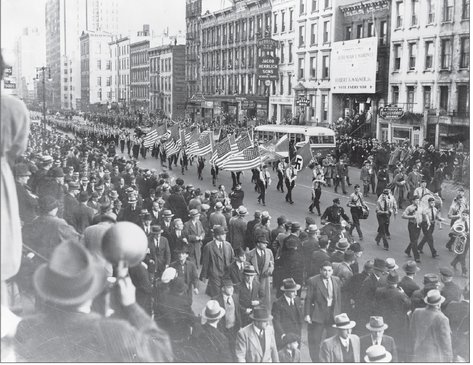
Carrying swastika flags, the German-American Bund parades down East 86th Street in New York City before a large rally at the Yorkville Casino.
(New York World-Telegram and the Sun Newspaper Collection, Library of Congress, LC-USZ62-11748)
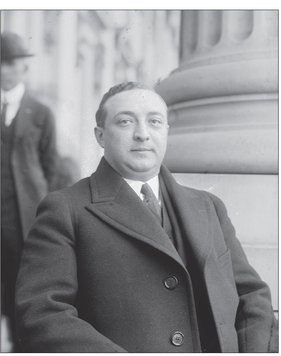
Judge Nathan Perlman was a popular guy. All he had to do was announce he’d helped repeal Prohibition and everyone wanted to buy him a drink. He could also pick up a phone and call gangsters in New York, Newark, Minneapolis, Chicago, and L.A. “Hey, can you help me bust up these Nazi meetings?” he’d ask. The answer was invariably yes.
(National Photo Company Collection, Library of Congress, Prints and Photographs Division, LC-DIG-npcc-03143)

Judge Perlman was honored by having a Manhattan street named after him. The small lane that runs along the east edge of Stuyvesant Park is named Nathan D. Perlman Place.
(Author photo)

Judge Perlman’s gravestone in Mount Hebron Cemetery, Flushing, Queens, reads JURIST ~ LEGISLATOR / HUMANITARIAN. HIS LIFE WAS FULL / OF KIND WORDS /AND GENTLE DEEDS. And if the cause was just, not-so-gentle deeds.
(Author photo)

When Judge Perlman decided to fight the Nazi menace in the U.S. with fisticuffs, his first phone call was to this man, Meyer Lansky, who had been instrumental in the formation of both New York City’s Five Family system and Murder Inc.
(New York World-Telegram and the Sun Newspaper Collection, Library of Congress, LC-DIG-ds-00979)

Louis “Lepke” Buchalter. When Meyer Lansky needed a crew to smack Nazis around he used Lepke’s boys, a.k.a. Murder Inc.
(Brooklyn Daily Eagle photograph, PORT-0116, Brooklyn Public Library, Center for Brooklyn History)

Abe “Kid Twist” Reles (left) and Buggsy Goldstein (center) sharing a laugh, something they’d done ever since they were kids growing up on the same Brownsville, Brooklyn, block.
(Brooklyn Daily Eagle photograph, PORT-0744, Brooklyn Public Library, Center for Brooklyn History)

Seymour “Blue Jaw” Magoon, so nicknamed because of his cobalt-colored five o’clock shadow. At least twice Magoon went out to kill one guy and killed another by mistake, but when it came to punching out Nazis, he always hit the target.
(Brooklyn Daily Eagle photograph, PORT-0582, Brooklyn Public Library, Center for Brooklyn History)

The leader of the German-American Bund (i.e., Bundesführer) was Fritz Julius Kuhn. He saw himself as America’s Hitler, but it didn’t work out that way. (Alamy stock photo)
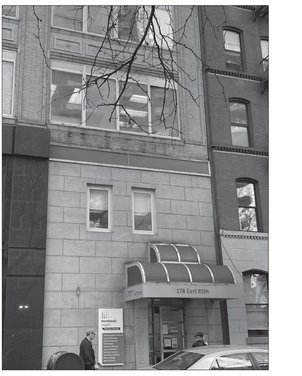
The German-American Bund’s New York headquarters were housed in this building on East 85th Street, right around the corner from the Yorkville Casino, where they held their rallies.
(Author photo)
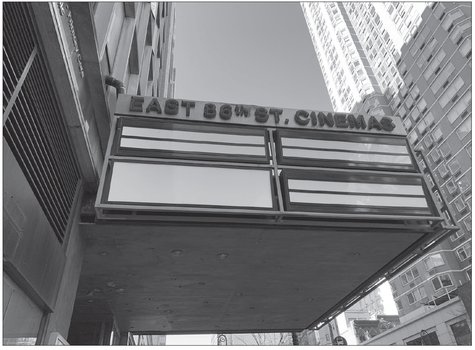
The Yorkville Casino on East 86th Street, between 2nd and 3rd Avenues, has undergone a series of renovations and repurposing over the years, and is now a movie theater, which closed in 2019.
(Author photo)

Carl Schurz Park, between the East River and the foot of East 86th Street, was the staging area for the German-American Bund’s East 86th Street parades. The site was only a stone’s throw from Gracie Mansion, where New York City Mayor Fiorello LaGuardia lived.
(Author photo)
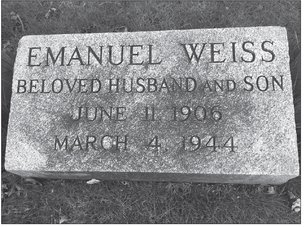
Louis “Lepke” Buchalter and Emanuel “Mendy” Weiss sizzled at Sing Sing fifteen minutes apart on March 4, 1944, and were buried in Mount Hebron Cemetery in Flushing, Queens, only a few hundred yards apart. Lepke remains, by some margin, the richest man to ever be executed in the United States.
(Author photos)

Before becoming one of Nat Arno’s Minutemen, Abie Bain fought as a middleweight and light-heavyweight during a boxing career that had him ranked for years in the top ten.
Afterwards he fought in WWII, then moved to California where he played boxers in the movies.
(Author’s collection)

Barney Ross was the welterweight champion of the world and a man about town when his buddy Sparky Rubenstein asked him to help out with busting up a Bund meeting. Barney said he couldn’t do it: The Law said his hands were lethal weapons. “Don’t use your hands, use a sap,” Rubenstein said, and Barney was in.
(Author’s collection)
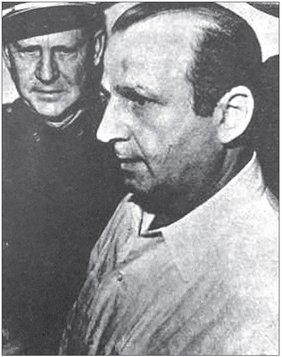
Barney Ross’s childhood friend Sparky Rubenstein cracked a few Nazi heads together, but Sparky became best known as Jack Ruby, the Dallas nightclub operator who shot and killed alleged presidential assassin Lee Harvey Oswald in the basement of the Dallas Police Station, on live TV, on November 24, 1963. Here he is moments after whacking Oswald.
(Warren Commission Exhibit 2422)

Davey Miller operated the boxing gym, at the corner of Kedzie and Roosevelt, out of which the Chicago anti-Nazi campaign was run. Here Miller is refereeing a fight between Tommy Loughran (left) and Mickey Walker on March 28, 1929, in the brand new seven-million-dollar Chicago Stadium.
(Author’s collection)

Herb Brin and bride Selma on Christmas Day, December 25, 1940, the day they were married in the YMCA hall. They knew it would be available.
(Photo courtesy David Brin)

Herb Brin was a Jewish journalist, not a gangster, put he did punch out anti-Semites and even went undercover in the Chicago Bund so that the boys would know where and when to attack the next meeting.
(Photo courtesy David Brin)

Herb’s dreams of fighting Nazis with a gun in his hand were shattered when he tried and failed to rappel a cliff with an icy rope during basic training, so he spent the war writing for Yank and Stars & Stripes.
(Photo courtesy David Brin)
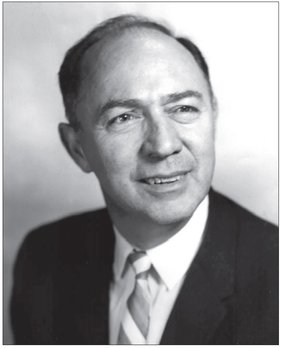
Herb Brin as he appeared around 1960. As an investigative reporter, he broke news concerning Schindler’s list, the Kennedy-Krushchev summit, endangered Soviet Jews, and was standing near Robert F. Kennedy when he was assassinated.
(Photo courtesy David Brin)
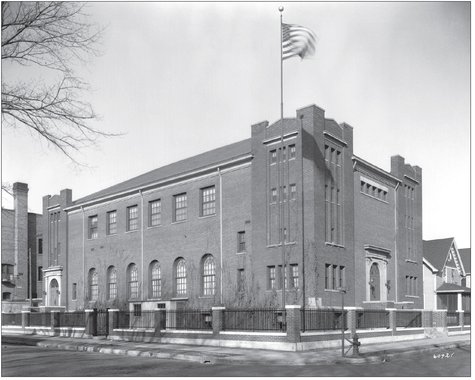
The formidable Ark Lodge, at First Avenue South and Thirty-first Street East, in Minneapolis, Minnesota, was a key location for Nazi rallies during the 1930s. The American flag flew above the structure but grew blurry when Nazi notions were being touted inside. (Minnesota Historical Society)

In the United States of the 1930s, one didn’t have to go to a Silver Legion or German-American Bund meeting to get their fill of anti-Semitism. All they had to do was turn on their console radio on a Sunday afternoon and listen to Father Charles Coughlin, a Catholic priest who preached a little love and a lot of hate.
(Minnesota Historical Society)
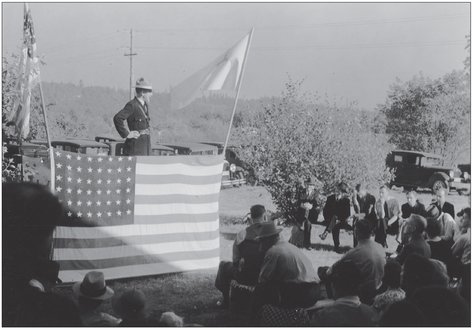
William Dudley Pelley, seen here addressing his Silver Shirt troops, combined religious zealotry with his Nazi philosophy. He claimed to have talked to Jesus and other wise mentors from the other realm, and liked to say we were all living in the “Jewnited States.”
(University Libraries, University of Washington, Special Collections, Collection: PH 1521.1, Negative no. UW 39259)

William Pelley (in the dark uniform) and Silver Legion members gather in front of the Silver Lodge in Redmond, Washington, in 1936. Note the toothbrush Hitler mustaches in the front and back rows.
(University Libraries, University of Washington, Special Collections, Collection: PH 1521.9, Negative no. UW 39131)

Pelley’s troops line up for inspection.
(University Libraries, University of Washington, Special Collections, Collection: PH 1521.7, Negative no. UW 39260)

Mickey Cohen, shown here in his Alcatraz mug shot, didn’t need a squad to fight Nazis. His war with the Nazis ended up close and personal, giving a thorough beating to Nazi leader Robert Noble and outspoken isolationist Ellis O. Jones when the pair had the misfortune of being locked inside an L.A. jail holding cell with Cohen.
(Public domain)