EVERY SO OFTEN AN UNDISCOVERED MANUSCRIPT WILL TURN UP that gives delight to the reader-historian. Such is certainly the case with Horses Don’t Fly, Frederick Libby’s fascinating memoir of his early life, growing up on a western ranch, turning into a first-rate cowboy, and finally becoming an ace aviator in World War I with the Royal Flying Corps.
In self-effacing, utterly charming prose, Libby tells a straightforward story of being raised by his father and relatives after the death of his mother when he was four. He was born in 1892 in a small town on the Platte River in the Platte Valley of Colorado. Those were the last years of the Old West, and Libby’s vivid descriptions of it evoke the tones of Mark Twain’s Huckleberry Finn. He got into the usual boyhood “trouble,” fights, pranks, screw-ups, but from the time he was able to sit in the saddle it was apparent Frederick Libby was going to be one of the finest horsemen in the country. As a teenager his travels took him on the ranges, from Mexico to Arizona to the plains of Colorado where he spent an entire winter trapped alone in a tiny sod hut while one of the great blizzards in weather history killed thousands of cattle around him.
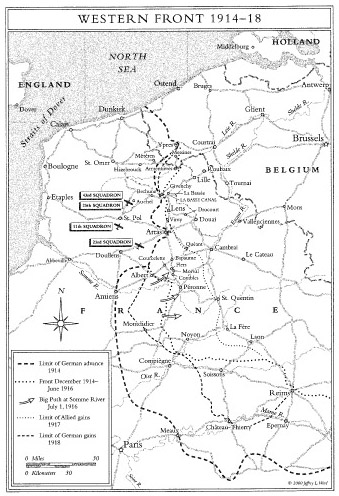
After that experience it was his passionate dream to go to Tahiti, but he never made it. He and a friend traveled to the Pacific Coast and worked their way northward until they found themselves in Calgary, Alberta, just as the First World War broke out. At the age of twenty-two he enlisted in the Canadian army, and was trained as a truck driver before shipping out to France and the pitiless fighting on the Western Front. Soon he discovered that the British Royal Flying Corps was looking for “observers” to fly in their primitive two-seater fighter planes. An observer, in their parlance, was actually a machine gunner, and, his first day in the air and second time firing a machine gun, Libby downed a German plane. He was soon commissioned an officer and not long afterward was made a pilot. Captain Libby quickly distinguished himself and was ultimately decorated with the Military Cross by the king of England at Buckingham Palace, a rare honor indeed, especially for an American. With delightful insight, Libby captures the panorama of the war years, the battles in the air, life in London on leave, the loss of friends, and his triumphant return to America where his tattered American flag streamers were auctioned off at Carnegie Hall before a crowd of thousands for a staggering sum at a Liberty Loan drive.
What is so striking about this story is that, despite Libby’s persistent understatement of his own achievements, he was the real thing; every piece of the tale squares with the record, including his being officially credited with shooting down fourteen German airplanes, and by some accounts twenty-four, ten as an observer and fourteen as a pilot. Horses Don’t Fly is not only an important piece of previously unpublished history, it is a gripping and uplifting story to read.
Winston Groom
Preface
After much persuasion by my friends, I have written this book, covering the first twenty-six years of my life. Horses Don’t Fly is in no way fiction. The things recorded here are events that happened during that period of time and are noted down from memory in the sequence in which they occurred. The book is written from my heart. All events are true and described to the best of my ability and memory as to time and place. My sincere wish is that those who read these pages will enjoy them as much as I did in the writing.
Captain Frederick Libby, M. C.