
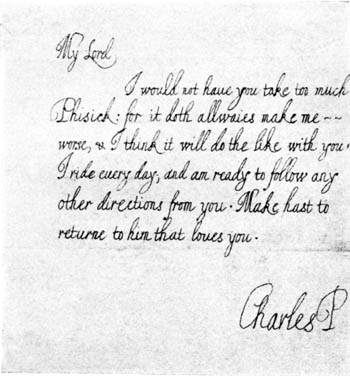
The first known letter from Charles, Prince of Wales, to his governor the Earl (later Duke) of Newcastle.

Queen Henrietta Maria and King Charles I with their eldest child Charles, Prince of Wales, by H.G. Pot, c. 1632.
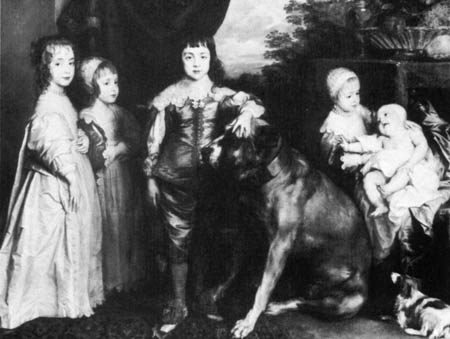
The five children of Charles I, 1637, by Van Dyck. Left to right: Princess Mary, James, Duke of York, Charles, Prince of Wales, Princess Elizabeth and Princess Anne.

Queen Henrietta Maria in the early 1630s, after Van Dyck.

Miniature of the Prince of Wales at the age of thirteen by David Des Granges.
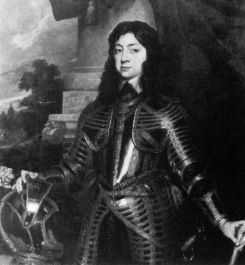
Charles, Prince of Wales, wearing gilt armour now preserved in the Tower of London; by William Dobson.

Charles I and the Prince of Wales; engraving by Gerald Glover.

Edward Hyde, first Earl of Clarendon, by Lely.

The rare seal of Charles II issued in Jersey after his father’s death; Jersey was the only part of the English dominions in which Charles II was proclaimed.
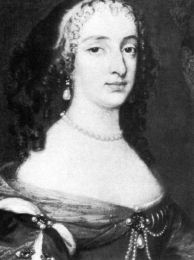
Mary, Princess of Orange and eldest sister of Charles II, 1659, by Adriaen Hanneman.

‘La Grande Mademoiselle’ (Anne-Marie Louise de Montpensier), first cousin of Charles II and the greatest heiress in Europe.

Whiteladies and Boscobel House in Shropshire, where Charles II hid after the battle of Worcester; he commissioned this commemorative painting, by Robert Streater, after the Restoration.

Worcester, showing the house from which Charles II escaped at the end of the battle; photo by the author.

The Royal Oak today, isolated in a field near Boscobel House (it was once part of a forest).

Charles II asleep in the lap of Major Carlos in the branches of the Boscobel Oak.
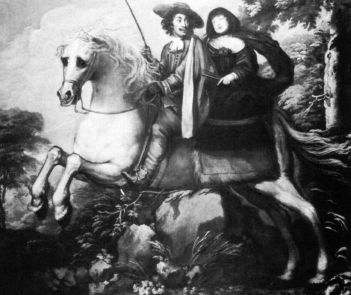
Charles II in farmer’s clothes riding with Jane Lane from Bentley Hall to Abbot’s Leigh. These are two of a set of five historical reconstructions of the royal adventures painted by Isaac Fuller some time after the Restoration. Much of the detail is accurate, but the King himself, only twenty-one at the time of his escape, looks far too old.

Charles II in exile, artist unknown but probably a Spanish painter working in Bruges (detail).
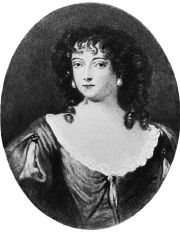
Lucy Walter, known as Mrs Barlow, mistress of Charles II.

Miniature of James, later Duke of Monmouth, Charles II’s illegitimate son by Lucy Walter, showing a strong resemblance to pictures of his father at the same age.
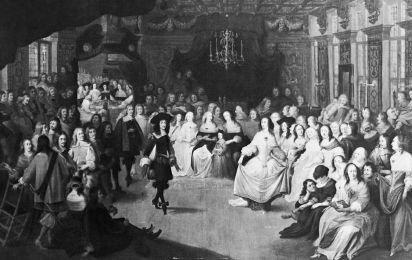
Janssens’ painting The Ball at the Hague shows Charles II dancing with his sister Mary, Princess of Orange, on the eve of his Restoration.

Charles II being welcomed in triumph by the Dutch at Delft, before setting sail for England, from Lower’s Voyage of Charles II, 1660.
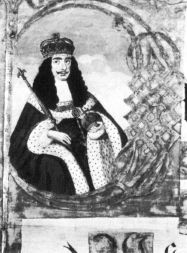
Charles II depicted in an initial in a Plea Roll, 1661.

The coronation of Charles II in Westminster Abbey, 23 April 1661.
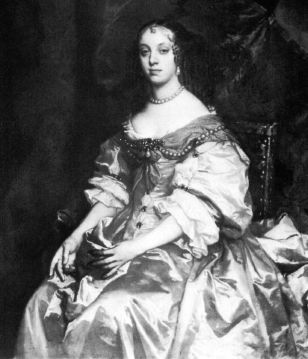
Catharine of Braganza, painted during her first years in England, by Lely.

Medallion celebrating Charles II’s marriage to Catharine of Braganza, 21 May 1662, by George Bower.
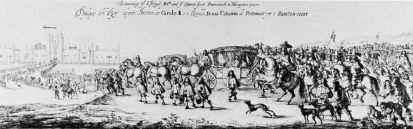
King Charles and Queen Catharine arriving at Hampton Court after their marriage, by Dirck Stoop.
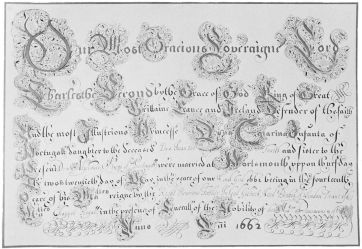
The marriage certificate of Charles II and Catharine of Braganza, now preserved in Portsmouth Cathedral (the date is wrongly given as 22 May).

Mr Rose, the royal gardener, presenting Charles II with a pineapple probably in front of Dorney Court, Windsor. Painting by Thomas Danckerts.

The Royal Escape, as the ship in which Charles II left England in October 1651 was rechristened, painted by William van de Velde after the Restoration, at the request of the King.
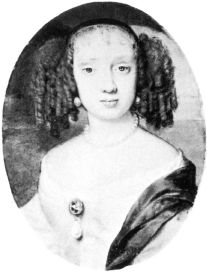
‘Madame’ – Henriette-Anne, Duchesse d’Orléans, Charles II’s favourite sister, by Samuel Cooper.
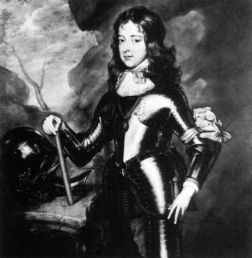
William III of Orange, nephew of Charles II, by Adriaen Hanneman; this painting and that of his mother, Princess Mary, hung in the King’s Bedchamber at Whitehall.

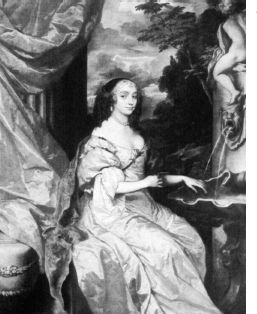
James, Duke of York, and his first wife, Anne Hyde, daughter of the Earl of Clarendon, painted by Lely, probably soon after their secret marriage was made public in late 1660.
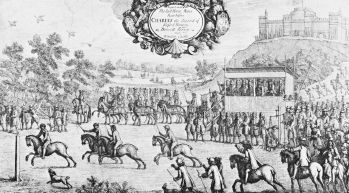
Charles II in his box at Windsor Races, 24 August 1684. Engraving by Francis Barlow, 1687.

A game of real tennis, a sport of which Charles II was a passionate exponent, by Comenius, 1659.
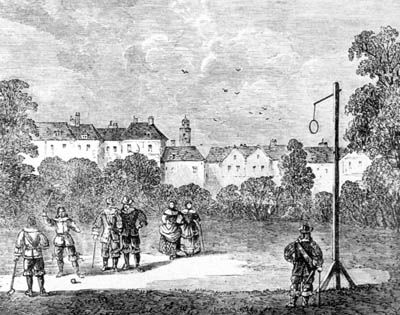
Playing the game of pall-mall, which became very popular in St James’s Park, the course lying along the site of the present Mall.
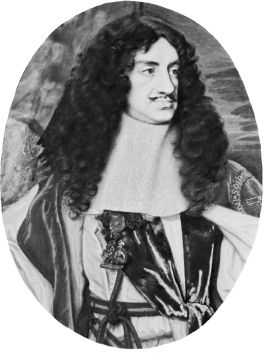
Miniature of Charles II in 1665, at the age of 35, by Samuel Cooper (another version of this miniature was given by the King to his mistress Louise, Duchess of Portsmouth).
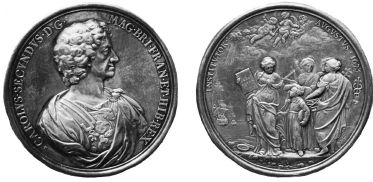
Medallion commemorating CharlesII’s foundation of the Mathematical and Nautical School in Christ’s Hospital, by John Poettier, 1673. The reverse (right) depicts a Bluecoat boy being encouraged by figures representing Arithmetic, Astronomy, Mathematics and Mercury.
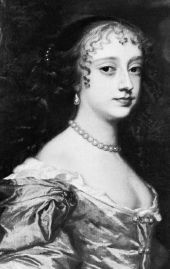
The King’s Ladies
Frances Stewart, Duchess of Richmond, by Lely.
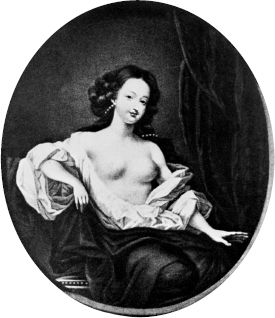
Nell Gwynn, engraving by V. Green.

Hortense Mancini, Duchesse de Mazarin, by Mignard.
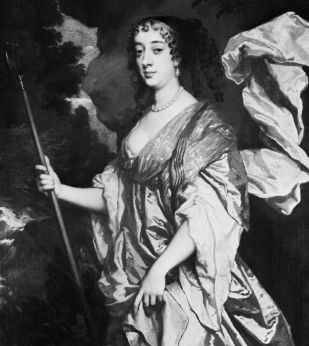
Barbara Villiers, Countess of Castlemaine and Duchess of Cleveland, about the age of thirty, by Lely.

Louise de Kéroüalle, Duchess of Portsmouth, described as ‘the most absolute of the King’s mistresses’; by Henri Gascar.

‘Don Carlo’ – Charles, Earl of Plymouth, the King’s son by Catharine Pegge, who died at Tangier in 1680; from the mezzotint by J. Savage.

Charles, Duke of Richmond and Lennox, only child of Charles II by Louise, Duchess of Portsmouth, by Henri Gascar.

Charlotte, Countess of Lichfield, Charles II’s favourite daughter and one of his five children by Barbara, Duchess of Cleveland, by Lely.
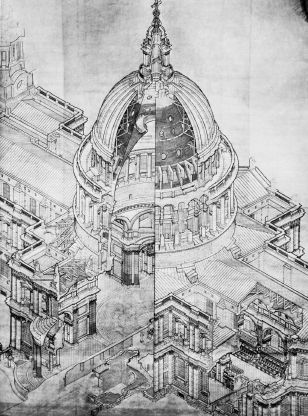
Isometric view of St Paul’s Cathedral, London.

Henry Purcell, 1695, by or after Closterman.

John Wilmot, 2nd Earl of Rochester, c. 1665, after Huysmans.

The Empress of Morocco by Elkanah Settle at the Dorset Garden Theatre, 1673.
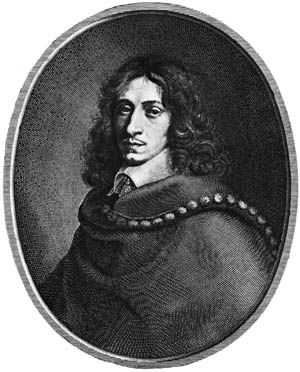
John Evelyn by Nanteuil, 1650.

John Dryden, the Poet Laureate, by Keneller, 1693.

Charles II in 1684 (the last year of his life) by Laroon; the portrait was commissioned by Christ’s Hospital and shows the King as Founder of the Royal Society.
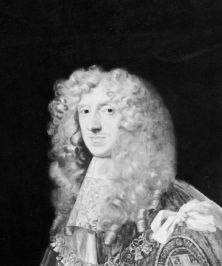
Thomas Osborne, Earl of Danby.
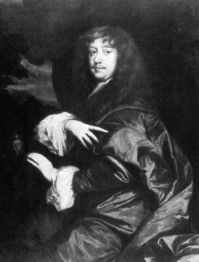
Henry Bennet, Earl of Arlington, after Lely; the wound on his nose, covered by a black plaster, was received in the Civil War.

Thomas, 1st Lord Clifford of Chudleigh, after Lely.
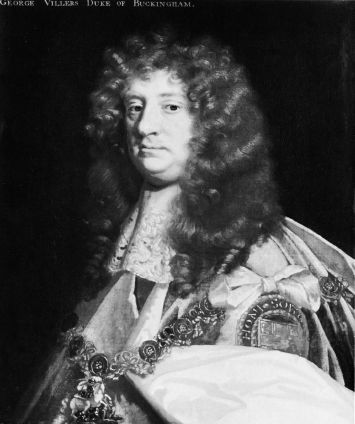
George Villiers, 2nd Duke of Buckingham, painted in about 1675, when he was forty-seven, by Lely.
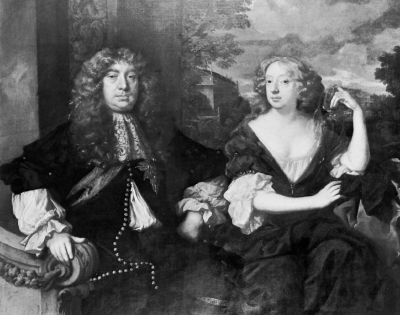
John Maitland, Earl and later Duke of Lauderdale, with his formidable Duchess, Bess, Countess of Dysart in her own right, by Lely.
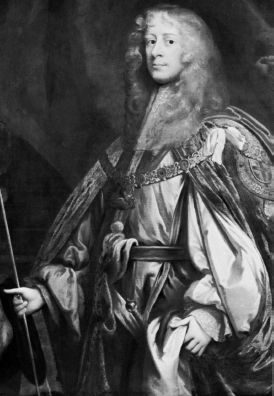
James Butler, Marquess and later Duke of Ormonde, c. 1665, after Lely.

Anthony Ashley Cooper, 1st Earl of Shaftesbury, c. 1672, after J. Greenhill.
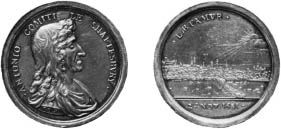
Medallion commemorating Shaftesbury’s acquittal in 1681, by George Bower. The reverse depicts a view of London with the Latin motto Laetamur – Let us rejoice.
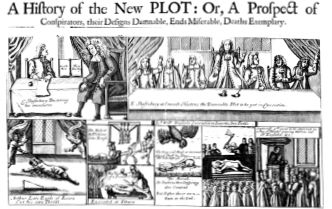
Broadsheet concerning the Rye House Plot against Charles II and the Duke of York in 1683.
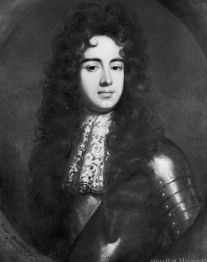
James, Duke of Monmouth, c. 1683, after Wissing.
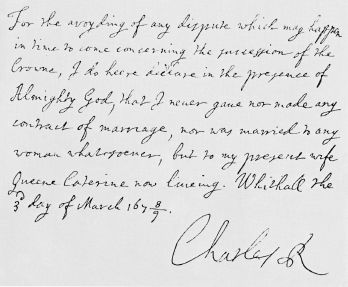
Charles II’s declaration, in his own handwriting, later printed in the London Gazette, contradicting the rumour that he had been married to Monmouth’s mother.
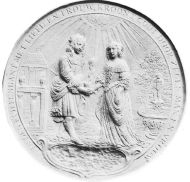
Dutch medal celebrating the marriage of William of Orange and Mary, daughter of the Duke of York, November 1677.

Mary of Modena, second wife of James, Duke of York, c. 1685, by Wissing.

Louis XIV, 1680.
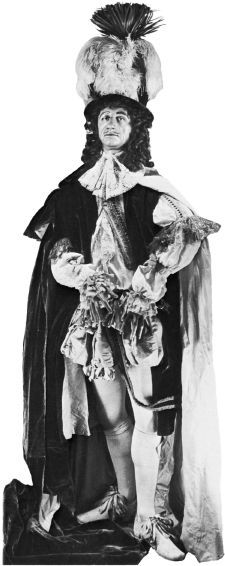
The effigy of Charles II in his Garter robes, made immediately after his death, still to be seen in the Crypt of Westminster Abbey.