
CHAPTER 10
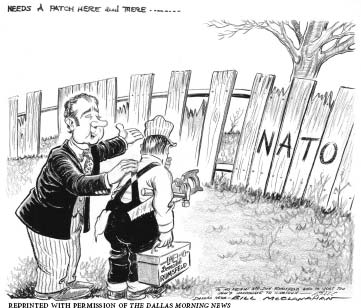
As much as he appreciated the symbolic importance of NATO, Nixon found the alliance frustrating. It operated by consensus—requiring unanimity in any major decision—and Nixon didn’t have a great deal of patience for policy making by committee. Unanimity is hard to achieve in any organization, and it was not easy with a group of the most respected diplomats from fourteen other nations operating on instructions from their capitals, each with different country histories, needs, cultures, and languages, not to mention lingering animosities toward one another after two world wars.
The move to Brussels, Belgium, where NATO is headquartered, turned out to be a treasured experience for our family. But first we had to overcome some initial qualms. Our oldest child, Valerie, was sixteen and had been looking forward to learning how to drive. In Belgium, driver’s licenses weren’t available until the age of eighteen. So before we left, a friend volunteered to teach her the basics. In our old car with the knob on the floor stick shift missing, Richard B. Cheney kindly and skillfully moonlighted as Valerie’s driving instructor in parallel parking.
The neighborhood schools in Belgium taught in French and Flemish. None of them would pass a building code anywhere in the United States. Sharp hooks protruded from walls, the rooms were in disrepair, students were crammed in. Their school, École Hamaïde, where Marcy and Nick went, emphasized the idea that education was a serious business. Every morning the headmistress, dressed in black and wearing a stern look on her face, would formally shake every child’s hand as they entered the building—sending the message that it was time to get to work. But at the end of the day, she would bid each of them farewell with a smile and a hug, signaling it was time to have fun again. The school taught responsibility. The students performed the cleaning tasks, not a team of janitors. Joyce and I often have reflected that in that old building our children received what was very likely the best education any of them ever had.
Not all of the aspects of my new post were unqualified advantages. For a time, Joyce and I didn’t have a car in Brussels while our car was being shipped over from Washington. As ambassador I had the services of a car and a driver for official business.
I discovered later that someone at the Department of State had sent an agent from the inspector general’s office to quiz the embassy drivers about our use of the government car for personal errands. Some at the State Department apparently did not like a political appointee in a post that they felt should be held by a career Foreign Service officer, and they thought that anything they could find that might pose an embarrassment was to their advantage.1
There had been a pattern of such traps being set for political appointees by some members of the permanent bureaucracies. I first saw this at OEO with the false leak to the press about my alleged office “redecoration.” In Brussels, I also learned later that someone in the Department of State had authorized the building of a swimming pool and a tennis court at the NATO ambassador’s residence where we were living. Envisioning a headline about Rumsfeld’s efforts to turn the ambassador’s residence into a posh resort, I canceled their plans as soon as I learned about them.
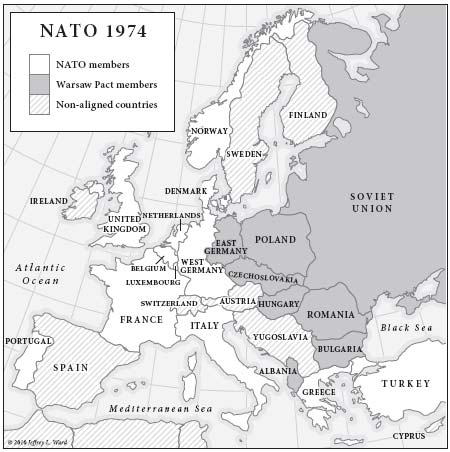
My predecessor as ambassador, David Kennedy, had served at NATO less than a year, and the post had been vacant for over eight months prior to his arrival. I would be Nixon’s third ambassador to NATO. This alone suggested to the alliance that the administration’s interest in it was at best modest. In advancing our country’s priorities, I knew I was going to need all the help I could get. And I found guidance from what some might consider an unlikely source: the French. In my experience, France’s perplexing, and sometimes irritating, public opposition to American policy initiatives seemed more often to be nationalist public relations for the French domestic audience than expressions of real policy differences. Charles de Gaulle, for example, had withdrawn France from NATO’s military command structure in 1966 and forced it to take its headquarters—along with the American and allied forces stationed there—out of France. The act was more a political ploy than a real demonstration of French independence from NATO. The move infuriated then President Johnson. Johnson instructed Secretary of State Dean Rusk to ask President De Gaulle if his actions toward the forces also meant that we would have to take home all of the American servicemen buried in cemeteries across France who had fought and died for that country’s liberation from the Nazis. This was President Lyndon Baines Johnson at his best.
When I arrived at NATO, however, it was clear that the French saw the alliance’s value, and wanted a somewhat greater voice in its activities, while still staying apart from the military command structure. I was most fortunate to benefit from the counsel and friendship of the distinguished and seasoned French ambassador to NATO, François de Rose.
The aristocratic François was a delightful blend of intellect, integrity, and good humor. He spoke several languages fluently, including English, which he spoke better than I did. He and his beautiful, vivacious wife, Yvonne, were a generation older and had a vastly more sophisticated lifestyle than the Rumsfelds. Yet we connected and became lifelong family friends. When tensions would flare between the strong-willed Kissinger and the mercurial French Foreign Minister, Michel Jobert, it would fall to de Rose and me to see that their differences did not disrupt our work. In a time-honored diplomatic tradition, François and I frequently resorted to calculated ambiguities that allowed both Washington and Paris to interpret NATO communiqués and declarations as they saw fit.
The situation back in Washington was taking on a more ominous tone. On April 30, 1973, the so-called Berlin Wall collapsed at the White House as fallout from the unfolding Watergate scandal: The President had requested the resignations of Bob Haldeman and John Ehrlichman. The Washington Post called the resignations “dramatic” and “devastating,” and they certainly came as a shock to me. I knew how central each had been to Nixon personally. Their departures, along with looming criminal charges against both men, foretold what lay ahead. Democrats were now beginning to use the word impeachment publicly.2
That summer I was amazed to read that President Nixon had secretly taped his conversations in the White House and the Executive Office Building. Nixon apparently believed that recording his every word was a good idea, that it would secure his place in history. It certainly did that—but not in the way he intended. I found the secret taping deceitful. All of us offered him candid advice totally unaware that we were being taped, while he, of course, could calculate his remarks.*
On my periodic trips to Washington on NATO business, I didn’t spend much time with the President. By then he was devoting more and more of his hours to his role as the defendant in an impeachment investigation. But I came away with a strong impression that the White House was under siege.
As the scandal grew, our allies began to raise questions about America’s increasingly weakened president. Compounding the problem was the fact that the political situations in many NATO countries were also unstable. Some NATO members had government coalitions holding power by twoor three-vote margins in their parliaments. Italy, for example, had already changed governments some thirty-plus times in the twenty-nine years since the end of the World War II. The Netherlands at one point was unable to form a government for many months. With so much political instability in Europe, many there counted on America to be a rock of confidence and reassurance. Now that image was slipping.
Even the status of the U.S. military in Europe was coming into doubt. In 1973, Democratic Senator Mike Mansfield renewed his effort to remove important portions of our forces from Europe by passing a legislative amendment, which the Nixon administration vigorously opposed. The NATO nations were unlikely to fill any vacuum that would be left by an American withdrawal. Our allies even then were still recovering—psychologically, economically, and politically—from World War II.†
As a believer in the principle that weakness is provocative, I worried about the signal that a partial withdrawal of American troops from Western Europe would send. It might be seen by the Europeans as the first step in a full withdrawal and, even more worrisome, it could provoke the Soviet Union into taking an even more aggressive posture on the continent. In July 1973, it looked like the legislation might pass, so at the request of the administration I hurriedly flew to Washington to testify against the amendment in Congress.3 Mansfield’s effort was defeated, if narrowly. Though the Senate debate made the Europeans nervous, it might also have had the positive benefit of reminding them that they needed to step up and be more willing to invest in their own defense. Unfortunately, that was a message that many Western Europeans resisted.
On October 10, 1973, in a surprise announcement, Spiro T. Agnew resigned as vice president after he was charged with bribery. I had never had a particularly high opinion of Agnew’s performance, but even I was startled by the allegations of graft.
Soon thereafter, names began to come up as possibilities to replace Agnew. On Friday, October 12, I was in the ambassador’s residence in Belgium when I received a call from a reporter from NBC in Washington. He said he had information that I was going to be named vice president. I thought it was laughable. Then a college classmate of mine, Marty Hoffmann, who was serving as general counsel of the Department of Defense, called and told me the same rumor. After that, we received a dozen or so calls in rapid succession. The BBC said they had it on highly reliable authority that Rumsfeld was to be the nominee. A man from Senator Charles Percy’s staff then called and said my name was “all over the Senate.”4
A media frenzy was now underway, with wild rumors flying around every name suggested by almost anyone. Around 1:00 a.m. in Belgium, Armed Forces Radio reported that another widely mentioned candidate, Gerald R. Ford, was now out of the running. Then CBS, covering multiple bets, reported that the vice presidential nominee would be former Secretary of State Bill Rogers, former Secretary of Defense Mel Laird, or me. I suspected that my name was being thrown into the mix intentionally by Nixon or his staff to either heighten my vis ibility as a possible Senate candidate some day or, more likely, as a diversion—to make his announcement of someone else an even bigger surprise. Convinced it would not happen, I went to bed. Shortly thereafter, two or three cars with press people and cameras arrived and camped out in front of our house. This got Joyce’s attention. She nudged me. “Are you sure it’s not you?” she asked.
At 2:00 a.m. Brussels time, the cars outside our house started to disperse. In the East Room of the White House, after enjoying the guessing game that had surrounded his choice, President Nixon announced that he intended to nominate House Minority Leader Gerald R. Ford to be vice president. I hoped Ford’s honesty and forthrightness would help to shake off the ugly mood from Agnew’s resignation and the Watergate mess, and reestablish the reputation of the administration.
The vice presidential speculation now over, my attention was on other things. In early October 1973, the Yom Kippur War had broken out. The war began when a coalition of Arab nations—led by Egypt—launched a surprise attack on Israel. As tensions rose, I received a phone call from NATO Secretary General Joseph Luns. The tall and imposing Dutchman was an adept manager of the range of personalities and priorities represented by the fifteen permanent representatives to NATO.
Luns told me he had received a call from the Italian ambassador to NATO, who had received a call from a foreign ministry official in Rome, who had received a call from an Italian senator, who had been called by an alarmed woman in his constituency. The woman had been awakened suddenly by lights and loud vehicle movements at a military facility near her home where American forces were stationed.5 They all wanted to know what was happening. Like them, I had no idea.
I phoned Washington and learned that our forces at the military facility in Italy were being mobilized by the President to assist with supplies for the Israelis. Though Italy, of course, was a NATO ally, Italy’s ambassador to NATO didn’t know a thing about it, nor did anyone else at NATO, including, quite obviously, Secretary General Luns and me. Ever since I had arrived in Brussels, I had stressed the importance of trust and consultation within the alliance, but here we had not lived up to our promise. It was an awkward episode.* But more than that, I saw it as a sign that the strain of Watergate was affecting the White House. I doubted the administration would have made such a misstep if we had been in top form.
Predictably, the Soviet Union sought to capitalize on the difficulties of its principal adversary. Under the leadership of General Secretary Leonid Brezhnev, the Soviets were playing a double game across the globe. They pursued a sizable military buildup at home and engaged in aggressive activities in Africa, Latin America, the Middle East, and Asia, all the while proclaiming their desire for peace and détente. Many in the West, and many NATO members, accepted the Soviet’s rhetoric at face value. Some in Western populations seemed willing to blame their own governments, and particularly the United States, as the real source of the tension and instability in the world. With Soviet encouragement, millions around the world marched in protests—they marched not against Soviet aggression but against the United States and other NATO nations.
Yet even in Western Europe, for all the complaining about America among the elites, the United States still held a special meaning. One Belgian friend told me privately that when his daughters were pregnant, the best thing he could do for them was to arrange for them to be in the United States around their delivery times so his grandchildren would at least have the option of being American citizens. Notably, but unnoted, was the fact that nobody was clamoring to get visas to give birth in the Soviet empire.
At the end of 1973, Joyce and I decided it would be a good idea for our children to get a glimpse of the kind of oppressive societies that NATO was defending America against. So, over the New Year holiday, we took a train with our children and our friends, John and Carolyn Twiname and their children, behind the Iron Curtain to Soviet-controlled Czechoslovakia. As the American ambassador to NATO, I was not unfamiliar to the Soviets. In some communiqués they referred to me colorfully as “Nixon’s running dog.” To avoid diplomatic awkwardness, I traveled to Czechoslovakia as a private citizen.
We could all feel the change of mood as we crossed the border from a free and prosperous West Germany into Czechoslovakia. Outside the windows we saw massive steel barriers placed to deter Western tanks. Communist officials came onto the train, unapologetically went through passengers’ bags, tossed aside the contents, and left us to repack our luggage.
After arriving at the train station in the town of Pilsen, we went to the hotel we had been assigned to by the Communist authorities. We were followed as we walked around the city, which was gray and grim. Store windows revealed sparse stocks—a shoe store with only a handful of pairs of shoes in the window. Religion being disfavored in the Communist bloc, a church we visited was nearly empty, save for a few elderly women in babushkas, praying in silence.
For our New Year’s Eve dinner we went to a neighborhood restaurant. We were having a good time, and as the evening progressed many of the patrons began singing and dancing. People came over and danced with our son and daughters. I sang what I remembered of a Czech folk song I had learned from the co-captain of our high school wrestling team, Lenny Vyskocil, whose relatives had come to America from Czechoslovakia.
At one point the bartender pointed to a man he said wanted to meet me. Trying to avoid the attention of the authorities who were observing us, the man led me toward the men’s room. I took my son, Nick, with me, thinking that he might provide some cover. For all I knew the man might be going to tell me he wanted to defect.
When I found him in the bathroom, I couldn’t understand a word he was saying. He became animated and started taking off his shirt.
“What in the world is going on?” I wondered.
Once he was bare from the waist up, he turned to show me his back. There was a tattoo of what looked like a Pacific island with a palm tree and an American flag on it.
I left the room unclear about his message. The bartender told me that the man had wanted to see me because as a boy he had been befriended by an American soldier during World War II. The American had been killed later in the war, and the Czech, valuing his friendship with that soldier, had the tattoo put on his back in honor of his lost friend. And he wanted at least one American to know how he felt about our country.
I returned to our festive table, where everyone was continuing to have a good time with the Czech patrons. A bit later, the room grew quiet. The music stopped. People moved away from us. Apparently a Czech or Soviet security official who had not been pleased with the festivities had signaled that the evening was over.
Joyce tugged on me. “We should go,” she said.
It was a sad farewell to a wonderful New Year’s Eve, with friendly people repressed by their puppet government and their Soviet overlords.
The following June, President Nixon came to Brussels for a major NATO summit with the other fourteen heads of state. This turned out to be his last trip abroad as president. As he came down from Air Force One, I greeted the President and his delegation at the foot of the stairs. It had been some time since I had seen Nixon. He appeared to be in a pleasant mood, and I wondered if he was simply grateful to be out of Washington and away from the Watergate problems for a while. The foreign arena was a break for him, and it was the forum in which he was usually at his best.
I escorted him and Secretary of State Kissinger to an airport reception hall, where I had assembled the senior American officials and staff from the U.S. NATO mission. I thought it might boost Nixon’s morale to meet some friendly Americans and, at the same time, give our hardworking staff a rare opportunity to shake hands with the President.
Roughly three quarters of the NATO staff assembled were American military officers or senior enlisted personnel. The rest were some of the Defense and State Departments’ finest civilian officials. Nixon went down the line and graciously shook hands and exchanged brief pleasantries with each of them.
After his greetings to them, I left with Nixon and Kissinger and climbed in the President’s limousine. We rode in the backseat and headed to the American ambassador to Belgium’s residence, where Nixon would be staying while in Brussels.
Once in the car, away from the press and cameras, Nixon’s face fell. His mood changed.
Referring to the NATO staff members he had just met, Nixon snapped, “They’re a bunch of fairies.” The President apparently had assumed that the NATO staff was composed of State Department people. His White House prized “machismo and toughness”—as Chuck Colson once described it—and Nixon tended to view people in the State Department as lacking grit.6
I was taken aback by Nixon’s mood and derogatory comment. Only a moment before he had seemed friendly to the staff I had worked so hard to recruit from both State and Defense. They were fine public servants, and I felt protective of them. So I spoke up and told the President that he was mistaken.
“Those folks are mostly military,” I said. “They just didn’t have their uniforms on.” They were exactly the kind of hardworking people Nixon tended to appreciate.
Of the small numbers who were from the Department of State, I noted, “They’re fine folks. I handpicked everyone, and they are doing an excellent job for the country.” Nixon looked out of the window, his face sullen. Perhaps in private, with people he knew, he allowed the strain of the events in Washington to show. When we arrived at the ambassador’s residence, the President got out of the right side of the car. Back in public, he was smiling and cordial again. I moved to get out from the opposite side. As I exited, Kissinger followed behind me. He grabbed my arm, gently tugging me to the left side of the car. When he was sure the President was out of earshot, Kissinger said to me quietly, “Rummy, we don’t argue with him anymore.”
A few weeks later, Nixon’s second chief of staff, Al Haig, called me from the White House.7 During the last months of Watergate, he, as much as anyone, held the administration together. The phone reception was weak, and I heard a clicking noise throughout the conversation. Maybe it was just a sign of the times, but I had the impression that someone might be listening in.8 Haig asked if I might consider returning to the White House to serve again as a counsellor to the President, to help out. It was becoming an all-hands-on-deck moment. I knew, however, that returning to Washington was the last thing I wanted to do. I had been at NATO for fourteen months at that point. I valued my relationships with my NATO counterparts and felt I was contributing something useful for our country and the alliance. I told Haig it wouldn’t make sense for me to come back so soon.
Belgium undoubtedly seemed a world away to those in Washington mired in Watergate, but NATO was also embroiled in a serious crisis. Two of our NATO allies, Greece and Turkey, had a long history of differences over Cyprus, an island inhabited by both Greeks and Turks. Their disagreements had come to a boiling point during the summer of 1974, when Turkey invaded Cyprus. The dispute posed a difficult dilemma for the alliance.* NATO was established as a military alliance to deter and defend its member states against external threats—not conflicts between its members. Because Washington was consumed with Watergate, I received little or no guidance during much of the crisis.
I was being urged by Secretary General Luns to assert the weight and influence of the United States to help resolve the issue; he may have assumed that I had the authority to do that, and also undoubtedly hoped that the United States had the capability to step in and calm those ancient and intractable differences.9 That was not the only reason I declined to return to Washington when Haig called. It wasn’t at all clear what I could conceivably do. At the end of our phone call, Haig told me he understood my reasons for not returning to Washington, and as far as he was concerned the matter was settled.†
As a result, I was not present at the White House less than three weeks later, on August 8, 1974, when President Nixon announced his resignation. Nor was I present to see that now famous wave Nixon gave as he prepared to board Marine One—smiling, with his arms raised in an awkward swoop, and his fingers curiously signaling “V” for victory.
I had, however, seen a similar wave by Nixon some years earlier when he gave a speech in San Jose, California. It was an episode that had stuck in my mind. Outside the large hall there was a sizable gathering of angry anti-Vietnam war protesters held back by a fence. As Nixon came out to get in his car in the motorcade, they shouted at him and waved hostile signs.
Instead of getting into his car, Nixon climbed atop something so he could be better seen by the mob. Then he had made the same gesture that he made as he left the White House—the same forced grin, the same swoop of the arms, the same “V” for victory.
The message was clear, both times: Richard Milhous Nixon was determined not to let his opponents get the best of him.
In the years immediately after Nixon’s resignation, there was a sense among a number of us that we had emerged from a shared disaster. When Bill Safire sent me the book he wrote about his days in the Nixon administration, Before the Fall, he inscribed it: “To Don Rumsfeld—fellow survivor.”
Another survivor of Watergate, in a way, was Richard Nixon himself. Anyone who saw and felt the physical impact on Nixon of Watergate and the long impeachment process, capped by his resignation, exile, and subsequent serious illness, had to be surprised by his truly amazing comeback. But he was a most unusual human being. He seemed unable to accept defeat. Instead, he went to work using his impressive strength and fine mind to contribute to the national and international dialogue on important public issues.
I don’t know to this day how to reconcile the man I knew with the tragedies that he inflicted on himself and the nation. Like the man, the Nixon era defied easy definition. His administration provided vital support for a range of initiatives that variously won support and opposition from both sides of the aisle—welfare reform, block grants to states, the all-volunteer military, the Environmental Protection Agency, and the Equal Employment Opportunity Commission, to name a few. The man loathed by the left and elites nominated the Supreme Court justice who authored the majority opinion in Roe v. Wade. The Republican leader targeted with loud and sometimes violent demonstrations by thousands of young Americans pressed successfully to give eighteen-year-olds the right to vote. The cold warrior who came to prominence as a fierce anticommunist and a scourge of Soviet spy Alger Hiss made a historic overture to Communist China and pursued détente with the Soviet Union. The public figure who would suffer the ultimate political disgrace also won one of the greatest electoral triumphs in American history less than two years before. The man who so often seemed introverted and lonely, and served by a small cadre of strongmen, also brought into his orbit a truly impressive and diverse array of talent who would affect the course of America for many decades thereafter.
On a personal level, the Nixon presidency changed the course of my life. Nixon offered me my first opportunities to lead large government enterprises in both the domestic and economic areas, and eventually to participate in our nation’s foreign and national security policy by representing our country overseas. Moving out of the legislative branch of our federal government to serve in the executive offered a new and completely different view of government, one that informed my public service in the decades that followed.
In the years after his humiliating resignation, I talked to Nixon occasionally. In 1982, he invited me to a dinner at his home in Saddle River, New Jersey, where he was hosting his longtime friend King Hassan II of Morocco. It had been nearly a decade since I had last seen Nixon. He looked and acted the same—still quite formal and still deeply interested and engaged in public issues. Nixon prided himself on those dinners. He described various courses as they came along, and told the gathering about the White House events at which some of the dishes previously had been served. He gave a formal toast, much as he would have had he still been president. After presenting a typically thoughtful, well-informed assessment of the world, he asked the King to give a thumbnail sketch of the then current leaders in the Middle East, which Hassan proceeded to do with fascinating insight and candor.
A year later, in August 1983, the former President phoned me at my office in Illinois. It was quite early, about 7:30 a.m. Nixon was already hard at work on a book he was writing and wanted to talk about the Defense Department and the national security issues he was writing about. He called DoD a “hydra-headed monster” and a “three-ring circus” and wanted to know what could be done to improve its performance.11 He was still offering me advice, and apparently still guiding others on their career paths. He advised me, interestingly enough, to become secretary of state one day and not to return to the Department of Defense after my time there in the Ford administration. Nothing seemed too small to pique his interest. In one conversation he had decided that I should stop wearing glasses and use contact lenses instead.
In 1994, two decades after relinquishing the presidency, Richard Nixon suffered a stroke. Once he was hospitalized, his condition appeared to improve. Then quite suddenly it worsened, and after eighty-one proud, defiant years, he slipped into unconsciousness, and finally into death.12
News of the former President’s passing struck a somewhat unexpected chord with millions, including with me. Nixon had been a pivotal political figure for more than a generation. His funeral was a major event. A national day of mourning was declared by President Clinton, as tributes to Nixon poured in from across the country and the world, even from some who had been his bitter enemies.
On April 17, 1994, Joyce and I flew to California to attend the memorial service at Nixon’s presidential library in Yorba Linda. So many from his administration had gathered there that it was like turning a page to the past. The Reverend Billy Graham, with whom I had sat in Nixon’s hotel suite all those many years ago as Nixon quizzed the attendees for advice about a running mate, officiated at the service. He hailed Nixon as “one of the greatest men of the century.” Spiro Agnew, the man Nixon chose as his running mate in 1968, made a rare public appearance, looking solemn and sad. Haldeman had died a year earlier, but Ehrlichman and Colson were there, aging, and somber. Like Nixon, Colson had spent his later years working to achieve peace and reconciliation in his life. After his release from prison, to his great credit, Colson embarked on a prison ministry program that won acclaim and admiration. Any differences with them seemed so long ago.
Henry Kissinger, who became a national figure during the Nixon presidency, and who stood by Nixon in the final days of Watergate, delivered a touching eulogy. “He achieved greatly and he suffered deeply,” Kissinger pointed out, “but he never gave up.” And, in the front row, were all the living presidents. Each of them—Ford, Carter, Reagan, Bush, and Clinton—had been affected by the Nixon presidency in one way or another. A few, including the sitting president, Bill Clinton, had started their careers in fierce opposition to him. Yet as Clinton saluted his once disgraced predecessor as a “statesman” who sought peace, all was forgiven and forgotten, at least for that day.13
After the service, I greeted Nixon’s daughter Julie Nixon Eisenhower. She loved her dad, and all who knew Nixon could see that she and her sister, Tricia, were the lights of his life. It was a difficult day for Julie. As she gave me a hug, she whispered sweetly, “I think he would have liked it.”
Her comment struck me, since during the service I had turned to Joyce and quietly said pretty much the same thing. “I can almost see President Nixon smiling,” I whispered.14
The man from Whittier, California, who seemed to have struggled so mightily in a search for acceptance, had finally achieved it.
Time and perspective had softened most everyone’s view of the Nixon era. But his resignation had left the nation reeling. And as so many mourners praised so much of his legacy and focused largely on his achievements, I took a moment to notice someone else at the gathering. As usual, Jerry Ford sat quietly, humbly, avoiding attention or accolades. Yet he was the man who had had to pick up the shattered shards of the Nixon administration and pull a bitterly divided country together. And I had been summoned back to the White House all those years ago to help him.