
Chapter 6
It was to the credit of Mithridates that his immediate response to the catastrophe in Greece was not to look for scapegoats but to attempt to limit the political damage. Whether he succeeded in this aim cannot now be determined, as it is impossible at this distance in time to determine what the consequences would have been had he not acted as he did. Nevertheless, it can be said with certainty that the political situation in Asia Minor deteriorated disastrously after Mithridates acted – either despite his measures, or because of them.
Chaeronea went beyond a mere military setback. Mithridates had dispatched a huge, well-organized and experienced army of veteran soldiers. Morale had been boosted by an almost unbroken string of victories in Asia Minor and the Crimea. Yet this army had not only been beaten, it had been crushed by an enemy force less than a quarter of its size which had taken minimal casualties in the process.
This enemy force had been dispatched by Rome while that city was still wrapping up a major war with its own allies, and despite being on the brink of civil war between different factions within the city. Unsurprisingly, the people of Asia Minor began to ask themselves what Rome would be capable of once it got its act together and launched a coordinated assault on the region which had murdered 80,000 Romans and Italians. It was noted that those cities in mainland Greece which had switched their allegiance to Rome at the earliest opportunity had generally got off with swingeing financial penalties, whilst the loyalty of the Athenians to Mithridates had earned them starvation and massacre. Finally, Mithridates’ conquests were too recent for Pontic rule to be the accepted status quo, and after Chaeronea it dawned on many that Mithridates had just lost the army he had done his conquering with.
Under the circumstances it would be surprising if Sulla had not received a series of unofficial delegations delicately enquiring what treatment an early surrender would gain them. Mithridates, a man who liked to be well-informed, was quick to scent betrayal. An early example came from the island of Chios; possibly whilst Athens was still under siege. Word reached Mithridates that a delegation had gone to Sulla, apparently with the blessing of the city government. It did not help the Chian case in Mithridates’ court that there had always been a strong pro-Roman faction on the island, or that it had been a Chian vessel which had collided with Mithridates’ ship during action off Rhodes.
Therefore the commander of the troops sent by sea to reinforce Archelaus stopped off at Chios en route. The citizens of the island woke up to find their walls occupied by Pontic troops, the leader of which ordered the islanders to disarm and hand over hostages for their good behaviour. Rather than accuse the islanders of treachery (which might lead others with treasonable intentions to suspect that their sentiments were widespread), the charge laid by Mithridates was simple embezzlement, in that the Chians had allegedly failed to hand over the proper share of loot from the Romans whom they had murdered - a charge which contained a reminder of the collective guilt which the cities of Asia Minor shared.
Appian quotes a letter which he claims came from Mithridates himself. In it the king complained
You benefit from the yields of the lands taken from the Romans, yet want to give nothing to us. When your trireme collided with mine at Rhodes, I wanted to believe this was an error of the ships pilot alone ... now you send your leading men to consult with Sulla, and you have made no attempt at all to deny that they acted with public authorization.1
Mithridates announced that the Chians deserved death for their betrayal, but the sentence would be waived if they stumped up a 2,000 talent fine. This was no easy matter at a time when trade was depressed and Pontic taxes were rising to pay for the expense of the war. Nevertheless, the citizens managed to raise the sum by stripping their temples and donating items of personal jewellery. Having accepted the sum into Pontic coffers, the leader of the occupying forces cheerfully announced that the Chians had given short weight. The punishment for this further act of peculation was to be the effective destruction of the islanders as a people. Men and women were put into separate groups and shipped off as colonists to different parts of Colchis. This would both provide a welcome Greek influence in the area, and, in this hostile environment, make the former Chians practically dependent on Mithridates for their continued survival.
However, it appears that this scheme was never put into effect. The historian Memnon reports that the transports were intercepted by the ships of the city of Heraclea, and the Chians restored to their homeland. By the time Mithridates was aware of these developments he had much larger problems on his plate and could not do much about Chios in any case. Certainly the archaeological record shows no break in human occupation of the island, indicating that if deportation took place, it was almost immediately reversed.2
Another group whose loyalty was not so much suspect as non-existent was the Galatians. This people had never forgiven Mithridates for annexing a chunk of northwestern Galatia, but they had been kept quiescent by good wages for mercenary service and the threat that, if sufficiently provoked, the Pontic army would go on to annex the rest of the country as well. Nevertheless, Mithridates felt it expedient to take hostages, sixty in all, from the leading Galatian families. These were treated as prisoners, further increasing hostility toward Mithridates. Nevertheless, the presence of a large Galatian contingent at the Pontic court raised the possibility that one of them might be able to achieve the assassination of Mithridates, thus freeing Galatia and earning the undying gratitude of the Romans.
Of course, achieving this desirable goal necessitated beating Mithridates, the master of the double-cross, at his own game. The devious king of Pontus invited the tetrarchs, rulers of Galatia, to join their hostage families at a banquet. The invitation implied that a weakened Mithridates had chosen to attempt the conciliation of his restless subjects. In fact Mithridates had a more radical solution in mind. His men massacred everyone who attended. Regrettably (from the Pontic viewpoint), killing off most of the Galatian leadership simply removed the rivals of those who were left. This allowed the Galatians to respond with a degree of coherence and coordination which political infighting had previously rendered impossible. The satrap whom Mithridates sent to rule Galatia did not have enough troops to withstand the wave of rebellion raised against him. Within months he and the Pontic garrisons had been expelled and Galatia was on its way to becoming a unified kingdom.
The citizens of Ephesus, another city of dubious loyalties, carefully noted these events, and when a Pontic force appeared at the city gates, the soldiers found those gates firmly closed against them. The fact that the commander of the Pontic soldiers was Zenobius, the same man who had masterminded the stealthy takeover of the defences of Chios, probably added to Ephesian paranoia. Zenobius tried to ease the suspicions of the Ephesians by asking for a conference with the leading pro-Pontic citizen in the city, the father of one of Mithridates favourite wives, Monima. Zenobius was allowed into the city with a few attendants, and he promptly called a meeting of the Ephesian assembly. The Ephesians equally promptly adjourned the meeting until the following day, and in the meantime threw Zenobius into prison. At the meeting the citizens decided on revolt, killed Zenobius, and sent envoys to Sulla, explaining that they had cooperated with Mithridates whilst they must, but were now throwing off his shackles at the first opportunity.
A slew of cities followed the example of Ephesus, leaving Mithridates with a dilemma. He had assembled another large army in haste immediately after receiving the news from Chaeronea. Now he could either send that army to deal with the rebellion in Asia Minor, or he could stick with his original intention and send it to Greece to give Archelaus another go at beating Sulla. Eventually Mithridates decided that, while Pontus itself remained steadfastly loyal, there would be more rebellions among the Greeks unless Sulla was beaten; if Sulla was defeated, the Greeks would fall back into line on their own. He sent the army to Greece, but kept back a detachment to harass the rebels in the countryside and make a gruesome example of anyone they caught outside their city walls.
Whilst so far Mithridates had attempted to govern the Greek cities well, he now set about making them ungovernable. Probably this was a deliberate tactic which assumed that if the Greek cities were worthless as allies, they should be rendered equally ineffective as enemies. He declared the cancellation of debts, the freeing of slaves, and citizenship for the resident aliens of each city. Predictably, the winners and losers from these declarations became respectively and fervently pro- and anti-Mithridates, and their cities were paralyzed by the resulting civic strife (appropriately known in Greek as ‘stasis’.)
Nor was undivided loyalty to be found in Pergamum, which Mithridates had made the seat of his rule. Several high-ranking courtiers formed a cabal to plot the overthrow of the king. They were betrayed by one of their number, a man called Asclepiodotus. Mithridates was not prepared to have these men killed on the word of an accuser alone, so he personally eavesdropped on a meeting of the conspirators, who cheerfully discussed their plans unaware that their intended victim lay seething quietly under one of the couches.
Arrest and torture of the cabal led to the discovery that another eighty leading Pergamenes were engaged in a similar enterprise. After this Mithridates abandoned his former restraint and sent out inquisitors to all the major cities. Evidence was collected from informers in return for rewards, and some 1,600 people died messily in the purge which followed. Not unexpectedly, this did not greatly increase the loyalty or affection of the king’s Greek subjects.
Mithridates could at least console himself that Sulla too was feeling the political heat. Even before Chaeronea, Sulla was joined by his wife and family in Greece. Things had become too dangerous in Rome, where Sulla had been declared a public enemy. His rival, Marius, had returned from exile and was energetically exterminating Sulla’s supporters in Rome even as Mithridates was doing in the same in Asia Minor.
A further item of news which would have pleased neither Sulla nor Mithridates was that the government in Rome had prepared a rival army under the consul Flaccus and were preparing to send this across the Adriatic to join the fray. Given that Sulla was officially an outlaw, this raised the spectre of a three-sided war in which Roman army would fight Roman army whilst Mithridates fought the pair of them.
In fact the Pontic army had already engaged the advance guard of Flaccus. Archelaus was not taking his defeat lying down. In the absence of an army he had turned pirate and passed his time harassing enemy naval traffic and sending commando-style raids against the Romans. Using the island of Euboea as a base, he attacked and besieged the island town of Zacynthus and sent his ships into the Adriatic where they harassed the transports of Flaccus as he attempted to cross with his army.
The beleaguered Sulla could only await events. He made camp at Melitaea, a position which enabled him to keep a weather eye for any appearance of hostile Romans on the approaches from Thessaly, yet which was still close enough to Boeotia for him to be able to return in a hurry if word came that Archelaus was on the move. In fact, Archelaus was already embarking from Euboea, his 10,000 men reinforced by 80,000 troops brought over from Asia Minor by Dorylaus, another of Mithridates’ generals. The return of a large Pontic army automatically meant the revolt of Boeotia from the Romans, so Sulla immediately returned to give his old enemy a rematch.
However, Archelaus had learned his lesson from Chaeronea. He had no intention of going through another head-on encounter with the Roman legionary meat grinder. Instead Sulla was frustrated to find his enemy was using the strategy that the legendary Roman general, Fabius the Delayer, had used against Hannibal, and refusing to engage in battle. This move demonstrates that Pontic intelligence was well aware of Sulla’s predicament. Sulla needed both victories and money for his position to be tenable. By refusing to fight, Archelaus denied Sulla the victory he needed, whilst Sulla’s army still needed to be paid.
The Battle of Orchomenos
Sulla’s response was to offer Archelaus an all-or-nothing shot at the battle he desired. Instead of fighting within the confines of a rocky valley such as that of the Cephisus at Chaeronea, Sulla took up station near Orchomenos, some fifteen miles away. Here the valley opened out into the Boeotian plain, offering Archelaus’ cavalry a treeless playground which stretched from the small city of Orchomenos across to the marshy banks of the River Melas some thirty miles to the east. Archelaus took the bait and moved his army on to the plain, though taking care to leave a well-fortified camp to his rear in case anything went wrong.
The battle which followed was a more confused affair than the set-piece of Chaeronea and this is reflected by the descriptions in the ancient sources. Though these are not so much contradictory as giving emphasis to different aspects of the battle, they are nevertheless hard to follow. All accounts agree that having got Archelaus on the plain where he could use his cavalry, Sulla immediately set about cancelling the cavalry’s advantage by setting his men to digging long ditches ten feet wide, thus making parts of the plain impassable to horsemen.
Archelaus was not going to yield his treasured edge over the enemy lightly, and his cavalry came boiling out of the Pontic camp so quickly that the Romans did not have time to properly form up. Seeing the Pontic cavalry coming down upon them in their thousands, Sulla’s men began to panic and break for the safety of their camp - which most had no hope of reaching before the cavalry took them to pieces. At this point the battle was almost lost before it had properly begun.
Sulla saved the day single-handedly by taking his stand at the earthworks and bellowing at his wavering troops. ‘Orchomenos! Remember the name. I’m ready to fight and die here. When people ask you where you ran away and left your general, tell them: at Orchomenos!’3
Abashed, Sulla’s officers came to join him, and with their encouragement the legionaries made a stand. These held out long enough for two unengaged cohorts to hurry to their rescue. The Pontics fought fiercely and it is probably at this point that Diogenes, the son of Archelaus, died in combat. However, the Pontic cavalry stood little chance in a stationary battle against infantry, especially with more Sullan troops joining the fight all the time, and they were eventually forced to retire. The Romans followed up into the Pontic archers who were attempting to support the cavalry, and these fought back with fistfuls of arrows which they wielded as impromptu swords.
Back in the safety of his camp, Archelaus saw that Sulla had again returned to constructing earthworks at a furious pace. Consequently he led out his troops once more, this time in more formal battle array, and it is quite likely that we have this array from the memoirs of Sulla himself, via Frontinus who recorded it in his Stratagems.4 The first line consisted of the scythed chariots, which finally had a perfect run-up against the Roman lines. Then, ready to follow up the confusion the chariots should create, came the Macedonian-style phalanx, and behind the phalangites came the escaped Italian slaves who had proven their ability for dogged resistance at Chaeronea, though now these renegades were armed in the manner of Roman auxiliaries. The cavalry were massed on each flank, though their effectiveness was crippled by those earthworks which Sulla had succeeded in constructing, each terminating on the farthest point of the flank with an earthen redoubt.
Sulla’s own army was arranged in three lines, though there were spaces between the files through which light infantry, and even cavalry, could rush if need be. Sulla had also arranged his postsignati (those drawn up behind the eagle standards) differently to hisantesignati, with the latter forming a denser frontage, but with more space behind. The reason for this peculiar formation became apparent to the scythed chariots once they were hurtling irrevocably toward the Roman lines. The front-rank legionaries stepped smartly sideways and backward to reveal serried rows of stakes driven into the ground at angles carefully contrived to achieve maximum impalement. As the first chariots raced to their doom, Roman javelinmen rushed through the back ranks to take pot shots at those chariots which managed to skid around and head for safety. ‘Safety’ proved a relative term, as the phalanx was hurrying forward to exploit the confusion created by the scythed chariots. Chariots met phalanx head-on to their mutual detriment, though the collision did at least prove that scythed chariots could indeed create chaos when they hit poorly-prepared infantry.
With Sulla urging his men forward, Archelaus had little choice but to throw his cavalry into the fray in the hope that his phalanx could pull itself together whilst the Romans braced to receive the horsemen. Here Sulla’s considerable military experience came into play. He had foreseen this move and countered it by hurling his own cavalry through the paths in the Roman ranks that had now been cleared of javelinmen. Sulla’s cavalry were vastly outnumbered, and could only hope to check the hordes of Pontic horsemen for a moment, but a moment was all that was needed. The infantry had not faltered in their advance, and they hit the Pontic cavalry standing as it engaged in a mêlée with Sulla’s horsemen.
Cutting through the cavalry, the legionaries closed with the phalanx, which had not, as Archelaus had hoped, been given time to reorganize. However, the Pontic general was a quick learner, and this time he had made sure that the phalangites had a clear line of retreat into the camp. Consequently, his infantry losses were relatively light – some 5,000 men, but each phase in the battle so far had led to butchery among the cavalry which was down by some 10, 000 horsemen.
This ended the proceedings for the day. Sulla was well aware that even after the mauling he had given Archelaus’ army, that army outnumbered his own forces. If he allowed Archelaus to get away, the Pontic general would return to imitating Fabius the Delayer, and Sulla’s victory would have been pointless. Consequently he kept a substantial portion of his men on stand-to overnight, and as soon as day broke, he set about constructing a further set of earthworks less than 600 feet from the camp.
Archelaus, meanwhile, harangued his men, pointing out that they still outnumbered an enemy who had the audacity to put them under siege. The Pontic force responded with the indomitable spirit which characterized that army in battle and surged over the ramparts just as the Romans, urged on by Sulla, attempted a sortie of their own. The result was another titanic and highly-confused struggle in which the discipline and flexibility of Sulla’s legionaries was balanced against the numbers and spirit of their adversaries.
Finally the Romans succeeded in tearing down a corner of the Pontic ramparts. They were faced by another wall within, this one consisting of grimly-determined Pontic soldiers standing shoulder to shoulder. The Romans hung back until a junior officer called Basillus hurled himself at the Pontic soldier opposite and killed him. The Romans surged into the gap and a massacre began.
Trapped against the marsh, the remnants of Archelaus’ army which abandoned the camp had nowhere to run, and the waters turned slowly red with blood. Plutarch reports that even in his day, two hundred years later, bows, breastplates and barbarian swords were still regularly unearthed from the mud. Sulla’s men were in no mood to take prisoners (there was no boasting of the lightness of Roman casualties after this battle) and in any case, being a renegade army, the Sullans could not have done much with any captives that they did take. Consequently a Pontic army was yet again chopped to pieces by Roman swords. Archelaus survived the defeat, managing to slip away from the battlefield and get back to Euboea in a small boat , doubtless pondering how Mithridates would take the news of this latest catastrophe.
The Fimbrians
The dysfunctional state of Roman politics had produced the odd result that Mithridates’ best hope was now the army which the Roman government had sent against him. If this could be encouraged to fall on the Sullans, perhaps the rival Roman armies might cancel each other out. Therefore, in order to encourage Sulla to turn his attention to the new arrivals, Archelaus deliberately adopted as unthreatening a posture as possible. Garrisons were unilaterally withdrawn from anywhere that Sulla might be tempted to attack. After Chaeronea, Archelaus had stepped up naval activity as the only means of hurting the Romans then available, but he now ceased operations altogether. These measures were confirmed by Mithridates, who went further and suggested that now might be a good time to sound Sulla out about a more formal cessation of hostilities.
Sulla responded to the calm after the storm by moving back to Thessaly where he could better keep an eye on Flaccus whilst setting up his winter camp. Three coastal towns facing Euboea had their harbour facilities destroyed in case they tempted the Pontic navy to make use of them. At the same time, having heard nothing from Lucullus, Sulla finally began to start work on a navy of his own. The cost of this, along with the wages of his troops, doubtless came from the pockets of the Boeotians, who were thus punished for their readiness to change sides every time a Pontic army came calling.
Mithridates would have found both interest and consolation in the reports reaching him on the new Roman force. Flaccus was making heavy weather of his trip across Greece. The Roman government in Italy had chosen the army commander for political reasons, as they wanted a general who, above all, would not simply hand his army over to Sulla once he got to Greece. Consequently, because his skills as a general were somewhat lacking, Flaccus also had with him a legate to advise on military matters, in this case a senator called Fimbria. Fimbria was becoming increasingly frustrated. Flaccus did not just insist on commanding the army himself, he was also doing an exceptionally bad job of it. Unlike Sulla, who had an immediate empathy with those under his command, Flaccus had no idea how to handle his men and seems to have veered erratically between excessive leniency and injudicious punishments. At the same time, Flaccus evidently regarded his command as a means to wealth and blatantly took every opportunity for enrichment that came his way.
His men were none too enthusiastic about taking on the man and the veteran army busily expelling Mithridates from Greece. After a steady flow of deserters from his army to Sulla’s, Flaccus apparently decided on some morale-raising victories against the Pontics before challenging his fellow Roman. A brutal winter march to Thrace followed. If the newcomers wanted to fight the Pontics rather than Sulla, Mithridates was ready to oblige, and his garrisons along the route resisted bitterly.
By the time the Romans reached the Hellespont, relations between Fimbria and Flaccus had deteriorated to bitter enmity. Fimbria threatened to leave Flaccus and return to Rome, whereupon Flaccus appointed a man called Thermus in Fimbria’s place. When Flaccus had left the army on business, Fimbria returned, knowing that the soldiers vastly preferred him as a commander. Faced with a mutiny, the furious Flaccus had to flee and it soon occurred to him that he was running for his life. Fimbria pursued him from city to city, finally capturing Rome’s consul and army commander as he hid in a well. Flaccus’ inglorious part in the expedition ended with his murder, with some reporting that Fimbria cut off Flaccus’ head and hurled it into the sea.
Peace talks
Whilst Sulla delicately fenced with the envoys of Archelaus on talks about talks, Fimbria took his army into Asia Minor and, by damaging Mithridates there, improved Sulla’s negotiating position. Sulla had a single overriding concern. He had to get back to Italy and sort out the situation there before his enemies became too entrenched. Yet if he gave too much to Mithridates he would lose the support of his own legions as well as his political credibility back home.5 For his part, Mithridates knew that if he surrendered too much he would lose the respect of his subjects and mutiny and rebellion would cost him what little he managed to retain in negotiations. And Mithridates still had his fleet and possession of all of Asia Minor to bargain with. Militarily he was weak, but by no means finished. Politically, his strength, and possibly his survival, depended on getting a good settlement from Sulla.
It helped that, from the siege of Piraeus onward, Sulla and Archelaus had come to respect each other as adversaries. In the first face-to-face meeting of the pair, at a place on the coast called Aulis, the serious bargaining began. Archelaus made the opening proposal: Mithridates and Sulla should each keep what they now held and become allies in memory of the family friendship the Mithridatids had enjoyed with Sulla’s father.6 Mithridates would supply everything that Sulla was not getting from Rome – ships, supplies and money. All Sulla had to do was wipe out Fimbria’s army and return to take command of Rome.
Sulla dryly remarked that it was unfortunate that it had taken the death of 160,000 of Mithridates’ soldiers to remind the king that he and Sulla were friends. As for being allies, there was the matter of 80,000 dead Romans and Italians still unavenged. Abandoning their cause would be tantamount to treason. Talking of which, Sulla could certainly assure the senate that guilt for the Asian massacre lay with Mithridates alone. If a more suitable candidate for the rule of Pontus could come forward, say Archelaus himself, Sulla would certainly back him to the best of his considerable ability. To sweeten his offer, Sulla made Archelaus a unilateral grant of ten thousand acres of land in Euboea, his to keep no matter how the negotiations turned out.
Archelaus diplomatically refrained from pointing out that he held Euobea for Pontus at present in any case, and if hostilities resumed Sulla would certainly try to conquer his ‘gift’. Instead, he and Sulla agreed that neither man was going to betray his side, so they had better settle on terms. After considerable debate, it was agreed that Archelaus would take the following proposal to his king. Mithridates would return Cappadocia to Ariobarzanes, and Bithynia to Nicomedes. He would withdraw from Paphlagonia, Greece and the Cyclades immediately, and he would abandon at once his attempts to deport the Chians. Mithridates would pay the entire cost of the war - some 2,000 talents – and turn over all prisoners, deserters and escaped slaves in his dominions.* As a final condition, Sulla had noticed during the war the grave inconvenience caused by lack of a fleet, so perhaps Mithridates should give Sulla his? At least seventy first-class warships would do, provided these were fully kitted out and ready to sail.
That Archelaus was prepared to take such terms to Mithridates showed the general’s faith in his king. He had lost two armies in their entirety and was now carrying terms that amounted to the surrender of all his gains since 88 BC. And someone with Mithridates well-developed political antennae was bound to at least consider that Archelaus had colluded with Sulla. The pair were now so friendly that when Archelaus fell dangerously sick at Larissa on his return journey, Sulla halted his entire army so that he could stay and nurse him.
Sulla’s army was on the move because the tribes invading northern Macedonia had become increasingly aggressive since the collapse of organized government in the region. Sulla intended to pass the summer of 85 BC hammering them (and incidentally cutting Fimbria’s supply lines) whilst he awaited Mithridates’ reply.
The sticking point in the negotiations was Paphlagonia. Mithridates had given up and retaken Cappadocia almost more times than he could recall, and was quite prepared to go through the process again. Bithynia, it might reasonably be expected, was about to go through a severe economic recession. Since Mithridates had to give the kingdom back anyway, he might as well first wring out of the place the 2,000 talents he had to pay in reparations. If there must be a hostile kingdom on Pontus’ western border, it should at least be one which was too financially strapped to act on that hostility. But Mithridates had convinced himself that Paphlagonia was a part of his patrimony, almost a part of Pontus itself, and something he was prepared to stand up to Sulla to defend. Mithridates also denied that Archelaus had any authority to negotiate away his fleet.
Sulla himself was harbouring second thoughts about his own generosity, not least because his troops were carping that the liberation of Greece was all very well, but they had not signed up for a campaign which left their principal enemy undefeated and themselves low on booty. Consequently, when the news came that Mithridates was cavilling about giving up Paphlagonia, the Roman general erupted into a fit of temper.
He informed the cowering ambassadors that he was astounded that Mithridates was not prepared to throw himself at his feet in gratitude for being allowed to keep even that hand which had signed the death warrant of so many Romans. If Mithridates thought that he had some experience of war, he should wait until Sulla crossed over to Asia and explained his error to him in person. Archelaus desperately undertook to explain to his king that Sulla’s terms were non-negotiable, whilst Sulla set about pacifying Macedon by the simple and brutal expedient of wholly depopulating any troublesome areas.
Three things encouraged Mithridates to take the negotiations further. Firstly, due to his exceptional circumstances, Sulla was offering to overlook the Asian Vespers and the execution of Aquillius, deeds for which an enemy of Rome would usually expect to pay with his head. Secondly, even though he was required to give up his conquests in Asia Minor, this still left the lands around the Black Sea in his possession. It was, after all, a family trait for the Mithridatids to take on more than they could handle, and then temporarily retreat to a more realistic position until favourable circumstances for further expansion reappeared. And thirdly, Fimbria was proving to be painfully annoying.
Cut off from Rome by Sulla, Fimbria had been forced, like Sulla before him, to supply his army from the land during the summer. Fortunately, Asia Minor provided rich pickings, and the richest of these were to be found at Mithridates’ court in Pergamum. When Mithridates discovered that Fimbria’s Romans were making a bee-line for his capital, he scraped together an army of half-trained levies and mercenaries commanded by his son, accompanied by the generals Taxiles, Diophontes* and Menander. This force was both large enough and commanded competently enough to cause Fimbria some difficulty. Nevertheless, Fimbria disposed of 6,000 of the Pontic cavalry by digging two lines of earthworks fronted by a ditch. He kept his men under cover until the cavalry had completely wandered into his trap, which he sprang with complete success. Thereafter, when the opposing armies encamped near Miletopolis, on opposite sides of the River Rhyndacus, Fimbria unexpectedly crossed the river at dawn under cover of a storm. He fell on the Pontic army and killed most of Mithridates’ men while they were still in their tents.
The loss of its defending army meant Pergamum itself was threatened with siege. The walls of Pergamum were solid, but the loyalty of its citizens less so. Mithridates decided to return to his native Pontus and conduct operations from there. He abandoned Pergamum to its own devices and retreated to the coast at Pitane, opposite the city-state of Mytilene on the island of Lesbos, and waited for his fleet to pick him up.
This simple operation was almost Mithridates’ undoing. Ever since the reforms of Marius a generation before, Roman armies had lightened their baggage trains by the simple expedient of making each soldier carry his own kit. This caused the legionaries to ruefully refer to themselves as ‘Marius’ mules’ and it allowed Roman armies to move disconcertingly fast. Within an alarmingly brief time, Fimbria’s legionaries were at the gates of Pitane. Even more alarmingly, the sails which appeared on the horizon were not those for the voyage Mithridates had ordered, but Lucullus, finally turning up with his makeshift fleet at the worst possible time.7
Lucullus had made it to Alexandria after a hair-raising voyage in which he had been hard-pressed to outrun pirates on several occasions. With the blessing of Ptolemy and a seed grant of cash, Lucullus had raised a respectable flotilla. Even this was no match for the pirate fleet and, on his return to Cyprus, Lucullus got word that the pirates were preparing a massive ambush. Accordingly he had acted as though he intended to winter on the island, sending off to various cities to organize supplies. Then, as soon as the wind was favourable, he took off unexpectedly for Rhodes. On the voyage he literally kept a low profile, taking his sails down by day and sailing at night.
With the help of the highly-capable Rhodian fleet, Lucullus was easily able to drive off Mithridates’ guarding ships and break the blockade of the island. The combined fleet brought Cos and several other islands back under Roman control and was greeted with immense relief at Chios. Now, off Pitane, Lucullus received an impassioned plea from Fimbria to block the harbour. With Mithridates unable to flee, and the walls of Pitane little more than a minor obstacle, the Mithridatic wars could be wrapped up within a week.
It is quite possible that at this point the cunning of Mithridates came into play. His best bet would have been to inform Lucullus that he had opened negotiations with Fimbria and now had no choice but to reach a settlement with the ‘official’ Roman army rather than Lucullus’ commander, the renegade Sulla. A settlement with Fimbria, reached on any terms at all, would give Sulla’s enemies the glory of finishing the war, and deny Sulla’s men any back pay they would have otherwise expected from Pontic reparations. Nor was Lucullus’ fleet any match for the full power of the Pontic navy, which could ensure that Sulla stayed cut off in Greece whilst a settlement was reached without him. Under such circumstances, it was unlikely that Sulla would keep either his army or his domestic support. In short, Mithridates could make a valid point that he and Sulla needed each other very badly at this stage.
Consequently, Lucullus blandly informed Fimbria that, as Sulla’s subordinate, he was bound by the same de facto armistice as his general, and therefore he could not interfere. Fimbria’s reaction can be imagined as Mithridates sailed away whilst Lucullus and his ships stood by benevolently looking on. With their king safely out of danger, a part of the Pontic fleet under an admiral called Neoptolemus attempted to put paid to Lucullus by launching a surprise attack on his flagship, which was a solid Rhodian quinquereme. The Rhodian ship’s master, an experienced fighter, promptly turned away from the Pontic ship bearing down on him, and consequently Neoptolemus’ ship rammed the bulky flagship in the stern whilst it was going in the same direction only slightly more slowly. The resultant collision was less of a bump than Mithridates had received from a friendly ship off Rhodes, and certainly was not enough to prevent Lucullus and his ships from turning sharply on their attackers and sending the Pontic flotilla scurrying after their royal master. Thereafter, Lucullus proceeded to northern Greece and ferried Sulla and his army across for a meeting with Mithridates at Dardanus on the coast of Asia Minor.
Mithridates arrived at the meeting determined to make his case. To show that he was far from beaten, he brought with him 20,000 infantry and 6,000 cavalry. Sulla made his case by having with him just four cohorts of legionaries (maybe 2,000 men), which, he implied, made the two retinues of equal strength.
When the two leaders came face to face, Mithridates extended his hand. Sulla did not take it, but bluntly asked whether or not Mithridates was going to accept the terms agreed to by Archelaus. In reply, Mithridates eloquently went through the wrongs the Romans had done him and his state. He reminded Sulla of the greed and injustice he had suffered under Aquillius and argued that all he had done was defend himself and his kingdom. In reply, Sulla said that he had heard that Mithridates was a powerful speaker and he had indeed proved that this was so. He went through the points the king had raised and refuted them one by one. Then he asked again, was Mithridates going to accept the terms agreed to by Archelaus or not?
When the king expostulated further, Sulla remarked that he was surprised that Mithridates was trying to justify those acts for which, through Archelaus, he had only recently asked to be pardoned. The time for speeches had been before matters had been settled by arms. Or did Mithridates think Sulla had come all this way just to have a debate? Was Mithridates going to accept the terms agreed to by Archelaus or not?
Faced with Sulla’s uncompromising negotiating stance, Mithridates had little choice but to ratify his general’s concessions, whereupon Sulla came forward and embraced him. Worse was to come, for Sulla had Ariobarzanes and Nicomedes in his retinue and insisted that the kings of Cappadocia and Bithynia be formally reconciled with their erstwhile conqueror. There waslittle Mithridates could do but get through the proceedings with what grace he could muster, hand over the ships which Sulla had demanded and sail home to Pontus with the remainder. The first war between Mithridates and the Romans was at an end.
* Sulla had already released many of his prisoners as a goodwill gesture. However, as Mithridates had no further use for Ariston, and Sulla had a personal grudge against the man, the former tyrant of Athens came back as a corpse.
* This is probably not Diophantus of Sinpoe and Bosporan fame.
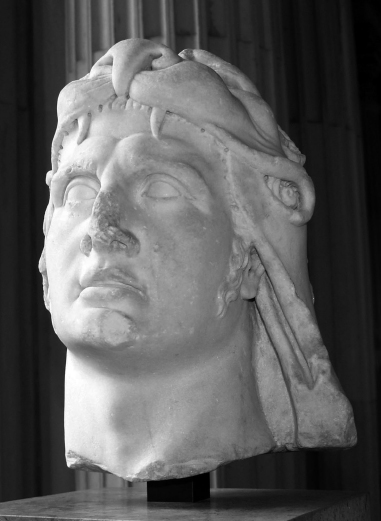
1. Bust of Mithridates, now in the Louvre, Paris. This is a unique survival as the Romans generally disapproved of images of those who opposed them with any measure of success. The ‘lionskin’ helmet may be to identify Mithridates with Hercules.
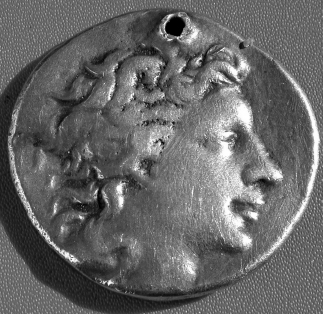
2. A coin of Mithridates showing him as a Hellenistic monarch. The hole in the top of the coin suggests it was worn as a medallion by a tribesman in the Black Sea region where it was found.

3. Cornelius Sulla – a highly capable general. His uncompromising ruthlessness made him a suitable foil for the equally-merciless Mithridates, though it made life extremely difficult for those civilians caught between the competing armies.

4. Coin of Tigranes of Great of Armenia, son-in-law of Mithridates. Whilst he was happy to collaborate with Pontus in invading Cappadocia, Tigranes was unhappy when his family connection caused him to be dragged into war with the Romans, and he eventually made aseparate peace with Pompey.
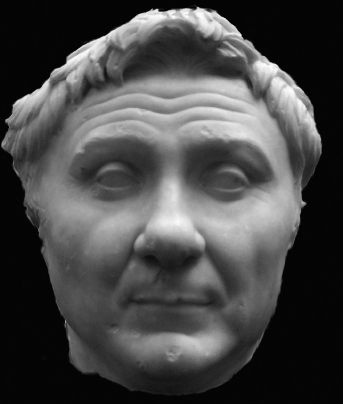
5. Bust of Gnaeus Pompeius, known today as Pompey. Behind this rather smug and vapid expression was anastute politician with a formidable military talent.
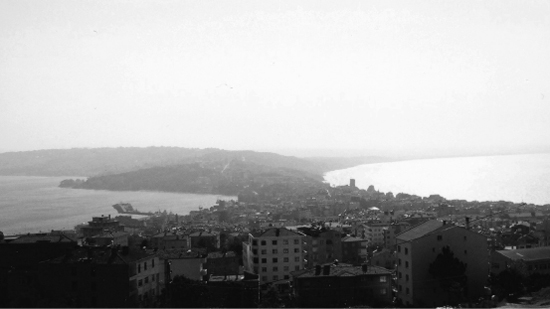
6. A picture of Modern Sinope showing why the natural advantages of the landscape made it the mercantile centre of the Pontic kingdom.
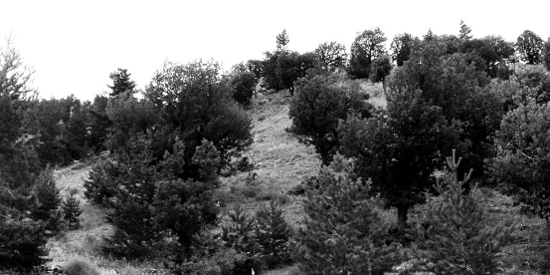
7. The Black Sea forests of modern Turkey are well watered and far from the popular concept of Anatolia as a uniformly arid environment. Much of the timber of the Pontic fleet came from here.
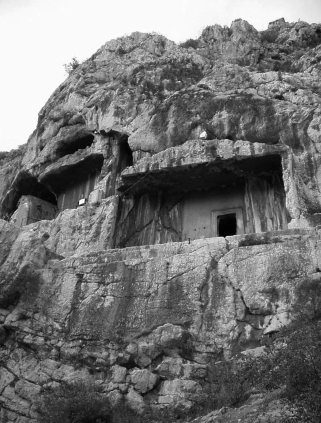
8. Rock tombs of the Pontic kings at the ancient Pontic capital of Amaseia. Note also the steep terrain which made Amaseia a highly-defensible position.
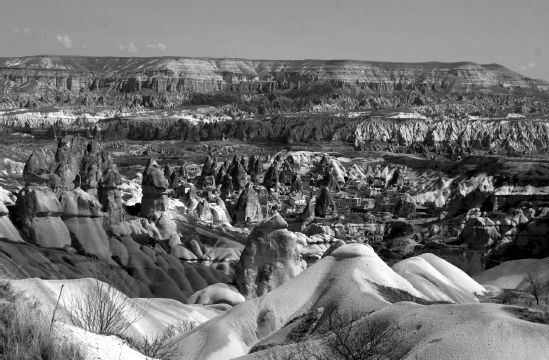
9. Cappadocian landscape. This view of the parched interior of Anatolia shows the difficulties of maintaining a large army in the field. Such terrain was very suitable for the delaying tactics of Mithridates in later years.

10. Asclepion (temple of Asclepius) at Pergamum. During the Pontic massacre thousands of Romans tried to shelter in temples such as these, but were cut down anyway, a sacrilege for which the cities of Asia Minor paid dearly.
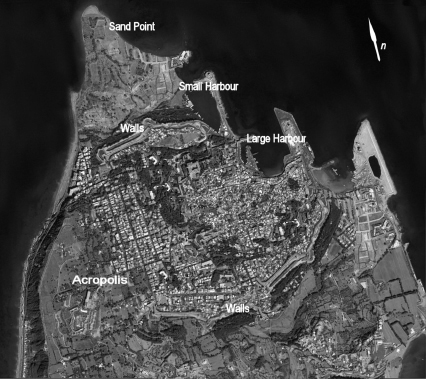
11. A reconstruction of how the major features of ancient Rhodes might have looked at the time of the siege of Mithridates (montage constructed by the author from aerial photographs of modern Rhodes and architectural sites throughout Greece).
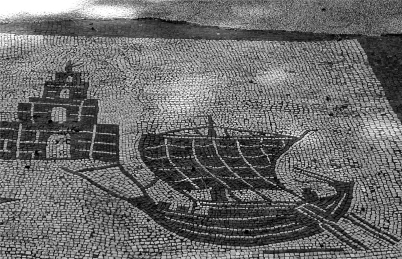
12. Merchant ship and lighthouse from a mosaic floor at Ostia Antica. So successful were the pirates sponsored by Mithridates that they managed to bring maritime traffic to a near-standstill, not only in the eastern Mediterranean but also on parts of the Italian coast.
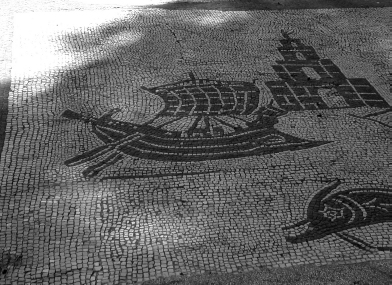
13. A warship, possibly a trireme, travelling undersail with oars shipped, from a mosaic at Ostia Antica. Note the prow shaped for ramming.

14. Drawing of a bireme by the author. These light and speedy vessels were used by all sides during the wars. They were slightly larger and heavier than the ‘Liburnian’ vessels which made up the staple of the pirate fleet, but were sometimes adopted as the pirates gained greater resources.
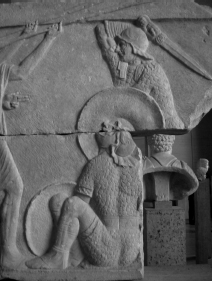
15. Roman auxiliary soldiers from a relief in the Vatican Museum. These soldiers sometimes differed radically from their legionary counterparts in their armour and weaponry. Note the scale armour, and apparent protection of the lower arm which seems to have been characteristic of soldiers of the western Black Sea coast.
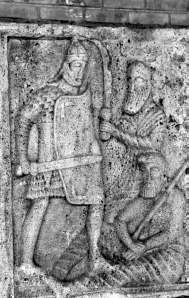
16. A Roman (left) battles with warriors identified as Bastarnae, from the Adamklissi monument. The Bastarnae, known as ‘the bravest warriors of all’ played a key part in the capture of the harbour at Chalcedon.
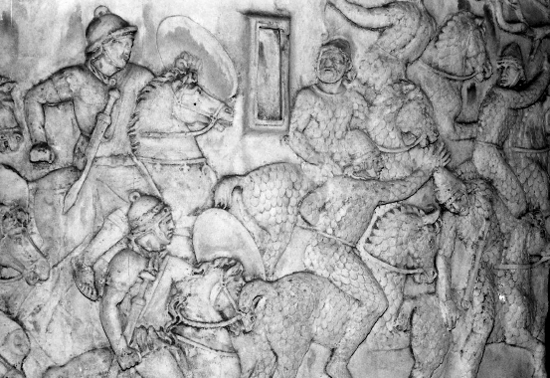
17. Romans fight Sarmatian horsemen. This relief from Trajan's Column shows the Sarmatians and their horses clad in tight-fitting scale armour. It is probable that their ancestors who fought for Mithridates were similarly dressed.
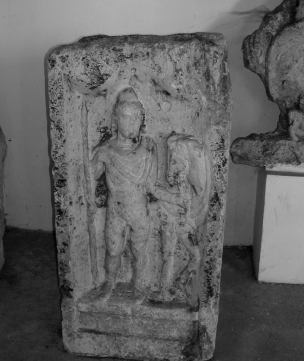
18. Thracian horseman. Thracians served on both sides as mercenaries during Mithridates’ wars. This cloaked figure holds a spear, but his lack of armour suggests that on this occasion his equestrian skills were deployed in hunting.
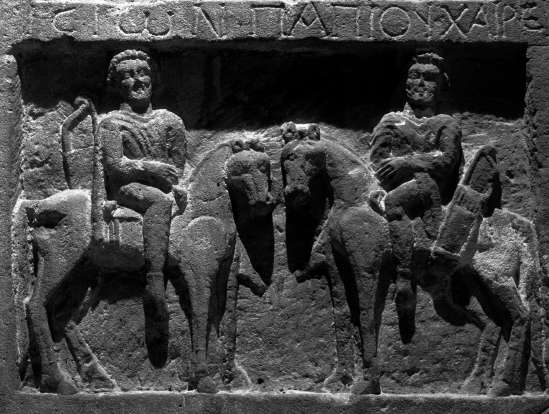
19. Scythian Cavalrymen. The range of the Pontic kingdom gave Mithridates a wide variety of cavalry which greatly contributed to the flexibility and striking power of his army. Scythian horse archers were lightly armed, but almost impossible for the more heavily-armed Romans to catch.