
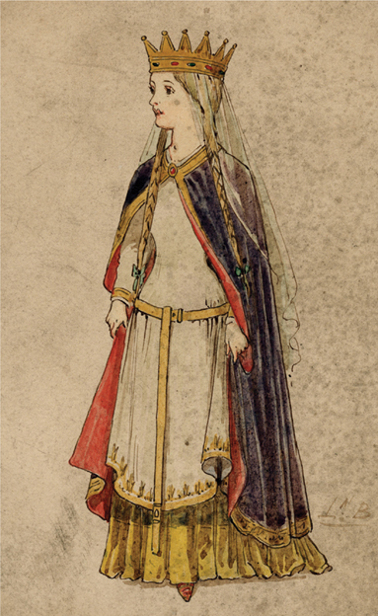
A nineteenth-century sketch of Matilda, which hints at her diminutive size. (illustration credit i1.1)
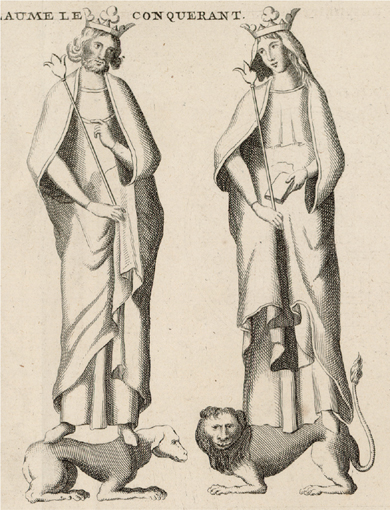
An engraving of a fresco showing William and Matilda that used to adorn the walls of a chapel at St.-Étienne in Caen. The fresco, now lost, is the only known contemporary likeness of Matilda. (illustration credit i1.2)
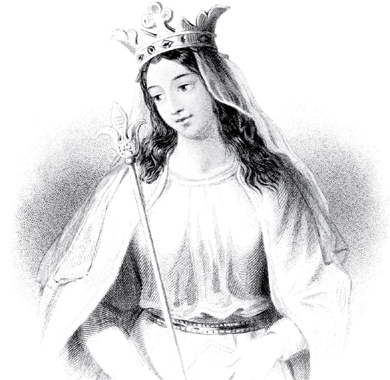
A nineteenth-century version of the engraving that formed the frontispiece to Agnes Strickland’s Queens of England series. Here, Matilda bears a striking resemblance to Queen Victoria, which was no doubt intended to flatter the reigning monarch. (illustration credit i1.3)
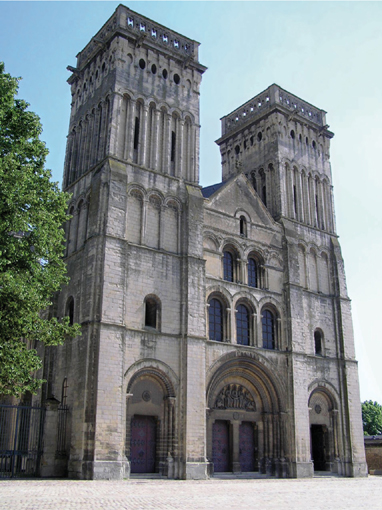
Matilda’s abbey of La Trinité (Abbaye aux Dames), Caen. The abbey was dedicated in 1066, prior to William’s invasion of England. Matilda was later buried there, and her tomb can still be seen today. (illustration credit i1.4)
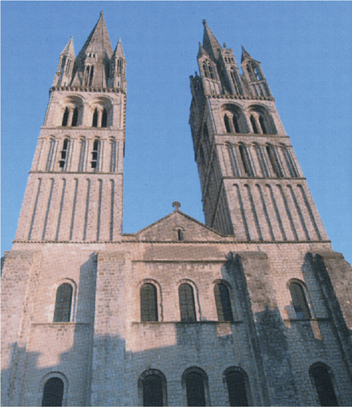
William’s abbey of St.-Étienne (Abbaye aux Hommes), Caen. Both abbeys were commissioned by William and Matilda in 1059 as a penance for defying the papal ban on their marriage. (illustration credit i1.5)
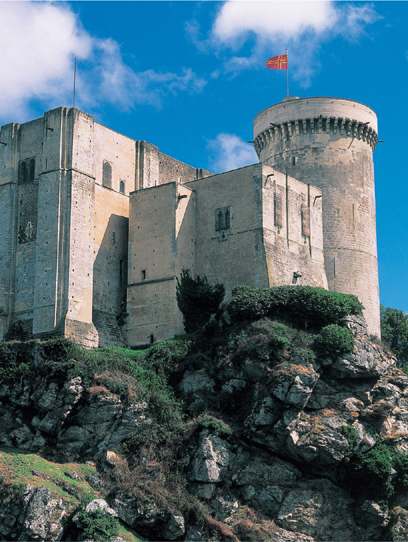
The castle at Falaise, the town of William’s birth. Legend has it that it was from here that William’s father, Duke Robert, spied Herleva washing clothes in a stream. (illustration credit i1.6)
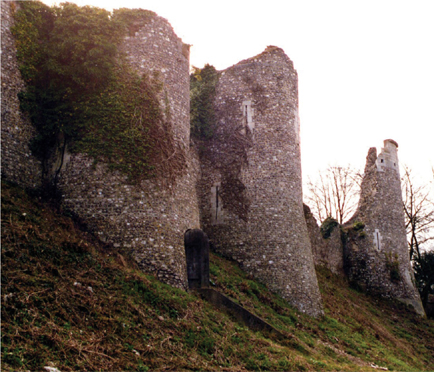
The remains of Bonneville-sur-Touques castle, said to be one of William and Matilda’s favorite residences in Normandy. (illustration credit i1.7)
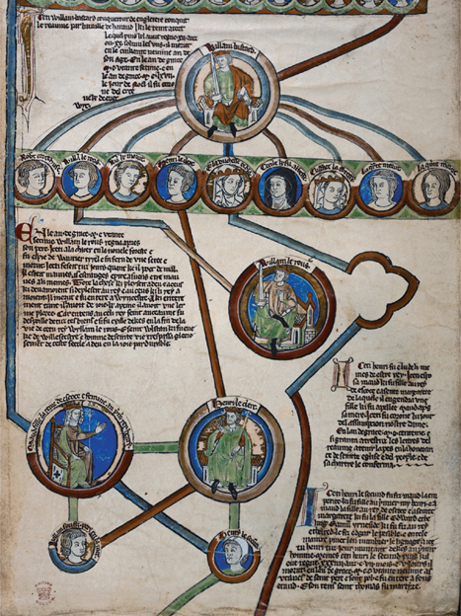
A thirteenth-century illustration showing the descendants of William and Matilda. At the top is William, and directly beneath him are the children that Matilda bore him: (left to right) Robert “Curthose,” William Rufus, Richard, Henry, Adela, Cecilia, Constance, and two unnamed daughters (probably Adeliza and Matilda). (illustration credit i1.8)
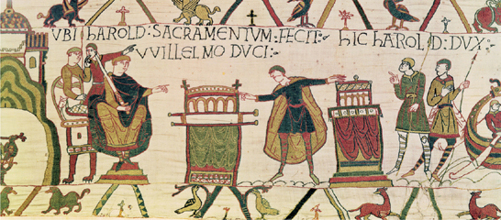
Harold Godwinson swears an oath recognizing William’s claim to the English throne. (illustration credit i1.9)
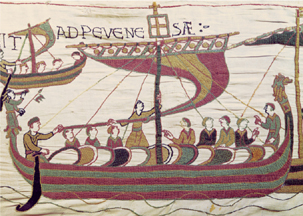
The Mora, the magnificent flagship commissioned by Matilda for her husband’s invasion of England. (illustration credit i1.10)
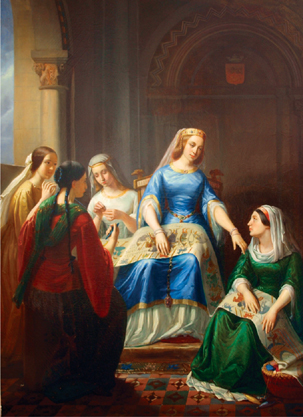
An imaginary portrait showing Matilda and her ladies working on the Bayeux Tapestry. The widespread belief that Matilda was responsible for the tapestry has been convincingly disproved in recent years. (illustration credit i1.11)
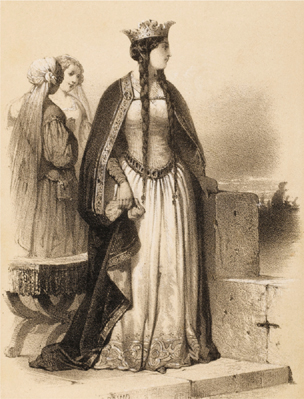
A romantic depiction of Matilda watching her husband set sail for England in 1066. (illustration credit i1.12)
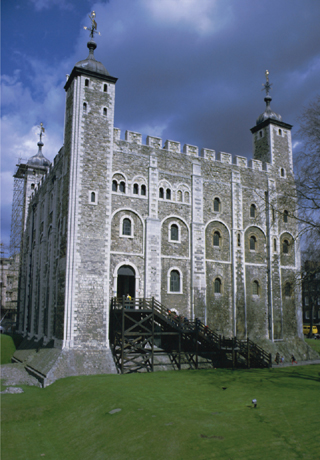
The White Tower, built by William to subdue the “evil inhabitants” of London. (illustration credit i1.13)
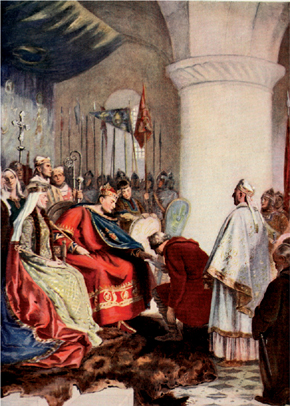
A modern illustration showing William and Matilda granting a charter to the city of London. (illustration credit i1.14)
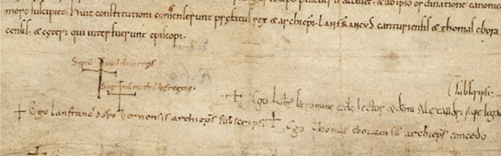
A charter bearing Matilda’s signum, a distinctive Jerusalem-style cross. (illustration credit i1.15)
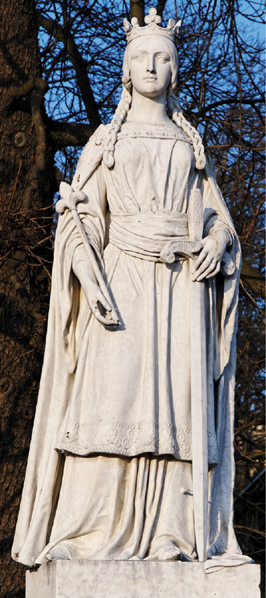
Statue of Matilda, Jardin du Luxembourg, Paris. (illustration credit i1.16)
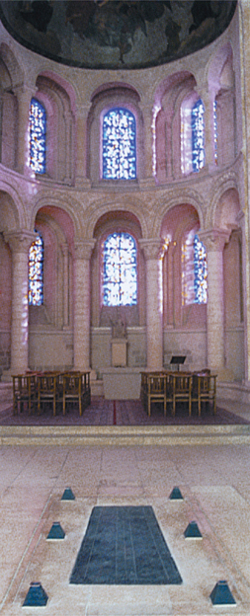
Matilda’s tomb in the choir of La Trinité, Caen. (illustration credit i1.17)