
PART FIVE

THE HOUSES OF LANCASTER AND YORK
CHAPTER 14
‘A royal witch’
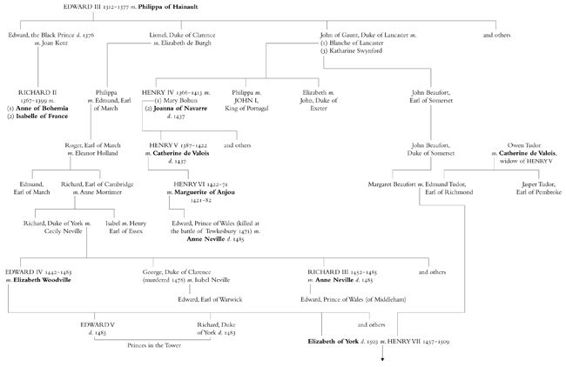
As the fifteenth century opened, what the new Lancastrian dynasty needed above all was money. The succession was about the only thing of which Henry IV could be certain; indeed, sons were the only thing he had plenty of. Having lost his wife, Mary de Bohun, five years before becoming king, he was short of a queen. He required a woman whose birth and connections could validate his newborn title to the crown, and, most importantly, a rich one. Once her pedigree was unravelled, the Dowager Duchess of Brittany appeared to be the perfect choice. Joanna of Navarre was born at Evreux, Normandy in 1368, to Jeanne de Valois, daughter of Jean II of France, and Charles ‘The Bad’, King of Navarre. Jeanne’s great-great-grandmother was the mother of Edward II’s Queen Isabella, Jeanne de Navarre. On the death of Jeanne’s son Louis X, his daughter, Charles’s mother, was excluded from the French succession, but renounced her claim only on condition she was able to take up her right to rule Navarre. Jeanne was thus descended on her father’s side from a queen of France and two queens of Navarre in their own right, while her mother, a daughter of France, was descended from the imperial house through her mother Bona, aunt to Anne of Bohemia and daughter of Emperor John I.
So Joanna’s blood was of the purest, and better yet was the promise of her money. Charles the Bad had fought on the right side in the French wars and was enormously wealthy. His reputation, however, was unfortunate, a career as a murderer and reputedly a sorcerer having ended with him being sewn up in a sack and set on fire. In 1386, a year before this alarming event, Charles had provided a dowry of 120,000 livres with an annual pension of 60,000 for the marriage of his eighteen-year-old daughter Joanna to the Duke of Brittany. He also pushed a hard bargain with his forty-seven-year-old son-in-law, demanding one third of the Duke’s assets as Joanna’s dower. The dowry had not been paid in full when Charles met his grisly end, but the dower, which was renegotiated in 1396, remained unchanged, and when Duke Jean died in 1399, thirty-one-year-old Joanna found herself a very rich woman.
As a descendant of female rulers, she appeared to relish her independence, and governed Brittany competently as regent for her eldest son Jean until he assumed his title in 1401. When Henry IV proposed for her early the next year, her offspring proved to be one of the first of several difficulties. Of the nine children Joanna had given Duke Jean, seven were still living in 1402: thirteen-year-old Jean, Artur, Gilles and Richard, aged nine, eight and seven respectively, and two girls, ten-year-old Marguerite and five-year-old Blanche. A third daughter, Marie, was already married to the Duke of Alencon. Jean could not leave his duchy, but although Marguerite and Blanche would be permitted to travel to England, the Breton magnates objected to the prospect of Joanna taking the younger boys out of the country and she found she would be obliged to leave them under the guardianship of the Duke of Burgundy. The other problems were canonical. Henry and Joanna would require a papal dispensation to marry as they were related within the prohibited degrees. Joanna had been Duke Jean’s third wife: his first had been Henry’s aunt, Edward III’s daughter Mary, and his second Joan Holland, daughter of Henry’s aunt-by-marriage Joan of Kent. This already complex situation was further complicated by the papal schism in which Europe was still embroiled. The division that the marriage of Richard II and Anne of Bohemia had been supposed to heal had passed into a new generation with the see of Rome occupied by the English-supported Boniface IX and that of Avignon by the French- and Burgundian-backed Benedict XIII. Notwithstanding their political disputes with France, the Bretons supported Benedict, so another dispensation was required for Joanna and her daughters to go and live among schismatics.
Despite these obstacles, both Henry and Joanna at first pursued the match urgently. Joanna’s envoy Anthony Rhys was sent to the English King on 14 March 1402, and the papal dispensation granted less than a week later. In April, Henry underwent a proxy ceremony at Eltham, swearing fidelity unto death to the papal envoy. Legally, the couple were now married, but Joanna waited until December to set out for England. Why the delay? The most obvious answer is that Joanna was making suitable arrangements for her young sons and the handover of the government to her eldest, but might she have wished to change her mind? What were her motivations for the match in the first place? So little is known of Joanna’s early life that it is impossible to get any sense of her character other than retrospectively. Aside from her place of birth and payments made to the convent of Santa Clara at Estella in Navarre, where she was educated, she is virtually absent from the records until her first marriage. As a well-dowered ducal mother, why did Joanna want to get away from Brittany so badly that she was prepared to leave her sons behind? Some clue may be found in her later political affiliations, but the simplest explanation is perhaps that, as a rich and marriageable (if not, by the standards of her day, young) woman, she, like Eleanor of Aquitaine after her divorce, was extremely vulnerable. As Queen of England Joanna would not only have one of the most powerful protectors in Europe, but also the unique legal position of a consort. It was this determination to maintain control of her own affairs which would lead to one of the most extraordinary situations in the life of any English queen: her imprisonment on suspicion of witchcraft in 1419.
Henry’s enthusiasm for the marriage is perhaps easier to understand. He was reputedly very attracted by descriptions of Joanna and, in addition to the status and funds with which he believed she would provide him, there was also the possibility of benefit to English trade and military operations through access to Breton ports, of an increased English influence in the duchy and of an Anglo-Breton alliance against the French. Joanna’s importance to Henry is reflected in the status accorded her in the depiction of her coronation, an amalgamation of traditional Marian associations of queens consort with the sense of a new definition for English monarchs adopted from Richard II’s self-fashioned kingship.
After the now-traditional rough crossing, Joanna arrived at Falmouth at the end of December 1402 and met her husband at Exeter. Their marriage took place at Winchester on 8 February 1403, and she was crowned at Westminster on 26 February. In spite of the fact that she was a widow, Joanna wore her hair loose at her coronation to signify virginity, also an identification with two potent images of the Virgin: Mary, Queen of Heaven and Maria mediatrix. The connection of the consort with the merciful intercession of the Virgin was one that she had already enacted as Duchess of Brittany: in a well-known incident she had intervened in her husband’s arrest of the French ambassador. According to the Chronicle of St Denis, a pregnant Joanna, ‘setting aside her womanly modesty . . . taking her children in her arms . . . entered the chamber of the Duke’, and on her knees ‘earnestly pleaded that he reconsider’, if only for the sake of their children, who would require French support after his death. As in the case of Philippa of Hainault at Calais, Joanna’s plea permitted her husband to pursue the course of action it was necessary for him to take without risking the concomitant embarrassment of appearing to change his mind. The ‘spontaneity’ of such gestures was by this point more theatrical than emotional, as has been observed, notably in the case of Anne of Bohemia’s intercession for London, yet though the autonomous political agency of the intercessory gesture was reduced, Joanna’s invocation of it shows it retained a meaningful symbolic power outside the conventions of male-directed action.
Joanna’s coronation ceremony was ‘unusually extravagant’.1 An illustration of the event shows the Queen seated alone on a throne under a canopy with the archbishop of Canterbury and the abbot of Westminster beside her, instead of the more conventional position enthroned below the King. This gestures towards Joanna’s individual authority as the descendant of so many rulers, as does the orb she holds in her left hand. Before Philippa of Hainault, queens were depicted with only a sceptre, or virga, in the right hand, but in the funeral effigy commissioned by Richard II for his double tomb with Anne of Bohemia, there is an orb between the couple, implying a novel degree of shared authority. The presence of the orb projects a queenly participation in a more explicit relationship between England and the Mother of Christ, that of the realm itself as the Virgin’s dowry.
In the Wilton Diptych, Richard II is pictured in red and cloth-of-gold robes decorated with rosemary (one of Anne’s emblems) and eagles, the symbol of the empire. To the King’s right are the Virgin and Child, with one of eleven angels proffering a banner topped with an orb and cross, which have been painted over with a larger orb. Examination of the painting has shown that the first orb contains a tiny illustration of a green island with a boat at sea and a white tower, an image that connects the Wilton orb with another (now lost) depiction of Richard made in Anne’s lifetime. Details of this painting, part of a five-panelled Roman altarpiece, survive only in seventeenth-century descriptions, in which Anne, in a cope emblazoned with imperial eagles, stands beside Richard, five saints and the Virgin. St John is introducing the couple to the Virgin, and they are presenting her with a globe on which is a map of England: ‘This is your dowry, O Holy Virgin, wherefore, O Mary, may you have rule over it.’ In terms of Richard’s conception of his destiny after Anne’s death, the Wilton Diptych has been interpreted as the King giving his realm over to the Virgin and then receiving it back from her in the form of her dowry, evoking a spiritual marriage between Mary and England in his person. The implications of this for Richard’s possible commitment to chastity have been discussed, but there is also a connection between the map in the Rome altarpiece, the Wilton orb, Joanna’s coronation portrait and the Lancastrian adoption of the concept of England as the Virgin’s dower.
As a new dynasty, legitimacy was essential for the Lancastrians. The marriage between Henry and Joanna was part of establishing this, as was the conscious appropriation of Ricardian symbolism. In a letter to the bishop of London in 1400, Thomas Arundel states: ‘We are the humble servants of her own inheritance and liegemen of her especial dower, as we are approved by common parlance, ought to excel all others in the fervour of our praises and devotions to her.’2 By Henry V’s reign, England was being referred to as the Dos Mariae (dowry of Mary), the title by which the Roman altarpiece was known. The globe in the Roman painting establishes the idea, the Wilton orb elaborates it, the tomb of Richard and Anne reiterates it. Thus the orb held by Joanna of Navarre associates the queen, already linked to the Virgin, with this new contribution to England’s unique destiny; even, it would not be going too far to say, casting her, in her marriage with the king, as its conduit.
Henry’s respect for Joanna’s status was demonstrated practically as well as symbolically. In 1403, he dowered her to the immense sum of 10,000 marks, payable from the exchequer until such a time as rents could be collected from her assigned lands in the duchy of Lancaster holdings. This was far more than the government could afford, even though the rents had to be supplemented for a further six years. Eventually, Joanna received many traditional queens’ lands, including the manors of Woodstock, Ludgershall, Geddington, Langley, Havering, Gillingham and Rockingham and the castles of Bristol, Hertford, Nottingham and Leeds. She also received a reversion from the Lancaster estates after the death of Gaunt’s last duchess, Katherine Swynford. Joanna’s administration of these properties represented a significant new direction for the office of the Queen’s Council. With the absorption in 1399 of the lands, but not the independent practices of the Lancaster duchy, into the crown estates, it was possible to establish a certain continuity for the management of the queen’s dower which, throughout the fifteenth century, derived in the main from Lancaster. On 10 December 1404, Joanna was granted the use of a new tower opposite the main palace gate to house her council, directed by her treasurer, John Chandeler, who became bishop of Salisbury, her receiver-general, William Denys, her chancellors, John Tubbay and John Mapleton, and her steward, Henry Luttrell. Working closely with the council of the duchy of Lancaster, these officials kept Joanna’s accounts, met to determine policy and preserved the Queen’s charters and records. Much of their business was concerned with Joanna’s Breton holdings, for despite Henry’s hopes of her fortune, Joanna had brought him no dowry and continued to manage her dower. The King did not get a penny.
Joanna’s management of her revenues presents her as ‘a woman bent on exercising a significant degree of fiscal self-determination’.3 Lobineau’s Chronicle of Brittany notes that she continued to take payments from the Breton dower as set out in 1396, including 12,000 crowns from the sale of the rents of Nantes to Olivier de Clisson. She also received deliveries of provisions from her former home at Vannes. Perhaps Henry was allowed to sample them. If so, they were the only tangible benefit he obtained from the marriage. Joanna’s financial independence might have been laudable, but it smacks of miserliness, and while Henry may have felt that her symbolic value was worth the vast expense of her dower, his subjects disagreed. Anti-Breton feeling ran high. With Joanna’s sons in the custody of the Duke of Burgundy, there was little chance of England increasing its influence in Brittany, and in a matter of months after the marriage the two states were at war. Yet Joanna’s loyalties remained firmly with her son. In 1404 she delivered up to him 6,000 livres of Norman land rents and claims to 70,000 which remained due from her first marriage. As had so frequently been the case with foreign queens, she attracted hostility for the size and cost of her Breton entourage. In the same year as she made the grants to Duke Jean, Parliament heard a petition that ‘all French persons, Bretons, Lombards, Italians and Navarrese be removed out of the palace’. Joanna was initially permitted to retain only her daughters Blanche and Marguerite and one lady-in-waiting, Marie de Parency, though the lords eventually relaxed enough to let her keep twelve others, including her daughters’ nurse.
The Queen maintained close links with her distant children. Her son Artur visited England in 1404, and in 1407 she negotiated the marriages of her daughters, Marguerite to Alain, Viscount Rohan, and Blanche to Jean, heir to the Count of Armagnac. Blanche and Jean visited her in 1409, as did her son Gilles. She disseminated the work of English artisans, sending an alabaster monument to the cathedral of Nantes in 1408 and a jewelled reliquary, which may be seen today in the Louvre, across the Channel for her eldest son, but politically as well as financially, she was pro-Breton. Having persuaded Henry to give her custody of a group of Breton sailors who had been captured raiding the Devon coast near Dartmouth, she then provoked more English hostility by releasing them without claiming a ransom. Her influence has also been identified in the two Anglo-Breton truces negotiated in 1407 and 1417, but her later peace-weaving efforts had to contend with the suspicion and dislike she had aroused from the start.
The main focus of this was Henry’s over-generous provision for her dower, which had been a source of dispute since 1404 and which gathered force after his death in 1413. As a couple, Joanna and Henry appear to have been happy, if not extravagantly so. It might be posited that theirs was a companionable rather than a passionate marriage: they spent a good deal of time together and she was able to establish amiable relations with her stepchildren. A letter to Henry IV’s third son, John, Duke of Bedford, written from Langley in 1415, describes him as ‘our dearest and best beloved son’ and concludes: ‘If there be anything on our part that we can do to your pleasure, be pleased to signify it, and we will accomplish it with a very good heart, according to our power.’ Joanna was also on excellent terms with her eldest stepson, Henry, with whom she shared a love of music, but this did not stop him conspiring to cheat her of her rights.
As Prince of Wales, Henry had a famously difficult relationship with his father, though their differences were more substantial than is implied by the older man’s disapproval of the roistering ‘Prince Hal’ of Shakespeare’s Henry IV. Elevated to the full heir’s apanage of Wales, the duchies of Cornwall, Lancaster and Aquitaine and the earldom of Chester in 1399, Henry was given a seat on his father’s council in 1406. In 1410 the King fell seriously ill, and for a year his son acted as regent. At the time, France was involved in a civil war prompted by the mental instability of Charles VI and the consequent struggle between the Duke of Burgundy, who had assumed the regency in 1392, and the house of Orléans, headed by the Count of Armagnac, for control of the provisional government. In 1407, Charles VI’s younger brother, Louis of Orléans, was assassinated by the Duke and his son, Charles, made a second marriage to the daughter of Bernard VII of Armagnac in order to raise a league against Burgundy. Joanna had both political and personal connections with the Armagnac wars. Brittany had long been at odds with Burgundy, and her son Duke Jean supported the Armagnacs. Moreover, her daughter Blanche was now sister-in-law to Charles of Orléans. As head of the council, Prince Henry had supported Burgundy, but once his father regained control he switched his allegiance to Armagnac. Although Joanna advised a neutral policy, which she was well placed to do, when it came to choosing sides, she supported Prince Henry against her husband.
In March 1413, Henry IV died in the Jerusalem chamber at Westminster. The King had particularly desired to be buried at Canterbury, where Joanna commissioned the tomb she would eventually share with him. Poor Mary de Bohun, who had given Henry her fortune and nine children, was relegated to the relatively humble church of St Mary, Newark. Henry might have gained no material advantages from Joanna, but he emphasised the value of his royal bride even in death. At first, it seemed that Henry V was prepared to honour his father’s provisions for Joanna, but his commitment collapsed in the face of his ambitions in France. Henry was intent on reviving the Plantagenet claim to the French crown, on the grounds that his rights had been systematically denied through the series of truces and alliances that had obtained since Edward III’s death. In almost every one of the opening addresses to Parliament he made during his reign, the just cause of the war was stressed, and Henry insisted until the end of his life that he had only ever been trying to bring peace after more than thirty years of failed diplomacy. Since the French had betrayed the 1360 treaty of Bretigny by encroaching on English sovereignty in Aquitaine, Henry asserted that he had every entitlement to pursue his great-grandfather’s claim to the crown.
In August 1415, Henry left England at the head of the largest invasion force to have been mustered since the time of Edward III. Before his departure, he had granted the castles of Wallingford, Berkhamsted and Windsor to Joanna, and his formal leave-taking of the Queen Dowager was, according to The London Chronicle, one of the official ceremonies prior to his embarkation, between offering at St Paul’s and praying at the shrine of St George. On arriving in France, the English spent five weeks successfully besieging Harfleur and then marched towards Calais. Henry had left with a force estimated at 9,000 to 12,000 men, but by October, ravaged by fever and dysentery, this number had sunk to between 6,000 and 8,000.On 24 October, they found their route blocked by a huge French army, commanded by the constable of France (Charles VI was mad again) and the leading magnates of the Armagnac faction. Half-starved, sick and freezing, there was nothing the English could do but stand and fight.
Agincourt is the ne plus ultra of medieval battles, immortalised by Shakespeare and romanticised on film. The reality was muddy, brutish and short. For three hours the two armies glared at one another across a sodden wheatfield, then, as the French van moved, Henry advanced in an avalanche of bow fire. The arrows devastated the oncoming French, who had little room for manoeuvre and found themselves immured in the mud. Henry charged his cavalry over the first corpses, using the bodies as duckboards, while his men-at-arms heaped up the dead to serve as improvised forts. When the French rearguard rallied and pushed forward, all the prisoners, including the dukes of Orléans and Bourbon were promptly slaughtered, an order which has compromised Henry V’s chivalric reputation ever since. The Marquise de Sevigne callously commented in the seventeenth century that the only consolation for the French was that, unlike at Crécy, relatively few of the dead prisoners were ‘born’. Practically, Agincourt achieved very little, as Henry lacked the men and resources to make good his advantage and merely pressed on to Calais, but historically, it was priceless.
Queen Joanna took part in Henry’s victory procession in London on 24 November 1415, but she cannot have been wholeheartedly joyous. Her son Artur had been one of the lucky prisoners to survive Agincourt, but her son-in-law, Marie’s husband Jean d’Alenccon, had been killed, as was her brother, Charles of Navarre. The highly nationalistic mood at the time of the triumph had also manifested itself in another attack on her household, this time in the form of accusations that Breton spies were eavesdropping and selling government secrets (which suggests that, though the Duke of Bedford, not Joanna, acted as regent while Henry was in France, she was still closely associated with the centre of power), and that they were trafficking in stolen money and jewels. Hatred of Bretons persisted until 1425, when a petition was made for their definitive expulsion.
Joanna’s connection with Agincourt also produced an unusual piece of anti-Lancastrian propaganda in the mid-fifteenth century. Afterwards her son Artur took the opportunity to visit her and, according to an account by Guillaume Gruel, Joanna played a rather cruel trick on him, installing one of her ladies in her place and then berating him when he failed to recognise that she was not his mother. They ‘both began to cry because they were so dear to each other. And the Queen his mother gave him a thousand nobles . . . and also gave him shirts and garments, and he did not afterwards dare to speak to her or visit her, as he would have wished.’4 If this odd story is true, it figures Joanna as a callous mother, who torments her ‘abandoned’ child and then palms him off with gifts. Rather paltry gifts, considering that the previous year Artur had lost his title to the earldom of Richmond, associated with the ducal family of Brittany since Norman times, to John, Duke of Bedford. The writer, Guillaume, served Artur when he became constable of France after 1324, which suggests that Artur may have conveyed this bitter memory personally. But there is another, more stylised interpretation of the story. At the time Guillaume was writing, Henry V’s son was not only officially failing to make good his inheritance of the French crown, but was struggling to maintain his right to his English one. The ‘recognition trick’ is a classic device of French romance, invoked, for example, in the legend of Joan of Arc’s identification of Charles VII at Chinon. Artur’s inability to recognise his mother thus becomes an indictment of the Lancastrian dynasty, as he is not able to discern which woman is the ‘true queen’. Since Joanna could not be distinguished by the ineffable aura of royalty, it follows that Henry IV, and therefore his grandson, were not ‘true’ kings.
Henry V was not troubled by such doubts, but he was concerned at the exorbitant cost of the renewal of the French wars. For years, the Dowager Queen’s dower had been a source of contention, and in 1419 the financial pressure was increased by the need to find 40,000 crowns to dower Henry’s betrothed, Catherine de Valois. So, in September that year, Joanna was arrested on suspicion of witchcraft. On the twenty-fifth of the month, the archbishop of Canterbury wrote a circular requiring English priests to pray for the safety of the King, who was at risk from the ‘superstitious deeds of necromancers’. Fear of witchcraft was a perennial anxiety. Twenty years before, Queen Isabelle’s secretary, Pierre Salmon, had reported a conversation with Richard II at Woodstock in which the King claimed that Charles VI’s madness had been conjured by the sorcery of his brother the Duke d’Orléans. Richard, Salmon claimed, offered a handsome reward if the secretary could make a ‘drink’ for Orléans that would prevent him from further harming Charles or anyone else. In a deeply religious and superstitious culture, witchcraft seemed very real, but it was also invoked as a political weapon. A person accused of ‘necromancy’ could be easily deprived of his rights. The archbishop’s letter, designed to create an atmosphere of rumour in which the accusations against Joanna would seem more plausible, was followed up on 27 September by an order from the royal council depriving the Queen of her dower and possessions on the basis of evidence from John Randolf, a friar in her household. Randolf claimed Joanna had ‘compacted and imagined the death and destruction of our lord the King in the most high and horrible manner that could be recounted’.On 1 October, Joanna was arrested at Havering for ‘treasonous imagining’, or, in the words of The London Chronicle, for seeking ‘by sorcery and necromancy to have destroyed the King’. No one appeared to know precisely what form Joanna’s magic had taken, and the ‘witnesses’, Randolf himself and two other members of Joanna’s household, Peronell Brocart and Roger Colles, were swiftly imprisoned, but the end had been achieved. Joanna lost not only her dower, but also her servants and property.
Joanna was never tried for witchcraft, but that meant she could never be acquitted. Her rank offered no protection against the ruthless exploitation of her fortune. Since queens’ power was consensual and customary, rather than constitutional, her abrupt fall from grace also illustrates the inherent vulnerability of even the most powerful woman in the land. Eleanor of Aquitaine and Isabella of France had been imprisoned for political offences, and their sex and status had arguably preserved them from the sterner punishment that such behaviour in a man would have merited, but Joanna’s only crime was having her own money and, given the nature of the charge, not even the legal protections afforded her council could save her. If she had pushed for a trial, she risked losing her life as well as her fortune, and though Henry could not have been expected to go as far as to burn an anointed queen at the stake, there were other, more discreet methods available to silence a troublesome woman. Divine right had proved no ultimate aid to Edward II or Richard.
So Joanna went quietly. From Havering she was taken to Rotherhithe, then to Pevensey, where she spent the first months of 1420, and finally on to Leeds Castle. There she remained, in the custody of Sir John Pelham, until six weeks before the King’s death. The conditions of her captivity indicate, though, that even the royal council tacitly acknowledged their accusations were spurious. In the first months of her imprisonment at Pevensey, the average expenditure for Joanna’s upkeep was thirty-seven pounds a week, including twelve to sixteen shillings for her stables (which suggests she had the freedom to ride out), wages for nineteen grooms and seven pages, a harp, aquavit to keep up her spirits and a cage for her songbird. She also continued to dress in royal style, ordering furs, silks and delicate linens from Flanders. She had a gold girdle, silver gilt buckle, gold chains, a gilt basin, silver gilt knives, a silver candlestick and a gold rosary. Medicines were ordered from her Portuguese physician Pedro de Alcoba. The period after March 1420 shows Joanna less well provided for, with an average expenditure of eleven pounds per week, but she still had her carriage and was able to enjoy delicacies such as green ginger, rosewater (which was used as a cosmetic as well as in cookery) and cardamom. Among the foodstuffs and household goods recorded in the accounts are ‘wheat, barley, beans, peas, oats, wine, ale, cows, calves, sheep, lambs, pigs, little pigs, capons, hens, poultry, geeses, ducks, pheasants, partridges, coneys, salt and fresh fish . . . hay, litter, coals, firewood, rushes’.5 She was also able to keep up with some business matters. She employed a clerk, Thomas Lilbourne, and two sergeants-at-law were paid to pursue claims for queens-gold.
There is even a tiny hint that Joanna profited from her unusual privacy and seclusion. At Leeds, she received her stepson Humphrey, Duke of Gloucester, and Henry Beaufort, bishop of Winchester. Wine was provided for the guests and they were entertained with music by Joanna’s minstrel, Nicholas. Another visitor was Thomas, Lord Camoys, who enjoyed his stay so much he prolonged it for ten months, from April 1420 to January 1421 . Camoys is discreetly described as a ‘close friend’, and when he died shortly after leaving Leeds, in March 1421, mourning clothes were ordered for the Queen: seven yards of black cloth at 7s 8d per yard, a satin cape and fur for a collar. It was once assumed that these luxury garments were purchased for the death of Henry V, but that did not take place until the following year. Their richness suggests that Camoys was a very close friend indeed.
The exchequer certainly profited from the scurrilous treatment of the Queen. In total, Joanna cost the crown only 1,000 pounds per year during her imprisonment, while 8,000 pounds was realised from her dower for the period June 1421 to August 1422 alone. Even so, the King remained terribly short of money. Adam Usk reports the ‘unbearable extortions’ to which Henry resorted, and comments darkly on the profound ‘though private’ resentment they provoked. In 1420 and 1421 the King was too wary of his critics to risk asking Parliament for yet more subsidies for the war, and in 1421 no new taxes were collected and Parliament was pushing for the King to return to England. If Joanna could not have been expected to have much sympathy for her stepson’s predicament, her condition was clearly weighing on Henry’s mind, because before his death he paid her dower arrears and restored her lands and, in July 1422, the King’s carissima mater was freed.
It seemed, though, that the devil was not done with Joanna. In 1429, she took the unusual step of leaving the accoutrements of her chapel to the mistress of her stepson Humphrey of Gloucester. Eleanor Cobham had been Gloucester’s lover for some years, and in 1431 his marriage to Jacqueline of Hainault was annulled and he married Eleanor. The 1429 bequest indicates that Joanna knew Eleanor well and was publicly attached to her, despite her irregular status at the time. After the deaths of Henry IV’s second and third sons, Thomas, Duke of Clarence in 1421 and John, Duke of Bedford in 1435, Gloucester became the next heir to the throne in the event that Henry V’s son did not produce a child, and thus Eleanor was prospectively the next Queen of England. In 1441,a whispering campaign began against the Duchess of Gloucester, accusing her of using witchcraft to seduce her husband. Ultimately, Eleanor was arrested for procuring potions from a witch named Margery Jourdemayne and of employing two corrupt priests to cast spells to predict whether Humphrey would succeed to the throne. Eleanor and her fellow sorcerers were tried, and the Duchess supposedly admitted to some of the charges against her, though she pleaded pathetically that a wax effigy produced as evidence was only a charm she superstitiously hoped would help her bear a child.
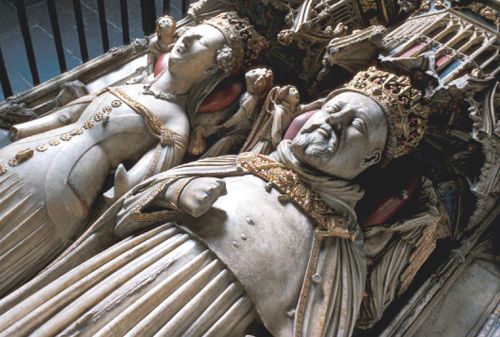
Joanna of Navarre and Henry IV: a prestigious foreign bride for a parvenu monarch.
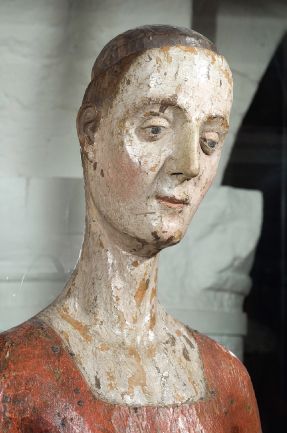
Catherine de Valois was the ancestress of a great royal dynasty, but by a servant, not a king.
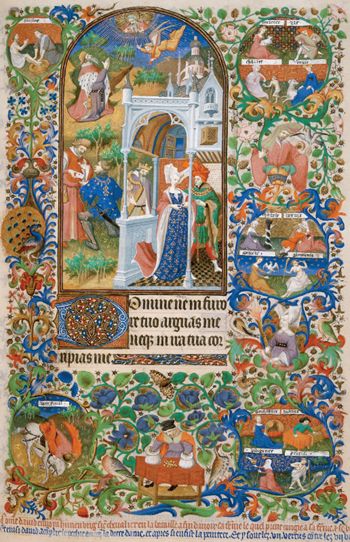
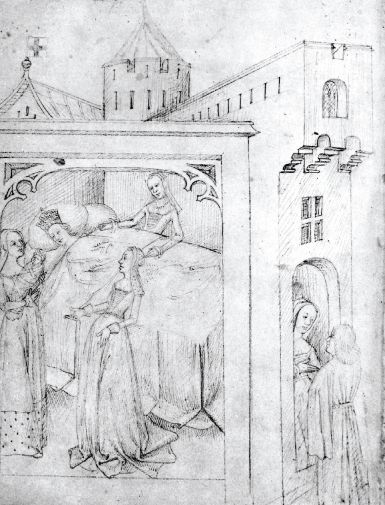
A glimpse of the secrets of the queen’s chamber. The birth of a son to Catherine de Valois was supposed to unite England and France.
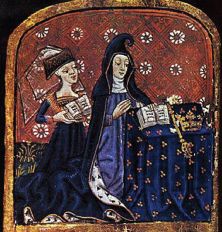
Valiant but fatally cautious, Marguerite of Anjou struggled to take the place of a king who could not grow up.
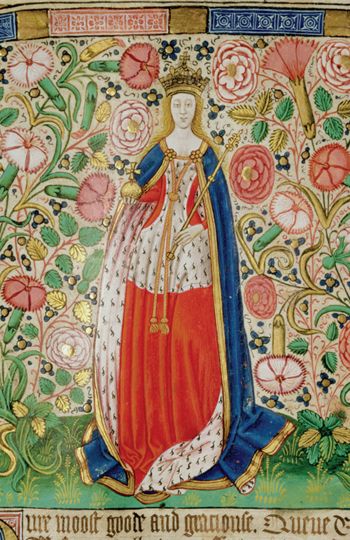
Catherine was the perfect princess for England’s model warrior, Henry V.
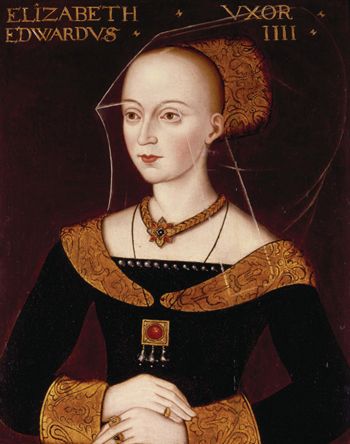
The love match between Edward IV and the beautiful widow Elizabeth Woodville scandalised Europe. But was Elizabeth a grasping arriviste or a courageous and tragic queen?
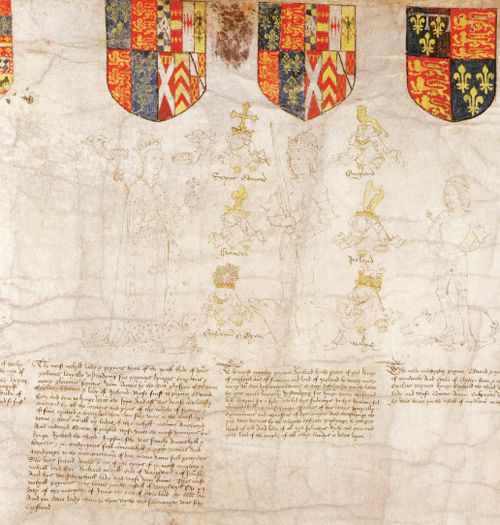
Anne Neville had two chances at the crown, but she barely lived to enjoy it.
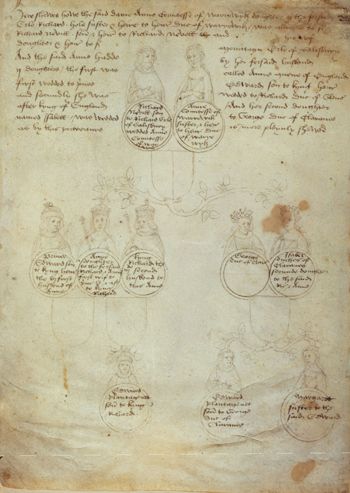
Anne Neville’s northern affinities were essential to her husband’s successful usurpation.
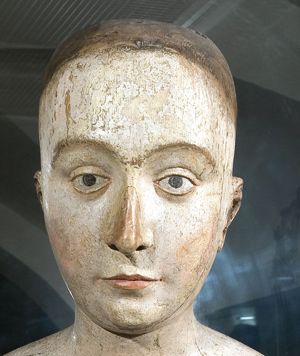
Did Elizabeth of York conceal an affair with her murderous uncle Richard?
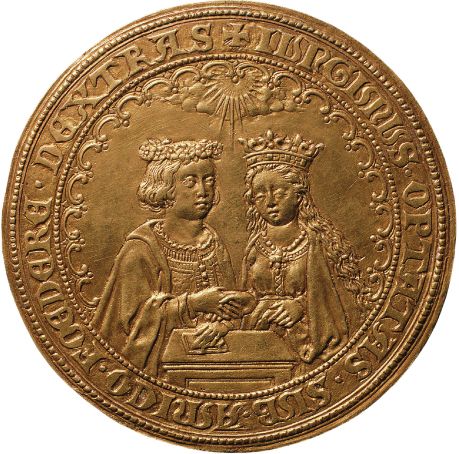
Henry Tudor was desperate to conceal the fact that his wife’s royal claims were far superior to his own.
Margery was burned, one of the priests hanged and the other died in prison, while Eleanor was forced to do public penance, walking barefoot and bareheaded through London with a candle. Her marriage was dissolved by the archbishop of Canterbury and she spent the rest of her life shut up in prison of the Isle of Man. Her conditions were much less comfortable than Joanna’s had been: she was permitted only twelve attendants and an annual allowance of one hundred marks. Like Joanna, Eleanor had been the highest-ranking woman in the land before her disgrace, and like Joanna she was powerless to help herself. Eleanor was unpopular, but the campaign against her seems to have been no more than an attempt to curb her husband’s aspirations before the marriage of Henry VI.
The use of allegations of witchcraft as a means of curtailing the power of prominent women continued throughout the fifteenth century. After the battle of Edgecote in 1469, Jacquetta, Duchess of Bedford, the mother of Queen Elizabeth Woodville, was accused of sorcery by Thomas Wake. Wake was a servant of the Earl of Warwick, who was at this point holding King Edward IV prisoner. Though Warwick was determined to smash the rule of the Woodville family, Wake’s accusations couched Jacquetta’s witchcraft ‘loyally’ in terms of a plot against the King and Queen. He claimed he had discovered a model of a man-at-arms, smashed and bound with wire. The case was dismissed when the witnesses withdrew their evidence, but Jacquetta was charged once more -posthumously, in 1483 - this time for supposedly having used the black arts to procure her daughter’s controversial marriage to the King. Polydore Vergil has Richard III accusing Elizabeth Woodville herself. Richard claimed he was unable to eat or sleep, and that his arm was wasting away, ‘which mischief verily proceedeth from that sorceress Elizabeth who with her witchcraft has so enchanted me that by the annoyance thereof I am dissolved’. Any gains from the allegations against Elizabeth and Jacquetta were propagandist, rather than financial, as in Joanna’s case. What all their stories illustrate is the potency of rumours of witchcraft to tap into contemporary anxieties about the ‘unnaturalness’ of powerful women, a suspicion to which queens, that legal anomaly, were acutely prey.
There was little time for Joanna to restore relations with Henry V before his death, though he did make her a rather cursory gift of cloth for five or six gowns. Prior to her arrest, Joanna had appeared as Queen on ceremonial occasions, but this role was now taken by Henry’s widow, Catherine, and for the rest of her life Joanna lived in semi-retirement, first at Langley, until the palace burned down in 1431, and then at Havering. Though she was not active at his court, Henry VI treated her courteously, presenting her, for example, with a New Year gift of jewellery in 1437.
Joanna was perhaps more interested in business than cultural matters. Her council continued to be active on her behalf in the management of her estates and she was apparently frustrated by the poor management of Havering Manor, but aside from the innovations in the queen’s administration, she left no remarkable legacy, with the exception of her signature as ‘Royne Jahanne’ -the first of any English queen to survive. During Henry IV’s lifetime she had shown some interest in the promotion of scholars at Oxford and Cambridge, and in her captivity she possessed at least two books, a mid-thirteenth-century psalter and a contemporary book of hours, but she made no major foundations and was not a notable patron. She is more remarkable for what she suffered than what she achieved. On her death in 1437, a woman who had been among the wealthiest of English queens was living on 500 marks a year. She was the first in a line of fifteenth-century consorts whose careers were to prove that while queenship made a woman exceptional, it by no means rendered her invulnerable.