8
The late 1920s was the time of Bullitt’s midlife crisis, which coincided with the horrible events in America and Europe that, he felt, were materializing his worst expectations. His career was stuck, his family had collapsed, and his novel was quickly forgotten. In this spirit, Bullitt wrote his second novel, The Divine Wisdom. Based on Freud’s ideas about incest, religion, and the origins of humanity, The Divine Wisdom applied them to a modern though exotic situation. The action is largely set in Istanbul but begins in St. Petersburg. Peter Rives, an American steel and railroad magnate, falls in love with Ursula Dundas, the daughter of the American ambassador to the Russian Empire. Ursula, described as cold and beautiful, was based on Bullitt’s first wife, Ernesta. In the novel Peter and Ursula marry and, for some time, live happily together with Anna, Peter’s daughter from his first marriage. Then Ursula starts an affair with a British diplomat, and she tells her husband. The betrayal shakes Peter, and he is estranged physically from his wife. When he finds out that she is pregnant, he knows that this is not his child. Wanting to save face, he accepts the child as his own but divorces Ursula.
The divorce has a profound impact on Peter: he becomes devoutly religious. Obsessed with stamping out immoral behavior, this newly formed Puritan begins lobbying for harsh laws aimed at redeeming America. His children grow up separately—Anna with her father and David with his mother. Both children participate in the First World War: David serves as an officer and Anna as a nurse. After the war, they accidentally meet in Istanbul, when an assassin wounds David and Anna nurses him back to health. They fall in love, but then they find out they are brother and sister. Anna learns about Ursula’s adultery and tells David. Knowing they have different fathers and different mothers, they happily consummate their love. In the eyes of the law, however, they remain brother and sister, and their enraged father pursues them with an armed gang. Fleeing into tunnels under the Byzantine part of the city, David and Anna find Aladdin’s treasure, make love under a statue of Dionysus, and discover the lost secrets of Julian the Apostate. At the climax of the novel, David dies heroically in Anna’s arms.
The plot of the novel isn’t entirely believable. Tired of Byzantine wonders, the reader is left speculating about how the two central themes—incest taboo and American Puritanism—are related. Bullitt completed, printed, and proofread the text, but he left it unpublished.1 He could easily have found a publisher, and it is not clear why he decided not to share his fantasy with the reader. Probably, he hoped to return to the civil service and was worried that the publication of another scandalous novel would jeopardize his plans.
Freud did help Bullitt, and his influence went far beyond the quick therapy Bullitt received in 1926 in connection to his suicidal thoughts and marital affairs. A little later Bullitt visited Freud in a Berlin hospital; preparing for surgery, Freud was depressed. He said that he had written everything he wanted to and that he was ready to die. Trying to entertain him, Bullitt mentioned that he was working on a book about the Treaty of Versailles, which would consist of historical portraits of Lenin, Lloyd George, Wilson, and several other leaders. Excited about the project, Freud offered to write the Wilson chapter with Bullitt. Having recently finished books about Leonardo da Vinci and Michelangelo, Freud wanted to write an analysis of the modern man.
It was a dramatic proposal, and Bullitt loved it. In the moment, he had been working with papers of Prince Max von Baden, the former chancellor of the German Empire, but now abandoned this project in favor of the Wilson biography. Both Wilson and Freud were role models for Bullitt, and with this book, he allied with one father figure against the other. At the start he was afraid that Freud’s chapter in his book would “produce an impossible monstrosity: the part would be greater than the whole.” But he also believed that Freud’s psychoanalytic study of Wilson would be as important as “the analysis of Plato by Aristotle.” It was a lofty goal, but Bullitt was also thinking about the market for this book. He wanted to write it for foreign affairs experts; with Freud’s participation, he hoped that “every educated man would wish to read it.”2
Freud wrote a separate introduction to this book, explaining the project from his perspective. He had followed Wilson from the moment the American president appeared on the European horizon, which, for Freud, meant in the Austrian newspapers. Explaining his attitude toward Wilson, Freud quoted from Faust: Mephistopheles, Goethe wrote, “always desires evil and always creates good.” Wilson, Freud wrote, was “almost the exact opposite, . . . the true antithesis” of Mephistopheles: the President wanted good but always did evil.3 Though opposites, they both did not know what they were doing. Psychoanalysis turned this interplay between the moral (good-evil) and the epistemic (being aware or unaware of what one does or wants) into the central drama of human subjectivity. In choosing Mephistopheles as his metaphor, Freud affirmed his desire to write a history of modern humankind. Unknown to the Scriptures, Mephistopheles is the modern—cynical and cunning—incarnation of devil.
Combining Bullitt’s memories with Freud’s theories, their book founded an emerging genre of psychobiography that peaked in the 1970s, about fifty years after they started the work. It was the first psychobiography of a modern man and also the first book-length psychoanalytical study of politics. The coauthors expected that the book would change historical understandings of Wilson, the First World War, and the Versailles treaty. They did not hide their personal feelings toward the subject, President Wilson. Although this book, Freud wrote, “did not originate without the participation of strong emotions, those emotions underwent a thorough subjugation.” More specifically, Freud wrote about his antipathy for Wilson and his aversion to the president’s “intrusion into our destiny.”4 Later, in October 1930, Bullitt wrote that Freud wanted him to return to politics and hoped that their book would help him to do so. Indeed, Freud’s sympathy for Bullitt and his antipathy for Wilson seemed to be driving forces behind the book.5
For different reasons, Freud and Bullitt were both bitter about the Versailles treaty and the outcome of the First World War. Freud’s two sons, Ernest and Martin, served in the Austro-Hungarian army, one on the Eastern front, and the other in the West. Martin was injured and, for a time, missing in action, until he was found as a prisoner of war in Italy after the armistice. Having survived the war, the threat of revolution in Vienna, fear for his sons, the collapse of the empire, and the postwar inflation that had impoverished him, Freud changed the deepest of his views. During and immediately after the war, Freud’s works expressed cultural pessimism, dissatisfaction with civilization, and an uneasy acknowledgment of those forces that he called the death drive—psychic forces that lead individuals to obsessive repetition and that lead societies to war. Learning from his patients, Freud was also looking for a scientific explanation of homosexuality and the various ways in which people suppress it. He formulated a theory of “psychological androgyny” according to which gender differences are neither a given nor a constant; an individual constructs them according to her or his desires, fears, and circumstances. The unconscious is androgynous; it does not know gender.
In 1927 Bullitt regularly traveled to Vienna to see Freud, for whom America was a land of great promise that eventuated in a civilizational “miscarriage.” Indeed, Freud’s most profitable patients were Americans. Freud was personally interested in his young friend who had been an active participant in the final events of the war that had destroyed the world Freud loved. For Bullitt, Freud was a “great man” who had a clue to his personal problems and probably could help with his professional frustration as well. A single father who had just gone through a scandalous divorce, Bullitt was a failed diplomat and an aspiring novelist who was struggling with his second book. He had much to learn from Freud. Although his two novels feature frank discussions of male and female sexuality, the book he coauthored with Freud demonstrates a much more sophisticated—and for its time pioneering—understanding of the individual, sexuality, and their interplay in politics. Bullitt’s knowledge of the documents and personalities of Wilson’s era provided Freud with rich evidence that he had not had when he wrote about great figures of the distant past. The prospect of publishing a polemical book in English about the American president offered Freud an entirely new perspective and readership. Starting their intellectual journeys from very different places, Freud and Bullitt met in the devastated, nostalgic capital of the former empire. Both were cosmopolitans, true citizens of the world. The men shared an interest in global politics and enjoyed the depths of the psyche. Their worldliness united them.
Working on this book, Bullitt respectfully translated and edited the drafts of his senior coauthor. He also wrote his own chapters, which reflect his knowledge of Wilson’s administration. The coauthors confronted the task of integrating Bullitt’s chapters on Wilson’s politics with Freud’s chapters on his psychological development. In fact, synthesizing their prose and ideas was impossible, and the chapters of the book remained clearly different. Bullitt wrote in the fast precise style of American journalism, Freud wrote in a wordy and repetitive way that turned complex concepts into protagonists of a tragedy. But “for the analytic part we are both equally responsible,” Freud stated in his introduction.6 Though both men wrote certain parts of the book, Freud read and approved them all.
They worked together for two or three years with Freud reading biographical literature on Wilson, and Bullitt collecting interviews with those who worked with the president. During Bullitt’s visits to Vienna, they discussed these materials. Finalized and edited by Bullitt, the book documents his profound understanding of psychoanalytic theories as they emerged in this late period of Freud’s work. This joint effort was friendly and respectful; rather than ignoring the authors’ obvious differences, the work capitalized on their complementarity. In a sense, this friendly partnership between the coauthors so different in age and experience transcended the theory of Oedipal aggression against the father that they imposed on their hero.
The coauthors agreed to share the royalties, with two-thirds of the profits going to Bullitt and one-third to Freud. They agreed that the book would be released in English before being published in German, which left control over the publication of the book with Bullitt. In the spring of 1932, Freud and Bullitt finished the manuscript, but they ran into a problem that could have been foreseen from the outset. Rereading the finished text, Freud added several paragraphs with which Bullitt could not agree. In these additions, Freud diverted his attention from Wilson and gave a detailed interpretation of Christianity’s relation to bisexuality and castration anxiety. One of these fragments was published recently, and indeed, it deepens the text of the book.7 However, these and other—still unknown—additions from Freud ground the publication to a halt. At Bullitt’s suggestion they postponed the publication. In the meanwhile, both of them signed each chapter of the manuscript.
By 1938 the book had still not been published. Bullitt was the American ambassador in Paris, and Freud a sick Jewish doctor in Nazi-occupied Vienna. He did not want to leave Vienna, even though staying meant almost certain death. Together with Freud’s daughter, Anna, Bullitt convinced Freud to leave, and it was certainly Bullitt who organized their departure from Vienna. Saving Freud was a surprisingly complex operation that required considerable diplomatic effort, fund-raising, and coordination. The American consul in Vienna, John Wiley, Bullitt’s former subordinate in the Moscow embassy, telegraphed Bullitt immediately after the Anschluss, on March 15: “Fear Freud, despite age and illness, in danger.”8 Bullitt called Roosevelt. The next day, Secretary of State Hull telegraphed Wiley to tell him that the president wanted Wiley to raise the question of Freud’s emigration with the new Viennese authorities. Hull asked Wylie to act quickly, but said that Wiley should not mention Roosevelt in his conversations with the Nazi authorities. On March 17, rumor spread that Freud had been arrested, though Wiley reported to Bullitt that this was not true. Freud was still at home, but his home was searched by the Nazis. Wiley sent two American officials from the consulate along with Irene Wiley, the consul’s wife, to Freud’s apartment; they were present during the search. The Nazis confiscated Freud’s passport and a large sum of money. Consul Wiley talked to the head of the Vienna police, who assured him that Freud was not in any danger.
Austrian Jews had to pay the Nazis a significant sum for each person’s departure; in addition, the Nazis demanded that Freud pay the thirty-two thousand shillings that his psychoanalytic publishing house owed to its suppliers. Bullitt cabled the State Department to say that he was personally willing to pay for Freud’s emigration. Cabling back, Wylie informed Bullitt that the costs would be considerable: Freud wanted to take sixteen people, including ten members of his family, as well as a maid, a personal doctor, and the family of this doctor. In response, Bullitt wrote that he could not pay for sixteen people, and asked Wylie to persuade Freud to take with him only his wife and daughter. Freud’s relatives who stayed in Austria, including four of his sisters, perished in the Holocaust.
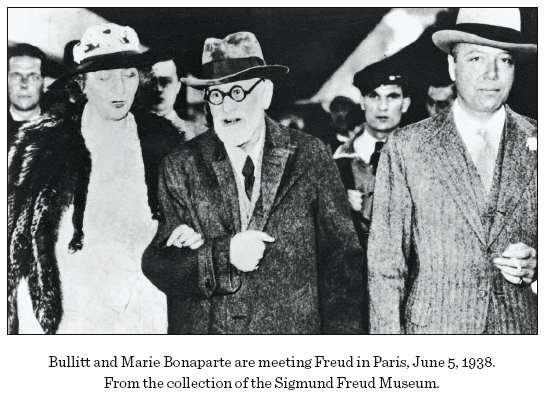
Bullitt offered Freud and his family ten thousand dollars, a huge sum in those days, and promised to come up with more money on top of this. To this end, Bullitt contacted Marie Bonaparte, who was a psychoanalyst, the translator of Freud into French, and a descendant of Napoleon; she came to Vienna and resolved the financial issues with the Nazis at her own expense. But on March 22, the Gestapo arrested Freud’s daughter, Anna. Wylie immediately informed Bullitt and contacted the authorities in Vienna. Anna was released the same day, and Wylie again telegraphed this news to the State Department, which cabled it to Bullitt in Paris. Through diplomatic channels, Bullitt took care of procuring French visas for Freud and his family. On April 12, 1938, a month after the Anschluss, Secretary Hull sent Wylie a telegram, which again asked the consul about Freud’s emigration plan.9 In the end, on June 4, Freud and his family left Vienna by train. An agent of the American Secret Service followed them, with instructions to help Freud should they encounter difficulties at the border. Ambassador Bullitt and Princess Bonaparte were waiting for Freud at the train station in Paris. Freud did not know the details but was aware of the tremendous support he was receiving; he later wrote from London an eloquent thank you note to Bullitt. He loved the calm and beauty of his new home in London, and he was sure Bullitt had played a significant part in his escape.10
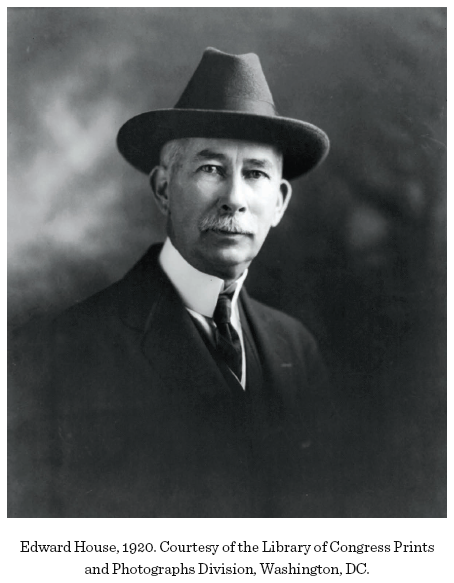
In Paris Bullitt reminded Freud of their unresolved dispute about the additions to their book. A little later, he visited Freud’s new home in London and brought the manuscript with him. The frail and grateful Freud allowed Bullitt to remove the disputed passages; once again, he looked through the chapters and approved the last version of the whole text. But it was still impossible to publish the book, because it contained some details that were critical of Colonel House and his family. House had died in the spring of 1938, but Wilson’s widow, whom the book portrayed quite negatively, was still alive. Bullitt seems to have been in no hurry to print the book, perhaps realizing that the publication of the text would threaten his political career. He finally published the book, the most enduring of his writings, in 1966, shortly before his death.
Freud’s heirs agreed to the publication and received their share of the royalties. Later, however, they would come to doubt Freud’s authorship. The book appeared when the genre of psychobiography came into vogue in America; psychoanalyst Erik Erikson penned the most famous books in the genre, writing psychobiographies of Luther (1958) and Gandhi (1969). Freud and Bullitt, as it turned out, had invented this genre much earlier than Erickson. Moreover, they applied the psychobiographical method to a contemporary American, employing it not only as an analytical tool but also as a political weapon. Their book was a rare criticism of Wilson in the liberal decade that saw Wilson’s reputation rehabilitated. While in the interwar period Wilson’s legacy was undermined by criticisms of the Treaty of Versailles and the fate of the League of Nations, by the 1960s Wilson the idealist and internationalist was seen as an alternative to the Cold War consensus. With its contempt for Wilson, the book was immediately criticized; Eric Erickson attacked the book most vehemently, accusing Bullitt of dishonestly representing Freud’s work and questioning whether Freud had authored it at all. It was only when Bullitt’s papers became available to researchers that Freud’s signatures, manuscripts, and other documents proved his involvement beyond any shadow of a doubt.11
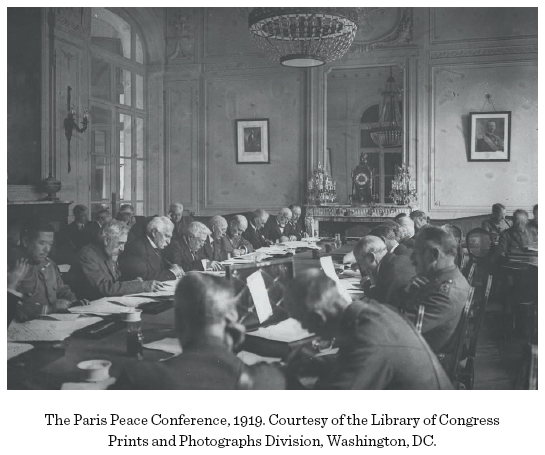
About half of the book addresses Wilson’s second term, and specifically the Paris Peace Conference. The authors explore the events in Paris in great detail, offering a day-by-day narrative. They also analyze Wilson’s entire life, his “passive” and “active” sexuality, and his relationships with his father, mother, brother, and wives. Throughout the book the authors assess Wilson’s political decisions in light of his psychosexual development. “We feel that we need not apologize for the closeness of our scrutiny. . . . In so far as any human being is ever important, Wilson in those months was important. . . . All life would have been a different thing if Christ had recanted when He stood before Pilate.”12
The book focuses on Wilson’s religious imagination, which, according to the authors, exerted a significant influence on his political activities. Wilson was a Presbyterian, and Freud and Bullitt offer a radical interpretation of his faith. According to the authors, Wilson saw his father as God and himself as Jesus Christ, the Savior of mankind. These identifications are, they argue, not unusual: “a large number of little boys” draw parallels between religion and their own lives.13 Freud and Bullitt found it plausible that Wilson’s identification with Jesus Christ was central to his personality; moreover, this identification was key to his political career. Identification with Christ formed a special kind of puritanical Super-Ego, “whose ideals are so grandiose that it demands from the Ego the impossible.” This analysis resembles German sociologist Max Weber’s depiction of the Protestant ethic: no matter what the Ego reaches in real life, the Super-Ego can never be satisfied. “It admonishes incessantly: You must make the impossible possible! You can accomplish the impossible! You are the beloved son of the Father! You are the Father Himself! You are God!”14
It was not easy for the authors to agree on these conclusions. They held different religious beliefs, and they were both “stubborn.” In Bullitt’s words, Freud “was a Jew who had become an agnostic; I have always been a believing Christian. We often disagreed but we never quarreled.”15 For Freud, a Jewish agnostic, Wilson’s Presbyterianism was alien. But Bullitt, a descendant of the Huguenots who grew up among Philadelphian Quakers, saw Wilson’s experience as close to his own. The Freud and Bullitt book developed through the transformative years of the century, and the drama surrounding Freud’s emigration unfolded as the two were working on this book. Importantly, Freud used his comparison of Wilson to Mephistopheles in his own introduction to the book, and not in the text of the book that he shared with Bullitt. Freud thought that Wilson “unconsciously” identified with Christ. Tempting Freud with emigration, did Bullitt do to Freud what Mephistopheles did to Faust? Did Bullitt—consciously or not—identify with Mephistopheles?
Religion plays a surprisingly big role in this psychobiography. Wilson’s father was a priest, and Wilson himself an ardent believer. In Scotland and North America, Presbyterianism was a common branch of Calvinism; it became known as “high church” in the United States; and Princeton University—where Wilson served as president—was founded as a Presbyterian College.
Max Weber, a contemporary of Freud and Wilson, located “the spirit of capitalism” precisely in Presbyterianism and other Puritan denominations. Weber ascribed particular importance to the idea of predestination. God determined every event, but no man could learn God’s purpose and the path to salvation. As God’s instrument, a person would act on the basis of his or her own conceptions of good and evil and thus increase God’s glory. Earthly criteria of success such as victory in battle, wealth, or political success—all this is an indirect sign of future salvation. Thus, in combining the belief in predestination with the inability to comprehend it, Weber derived from Protestantism the necessity of trial, error, hopeless frustration, and endless progress—the spirit of modernity. A German patriot, Weber admired and at the same time resisted the global power of the Puritan—Anglo-Saxon and Dutch—versions of capitalism; it brought the “iron cage” of responsibility and loneliness, he wrote.16
In Freud and Bullitt, these features of Presbyterianism produce interesting effects. They see Wilson’s belief in predestination as the cause of his political isolation and weakness, which led to the tragedy of Versailles and the collapse of the Progressive movement. The authors write about Wilson the president: “His identification with Christ was so powerful that he could not ask for war except as a means to produce peace. He had to believe that somehow he would emerge from the war as the Savior of the World.” Like his father the pastor, Wilson hoped to resolve his problems—now the problems of the world—by his sermons. Only when he called the war a crusade did he become strong and happy.17
Freud and Bullitt’s portrait of Wilson was in many ways a condemnation of provincial, fundamentalist America. Connecting Wilson’s politics with his religion, the authors explain this conundrum as the “feminine” resolution of the universal bisexuality that Freud attributed to human nature. With his feminine “passivity to his father,” Wilson realized himself in his speeches and was unable to see the world outside them. Everywhere—at Princeton, in Washington, and in Paris—he created discussion clubs that failed to replace the “masculine” action. His brainchild, the League of Nations, also implemented this vision. At the Paris Peace Conference, the president refused to fight treachery, as if he were a woman; he responded with sermons to lies and threats that came from his partners in the negotiations, as if he were a pastor. In Freud and Bullitt’s reading, the nonconformist tradition of the British sectarians who moved to America was responsible for Wilson’s crusade and capitulation. He was “born in a nation which was protected from reality during the nineteenth century by inherited devotion to the ideas of Wycliffe, Calvin and Wesley.”18
British economist John Maynard Keynes and diplomat Harold Nicolson—both present at the Paris Peace Conference—also saw Wilson’s Presbyterianism as the key to his politics.19 Trying to explain Wilson’s failure in Paris, Keynes used the same rhetorical tools as Freud: “His thoughts and his temper was such which are peculiar to a theologian, not an intellectual.” Wilson would not understand this distinction, but for the generation of the First World War—arguably the first secular generation—it was crucial. The agnostic Europeans were surprised to see religion dominating politics. First enchanted and then disappointed by Wilson, they never understood him. In England and Scotland, one could still find some Presbyterians, Keynes wrote mockingly, but they were mostly beggars; in America these people were rich, educated, and wielded political power.20 Keynes compared Wilson to Don Quixote; Freud contrasted him to Mephistopheles. It is important, of course, that both these characters deny what they are actually doing: one denies his own good deeds, the other denies the evil he has caused.
More compassionate than Bullitt or Keynes, Harold Nicolson saw in Wilson “not a philosopher but only a prophet,” someone on par with Tolstoy and Gandhi. Along with these great populists, Wilson “believed in all sincerity that the voice of the People was the voice of God.” By his standards, international politics “should be as high, as sensitive, as the standard of personal conduct.” In fact, Wilsonism was interesting for Nicolson precisely because “this centennial dream was suddenly backed by the overwhelming resources of the strongest power in the world.” Nicolson also hated “violence in any form,” but he detected in Wilson’s statements “a touch of methodical arrogance” and “a strain of fanatical mysticism.” It was a true surprise and deep disappointment when Wilson’s spiritual power betrayed him at the very moment that American military power peaked: the president “possessed unlimited physical power to enforce his views. . . . It never occurred to us that, if need arose, he would hesitate to use it.”21
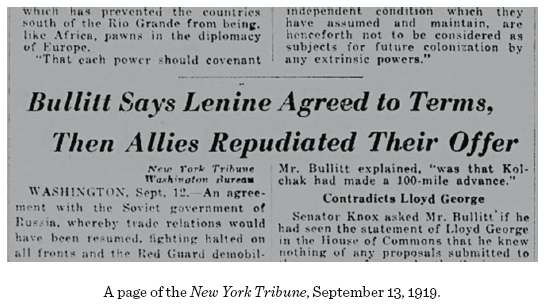
Like Max Weber, Freud and Bullitt saw a particular religious tradition as the key to understanding modernity. They explained Wilson’s career through his identification with Christ—his ambitious energy (he was the savior of humanity, after all), his quarrels with his closest associates, including House (who became Judas), and finally, his League of Nations (the establishment of heaven on earth). For them, Wilson embodied two aspects of America they did not like: the weak and feminine on the one hand and the provincial and fundamentalist on the other. Freud and Bullitt seriously underestimated the gravity of choices that Wilson made while he was heading the talks toward his ultimate purpose, the establishment of the League of Nations.22 He had to make deals both in Paris and in Washington to get the treaty ratified, and the League instituted. He was a man who believed in structures to contain conflict; thus the League of Nations could constrain tyrants from overstepping the boundaries of peace by extending the principles of the US Constitution to world affairs. This project was political rather than religious, and so was its fate. Freud’s disappointment with the unfulfilled promise of Wilson’s Fourteen Points and the collapse of Austria-Hungary and Bullitt’s failure in Paris after the stunning promise of his trip to Russia both played roles in shaping their bitter perspective.23