
An entirely different scenario for Shakespeare’s “lost years” and how he might have entered the theatrical profession starts earlier than the Queen’s Men hypothesis and finishes somewhat later. It covers rather different terrain in terms of the kinds of acting experience it could have involved him in. On August 3, 1581 Alexander Hoghton of Lea Hall in Lancashire, dying without a male heir, wrote a will with bequests to his family and faithful servants. This is the passage that most directly concerns us, even if it is not (as some would claim) about William Shakespeare of Stratford:
Item: it is my mind & will that the said Thomas Hoghton of Brynescoules, my brother, shall have all my instruments belonging to musics, & all manner of play clothes, if he be minded to keep & do keep players. And if he will not keep & maintain players, then it is my mind & will that Sir Thomas Hesketh, knight, shall have the same instruments & play clothes. And I most heartily require the said Sir Thomas to be friendly unto Fulke Gillom & William Shakshafte now dwelling with me & either to take them unto his service or else to help them to some good master, as my trust is he will …12
In the twentieth century several people argued that “shakshafte” is actually a variant of “shakespeare” (a name much given to punning) and that this refers to the seventeen‐year old future playwright.13 There are several supporting circumstances, though they collectively fall well short of absolute proof. “shakshafte” turns out to have be quite a common name in central Lancashire and this was more likely a local man; conversely that very fact might explain why Hoghton muddled the name (Bearman, 2002). The likeliest reason for Shakespeare being a hundred miles or so from his Stratford home would be that his family were recusant Roman Catholics, like the Hoghtons, and that the young Shakespeare had gone to find employment in a part of the country where Catholicism was still strong and to an extent shielded. The possible association of John Shakespeare with a Catholic “spiritual Testament” perhaps speaks to this, though here too there are doubters (Schoenbaum, 1987, 45–54). But one of the Stratford schoolmasters in 1579–81, John Cottam, was the brother of a Jesuit priest and he came from that same part of Lancashire, suggesting possible lines of communication. Might he have recommended a star pupil from the grammar school to Hoghton? The whole circumstance, moreover, might bear out John Aubrey’s anecdote from the late seventeenth century, that Shakespeare “had been in his younger years a schoolmaster in the country.”14
Yet even if Shakshafte was not Shakespeare it tells us interesting things about theatricals in the community when he was growing up. The will strikingly puts goods before persons. Alexander starts with a bequest to his half‐brother, Thomas, of “all my instruments belonging to musics, and all manner of play‐clothes, if he be minded to keep and do keep players”; if not, “the same instruments and play‐clothes” were to go to Alexander’s relative by marriage, Sir Thomas Hesketh of Rufford, some ten miles away. Only then does he bring to mind two faithful retainers: “And I most heartily require the said Sir Thomas to be friendly unto Fulke Gillom & William Shakshafte now dwelling with me & either to take them unto his service or else to help them to some good master.” There is an immediate ambiguity about whether “players” here means musicians or actors (an ambiguity which dogs many early records of theatre); but musicians do not specifically need “play‐clothes” so it is not unreasonable to suppose that it means actors. The passage obviously suggests a tradition of music and playing at Lea Hall – and likewise at Sir Thomas Hesketh’s properties, Rufford Hall and Martholme. Alexander is less sure about his brother’s establishment, though he thinks it not impossible – and that Thomas might take it up as a result of the bequest.
In Hesketh–Hoghton circles playing was a regular fact of life, especially around Christmas, as it doubtless was in the households of many of the substantial gentry (I am speaking here of those below the status of a baron), though it has left little trace in the written records. Their household papers have not survived nearly as well as those of the grander aristocracy or the official records of towns and cities. Where they have survived, however, they can be quite revealing. For example, the records of Dunkenhalgh Hall in Lancashire, home of a wealthy judge, Thomas Walmesley, record fifty‐one visits by performers in the period 1612–36. These include some of the major companies, including the King’s Men, Prince Charles’s Men, and Princess Elizabeth’s Men; but they also include visits by companies not recorded anywhere else, including one by Sir Cuthbert Halsall’s Men in August 1616.15 Halsall was a relatively close neighbor, his principal residence being near Ormskirk in Lancashire. The visit seems to have coincided with a Walmesley family wedding, so this was perhaps a friendly festive wedding present. Visits are also recorded between 1612 and 1618 by John Warren’s Men and Sir Edward Warren’s Men. The latter must be a mistake, since Sir Edward died in 1609 and was succeeded by his son, John, who was doubtless the true patron over all five visits recorded under the Warren name.16 The Warren family home was in Poynton, Cheshire, the county south of Lancashire; but John also acquired some property in Woodplumpton, some twenty miles west of Dunkenhalgh (and very close, as it happens, to Lea Hall). These visits by his “players” were perhaps in the spirit of generating and sustaining neighborly relations.
We should notice, however, that only one other record of an event involving the Warren players has surfaced; this was in 1611 at Gawthorpe Hall (close to Dunkenhalgh), and they are expressly recorded as “musicians.”17 As I say, it is a frustratingly common ambiguity in the records. It seems unlikely that John Warren patronized troupes of both musicians and actors (that level of patronage is normally associated with the aristocracy), so it is possible that none of these recorded visits involved theatricals at all. But it is also possible that the persons concerned were equally adept at both types of “playing.” We just do not know. There is a parallel example in the records of Smithills Hall, also in Lancashire (one of the properties of the wealthy Shuttleworth family who later occupied Gawthorpe Hall); in 1584 they were visited by Sir Peter Legh’s musicians and in 1588 by Sir Peter’s “players.”18 Sir Peter held property and offices in both Lancashire and Cheshire, but it is still unlikely that he maintained two different troupes.
At all events, such entries suggest that there was some tradition of welcoming traveling players of various kinds in the Halsall, Warren, and Legh households, but it has left only these small traces and that only because their players traveled on a neighborly basis and were given lodging and board and a small gratuity. Warren’s Men earned one shilling or two on each of their visits; Legh’s Men 1s. and 5s.; Halsall’s Men received quite a handsome 10s., perhaps inflated by the fact that it was associated with a wedding. Unless the Records of Early English Drama project unearths further references, this is the sum total of what we know of each of them. The Halsall visit might have been a one‐off; Warren’s Men presumably called at other properties in the region, to justify journeys from Cheshire, but all records of this have been lost. Legh’s men surely did not only perform twice, and in the same property.
The situation must have been replicated all over the country – localized troupes visiting the properties of friends, relatives, neighbors and allies, but leaving at best the scantiest of records. Such troupes did not have the prestige to present themselves to the mayors of towns they might pass through; at least, they are not recorded as receiving payment from them. This was playing on a much more modest and domestic scale, and those who took part could not possibly have earned a professional living by it. They presumably held other positions in their master’s household and only entertained the family or the neighbors when occasion called for it.
As to Sir Thomas Hesketh, although Alexander Hoghton seemed confident that he kept players, they have left very little trace. In 1569 one of his minstrels (James) was left a bequest by Robert Nowell of Read Hall (near Dunkenhalgh), where perhaps he had once performed. The only other, much debated, record is an entry in the household book of the steward of the Stanley family, Earls of Derby, who were the great magnates of southern and central Lancashire. An entry for December 1587 reads “Sir Tho[mas] Hesketh players went away.” There are in fact several records of Sir Thomas visiting Henry Stanley, the fourth earl, and his son, Ferdinando, Lord Strange. He was clearly on sociable terms with them, a fact of some consequence in our hypothetical account of Shakespeare’s theatrical experience.
But for now, the question is whether the “players” mentioned in the household book were Sir Thomas’s own; or whether these were the company patronized by Lord Strange himself, back with the family for the festive season, but happening to leave at the same time as Sir Thomas – the timing of whose visit might well have been arranged to see their performances. We simply do not know. The Stanleys were used to the highest quality of theatrical entertainment, having visits (besides those of their own very accomplished troupes) from the Queen’s own players as well as those of the Earls of Leicester, Hertford, and Essex; but it is possible that they followed the pattern at Dunkenhalgh and also accepted visits from much lowlier, local companies in the spirit of Theseus in A Midsummer Night’s Dream: “For never anything can be amiss / When simpleness and duty tender it” (5.1.82–3). But there are no records of payment to them.
We have little evidence of what precise “playing” may have gone on in households of Hesketh’s scale. At the beginning of the sixteenth century, a great house such as that of the fifth Earl of Northumberland, maintained four salaried players; it was made clear, however, that they would be in attendance for important religious and family events, but would otherwise tour to spare his household the cost of maintaining them – which in essence was the derivation of all the patronized touring companies (Westfall, 1990, 124). They perhaps supported the members of his chapel who were required to play the “Play of Nativity upon Christmas Day in the morning,” the “Play of Resurrection on Easter Day” and the “Play before his Lordship upon Shrove Tuesday at night yearly” (Westfall, 2009, 276). Such performances were part and parcel of an intense celebration of the Twelve Days of Christmas, with feasts, masques, concerts, and processions, and then beyond to Shrovetide, before the great drawing‐in of Lent. This festive season – known at the royal court as the Revels – was central to the business of playing in early modern England, though by Shakespeare’s day theatricals were clearly distinguished from Christian (and most particularly Catholic) liturgy and tradition.
At Hesketh’s Rufford Hall we might perhaps expect a scaled‐down, more domesticated version of this pattern, with those who acted as players during festive periods of the year earning their keep in other ways for the rest of the time rather than touring extensively. It is highly unlikely that any were salaried for playing as such, or were full‐time professionals. In 1542 the Earl of Rutland allowed one Anthony Hall board in the household for four weeks, because he was “learning a play to play in Christmas,” though later he was paid for “scouring away the earth and stones in the tennis play” (Westfall, 1990, 127). If John Aubrey’s evidence carries any weight, such a position for Shakespeare might have been as a “tutor” to household children. Baptista in The Taming of the Shrew talks of such appointments:
And for I know she [Bianca] takes most delight
In music, instruments, and poetry,
Schoolmasters will I keep within my house
Fit to instruct her youth …
… to cunning men
I will be very kind.
(1.1.92–8)
Holofernes in Love’s Labour’s Lost could be one such, though it seems more likely (“he teaches boys the hornbook”: 5.1.46) that he is master over a whole school. Either way, when the King instructs Don Armado that he wants “some delightful ostentation, or show, or pageant, or antic, or firework” for the Princess (107–9), it is to Holofernes and the curate, Nathaniel, that he turns, understanding that they “are good at such eruptions and sudden breaking out of mirth, as it were” (107–9, 110–11). Holofernes immediately proposes a show of the Nine Worthies and volunteers the three of them to perform in it. Might this offer us some shadow of how Shakespeare got into writing and performing drama?
If Hesketh was personally interested in drama, rather than just prepared to patronize it, he might have done as Sir Edward Dering (of Surrenden Dering in Kent) did, collecting printed playbooks on a prodigious scale – Dering is the earliest known person to purchase the Shakespeare First Folio – and adapting some for amateur theatricals in his own home. A manuscript survives of an abridgement of 1 and 2 Henry IV, stripped around 1622 of its comic scenes to make a single play for private performance (Krivatsy and Yeandle, 1992; Williams and Evans, 1974). Perhaps even more intriguingly, a partial cast‐list is attached to that manuscript, apparently for an amateur performance of Fletcher’s The Spanish Curate, marked up with roles for Dering himself, family, and friends, their servants and one “Jack of the Buttery” (Gibson, 2002, 1383, note to p. 916). The evidence ties this to 1622–24, which is remarkable since the play was not licensed until 1622 and not printed before 1647; Dering would have had to approach Fletcher or the King’s Men for a copy. In 1623 he also bought six copies of a comic university allegory, “Ruff and Cuff,” in which articles of clothing argue with each other; six copies would probably have been enough to allow the cast to rehearse (Wiggins, 2005). And he recorded buying “heads of hair and beards” (Krivatsy and Yeandle, 139). Clearly, Dering took household performance seriously and personally, performing himself and expecting family and friends to do likewise, with help from the servants. He had grown up through the theatrical revolution to which Shakespeare himself was central, with its attendant explosion of plays in print. The same resources would only have been available to a Sir Thomas Hesketh back in the 1580s on a much more modest scale. But there is no reason to suppose that the same enthusiasm might not have been there, perhaps relying on more traditional fare. Christopher Sly, tricked in the induction to The Taming of the Shrew into thinking he is a lord, can only imagine that his players might offer “a comonty [comedy?] a Christmas gambold [gambol, lively merrymaking and leaping] or a tumbling trick” (133–4). The Page patiently explains that the “pleasant comedy” that has been announced will be “more pleasing stuff … a kind of history” (126, 135, 137). The Slys of the world, rather like the “rude mechanicals” of A Midsummer Night’s Dream, are not really conversant with fashionable, sophisticated theatre.
One significant resource available to Hesketh was a room big enough to stage theatrical events. Rufford Hall (see Figures 2.2 and 2.3), built in the early sixteenth century, boasts a Great Hall which survives to this day. It is very similar in size to the upper Hall in Stratford Guild Hall, some 39 ft long and 23 ft wide (14.2 m × 6.7 m), a typical ratio for such rooms. It boasts a splendid hammerbeam roof, the timbers of which sit on a low stone wall. The woodwork is heavily decorated (each hammerbeam has a carved angel at either end), with some conservative religious iconography. At the low end of the hall is a unique wooden, elaborately carved screen, creating a spere passage leading to the original kitchen and buttery. At the high end, where the principal dining table would normally sit, there are two doors. These originally gave access to living quarters in the west wing of the house, which is no longer there (so they lead out now into the grounds). Looking towards that high end, on the right wall there is a bay measuring 10' 7″ [3.21 m] wide and a similar depth at its deepest point.

Figure 2.2 Interior of the Tudor Great Hall at Rufford Old Hall.
Source: The National Trust Photolibrary / Alamy Stock photo.
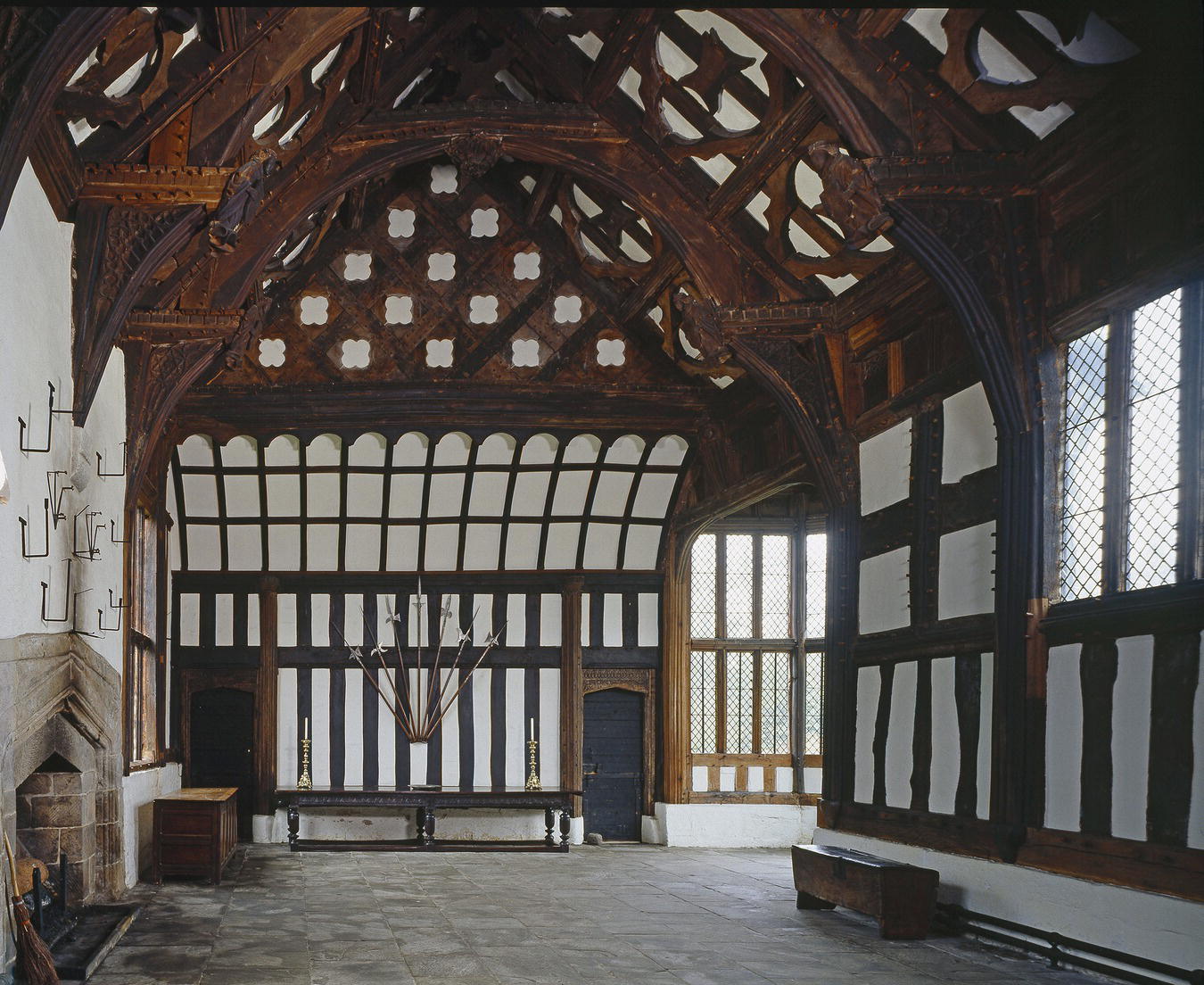
Figure 2.3 Interior of the Tudor Great Hall at Rufford Old Hall.
Source: The National Trust Photolibrary / Alamy Stock photo.
The bay and the screen are somewhat unusual, but in other respects this is quite a typical Tudor hall in size and shape. It does not, however, have a minstrel gallery or any other potential upper playing space, as many do. As in the discussion of Stratford Guild Hall it is readily possible to imagine performances at either the high end or the low end of the room; doors are conveniently located at both ends (though whether actors could have used those to the family’s living quarters is another matter). The screen creates a somewhat unusual configuration but ultimately would not interfere. The evidence, however, that playing commonly took place in colleges and at court immediately below the high table weighs heavily, and that probably happened here too. Significantly, a padded bench runs along the wall for the use of those at high table; at its center is a more elaborate seat for the head of the household – a more modest version of Elizabeth’s “state” (see p. 120). The bay, curtained off, might well have served as a tiring room. The Heskeths and their principal guests would have presided over all – unless, like Sir Edward Dering, they were minded to be involved in the entertainment themselves. Fulke Gillom and William Shakshafte might well be imagined to have suspended their other duties for the festive season to take an active role in staging it all.
With any arrangement, even in daylight hours and certainly at night (theatricals elsewhere are recorded both in afternoons after dinner, around 2 p.m., and after supper, around 9 p.m.), it would be necessary to increase the provision of lighting in the room for the performance to be visible to all. At court and the Blackfriars there was an elaborate provision of candles throughout the hall (not just on the stage), which needed to be trimmed and replaced several times during a performance, necessitating breaks in the action. Here it seems likely that extra torches or standing candelabra around the room would serve. Wherever the stage was set, it is easy to imagine a hundred people, possibly more, on benches in an audience; Hesketh could readily assemble family, friends, and servants for a cohesive festive occasion.
We may imagine all this in the spirit of convivial recreation, but that was evidently not always quite the case. In 1609 Sir John Yorke, of Gouthwaite (or Gowlthwaite) Hall in West Yorkshire, entertained some hundred of his friends and neighbors at Christmas, in an event which acquired some notoriety. Sir John at least notionally conformed to the Church of England, but his wife, Lady Juliana, was actively Roman Catholic. Entertainment was provided by Sir Richard Cholmely’s players, based at Cholmely’s estate in Whitby and led by Christopher and Robert Simpson. They offered the Yorkes a repertoire of four plays from which to choose: interestingly King Lear, Pericles, The Travailes of Three English Brothers (all King’s Men plays, all published far away in London recently), and a traditional saint’s play, The Play of St Christopher, with inevitable Catholic associations. They chose the saint’s play. Whether the Yorkes knew about it in advance or not, the players included a raucous scene of a dispute between two characters, a Protestant minister and a Catholic priest, which ended with the Protestant being dragged to hell by the Devil and the Catholic going to heaven. Most of the audience (many of whom were later recorded as being recusant Catholics) enjoyed this immensely, but one Elizabeth Stubbs, a former servant at Gouthwaite, reported it to the Justice of the Peace (Boddy 1976; Jensen 2004).
There were serious consequences all round, some of which are informative about playing in general. In 1614 Sir John and Lady Juliana were tried in Star Chamber (mainly composed of the King’s chief ministers) for allowing a seditious play to be performed. They were fined £1,000 each for allowing the extra scene to be acted, and were imprisoned in the Fleet Debtors’ Prison for three years, being released in February 1617 when they paid part of the fine. The Simpsons and their associates probably lost Sir Richard’s patronage as a result of what happened at Gouthwaite Hall and acquired a substantial track‐record between 1612 and 1619 of prosecutions for being “vagabond” players and recusants. From these we learn that the players were all, like the “mechanicals” in A Midsummer Night’s Dream, qualified tradesmen. The Simpsons were both shoemakers; their associates included weavers, a tanner, and a mason. We do not know if they continued to work at their trades when not performing, though it is likely. But it is quite clear that they persisted in their playing despite all the harassment and that there were plenty of households prepared to welcome them, despite (or perhaps because of) their reputation, even though they risked being fined for doing so (ES, 1: 305, n.1).
An interesting deposition to emerge from the enquiries which followed the St Christopher performance contains the complaint of one Thomas Pant, who actually gave one of the most detailed accounts of the play. He was apprenticed to Christopher Simpson, doubtless in his capacity as a shoemaker, but complained that he had been “trained up for these three years to wandering in the country and playing of interludes” – that is, he was being used as a boy player, not learning the trade of shoemaker (ibid.). Whether Pant had ever really expected to become a shoemaker may be questionable, but he took this opportunity (perhaps feeling threatened by the attention of the authorities) to challenge the terms of his apprenticeship; he was released from his indenture as a result. There were, of course, no women on Elizabethan stages. Their roles were normally played by boy actors liked Pant, who would be apprenticed like this to adult players under the aegis of their trade guild affiliations. But it is unlikely that any of those Shakespeare worked with in London were under any illusions about what they were training for. I discuss the boy actors further in Chapter 4.
The whole history of the Simpsons and the kinds of records we have seen in Lancashire attest to robust traditions of playing in provincial England during Shakespeare’s lifetime, ranging from semi‐professional to neighborly to purely domestic, tied to some extent to local affiliations, traditions, and beliefs. And it all went on, as it were, under the radar, since under the terms of the 1572 Act for the Punishment of Vagabonds (and an even more draconican measure passed in 1598) all traveling players were supposed to be attached to a “baron of the realm or any other honourable person of greater degree” (ES, 4: 324). Custom and practice doubtless kept such local playing in being, with the tacit assumption that the local gentry would keep their own in order. But there were obviously exceptions. Remarkably, the Yorkes seem not to have learned their lesson. In 1628 a player named Christopher Malloy was prosecuted in the Court of Star Chamber for playing the devil in a performance at their house; in the course of the role he carried someone playing the late King James on his back to hell, and alleged that all Protestants were damned (ES, 1: 328, n. 3). In an age of such divided religious loyalties theatre always had the potential to be inflammatory, contentious, or subversive, even in remote provincial manor houses. Sir Thomas Hesketh was never involved in any such scandal and to all appearances was a stalwart of the Tudor regime, serving as High Sheriff of Lancashire in 1562. But his wife and at least one of his sons were actively Catholic, and Samuel Schoenbaum maintains that he was too (1987, 114).