
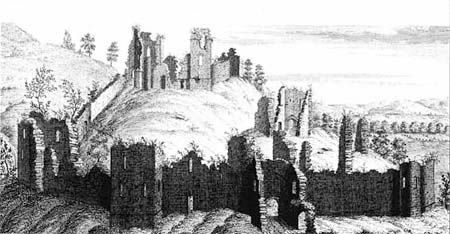
Wigmore Castle – Roger’s seat – engraved by Samuel and Nathaniel Buck in 1731, ninety years after its partial demolition.
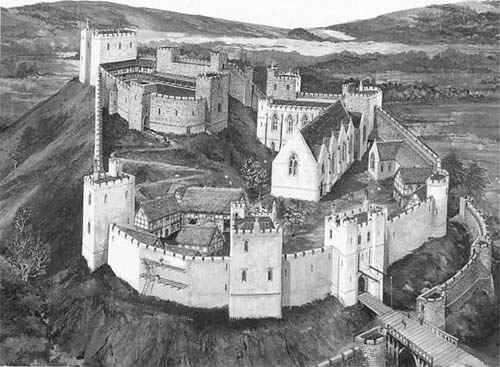
Wigmore Castle as it might have looked in the mid-fourteenth century, after the completion of Roger’s rebuilding programme. Reconstruction drawing by Brian Byron.
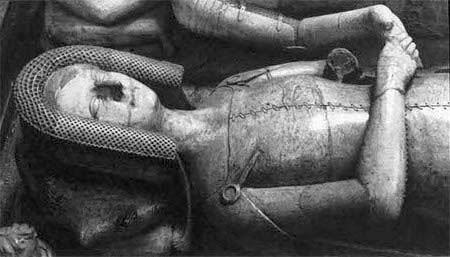
Catherine Mortimer, one of Roger’s eight daughters. She married Thomas de Beauchamp, Earl of Warwick, with whom she was buried in St Mary’s Warwick in 1369.
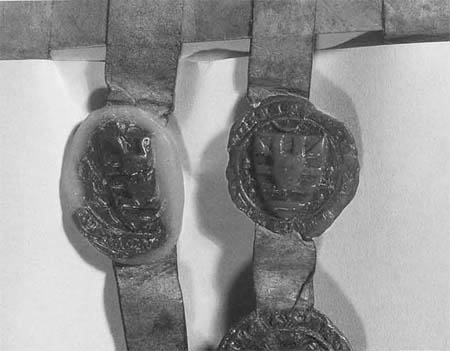
Roller’s seal (left), together with that of his eldest son, Edmund, both bearing the family coat of arms. These are attached to Edmund’s grant settling certain estates on his three-year-old wife on the occasion of their wedding in 1316.
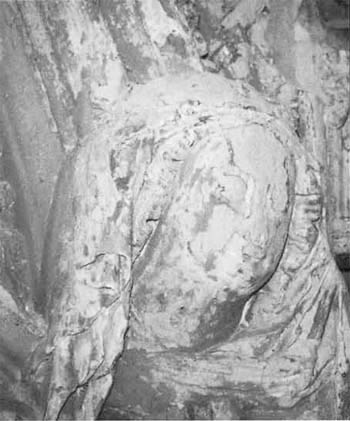
Contemporary images of Isabella are rare. This worn face is one of the few which certainly represent her. It appears on the same tomb in Winchelsea Church as the face of Edward II reproduced on the opposite page.
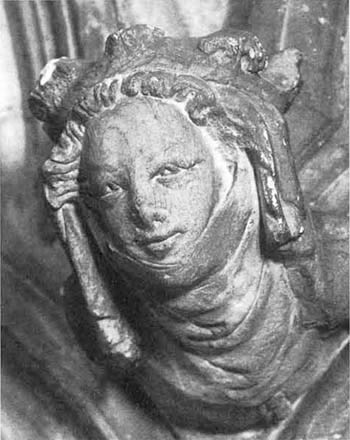
This carving in Beverley Minster is thought to represent Isabella. Conclusive evidence is lacking, but it resembles several queen’s heads of the early fourteenth century which are probably stylised representations of Isabella or Philippa of Hainault.
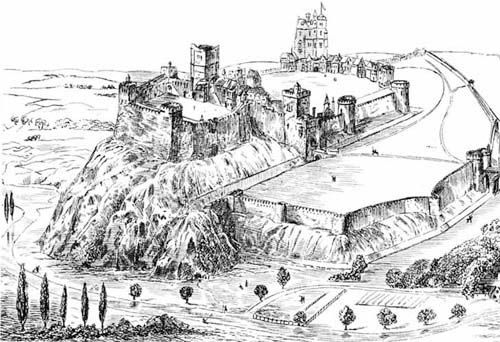
Nottingham Castle as it might have appeared in the sixteenth century. Although the tunnel which Sir William Montagu used to gain access to the castle and capture Roger survives, the castle itself was almost entirely demolished in the seventeenth century.
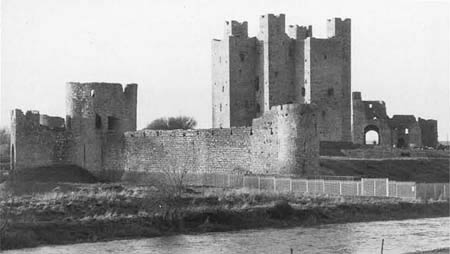
Trim Castle – the largest castle in Ireland – was Roger’s seat in that country. Like Wigmore, it was rarely used as a residence after Roger’s death, and the ruins are largely those of buildings Roger would have known.
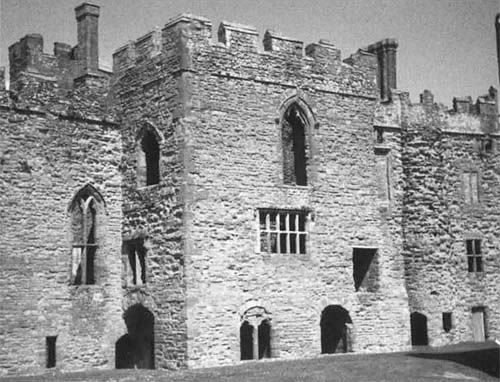
The solar of Ludlow Castle built by Roger in readiness for the visit of Isabella and the young king on 2 June 1328. It is situated at the opposite end of the great hall from the old solar, where Roger’s wife, Joan, probably stayed.
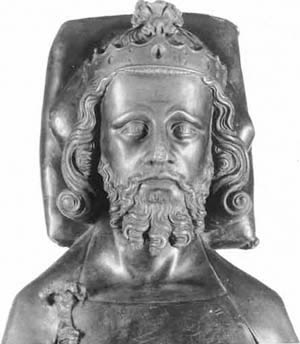
Edward II: face from the effigy on his tomb in Gloucester Cathedral.
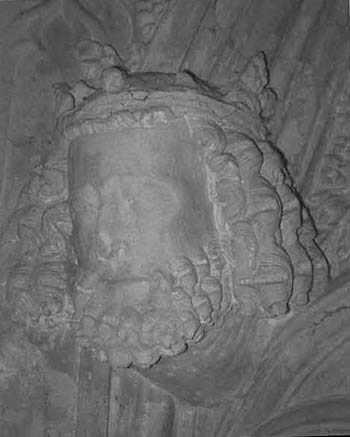
Edward II: face from the tomb of a member of the Alard family in Winchelsea Church.
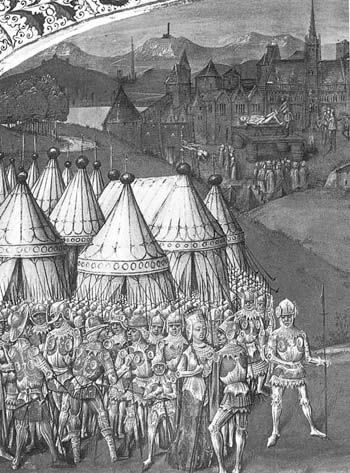
Roger and Isabella with their army at Hereford (and Hugh Despenser being executed in the background). This illumination, from a copy of Froissart’s chronicle, dates from the 1460s – more than 130 years after the event – but it shows how late medieval readers pictured the couple in the course of their invasion.
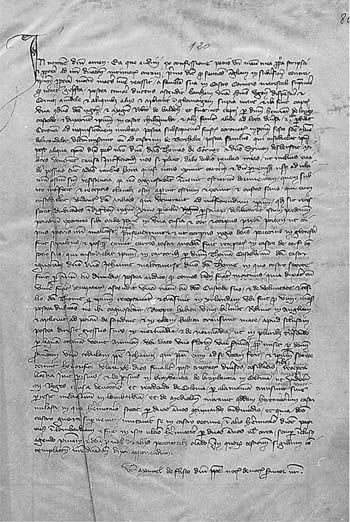
The Fieschi Letter [AD Hérault, G 1123]: ‘one of the most remarkable documents in the whole of English medieval history’ (G.P. Cuttino). See Chapter Twelve Revisited.