
38
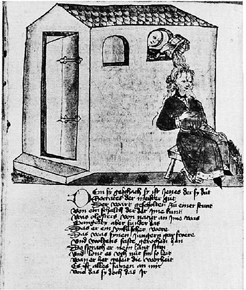

District of Alopeke, Socrates and Xanthippe c.420 BC
Socrates is said to have had an exceeding antipathy towards almost all women, either because he had a natural disinclination to their society, or because he had had two wives at the same time (since that was permitted by a decree passed by the Athenians) and they made wedlock hateful to him.
Aulus Gellius, Attic Nights, 15.20.61
WAR WAS PLAYING ITS STATISTICAL GAME in Athens. Almost a decade into the Peloponnesian conflict and the male Athenian population was horribly reduced; plague and battle had killed one-third, maybe as many as one-half of the men in the city-state. Over the last eight years the city had come to resemble Sparta more closely than it could have liked. In Sparta the city streets were filled with women; all men between the ages of seven and thirty were away training in their military camp. And now Athena’s city had a new, similar imparity – because so many men had been hacked down by Spartan swords.
And so some of Athens’ women had multiple partners. Aspasia is one example. Although we hear little of her fate after Pericles’ death we know that she quickly became the consort of a sheep-dealer. Not only were there re-marriages, but bigamy was both legal and becoming increasingly popular. Different women were allowed to bear more than one man’s child. Looked at another way, well-bred women were allowed to be both a wife and a mistress at the same time. Some sources would have us believe that Socrates also married bigamously.2
Socrates and Euripides are amongst a number of fifth-century Athenian men who, it was reported, were allowed by the circumstances of the war to become bigamists. There are two possibilities here. One is that the stories of Socrates’ bigamy took hold because they conveniently emphasise his oddness, his eccentricity. (Useful too for a quick bit of misogyny. Xanthippe is shrewish because, tediously, she not only has a poor eccentric for a husband, but also has to host an even younger model – a girl called Myrto – in her household.) The other is that the stories were true.
Socrates’ two young women were said to squabble furiously (Socrates was in his late forties by this time, Xanthippe probably only just twenty), and when Socrates guffaws at their backbiting, they ‘would pull him apart … saying he was a most foul man with snub nostrils, receding brow, hairy shoulders and bandy legs.’3 In one episode that has given great delight to cartoonists and engravers down the centuries, Xanthippe, raging after one argument with her maddening philosopher spouse, pours the contents of a bedpan over Socrates’ head; ‘I always knew that rain would follow thunder,’4 sighs the philosopher, resignedly mopping his brow.
But maybe this farcical situation, these pantomime gags told down time, held more than a kernel of truth. Athens at this time must have been reminiscent of Kabul 2002–10: ragged, war-torn, veiled women in the streets with no husbands, brothers or sons. Athenians were nothing if not pragmatic. The city needed repopulating. In fact the lack of a decree allowing for bigamy, rather than its presence, would have been odd.5 And we hear from Plato that Socrates was, at the end of his life, visited in jail by his three children: Lamprokles – a meirakion, a ‘young chap’; and Sophroniskos and Menexenos, paidia – small children. In terms of keeping Athens’ population stable, this was a bigamous arrangement that seems to have done the job. The age difference of Socrates’ offspring could indeed be explained by two wives. The mixed messages given out by the sources in antiquity about Socrates’ marital status could be because bigamy sits a little uneasily alongside many dreams of moral goodness. And we should remember that writers in the fifth century were typically bored by a man’s married affairs – which is why in all 100,000 words of Plato’s Dialogues, Xanthippe gets only two mentions.6
Still, Xanthippe (who must have been relatively high-born with a name like that, Xanthippe, Golden-Horsey; Pericles’ blue-blood father, for example, was called Xanthippos), it seems, was no pariah, she did have some friends. One of Socrates’ followers (and incidentally one of Plato’s rivals) was a man called Aeschines. Aeschines’ work was widely circulated up until the end of the second century AD, and then it fell out of favour. It was said that his own dialogues were in fact derived closely from Socrates’, which had been passed on to him by Xanthippe in gratitude for Aeschines’ friendship after the philosopher had been killed. Interestingly, Aeschines’ portrayal of Aspasia also seems to be an unusally sympathetic and subtle one.
Aspasia began a discussion with Xenophon himself. ‘I put a question to you, Xenophon,’ she says, ‘if your neighbour has a better horse than yours, would you prefer your own horse or his?’ ‘His,’ Xenophon replies. ‘Suppose he has a better farm than you have, which farm, I should like to know, would you prefer?’ ‘Beyond all doubt,’ Xenophon jumps in, ‘whichever is the best.’ ‘Suppose he has a better wife than you have, would you prefer his wife?’ Well, on this Xenophon was silent.7

It is almost certainly from Aeschines’ work that the Roman-period author Plutarch gets the notion that both Pericles and Socrates were drawn to Aspasia because she was both sophe, wise, and politike, canny, wised-up and astute. Our loss of Aeschines as an uncorrupted source for the fifth century is immensely frustrating. But reading between the lines the author does give us some useful clues to the temper of Socrates’ city and life. Aeschines’ close connection with Xanthippe suggests that she was more than just a nag.
Socrates, we are told, dealt with Xanthippe not atypically. He talks about ‘handling’ her as though she were a spirited horse. He appears happy to let her fend for herself, feeling no pressure to bring home household funds. Even with the scanty evidence available to us (his putative relationships with Diotima and Aspasia, the suggestion that he allows Xanthippe to berate him in public, his belief that women should have a concrete role in society), his heart, one feels, lies with the men around him.
And it is from his interaction with the man who stole Socrates’ heart, Alcibiades, that we learn both a great deal about the philosopher’s relationship to his city and how, towards the end of the fifth century BC, that city was beginning to fracture from within.