

Pheidias Showing the Frieze of the Parthenon to His Friends by Sir Lawrence Alma-Tadema. Pheidias is shown demonstrating his handiwork to Pericles and Aspasia amongst others. During recent renovations of the Parthenon, the remnants of a stonemason’s picnic-lunch (fish and fowl bones) were discovered at this high level of construction.
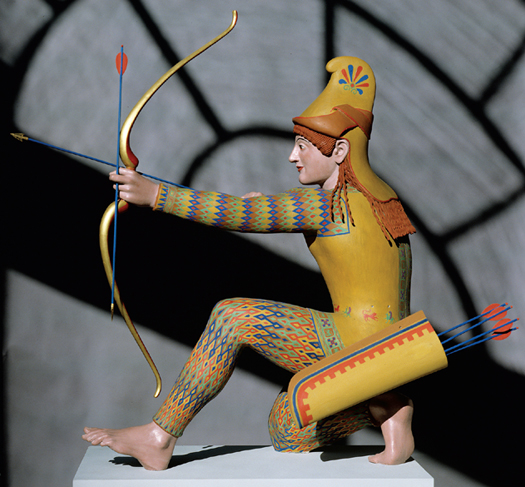
An academic reconstruction of the kinds of colour schemes actually used by craftsmen of the sixth and fifth centuries
BC to decorate the monuments and sculptures of Greek city-states. This particular statue came from a temple on the island of Aegina.

Socrates speaks to two students. An early thirteenth-century miniature now held by the Topkapi Museum, Istanbul. Illustration for the eleventh-century collection by Fatimid prince al-Mubashshir ibn Fatik,
Mukhtaral-Hikam, ‘The choicest maxims and best sayings’.
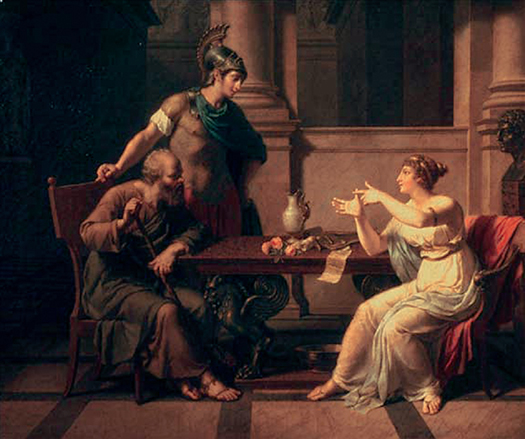
A romantic tradition has elevated Aspasia’s influence in Athens, and over both Socrates and Pericles. This painting by Nicolas-André Monsiau was part product of the new vogue for ‘salons’. Aspasia was hailed in certain circles in the early nineteenth century as the first salonière, as a woman who enjoyed an equal marriage with Pericles and who, quite rightly, had been free to choose whom she should love.
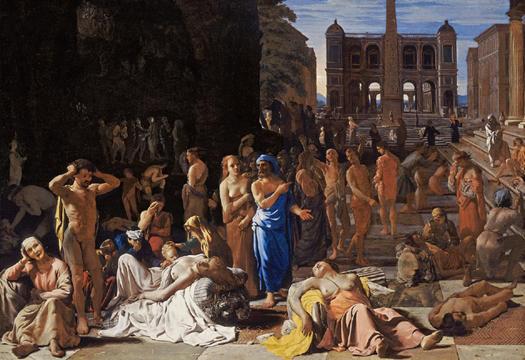
Athens’ plague killed many tens of thousands. Scientific research over the last fifteen years suggests this was almost certainly a pandemic of the typhus virus. Michiel Sweerts, following Thucydides’ eye-witness accounts, imagined its effects in this painting,
The Plague in Athens.
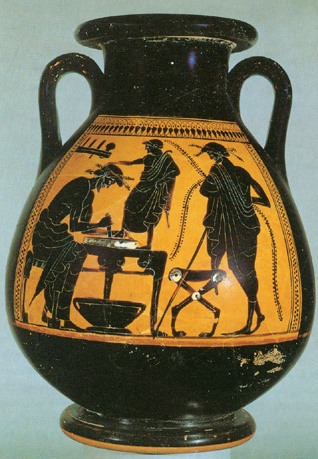
A shoe-making workshop. The various processes of stretching and cutting the leather are shown here (note the knives on the wall and the bowl of water under the table). Socrates was said to have spent much time philosophising with the young men of the city in the workshop of Simon the Shoemaker at the fringes of the Agora.
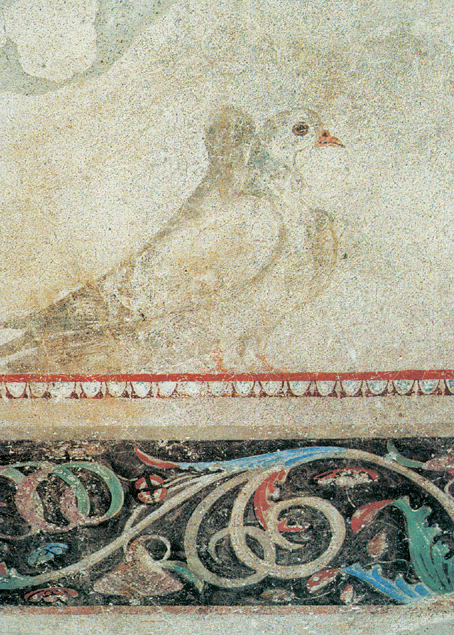
The paintings around Athens would have been exquisite. None of these have survived but we get a good sense of the delicacy of the work from the well-preserved interior decorations of graves preserved in northern Greece – for example this lovely fourth-century dove currently on display in the Archaeological Museum of Thessaloniki.

A cartoon version of Socrates’ satirical treatment by Aristophanes in his comedy
Clouds.

The Agora at its point of excavation in 1949 – the protecting presence of mountains around the city is clearly visible in this picture. This photograph was taken from the vantage point of the Hephaisteion.
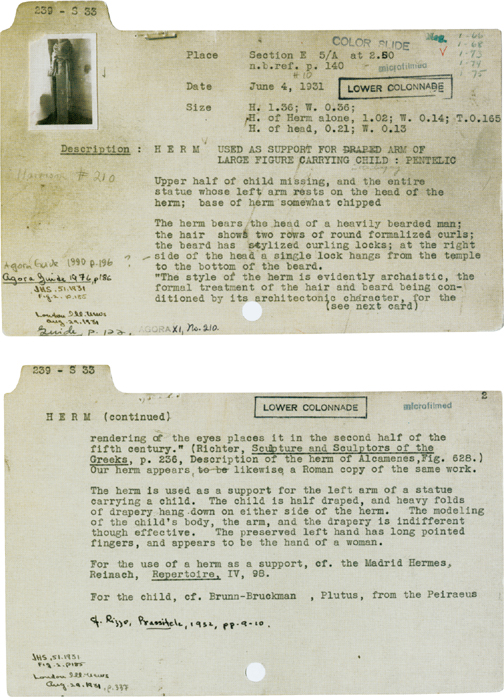
The index cards of the American School of Classical Studies at Athens detailing the excavation of a herm. This herm is a Roman copy of a fifth-century original. Herms would have been highly visible in Socrates’ city as boundary markers and totems of good fortune. The herms were shockingly devastated (it was whispered through the streets of the city-state, by Alcibiades and his aristocratic crew) the night before the allied fleet set sail to Sicily in 416
BC.
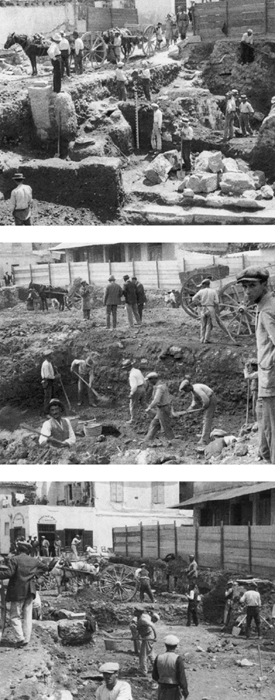
Local men (up to 100 were employed in the first excavating season of 1931) remove spoil from the Agora – this waste was sent out to be dumped along the Sacred Way leading to Eleusis.
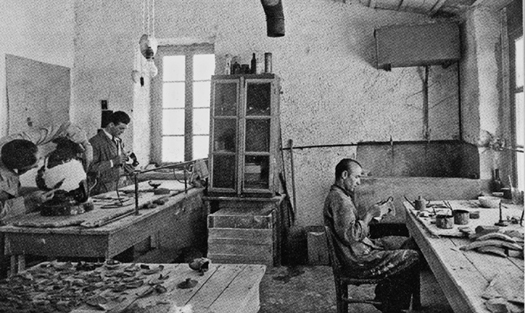
Pot menders at work in 1937.
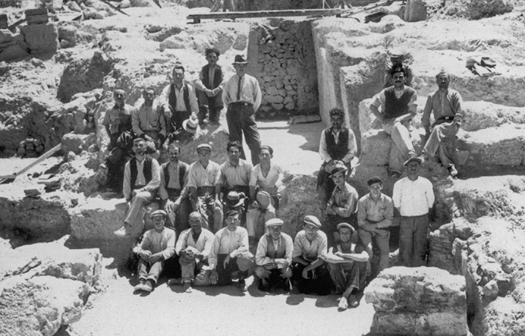
The diggers who helped to expose a Bronze Age Mycenaean chamber tomb beneath the Agora in 1939.

Athena – the goddess both of war and of reason and wisdom. In this depiction from
c.460 BC, Athena’s spear is resting on her shoulder, her shield on her thigh; it is the writing tablet in her hand that holds the goddess rapt, a stylus held up to her mouth. The technology and popularity of writing exponentially increased during Socrates’ lifetime.

Two young girls (aged somewhere between five and ten) hold hands and join in a group dance in honour of the goddess Artemis. Dating from the first half of the fifth century
BC, this fragment has recently been discovered down a well in the south-east stoa area of the Agora.

A ‘Little Bear’ from the Sanctuary at Brauron. These Athenians were sent out of the city for a year to ‘run’ the wild animal out of them. The young girls are often shown cradling pets.

A young child is welcomed in to society during the Athenian Festival of Anthesteria, a ritual that honoured the god Dionysos. A celebration of the rebirth of nature and of the dead, the Anthesteria also reminded the community of the vital power of children. Once a child had reached the age of three and was then further honoured at the feast of Choes, its name was entered on to the phratry list – it was now officially part of the Athenian citizen community.

Socrates in Prison by Nicolai Abraham Abildgaard. Socrates, alone with his two daimonia—his inner ‘demons’. He hears only the voice of the good spirit because the bad daimonion’s mouth is covered up. The Athenians were very troubled by Socrates’ expressions of a kind of private piety as represented here.

Socrates, glaring, sitting on a bench, appeared on the walls of a private house in Ephesus in the first century
AD and also on the walls of Pompeii.

The Death of Socrates by Jacques-Louis David. Neo-classical and Romantic painters frequently heroised the moment of Socrates’ hemlock-drinking. Current scientific research suggests the form of hemlock the philosopher imbibed may well have ensured a relatively dignified death – which nonetheless included paralysis and suffocation.