
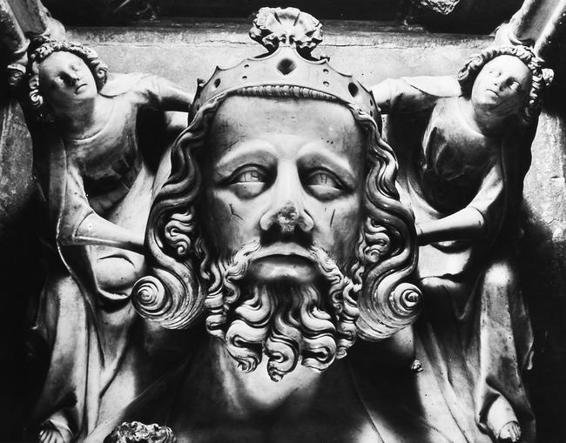
Edward II in Gloucester Cathedral. His overthrow and its implications had the most profound effect on his son’s life. This magnificent alabaster effigy was probably commissioned by Edward at the same time as that of his brother (next page).
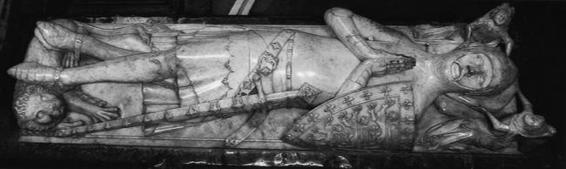
John of Eltham, Edward’s brother, who died at the age of nineteen. Edward subsequently had bad dreams about his brother’s death.
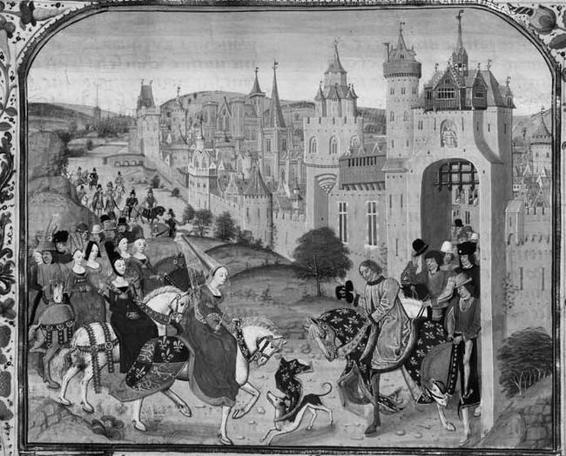
A fifteenth-century image of Edward’s mother, Queen Isabella, being welcomed by her brother King Charles of France. Edward was devoted to her.
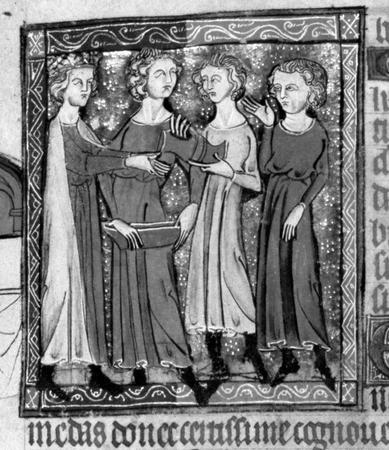
This image of Edward washing his hands was part of a manuscript presented to Edward around the time of his accession. Personal cleanliness was very important to upper ranks of medieval society.
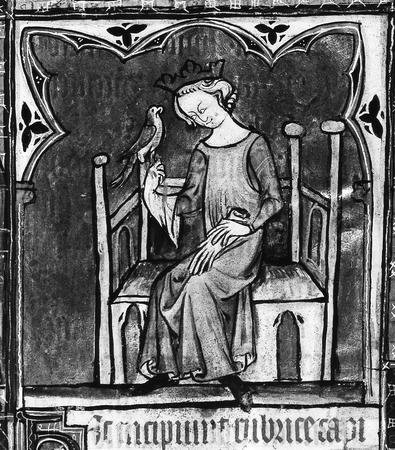
Another image of the young king, originally from the same presentation manuscript. Edward liked to be depicted with a falcon on his arm: his wedding present from Philippa also showed him with a falcon.
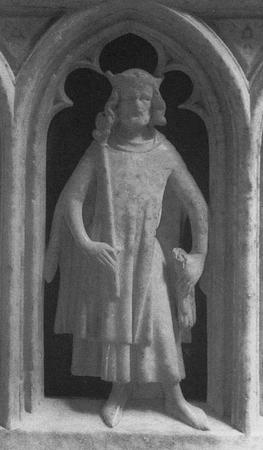
This sculpture of a king on the side of the tomb of John of Eltham has often been assumed to depict his father. But the symbolic empty falconer’s glove probably indicates that this is meant to represent Edward himself.
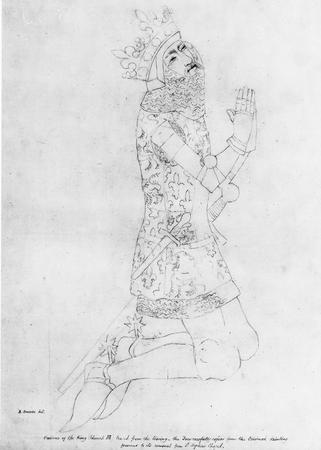
The paintings which Edward commissioned for St Stephen’s Chapel were plastered over when it was remodelled to form a meeting place for the House of Commons in the sixteenth century. Further remodelling by Wren obliterated any vestiges of medieval architecture.
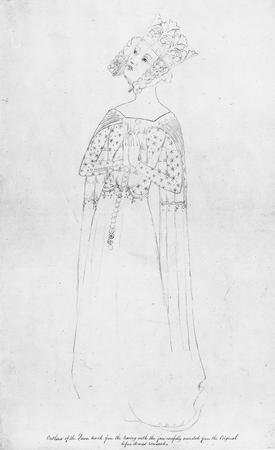
The paintings were exposed in the early nineteenth century, and these drawings, by Robert Smirke, are the most accurate copies of the figures of Edward III and Queen Philippa which adorned the east wall. They were lost in the fire of 1837.
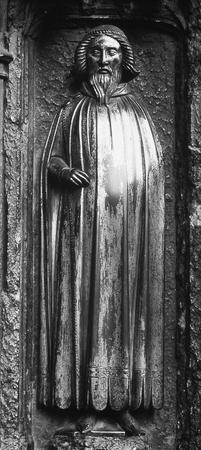
Edward,‘The Black Prince’, from Edward’s tomb in Westminster Abbey. The victor of the battle of Poitiers, he spent the last six years of his life an invalid, and died at the age of forty-six.
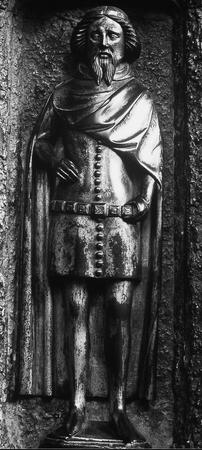
Edward’s second son, Lionel. Probably the best administrator of Edward’s five sons, he spent his most active years in Ireland. He died at the age of thirty.
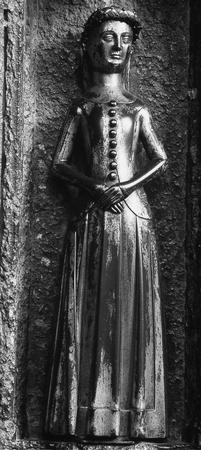
Edward’s daughter, Mary. She was buried at Abingdon with her sister Margaret. They were probably both victims of the plague of 1361. Mary was seventeen, Margaret fifteen.
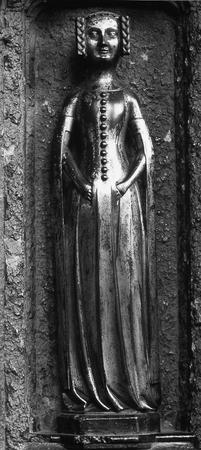
Edward’s second daughter, Joan. One of the first English victims of the Black Death, she died at Bordeaux, on her way to marry Pedro of Castile in the summer of 1348. She was fourteen years of age.
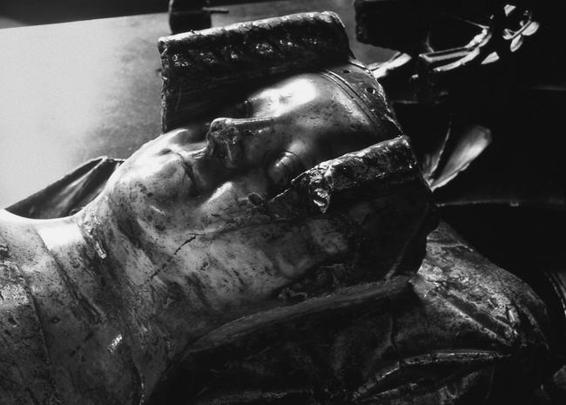
Queen Philippa’s tomb effigy. This sculpture was commissioned during her lifetime, and is the earliest royal effigy which we can be sure is an attempt to record the exact features of the deceased.
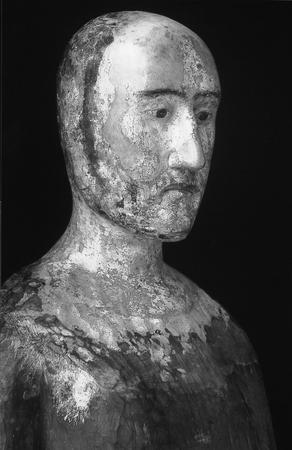
Edward III’s death mask. The plaster mask, showing the drooping mouth (evidence of a stroke), was fixed to a clothed wooden figure and carried in his funeral procession. It provided the basis for the king’s eventual tomb effigy.
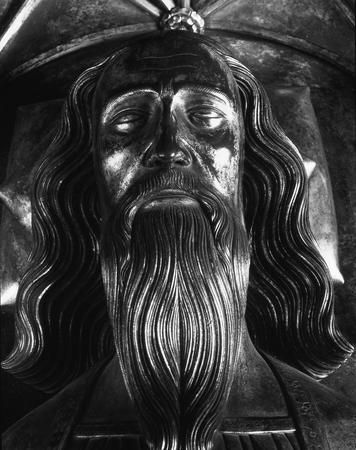
The king.
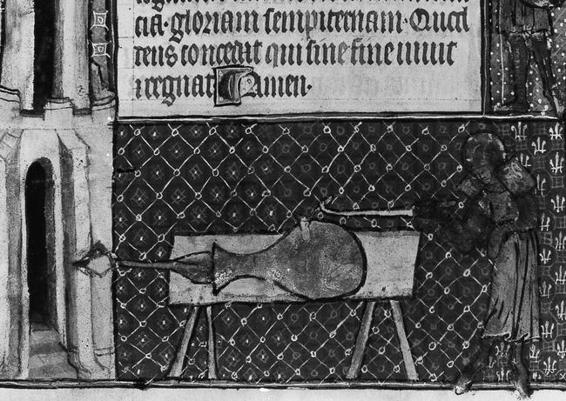
Walter Milemete’s treatise on kingship presented to Edward in about 1327 includes many illustrations, including this one, the earliest image of a cannon. It was thought to be a very inaccurate drawing until the discovery of the Loshult gun (next page).
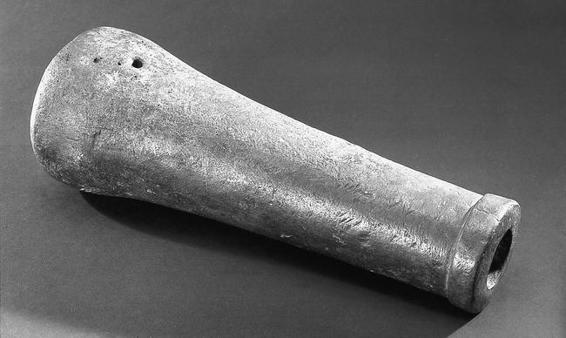
The Loshult gun, found in Sweden in the nineteenth century, resembles the cannon shown in Milemete’s treatise. Edward pushed the development of firearms, but even this primitive weapon had a range of nearly a mile.
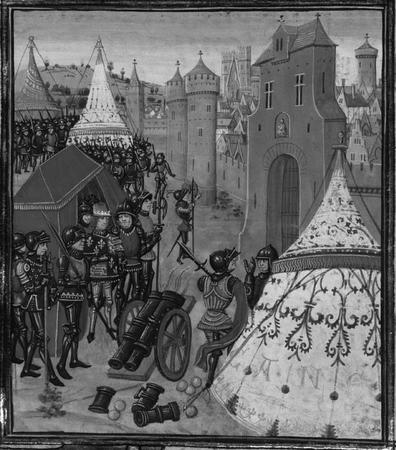
Edward overseeing a gun attack on the city of Rheims. Edward did more than any other individual in history to change the nature of combat from hand-to-hand fighting to projectile warfare.
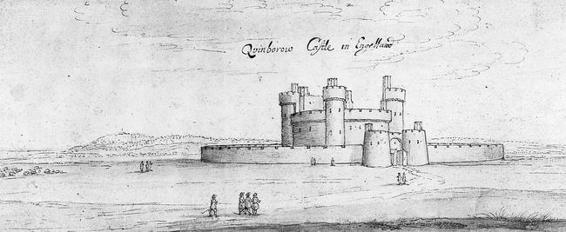
Queenborough Castle, drawn by Wenceslas Hollar. Not a stone survives now of Edward’s great castle on the Isle of Sheppey. It was both a royal residence and the world's first purpose-built gun emplacement.
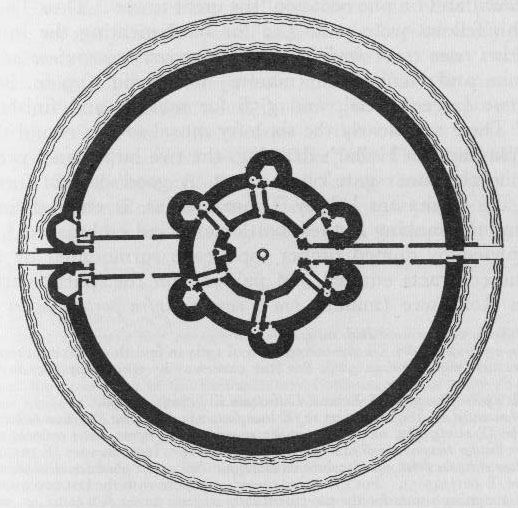
Ground plan of Queenborough Castle.
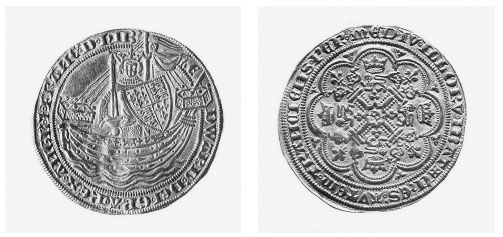
A gold noble of 1351. Edward introduced the first successful English gold coinage in the 1340s. The image of the king on a boat remained a feature of English gold coinage for the next century.
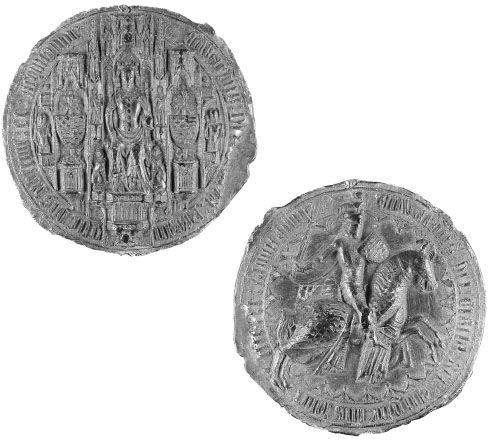
Edward’s seventh great seal, ‘The Brétigny seal’, is a landmark in the design and execution of the great seals of England. It was intended to show off Edward’s greatness as a king through his patronage of the finest artists.
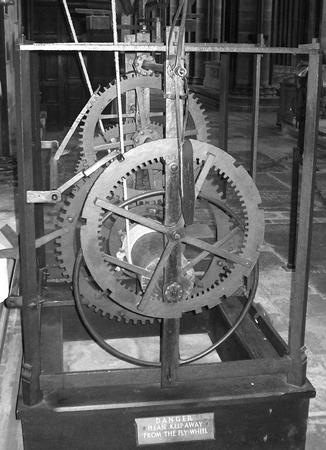
No clocks from Edward’s reign have survived, but this example from Salisbury Cathedral, which dates from 1386, is probably not dissimilar to those which Edward introduced at his castles and palaces in the 1350s and 1360s.
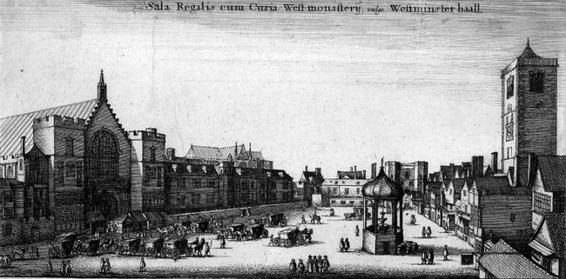
Edward’s clock tower at Westminster, shown here on the right in an engraving by Wenceslas Hollar. The four-ton bell inside it was called ‘The Edward’. It was the original ‘Big Ben’. Edward’s tower indeed stood on almost the same spot as the most famous clock tower in the world.
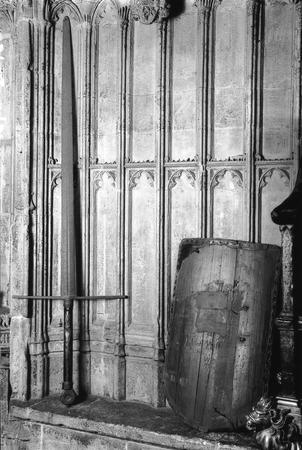
Edward’s sword and shield, at Westminster Abbey. The sword is five feet four inches long.
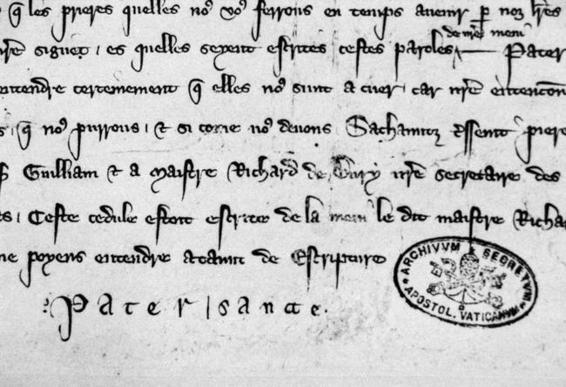
Edward’s signature, ‘Pater Noster’ – a cipher on his letter to the pope of about 1329–30 – is the earliest extant handwriting by a member of the English royal family. The original of this letter is in the Vatican.
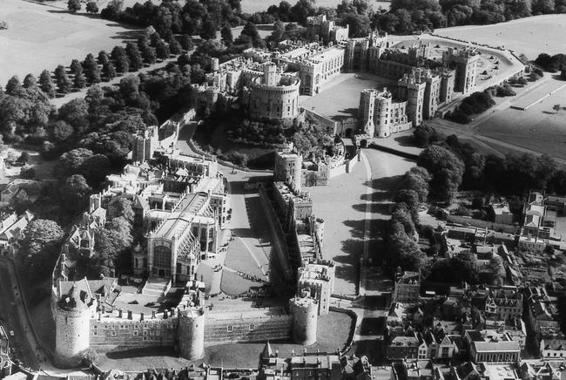
Windsor Castle, Edward’s birthplace. Although the outer walls are largely as they were in the thirteenth century, the inner structures were entirely rebuilt by Edward. At more than £50,000, it was the most expensive single building in medieval England. It was to Edward’s realm what the baroque masterpiece of Versailles was to Louis XIV’s France.
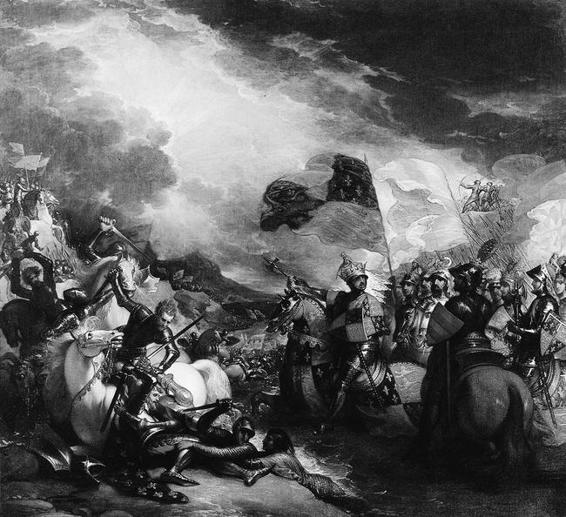
George III commissioned the American artist Benjamin West to paint a series of scenes representing the noble virtues. This shows Edward leading his army across the Somme, just prior to the battle of Crécy.
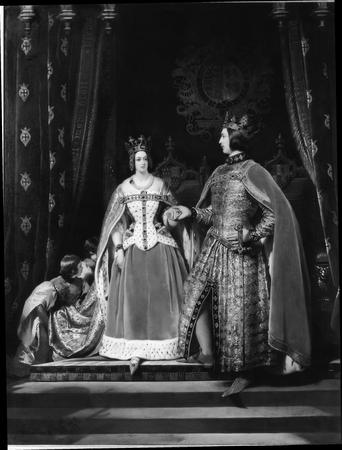
By the nineteenth century, the age of chivalry was seen as a time of myth and legend. This painting, by Edwin Landseer, shows Queen Victoria and Prince Albert dressed as Queen Philippa and Edward III, at a ball in 1842.