
Of the king’s servants who had counselled and sustained him during his captivity, some like Silius Titus and Abraham Dowcett promptly fled to Charles II’s court in Holland, though Sir John Berkeley made his way instead to Paris, to assume the post of temporary governor to the Duke of York before eventually becoming co-proprietor of New Jersey prior to his death in 1678. Mocked by the Earl of Clarendon for spinning unlikely tales of his exploits, which, the earl suggested, he may well have come to believe – and remembered by Samuel Pepys as ‘the most hot, fiery man in discourse, without any cause’ – he was nevertheless spared the prolonged harassment and suspicion that awaited his counterpart, Jack Ashburnham, who found himself detained in the Tower of London during the Commonwealth and three times banished to the Channel Islands, as the authorities sued him for debts contracted for his late master, and fellow Royalists raised suspicions with the new king in March 1650 about his loyalty. Only ten years later, in fact, was Ashburnham finally restored to full favour, serving as a diplomat under Charles II and representing Sussex as a Member of Parliament between 1661 and 1667.
Henry Firebrace, on the other hand, returned phlegmatically to the Earl of Denbigh’s household before seeking preferment at the Restoration court and achieving a series of promotions, which left him Clerk of the Board of the Green Cloth and the recipient of a knighthood in 1685. Dying six years later at the ripe old age of 71, wealthy, respected and the father of five children, whose descendants included the poet W.H. Auden, he was altogether more fortunate than Sir William Hopkins, who was eventually rendered bankrupt by his hospitality to the king at Newport, and finally forced to sell his house and leave the island. Unlike Henry Jermyn, moreover, Hopkins did not even live to see the coronation of Charles II, let alone enjoy the courtier’s subsequent fame and fortune. Still unmarried at the time of his death in 1684, Jermyn would in fact become Lord Chamberlain and ambassador to France in the new reign, and emerge not only as one of the most influential figures in the popularisation of Classical architecture in Britain but as Grand Master of the Freemasons, whose success in the next century is largely attributable to him.
For the queen, whom Jermyn had attended so attentively, however, there was further grief aplenty over the years ahead. By 1658, indeed, Henrietta Maria was ‘so wrapped up in melancholy’ that even Oliver Cromwell’s death left her incapable of ‘any very great rejoicing’. Though she greeted her eldest son’s coronation with bonfires and a joyous Te Deum at her home of Colombes, other disappointments lay in wait. After sixteen years of exile, her only wish was ‘to see yet before I die all my family together, who will no longer be vagabonds’. But in this she was frustrated, for Elizabeth, her daughter, had already died in 1650 at Carisbrooke, after taking a chill in the rain upon her father’s bowling green, and barely three months after her eldest son’s succession, Prince Henry had followed his sister to the grave with smallpox at the age of only 20. Princess Mary, too, would be dead from the self-same disease before the year was out.
Though the queen would eventually come to toy with London’s social whirl after a fashion, she remained in essence what Samuel Pepys described as ‘a very little plain old woman’ after seeing her in her widow’s weeds. Ultimately, the last four years of her life were spent at home once more in France – at Colombes, where Jermyn was one of the most frequent of her very few visitors. Wealthier, more overweight than ever and thoroughly gout-ridden – ‘full of soup and gold’, as the poet Andrew Marvell put it – he would not forsake her, though her company was gloomy. For ‘as she advanced in piety’, Madame de Motteville recalled, ‘so also she held back from speaking on almost all things’. Indeed, during the last years of her life, de Motteville observed, ‘she had become scrupulous on this’, ‘weighing her words’ carefully and appearing ‘very detached from life’, particularly after her first-born son had cut her allowance by a quarter, making it impossible for her to maintain her old court. Sick of doctors and their medicines, she was resolved to think of them no more, ‘but only of her salvation’, after a ‘dangerous illness’ had left her coughing blood in March 1666 and a further ailment that June had ‘made her extreme weak from diarrhoea’. By September she was dead.
In the meantime, the man who had kept her husband imprisoned at Carisbrooke had encountered his own, somewhat less protracted, end. For some months after Robert Hammond’s displacement, the Isle of Wight had been virtually ruled by Major Rolph, with the help of Captains Basket and Bowerman. Nor, to his almost certain relief, does Hammond appear to have taken any part in state affairs during the opening years of the Commonwealth, since he was weary, disillusioned and anxious to be free from the burdens to his conscience entailed by high office. Yet in August 1654, he was offered what amounted to the poison chalice of membership of the Irish Council. Surely enough, just as he had done six years earlier, he agreed to compromise his peace of mind in loyalty to a higher cause. Arriving in Dublin to take up his post with as much of his residual diligence as he could muster, he died there from a fever in early 1654 – barely five years after he had finally parted company with his former royal captive.

Etching by Wenceslaus Hollar depicting Oxford in 1643. King Charles had made the city his capital after his arrival on 29 November 1642 in the wake of the Battle of Edgehill.

Letter from Charles I to John Ashburnham after the king’s arrival in Oxford in 1642. Partly written in cipher, it professes Charles’ ‘Constancy to the Church’ and affirms that ‘as for my escaping from hence, I shall not attempt it but by the Queen’s advice alone or such as she shall trust to manage that business.’
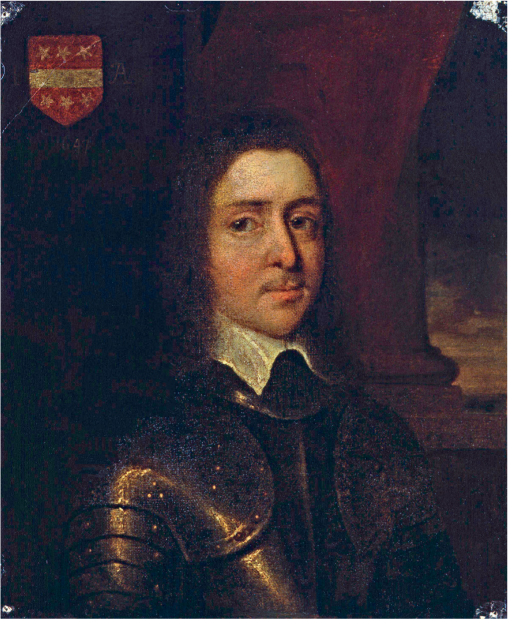
John Ashburnham was with King Charles upon the night of his escape from Oxford, attended him during his escape from Hampton Court, and was instrumental in suggesting the Isle of Wight as a place of refuge.
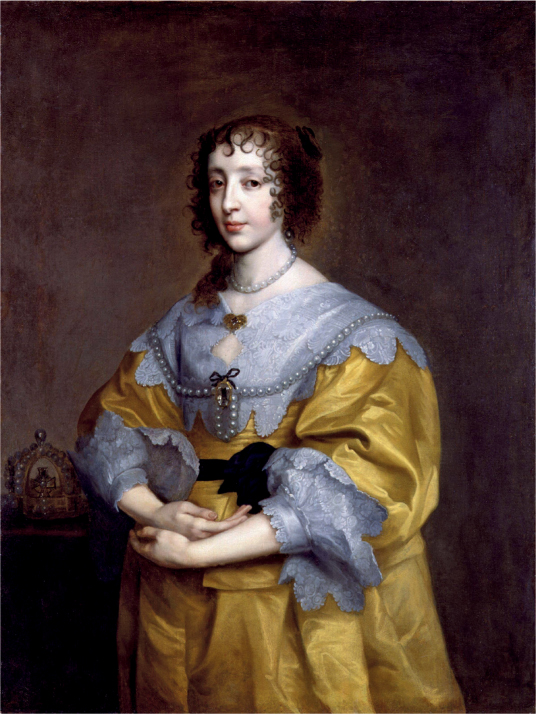
Portrait of Henrietta Maria, wife of Charles I. Though only 4ft 10in tall, the little queen proved herself more than capable of striking hard-nosed bargains with artful diplomats and money-grubbing arms dealers alike, and exercised a profound influence upon her husband.
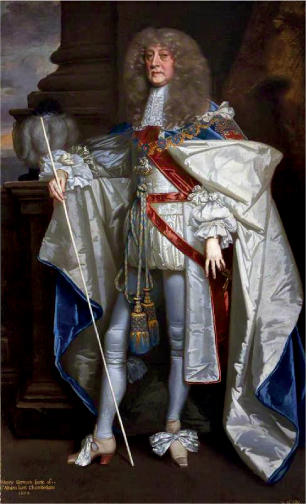
Henry Jermyn, Earl of St Albans, in later life, from a portrait by Peter Lely. Tall, broad-shouldered, elegant and refined, and possessing, at only 20 years of age, what the poet Abraham Cowley would describe as ‘a soul composed of the eagle and the dove’, Jermyn was a bold, self-confident, worldly-wise and watchful man of the moment, who, as Gentleman Usher of Queen Henrietta Maria’s Privy Chamber, became the object of scandalous rumours.
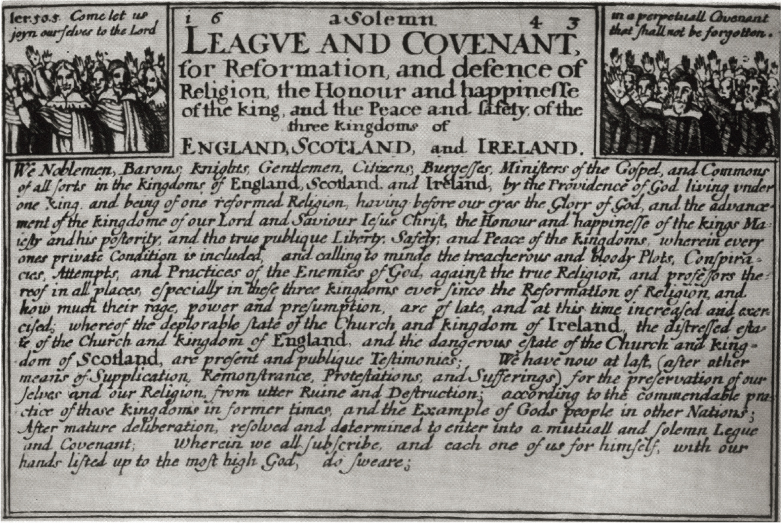
By 25 September 1643 the Scots had signed the Solemn League and Covenant with Parliament, committing MPs, or so the Scots believed, to the establishment of Presbyterianism in England in return for military assistance. Charles, however, would resolutely resist all pressure to comply with its terms, ‘my conscience being irreconcilably engaged against it’.

Sir John Berkeley had taken a prominent military role in the Civil War, becoming Governor of Exeter and commander of the Royalist forces in Devon, before being ordered by the king to attend him in his flight from Hampton Court in November 1647. The fugitives pushed on towards Hampshire and ultimately reached Lymington, where Berkeley crossed the Solent and opened negotiations with Colonel Robert Hammond in the hope of gaining protection for the king.
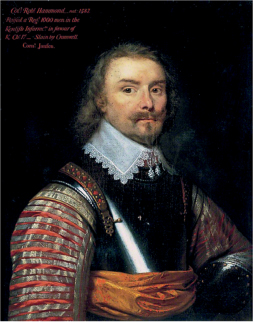
On 13 November 1647 Colonel Robert Hammond, the 26-year-old Governor of the Isle of Wight, learnt from Sir John Berkeley and John Ashburnham that the king had fled from Hampton Court to save his life from the Levellers. Torn between his duty to the king and his obligations to the army, he finally gave a vague promise to act with ‘honour and honesty’, on the basis of which Charles I submitted to his custody.
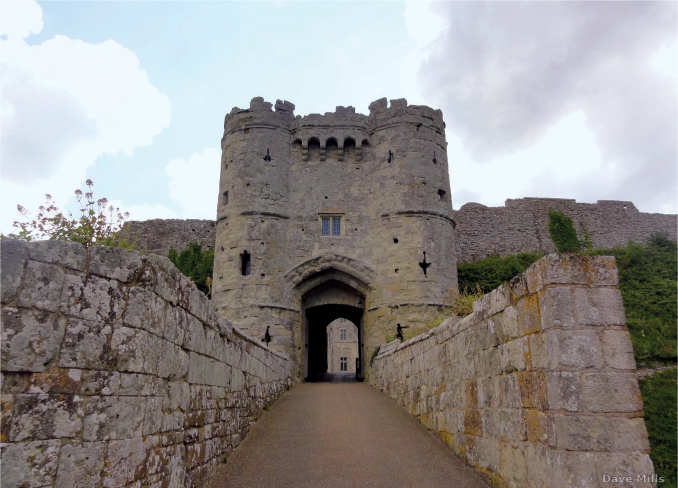
Entrance to Carisbrooke Castle. Although only a mile south-west of Newport, Carisbrooke is almost in the middle of the Isle of Wight, occupying a chalk plateau at about the 200ft contour and dominating the lower reaches of the Bowcombe valley. So complex were its fortifications that their designer, Federigo Gianibelli, hoped that it would be ‘one of the strongest places in Europe’, though it was far fitter for defence against attack than the successful confinement of prisoners.
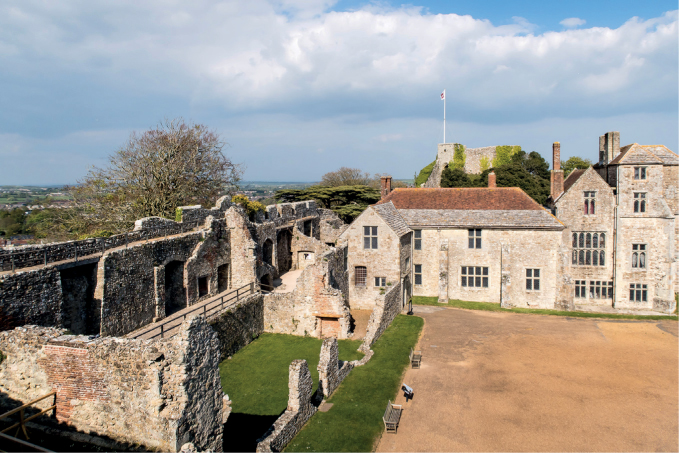
The courtyard of Carisbrooke Castle. The king’s first bedchamber, which he occupied from November 1647, is behind the second-floor ten-light window, constructed during extensive reconstruction of the building in the 1850s. At the end of April 1648 he was moved to rooms in the now ruined Tudor governor’s lodging to the left of the picture.
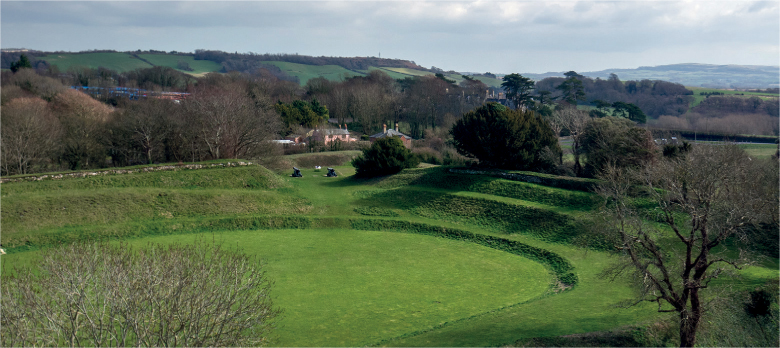
The bowling green used by Charles I during his imprisonment at Carisbrooke, where on 13 April 1648 he was said to be ‘very merry at play’ with Governor Hammond. The Governor also created a miniature golf course for the king’s entertainment, within the outer defences of the castle, in one corner of which a little summer house was built where the royal prisoner could take shelter from the persistent rain, since the summer of 1648 proved the wettest for decades.

Frontispiece of Eikon Basilike. Eventually published shortly after his death, the book became at once a lynchpin of Royalist propaganda, depicting the king, in effect, as a neotype of the crucified Christ – the princely proto-martyr, politically and morally innocent, cruelly butchered at the hands of his subjects – though as early as August 1649, no less a figure than John Milton was attributing authorship to a ‘presumptuous priest’, who, in the poet’s words, had sought to make ‘his King his Bastard Issue Own’.
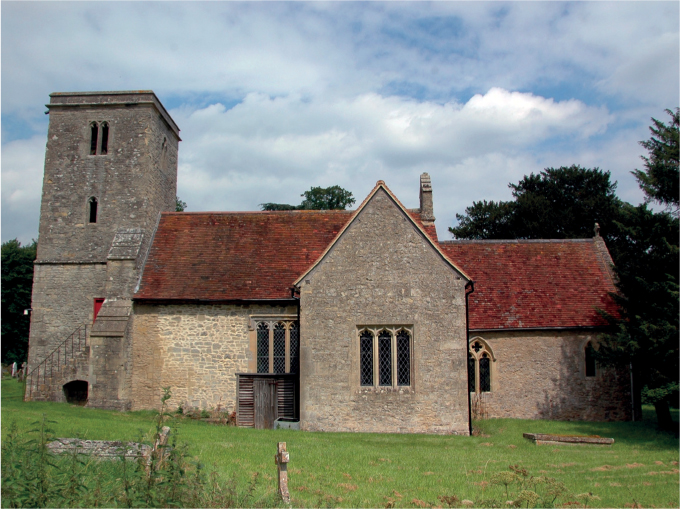
St. Bartholomew’s Church, Holton, where Jane Whorwood and three of her four children were buried, along with her husband and her husband’s mistress, Kate Allen, though the graves were destroyed during renovation work in the nineteenth century.

The old Grammar School at Newport where the failed Treaty of Newport was negotiated between the King and Parliament from 15 September to 27 November 1648. Under pressure from army radicals, the purged Parliament annulled the treaty in mid-December, after which preparations were made for the king’s trial.
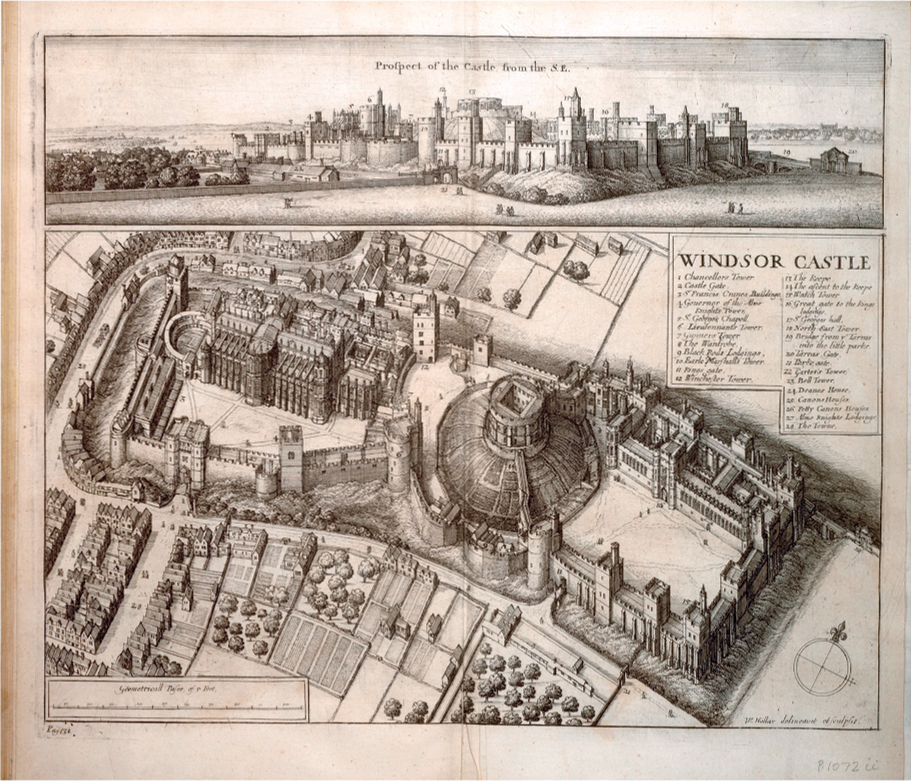
A bird’s-eye view of Windsor Castle, produced by Wenceslaus Hollar nine years after Charles I’s death. The king spent his last Christmas at Windsor, though without the consolations of the season, for as at Carisbrooke in 1647, all Christmas festivity was strictly banned.