
Chapter Twenty
20 September 2021
Back on the road, ahead of the official first night of their resumed No Filter trek in St Louis, Missouri, in six days’ time, the Stones pre-open 1,000 miles away in Foxborough, Massachusetts. Such distances are so-what to those who ‘fly private’ and pick their own departure times. This invitation-only gig, in a giant tent that appears to hover above the field of the grand Gillette Stadium, is hosted by billionaire businessman and New England Patriots American football team owner Robert Kraft. It is a major-league night, to which the band of bands rises unfazed. They would anyway. What do they play? ‘Let’s Spend the Night Together’, ‘Tumbling Dice’, ‘Under My Thumb’. ‘Troubles a-Comin’ – an old Chi-Lites favourite getting an airing on the soon-to-be-released, expanded fortieth anniversary re-issue of 1981’s Tattoo You. They recorded the track forty-two years ago, in 1979. It is one of nine previously unreleased gems on Lost & Found, the bonus disc of newly completed songs and rarities that light up the latest package.
They also bring out ‘Living in a Ghost Town’, their reggae-infused chanson written in 2019 and completed in 2020, updating the lyrics in the spirit of Covid awareness; ‘You Can’t Always Get What You Want’, ‘Midnight Rambler’ and ‘Miss You’ bring up the rear. The icing is the first appearance in sixteen years of ‘19th Nervous Breakdown’, sprinkled with ‘Start Me Up’ and ‘Gimme Shelter’. ‘(I Can’t Get No) Satisfaction’ closes. It’s the one that they want.
What’s this, Keith, Mick and Ronnie arm-in-arm downstage, looking like Lost Boys?
‘I must say,’ says Mick, addressing the audience. Say what? He hesitates, swallows, gets a grip. ‘It’s a bit of a poignant night for us, and it’s our first tour we’ve done in fifty-nine years that we’ve done without our lovely Charlie Watts. And we all miss Charlie so much. We miss him as a band, we miss him as friends on and off the stage, and we’ve got so many memories of Charlie … I’m sure some of you that have seen us before have got memories of Charlie as well, and I hope you will remember him as we do.’
He swigs neatly from a bottle of beer. ‘We’d like to dedicate this show to Charlie. Let’s have a drink to Charlie.’
Who might have grinned his chumpy, jaw-set grin and muttered, ‘Get outta here.’
Bernard Fowler, the gracious, gifted vocalist who started out singing on street corners as a fourteen-year-old while working evenings in a Harlem nightclub; who has made music with many favourites: Robert Plant, Def Leppard, Ivan Neville, Bonnie Raitt, Jerry Lee Lewis, Alice Cooper, Duran Duran; whose first ever record was the Stones’ 1964 US album 12 X 5, which was given to him by his father; who has spent literally half his life on the road and in the studio with this band, collectively and individually. He has seen it all. When I ask him how much longer they can go on, he bursts out laughing.
‘Keith told me he intends to die on stage, playing his guitar, and I believe him,’ he says. ‘That could be the way it is. He also says he’ll stop when Charlie wants to stop, and that ain’t happening. The point that we are at now, I reckon they’ll rock ’til they drop. Music is ageless and timeless. The Stones have proved that beyond all doubt, and they have nothing left to prove.’
He has been in a lot of bands, has Bernard. He knows first-hand that keeping a band together is the most challenging aspect of rock’n’roll, because there are so many personalities, agendas, obstacles and supporting casts involved. And the older it gets, the more complicated it becomes, because each member of the band has an entire dynasty to consider. Never mind all the extracurriculars.
‘The biggest stars are just normal guys wanting to do normal things, but having to go out night after night and be anything but normal,’ he says. ‘I must have spent years of my life playing dominoes with Keith Richards in hotels, and listening to music with him. Walking the streets of strange cities with him in the early hours, listening to him talk. I know the guys in this band better than I know my own family. I’ve spent more time with them. And I can tell you, it hasn’t been easy for them. People look in from the outside and go, “It’s OK for you.” But they know nothing.
‘You don’t get to become artists like these guys unless you have suffered. The lives and careers of most artists flourish out of dysfunction, deprivation and abandonment. I have recognised it in the backgrounds of so many. John Lennon, David Bowie, Michael Jackson, Freddie Mercury. You name them. They become artists because music is the antidote. It’s as simple as that. You don’t see the dysfunction in Mick and Keith? I’m telling you, the damage is there. You don’t even have to look too deep. They keep it hidden, most of the time, but you get to know the signs. It erupts, they suppress it, but it informs everything they do. There is deep-rooted pain, the frustrations of a lifetime, the addiction to the road, to keep on rolling, which of course is a form of getting away from yourself. You can reinvent yourself every night on stage, leave the last version of yourself and all your troubles behind in the last hotel room. But those guys check out too. Every version of yourself that you have ever been will always be following you around.
‘You don’t get to compose songs like they did, to write lyrics like theirs, unless there is pain. It’s stored deep down in your soul, and it is summoned to do the business. And people relate. People all over the world relate to what they have come to represent, to what unites us as humans.’
‘How do they still do it, at their impossible ages?’
‘Hey, man. They got some great people looking after them.’
‘Medical people?’
‘Yeah, and shit. And they don’t do stuff the way we all did stuff when we were young. I had to give it all up, just like them. The booze and the powder just stopped working. But I’m not giving up on the Rolling Stones. I’ve been hanging with these boys a long time, and I’ve got to see it through. Which is something I don’t look forward to. I get lumps in my throat if I think about it too long. People have been asking me for years, “Is this gonna be the last tour?” I hear someone say, “Another last tour!” and I get a little defensive. They’ll do it as long as they want. We’ve never seen something like this before. And when they do decide, we’ll never see anything like it again.’
‘But what,’ I ask him, ‘is “it”?’
‘Shit, Lesley-Ann, do they know what it is? And they live it, day in, day out. It’s just a thing. It is the soundtrack of many, many lives. Just look into a Rolling Stones audience, any night, and just wow at it. There’s people their age, my age, the next age. People carrying babies. Toddlers and teenagers walking around the stadium. They’ve been hearing that music in their homes and their hearts since the day they were born.
‘Everyone has a Rolling Stones story. At this point? Everybody has one. And everyone has their Rolling Stones song. I can’t explain it better than that. But it tells the story.’
6 December 2021
When you think about it, where else? Ronnie Scott’s was Charlie’s favourite jazz club. It may not be much to write home about, but take the long way round and it is home. This tucked-away Soho dive crammed with ghosts is where he soaked up and feasted on many of his musical heroes. Where he hid himself away and licked his wounds when he couldn’t take any more. When all seemed hopeless and life felt pointless. During the down years, the wilderness years, in a fug of drugs and booze, when he lost the plot and when his only salvation was the music that had first turned him on.
Ronnie Scott, the late tenor saxophonist, opened his first club in 1959 with a £1,000 loan from his stepfather. Not in this location but across Shaftesbury Avenue in Chinatown, where a Gerrard Street tearoom got them started. He and his business partner, fellow sax player Pete King, moved it over here six years later. The current premises were once a dance hall. Its drab, gloomy interior with chewing gum for carpet lent itself blithely to after-hours larks, and even joined in the fun. You could get up to no good in its shadowy corners and no one would notice, because they were all mischiefing too. The Stones looked in, the Beatles hung out, and so did Princess Margaret. No tiara in place to indicate who she wasn’t. Nina Simone, Buddy Rich, Ella Fitzgerald, Sarah Vaughan and countless musicians have performed here for as long as the Stones have existed. Princess Diana found it convenient when in the throes of one of her flings. If walls could talk. But these walls can. If not in decipherable language that can be converted into written words, they ooze with stories.
It is Charlie’s night tonight. His wife Shirley, daughter Seraphina, wider family and faithful friends had to wait a while to pay fitting tribute, because the Stones were on the road across America. But they’re back, for the celebration some months overdue. Less than three weeks before Christmas, with nippy, fairylit London once again on a threat of lockdown, the vaxxed and the boosted flock, invitation only, to give him the send-off he might have loved.
Perky pianist, bandleader and television host Jools Holland is in charge of proceedings. He leads the house band into an aural smorgasbord, delighting an audience that includes former Stones bassist Bill Wyman, his wife Suzanne, and Steve Jordan, Charlie’s replacement in the touring band. Watts’s childhood chum Dave Green, who played cheek by jowl with him down the years in numerous jazz line-ups, together with Axel Zwingenberger, Ben Waters and their bandmates from the group the A B C & D of Boogie Woogie, set the pace. The Americans are in: Stones stalwarts, backing vocalists and duettists Bernard Fowler and Lisa Fischer, and saxophonist Tim Ries, who delivers ‘Blues for Charlie’, composed to commemorate his friend. Feisty Lisa, once an integral part of the Stones’ troupe but glaringly absent lately, floors the room with ‘Trouble in Mind’. Summoning the spirits of Otis Spann and Lonnie Johnson, she stirs in some Nina for good measure.1 She won’t be blue always. She welcomes Bernard to join her in a rendition of ‘Up Above My Head’. Gospel magic. Sister Rosetta leans down from heaven, thrashing her Gibson Les Paul.2
Nobody wants to go home. They gotta. There’s only one way to make them leave. C’mon, up you get, Mick, Keith and Ronnie. Do what you came for. No way are this lot leaving without a jam. Oh go on then, if we must, if you wouldn’t mind holding my Bud. They dive into ‘Shame Shame Shame’, echoing the vigour of their hero Jimmy Reed; and ‘Down The Road Apiece’, written by Don ‘Boogie Woogie Bugle Boy’ Raye3 and recorded more than half a century ago for Rolling Stones No. 2.
And sixty years fall away like fruit off a flatbed. Hitting the tarmac and bouncing through time, they juice all the way back to the start line. Back and back to a bunch of kids looking like they’re playing truant. Here they are, captured in mono and preserved for all time. Bill chewing, Charlie poker-facing, Mick shimmying, Brian strumming. Keith’s acing it, he is game as a bagel on lead guitar. A jug-eared boy chuffed to bits just to be there. Look at me now, Grandad Gus, are you listening? Doris – Mum! – were you watching? Keith’ll be pinching himself when he wakes. They all will. Even Mick. From such innocence and hope are legends made.
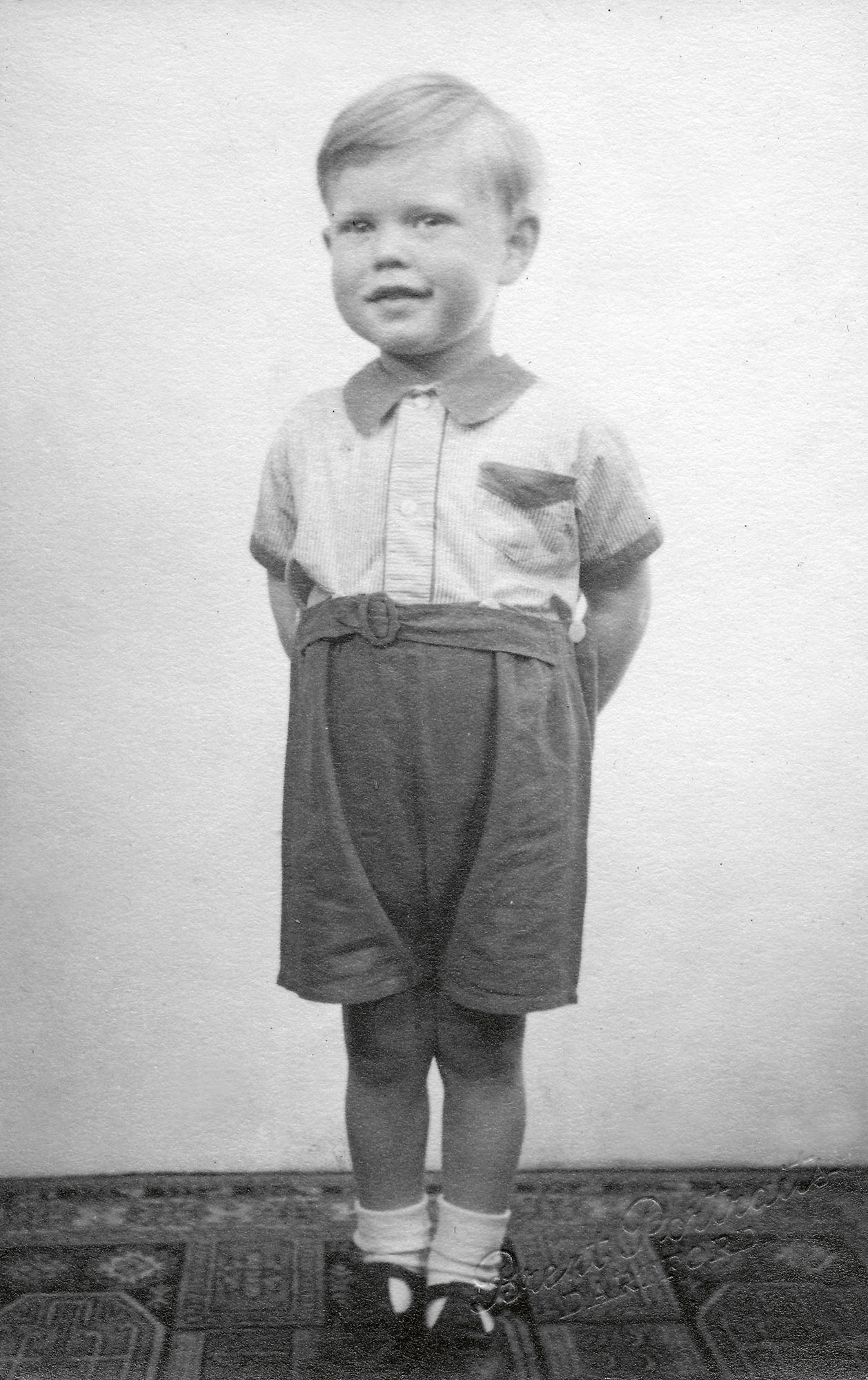
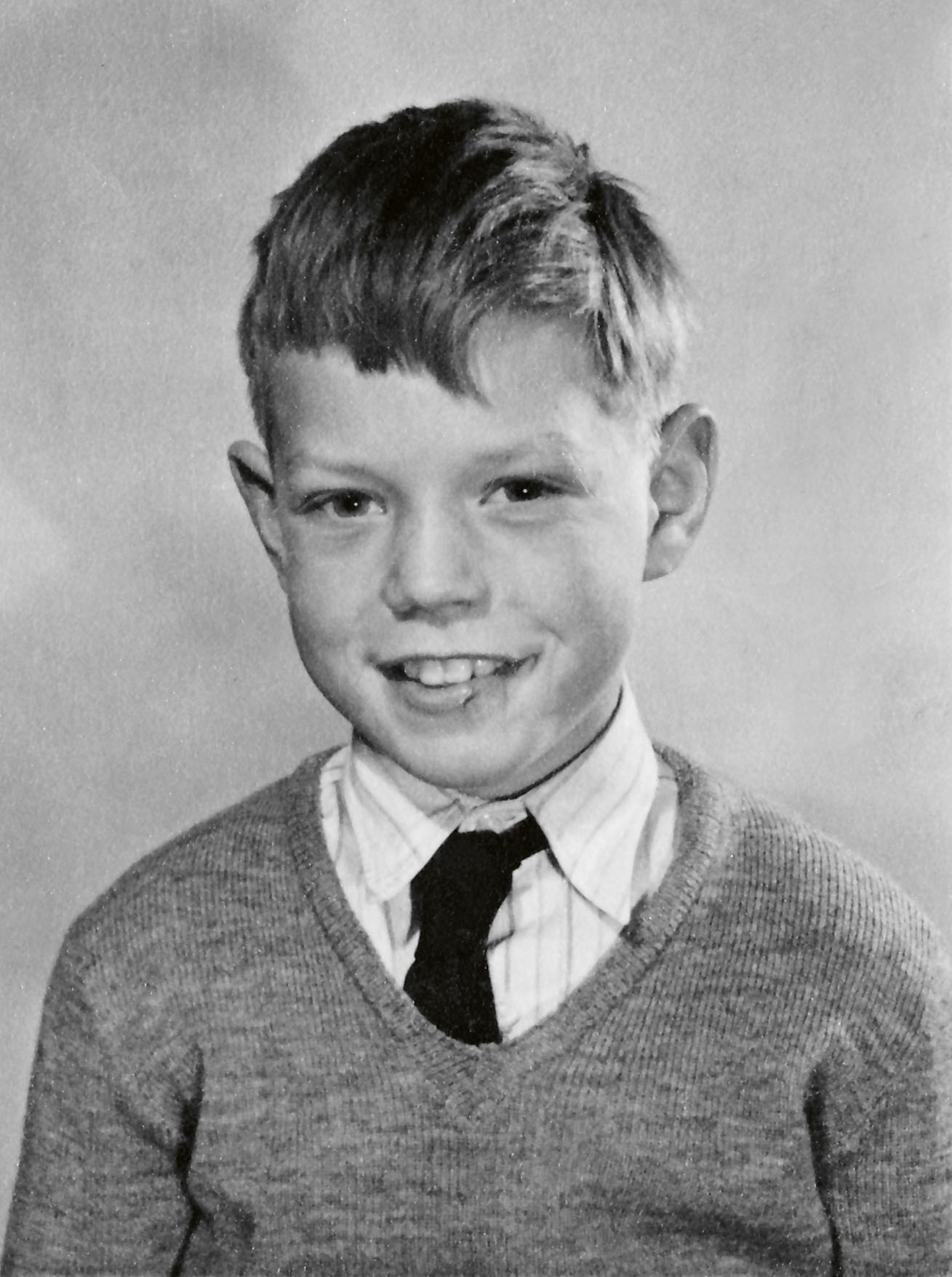
A young, and schoolboy-aged, Mick Jagger. No sympathy for the devil there. © Getty / Stones Archive.
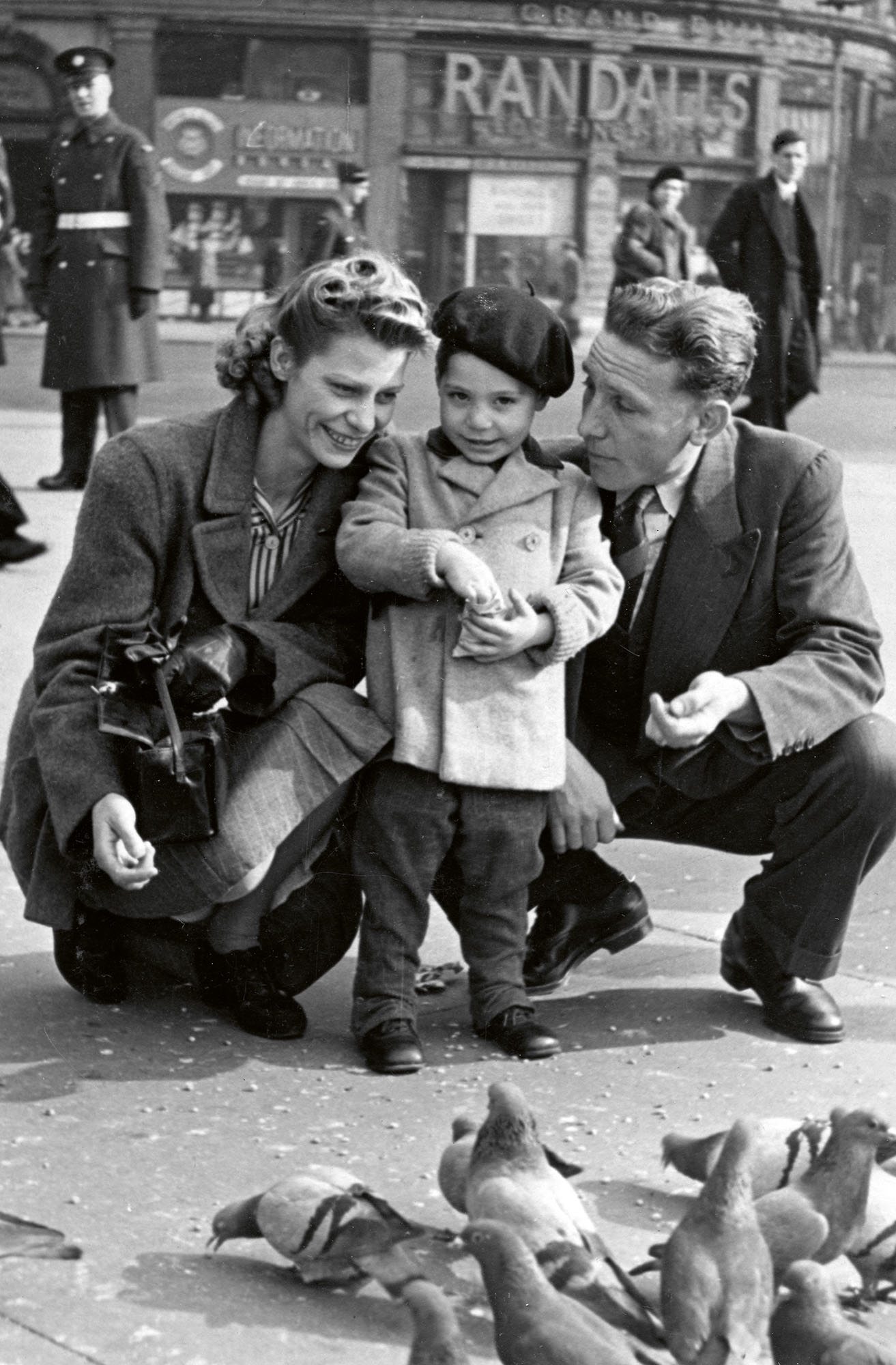
Charlie Watts looking as smart as ever, as he feeds the pigeons with his parents. © Getty / Popperfoto.
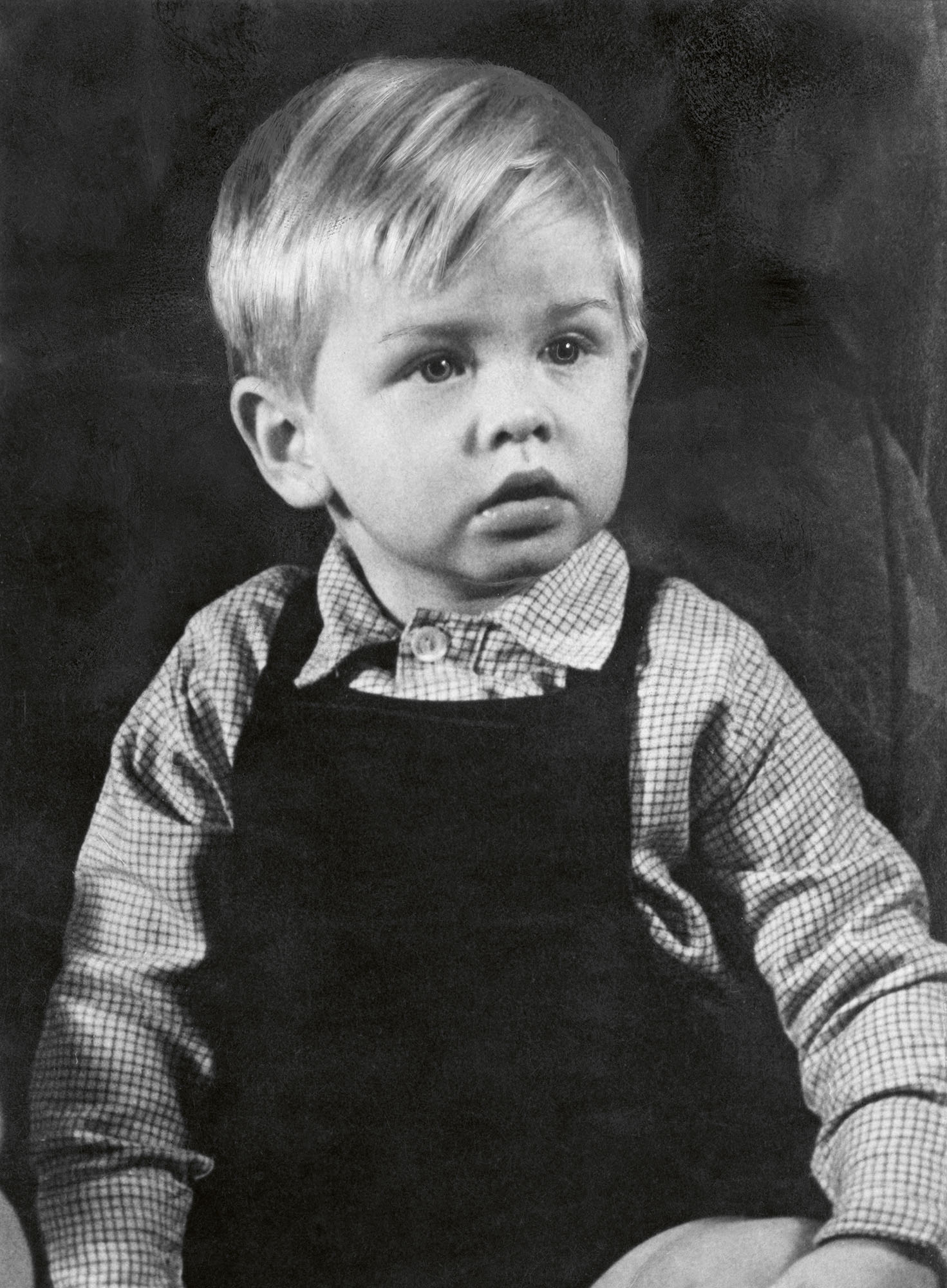
Brian Jones. © Getty / Linda Roots.
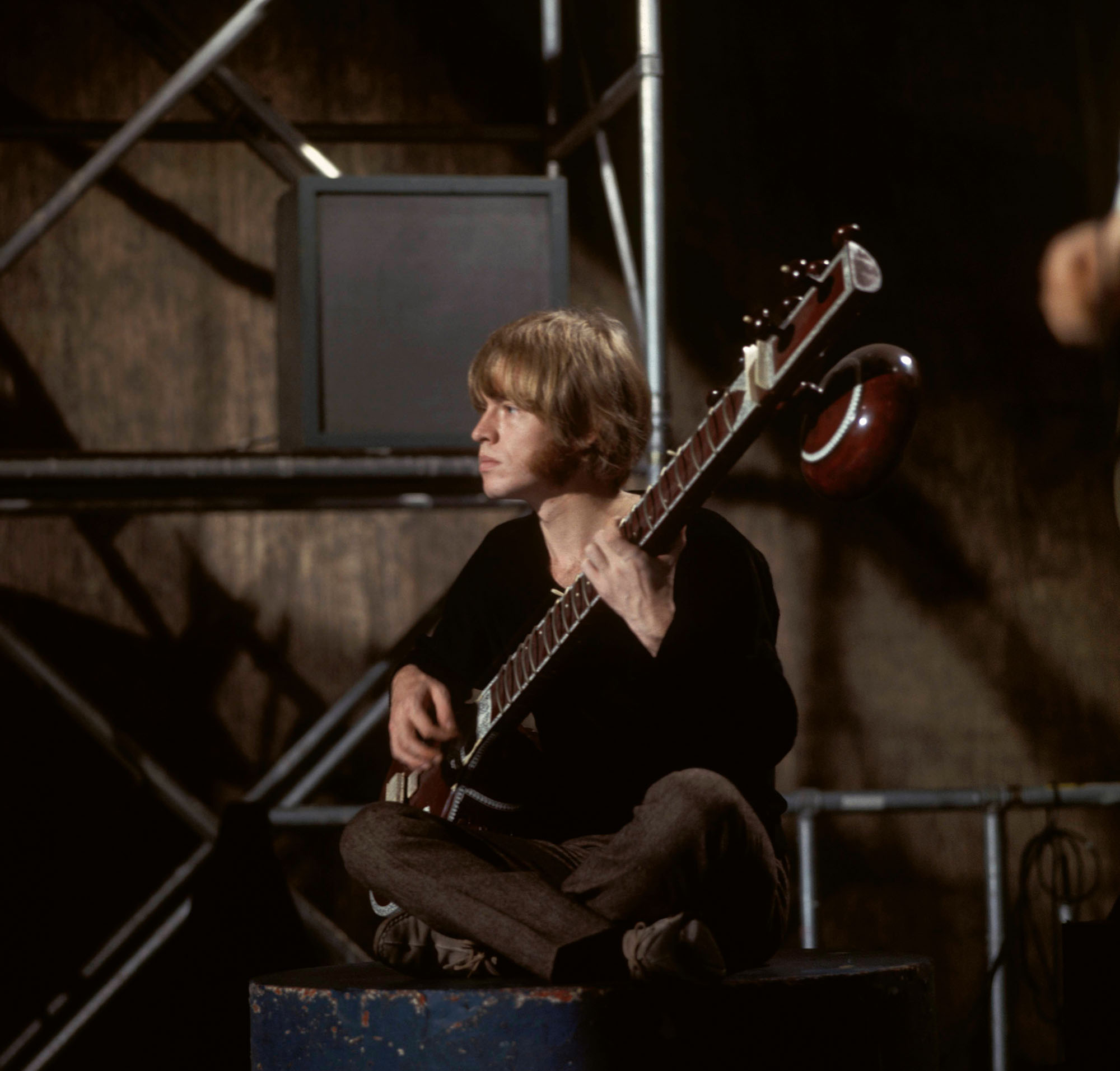
Brian’s innate musicianship let him come up with a tune on any instrument, as demonstrated here as he plays a sitar during a television appearance in 1966. © Getty / David Redfern
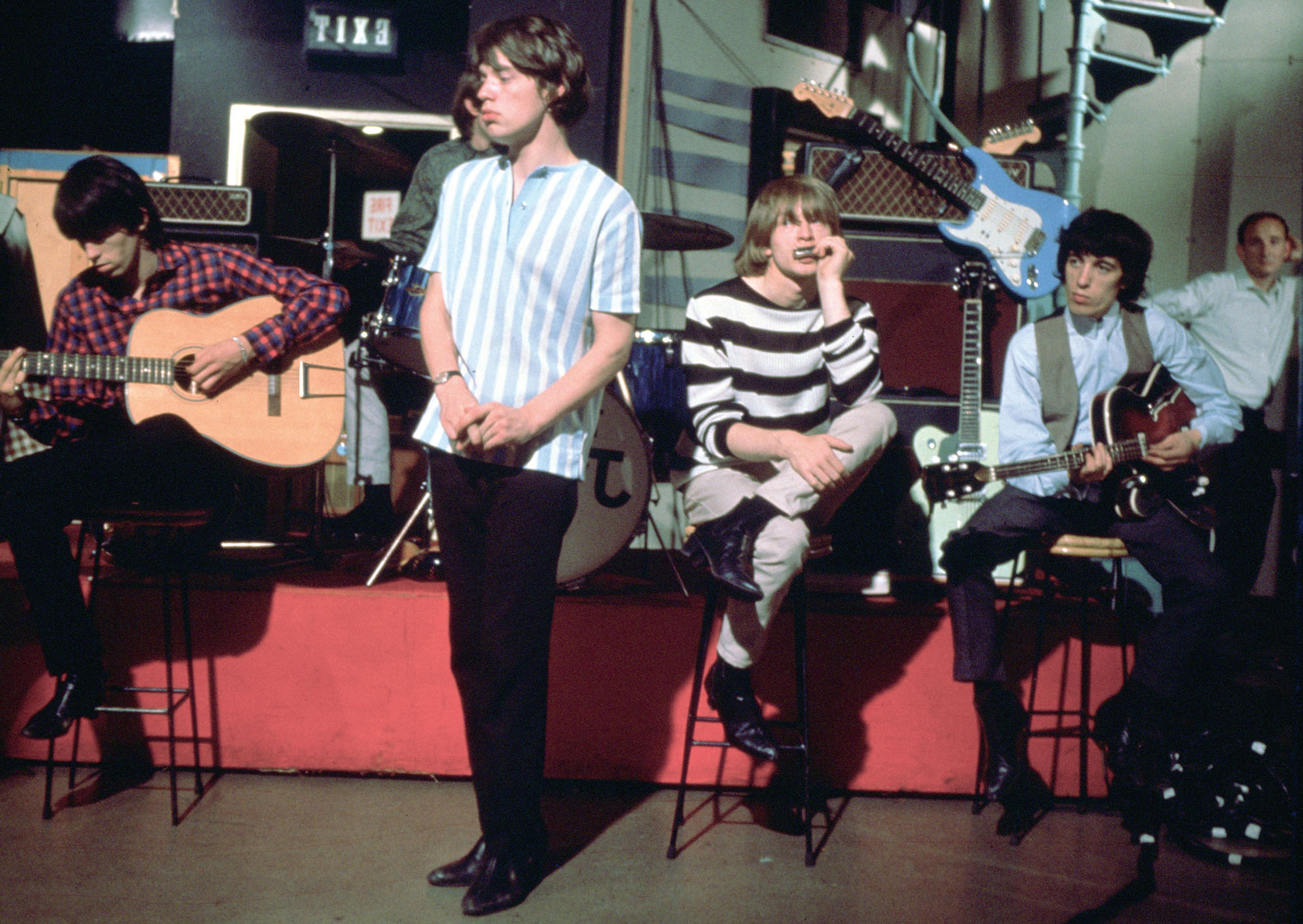
Taken in the 1960s. Note Brian’s baleful glance at Mick’s back, as he fronts the band. © Getty / Avalon
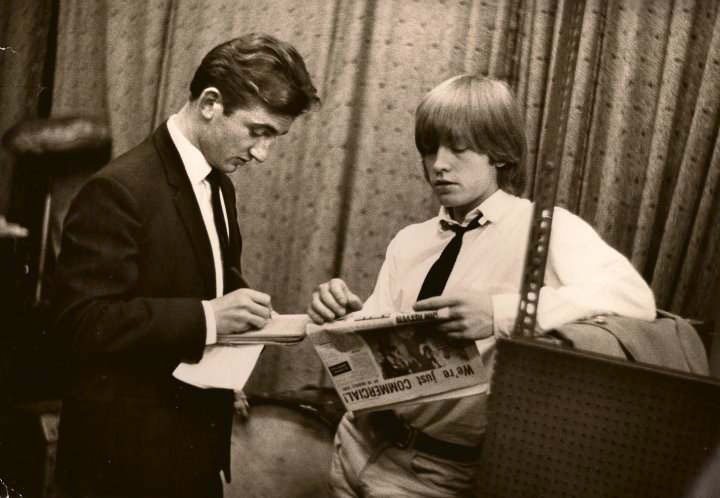
Rock journalist and future Stones publicist Keith Altham interviews Brian Jones.
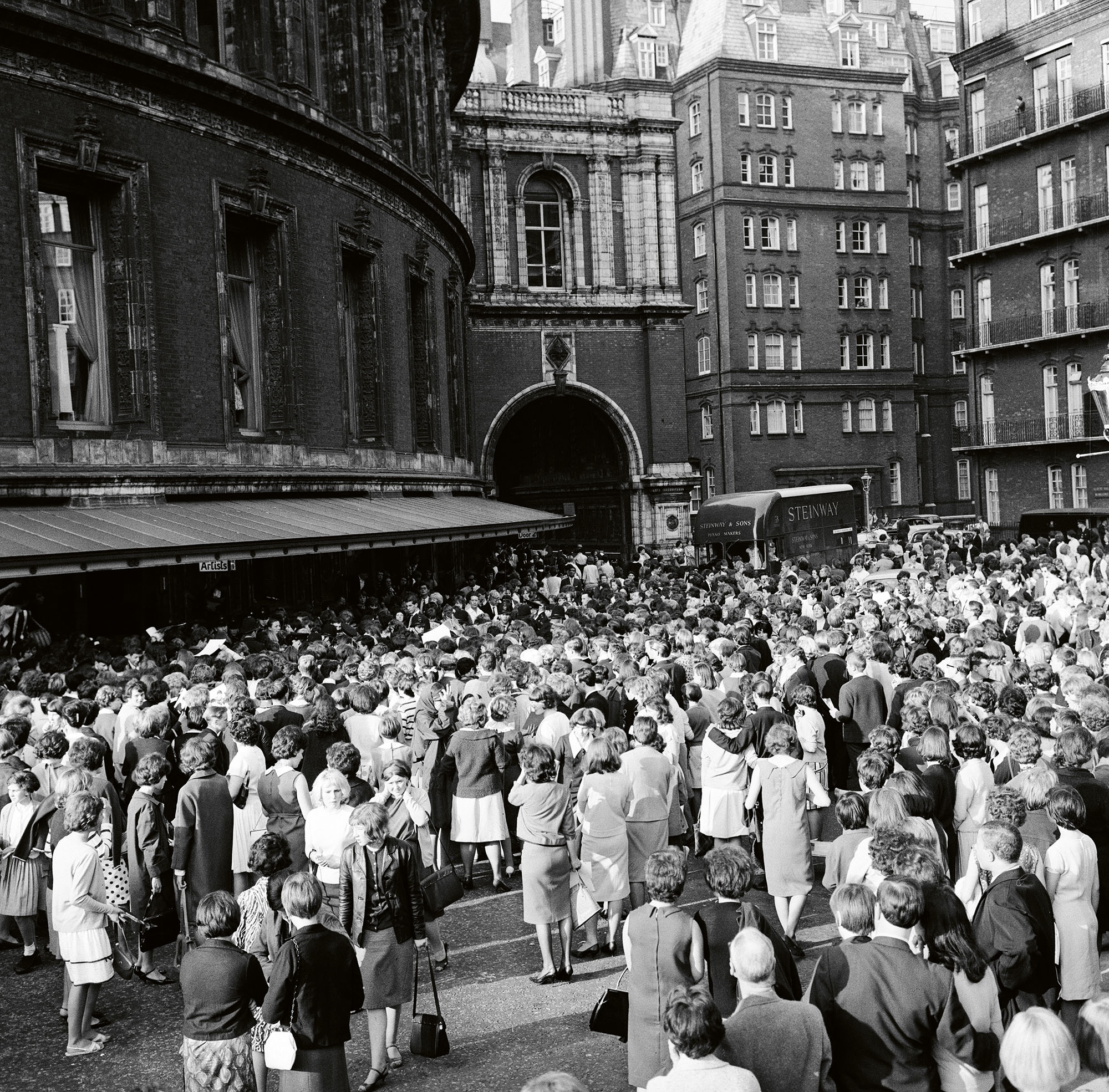
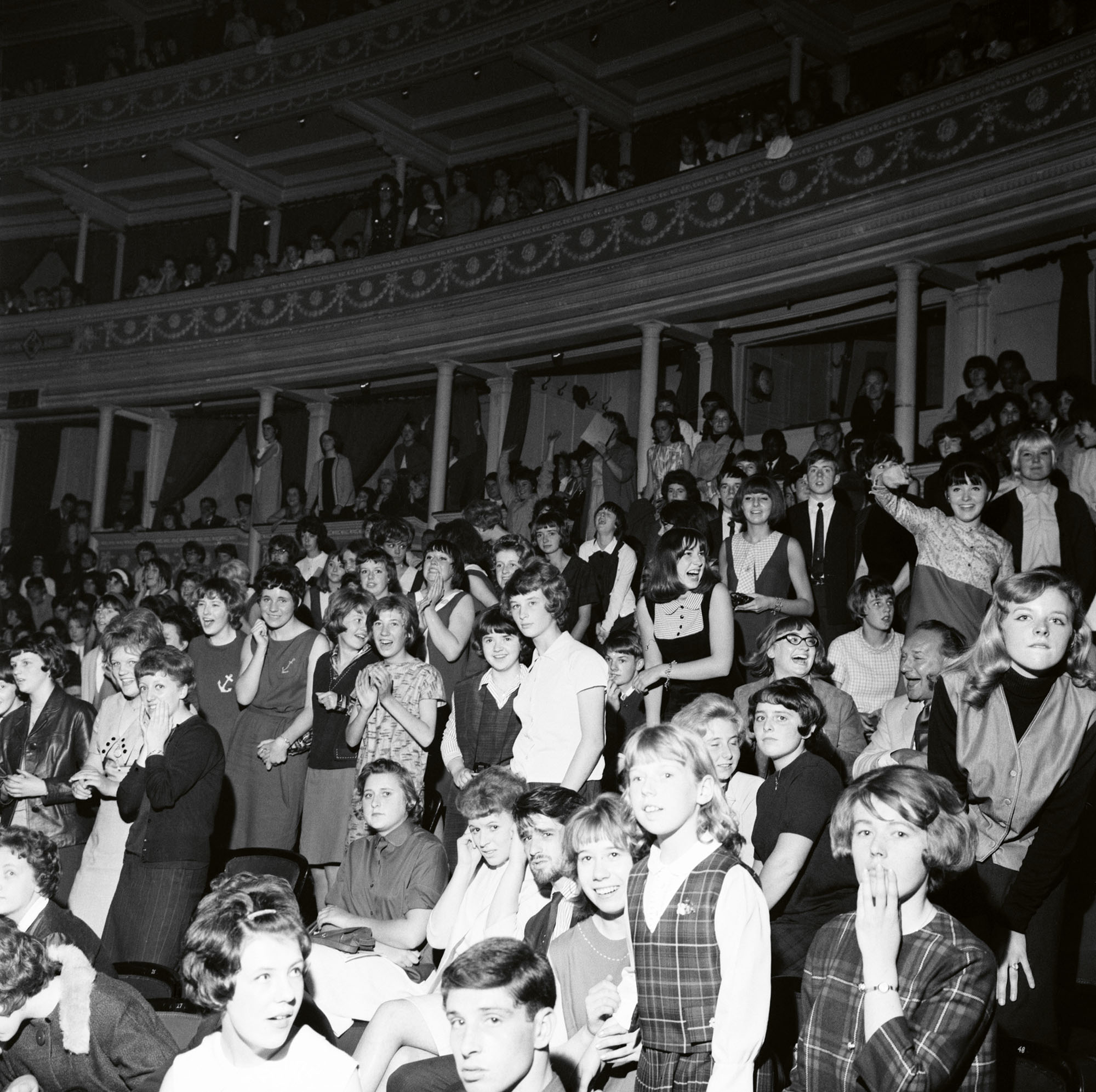
Large crowds – very decidedly female – gather outside the stage door of the Royal Albert Hall. The Stones and the Beatles are on the bill. 1963.
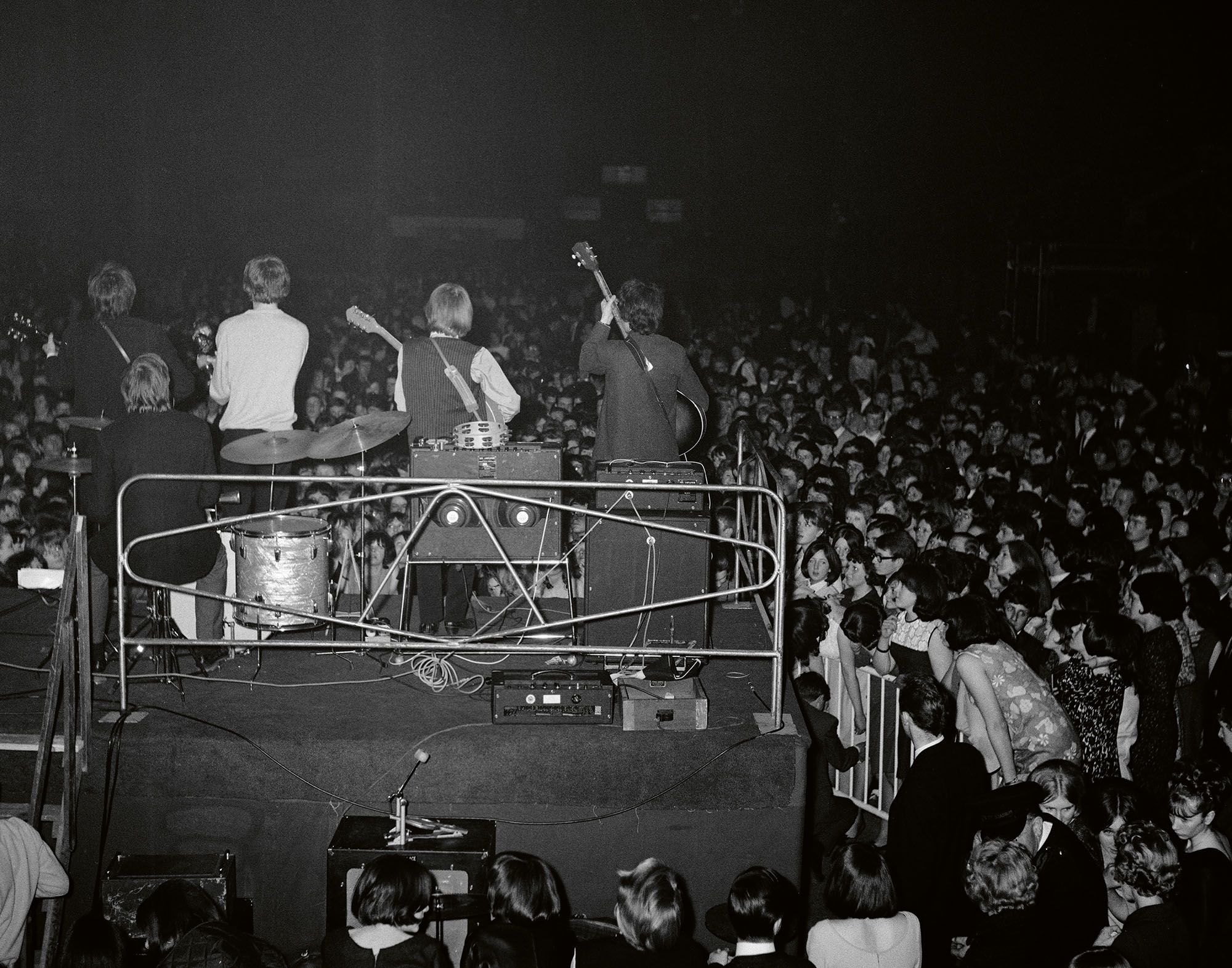
Rocking the Albert (r-l Bill Wyman, Brian Jones, Mick Jagger, Charlie Watts and Keith Richards). © Getty / Mirrorpix
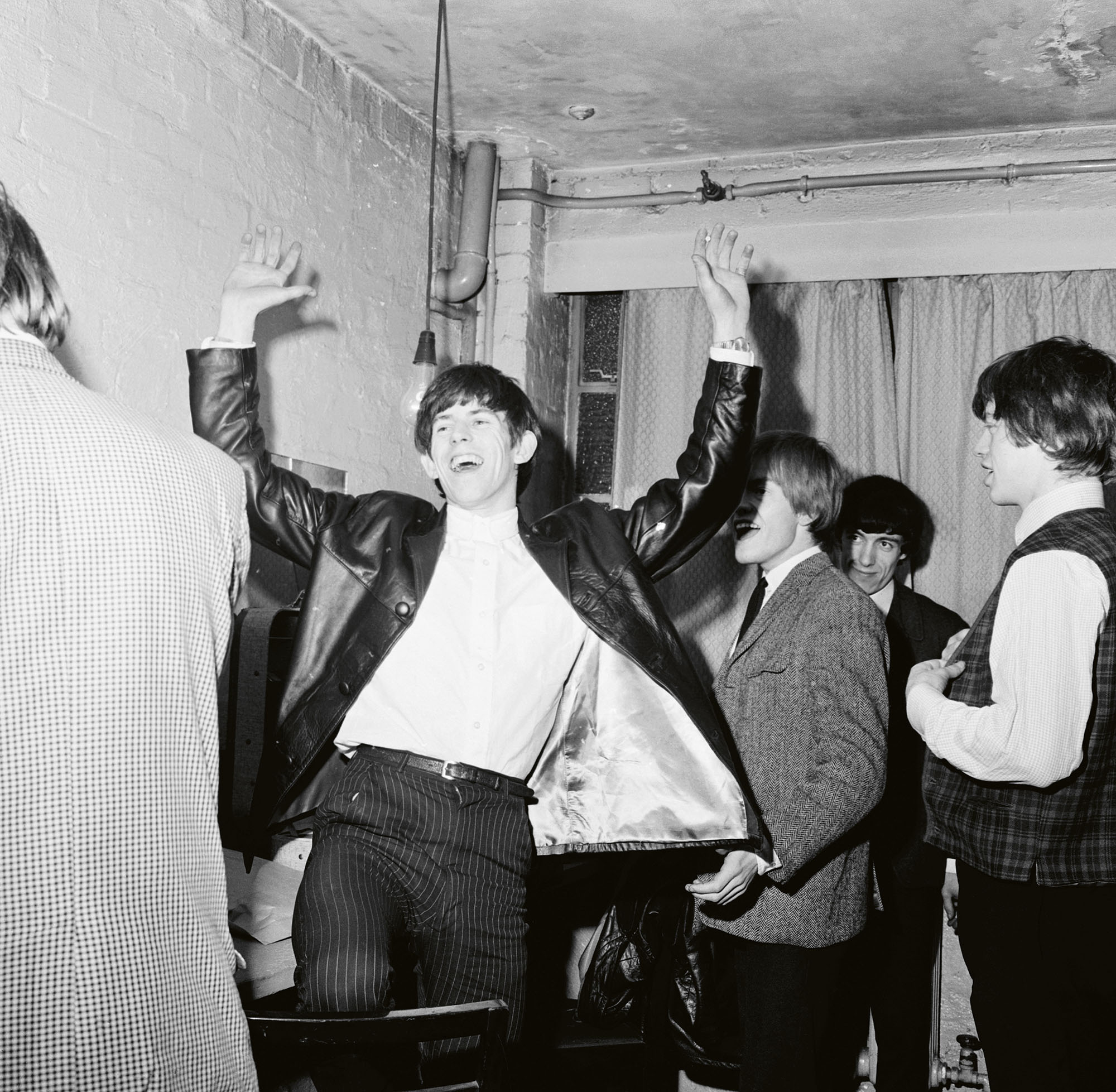
The rare sight of Keith Richards making merry. Backstage, an early tour, 1963. © Getty / Chris Ware.
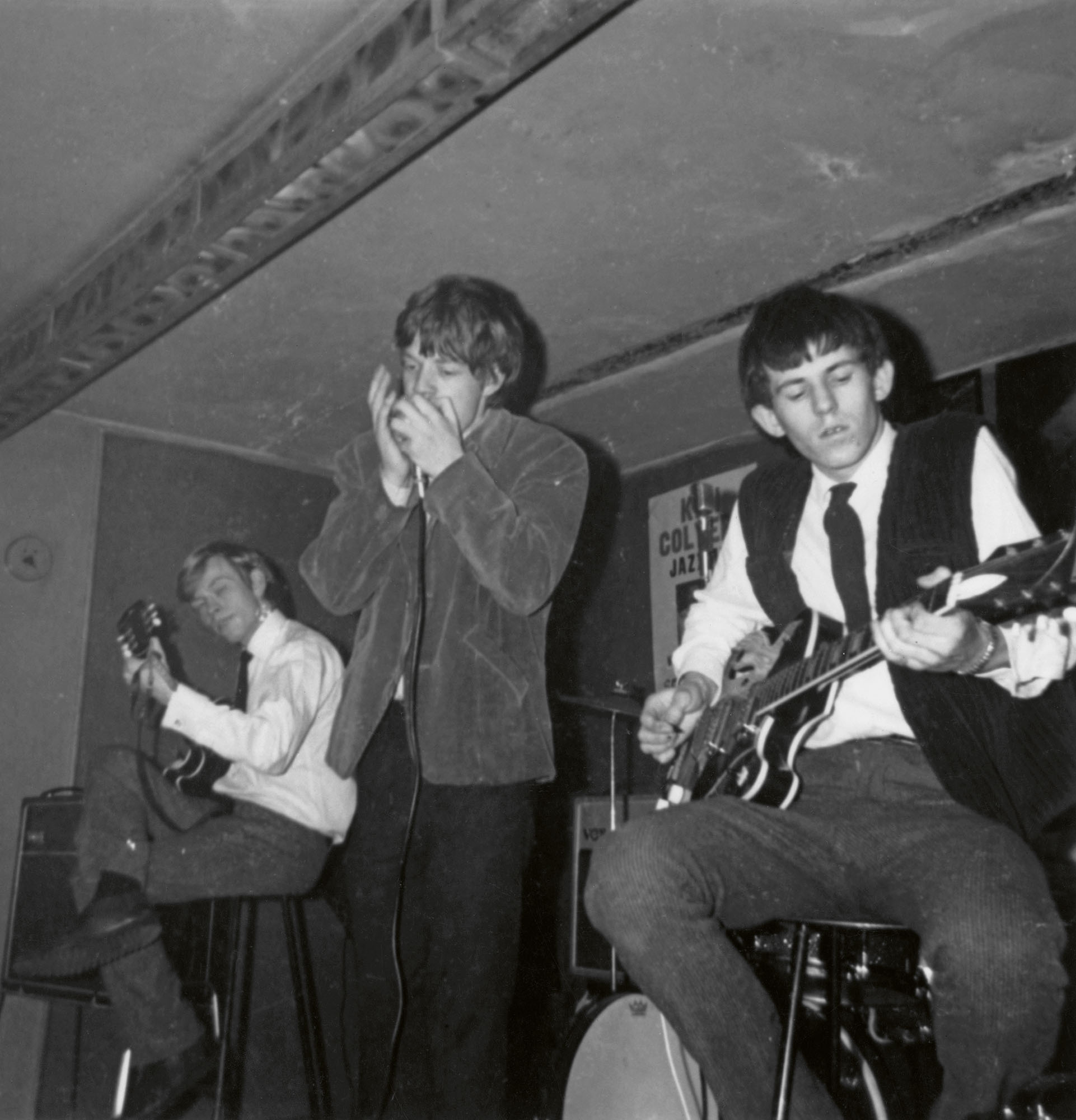
Mick’s flair as a harp player is all too often overlooked. Seen here playing in Great Newport Street, London. © Getty / Mark and Colleen Hayward.
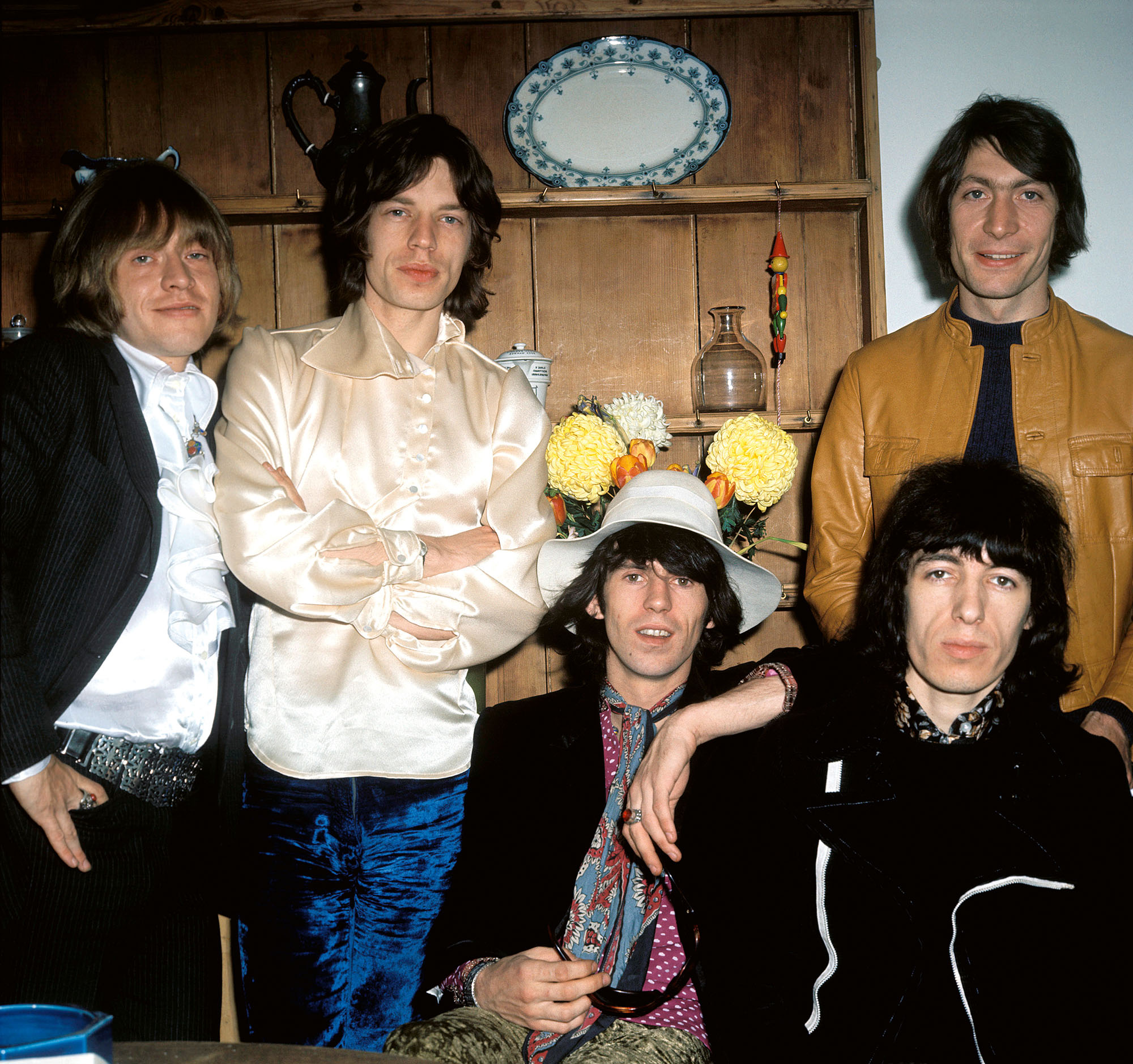
The originals. © Getty / Avalon.
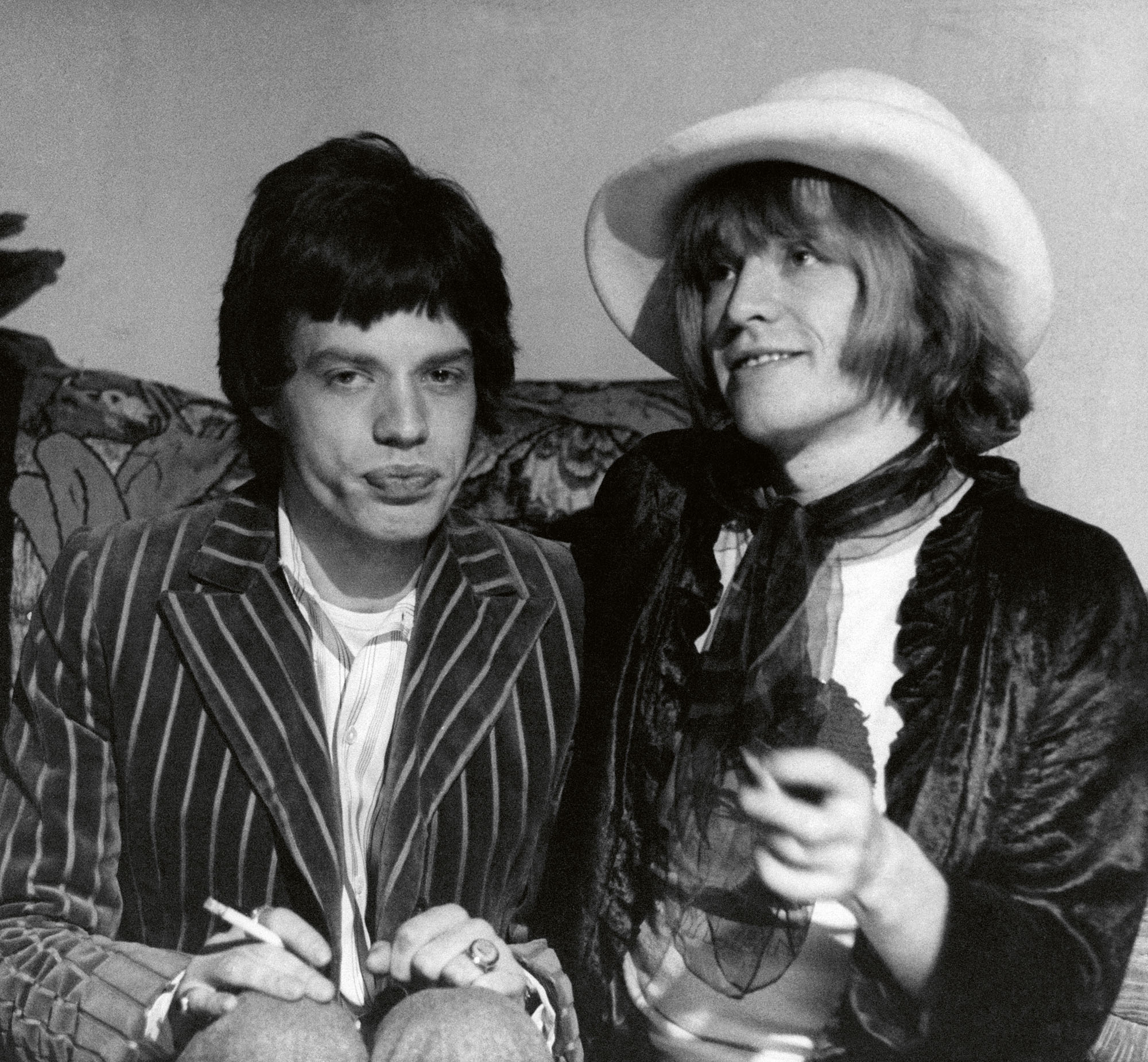
Mick and Brian’s relationship told in pictures defies easy categorisation. Here, Mick gazes coolly while Brian leans affectionately toward him. © Getty / Mondadori Portfolio
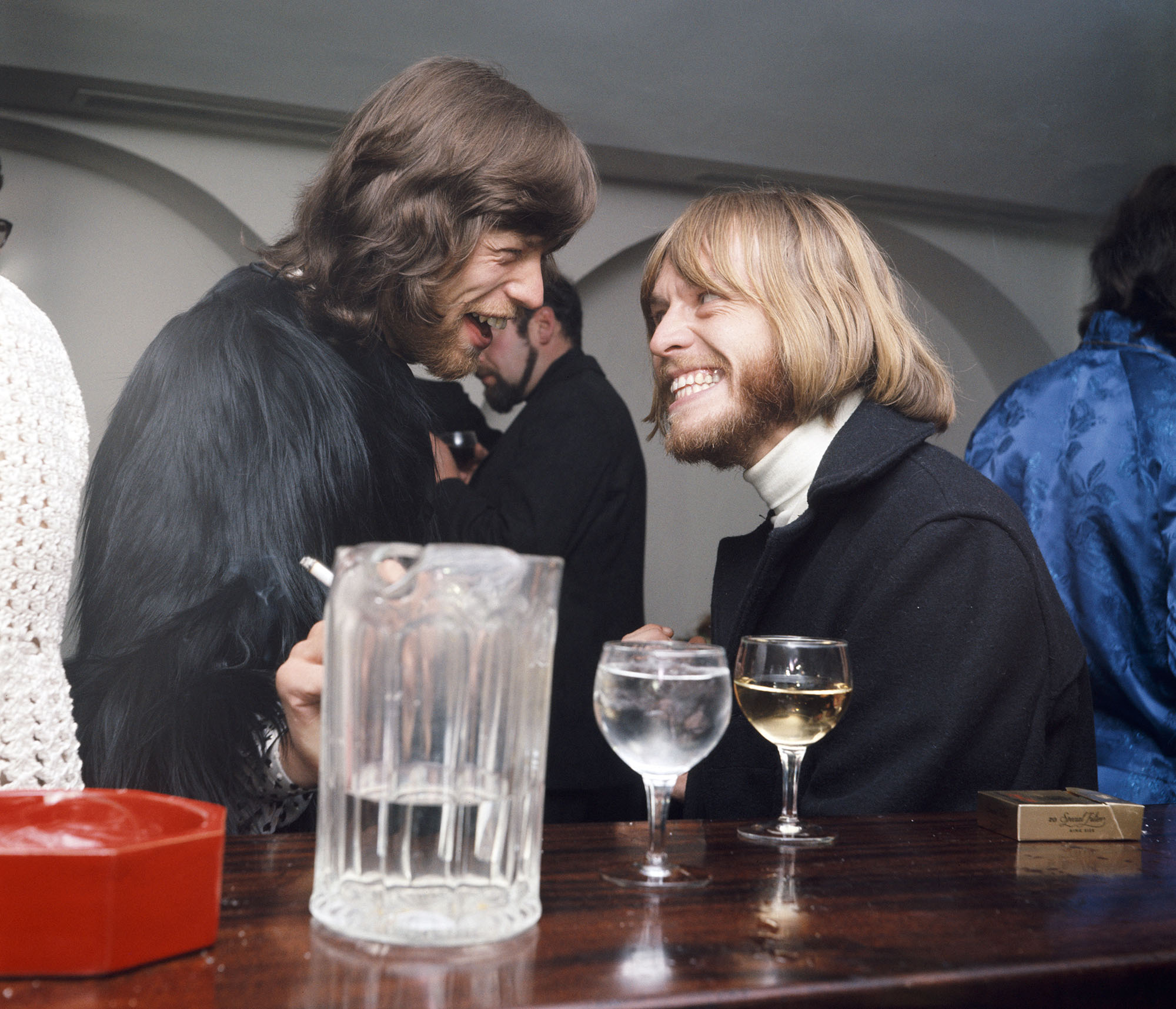
Yet here the two, unusually bearded, share a genuine laugh at a party on the Kings Road. 1968. © Getty / Mark and Colleen Hayward
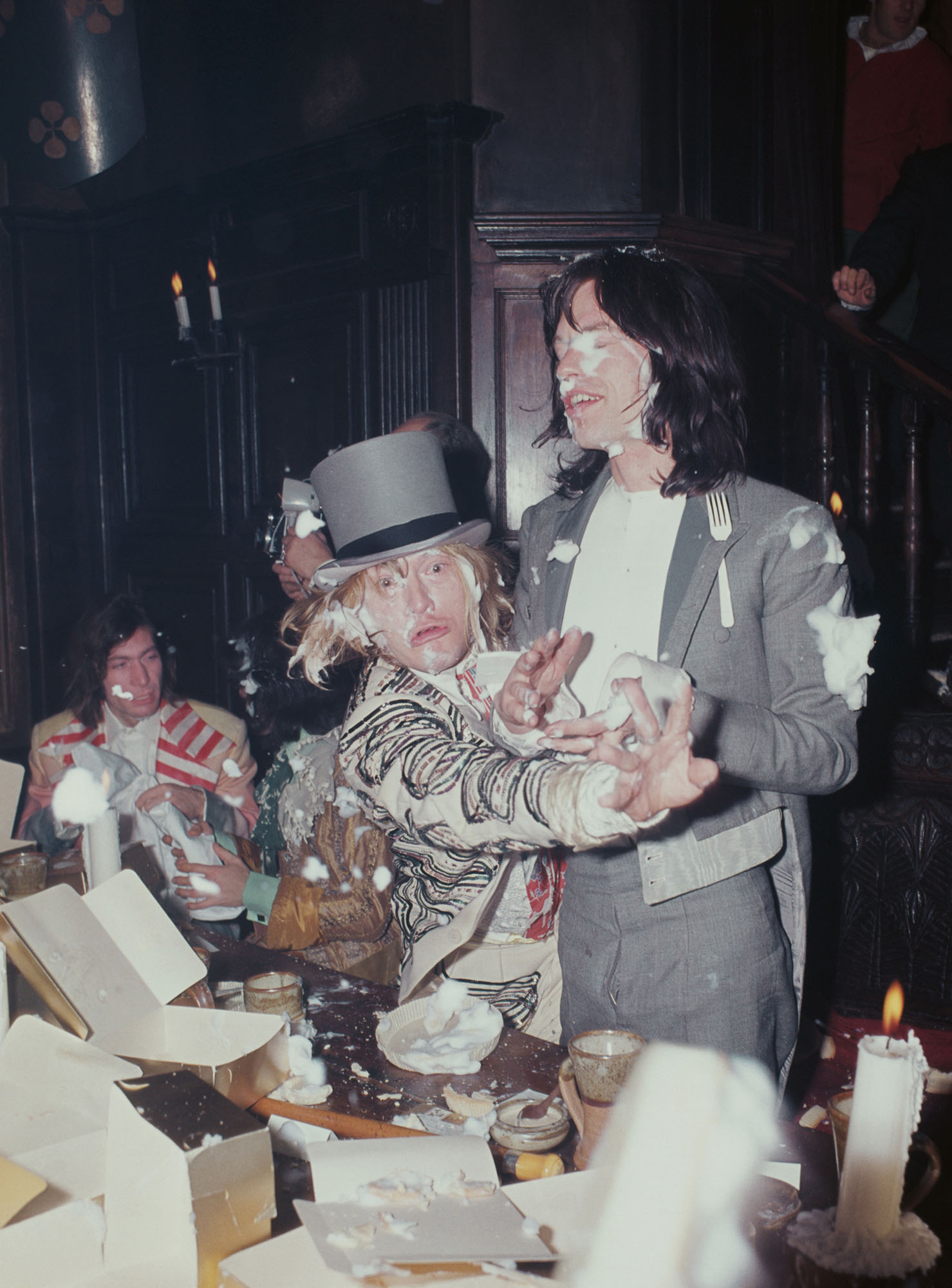
The two enjoy the mania of a food fight at the Kensington Gore Hotel, where the band staged a mock-medieval feast for the launch of their new album ‘Beggars Banquet’. © Getty / Hulton Archive
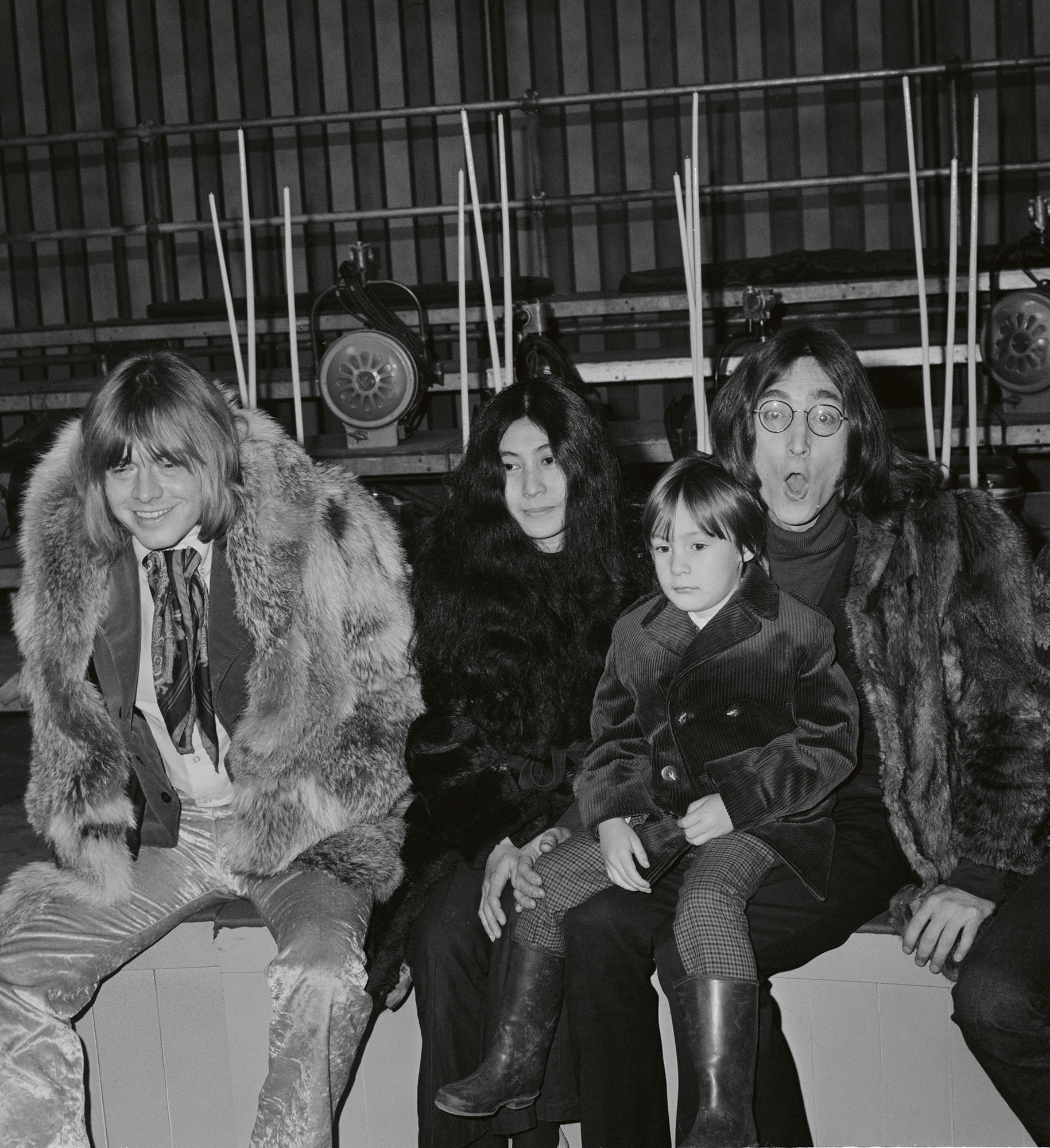
Brian pictured with Yoko Ono, John and Sean Lennon. In the UK, December 1968. © Getty / Evening Standard
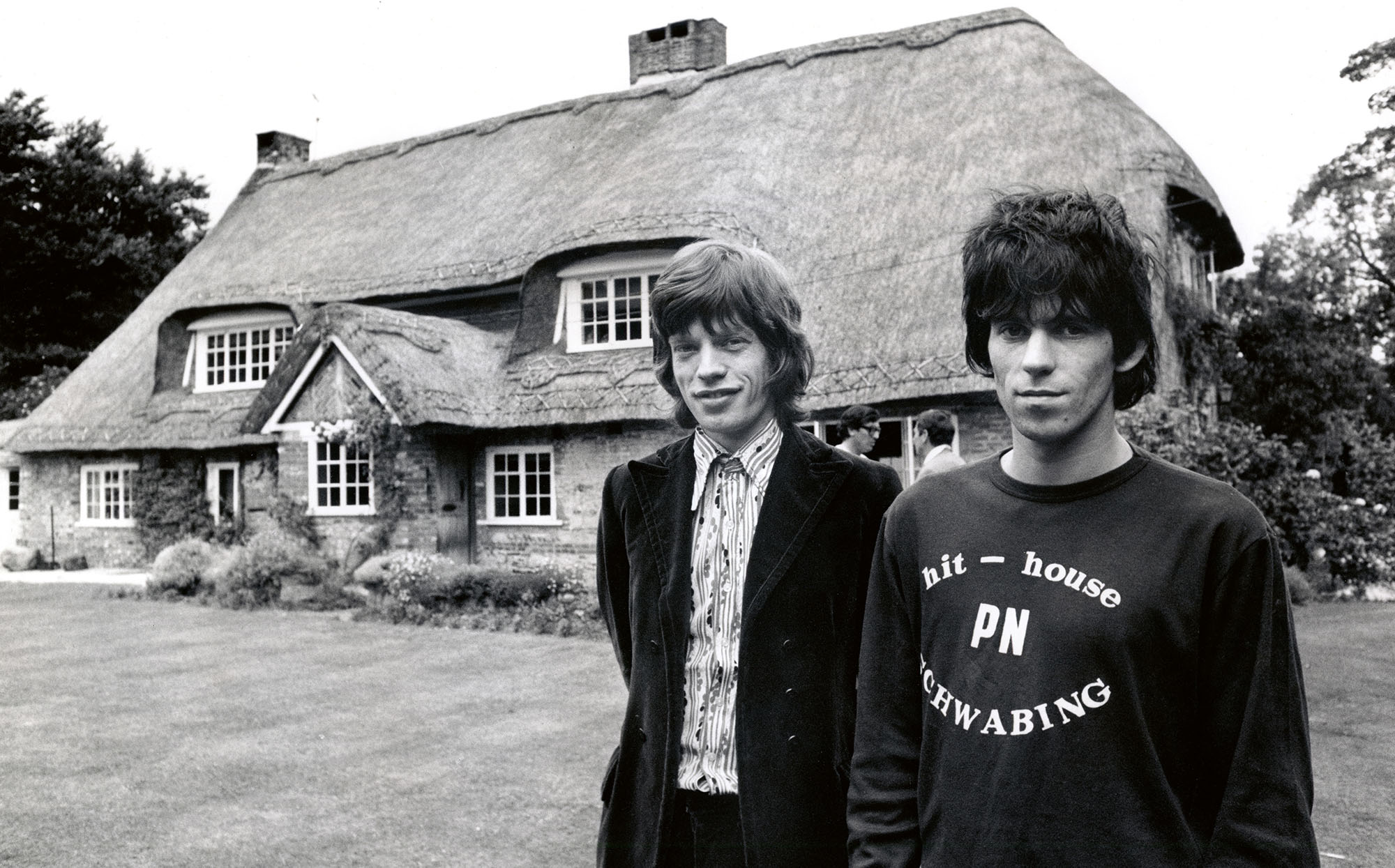
Mick and Keith pictured outside Keith’s long-time home, Redlands, in West Wittering, Sussex – the scene of the infamous drugs bust in 1967. © Getty / Icon And Image.
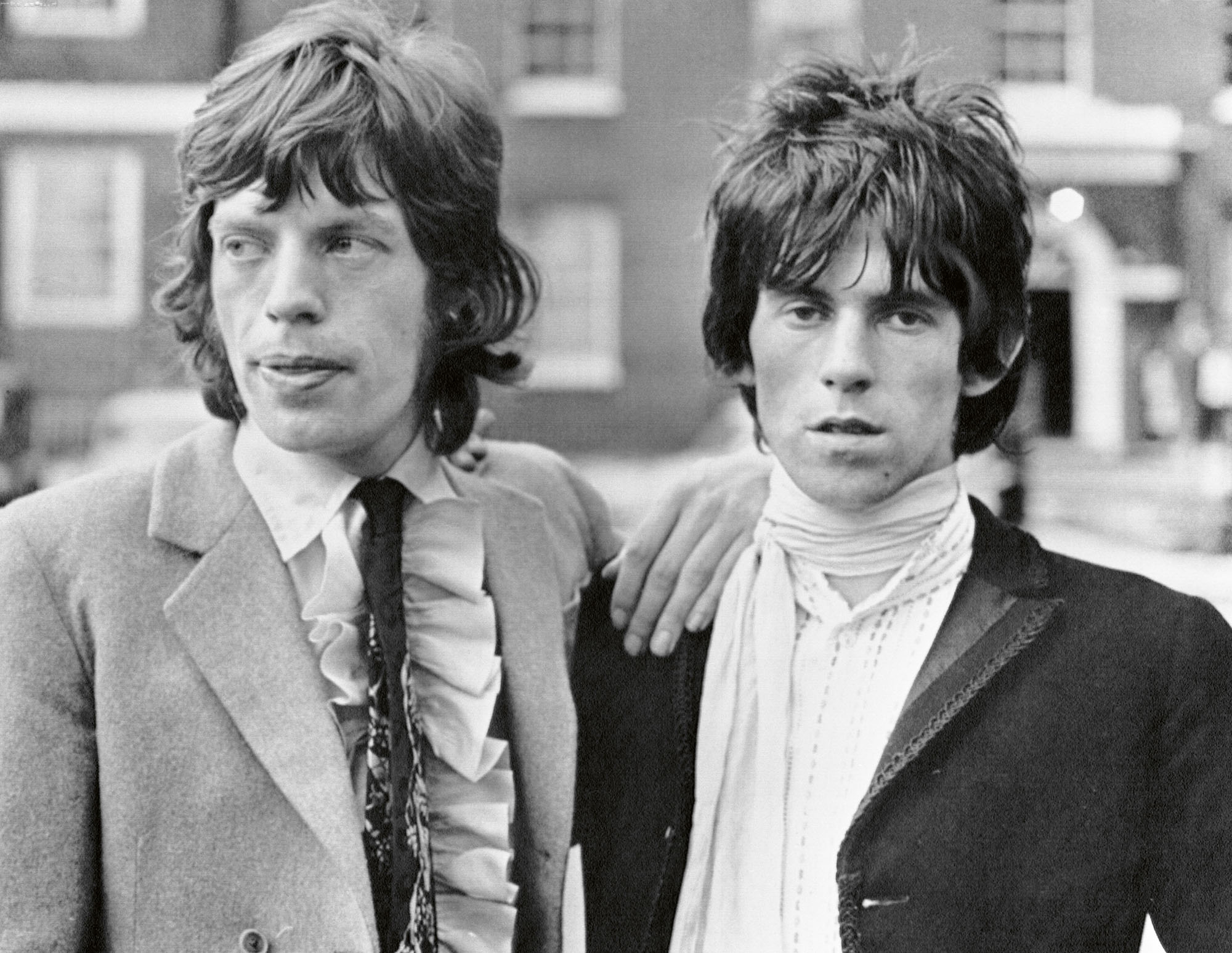
Out on bail for their drug charges. Mick was sentenced to three months in jail for possession of pep pills. Richards got a year for permitting his home to be used for the smoking of marijuana. Even The Times suggested the sentence was overly harsh. © Getty / Bettmann.
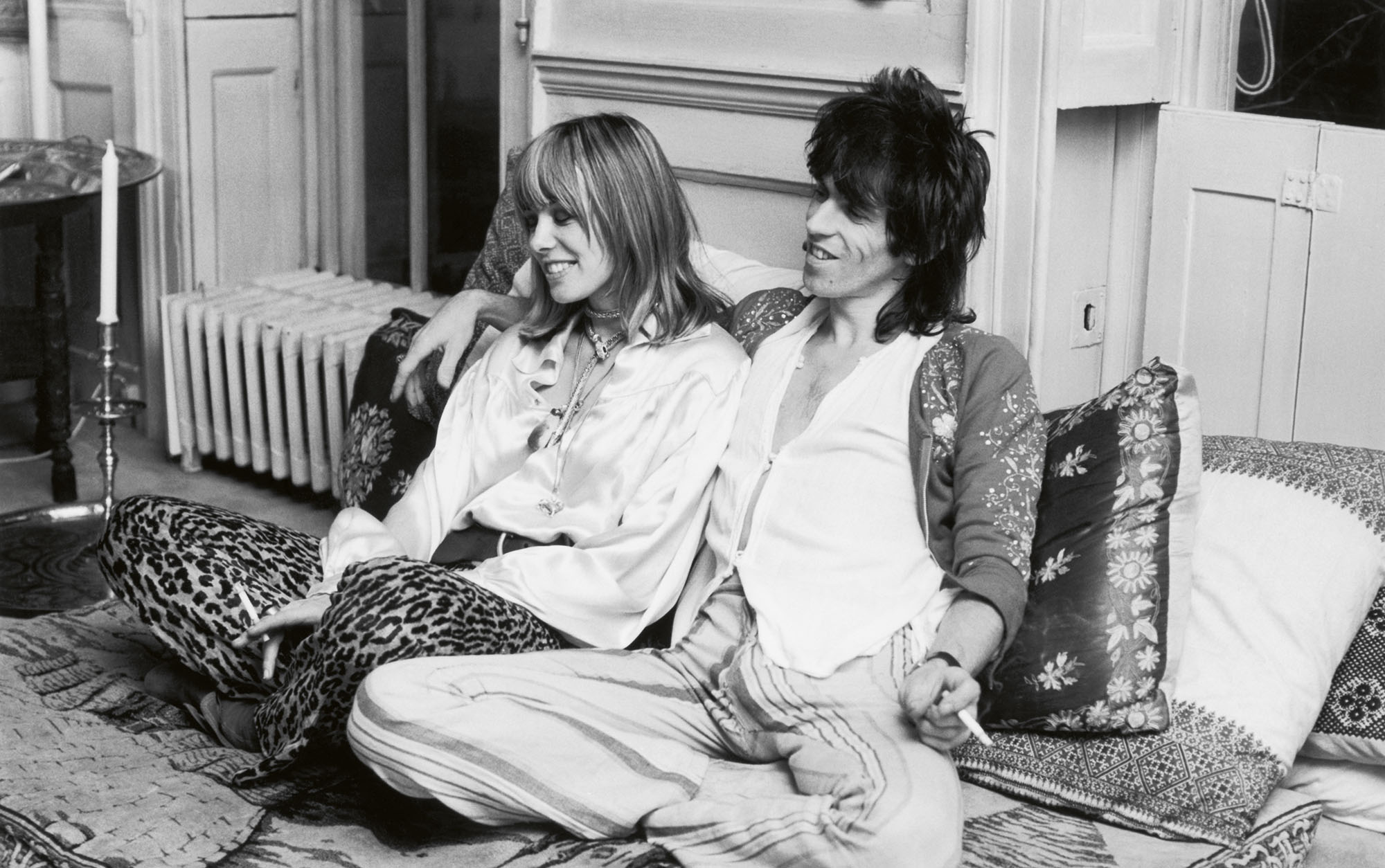
The Stones Women: Keith and Anita Pallenberg at his home in Cheyne Walk, Chelsea,
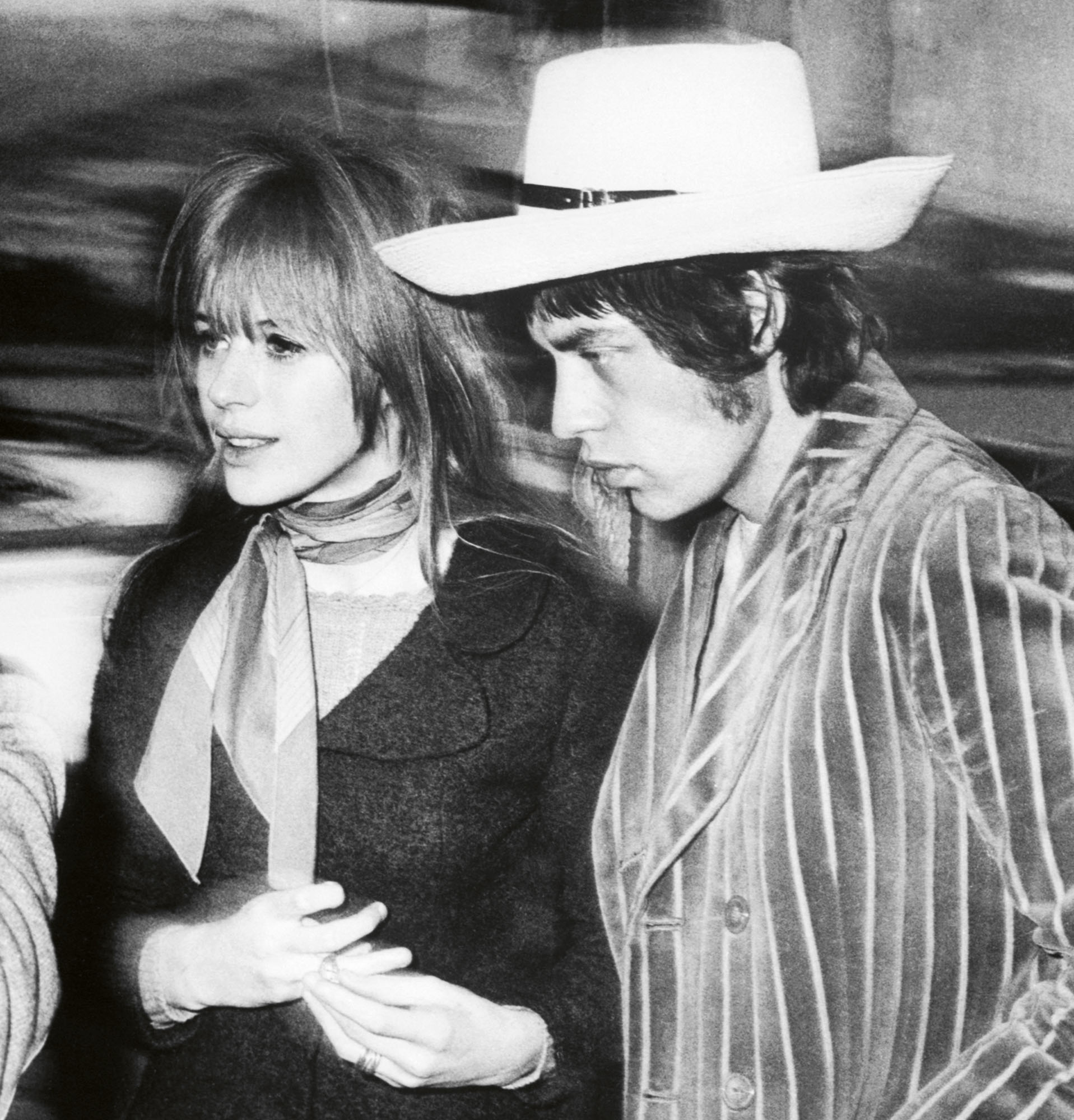
Mick and Marianne Faithfull
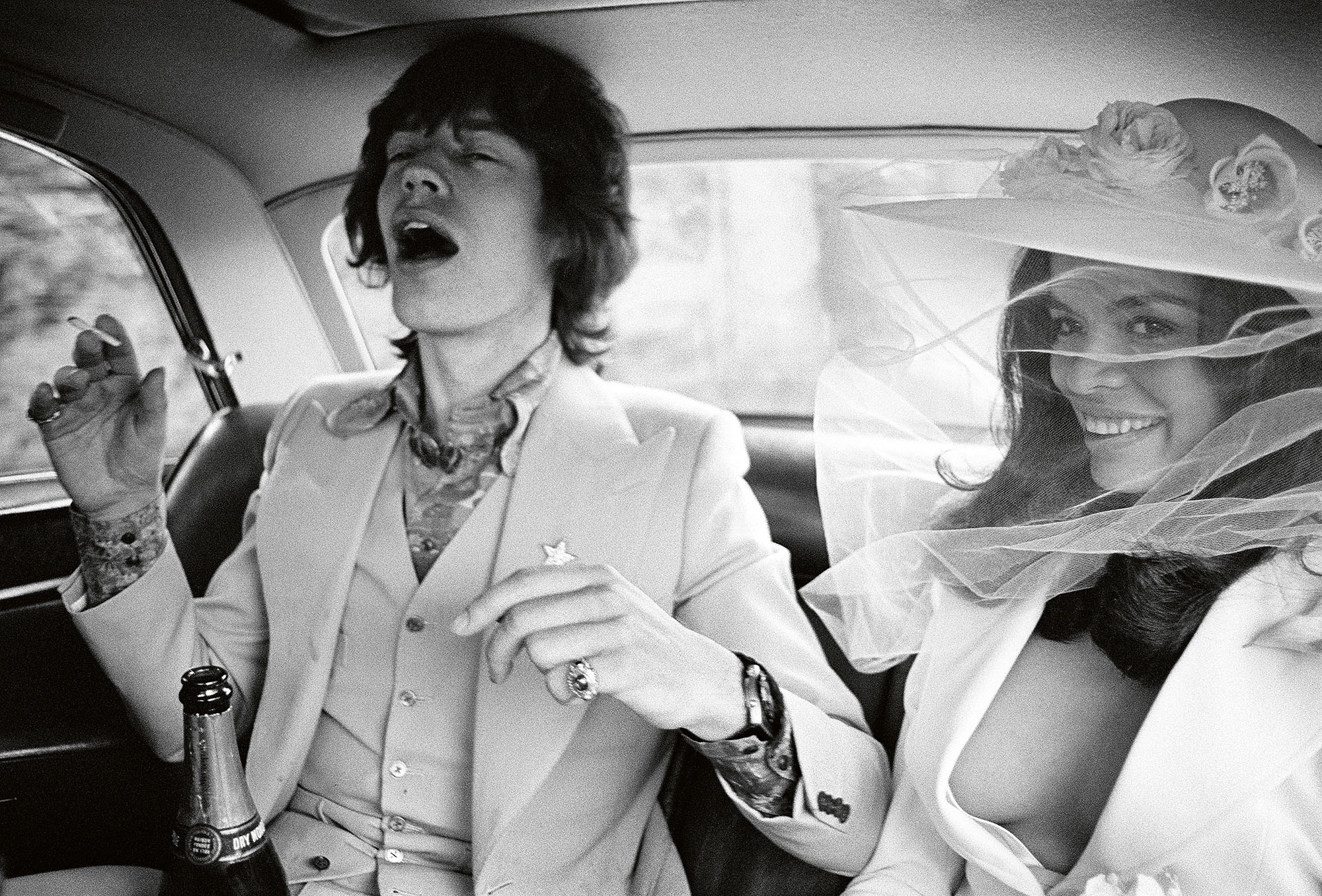
and Mick with the alluring Bianca on their wedding day in St Tropez. © Getty / McCarthy / Bettmann / Lichfield
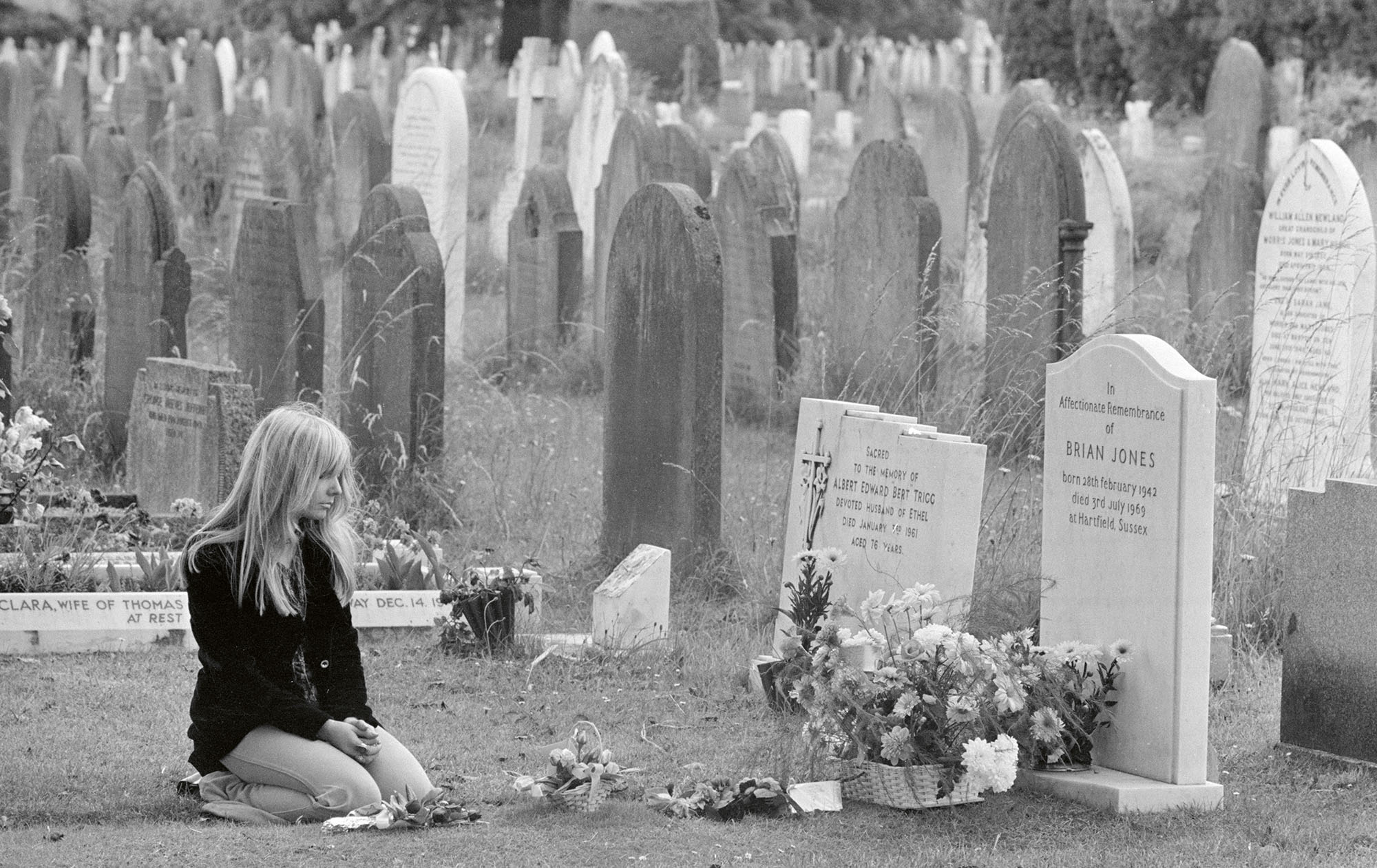
Five years after his death, a mourner kneels at Brian Jones’s unassuming grave. © Getty / Mirrorpix.
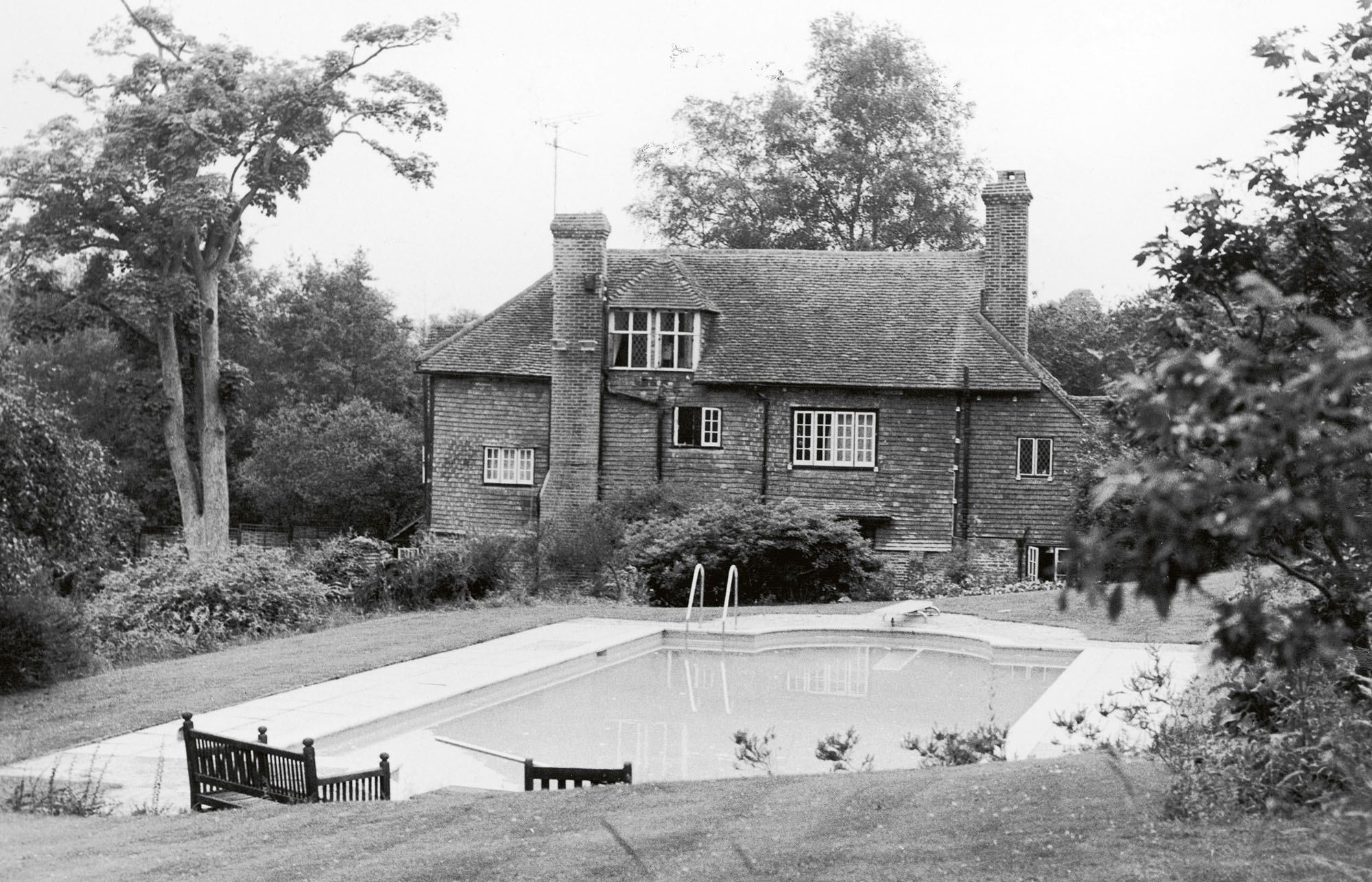
Brian died here, in the swimming pool of his home at Cotchford Farm, Sussex. © Getty / Jim Gray.
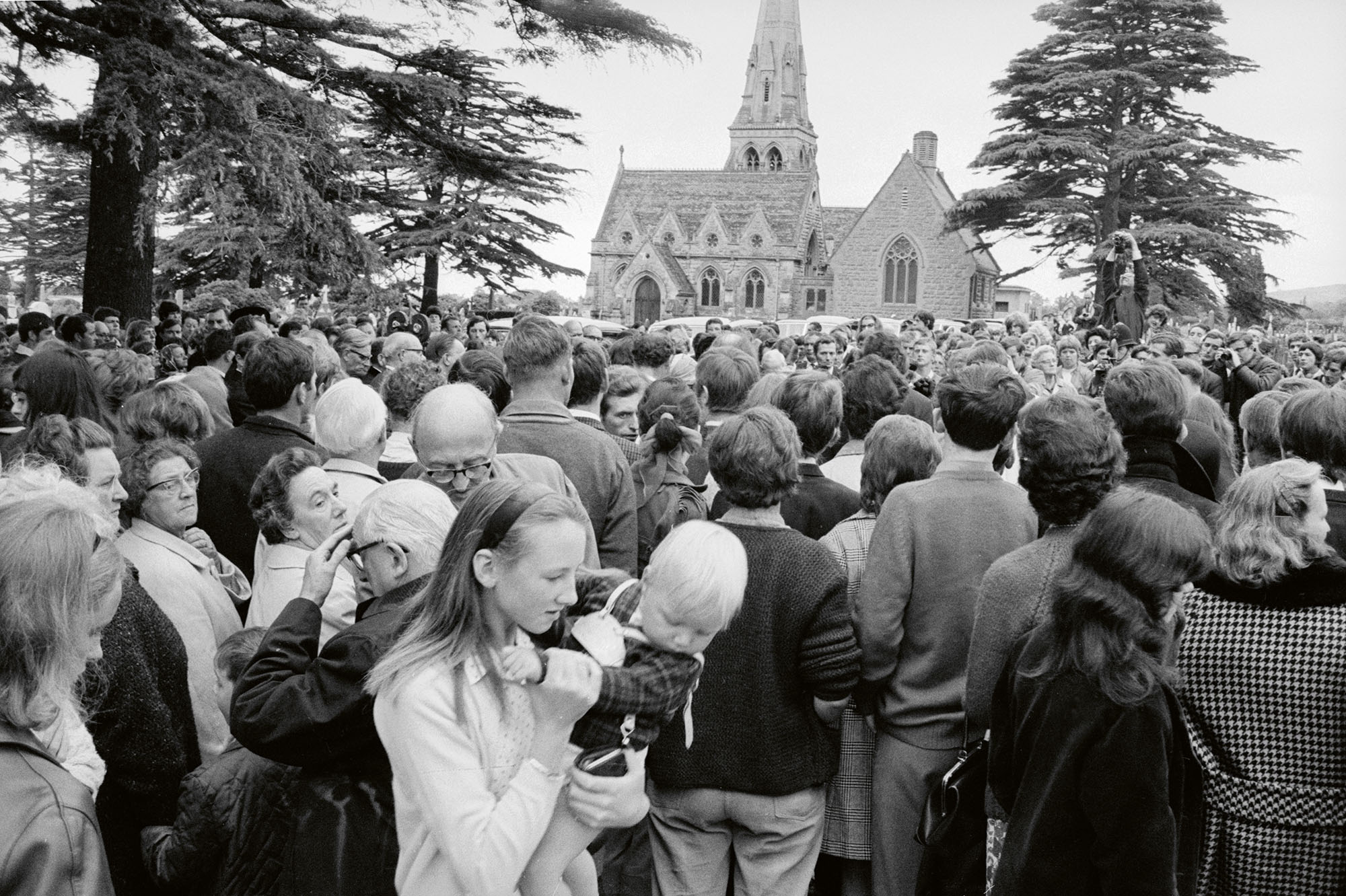
Suffice to say that, given the turnout, his funeral at Cheltenham Parish Church was standing room only. 1969. © Getty / Mirrorpix.
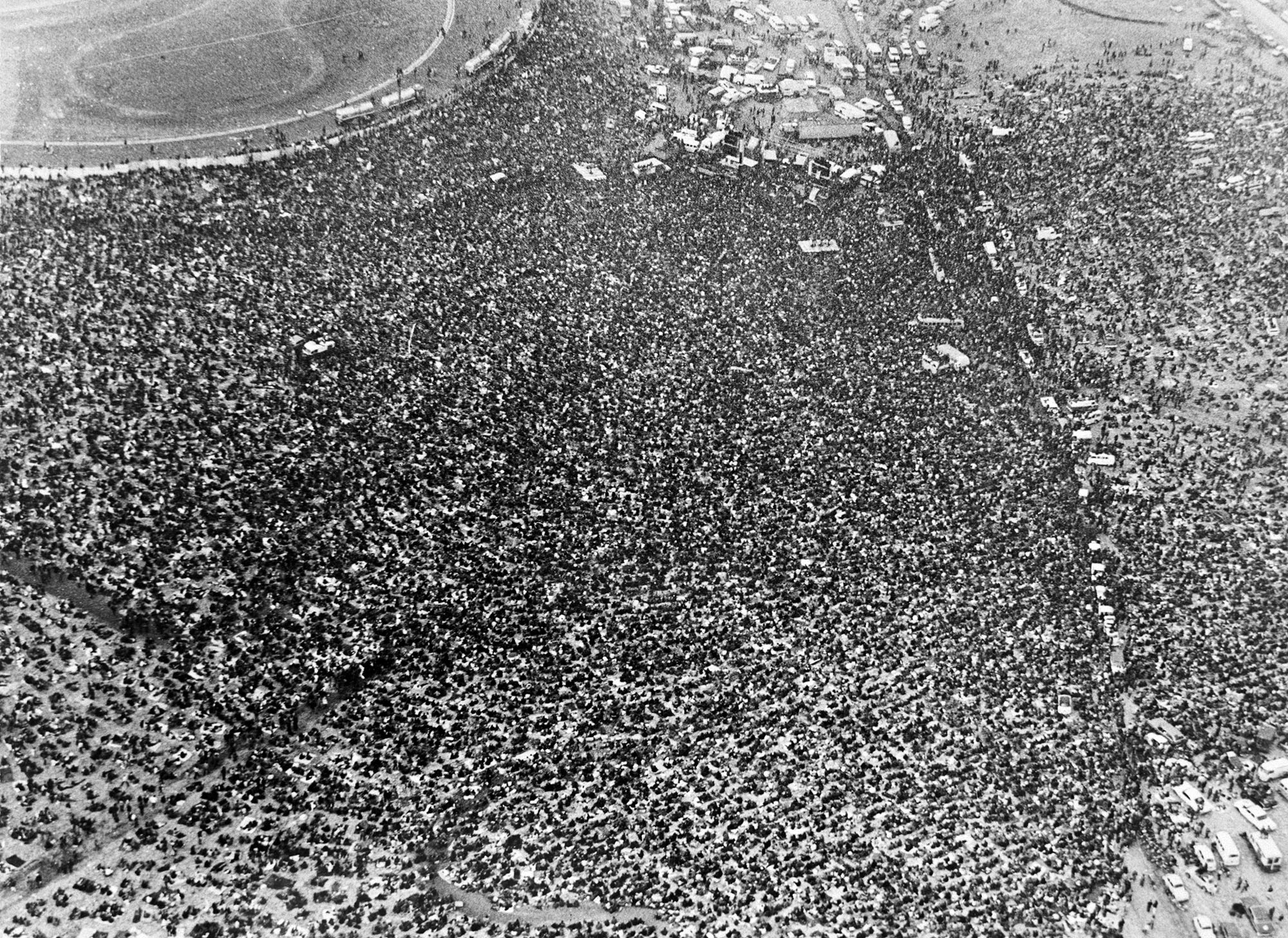
Altamont: the death of the sixties. This is what a crowd of 300,000 to 500,000 people looks like from above the Californian speedway. © Getty / Bettmann
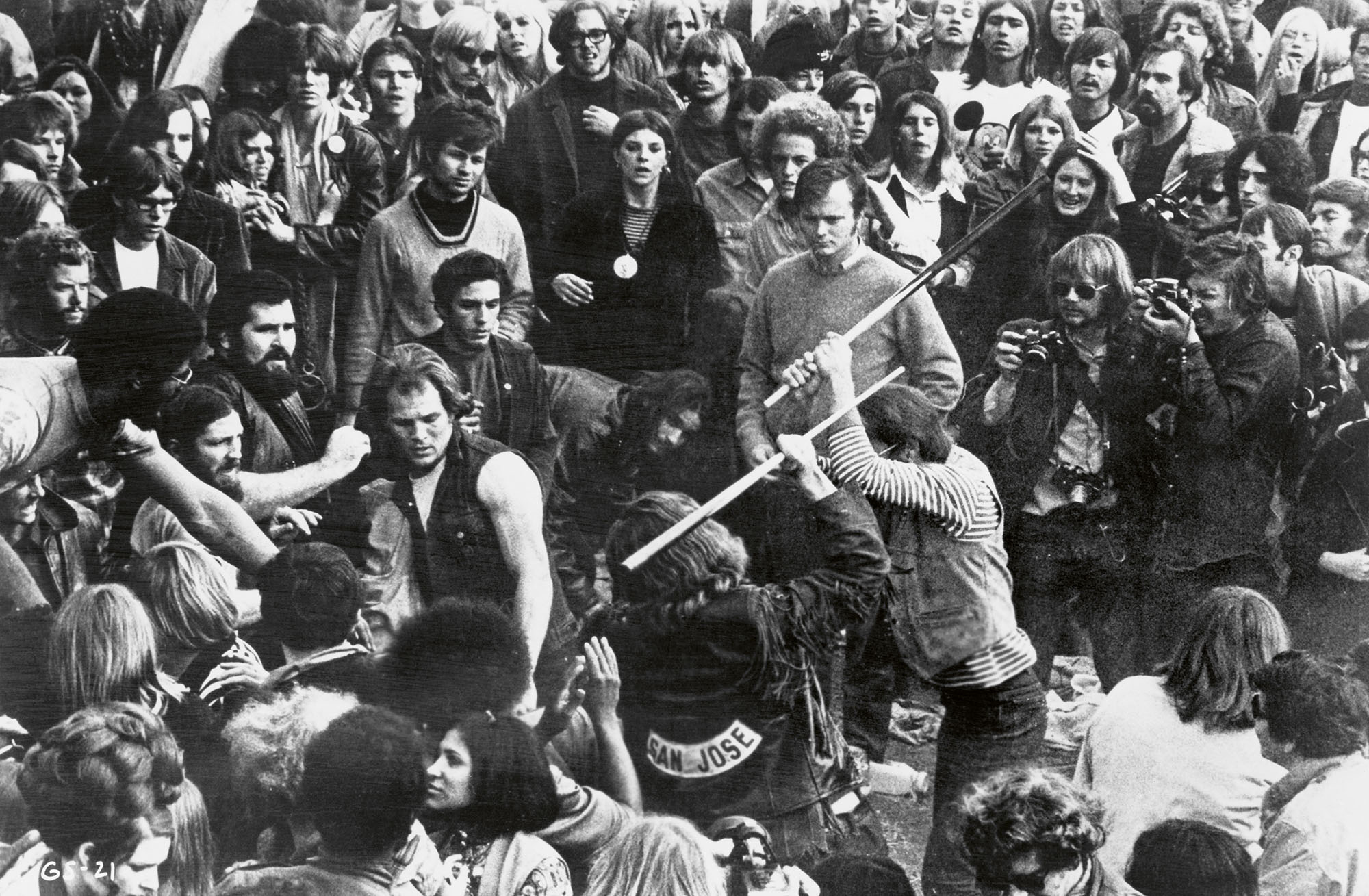
Audience members looking on as Hells Angels beat a fan with pool cues. Tragically, it was not to be the last, or the worst, of the violence that day. © Getty / 20th Century Fox
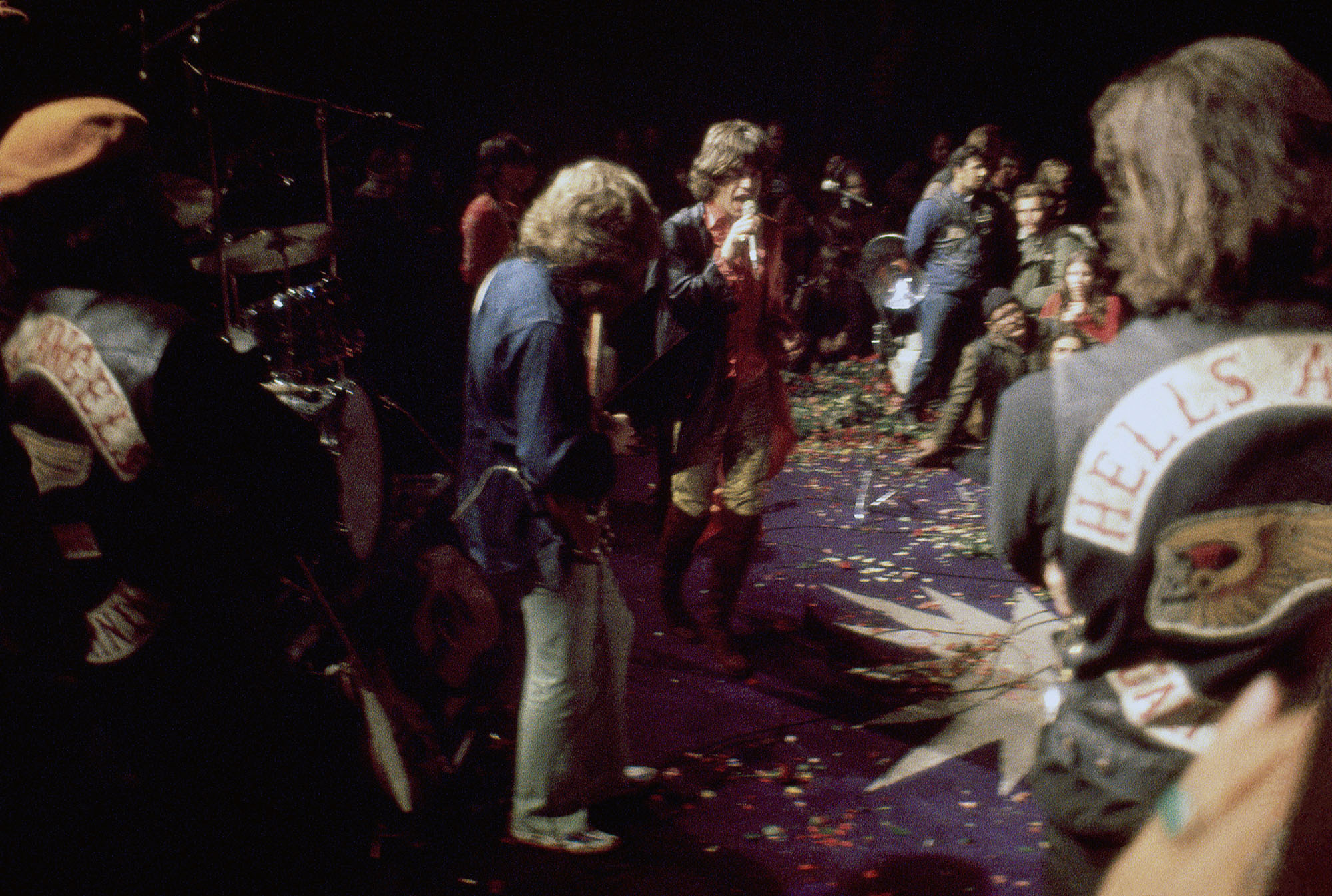
Mick Taylor and Jagger can be seen onstage between the shoulders of two of the burly Hells Angels who were tasked, disastrously, with security for the concert. © Getty / Icon And Image
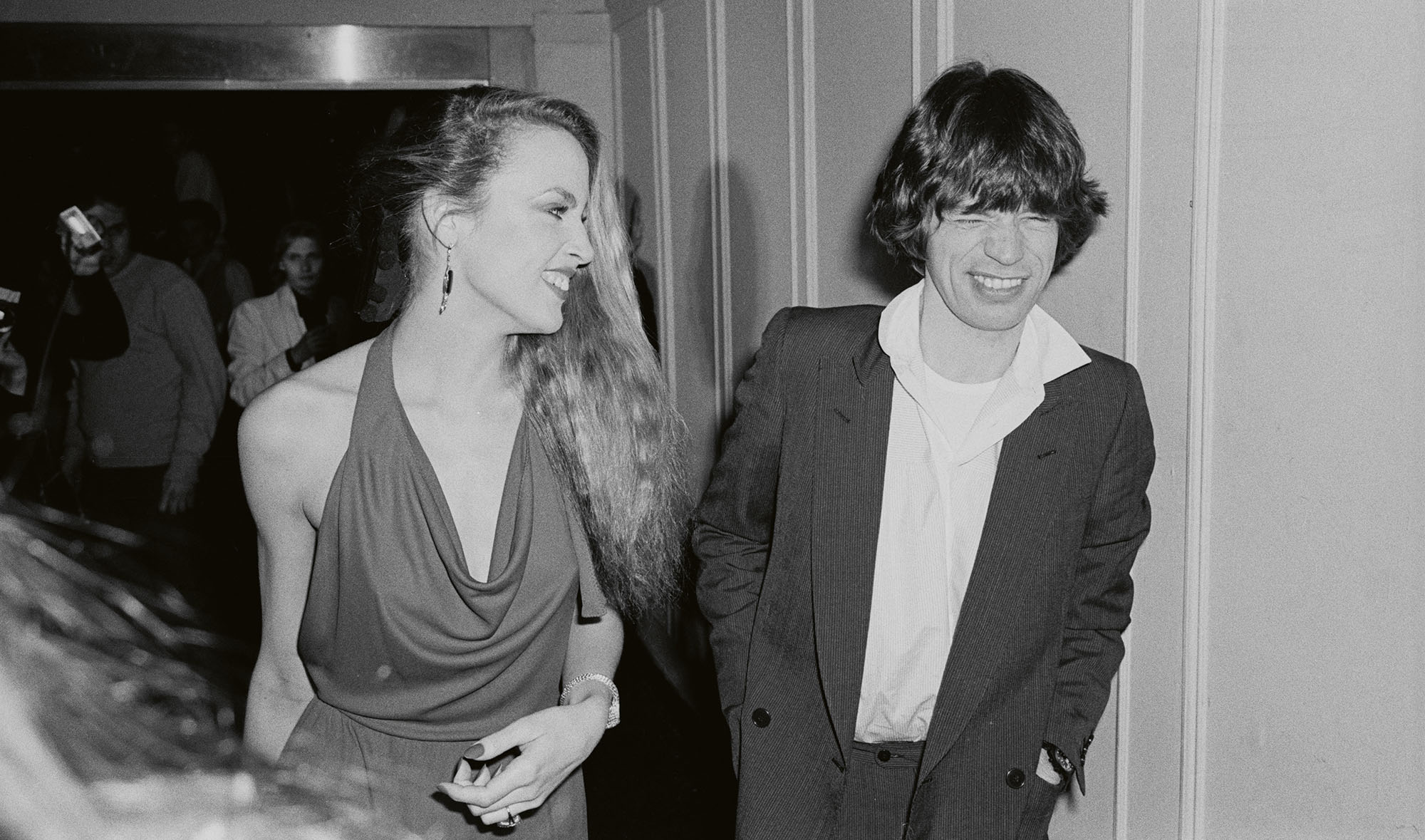
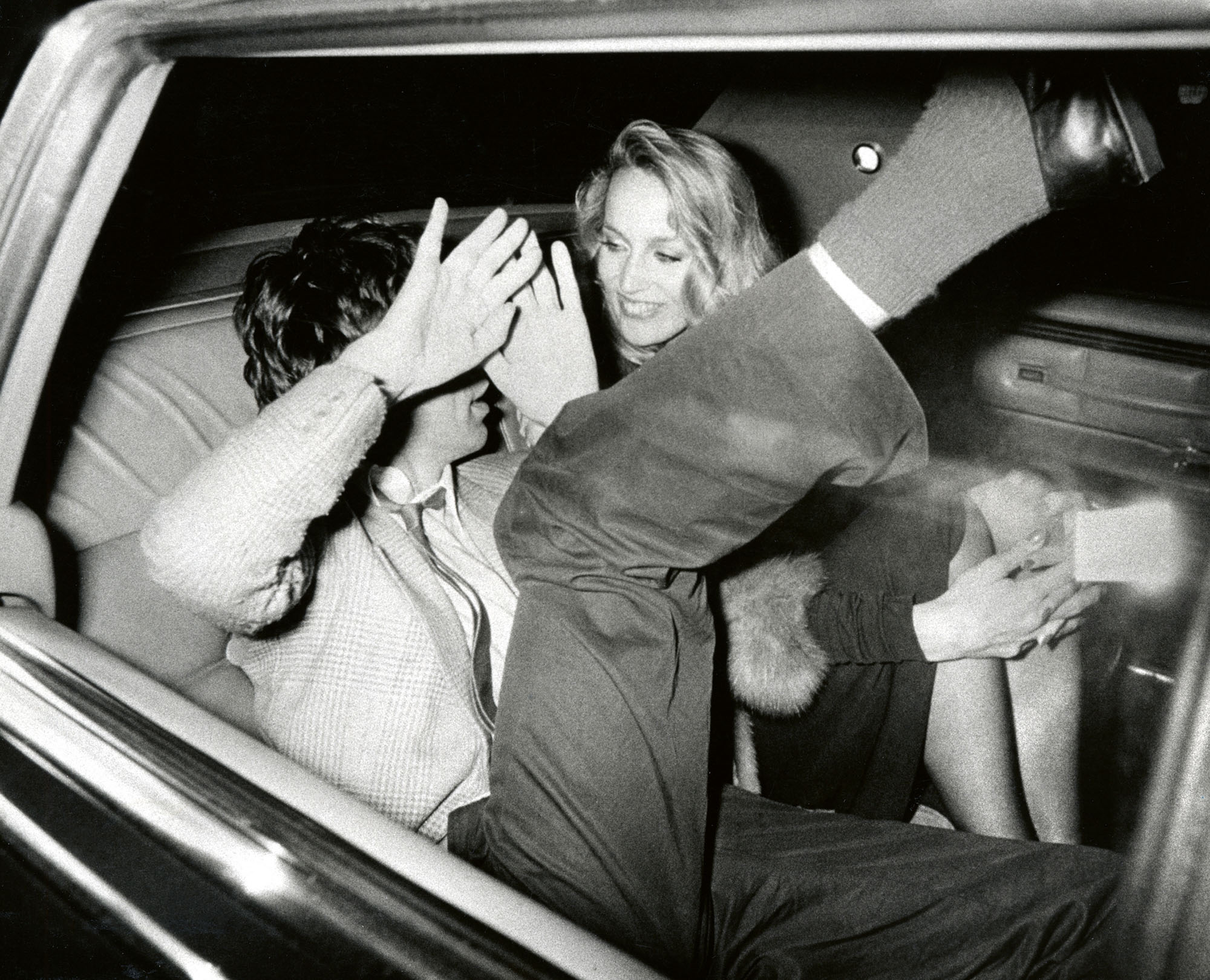
Above and following: Mick, and the woman who thought she was his wife: Jerry Hall, mother of four of his children. © Getty / Antoinette Norcia / Ron Galella.
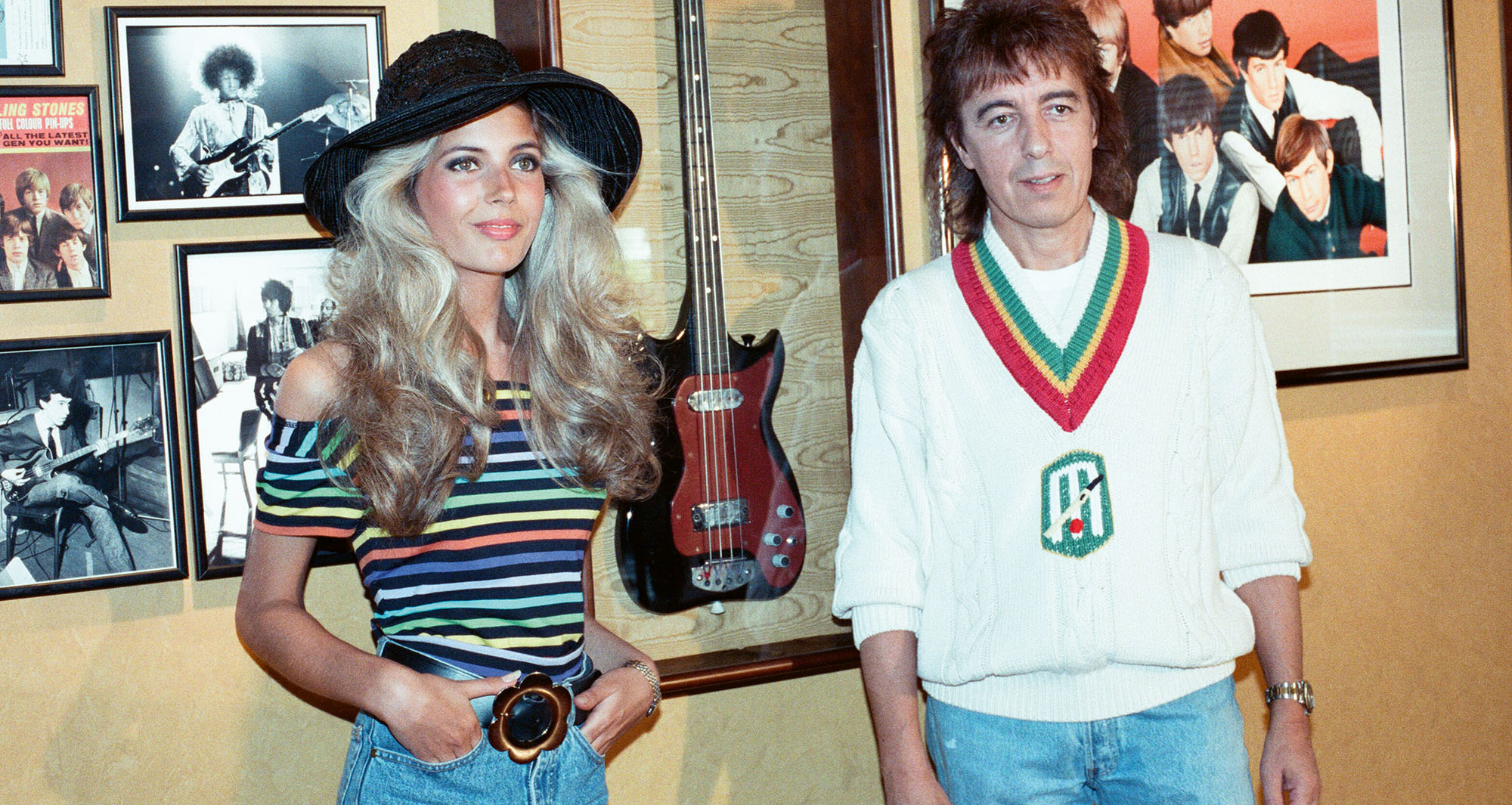
Bill Wyman with his bride-to-be, Mandy Smith – now at last over 18 and, in theory, presentable to the world. At Bill’s restaurant in Kensington. May 1989. © Getty / Mirrorpix.

Jerry and the pacemaker. © Getty / Neil Mockford.
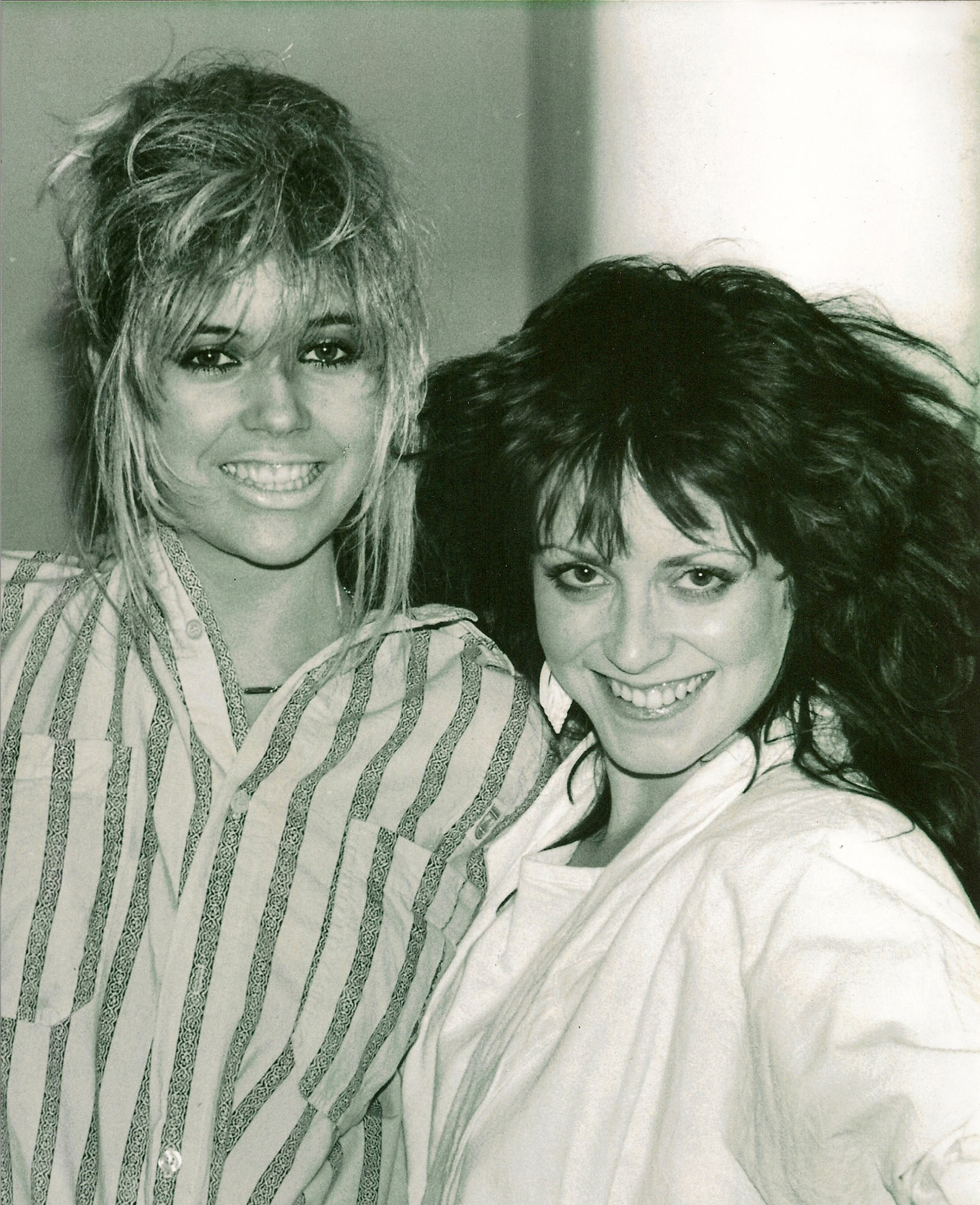
The author with Mandy Smith. Taken at a promo shoot for Wyman’s fund-raising all-star album, Willie and the Poor Boys. Fulham, 1985. Author collection.
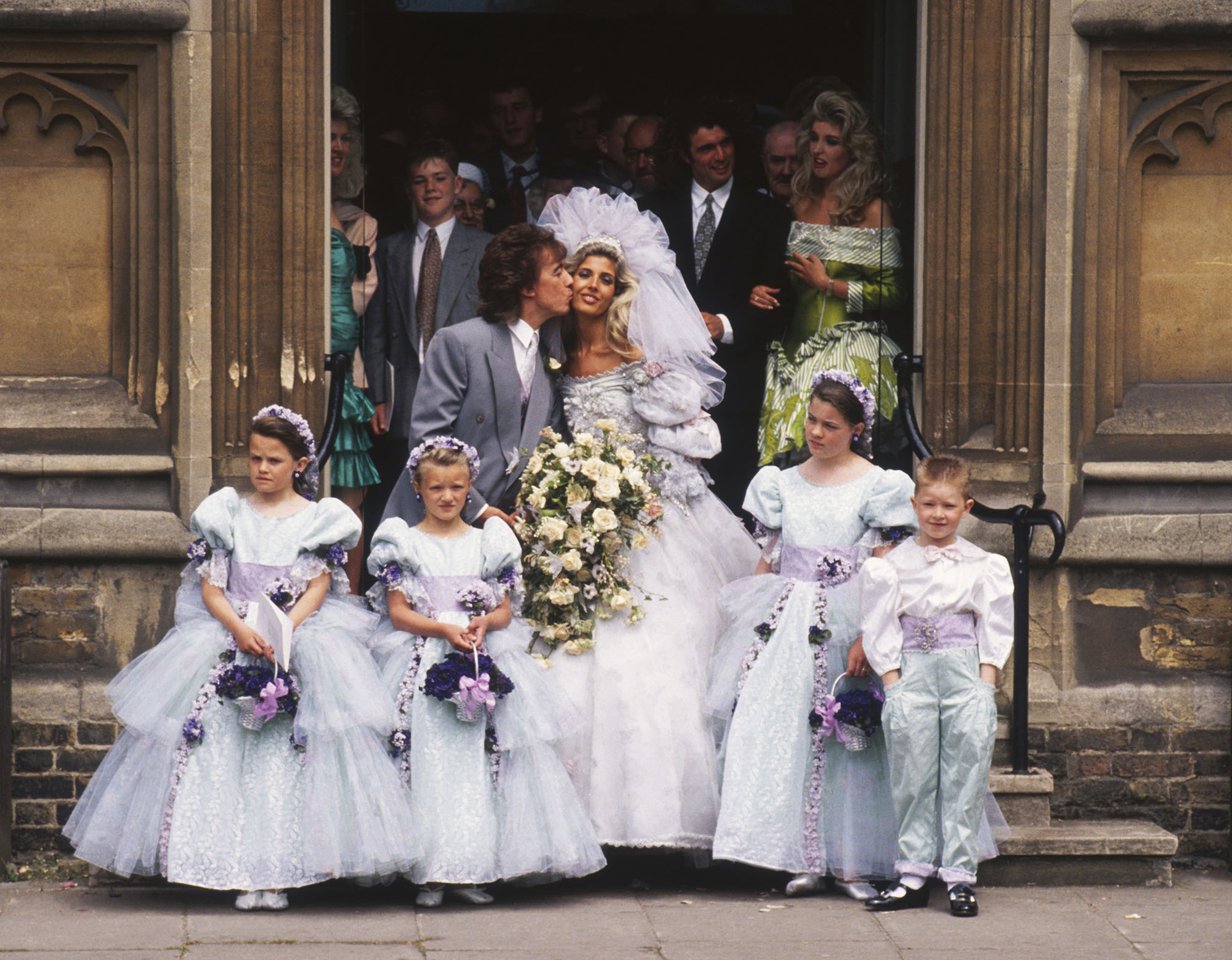
5 June 1989, the day Bill married eighteen-year-old Mandy Smith, thirty-four years his junior. © Getty / Dave Hogan.
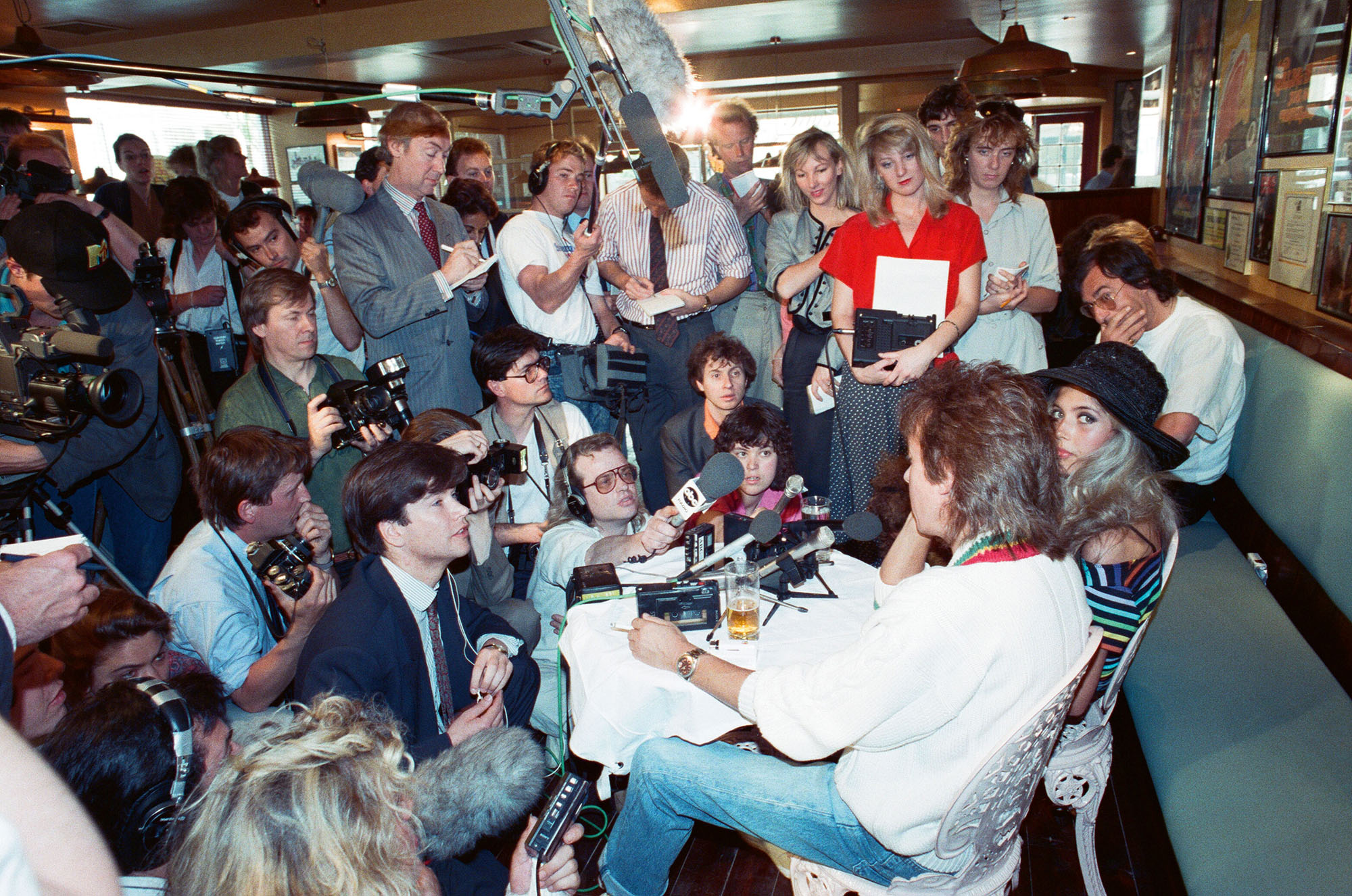
If a picture is worth a thousand words, Mandy’s glance to camera here as the world’s politely incredulous media crowds in on them authors a book of its own. © Getty / Mirrorpix.
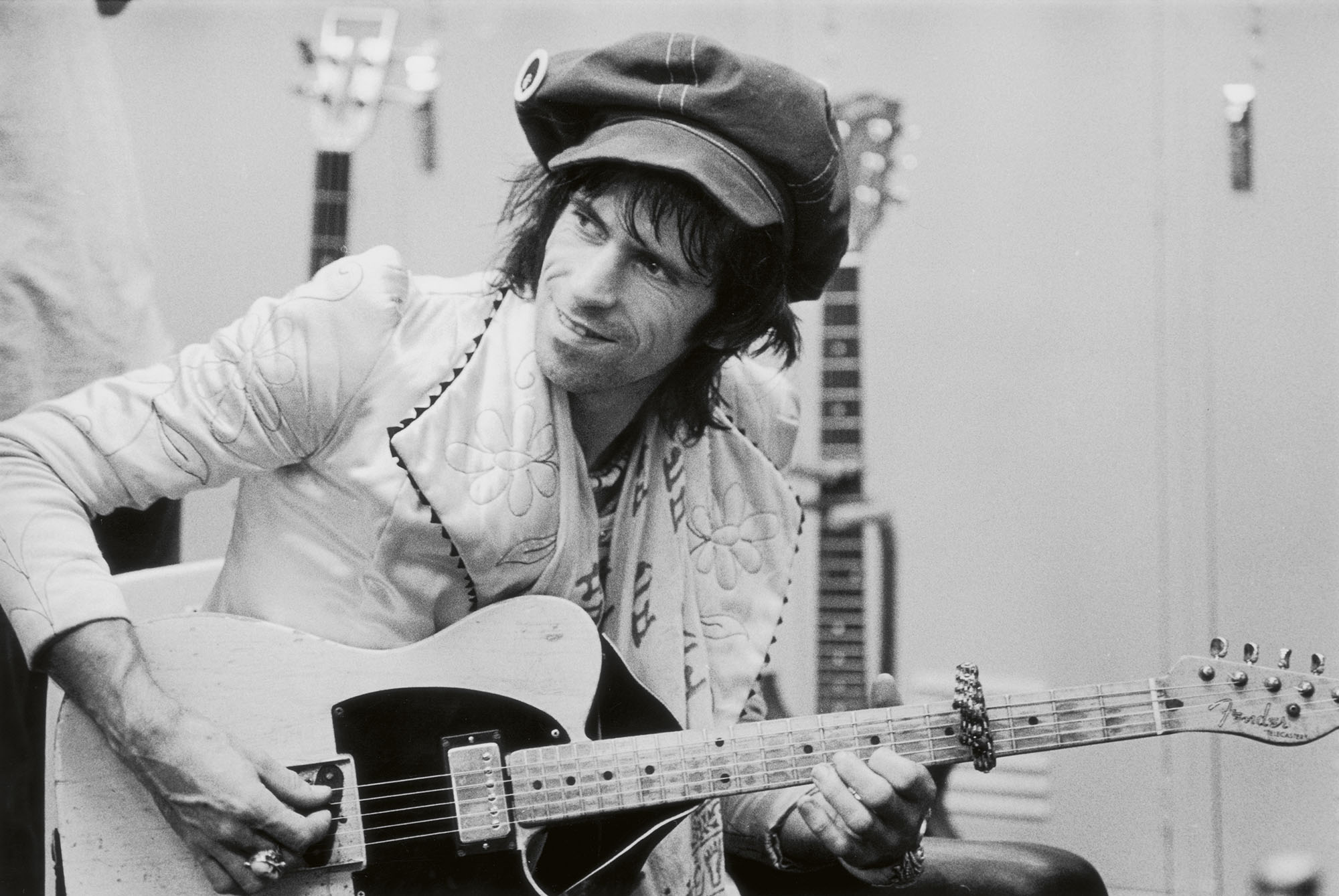
Keith and one of his iconic five-string Telecasters, perfect for the open-G tuning he favours on so many classic Stones songs. © Getty / Christopher Simon Sykes
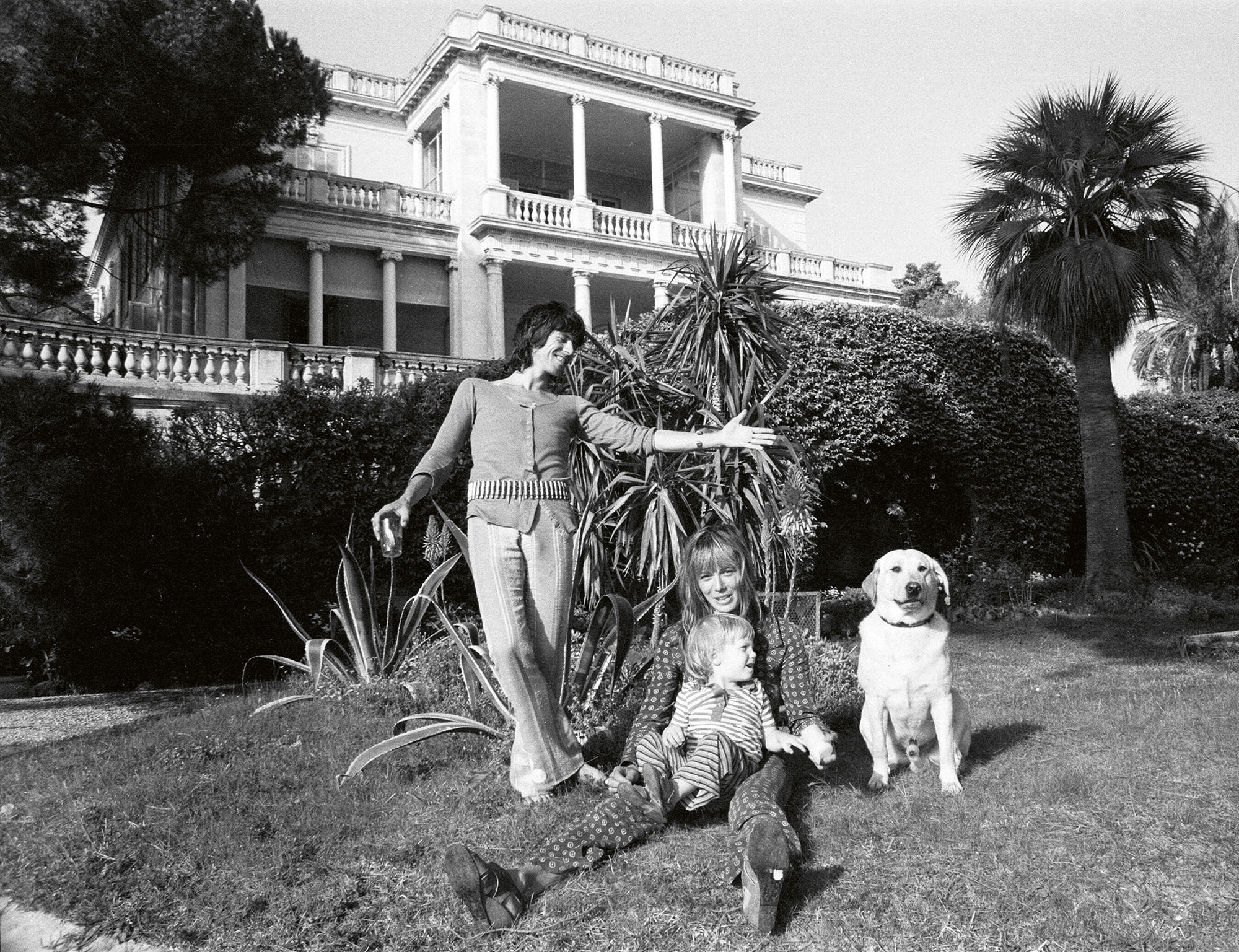
Keith, Anita and their son Marlon, pictured at Nellcote, their villa above Villefranche-sur-Mer – where the Rolling Stones served their famous ‘exile’. © Getty / Mirrorpix
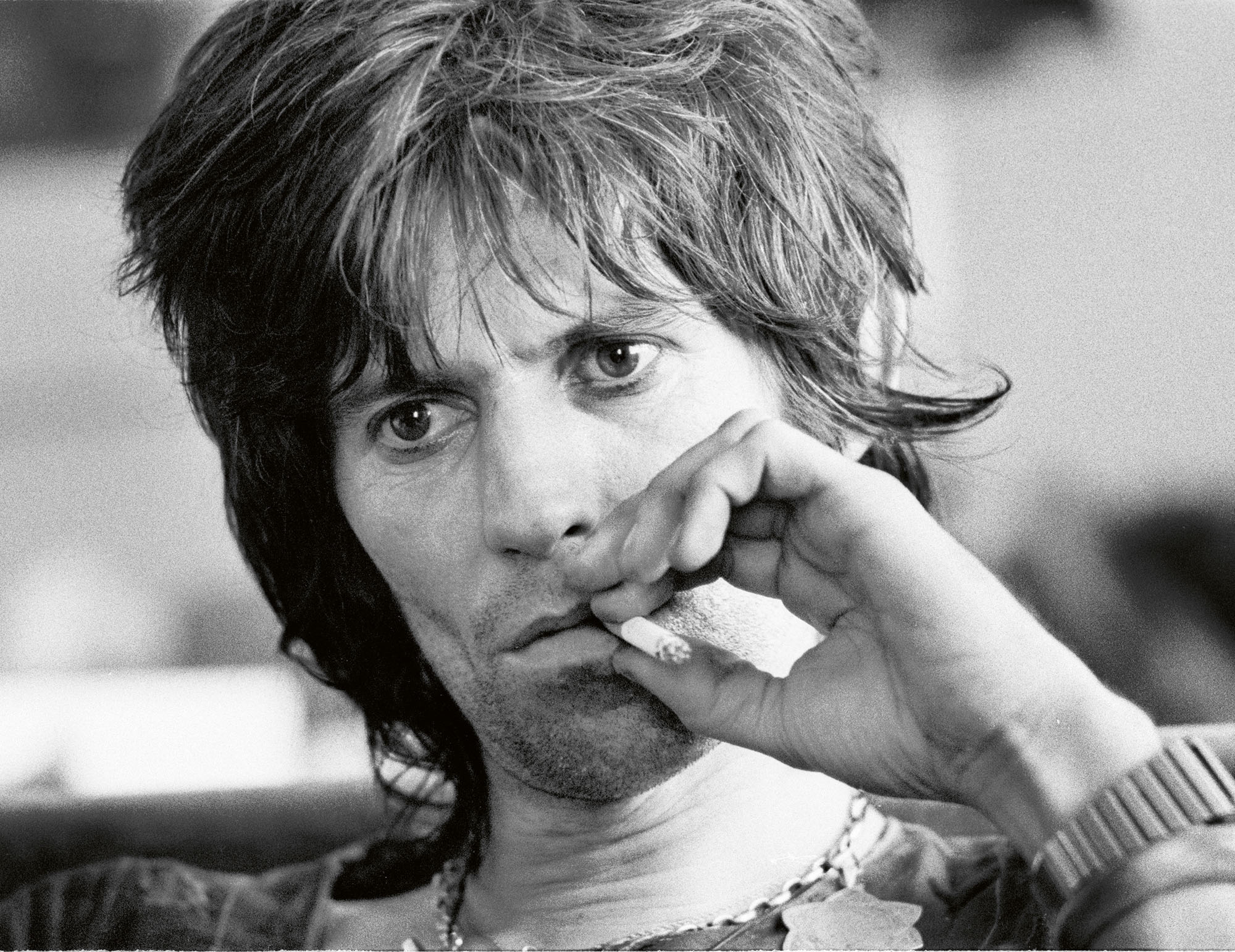
The thousand-yard stare. © Getty / Gijsbert Hanekroot.
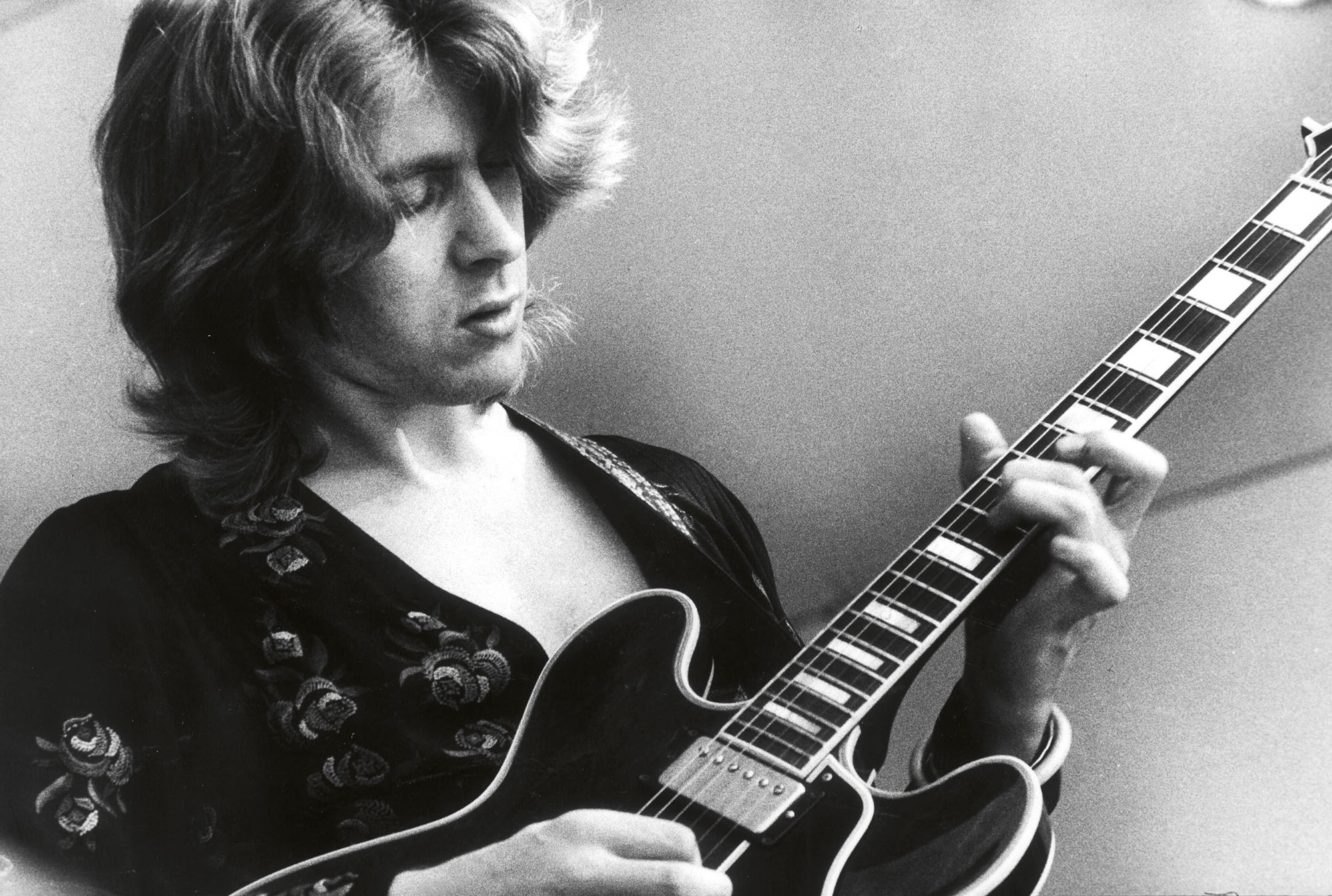
Mick Taylor: elegant, fluid, bluesy – the finest guitarist the Stones ever had. Discarded lover of Mick Jagger. © Getty / Michael Putland.
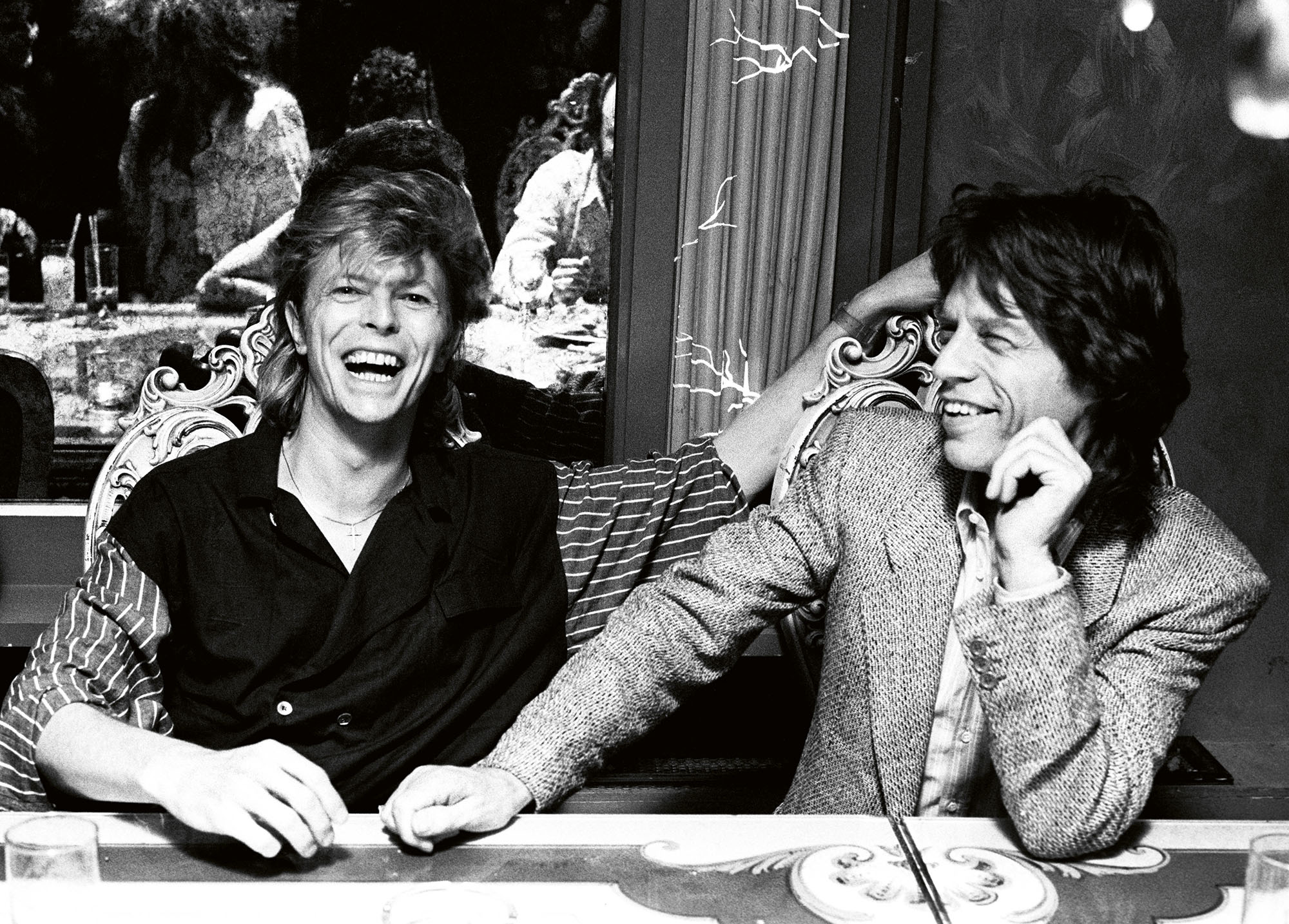
Another, rather more famous, of Mick’s historic conquests. Chemistry still crackles. © Getty / Denis O’Regan.
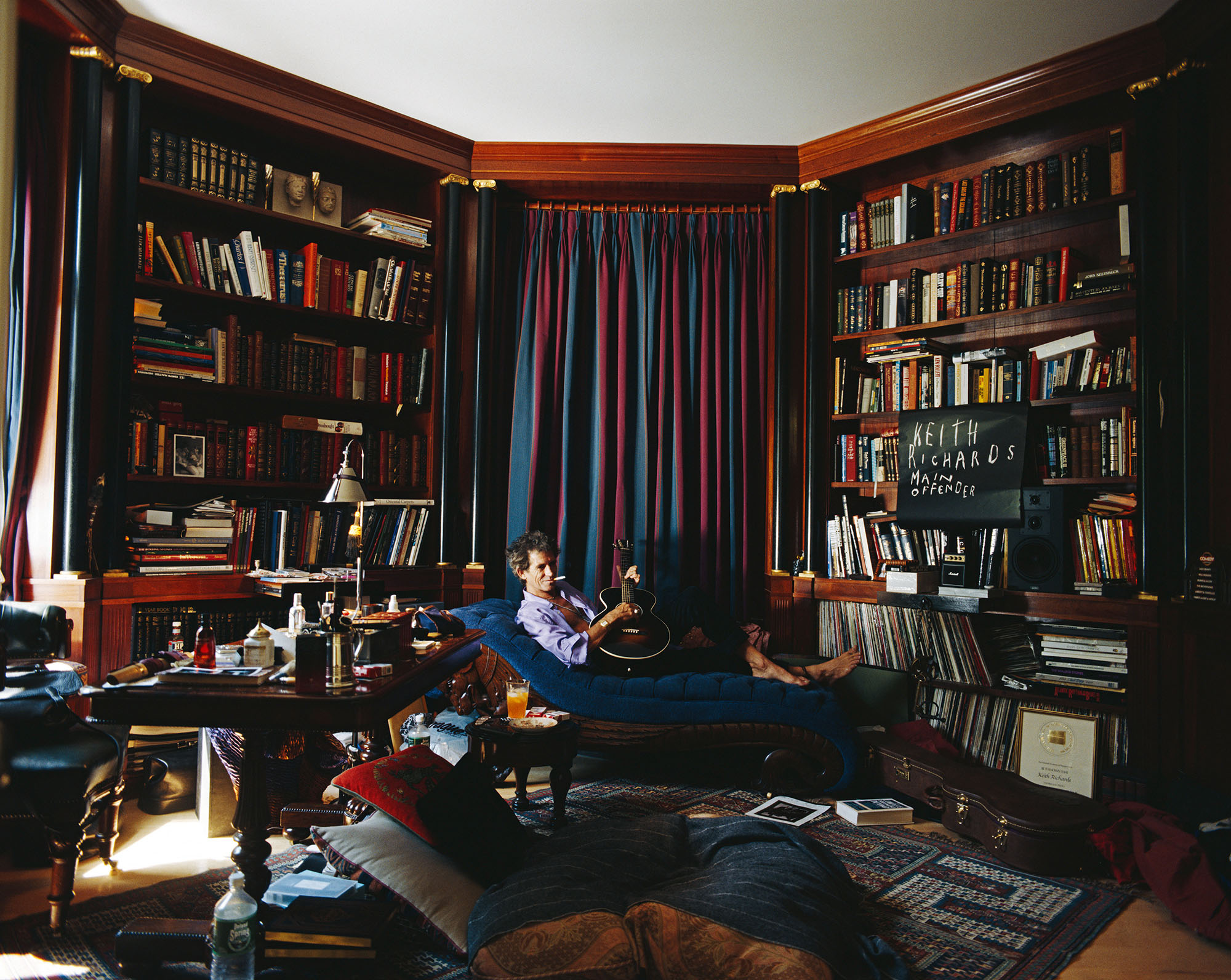
Keith Richards reclining, acoustic in hand, in the beautiful library of his Connecticut home. © Getty / Christopher Simon Sykes..
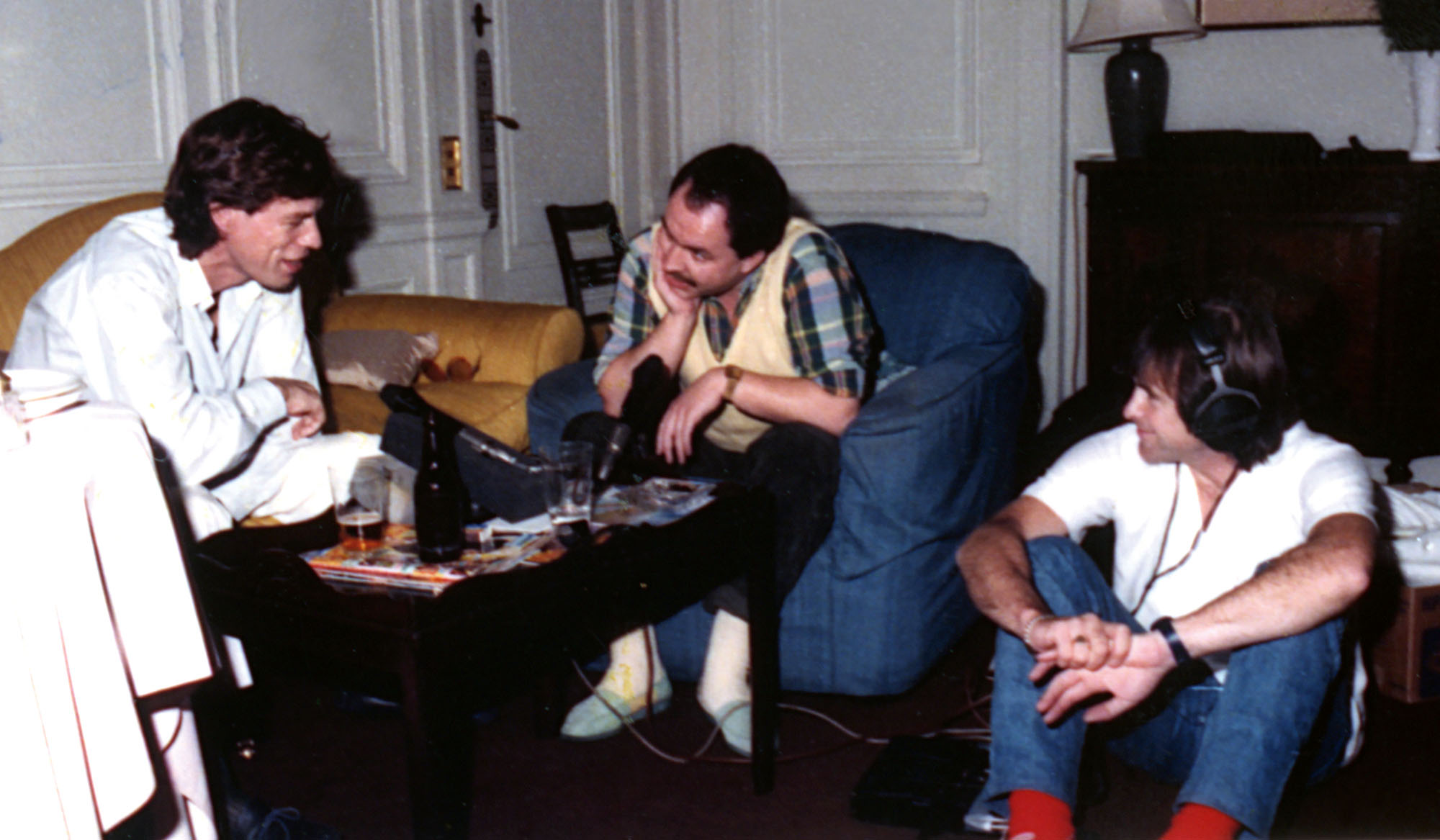
Producer Jeff Griffin and presenter Andy Peebles interviewing Mick Jagger about the Stones’ Undercover album. Savoy Hotel, London, 4 October 1983. © Malcolm Hill
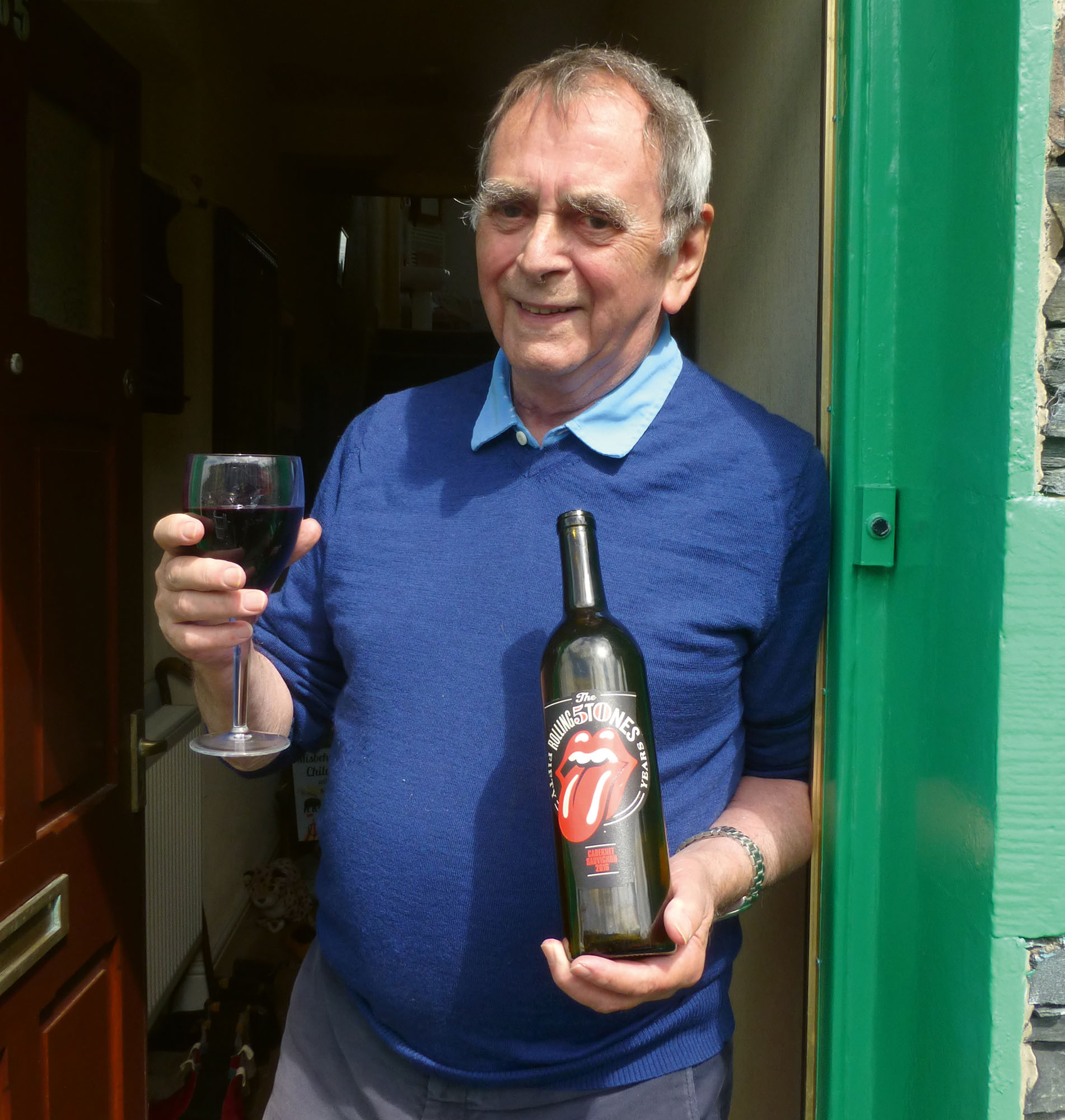
Peter Myers, New York grocer and personal friend of Keith Richards, samples his stash of Stones Cabernet Sauvignon 2016 back home in Keswick, Cumbria. Author collection.
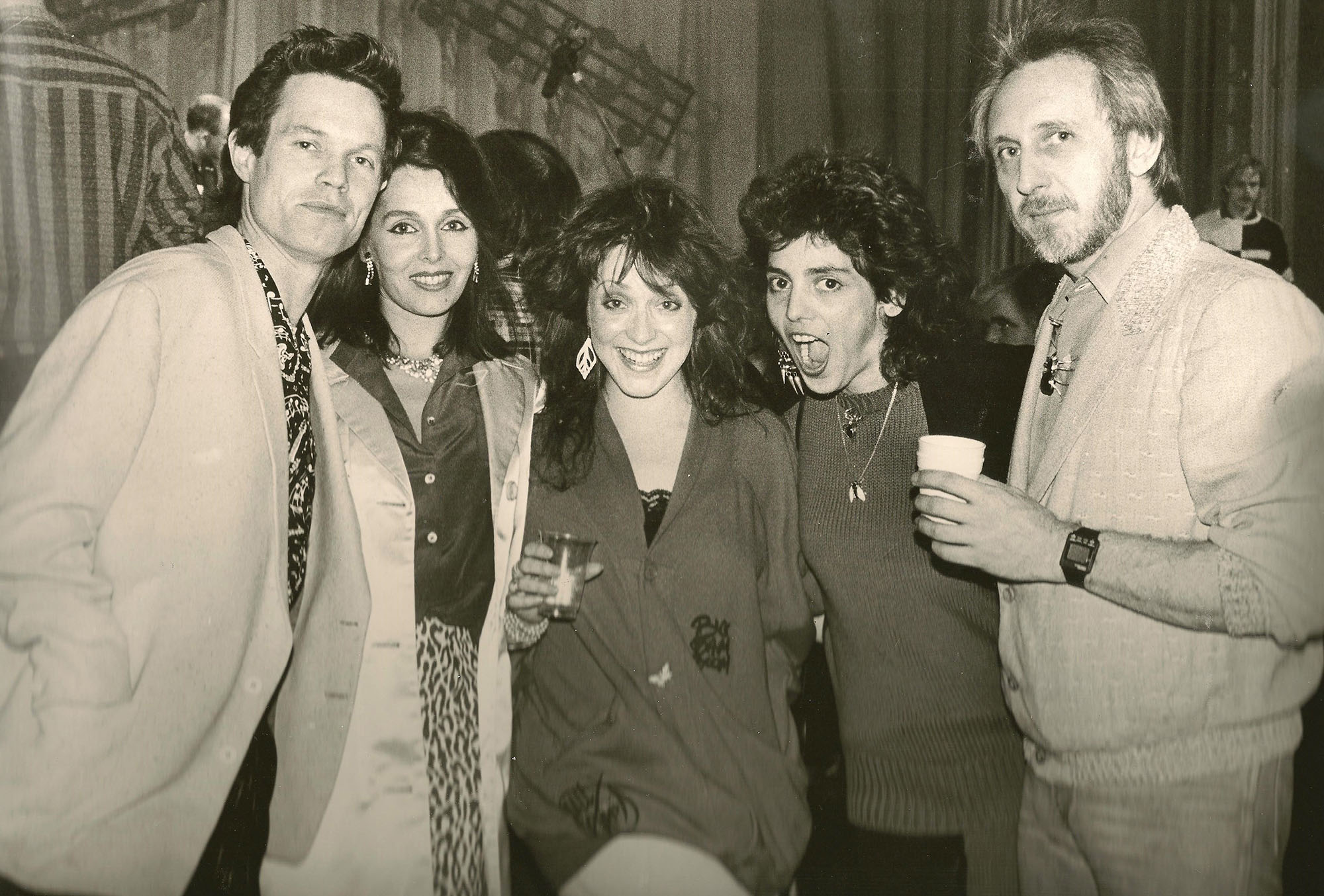
The author (centre), with (l-r) Chris Jagger (Mick’s brother), his wife Kari-Ann Muller, Maxene Harlow and her late partner, the Who’s bassist John Entwistle. Author collection.
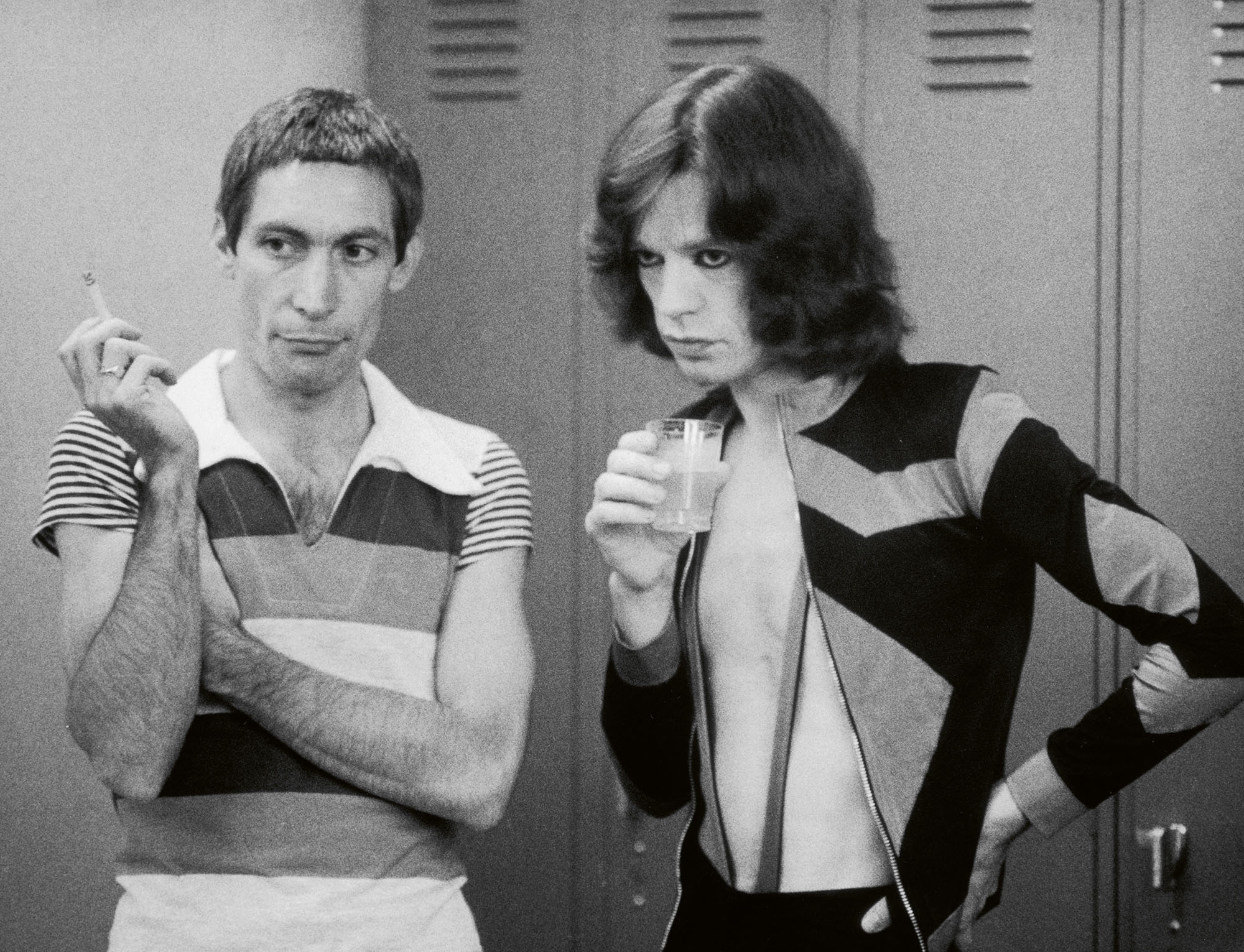
A page for Charlie: ever the antithesis of peacocking Mick Jagger,
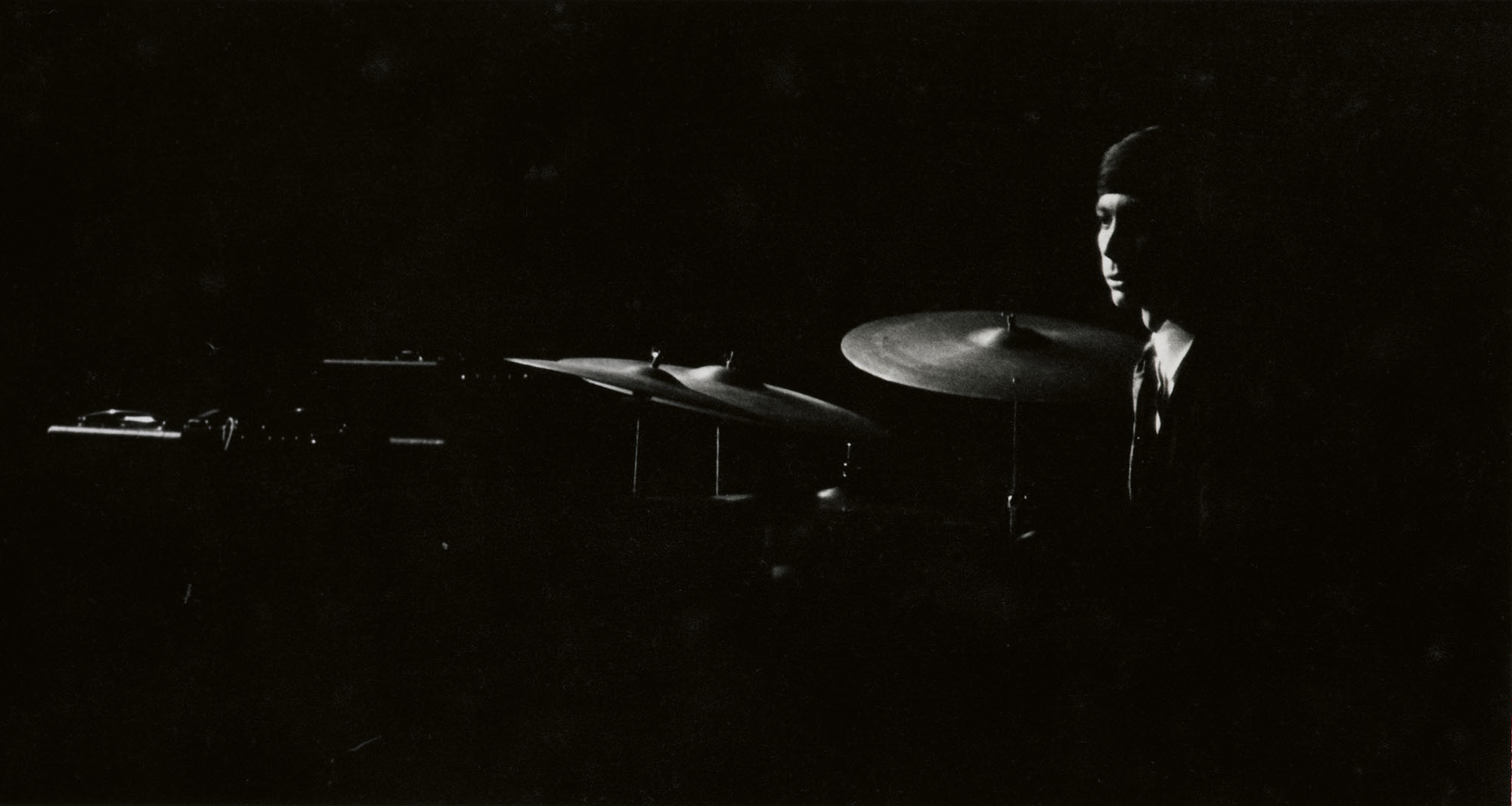
eternally keeping the beat in the shadows
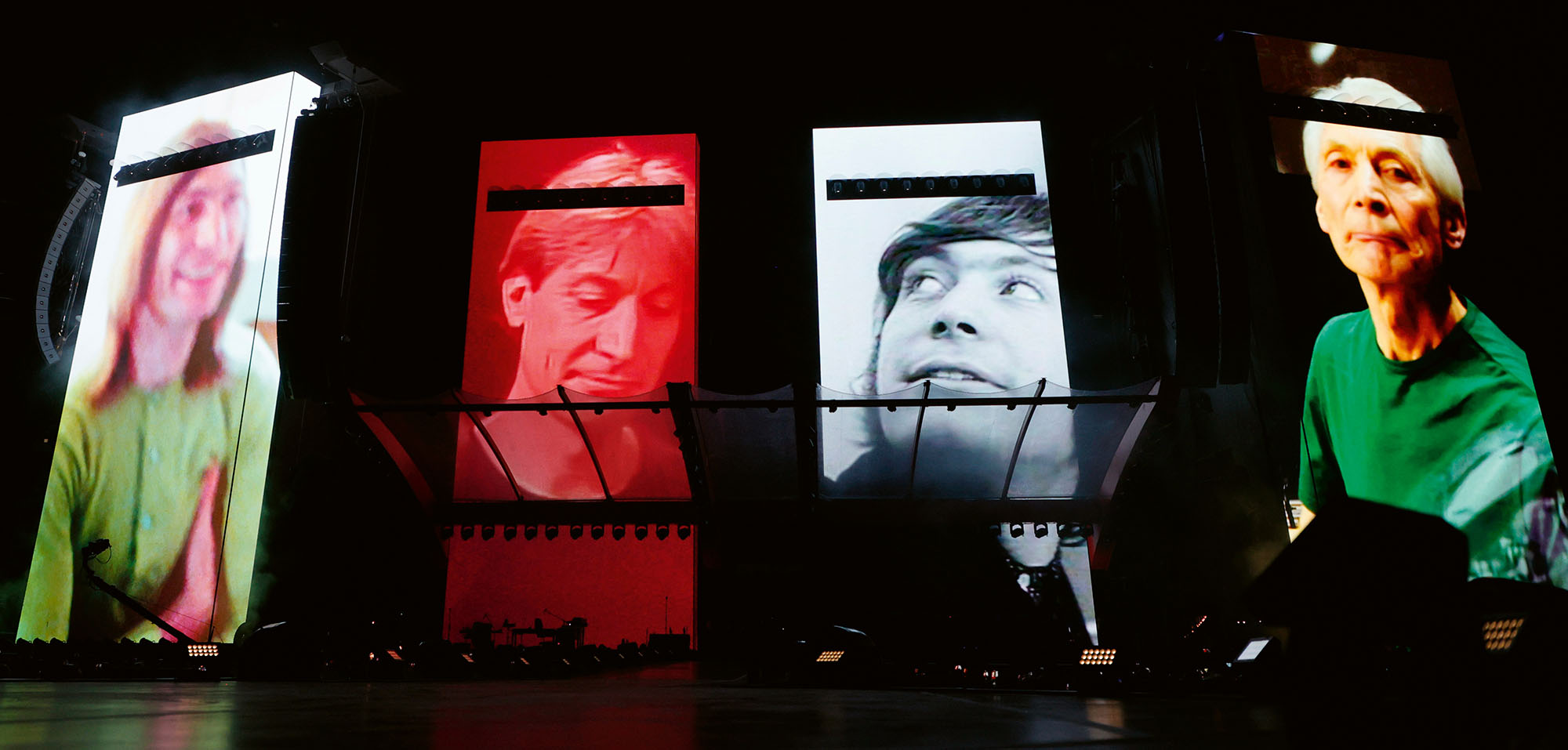
and, now, looming large over what remains of the Stones today. © Getty / Christopher Simon Sykes / Fiona Adams / Ethan Miller
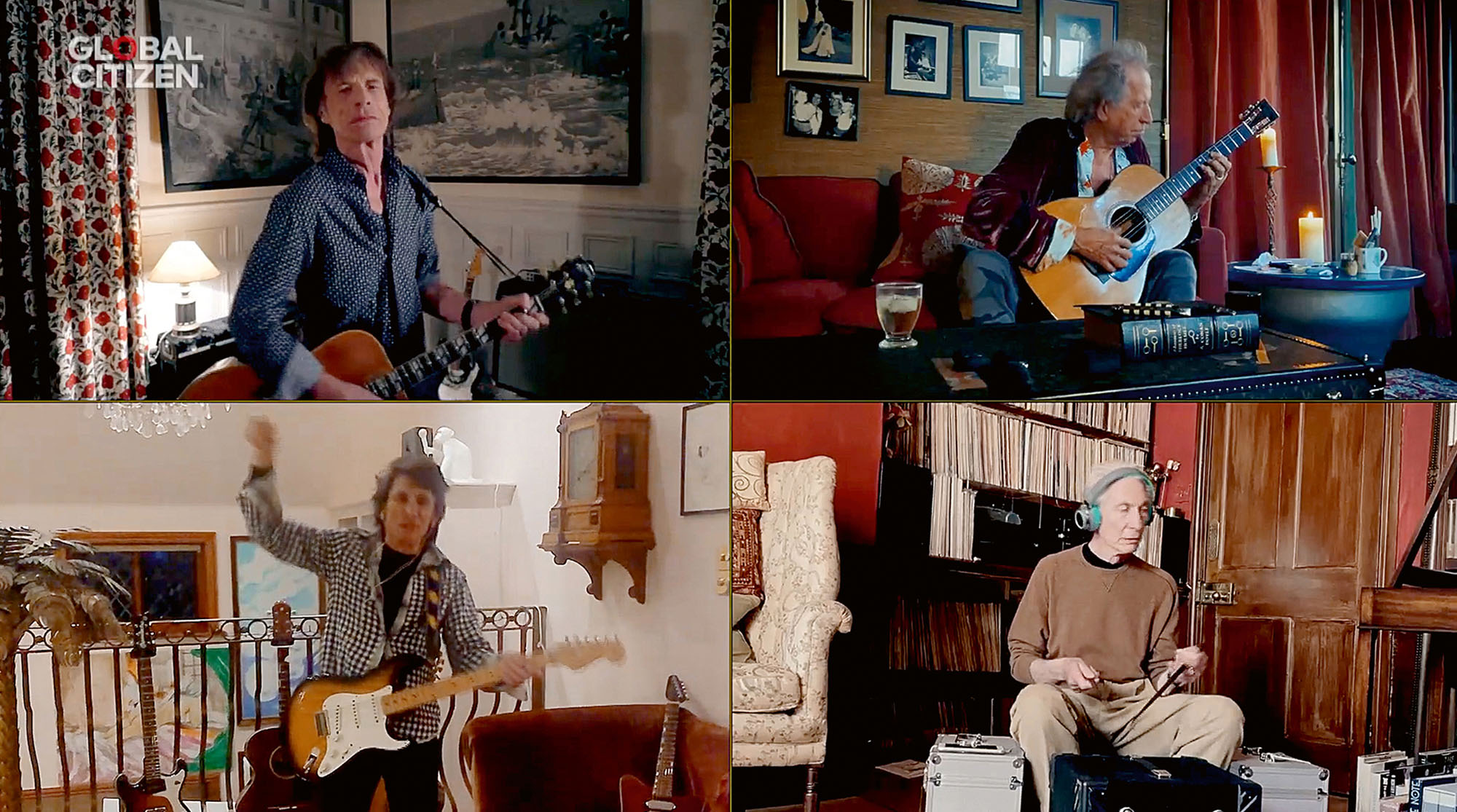
Even Covid-19 couldn’t stop the Rolling Stones juggernaut, as evidenced by their participation in an online concert at the height of lockdown, in aid of frontline healthcare workers. 18 April 2020. © Getty.
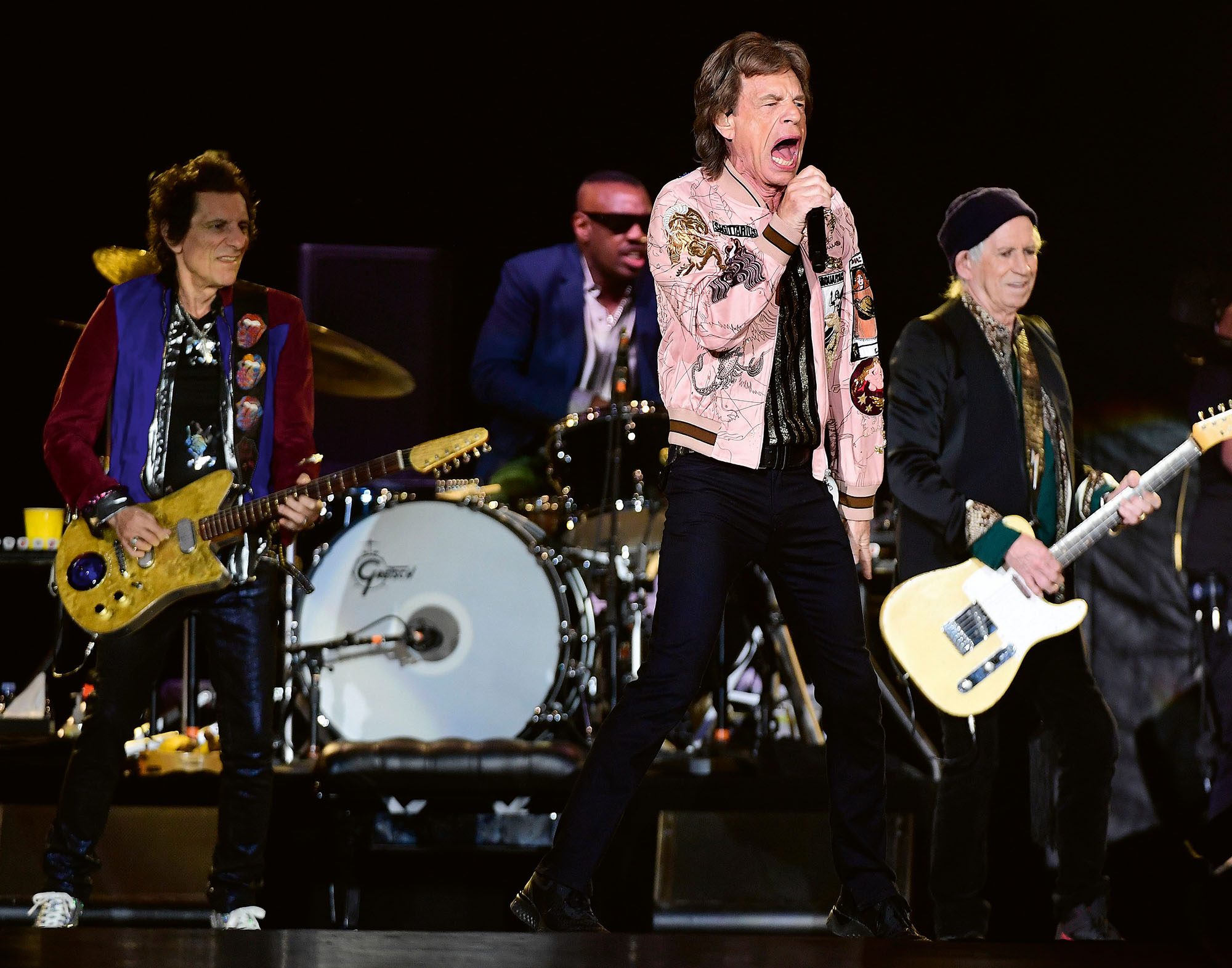
The Stones, complete with new boy Steve Jordan on drums (and relative new boy Ronnie Wood on guitar!), doing what they do best: strumming, strutting, sneering and selling out arenas. Get off of their cloud. © Getty / MediaNews Group.
ACKNOWLEDGEMENTS
I am indebted to my editor, James Hodgkinson, at Bonnier Books, whose idea this book was.
I hope I’ve passed the audition. Thank you, JH and team, Karen Stretch and Clare Hulton, without whom …
For recollections, revelations and their valuable time, I thank the following: Keith Altham, David Ambrose, John Blake, Sharon Churcher, Steve Clark of The Kingfisher, Keswick, Paul Endacott, Bernard Fowler, John Giddings, Jason Gore, Roger Gore, Jeff Griffin, Johnnie Hamp, Torben Hersborg, Malcolm Hill, Richard Hughes, Chris Jagger, David ‘Kid’ Jensen, Gudrun Jensen, Berni Kilmartin, Margaret Kirby, Paul Levett, Andrew Loog Oldham, Zoot Money, Piers Morgan, Peter Myers, Simon Napier-Bell, Sarah Oliver, Denis O’Regan, Andy Peebles, Ed Phillips, John Pidgeon R.I.P., Julia Pidgeon, Jamie Scott, Roger Scott R.I.P., Peter Sheridan, Earl Slick, David Stark, Professor David Temperley, Tommy Vance, Stuart White, Annette Witheridge, Jane Wroe Wright and Alistair Young, and the Ealing Club Community Interest Company
· Sam, Chris, Adam and Matthew
· Gareth, Beverley, Cleo and Jesse
· Bev, Rob, Nick, Alex and Christian
· Julie, Karen and Leila
· Trevor and Debbie Jones
· Suki Yamamoto
· Dan Arthure
· David Stark, Rab Noakes, Brian Bennett, Clem Cattini, Ed Bicknell and all the Scribs
· The Revd Canon Dr Alison Joyce and friends at St Bride’s Church, Fleet Street
· Mike Parry
David Bolton was the most ‘people’ person I have ever known. It was said during his St Bride’s memorial service on 14 October 2021 that his greatest gift was his interest in absolutely everybody. This book is dedicated to David’s memory, and to his grandson Charlie.
For Mum, Henry, Mia and Bridie
LAJ, June 2022