

THE DAYS FOLLOWING THE MURDER (A CHRONICLE)
July 17, 1918: early morning. Opposite the Ipatiev house, in the Popov house, where the guard was quartered on the second floor, ordinary inhabitants of the town lived on the first. Late on the night of July 16–17, two of them woke up. Muffled shots … many shots—there, outside, from somewhere beyond the fence of that terrible house. The Ipatiev house.
They whispered quietly to each other.
“Hear?”
“Yes.”
“Understand?” “Yes.”
Oh, life was dangerous in those years, and people were wary, they learned well: only the wary survived. So they said no more to each other and hid in their rooms until morning.
Later they told their White Guard investigator about this nighttime conversation—on that warm, “garden fragrant” night of July 16–17.
——
July 17: dawn.
From a letter of Peter Lyurtsov in Kuibyshev:
“In 1918 my grandfather Peter Nikolaevich Lyurtsov was working in a Soviet institution in Ekaterinburg. On July 15 they were paid, and he went out with his friends. Toward morning they decided to go home. It was a warm night. He was walking not far from the racetrack. Dawn was already breaking. A truck was driving down the empty street, and in it were armed men. Calculating the look of the Red Guards in the cab, my grandfather decided to make himself scarce just in case. When the Whites came, everyone starting talking about the execution. My grandfather immediately realized what that truck had been. Later he told us, ‘Well, what’s so savage and horrible about that—a truck, but for some reason I can’t forget it, and whenever I want to think about that terrible thing—I think about that dark truck in the dawn.’”
July 17: morning in the Ipatiev house. The morning was overcast. But again the gardens had blossomed—“the fragrance of the gardens,” as he had written.
As always, sentries were posted around the Ipatiev house. A novice came from the monastery that morning again and, like the day before, brought eggs and cream. They did not let the novice into the house; she was met on the porch by the commandant’s young assistant Nikulin. He did not take the food but said: “Go back and don’t bring anything else.”
The head of the guard, Yakimov, arrived at the Ipatiev house early in the morning. The Latvians were not inside the house anymore. The sentries were only outside. Yakimov was told the Latvians had gone back to the Cheka that morning and only two remained. But after what had happened last night they hadn’t wanted to sleep downstairs, so they were sleeping in the commandant’s room on the second floor. Yakimov walked to the commandant’s room and saw the Latvians sitting on the grand duchesses’ camp beds (which had been brought from their rooms). Yurovsky was not there, and Nikulin and Pavel Medvedev were sitting at the table, which was strewn with jewels, some of which were in open boxes and some simply dumped on the cloth. Medvedev and Nikulin seemed rather tired, depressed even. They were silently putting the jewels away in the boxes. The door to the family’s room was closed.
The spaniel Joy stood quietly, poking its nose at the closed door. And waiting. Not a sound came from the family’s room, although usually you could hear voices and steps.
That is what Guard Commander Yakimov later told the White Guard investigator.
On July 17, Beloborodov acted out his amusing play entitled “Informing Unsuspecting Moscow about the Execution” for the uninitiated members of the Ural Soviet Executive Committee.
One of those uninitiated—the editor of the Ural Worker, V. Vorobiev—conscientiously described this scene in his memoirs:
“In the morning I was given the text of the official announcement of the Romanovs’ execution for the newspaper at the district soviet presidium. ‘Don’t show it to anyone yet,’ they told me. ‘The execution announcement text has to be coordinated with the center [Moscow].’ I was discouraged; anyone who has ever been a newspaper worker will understand how much I wanted to scoop such unusual and sensational news in my newspaper: it’s not every day we have events like the execution of a tsar!
“… Every other minute I kept calling to find out whether they had gotten Moscow’s consent to publish. My patience was seriously undermined by this ordeal. Only the next day, that is, on July 18, was I able to get a direct line through to Sverdlov. Beloborodov and some other member of the presidium went to the telegraph office to talk with him. I couldn’t stand it and went too. The telegraph commissar himself sat down at the apparatus. Beloborodov started telling him what he was supposed to tell Moscow.” [He wassupposed to tell Moscow that as a result of the advance of the Whites and the monarchist plot, by decision of the Urals Nicholas Romanov had been shot and his family evacuated to a “safe place.”]
He did.
“In view of the advance of the enemy on Ekaterinburg and the Cheka’s discovery of a significant White Guard plot having as its purpose the abduction of the former tsar and his family stop the documents are in our hands, by resolution of the Reg[ional] Soviet Presidium Nicholas Romanov has been shot stop his family has been evacuated to a safe place. Because of this we have issued the following announcement: ‘In view of the advance of counterrevolutionary bands on the Red capital of the Urals and the possibility of the crowned hangman eluding the people’s justice (a plot has been uncovered involving White Guards attempting to abduct him and his family and compromising documents have been found) … the Regional Soviet Presidium, by the will of the revolution, has resolved to execute the former tsar Nicholas Romanov, guilty of innumerable bloody crimes.’
“After which we started to wait for an answer from Moscow. Steadying our breathing, we all leaned toward the emerging ribbon of Sverdlov’s reply: ‘Today I will report of your decision to the Presidium of the Central Executive Committee. There is no doubt that it will be approved. Notice about the execution must follow from the central authorities, refrain from publication until its receipt.’
“We breathed more freely, the issue of taking the law into our own hands could be considered exhausted.”
The day before, on July 17, at nine o’clock at night, the initiated members of the Ural Regional Soviet had sent the initiated in Moscow the following encoded telegram:
“Moscow, Kremlin, to Sovnarkom Secretary Gorbunov with return confirmation. Tell Sverdlov that the same fate has befallen the entire family as has its head. Officially the family will perish in the evacuation.”
This telegram was later seized by the White Guard at the Ekaterinburg telegraph office and decoded by the White Guard investigator, Sokolov.
July 18: Moscow, the Sovnarkom. In the evening Sverdlov appeared at a meeting of the Soviet of People’s Commissars, the Sovnarkom, which was under the chairmanship of Lenin. They heard the report of the people’s health commissar. Sverdlov sat down behind Lenin and whispered something in his ear. Lenin announced: “Comrade Sverdlov asks for the floor for an announcement out of turn.”
Sverdlov informed the Sovnarkom of all that had been officially transmitted from Ekaterinburg and of the fact that the tsar had been preparing to escape, that Nicholas had been shot and the family evacuated to a safe place, and so on.
An excerpt from Proceedings No. 1 of the Central Executive Committee meeting:
“Heard: Announcement about the execution of Nicholas Romanov (telegram from Ekaterinburg).
“Resolved: Upon discussion the following resolution was passed: The Central Executive Committee in the person of its Presidium approves the decision of the Ural Regional Soviet. Instructs Comrades Sverdlov, Sosnovsky, and Avanesov to compose an appropriate announcement for the press. Instructs the documents in the possession of the Central Executive Committee (diary, letters) be published. Instructs Comrade Sverdlov to form a special commission of inquiry.”
During the discussion Lenin was silent; then the meeting continued.
Attempts have been made to find in his silence Lenin’s condemnation of what had happened. Lenin could be accused of many things, but not of being able to keep silent when he disagreed with something.
On July 18 the sentries were posted around the Ipatiev house as before, and on that day two men were seen in town who then mysteriously disappeared—Commandant Yurovsky and Commissar Goloshchekin.
July 19: Ekaterinburg. In the morning Yurovsky finally returned to town. The fall of Ekaterinburg was expected from hour to hour, and Yurovsky was in a hurry.
A coachman drove up to the Ipatiev house. Yurovsky came out and began loading his things. The coachman helped. In his statements to the White Guard investigator, the coachman noted that Yurovsky had seven pieces of luggage and one large dark suitcase sealed with wax. This was the Romanov archive.
Yurovsky was departing for Moscow. He was in such a hurry that he forgot his wallet with all his money on the table in the Ipatiev house. (En route he sent a telegram about it—the Whites would find the telegram at the telegraph office.)
But the money was nothing; he was also unable to get his own mother, Esther, out of the town. The Whites would arrest her, but fortunately they did not have sufficient class consciousness to shoot the unlucky old woman, and Esther Yurovskaya would live to see her son’s triumphant return to Ekaterinburg.
On that day, July 19, Moscow officially announced the execution of Nicholas Romanov.
July 20: Ekaterinburg. The other chief participant in the events was also leaving town—the commandant’s assistant Nikulin.
In the Museum of the Revolution I found a sinister certificate written on the letterhead of the Ural government and issued that day to Nikulin: “… issued to Comrade Nikulin, G. P., to the effect that he is under orders from the Ural Soviet to safeguard the specially designated cargo located in the two train cars proceeding to Perm. All railway organizations and municipal and military authorities must render Comrade Nikulin the utmost assistance.
“The procedure and location of the unloading are known to Comrade Nikulin from the instructions in his possession. Ural Soviet Chairman A. Beloborodov.”
Those cars were transporting the packed-up property from the Ipatiev house.
Separately, in a dirty sack, Nikulin was also carrying something else.
Travel was terrifying. Merry bands roamed the countryside, plundering trains and passengers mercilessly. That was why Nikulin was proceeding to Perm in the poor clothing of a clumsy peasant.
The contents of his dirty sack were dangerous. That sack could cost him a painful death.
In 1964, during that radio recording session, old Nikulin would tell how he carried the Romanov jewels out of Ekaterinburg in a dirty sack. The same jewels that had been kept in their cases in the Ipatiev house.
Engineer Ipatiev’s house was empty. The sentries had been removed and the guard sent directly to the front. They would have to fight to their last drop of blood, for under no circumstances could they fall into White captivity. White captivity would be fatal for them after the Ipatiev house.
On July 20, at the last meeting in the municipal theater, Commissar Goloshchekin formally announced the execution of Nicholas Romanov. Official announcements of the execution of the tsar and the evacuation of the family to a safe place were pasted on poster columns all over town.
Only after this was Editor Vorobiev permitted to print his long-awaited report in the Ural Worker along with Safarov’s article:
“… Many formal aspects of bourgeois justice may have been violated in this process, nor was traditional-historical ceremony observed in the execution of the crowned persons. However, worker-peasant power was manifested in the process, making no exception for the All-Russian murderer, shooting as if he were an ordinary brigand. [Oh well, once the Savior hung on a cross “as if he were an ordinary brigand.”]
“… Nicholas the Bloody is no more.… And the workers and peasants have every right to tell their enemies: ‘You placed your bet on the imperial crown? It’s broken, take one empty crowned head in change!’” (Evidently this picturesque phrasing of Safarov’sgave rise to the legend about Yurovsky taking the tsar’s severed head with him to Moscow.)
July 21. The Soviet called in Ipatiev the engineer and gave him back the keys to his own house.
How did he feel walking into that trash-filled, terrible house of his, now stained with the incredible horror of the night of July 16–17?
THAT ROOM
On July 25 the Bolsheviks surrendered Ekaterinburg to the Czech Legion and Siberian White Army units entering the town. White officers rushed to the Ipatiev house immediately.
The house was a spectacle of hasty departure. All the quarters were trashed. Pins, toothbrushes, combs, hairbrushes, empty vials, and broken photograph frames had been dropped on the floors. Empty hangers hung in the wardrobe, all the stoves in the rooms were stuffed with ashes from burned papers and possessions.
An empty wheelchair stood by the fireplace in the dining room. The old, worn-out wheelchair with three little wheels where she had spent almost all her days, her feet aching, incapacitated from constant headache. Empress Alexandra Feodorovna’s last throne.
The girls’ room was empty. A box with one fruit drop, the sick boy’s bedpan—that was all. A woolen blanket hung across the window. The grand duchesses’ camp beds were found downstairs in the guard’s rooms. No jewelry and no clothing at all. Grigory Nikulin and his friends had done a good job.
Scattered throughout the rooms and the rubbish dump of the Popov house, where the guard had lived, they found what had been most precious to the family—the icons. There were books as well. Her brown Bible with its bookmarks, a prayer book, On Suffering Grief, and of course The Life of Saint Serafim of Sarov, Chekhov, Saltykov-Shchedrin, Averchenko, volumes of War and Peace—all this had been dropped in the rooms or dumped on the rubbish heap.
In the bedroom they found a well-planed board—this was the board on which the sick boy played and ate. There were also numerous vials of holy water and medicine. In the entry lay a box of the grand duchesses’ hair, which had been cut off in February when they had had the measles.
In the corner of the dining room lay the slipcover of one of the daughters’ headboards. The cover bore the bloody trace of wiped hands.
In the rubbish heap in the Popov house they found the St. George’s ribbon that the tsar had worn on his greatcoat until the last days. By that time the house’s former inhabitant, the servant Chemodurov, and the tutor Gilliard had already gone to the Ipatiev house.
Chemodurov was an old lackey, the archetype of the loyal Russian servant, a kind of devoted Chekhovian Firs who all his life walked behind his master like a child.
The tsar had brought Chemodurov to Tobolsk, but when another lackey came to the Ipatiev house with the children, young Trupp, the tsar decided to let the old man go get some rest and treatment. In those days, though, tsarist lackeys did not go for treatment—old Chemodurov was sent to prison. He grieved in prison and did not know that prison would save his life. He would wait it out there happily until the arrival of the Whites. Now he had been brought to the Ipatiev house. When Chemodurov saw the icon of the St. Feodor’s Mother of God among the holy icons scattered about the house, the old servant paled. He knew his mistress would never part with that icon as long as she lived! They also found her other favorite image—of Saint Serafim of Sarov—in the rubbish. Looking at the terrible devastation, the loyal lackey kept trying to find “his master’s personal belongings.” How many times did he enumerate for the investigator everything he had brought from Tsarskoe Selo: “one coat of officer’s cloth, another of plain soldier’s. One short fur coat from Romanov sheep, four khaki shirts, three high-collared jackets, five pairs of wide trousers and seven box calf boots, and six service caps”—the old servant remembered everything. But there were no shirts, no jackets, and no coats….
Books and icons amid “abomination and desolation”—this was the picture of what had happened.
Among the books they found one belonging to the Grand Duchess Olga—Rostand’s L’Aiglon in French. She had taken with her this story of the son of the deposed emperor Napoleon. The eldest daughter of another deposed emperor was rereading the story of a boy who remained faithful to his deposed father to the very end.
Like that boy, she idolized her father. On her chest she wore an image of Saint Nicholas. A poem copied out in Olga’s hand and inserted into her book reflected her father’s thoughts in their long days together in Ekaterinburg. It remained there like a legacy, hers and his, to those who would come to the looted house:
PRAYER
Send us, Lord, the patience
In this year of stormy, gloom-filled days,
To suffer popular oppression
And the tortures of our hangmen.
Give us strength, oh Lord of Justice,
Our neighbor’s evil to forgive
And the Cross so heavy and bloody
With Your humility to meet.
And in upheaval restless,
In days when enemies rob us,
To bear the shame and humiliation,
Christ our Savior, help us.
Ruler of the world, God of the universe,
Bless us with prayer
And give our humble soul rest
In this unbearable, dreadful hour.
At the threshold of the grave
Breathe into the lips of Your slaves
Inhuman strength—
To pray meekly for our enemies.
They descended from the second floor of the house to the first—the guard’s rooms. Here the same garbage predominated.
But one room.… To get to that half-cellar room from the second floor where the family’s rooms were, they first had to go downstairs, then outside, then through the garden, in by another door, and through the whole suite of first-floor rooms where the guard lived, to reach the small entry.
This entry had a window onto the garden. Out the window they saw trees and the joy of the July summer’s day.
The door from the entry led to that room. It was a small room, 100–115 square feet, hung in checkered wallpaper. The room was dark, its window jutted out into the slope, and the shadow of the high fence lay on the floor. A heavy railing had been installed over its sole window.
This room was in perfect order: everything had been washed.
It adjoined the storeroom and was separated from it by a partition; the storeroom door was nailed shut. This entire partition and the nailed door were sown with bullet holes. It was obvious: this was where they had been shot.
Along the baseboards were traces of washed blood. Bullet holes fanned across the other two walls: evidently the people doing the shooting had rushed about the room.
The floor had dents from bayonet blows (where some of the family were stabbed), and two bullet holes gaped in the brown floor, where they had fired at someone lying down.
Most of the bullets in the room had been shot from a revolver, but there were also bullets from a Colt and a Mauser.
On one wall someone had scratched a line from Heine in German: “This night Belshazzar was murdered by his fellows.”
By this time the Whites had dug up the garden near the house, searched the pond, and dug up the communal graves in the cemetery, where a special contractor had brought bodies from the Cheka, but no traces of the eleven people who had lived in the house could be found. They had vanished.
MR. SOKOLOV
The investigation began.
The ideas of the February Revolution were strong in the Ural government. In instituting an investigation the government worried that it might be providing “the givens for reactionary principles … fuel for monarchist plots.”
The first two investigators, Nametkin and Sergeyev, were quite cautious. But Kolchak, the supreme ruler of that part of Russia under White control, replaced the Ural government, and a third investigator was named—thirty-six-year-old Nikolai Sokolov.
Before the revolution he had been a special investigator. After the October Revolution he had attempted to dissolve into the peasantry and had left for the countryside. When Soviet power collapsed in Siberia, he made his way to the Urals in his peasant clothes. Appointed by Kolchak as the new investigator in the case of the tsar and his family, he brought to the investigation passion and fanaticism. After Kolchak was shot in 1920 and Soviet rule returned to the Urals and Siberia, he continued his work. In emigration in Paris he took down countless statements from surviving witnesses. He died from a heart attack, in France, while continuing his endless investigation.
——
From a letter of Peter Aminev in Kuibyshev:
“In 1918 I was living in Irbit. Irbit had been occupied by the Whites and life followed its prerevolutionary course. The Irbit District News came out with a report that upset our town. I am sending you a cutting from that newspaper (1918, no. 18):
“ ‘To the Fate of Nicholas II
“ ‘New York Times correspondent Ackerman reported in his paper the following news, written by the abdicated tsar’s personal servant.
“ ‘“Late on the night of July 16–17, the guard commissar walked into the tsar’s room and announced: ‘Citizen Nicholas Alexandrovich Romanov, you are to come with me to a meeting of the Ural Soviet.’ … Nicholas Alexandrovich did not return for nearly two and a half hours. He was very pale and his chin was trembling.
“ ‘“ ‘Give me some water, old man.’
“ ‘“I did and he gulped down a large glass.
“ ‘“ ‘What happened?’ I asked.
“ ‘“ ‘They informed me that in three hours they would come to shoot me,’ the tsar told me.
“ ‘“After Nicholas’ return from that meeting Alexandra Feodorovna and the tsarevich went in to him and both were crying. The tsaritsa fainted and the doctor was called in. When she came to, she fell on her knees before the soldiers and begged for mercy, but the soldiers responded that this was not in their power.
“ ‘“ ‘For the love of Christ, Alice, calm yourself,’ said Nicholas several times in a quiet voice. He made the sign of the cross over his wife and son, called me over, and said, kissing me: ‘Old man, do not abandon Alexandra Feodorovna and Alexei.’
“ ‘“… They took the tsar away, but no one knew where. That same night he was shot by twenty Red Guards.”’”
That was how people imagined what had happened when they still believed: “The family has been evacuated to a safe place.”
THE FIRST STATEMENTS
Soon after Ekaterinburg was liberated, Lieutenant Sheremetievsky appeared before the military commandant.
Before the Whites’ arrival, the lieutenant had hidden in the village of Koptyaki—18 versts (12 miles) from Ekaterinburg on the shores of Lake Isetsk. Not far from this little village, surrounded by ancient forest, there were old abandoned mines. The lieutenant recounted:
“On July 17 a few peasants from this village were detained while walking through the forest by a picket of Red Guards. And were turned back. They had been detained near an obscure area of the forest known as the Four Brothers. They were told that the forest had been cordoned off and maneuvers were going on—there would be shooting. Indeed, as they were walking home, they heard muffled hand grenade explosions.
“After the fall of Ekaterinburg, when the Bolshevik detachments were retreating from the town toward Perm, the Koptyaki peasants immediately went to the Four Brothers to see what had happened there.
“Four Brothers”—the name had been given to the spot because of four tall pines that had once stood within the ancient woods. The pines had long since fallen down and died; only two half-ruined stumps remained. And the old name, Four Brothers. Not far from those pathetic stumps, 4 versts [2.5 miles] from the village itself, were some old mines concealed by trees. At one time prospectors had dug for gold here, but all the gold had been taken away long before, and the old mines had filled with rain. A small pond had formed in one of them, which had been given the name “Ganya’s Pit.” About 50 sazhens [350 feet] from Ganya’s Pit there was another mine, but without a name. This nameless mine was filled with water also. This is where the peasants went, to the deep forest, to the abandoned mines.
Fresh branches and burned wood were floating on the surface of the nameless mine. The mine edge showed evidence of grenade explosions. The entire clearing by the mine had been trampled by horses’ hooves—and carts had left deep ruts in the wet earth.
They found traces of two bonfires, one by the nameless mine and the other right on the forest road under a birch. These were strange fires. In one of them the Koptyaki peasants glimpsed charred human bones. When touched, the bones immediately disintegrated. Digging in the forest, the peasants found a charred emerald cross, topaz beads, a child’s military buckle, an eyeglass lens, buttons, hooks, and so on. They also found a large diamond.
The investigation compared the items with those in the Ipatiev house—the same buttons, hooks, and shoe buckles. It was obvious that they had burned the clothes here. Did that mean the bodies had been thrown in the mine?
They decided to pump the water out of this nameless mine and the mine next to it, Ganya’s Pit. They found nothing in Ganya’s Pit, but in the nameless mine they reached bottom, panned, and found an amputated manicured finger with a long nail, false teeth thatwere soon recognized as belonging to Dr. Botkin, his tie clasp, and a pearl earring from a pair the empress wore. In the mine they found the body of a tiny dog and the frame of the photograph of Alix that Nicholas always carried and the dented icons his daughters wore for the journey—as well as Olga’s icon of Nicholas the Miracleworker. The gilded silver military badge discovered in the silt—the insignia of the regiment of which the empress was colonel-in-chief—had been given to her by the regiment’s commander, her mystical friend Adjutant General Orlov.
It was strange to say the words “Her Highness’s Regiment” and “adjutant general” while standing on the edge of that dirty hole digging in the stinking silt. All that was left of her life was a large piece of a blood-spotted tarpaulin hauled up from the mine pit.
But they found no bodies.
Afterward they trampled over and dug up that entire remote area—but there were no bodies.
At that point a mining technician came forward and said that in mid-July he had come across the commandant of the Ipatiev house in this remote area. Yurovsky had asked him whether a very heavy truck could use the Koptyaki road.
Details about the truck became clear as well. On the evening of July 16, a truck was taken from the Soviet’s garage on orders from the Cheka. The truck’s driver was replaced, and the truck was driven out of the garage by a short, hook-nosed middle-aged man. One of the drivers in the garage recognized him as Sergei Lyukhanov, the driver for the Ipatiev house. The truck was not returned until the nineteenth, and it was utterly filthy. The back had been wiped but there were clearly visible traces of blood.
Now it was obvious to the investigation which truck this was and what it had taken to the mine.
The tracks of this truck were still evident on the storm-washed road to Koptyaki.
They also found witnesses to the truck’s journey down the Koptyaki road.
The guard in railway booth number 184, where the road crossed the mining factory railway line, said that at dawn on July 17 she was wakened by the sound of an approaching truck. She heard the truck skid in the marshy place not far from her booth. Then there was a knock at the door, and she opened it and saw the driver and the truck’s shadowy silhouette in the dawning sky.
The driver said that the motor had overheated and asked for some water. The guard started to grumble in her usual way when the driver suddenly turned nasty for some reason. “You here are sleeping like lords … and we’ve been breaking our backs all night long.”
The watchwoman was going to say that she saw the figures of Red Guards around the truck—but instantly fell silent. “We’ll forgive you the first time. But don’t do it again,” the driver threatened in parting. She saw them placing poles on the marshy ground—they had taken them from around her booth—and then the truck continued on.
Other statements were forthcoming. At dawn on July 17, men had set out for town from Koptyaki.
Coming out on the road, they had seen a strange procession. Someone by the name of Vaganov, dressed in a sailor’s striped shirt, had been galloping in the lead. He was a Kronstadt sailor who worked for the Cheka. Some of the residents recognized him immediately. Behind the mounted Chekist came some carts covered with a tarpaulin. Seeing the peasants, the sailor shouted furiously, “Get back there! Turn around. And don’t look back.” He cursed and cursed at them and drove the shocked and terrified peasants back toward the village, chasing them for a third of a mile.
Searches and arrests were being made all over town.
Pavel Medvedev, who had commanded the entire guard at the Ipatiev house, had not been able to leave with the Reds. He had been ordered to blow up the bridge, but he did not blow up the bridge and he did not get out of town. Shortly afterward Medvedev was being questioned by the investigator. They also arrested the guard Proskuryakov. The head of the guard, Yakimov, who had posted the sentries on the night of July 16–17, was also arrested. As was the guard Letyomin. Alexei’s dog, the rust-colored spaniel Joy, had given him away. He had taken the dog home—“So that he wouldn’t die of hunger,” as he later explained to the investigator. But the dog proved dangerous. Photographs of the heir with the spaniel were well known all over Russia. So they arrested Letyomin. Other things besides the dog were also uncovered at his house: Alexei’s diary begun at Tsarskoe Selo in March 1917—immediately after their arrest—and completed in Tobolsk in November 1917.
Letyomin had also taken the holy relics from Alexei’s bed and the icon he carried.
By that time many tsarist objects had been found in various Ekaterinburg quarters. The guards had given them to their wives and lovers. Goloshchekin and Beloborodov too had given some to their friends and retinue—savage souvenirs of the world they had so thoroughly eradicated. They found the empress’s black silk parasol and a white linen one, her lilac dress, even the pencil with her initials that she always used to write in her diary, and the grand duchesses’ little silver rings. The valet Chemodurov went from apartment to apartment like a bloodhound. Tsarist possessions became dangerous. Many people were packed off to the investigator.
PRISONERS’ STATEMENTS
Filipp Proskuryakov the guard. The same man who had come home drunk on the night of July 16–17 and fallen asleep in the bathhouse with his fellow guard Stolov. He and Stolov had been scheduled to go on duty at five in the morning.
At three in the morning Pavel Medvedev woke them.
He brought them into the half-cellar room. What greeted them there sobered them up immediately.
Smoke—gunsmoke—still filled the room. On the walls were distinct bullet holes. And blood. Everywhere. Spots and splashes on the walls and small puddles on the floor, as well as many traces of blood in the other rooms. It must have dripped as the slain were carried out. The people carrying them out tracked blood too from their boots.
Medvedev ordered the two guards to clean the room. They began by cleaning the floor with sawdust and water and then wiped it off with wet rags. With them worked two Latvians from the Cheka, three other guards, and Medvedev himself.
When they had cleaned up the room, Medvedev and the guard Strekotin told them everything that had happened. (Strekotin had been posted at the machine gun in the downstairs rooms and had seen everything.)
From Proskuryakov’s testimony:
“Both of them [Medvedev and Strekotin] said the same thing: “At twelve o’clock Yurovsky began waking the tsar’s family.… According to Medvedev, Yurovsky gave them some kind of explanation about the night being dangerous … it would be dangerous to be upstairs if there were shooting on the streets so he demanded they all go downstairs. The family complied.
“Downstairs Yurovsky began reading a paper. The sovereign didn’t quite hear and asked, ‘What?’ Yurovsky, according to Medvedev, raised his hand and revolver and answered the sovereign, ‘This is what!’
“Medvedev said he himself took two or three shots at the sovereign and the other people they were shooting at.
“When they had all been shot, Andrei Strekotin, as he himself told it, stripped off the jewels, which Yurovsky immediately took away, however, and brought upstairs. After that the slain were dumped onto a truck and taken away somewhere. Lyukhanov was the driver.”
The guard Letyomin did not see the execution himself either, but he gave the investigator statements based on what Strekotin had told him:
“On July 17 he went on duty at eight in the morning. He stopped in at the barracks and saw a boy who was in the service of the tsar’s family [the little cook Leonid Sednev]. And he asked him why he was there. Strekotin just waved his hand and, taking him to one side, told him that the night before the tsar and tsaritsa, their whole family, the doctor, the cook, and lackey, and the woman in attendance with them had been killed. According to Strekotin, that night he had stood by the machine gun post downstairs.
“During his shift [from twelve midnight to four in the morning] the tsar and tsaritsa, all the tsar’s children, and the servant were brought downstairs … and taken to that room next to the storeroom. Strekotin explained that he saw Commandant Yurovsky read a piece of paper and say, ‘Your life is over.’
“The tsar didn’t quite hear and asked him to repeat it, and the tsaritsa and one of their daughters crossed themselves. At that moment Yurovsky shot the tsar, killing him on the spot, then the Latvians and the guard commander began firing.”
In the barracks on July 18, Letyomin saw the driver Lyukhanov, who told him that he had taken the slain away in the truck and added that they had almost not made it: “It was dark and there were lots of little stumps.” But where he took the corpses, Lyukhanov did not say.
The investigator interviewed Yakimov, the head of the guard:
“At dawn, at four o’clock, Yakimov was awakened by the guards Kleshchev and Deryabin and told the following:
“Medvedev and Dobrynin had come to them at their posts and warned them the tsar would be shot that night. At this news, they both went over to the windows.
“Kleshchev went to the window of the downstairs entry, next to his post. Through that window, looking toward the garden, he could see the door to the room where they were going to be shooting. The door was open, and Kleshchev could see everything going on in the room.
“Deryabin’s post was next to the other window, the only barred window of the execution room. He saw what happened, too.
“Through their windows they saw men going into the room from the courtyard. In front were Yurovsky and Nikulin, behind them the sovereign, his wife and daughters, as well as Botkin, Demidova, the lackey Trupp, and the cook Kharitonov. Nicholas was carrying the heir. In the rear walked Medvedev and the Latvians, whom Yurovsky had signed out from the Cheka. They arranged themselves like this: to the right of the entrance was Yurovsky, to the left of him stood Nikulin, the Latvians stood right in the doorway, and behind them was Medvedev [Pavel]. Through the window Deryabin could see part of Yurovsky’s body but primarily his arm. He saw Yurovsky saying something and waving his arm. What exactly he said Deryabin could not tell. He said he could not hear the words. Kleshchev, though, stated positively that he did hear Yurovsky’s words: ‘Nicholas Alexandrovich, your relatives have tried to save you, but they have not succeeded, and we are forced to shoot you ourselves.’ Immediately after Yurovsky spoke several shots rang out, followed by a woman’s wail, shouts, and several female voices. Those being shot began to fall one after the other: first the tsar, after him the heir. Demidova was rushing about. Both of them told Yakimov that she shielded herself with a pillow. According to them she was stabbed with bayonets.
“When all had fallen, they began to examine them and finish off a few of them with a shot or a stab. But of those with the name Romanov, they cited only Anastasia as being stabbed with bayonets. When they all had fallen, someone brought a few sheets from the family’s rooms. They began winding the slain in the sheets and carrying them out to the truck, where they put the corpses on a cloth from the storeroom and covered them all with that same cloth.”
But again, these are not eyewitness statements. This is still a story at second hand.
At long last, though, the investigation took the first and only statement from someone who himself had been in that half-cellar room.
——
From the investigator’s interview with Pavel Medvedev, guard commander:
“He went on duty on the evening of July 16, and at eight o’clock Commandant Yurovsky ordered him to take away all the detachment’s revolvers and bring them to him.… Yurovsky said, ‘Today we are going to shoot the entire family and the doctor and servant, too—warn the detachment not to worry if they hear shots.’
“The little boy cook was moved to the Popov house—to the sentry detachment’s quarters—at six in the morning, on Yurovsky’s instruction. At about ten I warned the detachment not to be alarmed if they heard shots. At about twelve at night (old style)—two o’clock new [daylight saving time]—Yurovsky woke the tsar’s family. He told them why he was disturbing them and where they must go. Medvedev did not know….
“About an hour later the tsar’s entire family, the doctor, the maid, and two servants got up, washed, and dressed. Even before Yurovsky went to wake the family, two members of the Cheka had arrived at the Ipatiev house: Peter Ermakov [from the Upper Isetsk factory] and someone else he did not know.… The tsar, the tsaritsa, the tsar’s four daughters, the doctor, the cook, and the lackey came out of their rooms. The tsar was carrying the heir in his arms. The sovereign and the heir were wearing field shirts and forage caps. The empress and her daughters wore dresses but not wraps. The sovereign walked ahead with the heir. In my presence there were no tears, no sobs, and no questions. They went downstairs, out into the courtyard, and from there through the second door into the downstairs quarters. They were led into the corner room adjacent to the sealed storeroom. Yurovsky ordered chairs brought in.
“The empress sat down by the wall where the window was, closer to the rear column of the arch. Behind her stood three of her daughters. The emperor was in the middle, next to the heir, and behind him stood Dr. Botkin. The maid, a tall woman, stood by the left jamb of the storeroom door. With her stood one of the daughters. The maid had a pillow in her arms. The tsar’s daughters had brought small pillows; they put one on the seat of the heir’s chair, the other on their mother’s. Simultaneously, eleven men walked into the room: Yurovsky, his assistant, the two from the Cheka, and seven Latvians. According to Medvedev, Yurovsky told him: ‘Go out to the street and see whether anyone’s there and the shots will be heard.’
“He walked out and heard the shots. By the time he returned to the house, two or three minutes had passed. Walking into the room he saw all the members of the tsar’s family lying on the floor with numerous wounds to their bodies.
“The blood was gushing … the heir was still alive—and moaning. Yurovsky walked over to him and shot him two or three times at point blank range. The heir fell still. The scene made me want to vomit.
“… The corpses were brought out to the truck on stretchers made of a sheet stretched on shafts taken from the sleigh standing in the yard. The driver was Sergei Lyukhanov. The blood in the room and yard was washed off. By three o’clock it was all over.”
The investigator asked him about Strekotin.
“I do remember—he really was at the machine gun. The door from the room where the machine gun was into the entry was open, and so was the door from the entry into the room where the execution was carried out,” stated Medvedev.
From this the investigation concluded that Strekotin and Kleshchev really could have seen what happened—witnesses of the Apocalypse.
Medvedev denied that he himself had done any shooting, but his wife established his guilt:
“According to Pavel, all those awakened got up, washed, dressed, and were led downstairs, where they were put into a room where a paper was read to them that said: ‘The revolution is dying, and so shall you.’ After that they started firing, and they killed them, one and all. My husband fired, too.”
Proskuryakov, to whom he had also recklessly recounted how he fired at the tsar and “emptied two or three bullets into him,” also established Medvedev’s guilt. He must have told his wife as well that he had fired at the tsar. But she did not want to establish her husband’s guilt in such a heinous crime.
Actually, for her that crime was a matter of pride, of course, as it was for Pavel Medvedev. The Ipatiev house guard commander must have been a reliable man, that is, fanatical, otherwise Yurovsky and Goloshchekin would not have taken him for such a post. He was making statements about the execution because he knew that others would tell the story anyway. It made no sense to refuse to talk.
The investigation continued. It was established that two more trucks went to the Koptyaki forest on July 18, bringing three barrels, which they moved onto carts and took into the forest. One of those barrels was filled with gasoline.
The investigators learned that there had been other barrels as well. They found a note from the supply commissar, “Intellectual,” P. Voikov, in the Ekaterinburg pharmacy about supplying a large quantity of sulfuric acid.
After the witnesses’ corroborating statements, the investigation came to its conclusion: on the night of July 16–17, the tsar, his family, retainers, and servants—eleven people—were shot in the half-cellar of the Ipatiev house.
Then, according to the investigation’s hypothesis, the corpses were stowed in a truck and taken to an unnamed mine near the village of Koptyaki. On July 18, a large quantity of gasoline and sulfuric acid was brought to the site. The bodies of the slain were chopped up with axes (the investigation found one of the axes), doused with gasoline and sulfuric acid, and burned in bonfires whose remnants were discovered not far from the mines.
THE RESURRECTION OF THE SLAIN
But … But Sokolov never did find the bodies of the tsar’s family. There was someone’s separated finger, someone’s false teeth … and a bonfire next to an unnamed mine that he declared to be the grave and ashes of the tsar and his family.
Yes, the statements of witnesses to the execution coincided, but….
But Sokolov was a monarchist. He brought a political obsession to his work, and that made the statements he obtained highly suspect. Both sides in the Civil War learned cruelty from each other, and the cellars of White counterintelligence rivaled those of the Cheka. The interrogations may not have been altogether idyllic. May that have been why the statements coincided? Skeptics have argued that it was a biased investigation and that the conclusion—that it is indeed possible to burn eleven bodies without a trace—was debatable. For the fact was indisputable—there were no bodies.
A year and a half after the “family was executed in the Ipatiev house” (as Sokolov asserted) or “the Romanov family disappeared from the Ipatiev house” (as his opponents formulated it), “Anastasia” would appear, a mysterious woman whose fate has continued to disturb the world for seventy years.
A brief account of the well-known story:
In Berlin an unknown young woman decided to commit suicide by jumping into a canal one night in 1920, but she was saved and placed in a clinic, depressed and almost mute. In the clinic she came across a photograph of the tsar’s family, which produced a remarkable agitation in her and from which she could not be parted. Soon a rumor arose: the miraculously saved daughter of the Russian tsar, Tatiana, was there, in a Berlin hospital.
Tatiana—that was what she called herself at first. But soon after she changed her name to Anastasia.
No, there was nothing conclusive in this fact. A powerful shock may simply have burned out her memory. She did not remember who she was. She dug deep in her memory—and found herself: she was Anastasia.
She told a fantastic story about her rescue: a shot, she fell, her sister behind her, shielding her from the bullets with her body. Then, senselessness, a gap in her memory … then stars … she was being taken away on a wagon of some kind. Then the journey to Romania with the soldier who, it turned out, had saved her. The birth of a child fathered by the soldier. Her escape. And all this in incoherent waves.
Moreover, she did not speak Russian. There could be an explanation for this: the Russian spoken during the monstrous murder, as she lay there heaped with the bodies of her family, may have created a kind of permanent taboo in her consciousness. She could not pronounce her native sounds; they brought the horror back to her consciousness. But this circumstance was very heartening to her opponents. (In our opinion, a woman who does not speak Russian and has decided to declare herself a Russian grand duchess either has to be crazy or must truly believe herself to be Anastasia.)
There was also, however, her amazing likeness to the photograph of the Russian tsar’s daughter. She even had the trace of a birthmark right where a birthmark had been removed from the young Anastasia, and the shape of her ears, and a similar handwriting. And, finally, the mysterious woman spoke freely about the details of the family’s life.
She attempted to defend her right to the name of the tsar’s daughter in court and suffered defeat.
But when the mysterious “Anastasia” died, she was buried in a crypt with her Romanov relatives the princes of Leuchtenberg.
Who was she?
To me she was a woman who for terrible reasons had suffered a shock and forgotten who she was and then spent her whole life trying to remember it. She truly believed she was the tsar’s daughter, but evidently she did not know precisely which one of the four. She declared herself to be Anastasia because, of the four sisters, she looked most like her, but to the end of her life she continued to dig painfully in her memory. So that for all her certainty, she was to some extent uncertain. That burning torment: trying to remember, going back and forth, into the monstrous past—in an attempt to meet up there, in that horror, with herself … and never to do so.
“Anastasia” declared she had been “rescued after the execution.” Subsequently books would begin appearing proving that the tsar’s daughters had not been shot at all. Only the tsar and the heir had been executed, these books asserted. The retainers and the unlucky Botkin had perished to create the appearance of the entire family’s destruction. In fact, at the demand of the Germans, on the basis of secret articles of the Treaty of Brest, the daughters and the tsaritsa were taken out of Russia. True, it is hard to believe that the second most important man in the government, Trotsky, who participated in the conclusion of the Treaty of Brest and in exile asserted that the tsar’s entire family had been shot, did not know about that. (What he would have given for it not to have been so!)
That these fantastic versions popped up was inevitable. After all, in the seventy years since the execution not one voluntary statement by participants in the execution in the Ipatiev house was published. The terrible night of July 16–17, 1918, remained the object of mysterious rumors and legends.
In the 1970s, at the start of my investigations, I did not believe anyone—not Sokolov and not his opponents. I set myself one goal—to find voluntary statements of witnesses to that terrible night. I was sure that they existed in the bowels of the Soviet secret storehouses. Only they could give the answer as to what did happen in the Ipatiev house. About one such document, the legendary “Yurovsky Note,” rumors abounded.
I began questioning my former classmates at the Historical Archival Institute, who worked in various archives. Everyone I talked to had heard of it, but no one had read it.
“SUBSTANTIVE EVIDENCE: THE EXECUTION WEAPONS”
In the late 1970s, an old and once close friend called me. We had studied together at the Historical Archival Institute and now, after many years, we met, frightening each other with our changed faces. She got into my car and without saying a word placed a paper on my knees.
I began to read:
“To the Museum of the Revolution, Museum Director Comrade Mitskevich.
“Bearing in mind the upcoming tenth anniversary of the October Revolution and the younger generation’s likely interest in seeing substantive evidence (the weapon that executed the former tsar Nicholas II, his family, and those retainers who remained loyal to him to the grave), I feel I must transfer to the museum for safekeeping two revolvers that have been in my possession: Colt no. 71905 with a cartridge clip and seven bullets, and Mauser no. 167177 with a wooden gunstock and a cartridge clip with ten bullets. The reasons for the two revolvers are as follows: I killed Nicholas on the spot with my Colt; the remaining bullets in the one loaded clip for the Colt, as well as the loaded Mauser, went to finish off Nicholas’s daughters, who were armored with corsets made of a solid mass of large diamonds, and the strange vitality of the heir, on which my assistant also spent an entire clip of bullets (the strange vitality of the heir must probably be put down to my assistant’s poor mastery of his weapon and his inevitable nerves, evoked by his long ordeal with the armored daughters).
“The former commandant of the special house in Ekaterinburg, where the former tsar Nicholas II and his family were held in 1918 (up until his execution in the same year on July 16), Yakov Mikhailovich Yurovsky, and the commandant’s assistant Grigory Petrovich Nikulin attest to the above.
“Ya. M. Yurovsky has been a member of the party since 1905, Party ticket no. 1500, Krasnopresnenskaya Organization.
“G. P. Nikulin has been a member of the Bolshevik Party since 1917, no. 128185, Krasnopresnenskaya Organization.”
So it did all happen!
She said, “This is a copy of a restricted document held by the Museum of the Revolution. I was told you want to find out how it happened? I’m glad I can give you the chance. But this document was copied out at my request, and I don’t want to put anyone on the spot. So you have to keep mum about it. Not that you’re very likely to be able to talk about all this any time in the next hundred years. So enjoy the abstract knowledge, that’s enough.”
“This is the Yurovsky Note?”
“What do you mean! This is just an ordinary notice Yurovsky wrote.”
(In 1989 I was finally able to look at this “ordinary notice” with my own two eyes. It was indeed written in the commandant-assassin’s characteristic hand.)
“No, no.” She chuckled. “The Yurovsky Note is something completely different. It’s a long document. By the way, in the 1920s he gave it to Pokrovsky.”
(Mikhail Pokrovsky was the director of the Communist Academy in the 1920s, the leader of Soviet historical science.)
“You saw it? It’s in the Museum of the Revolution?”
“I don’t know,” she said dryly. “I only know that the NKVD [as the Cheka’s successor was called in the 1940s] removed those revolvers of Yurovsky’s from the museum before the war, along with all his papers. There’s a record of that there. What else could they have done? After all, his daughter was arrested.”
“Yurovsky’s daughter? Arrested?”
“Her name was Rimma. She was a Komsomol [Young Communist League] leader, apparently a secretary on the Komsomol Central Committee. She spent more than a quarter of a century in the camps. Even if the Yurovsky Note were in the museum, though, you would never get your hands on it, as you must understand. Documents about the execution of the tsar’s family are especially secret.”
She went, and I was left with his notice. The first voluntary participant statement I had obtained!
So it was all true. There was an execution. And ten years later, Yurovsky was still living that execution. He was incapable of writing an “ordinary notice.” The Ipatiev house pursued him—the armored girls, the boy they finished off. If this was an “ordinary notice,” imagine his note! I realized she was right—I would get nowhere at the museum.
Yurovsky’s biography, in the style of Soviet hagiography, published in a limited edition in Sverdlovsk as I Am the Chekist, by Yakov Reznik, contains the commandant’s last will and testament, in which he again turned to his loyal “son”—his assistant in the execution, G. Nikulin. As he lay dying from an excruciatingly painful ulcer, he again evoked the specter of the terrible Ipatiev house:
“To G. P. Nikulin.
“My friend, my life is at an ebb. I must dispose of what remains. You will be given a list of the basic documents and a list of my property. The documents give to the Museum of the Revolution….
“… You have been like a son to me, and I embrace you, as my son. Yours, Yakov Yurovsky.”
So, “The documents give to the Museum of the Revolution.” The circle was closed. Realizing the futility of it all, I still made a trip to the Museum of the Revolution archives. To my question there was a clear reply: We have no Yurovsky papers! We’ve never even heard of any “note.”
So I decided to compile a list of the institutions where he had worked. I began to run down the events of his life.
After the execution and his departure for Moscow, the commandant went back to the Urals. First he was instructed to take the “gold train”—the treasures of the Ural banks—from Perm to the capital.
In the nights of August 1918, his wife, his daughter the Ekaterinburg Komsomol leader Rimma, his thirteen-year-old son, Alexander, and one more “son” who had returned with him from Moscow, Nikulin, loaded endless canvas sacks of gold, silver, and platinum onto the train. Once again Yurovsky, the commandant, was commandant of the train, and once again his assistant was Nikulin.
Upon his arrival in Moscow, Yurovsky was given familiar work—in the Cheka. After the attempt on Lenin’s life by Fanya Kaplan, Yurovsky was assigned to a group ordered to ferret out Socialist Revolutionaries suspected of ties to Kaplan. He was one of the most meticulous of the investigators. To the end, though, Kaplan declared she was acting alone. Kaplan was shot.
After the Whites surrendered, Yurovsky went back to Ekaterinburg, where he was chairman of the Social Security Department and simultaneously one of the leaders of the Cheka. He was involved with all aspects of citizens’ social security. The Ural Workerregularly published articles under the heading “The Punishing Activity of the Provincial Cheka.”
In May 1921 he was transferred to Moscow to work in the Russian Republic’s State Depository of Valuables, where the treasures “confiscated from the enslavers” were also kept. He guarded them loyally. “A reliable Communist”—that was how Lenin referred to him in a letter to the people’s commissar of finance. At the end of his life our hero was already employed in prosaic jobs, directing the Red Warrior factory and the Polytechnic Museum.
I conscientiously inquired about his documents at every institution where the “reliable Communist” had worked. Either there was no answer or there were “no documents listed.”
THE YUROVSKY NOTE
This happened when the archives were only just starting to be declassified.
In a small room in the Central Archive of the October Revolution, I sorted through the formerly secret files of the All-Russian Executive Committee, once the highest organ of power in revolutionary Russia, headed by Sverdlov. One file immediately caught my attention: “File on the Family of Former Tsar Nicholas the Second, 1918–1919.”
1919? File on the Family? But the family had already been shot by 1919!
This meant that this file contained some document concerning the family but created in 1919—after their execution! I leafed through the file impatiently.
It began with the telegram about the former tsar removing his shoulder straps. Then came the Ural Soviet’s famous telegram to the Central Executive Committee regarding the tsar’s execution … and the documents of the “monarchist plot”—all those letters signed “Officer.”
And at the very end of the file there were two poorly typed copies of a document that had no title or signature.
I began reading. It was a shock: the whole horrible night of July 16–17—the execution, the two days dealing with the corpses—it was all laid out thoroughly and dispassionately. The Apocalypse as recorded by a witness! The document was not signed, but one of its typed copies was corrected in the author’s hand. At the end of the document, also in the author’s handwriting, the terrible address had been added—the location of the grave where the corpses of the tsar and his family had been secretly buried.
By that time I had already seen several samples of Yurovsky’s handwriting. Yes, he was the author! Before me lay the legendary “Note of Yakov Yurovsky.”
That which had been hidden all these seventy years, that which I had sought all these years.
The Note’s style of exposition was surprising. The new ruling power offered yesterday’s semiliterate workers, soldiers, and sailors a tempting position as makers of history. In describing the execution, Yurovsky proudly referred to himself in the third person as “commandant” (abbreviated “com.” in the Note). For on that night there was no Yakov Yurovsky, there was a terrible commandant—the weapon of proletarian vengeance. The weapon of history.
I decided to publish this document. It was already 1989, the triumph of glasnost. However, the issue of Ogonyok in which the statement of the “reliable Communist” which had been held secret for seventy years was to appear was detained by the censor. Times had changed, though, and the magazine eventually did come out. Thanks to the censor’s delay, the issue appeared on May 19 (May 6, old style). On the emperor’s birthday, this terrible account of his death and his family’s saw the light of day for the first time.
“THE BIRNAM WOOD”
Letters started coming in, thousands of readers’ letters. Millions of my fellow citizens had learned for the first time of the bloodshed in which the dynasty that had ruled the country for three hundred years had come to its end.
The invaluable mails were very busy: I began receiving both letters and telephone calls with more new information and documents. Once lost or concealed forever, they rose up out of nonbeing, and, as in Macbeth, the Birnam Wood set out after the murderers.
What I had hoped for had come to pass: at the Museum of the Revolution one more copy of the Note I had already published suddenly was found. But it had a title and even a signature:
“Copy of a document given by my father Yakov Mikhailovich Yurovsky to the historian M. N. Pokrovsky in 1920.”
Yurovsky’s son, Alexander, had sent this copy and certified it with his own hand in 1964, when he himself, Alexander Yakovlevich Yurovsky, was already turning gray.
This document, however, did not include the location of the grave.
So in 1920 Yurovsky had given his Note to a historian! But it had been written earlier, as a report for the authorities. That was why I had found this document in the Central Executive Committee archives.
The historian Pokrovsky was a member of the Central Executive Committee presidium. The leader of official historical science was addressing the “initiated.” In giving Pokrovsky his Note, Yurovsky never dreamed it would be published. He had written it for posterity, for history. His contemporaries still lacked the consciousness to know the whole truth about the execution.
“What I will recount here shall see the light only after many years,” wrote Yakov Yurovsky subsequently.
WITNESSES AND PARTICIPANTS IN THE APOCALYPSE
The letters kept coming; this popular inquiry continued. I was told that in a small district archive, in a little Ural town, in a secret depository, there were the statements of Alexander Strekotin. Yes, the machine gunner Alexander Strekotin on whose account the guards Letyomin and Proskuryakov had based the story they told Investigator Sokolov about the execution.
It turned out that Strekotin himself wrote his memoirs (sent to me by two readers). I now had in my hands the most important voluntary statements—most important because Yurovsky was the chief actor and Strekotin’s oral tale lay at the base of Sokolov’s entire investigation.
Strekotin served in the Ipatiev house guard along with his brother. The guard frequently included relatives: Lyukhanov father and son, the Strekotin brothers, and so on.
“The personal reminiscences of Alexander Andreyevich Strekotin, former Red Guard in the sentry detachment guarding the tsarist Romanov family, and witness to their execution.” The guileless title immediately sets the tone and hints at how his story came to be written down: the poorly educated Strekotin reminisced, and someone (evidently a worker in the local museum) wrote. The memoirs were compiled for the anniversary of the execution in 1928. Not until sixty-two years later did I publish in Ogonyok an excerpt from them for the first time.
Strekotin begins with some history:
“Volunteers were being signed up in Sysert for the detachment to guard the former tsar Nicholas II and his wife, who had arrived by then in Ekaterinburg. Mostly they recruited workers. A great number were interested, and those joining the detachment included me and my older brother Andrei. Our detachment was quartered in the house opposite, the Popov house.
“… Appointed head of our detachment was our Sysert comrade Pavel Spiridonovich Medvedev—a worker and a noncommissioned officer in the tsarist army.”
He begins by describing Nicholas:
“The tsar—in my opinion he wasn’t much like a tsar. The ex-emperor was always dressed in the same outfit, his khaki uniform. He was a little above average height. A solidly built blond with gray eyes. Agile and impetuous. He liked to twirl his reddish mustache.”
Finally, Strekotin describes that night.
Another witness was found through whose eyes we will also look on that night: Alexei Kabanov, whom I learned about from the son of the Chekist Medvedev-Kudrin, at whose request, in 1964, Kabanov described that night in detail in a letter.
Finally, there was Upper Isetsk Commissar Peter Ermakov, one of the cruelest participants in the Ipatiev night. His memoirs were kept in a secret file at the Sverdlovsk Party Archives. Thanks to a reader, they found their way into my hands, given to me by a strange assistant (about whose surprising visit I will speak later in detail).
And one more witness: Chekist Mikhail Medvedev-Kudrin.
I chatted at length with his son, the historian M. M. Medvedev, who had grown up around the Ekaterinburg regicides. He had detailed memories of his father, and in his house he kept the black leather Chekist jacket his father had worn that night.
From readers I received excerpts from the “Stenogram of Reminiscences of Participants in the Execution,” compiled in Sverdlovsk in 1924, as well as an excerpt from an amazing lecture given to the town’s party activists, who had gathered in the Ipatiev house, by the assassin Yurovsky.
In this way I collected the voluntary statements of five men who had been in the room and put them together with the statements of a sixth witness, Pavel Medvedev, the guard commander, whose statements were included in Sokolov’s investigation.
Six men who had been in the room described that night.
——
And something incredible happened. What was supposed to have remained a secret forever was laid out in all its details. That entire impossible, inhuman night.
Now we shall let them speak.
CHRONICLE OF THE IPATIEV NIGHT IN THE STATEMENTS OF WITNESSES
Yurovsky: “In about the middle of July, Filipp [Goloshchekin] told me we had to make preparations for the liquidation in case the front got any closer.
“On the evening of the fifteenth, I think, or the morning of the fifteenth, he came and said that we had to get going on liquidating them that day.
“On July 16 a telegram was received from Perm in code containing the order to exterminate the Romanovs.
“On the sixteenth, at six o’clock in the evening, Filipp G. ordered the decree carried out. At twelve o’clock a truck was supposed to come to take away the corpses.”
Thus, on July 15, having received a signal from Berzin—it’s time!—Goloshchekin set the execution mechanism in motion. On July 16 he telegraphed Moscow regarding the impending execution—and waited for a reply from Moscow through Zinoviev. In the meantime, at the Ipatiev house, preparations were in full swing.
Pavel Medvedev: “At eight in the evening, Yurovsky ordered all revolvers taken away from the detachment and brought to him. I took the revolvers away and brought them to the commandant’s office. Then Yurovsky said, ‘Today we are going to be killing the entire family and the doctor and servants living with them. Warn the detachment not to be alarmed if they hear shots.’ I didn’t ask who had decided this or how.”
Yurovsky: “The boy [Sednev] was taken away … which upset the Romanovs and their people badly.”
From the tsaritsa’s diary:
“8. Supper. Suddenly Leshka Sednev was fetched to go see his uncle & flew off—wonder whether it’s true & we shall see the boy back again.”
Yes, Yurovsky was right, she did not trust him, and of course it was she who sent the doctor to see the commandant.
Yurovsky: “Dr. Botkin came and asked the reason for this. It was stated that the boy’s uncle, who had been arrested and fled, had now come back and wanted to see his nephew. The next day the boy was sent home (apparently to Tula Province).”
Pavel Medvedev: “The little boy cook … at Yurovsky’s instruction was transferred to the Popov house—to the quarters of the sentry detachment. At about ten I warned the detachment not to be alarmed if they heard shots.”
For that night shift Alexander Strekotin was assigned to be machine gunner downstairs. The machine gun stood on the window, and Strekotin took his place by its side. This post was right next to the entry and the half-cellar room.
Strekotin was standing by his machine gun in the darkness when suddenly he heard footsteps on the stairs.
Strekotin: “Someone [Medvedev] came downstairs quickly, walked up to me silently, and also silently handed me a revolver. ‘Why do I need this?’ I asked Medvedev.
“ ‘There’s going to be shooting soon,’ he told me, and he quickly moved away.”
Medvedev disappeared in the darkness, and Strekotin remained standing by his machine gun.
From the tsaritsa’s diary:
“Played bezique with N[icholas]. 10½ to bed.”
At that moment in the courtyard the guard Deryabin was taking up post 7 (across from the railed window of the execution room). Post 8—in the garden near the window to the entry—was taken by the sharpshooter Kleshchev. From the entry the door led right to the room. The door was open to the illuminated room so he could see it clearly.
As soon as Kleshchev and Deryabin found out from Pavel Medvedev what was going to happen, they contrived to stand where they could see everything.
Two tipsy guards walked up to the Popov house—Proskuryakov and Stolov. The guard commander, Medvedev, drove both into the bathhouse in the Popov yard, where they fell asleep.
Midnight was approaching. In the commandant’s room Yurovsky was nervously waiting for Ermakov and the truck. But the truck had been detained. “Uninitiated,” Yurovsky did not know that Goloshchekin was waiting for an answer from Moscow.
Strekotin: “Soon Medvedev and Akulov or someone else, I don’t remember, went downstairs.”
(Akulov was one of Grigory Nikulin’s Cheka pseudonyms.)
“At that moment a group of six or seven men I didn’t know appeared, and ‘Akulov’ brought them into the room.… Now it was absolutely clear to me that this was the execution.”
So the detachment of Latvian sharpshooters, all six or seven of them, was already waiting in the room. Next to the other room, that room. But that room stood ready and empty, everything cleared out of it.
What were they waiting for? The same thing as Yurovsky. For the truck to come. The last participants had joined them. But Goloshchekin and Beloborodov were also waiting—for an answer from Moscow—so the truck and Ermakov were still being detained. At 21:22, the Ekaterinburg telegram, which Zinoviev sent on to Lenin, was in Moscow.
In Ekaterinburg it was 11:22. But by that time Moscow had already decided.
Akimov: “The Sovnarkom and Central Executive Committee wrote a telegram confirming the decision. Sverdlov had me take the telegram to the telegraph office, which was located then on Myasnitskaya Street.”
In Ekaterinburg, on the second floor of the Ipatiev house, the family was sleeping. Or rather, he was … but what about her? She was probably listening to the sounds outside the window, as she had every night of late … to the distant cannonade promising their speedy liberation. And waiting for sleep. Naturally, she must have heard the noise of the truck as it drove into the courtyard.
Yurovsky: “At twelve o’clock the truck had not come; it did not come until one-thirty.”
(The answer from Moscow was received in the night, and only at one-thirty did the truck drive up to the Ipatiev house for the bodies.)
At the password “chimney sweep” the gates opened and the truck was let into the courtyard.
Yurovsky: “This delayed the decree’s implementation. Meanwhile, all the preparations had been made, twelve men (including six Latvians) with revolvers had been selected to carry out the sentence. Two of the Latvians refused to shoot the girls….
“At the last moment they refused to fire. I had to take them out and replace them with others….
“… When the automobile arrived everyone was sleeping.”
Pavel Medvedev: “Even before Yurovsky went to wake the tsar’s family, two members arrived from the Cheka. One was Peter Ermakov (from the Upper Isetsk factory), and the other I didn’t know.”
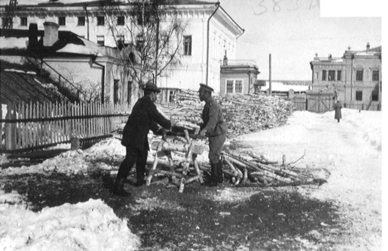
i1.23. Nicholas and Pierre Gilliard, Swiss tutor of Alexei, sawing firewood in Tobolsk, Siberia, 1917.
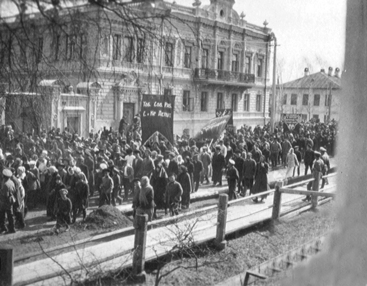
i1.24. Revolutionary procession passing the Governors House, where the imperial family was being held in Tobolsk. The largest of the banners states in part, “The Tobolsk Council of Workers’, Soldiers’, and People’s Deputies,” 1917.
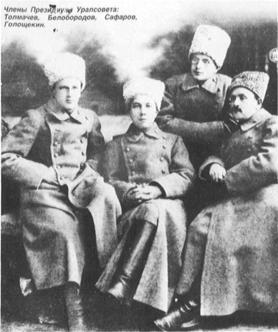
i1.25. Members of the Ural Soviet who issued the order to the execution squad: Nikolai Tolmachev, Alexander Beloborodov, Georgy Safarov, and Filipp Goloshchekin, 1918.
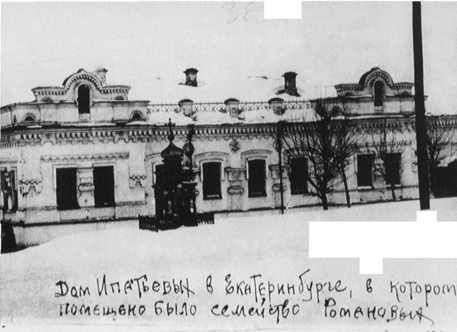
i1.26. Ipatiev house, Ekaterinburg, the last residence of the imperial family, 1918.
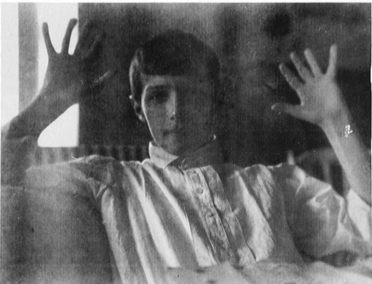
i1.27. Alexei in bed in the Ipatiev house during his last illness before his execution.
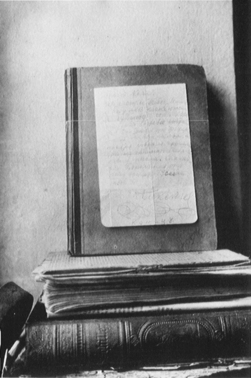
i1.28. last letter written by Alexei before his death.
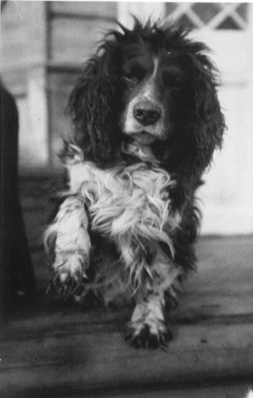
i1.29. Joy, Alexei’s spaniel, Ekaterinburg.
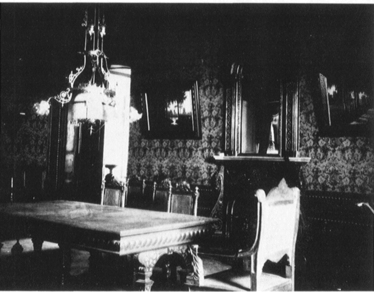
i1.30. The dining room of the Ipatiev house, Ekaterinburg, where the imperial family took their last meal.
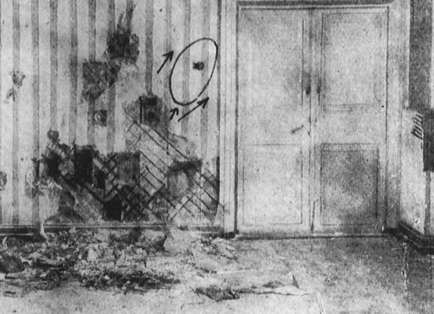
i1.31. The half-cellar room in the Ipatiev house, the scene of the assassination.
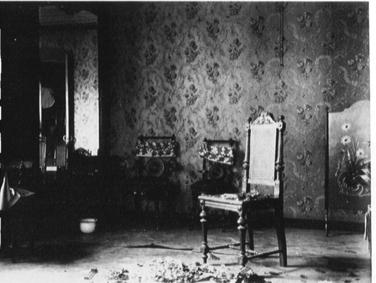
i1.32. The grand duchesses’ bedroom in the Ipatiev house after their deaths.
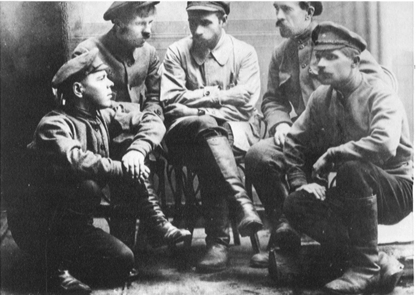
i1.33. Participants in the murder of Grand Duke Michael Alexandrovich: Markov, Zhuzhgov, Myasnikov, Ivanchenko, and Kolpashchikov, in the Urals. The assassins had this photograph taken as a keepsake of their “exploit.”
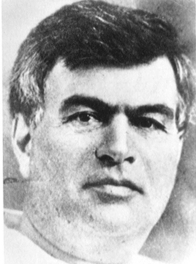
i1.34. Yakov Yurovsky, commander of the execution squad.
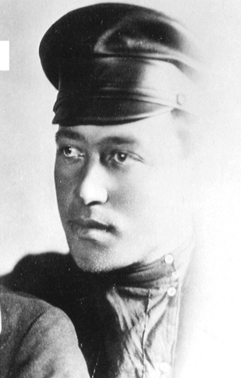
i1.35. Chekist Grigory Nikulin, Yurovsky’s deputy, taken at the time of the murder of the tsar and his family, Ekaterinburg.
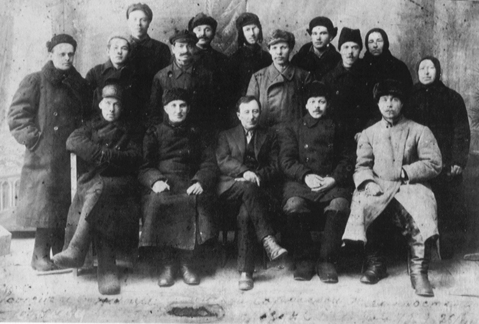
i1.36. Sergei Lyukhanov (seated, center), who drove the truck bearing the lifeless bodies of the tsar’s family from the Ipatiev House to the burial site. Photo taken in Osa, 1918.
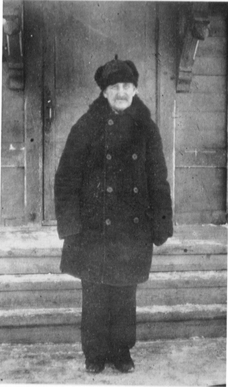
i1.37. Jergei Lyukhanov, just before his death in 1952.
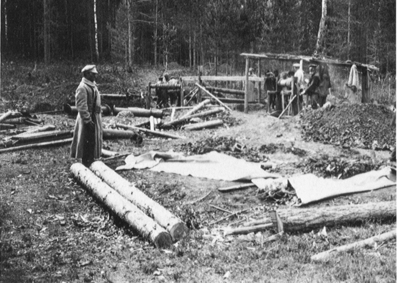
i1.38. White Russians returning to the burial site near Koptyaki to retrieve the bodies of the imperial family.
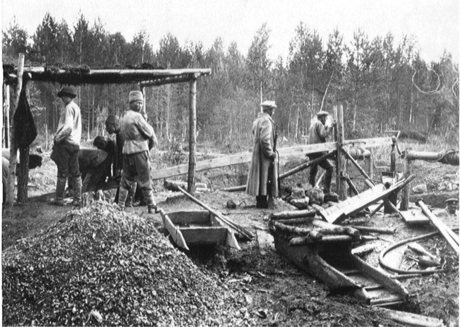
i1.39. At the burial site.
The name of the man Medvedev didn’t know was revealed by Ermakov himself.
Ermakov: “Received an execution decree on July 16 at eight in the evening.… myself arrived with two of my comrades, Medvedev and another Latvian whose last name I don’t recall.”
Medvedev, who came with Ermakov, was actually Mikhail Medvedev-Kudrin, a former sailor and board member of the Ural Cheka.
(Once in Baku, Medvedev-Kudrin had been in the same underground organization of the Russian Social Democratic Workers Party as Myasnikov. On the day of the Romanov tricentennial, they put out a broadside sentencing Nicholas to death. A month before, Myasnikov had carried out this sentence partially—he had organized the murder of Nicholas’s brother. Now it was Medvedev-Kudrin’s turn to keep his promise.)
THE DETACHMENT
The detachment was assembled.
Six Latvians from the Cheka—two had refused to join it. One who did not refuse, according to legend, was Imre Nagy, the future leader of the 1956 Hungarian revolution. Nagy’s eventual death (executed without trial by Soviet troops invading Budapest) fits our story quite well. Joining the Latvians were Yurovsky, Nikulin, Ermakov, the two Medvedevs—Pavel, the guard commander, and the Chekist Medvedev-Kudrin.
There would be one more. A most curious person. Before the shooting began he would come down from upstairs, from the attic, where he was at that moment standing by a machine gun: Alexei Kabanov, a former soldier in the tsar’s Life Guards.
The tsar had an amazing visual memory, the guard Yakimov told Investigator Sokolov: “Once Kabanov was on duty at the inner courtyard post. Walking past Kabanov, the tsar took a good look at him and stopped. ‘You served in my cavalry regiment?’ Kabanov replied in the affirmative.”
Now former Life Guard Alexei Kabanov was serving in the Cheka and had been put in charge of the Ipatiev house machine gun platoon.
This “recognition” by the tsar may have decided everything. Alexei Kabanov had a brother in an important position—head of the Ekaterinburg prison—and Alexei had thought that the way to prove his loyalty to the new authority was to participate in the execution.
Pavel Medvedev: “At about twelve o’clock (old style), two new style, Yurovsky woke the tsar’s family.
“Whether he told them why he was disturbing them and where they were supposed to go, I don’t know.”
Strekotin: “At that moment electric bells were heard. This was them waking the tsar’s family.”
Yurovsky: “That was when I came and woke them. Dr. Botkin, who slept closer to the door of the room, came out.” (No, the doctor was not sleeping, he was writing his last letter and had broken it off in the middle of a word.)
“The following explanation was given: ‘In view of the unrest in the town, it has become necessary to move the Romanov family downstairs.’
“I suggested everyone dress right away. Botkin woke the rest. They took quite a long time getting dressed, probably at least forty minutes.… When they were dressed I myself led them down the inner staircase to the cellar room.”
Yurovsky: “Downstairs a room had been chosen with a plastered wooden partition (to avoid ricochets), from which all the furniture had been moved. The detachment was at the ready in the next room. The R[omanov]s had no inkling.”
Pavel Medvedev: “The tsar was carrying the heir in his arms. The sovereign and the heir were wearing field shirts and forage caps. The empress and her daughters wore dresses but not wraps. The sovereign walked ahead with the heir. In my presence there were no tears, no sobs, and no questions. They went downstairs, out into the courtyard, and from there through the second door into the downstairs quarters. They were led into the corner room adjacent to the sealed storeroom. Yurovsky ordered chairs brought in.”
Yurovsky: “Nich[olas] was carrying Alexei in his arms, the rest were carrying small pillows and various little items. Entering the empty room, A[lexandra] F[eodorovna] asked: ‘What, no chairs? May we not sit?’
“The com[mandant] ordered two chairs brought in. Nich[olas] put A[lexei] in one and A. F. sat in the other. The rest the commandant ordered stand in a row.”
Strekotin: “They were all led into the room.… Next to my post. Soon Akulov [Nikulin] came out and walking past me said, ‘The heir needs a chair.… Evidently he wants to die in a chair.… Oh well—let’s bring them.’”
Nikulin brought the two chairs Yurovsky wrote about. One for the tsaritsa, the other for Alexei.
The chairs were no whim of Alexandra Feodorovna’s. She could not stand for long because her legs ached constantly. That was why she had brought the wheelchair. The boy, who had just had an attack, could not stand either. That was why they “wanted to die in a chair.”
Medvedev: “The empress sat by the wall where the window was, closer to the back column of the arch. Behind her stood three of her daughters. The sovereign was … in the middle, next to the heir, and behind him stood Dr. Botkin. The maid, a tall woman, stood by the left jamb of the storeroom door. With her stood one of the daughters. The maid had a pillow in her arms. The tsar’s daughters had brought small pillows: they put one on the seat of the heir’s chair, the other on their mother’s.”
At this time Deryabin was watching the same scene, but from the other perspective—through the window of the half cellar room. He saw the executioners:
“They arranged themselves like this: to the right of the entrance was Yurovsky, to the left of him stood Nikulin, the Latvians stood right in the doorway, and behind them was Medvedev [Pavel].”
Through the window Deryabin could see part of Yurovsky’s body, but primarily his arm. He saw Yurovsky saying something and waving his arm. What exactly he said, Deryabin could not tell. He said he could not hear the words.
Strekotin: “With quick gestures Yurovsky directed who went where. In a calm, quiet voice: ‘Please, you stand here, and you here … that’s it, in a row.’ The prisoners stood in two rows: in the first, the tsar’s family; in the second, their people. The heir was sitting on a chair. The tsar was standing in the first row with one of his lackeys directly behind him.”
Yes, Nicholas was standing. It was all just the way it had been at that last service, when they had heard “Rest with the Saints.”
Everything in this scene is clear—except for one thing: Why were they arrayed so picturesquely? Earlier, when they had listened to the prayers, they had lined up before Father Storozhev and the deacon, but now—when they were waiting for it to end?
They were waiting out some new danger, so why were they so inappropriately, so picturesquely arrayed? And why did they ask for only two chairs; after all they could be waiting for it to end indefinitely.
THE PHOTO-EXECUTION
A man called me after the publication of my first article. He started right in:
“I will tell you what the second generation of Soviet agents was told in agent school. What is the second generation? If the famous Soviet agent Rikhard Zorge was the first generation, then this is 1927–1929. They are all long since in their graves, and you are unlikely to hear this from anyone but me.… So, at agent classes we were told the following … : they had to arrange the family as conveniently as possible for the execution. The room was narrow, and they were worried the family would crowd together. Then Yurovsky had an idea. He told them they had to go down to the cellar because there was danger of firing on the house. While they were at it, they had to be photographed because people in Moscow were worried and various rumors were going around—to the effect that they had fled. [Indeed, in late June there had been a disturbing telegram to that effect from Moscow.]
“So they went downstairs and stood—for a photograph along the wall. And when they had lined up….”
How simple it all proved to be. Of course, he thought of saying he was going to photograph them. He may even have joked about how he had once been a photographer. Hence his orders, about which Strekotin wrote: “Stand on the left,… and you on the right.” Hence also the calm obedience of all the characters in this scene. Then, when they were standing, waiting for the camera to be brought in….
Yurovsky: “When they were all standing, the detachment was called in.”
Strekotin: “A group of people went to the room where the prisoners had just been led. I followed them, leaving my post. We all stopped at the door to the room.”
So the firing squad was already crowding in the wide double doors to the room, and Strekotin was right beside them.
Ermakov: “Then I came out and told the driver: ‘Get going.’ He knew what to do, the car roared to life, and exhaust appeared. All this was necessary in order to muffle the shots, so that no sound would be heard at liberty.”
The driver, Sergei Lyukhanov, in the courtyard, was sitting in the cab of the truck, listening to the motor running—and waiting.
Yurovsky: “When the detachment com[mandant] walked in, he told the R[omanov]s: ‘In view of the fact that your relatives are continuing their attack on Sov[iet] Russia, the Ural Executive Committee has decided to execute you.’ Nicholas turned his back to the detachment, his face to the family, then sort of came to and turned around to face the com[mandant] and asked: ‘What? What?’”
Strekotin: “Yurovsky was standing in front of the tsar, his right hand in his pants pocket and a small piece of paper in his left. Then he began to read the sentence. But he had not finished the last word when the tsar asked very loudly for him to repeat it.… So Yurovsky read it a second time.”
Yurovsky: “The com[mandant] quickly repeated it and ordered the detachment to get ready.… Nicholas did not say anything more, having turned back toward the family; the others uttered a few incoherent exclamations. It all lasted just a few seconds.”
THE TSAR’S LAST WORDS
He “asked him to repeat it” and “did not say anything more”! Such were Nicholas’s last words, wrote Yurovsky and Strekotin.
But the tsar did say a few more words. Yurovsky and Strekotin did not understand them. Or rather, they did not choose to write them down.
Ermakov did not write them down either, but he did remember them. He did not remember much, but this he did not forget. He even talked about it sometimes.
From a letter of Alexei Karelin in Magnitogorsk:
“I remember Ermakov was asked, ‘What did the tsar say before the execution?’ ‘The tsar,’ he replied, ‘said, “You know not what you do.”’”
No, Ermakov could not have invented that sentence; he did not know those words, this assassin and atheist. Nor was there any way he could have known that those words of the Lord were written on the cross of Nicholas’s slain uncle Sergei Alexandrovich. The tsar repeated them, as Ella must have repeated them at the bottom of the mine: “Forgive them, for they know not what they do.”
A few months later in the Fortress of Peter and Paul, another Romanov, Grand Duke Dmitry Konstantinovich, would be led before a firing squad:
“The prison guard said that while Dmitry Konstantinovich was on his way to his execution, he kept repeating Christ’s words: ‘For-give them, Lord, for they know not what they do’” (From the memoirs of Grand Duke Gavriil Konstantinovich, In a Marble Palace).
His last words. At that moment it came to pass—the story of the sacrifice. And forgiveness.
After reading the piece of paper, Yurovsky jerked out his Colt.
Yurovsky: “The detachment had been told beforehand who was to shoot whom, and they had been ordered to aim straight for the heart, to avoid excessive quantities of blood and get it over with quicker.”
Strekotin: “At his last word he instantly pulled a revolver out of his pocket and shot the tsar. The tsaritsa and her daughter Olga tried to make the sign of the cross, but did not have enough time.”
Yurovsky: “Nich[olas] was killed by the commandant, point blank. Then A[lexandra] F[eodorovna] died immediately.”
Yurovsky wrote that it was he who killed the tsar. Strekotin too saw Yurovsky finish reading the paper and immediately pull out his hand with the gun and shoot the tsar.
Actually, that day Yurovsky had two guns with him.
Yurovsky: “Colt no. 71905 with a cartridge clip and seven bullets, and Mauser no. 167177 with a wooden gunstock and a clip with ten bullets.… I killed Nicholas point blank with the Colt.”
But Strekotin was only watching Yurovsky reading, and the guard only saw Yurovsky’s hand aimed at the former Autocrat of All the Russias.
Two others would later assert that they had shot the tsar.
The son of Chekist Medvedev: “The tsar was killed by my father.… As I already said, they had agreed who was to shoot whom. Ermakov the tsar, Yurovsky the tsaritsa, and my father Marie. But when they stood in the doorway, my father found himself directly opposite the tsar. While Yurovsky was reading the paper, my father stood there watching the tsar. He had never seen him so close up. As soon as Yurovsky repeated the last words, my father was ready and waiting and fired immediately. And he killed the tsar. He fired his shot faster than anyone.… Only he had a Browning. On a Mauser, a revolver, or a Colt you have to cock it, and that takes time. On a Browning you don’t have to.”
But Ermakov, to whom the tsar “belonged” by agreement….
Ermakov: “I shot him point blank, and he fell instantly.”
I am certain, though, that everyone crowding in the doorway of that terrible room, all twelve revolutionaries, had come to kill the tsar, and all twelve sent their first bullet into him. The triumphant inscription left on the wall—“On this night Belshazzar was killed by his lackeys”—was literally true. That was why Nicholas toppled over backward with such force. Only then did they turn to the others, and the chaotic shooting ensued.
Kabanov: “I remember it well: when all of us participating in the execution walked up to the opened door of the room, there turned out to be three rows of us firing revolvers, and the second and third rows were firing over the shoulders of the ones in front. There were so many arms with revolvers pointed toward those being executed, and they were so close to each other, that whoever was standing in front got a burn on the inside of his wrist from the shots of his neighbor behind.”
They gave up the entire space of the tiny room of execution to the eleven unfortunates, who raced around in that cell while the twelve sharpshooters, sorting out their victims, fired continuously from the mouth of the double doors, giving those in front gunpowder burns.
Hands holding revolvers poked through the doorway.
The son of Chekist Medvedev: “My father had a gunpowder burn on his neck, and Yurovsky burned his finger.” (Yes, they were both in the first row!)
Yurovsky: “A[lexe]i, three of his sisters, the lady-in-waiting [as he referred to Demidova], and Botkin were still alive. They had to be finished off. This amazed the com[mandant] since we had aimed straight for the heart. It was also surprising that the bullets from the revolvers bounced off for some reason and ricocheted, jumping around the room like hail.”
So the tsar was down, felled by the first shots, felled by them all. The tsaritsa was down, too, killed in her chair, and the swarthy servant Trupp, who collapsed right after his master. And Botkin and the cook Kharitonov. But the girls were still alive. It was bizarre how the bullets bounced off them. Bullets flew around the room. Demidova was dashing about the tiny room wailing.… She shielded herself with a pillow, into which they emptied bullet after bullet.
The detachment kept firing, almost hysterically. Through the gun smoke the light was barely visible. The prostrate figures lay in pools of blood, and on the floor the boy stretched his arm out through the smoke, shielding himself from the bullets. Nikulin, in horror, not understanding what was going on, fired at him, and fired, and fired.
Yurovsky: “My assistant spent an entire clip of bullets.” (The strange vitality of the heir must probably be put down to my assistant’s poor mastery of his weapon and his inevitable nerves evoked by his long ordeal with the armored daughters.)
Then the commandant stepped into the fierce, acrid smoke.
Yurovsky: “The remaining bullets of the one loaded clip for the Colt, as well as the loaded Mauser, went to finish off Nicholas’s daughters and the strange vitality of the heir.”
He put an end to that “vitality” with two shots. So he believed. And the boy fell quiet.
Kabanov: “The tsar’s two youngest daughters, pressed up against the wall, were squatting, covering their heads with their arms, and then two men fired at their heads.… Alexei was lying on the floor, and they fired at him, too. The lady-in-waiting [Demidova] was lying on the floor still alive. Then I ran into the execution room and shouted to stop the firing and finish off those still alive with bayonets. One of the comrades began plunging the bayonet of his American Winchester into her chest. The bayonet was like a dagger, but it was dull and would not penetrate. She grabbed the bayonet with both hands and began screaming. Later they got her with their rifle butts.”
Now all eleven were on the floor—barely visible through the smoke.
Pavel Medvedev: “The blood was gushing out … the heir was still alive—and moaning. Yurovsky walked over to him and shot him two or three times at point-blank range. The heir fell still. The scene made me want to vomit.”
Strekotin: “The smoke was blocking out the electric lamp. The shooting was halted. The doors of the room were opened for the smoke to disperse. They started picking up the bodies.”
They had to get them out as quickly as possible. This truck had to be on its way while the July night still hung over the town. Quickly, hastily, they turned the bodies over, checking pulses. They were in a hurry. The light barely shone through all the gun smoke.
Yurovsky: “The whole procedure, including the checking [feeling pulses and so on] took about twenty minutes.”
The bodies had to be carried through all the downstairs rooms to the front entrance, where the truck was waiting with the driver Lyukhanov.
Pavel Medvedev got the idea of carrying them out on sheets, so as not to drip blood in the rooms. He went upstairs, to the family’s rooms. After he collected the sheets in the grand duchesses’ room he grabbed a cover and wiped his hands, which were spattered with the tsar’s blood—and threw it into the corner. That was the cover they later found—from his, Medvedev’s, bloody fingers.
Pavel Medvedev: “We took the bodies out on stretchers made from sheets stretched between shafts taken off the cart in the courtyard.”
Strekotin: “The tsar’s body was carried out first. The bodies were carried out to the truck.”
On the bottom of the truck they laid a cloth, which had been in the storeroom covering the family’s belongings. Now it was protecting the floor of the truck from the tsar’s blood.
The tsar was carried out first in the wide marital sheet. They carried out the head of the family, Then they brought his daughters.
Strekotin: “When they laid one of the daughters on the stretcher, she cried out and covered her face with her arm. The others [the daughters] also turned out to be alive. We couldn’t shoot anymore—with the open doors the shots could have been heard on the street. According to the comrades in the detachment, the shots had been heard at all the posts.”
When the slain grand duchess rose up with a shout on the sheet—and her sisters rustled on the floor—horror gripped the detachment.
At that point they still did not know the reason for their “strange vitality,” as Yurovsky put it. It seemed to them that heaven itself was against them. Again the Chekists did not err. Ermakov set the example. He had no fear of heaven.
Strekotin: “Ermakov took my bayonet from me and started stabbing everyone dead who had turned out to be alive.”
Yurovsky: “When they tried to stab one of the girls with a bayonet, the point just would not go through her corset.”
The Livadia Palace, the children’s balls, the luxury of the Winter Palace, the anticipation of love—it all came to an end on a dirty floor, to the panting of a former convict. In impossible pain from a dull bayonet—it all came to an end.
——
Remember: When they were carrying her out to the truck, the shot young woman turned out to be alive, as did the other daughters—even though they had checked their pulses!
It is easy enough to write that they “checked,” but how could they really have checked—in that smoke, in that horror, in that fever amid the pools of blood?
Again they were carrying bodies to the truck. Before carrying them out, they collected the jewels and precious objects. As it says in Sokolov’s inquiry, Strekotin immediately began searching those lying there and removing jewels.
Naturally enough, though, Strekotin did not write about his own efforts.
Strekotin: “While the bodies were being removed, several of our comrades began removing various items from the bodies, like watches, rings, bracelets, cigarette cases, other things. When Comrade Yurovsky was informed of this he hurried back downstairs. We were already carrying out the last body. Comrade Yurovsky stopped us and suggested we voluntarily give back the various items we had taken from the bodies. Some gave it all back, some just part, and some nothing at all.”
Yurovsky: “Then they started carrying the bodies out and loading them into the truck, which was spread with a cloth (so the blood would not flow). At this point the stealing began: I had to have three reliable comrades guard the bodies while the carrying was going on. Under threat of execution, everything stolen was returned (a gold watch, a cigarette case with diamonds, etc).”
The son of Chekist Medvedev: “When they were removing the jewels from the dead Romanovs in the Ipatiev house, a watch disappeared instantly. They also managed to remove the watch from the dead Botkin. Yurovsky said: ‘We are going out now, and in three minutes we’ll be back. The watch had better be here.’ And he went out of the room with my father. Three minutes later he was back. And the watch was there. Yurovsky took great pains to see that nothing was stolen. When the tsar fell, his forage cap rolled into a corner. One of the guards carrying out the bodies took the tsar’s cap.… Yurovsky immediately pointed it out to my father with a nod of his head. The cap fit my father. It turned out to be a perfectly ordinary cap, no initials. My father took the cockade off but left the cap. We had the cockade in our house for a long time. As a child I used to play with it. Then something happened to it in all our moves. I was already in school when we had a play and I played a policeman with that cockade.”
Now the tsar’s family was lying in the truck covered with a tarpaulin. Someone found the tiny dead dog—one of the grand duchesses was hugging it … she had been lying on the floor with the dog. The dog’s body was tossed into the truck—it could guard the tsar’s family.
Yurovsky: “The com[mandant] had been instructed only to carry out the sentence. Getting rid of the bodies and moving them was the job of Comrade Ermakov (a worker from the Upper Isetsk plant, a former political prisoner). He was supposed to come with the truck and was let in at the password ‘chimney sweep.’ The truck’s lateness made the com[mandant] doubt Ermakov’s thoroughness, so the com[mandant] decided to watch over the entire operation himself. At about three o’clock they left for the site Ermakov was supposed to have prepared, past the Upper Isetsk factory. First they were supposed to go by truck and after a certain point on horses (since the truck could go no farther; the site chosen was an abandoned mine).”
Yurovsky and Ermakov would end up spending two full days together with the bodies.
Yurovsky recorded the burial of the tsar’s family in great detail, perhaps concealing an almost fantastic story. But let us break off here. We will return yet again to the terrible truck.
The gates of the house opened and in the advancing dawn the truck drove out onto Ascension Avenue.
Strekotin: “When the bodies had been carried out and the car had left, only then was our shift taken off duty.”