
Part One
She’s Leaving Home
June 1971
In the sixth-floor city room of the Miami News, Nicolette Handros stared at the little yellow paperback. It was an ARC, or “advance review copy,” which meant it was bare bones. No artwork, no dust jacket, no price tag. Just a bright yellow cover with five red words:
Go Ask Alice
Author anonymous
Below this, a typed 3" × 5" card was glued to the front:
This special pre-publication paperback book that you hold in your hands is, in our estimation, one of the most gripping, terrifying and socially important books that we at Prentice-Hall have ever published.
We feel confident that you will share our enthusiasm and our dedication to bring the published edition to the attention of every parent and young person in your community.
Handros hadn’t asked for this book—it had just arrived, landing at the newspaper with a pile of other promo titles, all of them angling for a little exposure.
Handros was a staff reporter, and her usual beats were drugs and mental health (unofficially, “misfits and crazies”), but the Miami News was a second-place paper, so everyone did extra work. When a book caught your eye, you wrote a review, and it usually ran the same week.
Handros flipped through the paperback, checking the length. It was brief, with spacious text, a book you could read in one evening. It began with an editor’s note:
Go Ask Alice is based on the actual diary of a fifteen-year-old drug user. It is not a definitive statement on the middle-class, teenage drug world. It does not offer any solutions.
It is, however, a highly personal and specific chronicle. As such, we hope it will provide insights into the increasingly complicated world in which we live.
Names, dates, places and certain events have been changed in accordance with the wishes of those concerned.
The next 159 pages were a slideshow of personal destruction. Lured into drug use by unsavory friends, a bright, middle-class teenager succumbs to addiction and impulse. She runs away from home but finds only heartache: a wasteland of pushers and prey. As things unravel, the diarist suffers a horrifying breakdown and lands in a psychiatric ward. She vows to start over, but the darkness soon returns; she dies at seventeen, leaving only the diary behind.
Reading Go Ask Alice, Nicolette Handros grew uncomfortable, like she was peering through somebody’s window. The writing was clunky and unguarded, the kind of thing meant to stay private.
This has to be real, she thought.
Handros knew about reality, especially its uglier forms. In the past twelve months, Dade County’s crime rate had spiked, and things were getting scary. Everyone seemed to be high, or packing heat, or both. That included children: expulsions were up by 60 percent, and it wasn’t making a dent. Across Miami, kids slashed each other with razors, assaulted teachers, and waved handguns in school hallways.
It wasn’t just Florida. For a decade, the nation had slid toward the brink, pulled back, and slid again. JFK and MLK . . . then RFK. The Manson killings. The Manson trial. Kent State. Then the Pentagon Papers: a massive leak showing that the Vietnam War was unwinnable, and that the government had known it for years.
Things felt dangerous, like an ongoing earthquake. By mid-1971, homegrown bombings were hitting America five times a day, tearing through banks, police stations, and the US Capitol.
Even criminals who were caught couldn’t be controlled. In Attica, New York, more than a thousand prisoners rioted, taking four-dozen hostages. When police finally stormed the gates, thirty-three inmates and ten hostages were killed—all but one by the cops themselves.
It was overwhelming. You couldn’t begin to process a thousand bombings, or a thousand angry prisoners, or—God help you—seven thousand pages showing that the war was a pointless death trip.
But the story of one sad girl? That could break the hardest heart.
Handros fed a sheet of paper into her typewriter and thought about the diary.
“Alice,” she typed, “could be anyone’s daughter.”

In Cincinnati, columnist Terri Loebker read Alice’s shocking conclusion and felt a sudden, empty ache.
I wish I had known her, Loebker thought. Maybe I could have helped her.
Loebker was a high school senior, and a year earlier, she’d joined the Cincinnati Enquirer as a teen correspondent, writing for the weekend edition. It paid almost nothing, but for Loebker, it was a chance to report on a culture in flux. The sixties had torn the nation in two, and Ohio, where National Guardsmen had shot thirteen Kent State students in 1970, still felt divided.
Loebker didn’t drink or get high, but she viewed herself as a hippie, and she grieved for the diary’s anonymous author.
In her October 16 column, Loebker urged every reader to buy two copies of Go Ask Alice: one for themselves and one for a friend.
“Go Ask Alice,” wrote Loebker, “is the deepest insight into drug use ever printed, [and] is recommended reading for both sides of the generation gap.”
For parents especially, that gap had become a canyon. Even obedient children seemed like potential time bombs, and parents braced for the day when things might blow apart.
Instead, more and more teenagers simply disappeared.
Runaways had always existed, but they’d come from predictable places, for predictable reasons. Some were true delinquents: knife-pullers and window-smashers who’d been cutting out since grade school. Some were banished reminders of long-gone wives or husbands. Others were more like refugees—exiled for being pregnant, or being gay, or finally telling a handsy stepfather to knock it off.
Ugly and sad, yes, but also understandable. Sometimes, running was the only real choice.
Then something changed. In 1964, more than two hundred thousand teenagers vanished long enough to be declared missing. The following year, it was close to five hundred thousand, and confusion turned to panic.
It wasn’t just the numbers that had people rattled, it was the teenagers themselves. They weren’t backwater fuckups or terminal crackpots, but honor students and athletes, and they were overwhelmingly female. By 1971, the average American runaway was a white, middle-class, suburban girl who was barely fifteen.
In Boston and New Orleans, they drifted in by the hundreds. In Greenwich Village, cops put the number at twelve hundred a month. And in San Francisco’s Haight-Ashbury district, more than twenty thousand teenagers arrived each year—a virtual army of sad-eyed dreamers.
Most gave up and went home, embarrassed and defeated. The ones who stayed learned how to hustle, and even then, it was hard. Dealers and pimps descended like bats, drinking and draining, then flying away.
When parents described a missing child, the police gave concrete advice. Whatever your daughter weighs, subtract twenty pounds. No one stays healthy out there.
Some disappeared for a weekend, some for several months, and a handful never came back. Most returned within a few weeks, but that was long enough to cause damage—to their parents, to themselves, to anyone who cared.
In Jackson, Tennessee, twenty-four-year-old reporter Delores Ballard started reading Go Ask Alice—and couldn’t stop.
This could be me, she thought. The teenage me, anyway.
It wasn’t the drugs—Ballard had always been straitlaced. It was the madness. The terrible (and glorious) roar of emotions that defined adolescence.
Ballard thought back to her own teenage years, to her own diary. She had felt like one giant nerve ending, and her writing had shown it, all Sturm and Drang and fury and light. Embarrassing in retrospect, but also honest. Maybe embarrassing because it was honest. Teenagers didn’t filter; that was their blessing and curse.
“Alice” (whoever she was) had captured that feeling in language any young woman could recognize, and the resonance made her death even more crushing.
“Alice didn’t know she was writing a book,” said Ballard’s September 5, 1971, review in the Jackson Sun. “She was just one of a million 15-year-old girls who kept a diary; a real, honest-to-goodness teenage diary.
“This book is the most personal, most revealing, and most agonizingly tragic chronicle of drug addiction that has ever appeared in print.
“Go Ask Alice belongs on every school library shelf; it belongs in the hands of every parent of a teenager, and every teenager who is ever tempted to even try the drug route.”
To millions of parents, “the drug route” converged with other, darker paths—low roads that snaked through the heartland, leading young people to corruption and ruin. Those byways were stalked by a shape-shifting monster, a creature that lurked on bright strips of paper or inside pieces of candy. It was odorless and flavorless, and weighed almost nothing, and they said it would eat you alive. It was a chemical demon unleashed by mistake.
Into the Great Wide Open
Friday, April 16, 1943
The laboratory looked more like a country kitchen. Lots of white cabinets and drawers, each with a small black handle. There were low wooden chairs and screenless windows that swung wide open. Rows of corked bottles lined every shelf.
A slender, spectacled man moved here and there, adding, mixing, observing. His head was small and perfectly round, with a layer of short, dark hair. His crisp white lab coat was cinched at the waist. Order and control.
Swiss chemist Albert Hofmann wasn’t trying to innovate. Just the opposite: there was big money in asthma treatments, and Hofmann’s employer, Sandoz Labs, wanted a piece of it. Could Hofmann clone a competitor’s drug? Hofmann thought so, and was synthesizing a plant extract that might do the trick.
Then, without warning, he began to drift. His movements felt sluggish, but his mind was scattered—definitely not suitable for lab work. Hofmann decided to call it a day.
With World War II still roaring, fuel was scarce in Switzerland, so Hofmann biked to work each morning—a six-mile path of smooth, easy ground. Now, pedaling toward home, Hofmann struggled to stay upright. He felt drunk, or something like it.
For the next two hours, he saw a stream of dazzling, wildly colored figments. They moved and merged without friction, collapsing and growing like liquid flowers.
The next morning, he felt normal again: no visions, no sickness. Cycling to work, he thought back on the previous day. Had some of the extract gotten on his fingertips? He was always so careful, but what else could it be?
Hofmann was a scientist, and he couldn’t leave nagging questions unanswered. He had to know.
Monday, April 19, 1943
Hofmann double-checked everything. In front of him sat a fresh fountain pen, a lab journal, and a teaspoon of lysergic acid diethylamide-25. He mixed the chemical into some water, swallowed it, and looked at the clock. It was 4:20 PM.*
He reached for his journal and made a quick note:
Self-Experiment: Diethylamide tartrate (0.5cc) taken diluted with about 10cc water. Tasteless.
At 5:00 PM, he made another entry:
Beginning dizziness, anxiety, disturbed vision, paralysis, urge to laugh—
That was as far as he got. He stared at the page, but couldn’t continue. Dr. Albert Hofmann, age thirty-seven, had forgotten how to write.
5:15 PM
Hofmann’s mind was coming apart, and his body wasn’t doing much better. His muscles felt spastic—yet frozen—and his equilibrium was awhirl.
Amid this chaos, however, another part of Hofmann’s mind was actually relaxing, stretching out like a prisoner sprung from solitary. This part decided to bicycle home again.
Why not? It’s such a beautiful day.
Hofmann asked his lab assistant, Susi Ramstein, to help him get home safely, and Ramstein, who had no idea what was happening, agreed. Soon, the scientists were on their bicycles, pedaling toward nearby Binningen.
For Hofmann, it was half fascination, half terror, everything distorted and glinting. People warped into geometric shapes; houses loomed like menacing giants. And something was happening with time. Hofmann thought he was traveling slowly; in reality, he was cycling at top speed, and Ramstein struggled to keep up.
After arriving home, Hofmann collapsed on a sofa and attempted to get his bearings. It was difficult, especially with the furniture moving and the walls pulsing, the whole place like a giant, room-shaped stomach.
He tried to explain things to Ramstein, but it was hopeless. At that moment, Albert Hofmann was the first person—ever—to have taken LSD, and there was no context. He was dreaming with his eyes wide open, and logic was slippery, elusive. Ideas appeared, then vanished, a flutter of wings and ribbons.
Hofmann, whose wife and children were away visiting family, worried that he’d poisoned himself. He asked Ramstein to get the family doctor and to find a bottle of milk.
Maybe I can dilute the poison . . . buy myself a little time.
After what felt like days, the doctor arrived. With no understanding of LSD, and with Hofmann making little sense, he checked the basics: blood pressure, breathing, pupils, pulse.
Hofmann’s pupils were the size of dimes, but everything else was normal. The doctor spoke slowly and clearly. There is no sign of poison, and no sign of illness.
At this, Hofmann’s panic receded, replaced by feelings of gratitude and good fortune. Everything would be fine.
The doctor moved Hofmann into the bedroom, monitored his condition for a while, then departed.
Hofmann, meanwhile, plunged into a shimmering, spiraling dreamscape, a place both vast and exquisitely personal. Fountains of color bloomed, then flowed together, morphing and sparkling. Even more amazing were the sounds: Hofmann could see them. Somewhere outside the bedroom, a door went thunk, and Hofmann’s mind surged with new colors. A car passed the house, and pleasing shapes bubbled to life, then floated away.
The next morning, Hofmann felt reborn. His muscles ached, and he was physically drained, but his mind was alive and whirring. Everything was brighter and cleaner. His breakfast was extraordinary. When he stepped outside, the garden glowed with sunlight.
“The world,” Hofmann later wrote, “felt newly created.”
Hofmann gave his managers a detailed report, and what floored them was the dosage. He’d taken just 250 micrograms of LSD—less than the weight of a single grain of sugar. LSD was a hundred times stronger than psilocybin, the key ingredient in “magic” mushrooms, and three thousand times stronger than mescaline, the key ingredient in peyote. What’s more, there appeared to be no hangover. The drug took charge, ran its course, and left you happier than before. Like yourself . . . but better.
It seemed too good to be true. Hofmann’s bosses scaled back the dosage even further, from 250 micrograms down to 85, and gave it a try.
Forty minutes later, everyone saw the light.
Clinical trials only burnished LSD’s halo. In minuscule doses, it unlocked emotions, enhancing the effects of psychoanalysis. In larger doses, it became the Holy Grail, relieving physical pain—even in cancer patients—without addiction.
In 1947, Sandoz patented LSD and pitched it as a research aid, a way to explore (and restore) the human mind.
Around the world, doctors and psychologists received small orange bottles of LSD tablets, sometimes by the dozen. In exchange, Sandoz asked for updates on how the drug was used, and where it showed the most potential.
Offered free samples of a breakthrough medicine, many doctors did the obvious: they opened the bottle, popped a little round pill (or two), and spent the next eight hours in ecstasy. Or abject terror. It all depended.
Context, doctors soon discovered, was everything. LSD took its cues from your mood and surroundings. In the right frame of mind, in a tranquil place, you could untangle your own neuroses, emerging buoyant and refreshed. In the wrong setting, or without someone to guide you, panic attacks and morbid visions could scour your senses for hours on end.
Doctors and therapists learned to start small, using tiny amounts and working up from there. Soon, they glimpsed the future, a place where even the deepest suffering might be cured. Not smothered or stifled, but actually stopped. At its best, LSD eased traumatic stress, allowing soldiers, rape victims, and even Auschwitz survivors to process—then shed—their lingering torment. For patients with terminal cancer, LSD not only muted the pain, but aided in acceptance, smoothing the passage through life’s final chapter.
In Britain, doctors used LSD to treat “hopeless” alcoholics: men and women who had failed to beat the bottle with willpower, religion, and support groups. One year later, nearly half were still sober, the highest success rate of any known treatment.
There were abuses, accidental and otherwise. In 1953, the CIA launched MK-ULTRA, a cluster of brainwashing experiments modeled on Nazi research. For more than a decade, government agents dosed thousands of unsuspecting Americans—including prisoners, students, and children—with LSD, often in massive amounts.
In New York, the CIA went the extra mile, launching its own brothel, complete with heroin-addicted prostitutes. In exchange for dosing johns with LSD (usually via tainted booze), the women got their daily fix, immunity from arrest, and a hundred bucks a night. The agents, in turn, got to watch through one-way mirrors as the hapless men went bonkers. They called it “Operation: Midnight Climax.”
Through it all, LSD kept a low public profile. It was hard to find, hard to describe, and used mainly in research. It was also relatively safe. Nothing sexy about that.
Then, in 1963, Sandoz’s patent expired. Suddenly, anyone could manufacture LSD. You didn’t need permission, only the formula, and it was still completely legal. In college towns across the land, basement chemists did the rest, spreading the word to friends and lovers.
As acid’s popularity increased, straight society grew anxious, and newspapers fed the fear with Grand Guignol headlines: “Musician Gouges Own Eyes” (Canada’s Globe and Mail); “6 College Men Take LSD, Blinded by Sun” (Los Angeles Times); “LSD Man Committed in Slaying of Mother-in-Law” (New York Daily News).
They were nightmarish stories, but they also felt distant. Nobody cared about artists and idiots, or grown men with mommy issues.
To make people care, you had to get personal. The victims had to matter.
* Yes, really.
Black and White and Read All Over
Sunday, October 8, 1967
It was just before 8:00 AM when Freddie Wright, a chubby-faced Black man with a broad mustache and deeply tired eyes, saw the bodies.
Wright was the janitor at 169 Avenue B, a five-story tenement in New York’s tattered East Village, and instead of money, he got to crash in the boiler room, a concrete box that felt like a dumpster and smelled like rats.
He’d been out all night, looking good in a charcoal jacket and pressed white shirt, but now he needed to sleep. Pushing open the basement door, Wright reached for the light.
After a moment of blindness, he saw them, crumpled and bloody on the cement floor. A man and a woman, both fairly young. The woman was pale white. Beyond that, he couldn’t say—they were beaten to mush.
This was bad. Bad in the worst possible way. The door was flimsy, and Wright wasn’t the only one with a key, but he lived here. They would string him up for sure.
Wright left and locked the door behind him, then went to see a girlfriend, who agreed that it was grim, but said he should call the cops anyway. They might not believe him, but if he didn’t tell the police, then what? She wasn’t helping Wright hide any bodies, so his options were limited.
Back at the tenement, Wright phoned the 9th Precinct police station, a six-story fortress on the other side of Tompkins Square Park. The men who worked there called it “the Fighting 9th,” but everyone else—even other cops—called it “the Shithouse.”
When the desk officer answered, Wright explained things, knowing how it sounded. The cop told him to stay where he was; someone would be right over.
Fifteen minutes later, detectives arrived, and Wright took them downstairs. There, near a wet mattress and a plywood closet, police saw the bodies, stripped bare and splayed on the concrete, their faces caved in like old candles. Nearby, a brick was matted with hair and blood.
The dead man was James Hutchinson, aka “Groovy,” a twenty-one-year-old drifter from a crumbling Rhode Island mill town. In his wallet was a photo of the father he’d never met.
The dead woman was a different story, and when police learned her name, everything changed.
Linda Fitzpatrick was eighteen, dark blond, and filthy rich. Back in Connecticut, she’d lived in a thirty-room house and gone to private schools. She’d been a gifted athlete, bringing home awards in swimming and dressage. Now she was dead and cold on a tenement floor.
The story flooded New York and then the whole country. Newspapers showed Linda’s yearbook photo, the flip hairdo and the bland smile. They showed her family’s cut-stone mansion, and the trash-strewn boiler room where she’d died.
Before long, a story took shape. Six months earlier, while on vacation in Bermuda, Linda Fitzpatrick had taken LSD for the first time. After that, said her parents, she was different; she spent all her free time in New York, hanging out with “artists” and footing the bill for drug trips. Finally, she’d quit high school and ditched her old life. She moved to the Village and slept wherever she could, trading whatever she had.
Then she met Groovy Hutchinson (nobody called him James), who looked like a model and talked like a poet. He had dark, liquid eyes, high cheekbones, and his mother’s olive complexion, all of it framed by a halo of wavy, coal-black hair. Groovy and Linda clicked, and were soon inseparable—hustling, dreaming, and staying as high as possible.
On October 7, the couple tried to score in Tompkins Square. A dealer sent them down the street and into a five-story building. My man inside will take care of you.
Two hours later, Linda and Groovy were dead. He’d been stripped naked, bludgeoned with a brick, then tossed aside. Linda had been stripped, beaten, raped, then killed with the very same brick. The bodies lay there until daybreak, when Freddie Wright, drained from a long Saturday night, gathered his courage and called the police.
At the 9th Precinct station, detectives kept asking Wright about a guy who lived in his building: a Black Power type they suspected in the killings. When Wright didn’t take the hint, they circled back, prodding and prompting, and kept him awake for another eighteen hours. Then they charged Wright with a different rape in the same building.
Of course, said detectives, if you help us with this other thing, we could maybe make that go away.
Arrests came on Monday, October 9, 1967:
2 ACCUSED IN MURDER OF LSD HIPPIE COUPLE
NEW YORK (AP)—Two men are accused in the LSD party murders of Linda Fitzpatrick, 18, and her long-haired boyfriend, James “Groovy” Hutchinson, 21.
Police said it was a wild interracial LSD party that climaxed in the bludgeon slayings of the two young people.
NEGRO HELD
Police said the questioning of several persons present at the party led to the arrest of Donald Ramsey, 26, a bearded Negro laborer who was said to practice the African tribal faith Yoruba. Later, police also placed a charge against Thomas Dennis, 25, an unemployed Negro vagrant.
“The couple were looking for LSD, and they were enticed into the basement, where they were given the drug,” said police.
That last sentence was significant. After all, good girls didn’t take LSD—they were given LSD.
In his long, rambling statement to the cops, “bearded Negro laborer” Donald Ramsey said he couldn’t remember much. The LSD had scrambled his brain.
“It was just spots and colors and whirling things,” Ramsey told police. “I was really flying.”
And then some. By his own account, Ramsey had downed a bottle of blackberry wine, two large beers, a few shots of rum, and a half-pint of Thunderbird, all before taking the acid. Then, to perk himself up, he copped some cheap speed and leveled things out with additional booze. But none of that made the headlines. Instead, parents read, “Suspects Hunted in LSD Slaying,” and “Two More Men Sought in LSD Death Spree.” If they kept reading, they usually saw some blend of the following: “Black Power,” “interracial,” “sex party,” and “wealthy teenaged girl.”
In the end, Donald Ramsey got life. Thomas Dennis, the dealer who sent Linda and Groovy into the building, got fifteen years. Both men died in prison.
For his trouble, janitor Freddie Wright took a felony-assault charge and went directly to lockup to wait for a trial. Eighteen months later, with no trial in sight, Wright pleaded guilty to second-degree attempted rape. According to court records, Wright barely grasped the consequences of pleading, but took the deal because (a) his lawyer said it was the best available, and (b) it got him temporarily released pending sentence, after which, he went to prison.
The stories all mentioned James “Groovy” Hutchinson, but mostly in passing. For one thing, he was a penniless, long-haired peace activist—no loss there. For another, he was suspiciously tan; what a later generation would invariably call “exotic.” In the sixties, people still said “ethnic” or “mixed,” but it all meant the same thing: not white. To much of America, that instantly made his death a footnote.
Linda Fitzpatrick, on the other hand . . . well, the name told you everything, didn’t it?
Even before the double slaying, the US government had toyed with banning LSD. Now, lawmakers had their mascot. In October 1968, one year after Linda Fitzpatrick’s death, possession of LSD in any amount, for any purpose, became a federal crime.
And still, the horrors kept coming.
I Put a Spell on You
Monday, July 27, 1970
Four young women sat inside the Los Angeles Hall of Justice, giggling and winking. Each had a large X carved into her forehead. A few feet away, the man they worshipped was on trial for seven counts of murder, and so were they.
But “murder” didn’t quite cover it. Over two nights in August 1969, Charles Manson and his pack of feral runaways killed seven people, including actress Sharon Tate, who was eight months pregnant. They shot some of the victims and stabbed all of the others, going and going until the bodies resembled red sponges. They carved the word WAR into one man’s stomach, and wrote on the walls with victims’ blood: Death to Pigs, and Healter [sic] Skelter.*
California had a long history of bizarre and shocking crime: The Black Dahlia Murder, the fishy suicide of TV Superman George Reeves, and serial killings galore. Just a year before Manson’s crime spree, a dazed lunatic named Sirhan Sirhan had murdered Robert Kennedy in the kitchen of the Ambassador Hotel.
But the Manson story felt different. It wasn’t just the violence, or the stylized gore, or the seeming randomness. It wasn’t even the group-kill mentality. Instead, it was who the killers were. Almost without exception, Manson’s disciples were suburban white girls: former glee club members and church-choir standouts. Manson’s second-in-command, Lynette “Squeaky” Fromme, had once performed at the White House with a dance troupe called the Westchester Lariats.
As the case against Manson and several “Family” members progressed, his female followers kept a sidewalk vigil, grinning and dancing and scaring the shit out of everyone, especially those with daughters of their own.
Jesus, people thought. What did he do to those girls?
Soon, they had the answer. Manson, the prosecution and defense teams agreed, had used LSD as a psychic crowbar, prying open the women’s minds and rebuilding them as monsters.
For parents already terrified of drugs, it was the starkest proof yet that LSD was simply evil. Beyond the ravages of alcohol or the muddy haze of marijuana, LSD struck at the American soul. It could change who you were. Forever.
Worst of all, you didn’t have to go looking for LSD. It would find you. Everyone had heard the stories. Like the one about a “swinging singles party” in Marina del Rey, where seventeen people—or possibly fifty people, depending on the newspaper—had been dosed via tainted potato chips. Four months later, prosecutors charged a community activist (and longtime enemy of city hall) with lacing the snacks.
At trial, the case grew shaky; the state couldn’t prove that anyone at the party had actually taken LSD, much less against their will. Prosecutors struck a plea bargain, and the story faded away.
By then, however, the idea had taken hold. LSD users weren’t content to ruin their own lives: they wanted to ruin yours as well.
Alleged spikings quickly dotted the map. People in mid-hangover wondered if they’d been drugged the night before. It was a strangely comforting idea, especially when the alternative was admitting that you sometimes got blackout drunk.
Newspaper columns joined in, urging readers to watch their food, their drinks, their neighbors. Soon, everybody knew somebody who’d been dosed.
Most of the dosing, however, was on purpose. In 1970 alone, nearly one million Americans took acid for the first time—the most ever in a single year. The legal risks were minimal: Congress’s LSD ban was a confusing, unworkable jumble.
That changed in October 1970 when Richard Nixon signed the Controlled Substances Act, merging countless federal laws into a single, thousand-ton hammer. In a stroke, LSD and marijuana became “Schedule I” drugs, no different than heroin. A first-time, nonviolent offender could draw a forty-year sentence, and that was for possession. If the DA could prove trafficking, then it was life.
Such Levitical zeal didn’t motivate kids to talk about drugs with their parents, most of whom supported Nixon and his myriad crusades. So adults were shut out—left pressing their ears against a heavy generational door, desperate to know what their children were up to.
Then, on Tuesday, September 14, 1971, they found out.
* Attention Manson completists and/or fetishists: I am aware that Charles Manson himself (seemingly) didn’t wield any of the weapons or actively join in the killings. He did, however, order his followers to commit murder, and when they returned home drenched in blood, his response was to take them joyriding through Los Feliz looking for additional victims, which they soon found.
Dear Diary
It’s my birthday. I’m 15. Nothing.
—September 20 entry, Go Ask Alice
At the outset, Alice seems to have it all. She’s white, Christian, and middle class. She lives on a cozy, tree-lined street in a nameless American suburb. Her mother stays at home, and her father teaches at the local college.*
But adolescence hits hard. Pimples and red spots cover Alice’s face, and her weight seems to change by the hour.
Inside, things are just as chaotic. Alice’s emotions jerk back and forth, barely under control. One moment, she’s bursting with sunlight; the next, she’s filled with darkness.
Alice’s parents do their best, but they don’t understand. How could they? Things are so different from when they were her age.
Then it gets worse. Alice’s father takes a new job, and the family moves to a different town. Alice was already struggling, but at least she had friends. Now she feels like a ghost.
In desperation, she turns to her diary, and it becomes her closest companion—the place she can share all the anguish and doubt.
I’m not too sure I’m going to make it in a new town. I barely made it in our old town where I knew everybody and they knew me. I’ve never even allowed myself to think about it before, but I really haven’t much to offer in a new situation. Oh dear God, help me adjust, help me be accepted, help me belong, don’t let me be a social outcast and a drag on my family.
Then something amazing happens. Out for a walk, Alice runs into Jill, a popular girl about Alice’s age . . . and Jill invites Alice to a party!
Alice thinks it might be a joke, a way to lure her out and then embarrass her, but it’s not. At Jill’s house, Alice meets a roomful of people her own age, and everyone seems to like her.
Of course, she still feels like a misfit around such pretty people, but eventually, her stomach settles, and she’s actually having fun.
Somebody brings out snacks and sodas. A few shared grins cross the room.
“Button, button,” says Jill, “who’s got the button?”
Alice doesn’t know what this means, but a few minutes later, things look different. The room has all this . . . extra information. She can take it apart, rearrange it, make it shift and glow. And she feels wonderful.
Never had anything ever been so beautiful. For the first time that I could remember in my whole life, I was completely uninhibited.
Some of the drinks were laced with LSD, but Alice isn’t angry. Far from it! She would never have tried LSD on her own, so it’s clear that they did her a favor. At long last, Alice is connected to everything and everybody. She is finally complete.
She also realizes that she can never really trust her parents again. They’ve been lying to her about drugs—maybe all drugs. What else have they been lying about?
A few days later, Alice meets up with Bill, a boy from the party. He offers her some speed, the kind you inject. Alice says yes, and in a rush, she feels perfect.
Later, Bill wants to have sex, and they do. They’re both high, and the experience is beyond heaven—beyond anything. Last month, Alice was a beige little virgin; now she’s reborn in full color.
But as the glow recedes, Alice panics.
What if I’m pregnant?
Abortion is illegal, and God willing, it won’t come to that. She’ll just have to hope.
The days crawl by. Alice’s eyes wear grooves in the calendar, the worry like boiling water inside her. Please, God, please.
In desperation, she steals a few sleeping pills from her grandfather. They calm her down and make the time go faster. When she finally gets her period, she wants to collapse and cry, and she knows something for certain: without those pills, she might have gone crazy.
That’s the dirty secret. Drugs work. When life hurts, they stop the pain. Who could argue with that?
Alice drops her old, square friends, and joins up with a girl named Chris. Before long, they’re dating a pair of college-aged dealers who keep them stoned and sated. Soon, Alice and Chris are pushing at high schools, and even at middle schools, all to keep their own supply coming.
When the girls find their boyfriends in bed together, they figure it out. We’re just scapegoats if there’s ever a bust.
I wonder how many other dumb chicks he’s got working for him? Oh, I’m so ashamed! I can’t believe I’ve sold to eleven and twelve year olds and even nine and ten year olds. What a disgrace I am to myself and my family and to everybody.
Pissed off and wanting revenge, Alice and Chris call the cops, rat out the dealers, then decide to skip town. They head for San Francisco, where they vow to get clean.
Staying clean is the hard part, especially when surrounded by users. One evening, a decked-out socialite named Shelia invites the girls to a glitzy, full-tilt party, and the old habits come roaring back. Before long, Alice and Chris are strung out, and Shelia turns predator, helping her sleazy boyfriend rape the two girls.
Ashamed and frightened, Alice returns home, where her willpower fades. Soon, she’s hitchhiking to Colorado, then Oregon, then California, where she loses herself in a chemical fog. The days are desperate, and the nights are worse. Nothing matters but the next fix: not the outdoor sleeping, not the street-corner begging, not the tricks she eventually turns.
Nearing rock bottom, Alice gathers the last of her strength and returns home, praying that her parents will take her back. When they do, the relief is overwhelming. I am staying clean for the rest of my life.
Her former drug pals don’t agree. To them, cleaning up is selling out, and they strike back in the ugliest way, spiking some of Alice’s snacks.
That night, while babysitting, Alice unwittingly eats the tainted food, and the drug surges through her, stronger than ever before. Her nervous system in flames, Alice has a massive, horrific breakdown, filled with images of death and decay. She grabs the phone to call for help, then sees her grandfather’s corpse staggering toward her, his eye sockets writhing with worms. As she struggles to dial, his arms encircle her, the larvae swarming onto her body. Alice tries to escape, but the maggots are everywhere, covering every surface. Screaming for help, she’s dragged toward a casket, where a thousand dead creatures force her inside. Looking straight up, choking and gagging, she claws at the lid as it closes forever.
Alice wakes up in a psych ward—a gallery of lost and damaged souls, each more pathetic than the last. At night, the hard-tile halls echo with choked, gurgling noises and unearthly wails. Worse, the images from her breakdown keep returning: flies and worms, buzzing and twisting. She sees them in the mirror and on her hands, and feels them in her vagina, chewing, destroying.
After several days, the visions fade, and Alice accepts a grim truth. It’s not enough to just stay clean; she has to cut ties with her junkie “friends.” If she doesn’t, they’ll pull her under.
Returning home weeks later, Alice takes stock. She has her family, her faith, and maybe, just maybe, a chance at love—normal, respectable love—with an old boyfriend. She won’t slip again, not ever. She has too much to lose.
She also decides to stop keeping a diary. With her new life beginning, it’s time to quit living inside her own head.
The moment is bittersweet. For a long time, the diary was Alice’s only true friend.
You saved my sanity a hundred, thousand, million times . . . thank you.
After a few more sentences, Alice signs off with her trademark farewell:
See ya.
Then, an epilogue:
The subject of this book died three weeks after her decision not to keep another diary.
Her parents came home from a movie and found her dead. They called the police and the hospital but there was nothing anyone could do.
Was it an accidental overdose? A premeditated overdose? No one knows, and in some ways that question isn’t important. What must be of concern is that she died, and that she was only one of thousands of drug deaths that year.
Even before its whiplash ending, Alice was brutal, shoving your face in shit. If you made it past the drugs and teenage hookers (and neglected toddlers and gang rapes), Alice’s final meltdown was a long, shrieking nightmare:
Gramps . . . tried to pick me up, but only the skeleton remained of his hands and arms. The rest had been picked clean by wriggling, writhing, slithering, busily eating worms which seethed on his every part. They were eating and they wouldn’t stop.
His two eye sockets were teeming with white soft-bodied, creeping animals which were burrowing in and out of his flesh and which were phosphorescent and swirled into one another.
The worms and parasites started creeping and crawling and running toward the baby’s room and I tried to stomp on them and beat them to death with my hands but they multiplied faster than I could kill them. And they began crawling on my own hands and arms and face and body.
They were in my nose and my mouth and my throat, choking me, strangling me.
When a fly buzzes through her hospital room days later, Alice starts screaming, terrified that the creature will lay its eggs on her body.
Stumbling to a mirror, Alice sees a bruised, scratched face and patchy hair. Maybe, she thinks, it isn’t really me.
This wasn’t a Nancy Drew mystery or some haunted English castle. This was up close and intimate, a fear that burrowed inside you.
If you paid close attention, there were things that didn’t make sense. Like the timeline: after her first LSD trip, Alice takes amphetamines, tranquilizers, pain pills, and even shoots up—and only then tries marijuana. And do mental wards really allow injured, delusional patients to keep a diary (much less a pen) within reach?
There were inconsistencies. If the book used pseudonyms (“Names, dates, places and certain events have been changed”), then why were some names blanked out? (“I met Fawn _______ at the store today.”)
There was also pure nonsense. Go Ask Alice put every drug—LSD, marijuana, heroin, speed—into one lethal basket, with no attempt at nuance.
Few people noticed such hangnails. Go Ask Alice jerked and skipped like a rickety thrill ride, veering from one crisis to the next. There were no chapters, and no real breaks—just a chain of frazzled entries, often undated and barely coherent. The result was a kind of dazed momentum. Readers plunged forward, unable to stop or get their bearings. Before they knew it, Alice was dead, and they were staring at a blank page, wondering how it all went wrong.
Early readers checked the inside flap, scanning (hoping?) for the words fiction or novel. But there was only that note from the editors, saying Alice was based on a real-life diary, the desperate cry of a burning angel.
The mystique got people talking, the talk got people buying, and the buzz began to feed on itself. Before long, demand was outstripping supply, and Alice was frequently sold out. Library wait lists stretched for weeks or months, and all of it generated more press.
In Illinois, a reviewer compared Go Ask Alice to Anne Frank’s Diary of a Young Girl. In Ohio, a newspaper put Alice alongside Eleanor & Franklin, The Young Elizabeth, and other high-brow biographies. In Florida, the Tallahassee Democrat told readers, “No teenager or parent should miss Go Ask Alice, a documentary novel based upon the actual diary of a 15-year-old drug user.”
What was a “documentary novel”? The paper didn’t say, but “actual diary” and “true account” filled in the blanks.
There were skeptics. A few papers listed Alice as fiction, or with no description at all—just the title and publisher. But those were exceptions, and when the paperback arrived, it had a new, definitive subtitle:
Go Ask Alice
A Real Diary
by Anonymous
There was something else—something the book didn’t say. Not on the front cover, or on the back, or anywhere in the fine print. It was buried in the government’s massive Catalog of Copyright Entries, Third Series, 1971: January–June, page 1308:
Sparks, Beatrice M.
See GO ASK ALICE.
* Contrary to popular belief, we never learn the diarist’s name. (One passage suggests it might be “Carla.”) Nonetheless, most readers refer to her as “Alice,” so I’m doing the same.
A Life Left Behind
It should have been a moment of glory. After thirty years, Beatrice Sparks had conquered the world.
But nobody knew it.
It figured. Nothing had ever come easily for Beatrice. Not as a child, when she was born in the Idaho wilderness. Not as a teen, when her family imploded. Not on her own, when she’d labored for pennies. Not as a parent, when she’d buried her baby daughter.
Through it all, she’d kept on striving. Giving up? That was for other people. Weak people.
Now, at fifty-four, she’d finally broken through and was still getting the short end. “By Anonymous,” indeed.
That’s what I get for listening to my agent. He’s probably stealing from me, to boot.
No matter. She’d keep on pushing. If you stopped for even a moment, the world would roll right over you.
Just keep moving.
Her mother had been the same way. In January 1917, Vivian Mathews had been on a train in southeast Idaho when her water broke. That was inconvenient, especially because she was already toting a pair of children.
Most people would have panicked, but Vivian just gathered her things, found a porter, and pointed at the two small kids.
Keep an eye on them until Lava Hot Springs.
It wasn’t a request.
At the next stop, Vivian told her children to behave and said she’d rejoin them later. Then she picked up her suitcase and stepped off the train, which idled and hissed before churning away.
Vivian looked around. It wasn’t even a town, just a mining camp—a bunch of tents and gruff, unhappy diggers. A strong wind would have carried off the whole place.
Vivian found a medic and skipped the formalities. The baby’s coming. I need to lie down. The medic steered her to a nearby tent, and there, within sight of the railroad tracks, Vivian had a daughter, her second. She named the little girl Beatrice Ruby Mathews, wrapped her in a slip, walked back to the tracks, and caught the next train to Lava Hot Springs, where the other two children had, indeed, arrived safely.
That was the story Beatrice Sparks told everybody, and it was probably true. The lies didn’t start until later, when her life went to hell and she decided to be someone else. Even then, she kept the train story intact; it made her seem heroic. I was born in a tent in the middle of nowhere, and I succeeded. What’s your excuse?
For a dozen years, stability reigned. Beatrice and her family lived in Logan, Utah—a Mormon* flyspeck at the state’s northern border. In Logan, the Church cast a literal shadow: the gold-topped temple was the town’s highest point. No matter where you stood, it was right there, watching.
Beatrice’s father, Leonard, was a house painter and craftsman, and his income brought a measure of comfort. The family owned a midsize home with a stand-alone garage; they also owned a radio, something half their neighbors couldn’t afford.
Beatrice took violin lessons and performed at social events, including meetings of the Ladies Literary club. For her twelfth birthday, she and a dozen guests enjoyed a sleigh ride through snow-dazzled Logan, then returned to Beatrice’s home for a rose-colored supper: pink tapers on the table, side dishes including pink sweet peas, and a centerpiece cake featuring twelve pink candles.
Eight months later, in September 1929, the Great Depression hit. Across the nation, banks folded, factories closed, and families lost their footing. Suddenly, no one needed their house remodeled, and Leonard’s income dwindled, so he looked for odd jobs and took what was offered. Vivian had her hands full raising the kids, and besides, the Church didn’t exactly encourage women to work outside the home.
Still, they might have made it through . . . if Leonard had stuck around.
He’d been seeing a woman on the sly, a brunette half his age from neighboring Richmond. As things at home grew more precarious, the lure of starting over grew stronger, and when Beatrice was around fifteen, Leonard walked out, leaving his wife and children to fend for themselves.
At the time, the national divorce rate was less than 2 percent. In Logan, the divorce rate was zero. Scandal didn’t do it justice, especially given the facts. Leonard had, after all, dumped his wife and kids for a woman young enough to be his daughter. Yet much of the gossip centered on Vivian. What had she done to make Leonard stray? A good man doesn’t wander unless he’s given cause.
For mother and daughter alike, it was shame upon shame. In Mormon life, everything rests on the family. You get married. You stay married. You die married. Along the way, you have kids, and they walk the same path. To do otherwise is to contravene the Great Plan.
A home with no husband was in serious peril, and Vivian had to dig in. She took a job at a local restaurant and found herself waiting on friends and fellow Saints. The money wasn’t nearly enough, so Beatrice dropped out of high school and got a job at the same restaurant.
The menial job, the tarnished family, the abandoned diploma—they would have been awful anywhere, but small towns are echo chambers, and after a while, your worst moments are all people hear, so Beatrice decided to leave. It would be one less mouth for her mother to feed, and it would be a chance to start over.
At seventeen, she headed west, toward a shimmering, violent city that would shape her life—and work—forever.
* Officially “The Church of Jesus Christ of Latter-day Saints,” a bulky phrase I don’t wish to type nine thousand times. In daily life—and despite the Church’s best efforts—it typically gets shortened to “LDS,” but given this book’s frequent mentions of “LSD” (the drug), that seems like asking for trouble and/or inadvertent hilarity. For clarity’s sake, I’m sticking to “Saints,” “Latter-day Saints,” “Mormons,” and other casual terms. No disrespect is intended.
Tougher Than the Rest
Logan to San Francisco was barely seven hundred miles, but the difference was galactic. In small-town Utah, nothing much happened—that was the point. In San Francisco, everything happened all at once, the culture splitting and mixing in a thousand different ways. The city was mostly white, but already trending toward a vivid mosaic. Thousands of families slept on the streets or in crime-ridden parks, yet bulldozers were leveling hundreds of buildings to make room for the Golden Gate Bridge. Prohibition lingered, but liquor was everywhere. Banks were booming, and so were bread lines.
In 1934, just as Beatrice arrived, the tension finally exploded. That summer, police fired into a crowd of picketing dockworkers, killing two men and wounding several more. In response, more than 130,000 workers walked off the job—the largest strike in US history to that point. The governor sent in the military, and overnight, San Francisco bristled with bayonets. Down on the docks, machine-gun nests ringed by sandbags protected the ships and their cargo. When a civilian tried to take photos, soldiers shot him.
Things eventually cooled, with concessions on both sides. Troops withdrew and strikers went back to work, but everyone stayed jumpy. If it happened once, it could happen again.
If all of that left you unrattled, there were the literal earthquakes: little rumbles here and there, making sure you never really exhaled.
For the teenaged Beatrice, this version of San Francisco—loud, malevolent, intoxicating—proved indelible. In the following decades, it would turn up again and again in her writing, the perfect canvas for adolescent frenzy.
By 1936, Beatrice was waiting tables in Santa Monica, where a full day’s work paid only two dollars. A high school dropout with no real prospects, what she did have was stubborn resolve. Her broken family would not define her; she would not allow it. She would be judged by what she accomplished, not by her parents or past.
The week that Beatrice turned nineteen, she met someone else who felt the same way.
Across the street was a clothing store, and one of the salesmen came in for lunch. When he and Beatrice got to talking, the connection was undeniable.
Born to a Mormon family in central Texas, LaVorn Sparks had also lost his father—to tuberculosis. Like Beatrice, LaVorn had dropped out of school and gotten a job. He’d been eleven years old. If that seemed unfair, so be it. The Depression was on, and you worked or you starved.
Now he was grown and selling clothes in Santa Monica, with some occasional cleaning and tailoring. He didn’t plan to stay there forever, but things were still shaky, and money was money.
As LaVorn and Beatrice talked during lunchtimes, they saw each other—and saw themselves reflected.
Six weeks later, they got married. It wasn’t so much a wedding as a procedure, the kind with plastic flowers and a ready-made script. Even the denomination sounded bureaucratic: the United Christian Church of America.
The following year, Beatrice Sparks had her first child, a girl she named Jimmie LaVonette.
But Jimmie was premature and wouldn’t—or couldn’t—nurse.
In the early hours of Saturday, April 10, 1937, Jimmie LaVonette stopped breathing, went still, and died. She was six days old.
That horror had barely passed when Beatrice got another shock. Her younger siblings, Robert and Roma, were in an orphanage.
The story emerged in bits and pieces. Not long after Beatrice’s own wedding, her mother, Vivian, got remarried, but kids didn’t fit the plan. Just like that, Roma and Robert landed in a home for orphaned children. (Decades later, Roma was blunt: “They were going on their honeymoon and didn’t know what to do with me.”)
Beatrice and LaVorn intervened, essentially adopting Roma, who was seven. (Twelve-year-old Robert, meanwhile, went back to living with his father, who had married his crosstown girlfriend.)
It was a lot to carry, but the couple pushed forward, and in 1938, they had their second child, a daughter named Yvonne Suzette. Two years later, they welcomed a son, LaVorn Jr.
Including Roma, that made for a family of five, and money was stretched to the limit. But LaVorn had a keen eye for commerce, and when a military base opened in his hometown, he saw a potential windfall. Who lives on a military base? Hundreds of soldiers. And what do they need each morning? Hundreds of crisp, clean uniforms.
A few weeks later, the family moved to San Angelo, Texas, where Sparks Dry Cleaners soon cornered the military market.
While LaVorn ran the business, Beatrice raised the family. Ensconced in a home on Shiloh Street, she tended the house and took care of the children. She also found time to write, turning out poems and short stories, and starting a book on motherhood.
Then it all vanished.
I Wanna Be Somebody
Central Texas was prone to crippling, years-long droughts—parched and scalding epochs that shriveled crops, killed livestock, and turned whole rivers to dust. The scorching dryness also caused wildfires and made blazes of any kind harder to fight.
In 1943, flames roared through the Sparkses’ home, reducing the structure to rubble and ash. The family escaped, and that was a blessing, but it didn’t change the reality. They’d come to Texas with almost nothing, and now even that was gone.
In an echo of recent nightmares, the family was splintered, with at least one of the children (LaVorn Jr., who was three) sent to live with an aunt, while Beatrice and LaVorn rebuilt their lives . . . again.
This chain of disasters would have destroyed most people, but Beatrice and LaVorn endured. It was what they’d always done, even before they met. Now, as a couple, they wouldn’t back down and wouldn’t give in, and it would be that way to the end.
By 1944, they were in a new San Angelo home, smaller than before, but at least the family was back together. Even better, their luck was finally changing.
Everyone knew there was oil in the South, but nobody knew where or how much. Texas was the size of a planet, and drilling was expensive and dangerous; it meant going straight down for more than a mile, often through solid rock. It wasn’t worth the time or investment, not unless you were sure.
Then oil hunters found the Permian Basin, a monster-size reserve lurking underneath central Texas. Three hundred miles long and nearly 250 miles wide, the Permian Basin held more oil than anyone had dared imagine. By 1944, it was yielding 82,000 barrels a day, most of it from only three cities: Midland, Odessa—and San Angelo.
LaVorn got in early, and the money finally flowed. Even better, oil was a front-loaded business, and most of the hard work came at the outset. If things went smoothly, it became like a dividend, mainly upkeep and regulation, and you could do that from anywhere.
Soon enough, the family escaped the vast, blinding desert and returned to Los Angeles. Using their newfound wealth, Beatrice and LaVorn bought, restored, then sold a series of houses before settling in Westwood Hills. Roma, whom Beatrice and LaVorn had raised to adulthood, graduated from high school, got married, and began her own life.
For the first time since she was twelve years old, Beatrice Sparks, now approaching thirty, had a calm and stable existence: husband, kids, financial security, and a home in perpetual sunshine. A lot of people might have slowed down, but Beatrice was focused as ever, and when she wasn’t tending to house and family, she labored on a grand new project: reinvention.
She dreamed of being a psychologist and a published writer, but bouts of chaos had put her a decade behind. Psychology meant years of tedious study—another dozen at least. But writing took only willpower, and Beatrice Sparks had that in abundance.
She put down words by the tens of thousands, writing sample columns, children’s stories, even little cartoons.
Next came the pitch, and that’s where most writers failed. It could be stomach-boiling, approaching a total stranger with your work. Hi. We’ve never met. Publish this. It was harder still in California, where competition was fierce and even top-shelf writers heard no all the time. It was endless and grueling, designed to wear down all but the hungriest few. You had to want it, to crave validation more than you feared rejection. And you had to be shameless, selling yourself again and again until somebody finally said yes.
Of course, LaVorn’s oil money helped. It meant that Beatrice could write for free, penning gratis columns for local newspapers, church bulletins, and anyone else with pages to fill. And since no paper wanted to look like a shoestring operation, she wrote under multiple pen names, contributing several pieces per issue. She was “Bee Sparks,” and “Busy Bee,” and sometimes (merging her daughter’s and husband’s names) “Susan LaVorne.”
This sock-puppet staffing left some curious traces; things that wouldn’t stand out until many years later.
When Sparks began freelancing for the California Intermountain News in the late 1940s, the paper profiled her early achievements, including a few that hadn’t really happened:
When she reached high school and college (University of Utah) she majored in Philosophy and Psychology. She was still writing poetry, and was considered talented and promising enough to appear in an Anthology of American poetry as “a promising and talented young American poetress.”
Sparks, the paper concluded, was an “unusually versatile and talented” writer.
They didn’t know the half of it. The article’s “facts” all came from a single source: the Malibu Monitor, another paper where Sparks wrote under various pen names.
The poetry claim was, to put it charitably, misleading. Two of Sparks’s poems, “Suzy” and “Sonny,” appeared in Of America We Sing: A Patriotic Anthology of Poems and Lyrics, published by Exposition Press.* Exposition was a vanity publisher, and made its money by selling page space to authors, often at outlandish prices. In other words, Sparks bought her way into the anthology and supplied her own bio, which began, “Beatrice Mathews Sparks attended Utah State Agriculture College.”
So here, in this single example, is one newspaper article (possibly written by Sparks), largely recycling an earlier article (probably written by Sparks), with both articles citing an anthology bio definitely written by Sparks. For added measure, she’s described as a student of two separate colleges, neither of which has any record of her enrollment.
It all went unnoticed, and understandably so. Nobody bought the Intermountain News for hard-hitting journalism, and who was going to push back about a college degree, much less an obscure poetry book?
As the clips piled up, Sparks reached out to agents and editors, angling for a breakthrough. At times, it could seem almost destined, especially when living a stone’s throw from Hollywood, where dreams came true every day.
On occasion, she came close to stardom. Close enough to reach out—and feel it slip away.
* In the latter poem, Sparks refers to her son as “an anchor on my joy.”
Eraser
Joseph Barbera was restless and wanted a new challenge. Just thirty-six years old, Barbera had already won four Academy Awards for his work on Tom & Jerry, the warring cat-and-mouse duo he had created (with partner William Hanna) for MGM Studios.
Casting around for fresh territory, Barbera landed on comic books, which had exploded in popularity after World War II. Weren’t comic books just story-boards, only folded and stapled? How hard could they be?
Through a small side company, Barbera prepped a half-dozen titles. Boys got cowboys, bandits, and wily animal sidekicks (Red Rabbit, Panhandle Pete). Girls got limp romance and gleaming teeth (Junie Prom, whose stem-thin title character was plagued by love-addled suitors).
Even formulaic dreck needed dialogue, so Barbera went looking for writers. Fast was good; cheap was better. Fast and cheap was perfect. Sparks landed one of the open slots at Junie Prom, and by year’s end, she was writing several pieces per issue, again juggling various pen names.
Her showcase feature was “Girl to Girl,” Junie Prom’s advice column. Here, writing as “Bee Sparks,” Beatrice dispensed slightly arch wisdom to Junie’s young readers:
Dear Bee:
I like a boy very much, but it seems we are always fighting.
—Janet
Dear Janet:
Are the quarrels partly your fault? Are you jealous, possessive, selfish, or critical? If you are sweet, thoughtful, understanding, and even-tempered, the boy won’t be able to quarrel with you.
—Bee
Standard stuff for 1940s America, where men were men, and women were trouble.
Though sales of Junie Prom were abysmal, Sparks’s column was—somehow—a hit. “She is getting so many letters,” said Barbera’s publishing partner, Charles Laue, “that I am getting writer’s cramp readdressing them to you.”
Had anyone thought to look, some details might have stood out. Many of the letters had the same peculiar syntax and came from people like “Vivian Brown of Boise, Idaho”—Sparks’s mother, now remarried and relocated. But no one was buying these comics, let alone scanning them for subtext. Joseph Barbera pulled the plug after just seven issues, and Junie Prom slipped into memory.
Sparks was disappointed, but still hopeful. Barbera had boundless ambition, and when he branched out into theater, he recruited Sparks to cowrite several scripts. One of these, The Maid and the Martian (a rom-com with sci-fi elements), ran for seven weeks in Los Angeles, getting strong reviews. A second run (starring a young James Arness, later of Gunsmoke) was even more successful, and movie executives began sniffing around.
Then . . . nothing. Barbera returned to animation, teaming with William Hanna to form a cartoon empire; in the next five years, Hanna-Barbera created The Flintstones, The Jetsons, Huckleberry Hound, Yogi Bear, and countless other franchises, each one a merchandising bonanza.
If Sparks hoped for a job, she was disappointed. Barbera wrote a letter of recommendation, but that was it. As Hanna-Barbera hit the stratosphere, Sparks could only watch, denied her shot at the big time.
Just keep working, she thought. Eventually, it would pay off. Somebody somewhere would take notice. They would pluck her from the shadows and bathe her in light.
She was thirty-five years old. Then, in a blink, forty-five.
Forty-five. And what could she point to? Nothing unique. A dropout with kids was a dropout with kids. No prize for that.
In 1961, American International Pictures announced a film version of The Maid and the Martian starring Annette Funicello, a onetime Mouseketeer whose career became the template for Britney Spears, Christina Aguilera, et al.
By the time Barbera and Sparks’s play hit movie houses, however, much had changed. The Maid and the Martian was now Pajama Party, and Sparks’s name was gone from the credits, replaced by a friend of Barbera’s. Her name also disappeared from the original stage script, with Barbera receiving sole credit.
What could Sparks do? Joseph Barbera had power, and there was no sense in courting his wrath.
As she closed in on fifty, Sparks kept writing, kept trying. If you’re not happy, she thought, you’re doing something wrong. Change it.
Changing became much easier in 1964 when Sparks and her family left California and resettled six hundred miles away, in a patch of arid highland called “the fraud capital of America.”
The Becoming
Fall 1965
The house had six white pillars out front, and looked like something from the antebellum South. With sixteen rooms spread across two levels, Beatrice Sparks’s new home in Provo, Utah, was nearly three times bigger than the average American dwelling, and that wasn’t counting the large circular driveway or the wooded expanse out back.
To some people, it might have seemed excessive. The older kids were married and starting their own lives; only the youngest remained. But Beatrice and LaVorn had money to spare, and someday, they could resell the place at a profit. In the meantime, it was big enough for family gatherings, even in Utah County.
The house was also a message: Occupants are wealthy, ambitious, and socially hungry. Powerful allies welcome; apply within.
In Provo, Sparks role-played the person she wished to be: cultured, educated, plugged-in. She dropped little references to Hollywood, to Joseph Barbera, to writing for the movies. She mentioned UCLA and psychology classes. And of crucial importance in Utah County, she joined social and political groups by the fistful, including the Chatazi Club* (as secretary-treasurer), the similar Phile Teras Club (cochairman), and the Republican Women’s Club of Provo (president).

Beatrice Sparks, 1967 (Courtesy of Daily Herald).
It was a double act with husband LaVorn, who was district chairman of the Utah Republican Party, district chairman of the Chamber of Commerce, and president of the Utah County Development Association, plus a dozen more positions. Somehow, he also found the time to run for multiple public offices, including city commissioner.
Provo’s biggest newspaper, the Daily Herald, always had space to fill, and photos of LaVorn and Beatrice—hosting luncheons and dinners, speaking to the GOP faithful, raising money for all the right causes—appeared on a regular basis.
Before long, the networking and exposure would pay off in spades, landing Sparks the biggest break of her professional life, and laying the groundwork for a publishing sensation.
It all sprang from a maddening, inescapable question:
WOULD YOU LIKE TO MAKE MORE MONEY IN JUST A FEW HOURS A WEEK?
Ringed by saw-toothed mountains and perched nearly a mile above sea level, Utah County—the home of Brigham Young University—is an insular world with its own rules and customs. The resulting culture is hardworking, self-reliant . . . and utterly schizophrenic.
On average, Utah County leads the nation in birth rate, volunteerism, literacy, and personal-income growth.
It also leads the nation in white-collar crime. And Ponzi schemes. And multilevel marketing scams. By some estimates, nearly three-quarters of US investment fraud is connected to Utah County.
Most of the perpetrators are Latter-day Saints, and so are most of their victims. Saints, it turns out, are especially ripe for “affinity fraud”: the kind that exploits cultural connections. Saints generally trust other Saints, taking their claims at face value.
In Utah County, you couldn’t go anywhere without a friend pushing Amway or something like it, always with the same canned phrases: Make your own schedule. Be your own boss. Have the life you deserve.
In the end, they all amounted to the same thing: selling overpriced trinkets to your neighbors and colleagues. You’d start a conversation, then mention vitamins (or cosmetics, or plastic dish sets), and make the pitch.
You know, I’m earning enough doing this . . . (lowers voice) . . . I might be able to quit my job. You know, work for myself. I could bring you in on it. Maybe.
Sometimes, it seemed like all of Utah was one giant hustle, everyone selling soap back and forth.
In 1967, a handful of businessmen launched their own version: something called the Family Achievement Institute. The name was perfect for Utah: sleek and clean, wholesome but serious, vague but hinting at power.
FAI bought giant magazine ads, packed with jump-out phrases:
This is your ground-floor opportunity!
Financial success can be yours with an FAI franchise!
A product that is needed and wanted in virtually every home in America!
And what was that product, exactly? It was hard to tell, especially when you were distracted by—
Make up to $16,320 per month!
Prestige! Fulfillment! Security!
Act today!
You had to read the tiny print near the bottom of the page to discover that FAI was actually selling . . . vinyl records. Five-album sets in cardboard cases, each one filled with parenting advice, uplifting stories, and bland spiritual wisdom, all voiced by safe-as-milk celebrities à la Pat Boone.
Your job was to buy these records from FAI (up front, eating the whole cost), then resell them to friends or family. Or, really, to anyone. It didn’t matter. You had to resell them to make back your initial “investment” of three thousand dollars. In 1967, that was nearly 40 percent of a family’s yearly income. It was more than a new car.*
Advertisements for FAI ran all over America, especially in Mormon-heavy areas. Even rural Saints got the message via Improvement Era, the Church’s official magazine. The only real hitch was the records: they didn’t exist yet. There was a vague description and some prototypes, but nothing in sellable quantities.
FAI needed dozens of essays written, recorded, edited, and put on vinyl, and they needed them ASAP, so they hired a team of ghostwriters. One of them was a future productivity guru named Stephen Covey, and another was Beatrice Sparks, who had just turned fifty.
Fifty was its own kind of deadline, with its own internal chimes. How long could she try, writing for free or almost free, always approaching a breakthrough, but never quite reaching it?
For days, she plowed through the essays, banging them out like pistons. Some she wrote from nothing; some were fix-ups of other people’s work. If she flagged or hit a dead end, she could always imagine him. The man who would read these scripts—his voice warm and familiar, making the words sparkle. A voice you could trust.
He was the selling point, really. His name and face adorned FAI’s magazine ads. “Let me tell you about a fantastic selling market!”
He could open doors and make things happen. He could make her a star.
* From its official history: “Chatazi was a women’s club in Provo, Utah, established in 1961. The name came from the Navajo term ‘chatazi’ which translates to ‘the women.’ Meetings varied in purpose: exercise, holiday parties, lectures on foreign lands, learning new skills, and service projects.”
* Another way to recoup your three thousand dollars was to recruit other people as sellers, then take a piece of whatever they made. This widening group quickly formed . . . a pyramid.
A Well-Respected Man
His parents abandoned him. They put him on some church steps and walked away, leaving the rest to fate. He was one month old. Later, he was adopted (and loved) by a middle-aged couple, but still . . . to be left like that. It would make most people bitter.
It made Art Linkletter glad to be alive, and you could see it on his face.
By 1967, when he struck a deal with the Family Achievement Institute, Linkletter was more than famous—he was a kind of National Dad. Genial and sparkle-eyed, warm but never cloying, Linkletter also had a streak of affable mischief: the gentle gleam of a good-hearted prankster.
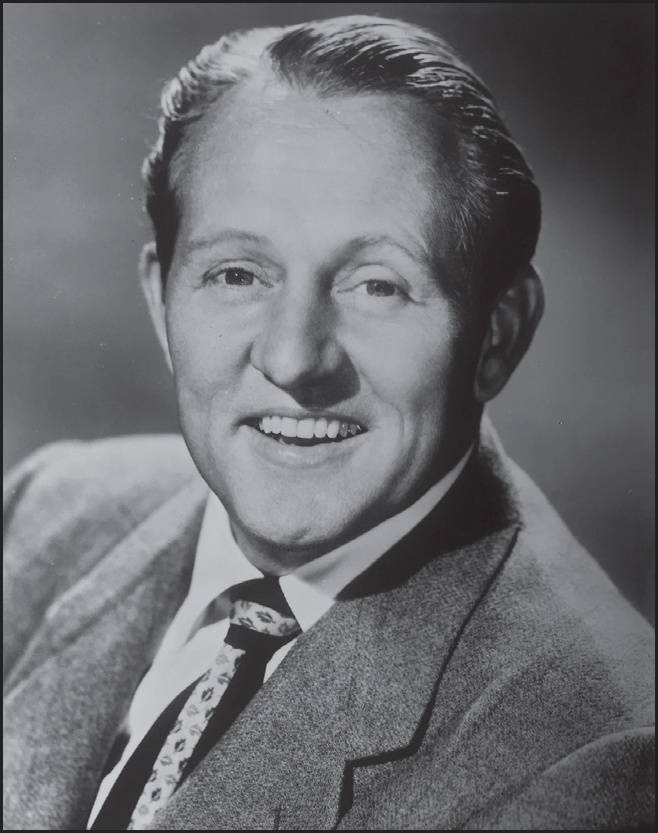
Art Linkletter in a promotional shot for People Are Funny (Courtesy of NBC Television).
He’d made his name in radio, then moved to television, becoming a superstar with People Are Funny, a blast of guerrilla chaos that influenced everything from Borat to Bowling for Columbine. In one segment, a man repeatedly attempted to cash a check written on the side of a giant watermelon; in another, an audience member had to keep a stranger on the telephone for three minutes (without explaining why) to win a prize.
A more ambitious stunt came in 1954 when the show created a fake real estate office, rented a house to a young married couple, arranged (through a separate company) to send the couple on a free vacation—then stole the entire house, removing it from the foundation and hauling it away. Over the next few episodes, Linkletter “helped” the couple (who were given a first-class hotel room) search for the house, sometimes by helicopter. Eventually, Linkletter suggested a local psychic who worked in a carnival tent. Stepping inside, the couple saw their intact house, plus a check for twelve months’ rent, a year’s supply of groceries, and lots of new clothing and furniture.
The gags were inspired, but what made the show work was Linkletter’s unflappable calm. Even as the madness escalated, he stayed level, a perfect proxy for viewers.
That trait was crucial to Linkletter’s trademark bit, in which he interviewed kids as regular talk-show guests, asking casual, real-life questions. The kids, in turn, gave blunt—often jarring—answers:
LINKLETTER: What does your mom do?
GIRL: She’s a Sunday School teacher.
LINKLETTER: What does she do for fun?
GIRL: She plays poker and drinks beer.
In 1957, Prentice-Hall published a collection of interview highlights. Illustrated by Peanuts creator Charles M. Schultz, Kids Say the Darndest Things! was a smash, selling more than five million copies.
Through it all, Linkletter just radiated goodness. Fame could harden people, turning them cold or wary, but Linkletter gave time and support to all sorts of charities, and was a tireless advocate for adoption. Other husbands played around; Linkletter was crazy about his wife, Lois, and made sure she always knew it. Other dads were stingy with affection; Linkletter hugged his kids at every chance—that’s what real men did.
Of course, Linkletter also liked being rich, and he slapped his name on countless products. Some were top-notch: Linkletter endorsed Milton Bradley’s The Game of Life, pushing it to blockbuster status. Others were little more than cash grabs. Enter: the Family Achievement Institute.
Linkletter didn’t just narrate for FAI; he was the public face. His picture ran at the top of magazine ads, with blurbs asking, “Are you looking for a GROUND FLOOR OPPORTUNITY?” At the bottom, Linkletter’s giant, swooping signature gave an unmistakable message: You can trust this company.
For an aspiring writer like Beatrice Sparks, scripting for Art Linkletter was like handing a song to Sinatra. If things went well, your entire life could change.
Things did not go well. FAI’s “thrilling opportunity” was a colossal flop. Not even Art Linkletter could convince people to shell out three grand for a bunch of records, much less for records they’d have to resell just to break even. FAI put on a smile, but eventually scrapped the whole project.
As Sparks’s big—maybe last—chance disintegrated, she pitched some new projects to Linkletter’s son Jack, who screened offers for his father. Jack politely turned everything down but encouraged Sparks to stay in touch.
Stay in touch. Was there a more deflating brush-off?
Sparks, however, was determined to make the most of the Linkletter connection. She only needed the right idea.
Hollywood Ending
Saturday, October 4, 1969
It was 10:00 AM in Los Angeles, and Diane Linkletter’s blood was everywhere. Six floors above, in the Shoreham Towers apartments, a kitchen window stood open. Diane had jumped, hit the pavement, and was still breathing. Maybe. The damage made it hard to tell.
As cops pushed everyone back, an ambulance arrived.
Diane, five-two and blond, was alive, but just barely. Police cleared a path, and paramedics tilted Diane to slide a stretcher underneath. It was like moving a bag of broken glass.
They sped to Central Receiving Hospital, where doctors took one look and sent them to USC’s medical center, but it was no use. The fall had shattered everything. As the siren wailed, Diane’s body gave out. She was three weeks shy of twenty-one.
Back at the Shoreham Towers, police were questioning Edward Durston, the only real witness. Durston, a twenty-seven-year-old car salesman who flitted in and out of celebrity circles, was distraught, but told them what he knew.
Diane, he said, had asked him to come over at around 3:00 AM. They had talked for several hours, just the two of them, and Diane got very upset. Nothing was working. Her father meant well, but his fame made it impossible to be her own person, to find her own voice. She’d done some acting, but even that felt secondhand, like people were doing her old man a favor. How could you grow in such a big shadow?

Art and Diane Linkletter in autumn 1968, one year before Diane’s suicide (Courtesy of CBS Television, Photo Division).
Her personal life was no better. A few years earlier, when she was seventeen, Diane had married another young actor. Both families were opposed, and the pairing soon came apart. Art Linkletter had managed to keep both the marriage and the annulment out of the press, which actually made things harder for Diane; it was like living in a sealed box.
Then, three months ago, another hard blow. Despondent over business losses, Diane’s brother-in-law had killed himself with a handgun, leaving his wife (Diane’s sister Dawn) to find the body.
Diane and Durston had talked about all of this, and by 9:30 AM, Diane seemed to feel better. She got up and went to the kitchen. Moments later, Durston heard a window open. He ran in and saw Diane standing on the ledge. He lunged for her, but only got a handful of drapes.
Now, as Diane headed for the morgue, Durston offered to take a polygraph. Police technicians tested him twice, then ruled him out as a suspect.
Meanwhile, police were searching for Art and Lois Linkletter; nobody wanted them to find out via the press. Authorities eventually found Diane’s brother Robert, who didn’t have time to process his own shock. The news wouldn’t hold much longer.
Art and Lois were in Colorado Springs, where Art was scheduled to speak at the Air Force Academy. Robert phoned the hotel, and when his father came on the line, Robert told him the awful facts. Diane was dead. It had happened that morning, and it looked like suicide.
Then Robert said something else. He said Diane had phoned him before she died, and she told him she’d taken some LSD.
Something to Believe In
In the aftermath of a child’s suicide, parents are on thin ice. They’re 50 percent more likely to kill themselves. They face mental illness, divorce, and crippling depression. Drugs and alcohol can turn magnetic.*
The first two years are the worst. Make it that far, and you might keep living. If you’ve got other kids, that helps, because you can’t abandon them.
(And you’ve failed one child already, haven’t you?)
That’s what the voice says. Late at night, or in the morning sun, or anytime at all. It waits, feigning sleep, curled up inside you like a mass of fishhooks. Then it twists to life, mocking and snapping.
It’s your fault.
Even if it’s not.
You should have known.
Even if you couldn’t have known. Or even if you did know, and tried your best to help.
You should have done more.
Then the voice goes silent. The crying slows a little. You exhale. You want to sleep. You want to die.
If you’re religious, that might help. But it might not. It might make things worse.
Suicide is a mortal sin.
Stop it.
You know where mortal sinners go, right?
Please stop.
It’s your fault.
If someone offers a loophole—some way to silence the horrid little voice—you’ll take it. No matter how wrong or far-fetched, you will find a way to believe.
Sunday, October 5, 1969
Art Linkletter had been awake for nearly thirty-six hours, and he was drawn and bleary, with a dark, manic edge. It was no time to speak with the press.
But he was determined. Diane was his daughter, his beautiful little girl, and people had to know. He had to tell them. It wasn’t her fault.
In his first public statement since Diane’s death, Linkletter unloaded.
“It wasn’t suicide,” he said, his voice thick with fury and grief, “because she wasn’t herself. It was murder. She was murdered by the people who manufacture and sell LSD.”
It made sense. Especially if you were crazed with guilt and had to believe something. In that case, it made all the sense in the world.
Newspapers ran with the story, printing front-page headlines and giant scare quotes: “LSD Killed Diane, Linkletter Charges”; “Diane Linkletter, Victim of LSD”; “Diane Linkletter: Slain by the LSD Sellers.”
Then word began to filter out: Diane’s body had tested clean for drugs.
Squares and straights didn’t believe it, and insisted that she must have been high. Hippies and cynics felt vindicated, and denounced the press for its rush to judgment.
The truth was more complicated and far less satisfying. Diane didn’t test positive or negative for LSD—because no one checked her for LSD.
More than fifty years later, screening for psychedelic drugs remains expensive and time-consuming. Most employers don’t test for LSD, and even the military usually skips it. In 1969, the process was slower, costlier, and prone to mistakes—and that was with a living subject. Postmortem detection of LSD was, as one California crime lab put it, “an impossible request,” so unless directly ordered, toxicologists didn’t bother trying.
By the time Art Linkletter mentioned LSD, Diane’s autopsy was finished and filed, and by the time his comments hit the evening paper, her chemical analysis was already in progress:
Ethanol: absent
Barbiturates: absent
Codeine and Morphine: absent
Amphetamine and Methamphetamine: absent
Booze, downers, opiates, speed. That was all they tested for. Everything else was, and would forever remain, a maddening, unknowable blank.
But unknowable blanks don’t sell newspapers, so corrections—when they came at all—usually kept it simple: No trace of drugs in Linkletter death.
For the Linkletter family, this vague result increased the agony. Nothing could bring Diane back or stem the family’s heartache, but the LSD story had at least provided a reason. It had answered the why, and that mattered. Without the why, there was nothing to do but wonder, and wondering could kill you.
So the story changed.
For years, LSD users had whispered about “flashbacks”: short, unexpected freak-outs that happened days (or even months) after a drug trip. There was no proof that flashbacks existed, but everyone spoke like an expert. And LSD research was illegal, so you could claim almost anything. Who could disprove it?
It was enough to grab on to, and by late October, Art Linkletter had a version of reality he could live with.
“What we didn’t know,” he told the San Francisco Examiner, “is that she was having involuntary flashbacks. It was in one of these flashbacks that she killed herself.”
By year’s end, it was gospel. Every kid in every schoolyard knew about the girl who jumped from a window during a flashback. Thank you for flying LSD airlines, enjoy your trip. (Don’t forget your parachute!)
It was hilarious. A real stitch.
The October news cycle was already overstuffed. Police were still hunting for Sharon Tate’s killers. Woodstock was barely over; ditto Altamont; ditto Chappaquiddick. Oh, and humans had just walked on the fucking moon. Yet Diane’s death was inescapable. In the first month, nearly two thousand newspaper stories made the LSD/suicide connection, and even that paled next to the public response. Within ten days of Diane’s death, Art Linkletter got more than twenty-five thousand letters of support.
Three time zones away, the White House took notice.
* As will become grimly clear in later chapters, this dynamic extends beyond family. Four days after Diane’s suicide, an acquaintance who lived across the street grew despondent over Diane’s death and killed herself with an overdose of sleeping pills.
Us and Them
Richard Nixon had built his career on schism and slander.
Campaigning for the Senate in 1950, Nixon had smeared his opponent, Helen Douglas, as a Communist dupe, telling crowds, “She’s pink . . . right down to her underwear.”
Two years later, as Dwight Eisenhower’s running mate, Nixon had exploited class envy, responding to financial-corruption charges with a televised speech touting his meager income and his wife’s budget wardrobe (including her “respectable, Republican cloth coat”).
Now, as president, Nixon was playing to the great, angry middle: the “silent majority” who went to work, came home, paid their bills, and went to bed, all without getting high or starting a riot. They were Nixon’s base. Everyone else was the enemy, and enemies were fair game.
As America turned on itself in the late sixties, Nixon saw an opening—a way to please the faithful while crushing the activist left. A war on drugs.
“We knew we couldn’t make it illegal to be either against the war or Black,” Nixon’s domestic policy advisor, John Ehrlichman, admitted in 1994, “but by criminalizing [drugs] heavily, we could disrupt those communities . . . arrest their leaders, raid their homes, break up their meetings, and vilify them night after night on the evening news.
“Did we know we were lying about the drugs?” asked Ehrlichman. “Of course we did.”
But how to sell the crackdown? They needed an angle, some kind of gimmick.
Then Diane Linkletter killed herself, and Nixon aides had their solution. The president should send a letter of condolence. With luck, Art Linkletter would read it on television, boosting the president’s good-guy image and underscoring the need for action.
The actual payoff was even bigger. On October 23, just three weeks after his daughter’s suicide, Linkletter was at the White House, a lachrymose prop for Nixon’s culture war.
Diane Linkletter, said Nixon as cameras whirred and Art nodded, was no scum-crusted hippie but “a well-educated, intelligent girl from a Christian family.”
Ergo, the drugs were to blame. They had to be. To admit (or even suspect) otherwise was to contemplate the abyss.
Nixon wanted more laws and more power to enforce them. If Congress played ball, Nixon said, then government would soon have “the necessary weapons to attack this whole problem.”
As things wrapped up, Nixon shared another idea with Linkletter. The media was doing a piss-poor job at fighting drug use. It was all so dull and educational. Wouldn’t something exciting be better? Something with real entertainment value? That, said Nixon, could have a tremendous impact.

Art Linkletter and Richard Nixon in the Oval Office, October 23, 1969 (Photo by Ollie Atkins; courtesy of Richard Nixon Presidential Library and Museum).
“I couldn’t agree more,” said Linkletter.
Leaving the White House, Linkletter was emboldened. The president of the United States wanted something done about drugs. He wanted a message sent. Would Linkletter help?
Damned right he would. Diane was dead, and it was time to make someone pay. And if you thought he was kidding, you only had to listen.
“When you lose a beautiful young girl at the beginning of her life,” Linkletter told the House Select Committee on Crime that autumn, “there is no one you won’t attack.”
The chuckling everydad was gone, and in his place was a cold, avenging father.
“I will attack commercial enterprises,” he continued. “I will attack my own media. I will attack anybody who stands in the way of our progress against this scourge.”
At his worst moments, Linkletter thought about murder, about seeing Diane’s dealers suffer and die, snuffed out like sentient flames. It wouldn’t be hard. He was famous and rich. If he asked the right people, he could make it happen. He was sure of it.
I could do it, he thought. For Diane.
Then he would spiral, his mind going red with hate. We should kill them all—every last dealer. Just round them up and toss them in a hole. Let them rot.
At a speech in Boca Raton, the crowd (mostly businessmen and wives) expected midtempo blather: We, as a nation, must come together . . . etc., etc. Instead, they got rage. Someone mentioned Timothy Leary, the former Harvard psychologist whose incessant promotion of LSD had made him a counterculture icon. Linkletter’s face darkened.
“If I ever get my hands on him,” he said of Leary, “so help me God, I’ll kill him.”
Linkletter wasn’t running for office or angling for a talk show. He didn’t need money or even want it—not anymore. Nothing mattered but payback.
Inevitably, the leeches gathered.
“I began to hear from people,” said Linkletter years later, “and their line would go something like this: ‘Awfully sorry about your daughter, Art. If you want to feel better, let me use your name in my project.’”
Some of those people meant well. Others only wanted to feed.
“At the time,” said Linkletter, “I was too confused and angry to tell the difference.”
And that’s when Beatrice Sparks reappeared—with the most amazing story.
Read Between the Lines
For three years, Sparks had peppered Art Linkletter with ideas, and nothing had stuck. She was fifty-three, with two grown kids, another in high school, and a string of fizzled projects. Her first book, a self-improvement guide published by the Church, had sold in Utah County, but just barely.*
Then, in rapid succession, everything changed.
Diane Linkletter died, and her father became a scorched-earth crusader.
In June, the Manson trial started. All those sweet young girls, warped and destroyed by a monster who fed them acid and stole their minds.
And on October 27, 1970, one year after bringing Art Linkletter to the White House, Richard Nixon got his War on Drugs. Just like that, LSD, mescaline, psilocybin, and even marijuana were Schedule I drugs, right next to heroin.
Beatrice Sparks had found her moment, and she pitched Art Linkletter on a new project: a simple story with a shocking twist.
It was the tale of a bright but troubled California teen. A girl from a good, Christian family. A girl whose parents loved her.
Dosed with LSD by sleazy “friends,” the girl slipped into addiction and chaos. Harder drugs followed, and things got worse. She ran away from home, falling in with outcasts and criminals. Flashbacks came without warning, pushing her closer to madness.
The girl fought to stay clean, but in the end, it was too much. She died without warning, leaving her parents to grieve and wonder.
Then came the real twist. The story was true, the girl left a diary, and Beatrice Sparks had it.
The Bad Crowd, the seduction into drug life, the LSD madness, the death that only seemed like a suicide. It was the perfect pitch at the perfect time. It was, after all, a story Art Linkletter already believed.
In a different state of mind, he might have asked some tough questions. Where was a homeless junkie getting pen and paper, much less storing them? What kind of addict keeps track of a diary, or little jotted notes?
And didn’t the whole thing sound a little too familiar, like a way to leverage Diane’s death?*
In the moment, none of it mattered. Of course the timeline was jumbled—junkies were erratic, everyone knew that. And the similarities just proved it was true. You see? It happens. Just like it did to Diane.
And where did Sparks get this diary?
That part changed with every telling, sometimes a little, sometimes a lot, but the basic framework was always the same: Sparks met “Alice” at a youth conference in 1970. The two became friends, and after the girl died, Sparks thought her diaries—properly presented—would be a strong warning about drug abuse.
Sparks had it all planned out. She would cut the diary down to book size, change a few names, and presto—one cautionary tale, ready to sell. She even had a title. Buried Alive: The Diary of an Anonymous Teenager, edited by Beatrice Sparks.
There were a million loose ends. Who was this girl? Where were her parents? Was this even legal? But Linkletter’s reaction was all that mattered, and he was on board. His literary agency, Vandeburg/Linkletter, signed a deal with Sparks, and Clyde Vandeburg, who did most of the agency’s actual work, went looking for a publisher.
Since the day her father walked out, Sparks had pushed herself. First to sustain her family, then to survive on her own, then to break through as a writer. She’d worked every angle, used every trick and tactic, keeping the faith long after most people would have given up.
Now it was finally—finally—on the horizon. In just a few weeks, it would be 1971. Beatrice Sparks would turn fifty-four, and Buried Alive would get a new title.
* The book, Key to Happiness, had a gosh-wow tilt toward dating and marriage: “Do pluck your eyebrows!”; “Use deodorant frequently and generously”; “Marriage is fun and exciting, but it can be a lot more fun and exciting if you are skilled and experienced in the field of homemaking.”
* Indeed, Alice’s epilogue originally asked, “Was it accidental overdose? Premeditated overdose? Flashback? [emphasis added]” The flashback reference was deleted before publication.
Rabbit from the Hat
Kathryn Fitzgerald stared into the shopping bag. This didn’t look like any book she’d ever seen. There were scraps of random paper and pieces torn from grocery bags, plus a bunch of diary pages, all shoved into a large paper sack.
It was a Friday afternoon in late 1970. Fitzgerald, a twenty-eight-year-old New York native with the beginnings of a nicotine rasp, looked a moment longer, then spoke.
“Let me take it home and read it.”
Fitzgerald hadn’t planned to work in kids’ books—it just sort of happened. She had a finance background, including a stint with the Small Business Administration and four years as a portfolio analyst. Even when she made the jump to publishing, it was strictly grown-up stuff, handling business and finance titles for Prentice-Hall, a company based in northeast New Jersey, across the river from Manhattan.
Still, upward was upward, and when the head of children’s books retired, Fitzgerald sought the position and got it.
Prentice-Hall mostly published nonfiction, and their biggest seller had come thirteen years earlier, with Art Linkletter’s Kids Say the Darndest Things, which (despite the Peanuts-style drawings) was aimed at adults.
Books for children were a different story. They took years (sometimes decades) to gain momentum, then lingered forever, mainly by default. Anne of Green Gables, The Call of the Wild, the Little House novels—they were safe, solid choices, purchased by every new parent or first-year teacher. That was the irony of kids’ books: they were usually chosen by adults.*
To make a dent in the young-reader market, a book had to be lucky—and special. So when Clyde Vandeburg pitched what looked like a bag of receipts, Kathryn Fitzgerald was intrigued, but not very hopeful.
A diary. In pieces. Found by some Mormon psychotherapist. Right.
She took it home and started reading. Before long, she was convinced . . . mostly. Later, the doubts would resurface, and she’d argue against calling it “real,” but the diary felt true, no question.
This, she thought, is something special.
Within a few days, things were locked in. Sparks would get a few thousand dollars up front, and if the book was a hit, she’d eventually get royalties. Most books didn’t make it that far, but you never knew. Linkletter’s agency would take 10 percent of Sparks’s end, including the advance.
Sparks signed the contact, and Buried Alive was slated for an autumn 1971 release.
Then things got bumpy. First, the title had to go. Buried Alive sounded like a Karloff movie.
Sparks had suggestions—something about a collapsing carousel—but all were flat, or corny, or both. It needed something sharp, something snappy.
One afternoon, as Fitzgerald brainstormed, she heard someone singing. A male voice, coming from down the hall.
“And one pill makes you small . . .”
A young sales executive named Michael Shay walked past Fitzgerald’s office.
“And the ones that mother gives you don’t do anything at all . . .”
It was “White Rabbit,” Jefferson Airplane’s psychedelic pop smash from four years prior.
Fitzgerald got up and went after Shay, who was still half humming, his voice trailing down the hallway.
“Go ask Alice, when she’s ten feet—”
“Mike!”
A startled Shay turned to see Fitzgerald standing behind him.
“This man,” Fitzgerald announced to the office, grabbing Shay by the shoulders, “is a genius.”
Then she went back to work. There was a bigger problem to fix. Beatrice Sparks, who had waited so long for this moment, was already threatening to quit.
* Even S. E. Hinton’s switchblade romance, The Outsiders, initially bombed with young readers. (Gangs who say “golly”? No thanks.) But teachers loved it (Gangs who say “golly”? Perfect!), and by the mid-seventies, it was a high school standard.
Changes
Sparks couldn’t believe what she was hearing. Prentice-Hall wanted her name off the book. Off the book she had brought them.
“Go Ask Alice by Anonymous.” That’s what they wanted. No mention of Sparks at all, not as editor or anything else. It was too adult, they said.
Kids don’t want to be lectured, not by a grown-up. Keep it clean and simple. “Go Ask Alice by Anonymous.” It’s better.
Really? Better for whom?
Sparks’s agent, Clyde Vandeburg, talked about the money, missing Sparks’s real priority. If Alice performed, she could use it as a springboard—a way to get more book deals. But that only worked if her name was on it. And where did Prentice-Hall get this diary, anyway? From her. She’d handed it to them, and now they wanted to erase her? Fat chance. And why wasn’t Vandeburg pushing back? What were agents for?
Vandeburg explained again, and this time, Sparks understood. It wasn’t Prentice-Hall’s idea. Vandeburg—her own agent—had suggested it.
Sparks went nuclear. After thirty years of climbing, and with the top in sight, she wasn’t taking her name off anything. She’d walk first, and said as much. Maybe they’d rather have no book at all—how about that?
Time to get a lawyer.
At first glance, Sparks had a valid complaint. Removing her name from Alice seemed egregious and unfair, the worst kind of know-it-all meddling. Never mind the credit, little lady. Just take the money and smile.
That the idea came from her own agent was even more galling. Vandeburg was supposed to represent Sparks’s interests, and only Sparks’s interests. Instead, he’d sold her out, and still got 10 percent.
But Sparks didn’t have much leverage. By her own account, she’d only “assembled” the dead girl’s writing, and even then, it wasn’t finished. (It showed up in a paper bag, after all.) Kathryn Fitzgerald was the hands-on editor; she was turning the scraps and notes into a real, sellable book.
That made Beatrice Sparks . . . a courier.
Really, when you thought about it, Sparks had no reason to expect any kind of credit. A finder’s fee, sure. Even royalties, if Alice performed. But a credit? For what?
Vandeburg might also have sensed what Linkletter couldn’t: Beatrice Sparks was a walking correction. When she talked about the dead girl, dates and details shifted, almost at random. Alice died in May, but sometimes November. Alice gave Sparks the diary, except when her parents did it. Sparks occasionally mentioned “interview tapes” she’d made with Alice, but nobody ever heard them.
When discussing her own past, Sparks was no better. Had she attended UCLA or actually graduated? Was she a psychiatrist or a psychologist? Or was it psychotherapist? Had she really taught at BYU?*
Either Sparks was lying—about nearly everything—or she had a strange kind of amnesia. Regardless, she was a risk. Putting her name on Go Ask Alice would mean interviews, and interviews could spell disaster, no matter how true the story was.
Art Linkletter was throwing his weight behind Alice, and Vandeburg wasn’t about to kill the project. Sparks would get paid, and if things went well, she’d get another book deal. But her name on the cover? Not happening.
To Kathryn Fitzgerald, the no-name approach made perfect sense. Connecting with readers meant stepping back and letting the dead girl speak; it was her story, after all, and a looming adult presence would muffle the impact. Besides, “Anonymous” was intriguing—it got people talking.
Sparks’s lawyer, meanwhile, apparently saw the obvious: Sparks was cooked. She could fight her publisher or her agent, but not both. If she dug in, they’d find a way to void the deal, and even if they didn’t, she’d be hobbled right out of the gate; she’d be a malcontent, with no support from anyone.
It was an impossible choice—and no choice at all.
On February 2, 1971, Sparks’s lawyer penned a letter agreeing to the deal. Page two held the gist:
As you already know, Mrs. Sparks is dedicated to assisting young people through the new book, and is willing to remain anonymous in order to get the message before the public.
Beatrice Sparks had just been erased from her breakthrough.
* When living in Southern California, Sparks claimed to have attended college in Utah. When living in Utah, she claimed to have attended college in Southern California.
Know Your Enemy
Tuesday, May 18, 1971
Art Linkletter pulled up to the White House gate. After a moment, it swung open, and the car drove through. Then the gate closed again.
Two weeks earlier, the city had ruptured. More than eight thousand anti-war protesters had flooded the streets, smashing windows and opening hydrants. Garbage cans were set ablaze and tossed into traffic; nails and glass rained down from bridges, striking cars and clogging roads. By night’s end, police had arrested seven thousand people, and the jails were full; to hold the overflow, authorities commandeered a nearby football field. Smoke and tear gas drifted across the river, into homes, into stores.
The next morning, commuters stopped and stared. On every bridge, hundreds of Marines stood in formation, rifles loaded and ready.
Inside the White House, Richard Nixon—on the brink of a Vietnam drawdown—was planning a new assault, this one at home. Just seven months into the Drug War, Nixon wanted to escalate, crushing the potheads and speed freaks, and jailing the radical left. He’d need congressional sign-off, and was prepping himself in the usual way, spending time with sycophants.
Within a year, Art Linkletter would soften his views on marijuana, part of a slow, steady move toward the middle, and by 1980, he’d lead the call for drug treatment, renouncing his lock-’em-up stance in favor of science and compassion. Until then, the prohibitionists would wring him for every dollar and every vote, every bit of moral support.
As the lunch hour passed, Nixon and Linkletter talked about the drug issue—two wealthy, aging white men squinting through a keyhole.
LINKLETTER: Another big difference between alcohol and marijuana is that when people smoke marijuana, they smoke it to get high. When most people drink, they drink to be sociable.
NIXON: A person does not drink to get drunk.
LINKLETTER: That’s right.
NIXON: A person drinks to have fun.
This being Nixon, the conversation soon turned racist, with Linkletter in parrot mode:
NIXON: Asia, the Middle East, portions of Latin America . . . I’ve seen what drugs have done to those countries. Everybody knows what it’s done to the Chinese. The Indians are hopeless anyway. The Burmese—
LINKLETTER: That’s right.
NIXON: Why are the Communists so hard on drugs? It’s because they love to booze. I mean, the Russians, they drink pretty good.
LINKLETTER: That’s right.
NIXON: The Swedes drink too much, the Finns drink too, the British have always been heavy boozers, and the Irish, of course, the most, but on the other hand, they survive as strong races.
LINKLETTER: That’s right.
NIXON: At least with liquor, I don’t lose motivation.
One month later, on June 17, Nixon made his case to Congress, seeking (and receiving) an additional $84 million and greater jailing powers. There would be money for treatment, but that was mostly a smoke screen, and medical funding would soon disappear, replaced by mandatory minimums and no-knock warrants.
It was time, said Nixon, “to tighten the noose around the necks of drug peddlers.”
He finished his speech with a reference to the children:
The threat of narcotics among our people is one which properly frightens many Americans. It comes quietly into homes and destroys children, it moves into neighborhoods and breaks the fiber of community which makes neighbors.
We must try to better understand the confusion and disillusion and despair that bring people, particularly young people, to the use of narcotics and dangerous drugs.
Days later, advance copies of Go Ask Alice went out to reviewers.
Knock ’Em Dead, Kid
June 1971
The design was striking and simple, just five crimson words on a bright yellow cover:
Go Ask Alice
Author Anonymous
There was no “fiction” or “nonfiction” label, but the presentation made it clear that Alice was the real thing.
Go Ask Alice is based on the actual diary of a fifteen-year-old drug user . . . names, dates, places and certain events have been changed in accordance with the wishes of those concerned.
The back-cover blurbs were all business:
Go Ask Alice is an extraordinary document. It is the raw and painful story of a young girl’s experiments with acid, pot and pills. I strongly recommend it to all parents concerned about the health and well-being of their children.
—Art Linkletter
Go Ask Alice gives a true glimpse into the beginner’s drug world. Whereas every person indulging in drug experimentation says, ‘It can’t happen to me,’ we who work with such problems know that psychological addiction as well as physical addiction can and does happen to young people.
—Dr. Myron Greenbaum, Psychiatrist specializing in drug problems
If Doctor Greenbaum’s title was a little vague, no one paid much attention. Words like “true” and “actual” and “document” steered reviewers toward belief. This, they warned parents, is what you are up against.
“A book that all teenagers and parents of teenagers should really read,” said the Boston Globe.
“An important book, this deserves as wide a readership as libraries can give it,” said Library Journal.
“A book which should be read, and once started is almost impossible to turn away from,” said Publishers Weekly. “The timeless confusion of adolescence is invested with the terrifying new ingredient of drugs for most teenagers these days, and this document is an eloquent look at what it must be like in the vortex.”
In her office at Prentice-Hall, Kathryn Fitzgerald put several clippings into an envelope, then added a quick note to Beatrice Sparks.
“Dear Bea,” Fitzgerald began. “Enclosed are the first reviews to come in on Go Ask Alice. Naturally, we are delighted and hope you will be equally pleased.”
Then, perhaps remembering Sparks’s irritation at being deleted, Fitzgerald re-stressed the case for anonymity. “I’ve talked with many bookstore people,” she wrote, “and they are terribly excited about Alice, feeling that as one teenager who doesn’t moralize talking to other teenagers, the book will have a definite positive impact.”
A few days later, the letter arrived in North Provo. Sparks sliced open the envelope and read Fitzgerald’s message. Inside were a bunch of reviews.
Anonymous.
Anonymous.
Anonymous.
At Prentice-Hall, expectations were cautiously high. Hardcover books usually sold in the range of five thousand copies. Closer to ten, if you got lucky.
The week before publication, advance orders for Go Ask Alice passed 18,000 copies.
“It blew the roof off,” said Kathryn Fitzgerald in 2018. “We didn’t print anywhere near the amount of copies we needed.”
Prentice-Hall was jubilant, if a little stunned, and they now risked an ironic success: a bestselling book that no one could buy.
They rushed a second printing, then a third, then a fourth. Maybe, just maybe, this was the start of something big.
True Believers
October 1971
Denise was seventeen, and knew a lot about secrets.
A year earlier, her family had moved from Connecticut down to Aiken, South Carolina. Kind of square for her taste, but at least it was easy to make an impression. Denise with her long, straight hair and her navy pea coat, and her miniskirt made from a Union Jack—they’d never seen anything like it. And even in a town like Aiken, Denise knew how to have fun: boys and music, and boys who made music. Especially guitarists.
The drug scene was also a little more intense. On the weekends, Denise snuck off to parties, and someone would put out a big bowl of pills. You’d pop one and see what happened. It could have been anything, but that just fed the excitement.
She tried LSD, and didn’t like it one bit; that was the wrong kind of wasted. But she kept going out. Getting high and losing herself.
Her parents had no clue, of course. Like the time she hitched a ride with some guy on the highway. Her mom and dad would have freaked if they’d known.
As the months wore on, however, Denise got a little freaked out herself. She was starting to fray at the edges, and wondered about scaling things down.
In October, a teacher at Aiken High School asked for volunteers to review a new book. It was an anonymous diary called Go Ask Alice.
Denise hadn’t heard of it, but she flipped through the pages and decided to give it a try.
Before long, she had the strangest sensation. This anonymous girl understood her.
Two weeks later, Denise and her new boyfriend, a clean-living senior named Johnny, wrote a shared review for the Aiken Standard, zeroing in on the book’s real magic.
“It may be hard to believe an adult,” they wrote, “but it’s simple to believe the diary of a sad girl.”
For once, teens and grown-ups agreed on something.
Go Ask Alice is required reading for teenagers and for anyone who cares about them.
—Joseph Bennett, Indianapolis News, September 25, 1971
This is an actual diary of a lovely, happy 15-year-old girl who turns to drugs. What is frightening about it is that it could happen here! Parents should read this intense book. It is simply and directly a diary of a good girl led down the dreadful road of drugs to death.
—Mary Williams, Argus-Leader, October 3, 1971
Alice is a real girl, a 15-year-old who kept a diary that will haunt everyone who reads it.
—Barbara Hodge Hall, Anniston Star, November 7, 1971
She was 15 years old when she began to keep a diary, and she had no way of knowing that what began as the typical penciled scribblings of a bright adolescent would soon be written in blood . . . a journey below and beyond hell.
—Robert Sorenson, Minneapolis Star-Tribune, September 12, 1971
In January 1972, the American Library Association announced its Best New Books for Young Readers—their ten picks from the previous year. Even by “best of” standards, 1971 had been exceptional, and the list included Sylvia Plath’s The Bell Jar, Dee Brown’s Bury My Heart at Wounded Knee, and S. E. Hinton’s own teenage drug tale, That Was Then, This Is Now.
And there, above them all—it didn’t seem possible—sat the pitch-black diary of a nameless dead girl.
Civil War
Tuesday, March 21, 1972
In the East Room of the White House, its gold silk curtains closed against the daylight, six dozen people watched the president fiddle with a custom-made pen. Down one side of the blue plastic barrel, it said Richard Nixon in slanted white cursive.
Out in the audience, Art Linkletter sat surrounded by congressmen, assorted sidekicks, three brigadier generals, and a crush of reporters.
Finally, Nixon was ready.
“Today,” he said, “I am pleased to sign into law the Drug Abuse Office and Treatment Act of 1972, a bipartisan bill designed to mount a frontal assault on our number one public enemy.”
Over the next few minutes, Nixon tried to stay balanced, but he kept giving the game away. In addition to “frontal assault” and “number one public enemy” and “wipe out,” he said “attack” three different times. Still, he plunged forward, doing his best to sound moderate.
“As we increase our efforts in law enforcement,” he said, “what we must do is increase our efforts to treat the addicts, to treat them and also reduce the demand, through a program of education and prevention across this country.”
Nixon didn’t quite believe this. In truth, he thought the bill was weak tea, the babying of degenerates. That it was precisely the bill he’d demanded didn’t matter. Like the addicts he despised, Nixon was always chasing the next big score, and once he got it, all he noticed were the flaws.
Take the name: the Drug Abuse Office and Treatment Act of 1972. Treatment. Like it was polio or something. They were junkies, for Christ’s sake, so who really cared? Junkies didn’t vote.
Sure, Nixon had given lip service to treatment, but that’s all it was; he hadn’t really meant it. Didn’t Congress understand? You said “treatment,” then knocked heads. That’s how the game worked. But Congress hadn’t gotten the message. Now there’d be more coddling, as though junkies hadn’t been coddled enough.
It was the same with the Shafer Commission, created to study the impact of marijuana.
Give me the facts, Nixon had told them.
What he’d meant, of course, was, Give me ammunition.
“I want a goddamned strong statement on marijuana,” Nixon had told his chief enforcer, Bob Haldeman. “Can I get that out of this sonofabitching [commission]? I mean, one on marijuana that just tears the ass out of them. Against legalizing, and all that sort of thing.”
“Sure,” Haldeman had replied.
But it hadn’t worked out that way.
On this very morning, just hours before signing the new drug law, Nixon had gotten a preview of the commission’s marijuana report. The fourteen members were agreed: marijuana should be decriminalized.
Decriminalized.
Jesus. What was wrong with people? Was it so hard to just follow directions? This, thought Nixon, was what happened when you put Jews and eggheads in charge, especially when it came to drugs.
“Every one of the bastards that are out for legalizing marijuana is Jewish,” Nixon had railed to Haldeman a few months earlier. “What the Christ is the matter with the Jews, Bob? What is the matter with them?”
Haldeman, who had endured many speeches on this topic, just waited.
“I suppose it’s because most of them are psychiatrists,” Nixon had concluded before moving on to other business.
Now, even as Nixon signed the new drug bill, he was already planning to ignore the report on marijuana. Stick it in a drawer and get on with the crackdown. That’s what people wanted, and Nixon would deliver.
He made a few more remarks, then adjourned the gathering. Art Linkletter and the rest of the audience stood and applauded. Nixon walked out of the East Room and headed back to the Oval Office, trailed by Haldeman.
This time, they left Linkletter behind. Maybe they’d heard about his recent comments.
It had happened in Charleston, West Virginia, where Linkletter was speaking to parents and teachers. Someone asked about marijuana, soon to be labeled a “gateway drug.”
Instead of hard-line gospel—round up the dealers and throw the switch—the crowd heard something peculiar.
“I now agree with young people who believe there is an unwarranted hysteria concerning marijuana,” said Linkletter. “If the citizenry, police, and courts would stop worrying about the relatively minor problem of marijuana, we might go a lot further toward correcting the major problems of hard-drug use.”
It was a small but significant change, and within two years, Art Linkletter would say the unimaginable: I was wrong. There must be a middle path.
Richard Nixon didn’t do middle paths. He saw every problem as a personal challenge, if not a personal insult. Liberals, psychiatrists, Jews, hippies, draft dodgers, dope smokers—they were like goddamned cockroaches, creeping around and waggling their fucking antennae. You couldn’t back down or learn to “get along.” You had to smash the bastards, make them pay. That was how you won.
Back in the Oval Office, Nixon derided the bill he’d just signed. “Who cares about the treating of addicts?” he snorted.
Chief of Staff Bob Haldeman concurred. Treatment was crap, just another word for surrender. People wanted answers, not a bunch of theories.
Nixon agreed. The only solution was to enforce the goddamned laws. To really get out there and just kick the hell out of things. After all, there were children to protect.
Or so they had read.
“Mothers don’t care about treatment,” said Haldeman, “because their kids aren’t addicts. You just don’t worry about that. What you worry about is some son of a bitch that’s going to slip a packet of marijuana to your kid.”
“Or heroin,” Nixon said gravely.
“Or heroin,” agreed Haldeman.
“Or,” said Nixon, “give them a fix. LSD or something—”
“LSD, right,” finished Haldeman, in words that might have made Beatrice Sparks dance. “Slip some LSD in his Coca-Cola.”
Rhapsody in Black
Sunday, May 7, 1972
Morning dawned cloudy and brisk in New York City, the smells of steam and wet pavement mixing with car exhaust. On newsstands and doorsteps across the city, arm-straining editions of the New York Times recapped the week’s political news, explored Yugoslavian chess tactics, and gave tips on lowcal French dining. (“The magic words, spoken firmly to the patron or captain before you order, are ‘en regime’—‘on a diet.’”)
But nothing in that day’s Times would have quite the same impact as Webster Schott’s two-page article, “What Do YAs Read?”
Book critic Webster Schott was lean and narrow at forty-four, and despite hailing from Queens, he looked like a Rockwell painting—call it The Rangy Kansan.
The Times called Schott a freelance critic, which usually meant a striver; someone hustling for a full-time gig. Schott, however, already had a day job: vice president of Hallmark, whose greeting cards, stickers, and other prechewed sentiment brought in $300 million a year.
The irony was misleading. Schott was a missionary for language, and his writing pulsed with the sheer, exultant passion of a word lover. At Hallmark, he used the company’s clout to deepen its content, licensing work from T. S. Eliot, William Carlos Williams, and once—for a Christmas collection—three poems by Trappist monk (and renunciate anarchist) Thomas Merton. Schott also advised the National Endowment for the Arts, where his fellow panelists included Toni Morrison, Edward Albee, and Kurt Vonnegut.
In other words, Webster Schott’s opinion mattered, and in the New York Times, it had the weight of revelation.
On that Sunday in 1972, the Times’s million-and-a-half readers woke up to this:
One extraordinary work for teenagers, an anonymous ‘diary’ called Go Ask Alice, records the entry of 15-year-old Alice into the world of drugs and sex, and follows her through trips, runaways, near insanity, and finally death (perhaps murder, possibly self-induced) after several months of taking ‘Dexie,’ marijuana, ‘copilots,’ LSD, heroin, everything.
A superior work, surely written by an experienced hand and freely adapted from whatever source, Go Ask Alice is a document of horrifying reality and possesses literary quality.
Schott had his doubts (he put “diary” in quotes, after all), but they were overshadowed by that final line: “A document of horrifying reality.” Whatever his reservations, Webster Schott—of the New York Fucking Times—believed. More than that, he endorsed:
Go Ask Alice is No. 1 on the American Library Association’s list of Best Books for Young Adults 1971. Unfortunately, not many teenagers are reading it, but adults are. It’s the kind of book we wish our young would take to heart.
Like most reviewers, Schott cut Alice a lot of slack: nobody wanted to stomp on the writing of a dead teenage girl. But there were more personal factors. Schott’s own daughter had just turned sixteen, and was, according to Schott, “beautiful, sometimes distant, and occasionally angry.” She was a wonderful, frightening mystery—not unlike Alice herself.
The other reasons were darker. Schott had lost a close friend to suicide, and another acquaintance (a young woman, no less) had recently suffered a meltdown on LSD. Both had sought psychiatric help, only to discover a paradox: in America, mental health was both undervalued and overpriced.
That was another sad fact in Alice’s favor. Trauma was no longer remote or unlikely. The danger was in your own town, maybe your own home. Like Art Linkletter before him, Webster Schott was primed to see Alice as true, whatever its flaws and gaps.
To Prentice-Hall, Schott’s review was printed gold. Avon Books was prepping the Alice paperback, and Schott’s key phrase (“an extraordinary work . . . a document of horrifying reality”) would fit nicely on the back cover. The front was already done; it showed a girl in half shadow, her expression all pain and mystery. Go Ask Alice, by Anonymous, said the rounded font, along with three new words: A Real Diary.
Inside, on the splash page, a little piece of brilliance:
Sugar and spice
And everything nice
Acid and smack
And no way back.
Clampdown
Not every adult was so thrilled.
“Another day, another blowjob.”
Illinois State Representative Webber Borchers blinked and looked again.
Another day, another blowjob. If I don’t give Big Ass a blow he’ll cut off my supply.
This was what his eleven-year-old granddaughter was reading? Borchers flipped through the pages:
Here I am out peddling drugs for a low class queer.
So maybe I am pregnant. So what. There’s a pre-med drop out wandering around somewhere who will take care of it. Or maybe some goddamn prick would stomp on me during a freak out and I’d lose it anyway.
I’ve got a fucking head cold and I feel miserable, and my period has started and I don’t have any Tampax. Hell, I wish I had a shot.
That was that. Borchers confiscated the book and told his granddaughter to read something else.
As the days went by, Borchers, sixty-five, kept wondering. Do you suppose . . .? Finally, he decided to check for himself, and headed to the Decatur Public Library, a low-slung building on North Street.
Sure enough, there it was, and in the children’s section, no less.
This, thought Borchers, should not be allowed.
Lots of grown-ups were having the same thought, seeing Alice as thinly veiled porn. But Borchers had sway, legal and otherwise. He was an old-school pol in the Daley style, stealing and bullying and rarely bothering to hide it.
When he wasn’t greasing the machine, Borchers was spouting noxious twaddle. In the Illinois House, he peppered his thoughts with sexual references, and once claimed that “differences in earwax” proved that whites and Blacks were “two different species.”
But this, he thought, looking at the anonymous diary, is over the line.
Thursday, November 16, 1972
The Decatur Public Library was a former Sears department store, and the interior was mostly brown and purple—a kind of visual slump. But a few minutes into the board of directors meeting, Webber Borchers had everyone perked up and paying attention.
“This book,” said Borchers, holding the seized copy of Alice, “should not be on the shelves of this library.” Borchers had brought some like-minded parents, and they nodded along.
Head librarian Robert Dumas tried to stay calm. This was 1972, and a government official was demanding a book’s removal. Not restriction, but removal.
Dumas gave a level response. “Go Ask Alice,” he said, “has received numerous good reviews and recommendations, and was the American Library Association’s Best Book of the Year.”
Borchers wasn’t buying. “This,” he said, waggling the book once more, “is part of the problem with our young people.”
After some back-and-forth, the library board voted to keep Alice in circulation. Webber Borchers, not accustomed to losing, elevated the conflict. At a city council meeting ten days later, he gave a long reading of the book’s filthiest sections.
“Another day, another blowjob . . .”
Borchers’s crusade drew praise from many quarters, and for all the expected reasons: traditional values, these kids and their weird clothing, what’s with all the blowjobs?, etc. One vote of support came from a local anti-pornography activist, who declaimed in the Decatur Herald:
Hurray for Webber Borchers for the courage to bring this vulgar and lewd book to the open, then to continue the pursuit after the head librarian defended such a degrading document.
The mothers who defend these things must be made responsible for the resultant degrading and demoralization of our society.
These ultra-modern, permissive mothers who do not want their children to miss anything, and who dress them in such a provocative manner, are degrading our entire beautiful country.
Go Ask Alice should be outlawed, the librarian should be discharged, and the mothers who support Go Ask Alice should be ordered into church.
Our permissive parents (especially mothers) who do not want to say ‘no’ to anything are dragging a once pure country into a low, filthy, diseased sexual gutter, where public acts of sex will be their final achievement.
Mr. Borchers, keep up the good work.
It was the old double standard: Bring on the violence, but please, no cursing. (Or as Borchers put it, “The ending, where she dies, is good, but the scenes regarding sex are too vivid.”) Virtually no one argued with the truth of Go Ask Alice, only the language.
Librarians welcomed this fight, or at least gave it due weight. They knew that book-banners were relentless. If you gave them X, they wanted Y. After Y, they came for Z. It would never stop. You had to beat them every time, or else they’d take it all.
But the blowjobs! screamed parents. The fucks and shits and maggots and rape!
They weren’t wrong, exactly. Alice was filthy, with fuel for a million awkward questions, to say nothing of worm-filled nightmares. But maybe that was the point.
Maybe, went one line of thought, this is what kids need to see: the worst possible outcome of drugs and addiction. Something that puts it all out there, disgusting or not.
God knew nothing else was working. Between fall of 1971 and spring of 1972, drug use among teens had surged again; by some estimates, more than one third of high schoolers had used an illegal drug. And it wasn’t just pot: the numbers were up for alcohol, cocaine, LSD, even heroin. And for every teen who stopped using drugs, as many as four had started.
So maybe a dirty book wasn’t so bad, all things considered.
In Decatur, the city council deliberated for three months, then finally decided. Go Ask Alice would stay in libraries, but as an “adult” book. No one under fourteen would be allowed to read it or borrow it, even with a parent’s permission, a policy that managed to oppress virtually everyone.
Other towns went the same route, restricting access to a book that, according to dozens of critics, “every teen and parent should read.”
It was a marketer’s wet dream. Alice was vile and vital. Immoral and important. Alice was grubby, and sleazy, and might save your life.
The debate fueled sales, the sales fueled press, and the press just kept on rolling. Within eighteen months of its original review, the New York Times had published three more pieces on Alice. One compared it to Margery Williams’s The Velveteen Rabbit and Shel Silverstein’s The Giving Tree.
By early 1973, sales were nearing two million, and factories couldn’t keep up. Avon Books, who held the paperback rights, had already gone through seven additional printings, and still, Alice was sold out everywhere.
Librarians had battled to keep Alice available, and now faced a different problem: theft. At libraries all over America, copies went out and never came back. What was a three-dollar fine for a book you couldn’t buy anywhere?
Soon, there was another option, as Alice became America’s favorite kind of book: the kind you could watch.
Dead Girl Superstar
Everybody knows it’s fake.”
Most people weren’t so blunt, but Ellen Violett had heard the whispers. They were all over Hollywood.
“Art Linkletter paid to have it done.”
Violett heard that one a lot.
Still, when ABC approached Violett about scripting a Go Ask Alice TV movie, she said yes. It was a job, and you couldn’t take those for granted in Hollywood, not ever. She was a woman, which paid no dividends; men were always waiting for you to screw up, or slack off, or have a baby. Then they’d lock the doors again. It was the early 1970s, and Ellen Violett—ambitious, gruff, gay—had no real protection. Not from the courts and not from the culture. The only thing that kept her working was work.
Two decades earlier, Violett, then a midtwenties playwright from New York, had bluffed her way into television by adapting Shirley Jackson’s murderous fable, “The Lottery,” for NBC. (This was doubly impressive given that Violett didn’t actually own a television.)
By 1972, Violett was a top-tier writer with two dozen credits and an Emmy nomination. She lost the Emmy but stayed in demand, especially for adaptations.
Before starting on the script, Violett read Go Ask Alice several times, making notes and jotting down ideas. It was all about through-line: What did the characters want? How did they plan to get there? What was stopping them?
As she read, Violett felt a curious resonance. Maybe it was fake (no one working on the movie had met Alice’s parents, and some of the twists were far-fetched), but still, there was something familiar about this girl. Violett understood her. It was all those live-wire emotions—the strange, powerful hungers and crippling isolation. The diary as confidant.
If this is fake, thought Violett, it’s not entirely fake. There’s some reality in here. This was somebody’s lifeline.
For Violett, the parallels were clear. She remembered her first gay relationship, the joyous realization that it was fun. No misery, no hellfire, just pleasure. (She’d been right all along!)
Of course, later, when the first breakup came, Violett was on her own. There was no one to talk with, except maybe a shrink or a priest.
Writing had saved her. Pointed her toward a life and a future. Given her a place for all the chaos inside.
It was the same with Alice, who’d plunged into the forbidden and found it wonderful and seductive, if a little frightening. When things collapsed, Alice found comfort in the diary, the one place she could truly be herself. When all else failed, she could still write.
That was enough for Violett. Whatever doubts lingered, she pushed them aside and went to work. It’s real, she told herself. It’s real.
That was the only way to make it sing. Others could afford to doubt, but Ellen Violett had to believe.
Viewed a half-century later, the TV movie of Go Ask Alice stands out mainly for what it’s not: all that bad.
Even with a quality script, there were pitfalls aplenty, beginning with the cast. William Shatner? Andy Griffith? What was this, an episode of Mannix?
As with the book, it all came down to Alice, the girl who would win your heart, then break it. If you rooted for her, nothing else would matter; if you didn’t, nothing else would work.
At twenty-four, Jamie Smith Jackson was long out of high school. Fortunately, television casting was somewhat . . . elastic. More importantly, Jackson had presence, and exuded a quiet, echoing hurt. Most small-screen actors went big, exaggerating their movements and speech; Jackson went smaller and softer, letting you sense her inner reactions.
Even William Shatner, just three years gone from Star Trek, responded to Jackson’s talent, ditching his hard inflections and angular cadence. As Alice’s father, Shatner was sympathetic and completely believable—a man losing his daughter to unseen forces.
For Alice’s first LSD trip, convention dictated swirling lights and fuzzy noise, maybe a sitar. Instead, director John Korty played it straight, letting Jackson’s delicate facial expressions do the work.
From there, the brief seventy-six-minute movie hurtled toward darkness: the dealing, the running away, the street life and turning of tricks. Andy Griffith, rustic wisdom incarnate, made the most of his nine minutes on-screen, playing the blue-collar preacher who convinces Alice to go back home.

A streetwise San Francisco priest (Andy Griffith, left) shelters a distraught Alice (Jamie Jackson, right) in ABC Television’s 1973 adaptation of Go Ask Alice (Courtesy of ABC Television).
“The thing that makes you different from a lot of the others,” he says, holding Alice’s battered diary, “is this. Be sure to get another one of these when you get home. You might as well stay hooked on your good habits.”
The biggest change came with Alice’s final, traumatic meltdown—the one that lands her in a psych ward, bandaged and bleeding. In 1973, the book’s revolting, casket-filled climax was simply unfilmable, and Ellen Violett’s script bypassed the whole thing, jumping ahead to a woozy, bedraggled Alice recovering in lockup.
The finish is tidy and plays out in minutes: Alice learns that her old druggie pals dosed her, realizes she has to change to survive, and vows to get clean and live right.
Moments later, we see her heading up the steps of her high school, determined to make the most of this second chance. She pauses, looks back at us, and the action freezes.
Alice’s mother gives the closing narration:
In the fall of her last year in high school, our daughter died of an overdose of drugs. We were never able to find out what the drugs were, or whether or not they were self-administered. Since she had stopped keeping a diary several months before, we had no clues as to why she died. We have discovered since then that she was one of almost five thousand drug deaths that year, and so we decided to make her diary public because . . . we feel she would have wanted us to.
Action resumes, a generic version of “White Rabbit” fades in, and Alice vanishes into the crowd of students.
Credits roll.
Even before it aired, Alice garnered acclaim from the press, a result of ABC’s heavy promotion. Across the country, critics viewed an early screening, then all but demanded that families watch it together.
“Every youngster in this area, along with his parents, should [watch] Go Ask Alice,” said the Cincinnati Enquirer’s Steve Hoffman. “It should be mandatory viewing for school teachers, too—and they, in turn, should remind students to watch it, if necessary at the expense of homework.”*
“Occasionally,” wrote Kay Gardella of the New York Daily News, “a television film comes along that has something so agonizingly true to say in the context of today’s increasingly complicated world that a critic feels compelled to recommend it. One such film is Go Ask Alice . . . for today’s concerned parents and young people alike, this film is not to be missed.”
In St. Louis, Pete Rahn of the Globe-Democrat called Alice “the finest anti-drug drama ever presented by television,” adding, “Encourage those youngsters to watch.”
On Wednesday, January 24, 1973, nearly one-third of all US households viewed ABC’s adaptation of Go Ask Alice, making it the week’s highest-rated TV movie.*
For months to come, and with every rebroadcast, calls and letters poured into ABC. One Seattle mother wrote, “Until tonight, I felt my son was unapproachable on the subject of drugs. After the movie we talked for two hours.” All over the nation, groups asked to screen Alice at drug-abuse workshops.
Emmy voters took notice, and nominated Ellen M. Violett for Best Adapted Dramatic Script (she lost to Eleanor Perry’s adaptation of The House Without a Christmas Tree).
Even Alice’s personal Gomorrah, San Francisco, embraced the movie, awarding Go Ask Alice the first Special Jury Award at the San Francisco International Film Festival.
For the next several years, Go Ask Alice aired on a regular basis, ensuring steady promotion for the paperback. By the end of 1973, sales were well past two million with no slowdown in sight.
* Hoffman himself seemed a bit foggy on the drug topic, noting that Go Ask Alice showed “how one typical youngster gets her start on LSD, and gradually moves into the more serious grass, heroin, and acid.”
* True, there were only three networks to choose from (four, if you counted PBS), but broadcasters don’t care why you watch, only if you watch.
Nameless, Faceless
In Provo, Beatrice Sparks watched it all happen, just another outsider.
Two years earlier, when she agreed to take her name off Go Ask Alice, who could have imagined all this? The countless headlines. The astonishing sales. An Emmy-nominated movie.
If she’d stuck to her guns, the attention—the recognition—would have been staggering, the kind of fame that eludes all but a handful of writers.
Instead, she was anonymous. (Or “Anonymous.”)
It was (almost) funny.
Even on her home turf, Sparks was overlooked. The Daily Herald, which had tracked Beatrice and LaVorn’s social climb, praised the TV movie, gushing for seven paragraphs about its “powerful, heart-rending public service.” But no mention of Sparks, who lived just three miles from the Herald’s office.
And she was stuck. If she made trouble, it might kill the book’s momentum. Worse, it might rankle her agent, or her publisher, or both. Her career could vaporize in one angry second. Sparks was fifty-six. It was no time to start burning bridges.
So she sat there, watching Anonymous take the credit. Or in the case of the movie, some writer from Hollywood: “Teleplay by ELLEN M. VIOLETT, Based on the Book GO ASK ALICE, Published by PRENTICE-HALL, INC.”
It was like a Greek punishment. Fame without fame.
After thirty years of trying, Beatrice Sparks had changed the world.
And nobody knew it.
Meanwhile
In a ranch house nine miles north of Provo, a mother of six held on to a journal.
It was green, spiral-bound, and covered with sixties jargon: groovy, keen, outta sight.
The inside was darker, and sadder, but still, she read it sometimes. To remember.
There is a reason, she thought. There has to be.