
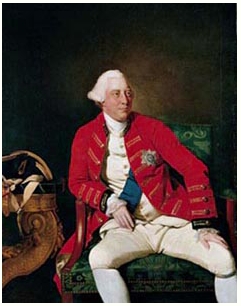
King George III by Johann Zoffany. Crowned in 1760, at age twenty-two, George III had ruled for fifteen years by the time he went before Parliament in late 1775 to declare the American colonies in rebellion and affirm his resolve to bring them to heel. In this 1771 portrait he is portrayed as a robust, dutiful man of substance, which, in fact, he was, as well as considerably more acute and accomplished than history has often remembered him.
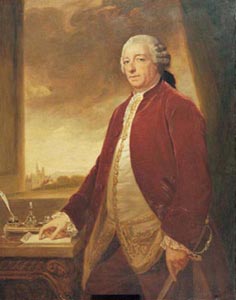
Lord George Germain by George Romney. Appointed by the King as Secretary of the American colonies in the late autumn of 1775, Lord Germain stood in marked contrast to the very unwarlike Prime Minister, Lord North. A soldier and politician, Germain was proud, commanding, and keenly intelligent. The American rebellion could best be resolved, he believed, with one “decisive blow.”
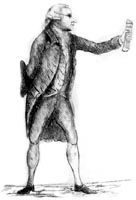
Edmund Burke, from a caricature by James Sayers. Of those sympathetic to the American cause, Edmund Burke was preeminent, his speeches among the most eloquent ever heard in the House of Commons. But Burke and others of like mind were a decided minority, and even he spoke of the American colonies as “our” colonies.
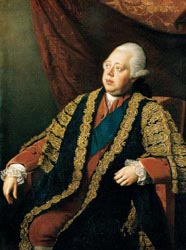
Frederick, Lord North, by Nathaniel Dance. Instinctively obliging, liked by all in Parliament, the Prime Minister, Lord North, had little heart for the war in America, yet dutifully served his King, who called North his “sheet anchor.”
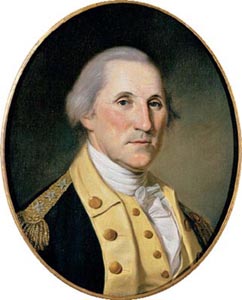
George Washington by Charles Willson Peale. One of the strongest, most characteristic portraits ever done of Washington was this by Peale, painted in 1787, a dozen years after Washington first took command at Cambridge at age 43. With his height (six feet, two inches) and his beautifully tailored military attire, the commander-in-chief was easy to distinguish in an army where almost no one was as tall and few had even a semblance of a uniform. A leader, he believed, ought both to act and look the part.
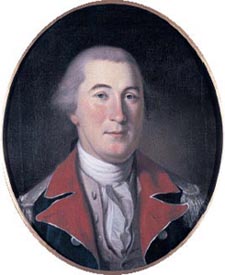
Joseph Reed by Charles Willson Peale. Of those on his immediate staff, his military “family” as he called it, Washington prized especially Joseph Reed, a talented young Philadelphia attorney who served as secretary and became his closest confidant. Reed’s admiration for his commander was boundless.
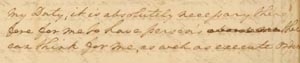
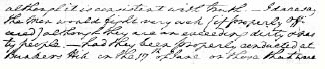
In this excerpt from one of a series of private letters to Reed, Washington expressed his ardent wish for Reed to return to help him. “It is absolutely necessary…for me to have persons that can think for me, as well as execute orders,” Washington wrote on January 23, 1776.
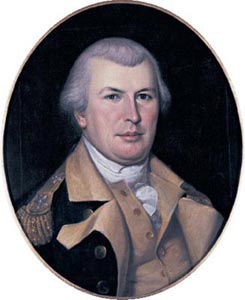
General Nathanael Greene by Charles Willson Peale. Greene of Rhode Island, a handsome, good-natured Quaker who walked with a limp, knew little of military life other than what he had read in books, when, at thirty-three, he became the youngest brigadier general in the American army. With experience, he would stand second only to Washington. The portrait is one of Peale’s “Gallery of Great Men.”
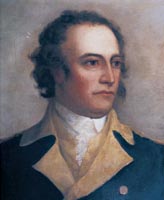
General John Sullivan by Richard Morrell Staigg. An ambitious New Hampshire politician turned soldier, Sullivan had courage and tenacity, but nothing like Greene’s ability.
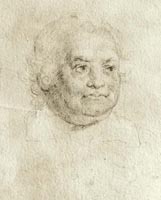
General Israel Putnam by John Trumbull. Indomitable, popular “Old Put” of Connecticut was afraid of nothing but unsuited for the multiple responsibilities of a large command.
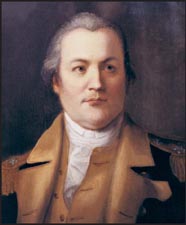
William Alexander, Lord Stirling by Bass Otis. The only American general to claim a title, Stirling of New Jersey led his small force at Brooklyn with extraordinary valor.
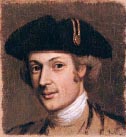
Captain C. W. Peale self-portrait. To please his wife, the artist painted himself in his new Pennsylvania militia uniform.
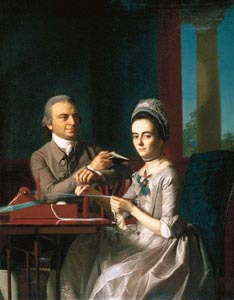
Thomas and Sarah Mifflin in a portrait by John Singleton Copley. Especially during the escape from Brooklyn, Thomas Mifflin proved to be one of the best officers in Washington’s command.
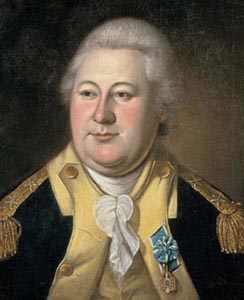
General Henry Knox by Charles Willson Peale. Big, gregarious, artilleryman Knox, the former Boston bookseller, was, like his friend Nathanael Greene, a man of marked ability, which Washington saw from the start. Under the most trying conditions, through the darkest hours, Knox proved an outstanding leader, capable of accomplishing almost anything, and, like Greene, he remained steadfastly loyal to Washington.
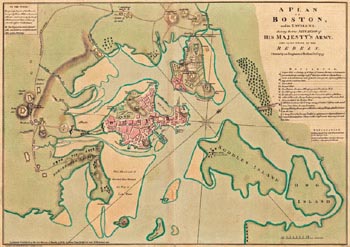
Map 1. The “situation” at Boston as drawn by a British army engineer in October 1775.
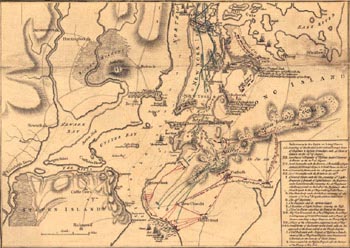
Map 2. A detail from a 1776 British map of the battles of Brooklyn and New York shows British movements in red, American in green.
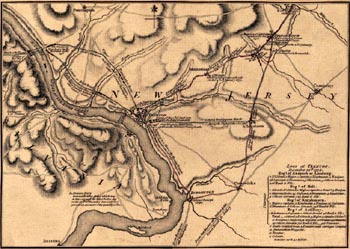
Map 3. A 1777 British map of the battles of Trenton and Princeton.
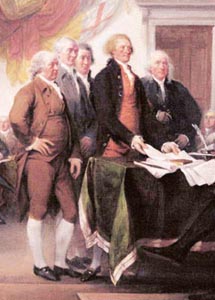
John Adams, Roger Sherman, Robert R. Livingston, Thomas Jefferson, and Benjamin Franklin, in a detail from theDeclaration of Independence 4 July 1776 by John Trumbull.
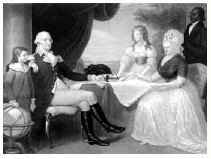
The Washington Family by Edward Savage. A post-war print depicts the commander-in-chief at home at Mt. Vernon, surrounded by his wife, Martha, and her grandchildren, Eleanor Custis and George Washington Parke Custis, and the slave William Lee, who served at Washington’s side through the war. The elegance of the general’s world was in sharp contrast to the ragtag army he led in 1776. The cartoon, a British rendition of a representative Yankee patriot, is not widely different from Washington’s own privately expressed view.
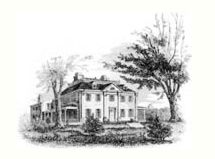
Washington’s headquarters through the Siege of Boston was a Cambridge mansion that still stands, now known as the Longfellow House.
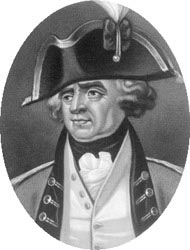
General William Howe, who belonged to one of England’s most influential families, was a courageous professional soldier but inclined to dawdle when there was no action. The daring mission by the young amateur artilleryman Henry Knox, to bring the guns of Ticonderoga to Dorchester Heights, took Howe completely by surprise.
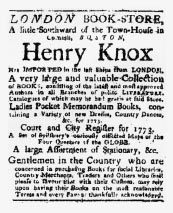
A big man of big ideas, Knox liked to advertise the “very large” selections of his London Book-Store in Boston with advertisements displaying his own name written largest of all.
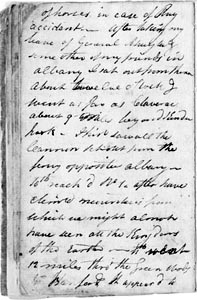
A page from Knox’s diary kept through the epic winter expedition to Ticonderoga and back is shown in its actual size. Here he writes of climbing peaks in the Berkshires “from which we might almost have seen all the kingdoms of the earth.” The date was January 10, 1776.
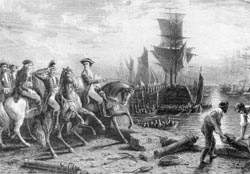
The British evacuation of Boston began before daylight, Sunday, March 17, 1776. Cannon were spiked or dumped in the harbor, as nearly 9,000 of the King’s troops, and 1,100 Loyalists went aboard British ships bound for Halifax. Americans on shore witnessing the spectacle were cheering and weeping. “Surely it is the Lord’s doing,” wrote Abigail Adams.
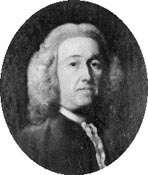
Among the Loyalists who fled were many of Boston’s leading citizens, like Justice Peter Oliver. The majority, however, were from every walk of life, farmers and tradesmen, who, firm in their loyalty to the King, considered themselves true patriots.
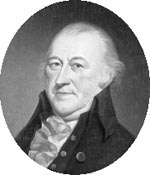
Washington generously conferred the honor of leading the American troops into Boston to the Massachusetts general, Artemus Ward, shown at left in a portrait by Charles Willson Peale.
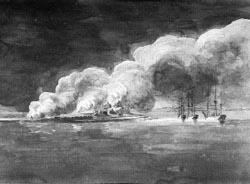
Before the British set sail for the open sea, two of their engineers, Captains John Montresor and Archibald Robertson, blew up Castle William in Boston Harbor. The scene below was drawn by Robertson, who had done numerous sketches in and around Boston and kept a diary all through the Siege.
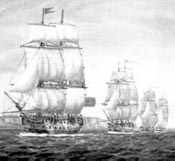
The British armada that sailed into New York Harbor in early summer, 1776, numbered more than 400 ships. It was the largest naval force ever seen in American waters, the largest sent out from the British Isles to defeat a distant foe. With no fighting ships of their own, the Americans faced an almost impossible task of defending against such might.
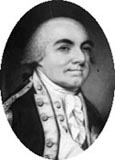
General Henry Clinton was neither impressive in appearance nor easy for his fellow British commanders to work with, but his plan for a night flanking movement on Brooklyn succeeded brilliantly. Had Clinton’s overall strategy for defeating the Americans been adopted, the outcome of the year’s campaign might have been different.
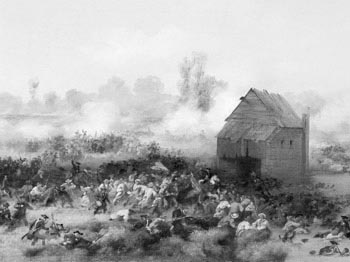
The fury of the first great battle of the war—and the first colossal defeat for the Continental Army—at Brooklyn on August 27, 1776, is dramatically portrayed in a painting by Alonzo Chappel. In the distance at left, Lord Stirling leads a few hundred Marylanders in a brave attack on the British lines, while in the right foreground other American troops in desperate retreat plunge into Gowanus Creek.
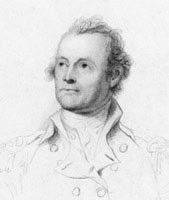
The night escape of the American army from Brooklyn, across the East River, could never have succeeded without the intrepid Marblehead mariners who manned the boats. The pencil sketch of their commander, Colonel John Glover, is by John Trumbull.
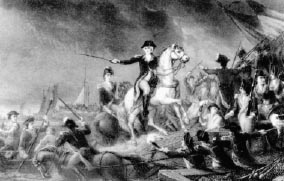
In a single night, 9,000 troops, plus equipment and horses, were transported across a mile of turbulent water to New York, without the British ever knowing and without the loss of a single life. In a print by M. A. Wageman, Washington is shown directing the exodus at the Brooklyn ferry landing.
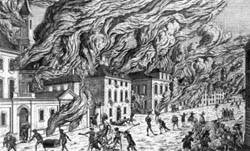
A German engraving of the burning of New York, September 20, 1776, shows great drama but little knowledge of what the city looked like. The British blamed the fire on “lurking” American villains. Washington wrote, “Providence, or some good honest fellow, has done more for us than we were disposed to do for ourselves.”
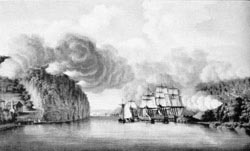
A British flotilla, led byPhoenix andRoebuck, defies the American guns of Fort Lee and Fort Washington to sail up the Hudson on October 9, 1776. The painting by a French marine artist, Dominic Serres, makes the Hudson look narrower—and thus the ships larger—than in reality.
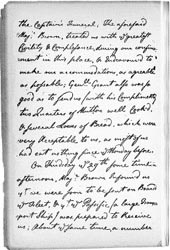
One of the most revealing of the many diaries kept by American soldiers in 1776 was that of Lieutenant Jabez Fitch, a Connecticut farmer who recorded his experiences through one ordeal after another, including his time as a prisoner of war. The page at left, from August 28, records how, unexpectedly, the British general James Grant gave the famished prisoners “two quarters of mutton well cooked,” and, from August 29, that the prisoners are to be put aboard a ship.
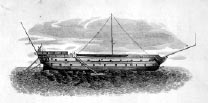
Captured Americans by the thousands were crowded aboard rotting British prison ships anchored in New York Harbor, where they were to perish by the thousands, mostly from disease.
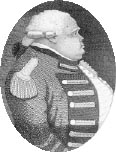
Grossly fat and contemptuous of Americans, the British general James Grant was also capable of small kindnesses to prisoners like Jabez Fitch (see diary at left) and wrote particularly vivid letters describing the campaign of 1776 from the British point of view.
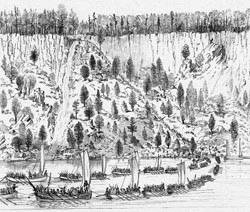
British troops commanded by General Cornwallis scaled the Hudson River Palisades November 20, 1776, in a watercolor attributed to Lord Rawdon. In fact, this daring British move on New Jersey took place in the dead of night, not in daylight as shown.
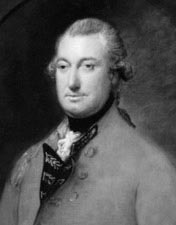
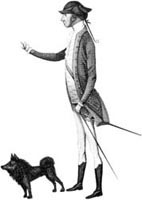
Charles Cornwallis by Thomas Gainsborough. The most popular British general serving in America, Cornwallis had shown himself to be enterprising and aggressive. On November 25, 1776, with 10,000 men, he set off across New Jersey determined, he said, to catch Washington as a hunter bags a fox. The one looming uncertainty was the whereabouts of Charles Lee, the eccentric British general turned American patriot who was thought to be a more adroit and dangerous foe than Washington. a caricature of Lee with one of his numerous dogs.
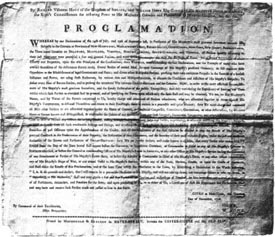
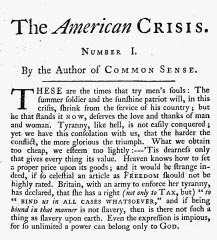
A war of words came to a crescendo during the long retreat of Washington’s battered army across New Jersey. A Proclamation issued by Admiral Lord Richard Howe on November 30, 1776, offered pardon to all Americans who would take an allegiance to the King, and throngs in New Jersey flocked to British camps to sign their names. By contrast, Thomas Paine’sThe American Crisis, which appeared on December 23, was a powerful summons to American patriotism second only to hisCommon Sense . Page one with its immortal opening lines is shown at left.
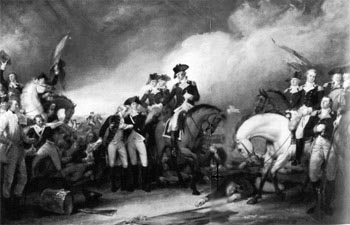
The Capture of the Hessians at Trenton, New Jersey, 26 December 1776by John Trumbull. Though the ceremony portrayed in Trumbull’s great, stylized painting, with the mortally wounded Hessian commander, Colonel Johann Rall, surrendering before George Washington, never happened, and no one after the battle looked so costume-perfect, the principals are all readily indentifiable (see key below), and the high drama of Trumbull’s scene was considered in the eighteenth century entirely suitable for the American triumph at Trenton, one of the turning points of the war.
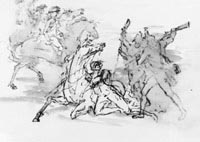
A rapid sketch by John Trumbull, one of several preliminary studies, shows General Hugh Mercer being bayonetted in the fury of the Battle of Princeton.
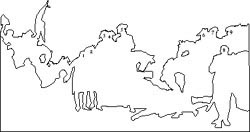
KEY
1. Colonel Johann Gottlieb Rall
2. Colonel William Stevens Smith, aide-de-camp to Major General Sullivan
3. Colonel Robert Hanson Harrison, Military Secretary to Washington
4. Captain Tench Tilghman, Military Secretary to Washington
5. General George Washington
6. Major General John Sullivan
7. Major General Nathanael Greene
8. Captain William Washington
9. Brigadier General Henry Knox
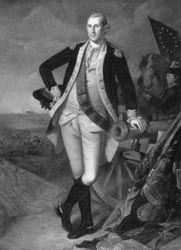
Washington at the Battle of Princeton by Charles Willson Peale. Painted in 1779, this full-length portrait became immediately popular, and Peale produced a number of replicas, one of which was ordered as a present for the King of France. The sash Washington wears is the light blue insignia he chose as commander-in-chief beginning with the summer of 1775. Nassau Hall at Princeton is shown on the distant horizon on the left.
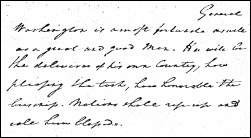
As the war continued after 1776, Nathanael Greene wrote prophetically of Washington’s singular place in history as the “deliverer of his country.”