
For postwar Germans the years of the Third Reich and the devastation of the war were so overwhelming that the more distant events of World War I were often allotted the role of mere historical background to the catastrophe of Nazism. Indeed, precisely this inescapable presence of Nazism has motivated some German scholars and politicians to insist that in order to face the future, their nation had to be given a usable past. And since Hitler’s Reich could not be wished out of history, the common strategy to come to terms with its legacy was to relativize it, either by reference to other criminal regimes and genocides, or by shifting the focus to the allegedly positive elements in Nazi society and rejecting the centrality of the Holocaust. Seen by its promoters as a crucial precondition for reestablishing what they deemed a missing sense of national identity, this exercise in rewriting the past unleashed the so-called Historikerstreit (historians’ controversy) of the mid-1980s. Interestingly, however, while in the early postwar decades German educators often preferred to avoid teaching the Nazi period altogether, rather than confronting its moral dilemmas (and their own complicity), in the 1990s both scholarly and public attention has not only refocused on the Third Reich and the war but has for the first time begun to shift toward a recognition of the pivotal role of the Holocaust in understanding Hitler’s Germany. In the wake of reunification, the hopes expressed by some conservative circles that the past would somehow be finally normalized were dashed, and a new generation of scholars is now engaged in a relentless effort to reconstruct its historical realities.
For Germans the transition from national self-glorification in victory to a status of international disgrace in defeat was even more radical and traumatic than in France. To be sure, even during the war many soldiers and civilians remarked that if Germany lost the war, the victors would exact terrible retribution. This anticipation of revenge reflected an internalization of the Nazi line that especially the Jews, who “lurked behind” both the Bolsheviks and the Western “plutocracies,” had always wanted to destroy Germany and therefore had to be exterminated. But it also revealed an understanding that Germany was indeed perpetrating horrific crimes that would not go unpunished in case of defeat. As long as the war lasted, the expectation that Germany would be subjected to the same brutalities it had perpetrated on others had a largely galvanizing effect. This inverted view of reality, whereby Germany’s most helpless victims were perceived as the greatest threat to its existence, was of course the result of years of Nazi propaganda, whose own efficacy was derived from deeply rooted antisemitic prejudices in wide sectors of the German population. Hence, in the last years of the war, a good measure of agreement existed between those increasingly numerous Germans who knew that crimes were being perpetrated “in their name” (as the saying went after the war) and the regime that ordered these policies. Indeed, as I noted above, this circular argumentation created a bond—often insufficiently recognized—between the regime and the population, based on the awareness of complicity in crime.
The last years of the Third Reich were experienced and remembered by most Germans as a period of murderous air raids and disastrous defeats, fear and destruction, horror and disillusionment. Yet the soldiers who fought to the bitter end, the workers who kept producing armaments, the civilians who held out in bombed out cities, let alone the organizers and perpetrators of genocide, were anything but hapless victims of forces beyond their control. The defeat of the Reich was so costly both to its enemies and to its defenders, and was delayed beyond hope for the vast majority of Jews under Nazi rule, because the Germans resisted it with great determination, while only a marginal minority tried to rid the nation of its criminal leadership. By the latter part of the war, most Germans had become convinced that they were fighting for their very survival; hence their courage and self-sacrifice, which was construed at the time, and often subsequently, as a glorious manifestation of a united national will to ward off destruction by a “world of enemies.” Hence, too, the glorification of genocide, which was subsequently mostly denied or repressed. That so many memoirs, popular histories, films, and pulp fiction, as well as more respectable scholarly works, have described the barbarous fighting in the East as constituting a bulwark against “Asiatic barbarism,” and have insisted on distinguishing between this glorious page in German history and the genocidal policies that were prolonged by the army’s tenacity, merely indicates the extent to which Nazi propaganda both influenced and reflected widely held public sentiments. Conversely, while shock and despair, suffering and pain were keenly felt by Germans at the end of the war, shame seems to have been largely absent from the emotional landscape of the population.
In 1918 Germans were shocked to discover that the war they were supposed to be winning had been lost; consequently, they sought the reason for defeat in treachery at home rather than in enemy superiority. In 1945 the totality of defeat left no room for doubt that its main cause was overwhelming Allied preponderance. But besides being forced to recognize the limits of their power, Germans were also deprived of honor by their foes, who insisted on invalidating the moral value of their sacrifices by asserting that they had served an evil cause. The glorious defense of the homeland was now presented as shameful and incriminating support for a genocidal regime. Vanquished and occupied, struggling to survive in a devastated land, bereft of both basic food staples and political leadership, Germany’s population was now expected to acknowledge its complicity in murder. For many young soldiers and Hitler Youth members, the Fuhrer’s suicide—and in some cases, however implicitly, the confirmation of rumors about the death camps—was experienced as the “collapse of a whole world.” In other words, if 1918 was traumatic because it shattered the glory of national unity—and created the myth of domestic betrayal—1945 was traumatic because it shattered the glory of dedication to a cause and created the myth of obedience and victimhood.
Following the debacle of 1940, most French were initially far too preoccupied with survival to be concerned with the reasons for the defeat, the true nature of Vichy, or the fate of the Jews. So, too, following the “catastrophe” of 1945, Germans were primarily engrossed in fending for themselves. But while the Third Republic had been largely discredited long before the defeat, many Germans had continued believing in Hitler well into the war; hence both his suicide and the criminality of his regime were exceedingly difficult to accept. It seemed therefore best simply not to discuss the issue; instead Germans concentrated on clearing the rubble from their cities and in the process surreptitiously buried the debris of their former beliefs and convictions.
Graves dug in a hurry tend to be shallow; as the seasons change, the corpses may resurface. The thousands of German soldiers killed in Stalingrad still reappear every thaw on the old battlefields, serving as a rich source of souvenirs for the local population. The SS exhumed untold numbers of its Jewish victims in order to erase all signs of its crimes by cremating the bodies; but a genocide on this scale could not be concealed. The Wehrmacht was more successful in covering up its crimes under the facade of a honorably fought patriotic war, not least because most Germans, as well as their new Western Allies, had an interest in preserving this image. But while one tended to remember the statement by the conspirators of July 20, 1944, that they were striving to save the army’s shield of honor, one tended to forget that they had resorted to conspiracy and assassination precisely because they could not expect the support of their troops and fellow officers in an open rebellion against Hitler. By then the army’s honor had already been irredeemably tarnished, yet most soldiers and civilians perceived the plot as high treason. The paradoxical outcome was that the conspirators were subsequently presented as a shining example of the officer corps’ moral fiber (fig. i), whereas their complete isolation within their own profession and the population at large was mostly repressed.
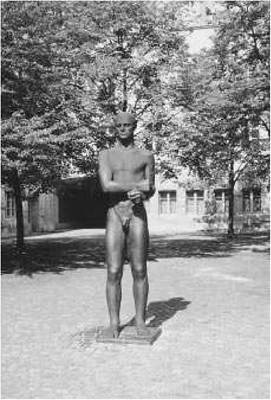
FIGURE 1. Ambiguous heroism. Statue in Berlin commemorating the July 20, 1944, bomb plot against Hitler. Plaques by the monument assert that the conspirators “died for Germany,” “did not endure the shame,” and gave their lives “for freedom, justice, and honor.”
From this perspective we can say that the army’s shield of honor was more than a metaphor. Considering that close to twenty million men served in its ranks, the Wehrmacht truly represented German society, and its veterans became the founding generation of the two postwar German states. No wonder that the exhibition on the crimes of the Wehrmacht touring Germany and Austria since the mid-1990s has aroused a great deal of anger among conservative circles, who strongly oppose its assertion that there was nothing glorious about Germany’s war of extermination in the East and its deep involvement in the Holocaust. To be sure, over the years Wehrmacht veterans have often complained that having first been deceived by the Nazi regime, they were then disowned and rejected by postwar society, without sufficient recognition of their devotion to their comrades, the homeland, and Western civilization as a whole (as its protectors from “Asiatic Bolshevism”). The fact is, however, that the full extent of the Wehrmacht’s unsavory record was not exposed for several decades after the end of the war, and even today new documentation on its crimes is still being uncovered.
German attempts to come to terms with the Nazi period were closely linked to the quest for a glorious past. The tortuous nature of this process reflected not only the scarcity of past virtue but also contemporary domestic and foreign politics. Both German leaders and their Western colleagues wanted the Federal Republic to join the emerging anti-Communist coalition as part of Germany’s reintegration into the international community. But popular suspicion of Germany in the West and the reluctance of many Germans to become part of a new military alliance made it necessary to create an image of the past that balanced outright rejection of Nazism with empathy for the suffering and sacrifices of the German people. By distancing the Nazi regime from the population, and associating the hardship of the latter with the crimes of the former, Germany was ultimately presented as Hitler’s victim, the (Western) Allies as its liberators from Nazi tyranny, and Communism as the continuation of Nazi practices and the perpetual enemy of Germany and democracy. German glory became grounded both in suffering (from war and tyranny) and in opposition to evil (by creating a bulwark against Communism and trying to unseat Hitler). Moreover Hitler was said to have “seized power” rather than gained the support of much of the public, and the genocide of the Jews was described as having been unknown to the German people although falsely presented by the regime as perpetrated in their name. It was thanks to this image that Germany could be reintegrated into Europe as a member of the community of victimhood and heroism. Ironically, the Nazis had used a similar image to legitimize genocide, arguing that Germany had been the victim of the Jews and that Hitler was determined to save the Reich and the rest of the world from the evil of Judeo-Bolshevism. The difference was, of course, that after the war the glorification of suffering served as a tool for integration rather than confrontation. However, while it contributed to the normalization of the present, it also distorted the past by blurring the distinction between complicity in murder and the victimhood of the murdered.
The tendency to lump together all victims of Nazism and war has been an integral feature of German politics and commemoration. Following German reunification, for instance, the Neue Wache Monument in Berlin was rededicated (after a public controversy) to “the victims of war and tyranny.” Thus a direct association was made between Jews murdered in the camps, soldiers who followed Hitler, and civilians killed in the aerial bombing offensive against Judenrein (Jew free) cities. Similarly, on the occasion of the fiftieth anniversary of the destruction of Dresden, German President Roman Herzog spoke of that city’s fate as an example of suffering and victimhood that could provide the basis for solidarity between the German victims of war and the victims of German genocide. By asserting the unifying effects of victimhood, Herzog ignored the causal links between the stance of the German population and the genocide of the Jews, and between Germany’s war of aggression and the bombing of its cities. Instead, he implied that since all victims are by definition innocent, none of them can be burdened with responsibility for victimizing others. The equalizing effects of shared suffering were also employed as a means for reconciliation by American president Ronald Reagan during his 1985 visit to the German military cemetery in Bitburg, where he asserted that German soldiers buried there (who include members of the Waffen-SS) had also been victims of Hitler’s regime. Reagan’s reluctant visit to the concentration camp Bergen-Belsen, added to his schedule after a good deal of public pressure, only underlined the association between German victims and the victims of the Germans. In this manner the glorification of murder by the Nazis was rescripted as a glorification of suffering: in the first case the killers were glorious avengers of their victimhood; in the second they became helpless victims of the forces of darkness. As for their own victims, they played at best a secondary role in this drama of German fate and destiny, a largely glorious, if also tragic, tale of suffering, survival, and reconstruction. What remained unanswered was who, after all, was not a victim, save for Hitler and his “criminal clique”?
Another case in point is the reestablishment of the military in West Germany. At the end of the war, it seemed inconceivable to Germans and foreigners alike that the armed forces, which had served as Hitler’s instrument of conquest and annihilation, would ever be reconstituted. But history knows no Stunde Null (zero hour). The wartime tensions between the Western Allies and the Soviet Union culminated in the division of Europe and the Cold War, whose threat was exacerbated by the introduction of nuclear weapons. In these circumstances it seemed impossible to keep Germany disarmed. Chancellor Konrad Adenauer quickly grasped that rearmament presented the Federal Republic with a golden opportunity to reintegrate into the international community as an equal partner. The Western Allies, for their part, hoped to enhance their military capabilities and to draw the line between democracy and Communism on German soil. Despite a fair amount of public opposition both in Germany and abroad, just ten years after the end of World War II, the new Bundeswehr was established without any major hitches.
Although within a few years it became one of the best military organizations in Europe, the Bundeswehr, whose command cadres were recruited from among veterans of the Wehrmacht, was faced with a difficult dilemma. For the new national army was called on to reflect the Federal Republic’s asserted status as the sole legitimate successor state of historical Germany and simultaneously to demonstrate a total break with everything that German militarism and Nazism had stood for. This led to the introduction of Innere Fuhrung (literally, “inner leadership”), according to which the army would serve as a school of democracy and citizenship to its conscripts, rather than foster blind obedience and political extremism. In this manner the Bundeswehr hoped to maintain the traditional role of the army in Germany as the “school of the nation” but to drastically transform the content of its teaching so as to bring it in line with Western values and political concepts. However, if the rigidly hierarchical structure and disciplinary needs of any army are hardly conducive to democratic thinking, in the Bundeswehr matters were further complicated by the assumption that esprit de corps and motivation must be established on the firm foundation of the German military tradition. Interpretations of the army’s heritage obviously depended on one’s political stance, and those who supported its continued glorification argued that it was precisely traditional values that had made the Wehrmacht immune to Nazism and thus a “haven” from Hitler’s regime. Though entirely false, this assertion fit nicely into the ruling conservative elite’s depiction of Nazism as an example of the dire consequences that can be expected from breaking with the “good old” tradition of clearly defined gender roles in the family, adherence to religious faith, respect to authority, and patriotism. Hence the Bundeswehr could insist on Germany’s past military glory as a model for its new recruits, while rejecting any suggestion that the Wehrmacht had been implicated in the regime’s criminal policies. That the Red Army remained Germany’s main enemy made it all the easier to draw positive links between the Bundeswehr and the Wehrmacht as fulfilling the role of a “bulwark against Communism,” and to repress the army’s past or at least relativize it by reference to Soviet criminality. By now, of course, the passage of time and the end of the Cold War have facilitated a much more open public discussion of the Wehrmacht’s inglorious past. Yet Germany has also seen a great deal of opposition to such alleged attempts to “besmirch” the army’s shield of honor. More than half a century after the fall of the Third Reich and a decade after reunification, the myth of the Wehrmacht’s “purity of arms” still plays an important role in the ongoing process of constructing postwar German national identity.
The agreement to pay restitution to the victims of the Holocaust constituted another facet of this same process. Politically, the decision on Wiedergutmachung by the Adenauer administration had the same rationale of legitimizing the new German state, this time by means of partial, and strictly financial, atonement for the crimes of its predecessor. For obvious reasons the Federal Republic was loath to accept direct responsibility for acts committed by Hitler’s Germany; and yet it maintained unbroken links with a good share of the Third Reich’s legislative and administrative legacy, and employed numerous former Nazis as civil servants. This delicate balance between continuity and change made it necessary to settle the issue of the genocide of the Jews without alienating the survivors while avoiding any pronouncements or steps that might undermine the legitimacy of the new German state. The restitution agreement accomplished this by compensating the Jews for what was never accepted as more than crimes committed “in the name of the German people.” Although Adenauer’s opponents argued that his decision implied accepting a measure of responsibility, in fact it was precisely this ambivalence that facilitated the new state’s integration both into the course of German history and into the international community, making for the historical and political legitimacy it required to normalize its existence. Moreover, by ostensibly compensating the victims of another state and regime, postwar Germans acquired a new sense of self-respect and national honor, while non-Germans, including many Jews, also saw this act with a measure of appreciation. To be sure, many Holocaust survivors viewed restitution merely as an attempt by Germany to wash its hands of guilt with bribes of money, and in Israel the decision to accept reparations led to widespread demonstrations and riots that came close to toppling the government. Conversely, in Germany the argument could be heard that having squeezed so much money out of German pockets the Jews were no longer in a position to make any further moral demands on postwar Germany or to accuse it of the sins of the Third Reich. But overall Adenauer’s policy proved a resounding success, all the more remarkable considering its inherent contradictions. If the Bundeswehr’s Innere Fuhrung enabled it to rely on the German military tradition without tarnishing its newly forged shield of honor, the policy of Wiedergutmachung enabled the Federal Republic to construct itself as the successor state of historical Germany without being tainted by the crimes of its predecessor.
To be sure, as numerous observers have noted over the years, the past—by which is meant the Nazi past—will not pass. Indeed, despite some predictions to the contrary, more than a decade after the Historikerstreit German debates on the Third Reich have lost none of their vehemence. Both those who insist that Germans must finally put the past behind them and those who urge to recognize the centrality of the Holocaust for German history are ultimately concerned with the impact of the nation’s heritage on its contemporary selfperception and politics. This question came up with particular intensity following reunification, when West Germans showed remarkable zeal in purging East Germany of what some called the Communist equivalent of Nazi ideological and institutional pollution. By piling up the fresh debris of Communism over the rotting remnants of the Third Reich, it seemed for a while that these two very different systems would become indistinguishable, indeed, that the more recent injustices of the former would obscure the mass crimes of the latter. One had the impression that in purging Communists accused of victimizing Germans, the Federal Republic was trying to compensate for its failure to punish the Nazi murderers of an incomparably larger number of non-Germans, non-“Aryans,” “asocials,” and the “unfit.” Yet this last effort to domesticate and make political use of victimhood failed once more, as a new debate over the complicity of the German population in the genocide of the Jews demonstrated the extent to which the Holocaust has remained, or rather become, the crucial point of departure for any attempt to construct a modern German identity rooted in history.
This does not mean that there is any consensus on the place of the Holocaust in, or its importance for, German history, but only that by now no debate on the German past can avoid confronting this event.
Indeed, at the root of the German controversy over Daniel Jonah Goldhagen’s book Hitler’s Willing Executioners was a question that went well beyond the actual events of the Holocaust, concerning as it did the very foundations of a culture that ultimately produced genocide. Here the public was compelled to face up not only to the horror of mass murder by “ordinary men” (or Germans) but also to inquire after its links to precisely those more glorious aspects of the past that were employed as positive reference points in the creation of a post-Nazi nation. What threatened the conceptualization of German identity as an expression of national history was the argument that German culture had long been imbued with antisemitism and had developed “eliminationist” traits and genocidal predilections before Hitler ever appeared on the scene. This was also the reason for the endorsement of the book by the sociologist Jurgen Habermas, who has argued for years that German identity must be based not on the past but rather on loyalty to its democratic constitution. Hence too the universal acclaim with which the simultaneous publication of Victor Klemperer’s diaries was greeted. A converted and patriotic German Jew, Klemperer managed to remain in Germany throughout Hitler’s twelve-year rule largely thanks to his “Aryan” wife. This posthumously published day-by-day account of life in the Third Reich revealed the complexities of German society and prejudices that Goldhagen’s simplistic portrayal had obscured. Moreover, Klemperer’s allegiance to German culture, despite his personal experiences, fulfilled a deep need in contemporary German readers, for in a painfully paradoxical manner, pride in German culture was now legitimized by a representative of those who had been brutally deprived of any share in it. To be sure Klemperer’s diaries also demonstrated in great detail the penetration of Nazi ideas into society and the progressive marginalization of German Jews long before the Holocaust. From this perspective his account could also have been the cause of profound shame, for his refusal to give up the one thing that could not be taken away from him, his pride in his identity, tells us more about his own courage than about his society’s virtues. But this aspect of the diaries was given less prominence in the public discussion of the book: this is merely another way of saying that shame and glory are in the eyes of the beholder.