
We have exterminated a bacterium because we do not want in
the end to be infected by the bacterium and die of it. ... All in
all, we can say that we have fulfilled this most difficult duty for
the love of our people. And our spirit, our soul, our character has
not suffered from it.
Heinrich Himmler, speaking to SS leaders in Posen,
October 4, 1943, cited in Jeremy Noakes and
Geoffrey Pridham, Nazism, 1919-1945
Utopias propose final solutions to perennial questions of human existence and social organization. Utopian society permanently eliminates irking problems that had never been resolved before. Such attempts to eradicate the inherent ills of civilization or human biology, often generate violence, whose perceived legitimacy in view of the noble goal it serves greatly enhances its ferocity.
Both the nature of utopia, and the type and scope of its violence, reflect the societies and cultures that produce it. Religious utopias must be understood within the context of the established religious doctrine, social organization, and power structure they hope to reform or overthrow. Here the first step to utopia is made by adopting a new or reformed faith, even if eventually the inevitable institutional, hierarchical, and social organization of this new creed tends to divert its followers from the path on which it had originally set out. Moreover, since numerous religions associate utopia with death, the afterlife, or reincarnation, earthly existence maintains an ambivalent relationship with its final destination, goal, and purpose.
Modern utopias reflect the growing predominance of science and technology, mass politics and state control, secularization and alienation. Hence the longing to achieve greater proximity to nature and thereby also social harmony in an increasingly industrialized and atomized environment, while harnessing modern science and techniques of social organization for that purpose. If the vast expanses of colonial empires seemed to offer the best opportunity to realize such schemes, it soon transpired that modern utopias of this genre create a relationship of subjugation and control vis-a-vis their human environment, even as they brought the newcomers closer to the natural setting. Indeed, the evident links between utopia and violence in the European colonies demonstrate that imperialism is one crucial root of modern utopian thinking, whose most distinct and devastating outcome in our own century has been the totalitarian state.
The nineteenth century produced an array of utopian visions. Some, such as the Hegelian Weltgeist’s curious culmination in Prussia and Giuseppe Mazzini’s optimistic fraternity of national liberation movements, were directly related to the emerging nation-state. Others, such as the British trust in improvement and the French enchantment with positivism, as well as Henri de Saint-Simon’s republic of technocrats, were rooted in the new religion of scientific discovery and progress. Conversely, such grand utopian schemes as Charles Fourier’s “phalanx” and Karl Marx’s classless society, expressed a reaction to the impoverishment and alienation that came in the wake of industrialization, urbanization, and secularization. But totalitarian utopia was finally propelled into existence by the event of total, industrial war, which combined modern science and technology, universal mobilization of soldiers and workers, and an elaborate surveillance apparatus geared to control and mold the conduct and mind of the public. Totalitarianism evolved from the crises it claimed to resolve, offering a final solution to humanity’s ills predicated on the proven ability to eradicate everything that could not or would not be suppressed, healed or transformed. For here the goal was not mere control, but rather making control altogether unnecessary by recreating humanity in a manner that would ensure its acceptance of and active participation in the new society. Totalitarianism is modern utopia brought to its ultimate concrete conclusion; obsessed with mobilizing mass society and employing the most sophisticated technological means and administrative practices to establish its rule, it simultaneously strives to put an end to history and to prevent any movement beyond what it perceives as the utopian phase. Once the ideal has been achieved, nothing should be allowed to undermine it; once the undesirable classes have been eliminated, the polluting races exterminated, the old elites smashed, the history and memory of past events erased or rewritten, time must come to a standstill. From this point on, change can only spell subversion.
But just as in Aristotelian physics, this ideal point of absolute rest can never be reached, its closest approximation being a circle, which in the case of modern utopia is a vicious cycle of constant striving toward perfection in a violent process of remaking and unmaking humanity. The totalitarian state insists on being defined as such precisely because it can recognize no limits to its unrelenting march toward utopia. But totalitarianism is only the most extreme expression of a widespread, if at times more benign urge, whose roots stretch back to the beginning of civilization and whose modern manifestations are distinguished by unprecedented technological and organizational capacities unaccompanied by a matching expansion of either wisdom or moral sensibilities. This is the urge to seize control over time, matter, and mind, to gain the power to make and unmake, to arrest or accelerate the drift of history and to challenge whichever natural or divine laws may rule it. Since the utopia of controlling the universe is both the consequence and the cause of domestic and international conflict, its wars are all the more absolutist in their goals and execution, geared as they are toward final solutions to problems and final removal of obstacles by means of total annihilation. For while war is always about destruction, the most destructive armies are those motivated by utopian theologies or ideologies. And the vast conscript armies of total war—raised and supported by mass modern societies— have released unparalleled annihilatory energies, not least because the tremendous exertion and suffering that modern warfare demands of citizen soldiers can only be justified by reference to abstract utopian goals, be they eternal peace or social justice, freedom from hunger or universal liberation from oppression, world empire and endless living spaces or total eradication of racial and ideological foes.
Modern war and totalitarianism therefore necessitate and devise final solutions in which humanity is perceived as a mass of matter to be molded, controlled, moved, purged, and annihilated. This conceptualization of the world “biologizes” society and “sociologizes” biology; humanity becomes an organism in need of radical surgery, or a social construct in need of extreme sociological reordering. Hence the vast population transfers, brutal operations of ethnic cleansing, eradication of whole social classes, and ultimately outright genocide, the most final solution of all. For while the modern world has learned how to extend life, it has also come to think of death as the absolute end of existence. Once the afterworld has been discarded and both paradise and hell have become mere metaphors to describe (or serve as a model for creating) conditions in our own world, death has assumed a more important function than ever before, and mass murder can be seen as both an achievable goal (figs. 11—13) and a perfect means for resolving previously insoluble problems.
Final solutions are of an inherent interest to historians, not only because of their potential to transform them into antiquarians by putting a stop to history but because in the process of working toward utopia they mobilize the past and exploit the tools and sources of the historian, albeit with the goal of ultimately undermining the raison d’etre of the historical profession. In the modern era, final solutions are predicated on bureaucratic structures that in turn depend on archives, documentation, and experts in all areas relevant to organizing society and ordering the past. Moreover, final solutions require techniques that will facilitate their task of identifying the enemy, mobilizing perpetrators, and ensuring the collaboration or passivity of bystanders, all within the context of mass society. Identity, whether biologically, sociologically, or historically constructed, is a crucial component in motivating genocide and defining its parameters, just as it is a requisite element in delineating the future utopia whose creation will have been made possible by mass murder. Here, of course, not only the social sciences are involved, but also the medical and legal professions, whose role in legitimizing and organizing genocide as a necessary step on the path to utopia is obviously indispensable. Hence utopian violence in the twentieth century reflects the complexity of modern identity, the ambiguities of its historical and institutional roots, and the perilous potentials of its future aspirations.
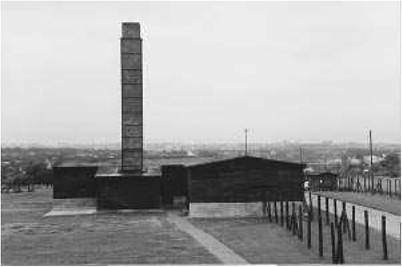
FIGURE 11. Industry of destruction. Gas chamber and crematorium in Majdanek concentration camp, near Lublin, Poland.
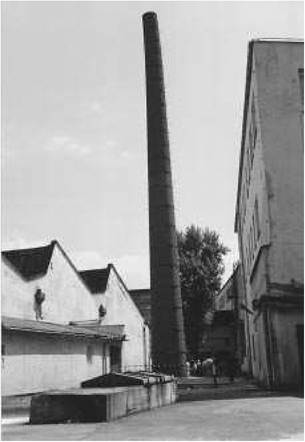
FIGURE 12. Industry of salvation. Oskar Schindler’s factory in Krakow, Poland.
Scholarly rumination and scientific innovation, studies of the past and investigations of nature have all played a role in planning, legitimizing, and enacting violent final solutions to the contradictions of human existence. And yet, despite some important but ultimately marginal exceptions—mostly incorporated into the conventional disciplinary and intellectual discourse—the prestige and status of the social and natural sciences has, by and large, not diminished, and their basic assumptions have escaped fundamental critique and revision in view of their impact on society in the context of modern war and genocide. In all major cases of state-organized murder in this century, the rhetoric of the past has legitimized the horror of the present, technology has facilitated mass killing, war has provided a convenient psychological and organizational context. Moreover, in all these instances either religion or science (and at times a mix thereof) claimed a monopoly over truth, knowledge, and visions of a utopian future: by asserting divine sanction to purge the infidel, linking ethnicity to faith, or mobilizing the moral authority of religious leaders—as in the Armenian, Rwandan, and Bosnian genocides; by claiming to obey the allegedly immutable, if also ruthless, laws of history—as in the “scientific” Marxism of the Soviet Union, China, and Cambodia; or by making biology into destiny and asserting the need for eugenic policies of breeding, selection, and eradication—as in the case of Nazi “scientific” racism, “racial hygiene,” “euthanasia,” and racial genocide.
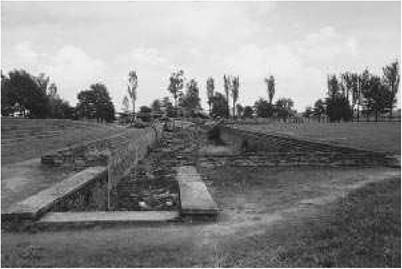
FIGURE 13. The factory of death. Crematorium II complex (undressing room, gas chamber, and crematorium), Auschwitz-Birkenau, Poland.
At the end of the second millennium, modernism, nationalism, and indeed history itself are again being questioned even as they serve to fan new utopias and further violence. The fall of the Berlin Wall, the disintegration of Communism, the “victory” of capitalism, the exile of war to parts of the world that rarely concern the West, and the ongoing project of genetic mapping, to name just some of the most important recent developments, have induced some to argue that we are either at the end of history or on the threshold of a utopian future. Yet growing poverty, economic exploitation, raging new viruses, global warming and, not least, the threat of biological, chemical, and nuclear terrorism may similarly indicate that our world is about to plunge into another apocalypse. It is thus more than likely that the twenty-first century will be no less afflicted by utopian and apocalyptic visions, and by attempts to reshape humanity in their image, than the century of violence that is finally coming to a close.