
The Place of Locality in a Globalizing World
ANNE GERRITSEN
The business of the local historian is to re-enact in his own mind, and to portray for his readers, the Origin, Growth, Decline, and Fall of a local community. (Finberg 1952)
The careful practice of local history and the multiplication of monographs on specific regions may … serve to destroy many of the general conceptions that once seemed so strong. (Goubert 1971)
As these two quotations show, there have long been divergent views of what local history should be. For H.P.R. Finberg, as he explained in his 1952 inaugural lecture for the University of Leicester, each local community was a “distinct and separate entity” that could and should be studied as a “cultural whole” (Samuel 1976: 197). The ultimate aim of local history for P. Goubert, on the other hand, was to reformulate “general conceptions” about the history of the nation. According to Goubert, local historians should always see themselves as making a difference to the writing of larger and ultimately more important units than the local (Goubert 1971). By the 1970s, critics of the practice of local history in England and elsewhere had begun to see the work in the field of local history as rather too narrative, “repetitive and inert,” and based on documents that “vary remarkably little from place to place, and are heavily biased towards local government” (Samuel 1976). Local history was seen as merely chronicling the rise and fall of single, isolated communities, with little awareness of the dense connections between communities that scholars not long afterwards began to highlight. Goubert’s suggestion that a multiplicity of local perspectives could challenge “general conceptions” previously considered unassailable foreshadowed critiques of the grand narrative that became popular in the 1980s.
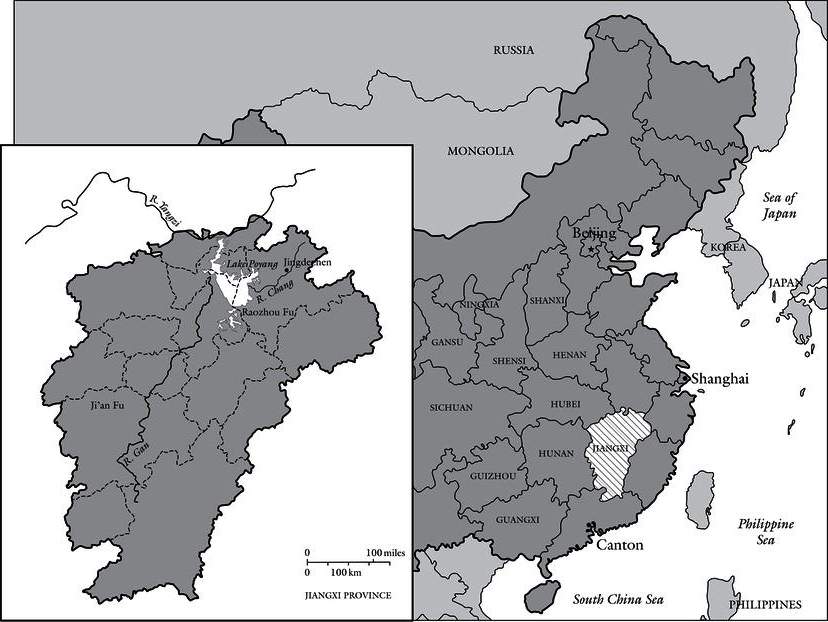
Without claiming that communities could be studied in isolation, or that new grand narratives should be built on the basis of numerous single local studies, the local history of the last two decades has moved in new and interesting directions. Having received stimulating impulses from fields such as geography and sociology, local historians have asked how communities came into being and developed through space and time, and how local communities looked from different perspectives of power and status (Massey 1995; Hindle 2000; 2008; Kurtz 2002). Robert Hymes, to take an example from the China field, studied a single prefecture in Song (960–1279) and Yuan (1279–1368) dynasty China to explore the shifts in elite allegiance away from the empire-wide level to the local level that occurred during this time (1986; 2002). In my own work on local history in early modern China, I have asked how various individuals positioned themselves as members of different networks in the southern Chinese prefecture of Ji’an (Ji’an Fu onMap 14.1) and in what ways these individuals sought to shape the local communities to which they imagined they belonged (Gerritsen 2007). But local history has become more sophisticated not only in its understanding of the units it studies, but in its approach to the units that surround it. Scholars working in the microhistorical tradition, radically reducing the scale of their research focus to a single individual or a single legal case, have shown how precisely the absence of representativeness could be instructive about their historical and political contexts. The ways in which a locality is unusual and deviates from the norm can tell us a great deal about that “normality,” as we see in the case of Carlo Ginzburg’s study of the miller Menocchio (1980). The local, however ordinary or unusual, can always tell us something about the wider context, especially as many local historians now work on the understanding that “places … are always constructed out of articulations of social relations … which are not only internal to that locale but which link them to elsewhere” (Massey 1995: 183). This idea becomes especially interesting as a topic for exploration when that “elsewhere” is conceived of as a world that is becoming more connected and integrated, as a “globalizing” world. This chapter is concerned specifically with the place of the local in such a globalizing world.
A “Globalizing” World?
Two questions present themselves immediately. What is a “globalizing” world, and when did the process implied by the word “globalizing” begin? Different meanings of the term have led to divergent answers to these questions, as several other chapters in this volume demonstrate. For Andre Gunder Frank and Barry Gills (1993), globalization refers to a world that is connected. They argue that the “world system” was created several millennia ago by competition over power and by cycles of economic rise and decline. Looking at the example of ceramics, one of the earliest traded goods to create global connections, then that exchange indeed goes back several millennia. Archaeological explorations have found evidence of ceramics made in China in sites in Southeast Asia, the Persian Gulf, and along the African Coast that date back to the Han dynasty (206 BCE–220 CE) (Finlay 2010). But a focus on ceramics also makes clear that from around 1300 CE, the intensity of that exchange increased significantly. Not only were larger quantities of Chinese ceramics shipped to Korea and Japan, Thailand and Cambodia by this time, merchants from Inner Asia and the Middle East were traveling to China via land and sea routes in far greater numbers than before. As Scott Levi discusses in his chapter, during the thirteenth and fourteenth centuries, the Mongol Empire created a more stable environment for trade and interaction across the Eurasian landmass than ever before. It was Muslim traders who brought Persian cobalt to the potters at Jingdezhen, and who transported large dishes with blue-and-white decorations back to consumers in Inner Asia and the Middle East. Finlay has suggested that the spread of porcelain across Eurasia during this period can serve as evidence for the first “sustained cultural encounter on a worldwide scale, perhaps even for indications of genuinely global culture” (1998: 143). Ceramics, and material culture more generally, were exchanged in large quantities and on a regular basis throughout Eurasia from around 1300. If we take material culture seriously as a medium for the global exchange of goods, knowledge and ideas, then we could see 1300 as the beginning of a globalizing world, an argument supported by, among others, Janet Abu-Lughod (1989), who locates the first world-system between 1250 and 1350.
Perhaps the most persuasive arguments for the beginnings of a globalizing world, however, have been made by those who see it emerging later, around 1500. One of the most vociferous proponents of this argument has been Immanuel Wallerstein (1974–1989; 2004), who argued that the growth of a capitalist mode of production during this time, and the accumulation of wealth in the hands of a relatively small group of European merchants, saw the emergence of a world-system. (See Chase-Dunn and Hall, this volume.) He acknowledged that there had been various world systems in place before 1500, but this world-system that operated as an integrated capitalist unit, with Europe at the center and Asia and the Americas in its periphery, only then came into being. Of course Asia had been present in European consciousness for much longer, for example through the luxury commodities that were transported each year from Asia along the Silk Routes to Europe via the Venetian merchants who met caravans in the Levant, and through the colorful descriptions in the ever popular accounts of the thirteenth-century traveler Marco Polo, but the Americas remained largely unknown to Europeans until sixteenth-century explorers followed Christopher Columbus (1451–1506) across the Atlantic Ocean. As Dennis Flynn and Arturo Giraldez have shown (2008), it was not until the Spanish extended their empire in the Americas across the Pacific Ocean by establishing a base in Manila in the Philippines in 1576 that the exchange of commodities and currency had a reach that literally circumnavigated the globe.
Beyond the intensification of trade and exchange leading to the emergence of capitalism around this time, and the growth of a European consciousness that spanned the entire globe, a number of other developments also converged around 1500. The Dutch, and later the English, the French and the Scandinavians, established trading companies with bases in Asia, from where they began to participate in the trade networks between Japan, China, Southeast Asia, and the Indian Ocean. Naval technology and military force, specifically guns, underpinned the expansion of these overseas empires and changed the nature of these extant trade networks fundamentally. (See Morillo, this volume.) Once the European companies had found ways to participate in this trade, thereby bringing Europe into global networks of trade, not only commodities but humans, crops and diseases began to be transported across vast distances and into new environments. (See Simmons, this volume.) Crops like the potato, corn, the tomato and the chili pepper, plants native to the Americas, thoroughly transformed both the agricultural practices and staple diets of Africans, Europeans and Asians. Along with humans and crops came germs and infectious diseases that killed vast numbers of “virgin” populations without resistance. Taking all these factors into consideration, one could argue that the world indeed became a globalizing world around 1500 (Stearns 2010).
Of course, many scholars have argued that the kinds of developments discussed above still do not amount to “globalization.” (See Bright and Geyer, this volume.) For them, globalization refers to the connectedness of economic and financial institutions on the macro-level, a development they do not see in evidence before the so-called long nineteenth century (O’Rourke and Williamson 2002). They argue that from the nineteenth century, with the Industrial Revolution and the growth of imperialism, institutions like banks and corporations began to have influence far beyond the boundaries of the nation-state. Systems of transportation and communication, especially with the development of the steamship and telegraph, integrated the world and connected its inhabitants in ways that had not been possible before. The strength of the political and economic ties after the nineteenth century, they would argue, means that there are no longer any truly independent institutions or structures; local economies can no longer be separated from the larger units they form part of, and states do not have the political power to counteract the influence of the global market. Moreover, they note a cultural homogenization in the desire for consumer goods, brands, and images distributed by means of new media throughout the world. Globalization, thus, is often used to refer to recent developments that created the world as we know it today, with its global price convergences for commodities, instant communication technologies, worldwide migration patterns, and homogenized cultural icons (Osterhammel and Petersson 2005).
Conceptualizing the Local and the Global
The problem with these visions of the globalizing world is not just that there is a tendency to chart these developments from a Western perspective, and hence to see globalization emerge precisely at the time that Europe took center stage in terms of global economic development. This worldwide vision of development also leaves very little scope for exploring what happened at the local level. How did this global development and increasing connectedness look from a local perspective? By bringing in local perspectives from different parts of the world, this Eurocentric bias can, conceivably, also be redressed, so that we do not see globalization as merely a European or Western project.
A number of scholars of globalization have concerned themselves with the place of the local in larger processes of globalization. Ever since the late 1970s, when Jean-François Lyotard questioned the value of metanarratives and advocated the return to smaller, “localized” narratives (Lyotard 1984), social theorists have been interested in the diversity and multiplicity provided by the local perspective. For Lyotard, smaller, local narratives could provide a valuable counter to the universalizing tendency of larger narratives, although of course Lyotard was not concerned with the localper se, but with the local as the contingent, heterogeneous, fragmented and contextual (Rojek and Turner 1998).
When Anthony Giddens wrote his oft-quoted statement that “local transformation is as much part of globalization as the lateral extension of social connections across time and space” (1990: 64), he brought local transformation to the foreground of the study of globalization. What happens locally is determined not by local conditions but by global developments. Again, Giddens’s focus is on understanding the forces of modernity and their impact on society and individuals, not the meaning of single localities within the wider context of globalization and modernity. Stuart Hall perhaps moves a step in that direction when he writes that “globalization might lead to a strengthening of local identities, or to the production of new identities” (1992: 308), although his emphasis is on identity, not locality. Hall sees the “return to the local” as a “response to globalization” (1991: 33); the local is what people take recourse to when they no longer understand the global.
The interconnectedness of the terms “global” and “local” seems thus to be beyond doubt, even if its conceptualization remains elusive. (See Northrop, last chapter in this volume.) The neologism “glocalization,” initially brought into academic usage by the sociologist Roland Robertson in the early 1990s, suggests the existence of processes that are at once global and local. Robertson uses the term to critique the idea that globalization is “the triumph of culturally homogenizing forces” that “overrides the locality,” and suggests that “what is often referred to as the local is essentially included within the global” (1995: 25–26, 35). Robertson understands globalization as the spatial process of compressing the world, whereby localities become more closely linked. In that very process of becoming linked, Robertson argues, they are also “invented” and “imagined” (1995: 35). In other words, the “production of locality” occurs precisely during this compression of time and space (Appadurai 1996: 178–199). Without taking recourse to the term glocalization, the anthropologist Arjun Appadurai arrives at a similar notion in Modernity at Large, where he argues vociferously against the idea that globalization is “the story of cultural homogenization” (1996: 11), seeing it instead as a “deeply historical, uneven, and even localizing process.” As Appadurai argues, societies appropriate modernity in different ways, and thus localities merit study in terms of their “specific geographies, histories, and languages,” but the histories through which localities emerge are “eventually subject to the dynamics of the global” (1996: 17–18). Locality, for Appadurai, is a “structure of feeling” rather than an existing social form, for which he uses the term “neighborhood.” The latter has spatial and temporal dimensions, while the former is phenomenological, but both are under threat in Appadurai’s vision: the neighborhood by being drawn increasingly into the dominant context of the nation-state, and locality by the growth of transnational movements and diaspora (1996: 188–189). More recently, sociologists like Mark Herkenrath have argued for more nuanced understandings of globalization by acknowledging the coexistence of divergence, convergence, and its hybrid form of glocalization (Herkenrath et al. 2005). Herkenrath’s work seeks to recognize not only the cultural dimensions of globalization, but the diverse perceptions of and responses to globalization that exist at the local level (Herkenrath 2007).
Historicizing the Local and the Global
The brief discussion above sketches the contours of debates that involved numerous critical thinkers, and took place over more than 20 years across several disciplines. Yet this theorizing about the place of small-scale units, the locality, in the globalizing world rarely seems to have involved historians, or rather, historians seem to have played only tangential roles as observers and occasional consumers. One attempt to do more comes in a volume edited by Anthony Hopkins, entitled Global History: Interactions between the Universal and the Local (2006). For Hopkins, the historian has an almost moral duty to historicize globalization. Historians must provide the historical consciousness to support our global citizenship; historians have the task of writing metanarratives of universal significance by studying the ways in which individuals and local communities came to be drawn into larger units such as the region, the nation, the empire, and the global. The book is the result of Hopkins’s exhortations of his colleagues to engage in this project. Each of the studies represents an exploration of the ways in which the local, in this case the particular topic studied by the author, is connected to the global. As Patrick O’Brien, a reviewer of this volume, writes, the “Austin model” of connecting the local to the universal is perhaps one of the most promising ways for encouraging historians “to engage seriously with globalisation” (2008). Without necessarily subscribing to the all but missionary zeal of Hopkins and O’Brien to serve as the historical consciousness of global citizens, one can see that the studies included in Hopkins’s Global History provide a way of conceptualizing the practice of global history. Without aiming to write the history of the global in its entirety, historians can make a contribution to the larger project by connecting the particular “local” they know about to larger analytical units. If historians approach their own area of expertise as having at least the potential of being connected to patterns of development and change that lie beyond their imagined boundaries, then even without making any claims for universality, their work will have a wider relevance. Historians of a particular locality have the linguistic skills and specialized knowledge that allow them to access the local sources, so the field of world history can only make substantial progress by drawing on their combined strengths, as Donald Wright (1997) shows in his study of the ways in which the micro-level developments in the Mandinka kingdom of Niumi in The Gambia in West Africa are shaped by but also shape the development of a global economy in the Wallersteinian sense. The integration of local and global in historical analysis, however, can do more than merely add an endless amount of local variation to global narratives. The study of locality in history can in fact be used to question the trajectory of the often uncritically assumed metanarrative of ever increasing connections and integrations. It can highlight the diversity and the heterogeneity that are as much part of the processes of becoming more globalized as the tendency to become more homogeneous.
Map 14.1 Jiangxi province in late imperial China, showing its main prefectures and the wider regions to which it reached out. The Gan River forms a key transportation artery connecting locations in northern China via Lake Poyang to the south. One principal locality, Ji’an, lies on the Gan; the other, Jingdezhen, sits on the Chang, a shorter tributary of Lake Poyang to the north.
Source: Map of Jiangxi province based on China Historical Geographic Information System database, Version 3.0 (April 2005).
Local Case Studies: Ji’an and Jingdezhen
To see how the local can be connected to the global in historical study, and how the local can reveal the particularities of global trajectories, it seems appropriate to put the idea into practice, by focusing on two case studies. The two places I will discuss briefly are localities of very different types. Both are located in the land-locked province of Jiangxi, in southeast China (see Map 14.1). Both are situated on important rivers: Ji’an on the Gan, which forms an important north–south artery, and Jingdezhen on the Chang, a much shorter river running from northeast to southwest in the north of the province, both ultimately flowing into Lake Poyang. This lake forms the northern boundary of the province and provides access to the Yangzi, southern China’s most important river system connecting Tibet’s mountainous plateau in the far west of China to Shanghai on the east coast. These extensive river-based transportation networks made it possible for inland towns like Ji’an and Jingdezhen to be connected to the high culture of scholars and officials in the capital as well as to the ever growing hub of trade with the wider world in Canton. The administrative structure of the Chinese empire, during the Ming (1368–1644) and Qing (1644–1911) dynasties was based on a strict hierarchy of places, with the county as the smallest administrative unit. Several counties together formed a prefecture, and several prefectures a province. Each unit was led by a group of centrally qualified and appointed administrators, who were never given posts in their home units so as to avoid favoritism and corruption. County magistrates, prefects and provincial governors therefore relied heavily on local elites to help with the day-to-day running of their areas.
Ji’an was both a county and the seat of the prefect, and thus administratively speaking the center of this entire region in the southwest of Jiangxi province. Its administrative importance, its proximity to fertile rice-growing hills and river-based transportation, and its rich heritage of sites of religious and philosophical significance all contributed to Ji’an’s attraction. From around the tenth century until at least the sixteenth century, in political, economic and sociocultural terms Ji’an was a thriving locality. More important perhaps than its material wealth was its intellectual wealth. It had some of the highest and most consistent success rates in the civil service examinations, and it had several academies known throughout the empire for their famous teachers and powerful lineages of students. Scholars and statesmen traded on their associations with Ji’an, however brief and however distant those associations might have been. They built cultural institutions such as schools, academies, and temple complexes that could accommodate large numbers of visiting scholars, monks and tourists, each leaving their records for posterity and in turn attracting new visitors. For a time, Ji’an even produced rather fine ceramics. These were mixed wares in a variety of colors and glazes, from small black and brown tea bowls sought after in Japan, to large vases decorated with bright paper-cut patterns. There is little evidence of ceramic production during the Ming dynasty, so it would seem that by the late thirteenth century, the ceramics production of Ji’an had already declined. Towards the mid-sixteenth century, Ji’an prefecture had started to lose out to another region, the lower Yangzi delta region, where economic development had surged ahead, making that the wealthiest, most urbanized, and most productive region of late-imperial China. A lingering reputation and the material traces of its erstwhile cultural splendor still remain in Ji’an to this day.
Throughout the centuries before its decline, Ji’an’s identity as a locality was not constant. It is fruitful to ask how and where this identity was produced, how it changed over time, and how the locality was seen to fit into empire-wide and world-historical narratives. We are of course limited by the extant textual record in our explorations of local identity, but the most fruitful to date have been the repositories of local documents known as local gazetteers, the collections of writings created by the scholarly elites and administrators resident in the area, and the texts carved in stone and situated throughout the region at sites of cultural significance such as temples, shrines and academies. It is in such writings, I have argued elsewhere, that the identity of the locality and a sense of belonging were generated (Gerritsen 2007). Over time, such writings show, members of the elites found different ways of creating a sense of their locality, from telling the stories of local temples and shrines to compiling genealogies and emphasizing the importance of community institutions. The context within which the locality was produced also changed over time, as did the scale of the locality. In times of great wealth and cultural flourishing in the region, elite authors were proud to emphasize the individual unit of the county, stressing its separate identity, perhaps to an audience that was largely regional. When a new regime was established at the start of the Ming dynasty, on the other hand, the prefecture became the more important unit, and political leaders stressed its importance to an audience based at the central court. At no stage, however, were these individual counties or the prefecture as a whole situated in a context beyond the empire. In that sense, this locality, with its emphasis on administration and elite culture, seemed to remain entirely local in its outlook.
Jingdezhen, in contrast to Ji’an, was a manufacturing town that did not form part of the centrally administered hierarchy, and thus also did not have a resident administrator. Without an administrative center, there was little incentive for members of the local gentry to reside in the town. The sites of the area such as temples and academies rarely became the subject of the literary writings that placed such sites on the cultural map, and this failed to attract outside visitors. Culturally speaking, thus, Jingdezhen was very isolated, especially compared to Ji’an. The nearest county town and residence of a magistrate was Fuliang, about 10 kilometers upriver, and the nearest prefectural seat was Raozhou, more than 50 kilometers downriver. Although places like Jingdezhen were located outside of the administrative structure, and thus less visible in the official documentation generated by the administrative towns, they were important in terms of the manufacturing and trade, and thus crucial in the economic development of the empire (Von Glahn 2003). The imperial government also recognized the imperial and cultural significance of such places, and in particular of Jingdezhen, because during the Ming and Qing dynasties, it was responsible for the vast majority of the porcelain produced for the imperial court, for use throughout the empire, and for export. In order to ensure that the best porcelain continued to be produced here to the specifications of the emperor and within the financial regulations of the empire, representatives of the emperor were stationed in Jingdezhen as overseers. These overseers served as the eyes and ears of the emperor in the locality, and formed a crucial link between the porcelain production center and the imperial court. The overseer was also responsible for the communication of the emperor’s wishes to the local producers. Important technological innovations were transmitted from the imperial court to Jingdezhen. The use of colored enamels on porcelain, for example, was unknown in China until missionaries and other court visitors brought samples from Europe, which inspired the emperor to demand the same from his court manufacturers based in Jingdezhen.
The production of porcelain for personal and ritual use by the emperor and his imperial household was clearly important, but it coexisted in Jingdezhen with a very active production of porcelain for the export market. In this sense, Jingdezhen manufactured a global product. White porcelains with blue decorations, “blue-and whites” for short, were produced in Jingdezhen and exported throughout the world. From the fourteenth-century Mongol capital in Karakorum to the court of Safavid Persia, from Ottoman Turkey to the Southeast Asian kingdoms, from royal and noble houses of Europe to the first settlements in the Americas, and along the Indian Ocean coasts, we find material traces of Jingdezhen production.
These two locations in Jiangxi province then, at first glance seem very different localities. (See Adas, this volume.) Ji’an produced a culture of knowledge and had an empire-wide reputation that rarely reached beyond the boundaries of the Chinese cultural realm. Jingdezhen produced porcelain and had a reputation that stretched through time and crossed many spatial and cultural boundaries. So how do these two localities fit into the wider discussion of global and local? Is it fruitful to think of places like Ji’an and Jingdezhen as either local or global, or are they situated somewhere along a local–global spectrum, where every place has varying degrees of both local and global elements? We need to explore the meaning of the term local in historical context in greater depth, to see how and where the local is produced, and how the local is connected to the global.
In Ji’an the production of locality was to some extent an elite project. Members of the Ji’an elite created a sense of the locality by writing about its institutions. Their descriptions of buildings and sacred sites, the histories they create for these sites in their narratives, and their accounts of their own roles within those histories are all part of the production of a sense of local identity. It is through these writings that they create and transmit an identity both for themselves as figures of local importance and for the area as significantly different from other locations. Interestingly, the involvement of the members of the Ji’an elite in such processes was strongest during times when these Ji’an men were actually located elsewhere. During the time when more men passed the civil service examinations than ever before, when more Ji’an men were located at the imperial capital and served in political positions with an empire-wide scope, their interest in the generation of such local identities increased (Dardess 1996). Their writings about the locality, however, were usually prefaced by a clear statement of their physical location at the capital. Their contribution to the production of local identity for Ji’an was predicated on the status they derived from being located at the imperial capital. At other times, when men from Ji’an were less likely to attain high status in the civil administration and drew their status instead from more local sources of prestige, the production of local identities seemed to be intended for a more local or regional audience. So even if the empire-wide by no means equates to the global, the local clearly exists in ever larger circles of context, and both the boundary of the local and the extent of the connections with the wider contextual circles that surround it change, depending on historical circumstances.
Where and how is the local identity of Jingdezhen produced? As Jingdezhen largely lacked a resident literary elite population, the rich textual sources available for Ji’an simply do not exist for Jingdezhen. Of course Jingdezhen produces objects, so arguably the bowls, cups, dishes and vases manufactured locally carry a kind of local identity. But the point about the popularity of Jingdezhen’s wares is that they could so easily convey the tastes and demands of consumers elsewhere. Precisely because a consumer in the imperial Chinese court could order the highest-quality vase, or in fifteenth-century Samarkand could order a vast dish to serve large pieces of mutton, or in sixteenth-century Portugal could order a dish with his crest emblazoned under the glaze, or in seventeenth-century Holland could order a gin bottle or a butter dish, or in eighteenth-century Mexico could order a chocolatiere, Jingdezhen’s factories were so in demand. Jingdezhen’s wares sold globally because the producers could respond to consumer demand and make items that were completely alien to local taste and meaningless in local sensibility. Interestingly, another element of the appeal of all the wares I just mentioned is that they would have been identified as “oriental” or Asian, and perhaps even as Chinese, by all these different consumers. As objects they could fulfill both the specific requirements of different global consumers and the expectations of the exotic. They were inscribed with just enough “Chineseness” to make them attractive and distinctive without losing their usefulness and their fashionability. What they did not have, one might conclude, is a local, as in a Jingdezhen, identity. By being locally produced to the standards of global consumers the objects connected the local directly to the empire-wide and to the global context.
Another way in which one could argue that the local is produced in Jingdezhen is through the production of complex knowledge. Each object manufactured in Jingdezhen was the product of an extensive set of combined technologies. Without knowledge of the attributes of minerals and the potential of heat and water, the simple ingredients of stone, clay and cobalt ore could never have been transformed into porcelain. Much of that knowledge was contained within the minds and bodies of the workers in Jingdezhen: the many cogs in the connected processes that yielded porcelain. (See Burton, this volume.) But that this locally contained knowledge was extremely valuable was also identified very early on. The textual record of this accumulated knowledge goes back to the Taoji of the thirteenth century, and includes the extensive materials in the local gazetteer of the fifteenth century, the Taoshuo of the eighteenth century, and the nineteenth-century visual materials that chronicle the production processes of Jingdezhen. They also include extensive written documentation produced by foreign observers such as Johan Nieuhof and Olfert Dapper, Daniel le Comte and Père d’Entrecolles. Ultimately, it was the combination of European knowledge about Chinese production processes and European inventiveness that gave initially the Germans, but soon all Europeans, the ability to produce porcelain, breaking the monopoly the Chinese had had over this knowledge for many centuries. Clearly, then, the written materials that document and transmit this local knowledge are, like the commodities themselves, produced for consumers located elsewhere, ranging from the emperor himself and his administrators sent to Jingdezhen to ensure protocols were followed and levies were paid, to foreign competitors seeking to outdo the Chinese manufacturers. Knowledge, then, also connects the local directly to the empire-wide and the global.
Both the objects themselves and the knowledge in circulation about the objects and their modes of manufacture are produced locally, for consumption beyond the boundaries of the locality. In that way, the local, which here takes shape in the material culture, that is, in the cultural complex that includes both the material objects and the technical know-how through which they are created, also produces the global. Arguably, then, we see here evidence of how the local produces the global and the global produces the local much as Robertson had described these processes in a very different spatial and temporal context. The local and the global are part of a set of scales, and neither is meaningful independently without attention to their places within these scales. The smaller the scale, the more visible the detail, but these local particularities do not seem to change the essence of even the largest scale, and could be seen merely to illustrate a wider story of ever increasing connectivity and convergence.
Ultimately, however, the picture that emerges from this approach is unsatisfactory. The local can do more than merely serve the narrative of homogeneity and convergence that is seen as part and parcel of the increase in globalization that may have started around 1400 or 1500. At the scale of the local we can also see the divergent, the heterogeneous, the fragmented, and the contingent. It is important not to let the powerful material traces of global connections hide local distinctiveness from view. We need to explore varied local sources to get at the aspects of locality that are not immediately connected to the global. The so-called shufu wares, a type of porcelain made in Jingdezhen during the fourteenth century, provide a useful example. Shufu wares, porcelains with matte white glazes, are generally assumed to have been made under orders of the imperial court. That assumption is based on the fact that many of these porcelains have been stamped on the inside with the characters “shu” and “fu,” which refer to the Shumiyuan, the paramount central government agency in charge of all military affairs. These inscribed porcelains were presumably manufactured in Jingdezhen on the instruction of the highest echelons of the Yuan central government, and used within the imperial palace for ritual purposes. It was during this period that Central Asian merchants began to bring the cobalt ore from Persia to Jingdezhen to create blue decorations on white porcelains. The matte white of the shufu wares formed the perfect base for the blue decorations, and as soon as blue-and-whites became popular, shufu wares disappeared. They form, thus, a crucial transition between the simple monochrome tastes of the Song dynasty and the bright blue-and-white designs of the Ming and Qing dynasties. The first Mongol emperor to order blue-and-white ceramics from Jingdezhen was Togh Temur, who ruled over the Chinese realm from 1330 to 1333. These porcelains produced in Jingdezhen, both the shufu wares and the very early blue-and-whites, were arguably global products, circulating as they did in the Mongol empire that stretched from the eastern seaboard of China across Central Asia to the extremities of Europe. Imperial gifts of porcelain, together with the ubiquitous silk that formed such an important commodity in the steppe system of exchange, found their way throughout the Mongol empire.
While their consumption was to this extent global, their production was local. It was the local potters who had access to the resources (the stone and clay mixed to form the bodies, the limestone burnt with fern leaves for the glazes) and held the technological knowledge required to build kilns and regulate the temperatures and oxygen levels inside the kilns, and the local potters who knew about global markets to cater to them. Without local production, there could be no global consumption; local and global are inextricably connected. But local production does not merely serve global consumption, it also challenges and resists it. The emperors of the Yuan court who required Jingdezhen potters to make wares identified with imperial inscriptions and iconography such as the five-clawed dragon insisted these were produced for their exclusive use. Wares identified with imperial insignia but not of high enough quality to be selected for imperial use had to be destroyed and buried in Jingdezhen, so as to ensure they would not enter commercial circulation. Local archaeologists have found large quantities of purposefully broken pieces with five-clawed dragon decorations in Jingdezhen. Shufu wares, however, also associated with the imperial court, have been found throughout Southeast Asia and in Japan. Clearly, these were exported despite the imperial restrictions. As always, written legislation that prohibits the commercial circulation of imperial wares tells us very little about local practice, beyond the possibility of it being flouted. Local potters may or may not have acted in direct conflict with the regulations, but clearly local commercial interests that would not wish to lose the heavy investment required to fire a full kiln are part of the story. At the very least, the story of local production for global consumption should be complicated by the inclusion of local self-interest and alternative networks of circulation. Local and global have connected as well as individual stories to tell.
In conclusion, let me return to the question of the place of the locality in a globalizing world. On the one hand, as historians, we should follow the lead of sociologists and geographers and consider the scales of a globalizing world and think about how the local and the global are connected. There can be little doubt that at least from around 1400, the local became more integrated within the wider scale of the global, and thus, the local can tell important stories about the global. Objects like the blue-and-white ceramics manufactured in Jingdezhen are part of the story of global convergence; in very different locations all over the globe, the distinctive characteristics of these wares stood out and very few places in the world could completely resist the appeal of Chinese porcelains. But we also need to think about the localities that produced such global commodities, in terms of the technicalities of catering for global tastes in a land-locked early modern town, and the local perception of a global market. Local history can point us to the ways in which local particularities challenge the homogeneity of global narratives and where local practices point to divergence from the path to ever increasing connectedness. The place of the local is to remind us of the local diversity that flourished both because and in spite of the connections that shaped the early modern world. By reducing the scales of narration, we see not only more variation but, importantly, more deviation from the norms suggested by the macrohistorical perspective. In that sense, the opening quotes of Finberg and Goubert still have validity for us today. Even though Finberg’s “Origin, Growth, Decline, and Fall of a local community” are perhaps not enough for us on their own terms, they do have a contribution to make in the context of an ever globalizing world, and may serve Goubert’s challenge to “general conceptions” of globalization.
References
Abu-Lughod, Janet. 1989. Before European Hegemony: The World-System, AD 1250–1350. Oxford: Oxford University Press.
Appadurai, Arjun. 1996. Modernity at Large: Cultural Dimensions of Globalization. Minneapolis: University of Minnesota Press.
Dardess, John W. 1996. A Ming Society: T’ai-ho County, Kiangsi, Fourteenth to Seventeenth Centuries. Berkeley: University of California Press.
Finberg, H.P.R. 1952. The local historian and his theme. Introductory lecture delivered at the University College of Leicester, Nov. 6.
Finlay, Robert, 1998. The pilgrim art: The culture of porcelain in world history. Journal of World History 9 (2): 141–187.
Finlay, Robert. 2010. The Pilgrim Art: Cultures of Porcelain in World History. Berkeley: University of California Press.
Flynn, Dennis O., and Arturo Giraldez. 2008. Born again: Globalization’s sixteenth-century origins (Asian/global versus European dynamics). Pacific Economic Review 13 (3): 359–387.
Frank, Andre Gunder, and Barry Gills. 1993. The 5,000-year world system: An interdisciplinary introduction. In A.G. Frank and B. Gills, eds, The World System: Five Hundred Years or Five Thousand, pp. 3–55. London: Routledge.
Gerritsen, Anne. 2007. Ji’an Literati and the Local in Song-Yuan-Ming China. Leiden: Brill.
Giddens, Anthony. 1990. The Consequences of Modernity. Cambridge: Polity.
Ginzburg, Carlo. 1980. The Cheese and the Worms: The Cosmos of a Sixteenth-Century Miller, trans. John Tedeschi and Anne Tedeschi. Baltimore: Johns Hopkins University Press.
Goubert, P. 1971. Local history. Daedalus 100 (1): 113–127.
Hall, Stuart. 1991. The local and the global: Globalization and ethnicity. In A.D. King, ed., Culture, Globalization, and the World-system, pp. 19–39. Basingstoke: Macmillan.
Hall, Stuart. 1992. The question of cultural identity. In S. Hall, D. Held, and T. McGrew, eds, Modernity and Its Futures, pp. 273–325. Cambridge: Polity.
Herkenrath, Mark. 2007. Introduction: The regional dynamics of global transformations. International Journal of Comparative Sociology 48 (2–3): 91–105.
Herkenrath, Mark, Claudia König, Hanno Scholtz, and Thomas Volken. 2005. Divergence and convergence in the contemporary world system: An introduction. International Journal of Comparative Sociology 46 (5–6): 363–382.
Hindle, Steve. 2000. A sense of place? Becoming and belonging in the rural parish, c.1550–1650. In A. Shepard and P. Withington, eds, Communities in Early Modern England, pp. 96–114. Manchester: Manchester University Press.
Hindle, Steve. 2008. Beating the bounds of the parish: Order, memory and identity in the English local community, c.1500–1700. In M.J. Halvorson and K.E. Spierling, eds, Defining Community in Early Modern Europe, pp. 205–227. Aldershot: Ashgate.
Hopkins, Anthony, ed. 2006. Global History: Interactions between the Universal and the Local. Basingstoke: Palgrave Macmillan.
Hymes, Robert. 1986. Statesmen and Gentlemen: The Elite of Fu-chou, Chiang-hsi, in Northern and Southern Sung. Cambridge: Cambridge University Press.
Hymes, Robert. 2002. Way and Byway: Taoism, Local Religion, and Models of Divinity in Sung and Modern China. Berkeley: University of California Press.
Kurtz, M. 2002. Re/Membering the town body: Methodology and the work of local history. Journal of Historical Geography 28 (1): 42–62.
Lyotard, Jean-François. 1984. The Postmodern Condition: A Report on Knowledge, trans. Geoff Bennington and Brian Massumi. Manchester: Manchester University Press.
Massey, Doreen. 1995. Places and their pasts. History Workshop Journal 39: 182–192.
O’Brien, Patrick. 2008. Review of Global History: Interactions between the Universal and the Local. Reviews in History 648, at http://www.history.ac.uk/reviews/review/648 (accessed Sept. 27, 2010).
O’Rourke, K., and J.G. Williamson. 2002. When did globalisation begin? European Review of Economic History 6: 23–50.
Osterhammel, Jürgen, and Niels Petersson. 2005. Globalization: A Short History. Princeton: Princeton University Press.
Robertson, Roland. 1995. Glocalization: Time-space and homogeneity-heterogeneity. In M. Featherstone, S. Lash, and R. Robertson, eds, Global Modernities, pp. 25–44. London: Sage.
Rojek, Chris, and Bryan Turner, eds. 1998. The Politics of Jean-François Lyotard: Justice and Political Theory. London: Routledge.
Samuel, Raphael. 1976. Local history and oral history. History Workshop Journal 1: 191–208.
Stearns, Peter. 2010. Globalization in World History. London: Routledge.
Von Glahn, Richard. 2003. Towns and temples: Urban growth and decline in the Yangzi Delta, 1100–1400. In P.J. Smith and R. von Glahn, eds, The Song-Yuan-Ming Transition in Chinese History, pp. 176–211. Cambridge, MA: Harvard University Asia Center.
Wallerstein, Immanuel. 1974–1989. The Modern World-System. 3 vols. New York: Academic Press.
Wallerstein, Immanuel. 2004. World-Systems Analysis: An Introduction. Durham: Duke University Press.
Wright, Donald. 1997. The World and a Very Small Place in Africa. Armonk, NY: M.E. Sharpe.