
11
“For many parents and families, the experience [of having a child diagnosed with a mental illness] can be
a disaster; we must say that.”
—E. JANE COSTELLO, PROFESSOR OF PSYCHIATRY AT
DUKE UNIVERSITY (2006)1
The prescribing of psychiatric drugs to children and adolescents is a recent phenomenon, as relatively few youth were medicated prior to 1980, and so as we investigate this story, we have an opportunity to put the thesis of this book to a second test. Do we find, in the scientific literature and in societal data, that the medicating of children and teenagers is doing more harm than good? Is it putting many children, who initially may be struggling with a relatively minor problem—a disinterest in school, or a bout of sadness—onto a path that leads to lifelong disability? One of the principles of science is that the results from an experiment should be replicable, and in essence the medicating of children makes for a second experiment. First we medicated adults diagnosed with mental illness, and as we saw in the previous chapters, that did not lead to good long-term outcomes. Next, over the past thirty years, we diagnosed children and adolescents with various disorders and put them on psychiatric drugs, and now we can see if the results this second time around are the same.
I realize that this frames our investigation of the medicating of children in a rather cold, analytical way, given the frightening possibility at stake here. If the outcomes are the same in children and teenagers as in adults, then the prescribing of psychiatric drugs to millions of American youth is causing harm on an almost unfathomable scale. But that possibility lends itself to an emotional review of the medical literature, which is precisely why we are going to conduct our inquiry in the most dispassionate manner possible. We need the facts to speak for themselves.
The story of progress that psychiatry tells about the medicating of children is slightly different in kind from the one it tells about its advances in care for adults. In 1955, when Thorazine arrived, there were hundreds of thousands of adults in mental hospitals, and they were diagnosed with illnesses that had a recognizable past. But when the psychopharmacology era began, very few children were diagnosed as “mentally ill.” There were bullies and goof-offs in elementary schools, but they were not diagnosed with attention-deficit/hyperactivity disorder (ADHD), as that diagnosis had yet to be born. There were moody and emotionally volatile teenagers, but society’s expectation was that they would grow up into more-or-less normal adults. However, once psychiatry began treating children with psychotropic medications, it rethought that view of childhood. The story that psychiatry now tells is that during the past fifty years it discovered that children regularly suffer from mental illnesses, which are said to be biological in kind. First psychiatry fleshed out ADHD as an identifiable disease, and then it determined that major depression and bipolar illness regularly struck children and adolescents. Here’s how Harvard Medical School psychiatrist Ronald Kessler summed up this “history” in 2001:
Although epidemiological studies of child and adolescent mood disorders have been carried out for many years, progress long was hampered by two misconceptions: that mood disorders are rare before adulthood and that mood disturbance is a normative and self-limiting aspect of child and adolescent development. Research now makes it clear that neither of these beliefs is true. Depression, mania, and manialike symptoms are all comparatively common among children and adolescents in the general population.”2
Illnesses that used to go undetected, it seems, have now been identified. The second part of this story of scientific progress tells of how psychiatric medications are both helpful and necessary. Millions of children who used to suffer in silence are now getting treatment that helps them thrive. Indeed, the story now emerging in pediatric psychiatry is that psychotropic medications help create healthy brains. In his 2006 book Child and Adolescent Psychopharmacology Made Simple, psychiatrist John O’Neal explained to readers why it was so essential that children with mental illness be treated with medication:
Increasing evidence shows that some psychiatric disorders are subject to progressive neurobiological impairment if they go untreated…. Toxic levels of neurotransmitters, such as glutamates, or stress hormones, such as cortisol, may damage neural tissue or interfere with normal pathways of neuromaturation. Pharmacological treatment of those disorders may be not only successful in improving symptoms, but also neuroprotective (in other words, medical treatments may either protect against brain damage or promote normal neuromaturation).”3
If this is true, psychiatry has indeed made a great leap ahead in the past thirty years. The field has learned to diagnose brain illnesses in children that used to go unnoticed, and its “neuroprotective” drugs now turn them into normal adults.
The Rise of ADHD
Although attention-deficit disorder did not show up in psychiatry’s Diagnostic and Statistical Manual until 1980, the field likes to point out that it didn’t just appear out of thin air. This is a disorder that traces its medical roots back to 1902. That year, Sir George Frederick Still, a British pediatrician, published a series of lectures on twenty children who were of normal intelligence but “exhibited violent outbursts, wanton mischievousness, destructiveness, and a lack of responsiveness to punishment.”4 Moreover, he reasoned that their bad behavior arose from a biological problem (as opposed to bad parenting). Children with known diseases—epilepsy, brain tumors, or meningitis—were often aggressively defiant, and thus Still figured that these twenty children suffered from “minimal brain dysfunction,” even though there was no obvious illness or trauma that had caused it.
Over the next fifty years, a handful of others advanced the notion that hyperactivity was a marker for brain injury. Children who recovered from encephalitis lethargica, a viral epidemic that swept around the globe from 1917 to 1928, often exhibited antisocial behaviors and severe emotional swings, leading pediatricians to conclude that the illness had caused mild brain damage, even though the nature of that damage couldn’t be identified. In 1947, Alfred Strauss, who was the director of a school for disturbed youth in Racine, Wisconsin, called his extremely hyperactive students “normal brain injured children.”5 Psychiatry’s first Diagnostic and Statistical Manual, published in 1952, said such children suffered from an “organic brain syndrome.”
The notion that stimulants might be beneficial for such children arose in 1937, when Charles Bradley gave a newly synthesized amphetamine, Benzedrine, to hyperactive children who complained of headaches. Although the drug didn’t cure their head pain, Bradley reported that it “subdued” the children and helped them concentrate better on their schoolwork. The children dubbed Benzedrine the “arithmetic pill.”6 Although his report was mostly forgotten for the next twenty years, in 1956 Ciba-Geigy brought Ritalin (methylphenidate) to market as a treatment for narcolepsy, touting it as a “safe” alternative to amphetamines, and physicians at Johns Hopkins University School of Medicine, who were aware of Bradley’s findings, soon deemed this new drug useful for quieting “disturbed” children who were thought to be suffering from a “brain damage syndrome.”7
There was no great rush by psychiatrists during the 1960s to prescribe Ritalin to fidgety children who went to regular schools. At that time, there was a sense that psychoactive drugs, because of their many risks, should be administered only to hospitalized children, or children in residential facilities. The population of children so hyperactive that they might be diagnosed with “organic brain dysfunction” was small. However, psychiatry’s use of Ritalin slowly began to climb during the 1970s, such that by the end of the decade perhaps 150,000 children in the United States were taking the drug. Then, in 1980, the field published a third edition of its Diagnostic and Statistical Manual (DSM-III), and it identified “attention-deficit disorder” as a disease for the first time. The cardinal symptoms were “hyperactivity,” “inattention,” and “impulsivity,” and given that many children fidget in their seats and have trouble paying attention in school, the diagnosis of ADD began to take off. In 1987, psychiatry further loosened the diagnostic boundaries, renaming it attention-deficit/hyperactivity disorder in a revised edition of DSM-III. Next, Ciba-Geigy helped fund Children and Adults with Attention Deficit Hyperactivity Disorder (CHADD), a “patient-support group” that immediately began promoting public awareness of this “disease.” Finally, in 1991, CHADD successfully lobbied Congress to include ADHD as a disability that would be covered by the Individuals with Disabilities Education Act. Children diagnosed with ADHD were now eligible for special services, which were to be funded with federal money, and schools regularly began identifying children who seemed to have this condition. As the Harvard Review of Psychiatry noted in 2009, even today the diagnosis of ADHD arises primarily from teacher complaints, as “only a minority of children with the disorder exhibit symptoms during a physician’s office visit.”8
Suddenly, ADHD children could be found in every classroom. The number of children so diagnosed rose to nearly 1 million in 1990, and more than doubled over the next five years. Today, perhaps 3.5 million American children take a stimulant for ADHD, with the Centers for Disease Control reporting in 2007 that one in every twenty-three American children four to seventeen years old is so medicated. This prescribing practice is mostly a U.S. phenomenon—children here consume three times the quantity of stimulants consumed by the rest of the world’s children combined.
Although the public often hears that research has shown that ADHD is a “brain disease,” the truth is that its etiology remains unknown. “Attempts to define a biological basis for ADHD have been consistently unsuccessful,” wrote pediatric neurologist Gerald Golden in 1991. “The neuroanatomy of the brain, as demonstrated by imaging studies, is normal. No neuropathologic substrate has been demonstrated.”9 Seven years later, a panel of experts convened by the National Institutes of Health reiterated this same point: “After years of clinical research and experience with ADHD, our knowledge about the cause or causes of ADHD remains largely speculative.”10 During the 1990s, CHADD advised the public that children with ADHD suffered from a chemical imbalance, characterized by an underactive dopamine system, but that was simply a drug-marketing claim. Ritalin and other stimulants increase dopamine levels in the synaptic cleft, and thus CHADD was attempting to make it seem that such drugs “normalized” brain chemistry, but, as the American Psychiatric Press’s 1997 Textbook of Neuropsychiatry confessed, “efforts to identify a selective neurochemical imbalance [in ADHD children] have been disappointing.”11
So we see in this history that nothing new was discovered that told of a “mental illness” called ADHD. There was a long record of speculation within medicine that extremely hyperactive children suffered from brain dysfunction of some kind, which was certainly a reasonable thought, but the nature of that dysfunction was never discerned, and then, in 1980, psychiatry simply created, with a stroke of its pen in DSM-III, a dramatically expanded definition of “hyperactivity.” The fidgety seven-year-old boy who might have been dubbed a “goof-off” in 1970 was now suffering from a psychiatric disorder.
Given that the biology of ADHD remains unknown, it is fair to say that Ritalin and other ADHD drugs “work” by perturbing neurotransmitter systems. Ritalin could best be described as a dopamine reuptake inhibitor. At a therapeutic dose, it blocks 70 percent of the “transporters” that remove dopamine from the synaptic cleft and bring it back into the presynaptic neuron. Cocaine acts on the brain in the same way. However, methylphenidate clears much more slowly from the brain than cocaine does, and thus it blocks dopamine reuptake for hours, as opposed to cocaine’s relatively brief disruption of this function.*
In response to methylphenidate, the child’s brain goes through a series of compensatory adaptations. Dopamine is now remaining in the synaptic cleft too long, and so the child’s brain dials down its dopamine machinery. The density of dopamine receptors on the postsynaptic neurons declines. At the same time, the amount of dopamine metabolites in the cerebrospinal fluid drops, evidence that the presynaptic neurons are releasing less of it. Ritalin also acts on serotonin and norepinephrine neurons, and that causes similar compensatory changes in those two pathways. Receptor densities for serotonin and norepinephrine decline, and the output of those two chemicals by presynaptic neurons is altered as well. The child’s brain is now operating, as Steven Hyman said, in a manner that is “qualitatively as well as quantitatively different from the normal state.”12
Now we can turn our attention to the outcomes data. Does this treatment help children diagnosed with ADHD over the long term? What does the scientific literature show?
Passive, Sitting Still, and Alone
Ritalin and other ADHD drugs do reliably change a child’s behavior, and in his 1937 report, Charles Bradley set the stage for the efficacy story that eventually emerged: “Fifteen of the thirty children responded to Benzedrine by becoming distinctly subdued in their emotional responses. Clinically in all cases this was an improvement from the social viewpoint.”13 Ritalin, which the FDA approved for use in children in 1961, was found to have a similar subduing effect. In a 1978 double-blind study, Ohio State University psychologist Herbert Rie studied twenty-eight “hyperactive” children for three months, half of whom were prescribed methylphenidate. Here is what he wrote:
Children who were retrospectively confirmed to have been on active drug treatment appeared, at the times of evaluation, distinctly more bland or “flat” emotionally, lacking both the age-typical variety and frequency of emotional expression. They responded less, exhibited little or no initiative or spontaneity, offered little indication of either interest or aversion, showed virtually no curiosity, surprise, or pleasure, and seemed devoid of humor. Jocular comments and humorous situations passed unnoticed. In short, while on active drug treatment, the children were relatively but unmistakably affectless, humorless, and apathetic.14
Numerous investigators reported similar observations. Children on Ritalin show “a marked drug-related increase in solitary play and a corresponding reduction in their initiation of social interactions,” announced Russell Barkley, a psychologist at the Medical College of Wisconsin, in 1978.15 This drug, observed Bowling Green State University psychologist Nancy Fiedler, reduced a child’s “curiosity about the environment.”16 At times, the medicated child “loses his sparkle,” wrote Canadian pediatrician Till Davy in 1989.17 Children treated with a stimulant, concluded a team of UCLA psychologists in 1993, often become “passive, submissive” and “socially withdrawn.”18 Some children on the drug “seem zombie-like,” noted psychologist James Swanson, director of an ADHD center at the University of California, Irvine.19 Stimulants, explained the editors of the Oxford Textbook of Clinical Psychophamacology and Drug Therapy, curb hyperactivity by “reducing the number of behavioral responses.”20
All of these reports told the same story. On Ritalin, a student who previously had been an annoyance in the classroom, fidgeting too much in his or her chair or talking to a nearby classmate while the teacher scribbled on the blackboard, would be stilled. The student wouldn’t move around as much and wouldn’t engage as much socially with his or her peers. If given a task like answering arithmetic problems, the student might focus intently on it. Charles Bradley thought this change in behavior was “an improvement from the social viewpoint,” and it is that perspective that shows up in efficacy trials of Ritalin and other ADHD drugs. Teachers and other observers fill out rating instruments that view a reduction in the child’s movements and engagement with others as positive, and when the results are tabulated, 70 to 90 percent of the children are reported to be “good responders” to ADHD medications. These drugs, NIMH investigators wrote in 1995, are highly effective in “dramatically reducing a range of core ADHD symptoms such as task-irrelevant activity (e.g., finger tapping, fidgetiness, fine motor movement, off-task [behavior] during direct observation) and classroom disturbance.”21 ADHD experts at Massachusetts General Hospital summed up the scientific literature in a similar way: “The extant literature clearly documents that stimulants diminish behaviors prototypical of ADHD, including motoric overactivity, impulsivity, and inattentiveness.”22
However, none of this tells of drug treatment that benefits the child. Stimulants work for the teacher, but do they help the child? Here, right from the start, researchers ran into a wall. “Above all else,” wrote Esther Sleator, a physician at the University of Illinois who asked fifty-two children what they thought of Ritalin, “we found a pervasive dislike among hyperactive children for taking stimulants.”23 Children on Ritalin, University of Texas psychologist Deborah Jacobvitz reported in 1990, rated themselves as “less happy and [less] pleased with themselves and more dysphoric.” When it came to helping a child make friends and sustain friendships, stimulants produced “few significant positive effects and a high incidence of negative effects,” Jacobvitz said.24 Other researchers detailed how Ritalin harmed a child’s self-esteem, as the children felt they must be “bad” or “dumb” if they had to take such a pill. “The child comes to believe not in the soundness of his own brain and body, not in his own growing ability to learn and to control his behavior, but in ‘my magic pills that make me into a good boy,’” said University of Minnesota psychologist Alan Sroufe.25
All of this told of harm done, of a drug that made a child depressed, lonely, and filled with a sense of inadequacy, and when researchers looked at whether Ritalin at least helped hyperactive children fare well academically, to get good grades and thus succeed as students, they found that it wasn’t so. Being able to focus intently on a math test, it turned out, didn’t translate into long-term academic achievement. This drug, Sroufe explained in 1973, enhances performance on “repetitive, routinized tasks that require sustained attention,” but “reasoning, problem solving and learning do not seem to be [positively] affected.”26 Five years later, Herbert Rie was much more negative. He reported that Ritalin did not produce any benefit on the students’ “vocabulary, reading, spelling, or math,” and hindered their ability to solve problems. “The reactions of the children strongly suggest a reduction in commitment of the sort that would seem critical for learning.”27 That same year, Russell Barkley at the Medical College of Wisconsin reviewed the relevant scientific literature and concluded “the major effect of stimulants appears to be an improvement in classroom manageability rather than academic performance.”28 Next it was James Swanson’s turn to weigh in. The fact that the drugs often left children “isolated, withdrawn and overfocused” could “impair rather than improve learning,” he said.29 Carol Whalen, a psychologist from the University of California at Irvine, noted in 1997 that “especially worrisome has been the suggestion that the unsalutary effects [of Ritalin] occur in the realm of complex, high-order cognitive functions such as flexible problem-solving or divergent thinking.”30 Finally, in 2002, Canadian investigators conducted a meta-analysis of the literature, reviewing fourteen studies involving 1,379 youths that had lasted at least three months, and they determined that there was “little evidence for improved academic performance.”31
There was one other disappointment with Ritalin. When researchers looked at whether stimulants improved a child’s behavior over the long term, they couldn’t find any benefit. When a child stopped taking Ritalin, ADHD behaviors regularly flared up, the “excitability, impulsivity, or talkativeness” worse than ever. “It is often disheartening to observe how rapidly behavior deteriorates when medication is discontinued,” Whalen confessed.32 Nor was there evidence that staying on a stimulant led to a sustained improvement in behavior. “Teachers and parents should not expect long-term improvement in academic achievement or reduced antisocial behavior,” Swanson wrote in 1993.33 The 1994 edition of the APA’s Textbook of Psychiatry admitted to the same bottom-line conclusion: “Stimulants do not produce lasting improvements in aggressivity, conduct disorder, criminality, education achievement, job functioning, marital relationships, or long-term adjustment.”34 Thirty years of research had failed to provide any good-quality evidence that stimulants helped “hyperactive” children thrive, and in the early 1990s, a team of prominent ADHD experts picked to lead a long-term NIMH study, known as the Multisite Multimodal Treatment Study of Children with ADHD, acknowledged that this was so. “The long-term efficacy of stimulant medication has not been demonstrated for any domain of child functioning,” they wrote.35
Stimulants Flunk Out
The NIMH touted its ADHD study as “the first major clinical trial” the institute had ever conducted of “a childhood mental disorder.” However, it was a rather flawed intellectual exercise right from the start. Although the investigators, led by Peter Jensen, associate director of child and adolescent research at the NIMH, acknowledged during the planning stages that there was no evidence in the scientific literature that stimulants improved long-term outcomes, they did not include a placebo control in the study, reasoning that it would have been “unethical” to withhold “treatment of known efficacy” for an extended period. The study basically compared drug treatment to behavioral therapy, but in that latter group, 20 percent were on a stimulant at the start of the trial, and there never was a time during the fourteen months that all of the children in that group were off such medication.36
Despite this obvious design flaw, the NIMH-funded investigators declared victory for the stimulants at the end of fourteen months. “Carefully crafted medication management” had proven to be “superior” to behavioral treatment in terms of reducing core ADHD symptoms. There was also a hint that the medicated children had fared better on reading tests (although not in other academic subjects), and as a result, psychiatry now had a long-term study that documented the continuing benefits of stimulants. “Since ADHD is now regarded by most experts as a chronic disorder, ongoing treatment often seems necessary,” the researchers concluded.37
After that initial fourteen-month period of treatment, the investigators followed up periodically with the students, assessing how they were doing and whether they were taking an ADHD medication. This was now a naturalistic study much like the one that Martin Harrow had conducted of schizophrenia outcomes, and readers of this book, having become familiar with the scientific literature, can easily guess what is coming next. At the end of three years, Jensen and the others discovered that “medication use was a significant marker not of beneficial outcome, but of deterioration. That is, participants using medication in the 24-to-36 month period actually showed increased symptomatology during that interval relative to those not taking medication.”38
In other words, those on medications saw their core ADHD symptoms—the impulsiveness, the inattentiveness, the hyperactivity—worsen, at least in comparison to those not on drugs. In addition, those on meds had higher “delinquency scores” at the end of three years, which meant they were more likely to get into trouble in school and with the police.39 They were also now shorter and weighed less than their off-med counterparts, evidence that the drugs suppressed growth. These results told of a drug therapy causing long-term harm, and when the NIMH-funded investigators reported on six-year outcomes, the findings remained the same. Medication use was “associated with worse hyperactivity-impulsivity and oppositional defiant disorder symptoms” and with greater “overall functional impairment.”40
Controversy has long raged over whether ADHD is a “real” disease, but this study showed that when it comes to using stimulants to treat it, the controversy is moot. Even if ADHD is real, stimulants aren’t going to provide long-term help. “We had thought that children medicated longer would have better outcomes. That didn’t happen to be the case,” said William Pelham from the State University of New York at Buffalo, who was one of the principal investigators. “There were no beneficial effects, none. In the short term, [medication] will help the child behave better, in the long run it won’t. And that information should be made very clear to parents.”41
Tallying Up the Harm
With any medication, there is a benefit-risk assessment to be made, and the expectation is that the benefit will outweigh the risks. But in this case, the NIMH found that over the long term there was nothing to be entered on the benefit side of the ledger. That leaves only risks to be tallied up, and so now we need to look at all the ways that stimulants can harm children.
Ritalin and the other ADHD medications cause a long list of physical, emotional, and psychiatric adverse effects. The physical problems include drowsiness, appetite loss, lethargy, insomnia, headaches, abdominal pain, motor abnormalities, facial and vocal tics, jaw clenching, skin problems, liver disorders, weight loss, growth suppression, hypertension, and sudden cardiac death. The emotional difficulties include depression, apathy, a general dullness, mood swings, crying jags, irritability, anxiety, and a sense of hostility toward the world. The psychiatric problems include obsessive-compulsive symptoms, mania, paranoia, psychotic episodes, and hallucinations. Methylphenidate also reduces blood flow and glucose metabolism in the brain, changes that usually are associated with “neuropathologic states.”42
Animal studies of stimulants are also cause for alarm. Repeated exposure to amphetamines, scientists at the Yale School of Medicine reported in 1999, caused monkeys to exhibit “aberrant behaviors” that remained long after the drug exposure had stopped.43 Various rat studies suggested that lengthy exposure to methylphenidate might cause dopaminergic pathways to become permanently desensitized, and since dopamine is the brain’s “reward system,” medicating the child may produce an adult with a “reduced ability to experience pleasure.”44 Scientists at Texas Southwestern Medical Center in Dallas found that “preadolescent” rats exposed to methylphenidate for fifteen days turned into anxious, depressed “adult” rats. The adult rats moved around less, were less responsive to novel environments, and showed a “deficit in sexual behavior.” They concluded that “administration of methylphenidate” while the brain is still developing “results in aberrant behavioral adaptations during adulthood.”45
Such is the outcomes literature for Ritalin and other ADHD medications. The drugs alter a hyperactive child’s behavior over the short term in a manner that teachers and some parents find helpful, but other than that, the medications diminish a child’s life in many ways, and they may turn a child into an adult with a reduced physiological capacity to experience joy. And, as we’ll see later in this chapter, there is one other heartbreaking risk with stimulants that remains to be explored.
Depressing Results
As recently as 1988, the year that Prozac came to market, only one in 250 children under nineteen years of age in the United States was taking an antidepressant.46 That was partly due to a cultural belief that youth were naturally moody and recovered quickly from depressive episodes, and partly because study after study had shown that tricyclics worked no better than placebo in this age group. “There is no escaping the fact that research studies certainly have not supported the efficacy of tricyclic antidepressants in treated depressed adolescents,” a Journal of Child and Adolescent Psychopharmacology editorial acknowledged in 1992.47
However, when Prozac and other SSRIs were brought to market and touted as wonder drugs, the prescribing of antidepressants to children took off. The percentage of children so medicated tripled between 1988 and 1994, and by 2002 one in every forty children under nineteen years of age in the United States was taking an anti-depressant.48 Presumably these drugs provide a short-term benefit to children and adolescents that the tricyclics fail to provide, but unfortunately, we can’t review the scientific literature to see if that is true because, as is widely acknowledged today, the literature is hopelessly poisoned. The trials were biased by design; the results that were published in the scientific journals didn’t square with the actual data; adverse events were downplayed or omitted; and negative studies went unpublished or were spun into positive ones. “The story of research into selective serotonin reuptake inhibitor use in childhood depression is one of confusion, manipulation, and institutional failure,” the Lancet wrote in a 2004 editorial. The fact that psychiatrists at leading medical schools had participated in this scientific fraud constituted an “abuse of the trust patients place in their physicians.”49
However, a somewhat accurate picture of the merits of the drugs’ efficacy in children has emerged through a roundabout process. During the course of SSRI-related lawsuits, expert witnesses for the plaintiffs—most notably David Healy in England and Peter Breggin in the United States—got a look at some of the trial data, and they observed that the drugs increased the suicide risk. They spoke out about what they had found, and with an increasing number of anguished parents telling of how their children had killed themselves after going on an SSRI, the FDA was forced to hold a hearing in 2004 on this risk. That, in turn, led to a stunning admission by the FDA’s Thomas Laughren about the drugs’ efficacy in children. Twelve of the fifteen pediatric antidepressant trials that had been conducted had failed. The FDA, in fact, had rejected the applications of six manufacturers seeking approval to sell their antidepressants to children. “These are sobering findings,” Laughren confessed.50
The FDA did approve Prozac for use in children, as two of the three positive studies reviewed by Laughren had come from trials of this drug. But, as many critics have pointed out, from a scientific perspective, there is no reason to think that Prozac is any better than the other SSRIs. The percentage of children who responded to Prozac in the two positive trials was similar to the drug response rate in the twelve failed trials; Eli Lilly simply had been better at using biased trial designs to make it appear that its drug worked. For example, in one of the two Prozac trials, all of the children were initially put on placebo for one week, and if they got better during that period, they were excluded from the study. This helped knock down the placebo response rate. Next, the children who were randomized onto Prozac were evaluated for a week, and only those “who adapted well” to the drug were then enrolled in the study. This helped increase the drug response rate. “Before the study even started,” explained Jonathan Leo, editor in chief of the journal Ethical Human Psychology and Psychiatry, “there was a mechanism in place to maximize any difference between the drug and placebo groups—the placebo group was preselected for nonresponders, while the drug group was preselected for responders.”51 Yet, even with this extremely biased trial design, the Prozac-treated children still fared no better than the placebo group on self-rating scales or ratings by their parents. In addition, the trial failed to show efficacy for fluoxetine on its “primary endpoint,” and thus efficacy arose entirely from a secondary “improvement” scale filled out by the psychiatrists paid by Eli Lilly to run the trial.
Such was the record of efficacy produced by the SSRIs in pediatric trials for depression. Most trials failed to show any benefit, and Eli Lilly had to use a grossly biased trial design to make Prozac appear effective. In 2003, the Medicines and Healthcare Regulatory Agency (MHRA) in the United Kingdom essentially banned the use of SSRIs, except for fluoxetine, in patients under eighteen years old. English scientists then reviewed all the relevant data and reported in the Lancet that they supported “the conclusions reached by the MHRA.”52 The truth, explained the Lancet editors in an accompanying editorial, was that these drugs “were both ineffective and harmful in children.”53 Australian scientists chimed in with a similar review in the British Medical Journal, their article enlivened by descriptions of the shenanigans that American psychiatrists had employed to make the SSRIs look beneficial in the first place. The authors of the positive studies, they said, had “exaggerated the benefits, downplayed the harms, or both.” The Australians also reviewed Lilly’s fluoxetine trials in children and determined that the “evidence for efficacy is not convincing.” As such, they concluded that “recommending [any antidepressant] as a treatment option, let alone as first line treatment, would be inappropriate.”54
In the absence of any efficacy benefit, we are now left with the unhappy task of tallying up the harm done by the prescribing of antidepressants to children and teenagers. We can start with the physical problems. SSRIs may cause insomnia, sexual dysfunction, headaches, gastrointestinal problems, dizziness, tremors, nervousness, muscle cramps, muscle weakness, seizures, and a severe inner agitation known as akathisia, which is associated with an increased risk of violence and suicide. The psychiatric problems they can trigger are even more problematic. Timothy Wilens and Joseph Biederman at Massachusetts General Hospital conducted a chart review of eighty-two children treated with SSRIs, and determined that 22 percent of the children had suffered an adverse psychiatric event. Ten percent had become psychotic, and another 6 percent manic. “One of the most disturbing adverse outcomes is a worsening of emotional, cognitive or behavioral symptoms,” they wrote. “These psychiatric adverse events to medication can be significantly impairing.”55 North Carolina psychiatrist Thomas Gualtieri determined that 28 percent of the 128 children and adolescents he treated with SSRIs developed some type of “behavioral toxicity.”56 Other physicians have told of their SSRI-treated younger patients suffering panic attacks, anxiety, nervousness, and hallucinations.
Those findings tell of children and adolescents being made sick by SSRIs, and that is over the short term. To appreciate the long-term risks, we can look at the problems that have cropped up in adults and in animal studies. If the children go off the medication, they can expect to suffer withdrawal symptoms, both physical and mental. Should they remain on the drugs for years, they are at high risk of becoming chronically depressed. They may also develop—as the American Psychiatric Association warns in one of its textbooks—an “apathy syndrome,” which “is characterized by a loss of motivation, increased passivity, and often feelings of lethargy and ‘flatness.’”57 There is also memory loss and cognitive decline to worry about, and, as we saw earlier, animal studies suggest that the drugs may cause serotonergic neurons to become swollen and misshapen.
Yet Another Illness Appears
First there was the ADHD explosion, and then came the news that childhood depression was rampant, and not long after that, in the late 1990s, juvenile bipolar disorder burst into public view. Newspapers and magazines ran features on this phenomenon, and once more psychiatry explained its appearance with a story of scientific discovery. “It has long been thought in the psychiatric community that children could not be given a diagnosis of bipolar disorder until the mid-to-late teens, and that mania in children was extremely rare,” wrote psychiatrist Demitri Papolos, in his bestselling book The Bipolar Child. “But scientists in the research vanguard are beginning to prove that the disorder can begin very early in life and that it is far more common than was previously supposed.”58 Yet the rise in the number of children and adolescents with this diagnosis was so astonishing—a fortyfold increase from 1995 to 2003—that Time, in an article titled “Young and Bipolar,” wondered if something else might be going on.59 “New awareness of the disorder may not be enough to account for the explosion of juvenile bipolar cases,” the magazine explained. “Some scientists fear that there may be something in the environment or in modern lifestyles that is driving into a bipolar state children and teens who might otherwise escape the condition.”60
That speculation made perfect sense. How could a severe mental illness have gone unrecognized for so long, with doctors only now noticing that thousands of kids were going wildly manic? But if there were something new in the environment stirring this behavior, as Time suggested to its readers, there would be a logical explanation for the epidemic. Infectious agents stir epidemics, and thus, as we trace the rise of juvenile bipolar disorder, this is what we’ll want to discover: Can we identify “outside agents” that are causing this modern-day plague?
As we learned earlier, manic-depressive illness was a rare condition prior to the psychopharmacology era, affecting perhaps one in ten thousand people. Although initial onset sometimes occurred in those fifteen to nineteen years old, it usually didn’t appear until people were in their twenties. But more to the point, it virtually never appeared in children under thirteen years of age, and both pediatricians and medical researchers regularly emphasized this point.
In 1945, Charles Bradley said that pediatric mania was so rare that “it is best to avoid the diagnosis of manic-depressive psychosis in children.”61 An Ohio physician, Louis Lurie, reviewed the literature in 1950 and found that “observers have concluded that mania does not occur in children.”62 Two years later, Barton Hall reviewed the case histories of 2,200 psychiatric patients five to sixteen years old, and found only two instances of manic-depressive illness. In both instances, the patients were over thirteen years of age. “These facts endorse the general belief that manic-depressive states are illnesses of the maturing or matured personality,” Hall said.63 In 1960, Washington University psychiatrist James Anthony scoured the medical literature for case reports of manic-depressive illness in children and could find only three. “Occurrence of manic depression in early childhood as a clinical phenomenon has yet to be demonstrated,” he wrote.64
But then, slowly but surely, such case reports began to appear. In the late 1960s and early 1970s, psychiatrists began prescribing Ritalin to hyperactive children, and suddenly, in 1976, Washington University’s Warren Weinberg, a pediatric neurologist, was writing in the American Journal of Diseases of Childhood that it was time for the field to realize that children could go manic. “Acceptance of the concept that mania occurs in children is important in order that affected children can be identified, the natural history defined, and appropriate treatment established and offered to these children,” he wrote.65
This was the moment in the medical literature that pediatric bipolar disorder was, in essence, “discovered.” In his article, Weinberg reviewed the case histories of five children suffering from this previously unrecognized illness, but he rushed past the fact that at least three of the five children had been treated with a tricyclic or Ritalin prior to becoming manic. Two years later, doctors at Massachusetts General Hospital announced that they had identified nine children with manic-depressive illness, and they, too, skipped over the fact that seven of the nine had been previously treated with amphetamines, methylphenidate, or “other medications to affect behavior.”66 Then, in 1982, Michael Strober and Gabrielle Carlson at the UCLA Neuropsychiatric Institute put a new twist into the juvenile bipolar story. Twelve of the sixty adolescents they had treated with antidepressants had turned “bipolar” over the course of three years, which—one might think—suggested that the drugs had caused the mania. Instead, Strober and Carlson reasoned that their study had shown that antidepressants could be used as a diagnostic tool. It wasn’t that antidepressants were causing some children to go manic, but rather the drugs were unmasking bipolar illness, as only children with the disease would suffer this reaction to an anti-depressant. “Our data imply that biologic differences between latent depressive subtypes are already present and detectable during the period of early adolescence, and that pharmacologic challenge can serve as one reliable aid in delimiting specific affective syndromes in juveniles,” they said.67
The “unmasking” of bipolar illness in children soon speeded up. The prescribing of Ritalin and antidepressants took off in the late 1980s and early 1990s, and as this occurred, the bipolar epidemic erupted. The number of hostile, aggressive, and out-of-control children admitted to psychiatric wards soared, and in 1995 Peter Lewinsohn from the Oregon Research Institute concluded that 1 percent of all American adolescents were now bipolar.68 Three years later, Carlson reported that 63 percent of the pediatric patients treated at her university hospital suffered from mania, the very symptom that doctors in the pre-psychopharmacologic era almost never saw in children. “Manic symptoms are the rule, rather than the exception,” she noted.69 Indeed, Lewinsohn’s epidemiological data was now already out of date. The number of children discharged from hospitals with a bipolar diagnosis rose fivefold between 1996 and 2004, such that this “ferocious mental illness” was now said to strike one in every fifty prepubertal children in America. “We don’t have the exact numbers yet,” University of Texas psychiatrist Robert Hirschfeld told Time in 2002, “except we know it’s there, and it’s underdiagnosed.”70
An epidemic had come of age, and history reveals that it rose in lockstep with the prescribing of stimulants and antidepressants to children.
Creating the Bipolar Child
Given that chronology, we should be able to find data that explains why stimulants and antidepressants would have that iatrogenic effect. There should be data showing that if you treat 5 million children and adolescents with these drugs, then 20 percent or so will deteriorate in ways that will lead to a bipolar diagnosis. There should be evidence of iatrogenic harm that adds up mathematically to an epidemic.
We’ll start with Ritalin.
Even before the prescribing of Ritalin took hold, it was well known that amphetamines could stir psychotic and manic episodes. Indeed, amphetamines did this with such regularity that psychiatric researchers pointed to this effect as evidence supporting the dopamine hypothesis of schizophrenia. Amphetamines upped dopamine levels in the brain, suggesting that psychosis was caused by too much of this neurotransmitter. In 1974, David Janowsky, a physician at the University of California at San Diego School of Medicine, tested this hypothesis by giving three dopamine-elevating agents—d-amphetamine, l-amphetamine, and methylphenidate—to his schizophrenia patients. While all three drugs made them more psychotic, methylphenidate turned out to be tops in this regard, doubling the severity of their symptoms.71
Given this understanding of methylphenidate, psychiatry could expect that giving Ritalin to young children would cause many to suffer a manic or psychotic episode. Although this risk isn’t well quantified, Canadian psychiatrists reported in 1999 that nine of ninety-six ADHD children they treated with stimulants for an average of twenty-one months developed “psychotic symptoms.”72 In 2006, the FDA issued a report on this risk. From 2000 to 2005, the agency had received nearly one thousand reports of stimulant-induced psychosis and mania in children and adolescents, and given that these MedWatch reports are thought to represent only 1 percent of the actual number of adverse events, this suggests that 100,000 youths diagnosed with ADHD suffered psychotic and or manic episodes during that five-year period. The FDA determined that these episodes regularly occurred in “patients with no identifiable risk factors” for psychosis, meaning that they were clearly drug-induced, and that a “substantial portion” of the cases occurred in children ten years or less. “The predominance in young children of hallucinations, both visual and tactile, involving insects, snakes and worms is striking,” the FDA wrote.73
Once this drug-induced psychosis occurs, the children are usually diagnosed with bipolar disorder. Moreover, this diagnostic progression, from medicated ADHD to bipolar illness, is well recognized by experts in the field. In a study of 195 bipolar children and adolescents, Demitri Papolos found that 65 percent “had hypomanic, manic and aggressive reactions to stimulant medications.”74 In 2001, Melissa DelBello, at the University of Cincinnati Medical Center, reported that twenty-one of thirty-four adolescent patients hospitalized for mania had been on stimulants “prior to the onset of an affective episode.” These drugs, she confessed, may “precipitate depression and/or mania in children who would not have otherwise developed bipolar disorder.”75
Yet there is an even bigger problem with stimulants. They cause children to cycle through arousal and dysphoric states on a daily basis. When a child takes the drug, dopamine levels in the synapse increase, and this produces an aroused state. The child may show increased energy, an intensified focus, and hyperalertness. The child may become anxious, irritable, aggressive, hostile, and unable to sleep. More extreme arousal symptoms include obsessive-compulsive and hypomanic behaviors. But when the drug exits the brain, dopamine levels in the synapse sharply drop, and this may lead to such dysphoric symptoms as fatigue, lethargy, apathy, social withdrawal, and depression. Parents regularly talk of this daily “crash.” But—and this is the key—such arousal and dysphoric symptoms are the very symptoms that the National Institute of Mental Health identifies as characteristic of a bipolar child. Symptoms of mania in children, the NIMH says, include increased energy, intensified goal-directed activity, insomnia, irritability, agitation, and destructive out bursts. Symptoms of depression in children include loss of energy, social isolation, a loss of interest in activities (apathy), and a sad mood.
The ADHD to Bipolar Pathway
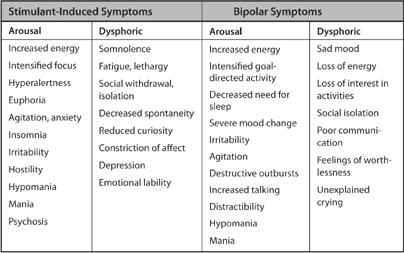
Stimulants used to treat ADHD induce both arousal and dysphoric symptoms. These drug-induced symptoms overlap to a remarkable degree the symptoms said to be characteristic of juvenile bipolar disorder.
In short, every child on a stimulant turns a bit bipolar, and the risk that a child diagnosed with ADHD will move on to a bipolar diagnosis after being treated with a stimulant has even been quantified. Joseph Biederman and his colleagues at Massachusetts General Hospital reported in 1996 that 15 of 140 children (11 percent) diagnosed with ADHD developed bipolar symptoms—which were not present at initial diagnosis—within four years.76 This gives us our first mathematical equation for solving the juvenile bipolar epidemic: If a society prescribes stimulants to 3.5 million children and adolescents, as is the case in the United States today, it should expect that this practice will create 400,000 bipolar youth. As Time noted, most children with bipolar illness are diagnosed with a different psychiatric disorder first, with “ADHD the likeliest first call.”
Now let’s look at the SSRIs.
It is well established that antidepressants can induce manic episodes in adults, and naturally they have this effect on children, too. As early as 1992, when the prescribing of SSRIs to children was just getting started, University of Pittsburgh researchers reported that 23 percent of boys eight to nineteen years old treated with Prozac developed mania or maniclike symptoms, and another 19 percent developed “drug-induced” hostility.77 In Eli Lilly’s first study of Prozac for pediatric depression, 6 percent of the children treated with the drug suffered a manic episode; none in the placebo group did.78 Luvox, meanwhile, was reported to cause a 4 percent rate of mania in children under 18.79 In 2004, Yale University researchers assessed this risk of antidepressant-induced mania in young and old, and they found that it is highest in those under thirteen years of age.80
The incidence rates cited above are from short-term trials; the risk rises when children and teenagers stay on antidepressants for extended periods. In 1995, Harvard psychiatrists determined that 25 percent of children and adolescents diagnosed with depression convert to bipolar illness within two to four years. “Antidepressant treatment may well induce switching into mania, rapid cycling or affective instability in the young, as it almost certainly does in adults,” they explained.81 Washington University’s Barbara Geller extended the follow-up period to ten years, and in her study, nearly half of prepubertal children treated for depression ended up bipolar.82 These findings give us our second mathematical equation for solving the bipolar epidemic: If 2 million children and adolescents are treated with SSRIs for depression, this practice will create 500,000 to 1 million bipolar youth.
We now have numbers that tell of an iatrogenic epidemic: 400,000 bipolar children arriving via the ADHD doorway, and at least another half million through the antidepressant doorway. There is also a way that we can double-check that conclusion: When investigators survey juvenile bipolar patients, do they find that most traveled down one of those two iatrogenic paths?
Here are the results. In a 2003 study of seventy-nine juvenile bipolar patients, University of Louisville psychiatrist Rif El-Mallakh determined that forty-nine (62 percent) had been treated with a stimulant or an antidepressant prior to their becoming manic.83 That same year, Papolos reported that 83 percent of the 195 bipolar children he studied had been diagnosed with some other psychiatric illness first, and that two-thirds had been exposed to an antidepressant.84 Finally, Gianni Faedda found that 84 percent of the children treated for bipolar illness at the Luci Bini Mood Disorders Clinic in New York City between 1998 and 2000 had been previously exposed to psychiatric drugs. “Strikingly, in fewer than 10% [of the cases] was diagnosis of bipolar disorder considered initially,” Faedda wrote.85
Not surprisingly, parents bear witness to this iatrogenic course. In May 1999, Martha Hellander, executive director of the Child and Adolescent Bipolar Foundation, and Tomie Burke, founder of Parents of Bipolar Children, jointly wrote this letter to the Journal of the Academy of Child and Adolescent Psychiatry:
Most of our children initially received the ADHD diagnosis, were given stimulants and or antidepressants, and either did not respond or suffered symptoms of mania such as rages, insomnia, agitation, pressured speech, and the like. In lay language, parents call this “bouncing off the wall.” First hospitalization occurred often among our children during manic or mixed states (including suicidal gestures and attempts) triggered or exacerbated by treatment with stimulants, tricyclics, or serotonin reuptake inhibitors.86
With so many teenagers prescribed SSRIs, an epidemic of mania has erupted on college campuses as well. In a 2002 article titled “Crisis on the Campus,” Psychology Today reported that an increasing number of students, having arrived at college with an antidepressant prescription in hand, were crashing badly during the school term. “We are seeing more first episodes of mania every year,” said Morton Silverman, head of counseling services at the University of Chicago. “It’s very disruptive. It generally means hospitalization for the student.” The magazine was even able to identify a precise date when this mania epidemic began to emerge: 1988.87 Readers need only remember when Prozac came to market to connect the dots.
One final bit of evidence comes from the Netherlands. In 2001, Dutch psychiatrists reported only thirty-nine cases of pediatric bipolar illness in their country. Dutch investigator Catrien Reichart then studied the offspring of parents with bipolar disorder in both the United States and the Netherlands, and determined that the Americans were ten times more to likely to exhibit bipolar symptoms before age twenty than the Dutch children. The likely reason for this difference, Reichart concluded, is that “the prescription of antidepressants and stimulants to children in the U.S. is much higher.”88
AN EPIDEMIC UNFOLDS
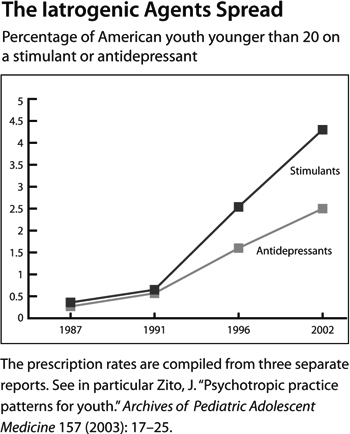
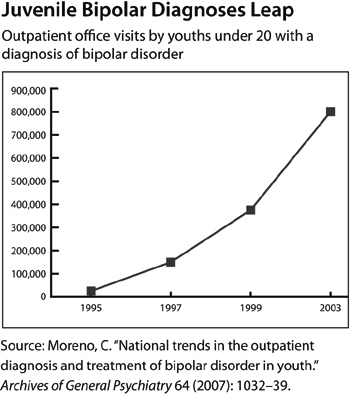
All of this tells of an epidemic that is mostly iatrogenic in kind. Fifty years ago, physicians virtually never saw manic-depressive illness in preteens, and they rarely diagnosed it in adolescents. Then pediatricians and psychiatrists began prescribing Ritalin to hyperactive children, and suddenly the medical journals began running case reports of manic children. This problem grew as the prescribing of Ritalin increased, and then it exploded with the introduction of the SSRIs. Research then showed that both of these drugs trigger bipolar symptoms in children and adolescents on a regular basis. These are the two “outside agents” fueling the epidemic, and it should be remembered that they do perturb normal brain function. The manic children showing up at hospital emergency rooms have dopaminergic and serotonergic pathways that have been altered by the drugs and are now functioning in an “abnormal” manner. There is a step-by-step logic that explains this epidemic.
In addition, there are at least three more pathways to a diagnosis of juvenile bipolar illness. As El-Mallakh, Papolos, and Faedda all found, there are some children and adolescents so diagnosed who have no prior exposure to antidepressants or stimulants, and it’s fairly easy to see where the majority of those patients are coming from. First, Harvard psychiatrist Joseph Biederman led the way in expanding the diagnostic boundaries in the 1990s, proposing that extreme “irritability” could be seen as evidence of bipolar illness. The child no longer needs to have gone manic to be diagnosed as bipolar. Second, foster children in many states are now regularly given a bipolar diagnosis, their anger apparently not the result of having been born into a dysfunctional family, but rather due to a biological illness. Finally, teenagers who get into trouble with the law are now regularly funneled into psychiatric roles. Many states have set up “mental health courts” that send them off to hospitals and psychiatric shelters rather than to correctional facilities, and these youth are adding to the bipolar numbers as well.
The Fate That Awaits
As we saw earlier in this book, outcomes for adult bipolar patients have deteriorated dramatically in the past forty years, and the worst outcomes are seen in those with “mixed state” and “rapid cycling” symptoms. That clinical course in adults was virtually never seen prior to the psychopharmacology era, but rather it was one associated with exposure to antidepressants, and, tragically, those are the very symptoms that afflict the overwhelming majority of juvenile bipolar patients. They exhibit symptoms “similar to the clinical picture reported for severely ill, treatment-resistant adults,” explained Barbara Geller in 1997.89
Thus, this is not just a story of children turned bipolar; it’s a story of children afflicted with a particularly severe form of it. Papolos found that 87 percent of his 195 juvenile bipolar patients suffered from “ultra, ultra rapid cycling,” which meant that they were constantly switching between manic and depressed mood states.90 Similarly, Faedda determined that 66 percent of the juvenile bipolar patients treated at the Luci Bini Mood Disorders Clinic were “ultra, ultra rapid-cyclers,” and another 19 percent suffered from rapid cycling only a little bit less extreme. “In contrast to a biphasic, episodic and relatively slow cycling course in some adults with bipolar disorder, pediatric forms usually involve mixed mood states and a sub-chronic, unstable, and unremitting course,” Faedda wrote.91
Outcome studies have found that the long-term prognosis for these children is grim. The NIMH, as part of its STEP-BD study, charted the outcomes of 542 children and adolescent bipolar patients, and it reported that pre-adult onset “was associated with greater rates of comorbid anxiety disorders and substance abuse, more recurrences, shorter periods of euthymia [normal mood], and greater likelihood of suicide attempts and violence.”92 Boris Birmaher, at the University of Pittsburgh, determined that “early onset” bipolar patients are symptomatic about 60 percent of the time, and that, on average, they shift “polarity”—from depression to mania or vice versa—an astonishing sixteen times a year. The prepubertal patients were “two times less likely than those with postpubertal onset bipolar to recover,” he said, and it was “expected that children will be poor responders to treatment when they become adults.”93 DelBello followed a group of adolescents hospitalized for a first bipolar episode and concluded that only 41 percent functionally recovered within a year.94 This impairment, Birmaher determined, then worsens after the first year. “Functional impairment in bipolar appears to increase during adolescence regardless of age of onset.”95
Youth diagnosed with bipolar illness are typically put on drug cocktails that include an atypical antipsychotic and a mood stabilizer. This means that they now have multiple neurotransmitter pathways in their brains that are being mucked up, and naturally, this treatment does not lead them back to emotional and physical health. In 2002, DelBello reported that lithium, antidepressants, and mood stabilizers all failed to help bipolar youth fare better at the end of two years. Those who were treated with a neuroleptic, she added, “were significantly less likely to recover than those who did not receive a neuroleptic.”96 Six years later, Hayes, Inc., a Pennsylvania consulting firm that conducts “unbiased” assessments of drugs for health-care providers, concluded that there was no good scientific evidence that the mood stabilizers and atypical antipsychotics prescribed for pediatric bipolar were either safe or effective. “Our findings indicate that at this time, anticonvulsants and atypical antipsychotics cannot be recommended for children diagnosed with bipolar disorders,” said Elisabeth Houtsmuller, senior analyst for Hayes.97 These reports attest to a lack of drug efficacy, but as Houtsmuller noted, the side effects from these “pharmacological treatments” are “alarming.” In particular, atypical antipsychotics may cause metabolic dysfunction, hormonal abnormalities, diabetes, obesity, emotional blunting, and tardive dyskinesia.* Eventually, the drugs will induce cognitive decline, and the child who stays on the cocktails into adulthood can expect to die early as well.
That is the long-term course of this iatrogenic illness: A child who may be hyperactive or depressed is treated with a drug that triggers a manic episode or some degree of emotional instability, and then the child is put on a drug cocktail that leads to a lifetime of disability.
The Disability Numbers
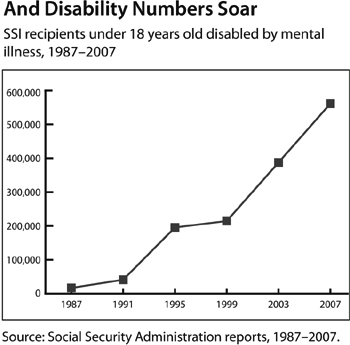
There are no good studies yet on the percentage of “early onset” bipolar patients who, when they reach adulthood, end up on the SSI and SSDI disability rolls. However, the astonishing jump in the number of “severely mentally ill” children receiving SSI speaks volumes about the havoc that is being wreaked. There were 16,200 psychiatrically disabled youth under eighteen years old on the SSI rolls in 1987, and they comprised less than 6 percent of the total number of disabled children. Twenty years later, there were 561,569 disabled mentally ill children on the SSI rolls, and they comprised 50 percent of the total. This epidemic is even hitting preschool children. The prescribing of psychotropic drugs to two-year-olds and three-year-olds began to become more commonplace about a decade ago, and sure enough, the number of severely mentally ill children under six years of age receiving SSI has tripled since then, rising from 22,453 in 2000 to 65,928 in 2007.98
Moreover, the SSI numbers only begin to hint at the scope of the harm being done. Everywhere there is evidence of a worsening of the mental health of children and teenagers. From 1995 to 1999, psychiatric-related emergency room visits by children increased 59 percent.99 The deteriorating mental health of the nation’s children, declared U.S. surgeon general David Satcher in 2001, constituted “a health crisis.”100 Next, colleges were suddenly wondering why so many of their students were suffering manic episodes or behaving in disturbed ways; a 2007 survey discovered that one in six college students had deliberately “cut or burned self” in the prior year.101 All of this led the U.S. Government Accountability Office to investigate what was going on, and it reported in 2008 that one in every fifteen young adults, eighteen to twenty-six years old, is now “seriously mentally ill.” There are 680,000 in that age group with bipolar disorder and another 800,000 ill with major depression, and, the GAO noted, this was in fact an undercount of the problem, as it didn’t include young adults who were homeless, incarcerated, or institutionalized. All of these youth are “functionally impaired” to some degree, the GAO said.102
The Epidemic Hits America’s Children
SSI Recipients Under 18 Years Old Disabled by Mental Illness, 1987–2007
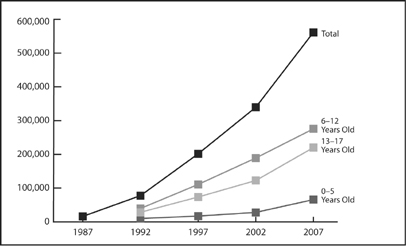
Prior to 1992, the government’s SSI reports did not break down children recipients into subgroups by age. Source: Social Security Administration reports, 1987–2007.
That is where we stand as a nation today. Twenty years ago, our society began regularly prescribing psychiatric drugs to children and adolescents, and now one out of every fifteen Americans enters adulthood with a “serious mental illness.” That is proof of the most tragic sort that our drug-based paradigm of care is doing a great deal more harm than good. The medicating of children and youth became commonplace only a short time ago, and already it has put millions onto a path of lifelong illness.
* The fact that cocaine is so short-acting is why it is more addictive than methylphenidate, for as soon as it leaves the brain, the addict may want to experience again the “rush” that comes when dopaminergic pathways are first sent into a hyperactive state.
* In a 2008 report published by the European College of Neuropsychopharmacology, Spanish investigators observed that “children and adolescents seem to have a higher risk than adults for experiencing adverse events such as extrapyramidal symptoms [movement disorders], prolactin elevation [high hormone levels], sedation, weight gain, and metabolic effects when taking antipsychotics.” Investigators have also reported that these risks may be higher for girls than for boys.