
FIVE

With regional epidemics repeatedly flaring up until the end of the fifteenth century, the plague continued to create labour shortages. Those who were spared found themselves in a better position than in earlier centuries, and in consequence their meals increased in quantity and quality. In addition to the two main meals, an early lunch in the middle of the day and an evening meal at dusk, up to three in-between meals such as a morning soup, bread at night and a nightcap were commonly expected. Judging from their contract, in 1465 carpenters in Hamburg were served rye bread, butter, gruel, eggs, beef, herring, cod and cheese as well as light beer. Food purchased for workers during the grape harvest in Heilbronn in Württemberg in 1483 included white bread, bread made from mixed grains, barley, peas, ground oats, millet (for porridge), salt, lard, drawn butter, boiling meat, roasting meat, cheese, milk, cabbage, oat kernels, turnips, eggs, semolina, fish, stockfish, herring, onions, apples, cooking pears and spices. Besides variety, arguably the most striking difference between those two lists is in the bread: rye in the north, white (that is, wheaten) and mixed in the south. The butter adds to the contrast. Botterbroth, sliced dark sourdough rye bread with firm salted butter, could almost fly as a symbolic flag over the north of late medieval Germany, whereas in the south even labourers now expected their bread to be somewhat lighter and made from wheat. Much like Mediterranean folks today, they ate it as it was, using soft drawn butter and lard for cooking.
At the time geographical and social differences were reinforced through trade, the dominant economic force of the period. Obviously merchants traded in all kinds of things, but the German food trade in particular reached previously unseen dimensions. It highlighted the very different priorities in the north and the south, reinforcing existing cultural networks, and was reflected on merchants’ plates. Patrician families like the Fuggers and Welsers in Augsburg, who controlled the German trade with the south, not only often rose to the ranks of the aristocracy through their commercial acumen but emulated the Italian nobles’ refined food culture. No rye bread for them, and if there wasn’t enough olive oil, at least the local butter had to be soft and oil-like. Expensive spices and complex preparations (much in the style of Leone’s Chicken à la Rheingau) were essential to demonstrate their achievements and elevated status.

Butter production was women’s work. Two different technologies are depicted: an upright churn for smaller quantities and a larger horizontal one.
In contrast the northern Hanseatic League was a much more egalitarian affair. Operating on the communal level of town and city councils, it was in the hands of a much greater number of less wealthy people. In Hamburg or Lübeck, possibly also due to the still intensely agrarian structure of the whole region, dishes did not become significantly more refined as you climbed the social ladder, but quantities certainly grew. Meat consumption in northern towns and cities went up considerably on feast days, just as herring and stockfish became common foodstuffs on fast days. For everyday food a stew of vegetables and salted meat was commonly prepared in a big pot, with salt and pepper used in abundance. The rapidly emerging middle-class Bürger households demonstrated their growing wealth with cooking utensils and serving dishes in bronze, pewter and silver, occasionally even gold. Grapen, three-legged cast iron or bronze roasting dishes similar to Dutch ovens, were a regular feature in their kitchens and gave rise to the Grapenbraten, a braised beef dish popular up to the present day. The dark sourdough rye bread which was northeners’ staple foodstuff was baked in dome-shaped ovens and had been greatly improved by advances in milling techniques, so that the loaves could be cut in slices. It ranged from heavy wholemeal which included 80 per cent of the grain to lighter variants called Schönbrot and Schönroggen (literally nice bread and nice rye). The butter they put on it, stored and traded in wooden barrels, was salted, so that it remained fresh and firm for quite some time. On special feast days, particularly during the days before Lent, the bakers made Heisswecken, white buns from wheat flour, yeast and sometimes milk. Whereas in the south all bread could include some spice like coriander, aniseed or caraway, up in the north only these feast day treats were flavoured with cinnamon and sweetened with currants. Beer was the drink of choice in the north, undoubtedly considered more thirst-quenching in combination with a rather salty diet than wine, which was reserved for special occasions. Wine and beer were served in pewter tankards, stoneware beakers from the Rhineland and, on more exclusive occasions, silver beakers or drinking glasses.1
The Hanseatic League (commonly known as the Hanse) was an international traders’ alliance active from the twelfth until the seventeenth century that evolved into the leading socio-economic influence in the north. At its peak, the Hanse comprised almost 300 towns and cities from the Zuidersee and Yssel in the west and the Lower Rhine in the south to Polish Krakau and Silesian Breslau in the east. It catered to a growing urban population that was no longer self-reliant or supplied by their hinterlands, as well as providing goods to less productive regions. Although the Hanse also dealt in more expensive foodstuffs and spices (along with other commodities), its most important food wares were salt, herring and stockfish, at that time all basic necessities of life. The Hansekogge, a wooden cog with an angled prow and stern, a flat bottom and high sides, was developed in the twelfth or thirteenth century and was well suited to carrying large loads with a comparatively small crew. The bill of loading for a shipment to Antwerp in 1431 listed beer, wine, spices, almonds, rice, oil, butter, honey, cheese, stockfish, bacon, grain (wheat, rye, barley and oats), vetches, peas, beans, flour, hops, gale (for grut beer), herring and salt. Other lists include figs, dates and raisins, millet, Bückling (smoked herring), eel, salmon, sturgeon and meat.
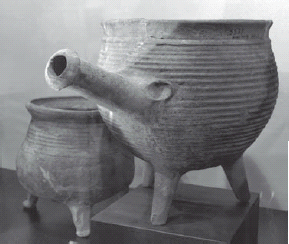
Grapen (three-legged pots), 1200–1400, clay. These pots were put directly into the embers and lifted with a stick fitting into the hollow handle.
The Hanse’s lingua franca was middle Low German, and its first interest was to guarantee the safety of its seafaring members as well as maintaining its own privileged market position and treaty rights. It repeatedly used economic measures such as embargos to achieve its ambitious political goals. The Hanse had originated in the rather loose structures and alliances of German merchants abroad in places like London or Wisby, and had a decentralized structure in spite of Lübeck’s and Hamburg’s predominance – in fact, confusingly, smaller alliances of towns and/or merchants at the time were also called Hanse. Major decisions were taken during the Hansetage, regular assemblies that took place in Lübeck.
The importance of Lübeck for members of the Hanse was due in part to the fact that unless one wanted to undertake the perilous and long journey from the Baltic to the North Sea around the Skagerak, Lübeck was an unavoidable stopover where all goods had to be unloaded and carried by land across the peninsula. Eventually this was one of the reasons for the building of Europe’s first channel between two watershed systems, a channel linking the Trave with the Elbe (and thus the Baltic with the North Sea), finished in 1398 and avoiding the long detour by sea as well as the slow land route. The Hanse’s most important trade commodity was salt, mostly from the Lüneburg saltworks. During the thirteenth century, production in Lüneburg more than tripled, reaching its peak of more than 20,000 tons per year at the end of the sixteenth century. More than half of the production was marketed through Lübeck as Travesalz. Cheaper salt from the French, Spanish and Portuguese Atlantic coast was imported into the Baltic regions from the late fourteenth century onwards and was commonly called Baiensalz. It was said to be less pure and less efficient for preserving than the Travesalz, which was produced from a 25 per cent brine solution. Preserving was the main reason for the high demand, as it turned highly perishable foodstuffs such as fish (most importantly herring), meat and butter into widely traded commodities. During the late Middle Ages, the average consumption per person in Germany has been calculated as between 15 and 16 kg of salt per year (as compared to around 3.65–5 kg today). From the thirteenth century onwards butter generally increased in importance, with Dutch, Friesian, Danish, Swedish and Norwegian butter traded in Westphalia, Saxony and the regions up the Rhine to Cologne.2
A culinary place in time: the Schiffergesellschaft in Lübeck
The Schiffergesellschaft in Lübeck was founded in 1401 as a fraternity of seafaring men and their families (www.schiffergesellschaft.com). In 1535 it combined with the fishermen’s guild and bought an imposing redbrick house in early Renaissance style opposite the Jakobi church, one of the stops on the pilgrimage from northern Europe to Santiago de Compostela. Spared from destruction during the Second World War, today it houses a restaurant where the Hanse spirit lives on, reinforced through memorabilia. Obviously the thing to eat here is marinated herring!

Interior of the Schiffergesellschaft restaurant in Lübeck. Note the room’s church-like character.
Lübeck goes back to a former Slavic settlement and initially had an open air market on the riverbank, similar to the one in London, documented in 898 as ripa emtoralis.3 Riverbank markets were common even before urbanization in ancient cultures north of the Alps, and they provide an impressive example as to how food trade shaped urban landscapes. They have been traced archeologically to as early as 3,000 BC, when peasants from east of the Elbe exchanged goods with hunters living near Hamburg on small islands. The markets’ appearance changed over time, but their fundamental structure remained the same: waterways were used for transport and the seller didn’t want to leave his wares alone but preferred to cook and live in tents on land, as near as possible to potential customers and/or where interesting goods such as ore, salt or fish were on offer. For their part, the customers erected their tents next to those of the sellers.
In the early Middle Ages the latter had become merchants and built houses at the riverbank market to live there permanently, with landing places for potential trading partners and, at more important markets such as the one in Lübeck, even a church for the foreigners, documented as forensis ecclesia in 1163. For security reasons the fortifications on the towns’ walls included the merchants’ houses, whereas the public part of the market was outside, directly on the riverbank. Since this was rather inconvenient for the town people’s shopping, the diverse market functions gradually separated, with daily supplies moving inside towns and the riverbank reserved for long-distance trade. The one exception was fish, which continued to be sold directly from fishing boats.
Due to the Hanse’s ‘corporate’ structure, the merchants travelling inland from the lower Rhineland and Westphalia no longer waited at the riverbank for their seafaring colleagues to unload their wares, but travelled with them to inspect the goods in situ or placed orders for certain goods in advance, thus linking seafaring trade to inland demand. The riverbank markets subsequently lost their importance and came to be used only for the technicalities of loading, unloading and weighing, as well as the collection of tolls and taxes. Transactions, increasingly recorded in writing, moved into the merchants’ houses and Kontore or offices. Visiting merchants stayed at their colleagues’ homes, leaving only a guard on board ship, while goods already transferred to shore were stored in cellars or under the roof. As the volume of trade increased, ships became larger, so that small ports were abandoned in favour of larger ones, leaving only the fish markets at the previous location.
After salt, herring was the second most important commodity controlled by the Hanse. Herring had been widely caught all around the Baltic prior to the rise of the league, but in order to be traded over long distances to inland markets, the catch had to be treated with salt, a commodity controlled by the Hanse. To facilitate the process, during the fishing season from mid-July until early October, German merchants established their own salting and packing stations on the coast of Danish Scania (present-day southern Sweden) where the Danish fishing fleet landed their catch. This arrangement was later expanded to Norway. Annual exports of salted herring, the staple food of fast days, were estimated at 40,000 tons, distributed throughout Germany and beyond via the fairs held at Frankfurt and Cologne. From the early fifteenth century Dutch herring from the North Sea gained in commercial importance owing to improvements in fishing methods resulting from larger economic structures and more advanced technology. Since the Dutch salted and packed the partly gutted fish on board ship, the preservation process was speeded up. However, by mid-century the herring shoals began to move north, favouring the Hanse trade once more. The first of the young fat herring, Matjeshering, were caught and offered for sale either lightly salted or dried and packed in baskets on straw. A Cologne decree from 1467 prohibited any herring catch before 31 May, identifying the more mature fish caught from 25 July onwards as of more reliable quality. The decree also stipulated that immature and mature herring were not to be mixed in the barrels, as the more tender young fish disintegrated in the heavier salt brine required for the latter. Barrels began to be used in the fourteenth century, with those made from oak considered the best, and were marked with a series of brands designating quality and origin. The fish had to be salted at least ten days prior to being packed and dispatched.4

Herring prepared as Brathering (on the right, fried and marinated in vinegar) and Matjes (lightly salted). The beer glass has the typical shape used for wheat beer from Berlin, although it looks too dark for that. From the popular gdr cookbook Kochen (Leipzig, 1983).
The Hanse cities first concentrated on the exchange of local wares mostly on the Baltic sea, but by and by extended their trade abroad, establishing Kontore, or offices, in major ports such as Bruges, London, Bergen and Novgorod. These offices were small enclaves of Hanseatic power within the respective cities, rather like modern embassies but with a focus on trade. The Bruges office, for instance, established in 1323, was the northern European trade centre for textiles, grain, fruit, wine, spices and many other commodities from the Baltic, Atlantic and Mediterranean. In due course the Hanse gained sufficient collective bargaining power to allow them to negotiate tax concessions and trading monopolies.
By the fifteenth century Hanse merchants were powerful enough to drive the English fishing fleet out of their cod fishing grounds off the coast of Norway by gaining exclusive export rights from the authorities in Bergen. The English fishing fleet then moved north to Iceland, only to be squeezed out again by the Hanse, so that they opened up a route to the coasts of Labrador and Newfoundland. Similar trade wars included Hanse blockades against Holland and Flanders, which deprived these countries of grain, beer and other foodstuffs.5
Stockfish production in northern Norway seems to have started with the Vikings, with the cod fishing season lasting from February until April. Whereas salted herring was considered a very ordinary food, stockfish, air-dried cod, was more highly esteemed and expensive. As Norway in particular depended heavily on imported food, in 1316 the Norwegian king decreed that nobody was allowed to export stockfish or butter without importing so-called ‘heavy goods’ – essentials such as grain, flour, malt and beer. Twice a year the fishermen’s catch was carried down by Norwegian merchants from the Lofoten to Bergen where the Hanse merchants waited, prohibited by their agreements from sailing further north. In the fifteenth century the direct trade in stockfish with Iceland, previously exclusive to the Normans, became a rival for the Bergen monopoly. In 1530 Icelandic stockfish was documented in Cologne, though it was regarded as slightly inferior in quality. The best and most expensive was made from ling, followed by cod. At the end of the sixteenth century cod and ling were also salted in barrels and traded as Laberdan, supposedly a Basque method.
In spite of all their egalitarian northern modesty, the good Hanse merchants certainly could afford to and did indulge in some more exclusive culinary luxuries. At the end of long festive meals like the Bremen Schafferrmahlzeit, a ceremonious fundraising ritual in honour of captains and trade in general that has been held every February since 1545 (and up to the present day does not allow women to join the long, laden tables), the bread and butter would be supplemented by hard cheese. Renneted and therefore storable, the wheels came from Cheshire, Flanders, Frisia, southern France and northern Italy as well as Swiss Emmenthal and Gruyère, and were traded in Antwerp, Cologne, Strasbourg and Basel.
Even more exclusive was marzipan. Due to the Hanse trading activities, almonds were by now widely available to those who could afford them, and the first written record of marzipan in Germany is to be found in the rules of a Lübeck guild in 1530. Long a staple in Arab countries and thought to be highly nourishing, it was first made by apothecaries (cane sugar being another Arab introduction that began as medicine and was initially very expensive) and given to wealthy women in childbirth. When Thomas Aquinas confirmed the suitability of sugar-covered spices for fast days, the former medicine quickly became an expensive sweet offered to kings, the apothecaries replaced by confectioners. The thirteenth-century Catalan physician Arnaldus de Vilanova mentioned mazapan; it became mazapán in Toledo, massapan and massepain in France, the calissons of Provence and marzapane in Italy. Rose- or orange-flower water, candied fruit or eggs were added; the mixture was roasted in copper kettles over the fire or shaped and baked in the oven, then covered with chocolate or sugar icing. Along with other sugar confections, it would grace the tables of German nobles from the sixteenth century on and become an absolute must for demonstrating high social status.
In Germany two distinctive schools of marzipan developed, both originating on the northern coast. As a general rule today it is made from almonds and sugar at a ratio of two to one, with other aromatic ingredients like rosewater added. The precise amounts are kept secret by most producers. Lübecker marzipan is generally covered in dark chocolate, whereas Königsberger marzipan is traditionally browned in the oven. Both cities started to establish themselves as marzipan strongholds from the early nineteenth century on. The most important German marzipan producer today is Niederegger, a family-run business in Lübeck with over 500 employees where the paste is shaped into almost everything from traditional loaves, eggs and Easter bunnies to all kinds of fruit and vegetables. In Königsberg (present-day Russian Kaliningrad) things started very similarly, with young dynamic confectioners establishing marzipan factories, although for historical reasons these specialists are now spread all over Germany. Good-quality Königsberg-style marzipan tastes quite different from Lübeck marzipan: it is somewhat juicier and less sweet, as demonstrated by the small artisan company Paul Wald in Berlin. Frankfurter Bethmännchen and Brenten as well as Mannheimer Dreck are local marzipan specialities, whereas during the Christmas season marzipan takes the shape of Marzipankartoffeln, small balls coated in cocoa powder and resembling potatoes.

Marzipan modelled into fruit at the Lübeck company Niederegger, mid-20th century.
The Hanse era came to an end with the rise of strong nation states, particularly England and Holland, whose rulers weren’t particularly keen on an independent maritime confederacy operating within their accepted spheres of influence (a situation exacerbated by the Thirty Years War). The increase in piracy in the fifteenth century added to its undoing, although these problems had previously been overcome: during the Great Famine pirates had been active up and down the entire coast of Europe, with Gascon and Flemish raiders even preying upon anchored ships in major ports of call. The last official Hanse meeting took place in 1669, with only eight members putting in an appearance. However, to this day a number of German cities, including Lübeck, Hamburg, Bremen and Rostock, proudly call themselves Hansestädte.
Meanwhile southern German trade with Italy and beyond focused on luxury goods. Among the best known and most successful of the families involved in it were the Fuggers, descendants of a weaver from a rural background who came to the city of Augsburg in 1367. In a little over a century the Fuggers were granted their own office at the Fondaco dei Tedeschi, the German merchants’ representation in Venice. As other medieval traders had, they recognized spices’ potential as an easy way to make a great deal of money out of a commodity that was neither heavy nor bulky. The tightly woven network of political and financial interdependancies that made them one of the most powerful economic and political players in Europe was based on transactions of enormous scale. They organized the pope’s sale of indulgences, financed his Swiss guard and bankrolled imperial warfare for consecutive Habsburg rulers. (Their influence came to an end with the Reformation, when their reputation as dealers in luxury goods and financiers to both emperor and pope did them no favours.)
The entrepreneurial spirit of the Fuggers extended to financing Magellan’s circumnavigation of the globe, a highly profitable undertaking that was to strongly influence the way spices were seen and used. When from 1500 the new route to India around the Cape of Good Hope lowered transport costs, the Venetians were forced to drop their prices and increased the volume of trade in response. Pepper above all became more affordable and ostentatious spice consumption a widely shared ideal among the upwardly mobile. Overall the use of spices was still a class marker; indeed the literature of the time described the lowly peasant as having to make do with onions, garlic, herbs and mustard. But almost anybody else could at least afford some imported spices occasionally and social rank now also manifested itself in how often one used them. Lower down the social ladder they marked special events, being consumed more heavily on lean days and more often in winter than in summer.
The notion that spices were used to keep meat from putrifying or to mask its offtaste has long been disproved. Likewise a thriving trade in spices did not necessarily indicate that consumption had become globalized, as is sometimes suggested. Medieval cooks did not use just any spice with any dish; rather they had exact ideas about compositions, and in spite of the international nature of the rich man’s table at the time, regional and national preferences played an important role in their choices. Germans in that respect seem to have lagged somewhat behind the fashions. Recipes often mention spices in general terms, such as stupp, gestupp or wurcz. Pepper remained popular far longer than in neighbouring countries (although less so in the more ‘modern’ south and among aristocrats). In fourteenth-century France pepper was somewhat disparagingly thought of as appropriate for dishes involving blood and innards. In fact the thirteenth-century Catalan physician Arnaldus de Vilanova considered pepper sauce a peasants’ condiment, just like garlic. The Viandier, a French recipe collection from about the same time, doesn’t mention pepper at all while some Italian manuscripts openly declare it to be ‘old-fashioned’. In France ginger was much more popular; according to humoral theory, it was regarded as well balanced, being neither too hot nor too cold, so that a pinch could be combined with almost everything. Ginger combined with cinnamon made the ubiquitous sauce cameline. As French cuisine became ever more influential, it made the cooking of Germany (and Poland) looked increasingly démodé.
In Germany ginger was comparatively unpopular. Local herbs continued to be widely used while more ‘modern’ spices such as cinnamon, cloves and nutmeg did not increase in popularity till the end of the fifteenth century. Far longer than elsewhere in western Europe, honey was the sweetener of choice. In the fourteenth century cane sugar imports from Egypt, Sicily, Rhodes and Cyprus became more important, but it was still very expensive and used sparingly, passing gradually from the medicine cupboard to the spice chest. However, when sugar cane cultivation started on the Canary Islands and Madeira in the 1450s, prices began to fall, tumbling further when competing imports from Brazil and the Caribbean entered the market about a century later. At this point the sweet-toothed English and Italians really went for it. The Italians ostentatiously sprinkled sugar mixed with cinnamon on finished dishes, a habit familiar to modern Germans, who like sugar and cinnamon on their rice pudding – a dish that originated as an early eighteenth-century festive northern German wedding dessert, replacing the earlier millet gruel. In England saffron, sugar, ginger and to a lesser degree cinnamon were favoured. It might well be that the English appetite for sweet-savoury dishes was linked to the fact that shortly after their conquest of England the Normans became rulers of Sicily, where the same culinary preference can be found to this day. In Germany the picture is much less clear. Did pepper’s popularity result from the fact that it was the least expensive spice, or did its taste hit a particular nerve?6
Saffron, probably the most expensive of all spices, represents a rather different and special case.
Backe backe Kuchen, der Bäcker hat gerufen. Wer will guten Kuchen backen, der muss haben sieben Sachen: Eier und Schmalz, Butter und Salz, Milch und Mehl, Safran macht den Kuchen gehl.
Let’s bake, let’s bake cake, the baker has called. Who wants to have good cake, has to have seven things: eggs and lard, butter and salt, milk and flour, saffron makes the cake yellow.

Leonhart Fuchs, ‘Saffron’, in Kreutterbuch (Basel, 1543). Fuchs writes in his description: ‘Right now the German Austrian saffron that grows around the city of Vienna is more expensive than that from the Orient and anywhere else. Saffron is also grown on many other locations in our German country.’
This popular German nursery rhyme about the seven ingredients needed for a good cake is commonly said to have its origin in early nineteenth-century Thuringia and Saxony. However the first written evidence for it actually dates back to 1460 and the recipe collection of Meister Hans, court chef to a Württemberg count. His version only differs in replacing Kuchen (cake) by mus (porridge):7
Wer ein gut mus will haben das mach von sibennler sachn du must haben milich, salcz, vnd schmalcz, zugker, ayer, vnd mel saffran dar zue so wirt es gell.
Who wants to have a good sidedish should make it from seven things: you have to have milk, salt, and lard, sugar, eggs, and flour, with saffron added, thus it becomes yellow.
Mentioning saffron right at the start of his compendium made clear that his work was addressed to an elite audience – the deep orange threads were (and still are) the most expensive spice to be had. The Phoenicians, Alexander the Great and the Arabs had been responsible for spreading it from its Bronze Age origins in Crete eastward to Mesopotamia and India, and to ancient Greece and Egypt. The golden glow of saffron, possibly reinforced by egg yolks and honey, represented the most elevating, wonderful and glorious thing, be it on a modest lord’s applecake or a whole roasted peacock for the imperial table. But saffron had more to offer. It was seen as hot and dry and therefore was frequently used in the preparation of certain cold, humid fish (humorally speaking). In times of pestilence whoever could afford it sought it out as an air cleanser, burning it like incense or covering their nose with little pouches. In middle high German it is first mentioned as caferân in a pharmacopoeia written in 1150.
But how did something as exotic and valuable as saffron make it from a fifteenth-century top chef’s recipe book into a modern nursery rhyme? The answer lies in the fact that unlike all the other exotic and prestigious spices, saffron can be grown in central and western Europe. In fact from the tenth century on saffron cultivation spread from Spain to the south of France, Tuscany and the Abruzzo, and from around 1150 it was even exported from the west to the east. Today ‘German-speaking’ saffron is grown in the Swiss Alps (Mund/Valais) and in the Wachau region not far from Vienna as well as on the Austro-Hungarian border (Klingenbach/Burgenland). The surprising thing is that in spite of not coming from mystic distant places, it remained expensive and exclusive, because of its unbelievably small yields. That fact made it an attractive investment, and in the twelfth and thirteenth centuries saffron was frequently used as a security or payment, or as a bribe or reward. In Germany the main trading place for it was Nuremberg, where the city council in 1420 (some sources mention 1358) established a saffron fair. Police regulations insisted on clean and unmixed merchandise, threatening fraudsters with death by burning or by being buried alive, while getting rid of the fraudulent wares at the same time. This was directed not only at merchants but local peasants. In the southern German-speaking regions saffron cultivation developed into a rewarding additional source of income that fitted well into the rural work rhythm: after the main harvest at the end of October families joined in picking the crocus flowers and in the evening sat around the table separating the stigmas from the petals. As tedious as this task must have been, and as precious as every gram of it was, a tiny part of the crop probably went into some dish or a Sunday cake for the family, hence the nursery rhyme.8
Saffron was also on offer at the markets of Cologne, the third stronghold of the German food trade between the Botterbroth of the north and the Italianate ways of the south, and with 40,000 inhabitants the largest city of medieval Germany. Here the Romans had never really left, but rather had been successfully assimilated by the Franks. Cologne’s location predestined it for trade and in the heyday of the Hanse it was Lübeck’s only serious rival as a trading centre, frequently pursuing its own interests. Here influences and wares from the north and south met to form one amazing and intricate mix that still seemed to have one foot in the Roman traditions, so that when we read about growing imports of olive oil and the first lemons and oranges, both recorded around 1500, this seems to reinforce an existing link.
While the power of feudal lords was founded on the exploitation of the peasantry to cultivate their lands, among the urban classes specialized skills and money became the new basis for a social hierarchy. Towns and cities actively sought political independence, establishing their own town charters and offering more personal freedom and potential social mobility than in the country. Everyone – with the exception of apprentice craftsmen, day labourers, beggars and servants – was able to participate in public affairs and considered equal before the muncipal court where all urban litigation took place. The saying Stadtluft macht frei, urban air makes you free, goes back to the fact that medieval serfs were considered free after spending one year and one day in a town. The urban upper class in general consisted of patrician families involved in long-distance trade, while the middle classes were made up of merchants and craftsmen, organized in guilds whose horizontal ties replaced both larger family structures and vertical feudal ones. When in 1272 the bakers’ guild was founded in Berlin, it requested a test-baking from potential members and introduced fixed prices.
The towns as trading centres were responsible for quality control. The frequent complaints about food adulteration and fraud might well be an indication of increased expectations rather than lower standards. The food trade was highly regulated and well-policed. As we have seen for saffron, urban legal systems imposed draconian punishments ranging from confiscation and destruction of the merchandise under dispute to removal of limbs or even capital punishment for the wrongdoer.
Cologne’s importance derived not only from its size, but from the fact that the Rhine was the most important European north–south trade route, linking Italy and Upper Germany with Holland and England. This is underlined by the three large trade fairs established there by the eleventh century. Stapelrecht, a privilege granted by the archbishop in 1259, required that all merchandise passing through the city had to be locally inspected and offered for sale for three days. This made for an extreme diversity of wares of the highest quality, which greatly contributed to the economic growth of Cologne, allowing it to become a feeder market for smaller towns in the area and establishing trade links reaching from the Iberian peninsula to the Danube regions and from the Baltic and Silesia to Rome.
Besides being known for its textiles, metalworks, leather and furs, the city dominated the food and wine trade, specializing above all in the exchange of wine from the Rhine valley upstream from the city for fish from the northern coasts. Retail and wholesale soon developed into separate activities. On the one hand, the city itself had to be supplied with fish; on the other, Cologne acted as an agent for the distribution of the catch to southern Germany. Trade in perishable merchandise was highly regulated in order to guarantee fair pricing and the transference of the wares in palatable condition. This demanded expert supervision: in 1421 Cologne is recorded as complaining to Lübeck about small herring barrels and asking for a correct standard measure to be introduced. The bulk of the city’s fish trade was with Holland. Merchants frequently went to the coast to buy herrings, but also to southern German towns such as Nuremberg, Speyer and Strasbourg to sell them. They often had servants acting on their behalf, besides dealing with middlemen who acted as buyers for several clients, just as Wirte, hosts, did for the sellers. The latter housed their visiting trading partners when they were in town, but were not allowed to accomodate merchants from the north and south simultaneously, since guests were not allowed to trade directly. The overall tendency was to simplify and standardize in order to speed up the trading process and reduce costs, then as now the largest possible profit margin being the ultimate goal.
Besides salted herrings and stockfish and coastal fish like plaice, haddock, sturgeon, ray and smelt, there were freshwater fish from the Rhine, including salmon, pike and carp. Most were salted in an attempt to maintain the delicate balance between acceptable taste and rapid rotting. Transport was primarily on the Rhine, but could be delayed by adverse winds or towpaths that were in bad condition. Occasionally floods forced goods onto the much slower roads. Haulage was in the hands of former peasants who offered their services to merchants, essentially doing the same job they had done for their feudal lords. Once they made it to Cologne, ships carrying fish docked at the harbour crane opposite the fishhall. Built in the 1420s, facilities here included a public scale and storage rooms wholesale merchants could rent. The retail sale of fresh fish was in the hands of the Fischmenger, or fishmongers (while the word is the same in both languages, only the English version survives). Among the sellers were fishermen themselves, selling their catch from the Rhine or the city’s moat to the local market. Of the highly esteemed ‘green’ or fresh salmon, a proportion also went to non-local buyers, although the allocation was limited by the town council in order to guarantee adequate supplies for Cologne’s citizens on lean days. Prices for fresh fish were usually fixed by the town council, and when in 1396 the fishmongers organized themselves into a political group the town council only permitted them to form a fraternity, as opposed to a more economically independent guild, in an effort to retain direct control (as with the bakers and butchers) of a vital foodstuff.
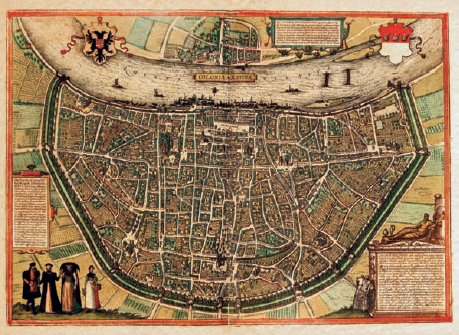
Map of Cologne, 1575.
The fishmarket’s activities are documented from the twelfth century onwards, with separate, officially regulated locations allotted to the sellers of fresh, dried, smoked and salted fish, and Bückling, dried or smoked herring, with the highly esteemed salmon given a separate location. It was mostly offered fresh from the river from as far down as Holland and transported in watercages attached to ships. The fish were slaughtered at the point of sale, cut in eight pieces and sold as Krimpsalm, freshly killed fish, which was considered a delicacy and favoured over ‘dead’ fish whose muscles had already been allowed to relax. Distinctions were also made between summer or autumn salmon and the darker, meatier winter salmon. In addition salted salmon in barrels (roughly corresponding to lox) was on offer. From the beginning of the sixteenth century onwards salmon that had previously been salted was also smoked, though this was a significantly more expensive preservation method.
Cologne also displayed significant muscle in the spice trade, as witnessed in 1335 when the merchants of Venice, Lombardy and Nuremberg prohibited retail selling to Cologne citizens. Ginger, pepper and cinnamon had to be sold in quantities over 50 lb, saffron not less than 3 lb; the only exceptions were even rarer spices such as cinnamon buds and nutmeg, on which no minimum quantities were imposed. Increased volume of sales from 1390 onwards led to the imposition of octroi, a tax on consumption, whereas in earlier times the spice trade was only indirectly taxed through high weighing costs. Octroi payments provide an indication of the diversity of spices traded, offering detailed information about the amounts of each spice and how many merchants were involved in each transaction. Throughout the mid-fifteenth century the highest number of merchants was involved in the ginger trade. Ginger was sold as dried whole roots as well as the (far rarer) fresh or ‘green’ ginger; in addition to this large quantities of cheaper varieties known as Mackin/ maeckijn/ metkin and galangal were traded, reaching a total of 4.25 tons per year, though exact quantities are difficult to calculate due to diverse units of measurement such as bags, sacks, bales and so on. About 6.5 tons a year of pepper was sold, including aromatic long pepper and Pfeffertuch, pepper cloth, a rough muslin soaked with pepper used to flavour doughs, pottages and broths.
Sugar was sold in refined form as loaves, light molasses, jaggery and rock candy. At the end of the fourteenth century refined sugar was still more expensive than either ginger or pepper, with a pound of sugarloaf worth more than 16 litres of honey. In spite of this the quantity of sugar sold steadily rose throughout the fifteenth century and by the 1450s, with some of Cologne’s merchants themselves commercially involved in refineries on the sugar island of Palma, sugar prices had fallen below those of ginger and pepper.
Other spices traded in Cologne included saffron, nutmeg, cloves, grains of paradise (occasionally misidentified as cardamom), coriander and almonds. Caraway seeds mostly came from southern Europe. Onion and garlic seeds (and later turnip seeds) were grown for use as spices in the Rheingau, around Worms, Speyer and Strasbourg, with Cologne supplying most of northwest Europe. Aniseed and bay leaf were needed for flavouring grut ale and were traded until around 1450, when they were widely replaced by hops. Liquorice was imported from Italy, Spain, southern France and southern Russia, and pepper-flour (possibly mustard powder, serving as a cheap pepper substitute) began to gain popularity.
After 1470 the Cologne spice trade was mostly run by local merchants, of whom a small circle specialized in the southern European trade, buying oriental goods directly in Mediterranean ports including Venice. They were involved in the risky business of shipping goods round the Iberian peninsula and their need for bank and insurance services furthered the evolution of both. The small circle of individuals and families who made up Cologne’s political, social and economic elite consisted of people like the wealthy merchant Hermann von Goch. The expenses of this financier and businessman’s extended household reveal a lot about prevailing food habits.
Over the period from January 1391 to October 1394 Hermann von Goch’s Cologne household comprised between two and three dozen people, including the family’s nine children and several grandchildren, staff and guests. Food purchases were undoubtedly supplemented by meat, dairy products and vegetables and fruit, as well as grain and beer from Goch’s own garden and estates. Nevertheless, the cost of food and beverages was by far the highest of all household expenditures, slightly more than half of the total. The same amount was spent on meat as on fish, and only one-fifth of these sums were spent on bread, in spite of the fact that this was almost exclusively made from wheat, the most expensive of all grains.
The Goch kitchen was run by a cook, an undercook and a young apprentice, with the main meal served at midday. Leftovers following special feast days or banquets were put to good use. The kitchen was well equipped, judging from the expenses listing all kinds of earthenware pots, jars and jugs, along with barrels, spoons, knives and numerous pewter dishes. Food was bought fresh almost every day, including Sundays. Besides bread, the baker also provided placentae – cakes – and various kinds of pastries for special occasions, and was paid to bake the pies prepared in the Goch kitchen. Beef featured most prominently among household expenses for meat, with supplies bought throughout the whole year, anticipating what was to become the general trend in the fifteenth century. One-quarter of the family’s meat expenditure was devoted to chickens and the capons reserved for feast days. Fish supplies varied and were clearly seen as much more than just a replacement for meat on lean days. Stockfish played a very minor role, while herring made up the bulk and was bought by the barrel, each of which contained approximately 1,000 fish and fed the household for just under two weeks during Lent. Fish from the Rhine such as pike and salmon (a popular gift) provided additional supplies, with five or six varieties frequently purchased on the same day. Slightly more than one-quarter of the amount spent on fish was spent on flavouring items, mostly salt, ginger, saffron, pepper and refined sugar, at the time just as luxurious as the small amounts of rice that featured on the list. Cinnamon, almonds, cloves, mace, nutmeg, caraway seeds, onions, dill, parsley, parsley root, leeks, molasses and honey were also purchased occasionally, while, in contrast, mustard was bought three or four times a week. On the other hand, the vegetables listed were more limited in variety. The explanation of this may be that many of the household’s supplies came from the family’s garden. Cabbage was purchased frequently (in this case this could indicate an important foodstuff that was consumed in larger quantities than the household was able to produce), fresh as well as salted. Dried peas, fresh turnips and beans were also mentioned. Fresh fruit from the garden was supplemented with imported dried fruits – raisins, figs and apples – as well as early strawberries and cherries, almost certainly imports from warmer areas on the Rhine or Mosel.
Wine was the main beverage, most of it of unspecified origin and variety, but there were some specialities such as spiced Claret and sweet Strowin, straw-wine, for which the grapes were dried on straw mats, thereby concentrating their sugar content prior to pressing. Expenses for beer were very low in comparison, but that could be explained in part by deliveries from Goch’s own estates. Overall the household kept a very luxurious table that only the most wealthy Cologne burghers could afford. From the thirteenth century onwards the town council felt it was their duty to issue sumptuary laws to limit expenses on the occasion of weddings, baptisms, funerals and other family festivities. However, they seem to have been rarely implemented, with many wealthy families preferring to pay a fine instead.9
As a general rule, not only in Cologne, meals served on official or festive occasions were expected to be sumptuous. Etiquette demanded that more food be put on the table than could possibly be consumed, while guests were urged repeatedly to eat more – a concept Italian travellers found bewildering.10 It is tempting to link this with the legendary Schlaraffenland or Land of Cockaigne first mentioned in the Carmina Burana, a collection of songs from the Tyrol found in a monastery in southern Germany and thought to date back to the eleventh to thirteenth centuries. The story of a mythical land of milk and honey (and wine) captured the wider public’s imagination when Sebastian Brant’s Narrenschiff (Ship of Fools) appeared in 1494. In it are descriptions of houses built from cake, cheese replacing cobblestones in the streets, roasted pigeons which fly into people’s mouths and roasted pigs which come running with knives conveniently stuck in their backs. All in all, it is a land where enjoying the good times is regarded as the highest achievement and working and industriousness are the ultimate sins.

Johann Baptist Homann, Accurate Map of Utopia (Schlaraffenland), detail, published by Matthäus Seutter (Augsburg, 1730). All the names are comments or quotes relating to eating, drinking and indulging.
The story of Schlaraffenland became firmly embedded in German mythology. It was taken up by Hans Sachs, a poet and master singer of Nuremberg, in 1530, and appeared later in the Brothers Grimm’s early nineteenth-century collection of fairy tales (which also took up the myth of the Grail in the form of Tischlein deck dich, or ‘The Wishing-table’). The meaning behind the myth has variously been interpreted as wishful thinking during a time when hard physical labour, deprivation and famine seemed unavoidable, a social critique of the luxurious life in many of the monasteries or (as depicted in Pieter Breughel’s Schlaraffenland painting of 1567), an exhortation against rustic gluttony which the picture, despite its culinary riches, certainly does not depict as a state of happiness.
Another version is given in Reynke de Vos (Reinecke/Reynard the Fox), a satirical and moralizing Middle Low German animal epic published in Lübeck in 1498 whose origins can be traced back to the Greek fables of Aesop. In it the fox (a gifted but mean liar and trickster) tries to tempt his wife into leaving their den and fleeing to the Schwabenland for a wonderful new life where all is there for the taking. ‘Chicken, geese, hare and rabbits, dates, sugar, figs and raisins, and birds on top, large and small, there is bread baked with eggs and butter, the water is good, clean and clear. Oh, how delicious the air is there! They have fish . . . which taste better than raisins.’ Mrs Fox, however, seems to know her mendacious husband well enough to refuse to be tempted by such illusive promises.11
Besides opulent menus, food gifts were another form of intricate social etiquette. Food of all kinds could be used for the purpose, but it could be tricky to get everything just right. The choice had to be appropriate to suit the occasion and status of both giver and receiver. When in 1472 Elector Albrecht travelled to the Margravate of Brandenburg, presented to him by his brother two years earlier, the regional aristocracy paid homage to their new ruler in Salzwedel with processions and presents. These consisted of oats, fish, four freshly slaughtered sheep and a substantial amount of local beer, all of which was obviously intended to cater to the visitors during their trip. However, the elector refused to accept the gifts, deeming them inappropriate, as they did not represent the luxurious fare to which he was accustomed but were everyday victuals and might have indicated that he was in real need. He even slighted the servants of the town who brought the gifts by not offering the tip they were normally due. Lesser recipients were easier to please: in January 1493 a mayor had no such problems on the occasion of his election in Hildesheim. Provisions supplied by fellow citizens included one Schoppen (about half a litre) of hippocras and seventeen of Claret (both spiced wine), five Schoppen of Malmsey, 105 Schoppen of regular wine and one barrel of Einbeck beer, besides half an ox, seven quarters of mutton, 33 chickens, two fallow deer, one part of a fallow deer, seven hares, £8 2s. worth of fish, fresh butter, 6s. worth of white bread, two English cheeses, two peacocks, 5 lb of ginger, ‘quite some’ almond sugar, some sugar confectionary, I lb of electuary (a medicine), gingerbread, a golden ring, a silver bowl and some money.12 Food gifts could be highly symbolic: when the Cologne merchant Hermann von Goch was repeatedly given game (a meat he never consumed at home) during two short terms of imprisonment due to an accusation of misappropriation and conspiracy, these gifts were deliberate gestures of solidarity from well-meaning friends.
After the colonization of the eastern regions of Germany (started in the eleventh century), grain grown east of the Elbe fed much of Europe, including Norway, the Low Countries, Flanders, France and Britain. However, in contrast to earlier times, trade systems were now more flexible. When harvests failed, imports also occurred in the opposite direction: in 1389 Prussia bought grain from England. A significant proportion of all grain was used for brewing beer, indispensable in the German diet regardless of regional preferences. Beer consumption in non-wine regions has been estimated as 300 litres per person per year (as compared to the national average of about III litres today).13 The Hanse might have adopted the cultivation and use of hops from the Slavs. For Wismar and Rostock on the Baltic, hop cultivation was documented in the towns’ books as far back as the thirteenth century. Northern cities became renowned for their beer; Hamburg alone, around 1350, was thought to have produced 240,000 hectolitres of beer. Beer exports to places like London and Bruges initially were to keep German merchants well provided with their accustomed brew. Einbeck, another Hanse town in southern lower Saxony, was famous for a strong beer known as ainpoickischen. Often mentioned in the context of festivities, it is thought to have influenced the taste of southern German beer and to have been imitated as Bockbier, possibly by a brewer from Einbeck who established himself in Munich.14
While the Reinheitsgebot (literally purity decree), a Bavarian beer law of 1516 imposed in Ingolstadt, is often quoted as the oldest food law still in use in Germany, the reality is that there is not only uncertainty as to how consistently it was implemented, but there are also many earlier decrees concerning beer. Restricting beer-brewing ingredients to barley, hops and water (and regulating prices at the same time) made economic sense, as the medieval variety of beers was impressive and brewers used all kinds of cereals as well as a wide variety of fruit and herbs for addditional flavouring. Grut beer (whose potentially harmful side-effects, which could extend to blindness or even death, gradually became known) could be produced more or less everywhere, also at home, but unlike hopped beer was too unstable to represent a serious, tax-generating commodity. Thuringia and Saxony made a name for themselves growing hops from the late thirteenth century onwards, and by the sixteenth century many towns had their own breweries. Export opportunities expanded. A chronicler from Cologne recorded that in 1435, after severe frosts in May, wine became so expensive that it was on offer only in a single tavern in the city. At this point the Dutch started exporting their hopped beer to Cologne, introducing a city where grut beer was still the norm to a brew which seems to have tasted somewhat smoky due to the use of peat. Cologne people seem to have liked it and the former wine lovers transformed their city into the stronghold of beer it remains to the present day. Although the following vintage wine was much more abundant again, as an everyday beverage it was replaced to a significant degree by hopped beer. While the change from grut to hops was gradual, it eventually led to the special Cologne style of beer that is still named after its place of origin, Kölsch (from Köln, Cologne), today the Rhineland’s most renowned brew. By the end of the fifteenth century, the city received more income from taxes on beer than it did from the wine trade.
The steep vineyards which are typical of certain regions of Germany today date back to the Romans and the early Middle Ages. The vineyards above Rüdesheim on the Rhine and the earlier mentioned Johannisberg estate instigated by Charlemagne are obvious examples. But the earliest documented German vineyards also include, in 996, the northernly Hildesheim, where there is no winegrowing today. Unlike today, vineyards were once to be found all over northern Germany from Westphalia to Prussia and Silesia, most having been planted by Cistercian monks and the landowning aristocracy. With Christianization vines travelled to Pomerania in the middle of the twelfth century, while in 1226 vineyards were mentioned at a monastery near Danzig. The difference – persisting to this day – was that in climatically more suitable regions where wine was abundant and had a historical record, it was drunk by all social classes, albeit of varying quality. In contrast, in these northern regions the fermented juice of the grape was deemed necessary for church rituals, but was otherwise considered something of a luxury reserved for the elite and special occasions, never replacing beer as the staple beverage.15
Following devastating frosts in 1437 viticulture receded south again. By the sixteenth century grape varieties began to be used for wine designations. Up to that time wines had been described by region, as Elsässer, Rheinwein, Neckarwein and so forth. Frequently wines were also designated as either Frankish or Hunnic (huonicum in Latin, which made for the ancient grape variety Heunisch) in order to distinguish good wine from bad. According to Hildegard von Bingen,
Frankish and strong wine makes the blood boil up and that is why one has to mix it with water for drinking; but it is not necessary to mix the Hunnic wine with water, as it is watery by nature.
Frankish wines were clearly for the masters and Hunnic for the servants, but it is not clear if the description related to varieties, quality in general or something else. Records from the early fourteenth century offer an insight of the wine-consuming hierarchy, differentiating between knight’s wine, good wine, old wine, good young wine, young wine, servant’s wine, fill wine, good must, must and servant’s must. To this could be added Lurcke, a beverage made from macerating grapeskins in water after pressing them for regular wine (the Roman lora, which was still made on the Mosel until quite recently under the name of Bubel); Tropfwein, drip-wine, which could either be the free-run juice – that is, the wine made from run-off without any pressing, considered very superior – or wine collected under a dripping bung (very inferior); and Agrest, verjus, which was made from unripe or half-ripe grapes of late ripening varieties or wild grapes. Feuerwein, firewine, was a speciality made in an insulated room on the ground floor of the winegrowers’ dwelling. It earned its name from the preparation process, which included the burning of coals next to the barrels so that the must fermented very quickly and stopped fermenting earlier than usual. After about three days the wine retained a little residual sweetness as well as a refreshing acidity and some carbonic acid. Feuerwein required specialist winemakers and choice grapes and was made only in the Mosel, Rhine and Alsace regions. The practice continued until the eighteenth century in the Mittelrhein region around Bacharach. Clarets were made mostly using imported Spanish and Greek wines. They were spiced with saffron, cloves, sugar and honey, refermented and then filtered. Claretwas drunk from large beakers with a perforated section to enable the infusion of the wine with even more spices.
The earliest record of a grape variety in Germany mentioned Clävner, today’s Spätburgunder or Pinot Noir, said to have been introduced to Germany in the region of Lake Constance in 884 and in some parts of Baden known as Klevner or Clevner up to this day. In the fifteenth century it was joined by Riesling (first recorded, in Rüsselsheim, in 1435), Gänsfüsser, Muskateller and Traminer, all initally mentioned as planting material and only in the final decades of the sixteenth century in connection with a finished wine (the first record of a monovarietal Riesling vineyard, the Löhrer Berg in the Nahe region, then belonging to the bishop of Mainz, is from 1688). This change might well be due to the use of sulphur, which was legalized in 1497 by an official decree in Freiburg/Breisgau, the result of long lobbying, possibly to put a rubber stamp on a rather well established practice. Without sulphur wines tended to oxidize very quickly and were sometimes fermented for a second time with some fresh must or sugar added if they had not been consumed within the year. Sulphur seems not to have been used in antiquity, as it is not mentioned by Cato or Columella, the classical specialists on winemaking (one reason for this could be that in the presence of sulphuric acid, the calcium carbonate of earthen containers disintegrates into soluble gypsum). The practice of sulphuring young wines was first mentioned in a wine book in 1530, where it was said to keep wines white and fresh (and one might add, more expressive of the character of the grapes). Although the practice spread during this period, it was forbidden to use it more than once in any given wine to avoid excessive sulphur content – something Germans were concerned about even then.
In the early sixteenth century an account of the wealthy Tucher family’s household, Nuremberg’s equivalent of the Augsburg Fuggers, listed wines from the Tauber, Rhine and Neckar, from Erfurt, Wertheim, Heidelberg, Landau, St Martin, Seligenstadt, and Speyer as well as Franconia, Austria and Alsace (the first mention of single vineyard site on a German wine label would be the Marcobrunn of Erbach im Rheingau in 1726). There was also mention of more expensive imported wines such as Veltliner, Muskatel and Malvasia (all three of which might have been varietal wines). In more general terms wine included virner, the previous year’s wine (firn in German winespeak today stands for mature or plain old), essigwein, vinegar wine and süsser, sweet wine.16
At the time wine was either bought by the barrel or fetched in jugs from a tavern, since glass bottles were only just starting to be used. Glass was gradually introduced during the thirteenth century, although glazed windows as well as drinking glasses did not become generally affordable until the end of the fifteenth century, when glasses were explicitly mentioned in descriptions of table settings. Besides the glassworks established in monasteries, itinerant glassblowers took up the trade in areas where wood, the necessary heat source, was easy to come by. Italian glassmakers came to Prague and Bohemia in the fourteenth century and gradually moved westwards, with many different shapes of glasses and decanters developing over the centuries. Glassware was categorized by characteristics derived from the place or style of manufacture: Waldglas, or forest glass, was prized for its yellow-greenish colour, which resulted from impurities in the sand, the raw material used for glass production. One distinctive bottle shape used to this day for Franconian wines is the flat round Bocksbeutel, literally ‘billy-goat’s scrotum’, thought to have evolved from spherical bottles to carry beverages on travels. However, another explanation is that the name derived from the similarly shaped Buchbeutel, girdle books, used from the fourteenth century in northern Germany. The first documentation of a Bocksbeutel bottle can be found on a stone carving dating from 1576 in the Juliusspital wine estate in Würzburg in Franconia.
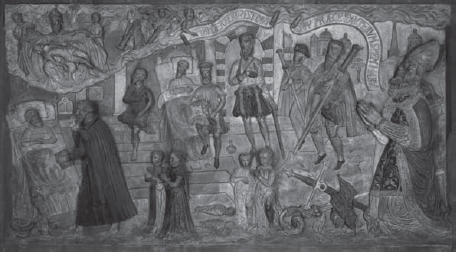
Hans Rodlein, stone carving documenting the endowment of the Juliusspital in Würzburg with vineyards, including the earliest depiction of a Bocksbeutel wine bottle, 1576.
By the late Middle Ages Cologne was said to be the Weinhaus der Hanse, the Hanse’s wineshop. While wines from Franconia, Württemberg and Baden were mostly distributed to the south and southeast, Cologne dealt in Rhine wines, including those from the river’s tributaries and from Alsace. A city’s wine trade represented a very significant source of income in taxes, tolls and wine-related activities such as coopering, haulage, paid work by city servants and provision of shelter and food by landlords to those involved in the trade. At some point wine accounted for more than half of the goods exported downriver from Cologne. Along with Bordeaux, Cologne became the largest wine trading centre in western Europe, although considerable quantities were also traded in Bingen, Mainz, Speyer, Strasbourg and most particularly Frankfurt. Cologne-controlled brands on barrels were accepted everywhere in Europe; they were trusted enough to obviate the need for further checks. The city’s merchants travelled to the winegrowing regions to procure the best wines in sufficient quantities and also acquired vineyards (sometimes directly trading them for herrings), which were then rented out to vintners. A description of a canonical estate near St Goar/Mittelrhein in the eleventh century gives an idea of the latter’s duties:
But if the wine turns out bad they still have to pay their rent, even if not always in full . . . From the start of the grape harvest until its end nobody should dare to break the ban [on entering the vineyards, to prevent theft] . . . To procure the wine barrels for the canons each day’s work (Tagewerk) owes a penny for the hoops. When the wine is pressed, everybody has to bring a vat to the estate, another receptacle and a light. On the day they carry the wine to the lord’s ship, they are each rightfully due one beaker and for each pair a penny-loaf. They also have to bring the wine themselves to the port in Trier where again they are rightfully due each two beakers of wine for each day they are working there, except for the guard who will have enough with one beaker daily. When they arrive at the port in Trier, the canons’ messenger has to feed them once in sufficient quantities.17
Cologne’s annual wine imports varied widely: in the period from 1379 to 1384 around twelve million litres of wine were imported per year. In 1391 more than twenty million litres were imported, but in 1393 this had shrunk to fewer than 7.5 million. Most of this was traded in Fuderbarrels of 875 litres each, with upper German Rhine vessels carrying around 30 Fuder each. Imported quantities decreased in the fifteenth century because of the rising popularity of hopped beer, as previously mentioned. The main export markets were the southern Netherlands, where Cologne’s merchants also sold their wine directly in taverns, and England, where the city’s traders had been granted the same import rights as the French in 1175/76, although the quantities were never very impressive. In the fourteenth and fifteenth centuries 300–500 barrels per year crossed the Channel, and by the sixteenth century Rhine wine represented just 3–6 per cent of all wine imported into England.18
Wine prices are notoriously difficult to compare with other more perishable foods, since wine could be stored for considerable periods. Trading had a stabilizing effect on prices, although they rose sharply in consequence of the adverse weather pattern during the Great Famine of 1315 to 1322. Yields also varied considerably, even if vintages were not often as extreme as the year 1304 in Colmar, described in the chronicles of the town:
The year was so hot that water mills stopped working and bread became very expensive and rare. The whole year was sunny, warm and without significant rain. On the hills wine was plentiful and of good quality although some vineyards on the plain yielded only poor and rather little wine. Good wine was to be had in large quantities and at low prices, as it could not be shipped on the Rhine. The river was so low that you could wade through it at several points between Strasbourg and Basel.19
Following the far reaching effects of the plague, many of the feudal lords turned from labour-intensive grain-growing back to the original source of their wealth: cattle farming. Meat consumption in Germany temporarily bounced back to an average annual consumption of 100 kg of meat per year per person, a figure which included the bones, as compared to today’s figure, which as of 2009 of is 60 kg of pure meat.20 As in earlier times, roasting was confined to the more prosperous households, since the process required not only choicer cuts but more firewood. A stewpot hung over the fire was considerably more economical and allowed the use of a greater variety of cuts, including offal, which could be combined with cereals and vegetables, especially cabbage. The quality of the carcass and butchering were taken very seriously, with freshness, proper cutting and fair weight highly regulated by town decrees and subject to police regulation. Butchers were numerous; around 1450 Nuremberg had one for every 282 inhabitants.21 Thus most city dwellers didn’t need to resort to salted meat as they bought it fresh at the market, although even here some households (as in rural areas) butchered their own animals at home in the run-up to winter. Pork was popular in the cities, most pigs being shipped down the Rhine from the Saar and Lorraine regions to Cologne, while manorial lords in the southwest used their abandoned fields for rearing sheep. They pastured flocks of up to 1,000 animals for the production of wool and meat, making travelling shepherds a new introduction to the labour force. Even more impressive, however, is the scale and extent of the cattle trade, which from the fifteenth century covered very long distances, not unlike the American cattle trade in the ninteenth century. The animals were reared far from grain-growing regions, such as the northern tip of the Danish peninsula, Poland, Bohemia and Hungary, on occasions reaching as far afield as Russia and Romania. During spring the herds were driven from there along the so-called Ochsenwege, oxen trails through uncultivated areas, in order to avoid damage to crops. Beginning around 1600, specialized inns along these trails provided shelter and provisions for drovers. Herds generally consisted of 250–400 animals (mostly tame and fat oxen), although reports mentioned exceptional herds of well over 1,000. At certain market places, Magerviehmärkte or lean cattle markets, specialist herdsmen met the drovers, purchased the emaciated animals and took them to pastures to fatten them up again after the long trek from the north or east before selling them off. Transport on Dickbäuche (literally ‘fat bellies’), special ships for carrying oxen, extended trade to the Netherlands and as far away as France.22
Like the oxen, people began to travel more widely. In fact travel became a mass phenomenon at the time, with many merchants and craftsmen moving to other regions and cities. Regular timetables were established and goods traffic and travel by coach were professionally organized, covering between 20 and 30 km a day – a distance the ICE express trains cover today in five to ten minutes. Differences in national preferences in the matter of food and drink were frequently mentioned in records of the period. When, for instance, an elderly Parisian member of the bourgeoisie wrote a compendium of good advice for his very young wife in the 1390s entitled Le Ménagier de Paris, he included this warning:
A culinary place in time: the Bremer Ratskeller
Northern Hanse towns always featured a Ratskeller, a tavern under the Rathaus, town hall, where burghers and council members could eat and drink. Each Ratskeller included a wine cellar well equipped with the wines traded by the Hanse members. The most famous of them today is the beautifully restored Bremer Ratskeller, with a huge list of over 650 German wines, although the Hanse in its time also imported French wines from Poitou, Gascogne and Bordeaux, Romania (from Aragona in Spain or from Greece) and Malvasia (originally from Crete and later called Malmsey in England). Since 1330 the Bremen town council had the monopoly on serving white wine in the city. When the old town hall was built in 1405 all wine merchants and tavern owners had to store their wine in its cellars so that prices and taxes could be controlled. Today the old barrel cellar, frequently extended over the centuries, is used for banquets and wine tastings, except for the so-called Apostel- and Rosekeller. The apostles’ cellar holds twelve barrels filled with Rhine wines from the seventeenth and eighteenth centuries, whereas the Rose cellar stores the oldest surviving wine in a barrel in Germany, a vintage of 1653 from Rüdesheim that fills the air with its enveloping, mysterious and deliciously balsamic fragrance. Unfortunately only the cellarmaster and the mayor are allowed to taste it, and even then only very rarely.

Bremer Ratskeller, July 1955. The wine is served in stone jugs with the characteristic green-stemmed Römer glasses.
The Germans say that the French put themselves in great danger by eating their carp undercooked. And one has seen that if French and Germans have a French cook who cooks carp the way it is done in France, the Germans will take their part and will have it re-cooked longer than before, but not so the French.23
The Dutch humanist and theologian Erasmus of Rotterdam had an exceptionally low opinion of the German taverns and inns he encountered on his travels, finding them overheated and dirty, with the available food and drink of low or dubious quality. By contrast he raved about the hospitality he encountered at Lyons in France.24 Although more favourable accounts were given by other travellers, German inns appear to have been considered a necessity rather than an indulgence, including the food, which came in the form of a fixed menu served at a common table. The fourteenth-century French poet Eustache Deschamps repeatedly complained of being obliged to consume disgusting dishes including rotten cabbage (he was obviously not a sauerkraut-lover), and of the excessive use of mustard, as well as the ‘sickening, all-pervasive stench of beer’.25Germans were often depicted as drunkards. A court order ruling against alcohol consumption before bedtime in Brandenburg in 1470 could be seen as an attempt to address an acknowledged problem, though the ruling was never implemented. A second glance, however, reveals that the declaration was aimed at cutting expenses and running an efficient household.26 Efficient organization in terms of economy and finance appears to have been a German strength, as reports from the council of Constance show. This was a huge event that took place from 1414 to 1418 in that city on Lake Constance and brought together church dignitaries from all over Europe. To avoid speculation and profiteering from visitors taking up temporary residence during the gathering, the town council set the maximum prices to be charged for accomodation, bread, grain, vegetables, wine, meat, game, fowl, fish, hay, straw and spices (though only pepper, ginger and saffron were specifically mentioned). The prices seem to have been relatively high at first, but dropped after three weeks. Apparently food was plentiful, with a weekly market held every Friday.27 Illustrations to the historian Ulrich von Richental’s chronicles of the time show street food being sold by mobile bakers offering everything from high-quality white bread to pretzels and pies, butcher’s shops displaying deer, rabbits, geese and other meats, and fish shops selling fresh fish as well as salted fish in barrels. The presence of snails and frogs on sale showed that much ‘ethnic’ food from the visitors’ homelands was imported for the occasion. Richental pointed out that the snails and frogs were bought by the Walhens or Latins. The wines he mentioned were mainly from Italy and Alsace, but also came from the vineyards around Lake Constance.

Ulrich von Richental, Chronicle of the Constance Council, c. 1420. Stalls selling fish, frogs and snails.
After the gathering the newly elected pope took two and a half years to reach Rome from Constance, possibly because he was unsure of the welcome that awaited him there. However, under his tutelage Rome became a thriving international community, with Germans representing the largest ethnic group in the city, according to contemporary accounts. The pope’s kitchen during his journey, as well as for some time after it, was presided over by Johannes von Bockenheim, who preceded Maestro Martino and Bartolomeo Scappi as chef and scribe in the papal kitchens. Around 1430 he published Registrum Coquine, a short book written for his professional colleagues in Latin, the church’s official language. This was unusual for the time, when such books were generally written in the vernacular. Perhaps typically of the German provenance of its author, the recipes appear to be somewhat old-fashioned: very little sugar is used, for example. Johannes certainly was concerned with hospitality, providing details as to which dishes were to be made for specific guests and assigning recipes based on national preferences as well as social standing. Although his recipes were Italianized by the inclusion of raisins, pine nuts and marjoram, they included ingredients such as honey, milk, stockfish and juniper, just as other German cookbooks of the time do. His Torta pro Suenis et Bavaris, a pie for Swabians and Bavarians, sounds familiar even to modern readers; a cross between a cheesecake and a strudel filled with quark and baked in milk, it is filled with thickened milk and fresh cheese and cooked in fat.
Johannes von Bockenheim reconfirmed the complexity of German cuisine: fourteen recipes out of a total of 74 were not only German, but for specific German groups: Bavarians, Swabians, Saxons, Thuringians and so on.28 In spite of the abundance of cookbooks that started to appear in Germany around this time, or the new approach to time that was influenced by the first mechanical clocks appearing in monasteries during the late fourteenth century (which were to regulate the times for prayer, but soon enough crept into kitchens), German food remained marked by geographical, climatical and above all political diversity. At the end of the Middle Ages, in contrast to England or France, Germany still had no single capital. Instead it was a patchwork of dynastic and ecclesiastical territories dotted with imperial free cities and the castles of independent aristocrats. When the power of the Holy Roman Emperor began to decline from 1500 onwards due to social and financial pressures, regionality increased even further. The expansion of European influence in the world had a strong effect on national economies and politics elsewhere, but the effects of this reached Germany rather gradually and often indirectly. By 1600 Spain, Portugal, France, England and Holland were all expansive powers, but not Germany.

Traditional Weihnachtsgebäck (biscuits) and Stollen served at Christmas.