
Hey, a rule is a rule, and let’s face it, without rules there’s chaos.
Cosmo Kramer
Governance isn’t the kind of thing people get excited about. It’s also a topic that carries a bit of emotional baggage. After all, few people want to be governed, and most people have had bad experiences with poorly designed governance policies and nonsensical rules. Bad governance (like bad design) makes life harder. But in our experience, it’s difficult to talk about API management without addressing it.
In fact, we’ll go as far as saying that it’s impossible to manage your APIs without governing them.
Sometimes, API governance happens in a company, but the term governance is never used. That’s perfectly fine. Names matter, and in some organizations, governance implies a desire to be highly centralized and authoritative. That can run counter to a culture that embraces decentralization and worker empowerment, so it makes sense that governance is a bad word in those kinds of places. No matter what it’s called, some form of decision governance is always taking place.
The question “Should you govern your APIs?” isn’t very interesting, because in our opinion, the answer is always yes. Instead, ask yourself: “Which decisions need to be governed?” and “Where should that governance happen?” Deciding on the answers to these types of questions is the work of designing a governance system. Different styles of governance can produce vastly different working cultures, productivity rates, product quality, and strategic value. You’ll need to design a system that works for you. Our goal in this chapter is to give you the building blocks to do that.
We’ll start by exploring the three foundational elements of good API governance: decisions, management, and complexity. Armed with this understanding, we’ll take a closer look at how decisions can actually be distributed in your company and how that impacts the work you do. That means taking a closer look at centralization, decentralization, and the elements of what makes a decision. Finally, we’ll take a look at what it means to build a governance system and take a tour of three governance styles.
Governance is a core part of API management, and the concepts we introduce in this chapter will be built upon throughout the rest of this book. So, it’s worthwhile to spend some time understanding what API governance really means and how it can help you build a better API management system.
Understanding API Governance
Technology work is the work of making decisions—lots of decisions, in fact. Some of those decisions are vitally important, while others are trivial. All this decision making is the reason that we can say a technology team’s work is knowledge work. The key skill for a knowledge worker is to make many high-quality decisions, over and over again in a timely fashion. When that happens, products get delivered, changes become easier to make, and teams hit their goals.
No matter which technologies you introduce, how you design your architecture, or which companies you choose to partner with, it’s the decision-making abilities of everyone involved that dictate the fate of your business. That’s why governance matters. You need to shape all of those decisions in a way that helps you achieve your organizational goals.
That’s harder to do than it sounds. To give yourself a better chance of success, you’ll need a better understanding of the foundational concepts of governance and how they relate to one another. Let’s start by taking a quick look at API decisions.
Decisions
If you can make better decisions, you’ll produce better results. APIs are primarily a technology product, but to build better APIs you’ll need to make decisions that go well beyond writing good code. Consider the following list of choices API teams often make:
· Should our API’s URI be /payments or /PaymentCollection?
· Which cloud provider should we host our API in?
· We have two customer information APIs—which one do we retire?
· Who’s going to be on the development team?
· What should I name this Java variable?
From this short list of decisions, we can make a few observations. First, API management choices span a wide spectrum of concerns and people—making those choices will require a lot of coordination between people and teams. Second, the individual choices people make have different levels of impact—the choice of a cloud provider is likely to affect your API management strategy much more than the name of a Java variable. Third, small choices can have a big impact at scale—if 10,000 Java variables are named poorly, the maintainability of your API implementations will suffer greatly.
All of these choices, spanning multiple domains, being made in coordination and at scale, need to come together to produce the best result. That’s a big and messy job. Later in this chapter we’ll pick this problem apart and give you some guidance for shaping your decision system. But first, let’s take a closer look at what it means to govern these decisions and why governance is so important.
Decision Management
If you’ve ever worked on a small project by yourself, you know that the success or failure of that work relies solely on you. If you make good decisions consistently, you can make something good happen. A single, highly skilled programmer can produce some amazing things. But this way of working doesn’t scale very well. When the thing you produce starts getting used, the demand for more changes and more features grows. That means you need to make many more decisions in a shorter space of time—which means you’ll need more decision makers. Scaling decision making like this requires care. You can’t afford for the quality of your decisions to drop just because there are more people making them.
That’s where governance comes in. Governance is the process of managing decision making and decision implementation. Notice that we aren’t saying that governance is about control or authority. Governance isn’t about power. It’s about improving the decision-making quality of your people. In the API domain, high-quality governance means producing APIs that help your organization succeed. You may need some level of control and authority to achieve that, but it’s not the goal.
Keep in mind that governance always has a cost. Constraints need to be communicated, enforced, and maintained. Rewards that shape decision-making behavior need to be kept valuable and attractive to your audience. Standards, policies, and processes need to be documented, taught, and kept up-to-date. On top of that, constant information gathering is needed to observe the impact of all of this on the system. You may even need to hire more people just to support your governance efforts.
Beyond those general costs of maintaining the machinery of governance, there are also the hidden costs of applying governance to your system. These are the impact costs that come up when you actually start governing the system. For example, if you mandate the technology stack that all developers must use, what is the organizational cost in terms of technological innovation? Also, what will be the cost to employee happiness? Will it become more difficult to attract good talent?
It turns out that these kinds of costs are difficult to predict. That’s because in reality you’re governing a complex system of people, processes, and technology. To govern an API system, you’ll first need to learn what it takes to manage a complex system in general.
Governing Complex Systems
The good news is that you don’t need to control every single decision in your organization to get great results. The bad news is that you’ll need to figure out which decisions you will need to control in order to get those good results. That’s not an easy problem to solve, because the answer is that “it depends.”
If all you wanted to do was bake a sponge cake, we could give you a pretty definitive recipe for making one. We’d tell you how much flour and how many eggs you’d need and what temperature to set your oven at. We could even tell you exactly how to check if the cake is done. That’s because there is very little variability in modern baking. The ingredients are reasonably consistent no matter where you purchase them from. Ovens are designed to cook at specific, standardized temperatures. Most importantly, the goal is the same—a specific kind of cake.
But you aren’t making a cake, and this isn’t a recipe book. You’ll need to deal with an incredible amount of variability. For example, the people in your company will have varying levels of decision-making talent. The regulatory constraints you operate in will be unique to your industry and location. You’ll also be serving your own dynamically changing consumer market with its own consumer culture. On top of all that, your organizational goals and strategy will be entirely unique to you.
All this variability makes it tough to prescribe a single correct “recipe” for API governance. To make things even harder, there’s also the small problem of knock-on effects. Every time you introduce a rule, create a new standard, or apply any form of governance, you’ll have to deal with unintended consequences. That’s because all the various parts of your organization are intertwined and connected. For example, to improve the consistency and quality of your API code, you could introduce a standard technology stack. That new stack might result in bigger code packages as programmers start adding more libraries and frameworks. And that could result in a change to the deployment process because the bigger deployment packages can’t be supported with the existing system.
With the right information, maybe you could predict and prevent that outcome. But it’s impossible to do that for every possible eventuality, especially within a reasonable amount of time. Instead, you’ll need to accept the fact that you are working with a complex adaptive system. As it turns out, this is a feature, not a bug. You’ll just need to figure out how to use it to your advantage.
Complex adaptive systems
When we say that your organization is a complex adaptive system, we mean:
· It has lots of parts that are interdependent (e.g., people, technologies, process, culture).
· Those parts can change their behavior dynamically and adapt to system changes (e.g., teams changing deployment practices when containerization is introduced).
The universe is full of these kinds of systems, and the study of complexity has become an established scientific discipline. Even you yourself are a complex adaptive system. You might think of yourself as a single unit—a self—but “self” is just an abstraction. In reality, you’re a collection of organic cells, albeit a collection of cells that is capable of amazing feats: thinking, moving, sensing, and reacting to external events as an emergent whole “being.” At the cellular level, your individual cells are specialized; old, dying cells are replaced, and groups of cells work together to produce big impacts in your body. The complexity of the biological system that you are composed of makes your body highly resilient and adaptable. You’re probably not immortal, but you’re equally likely to be able to withstand massive amounts of environmental change and even bodily damage, thanks to your complex biological system.
Usually, when we talk about “systems” in technology, we focus on software systems and network-based architecture. Those kinds of systems can definitely grow to be complex. For example, the web is a perfect example of system-level complexity and emergence. Individual servers in a network run independently, but through their dependencies and interconnections produce an emergent whole that we call “the web.” But most of that software isn’t really adaptive.
APIs are no exception. The APIs we write today aren’t very adaptive. If they are any good, they do exactly what they are programmed to do. Once an API is released, it’s unlikely to change the way it works, unless someone fixes it. The fundamental truth about API governance is that governing APIs alone won’t get you very far. Instead, you need to govern the people in your organization and the decisions they make about their APIs. The only way to get better APIs is to help your people make better API decisions.
People are very good at adapting (especially when compared to software). Your API organization is a complex adaptive system. All of the individual people in your organization make many local decisions, sometimes collectively and sometimes individually. When all those decisions happen at scale and over time, a system emerges. Just like your body, that system is capable of adapting to a lot of change.
But managing people’s decisions requires a special kind of approach. It’s difficult to predict the impact of changes in a complex system—making a change to one part of your organization can lead to unintended consequences in another part. That’s because the people in your organization are constantly adapting to the changing environment. For example, introducing a rule that deploying software in “containers” is forbidden would have a wide-reaching impact, affecting software design, hiring, deployment processes, and culture.
All of this means that a big, up-front plan and execution approach to API governance is unlikely to work. Instead, you’ll need to “nudge” the system by making smaller changes and assessing their impact. It requires an approach of continuous adjustment and improvement, in the same way you might tend to a garden, pruning branches, planting seeds, and watering while continuously observing and adjusting your approach. In Chapter 5, we’ll explore the concept of continuous improvement in more detail.
Governing Decisions
In the previous section, we introduced the concept of governing decisions inside a complex system. Ideally, that’s helped you to understand a fundamental rule for API governance: if you want your governance system to be effective, you’ll need to get better at influencing the decisions that people make. We think one of the best ways to do that is to focus on where decisions are happening and who is making them. It turns out that there isn’t a single best way to map out those decisions. For example, consider how API design governance could be handled in two different fictional companies:
Company A: Pendant Software
At Pendant Software, all API teams are provided with access to the Pendant Guidelines for API Design ebook. These guidelines are published quarterly by Pendant’s API Center of Excellence and Enablement—a small team of API experts working inside the company. The guidelines contain highly prescriptive and very specific rules for designing APIs. All teams are expected to adhere to the guidelines, and APIs are automatically tested for conformance before they can be published.
As a result of these policies, Pendant has been able to publish a set of industry-leading, highly consistent APIs that developers rate very favorably. These APIs have helped Pendant differentiate itself from competitors in the marketplace.
Company B: Vandelay Insurance
At Vandelay, API teams are given the company’s business goals and expected results for their API products. These goals and results are defined by the executive teams and are updated regularly. Each API team has the freedom to address an overall business goal in the manner they choose, and multiple teams can pursue the same goal. API teams can design and implement APIs however they like, but every product must adhere to Vandelay’s enterprise measurement and monitoring standards. The standards are defined by Vandelay’s System Commune, a group made up of individuals from each of the API teams who join voluntarily and define the set of standards that everyone needs to follow.
As a result of these policies, Vandelay has been able to build a highly innovative, adaptive API architecture. This API system has enabled Vandelay to outmaneuver its competition with innovative business practices that can be delivered very quickly in its technology platform.
In our fictional case studies, both Pendant and Vandelay were wildly successful in their management of decision making. But the way they governed their work was incredibly different. Pendant found success with a highly centralized, authoritative approach, while Vandelay preferred a results-oriented method. Neither approach is “correct,” and both styles of governance have merit.
To govern decisions effectively, you’ll need to address three key questions:
· Which decisions should be managed?
· Where should those decisions be made (and by whom)?
· How will the system be impacted by your decision management strategy?
NOTE
There are lots of decisions to make in an API-enabled system, both at the API level and at the collective, “landscape” level. We’ll catalog the breadth of the decisions you need to make and manage in Chapters 4 and 9, respectively.
For now, we’ll focus on the second question of where in the system the most important decisions should be made. To help you address decision distribution, we are going to dig deeper into the subject of governing a decision. We’ll tackle the trade-off between centralized and decentralized decision making, and we’ll take a closer look at what it means to distribute a decision.
Centralization and Decentralization
Earlier in this chapter, we introduced the concept of a complex adaptive system, and we used the human body as an example. These kinds of systems abound in nature, and you are surrounded by them. For example, the ecosystem of a small pond can be thought of as a complex adaptive system. It continues to survive thanks to the activities and interdependence of the animals and vegetation that live in it. The ecosystem adapts to changing conditions thanks to the localized decision making of each of these living things.
But the pond doesn’t have a manager, and there is no evidence that the frogs, snakes, and fish hold quarterly management meetings. Instead, each agent in the system makes individual decisions and exhibits individual behaviors. Taken together these individual decisions and actions form a collective, emergent whole that can survive even as individual parts of the system change or appear and disappear over time. Like most of the natural world, the pond system succeeds because system-level decisions are decentralized and distributed.
As we established earlier, your organization is also a complex adaptive system. It’s a product of all the collective individual decisions made by your employees. Just like in a human body or a pond ecosystem, if you were to allow individual workers to have complete freedom and autonomy, the organization as a whole would become more resilient and adaptive. You’d have a bossless, decentralized organization that could find its way thanks to the individual decisions of its employees (see Figure 2-1).
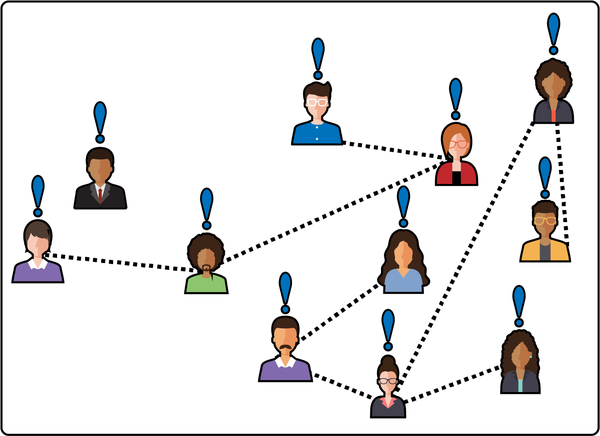
Figure 2-1. A decentralized organization
You could do this, but you might run into some problems, primarily because it’s difficult to succeed with a free-market organization in the same way that complex systems succeed in nature. The biosystem of a pond is directed by the hand of natural selection. Every agent in the system has become optimized for the survival of its species. There’s no system-level goal beyond survival. On top of that, in nature it’s normal for systems to fail. For example, if an invasive species is introduced, the entire pond system might die. In the natural world, that can be OK because something else might take its place—the system as a whole remains resilient.
However, businesses leaders don’t respond well to this level of uncertainty and lack of control. Chances are you’ll need to steer your system toward specific goals that go beyond survival. Also, it’s likely that you aren’t willing to risk letting your company die for the sake of a better company taking its place. You’ll almost certainly want to reduce the risk that any individual agent can destroy the whole company because of a bad decision. That means you’ll need to reduce decision-making freedom for individuals and introduce some accountability. One way of doing that is to introduce decision centralization (Figure 2-2).

Figure 2-2. A centralized organization
By this, we mean that decision making is constrained to a particular person or team in your organization. That centralized team makes a decision that the rest of the company will need to adhere to. Decentralization is the opposite case: individual teams can make decisions that only they need to adhere to.
The truth is that there is no perfectly centralized or perfectly decentralized organization. Instead, different types of decisions are distributed within the organization in different ways—some are more centralized, while others are more decentralized. You’ll need to decide how to distribute the decisions that impact your system the most. So, which ones should be more centralized, and which ones should be more decentralized?
Remember, a primary goal of governing decisions is to help your organization succeed and survive. What that means is entirely dependent on your business context, but generally speaking it means that decisions need to be timely enough to enable business agility and of sufficient quality to improve the business (or at the very least avoid damaging it). There are three factors that impact the ability to make decisions:
Availability and accuracy of information
It’s really difficult to make a good decision if you base it on information that is incorrect or missing. That could mean being misled about the goal or context of the decision, but it could also mean not knowing what the decision’s impact will be on the system. Most of the time, we assume the responsibility for gathering decision-making information rests at the feet of the decision makers. But for the purposes of distributing decisions, we also need to think about how centralizing or decentralizing a decision affects the information that’s available.
Decision-making talent
Generally speaking, decision quality improves if the decision maker is good at making high-quality decisions. Or, in simpler language—highly talented people with lots of experience will make better decisions than less-talented people with no experience. When it comes to distributing decision making, the challenge is to also distribute your talent in a way that helps you the most.
Coordination costs
Complex decisions can’t be made in a timely manner unless the decision making is shared. But whenever you share decision-making work, you’ll incur a coordination cost. If that coordination cost grows too high, you won’t be able to make decisions quickly enough. Centralization and decentralization of decisions can have a big impact on coordination costs.
Thinking about decisions in terms of these factors will help you decide when a decision should be centralized or decentralized. To help you understand how to do that, we’ll take a look at it from two perspectives: scope of optimization and scale of operation. Let’s start by digging into scope and its relationship with decision-making information.
Scope of optimization
The big difference between a centralized decision and a decentralized decision has to do with their scope. When you make a centralized decision, you are making it for the entire organization. So, your scope for the decision includes the whole system, and your goal is to make a decision that improves that system. Another way of saying this is that the decision you are making is meant to optimize the system scope. For example, a centralized team might decide on a development methodology for the entire company to follow. The same team might also make decisions about which APIs in the system should be retired. Both of these decisions would be made with the goal of doing what’s best for the entire system.
Conversely, the primary characteristic of a decentralized decision is that it is optimized for a local scope. When you are optimizing for the local scope, you are making a decision that will improve your local context—the set of information that pertains only to your local situation. While your decision might have an impact on the wider system, your goal is to improve your local results. For example, an API team can make a local decision to use a waterfall development process because they’re sharing the work with an external company that insists on it.
The great thing about decentralized decision making is that it can help you make big gains in efficiency, innovation, and agility for your business overall. That’s because decentralized decision makers are able to limit their scope of information to a local context that they understand. This means they can form a decision based on accurate information about their own problem space, which helps them produce better decisions. For any modern business that is trying to succeed with a strategy of agility and innovation, the decentralized decision pattern should be the default approach.
However, making decisions that focus only on optimizing the local scope can cause problems, particularly if those decisions have the potential to impact the system negatively and in irreversible ways. When former Amazon CEO Jeff Bezos talks about the impact of decisions, he splits them into two types: “type 1” decisions that can be easily reversed if they are wrong and “type 2” decisions that are near impossible to recover from. For example, a lot of big companies choose to centralize decisions about API security configuration to prevent a local optimization from creating a system vulnerability.
Beyond dangers to the system, there are times when system-level consistency is more valuable than local optimization. For example, an individual API team might choose an API style that makes the most sense for their problem domain. But if every API team chooses a different API style, the job of learning to use each API becomes more difficult due to a lack of consistency, especially when many APIs need to be used to accomplish a single task. In this case, optimizing the API style decision for the system scope might be better.
You’ll need to think about the scope of optimization carefully when you plan where a decision should happen. If a decision has the potential to impact your system in an irreversible way, start by centralizing it so that it can be optimized for system scope. If decision quality could benefit from the local context of information, start by decentralizing it. If decentralizing a decision could result in unacceptable inconsistency at the system level, consider centralizing it.
Scale of operation
If you had unlimited resources for making good decisions, you’d only need to think about scope for decision making. But you don’t. So, in addition to scope, you’ll need to think about the scale of decisions being made. That’s because if there is a bigger decision demand, there will be more pressure on your decision-making talent supply and an upward pressure on your coordination costs. If you want your API work to scale as your organization grows, you’ll need to plan your decision distribution pattern carefully.
Decentralizing a decision creates a big talent demand when you are operating at scale. When you decentralize a decision, you are distributing it to more than one team. If you want all of those decisions to be high quality, you’ll need to fill each of those teams with talented decision makers. If you can’t afford to do that, you’ll end up generating lots of bad decisions. So, it’s worthwhile to hire the best decision makers you can for every decision-making position in your company.
Unfortunately, hiring good people isn’t an industry secret. There are a limited number of talented and experienced people available and a lot of companies competing to hire them. Some companies are willing to spend whatever it takes to make sure that they get the best talent in the world. If you are lucky enough to be in that situation, you can decentralize more of your decisions because you have the talent to make them. Otherwise, you’ll need to be more pragmatic with your distribution decisions.
If your supply of top-level, “grade A” decision-making talent is limited, you may choose to pool that talent together and centralize the most important decisions to that group of people. That way, you have a greater chance of producing better decisions, faster. But an increasing scale of decision demand wreaks havoc on this model too, because as the demand for decision making grows, the centralized team will need to grow along with it. As the team grows, so too will the cost of coordinated decision making. No matter how talented the people are, the cost of coordinating a decision grows as you add more people. Eventually you’ll reach a number that makes it impossible to reach decisions affordably.
All of this means that decision distribution will involve a lot of trade-offs. If the decision is highly impactful, like the “type 1” decisions that Jeff Bezos describes, you’ll need to centralize it and pay the price of lower decision-making throughput. Conversely, if speed and local optimization are most important, you can decentralize the decision and either pay for better people or accept the net reduction in quality of decisions.
That said, there is a way to manage this trade-off in a more nuanced and flexible way. It involves distributing the parts of the decision instead of the entire decision itself, and it’s what we are going to focus on in the next section.
The Elements of a Decision
It’s difficult to distribute a decision in the way we’ve described so far because it’s a bit of an all-or-nothing affair. Do you let your teams decide which development method they want to use, or do you choose one and make every team use it? Do you let the teams decide when their API should retire, or do you take the choice away from them completely? In reality, governance requires more nuance. In this section, we’ll explore a way of distributing decisions with more flexibility by breaking them up into pieces.
Instead of distributing the entire decision, you can distribute parts of the decision. That way you can get the benefits of system-level optimization along with highly contextual local optimization at the same time. Some parts of a decision can be centralized, while other parts are decentralized. To help you accomplish distribution with this kind of precision, we’ve broken down API decisions into the six decision elements you’ll need to distribute (see Figure 2-3).

Figure 2-3. Decision elements
This isn’t meant to be an authoritative, universal model for decision making. Instead, it’s a model that we’ve developed to distinguish the parts of a decision that have the biggest impact on a system when they are either centralized or decentralized. These parts are based on the various five-, six-, and seven-step models of decision making that abound in the business management domain. Although the steps we’ll describe could be applied to a decision made by a single person, they’re most useful when we are talking about decisions made in coordination between a group of people.
Let’s start by taking a look at how distributing the inception of a decision impacts your system.
Inception
Every decision happens because someone thinks that decision needed to be made. It means that someone has identified that a problem or opportunity exists with more than one possible solution. Sometimes this is obvious, but in many cases spotting a decision-making opportunity requires talent and expertise. You’ll need to think about which decisions will naturally ignite on their own and which ones will need special handling to make sure that they happen.
Kicking off decisions about API work happens naturally in the course of day-to-day problem solving. For example, choosing which database to use for storing persistent data would be a difficult decision for a typical implementer to ignore. The decision happens because the work can’t continue without it. But there will also be situations where you’ll need to force inception to happen. This is usually for one of two reasons:
Habitualized decision making
Over time, if a team makes the same decision over and over, the decision may disappear. That is, the possibilities are no longer considered, and instead an assumption is made that work will continue in the same way it always has. For example, if every API implementation is written in the Java programming language, it may not occur to anyone to consider a different choice of language.
Decision blindness
Sometimes, teams will miss opportunities to make impactful decisions. This can happen because of habit but also because of limited information, experience, or talent. For example, a team may focus on the choice of which database to use for storage but fail to identify that the API could be designed in a way that doesn’t require persistent storage.
Not every decision needs to happen, and it’s perfectly fine for decisions to be missed or for a cultural habit to make them implicit. It’s only a problem if not making a decision negatively impacts the results you are getting from your APIs. Arbitrarily demanding that more decisions happen could have a nightmarish impact on productivity. Instead, the role of API governance is to generate more of the decisions that will lead to optimal results and less of the decisions that will provide little value.
Choice generation
It’s hard to choose if you don’t know your options, and that’s what this element is all about. Choice generation is the work of identifying the choices to choose from.
If you’re making a decision in a domain you have a lot of experience in, generating choices can be pretty easy. But if there are lots of unknowns, you’ll need to spend more time identifying the possibilities. For example, an experienced C programmer already has a good idea of their options when they are deciding on a loop structure, but a beginner will probably need to do some investigation to learn that they can use a for loop or a while loop and the differences between the two.
Even if you know a domain fairly well, you’ll probably spend more time on choice generation if the cost and impact of the decision are very high. For example, you may have intimate knowledge of the different cloud hosting environments, but will still perform your due diligence of research when it comes time to sign a contract with one of them. Are there new vendors available that you didn’t know about? Are the prices and terms still the same as you remember?
From a governance perspective, choice generation is important because it’s where the boundaries of decision making are set. This is especially useful when the people coming up with the list of choices are not the same as the people making the selection. For example, you could standardize a list of possible API description formats but let individual teams decide which format they like best. If you take this approach, you’ll need to be careful about the quality of the “menu” you are providing. If the choices are overly restrictive or of poor quality, you’ll run into problems.
Selection
Selection is the act of choosing from the list of possible options. Selection is the heart of decision making, and it’s the step most people focus on, but the importance of the selection element depends a lot on the scope of choices that have been made available. If that scope is very wide, then the selection process is integral to the quality of the decision. But if that scope has been constrained to safe choices with little differentiating them, the selection step can be quick and less impactful.
Let’s walk through an example of this in action. Suppose you’re responsible for configuring Transport Layer Security (TLS) for your HTTP API. Part of that work includes a decision on which cipher suites (sets of cryptography algorithms) the server should support. It’s an important decision because some cipher suites have become vulnerable with age, so picking the wrong ones can make your API less secure. Also, if you choose cipher suites that your users’ client software doesn’t understand, nobody will be able to use your API.
In one scenario, you might be given a list of all the known cipher suites and asked to select the ones that the server should support. In this case, selection would need special care. You’d probably do a lot of research and only feel comfortable making a selection once you’d gathered as much information as possible. In fact, if you didn’t have a good amount of experience securing servers, you’d probably look for someone who did and ask them to make a selection for you.
But what if instead of being given the set of all possible cipher suites, you were given a curated list of them? The list of options might also include relevant information about how well supported each cipher suite is and what the known vulnerabilities are. Armed with this information, you could probably make a faster choice. Equally, your choice is likely to be safer because your decision scope is limited to choices that have been deemed safe enough to use. In this case, you’d make a decision based on what you know about the clients using the API and the sensitivity and business importance of the API.
Finally, you might be given only one choice: a single cipher suite that you must use. A single-choice decision makes selection a trivial affair—the decision has been made for you. In this case, the quality of the decision is entirely dependent on the people who generated that choice. Ideally it’s a good fit for the specific requirements you have.
So, the importance of selection depends a lot on the scope of the choices offered. There’s a bit of a trade-off at work here. If you push more of the decision-making investment into choice generation, you’ll spend less time on selection, and vice versa. That has implications for how you distribute decision elements and who should be responsible for them. Whichever decision element becomes more important will require a suitably talented decision maker to make it.
It also means you can combine system scope and local scope by distributing choice generation and choice selection. For example, you can centralize the generation of development method choices based on the system context while still allowing individual teams to choose their preferred method using their local context. This happens to be a particularly useful pattern for governing large API landscapes at scale and preserving both safety and speed of change.
Authorization
Just because a choice has been selected doesn’t mean the decision is done. The selection needs to be authorized before it can be realized. Authorization is the work of deciding on the validity of the selected choice. Was the right selection made? Is it implementable? Is it safe? Does it make sense in the context of other decisions that have been made?
Authorization can be implicit or explicit. When authorization is explicit, it means that someone or some team must expressly authorize the decision before it can go forward. It becomes an approval step in the decision-making process. We’re sure you’ve been involved in many decisions that required some kind of approval. For example, in many companies, workers can select their holiday time from a list of work dates, but it’s up to their manager to make the final approval decision on the schedule.
Implicit authorization means that authorization happens automatically when some set of criteria has been met. Examples of this are the role of the person making the selection, the cost of the selection that was made, or adherence to a specific policy. In particular, authorization can become implicit when the person making the selection is also the person authorizing the selection. In effect, they become their own approver.
Explicit authorization is useful because it can further improve the safety of the decision. But if there are lots of decisions being made and all of them are being centrally authorized, then there is likely to be a reduction in decision speed. Lots of people will end up waiting for their approvals. Implicit authorization greatly increases the speed of decision making by empowering selection, but comes with greater risk.
How authorization should be distributed will be an important decision for you to make in your governance design. You’ll need to consider the quality of decision makers, the business impact of bad decisions, and the amount of risk built into the choices offered. For highly sensitive decisions, you’ll probably want more explicit authorization. For time-sensitive, large-scale decisions, you’ll need to figure out how to introduce an implicit authorization system.
Implementation
The decision-making process doesn’t end when the choice is authorized. A decision isn’t realized until someone does the work of executing or implementing the choice that has been made. Implementation is an important part of API management work. If the implementation of decisions is too slow or of poor quality, then all of your decision making is for naught.
Oftentimes a decision isn’t implemented by the people who made the selection. In these cases it’s important to understand what that means for the availability of accurate information gathering. For example, you might choose to introduce the hypermedia style of APIs into your landscape, but if the implementation of hypermedia APIs turns out to be too difficult for the designers and developers, you’ll need to reevaluate your decision. A good governance design will have to take these practicalities into account. It’s no good managing decisions in a way that makes them only theoretically better. When you are determining the quality of decision making, you’ll need to include the implementability of the decision you are managing.
Challenge
Decisions aren’t immutable, and each decision you make for your API management system should be open to being challenged. Oftentimes we don’t consider how the decisions we make may need to be revisited, altered, or even reversed in the future. Defining a challenge element allows us to plan for continuous change at the decision-making level.
For example, if you’ve defined a “menu” of choices for API teams to choose from, it’s wise to also define a process to go “off-menu.” That way you can sustain a decent level of innovation and prevent bad decisions from being made. But if everyone can challenge the decision to constrain these choices, then there aren’t really any constraints. So, you’ll need to identify who can challenge the decision and in what circumstances.
It’s also important to allow decisions to be challenged over time. As business strategies and context change, so too should the decisions of your system. To plan for that kind of adaptability, you’ll need to build the challenge function into your system. That means you’ll need to think about who in your organization will have the ability to “pull the cord” and challenge an existing decision.
Decision Mapping
We now know that decisions are composed of a number of elements. Understanding that decisions have atomic elements allows us to distribute the pieces of a decision rather than the entire decision process. This turns out to be a powerful feature of organizational design and will allow you to exert greater influence over the balance of efficiency and thoroughness.
For example, a decision about the style a new API should have is an important one. In the clumsy, binary centralization versus decentralization discussion, the API management designer might consider whether the members of the API team should own the API style decision (decentralized) or a central body should maintain control of it (centralized). The advantage of distributing the decision-making power to the API teams is that each team can make the decision within a local context. The advantages of centralizing the decision within a single strategic team are that the variation in API styles is reduced, and control over the quality of the style choice is maintained and controlled.
This is a difficult trade-off to make. But, if instead you distribute the elements of the decision, it’s possible to design an API management system that lives somewhere in between these two binary options. For example, you might decide that for an API style decision, the elements of research and choice generation should be owned by a centralized, strategic API management team, while the elements of choice selection, authorization, and implementation are owned by the API teams themselves. In this way, you choose to sacrifice some of the innovation that comes from distributing choice generation in order to gain the benefits of a known set of API styles within the company. At the same time, distribution of the API style selection and authorization elements allows the API teams to continue to operate at speed (i.e., they do not need to ask permission in order to choose a suitable style).
To get the most out of decision mapping, you’ll need to distribute decisions based on your context and goals. Let’s take a look at two fairly common decision scenarios to see how decision mapping can be a useful tool.
Decision mapping example: Choosing a programming language
You’ve identified that the decision of which programming language to choose for API implementation is highly impactful, and you’d like to govern it. Your organization has adopted a microservices style of architecture, and freedom to choose the programming language for implementation has been raised as a requirement. But after running a few experiments, you’ve noticed that variation in programming languages makes it harder for developers to move between teams and harder for security and operations teams to support applications.
As a result, you’ve decided to try the decision distribution in Table 2-1 for deciding on a programming language.
|
Inception |
Choice generation |
Choice selection |
Authorization |
Implementation |
Challenge |
|
Centralized |
Centralized |
Decentralized |
Decentralized |
Decentralized |
Decentralized |
|
Table 2-1. Programming language decision map |
|||||
This way you constrain the programming languages to a set of choices that are optimized for the system as a whole but allow the individual teams to optimize for their local contexts within those constraints. You’ve also allowed API teams to challenge the decision so that you can accommodate new language choices and changing situations.
Decision mapping example: Tool selection
Your chief technical officer (CTO) is trying to improve the level of agility and innovation of your software platform. As part of this initiative, they have decided to allow API teams to choose their own software stacks for implementations, including the use of open source software. However, your procurement and legal teams have raised concerns based on legal risks and risks to supplier relationships. To get started with this cultural transition, you’ve decided to implement the decision map in Table 2-2 for the software stack decision on a trial basis.
|
Inception |
Choice generation |
Choice selection |
Authorization |
Implementation |
Challenge |
|
Decentralized |
Decentralized |
Decentralized |
Centralized |
Decentralized |
Centralized |
|
Table 2-2. Tool selection decision map |
|||||
Local optimization is one of the keys to your CTO’s strategy, so you choose to completely decentralize inception, choice generation, and selection. However, to reduce the system-level risk of a choice, you’ve mapped the authorization element to the centralized procurement and legal teams. This should work for now, but you are also aware that over time and at scale this has the potential to be a big bottleneck in your system, so you make a note to keep measuring the process and tune it accordingly.
Decision Design in Practice
In our own API management work, we’ve rarely documented decisions using the decision-mapping structure we’ve defined in this section. That’s because a decision map isn’t a great way to communicate how work should be done or how a team can achieve their goal. Think of the decision map as a useful mental model that you can keep in your API management “toolbox.”
In practice, the decision map isn’t a great way of describing how people should work or how teams should communicate with one another to get work done. That’s because the decision map is a high-level abstraction: it focuses purely on the elements of a decision. Instead, you’ll need to communicate your design in a language that fits your context.
For example, in the enterprise management space, you might realize the decision design by creating a target operating model (TOM). The TOM describes organizational structures, process models, and the tools that teams will need to succeed. If you’re working in the world of technology and architecture, you could use Team Topologies and draw a coordination model that can be translated into a software architecture. Ultimately, you’ll need to express your target state in the language of the work, decisions, and concepts that your people will understand.
TEAM TOPOLOGIES
Team Topologies is a book that outlines a design approach by the same name created by Matthew Skelton and Manuel Pais. It provides a useful model and language for designing software by first focusing on teams and the way they work together.
Understanding that the decision-making process can be broken up into distributable parts is important because it encourages more precision in your governance approach. It will help you get better results when it comes time to design the important parts of your governance system. You’ll be able to consider which parts of your organization should own the individual elements of key decisions. With that understanding, you’ll be able to start applying solutions to focus on introducing constraints and changing behaviors for those teams and people.
Designing Your Governance System
We’ve spent a lot of time going into the details of decision distribution because we think it’s a foundational concept for a governance system. But it’s not the only thing you’ll need to pay attention to if you want to introduce effective API governance. A good API governance system should have the following features:
· Decision distribution based on impact, scope, and scale
· Enforcement of system constraints and validation of implementation (from centralized decisions)
· Incentivization to shape decision making (for decentralized decisions)
· Adaptiveness through impact measurement and continuous improvement
It’s difficult to get the advantages of decision centralization if the rest of the organization doesn’t conform to the decision. That’s why enforcement and validation needs to be a feature of an API governance system. We’ve purposefully steered away from the authoritative parts of governance so far, but ultimately you’ll need to build at least some constraints into your system. Even the most decentralized organizations have rules that need to be followed. Of course, validation and enforcement will require some level of obedience. If the centralized decision-making team has no authority, the decisions will carry no weight.
If you don’t have authority, you can use incentivization instead of enforcement. This is especially useful when you’ve decided to decentralize decisions but still want to shape the selections that are being made. For example, an architecture team could alter a deployment process so that deployment of immutable containers is made much cheaper and easier than any other type of deployment. The goal here would be to incentivize API teams who have authority over their own implementation decisions to choose containerization more often.
In truth, neither the “carrot” of incentivization nor the “stick” of enforcement is enough to steer your system on its own—you’ll need to use both. Generally speaking, if a decision’s authorization element has been decentralized, you’ll have to use incentivization if you want to shape it. If selection and authorization have been centralized and implementation is decentralized, you’ll need to make sure you’ve instituted some level of enforcement or validation. Table 2-3 highlights when you should enforce or incentivize a decision based on your decision-mapping design.
|
Enforce or incentivize? |
Choice generation |
Choice selection |
Authorization |
|
Enforce |
Centralized |
Centralized or decentralized |
Centralized or decentralized |
|
Incentivize |
Decentralized |
Decentralized |
Decentralized |
|
Table 2-3. When to enforce and when to incentivize |
|||
No matter how you distribute your decisions or change decision-making behavior, it’s crucial that you measure the impact you are having on the system itself. Ideally, your organization should have some existing process indicators and measurements that you can use to assess the impact of your changes. If there isn’t anything like that, instituting organizational measurements should be one of your first priorities. Later, in Chapter 7, we’ll talk about product measurement patterns for APIs. Although we’ll be focusing on API product measurement specifically, you can still use that section as an introductory guide for designing governance measurements for your system.
To help tie all this together, let’s take a look at three API governance patterns. These patterns capture different approaches to API governance, but all of them use the core principles of decision distribution, enforcement, incentivization, and measurement. Keep in mind, we aren’t offering you a menu—you aren’t supposed to choose one of these to be your governance system. We are offering you these patterns as a way of illustrating how an API governance system can be implemented at a conceptual level.
For each governance pattern described, we’ll identify a few key decisions and how they are mapped, how desired behaviors are enforced and incentivized, how talent is distributed, and the costs, benefits, and measures for the approach.
Governance Pattern #1: Design Authority
A design authority acts as a gatekeeper, ensuring that the outputs of API teams conform to a minimum level of quality. Design authorities are centralized teams that provide assurance for the quality of decision making in the organization. They can be implemented as formal review boards that meet on a regular basis or as an on-demand review service. Mature design authorities may even provide self-service tooling to make the work of conformance testing cheap and easy.
PAYPAL’S CENTRAL DESIGN TEAM
At PayPal, a central design authority team validates all new API designs using a four-step process.1 They begin by examining proposals for new APIs to make sure they are a good fit for the business and don’t already exist. Next, they test API designs to make sure that they conform to PayPal’s published standards. After the API is developed, the design team runs a set of tests to make sure that the implementation matches the design contract. Finally, the published API is checked to make sure that it meets PayPal’s security requirements.
Enforcement and incentivization
Design authorities are most effective when they have the power to prevent low-quality, high-risk decisions from being made. That usually means they have the authority to stop a change from being deployed if their quality requirements are not met. In some companies, design authorities must function without authority. Instead, these teams issue audit notes that highlight risks. In these cases, decision-making quality relies on a team’s desire to address the notes that the design authority has made. Whether this works or not depends a lot on the culture of the organization and the people involved. To be effective, a design authority should be more than a gate-keeping team, even when they have the authority to be one. The team should endeavor to both validate that good decisions have been made as well as inform teams on how to meet their quality requirements. That means they’ll need to provide consumable information and guidance to help teams avoid an endless cycle of conformance validation.
Talent distribution
In this pattern, a small number of expert decision makers are centralized in the design authority team. But, they must be supported by API teams that have competent decision makers who can make decisions that conform to the design authority’s requirements. Otherwise, the system becomes bogged down by low-quality designs that need continuous help. In this pattern, it’s common for the talent level of API teams to increase over time as they go through the design and review process.
Costs and benefits
The primary benefit of this pattern is that all APIs are run through the same team for quality control. This gives the organization maximum assurance that the right decisions have been made and risks have been addressed. This kind of thoroughness is crucial for decisions that could adversely impact a business. For example, in large companies, API designs are almost always validated to make sure they implement security and access controls correctly. But, the design authority’s strength is also its greatest weakness. Running all API changes through a single centralized team is a bottleneck waiting to happen. In the early stages of an API-enabled company, a design authority can help immensely, but over time it can become an enormous problem, causing API projects to stall as they wait to get time with the team.
Governance Pattern #2: Embedded Centralized Experts
In this pattern, instead of validating the outputs of an API team, experts are embedded into the team to help with decision making. A typical implementation of this pattern is an internal consulting model, in which a central pool of API experts are distributed to API teams. These experts either enable key decisions or are given the authority to make decisions on behalf of the team. But, the key characteristic of this pattern is that the experts become part of the API team, investing their time to help produce better outputs.
The Embedded Expert pattern relies on a central team of API experts who can be distributed to work in API teams. Counterintuitively, this means that the research and choice selection parts of decisions are centralized (even though they are executed within federated teams). This works when the central team of experts have a shared understanding of the “right” decisions for the company. Think of it like a distributed version of the design authority. But, the actual authorization and implementation of those choices are usually still owned by the teams themselves, leaving those elements decentralized. We’ll discuss this type of centralized team structure later in “The Center for Enablement”.
HSBC’S API CHAMPIONS
HSBC is a globally diverse and distributed organization, with many different teams building APIs for their clients to use. To help their teams build better APIs, they’ve created a network of API champions who understand and apply HSBC API standards for local project teams. This helps them distribute API expertise across the organization at scale.
Enforcement and incentivization
Embedding experts in a project team is the ultimate form of enforcement. That’s because the embedded experts either own or directly inform the decision-making process. If your experts make decisions aligned with your central objectives, so will the teams they are embedded within.
Talent distribution
A big challenge of running a consulting team is finding and maintaining a group of experts. For this pattern to work, you’ll need a pool of API subject-matter experts that can be distributed to project and product teams. That talent can be centrally funded but is distributed decentrally to API teams and will need to scale to meet the demand for API work in the system.
Costs and benefits
Being at the “coalface” of API work has several distinct advantages. First, it ensures that better decisions are made early due to the involvement of a central team’s experts in the work. Second, experts are able to bring back experiences and knowledge from the work to ensure that central guidance is continually improved to meet the needs of product and project teams. However, there are severe operational challenges to this pattern. It requires an adequately large team of experts to help every team. Depending on the scale of your organization, this can be a challenge. Finally, it takes a concerted effort to maintain a shared system-level optimization view among experts who are facing the day-to-day challenges of delivering API products. Over time, this can result in a fully decentralized decision model with little consistency or management.
Governance Pattern #3: Influenced Self-Governance
We’ve noticed a trend in modern organizations toward less central control and more team autonomy, within reason. As the business and technology world continues to strive for more innovation and faster speed of change, there is less appetite for central teams that control decision making with absolute authority. That’s given rise to a third kind of governance pattern that relies heavily on influence rather than control.
In this pattern, API teams have autonomy in a decision space. They have decision-making agency and own all elements of the decision-making process. Their decisions are “governed” by influencing the decisions that they make. A common way of phrasing this is to make it difficult to do the wrong things and easier to do the right things.
SPOTIFY’S GOLDEN PATH
Spotify has embraced a platform approach called the Golden Path that provides a catalog of tools and services to Spotify engineering teams. These are the recommended tools within the Spotify system. It’s easier for Spotify teams to use these tools because they know that they are “blessed” by the platform team and are supported. However, if needed, a team can go off-menu and use a tool of their choice.
Enforcement and incentivization
This pattern relies completely on incentivization to influence decision making. This pattern embodies the Netflix principle of Freedom and Responsibility. Teams are provided with a “Golden Path” of recommended decisions, driven by a central team. Teams have the freedom to make a different decision; however, they are also responsible for the success of their products. Ideally, this balance drives teams to make decisions that conform to the central team’s offering.
Talent distribution
For this type of pattern to work, teams must be capable of making good decisions independently. That means that talent must be distributed so that every team has at least one expert who can guide API decision making properly. In organizations where this scale of talent distribution is not possible, this pattern is often combined with a design authority (“Governance Pattern #1: Design Authority”) as a safeguard.
Costs and benefits
The key benefit of this pattern is speed. Teams can move very fast when they are given autonomy over their decisions. But, that speed comes with the risk that decisions will be inconsistent and or inadequate. In addition, local teams may over-optimize for their local context to the detriment of the system. In practice, self-governance is often combined with a centrally driven governance pattern to balance these factors.
Implementing Governance Patterns
As we mentioned earlier in this chapter, if your API organization is a complex adaptive system, it needs a lot of “nudges” to get good results. We’ve also introduced a set of patterns that can help you distribute experts and tools to guide decisions in the right direction. In this section, we’ll detail some strategies for implementing and introducing these decision-guiding patterns in a practical manner.
We’ll outline the high-level parts of a governance solution that you’ll need to tackle, including how to get started, how to get information, and how to produce tools and assets. Later in this book, we’ll dive into specific aspects of management and governance in more detail. For example, in Chapter 9 we’ll cover considerations when forming a central team and the concept of a “platform.”
Evolving Your Solution
A central tenet of this book is that API management must be continuous to be successful. That means that you’ll need to continuously adapt and evolve your governance implementation as your organization grows and changes. The truth is that you won’t create a perfect governance system on day one.
But, we still need to strive to start with a governance solution that works as well as possible immediately. We also need to ensure that we don’t introduce a solution that will be costly to change. With that in mind, we provide the following practices when implementing a new governance solution:
Embed early
When embarking on a new governance solution, try to start by implementing the pattern covered in “Governance Pattern #2: Embedded Centralized Experts” with a small set of indicative products or projects. This isn’t always possible to do, especially when there is a large backlog of APIs that need to be validated quickly. But, if you can afford to do it, starting with embedding gives you a chance to test and learn your standards before you ratify and communicate them to the organization. It’s usually easier to change a design decision in a project than it is to change a published standard that the company has adopted en masse. Another benefit of starting this way is that your team of experts can build a network of relationships with product teams and experiences from the front lines. If you plan to move to a centralized design authority (as covered in “Governance Pattern #1: Design Authority”), this can help to counteract the “ivory tower,” out-of-touch syndrome that often develops in highly centralized teams.
Implement observability early
You’ll never succeed at improving your system if you can’t observe what is happening. In our experience, it’s worth investing in observability and visibility early in the life of your governance solution. The more information you can get, the better. From a practical perspective, it makes sense to start by focusing on data collection. You can improve your insight and observability features as your solution matures.
Automate after
When it comes to API governance, automation provides a massive benefit. Tools and automation reduce operational costs, provide more data to collect, and make it easier for everyone to conform to your quality standards. But, you don’t get automation for free. It takes effort and investment to implement an automation solution. Changes to the solution can also come at high cost. This change cost can result in organizations not wanting to change their governance advice because they are limited by the tools they’ve chosen. In our experience, automation and tooling are ideal for the more established decision areas of your API system. For example, we recommend that you use a human review process for API designs first before you establish a linting tool to automate design validation. This ensures that you have the flexibility to establish the right checks before you land on a tool-based solution.
Create centralized teams cautiously
As the number of APIs (and API teams) grows in your company, there will inevitably be pressure to create central teams to help manage the decision-making work. In fact, central teams are an essential part of scaling all of the governance patterns we defined earlier. However, be cautious when starting a new centralized team. Unlike standards and tools, teams are often difficult to downsize or disband. In some cases, a central team may start to make its own existence its goal. Once the genie is out of the bottle, it can be difficult to put back in. Creating these teams cautiously may mean starting with a pool of borrowed resources from other teams or keeping the team small and lean until demand necessitates growth. Another approach we’ve heard of is to make the dissolution of the central team a key goal. Ultimately, the central team serves a strong and necessary purpose: optimizing APIs for system concerns. The challenge is to strike the balance between meeting that need and creating an unnecessary overhead.
Observability and Visibility
As we’ve mentioned, getting data early is an important factor in implementing a good governance solution. At a minimum, you should focus on gathering information across these data points when you get started:
· All APIs that have been released and are currently running in production systems
· Ownership and funding of APIs in the organization
· Runtime traffic per API
· Adoption (or conformance) levels of your standards and tools for each API
The difficulty of gathering this information will depend greatly on the size of your organization and its investment in APIs. In fact, in large enterprises, this kind of data collection can be a project in its own right. We’ll get into this in more detail in “Understanding the Landscape”.
But, achieving adequate observability will require more than a data collection project. You’ll need to influence API decisions so that API teams provide you with the data you need. You can also use infrastructure and tooling to automate the gathering of data at runtime. Our recommendation is to focus on these aspects of your system early.
Operating Models
If you’re implementing a design authority (covered in “Governance Pattern #1: Design Authority”) for some of your decision space, you’ll need to set up formal meetings, checkpoints, or forums for reviews. But, even if you don’t implement this pattern, you’ll still need to think about how you’ll gather and share information across your organization. This requires you to think about how your teams will operate on a day-to-day basis and how they will coordinate with one another.
This is actually an essential part of your governance design and implementation. Your operating or coordination model will have the biggest impact on the autonomy and speed of your API teams as well as the quality of the decisions that they make. The way that you share information and make decisions will depend a lot on your organizational culture. We’ll talk a bit more about team designs and coordination models later in the book in Chapter 8. For now, keep in mind that this is a key ingredient for the solution you develop.
Develop a Strategy for Standards Management
We’ve yet to meet an API team that doesn’t work with some kind of standard for their API development. In rare cases, those standards aren’t written down and shared through a spoken history of how “things are done.” But, most of the time API standards are documented in written form.
Standards are useful because they document a constrained set of choices for a decision space. So, it’s worth spending some time thinking about how you’ll capture, manage, and share the standards for your system. But, keep in mind that every standard you write comes with its own management and operational costs. Sadly, we’ve seen many examples of companies that start with a small set of useful standards, only to have them balloon into an unmanageable, difficult-to-consume (and often out-of-date) mess of documentation.
Ideally, standards should be managed like a product or a platform. At a minimum, you should define how they should be created, how they will be edited, how they will be distributed, and how they will be maintained. For example, you could open up standards authoring to anyone in the organization but have a design authority determine which standards get published. You could also follow an IETF-like process that provides a transparent, community-based review process for standards acceptance.
Standards management and processes aren’t unique to the API domain. But, due to the variability of solutions in the API space, standards are an inevitability. Make sure that you do the work to evolve a standards process that makes sense for your teams and goals.
Summary
In this chapter we gave you our definition of governance: managing decision making and decision implementation. From that definition, we took a closer look at what it means to make a decision and what it means to govern a decision. You learned that API decisions can be small (“What should my next line of code be?”) or big (“Which supplier should we partner with?”) and can range massively in scope. Most importantly, you learned that the system you are trying to govern is a complex adaptive system, which means it’s difficult to predict the results of any decision management strategy you apply.
Next, we took a closer look at decision distribution and compared centralization and decentralization. To help you understand the differences, we compared them in terms of the scope of optimization and scale of operation. Then we discussed how you can break decisions down into their essential elements of inception, choice generation, selection, authorization, implementation, and challenge. By putting all of these concepts together, along with some enforcement and incentivization, you can build an effective API governance system.
Governance is at the heart of API management, so it’s not a big surprise that it’s a core concept for this book. Our goal in this chapter was to introduce the major concepts and levers of governance. In the rest of the book, we’ll dive deeper into the domain of API governance by tackling the specific challenges of which decisions matter the most, how to manage the people involved, and what to do as APIs mature and the scale of the APIs grows. In the next chapter, we’ll start that journey by investigating how product thinking can help you identify the API work decisions that matter the most.
1 Thomas Bush, “PayPal’s Four-Step Process for Building Governance-Friendly APIs,” Nordic APIs (blog), June 9, 2020, https://oreil.ly/H6Ahj.