
Chapter Four
INTRODUCTION
Sumatran lakes (together with those in Java and Bali) have the distinction of being the first tropical lakes to be studied in great detail. In contrast to many other aspect of Sumatran biology, an enormous amount has been written about a number of Sumatra's lakes. Between 1928 and 1929 a German expedition spent 10 months conducting thorough studies of lakes (and to a lesser extent rivers) in Java, Sumatra and Bali. The results, written by over 100 experts, total an amazing 7,920 text pages with 3,055 tables and figures and were published in Archiv fur Hydrobiologie (Supplement) between 1931 and 1958. Most of the papers are taxonomic (over 1,100 new species were described), and this gives a wonderful base for freshwater ecology studies. Very little work has been conducted on Sumatran rivers and lakes since that expedition, except for the work by the National Biological Institute on the River Alas (LBN 1980) and by the Bogor Agricultural Institute on the largely brackish Upang-Banyuasin delta (IPB 1975).
One of the major values of the German work for Sumatran environmental science today is in studying changes due to human settlement, irrigation schemes, etc. Studies of lakes in Java and Bali 45 years after the German surveys showed surprisingly little change, but the impact of settlements and recent introductions of foreign fish species was evident (Green et al. 1976, 1978).
Little recent work has been conducted on the ecology of Sumatran freshwaters (with the obvious exception of that conducted by the Faculty of Fisheries, University of Riau [see their journal Terubuk] so it is necessary to seek information from other parts of the Sunda Region. The detailed book on the limnology of the Gombak River in Peninsular Malaysia by Bishop (1973) is especially useful.
Identification keys and information in English are available on various aquatic plant and animal groups of the Sunda Region: Euglenidae (Prowse 1958a), Flagellata (Prowse 1962a), Desmida (Prowse 1957), bluegreen algae (Johnson 1970), Rotifera (Karunakaran and Johnson 1978), snails and bivalve molluscs (Berry 1963), bivalve molluscs (Berry 1963, 1974), leeches (Sharma and Fernando 1961), Cladocera (water fleas) (Johnson 1956, 1962), Gerridae (water skaters) (Cheng 1965), fishes (Kottelat et al. 1993), and freshwater turtles (Iskandar 1978).
SUMATRAN RIVERS AND LAKES
Major lakes occur in every province in Sumatra and these are listed in table 4.1 with their approximate surface areas and depths. It is important to remember that no two lakes and no two rivers are the same since their biological and physical characteristics are strongly affected by geological, topographical, and climate factors. The Indonesian saying, "Lain lubuk, lain ikannya" ("Different ponds have different fish"), is absolutely true and should be remembered by those conducting studies of aquatic ecosystems.
The 'lebak' lakes of South Sumatra, along the Ogan and Komering Rivers near Padamaran, Tanjungraja and Kayuagung, are particularly interesting. True lebaks are situated close to and connected with a river, and thus receive an annual flow of silty water during the rainy season when the adjacent river level rises and water flows over the banks (Vaas et al. 1953). The use that man has made of these special lakes for rice growing and farming is also worthy of further study.
When Sumatra and the other parts of the Sunda Region were connected by dry land the present rivers in western Peninsular Malaysia and eastern Sumatra were tributaries of the same, much larger river system that flowed towards the east (see fig. 1.9). This is now reflected in the similarity between the aquatic faunas of the regions. For example, Taniuchi (1979) found the same species of freshwater stingray Dasyatis sp. in the Indragiri River (eastern Sumatra) and the Perak River (western Peninsular Malaysia), although it is intolerant of seawater (Mukhtar and Sonoda 1979). When the sea level was lower, the Indragiri and Perak Rivers were tributaries of the same northwest-flowing river, and the present two populations of stingray would have been one. Another interesting example offish distribution is provided by certain species of freshwater eels which breed in the Indian Ocean in water several thousand metres deep. The young larvae swim towards land and when they reach water about 200 m deep, they metamorphose into 'elvers'. These then enter rivers and grow into adults before swimming back to the ocean to breed. It appears that only rivers immediately adjacent or near to the ocean are entered by eels (fig. 4.1). Lake Toba contains no such eels because the Siguragura Falls are a barrier to the young fish, but eels do occur in Lake Tawar and Lake Maninjau. Lakes Ranau, Di Bawah, Di Atas, Kerinci and Singkarak are drained by rivers that flow to the shallow east coast and so contain no eels (Delsman 1929).
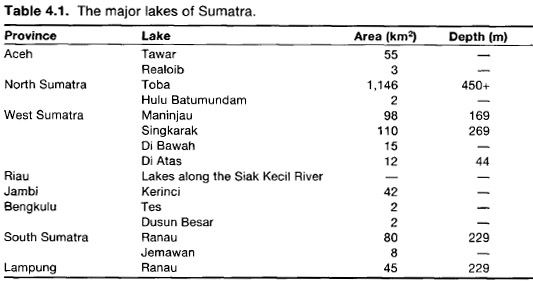
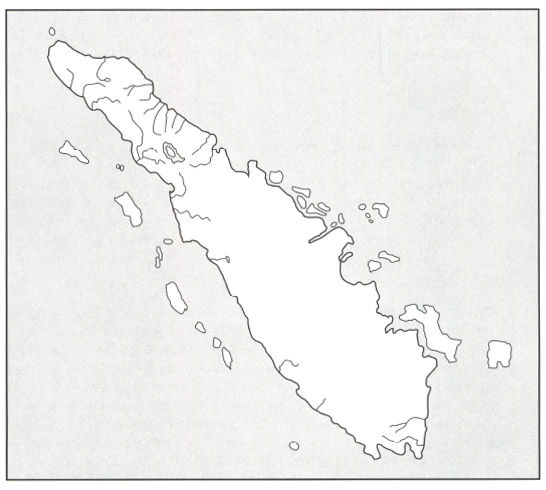
Figure 4.1. Rivers in which freshwater eels are recorded.
After Delsman 1929
EFFECTS OF THE CATCHMENT AREA ON RIVERS AND LAKES
The geology, geography and human use of a catchment area are extremely important to considerations of freshwater ecosystems because they influence the chemical composition of the water and the rate of water input. These in their turn will influence the composition of the biota.
Water Input
The major input to most rivers and lakes is from ground water discharge (figure 4.2). The water table - the top of the ground water zone - rises until it is exposed in the bottom of the deepest depression in the area, and this usually forms a river. Water entering a river may have fallen as rain days or even weeks beforehand. Even in Sumatra, rivers can run dry, particularly in the headwater regions, and the resident biota are forced to bury themselves in the moist substrate, to find permanent pools, or, for smaller forms, to form a cyst or some other resistant body that can begin to develop again when conditions become favourable.
At the other extreme, floods occur. Heavy rain does not usually cause serious flooding where the ground is covered with forest and most of the rain can permeate the ground to join the ground water or the interflow (water that flows beneath the ground but above the water table). A small proportion of rain water normally enters rivers and lakes via the surface runoff. However, where forest cover is removed, unobstructed rainfall cause the ground to compact, water is not held in the trees' root mat, and very little water enters the transpiration stream of plants so that most of the rain water flows along the soil surface and directly into streams. This causes erratic streamflow in the headwaters. At times of high water flow, the substratum of the streambed is likely to be scoured out, and many animals and plants are removed with it, thus also depleting the biological resources.
Water Chemistry
Lakes and rivers contain chemicals which affect the nature of the biological communities within them. All plants, both micro- and macroscopic, require a large number of elements, but particularly nitrogen, phosphorous and potassium. Aquatic animals also have specific chemical requirements; for instance, molluscs are dependent on sufficient supplies of calcium for shell growth (Berry 1963). The effects of high levels of phenolic compounds in water draining from nutrient-poor sites are described on page 177.
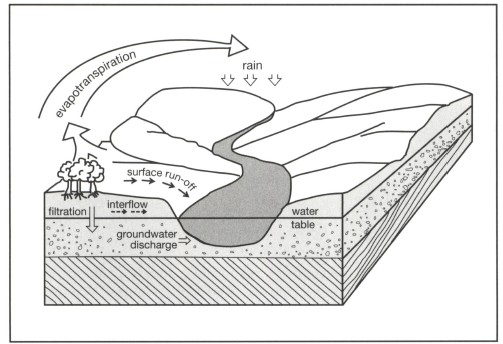
Figure 4.2. Diagram of the various pathways of water after arrival in a catchment area.
After Townsend 1980
The concentrations of dissolved oxygen and carbon dioxide have important effects on all aquatic organisms. A proportion of these gases enter the water through diffusion from the atmosphere or, in fast-flowing rivers, by natural aeration in turbulent water. However, photosynthesis and respiration within the stream itself also have significant effects on gases in solution. For example, the marked diurnal pattern of photosynthesis may be reflected by considerable changes in oxygen and carbon dioxide concentrations, and in situations where large amounts of organic waste enters a stream (e.g., near habitation or a palm oil processing factory), their decomposition by microorganisms causes severe depletion of dissolved oxygen.
Minerals can also enter rivers and lakes from rain water - which is by no means pure and may contain quite appreciable quantities of many inorganic compounds - and from the ground water. Much of the latter will have been in intimate contact with both soil and unweathered parent rock and as a result will have incorporated inorganic and organic substances in solution or suspension. Thus the chemistry of river water is largely determined by the mineral nature of the catchment area. If this consists of easily eroded sedimentary rock, the concentration of minerals will be high; conversely, if the rock is resistant to weathering, the river water will be relatively low in minerals (Townsend 1980).
BIOTIC COMPONENTS
Plants
The major groups of macrophytes, as the larger aquatic plants are known, are the flowering plants and mosses. Those macrophytes which do not float or have most of their leaves above water survive by being adapted to low oxygen levels, slow rates of diffusion and low light intensity of their environment. A good supply of large-celled aerenchyma tissue (through which gases can pass easily) is often found in these plants, thus facilitating adequate internal aeration. Adaptations allowing relatively high rates of photosynthesis under conditions of low light intensity include the absence of cuticle from stems and high concentrations of chloroplasts in the epidermal layer. Many plants, however, such as water lilies Nymphoides, duckweed Lemna, and the smallest of all flowering plants Wolffia1, avoid these problems by having floating leaves which are in contact with the atmosphere. Some macrophytes, such as mosses, may be found attached to rocks while others, such as water hyacinth Eichhornia crassipes, are free-floating. Most of the flowering plants, however, are rooted in the substrate.
The macrophytes of four of Sumatra's lakes have been described in detail by van Steenis and Ruttner (1933). In the lakes (Toba, Di Atas, Singkarak and Ranau) Hydrilla vertiallata, a submerged plant with whorls of three to eight leaves along the stem, was common. In Lake Singkarak it was found 8 m below the lake surface. Other plant species were common to different degrees in the four lakes.
Algae are the major primary producers in lakes and rivers. Attached algae are found on stones or on macrophytes and although they are generally microscopic in size, larger attached filamentous algae (such as Spir-ogyra) are also found. The other main group of algae is the phytoplankton, which consists exclusively of microscopic forms. Phytoplankton is rarely found in rivers, and any free-floating microscopic algae found in upstream regions are almost certainly not phytoplankton but attached algae which have become detached (Townsend 1980). Examples of phytoplankton are shown in figure 4.3, and a description of the plankton in the Pekanbaru area is given by Anwar et al. (1980). A methodology for determining the population size of phytoplankton in ponds, where it is much more common, is given by Humner (1980). Studies of chlorophyll-a and chlorophylls-b in phytoplankton are extremely useful in assessing the primary productivity of aquatic ecosytems (Relevante and Gilmartin 1982).
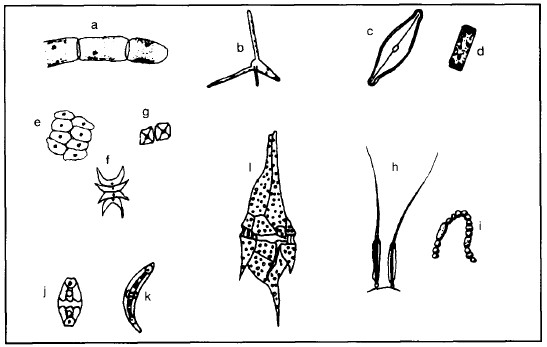
Figure 4.3. Examples of aquatic microorganisms, a - filamentous algae; b - fungal spores; c, d - diatoms; e, f, g - green algae; h, i - blue-green algae; j, k - desmid; I -dinoflagellate.
After Townsend 1980
Fungi and Bacteria
The major role of fungi and bacteria is as decomposers of dead organic matter (corpses, faeces, dead plant material, etc.). The fungi and actino-mycetes (a common group of bacteria) are best suited to coping with solid matter because they adhere to and penetrate the surface, and often produce extracellular degrading enzymes. The smaller molecules released during this metabolism are rapidly consumed by bacteria. The ubiquitous nature of fungal spores and bacteria in most fresh water means that dead material is rapidly colonised. Many aquatic fungal spores have four long straight 'arms' diverging from the centre and these probably act as anchors to allow efficient attachment even in turbulent water (fig. 4.3b). These spores are sometimes concentrated by bubbles and the persistent foam below waterfalls or rapids is a good source of them. If this foam is collected, the spores can easily be examined under a microscope (Townsend 1980).
Animals
Animals of lakes and rivers can be roughly categorised by habitat. A few species, such as water skaters (Gerridae) (Cheng 1965), live on the water surface supported by surface tension, and this group of animals is known as the neuston. The species living in the mid-water are divided into two groups; those which are capable of swimming are called the nekton, the others swim weakly if at all and are called the zooplankton. The commonest zooplankton are the Rotifers (Karunakaran and Johnson 1978), and the small crustaceans Cladocera and Copepoda (Johnson 1962). Like the phytoplankton, zooplankton are concentrated in lakes or downstream sections of rivers. Plankton can be useful subjects in environmental studies, but identification, particularly of zooplankton, is often extremely difficult. Keys with pictures for the major plankton groups in Sumatra are needed. There are considerable (and not always easily explicable) fluctuations in the abundance of plankton at different levels in a body of water from hour to hour, day to day and season to season, and so the best method of sampling is by vertical pulls of a plankton net.
Most species of invertebrates are associated with river- and lakebeds and are known as the benthos. The majority of this benthos comprises insects but, in certain habitats, oligochaete worms, leeches, molluscs or crustaceans may predominate.
Food Webs
Constructing a food web for an aquatic or any other ecosystem demands more than simply compiling an inventory and deciding on the probable connections. It may take considerable detective work to elucidate some of the links in the web. For example, the most successful ponds raising Chinese carp Cyprinus carpio flavipennis are generally those in which the waters have been heavily fertilised with pig manure. Under such conditions the dominant organism is often the red protozoan Euglena sanguinia (fig. 4.4), the numbers of which are sometimes so dense that they form an orange-red film on the water surface. Since carp usually feed on macrophytes, it is not immediately obvious what role Euglena plays in the food web (Prowse 1958b). An example of a carefully produced food web is shown on page 148, and the methods used to produce it are by Green et al. (1976).
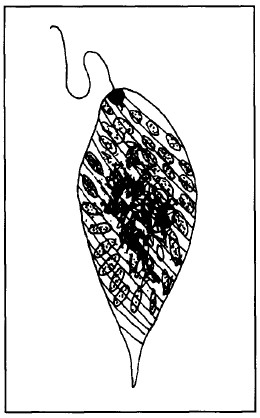
Figure 4.4. Euglena sanguinis - a protozoan common in some fish ponds.
PHYSICAL PATTERNS IN LAKES
Lakes may be viewed as very slow moving rivers, in which the riverbed has become very wide and very deep. Many of the same species of animals and plants live in both lakes and rivers, and many of the adaptations they require are also the same. However, so great are some of the structural differences of lakes and rivers that their behaviour and characteristics require separate attention. Lakes are dealt with first because they are simpler than rivers.
The German Sunda Expedition studied five lakes in Sumatra:
• Lake Di Atas,
• Lake Ranau,
• Lake Maninjau,
• Lake Singkarak, and
• Lake Toba (Ruttner 1931).
In addition to these, Lake Kawar and Lake Mardingding were studied briefly by a team from CRES in order to collect data to illustrate topics discussed in this section (fig. 4.5).
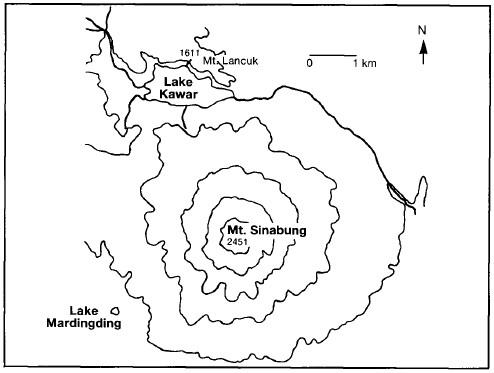
Figure 4.5. Locations of Lake Kawar and Lake Mardingding relative to Mt. Sinabung.
Lake Kawar and Lake Mardingding
Lake Kawar in the Karo highlands was formed several thousand years ago when a lava flow from the volcano Mount Sinabung blocked the River Tupin (Verstappen 1973). A small dam was built at the outflow in about 1985 for an irrigation scheme and this raised the level by about 2 m. Its present area is 116 ha and this is only slightly greater than before the dam was built because the lake sides slope steeply. North of the lake is undisturbed forest and to the south, there is low-intensity agricultural activity.
The CRES team recorded depth, gradients of temperature, conductivity and dissolved oxygen, benthos, and concentrations of nitrogen, potassium and phosphorus at 25 locations on the lake. From the depth soundings a map showing the approximate location of depth contours was produced (fig. 4.6). From these data the capacity of the lake could be calculated (Myers and Shelton 1980) and was found to be 41.5 million m3 (equivalent to a cube with sides 346 m long). The outflow over the dam was measured and was found to be 25.8 m3 per minute. Assuming, for the sake of simplicity, that this is an average flow rate, it is clear that the volume of the lake is 'replaced' every three years. This fails to take account of see page from the lake into the ground water or of the fact that the deeper water is replaced more slowly than surface water, but it provides some indication of the time taken for water to pass through the lake.
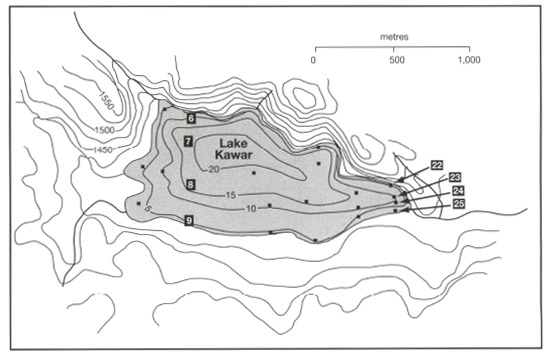
Figure 4.6. Height contours (every 25 m) around, and depth contours (every 5 m) within Lake Kawar, with the locations of the 25 sampling points.
Lake Mardingding lies on the southwest slope of Mount Sinabung. Its formation has not been described, but it may have formed in a small hole left by a minor crater. Its edges were reinforced with cement some years ago, presumably to aid irrigation. The same parameters studied on Lake Kawar were examined at 10 locations on Lake Mardingding. Its area is 0.4 ha and it has a volume of 4,200 m3. Outflow was not measured but was estimated to be 1 m3 per minute. Thus the lake volume would be exchanged in about three days (again, this does not take account of seepage into the ground water).
Temperature
The sun's rays penetrate to a certain depth in all lakes, and the surface water is therefore warmed. Warm water is less dense than colder water and so a layer of warm water 'floats' on top of the colder water. The warm layer is called the 'epilimnion', and the cold layer is the 'hypolimnion'. Separating the two is a fairly thin layer called the 'metalimnion,' across which there is a sharp temperature gradient called the 'thermocline' (fig. 4.7). Dark-coloured water absorbs more heat than light-coloured water. Thus the CRES team investigating the black-water lake of Lake Pulau Besar in the peat swamps of eastern Riau found the surface temperature to be 30.5°C, one or two degrees higher than would normally be expected. Even within a lake, surface temperatures can vary. In Lake Ranau, for example, the western end is 4°C warmer than the eastern end because of the influence of a hot spring (Forbes 1885).
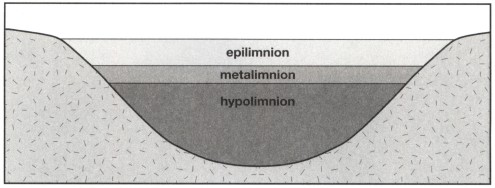
Figure 4.7. Hypothetical vertical section of a lake showing the layers.
The temperature profile from one of the deepest parts of Lake Kawar is shown in figure 4.8. The thermocline occurred at about 8.5 m, and although the temperature probe was only 12 m long, the hypolimnion appears to have begun 10 m below the lake surface and to have had an even temperature of 21°C. No thermocline or any other stratification was observed in the shallow Lake Mardingding. Sections through the middle and outflow end of Lake Kawar (fig. 4.9) show that the increased flow near the dam caused a certain amount of disturbance.
In none of the 15 lakes studied by the German Sunda Expedition did the temperature difference between top and bottom exceed 5.5°C. At maximum depth in the hypolimnion, the temperature was between 20.1°C and 27.0°C, being lowest in the mountain lakes, and increasing 0.4-1.4°C for every 100 m decrease in altitude (Ruttner 1931) (see p. 277).
Dissolved Oxygen
Thermal stratification has interesting consequences for the hypolimnion. Photosynthetic organisms thrive in the epilimnion near the light, thus keeping the epilimnion well supplied with oxygen. In the darker waters of the hypolimnion, however, there may be almost no photosynthesis and so almost no oxygen is produced. A few animals live in the sediments at the bottom of the lake, however, and remove the oxygen by their respiration. This oxygen deficit is made worse by the continual action of decomposers; the biota of the lighted surface will be continually dropping faeces and other debris into the hypolimnion, and these will be processed by bacteria as they fall. Bacterial respiration can quickly reduce the oxygen dissolved in the hypolimnion to virtually zero, and there is no way that oxygen can reach these layers unless the layers overturn (p. 145).
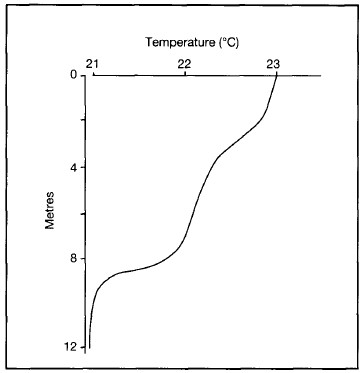
Figure 4.8. Temperature profile near the middle of Lake Kawar showing the thermocline at about 8.5 m.
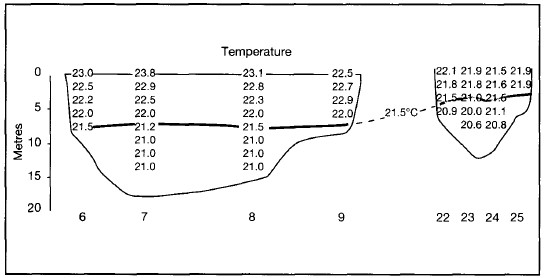
Figure 4.9. Sections through Lake Kawar showing temperature readings every 2 m.
The dissolved oxygen profile from one of the deepest parts of Lake Kawar is shown in figure 4.10. This shows the boundary between oxygenated and deoxygenated water to be between 6.5 and 7 m. The dissolved oxygen probe was only 8 m long but the readings suggested the water would have been anoxic at about 10 m.
Sections through the middle and outflow end of Lake Kawar (fig. 4.11) show the boundary between the oxygenated and almost deoxygenated water to be at nearly the same depth across the body of the lake, and about 2 m shallower at the outflow end. It is interesting that the readings for dissolved oxygen 10 cm below the surface were an average of 7.1 ppm on the northern edge and an average of 7.5 ppm on the southern edge. Unlike the northern side, the south is not protected from the wind by projecting ridges and coves and the resultant surface disturbance takes up more oxygen.
Nutrients and Conductivity
As described above, much of the living matter in the epilimnion eventually finds its way to the hypolimnion when the animals or plants die, or when their consumers defecate their remains into the water. Thus, the epilimnion experiences a net loss of nutrient minerals while the hypolimnion experiences a net gain. The profile of conductivity (concentration of electrolytes) for one of the deepest parts of Lake Kawar is shown in figure 4.12. This shows that the boundary between the low concentration of dissolved minerals in the surface water and high concentration of dissolved minerals in the deeper water occurred at 7.5 m. Figure 4.13 reveals that this boundary was more or less constant across the body of the lake and slightly shallower and more disturbed at the outflow end.
Oxygen consumption (rate of respiration) is about 4-9 times faster in Sumatran lakes than in lakes in the temperate regions because the temperatures of the Sumatran hypolimnions are 15-20° higher. Thus carbon dioxide and other solutes are released very fast, and in deeper lakes much of the settling organic matter is mineralised before it even reaches the bottom. In the deepest lakes examined by the German Sunda Expedition, the deep bottom sediment consisted of almost pure silica in the form of diatom shells and spongilla needles (Ruttner 1931). Ruttner also found very high levels of phosphate and ammonium in some hypolimnions and suggested that water from deeper layers rather than the surface should be siphoned and used for rice field irrigation to save using artificial fertilisers. Algal growth in the euphotic zone (see below) is limited by the levels of nitrates and phosphorus, and the relative importance of these differs, depending on the catchment area.
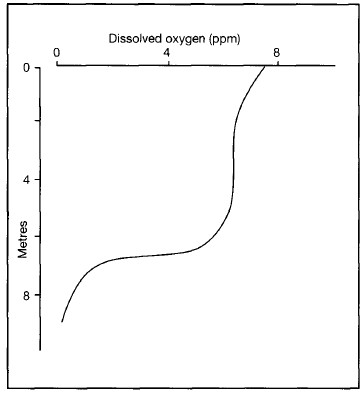
Figure 4.10. Dissolved oxygen profile near the middle of Lake Kawar showing a boundary at about 7 m.
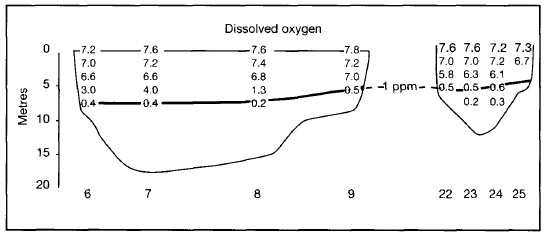
Figure 4.11. Sections through Lake Kawar (between locations 6-9 and 22-25) showing dissolved oxygen readings every 2 m.
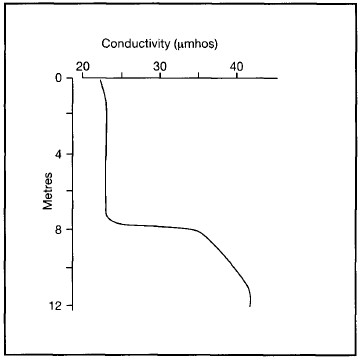
Figure 4.12. Conductivity profile near the middle of Lake Kawar showing a boundary at about 7.5 m.
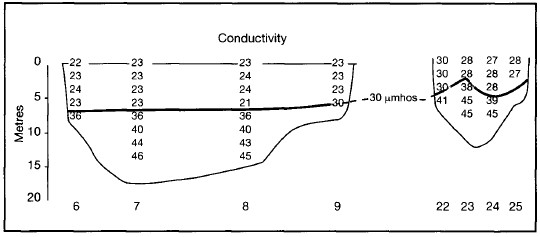
Figure 4.13. Sections through Lake Kawar (between locations 6-9 and 22-25) showing conductivity readings every 2 m.
Ecologists classify lakes between two extremes based on their nutrient content and organic productivity. 'Oligotrophic' lakes have low concentrations of nutrient minerals and harbour relatively little plant and animal life. The water in oligotrophic lakes is generally clear and unproductive. 'Eutrophic' lakes are rich in nutrient minerals and support an abundant fauna and flora. As a result of the dense plankton populations, water clarity is reduced.
Light Penetration
Light entering a water body is absorbed by the water itself, by dissolved substances and particles in suspension, mainly phytoplankton. In theory, light is never totally absorbed at any depth but where it is reduced to about 1% of the surface intensity, this represents the approximate depth at which the energy used by algae in respiration is balanced by the energy they gain by photosynthesis. This is known as the 'compensation point', and the water above the compensation point is known as the 'euphotic' zone. The depth of this zone depends to a large extent on the nutrient status of the lake because high nutrient levels lead to high phytoplankton populations which cause surface shading and so reduce light penetration. If a black-and-white disc (a Secchi disc) is lowered into water, the mean of the depth where it disappeared from view and where it reappeared is equivalent to 0.3-1.5 of the depth of the euphotic zone. Secchi disc readings at Lake Kawar were between 1.9 and 2 m. Dissolved oxygen was found down to almost 8 m, but this suggests that there was some mixing within the epilimnion rather than that photosynthesis occurred down to that depth. Ruttner (1931) found that the euphotic zone was generally the same as the epilimnion and varied from 20-30 m in Lake Toba to 2-5 m in smaller lakes.
Stability
In temperate regions, lake water is mixed in the autumn when the top layer starts to cool and strong winds exert a force on the lake water sufficient to overturn the layers. In most tropical lakes, however, the layering of water is more or less stable although overturns are known (see the paper by Green et al. [1976] for a lake in Java). When tropical overturns occur, the low oxygen concentration of the new surface water can kill fish and other animals.
Most of the 15 lakes investigated by the German Sunda Expedition were stratified and Ruttner (1931) found that their stabilities (resistance to mixing) and depth of thermoclines were related to surface area roughly according to the following proportions:
|
area |
1 : |
100 : |
1,000 |
|
depth of thermocline |
1 : |
3 : |
6 |
|
stability (0-20 m) |
50 : |
10 : |
1 |
Thus the thermocline of Lake Toba (over 1,000 km2) is over six times the depth of the thermocline found in Lake Kawar (1.16 km2) and needs less than one-fiftieth the wind force to mix the top 20 m. So large is Lake Toba and so strong the winds that blow across it, that oxygen was found down to 425 m in the northern basin (Ondara 1969; Ruttner 1931).
BIOTIC PATTERNS IN LAKES
Layers - Light and Oxygen
The distribution of plankton in lakes (and other bodies of water) is governed by a wide range of variables: water density and viscosity, night-time cooling, turbulence, temperature, light intensity and time of day. In addition, the form of feeding or photosynthesis has an effect (Davis 1955). Ruttner (1943) found that differences in plankton abundance did not only occur between the epi-, meta-, and hypolimnion but that considerable variation also existed within the epilimnion; those differences were not easy to explain. Phytoplankton were not usually found below the thermocline but in the very clear Lake Toba, for instance, some phytoplankton were even present in the hypolimnion.
Many fish obviously depend on the plankton but would be unable to feed on them if they were in the hypolimnion because of the low levels of oxygen found there. In Lake Kawar, for example, more than half the volume of the lake would not support fish because of a virtual absence of oxygen, and about 70% of the lake bed would not support benthos-eating fish because the lake bed is below the thermocline. Benthic animals either have to be able to cope with very little oxygen (such as the red, haemoglobin-filled chironomid fly larvae) or with no oxygen (and usually no light), such as anaerobic saprophytic2 fungi and bacteria. In the low-oxygen, dark environment these organisms have few predators. Some animals make vertical migrations, coming to the surface epilimnion for oxygen and descending to feed. At Lake Kawar a total of 78 hauls of lake-bed samples resulted in just one snail Melanoides tuberculata being found. Even when sampling in shallower water closer to the edge, only an occasional snail could be found. This scarcity was probably caused by the low nutrient levels in the lake, which were also reflected in the absence of submerged macrophytes around those parts of the lake that were surveyed.
The high altitude (and therefore low temperature), deep water, and low nutrients of Lake Kawar do not recommend it for fisheries. Carp have been introduced with limited success but introductions of tilapia Oreochromis mossambica and gourami Osphronemus goramy failed. See the report by Ondara (1969) for an excellent account, in Indonesia, of the introductions into Lake Toba, which is also nutrient-poor, and the paper by Schuster (1950) for a discussion of the successes and failures of fish introductions into Indonesia.
At Lake Mardingding, the water was almost choked with water weeds and floating on the surface were quantities of duckweed Lemna. The nutrient levels at Lake Mardingding were much higher than at Lake Kawar and the oxygen levels at the bottom (1 m) of this well-mixed small lake were ± 7 ppm. This resulted in a considerably richer invertebrate (and probably fish) fauna, particularly amongst the water plants.
Water Hyacinth Community Ecology
One of the best known of Sumatra's lake plants is the water hyacinth Eichhornia crassipes. It is distributed throughout the tropics and subtropics (although it originated in Brazil) and has caused serious and expensive problems in many water management schemes because of its rapid growth. At the new Asahan River hydroelectric site, water hyacinth floating out of Lake Toba has to be held back by floating pontoons and then collected to prevent the plants entering the various sections of the hydro-scheme. Water hyacinth used to cover most of Lake Kerinci but a control program has reduced it considerably.
The above examples give the impression that water hyacinth is nothing but a pest. In fact, it can be a useful plant: Indonesian conservation groups have used it to make rough paper and efforts have been made to use it as cattle feed. It can also reduce levels of inorganic pollutants (Sato and Kondo 1981), and in moderate quantities plays an important role in lake fisheries.
At Lake Lamongan, one of the crater lakes on Mount Lamongan, East Java, water hyacinth forms a girdle around three sides of the lake up to 30 m wide, held in position by bamboo stakes. Around the fourth side, at the eastern end, there is a much more extensive mat. In the study by Green et al. (1976) it was found that there was fairly free movement by epilimnion water beneath the girdle of water hyacinth and thus the temperature, oxygen and pH up to 2 m beneath the mat was more or less the same as that in the open water. At the eastern end, however, there was evidence of oxygen depletion. This was presumably caused by shading which prevented phytoplankton and macrophytes from photosynthesising.
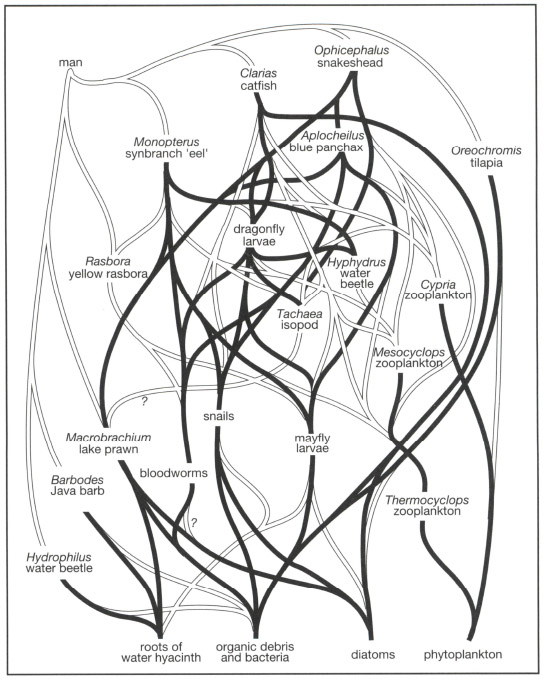
Figure 4.14. A simplified food web for part of the water hyacinth root-mat community in Lake Lamongan. The diagram is based on the gut contents of animals caught in or near the water hyacinth, or known to have fed there because of fragments of water hyacinth roots in the gut; or, in the case of Ophiocephalus, because the gut contained so many species from the water hyacinth community. The link between a consumer and its food is dark if the food item was ever recorded as the main gut contents of the consumer. Links based on indirect evidence are marked with a question mark.
After Green et al. 1976
The loose meshwork of water hyacinth roots extending 20-30 cm below the lake surface supported an abundance of aquatic organisms. The leaves reaching up to 1 m above the surface formed a habitat that was essentially terrestrial and was occupied by such air-breathing animals as could swim or fly to it. An analysis of animal stomach contents showed that few animal species seemed to feed directly on the tissue of the water hyacinth roots, but many fed on the organic debris and diatoms that covered the roots. Microinvertebrates were abundant, having been attached to, crawling on, or swimming among the roots, but unfortunately small protozoans and some rotifers are rarely recognisable in gut contents and so their role in the food web cold be not be completely determined (fig. 4.14). The water hyacinth root community forms the basis for an important trap-fishery for the people living around Lake Lamongan.
PHYSICAL PATTERNS IN RIVERS
Longitudinal patterns in the intensity or concentration of physical factors occur down the length of almost all rivers, but not necessarily in a smooth, continuous fashion. Large waterfalls, for instance, càn cause a major increase in the concentration of dissolved oxygen. Variation also exists across a stream in depth, substrate composition and current velocity, and these also have their effects on the biological communities.
Current Velocity
Despite what one may intuitively believe, the mean velocity of water increases from the headwaters to the lower stretches of a river. Less surprisingly, the discharge of a river (water volume per unit-time) also increases downstream as a product of the cross-sectional area and the mean velocity. This is due partly to additional water entering from tributaries and a reduction of friction on the riverbed caused by the change from large, irregular boulders to fine silt.
Current velocity also varies across the width of a river - being greatest near the middle and greatly reduced among macrophytes - and varies along the length of short stretches. In small streams, for example, shallow sections with fast water alternate with deeper pools where the water flows more sluggishly.
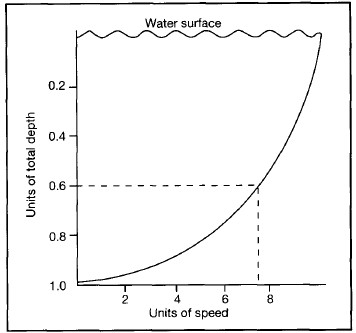
Figure 4.15. Relationship between current velocity and depth in an open channel.
After Townsend 1980
Shear Stress on the Riverbed
Current velocity decreases in a logarithmic manner from water surface to riverbed (fig. 4.15). The average velocity of the whole column of water is equivalent to that occurring at about 60% depth, and this may be an important factor in investigations of plankton and nekton which live in that region. This average velocity is, of course, of little relevance to animals living on the riverbed. They are subject to the force of 'shear stress' (to) on the bed. The greater the shear stress on the riverbed, the greater the chance that a benthic organism will be dislodged and washed downstream. Shear stress is calculated as follows: where 'y' is the specific weight of water, 'd' is depth and's' is slope. Slope declines more quickly than depth increases (there could easily be a hundredfold decrease in slope but only a tenfold increase in depth) and thus for a given discharge frequency, to decreases downstream. It is clear then that the shear stress experienced by benthic organisms is likely to be a more important factor nearer the headwaters, despite the lower average velocity there (Townsend 1980).
to = yds
Riverbed Particle Size
Shear stress affects not only animals and plants but also inorganic particles which can be dislodged. The particles which remain in a location will be those that are larger than the flowing water is able to carry away. The smallest ones will be carried in the water as 'suspended load' while the larger particles roll along the bottom as 'bed load'. As shear stress decreases downstream, so particle size also decreases downstream.
Temperature
Soil is well buffered against the effects of changing air temperature and solar radiation and so its temperature is much more stable than that of air. Headwater streams fed primarily by ground water will be at temperatures close to that of the surrounding soil. The water is gradually warmed as it moves downstream by contact with the air and by being warmed directly by sunlight. The rise is approximately proportional to the logarithm of the distance travelled (Townsend 1980).
Although water temperature is frequently measured in river or lake research programmes, full use is rarely made of the data, and its usefulness to environmental science is often underestimated. A survey of midday temperatures was conducted in three areas in western Peninsular Malaysia (Crowther 1982) and this highlighted the wide range of thermal regimes encountered in quite a small area and showed that river temperatures are strongly influenced by the environmental characteristics of the catchment area. As would have been predicted from the theoretical discussion of temperature in rivers above, water temperatures were lower where there was major input from ground water and where the river was shaded, than they were in open plains where input from surface water was important and there was no obstacle to solar radiation. The thermal regime of a river might provide a useful measure of the environmental impact of land use changes. Forest clearance, for example, would lead both directly and indirectly to increased temperatures and greater temperature fluctuations. The direct effects would be to reduce the amount of shade along the river and to increase surface and soil temperatures by allowing more sunlight to reach the ground. Indirectly, felling would increase surface runoff, thereby reducing the ground water component which has a low temperature and low variability. Also, by favouring high rates of soil erosion, the sediment load would be increased, thus enhancing the rate at which the river absorbs solar radiation (Crowther 1982).
The ecological consequences of the above are discussed on page 157.
Dissolved Oxygen
The concentration of dissolved oxygen in rivers is determined by a number of physical and biological factors. A rise in temperature reduces the solubility of gases, so the increase in temperature downstream causes a decrease in dissolved oxygen concentration. This pattern is reinforced because in the headwaters the water is turbulent and well mixed, whereas downstream it is calmer and less mixed. There is also likely to be more decomposition of organic debris (consumption of oxygen) downstream, and if the water is turbid the rate of photosynthesis (production of oxygen) is lower. Striking daily patterns can be found because photosynthesis can produce oxygen-saturated water during the day, while decomposition of organic matter and plant respiration at night greatly deplete oxygen levels (Townsend 1980).
Mineral Nutrients
The concentration of ecologically important mineral nutrients or dissolved salts generally increases downstream. Rocks in the headwaters are generally resistant to weathering and the concentration of minerals will thus be low. Downstream, in areas of alluvium and sedimentary rock, the inflow of minerals, and therefore the conductivity of the water, will increase. This trend is amplified by the inputs of mineral nutrients from the wastes of human activities (Townsend 1980).
BIOTIC PATTERNS IN RIVERS
Longitudinal sequences in the distribution of many riverine animal and plant species are commonly found - presumably at least partly related to the changes in the abiotic factors discussed above. One of the few detailed studies on this topic in the Sunda Region was conducted by Bishop (1973) along the Gombak River. His data are extremely complex but the longitudinal distribution of just 12 fish species is shown in figure 4.16. Note the change in species at the forest edge and where pollution sources become frequent. Bishop also found a significant correlation between fish diversity and stream order (fig. 4.17), indicating the greater number and complexity of spatial and feeding niches for fish in the larger channels.
The method for assigning stream orders in shown in figure 4.18.
Current
Current velocity increases in a downstream direction but shear stress is greatest in the shallow, turbulent headwaters (p. 149), and so those organisms possessing adaptations enabling them to resist being swept away are usually found upstream. Examples of animals living in headwater rivers are shown in figure 4.19.
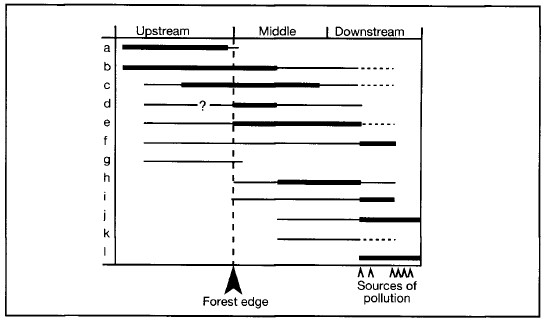
Figure 4.16. Longitudinal distribution of 12 species of fish in Gombak River. Horizontal dotted lines denote rare occurrence; narrow lines denote constant species; wide lines denote 1.0% or more of the fish catch, a - Tor soro; b - Acrossocheilus deauratus; c - spiny eel Mastacembelus maculatus; d - catfish Silurichthys hasseltii; e - Glyptothorax major; f - barb Puntius binotatus; g - snakeshead Channa gachua; h - Mystacoleueus marginatus; i - rasbora Rasbora sumatrana; j - halfbeak Dermogenys pusilla; k - Acrossocheilus sp.; I - guppy Poecilia reticulata.
Adapted from Bishop 1973
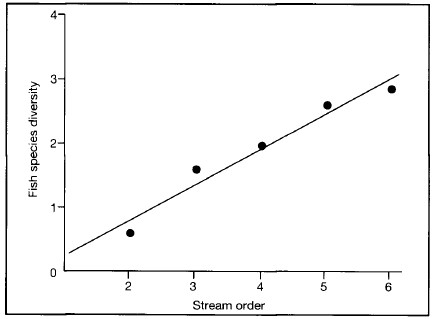
Figure 4.17. Relationship between fish species diversity and stream order.
After Bishop 1973
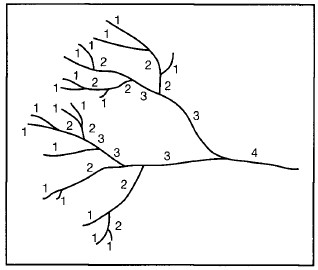
Figure 4.18. Hypothetical river basin showing system of assigning stream orders. Thus, 1+1=2, 2+2=3, but 2+1=2, 3+2=3 and so forth (see Strahler 1957).
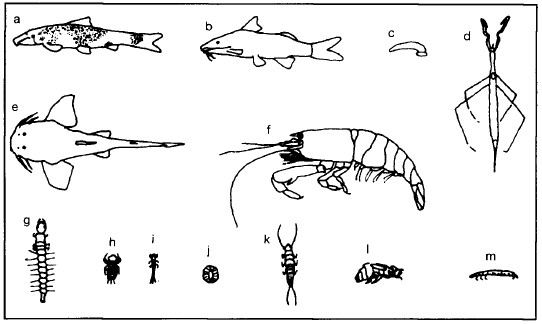
Figure 4.19. A selection of animals from torrent rivers in the Sunda Region. Relative sizes correct; about 1/3 natural size. a-pied suckerloach Homaloptera ocellata; fa-catfish Glyptothorax major, c-leech (Hirudinea); d-giant water stick insect Cercometus sp.; e-catfish Acrochordonichthys melanogaster; f-torrent prawn Atya spinipes; g-hellgrammite larva (Corydalidae); h-mayfly nymph (Ecdyonuridae); i-mayfly nymph Baetis sp.; j-waterpenny larva Eubrianax sp.; k-stonefly nymph Perta sp.; l-dragonfly nymph (Gomphidae); m-caddis worm (Rhyacophilidae).
After Johnson 1957
Plants
The only plants found in very fast-flowing water are encrusting algae, unbranched filamentous algae, and mosses. These are usually squat species which resist shear stress, but this habit makes them more susceptible to smothering by sand. Despite these adaptations, they can, of course, be washed away along with the stones that they are attached to if the riverbed is unstable.
The adaptations which enable higher plants to live in fast-flowing water include a low resistance to water flow, high anchoring strength, and high resistance to abrasion. The ability to propagate from small fragments is also a common feature of plants of these zones. Plants especially adapted to living on the sides of rivers are called rheophytes and are typically shrubs with narrow leaves and brightly coloured fruit which are dispersed either by water or by fish (van Steenis 1952). Clearly, plants growing at the sides of fast streams (or growing amongst resistant species) are subject to less battering, and so variation in plant density occurs across the stream. Since discharge varies with time, plants at any point will, at least in part, show adaptations to the periods of maximum spate (Townsend 1980). Dudgeon (1982b), working on a river in a Hong Kong forest, found that floods caused a great reduction in epilithic algae (algae growing on stones or rock), but not in detritus, because detritus washed downstream was replaced by more detritus washed down from further upstream. Dependence on detritus as an energy source thus leads to a more stable existence than dependence on attached algae.
Invertebrates
There are many ways in which invertebrates have adapted to the conditions in turbulent headwater rivers. Many species have extremely flat bodies which allow them to live and move about in the relatively motionless layer just above the riverbed, or to live under stones, thereby avoiding the current. Other species hang on by means of hooks or suckers, or have streamlined shapes offering very little resistance to stream flow. Lieftinck (1950), writing about a lowland stream in West Java, states that at a meander in a river, the slow-flowing inside of the bend has an almost lakelike invertebrate fauna, whereas the fast-flowing outer bend has species with adaptations for the torrents of headwaters. The same paper also describes the many and varied adaptations of dragonfly larvae to life on the riverbed.
Fish
Many species of fish are adapted to life in fast-flowing water in ways which are similar to those evolved by invertebrates. Most are streamlined and round in cross-section, so offering little resistance to flow, and are frequently strong swimmers. These fish are components of the nekton but many fish of headwaters are effectively part of the benthos, spending most of their time on the riverbed. These fish are not such strong swimmers, are frequently flattened, live amongst stones and rocks, often have their eyes rather close to the dorsal surface and their month located ventrally. Many of these fish have suckers or friction pads to prevent them being washed away. Most of these fish also have the swim-bladder, an air-filled organ acting as a buoyancy control, much reduced in size.
Substratum
The current determines the occurrence of boulders in the headwaters and of silt near the river mouth (p. 150). Such differences obviously influence the distribution of invertebrates: species which are adapted to live under stones or in crevices only occur where the bed is stony, those that rely on their own hooks or nets for anchorage can only occur where the substratum is relatively stable, and the burrowing aquatic larvae of flies require a riverbed of fine particles. In the light of this, it is interesting to consider the impact on the river biota of removing middle-sized boulders from riverbeds for use as hard core for roads and other constructions.
In regions of a river where there is sufficient silt, rooted macrophytes can occur. These have a direct influence on the distribution of many invertebrates because more species and larger numbers tend to occur on plants than on the nearby mineral substratum, and some species or groups are confined to macrophytes. Most invertebrates on aquatic macrophytes do not in fact feed on the plant tissue. Instead, some graze on epiphytic algae growing on the macrophytes, others use the plant as an anchorage from which to filter food from the passing water, and others are predators. Artificial aquatic plants made from plastic string would probably be colonised by the same invertebrate community that colonise the plants and this method can be used for sampling (Macan and Kitching 1972). This emphasises the role of macrophytes as a living substrate rather than as a food (Townsend 1980).
The importance of particle size on a riverbed in determining species distribution was shown in a study of two species of freshwater crayfish Orconectes that inhabit the same river in the U.S.A. The rocky parts of the river were inhabited by O. virilis and the stretches with finer particles were inhabited by O. immunis; both species were found in the middle stretches of the river. Various factors such as dissolved oxygen levels were investigated to explain this distribution, but most important was the nature of the riverbed. Figure 4.20 shows the results of laboratory experiments in which both species were offered three types of riverbed independently and then with both species present. When separate it is clear that both species preferred a rocky riverbed and avoided a muddy riverbed. When both species were present, however, the 'preference' of O. immunis, but not of O. virilis apparently reversed, because O. virilis consistently drove O. immunis away from the prime, safe, rocky sites (Bovbjerg 1970).
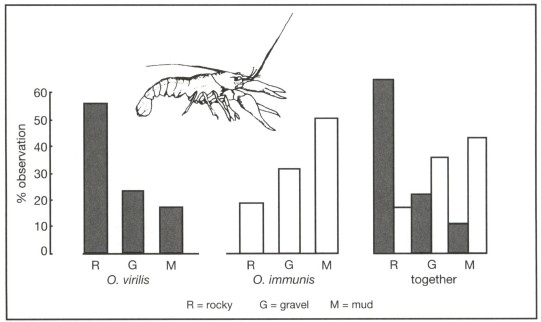
Figure 4.20. Substratum preferences for the crayfish species Orconectes virilis and O. immunis when alone and when together, expressed as a percentage of total positions recorded.
After Bovbjerg 1970
Temperature and Dissolved Oxygen
It has been shown that river temperature increases with distance from the river source (p. 151). Distributions of animals that do not seem to be related to current or nature of the riverbed might be explicable in terms of temperature, but there is such an intimate relationship between temperature and dissolved oxygen that these are better considered together.
The solubility of oxygen decreases with increases in temperature and so dissolved oxygen levels are generally lower downstream. This effect is exaggerated because water is less turbulent downstream so that the oxygen removed from the water by respiration of organisms is less easily replaced than in the aerated headwaters. This is especially important for organisms inhabiting the sediment where most of the decomposition of organic matter occurs. In this respect, a slow-moving river resembles a lake. Special adaptations to these conditions include the high haemoglobin levels in the bodies of bloodworms (larvae of chironomid flies) which enables them to live at very low oxygen levels, and movements of other animals which come up to the surface to take in gaseous air.
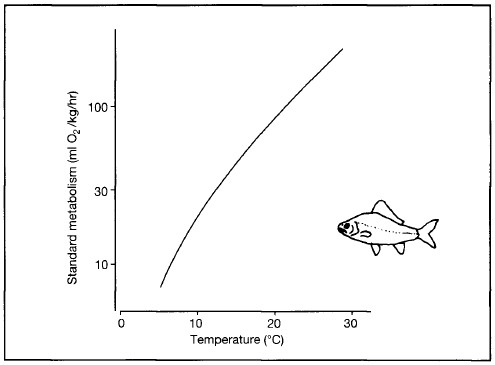
Figure 4.21. The relationship between standard metabolism and temperature for the goldfish.
After Varley 1967 in Townsend 1980
Most studies of the environmental tolerances and preferences of fish and other aquatic organisms have focused chiefly upon chemical parameters (Mohsin and Law 1980; Palmieri et al. 1980), including pollutants, and the possibility of thermal controls has generally been overlooked. It is well established that the metabolic rates of fish (and some other aquatic animals), and hence their demand for oxygen, increase in proportion to temperature, whilst haemoglobin has a lower affinity for oxygen, and levels of dissolved oxygen in water diminish at higher temperature (Townsend 1980). Some fish, such as goldfish3, have a wide tolerance of temperature; the same species that lives in ornamental tanks in Sumatran homes can overwinter successfully in European, ice-covered ponds (fig. 4.21). Most fish and other aquatic organisms, however, have a narrow tolerance of temperature, although optimum temperatures will vary between species.
In addition, aquatic life is poorly adapted to rapid and marked temperature changes. Thus, irrespective of other factors, differences in temperature may result in short rivers arising out of mountains and with a significant groundwater component (such as the River Anai flowing through Padang) and long rivers arising from lowland lakes (such as the River Indragiri arising from Lake Singkarak), supporting different numbers of different species.
As a result of forest clearance on the plains and the development of, for example, mining activities, many mean river temperatures have probably increased from 25° to 30°C. This leads to a 9.5% reduction in dissolved oxygen at saturation, and the effect would probably be compounded because the percentage saturation might well also fall. This, combined with a marked increase in temperature variability, is likely to have considerable impact on many species of aquatic animals and plants (Crowther 1982).
Mineral Nutrients
It would not be surprising if the distribution of certain species were to some extent determined by the changes in concentration of dissolved salts along a river. Virtually all aquatic molluscs, for example, secrete shells of calcium carbonate, and the majority of species are not found in water with less than 20 mg calcium/litre. Thus rivers running off volcanic areas are unlikely to have many, if any, molluscs. Also, plants which have adapted to growing in nutrient-poor (oligotrophic) conditions in mountain headwaters may often not be able to compete against species downstream which are not so adapted (Townsend 1980).
Biotic Factors
There is more to understanding the distribution of an organism than simply determining physical factors such as temperature and water flow. Every organism fares better within a certain range for each of a set of physical variables and the areas where these conditions are met may be called the organism's 'fundamental niche.' Unfortunately, another species may also be happiest in more or less the same conditions and this leads to competition between the species and the establishment of a species' 'realised niche'. Thus, taking the example of crayfish on page 156, the realised niche of Orconectes immunis was quite different from its fundamental niche because of the aggression of O. virilis, whose fundamental and realised niches were more or less the same. This type of competition is called 'interference competition'. Another type of competition, 'exploitation competition', is more subtle and refers to the indirect competition that takes place between species exploiting the same limited resource. Consumption of that resource by one species will reduce the amount available to the other species, and the one which is less able to convert the resource into reproductive output will either be forced to seek an alternative place to live or else perish. There are few detailed studies of this in any fresh waters but Pattee et al. (1973) and Lock and Reynoldson (1976) describe a series of experiments and observations of three species of flatworms (Tricladida). These papers show the importance of competition but also stress that abiotic and biotic factors often interact in very complex ways and that distribution patterns may be influenced by different factors in different rivers. An account of resource partitioning among the fishes of rainforest rivers in Sri Lanka has recently been published (Moyle and Senanayake 1984).
ENERGY FLOW IN RIVERS
At the level of communities or whole ecosystems, the study of ecology can be broadened to include the flow of energy through an ecosystem or part of an ecosystem. In this approach, organisms are therefore regarded as transformers of energy and this energy flow can be traced through the intricate webs of interaction. The biotic community relies on an energy base for the successive trophic levels and in most ecosystems this is provided by plants converting solar radiation through photosynthesis into high-energy organic molecules. Exceptions are caves (p. 315) where there is not enough light for green plants, and rivers in which a substantial proportion of the energy base is provided by dead organic matter. This organic matter can be divided into two components: 'allochthonous' (originating outside the system) and 'autochthonous' (originating within the system). The latter is a relatively minor component. The available organic matter, living and dead, is processed by a wide range of organisms, which include fungi, invertebrates and fish, all interacting in a highly complex manner.
The living organisms of a river can be classified according to their role in energy transfer. Thus, there are:
autotrophs - photosynthesising plants which represent the starting point for energy in most ecosystems; microorganisms — fungi and bacteria whose major role is in the decomposition of organic material; and four groups of invertebrates and vertebrates:
grazers - herbivores feeding on attached algae;
shredders - animals feeding on large units of plant material;
collectors - animals feeding on loose organic particles either on the riverbed or free in the water;
predators - animals which (usually) kill and eat other animals (Cummins 1974).
There are also three classes of organic materials:
• dissolved organic matter (DOM), arbitrarily defined as smaller than 0.00045 mm diameter,
• fine particulate matter (FPOM), less than 1 mm diameter, and coarse particulate organic matter (CPOM), more than 1 mm diameter and including whole leaves, twigs, etc.
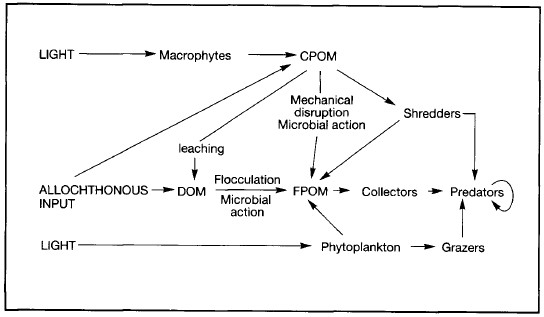
Figure 4.22. A simplified model of energy flow in a river ecosystem. To preserve clarity some arrows have been omitted. For example, all the animals contribute to FPOM in the form of faeces, dead bodies, etc.; some of the allochthonous input contributes directly to FPOM; the principal food of many fish in rivers consists of invertebrates, so the 'predator' category includes fish. However, some fish feed on macrophytes and detritus.
The FPOM and CPOM components include the microorganisms associated with them. For more detailed discussion of and information relating to energy flow in rivers, see the papers by Petersen and Cummins (1974), Barlocher and Kendrick (1975), and Mann (1975).
Interactions between these groups and the three classes of organic materials are shown in figure 4.22.
Longitudinal Patterns
The actual details of the workings of a particular community depend greatly on the nature of its energy base. A hypothetical model is shown in figure 4.23 that represents the relative importance of the allochthonous and various types of autochthonous inputs. The majority of river headwaters, particularly if undisturbed by man, flow through forested catchment areas and receive a substantial allochthonous input from material that simply falls in from the forest canopy. The low level of light reaching the river naturally prevents or at least hinders the growth of attached algae or macrophytes. Lower down the river the shading only occurs at the margins and the autotrophic component increases. The attached algal component, which is generally better adapted to extreme flows and less dependent on a substrate of sediment, would be expected to reach its maximum role nearer the headwaters than the macrophytes. Both macrophytes and attached algae should continue to make significant contributions to the river energy budget until the depth and turbidity are such that light can no longer reach the riverbed, and then these plants will be restricted to the margins (Townsend 1980). Phytoplankton will usually only make a significant contribution where the river is long enough for this component to build up. The generation time for phytoplankton is one or two days (at least three or four days and frequently more for zooplankton), and since rivers generally flow between 20-60 km per day, it is clear that only long rivers, those on the east of Sumatra, will commonly have well-developed populations of phytoplankton.
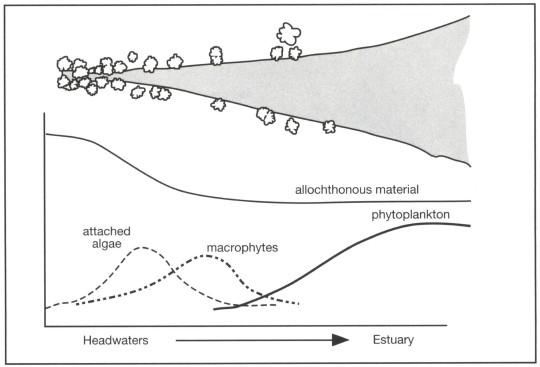
Figure 4.23. Hypothetical representation of the relative contributions of potential energy inputs to a river.
After Townsend 1980
Such longitudinal patterns have not been studied in Southeast Asia. The scheme illustrated is, it is repeated, hypothetical but it seems to fit the known facts from other regions. If it applies to Sumatran systems it can be seen that forest clearance in headwater areas can seriously disturb a river's energy input (and therefore the life that depends on it).
BENTHOS DYNAMICS IN RIVERS
When a heavy fall of rain causes increased flow, the shear stress exerted on the riverbed intensifies and the substrate is scoured, often with the loss of organisms on or in it, and as the flow subsides, so organisms from upstream will be deposited in their place. When the river flow is normal, however, benthic organisms are still moving, either on the riverbed or in the flowing water, and examination of the contents of a net which has been placed in a river and held above the riverbed confirms this. This phenomenon is called 'invertebrate drift'.
Invertebrate Drift
Bishop (1973) found that an average of 222,800 individual invertebrates would drift past a transect in a major headwater stream in just 24 hours. This is equivalent to about 160 individuals per 100 m3 of river water. The drift varies not just with river flow but also through the day. Studies from various parts of the world, including Peninsular Malaysia, have shown that drift is highest at night, particularly just after sunset (Bishop 1973). This appears to be related to light levels rather than to chemical changes. Many invertebrates spend much of the day hiding under stones, etc., and only forage when darkness falls. It is logical that when they start to move, they are more susceptible to being swept away (Chaston 1969).
An index has been devised that expresses the percentage of the benthos drifting over a unit area of riverbed at an instant in time. Various studies in a number of rivers have shown that this value varies from 0.01% to 0.5% and Bishop (1973) found values of 0.003%-0.018% for headwater streams. These figures may appear low, but for a river flowing at 1 m per second, a value of 0.01% means that in one day at least 86,400 (seconds) x 0.01 = 864 times as many benthic organisms flow over a l m2 area of riverbed as were in that area of riverbed. A study by Townsend and Hildrew (1976) showed that 2.6% of benthic invertebrates shifted their position each day by drifting. It is important to note that McLay (1970) showed that 60% of drifting invertebrates travel for less than 10 m before regaining a foothold.
Whether or not losing contact with the riverbed and drifting downstream is accidental, there may be adaptive significance in doing so. A riverbed, as with most habitats, is composed of 'patches,' some favourable for a particular organism and some unfavourable. The patch may be a food resource, a form of substrate, an area experiencing a certain set of biotic and/or abiotic conditions, etc. In some cases a patch may change its suitability, such as when a food resource is depleted or when a flood occurs (Bishop 1973; Taniuchi 1979). Drifting, although it involves certain risks, is an energy-efficient way of moving from an unfavourable to a possibly favourable patch, for a journey of 10 m along a riverbed is not inconsiderable given the size of many river invertebrates. It has been shown for some invertebrates that if the substrate landed upon is not a favourable one, there is a high probability of the animal re-entering the drift within a short time (5-30 minutes) (Walton 1978), suggesting that invertebrate drift is not entirely passive.
Colonisation Cycles
Sections above have stressed the importance of the downstream movement of organisms. It seems very reasonable, therefore, to ask how the upstream regions remain populated. Do upstream movements by some organisms compensate for the downstream losses?
Firstly, a downstream displacement of organisms does not necessarily lead to the extinction of those species in upstream stretches. One way to view drift is as a dispersal mechanism for removing animals (possibly as eggs or as larvae) which, had they stayed in the headwaters, would have exceeded the habitat's carrying capacity. It is obvious that not all young invertebrates could remain in the area where their eggs were laid because they would soon exhaust the initial food resource (Peckarsky 1979).
The above explanation is not the whole story, however, because an organism drifting downstream is likely to leave its zone of suitable environmental conditions. It would therefore be reasonable to suggest that adult invertebrates that managed somehow to reach regions upstream of their optimum habitat to breed would have an evolutionary advantage because their young would have a greater chance of developing in that optimum habitat (Townsend 1980). A 'colonisation cycle' is thus envisaged with eggs being laid in the headwaters, dispersal of larvae occurring downstream and an upstream flight or other movement of adults to the headwaters to complete the cycle. This is commonly known as Miiller's hypothesis.
The first two stages of this hypothesis are irrefutable, but evidence for the upstream movement of adults is less convincing and a review of early work on this subject has been written by Bishop and Hynes (1969). Twin traps set to catch insects flying upstream and those flying downstream along the Gombak River, revealed that the predominant direction of flight was in fact downstream (Bishop 1973). As a rule, winged adults of invertebrate species with aquatic larval forms are not strong fliers and their flight direction might simply reflect the prevailing wind direction. Strong winds occur most frequently in rainy seasons and these are the periods when insect dispersal is most common (Fernando 1963). Adults of invertebrate species which spend their entire life cycle in fresh water are not usually strong swimmers or walkers, but they may travel near the river edge where shear stress is least so that the upstream journey requires the least possible energy. Most studies have found that upstream movements represent only about 7%-10% of the individuals that move downstream (Moss 1980; Williams 1981). It must be remembered, however, that if only a single female reaches the upstream regions, she may lay hundreds or thousands of eggs.
The study of invertebrate drift deserves more attention. If a factory is to be sited in the middle stretches of a river, one of the many problems that should be considered by an environmental impact study is the impact on the recolonisation of upper stretches of the river by invertebrates (or, for that matter, fish). Is the effluent going to be poisonous or debilitating to adults moving upstream? Which months are the most critical? Since invertebrates are common food for fish, and fish are common food for humans, the problem of the mechanism of invertebrate drift is wider than that of esoteric biology.