
Elite culture and popular cultures: cosmopolitan norms and regional variations
Europe’s ‘feudal’ polities
In the course of the ninth century, the Carolingian Empire collapsed, mainly for the same reasons that many past empires have not survived: it was too big, and due to its reliance on personal power that, again, was based on personal relationships between centralrulers and local magnates, it lacked the kind of formal bureaucracy that could hold it together in a situation wherein, after the death of a strong leader, weak successors were faced with bids for independence by their subordinates. After several divisions between successive generations of Charlemagne’s heirs, the former unity was lost and Carolingian Europe was fragmented into a number of warring principalities.1
Wherever large states did emerge, mostly based on an agricultural economy, authority nominally rested in the hands of a single ruler. Sometimes, the origins of such power still lay in tribal leadership, based on a mixture of military prowess and divine sanction, as in those parts of Europe where the Germanic tradition was strong. Such power might grow by the gradual assumption of ever more functions by the ruler, whether or not with the willing assent of others in his peer group of landowning nobles. Often, however, rulers rose to power, or acquired yet greater power simply through conquest, defeating those who could or would not try to hold on to their own territory. Initially, therefore, most European states were anything but static and changes occurred incessantly. For though power mostly was or became hereditary in the family of the man who had first ‘founded’ the state, a ruler might not only lose it through force of conquest, he could also increase it through inheritance. Hence dynastic alliances were important, and great value was placed on princely marriages.
This rather unstable situation at the end of the first millennium of the Christian era was aggravated by the southward migrations of the Norsemen or Vikings, the still largely pagan, i.e. non-Christian Germanic inhabitants of Scandinavia. Long pictured as cruel marauders, we now know that their background and motives were rather more complex. Admittedly, they had been pirating the Carolingian frontiers since the end of the eighth century and now, seeing their chance and using their marvellous longboats, they invaded and plundered all of north-western Europe. But overpopulation, changing climatic conditions and the ensuing agricultural problems, as well as the quest for easy booty and new trade routes all contributed to their large-scale migration to England, the Netherlands, the German lands and France, where they settled as farmers, craftsmen and merchants. Soon, the Viking trading towns became important centres of cross-European commerce.2 As indicated in Chapter 5, both in present-day Sicily and in Russia, the Vikings created principalities, as they did, of course, in the state that bore their name, Normandy. Meanwhile, the south-eastern flank of Europe was attacked by the Magyars who crossed the Danube in the ninth century, wreaking havoc both in the former Carolingian Empire and in the Byzantine territories.
In this situation of declining central authority and hence security, of migration and economic upheaval, people looked for new ways to safeguard their survival. Finding the emperors and kings who nominally ruled from the ninth and tenth centuries onwards increasingly unable to effectively protect them from internal injustice and external aggression, they now turned to regional military leaders, warrior-aristocrats. The latter, whose power was based on their own estates, saw a chance to increase both that power and holdings by offering safety to the weaker – who might be other aristocrats, or clergy or peasants – in exchange for personal, mostly military services, or goods. Soon, the most successful local magnates not only increased their economic and political-military power, but also arrogated powers of jurisdiction over their dependants, thus effectively eliminating the reality and, to many ordinary people, even the concept of a central state, or ruler, as the dispenser of justice.
In a famous letter to William, Duke of Aquitaine, Fulbert, bishop of Chartres from 1006 until 1028, gave a clear exposé of the way economic, military and political structures were ever more strongly perceived in terms of personal relationships of protection and service, or obedience. Analysing the mutual duties of a lord and his bondsman, his vassal, Fulbert stressed the strong personal ties of trust and obedience that were considered essential to a well-structured sociopolitical life:
To William, the most glorious Duke of the Acquitanians, Bishop Fulbert offers the aid of his prayers.
Having been told to write something about the nature of fealty, I have briefly noted the following points for you on the authority of the books. A man who swears fealty to his lord ought always to remember these six words: unharmed, safe, honourable, profitable, easy, possible. Unharmed, because he must not do to his lord any physical injury. Safe, because he must not betray his secrets or damage the defences by which his lord can be safe. Honourable, because he must not detract from the lord’s jurisdiction or from anything else which pertains to his rank. Profitable, because he must not cause the loss of any of his property. Easy and possible, lest he make it difficult to do the good deed which his lord could otherwise easily perform, or make impossible what would otherwise have been possible. It is right that the vassal [fidelis] should beware of doing harm in this way. But he does not earn his fief merely by so restraining himself … He must still loyally aid and advise his lord on the above six points … The lord ought in all these things to do the same for his vassal. And if he does not do so, he will deserve to be considered a man of bad faith…. I would have written to you at greater length had I not been occupied with many other matters, even with the restoration of our city and our church, all of which was burnt down recently in a terrible fire. Although we cannot fail to be somewhat affected by this loss, nevertheless we breathe again in the hope of consolation from God and from you.3
The question is, of course, whether and how this ideal worked out in practice. The answer seems affirmative, to judge by the so-called ‘Formulae of Tours’, a set of models for all sorts of legal documents dating from the seventh century. One of the forms was meant for use by a person feeling too weak to survive on his own and wanting to offer his services to a stronger man. In doing so, he would become that man’s vassal, but would receive protection, clothing and food in return:
I, A, to the magnificent lord B.
As it is well known to everybody that I have no means of feeding and clothing myself, I have asked you, in your pity, permission to hand over and commend myself to your protection and your goodwill has granted me it. And I have therefore done so, on the understanding that you must aid and comfort me with food and clothing, accordingas I am able to serve you and deserve well of you; and that, so long as I live, I must extend to you service and obedience of the kind expected of a free man; and throughout my life I shall have no power of withdrawing from your power and protection, but must remain all the days of my life under your power and protection.4
This was the basis of the so-called ‘feudal system’, which, however, was no system at all. The term ‘feudalism’ was coined by legal historians only in the seventeenth century, in an effort to describe and comprehend the complex economic, military and political relationships that had given structure and cohesion to European society in the centuries following the decline of Roman authority. Nor did these relationships concern only great noblemen who strove for an alliance with a still mightier ruler. They could equally well involve a simple peasant who sought the protection of a local landowner.
What, effectively, evolved in these centuries was a hierarchy of loyalties, within which one vassal received his sustenance – whether or not in the form of property, feudum – from or was guaranteed it by a lord who, in his turn, might be the vassal of someone more powerful, as can be seen from the agreement reached in 1076 between the Count of Hainault and the bishop of Liège who was, himself, a vassal of the Holy Roman Emperor:
In assigning all these allods and fiefs to the church of Liège, and in the liege homage of this great man the Count of Hainault, it was laid down that the Count of Hainault owed his lord the Bishop of Liège service and aid for all purposes and against all men with all the forces of his vassals [homines], both infantry and cavalry, and that once the Count was outside the County of Hainault these forces should be maintained at the Bishop’s expense…. If the lord Bishop summoned the Count of Hainault to his court or to any conference, he had likewise to pay him his expenses. If the lord Emperor of the Romans summoned the Count of Hainault to his court for any reason, the Bishop of Liège ought at his own expense to bring him safely to and from the court and appear on his behalf and answer for him in the court…. Should the Count of Hainault lay siege to any fortress which belonged to his own honour … the Bishop must at his own expense assist the Count with five hundred soldiers, whilst the Count must provide the Bishop with means to buy victuals at a fair price. If there were grass or other fodder necessary to horses in the fields, the Bishop and his men might take this at the Bishop’s choice.5
In his turn, the Count of Hainault had vassals who did not always fulfil their obligations, as demonstrated in 1176:
That same year, disputes arose between the Count of Hainault and his vassal and kinsman Jacques d’Avesnes over certain wrongs which said Jacques was doing to the lord Count. Hence the lord Count summoned Jacques to his court and required him to restore the castle of Condé. Jacques … eventually refused outright to restore the castle. The lord Count called upon his [other] vassals … to decide what was to be done about this. Hence it was judged that Jacques had no further rights in his castle…. The Count of Hainault mobilized his army and at Easter 1176 launched a fierce attack…. Since Jacques could not withstand the forces of his lord the Count, he begged for mercy, prostrated himself at the foot of the armed Count and restored the castle of Condé to his authority.6
Yet despite these multiple dependencies, there were many parts of Europe where rulers remained relatively strong and where most men, noblemen and commoners, while retaining their possessions as so-called ‘allods’ (i.e. as free, unalienated property), gave military service to the lord of the land not because they were his vassals, but because they were his subjects, and he was the ruler. However, the bureaucracies that now took on an increasing share of government – at least in the stronger states – while devising a new legal system in which to define the ruler–subject relationship, sometimes rewrote existing obligations in such terms that they closely resembled not only those of the ‘feudal ideal’ but, at the same time, of the real vassalage that existed elsewhere.7
The Church and the early states
By the end of the tenth century Europe slowly began to recover from the political and economic crisis that had begun at the end of the ninth century. First, the relative cold that had prevailed for more than a century came to an end; this, of course, provided a boost to agriculture and thus to population growth and consequently, trade and industry were stimulated too. Also, the Norsemen and other invaders were either driven back by force or, more often, permanently established themselves in their newly won principalities,marrying into the indigenous population. Indeed, in present-day France, the Viking-descended dukes of Normandy were soon among Europe’s strongest rulers. In the German lands, King Otto I stopped the advance of the Magyars, who then settled in present-day Hungary.
Even in those regions that lacked powerful princes, the concept of a society ruled by law – one of ancient Rome’s great cultural achievements – had been preserved and, in its way, implemented by the Church, the only great institution to survive both the Roman and the Carolingian Empires. It had kept alive the idea and the ideal of a legal society, if only because the popes, trying to preserve and increase their power, adapted Roman Law for their own use, thus creating the corpus of Canon Law.
Arguably, this ability of the Christian Church to manage those strong states that otherwise might have created a civil society which did not evolve, has been hugely important for Europe’s further development. Basically, the Church succeeded in integrating the local and regional communities of Europe through legislation that combined secular aims with religiously legitimized rules. It first tried to contribute to a more peaceful climate through the imposition of Sunday as the Lord’s Day, on which no one was to attack his enemy. Soon, the increasing number of saints’ days – to which the same rule applied – coupled with so-called ‘truces of God’, helped also to create a more peaceful society; so did a ban on fighting on market-days – no mean stimulus to economic growth. Also, the Church successfully kept the more bloody forms of warfare within bounds, though it did apply different rules of warfare between Christians and between Christians and infidels. Even more successfully, it managed if not to eradicate, at least to curb the ubiquitous blood feuds. Undeniably, in the beginning, the rules laid down by the Church were but poorly observed, though in some regions the clergy could build on and expand pre-existing ‘peace associations’ wherein groups collectively took oaths to assume responsibility for law and order in their community. Soon, new legal systems turned the exercise of blood vengeance into a prerogative, first, of the Church and its courts, and then of the secular authorities. The process was, one might say, a colonization from within.8 Very slowly, Europeans began to implement this vision of a legal, civil society, wherein the members of any given community might expect to be treated equally, although this was often only theory.9
No less important was the Church’s policy towards marriage and family matters. It seems that, from the beginning, Christianity has stressed matrimony as something sacred, not only attaching to it great social importance, as, in their way, the people of classical Rome and Greece had done, but also investing it with a unique moral, religious value, to the exclusion of other forms of relationship.
Undoubtedly, strengthening the ideal and practice of a priest-sanctioned marriage gave the Church greater control over its flock than otherwise would have been the case. As secular authorities, too, were quick to see the advantages of a regulated, single-system society, this policy met with considerable success. Of course, for the majority of Europeans – the peasants, the poor – procreation was a dire necessity, whatever their inclination. Without children to help work the land, the life of a farmer, especially an ageing one, would have been practically unlivable. Also, in an (agricultural) society that valued the transfer of patrimony and privilege along proven bloodlines, the sacredness of a union that by and large guaranteed the legitimacy of children was very important.
On the other hand, in both the peasant world and in other socio-economic groups, same-sex contacts were certainly not uncommon, partly because women were not available, partly because they evaded the problems of unmarried mothers, with all the concomitant problems for the offspring in an acutely ancestor-and-kinship-conscious society. This may have been one of the reasons why, for a long time, homosexuality continued to be widely practised without strong opposition by the Church. It is, however, debatable whether, as some historians have argued, this also meant that homosexuality existed as an ‘identity’, a way of living together that was even officially sanctified by the Church in same-sex unions.10
On the whole, there is abundant evidence that European culture increasingly tended towards heterosexual relations and, moreover, towards the expression of sexuality as ‘legitimate’, as acceptable in the eyes of God only within the sacred marriage bond, with the sole aim of procreation. Indeed, while the Church stressed the fact that man’s salvation was best served by celibacy, it could not deny the obvious necessity of the reproduction of the species. Thus, men and women who did not aspire to a monastic life were told that marriage and parenthood was their only viable option.11Inevitably, the Church itself, although it had tolerated married priests for a long time, in the end became the victim of the sacred social order it successfully sought to impose on society at large: priests who did not live up to the ideals which, though only partly, were now internalized by the common people, became the object of violent persecution.12
Undeniably, Europe was a culture that afforded men far more opportunities than it did women. Of course there were a few, mostly noble-born female artists – writers of courtly and mystic poetry, mostly – as well as noble ladies who patronized the arts. There was even a small number of women scholars.13 However, they were the exceptions, rather than the rule. Most women were told and were, indeed, convinced that their life had to run the course from being a ‘clean maid’ to being a ‘true wife’: chaste motherhood was their real vocation, following the example of that mother par excellence, the Virgin Mary, whose cult was increasingly stimulated.14 If a woman’s husband died, she might, of course, marry again, but preferably she should spend the rest of her life as a steadfast rather than a merry widow.15
Increasingly, from the eleventh century onwards, the growth of a society made up of small nuclei embedded in a family system legitimized both by sacred and secular law loosened whatever might have remained of strong extended kinship networks in the older, tribal societies. However, the family and marriage policy of the Church was also influenced by the fact that, for several centuries, large parts of Europe lacked strong states. Almost inevitably, such states would have been predatory organizations, which would have resulted in the insecurity of the tenure of landed property. Now the Church, which neither could nor would adopt such a predatory attitude itself, tried to ensure the legal possession of property instead. Whether this was for motives of easier cultural and religious control or for economic reasons after all – detaching property, land, from large kinship systems to facilitate transfer to the Church – is not altogether clear. Certainly, self-interest played a role, for the Church received many grants of land in return for the prayers said by priests and monks that enabled the donors to comfortably live their lives on earth, and yet be assured of a place in heaven. Still, the security of property was a powerful incentive to invest in land, both on the part of the big landowners and of the smaller, free-holding peasants. All this contributed to a growing individualism which, in itself, strengthened the market orientation of European economic life and, in its turn, the growth of a well-ordered, legally structured society – Church-dominated, of course, but only for the time being.16
Economic and technological change and the early states
Despite increasing trade, both regional and, largely via the Mediterranean and the Baltic, interregional, this economy and this society were still agricultural at heart. Europe was a world of manors and estates with, at the centre of a hamlet or village, the homes of the landowners: castles or fortified houses. These ranged from simple wattle-and-daub structures, scarcely more comfortable than the dwellings of the peasants, to magnificent, stone-built fortresses that might be more spacious but, mostly, were equally uncomfortable. Whereas the castle or manor house was one pole of economic, social and political life, the parish church was its spiritual and cultural counterpart. In this world, the peasants lived and worked: as free men who usually fitted into this system of lordship one way or another, and as unfree, the villeins and the serfs, who were largely bound to the soil and its owner, a nobleman or knight.
Food supply was dependent both on a mixture of climatic and soil conditions and on human technology. This, of course, was the same all over the world. In Europe, however, certain conditions as well as inventions allowed for a slowly different development.17For the greater part, Europe was a rainfall agriculture, allowing each farmer to work a considerable number of square metres, instead of the rather small plots that had to be worked in more arid regions which depended heavily on irrigation. Moreover, an ingenious method of crop rotation was used within the so-called ‘open field’ system, wherein at any one time half the land was cultivated while the other half lay fallow. Soon, an even more ingenious system was adopted, the three-field or three-course system, which allowed for summer and winter sowing while the last third of any property was left to recuperate. Such sources of energy as the watermill – known to the Romans but not widely used by them because they had a dependent (indeed a slave) peasantry to do the work and were loath to invest in this rather costly piece of engineering – were used all over Europe from the sixth century onwards, and from the twelfth century windmills were introduced as well, greatly facilitating such activities as fulling and sawing.
Of course, the topic of technology forms an integral part of cultural history. As, in this context, we have to view the relationship between Europe and Asia, we touch upon the problematic question of the diffusion of knowledge and technology between civilizations as opposed to the parallel development of indigenous inventions.
Non-European inventions would not, of course, have been adopted in Europe if Europeans had not already possessed the skills necessary to modify, adapt and develop them to suit their own use. Also, the early indigenous invention or adaptation of non-human energy, mostly in the form of water and, later, wind, in a certain way made Europe equal to the civilizations of China and Islam. The fact that windmills were used in Europe only from the middle of the twelfth century onwards, and that according to some scholars they were introduced from Persia or even the Far East, does not detract from that statement, for even if they were not a local invention, it seems that at least the change from a vertically shafted mill to a horizontally shafted one was definitely a European improvement.18
Indeed, the improvements in European technology from as early as the fifth century onwards were such that many historians have argued that, largely because of the use of water-driven machines,19 by the twelfth century not only the utilization of energy had been drastically changed but also the use of manpower, as waterpower had helped to do away with the need for a slave-worked economy. First introduced in the world of the monastic economies – not, however, for economic motives, but to enable these communities to retain their isolation from the wicked world by assuring a great degree of autarky – water-power was soon adopted by lay entrepreneurs as well; they saw its possibilities for material profit, and inevitably made it the object of extensive investment, and of continuous improvement. Consequently, a veritable ‘medieval’ industrial revolution took place.20By the twelfth century, corn, olives, grapes, wood, iron, leather and paper could all be, and often were, processed by water-driven machines with a remarkable range of applications, although for the majority of small-scale operators such machinery was too expensive, and manual production continued to be the norm. Therefore, some historians maintain that though the aptitude to improve technologies was there, the incentive to actually do so was largely lacking. Also, it is undeniable that technological development was predominantly incremental, based on experience, rather than on application of abstract conceptual knowledge. Moreover, as land continued to be the major source of all raw organic material and, thus, energy, those who held power over it controlled the economy.21 Indeed, though peat and soon coal were used for fuel and a considerable mining industry developed, water-power continued to remain Europe’s main source of energy well into the eighteenth century. Hence, the beginnings of the so-called Industrial Revolution were arguably based as much on the waterwheel as on the steam engine.
As early as the Middle Ages, however, new methods of producing energy were combined with an increase in the production of iron in wind-driven mills, which resulted in the manufacture of more effective wheel-driven ploughs, with mould-boards and better shares, and the increased use of horses in agriculture – horses, especially second-hand ones, being cheaper than oxen which could be used for meat. All this helps to explain how the average agricultural yield in Europe rose considerably between the ninth and the thirteenth centuries. Walter of Henley, who in the thirteenth century wrote a widely copied and therefore supposedly also widely read treatise on land husbandry, stated that for mere survival, a ratio between seed and yield of one to three was necessary. By his time, an average manor seems to have realized a yield of one to five.22 This situation, and the resulting improvement in the European diet, which was probably superior to most other parts of the world, goes a long way to explaining the almost continuous population rise, the further development of the European economy and the changes in European culture in this period.
Still, by the twelfth century, the technologies of the worlds of Asia were far broader in scope than those of Europe. In almost every field this had resulted in machinery more sophisticated than anything so far invented in the west. Consequently, Europe continued to learn from Asia.
While in geopolitical terms, the world of Islam both separated and linked the worlds of east Asia and Europe, these worlds were united in one very specific way. What has been called the ‘microbial unification of the world’ became manifest in the great bubonic plagues that spread from central Asia both to China and to Europe, first ravaging the Islamic Near East and the Byzantine Empire from the sixth century onwards, and then creating havoc all over Eurasia from the twelfth to the fifteenth centuries.
Due to its geographical situation, the Mediterranean was the road par excellence connecting the two worlds, economically and culturally. In Europe, therefore, Italy and, via the passes of the Alps, southern Germany became the centre of economic productivity and of cultural, and also technological, exchange, change and progress. Of course, Islamic Spain, though slightly less important economically, greatly influenced the diffusion of an immensely wide variety of ideas: originating both from ancient Greek science and philosophy, and from ancient and contemporary Islamic-Asiatic science and technology, they were taught at the universities of the Islamic cities of Iberia where, soon, some daring Christian students from Europe arrived to gain new knowledge. Thus, through the filter both of Islamic scholarship and of Mediterranean commercial, largely maritime practice, science and technology from the east travelled to the west.
The process was accelerated when, from the tenth century onwards, the Christian princes of northern Spain succeeded in advancing on the Islamic world that bordered their territories to the south. When Toledo, one of the great Islamic cities, fell to the Christians in 1085, and European scholars were introduced to the enormous stock of knowledge stored there by generations of scientists, they eagerly adopted Indian medicine and, even more important, Hindi numerals, including the symbol for zero. As indicated above, these numerals and the resulting decimal system, so much easier to use than the laborious Roman system, helped simplify mathematics to such an extent that they became fit for use in everyday European economic life which, in a certain sense, was as big a revolution as the introduction of the simplified Phoenician script had been to Mediterranean trade three millennia earlier.
The Christian scholars and students flocking to Toledo were also fascinated by the manuscript books that discussed mechanical devices of all sorts. Thus, the idea of the weight-driven clock, probably originating in India, entered Europe as well. Among the really important technical devices that came to Europe along the Islamic-African-Spanish road were pedal-operated looms, which left the weaver’s hands free to pass the shuttle backwards and forwards. These were probably introduced into Europe during the twelfth century.
However, by far the most revolutionary were the paper-making techniques that employed vegetable fibres pounded in water until a pulp was formed that could be spread out to form paper sheets. The technique had first been invented in China and according to some sources had entered the Islamic world as early as the eighth century, via central Asia.23 It was perfected in Baghdad, both through the addition of starch which created a paper suitable for the use of quills or pens, instead of brushes – which influenced the art and clarity of writing – and through the introduction of a water-driven machine that operated hammers for pounding the fibres into pulp. These inventions stimulated the production of (manuscript) books and thus advanced the dissemination of knowledge in a remarkable way. The subsequent westward spread of manuscript books in the ninth and tenth centuries in turn led to the westward spread of the new papermaking techniques as well; consequently, the first paper mill was established in Spain in 1151.
Whereas Islamic Spain seems to have been the main channel through which important scientific notions and technological devices reached Europe, actually there were three more roads connecting the worlds and technologies of further Asia with the Christian west. Islamic Sicily was the first. The use of sophisticated labour-saving reeling machines for the processing of silk thread from the cocoons, which had been in use in China for ages, travelled to Byzantium and the Near East at some time in the eleventh century. One hundred years later, silk manufacture is mentioned in northern Italy. Significantly, however, by then the machine had been modified and, indeed, improved into the throwing machine with a circular frame.
At approximately the same time, the Crusades created a second link between Europe and the Near East. For 200 years, it brought such diverse techniques to Europe as food processing for the production of pasta and the making of certain incendiary weapons. The use of the latter was, of course, not only to revolutionize European civilization but, eventually, would also give it one of its greatest holds over the rest of the world.
The first real intimation of the possibilities of high-nitrate powder became evident when the Mongols began their expansionist campaigns in the thirteenth century, thus creating the third road that connected east Asia with Europe. Thus, for example, well into the fourteenth and fifteenth centuries, captives from Mongol armies were brought as slaves to Italy, quite likely introducing various skills first developed within the Chinese-Mongol cultural sphere.24
Europeans, of necessity, soon became very interested in the new superpower of central Asia, and decided to get to know it better. Soon, the popes sent their ambassadors to the great khans, hoping to find them allies in their battle against Islam. On his return from Mongolia in 1257, the Franciscan friar, William of Roebroeck, told of the military use of explosive powder, which the Mongols had learnt from the Chinese – the often-told tale that the Chinese used what we call gunpowder only for innocently artistic fireworks is a fable. A year later, experiments with gunpowder and rockets were made in Cologne, and Roebroeck’s friend, the learned monk Roger Bacon, wrote a tract explaining the new invention to the scientific world of Europe. At the same time, the new weaponry had become known to Europeans in the Near East as well. There it had been improved as part of the creative interaction between the worlds of Islam and China. Soon, yet more advanced ideas about the military use of gunpowder also reached Europe.
Although gunpowder is normally associated with handguns, the earliest really useful gunpowder weapon, the bronze-barrelled cannon, seems to have been developed in Manchuria only in the last decades of the thirteenth century, as was the smaller Chinese-Manchurian handgun. By the beginning of the fourteenth century, these new devices appear in European drawings and are soon in material evidence as well. The invention had probably reached Europe by way of the Mongol-dominated regions of Russia and, perhaps, by the trade routes connecting these regions with the Baltic: some of the earliest cannons have been unearthed in Sweden.
The case of gunpowder and guns is especially significant because it shows that object diffusion and idea diffusion have coincided here, while at the same time it is obvious that to simply characterize the process as an example of the transfer of technology would be wrong. Rather, one should explain what happened in terms of a dialectic, a technological dialogue, or an inventional exchange.
Stronger states – stronger rulers?
The above technological developments, whether indigenous or imported, as well as the sociolegal and ideological structures created or favoured by the Church, gradually resulted in the formation of stronger states, both by contributing to their cohesion and military power and through the growth of the economy and, hence, their fiscal capacity.
For a long time, such princes as there were shared their sovereign authority with numerous other lords. A centralized state, with a non-lineage-based structure and a bureaucracy that ensured some sort of rational government as well as a revenue for public purposes and that held power over all subjects within its territory, had yet to evolve. Yet this was precisely what many monarchs strove for and, indeed, actively set out to create. Of course, this resulted in continuous strife with their neighbouring princes as well as with the magnates of their own state who were unwilling to give up their independence and their income from a growing economy which, besides profiting from improved agriculture, now began to have its base in trade as well. Slowly, however, at least some European rulers were successful in acquiring a more than equal share of sovereign power.
In England, during the invasions of the Norsemen, the local chieftains had gradually come to accept the authority of one king who eventually came to rule over the seven former Anglo-Saxon overlords. King Alfred of Wessex, surnamed ‘the Great’ (849–99), whose life was written by the bishop of Winchester, Asser, was credited with this feat.25 Indeed, he gained a status in English history close to the mythical Arthur, who was supposed to have united the country in the period when Roman authority disappeared. Soon, Anglo-Saxons and Vikings intermarried, even producing a new dynasty, and a slow process of administrative and fiscal unification started. This formed the basis on which William ‘the Conqueror’ – the Viking-descended Duke of Normandy who crossed the English Channel in 1066, bringing not only an army but also an already proven system of central government – could start enlarging royal power in England.
The territory of present-day France was divided between many independent rulers although a number of them nominally recognized the sovereignty of the king who, in fact, held real power only over his own domain, the region of Paris. Yet through war, marriage, inheritance and diplomacy, these successive ‘kings of France’ succeeded in acquiring ever more territories. Though they left regional customs well alone, they employed a complex bureaucracy to secure a fiscal efficiency that significantly enlarged their financial and military possibilities. From the thirteenth century onwards, an important new development occurred. As large parts of western France were controlled by the kings of England – basically by right of marriage – the rulers of France began to exploit anti-English sentiments among the population to create an embryonic ‘national feeling’, asking the feudal lords of France as well as the common people to unite and fight under their banner.26 Of course, this was the context for the famous episode of Joan of Arc (c.1412–31), the peasant girl who led a French army and took Orleans from the English, but was later captured by them and burnt at the stake.
In the German-speaking part of Europe, a system had evolved wherein numerous ecclesiastical and lay lords, while ruling their own principalities, elected one of their group to the kingship – a man who then usually received the imperial title, as the heir of Charlemagne’s tradition and hence of Rome and all it implied. However, the actual power of this Holy Roman Emperor was small, depending mainly on the extent and wealth of his own domains. In the fifteenth century, the imperial title became all but hereditary in the Habsburg family, who had their real power-base in Austria.
Elsewhere in Europe, too, states emerged from the eleventh and twelfth centuries onwards, in Sweden as well as in Denmark, in Poland as well as in Hungary and, of course, in the Iberian peninsula, where a wealthy kingdom developed in Aragon, around Barcelona, largely based on profitable trading across the Mediterranean. Still, by and large the sovereigns had but little power because their functions were limited and hence their subjects’ inclination to pay taxes was also limited. Indeed, with the Church performing most services now considered within the public sphere – education, the care of the sick, the orphaned and the ageing – the kings, except in times of real danger to the state, were not very successful in extracting money from their subjects, whether noble or common. The common people realized that any revenue was mostly used to finance wars that brought them only misery, whereas the aristocracy knew the kings probably would use their armies to curb their power to compete.
However, most people did see the advantages of a peaceful, structured society wherein the use of arms was not each and everybody’s privilege and wherein legal transactions of any kind were binding under a superior authority. This is what gave most aspiring monarchs a real chance to increase their power. Setting themselves up as the state’s supreme judicial authority, to guarantee property and security if not yet equality before the law was a service that made them increasingly popular. In this, they could expect to find support among the many communities – parishes, villages, municipal governments, guilds – that had been enacting collective legislation from the tenth century onwards, although, of course, frictions inevitably arose over the question of who, in the end, would hold legislative and judicial power.27 Working towards their own aims, these princes could also rely on the basic equality of all men stipulated by Christianity. This equality, however theoretical in most cases, allowed for the slow growth of a sociopolitical climate characterized by agreement and consensus, competition and contractual relationships, both in the field of economics and of politics.28 This was to prove highly important to the further development of European society. Developing a uniform system of rules, mostly derived from the basic tenets of Roman Law, often via papal Canon Law, all over Europe princes furthered the acceptance of their dominion by projecting themselves as the keepers of the ‘community’, and demanding, in return, payment of taxes and submission to their ‘absolute’ authority.29 In so doing, they were beginning truly to build a state.
Even though, as a result of this process, the regional magnates gradually lost out in their competition for power, they continued to defend their independence vis-à-vis growing state authority. In trying to retain some of their influence, they often felt forced to compromise with the monarch. Accepting the latter’s ultimate sovereignty, they would demand that the ruler acknowledged their right to be his first advisers which would allow them a major voice in the business of government. This became manifest in England in 1215, when the great barons forced the reigning king to accept the Magna Carta, the ‘Great Document’. Listing a number of fundamental rights of the English people, it basically proclaimed that everyone, including the monarch, had to obey the law. Comparable developments took place all over Europe.
The towns and the early states
Into this society now came a new player, or rather an old one that acquired a new importance. However, the genesis and development of the towns that were to play such an essential part in the economic, political and cultural life of Europe has not been a uniform process. Actually, the nuclei around which urban structures evolved were quite varied.30
In those parts of Europe where the Romans had created their administrative and military centres – often building, too, upon pre-existing settlements – urban traditions continued even during times when the European economy was, by and large, an agricultural one. Thus, we find a continuity of city life all over Italy, where the battles between popes and emperors had actually resulted in a power vacuum,31 as well as in southern France and parts of Spain, but also in such former Roman frontier colonies as Cologne, Trier and Vienna. But life in these civitates which, after the gradual disappearance of Roman or Romanized civic rule in the fourth and fifth centuries, were often ruled by a Christian bishop – for example, Winchester in England – did not really differ from life in the surrounding countryside. Mostly, these towns had a distributive, rather than an industrial, function for agricultural products and farm-produced manufactures.
Other pre-urban nuclei developed as a portus (a port town) – like the important and extensive eighth-century settlement of Dorestad on the lower reaches of the Rhine – or a vicus or wike, a street of houses outside but under the immediate protection of a castle or a monastery. However, many of these towns did not survive the period of crisis in the ninth and tenth centuries.
Yet, when peace and stability returned in the eleventh century, and the economy revived, a number of these old cities, like the great episcopal towns along the Rhine, re-established themselves. Some communities developed on commercially suitable spots, whether a ford where people crossed a river or the intersection of two or more trade routes. The Anglo-Saxon kings founded new centres on a large scale. Also, once more, towns evolved around the religious cores of Christendom – the monasteries which commanded huge estates and needed a central market – as well as around the more important strongholds of regional magnates trying to dominate a greater area. Thus abbeys and castles became regional centres, to which peasants flocked to sell their products, and where merchants settled to ply their trade. Artisans might then join the community, and the typical traits of a town – a variety of economic activities – would begin to emerge.
From the eleventh century, when the population of Europe began to grow again, in the urban centres in particular a surplus of labour became available that could turn to large-scale manufacture for an expanding regional market. Merchants and moneylenders gained importance, gladly fostering such efforts. Banking was soon dominated by the Jews; the reasons for this were manifold. First money-lending, if it involved usury, was a forbidden practice among Christians. Also, the Jews themselves were a literate community in the midst of a largely illiterate society and as, under Christian law, they were forbidden to own land, they applied themselves successfully to this complicated but lucrative business although it made them even more vulnerable to the periodic outbursts of anti-Semitic virulence of which they were the victim.
Besides trade, the mainstay of most urban economies became some kind of proto-industry, with textiles easily being the major sector. Indeed, many towns started producing first linen and later fine woollen cloth, as did Ghent, in Flanders. The need to provide the looms with supplies of high-quality wool stimulated trade between such industrial centres and the regions producing wool, as is shown by the trade links that were established between north-eastern England with its economy based on sheep, and the continent, especially the north of France, Flanders and Holland. In northern Italy, especially around Milan and in Lombardy, silk manufacture stimulated trade with the Levant and the production of ironware led to transalpine trade. Both generated great prosperity.
As factory-organized production did not yet really exist, the household itself was the basic economic as well as social unit. For most townspeople, the house was both a dwelling and a workplace, often open to the street during day time.32 The owners, whether they were artisans-and-shopkeepers, or bankers, merchants and tradesmen, usually employed not only members of their own family, including their wives, but also unmarried apprentices and salaried workers. As the latter mostly lived in, we should not think of thesegroups in terms of a ‘nuclear’ family. The concept of ‘household’ would more accurately describe the situation. This, of course, influenced the lives of all involved in a variety of activities. Urban lower- and middle-class women, rather than being restricted only to the house, participated in economic and hence public life to a considerable extent. Children were often brought up by elderly relatives. With many people sharing a restricted space – mostly, separate bedrooms did not exist, nor, of course, were there any bathrooms – modern ideas of privacy simply did not apply.
Whatever their origin or specific characteristics, whenever a town became sufficiently important it would try to gain some sort of (political) independence. As trade, from the eleventh century onwards, became the backbone of Europe’s economic and financial development, the leaders of the towns, who often based their wealth on financial or mercantile transactions, would try to exploit their political importance vis-à-vis the rulers whose day-to-day exercise of power mainly depended on the money made available to them by urban financiers. Often acting as tax-farmers, these financiers would advance lump sums to the state, thus growing rich in the fiscal business as well. By necessity, this mutual dependency had to result in a political modus vivendi. However, in the highly personalized power structures that existed during these centuries, the position of a collective entity such as a town was not an unproblematic one. New kinds of relationships had to be devised. Soon, these were codified in the so-called town charters, documents pledging the liberties or privileges granted to city dwellers by the rulers.
The right to hold a market and certain guarantees of undisturbed trade were, of course, considered basic. Often, regional potentates would gladly grant market charters, realizing their importance for the economy and thus for their own power. So did the German kings who wanted to revitalize trade with the Balkans and the Middle East via their border regions in central Europe. To further develop these market functions, towns were also given a lord’s special protection.33
Another important privilege was that by living in a city for ‘a year and a day’ a serf would be liberated from his obligations towards the lord of the land to which he had been tied, giving him the status of a free man instead. This obviously attracted many people and besides contributing to the growth of towns, it also changed the structure of society. In 1188 King Philip Augustus of France granted such rights to the community of Pontoise:
In the name of the holy and indivisible Trinity, Amen.
Philip, by the grace of God King of the French. All men, present and future, shall know that we have established a commune at Pontoise, reserving fealty to us and our successors and saving all customs, in this wise:
That all who dwell in the parishes of Pontoise and St Martin shall by perpetual right be free and immune from every unjust tallage, from unjustified arrest, from unfair use of the right to purchase their goods, and from all unreasonable exactions…. If anyone brings within the walls somebody who has unwittingly done wrong to a member of this community, and if that person can prove upon oath that he did this in ignorance, he shall … be allowed to go free and in peace….
Anyone who comes to market within the walls shall be allowed to come and go in peace….
Traders who are in transit or who dwell in Pontoise shall at all times be left in peace….
If anyone living outside the walls has committed any offence against the community, and has refused to make amends on being summoned to do so, the community may punish him for it in whatever way it can….
All the men shall as a community provide for common needs, such as the watch, the prisons and the moats and all things pertaining to the defence and security.34
In those towns that were not ruled by a merchant elite, but by a local or regional, secular or religious prince, forms of co-government often developed. The inhabitants organized themselves to negotiate with their lord a number of other rights. Mostly, the townspeople would first try to gain jurisdiction in commercial matters, but gradually in every other aspect of town life and government. Thus, many towns managed to ensure a certain degree of self-government, either with or without the supervision of a lord’s representative. In this way, political structures developed whereby the community was able to operate as an independent entity, instead of individuals having to confront other individuals.35
Indeed, the urge to gain greater independence increased by the high degree of united action that characterized town life, as can be witnessed in the phenomenon of the guilds. These organizations of artisans and merchants specializing in a specific branch of industry or trade fostered a definite sense of self-sufficiency. Women, operating independently, played an important role, especially in the crafts’ guilds, making up a large minority of their members in many towns.
Soon, the guilds developed a sense of social and cultural solidarity as well as a sense of power. This became obvious in such manifestations as the care they took of their sick and ageing members, sometimes creating hospitals and retirement homes for them. It also showed in their willingness to help save the souls of their deceased brethren by spending freely on masses to be said for the dead in the local church, and in the construction of special guild chapels, adorned with specifically commissioned altar pieces honouring the guild’s patron saint. In many towns, too, they had magnificent guildhalls erected, where they would convene for special meetings or celebrations.
As indicated above, most European towns were actually governed by small elites, consisting either of men from the landowning nobility who had interests in the towns as well – as was often the case in Spain and Germany, and especially in Italy – or of wealthy merchants, as, for example, in most towns of the southern and northern Netherlands and in England. Depending upon the town’s major economic function, both groups might have a stake in its rule. However, eventually the two groups tended to merge into one single ruling class, a veritable oligarchy. Mostly, the members of the ruling elite held the major administrative positions and dominated the city council even when this was composed through some sort of election by a larger group of the inhabitants.
From the eleventh century onwards, towns became a major influence in western and central Europe, both in economic and in political life. Aware of their unique position, and of the advantages it gave them, they sometimes tried to organize even across state borders. In the twelfth century, the Hanseatic League emerged, a network of trading cities that covered a large part of north-western Europe, facilitating the movement not only of goods but also of ideas, commercial, technical and artistic.36
By the fifteenth century, cities and their ruling elites were a power factor that could no longer be disregarded, and they knew it. In 1458, an anonymous merchant in Naples recorded his thoughts on his profession. His words evince a highly developed self-awareness, based on an ideal-type vision of the importance of the merchant class to the economy, society and culture. Strikingly, to him, trade was not only the essential motor for the economy, ensuring prosperity along with the agricultural sector, but also the essential factor in the proper functioning of the state, since bureaucracy and taxation depended on it. Moreover, he presented the merchant as the ‘ideal’ citizen. He reasoned as follows:
The dignity and office of merchants is great and exalted in many respects, and most particularly in four. First, with respect to the common weal. For the advancement of public welfare is a very honourable purpose, as Cicero states…. The advancement, the comfort, and the health of republics to a large extent proceed from merchants…. Through trade … sterile countries are provided with food and supplies and also enjoy many strange things which are imported from places where other commodities are lacking. Merchants also bring about an abundance of money, jewels, gold, silver, and all kinds of various crafts. Hence, cities and countries are driven to cultivate the land, to enlarge the herds, and to exploit the incomes and rents. And merchants through their activity enable the poor to live; through their initiative in tax farming they promote the activity of administrators; through their exports and imports of merchandise they cause the customs and excises of the lords and republics to expand and consequently they enlarge the public and common treasury.
[A merchant is] sparing, temperate, solid, and upright …; no professional man understands or has ever understood the monarchies of this world and the states in regard to management of money upon which all human states depend as does a good and learned merchant.37
In the centuries following the decline of the Roman Empire, though states usually assumed a monarchic form of government, political organization in Europe sometimes developed along republican lines as well, with final sovereignty over a town and a larger territory being exercised by a small urban elite, as, for example, in the great merchant republics of Venice and Genoa, or the powerful towns of Hamburg, Bremen, Lübeck and Danzig in northern Germany. For a long time, these town-states managed to resist incorporation into the usually bigger territorial monarchies. Yet, these became the European norm: all over the west, the tendency was towards princely rule.
Inevitably, with the growing power of the towns – both the independent ones and those functioning within the princely states – their roles multiplied. Economically speaking they have been essential to Europe’s growing prosperity. Also, the specific way of life that developed in urban conditions contributed to a slow but gradual change from an agricultural society and culture to an artisanal and proto-industrial one, which at least partly created different values. Finally, urban political structures became of major importance to the further development of the European states. In the traditional struggle between monarchs trying to increase their power and nobles trying to retain as much of it as possible, the towns, if only because of the revenue they generated, became potential political allies for either party. It was the princes who, conferring ever more privileges on the urban communities, succeeded most in tying them to their interest. However, precisely in doing so, they introduced an element in state politics that would finally alter the concept of absolute princely power.
For as the towns, or rather the urban elites, acquired their own stake in the preservation of central power, they increased their demands to participate in state government. Most princes were fully aware that they could not but admit the urban representatives to the consultative assemblies that came into existence all over Europe as a result of the complicated play for power between the various power groups – namely, central government, the Church, the nobility and the towns. In England, a ‘parliament’ including the representatives of towns was first convened in 1295. A decade later, in France, King Philip IV called for the assembly of the ‘États-généraux’ when he needed his realm’s support in his struggle against the power of the Pope.
Thus, in most states, a balance was eventually struck between kings, the nobles – who usually cooperated with the Church since most positions of ecclesiastical power were held by nobles – and the towns.38 While each group tried to realize its own particular goals, however, they knew it was in their own interest to preserve the power of the state that was increasingly seen as a common responsibility, a guarantee against chaos, war and poverty. Depending upon the quality of the balance, a state could be strong or weak. Still, it simply could not survive without the active or at least passive participation of the cities and their elites.
A Christian world or a world of Christian nations?
The dream of a new empire coinciding with the territory of (western) Europe, which seemed to materialize during the realm of Charlemagne, had evaporated after the emperor’s death. The political fragmentation that characterized the west after the collapse of the Carolingian Empire in the ninth century had, by the tenth century, already led to the creation of states which frequently embodied specific ethnolinguistic unities. Soon, the division between those parts of Europe where the Romance languages were spoken, and the part where ‘Thios’, ‘Diutsch’, ‘Deutsch’ (i.e. German) was the basis of the languages was widely felt.39 By degrees, the various states acquired their own ‘proto-national’ character despite the unity of religion and, at least in the upper classes, of culture that still seemed to bind them to the larger concept of Christendom, or Europe. Indeed, there were some who did not want to accept this new situation of a Europe divided into national states and argued for a continued universal hegemony, either papal or imperial.
Three men whose stories present a view of their world can help us to better understand the history of this period. In the last decades of the twelfth century, a learned and witty cleric named Walter Map wrote his De Nugis Curialium (‘On Courtiers’ Trifles’), a fascinating series of, mostly satirical, stories about his own times. This Welshman, grown rich in the service of king and Church, had studied in Paris and had been one of the English representatives at the third Lateran Council in Rome. About France, which he knew well – after all, a large part of it still belonged to the English Crown – he was brief: it was ‘the mother of all mischief’. The Greeks were dealt with at somewhat greater length. They were ‘soft and womanly’, ‘voluble and deceitful’ and ‘of no constancy or valour against an enemy’. Rome, by mouth of one of his storytellers, was curtly characterized indeed: ROMA stands for ‘radix omnium malorum avaricia’, or ‘the root of all evil is avarice’. But with a definite note of self-confident self-mockery, Map described his compatriots, the Welsh, as wholly unfaithful to everybody – to each other as well as to strangers’.40
In about 1200, a well-travelled, anonymous clergyman from Saxony wrote what is considered to be the oldest chronicle of the world in German. Starting with God’s creation, the story quite quickly proceeds to the early Christian era. Constantine’s reign is, of course, an essential marker:
Do he do cristen wart, do wart gehoget over all de werelt de cristenlike name … di hilege ecclesia gewan grote sekerheit unde grote vrede.41
As he became a Christian, the name of Christ was exalted all over the world … and Holy Church created safety and peace.
A little further on in, the author tells us that ‘de Engelsaxen gewonnen Brittanniam unde besaten dat lant wante an disen dach, dat is nu Engelant’ (‘the English conquered Brittany and possess it up until the present day; it is now England’). Other states are mentioned as well. Yet, the framework within which they function is ‘de Cristenheit’ (Christendom).
Of course, he talks of the rise of Muhammad, presented as a false prophet who misled the witless masses with a promise of a heaven full of eating, drinking and fornication. Contrast this then with Charlemagne:
Der keiser Karl … mit deme quam dat rike an de Vranken, unde darna an de Dudischen herren … was an godes dieneste vlitich, wande he was wol geleret; he san oc selven mit sinen kapellanen…. He merede de Dudische sprake mit der Walschen … de keiser Karl let sine kindere alle leren.
The Emperor Charles, with whom the empire fell to the Franks, and afterwards to the German lords, served the Lord with great fervour, for he was well educated; he also sang [during mass] with his chaplains. He added Latin to the German tongue. The Emperor Charles caused all his children to study.
Obviously, this is an intellectual speaking, someone who attaches importance to showing how literate this exemplary emperor was. In Anglo-Saxon England, the king who had introduced unity and Christianity, Alfred the Great, was put forward as an example for the people in a similar way. It is an intellectual speaking, a man who, significantly, indicates that the vernacular can be enriched by additions from the standard cultural languages, the ‘Walsch’ ones, i.e. the languages derived from Latin, mostly Italian and French. It is an intellectual speaking, a man who identifies the distinguishing criteria of contemporary culture and society: reading and preferably writing. In short, this is an intellectual who, like his clerical colleagues all over Europe, is consciously creating a sociocultural and thus psychological dividing line between literatus and illiteratus, a dividing line which increasingly separated the powerful from the powerless.42
The world-view presented by a Viennese burgher is different but quite as intriguing. In about 1276, one Jansen Enikel composed a gigantic rhymed chronicle of world history, 27,000 stanzas long. It is in the vernacular as well, but much juicier than the lines of the anonymous author of the Saxon world history.43 Enikel’s story, too, begins with the creation and then quickly moves on to Noah and his sons:
der ein was Sem genant/des tugent zieret wol ein lant/der ander hiez Japhet zwar/der was an tugent gezieret gar/des dritter sones nam was genant Cham/und war der tumbist under in.
the one was named Sem, whose virtue adorned a land; the other was called Japhet, who possessed great virtue; the third son was called Cham, and he was the most stupid of them all.
A prejudice with long-lasting and far-reaching results had been born: the Chamites, the people of black Africa, were dismissed as ‘dumb’.
Jansen attaches great importance to the foundation of Rome, and to the history of the ancient emperors and of the popes which he integrates into one seamless narrative, thus suggesting a pre-given continuity. Not once does he use the word Europe, however. To him, Orient and Occident were the two constituent parts of the known world, until Constantine the Great appeared on the scene, after which, in his story, the word ‘Kristenheit’ is always used, to denote a complex geographical-cultural-religious entity. However, Jansen’s ‘Kristenheit’ is divided into independent countries: ‘Frankenlant, Engellant, Yspaniënlant, ltalië, Oesterreich’, or peoples: the ‘Beier, Laniparten, Sahsen, Ungern’.
Notably, he later specifies the division of Europe in an overview of the 12 languages – the number is symbolic – which are spoken in his world; obviously, German is given pride of place. These languages now identify people – nations? – as well. Somewhat surprisingly, the Greeks are the fifth group, and the Armenians the ninth – perhaps because both still belonged to the ‘Kristenheit’? What is definitely surprising is to see the Moors in Spain form the tenth group. Does this indicate that, though their religion would not speak for their inclusion, they still form part of Enikel’s world because, beyond Christendom, he already thinks in terms of a geographically defined Europe?
Significantly, Jansen adds a special characteristic to each language group, often reflecting an apparently long-standing prejudice about the national character of those concerned but also something about their diet – we must not forget that in these centuries food was central to most people’s thinking precisely because it was such a scarce commodity:
Beiern is ein diutsch lant/daz ist mir wol bekant/daz sint gûtig liute … [And] ze Tyrol in dem lande/da lebt man an schande/und ze Görz ist ir vil … Die Kernder auch diutsch kunnen/der ern muoz man in gunnen … hirsbrin ist ir spis.44
Bavaria is a German land – that I know well; the people who live there are good people. In the land of Tyrolia, people live without honour … and they have a lot of corn. The Carinthians also know German, I have to admit; they eat wheat porridge.
Yet, during these centuries the way people thought about Europe was changing. At the beginning of the fourteenth century, Alexander von Roes, a senior civil servant, wrote:
It is now appropriate for me to describe the borders of Europe, and the different habits of the diverse peoples and groups. After all, Europe has four important empires, namely, the Greek in the east, the Spanish in the west, the Roman in the south and the Frankish in the north, while there are still more small kingdoms on the borders.45
The text contains two striking elements. Like Jansen Enikel, von Roes does include the Greek Christians in the world he now calls Europe. Unlike Jansen, however, he does not once describe European unity in terms of the Christianitas idea. Europe, now, is simply made up of different political entities, each with its own culture.
Indeed, by now most states were trying to create some kind of collective identity, in order to create greater cohesion and, thus, power. In a Christian culture, what better way than to make the national heroes into saints, or the saints into national heroes? Thus, for example, in France, the religious and popular cults of St Clovis, St Denis, St Louis and St Michel provided the subjects of the French king with a rallying point, specifically useful when wars had to be fought against encroaching neighbours.46
The new idea – of Europe rather than Christendom, and of states making up this Europe – certainly reflects the fact that by now the Church and the states, which both considered themselves universal, were actually no longer able to cooperate. This had become manifestly clear when they started fighting each other continuously during the tenth, eleventh and twelfth centuries. Struggling for sole or at least supreme power, pope and emperor each called on what was, in terms of content, a very different ‘renovation’ of the old Roman hegemony. Their fighting greatly damaged what there was of cultural and political unity in ‘Europe’,47 eroding the Christianitas concept, the very base of their power claims. While the popes had great moral authority – as well as a very efficient bureaucracy, also in fiscal affairs – they had no army to help them wield real power. The emperors on the other hand lacked a proper bureaucracy and, indeed, beyond their own domains, a manageable territory to draw power from – the ‘German Empire’ stretched from the Baltic to Brindisi and from The Hague to the lands beyond Vienna, and was already divided into a multitude of small states that only nominally accepted imperial suzerainty.
No wonder, then, that various thinkers were intent on finding ways to heal the rift they felt threatened Europe. In 1310, the Florentine poet Dante Alighieri proposed in his tract De Monarchia that the spheres of State and Church should finally be separated: the emperor, using the law, was to give secular society its ideal form on earth, while the Pope, with the help of God’s revelation, was to lead mankind to its ultimate destination, heaven.48
At almost the same time, the French writer Pierre Dubois formulated a statement about papal power, designating it the ‘universal’ authority while establishing that the emperor could not have a similar hegemony. However, despite the Pope’s spiritual power, Dubois felt that it was the duty of the various sovereign princes to guarantee the law in the independent states of which the Christian world was in fact now comprised. Instead of an imperial hegemony in secular matters, Dubois envisaged an assembly of states or a ‘council’, in which the Christian world, which he does not call Europe, would be united.49
Meanwhile, there were stormy discussions between the popes in Rome and the various secular princes of Christian Europe, with the emperor in the lead, mainly about the question of whether Roman authority was supreme both in spiritual as well as in secular matters. Innumerable arguments for and against were put forward, often referring to the texts of such classical writers on politics as Aristotle and Plato that, though not yet available in their entirety, were avidly read and commented upon.
The Italian scholar Marsiglio of Padua (c.1275–c.1342), doctor, philosopher and rector of the Sorbonne in Paris, took a very daring stand in his work Defensor Pacis (1324), demanding absolute autonomy for every political unity – city-state, principality, kingdom and empire. He also advocated the establishment of a ‘Christian council’ to deal with general problems concerning all believers and, thus, states. Inevitably, papal censorship tried to prevent this potentially dangerous text being read or spread. Yet Marsiglio’s words, certainly in retrospect, were a great moment in the development of ideas about the position of man as a citizen, and of the body of citizens as the basis of all authority. Thus, they greatly influenced political and, also, ecclesiastical thought in Europe:
[I, 15.2] Let us say, in accordance with the truth and the doctrine of Aristotle … that the efficient power to establish or elect the ruler belongs to the legislator or the whole body of citizens, just as does the power to make laws…. And to the legislator similarly belongs the power to make any correction of the ruler and even to depose him, if this be expedient for the common benefit. For this is one of the more important matters in the polity; and such matters pertain to the entire multitude of the citizens….
The method of coming together to effect the aforesaid establishment or election of the ruler may perhaps vary according to the variety of provinces. But in whatever way it may differ, this must be observed in each case, that such election or establishment is always to be made by the authority of the legislator who, as we have very frequently said, is the whole body of the citizens, or the weightier part thereof….
[II, 20.2] And now I am going to show that the principal authority, direct or indirect, for such determination of doubtful questions belongs only to a general council composed of all Christians or of the weightier part of them, or to those persons who have been granted such authority by the whole body of Christian believers…. Let all the notable provinces or communities of the world, in accordance with the determination of their human legislators whether one or many, and according to their proportion in quantity or quality of persons, elect faithful men, first priests and then non-priests, suitable persons of the most blameless lives and the greatest experience in divine law.50
Still, anyone travelling through Europe in these ages would still have seen many signs that marked its continuing cultural unity under the tutelage of the Church, however disputed its political power might be.
Each city of importance would position itself in the landscape with the spires of its many churches. Entering the gates, one would often find, dominating the central square, a cathedral, whether in the Romanesque style, with heavy walls and small windows with rounded arches, or in the newer fashion which only later was called ‘Gothic’ – characterized by soaring vaults, pointed arches and huge windows, as in the famous cathedrals of France, like Chartres and Lyon, or Germany, like Bamberg or Cologne. Indeed, thedaring inventiveness of the architects of these ages seemed to know no bounds, as is shown by the breathtaking perpendicular fan-vaults and the almost completely stained-glass window-walls of Henry VI’s chapel at King’s College, Cambridge. Cathedrals, far from being separate, self-sufficient entities, were the living heart of an episcopal town, structures where many people found employment, and where both individual religion and civic pride found its expression in daily devotion, magnificent feasts and great works of art.51
The portals of these churches, the great as well as the lesser, that now arose in every city were decked with sculpted visions of hell and heaven, of the devils that lived in the realm of eternal damnation, where no true Christian ever hoped to end, and of the saintsfloating in paradise. Inside these churches, which were not sterilely white as we often see them nowadays, but very brightly painted with biblical and hagiographic scenes, people made the round of the many side-chapels and chantries with their altars and altar-pieces, painted or sculpted in stone or wood, while, in the apse, the high altar always presented a mighty vision of life on earth and in heaven.
Indeed, though, at this time, most art in Europe – in any of its manifest expressions – was still religious art, both in function and in content, yet, in the papal capital and in the wealthy towns of Tuscany, specifically religious painting – commissioned not only by cardinals and prelates, religious orders and nobles, but also by rich burghers and civic fraternities – now began to show traces of a new ‘realism’. Around 1300, Pietro Cavallini, in his fresco cycles for the great papal basilicas in Rome and, slightly later, Giotto di Bondone in the churches and chapels of Assisi, Florence and Padua depicted men and women as real people, rather than idealized types. Such religious art flowered all over Europe. In the grand retable made by Veit Stoss for one of Cracow’s main churches,sculpture and painting are united in one stupendous vision of what still was a deeply religious world.
Dotting the countryside, there were the monasteries, both big and small, many of them already centuries old, others the manifestation of the constantly new inspiration and vigour in the Christian monastic movement. Everywhere, one found the offspring of the great abbey at Cluny. First built in 909, through its ‘reformation’ it had set an example to many others who strove for a more strict observance of monastic rules. The ensuing vast network of daughter foundations now contributed to Cluny’s great wealth.
At the end of the eleventh and the beginning of the twelfth century, a new call for monastic austerity and purity was heard, this time from the monks at Citeaux, led by St Bernard. The Cistercian movement, too, found followers everywhere. They established several hundred monasteries all over Christendom, mostly engaging in agricultural and industrial business,52 but all the while functioning and acting as the centres of an all-pervading religious culture.
Elite culture and popular cultures: cosmopolitan norms and regional variations
After the decline of the old Romanized elites in the fourth, fifth and sixth centuries, almost without exception those who held power in the Church, the monks and the priests, were the only ones who could still read and write. As writing (or rather literacy) is an essential means of exercising power in every complex society, with the rise of the Frankish Empire and other kingdoms in Europe from the eighth century onwards, the clergy came to hold great power in the secular world as well, as already indicated above.
Besides, at princely courts, the Christianization of civilization occurred mainly in the ‘scriptoria’, the writing rooms of the monasteries, and in the classrooms of cathedral schools.53 There, the clergy raised its pupils, who were either the sons of the nobility, often trained for military and administrative functions in the State or for senior positions in the Church, or the sons of commoners, who were almost always educated for an ecclesiastical career. In this milieu, the clergy preserved and commented on a tradition of knowledge based on those elements of classical culture which the Church was prepared to endorse, to the extent, that is, that they did not conflict with the biblical and other arguments used by Rome.54
From the sixth century onwards, in a process of sifting and selecting, the clergy expanded the corpus of knowledge which the Church allowed educated people to digest and to use to exercise power.55 Although the artistic, philosophical and scientific way of thinking in which Christian theology and the classical tradition slowly merged was basically the culture of an ecclesiastical and secular elite,56 inevitably it filtered down into the wider society, gradually evolving into what we now recognize and define as ‘European culture’, even though no one would have used that term.
Yet, in this Europe, the outlines of a common cultural ideal became increasingly visible. As a result of the political discord following Charlemagne’s death, to many literate Europeans, the ‘guardians of tradition’, his empire, the revived Roman Empire, became a vision of past glory. Indeed, his reign was increasingly idealized as a ‘golden era’, as a world, moreover, that should be retrieved. Such a dream occurs, for example, in the works of influential historians like Notker Balbulus and Nithard,57 contributing to the ‘myth’ of a perfect world that, effectively, coincided with Europe, with Christendom. Obviously, they often, consciously or subconsciously, elaborated on Rome’s wish for the borders of the religious and political worlds to overlap, to form one unified culture over which the Church did claim power.
Although the Church did not actually succeed in realizing this vision, it did create a unity that was the more substantial because it survived many political changes, devastating wars and grave economic crises. The Christian world was one, in belief, liturgy and institutions. The laws of the Church, or Canon Law, evolved out of and were now preserving the concepts of Roman Law, and contributed to people thinking of the relations between the individual and state government in legal terms that were soon proclaimed universal, overruling all local customary law. Meanwhile, the Christian calendar that structured the European year around the major feasts of the Church as well as the many saints’ or holy days – and the ritual that went with it – now came to regulate European daily life from dawn until dusk: church bells would wake the peoples of Europe in the morning, tell them when it was noon, try to bring them to mass on Sundays, at least, announce birth, marriage and death, the coming of enemy armies, or the great events of the State, in short they would circumscribe every single detail of daily life, all the year round, making European culture a Christian culture in every respect.
Precisely this culture has been termed the ‘small tradition’. It provided a framework for the whole of western and central Europe within which everyone arranged their lives.58 Yet this common basis did not result in a common feeling, at least not for the vast majority of people, most of them somehow tied to the soil, almost all of them illiterate. Their horizon was, in fact, limited to their own locality. Their habits and lifestyles mostly took form within the confines of their self-enclosed farming communities, frequently attached to a nobleman’s manor, with a castle and perhaps a village as its secular centre.
Churches and chapels were the religious centres, where most people’s ideas of the world were shaped. It was there that the clergy proclaimed the message central to the lives of many Europeans as Christians: life on earth is temporary. Hence, do not attach too much importance to it. Also, accept suffering as a result of man’s imperfection, of his fundamental state of sinfulness: man will regain his perfection in the hereafter. It is, in the end, God’s mercy that will help him to reach this goal.59
Thus, although the mindset of Europeans was, basically, the same, they did not experience it as a common culture. On the contrary, anyone who arrived in the local community from beyond the horizon was seen as foreign and different. Yet this local awareness was not absolute. From all layers of society people travelled beyond the horizon at least once in their lives: they were the pilgrims who, like their fellow believers in the Islamic world, considered that a ‘sacred journey’, a journey to the holy cities was essential for their salvation. As Dante Alighieri (1265–1321) indicates in the introduction to the fortieth sonnet, ‘O pilgrims’, of his Vita Nuova:
Those who travel over seas are called palmers,
as they often bring back palms;
Those who go to St James’ shrine in Galicia are called pilgrims,
because the burial place of St James was further away from his country than that of any other apostle;
And Romeos are those who go to Rome,
which is where those whom I call pilgrims were going.60
By sea or over land, often following the highways which had been constructed centuries ago by the Roman legions, pilgrims journeyed from the west, north or eastern parts of Europe to the south, to the cradle of Christianity – Rome and Jerusalem.61 Along the way they met other people, whose languages and ways of life were different. Yet all shared the same faith, all were heading for the same sanctuaries, all held the same expectations of the hereafter, all eagerly anticipated paradise in heaven. And though, in the phenomenon of pilgrimage, devotion and trade often went hand in hand, this only strengthened its influence on the development of Christianity as a pan-European culture.
The major pilgrim route led to Jerusalem, either by ship from Venice or another Mediterranean port, or overland through the foreign and very dangerous Balkans. After the end of the Crusades, however, people were less inclined to travel to the world of Islam. Indeed, the popes, while still fostering the Crusading ideal, used the actual situation to draw attention to their own city as the holiest place of Europe, where St Peter and St Paul had lived and died, together with hundreds of other saints and martyrs. The Pieterpad or ‘St Peter’s Way’ led from Scandinavia through the Netherlands to Rome, to the graves of the apostles and the sanctuaries of all those other holy men and women. A third major route developed from the ninth century onwards: from all over Europe, the Camino de Santiago directed the faithful to the shrine of St James at Santiago, in Galicia, the most northwesterly province of present-day Spain.62 All these routes were ‘roads of civilization’, along which all sorts of major and minor forms of culture spread over the entire Christian world: the sculpted shell pattern associated with Compostela, the expressive forms of early Romanesque architecture and sculpture a vision of the remnants of ancient Rome whose ruins rose around the Christian shrines, the elements from dialects and languages, European as well as Semitic, which crept into the pilgrims’ parlance, the food habits people picked up on their journey.
Of course, people went on interregional pilgrimage as well. Thus, from the whole of north-west Europe people travelled to Canterbury, in England, where St Augustine was buried and where, later, Thomas à Becket was venerated, or they made a somewhat more modest but still considerable journey within their own region as, for instance, in the Netherlands to the shrine of St Servaas in Maastricht.
Pilgrimage was not restricted to members of the elite only. Indeed, its cultural importance precisely stems from the sheer number of people from the uneducated classes who, through their travel, often gained a new vision of the world. Still, it has to be doubted whether they contributed much to a further articulation of fundamental European unity. For besides being illiterate and, thus, unable to communicate beyond their own communities, through pilgrimage people also became aware of each other’s peculiarities, of the ‘strange’ habits and ‘weird’ morals which, inevitably, had developed in local or regional isolation and which frequently led to mutual irritation or, even worse, derision. Judgement soon became prejudice – and condemnation. The twelfth-century Liber Sancti Jacobi, part of which for hundreds of years has served as the travel guide for all pilgrims going to Santiago, named the Gascons ‘braggarts and lecherous drunkards’, and the Spaniards ‘uncivilized’. Similar texts warned the traveller against the dirty tricks played on one with double-bottomed beakers containing far less beer than bargained for, or against people who saw no problem in sexually assaulting man and animal alike. On the other hand, Dante significantly noted that most pilgrims were barely interested in what they saw and experienced during their journeys:
Ye pilgrim-folk, advancing pensively
As if in thought of distant things, I pray
Is your own land indeed so far away –
As by your aspect it would seem to be –
That nothing of our grief comes over ye
Though passing through the mournful town midway;
Like unto men that understand to-day
Nothing at all of her great Misery?63
Meanwhile, however, though monks and priests, warriors and courtiers and, increasingly, the wealthier townspeople shared many of the same cultural premises of the peasants, they were nevertheless far more influenced by a wider world, a world of education in the literate or even scholarly tradition; in that world, they were confronted with ways of thinking, with problems and questions – philosophical, theological, scientific and literary – which, from the perspective of the ‘ordinary people’, must have seemed a different world altogether. This world, this culture has been called the ‘great tradition’.

LONDON, AD 1378: GEOFFREY CHAUCER DESCRIBES HIS WORLD
In his Canterbury Tales, written between 1378 and 1400, Geoffrey Chaucer (1342–1400), an English civil servant who travelled widely on the continent, has left us a vivid picture of life and culture during these years, presented through the stories told by a number of persons from all walks of life while on their pilgrimage to the shrine of St Thomas à Becket, in Canterbury. Characteristically, the first person we meet is a knight, whom Chaucer portrays in a highly stylized and idealized way, stressing the true knightly values: he is a gentle, noble man, not arrogant but modest – he does not offend others. Of course, he defends the frontiers of Christendom and, crossing the Mediterranean and the plains of central Europe, even seeks out the Infidel in his own world:
There was a Knight, a most distinguished man,
Who from the day on which he first began
To ride abroad had followed chivalry,
Truth, honour, generousness and courtesy,
He had done nobly in his sovereign’s war
And ridden into battle, no man more,
As well in Christian as in heathen places,
And ever honoured for his noble graces.
When we took Alexandria, he was there,
He often sat at table in the chair
Of honour, above all nations, when in Prussia.
In Lithuania he had ridden, and Russia,
No Christian man so often, of his rank.
When, in Granada, Algeciras sank
Under assault, he had been there, and in
North Africa, raiding Benamarin;
In Anatolia he had been as well
And fought when Ayas and Attalia fell,
For all along the Mediterranean coast
He had embarked with many a noble host.
In fifteen mortal battles he had been
And jousted for our faith at Tramissene:
Thrice in the lists, and always killed his man….
He was of sovereign value in all eyes.
And though so much distinguished, he was wise
And in his bearing modest as a maid.
He never yet a boorish thing had said
In all his life to any, come what might;
He was a true, a perfect gentle-knight.64
This part of Chaucer’s Canterbury Tales is a late reminder of Europe’s ‘age of chivalry’ and the role of the knight in it, who shows his indefatigable valour and courageous deeds, and also his modesty and good manners which distinguish him from the boors, the peasants. Obviously, this image goes back to such earlier knightly tales as the eleventh-century Chanson de Roland that extolled the ‘gestes’, the chivalrous actions of the paladins, the companions of Charlemagne in their battle against the Saracens, who were probably Basque warriors living in the Pyrenees;65 with its vivid details, it was the most influential example of the much-loved genre of the ‘chansons de geste’, the heroic poems, originally composed in old French – actually, it was one of the first literary texts in the French vernacular – but translated into English, German and Dutch as well.
These tales in their turn probably relied on a very old, orally transmitted tradition. They continued to be sung or chanted, perhaps accompanied by one or more instruments, to a noble audience. A mixture of fact and fantasy, they illustrate the values held by andthe struggles within the European warrior class,66 telling of noble heroes who live for their loyalty to their prince and for the dignity of war, especially war for their lord and against the Infidel. Often, these poems were first composed to rally the world of Christendom against those whom it felt to be its enemies. Unlike ‘Roland’s Song’, whose protagonists are difficult to identify among a number of historical heroes, the twelfth-century ‘Poem of my Cid’ – typically, ‘Cid’ was taken from the Arab word Sidi (lord) – was based on the life of Rodrigo Díaz de Vivar (c.1043–99), who had led Castilian troops against Muslim Valencia. The poem enjoyed great popularity.67 In later times, its theme was reworked by the French seventeenth-century playwright Pierre Corneille (1606–84), and set to music by numerous eighteenth- and nineteenth-century composers.

Map 6.1 Linguistic boundaries, c.1200 AD (with eleventh- and twelfth-century pilgrimage routes)

Plate 6.1 The teaching of theology at the Sorbonne, from a fifteenth-century French manuscript.
Source: Centre for Art Historical Documentation, Nijmegen, the Netherlands
Besides the chansons de geste, these centuries saw the rise and development of the poetry of courtly love, possibly influenced by comparable genres in the Islamic world of Spain. Beginning with simple, lyric statements, it culminated in the Romance of the Rose, which explores the psychological depths of a situation wherein a lover, a knight, completely abases himself for his beloved. In a certain sense this is adulterous poetry, for the beloved is always a married woman, unreachable, the wife of the knight’s lord, who will decide on his advancement, and whose favour, in a way, he seeks by paying court to his lady. Often, this lyricism of illicit love, with its barely veiled sensuousness, was frowned upon by the Church, which sought to redirect the nobles’ amorous fervour towards a more spiritual goal, the Virgin Mary. In both forms, this poetry and its themes continue to inspire writers up until the present day. However, as the chansons de geste, courtly poetry, described an idealized, past world, the world of ‘the knight’, it was, in a sense, escapist poetry, for when it was recorded, the world that enjoyed it had already become a more complex social and cultural reality.68
It is precisely Chaucer’s stories that give us a glimpse of this more complex society, in which the old power structure, the idealized rather than factual three-tiered order of Church, aristocracy and peasantry,69 was rapidly changing under the influence of urban culture. As well as describing priests and knights, and even a liberated woman avant la lettre, the garrulous but strong-willed ‘wife of Bath’, Chaucer gave his readers the tales of merchants and lawyers, the representatives of a commercial, urban society. This ‘new’ world, first manifest in the thriving urban culture of northern and central Italy, was vividly depicted in the hundred tales-within-a-tale written, under the title Decameron (1353), by the Florentine writer Giovanni Boccaccio (1313–75). Boccaccio’s Florence is peopled by well-to-do burghers and wealthy patricians. It is a world of close-knit families, living within close-knit neighbourhoods. While theirs is not a carefree society, what with their city being under threat from the Great Plague, yet fear and the concomitant turning to religion are remarkably absent; rather, the stories the protagonists tell one another to while away the time in the seclusion of a hillside villa are about man and his foibles, seemingly taken from contemporary daily life. While the intrigues sometimes revolve around the use of a well-turned phrase or clever repartee in this new urban society, most dwell on sex. They portray, often wittily, a world of henpecked husbands and cuckolding wives, of fornicating priests, even.

Plate 6.2 A water-driven flour mill on the bank of the River Vltava at Prague, in a colour-wash, pen-drawing by the Dutch artist Roelant Savery, c.1610.
Source: Centre for Art Historical Documentation, Nijmegen, the Netherlands
Undeniably, the ‘great’ tradition of which men like Chaucer and Boccaccio were part was firmly embedded in the all-encompassing Christian culture of Europe, the ‘small tradition’. Yet, the people depicted by Chaucer and Boccaccio surmounted the limitations of that very ‘localized’ culture precisely through texts, that gave them information from and about a wider world; and through travel – for their economic and social position allowed them to move around – they met other people and exchanged ideas.
Warriors and courtiers travelled, as Chaucer’s knight amply illustrates, if only to join a band of mercenary knights or to participate in a big tournament, to attend a dynastic marriage with a great show of power and might, or to finish some business at an important administrative conference. Thus, the career of the Burgundian nobleman Guillebert de Lannoy (1386–1462) almost exactly mirrors the one described by Chaucer in his ‘Knight’s Tale’. He journeyed to eastern Europe several times where the Brandenburg or Teutonic knights warred against the Slav tribes, who lived along the Baltic coast and in western Russia; as these peoples were largely ‘heathen’ still, they were felt to live beyond the world of civilization and were therefore ‘barbaric’; consequently, this region was seen as a ‘field of honour’, where Chaucer’s literary knight went as well. Lannoy also attended jousts in Castile and, with what could be called a mixture of duty and pleasure, fought the Moors twice on the Christian–Islamic border in central Spain, another region where fame could be earned. Some time later he visited the Nasrid sultan’s palace in Granada, almost as a tourist. But he also travelled on a diplomatic-military mission (i.e. as a spy) to the nascent Turkish Empire in Anatolia. Finally, he made his pilgrimage to the Holy Land.70
Likewise, merchants travelled, although, at this time, real transcontinental business trips were not yet customary. But they did often journey beyond the rivers and mountains that bounded their own region. Establishing their own permanent communities in far-away cities, as Italian traders used to do in Flanders, while creating a home away from home, they could not but experience the otherness of a strange environment: it was Christian, but still different. And, of course, monks and priests travelled, leaving their monastery or village parish to go to the nearest episcopal court or even to Rome, to the papal Curia. Increasingly, however, they took to the road to study at some famous cathedral school in another part of Europe.
Indeed, during the course of the eleventh century, the first universities were founded – the Latin word ‘universitas’ was first adopted in Paris, in 1221, to indicate not a place or building, but the ‘body of masters and students’, the community of scholars. This new development was basically an urban phenomenon. In Europe’s major towns, cathedral schools had paved the way for the expansion of higher education that was now in increasing demand due to the need for well-trained men for the service of both Church and State.71 Soon, some of these urban academies achieved a supra-regional renown and function, such as the one at Bologna, famous all over Europe for the excellence of its teaching of Roman Law.
The importance of the universities
From the eleventh century, students and teachers began to pour into the universities. Soon, the new phenomenon was one of the major causes of the further development of Europe’s Christian elite culture into an integrated, truly European culture.72 The meeting of minds from different backgrounds and regions resulted in the development of critical thinking, a creative mentality, which, despite the stultifying atmosphere that soon came to characterize these institutes of learning, proved of great importance to the development of new ideas in every field.
In order to improve the conditions under which the scholarly community could develop, in November 1158, the Holy Roman Emperor Frederic I issued a decree to all his dominions. Among other things, he ordered that safe conduct was to be given to all students and teachers who travelled for the sake of learning:
Bishops, abbots, dukes and all the judges and most eminent men of our sacred palace having diligently considered the matter, we grant this favour of our dutiful love to all scholars who are travelling for the sake of their studies, and especially to teachers of the divine and sacred laws: that they and their representatives may safely come to the places in which letters are studied and live safely in them.
For we consider it fitting … that we should with a certain particular love defend from all harm all those by whose knowledge the world is enlightened and the lives of subjects are moulded into obedience to God and to us, his servants. They all excite compassion, for they have made themselves exiles for love of knowledge.73
At university, students might follow the method devised by the famous ‘scholastic’ Petrus Abelardus or Peter Abelard (1079–1142). Shortly after 1120, he had prepared a syllabus in which he juxtaposed conflicting passages taken from the works of the Church fathers. In the foreword to this text, known as Sic et Non, Abelard explains how a real, that is critical, scholar ought to work:
We should … take great care that we are not being deceived by a false attribution or by corruption of the text itself. For a great many apocryphal writings were headed with the names of saints, that they might carry authority; and some even of the texts of the Holy Testaments were corrupted through the fault of the copyists…. Let us simply say that it is written in Matthew and John that the lord was sacrificed at the sixth hour, but Mark says the third hour. This was an error of the copyists, and ‘the sixth hour’ was originally written in Mark, but many thought the Greek letter was a gamma…. So if perchance there appears to be something in the writings of the saints which is not in harmony with truth … either we should suppose that that portion of the text is not faithfully translated or is corrupt, or we should confess that we do not understand it….
When different things are said about the same matter, it is necessary to discuss thoroughly what is intended as a binding precept and what as a dispensation relaxing the law or an exhortation to perfection, so that we may seek to resolve the conflict by taking into account the difference of intentions…. We can easily resolve a great many disputes if we can maintain that the same words have been used with different meanings by different authors…. If it happens that there is such an obvious conflict that it cannot be resolved by any argument, then the authorities must be compared, and the one whose testimony is more robust and more fully confirmed should be preferred….
The outstanding canonical authority of the Old and New Testaments is in a different category from the books of later writers. If anything in the Bible strikes you as absurd, it is not permissible to say ‘The author of this book did not uphold the truth’, but that either the manuscript is false, or the translator made a mistake, or that you do not understand it. But if the little works of later men which are contained in innumerable books are thought to diverge from the truth (perhaps because they are not understood in the original sense), then the reader or listener is free to judge, and to approve what he likes and condemn what he dislikes and anything of that kind, unless the argument or account in the book is supported by sure reasons.74
This rationalistic, logical, almost experimental way of observing the world and everything in it, may well have been stimulated by the contacts between Christian scholars and the Islamic universities of the Iberian peninsula. Indeed, it has been argued that the European universities themselves, as well as the structure of their curricula, originated in or were heavily influenced by the Islamic colleges or madrassas and their teaching methods.75 Though this may be overstating the case, the importance of Europe’s culturalcontacts with the Islamic world in this field, too, should not be underestimated.
For since the eleventh century, the process of cultural fusion between the Christian and the Islamic world, long in the making, intensified, mainly on the island of Sicily, which was ‘reconquered’ from the Islamic Berber rulers by Norman rulers who cleverly played the Christian against the Islamic world. There, the University of Salerno came to serve as a window through which Europe could catch a glimpse of a culture, especially a scientific culture, far in advance of developments in peninsular Italy and elsewhere. Through Salerno, medical research, elaborated by Islamic scholars from the ideas of the Greek physicist Galen, came to Europe. Soon, such notions as blood circulation or the advanced treatment of women’s diseases based on empirical research, though received with deep distrust by traditional practitioners, could not fail to influence the vision of man and his body.
Meanwhile, as indicated above, Islamic kingdoms had flourished on the Iberian peninsula since the eighth century, ruling most of what is now Spain. There, too, a thriving learned culture developed, again to an extent not yet achieved in Christian Europe. When the eleventh-century jurist Said al-Andalusi, of Toledo, described the world, he maintained that the Christians, whom, nota bene, he placed in the lowest of the three classes of human beings, were a stupid people, if only because they did not study physics and the other exact sciences.76 He was, of course, not entirely wrong. During these centuries, the Koran’s admonition that the faithful should study Allah’s creation in all its manifold aspects, had created an empirical, scholarly strain in Islamic thinking that was as yet absent in Christian thought.
The cultural situation had become more complicated when Christian princelings from the mountains of northern Spain started to ‘reconquer’ the peninsula.77 Soon, several Christian kingdoms occupied the entire northern half of Spain. In 1492, the last Islamic kingdom, Granada in Andalusia, was taken by Ferdinand of Aragon and Isabella of Castile, the heirs of two long lines of Christian-Iberian princes, whose earlier marriage had laid the basis for the future Spanish state. With the fall of Granada, ‘Europe’ as a geographical entity was a Christian world once again. Yet, in the process of the Reconquista, Europe had not only absorbed large parts of the classical inheritance that had been preserved in the ‘heathenish world’ of Islam, it also had, mostly unconsciously, adopted part of Islamic culture itself. In short, the Islamic-Greek influence had so fundamentally confronted Christian civilization with its classical origins that at least the educated culture of Europe, the intellectual or ‘great tradition’, had changed completely.78
The process had, however, been a long one. With the gradual establishment of Christian rule over the Islamic states of Spain, the great centres of Islamic learning became the capitals of Christian princes and, of course, of the Christian clergy. Often, bigotry led to the destruction of irreplaceable cultural treasures. Luckily, however, some conquerors were aware of the unique opportunity that now presented itself to broaden their horizons.
The most cosmopolitan among them was, of course, King Alfonso X of Castile (1221–84), rightly called ‘el Sabio’ (the Learned). A gifted poet himself, who left a great collection of song texts, written in Galician, the poetical language of the time, he also protected and propagated the work of the so-called ‘Toledo School of Translators’. This was a group of men who spent their lives studying the Arabic and Hebrew texts they had found in the conquered cities. Incidentally, the Jews, often oppressed in the Christian world, had been made welcome in the Islamic world, where they were esteemed both for their commercial cleverness and for their intellectual qualities. Now, the Christian scholars who had arrived with the new regime, in close cooperation with their Islamic and Jewish colleagues, produced a great number of translations, both in Latin and in Spanish, the latter of which King Alfonso made the state language. Soon, all kinds of new knowledge were revealed to Christian Europe for the first time.
The process was accelerated when the fame of the libraries of the renowned Islamic universities started attracting students from all over the Christian world. For about 300 years, from the twelfth to the fifteenth centuries, while the Christian Spaniards pushed their political dominion to the south, these men – clerics and laymen alike – flocked to Toledo, Cordoba and, finally, Granada to study the Latin translations of the Arabic versions of ancient Greek works on law, philosophy and the sciences, texts which had disappeared from Europe or which the Church had deliberately ‘forgotten’ because they conflicted with Christian doctrine. Of course, they also came to know the texts that Islamic scholars themselves had written, commenting on the Greek tradition and, in doing so, elaborating it.
Returning to Europe, to their monasteries and universities, these scholars soon argued, for example, for the wider acceptation of the Ptolemaic world-view, which presented the world as a globe. Gradually, the notion of a flat earth, until then held by most, albeit not all Europeans, was replaced with a new vision. They also spread new ideas in the fields of astronomy and mathematics. Most important, perhaps, was the diminishing importance of the idea that man’s earthly existence only served to prepare him for life after death, in heaven, the traditional basis of Church doctrine. With new notions about the cosmos, the world and about man himself came the conviction that what really mattered was, indeed, man’s duty to further investigate the whole of God’s creation.
Inevitably, traditional scholastic Christian culture and the new ideas about man and nature now conflicted, intensifying the traditional tension between classical heritage and Christian theology. Inevitably, this shift of paradigms – the differing sets of values that structured the old and the new world-view – called for a new synthesis. It was produced by Thomas Aquinas (1225–74). As with all Christian scholars, his learning was deeply steeped in Augustine’s writings – the writings of a man who, in the fourth century, had confronted the opposition between faith and reason. Now, Aquinas, acknowledging the vast amount of new information he could draw on, searched for ways to reconcile the two worlds. On the one hand, he wanted to retain the Church’s interpretation of the Bible and, on the other hand, he wanted to incorporate in it Aristotle’s ideas about man and nature, society and learning, which could now be better understood through the translated texts of such Islamic scholars as Ibn Sinna (980–1037) and Ibn Rushd (1126–98), known in Europe as Avicenna and Averroës, respectively.79
Ibn Sinna had written important works on medicine, which, combining Greek and Indian learning with many practical insights, greatly influenced Jewish doctors, almost the only scholarly practitioners in this field in all of Europe. He was also a philosopher, who argued that the ‘forms’ – souls – flowing from God became manifest in matter, which exists eternally with God, who is the ‘unmoved mover’. Ibn Rushd elaborated on this idea. For him, religion was the ‘visible’ presentation of that which can be reasoned about philosophically, aiming primarily at all those who could not simply follow this reasoning, namely the majority of people.
Thomas Aquinas proposed that man is endowed with an insubstantial, immortal soul. One of the most important aspects of the soul is reason, so that even ‘the humanity of man flows from his participation in reason’. Reason enables man to achieve knowledge. Thus, man can know all that has been created: nature. That which apparently cannot be reasoned about, God, will nevertheless be accepted by man as true, from the deepest part of his being. Thomas therefore wrote, among other things, that ‘Because it transcends understanding, our belief cannot be proven by intellectual reasoning. However, because it is true and thus does not conflict with reason, it also cannot in any way be toppled by oppressively rational arguments’.80 However, the tensions Thomas hoped to resolve have remained inherent in Christian culture, if only because the process of assimilating classical elements into it was pursued with unabated vigour, creating both greater knowledge and greater doubt.
Meanwhile, European universities, where increasingly the old and the new were taught, where Thomas’s thoughts flourished while heterodox sounds could be heard as well, were certainly no quiet havens of learning and research. What academic life was like in practice can be inferred from the writings of Jacques de Vitry (c.1180–c.1240), a prominent clergyman. The picture he paints of Paris, where the Sorbonne counted as one of the foremost universities in Christendom, is decidedly less than elevating. De Vitry not only shows that teaching standards were not very high but also that many students were attending university for the wrong reasons. Moreover, he is keenly aware of the important role played even then by national rivalry and prejudice and the harm such emotions do to the ideal of the university. Quite obviously, there were all sorts of cultural stereotypes, some very old already, such as remarks on the uncouth behaviour of Germans during feasts – we have seen these in Tacitus and other Roman authors who wrote about the Celts and Germans. Notably, de Vitry indicates that in the lands we now call France and Italy, people saw themselves as part of very different ‘nationalities’: these corresponded with regions then conceived as separate political unities, such as the county of Poitou, the duchy of Burgundy, the Lombardy region, and so on:
Almost all the students at Paris, foreigners and natives, did absolutely nothing except learn or hear something new. Some studied merely to acquire knowledge, which is curiosity. Others to acquire fame, which is vanity. Others still for the sake of gain, which is cupidity and the vice of simony. Very few studied for their own edification, or that of others. They wrangled and disputed not merely about the various sects or about some discussions; but the differences between the countries also caused dissensions, hatreds and virulent animosities among them, and they impudently uttered all kinds of affronts and insults against one another.
They affirmed that the English were drunkards and had tails. The sons of France proud, effeminate and carefully adorned like women. They said that the Germans were furious and obscene at their feasts. The Normans, vain and boastful. The Poitevins, traitors and always adventurers. The Burgundians they considered vulgar and stupid. The Bretons were reputed to be fickle and changeable…. The Longobards were called avaricious, vicious and cowardly. The Romans, seditious, turbulent and slanderous…. After such insults from words, they often came to blows.
I will not speak of those logicians before whose eyes flitted constantly ‘the lice of Egypt’, that is to say, all the sophistic subtleties, so that no one could comprehend their eloquent discourses in which, as says Isaiah, ‘there is no wisdom’. As to the doctors of theology, ‘seated in Moses’ seat’, they were swollen with learning, but their charity was not edifying. Teaching and not practising, they have become ‘as sounding brass or a tinkling cymbal’, or like a canal of stone, always dry, which ought to carry water to ‘the bed of spices’. They not only hated one another, but by their flatteries they enticed away the students of others; each one seeking his own glory, but caring not a whit about the welfare of souls.81
No wonder Pope Gregory IX felt it was necessary to interfere. On 13 April 1231, he issued a bull about education and the management of university institutions; he also gave specific rules about what should constitute science and scholarship:
Bishop Gregory, servant of the servants of God, to his beloved sons, all the masters and scholars of Paris, greeting and the apostolic blessing.
May Paris, the mother of sciences, be famous in her riches…. Since untidiness can easily creep in where there is no order, we grant you the power to make prudent statutes and ordinances concerning the time and the manner of lecturing and disputing; on the regulation dress; on the burial of the dead; and on who of the bachelors must lecture, and when and on what subject they must do so….
We further ordain that masters of art shall always give one lecture on Priscian and shall lecture on one book after another in an orderly fashion. They shall not use at Paris those books of natural philosophy which have on sure grounds been prohibited at a provincial council until they have been examined and cleansed of every suspicion of error. Masters and students of theology shall strive to employ themselves in the faculty which they profess, and shall not parade as philosophers….
They shall not speak in the language of the people, nor confound the sacred language with the profane, but shall discuss in the schools only those questions which can be determined by means of theological books and the treatises of the Holy Fathers.82
Language, of course, has always been and always will remain an important cultural factor, not only in communication but also in defining different groups within society. Often, it is divisive: for example, the Latin used by the Church and by scholars was not understood by the majority of Christians, or Norman French, the language of the conquerors that had been imposed upon Anglo-Saxon-speaking England.83 Yet, by using the same Latin as ‘lingua franca’, or through personal multilingualism, often in some of the many forms of German or French then extant, or even talking some pidgin language made up from all of these elements, people such as the bureaucrat Chaucer and the nobleman De Lannoy, as well as the students travelling all over Europe to seek out the best universities, were able to communicate. Such multilingualism existed not only in the great European capitals and centres of learning but also on the periphery, for instance at the count of Holland’s court in The Hague, where both Latin and forms of Dutch as well as French were in use.84 Thus, language was both a divisive and a unifying factor in contemporary European culture.
A certain community feeling gradually emerged, most markedly among the people who were part of the ‘great tradition’, which ever more clearly became the basis for an ‘idea of Europe’. However, the greater ‘cultural competence’ of the people involved did not always prevent them from being judgmental, prejudiced and condemnatory.
Intitally, any new development in European culture still spread along the roads worn into the landscape of Europe by the two largest groups of travellers, the anonymous armies using the highways constructed by the Roman legions, and the pilgrims who trod the routes linking northern and central Europe to the south-east and the south-west from the time Christianity had been introduced. Soon, however, this communications network was strengthened by new routes or, even, proper roads, connecting monasteries, towns and universities and allowing new forms of culture to be transferred.85
Dossier: Democracy?
Surely, one of London’s most famous landmarks is the Palace of Westminster, also known as the Houses of Parliament, with the huge belfry called Big Ben. The English, never slow to make sweeping statements to further enhance their national glory, like to refer to the assembly of men and – only since 1919 – women who use it as the seat of their deliberations as: ‘the Mother of all Parliaments’. This and other epithets tend to equate a ‘parliament’ with ‘democracy’. In its turn, democracy, certainly over the past century, has become a hallmark of what many people feel is most humane in European culture and should, therefore, be given to societies that, for one reason or another, have not yet chosen to adopt it. Moreover, in public debate and political rhetoric, democracy is often presented as a phenomenon unique to Europe as well as one of Europe’s claims to be the world’s most morally advanced civilizations. Yet, even if democracy were proven to be the best form of government, the question of whether Europe should adopt a foreign policy that sets out to impose a democratic system on such societies is a different matter altogether.86
Most histories of Europe suggest that democracy originated in Greece, although that state only came into existence in 1830. Even those who, more specifically, call the ancient city-state of Athens the cradle of democracy indulge in not one but several historical fallacies. Comparable forms of early democracy were developed in non-European societies as well. As to Athens, the great majority of the people who lived there were not citizens but slaves. Moreover, the womenfolk of Athens were not free – certainly not free to attend the ballot or vote or speak in the assembly of males. Nor were most decisions taken through general voting; rather, a small body of elected men ruled the Athenian polity. Last but not least, there is no direct link between the legislative and governmental institutions developed by the Athenians in the sixth and fifth century BC – which only survived for 200 years, till the fourth century BC – and the system of representative democracy that evolved in Europe more than 2,000 years later, viz. from the last decade of the eighteenth century AD onwards.
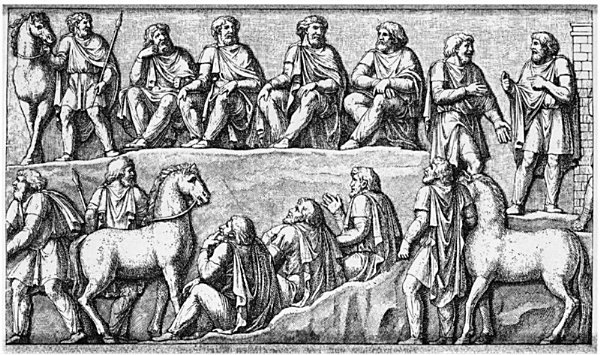
Plate 6.3 A Germanic ‘thing’ - a law-giving assembly - as represented on the column of Marcus Aurelius in Rome (AD 193).
Source: akg-images
In trying to find a location that invites us to celebrate the birth of democracy in Europe, we would do better to move from Greece to Iceland. There, since the year 930 AD the Althing functioned as the ‘general assembly’ or ‘parliament’ of the Icelandiccommonwealth. Annually convening onThingvellir, Assembly Plain, now a national park, it brought together the (most important) landowners of the island, who exercised both lawgiving and law speaking authority.
In fact, since the fourth and fifth century AD, in many parts of post-Roman Europe, especially those regions occupied by Germanic tribes, such assemblies had functioned, locally or regionally, since tribal custom dictated that, to decide on major issues, all free men should be able to have their say. Yet, these assemblies always had to compete with the (legislative) power claimed by, on the one hand, priests, and, on the other, chieftains, kings, emperors or other rulers. Thus, after Iceland had been incorporated into the kingdom of Norway in the thirteenth century, for a time the Althingcontinued to share its legislative power with the royal government. However, as in most European states from the fourteenth century onwards, the rise of princely ‘absolutism’ tended to diminish most of the power such representative institutions might have wielded. By the fifteenth century, theAlthing and many such institutions all over Europe ceased to function.
Mostly, they had been replaced by, or had slowly changed into, assemblies wherein, divided along legal-economic lines, the various ‘estates’ of the realm convened. Thus, the clergy – which, given the power of the Church, claimed precedence, was the ‘first estate’ – the nobility, the second estate, and the representatives of the towns, the third estate, would get together. They did so either on their own account or, more often, only when asked to by the ruler, in order to debate matters of, specifically, legislation and, especially, taxation since most governments did not have the bureaucratic means to ensure a constant flow of income. Regional varieties on this ‘three estate-system’ did exist. In England the first and second estates merged, to form the hereditary ‘House of Lords’, while the third constituted the elected ‘House of Commons’, that combined representatives from the urban elites and of the non-noble great landowners. In a few countries such as Sweden, representatives from the non-noble agrarian freeholders would sometimes constitute a fourth estate.
This is the situation which, in the realm of government and politics, characterized the period in European history often called ‘early modern’ – a retrospective term, of course, since it preluded what Europeans later called ‘modern’. From the sixteenth century onwards, in most European societies group interests – as embodied in the estates – had to be reconciled with the interests of those who ruled, the princes and their court elites, assisted by fledgling bureaucracies. The situation can be described as early or pre-modern precisely because we basically still see politics as the interplay between these two powers.
Perhaps not surprisingly, the rediscovery of the thoughts of the Greeks and Romans also led to a new debate about the structure of politics. The famous philosopher Aristotle had described what he felt to be man’s three options for a commonwealth:
1 a monarchical state, ruled by a prince who, elected or hereditary, claimed near-absolute power;
2 an aristocratic state, wherein a small group ruled, consisting of those who were considered the best on grounds of birth, riches or virtue or, perhaps even the three of them combined;
3 or a popular state wherein the people – the male citizens – would not be divided by any privileges of birth or otherwise but would be equal under the laws of nature, to perform the tasks of government, in some form of general or representational assembly where they would elect their magistrates.
Obviously, both Aristotle and his Renaissance followers – men such as the French thinker Jean Bodin (1530–96), in his authoritative Six Livres de la République (1576) – were realistic enough to acknowledge that these ideal types were and, indeed, perhaps should be ‘mixed’ in practice, to ensure the well-being of the ‘republic’, i.e. of the ‘common weal’. Some early modern theorists even argued that, moreover, a (written) constitution should spell out the rights as well as the obligations of the various groups involved. Yet, from the sixteenth till the late eighteenth century, all over Europe people noted that even in a mixed system, one of the three powers would prevail, a real balance being unattainable. Famously, Louis XIV, king of France and arguably the man who determined both political and cultural life in (western) Europe from the 1670s till his death, advised his heir never to grant power to a popular assembly, since it would only demand more and more – with those among them who were the least sensible assuming the greatest license.
A balance of sorts was struck in England as part of the ‘Glorious Revolution’ of 1688–9, when a (partly elected) assembly, a ‘parliament’, gained control over some of the monarchy’s previous prerogatives. On the continent only the French Revolution of 1789 and related political upheaval elsewhere brought about fundamental change.
By the early nineteenth century, in many states of (western) Europe princely power had been curbed by a constitution determined by a legislative assembly. This was, indeed, a development that did not occur anywhere else in the world. Even so, the right to vote in a general election – and to be chosen as a representative of ‘the people’ for the duration of a legislature – was restricted for many decades to men of some wealth or income. Only by the end of the century did general male suffrage become the norm. By and large, female voting became accepted only during the second and third decades of the twentieth century.
During the struggle over general suffrage the debate about its pros and cons grew stronger. Some people asked, and still are asking today, what should be the rights of ‘the masses’, usually meaning either those who are partly illiterate – as of 2013, in the European Union some 20 per cent of the adult, voting population are what is termed ‘functionally illiterate’, meaning they cannot understand a text, written or spoken, of a certain complexity – or the even greater number of people deemed to be not very well-educated. Are they not too easily manipulated, specifically by sensation-seeking media – the periodic press but also television and the Internet – and by those politicians who know how to manipulate these media? Should they be allowed to have an equal say in questions of such complex and consequential nature as the ones a parliament has to deal with on an almost daily basis? And what if the voters – the aforementioned voters in particular – opt for a party, or a party leader who then, pretending to represent their voice, abolishes the democratic system and institutes a dictatorship? Obviously, this debate is fraught with grave assumptions, cultural as well as ethical, and all of them political.

Plate 6.4 The end of monarchical absolutism: Louis XVI taken captive and interrogated by the democratically elected members of France’s new national assembly.
The problem in choosing a European site where democracy might be justifiably celebrated is, of course, that it is a concept that has changed over time. Is (representative) democracy, in its present-day, European, often – but certainly not always – liberal guise ‘the final form of human government’, as some like to think? Perhaps not, for we should be realistic enough to see that, even today, in Europe, or, for that matter, in states belonging to the European Union, democracy is, to say the least, contested. Indeed, (semi-)totalitarian regimes may reappear where democracies, with a parliament that embodied the thought of general representation and by politicians who somehow enacted the visions articulated in the votes cast during general elections, once seemed triumphant.