
“One of the dullest towns in America is the dreary community of Hotchkiss Falls in the mid–Hudson Valley. The odds are a thousand to one against our finding anyone there with an interesting story. However that’s where we are, so let’s take a look around.”
Most screwball comedies came in a handful of flavors. The Comedies of Remarriage we’ve discussed (The Awful Truth, Mr. and Mrs. Smith, Palm Beach Story, The Philadelphia Story). Beyond that, there were two main variants—the Vanilla and Chocolate of Screwball. The Heiress on the Run, as the name implies, presented rich girls fleeing their lives of privilege to take up with working-class men (see It Happened One Night, Next Time I Marry, Lady in a Jam, My Man Godfrey, Holiday). The Cinderella Story is also self-descriptive: a destitute and desperate girl is mistaken for a rich debutante, pampered by an older Sugar Daddy, and ultimately takes her place among the social set (see Easy Living, Midnight, and Fifth Avenue Girl, with Ruggles of Red Gap as a gender-reversed variant). But once, the world of screwball combined these two flavors: Slightly Dangerous is both an Heiress on the Run film and a Cinderella Story, and it gives us a chance to dig into what made these two screwball subgenres work.
I’m sure you’ve spotted the common thread already—both variants involve the crossing of class boundaries, 1 percenters and 99 percenters united by love.
Our ongoing discussion of the origins of screwball has touched on some intertwined threads. One of these factors was the degree to which a genre that prioritized the communal contributions of a deep bench of onscreen performers was better suited to the corporate model of Golden Age Hollywood than the auteurist emphasis behind classic slapstick (the whole “back of Joan Crawford’s head” problem). Another key factor was the social condition of the audience. The Great Depression changed the facts on the ground rather substantially. Golden Age Hollywood was remarkably good at crafting sumptuous visions of glamour and excess. Conversely, movies about poverty and grime have never been very popular.
From the beginning, movies have been an affordable source of entertainment, available to mass audiences. Depression-era audiences would be full of people either directly or indirectly touched by the widespread unemployment and economic suffering. Yet the movies were made by wealthy people who had the luxury of being handsomely paid to do soft work. There were a bundle of contradictory impulses that put the whole industry in an awkward place. These screwball comedies got to have their cake and eat it too. They could wallow in the same ole’ glamour and excess, while telling stories explicitly critical of the values of the well off. They could simultaneously sell wish-fulfillment fantasies of becoming rich, while sneering at those who are rich.
Notably screwball fell into decline as the Second World War ended. After thriving as America’s dominant screen comedy form for over a decade, as soon as GIs started coming home to build a prosperous postwar middle class, the class warfare implicit in screwball lost its allure.
Nineteen forty-three’s Slightly Dangerous represents a fairly late-period high-point for the genre—things were still tough enough to give the flick an edge. Written by Charlie Lederer and directed by Wesley Ruggles, the ambitions of Slightly Dangerous to combine both the Heiress on the Run model and the Cinderella Story were signaled by its working title, “Careless Cinderella.” Key to this balancing act is star Lana Turner herself. The role was written especially for her, carefully tailored to give her a career-defining moment. A sad-sack shop-girl in a dead-end job with no romantic prospects and nothing to look forward to except more work, she stages her own death (!) and strikes out for the Big City to reinvent herself. A fortuitous accident gives her the opportunity to effect a complete self-reinvention—specifically the chance to pretend to be the long-lost heiress to curmudgeonly businessman Walter Brennan—and therein fusing the two approaches.
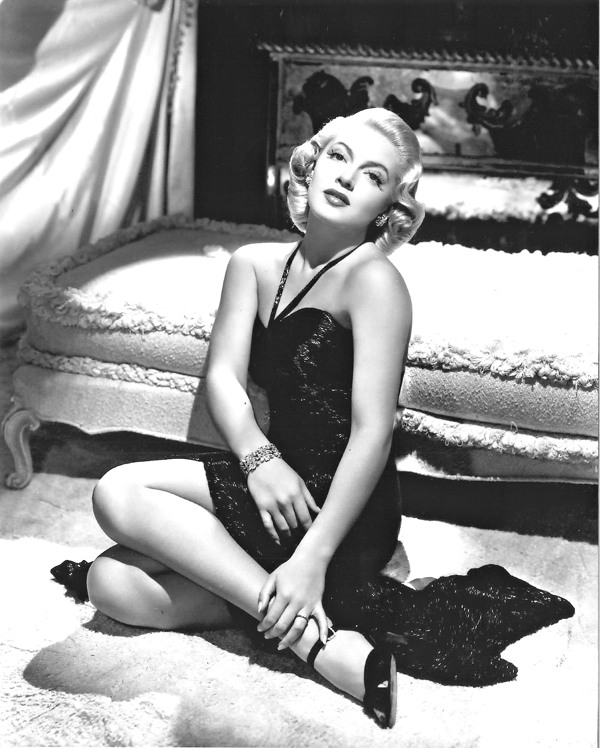
Lana Turner strikes a pose in a publicity still for Slightly Dangerous (1943).
Setting aside the overall high quality of Slightly Dangerous and Lana Turner’s pitch-perfect performance, there are some historical details worth pointing out. First, we’ve got the ghosts of old-style slapstick haunting the whole endeavor. Buster Keaton was an uncredited gag writer and allegedly directed a signature scene in which Lana Turner shows how absurdly simple her soda-jerk job is by doing it blindfolded. The director of record, Wesley Ruggles, was himself an ex-Keystone Kop and a former Keaton collaborator.
Meanwhile, the picture carries with it seeds of what screwball would become in the postwar era—that is, television sitcoms. Turner’s costar is Robert Young, an earnest young fella prone to getting into wacky but innocent mischief. This is the Robert Young of Father Knows Best—silly but safe. In other words, postwar prosperity may have pushed screwball off the silver screen, but the form didn’t die—it just morphed into the sitcom and kept on truckin.’