
2
The rules for writing a resume that works have radically changed over the past 10 years. Not only is the conventional wisdom wrong, following it in many cases will mean your resume is never seen at all. In the next few chapters I'll break down for you how to write a resume that gets into the recruiter's inbox and stands out. None of this is complicated; in fact, writing a resume is easier now than it has ever been. Just follow the advice below.
Write a Resume That Gets Past the Robots
In the modern world, over 75% of resumes are read by a robot before they are read by a human.1 It starts at the job sites you use to search for work. Every major job site parses your resume to figure out what jobs to recommend. But that's only the first robot that will try to read your resume.
When the majority of job searches went online, the barrier to applying for jobs went way down. This had the predictable consequence of causing a spike in unqualified applicants. To combat this, employers have turned to software. Today, employers (and particularly larger employers) use programs called Applicant Tracking Systems to receive online applications, score them, and rank them. The sole purpose of your resume is to get past these robots and in front of a human.

Here are the most important things to know in order to write a resume that works.
Use the Simplest Resume Template You Can Find
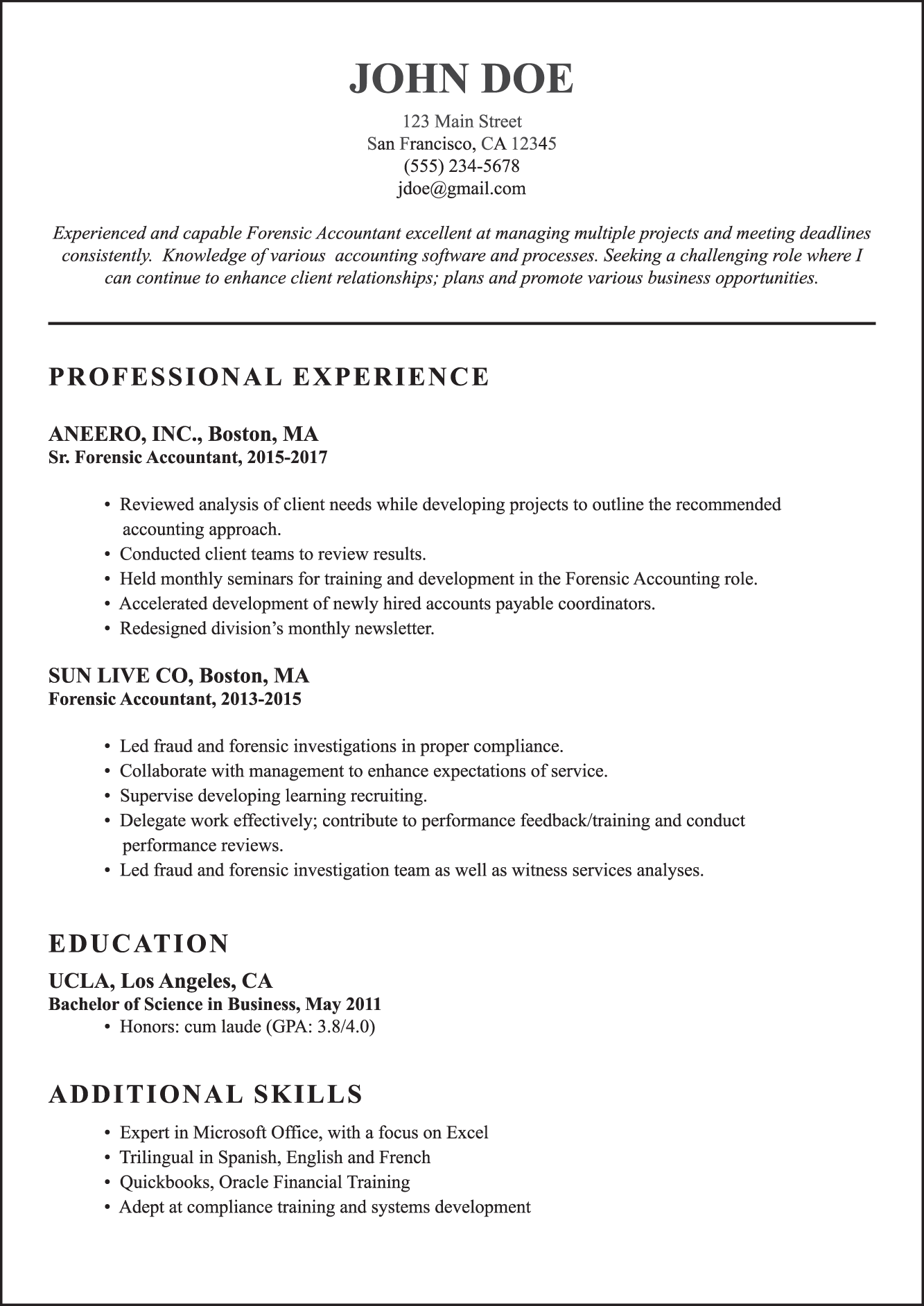
For decades, the conventional wisdom has been that resume design is the first way you can stand out in a job search. When a human was reading through a stack of printed resumes, a beautiful design was a great way to catch their eye. But as I just told you, humans aren't the first ones to read your resume anymore. It's the robots, and all of those robots are imperfect. Robots read from top to bottom and from left to right. So your resume should, too. They can only recognize fonts they've seen before. So don't get too fancy. Resumes come in so many different document formats, fonts, and layouts, it's impossible for any of these robots to interpret them correctly 100% of the time. So here's my advice: Guarantee the robots read your resume correctly by using the most boring resume template you can find.
I want your resume to look like this:
Not this:
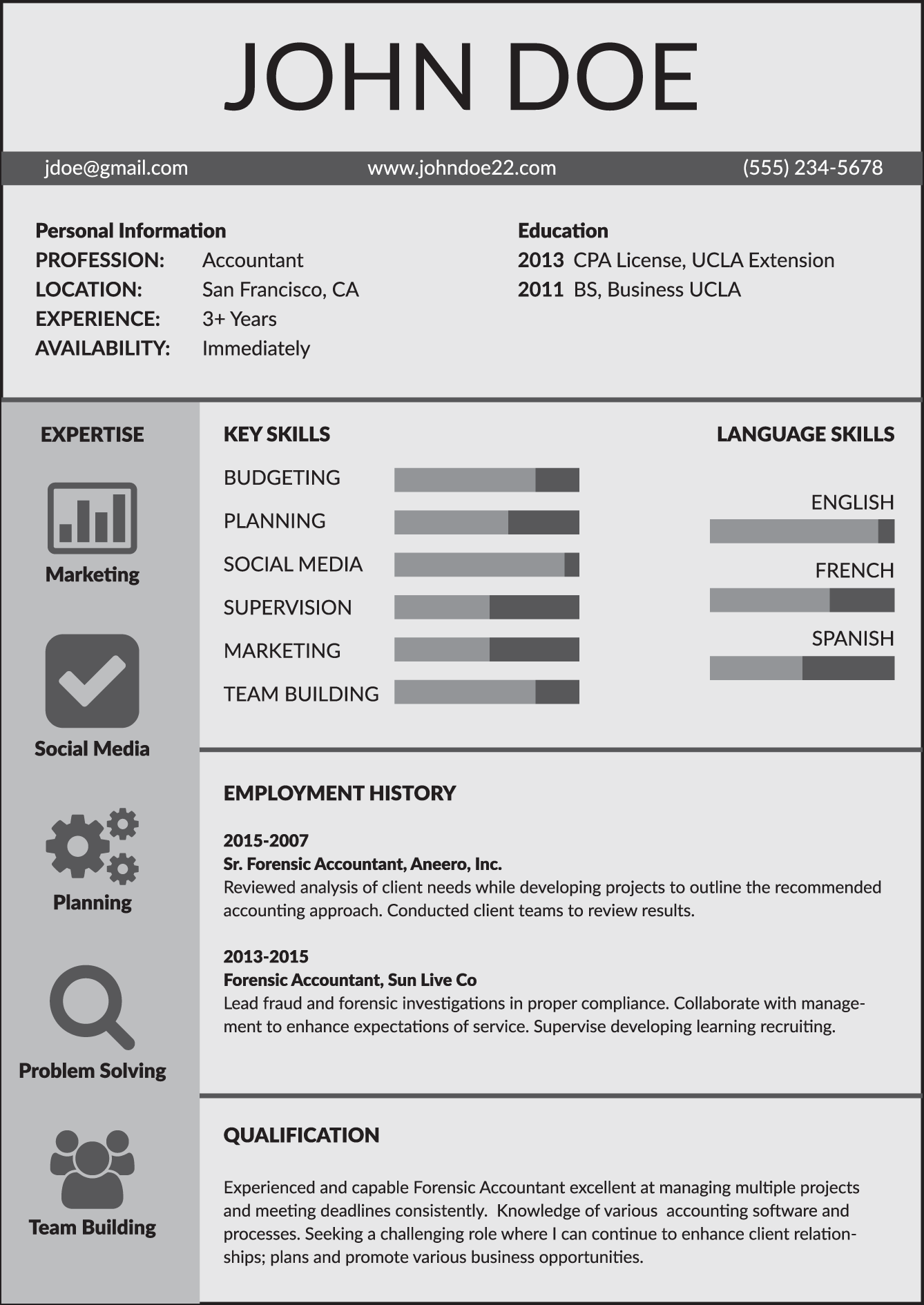
If you find a resume template with a name like Minimalist ATS-Friendly, that's the one you want. Be sure to avoid the following:
· Columns
· Tables
· Headers and footers
· Text boxes and sidebars
· Logos
· Nonstandard fonts
Does that mean your resume will look boring? Yes, it does! You do have some flexibility. You can use bold, italic, or underlined text, different text sizes, and bullets without tripping up the bots.
Visit the website www.ziprecruiter.com/gethirednow to see resume templates that the robots should parse correctly.
Use Generic Job Titles
Did the last company you worked for call you a “Software Ninja”? Maybe a “Sandwich Artist”? “Customer Guru”? Or maybe they have some sort of clever internal language title like “Project Support Lead—Business Software Systems Level 1.”
What do all these have in common? They won't match the job title that any employer currently recruiting will put in a job posting. Remember this: Robots love a perfect match. When you write your resume, I want you to change whatever fanciful or confusing job title your last employer gave you to the most generic, commonly used description of the job you did. Wondering what that is? Go to a job site and try to find job descriptions that match your previous role. Whatever title the employers are using to advertise the opportunity, that's the one I want you to put on your resume.
But be careful here! If you do change your actual job title to a generic job title, make sure you don't inflate your title inadvertently. If your official title is currently “Director of Customer Happiness” and you change it to “Vice President, Customer Satisfaction,” employers may view it as intentionally misleading unless you have a good reason to do so.
“I jokingly gave myself the title ‘senior relocation specialist.’ I am a pizza delivery driver.”
—Senior relocation specialist
Write Like a Caveman
One of the classic pieces of conventional wisdom you'll hear about writing a resume is to “dress up your accomplishments.” Some people will tell you to inflate the importance of whatever responsibilities you had, imbue a little grandiosity into your otherwise pedestrian tasks. In the old way of writing a resume, you didn't just “answer the phones” at your front desk position, you “oversaw company communications”!
Well, the robots have changed the game. Not only are they sifting through your resume to understand who you are, but they are also pulling snippets to present a summary of your background to a human. The humans will often read that summary to decide whether to even open your actual resume! You want to make sure everything you write is not only easy for the robot to understand, but also explains your capabilities as succinctly as possible for the summary.
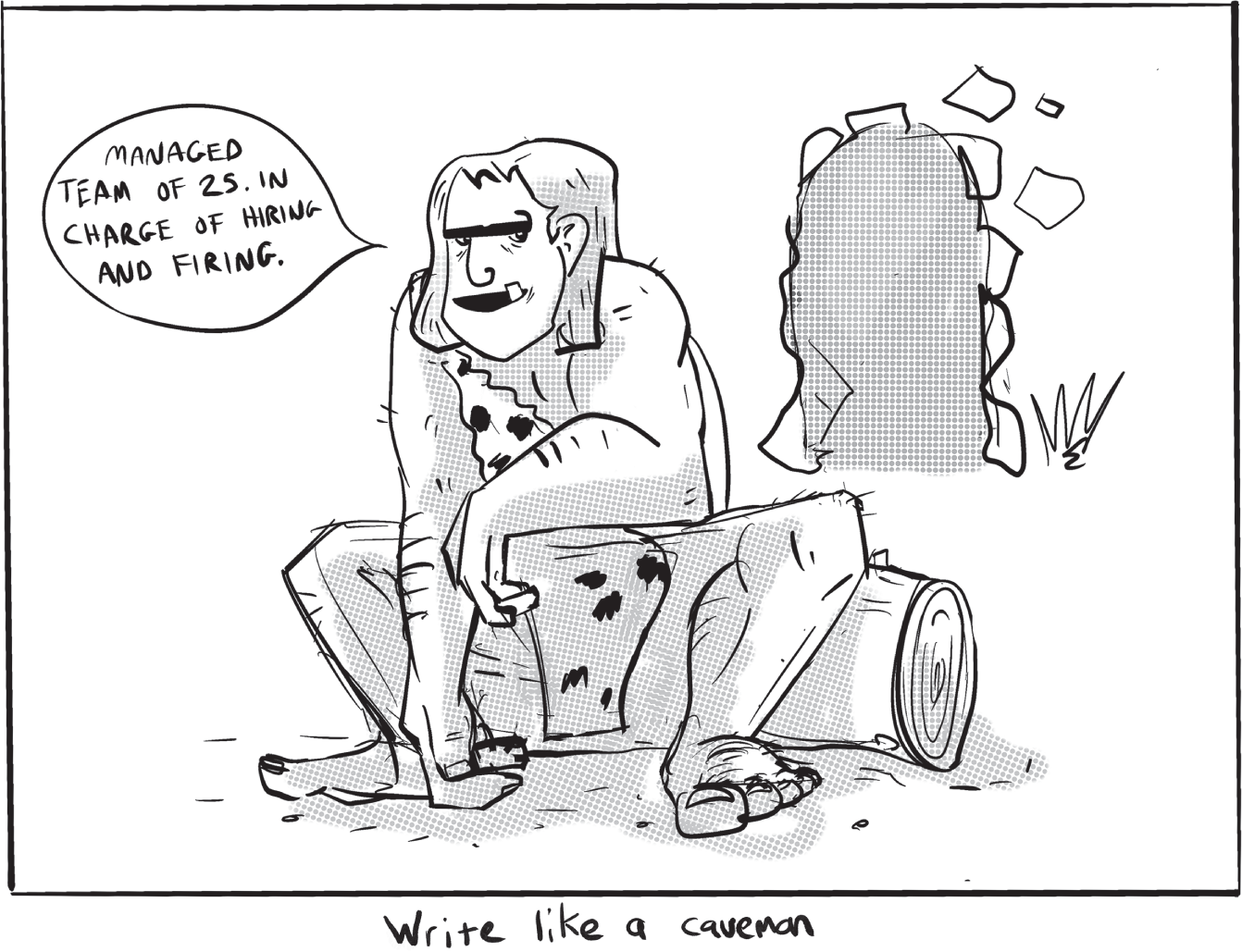
Here is an example of how to write like a caveman. This is not the time for prose:
· Good:
· Managed a team of 25 for 3 years.
· Built workforce capacity plan.
· Was in charge of all hiring, scheduling, and terminations.
· Improved margins 10% by reducing employee turnover.
· Bad:
· Pursued the single most important initiative in the company, which was staffing up for the seasonal surge over six months. Utilized multiple recruiting methods including job boards, social media, and recruiters. Successfully increased team size by 100% under budget and on time.
· Managed every aspect of the team's operation from modeling how many people we would need, to who got hired, to the shifts people worked, to performance reviews.
· Through operational improvements and reduced turnover was able to improve company margins by 10% and received internal recognition from the CEO for most significant contribution of the year.
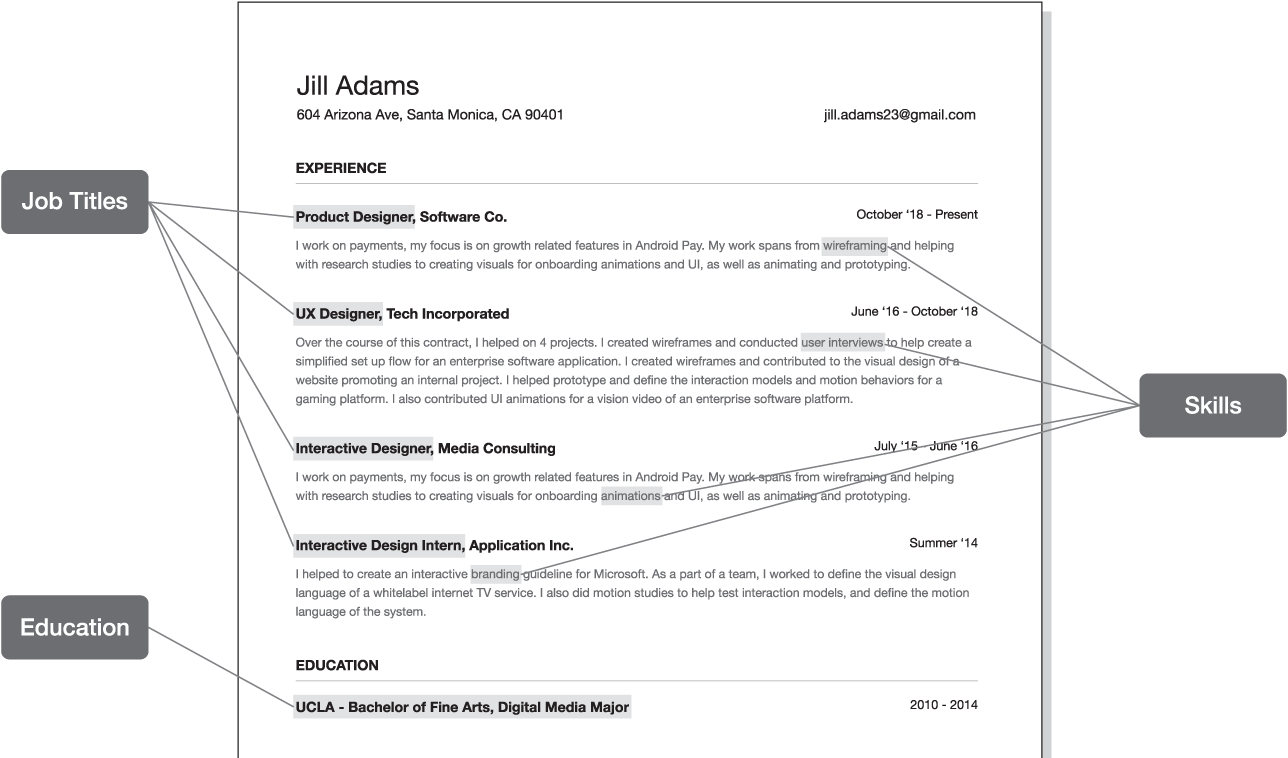
FIGURE 2.5 Robots extract information from your resume.
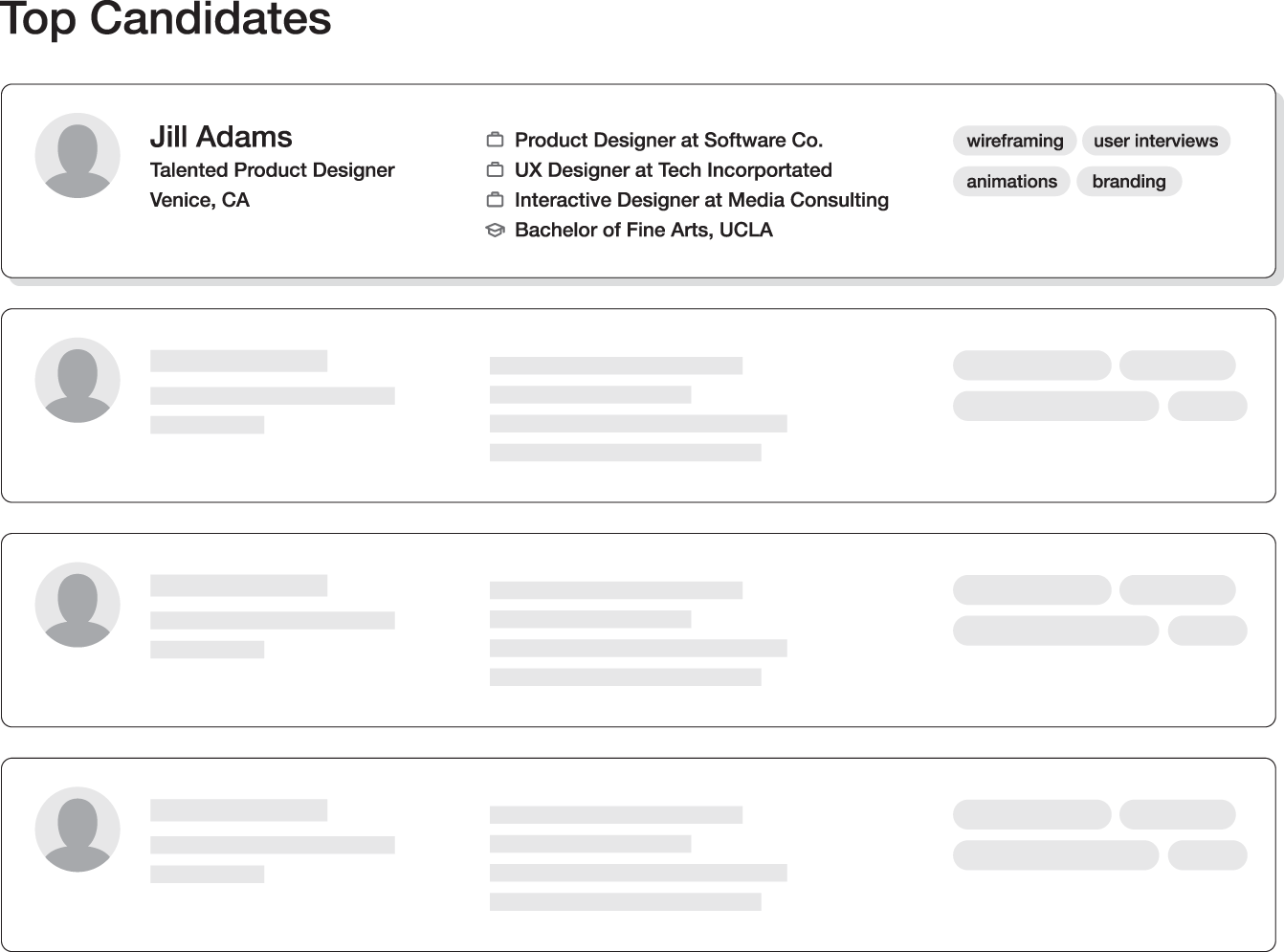
FIGURE 2.6 Extracted information is presented to employers as a simple summary.
I know the idea of writing like a caveman makes some of you uncomfortable. You think it undersells who you are. Well, remember this: According to multiple studies, recruiters look at a resume for as little as 7.4 seconds.2 The only thing they are scanning for is whether you have the qualifications to do the job. Make it easy for both the robots and the humans to read. Write like a caveman.
Use Numbers to Describe Your Impact
One of the things a lot of job seekers miss is describing not just what they did, but the results of their work. Many people think listing tasks is enough. Take a look at these two examples and tell me which candidate seems more interesting?
Candidate 1:
· Wrote press releases
· Managed PR firm
· Ran the company customer conference
Candidate 2:
· Wrote 18 press releases over 12 months
· Managed $3M annual PR budget and strategy including management of outside firms
· Ran the company customer conference with more than 8,000 attendees over two days
See the power of numbers? Always talk about your impact in numbers. I don't care what your last job was. “Made over 1,000 burritos per week to order” is better than “burrito maker.”
One Million Anything
My number-one pro tip for talking about your accomplishments is this: one million anything!
There are many ways to use “one million.” Few things jump off the page in quite the same way.
· One million visitors
· One million orders
· One million dollars
· One million recipients
· One million customers
· One million people
Nothing screams “this person has experience” like dropping the “million bomb” into your resume. Maybe it's the size of the budget you managed? Or maybe it was the number of people in attendance over a season that you worked security at a stadium? Or maybe it was the circulation of the magazine you wrote content for? However you get it in there, get it in there. “One million” has the ability to make any work experience intriguing.
List Job Skills and Be Explicit
“I swear, if I see one more person applying for my graphic design position and listing out ‘Adobe Photoshop’ as one of their job skills, I'm going to scream! If you're interviewing for a graphic design position, I'm going to automatically assume you're familiar with Photoshop, because if you're not, you have no business applying! Don't just tell me that you have the skill, tell me what you can actually do with that skill!”
—Employer who needs more information
In a traditional resume, your job skills are typically the very last section. But that doesn't mean it's not an important section.
The first skills you list should be those that are most relevant to the job you are seeking. And when describing your job skills, it's important to describe them as explicitly as possible.
Weak:
· Accounting skills
· Familiar with Microsoft Excel
· Microsoft Windows support
Strong:
· Double-entry cost accounting—7 years
· Microsoft Excel revenue model building—3 years
· Certified Microsoft Windows administrator—5 years
More and more, employer job postings are prioritizing specific, demonstrable skills, which is why listing your skills and years of experience benefits you. The robots and the hiring managers are looking for that one primary skill requirement before moving you along to the next step in the hiring process.
After you've included job skills that are relevant, you can include a few “less relevant,” non-job-related skills, but only if they're exceptionally unique or interesting. Examples of some good, non-job-related skills to list are: “Certified chess master,” “New York City swing dancing competition runner-up,” or “Minor league baseball player for the Charlotte Knights—2 years.”
You might not think skills like these make sense to include in your resume, but an employer might see those skills differently: a chess player can demonstrate an ability to think strategically, a dancer understands the importance of small details, and athletes know how to work on a team. If nothing else, your odd or unusual skills might generate more interest in you as a candidate, and may be good conversation-starters in an interview.
Check Your Resume for Grammar and Spelling
Imagine you're meeting somebody for the first time. They are fit. They are tall. They walk into the room in a tailored suit.
With a confident smile they reach out to shake your hand … and they have lettuce stuck between their front teeth. What do you think you're going to be focused on? If you're a member of the human race, the lettuce will be all you see. You won't hear or remember anything they have to say. In your memory, this person will forever just be “the lettuce person."
That is what poor spelling and grammar is on your resume. Lettuce in your teeth. And before you decide that employers are willing to overlook spelling and grammar errors, let me share a truth we learned at ZipRecruiter.
Every time we've asked employers if they would like us to automatically correct spelling and grammar on job seekers' resumes, 100% of them have said “no.” Employers consider those errors a signal about a candidate. Errors say: “This person has poor attention to detail. This person is not conscientious or careful. This person does not understand how to present himself or herself professionally.”
Double-check the spelling and grammar on your resume, and then have at least one friend review it for spelling and grammar errors. If you actually get your resume in front of a human, it would be a shame not to get an interview because of typos.
“I once read a resume that stated the person was the ‘validvictorian of my class.’”
—Face palming employer
Resume Writing 101
The lowest hurdle you'll face in your entire job search journey is getting the resume details right. And yet, even with an abundance of resume templates and thousands of articles online giving advice, many people still screw up small details that make a big difference in their ability to get hired. You don't have to read this entire book to get a job, but if you're prioritizing sections by importance, this one goes near the top. Make sure basic information on your resume isn't the reason you don't get past the interviewer's door.
“We narrowed our candidate pool down from over a hundred applicants to a top five. One of those five stood out above the rest, and that was the first person I tried contacting. That's where I ran into problems. When I called the phone number on the resume, not only did no one answer, but I couldn't leave a message because the mailbox was full. The email address provided was their work email from their previous job, and messages sent there returned an auto-reply stating the individual was no longer at the company! At that point I gave up and moved on to the next best applicant on our list.”
—Perplexed employer
Let's quickly walk through each section of your resume. This stuff is easy to get right!
Your Contact Information
· Full legal name
· Include the name you wish to be called by and indicate the pronunciation if your name is complicated.
· Phone number
· Use your cell phone number or the number that you most reliably answer.
· Email address
· If you are in college or graduate school, it is a good idea to use your official school email address. It shows employers that you really attend the school you say you do.
· If you are already in the workforce, use your personal email address, NOT your business email address. Your job hunt is none of your current employer's business.
· Your personal email address should be professional. Email addresses like sexy87@gmail.com or boozehound69@gmail.com will immediately land you in the “no” pile if you get in front of a human.
· There is real bias over what email provider you use. Time to drop the @hotmail.com or @earthlink.net email address and upgrade to something like Outlook or Gmail.
· Physical address
· Include your city, state, and zip code.
· If you're open to moving or explicitly looking to move, include “open to relocating” or “planning to relocate."
A Resume Summary Statement
· This isn't always necessary, but may be good to include, particularly if your work experience is extensive and/or your resume is longer than a page.
Your Work Experience
· This is the most important part of your resume, so put some real thought into highlighting your most impressive accomplishments, responsibilities, and contributions. Employers want to see where you’ve worked, what you’ve done, and what impact you’ve had.
· For each job include your generic job title, company name, and job location (just city and state).
· For each job, include two to four bullet points about what you did. Wherever possible, include not just what you did, but the measurable change you made. (“Found cost savings that improved profit margin by 12%.”)
· Organize work experience with most recent first, to least recent at the end.
· If you have a lot of work experience, only include the most recent jobs. Your resume should never be more than two pages.
· Don't forget the extras! If you work in a creative field, include a link to your portfolio or sizzle reel. Extras don't have to be things you do for a living. If you're an amateur photographer, show off your creative side by giving them a link to your work. Use anything you can to help you stand out.
“I got booked for a two-hour time slot of interviews, but the first interview ended after 30 minutes. They told me I could go home. I thought I had screwed up for sure, but literally the next day, they called and made me a job offer. It wasn't until a week into working there that I found out what happened: Before my interview, my new boss had visited the link I included on my resume to my YouTube channel and watched many of my videos. (I did a series of how-to home repair projects that had nothing to do with what I was hired for.) She told me she felt like she already knew me, and that I'd be right for the team. It was the first time I got hired for a job almost before I had walked in the door.”
—Toolbelt-wearing employee
Your Education
· Only list your high school education if you graduated within the last few years and have not completed any other higher education.
· For colleges and advanced degrees, include the name of your school, the city and state of the school, the degree you received, and any honors you received.
Your Skills
· Include any skills that are relevant to the job. Be precise with the skills description.
· Include number of years of practice with the skill.
· Include any licenses or certifications you've received. For licenses, include your license number. Any third-party validation of your skills is of benefit to list including training courses completed and/or any ongoing training you are engaged in.
Key point: You don't win a job with your resume. You win the chance to be interviewed.
What If You're Coming Out of School with No Prior Work Experience?
Just graduated from school? Congrats! That's an accomplishment in and of itself. The nice thing is that you're not expected to have work experience. If you do, be sure to include it, whether it's an off-campus job, dorm RA, dining hall cashier, or computer lab help desk.
Next, make a list of all your school experiences from academics, jobs, internships, extracurriculars, community service, and any other productive way you've spent your time. Try to find the thing you're proudest of or most passionate about and make it the centerpiece. Just be thoughtful about how you position yourself. (Did you throw an epic all-you-can-drink frat party that awarded pizza coupons for the longest keg stands? No! You ran a fraternity fundraiser that raised $500, and sourced prizes from local businesses.)
For recent graduates, include an Education section near the top of your resume since school is the longest “job” you've had. Include your GPA, or GPA in your major if it's significantly higher (but label it as major GPA). If both of those numbers are bad, that's okay. Just leave them off. A secret they don't tell you until you're in the real world: No one will ever ask you about your GPA unless you bring it up first.
Finally, 93% of employers say soft skills play a critical role in their decision about who they want to hire.3 Those soft skills include things like showing up on time, willingness to learn, enthusiasm, and a can-do attitude. When you don't have work experience to sell, remember that you can still sell yourself.
Be Honest About Gaps in Your Work Experience
Many people have gaps in their work experience—years where there is a conspicuous absence of work. Here's the most important rule about those gaps: be honest about them. And here's the second most important rule about those gaps: build a narrative around the gap for the recruiter so they don't do it for you. Sometimes a well-crafted narrative can make you more attractive to employers, not less. Own the gap. Treat it like any other work experience. Here are some tips for how to turn gap “lemons” into resume lemonade.
If You've Been Laid Off or Fired
Whatever you do, don't pretend you're still working at a company if they've fired you or laid you off. It's much better for a new employer to hear the truth from you than to get the wrong idea and look like a fool when they call your old employer to do a reference check. So do not fudge the end date of your employment and state “to present” if that does not apply.
If you were laid off from your most recent job, you can optionally include a bullet saying so below the job title, company, and date of employment. You could say something like “Laid off in company-wide downsizing effort due to Covid-19 pandemic” or “Laid off due to plant closure caused by falling oil prices.” An alternative is to put “Laid off due to Covid-19” or “Department eliminated” or “Location permanently closed” in parentheses after the date of employment. You should only do this for your most recent job.
If you don't want to use up real estate on your resume and you plan to submit a cover letter (often unnecessary, but more about that later), you could mention the layoff briefly there instead.
If, on the other hand, you were fired from your last job, it's best not to mention that on your resume. Let your resume get you past the bots and through the door. Then, if the issue comes up during the interview, you can explain your side of the story there.
“I had a job for two years managing a restaurant that should have been called Crazy Town, because the owner was nuts. It was a week after I got a butterfly tattoo on my forearm that I was fired. (We had no policies about tattoos so it came as a shock.) The owner gave me a termination letter detailing my ‘poor choice’ and encouraged me to seek improvement through a closer relationship with ‘our lord and savior Jesus Christ.’ When I was asked about it in job interviews, the only thing I said was ‘I learned the importance of picking a job where I was not just qualified, but also a cultural fit.’ Obviously I was pushed for the story, at which point I produced the letter and showed them the tattoo. My new boss and I had a good laugh about it together during the first interview.”
—Former employee/resident of Crazy Town
Raising Children
Instead of leaving out the five years when you stayed at home to raise your children, list your occupation for 2011 to 2016 as “Stay-at-Home Dad.” Make it humorous, or at least engaging. For example:
· Raised three children—ages 7, 4, and 2.
· Changed 6,729 diapers.
· Reduced “crying time” by over 63%.
· Only one emergency room visit, which resulted in absolutely no visible scars.
· Received “best dad” award from subordinates four out of five years.
“Instead of being defensive about being a stay-at-home mom, I decided to use it. I built an online portfolio of my ‘work,’ including collages of their first days at school, their National Honor Society certificates, their straight-A report cards, their sports team group photos, and a printout of their criminal background checks, which of course were blank. I even had my husband and my kids write me letters of recommendation.”
—Employee and mother of good kids
Figuring Out What You Really Wanted to Do
If your resume gap years were spent “figuring out what to do with yourself,” don't be afraid to list that. But be specific and focus on the things you did that encouraged growth. Describing a two-year stint in your mom's basement as “Found Myself (May 2012 to October 2013)” might not be the best way to go.
Rather than giving the resume gap a label, list the years themselves as the experience: “2012–2013: Explored career options while completing online certifications.” That description says exactly as much as it needs to while also giving a prospective employer a sense that you did something productive with your time, and that you are honest.
Incarcerated
If you've been incarcerated, it is important to include that on your resume. Most background checks will include the time you served and the category of offense. You don't want that to be the first time a prospective employer finds out about your time served.
For the time you spent in prison, simply list the institution, the years you were incarcerated, and be sure to note that you were released early for good behavior if it applies to you. You probably don't want to or need to be specific about exactly what landed you there, but you should list the category of offense to give some context.
You want to show a prospective employer that you used your time on the sidelines as best as you possibly could to improve yourself. Focus on any facts of your time in prison that reflect well on you and your character. List any skills, work, or activities you did there, including any rehab or counseling programs you completed. Most important, try to override employers' biases against former prisoners by including a line such as, “Paid my debt to society for a mistake I wish I had never made, and came out a better, more mature, responsible person in the end.”
Caring for Someone Sick (Possibly Even Yourself)
About 39.5% of men and women will be diagnosed with cancer at some point during their lifetimes, according to the National Cancer Institute.4 And cancer isn't even the leading cause of death. So the experience of having to take time off to undergo medical treatment or to care for ailing parents, spouses, children, or other loved ones is much more common than you might think.
The best approach is to be brief and matter-of-fact without providing too much information. Medical privacy is important, so it's best not to list the name of the person who was ill or the specifics of their condition if you were a caregiver. But you could say something like this:
|
Leave of absence |
5/2019–10/2019 |
Full-time caregiver during family member's illness
If you are applying for jobs in a field like healthcare or social assistance, you could provide more information if it is directly relevant.
If you are the one who was sick or injured, then you could describe your gap in a similar way. Note that the main question employers will have is whether you are able and willing to work now, so you could address that directly. Here are two examples:
|
Medical leave of absence due to accident |
5/2019–10/2019 |
Fully mobile and cleared to work by physician following surgery and six months of rehabilitative therapy
|
Medical leave of absence due to illness |
5/2019–10/2019 |
Condition fully managed after 6-month treatment regimen
If your resume has a more conversational or humorous tone, and you're comfortable sharing more specific information, you could do so, although you are certainly not required to. For example, if you spent several years battling cancer, you might want to describe your gap this way:
|
Beat cancer |
10/2017–10/2019 |
Just note that if you do provide details, you should be prepared to talk about them and turn them into strengths. Perhaps your time as a patient or caregiver increased your grit, gave you a deeper sense of perspective, and made you want to make the most of every moment in your new job.
“I thought quitting my job to care for my mom was going to be a strike against me when I went back to work, but I couldn't have been more wrong. Employers understood I sacrificed so I could take care of a sick relative. Most employers want that type of person working for them.”
—Employee and Employable Son
Should You Pay for a Resume-Writing Service?
If you're like a lot of people, putting pen to paper and writing absolutely anything is a painful process. Writing a resume is even more painful than usual because it's not just writing but also “selling,” which doesn't come naturally to most people. So is it worth the money to hire a resume-writing service to help you write or refine your resume?
Well, let me answer that question by asking you another: Every year, you have to change the oil in your car. Is it worth paying money to somebody who changes oil for a living to avoid doing it yourself?
I'm a big fan of resume-writing services because they spend all day, every day doing for a living what you haven't done for years: writing resumes. They specialize in perfecting a small part of the job search process that is integral to your success.
Now it's true that, if you take all my resume advice, you shouldn't need any help in writing your resume. But for some people the gap between reading about best practices and actually implementing best practices can be a big divide. And so, if you're one of those people, hire a resume-writing service. In fact, even if you're not one of those people, it's probably worth the money to get an extra set of eyes on your resume to see if they can find small improvements that you didn't think of. (This won't necessarily break the bank. Resume writing services can cost about $100 or even less.)
Just make sure you do your homework and use a service that is competent and reputable. It's easy to find reviews. And always make sure that, whatever suggestions they make, you still follow the rules and suggestions I set out for you earlier.
Give Your Resume the Robot Test
Once you've got your resume done, it's time to confirm that a robot can read your resume The easiest way to do this is to upload your resume to ZipRecruiter—as a .docx or .pdf file, not as an image. Our ZipRecruiter robots will try to parse your resume and turn it into an online profile. By reviewing the profile, you can see whether the information you included was read and interpreted correctly.
ZipRecruiter happens to be one of the best sites on the web at reading your resume. So if your online profile generated on ZipRecruiter has problems, then it's highly likely that MANY other job boards, applicant tracking systems, and screening software programs will have problems as well. To fix the problem, try using a different resume template or different software program until this upload process works without a hitch. If you're using a document you created more than ten years ago, it's a safe bet that you'll need to re-create it using modern word processing software. Remember to keep your resume template as simple as you can find!
Summary
· 75% of resumes are read by robots before they make it to a human.
· Simplicity is key when it comes to formatting, descriptions, job titles, and skills.
· Be honest about your experience; even when you aren't “working,” you are acquiring skills.
· Grammar and spelling mistakes kill opportunities; check and double-check the details.
Notes
1. 1. Kerri Anne Renzulli, “75% of Resumes Are Never Read by a Human—Here's How to Make Sure Your Resume Beats the Bots,” CNBC, February 28, 2019, www.cnbc.com/2019/02/28/resume-how-yours-can-beat-the-applicant-tracking-system.html.
2. 2. “Eye-Tracking Study Ladders 2018,” The Ladders, 2018, www.theladders.com/static/images/basicSite/pdfs/TheLadders-EyeTracking-StudyC2.pdf.
3. 3. “Wonderlic Employer Soft Skills Survey Spring 2016,” Wonderlic, 2016, https://wonderlic.com/wp-content/uploads/2017/06/Wonderlic_National_Employer_Report_Survey.pdf.
4. 4. “Cancer Statistics,” National Cancer Institute, September 25, 2020. www.cancer.gov/about-cancer/understanding/statistics.