
1
There are many stories about extraordinary, remarkable, inspiring, amazing women from all parts of the globe who have rebelled, rocked, shaken and changed the world. And this is a good thing.1 But I want to take these stories further and think about their meaning. In this book I move beyond viewing heroines as women with a singular story whose appearance is random, seeming isolated and out in the cold as individuals. Instead, I am interested in gathering up and making broad connections between heroines across time and cultures. Collectively, what have these women, for all their differences, represented? What are their features as heroines in history? This book moves beyond unfettered celebration to critically look at how heroines’ stories might add up to a dynamic modern archetype of a heroine in history. Significantly, shedding light on what it means to be a heroine in history cuts to the heart of women’s changing place in society through examining how stories of heroines have been ‘instrumental in constructing modern subjectivities and social differences.’2
There is much written about heroes, both around the world and through the ages. These men are portrayed as possessing bravery, courage, physical prowess and mental talent underwritten by their essential masculinity. Their heroic deeds took place in public and were part of asserting confident patriarchal systems of male dominance.3 For example, it was men’s place to fight for and protect women and children. In contrast, as women were largely, and ideologically, located out of view in the home, their lives involved private subservience. They were most commonly cast in a supporting role as the opposite and inferior sex. Their feminine and maternal domain was rarely deemed heroic or noteworthy.4
No wonder, then, that women who have managed heroic lives along male lines are known by the grammatical feminine suffix ‘ines’ added to hero. Heroines, as we shall see, were often cast as ‘honorary men’ and were celebrated for emulating male heroic deeds. These were women who became heroes like men, but because of beliefs in essential differences between women and men they remained tagged as the other or second sex. For example, Louise Edwards has examined Chinese women warriors and wartime spies through history. She argues that ‘stories about women’s involvement in wartime action attract instant popular attention all around the world. The vision of a woman killing another human being confronts long-held views about women as life-givers rather than harbingers of death.’5 Alternatively, heroines were occasionally heralded as ‘super-womanly,’ elevated to heroic status through their feminine nurturing and caregiving qualities. Such dichotomies and debates over biological difference versus the social construction of gender and sexuality are central to women’s place in the world and are grappled with by heroines throughout this book. I consider whether heroines were able to construct their own sexuality, how they invented a ‘masculine side’ in order to succeed and on what terms they were able to enter previously men-only occupations.
This book focuses on heroines in modern world history during the past 200 years. It chronicles the emergence of women as historical subjects valued for their substance and achievements, rather than as objects valued for their image and celebrity. I consider stories of heroines from around the world since the end of the 18th century when a broad wave of feminism, mostly in western countries, ushered in two centuries of important, if uneven, advances for women.6 Liberal demands for women to become equal with men occurred alongside calls for democracy, the end of slavery, class consciousness and a new humanism. As we’d say today, feminism emerged as part of an intersectional context. Of course, in drawing upon individual examples, this book will itself reveal, as Alison Booth argued in her work on women’s collective biographies, ‘comparative bias.’7 It grows out of my previous work that argues for the centrality of British imperial heroines in constructing race, whiteness and hegemony.8 The intention is that the broad themes identified in each chapter warrant transcultural consideration in modern world history, with constructions of race and ethnicity necessarily always central.
An important argument through this book is that when it comes to heroines in history, there is not a clear cut line between the old and the new. As Joseph Campbell argued in The Hero With a Thousand Faces there is a continuance in the modern world of heroic mythology from the past.9 Responding to Joseph Campbell I structure the book around and investigate the presence and importance of recurring patterns for heroines in history that permeate into and receive new meaning in the modern era. Some heroines such as Mulan and Joan of Arc transcend their era, with their stories picked up and reimagined through the centuries. I also critically build upon Carl Jung’s work on archetypes as images, patterns and symbols that arise out of the collective unconscious.10 At the end of the 20th century the social sciences and humanities largely abandoned essentialist, binary understandings of gender and sexuality in favour of social construction and performativity. For example, influenced by post-structuralist theorists such as Michel Foucault, the work of Judith Butler gained prominence.11 Jung had argued that
the mind of the individual is not only divided into the conscious and unconscious, but the unconscious is further split into the collective and the personal. The collective unconscious, which is shared by everyone, consists of innate memories and historical experience, beginning in the womb.12
Such theories cast Jung as a biological determinist, understandably out of fashion with feminist scholars seeking choice and complexity in understanding women’s lives. Maverick academic Camille Paglia stood out as continuing Jung’s ideas.13
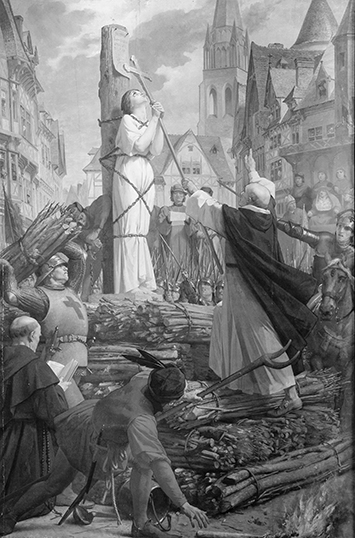
FIGURE 1.1 Late 19th century portrayal of Joan of Arc at the stake by Lenepveu at Panthéon monument, Paris, France.
Credit: Alamy stock photo Image ID KNC365: https://www.alamy.com/stock-image-joan-at-the-stake-in-rouen-lenepveu-1886-1890-panthon-neoclassical-168067037.html
When it comes to understanding heroines in history, Jung offers insights into how ‘The inherited memory, or collective unconscious, expresses itself in a series of symbols of instinctive patterns called archetypes, which become conscious through dreams, images and words, as well as expectations associated with particular people.’14 Jung, himself an empiricist, was building upon Plato’s idea of archetypes. A close reading of Jung reveals while he did argue for innate sex roles, he also made allowance for context and the possibility of social construction. As he wrote of archetypes,
In principle, it can be named and has an invariable nucleus of meaning – but always only in principle, never as regards its concrete manifestation. In the same way, the specific appearance of the mother-image at any given time cannot be deduced from the mother archetype alone, but depends on innumerable other factors.15
This book investigates whether there is a deep, flowing and transcultural essence surrounding heroines in history. I both extend and question Campbell’s and Jung’s ideas on women as maternal, goddesses, temptresses and life-givers. I want to explore the heroine with a thousand faces and women and her symbols. Each chapter focuses on a shared archetypal theme in the stories of modern heroines that recurs through time and across cultures. While recognising that there is always local difference and individual agency, in this book I prioritise the big picture of commonalities and patterns in the appearance and lives of heroines. Chapters seek to draw upon wide-ranging examples for support. The themes important for the modern heroines that I advance in each chapter are: Mothers, Warriors, Callings, Cross-dressers, Death and Disability, Feminist Activism and Glamour. My intention is that the framework will be widely applicable to heroines through modern time and place beyond those explicitly mentioned here and that many more examples will spring to mind for readers, across cultural and racial boundaries, as they consider stories of heroines.
If the distinction between historical eras can be blurred in the study of heroines, so too can the concrete lines between fact and fiction. Roland Barthes’s semiotics approach to mythology is extremely helpful here to examine how stories about heroines are usually subject to multiple symbolic, imaginative and changing versions.16 This dynamic complexity is supported in the work of historians. For example, in their study of Canadian heroine Laura Secord, Colin Coates and Cecilia Morgan found that the distinction between ‘flesh and blood actors’ and creative allegories and artistic inventions can become indistinct.17 Dominic Alessio found that places could be personified as heroically female, and Hugh Cunningham recognised that in the story of British heroine Grace Darling fact and fiction ‘interweave themselves.’18
This book builds upon Marina Warner’s work on the allegorical uses of the female form and historical heroines, especially in her detailed work on the Virgin Mary and Joan of Arc.19 Warner draws upon a diverse range of sources from court records to statues to understand women’s place and status in the past. Her work stands out as spiritual, transcultural and sweeping in scope. She examines how mythologies and memories of heroines are constantly recast and operate across a complex network of public and private, local, national and international scales. In their creation and circulation, the stories of heroines are constantly restructured to reflect or reject the societal values and aspirations of changing eras.
Through these pages I seek to reinvigorate the place of the spiritual, the imaginative and the mythological in history. For example, I examine the saintly qualities of heroines, interrogating the motivations and callings behind heroic deeds, so often faith-based, and juxtapose them with secular and deemed selfish pursuits. Investigation reveals that the appearance of heroines was often collectively and spiritually, rather than individually, motivated. Rather than disappear in modern times, on the contrary, I follow Lisa M Bitel’s suggestion that modern technology has enabled a global audience for spiritual apparitions, enabling the continuation of pre-modern Christian behaviour in modern times.20
I am fascinated by the difference between the construction of heroines as icons and role models. Recently the term icon has emerged to co-exist with and sometimes replace that of role model. As a term, icon has a long history and one that lent itself well to a heroine archetype. Years ago an icon was simply an image, most usually associated with worship. This then developed into something to be placed on a pedestal, to be looked up to, and definitely worshipped and obeyed. It is worth emphasising that until recently icons were firmly and deliberately out of the reach of the masses. By the end of the 20th century, however, icons had become ordinary people and, merging with role models, considered successful and accessible trail-blazers. Icon language had popularised, and distinctions between high and low culture diminished. And we see this reflected in changes in the characteristics of heroines in history. It is, however, important to recognise that an icon does not have to be a role model. The early 21st century was a new visual age, with images in abundance. Through these pages I ponder a return to image over substance and new constructions of glamour and attractiveness that can display eerie continuity with the past.
This gets me to the importance of heredity status in underlying the history of heroines. For much of history around the world, the social status that you were born with stayed with you for life. Heredity status dictated your life opportunities and constraints. Greatness was as often endowed as it was earned. It is an historically modern concept that most people can choose their life course. The idea that you could acquire greatness was as alluring as its achievement was difficult. Many of the heroines in this book are so fascinating because they bucked the trend and fought their way to greatness. They arose as self-made women, which was both unusual and extremely difficult.
In this book I mix self-made with traditional elite heroines. This is a new take on traditional history books, where heroines were the few women who emerged as icons and role models amidst a majority of men. Often, they were part of dominant society and overall were complicit in women’s oppression, such as Queen Elizabeth I and Queen Victoria, who came to power in the absence of a male heir to the British throne. They were exceptions to the rule. Second-wave feminism, keen to celebrate all women, and emphasising women’s historically inferior place in a ‘private sphere’, had difficulty in placing famous, strong, conservative public heroines. As they were often the very opposite of radical, and were implicated in maintaining the status quo, they were not at the forefront of feminist re-castings.
So how did power really work in the past? Were there differences between political heroines who upheld the system and those radical ones who sought to change it? Mary Beard has pointed out that power was often considered elite, ‘coupled to public prestige, to the individual charisma of so-called “leadership,” and often, though not always, to a degree of celebrity.’ She argues that ‘You cannot easily fit women into a structure that is already coded as male; you have to change the structure. That means thinking about power differently. It means decoupling it from public prestige.’21 Antonia Fraser’s work on Warrior Queens examined how heroines were cast through history as exceptions, ultimately reinforcing difference and inequality between the sexes.22 Her British-centred work began with Celtic warrior Boadicea and ended with Prime Minister Margaret Thatcher and Queen Elizabeth II. Fraser explored how women played upon both masculine and feminine attributes in order to succeed, identifying syndromes of ‘tomboy,’ ‘voracity’ and ‘but I am only a weak woman.’ Throughout her work she compares women from a variety of places, perspectives and times.
Building on Beard and Fraser’s work, I re-define power beyond an understanding that it was situated in a public sphere. It is this collapse of the dichotomy between public and private lives that has enabled conservative heroines’ personal lives to become celebrated as daring and unconventional. Examining heroines reveals that we need definitions of power and politics that operate across public and private divides. Power involved having an influence, or making a difference, and women have exerted it creatively and unusually. For example, Argentina’s First Lady Eva Perón had a hold on her people in the mid-20th century that saw her revered as a spiritual and maternal leader. And the posthumous crowning of Diana, Princess of Wales as the Queen of Hearts captures how flexible the exercise of power had become by the end of the 20th century. Perón and Diana may not have officially been leaders of their nations, but both became incredibly influential. And amidst their elite lives, ‘Santa Evita’ and ‘the people’s princess’ were cast as ordinary and down to earth.
But how much agency and control over their lives did heroines have? Throughout this book I consider embodied struggles, wellbeing, health, death and martyrdom. In Inventing Herself: Claiming a Feminist Intellectual Heritage, Elaine Showalter draws on the lives of famous feminist women from the past two centuries as leaders in the advancement of women’s status.23 Her work reveals that women could be rendered vulnerable through their private lives. As a protective measure and survival strategy they could hide the challenging and the traumatic, something being challenged by the #MeToo era.
With an ever-growing knowledge about women’s history, new and more diverse heroines are constantly being uncovered. But it is still easiest to find the most public, famous and elite women. As heroines are useful for nation-building, countries have often stuck to and advanced their own. National heroines were useful as agents of empire, spreading notions of ideal citizenship to new colonies. Tied-up in imperialism, the stories of western heroines overwrote and colonised their global counterparts. In the 21st century the stories of heroines are rapidly decolonising and this book builds upon the move away from superior and inferior cultures. Mexican activist and artist Frida Kahlo’s rise as a ubiquitous heroine captures postcolonial times where beliefs about race and ethnicity have moved on from the past.
Sexuality has always been of central importance for heroines in history. In order to break free, take on occupations forbidden to women and engage in same-sex relationships, heroines disguised themselves to pass as men. What is known in the 21st century as LGBTQ+ was subversively advanced by heroines. Symbolising this importance, I investigate the different forms, uses and dangers of cross-dressing: that is, dressing across the lines of sexual difference. While some cross-dressing was in disguise, women warriors and leaders overtly dressed in military costumes in order to rule.
So is there a heroine with a thousand faces? An heroic archetype for women that exists across times and cultures? Arguing so runs counter to focusing on differences and local contexts. But the following pages investigate and argue for seven important themes for heroines in history during the past 200 years that together reveal a modern archetypal framework: Mothers, Warriors, Callings, Cross-dressers, Death and Disability, Feminist Activism and Glamour. The themes are not mutually exclusive to individual heroines. Rather, the heroines whose stories appear as examples are often strengthened by displaying multiple themes. Hence, the same heroine can appear in multiple chapters. Understanding the composition of heroines in history has much to reveal about women’s changing status in society, locally, globally and collectively.
Notes
1 A recent example is Elena Favilli and Francesca Cavallo, Goodnight Stories for Rebel Girls, Vols. 1 and 2 (United Kingdom: Penguin and Timbuktu Labs, 2017 and 2018). Earlier examples are Women Who Changed the World: Fifty Inspirational Women Who Shaped History (London: Murdoch Books, 2006) and Judy Chicago, The Dinner Party: A Symbol of Our Heritage (New York: Anchor/Doubleday, 1979).
2 Alison Booth, How to Make it as a Woman: Collective Biographical History from Victoria to the Present (Chicago: University of Chicago Press, 2004), 12.
3 On patriarchy see Gerda Lerner, Women and History Vol. 1 The Creation of Patriarchy, Vol. 2 The Creation of Feminist Consciousness (Oxford and New York: Oxford University Press, 1986/93).
4 See Carolyn G Heilbrun, Writing a Woman’s Life (New York: Norton, 1988).
5 Louise Edwards, Women Warriors and Wartime Spies of China (Cambridge: Cambridge University Press, 2016), 1.
6 See Karen Offen, European Feminisms 1700–1850: A Political History (Stanford: Stanford University Press, 2000).
7 Booth, How to Make it as a Woman, 3.
8 Katie Pickles, Transnational Outrage: The Death and Commemoration of Edith Cavell (Basingstoke: Palgrave, 2007/15).
9 Joseph Campbell, The Hero with a Thousand Faces (London: Fontana Press, 1949/93).
10 Carl G Jung, Man and His Symbols (New York: Dell Publishing, 1968 ed).
11 Judith Butler, Gender Trouble: Feminism and the Subversion of Identity (London and New York: Routledge, 1990/1999), Michel Foucault, The History of Sexuality Vol. 1 (New York: Pantheon, 1978).
12 Shahrukh Husain, The Goddess: Creation, Fertility, and Abundance. The Sovereignty of Woman Myths and Archetypes (London: Duncan Baird Publishers, 1997), 19.
13 Camille Paglia, Sexual Personae: Art and Decadence from Nefertiti to Emily Dickinson (New Haven: Yale University Press, 1990).
14 Husain, The Goddess, 19.
15 C G Jung, The Archetypes and the Collective Unconscious, trans R F C Hull (London: Routledge and Kegan Paul, 1959), 80.
16 Roland Barthes, Mythologies (London: Vintage, 1972/93).
17 Colin M Coates and Cecilia Morgan, Heroines and History: Representations of Madeleine de Vercheres and Laura Secord (Toronto: University of Toronto Press, 2002).
18 Dominic Alessio ‘Domesticating “the heart of the wild”: female personifications of the colonies, 1886–1940,’ Women’s History Review, Vol. 6, No. 2 (1996), 239–70; Hugh Cunningham, Grace Darling: Victorian Heroine (London and New York: Hambledon Continuum, 2007), 3.
19 Marina Warner, Alone of all her Sex: the Myth and Cult of the Virgin Mary (New York: Knopf, 1976), and Marina Warner, Joan of Arc: The Image of Female Heroism (London: Weidenfeld and Nicolson, 1981).
20 Lisa M Bitel and Matt Gainer, Our Lady of the Rock: Vision and Pilgrimage in the Mojave Desert (Ithaca and London: Cornell University Press, 2015), 27, 155.
21 Mary Beard, Women and Power: A Manifesto (London: Profile Books, 2017), 86–7.
22 Antonia Fraser, Warrior Queens: The Legends and the Lives of Women Who Have Led Their Nations in War (London: Penguin, 1990).
23 Elaine Showalter, Inventing Herself: Claiming a Feminist Intellectual Heritage (London: Picador, 2001).