20
2. On the Order of the Theorems
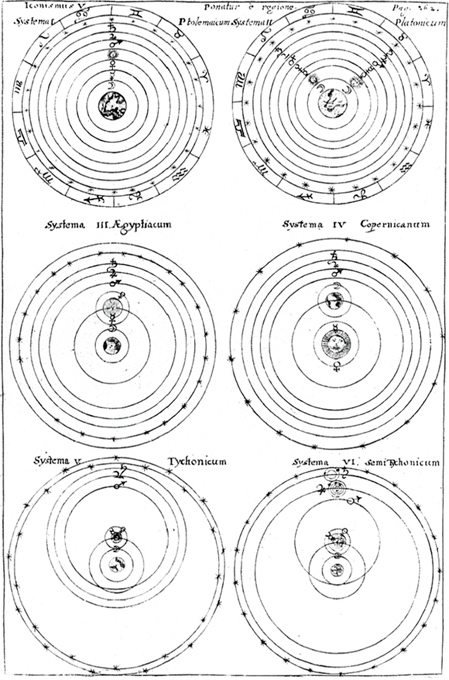
A view, therefore, of the general relation of the whole earth to the whole of the heavens will begin this composition of ours. And next, of things in particular, there will first be an account of the ecliptic’s position and of the places of that part of the earth inhabited by us, and again of the difference, in order, between each of them according to the inclinations of their horizons. For the theory of these, once understood, facilitates the examination of the rest. And, secondly, there will be an account of the solar and lunar movements and of their incidents. For without a prior understanding of these one could not profitably consider what concerns the stars. The last part, in view of this plan, will be an account of the stars. Those things having to do with the sphere of what are called the fixed stars would reasonably come first, and then those having to do with what are called the five planets. And we shall try and show each of these things using as beginnings and foundations for what we wish to find, the evident and certain appearances from the observations of the ancients and our own, and applying the consequences of these conceptions by means of geometrical demonstrations. And so, in general, we have to state that the heavens are spherical and move spherically; that the earth, in figure, is sensibly spherical also when taken as a whole; in position, lies right in the middle of the heavens, like a geometrical centre; in magnitude and distance, has the ratio of a point with respect to the sphere of the fixed stars, having itself no local motion at all. And we shall go through each of these points briefly to bring them to mind.
3. That the Heavens Move Spherically
It is probable the first notions of these things came to the ancients from some such observation as this. For they kept seeing the sun and moon and other stars always moving from rising to setting in parallel circles, beginning to move upward from below as if out of the earth itself, rising little by little to the top, and then coming around again and going down in the same way until at last they would disappear as if falling into the earth. And then again they would see them, after remaining some time invisible, rising and setting as if from another beginning; and they saw that the times and also the places of rising and setting generally corresponded in an ordered and regular way.
But most of all the observed circular orbit of those stars which are always visible, and their revolution about one and the same centre, led them to this spherical notion. For necessarily this point became the pole of the heavenly sphere; and the stars nearer to it were those that spun around in smaller circles, and those farther away made greater circles in their revolutions in proportion to the distance, until a sufficient distance brought one to the disappearing stars. And then they saw that those near the always-visible stars disappeared for a short time, and those farther away for a longer time proportionately. And for these reasons alone it was sufficient for them to assume this notion as a principle, and forthwith to think through also the other things consequent upon these same appearances, in accordance with the development of the science. For absolutely all the appearances contradict the other opinions.
If, for example, one should assume the movement of the stars to be in a straight line to infinity, as some have opined, how could it be explained that each star will be observed daily moving from the same starting point? For how could the stars turn back while rushing on to infinity? Or how could they turn back without appearing to do so? Or how is it they do not disappear with their size gradually diminishing but on the contrary seem larger when they are about to disappear, being covered little by little as if cut off by the earth’s surface? But certainly to suppose that they light up from the earth and then again go out in it would appear most absurd. For if anyone should agree that such an order in their magnitudes and number, and again in the distances, places, and times is accomplished in this way at random and by chance, and that one whole part of the earth has an incandescent nature and another a nature capable of extinguishing, or rather that the same part lights the stars up for some people and puts them out for others, and that the same stars happen to appear to some people either lit up or put out and to others not yet so even if anyone, I say, should accept all such absurdities, what could we say about the always-visible stars which neither rise nor set? Or why don’t the stars which light up and go out rise and set for every part of the earth, and why aren’t those which are not affected in this way always above the earth for every part of the earth? For in this hypothesis the same stars will not always light up and go out for some people, and never for others. But it is evident to everyone that the same stars rise and set for some parts, and do neither of these things for others.
In a word, whatever figure other than the spherical be assumed for the movement of the heavens, there must be unequal linear distances from the earth to parts of the heavens, wherever or however the earth be situated, so that the magnitudes and angular distances of the stars with respect to each other would appear unequal to the same people within each revolution, now larger now smaller. But this is not observed to happen. For it is not a shorter linear distance which makes them appear larger at the horizon, but the steaming up of the moisture surrounding the earth between them and our eyes, just as things put under water appear larger the farther down they are placed.
The following considerations also lead to the spherical notion: the fact that instruments for measuring time cannot agree with any hypothesis save the spherical one; that, since the movement of the heavenly bodies ought to be the least impeded and most facile, the circle among plane figures offers the easiest path of motion, and the sphere among solids; likewise that, since of different figures having equal perimeters those having the more angles are the greater, the circle is the greatest of plane figures and the sphere of solid figures, and the heavens are greater than any other body.
Moreover, certain physical considerations lead to such a conjecture. For example, the fact that of all bodies the ether has the finest and most homogeneous parts but the surfaces of homogeneous parts must have homogeneous parts, and only the circle is such among plane figures and the sphere among solids. And since the ether is not plane but solid, it can only be spherical. Likewise the fact that nature has built all earthly and corruptible bodies wholly out of rounded figures but with heterogeneous parts, and all divine bodies in the ether out of spherical figures with homogeneous parts, since if they were plane or disc-like they would not appear circular to all those who see them from different parts of the earth at the same time. Therefore it would seem reasonable that the ether surrounding them and of a like nature be also spherical, and that because of the homogeneity of its parts it moves circularly and regularly.
4. That Also the Earth, Taken as a Whole, Is Sensibly Spherical
Now, that also the earth taken as a whole is sensibly spherical, we could most likely think out in this way. For again it is possible to see that the sun and moon and the other stars do not rise and set at the same time for every observer on the earth, but always earlier for those living towards the orient and later for those living towards the occident. For we find that the phenomena of eclipses taking place at the same time, especially those of the moon, are not recorded at the same hours for everyone that is, relatively to equal intervals of time from noon; but we always find later hours recorded for observers towards the orient than for those towards the occident. And since the differences in the hours is found to be proportional to the distances between the places, one would reasonably suppose the surface of the earth spherical, with the result that the general uniformity of curvature would assure every part’s covering those following it proportionately. But this would not happen if the figure were any other, as can be seen from the following considerations.
For, if it were concave, the rising stars would appear first to people towards the occident; and if it were flat, the stars would rise and set for all people together and at the same time; and if it were a pyramid, a cube, or any other polygonal figure, they would again appear at the same time for all observers on the same straight line. But none of these things appears to happen. It is further clear that it could not be cylindrical with the curved surface turned to the risings and settings and the plane bases to the poles of the universe, which some think more plausible. For then never would any of the stars be always visible to any of the inhabitants of the curved surface, but either all the stars would both rise and set for observers or the same stars for an equal distance from either of the poles would always be invisible to all observers. Yet the more we advance towards the north pole, the more the southern stars are hidden and the northern stars appear. So it is clear that here the curvature of the earth covering parts uniformly in oblique directions proves its spherical form on every side. Again, whenever we sail towards mountains or any high places from whatever angle and in whatever direction, we see their bulk little by little increasing as if they were arising from the sea, whereas before they seemed submerged because of the curvature of the water’s surface.
5. That the Earth Is in the Middle of the Heavens
Now with this done, if one should next take up the question of the earth’s position, the observed appearances with respect to it could only be understood if we put it in the middle of the heavens as the centre of the sphere. If this were not so, then the earth would either have to be off the axis but equidistant from the poles, or on the axis but farther advanced towards one of the poles, or neither on the axis nor equidistant from the poles.
The following considerations are opposed to the first of these three positions namely, that if the earth were conceived as placed off the axis either above or below in respect to certain parts of the earth, those parts, in the right sphere, would never have any equinox since the section above the earth and the section below the earth would always be cut unequally by the horizon. Again, if the sphere were inclined with respect to these parts, either they would have no equinox or else the equinox would not take place midway between the summer and winter solstices. The distances would be unequal because the equator which is the greatest of those parallel circles described about the poles would not be cut in half by the horizon; but one of the circles parallel to it, either to the north or to the south, would be so cut in half. It is absolutely agreed by all, however, that these distances are everywhere equal because the increase from the equinox to the longest day at the summer tropic are equal to the decreases to the least days at the winter tropic. And if the deviation for certain parts of the earth were supposed either towards the orient or the occident, it would result that for these parts neither the sizes and angular distances of the stars would appear equal and the same at the eastern and western horizons, nor would the time from rising to the meridian be equal to the time from the meridian to setting. But these things evidently are altogether contrary to the appearances.
As to the second position where the earth would be on the axis but farther advanced towards one of the poles, one could again object that, if this were so, the plane of the horizon in each latitude would always cut into uneven parts the sections of the heavens below the earth and above, different with respect to each other and to themselves for each different deviation. And the horizon could cut into two even parts only in the right sphere. But in the case of the inclined sphere with the nearer pole ever visible, the horizon would always make the part above the earth less and the part below the earth greater with the result that also the great circle through the centre of the signs of the zodiac [ecliptic] would be cut unequally by the plane of the horizon. But this has never been seen, for six of the twelve parts are always and everywhere visible above the earth, and the other six invisible; and again when all these last six are all at once visible, the others are at the same time invisible. And so from the fact that the same semicircles are cut off entirely, now above the earth, now below it is evident that the sections of the zodiac are cut in half by the horizon. And, in general, if the earth did not have its position under the equator but lay either to the north or south nearer one of the poles, the result would be that, during the equinoxes, the shadows of the gnomons at sunrise would never perceptibly be on a straight line with those at sunset in planes parallel to the horizon. But the contrary is everywhere seen to occur. And it is immediately clear that it is not possible to advance the third position since each of the obstacles to the first two would be present here also.
In brief, all the observed order of the increases and decreases of day and night would be thrown into utter confusion if the earth were not in the middle. And there would be added the fact that the eclipses of the moon could not take place for all parts of the heavens by a diametrical opposition to the sun, for the earth would often not be interposed between them in their diametrical oppositions, but at distances less than a semicircle.
6. That the Earth Has the Ratio of a Point to the Heavens
Now, that the earth has sensibly the ratio of a point to its distance from the sphere of the so-called fixed stars gets great support from the fact that in all parts of the earth the sizes and angular distances of the stars at the same times appear everywhere equal and alike, for the observations of the same stars in the different latitudes are not found to differ in the least.
Moreover, this must be added: that sundials placed in any part of the earth and the centres of ancillary spheres can play the role of the earth’s true centre for the sightings and the rotations of the shadows, as much in conformity with the hypotheses of the appearances as if they were at the true midpoint of the earth.
And the earth is clearly a point also from this fact: that everywhere the planes drawn through the eye, which we call horizons, always exactly cut in half the whole sphere of the heavens. And this would not happen if the magnitude of the earth with respect to its distance from the heavens were perceptible; but only the plane drawn through the point at the earth’s centre would exactly cut the sphere in half, and those drawn through any other part of the earth’s surface would make the sections below the earth greater than those above.
7. That the Earth Does Not in Any Way Move Locally
By the same arguments as the preceding it can be shown that the earth can neither move in any one of the aforesaid oblique directions, nor ever change at all from its place at the centre. For the same things would result as if it had another position than at the centre. And so it also seems to me superfluous to look for the causes of the motion to the centre when it is once for all clear from the very appearances that the earth is in the middle of the world and all weights move towards it. And the easiest and only way to understand this is to see that, once the earth has been proved spherical considered as a whole and in the middle of the universe as we have said, then the tendencies and movements of heavy bodies (I mean their proper movements) are everywhere and always at right angles to the tangent plane drawn through the falling body’s point of contact with the earth’s surface. For because of this it is clear that, if they were not stopped by the earth’s surface, they too would go all the way to the centre itself, since the straight line drawn to the centre of a sphere is always perpendicular to the plane tangent to the sphere’s surface at the intersection of that line.
All those who think it paradoxical that so great a weight as the earth should not waver or move anywhere seem to me to go astray by making their judgment with an eye to their own affects and not to the property of the whole. For it would not still appear so extraordinary to them, I believe, if they stopped to think that the earth’s magnitude compared to the whole body surrounding it is in the ratio of a point to it. For thus it seems possible for that which is relatively least to be supported and pressed against from all sides equally and at the same angle by that which is absolutely greatest and homogeneous. For there is no “above” and “below” in the universe with respect to the earth, just as none would be conceived of in a sphere. And of the compound bodies in the universe, to the extent of their proper and natural motion, the light and subtle ones are scattered in flames to the outside and to the circumference, and they seem to rush in the upward direction relative to each one because we too call “up” from above our heads to the enveloping surface of the universe; but the heavy and coarse bodies move to the middle and centre and they seem to fall downward because again we all call “down” the direction from our feet to the earth’s centre. And they properly subside about the middle under the everywhere-equal and like resistance and impact against each other. Therefore the solid body of the earth is reasonably considered as being the largest relative to those moving against it and as remaining unmoved in any direction by the force of the very small weights, and as it were absorbing their fall. And if it had some one common movement, the same as that of the other weights, it would clearly leave them all behind because of its much greater magnitude. And the animals and other weights would be left hanging in the air, and the earth would very quickly fall out of the heavens. Merely to conceive such things makes them appear ridiculous.
Now some people, although they have nothing to oppose to these arguments, agree on something, as they think, more plausible. And it seems to them there is nothing against their supposing, for instance, the heavens immobile and the earth as turning on the same axis from west to east very nearly one revolution a day; or that they both should move to some extent, but only on the same axis as we said, and conformably to the overtaking of the one by the other.
But it has escaped their notice that, indeed, as far as the appearances of the stars are concerned, nothing would perhaps keep things from being in accordance with this simpler conjecture, but that in the light of what happens around us in the air such a notion would seem altogether absurd. For in order for us to grant them what is unnatural in itself, that the lightest and subtlest bodies either do not move at all or no differently from those of contrary nature, while those less light and less subtle bodies in the air are clearly more rapid than all the-more terrestrial ones; and to grant that the heaviest and most compact bodies have their proper swift and regular motion, while again these terrestrial bodies are certainly at times not easily moved by anything else for us to grant these things, they would have to admit that the earth’s turning is the swiftest of absolutely all the movements about it because of its making so great a revolution in a short time, so that all those things that were not at rest on the earth would seem to have a movement contrary to it, and never would a cloud be seen to move toward the east nor anything else that flew or was thrown into the air. For the earth would always outstrip them in its eastward motion, so that all other bodies would seem to be left behind and to move towards the west.
For if they should say that the air is also carried around with the earth in the same direction and at the same speed, none the less the bodies contained in it would always seem to be outstripped by the movement of both. Or if they should be carried around as if one with the air, neither the one nor the other would appear as outstripping, or being outstripped by, the other. But these bodies would always remain in the same relative position and there would be no movement or change either in the case of flying bodies or projectiles. And yet we shall clearly see all such things taking place as if their slowness or swiftness did not follow at all from the earth’s movement.
Translated by R. Catesby Taliaferro
Reading and Discussion Questions
1.To what extent do Ptolemy’s five basic assumptions function like Euclid’s axioms? In what way are they different? What arguments does Ptolemy give in support of each assumption? What intellectual traditions or natural philosophers of earlier periods is he indebted to?
2.Of the arguments that he considers for the immobility of the earth, which might you have found most compelling at the time?
Additional Resources
Cohen, I. Bernard. The Birth of a New Physics. Revised and Updated ed. New York: W. W. Norton and Company, 1985. A scholarly and accessible presentation of conceptual developments, with valuable comparisons between Ptolemy’s astronomical system and that of Copernicus, with excellent diagrams.
Crowe, Michael J. Mechanics from Aristotle to Einstein. Santa Fe, NM: Green Lion Press, 2007. A valuable mixture of primary and secondary source material, the first chapter of this text is especially helpful in understanding Oresme.
Cushing, James T. Philosophical Concepts in Physics: The Historical Relation between Philosophy and Scientific Theories. Cambridge: Cambridge University Press, 1998. The fourth chapter of this volume provides a clear introduction to Eratosthenes, Aristarchus, and Ptolemy.
Lindberg, David C. The Beginnings of Western Science: The European Scientific Tradition in Philosophical, Religious, and Institutional Context, Prehistory to A.D. 1450. 2nd ed. Chicago: Chicago University Press, 2007. Essential background reading for the entire ancient and medieval period, the best secondary source textbook currently available.
Losee, John. A Historical Introduction to the Philosophy of Science. 4th ed. Oxford: Oxford University Press, 2001. The first chapter of this text clarifies some of the most difficult concepts of the Aristotelian logic and method.
Robbins, Robert J., ed. Electronic Scholarly Publishing (www.esp.org). This website specializes in the history of biology, going all the way back to Aristotle, with a particular focus on genetics.