
CHAPTER 7
IS THERE A SCIENTIFIC EXPLANATION for religious belief? Already I can hear hackles being raised (whatever a hackle is). I can hear accusations of a superior, conceited attitude from a scientist towards people of faith. The topic of science and religion has always been polarising, with – in my own experience – discussions rarely going anywhere and ending up entrenching people further in their views, especially when drink is taken. Richard Dawkins, writer of The God Delusion, has been attacked for daring to try to explain the basis for religious belief. Equally, in the US, religious battles are being fought over the teaching of evolution. Suffice to say, they don’t get along. So I am already on dodgy ground here.
But for me, religion has always been a fascination. Why would people believe in reincarnation, life after death or that a man walked on water? One answer is that some or all of these are true. Another is that religious belief is just another trait, with similarities, say, to an avid Manchester United supporter (although that is much more hateful than believing in a god). And why is it that atheism is on the rise in Western societies1? Is this a sign, as some believers say, of the end of days? Or is it just that religion no longer holds sway with some people in this age of cynicism, science and the electric light which banishes the darkness? As with all questions, scientists must approach this one with reasonableness. What have studies on religious belief told us? Might it be that faith in a higher power is a crucial part of being a human or is it, as Dawkins argues, just a delusion?
Let’s start by saying that science never tries to answer the question of why we’re here. It’s mainly concerned with how we’re here, that is to say, the process by which we evolved from the first lifeform that arose on Earth. And science has been spectacularly good at answering that question. Religion is mostly in the realm of why we come to be here (the answer being that a god or gods made us). The two areas are therefore separate from each other and when they try to mix, problems can arise.
Religious belief shouldn’t need scientific evidence, and things can go badly wrong when it tries to find it. A good example is the attempt to date the Shroud of Turin. For the Catholic faith, this is one of the most important religious relics of all. The shroud was purported to have the imprint of the body of Christ after he was taken down off the cross. A pesky scientific invention called carbon dating (which can date organic material very precisely based on radioactive carbon isotopes which decay over time) dated the Shroud of Turin to between 1260 and 1390 AD, long after the time of Christ. Efforts like these give succour to the people who dismiss religion as a grand hoax, and holy relics as a scam that exploit the gullible and vulnerable. And why would a religion want to find scientific evidence of God? Would they say ‘Ah-ha, there you have it – evidence!’, which would only reveal the believer’s own weakness of faith? No serious theologians are seeking scientific proof of God. This pursuit would risk falsifiability, and so theology has largely focused on questions of philosophy.
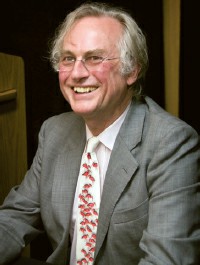
RICHARD DAWKINS, FORMER PROFESSOR FOR PUBLIC UNDERSTANDING OF SCIENCE AT OXFORD UNIVERSITY. IN HIS BOOK THE GOD DELUSION DAWKINS CONTENDS THAT RELIGIOUS FAITH IS A DELUSION.
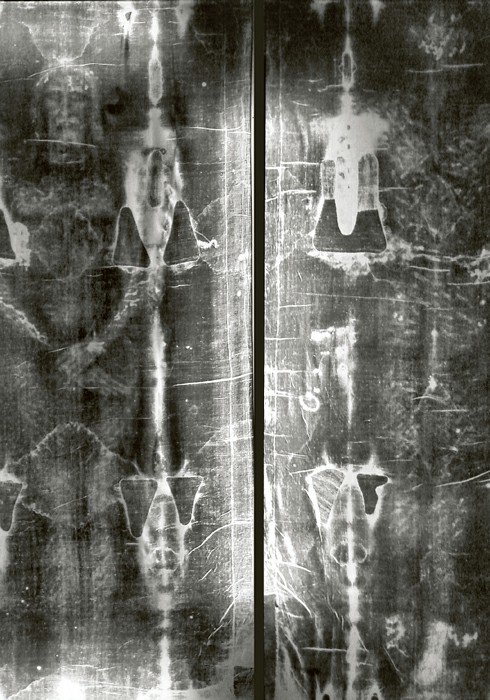
THE SHROUD OF TURIN IS A CLOTH ALLEGED TO BE THE BURIAL SHROUD OF JESUS CHRIST. IT HAS BEEN DATED BY RADIOCARBON DATING TO BETWEEN 1260 AND 1390.
The God question often concerns the emergence of life on Earth. Some believe that the laws of physics were set in motion by a higher power and left to simmer away. Others believe that we came from the splitting of a cosmic egg. But as we saw in Chapter 1, we now have a reasonable scientific explanation as to how life arose. It came down to a big bubbling cauldron full of rich organic chemicals that over the course of hundreds of millions of years eventually formed the first cell, which then divided and ultimately gave rise to us. That first cell was intensely complicated in terms of chemistry (or should I say biochemistry). It became a self-sustaining factory that could make copies of its own DNA. No mean feat, but there was no spark of life from the fingertip of a god. All that was needed were the laws of physics, chemistry and biology, and some random events.
That life can spring from the laws of science is perhaps best illustrated from attempts to make so-called synthetic life purely from chemical building blocks. A remarkable study has shown that DNA can be injected into a cell without DNA. The cell then ‘boots up’ and can make a copy of the new DNA and divide2. The contents of the cell still can’t be assembled from scratch owing to their complexity, so this isn’t quite synthesising life from first principles, but that prospect is getting closer. Perhaps scientists will be able to provide the ‘spark’ and create a living cell that will be able to reproduce and be subject to evolution.
In scientific terms, the main ‘purpose’ of life, if life can be said to have a purpose, is to survive so that DNA can be copied and passed on to the next generation. This can be achieved by reproducing at a high rate or by helping your relatives (who have copies of some of your genes too) to reproduce and survive. The mother who anxiously recommends possible suitors for her daughter (when did that ever work out?) is just playing out an instinct that evolved a long time ago. Copies of our genes in the bodies of our relatives are to be supported and encouraged and in that way some of our DNA carries on to the next generation.
This was quite simple when we lived in small tribes. We knew who our relatives were and it made sense to support them. Strangers were shunned and it is from this that our xenophobic instinct comes from. Anthropologists have evidence that we lived for a long time in small groups, with a maximum of probably 250 people3. One happy tribe, made up of you, your family and your in-laws. It’s thought that it was in these kinds of groups that religion began4, in the form of wisdom being passed down to the next generation. This advice is also thought to have taken the form of moral guidance – look after your neighbour, don’t cause problems that might lead to trouble – in effect, love thy neighbour. This ensured that the copies of your DNA in your relatives would also get passed on.
Smart people in the tribe – the elders if you will – would have come up with ways to make members behave, since there is a natural tendency for people to stray from the path and become what in Ireland are called ‘messers’. One way to convince them is to tell them the wisdom has come from some kind of super-being. We then get the concept of a supernatural being providing advice – a caring parent figure. This is a common concept in many religions. By obeying and serving this powerful figure, your own kin benefit and so the DNA passes on. There’s always a risk of freeloaders not obeying these guidelines, but the risk is lessened because of the all-seeing father figure who can punish you. If the punishment doesn’t materialise, it is up to the wise elders to provide it, under the guise of divine power, therefore creating the need for religious leaders and a hierarchy. Again, this is a common feature of many religions, although some (such as the Christian faith) have a father figure who is more of a provider who loves people who believe in him.
The survival of religion in our modern societies which aren’t made up of tribes of 250 people is a puzzle. Again, a possible explanation is the survival of the fittest. Multiple studies have shown that religious people are on average healthier than non-believers. This could be because they receive more social support. If a Homo sapiens walked into Europe and met a Neanderthal, the spiritual ones with social awareness (which would allow them to form an army to fight) were more likely to survive the ensuing battle. These traits then passed on to the next generation, mostly via cultural transmission. Evidence for the effect religious faith has on people’s health can be seen in the fact that Her Majesty Queen Elizabeth II is still alive. Is this because thousands of people every day pray ‘God Save our Queen’? Maybe not. Maybe it’s the social support she gets, including superb medical care.
Another suggestion for spirituality suggests that it might in part be genetic: you could carry a variant of a gene (or most likely several) which might predispose you to being spiritual in the right set of circumstances. Some of the evidence is based on twin studies, which show a 40 per cent genetic component to belief in a god5. This means the environment plays as much if not a bigger part in making someone spiritual. This set of genetic variants is likely to survive in a population because they will bring benefits, but only in a given cultural context, for example, the pre-agreed-upon rules of a religion. If you are a person who is genetically disposed to hate cheese, you are more likely to survive and thrive in an environment where it is agreed that cheese is bad. Hence the importance religions place on spreading the Good News and reminding the congregation of the rules and mission statement. This will mean that the tribe will look out for each other and promote social activities (such as religious ceremonies). We know social activity helps us a lot, decreasing the risk of heart disease, for example6. The loving feelings engendered by spirituality are related to the hormone oxytocin, which is the bonding hormone in humans. Oxytocin drives a feeling of warmth, and this in turn facilitates a large co-operative group functioning together. This kind of bonding is so much deeper than, say, the links between supporters of a football team, because it helps us deal with questions that are intrinsically human. Where did we come from? What happens after we die? These questions are in us because of intelligence and capacity to ponder on what might happen next to us – a defining trait of Homo sapiens.
Another piece in the puzzle is to do with the minds of children. A very telling phrase from Jesuit priests who ran certain schools in Ireland was ‘Give me the boy of seven and I will give you the man’. What they were referring to was the remarkable plasticity and hunger for information of the mind of the developing child. This plasticity makes evolutionary sense. It arose to ensure that children, who were starting to explore the world and venture forth, would obey their elders. When the anxious father says to the seven-year-old, ‘Don’t go into that forest, there’s a bogeyman in there,’ the child will believe him. She won’t seek evidence for the bogeyman, because her brain is set up to receive and believe the information. She will find it very hard to escape this belief in the bogeyman and might even carry it with her for the rest of her life, the imprinting on her mind being so powerful. What if the child is told that if he is naughty he will go to hell, in the Christian tradition, or Gehinnom in Judaism? He will believe those things too. If those things get reinforced (say every Sunday in church or by the chanting of mantras) as he moves through adolescence and on into adulthood, they might stick even more, especially as life’s trials and tribulations take hold, and he will take comfort in the idea of a joyful afterlife.
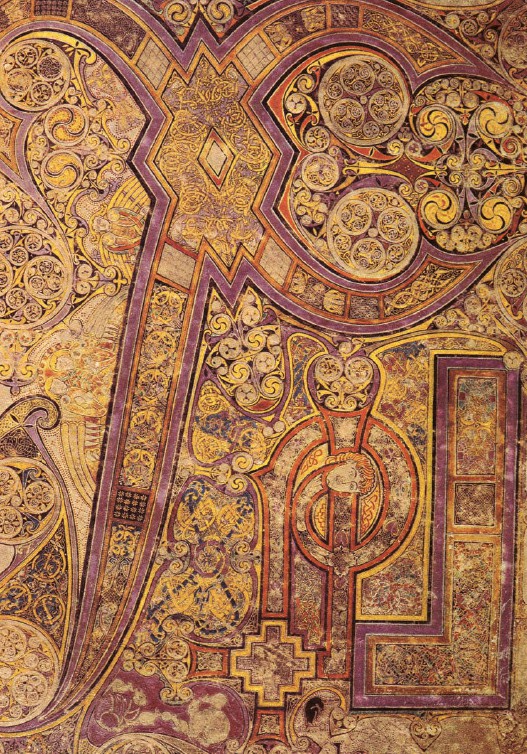
THE CHI-RHO PAGE FROM THE BOOK OF KELLS, ONE OF THE WORLD’S GREATEST WORKS OF ART. IT DEPICTS THE FIRST TWO LETTERS OF CHRIST’S NAME IN GREEK. WHAT INSPIRED ITS PSYCHEDELIC IMAGERY?

THE PEYOTE CACTUS, NATIVE TO MEXICO AND SOUTHERN TEXAS. IT IS KNOWN FOR ITS PSYCHOACTIVE PROPERTIES AND WAS USED IN RITUALS BY INDIGENOUS NORTH AMERICANS.
Overall, we have a reasonable explanation for the origin of the tendency toward religious faith. We invented God subconsciously to promote our survival and the transmission of our DNA. God didn’t invent us. But are we hardwired to believe in a higher power? Is there a neural map we can follow to explain what is going on when a person has a religious experience?
An interesting aspect of the mystical is the use of natural hallucinogens by many cultures during religious ceremonies. The peyote cactus was used by Native Americans and was considered to be a way for people to transcend reality and commune with God. It is interesting to speculate whether hallucinogenic mushrooms were used by the monks in Ireland, and whether they were the inspiration for the psychedelic imagery in the Book of Kells, most notably on the Chi-Rho page, which appears particularly trippy, full of kaleidoscope eyes. (Alternatively, this great work of art was inspired directly by faith in God, as was the case with the Renaissance.) The Salem witch trials that occurred in 1640 in the town of Salem, Massachusetts, may have been triggered by the consumption of bread that had become mouldy with ergot, a hallucinogenic fungus. These naturally occurring chemicals probably evolved as insect repellents, since they also cause behavioural changes in insects which protect the plant. The strategy here seems to be ‘get the insect to have a trip, and it will wander off and not eat me’.
The synthetic hallucinogen LSD (or to give it its chemical name, lysergic acid diethylamide) was made accidentally by the chemist Albert Hoffman while working for the Swiss pharmaceutical company Sandoz, using chemicals derived from ergot. He took some by mistake and had the first recorded ‘acid trip’. The key thing he reported was a spiritual awakening. He took a subsequent trip and took too high a dose (ten times the dose needed to cause changes) and thought that his neighbour was a ‘malevolent witch’. It turns out that a religious experience is very common in people who have taken LSD – a sense of something greater, outside our own consciousness. The same effect can be triggered to some extent by starvation, which might explain why both Christianity and Islam involve their founders spending time isolated (40 days in the desert, for example) and starving. It might therefore be possible that there are certain neuronal pathways in our brains that when activated promote a religious sensibility. This might make us want to survive in times of stress and deprivation, and so yet again might be evidence of religious faith being a trait that promotes survival and gene transmission.
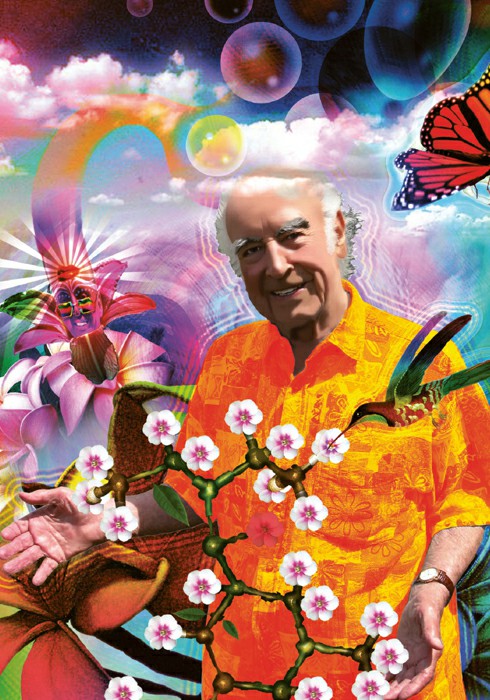
ALBERT HOFFMANN (1906–2008) WAS THE FIRST PERSON TO SYNTHESISE AND INGEST LYSERGIC ACID DIETHYLAMIDE (LSD) AND EXPERIENCE THE FIRST ACID TRIP. HE CALLED LSD ‘MEDICINE FOR THE SOUL’.
Religion has always thrived in places where there is great suffering. Poor people, or people in times of great trauma, are more inclined to believe in a god, possibly to give them hope and comfort. The problem has been, however, that such people are sometimes exploited by religious leaders who hold the money and the power. In the past, some supernatural religious experiences were possibly the manifestations of what we would now consider mental illness – a person heard voices or saw things that others didn’t and ascribed these to a god. Many saints became famous for such things. One aspect of this that gives rise to suspicion is claims that the Virgin Mary appeared to girls who are entering puberty, as happened in Lourdes and Fatima. One explanation is that these girls are highly susceptible to such things and are making the stories up, or truly believe something has happened but are hallucinating. Teenage girls are known to be highly suggestive and there are many accounts of mass hysteria among them, most likely caused by social and cultural factors7. Another explanation is that the Virgin Mary chooses to appear to such girls on purpose. You can’t win either way in that particular debate, but suffice to say which of these options science supports. Perhaps one reason for the decline in religion in Western societies is the increase in quality of life, with people facing less privation, and possibly less or better managed mental illness. Or perhaps it’s all down to smartphones, which, let’s face it, are pure magic.
This decline can be seen in recent surveys, which paint a disturbing picture for the religions involved. In the UK, a recent national census showed that 8.5 million people identify as Anglican, which is a significant drop from 13 million ten years ago8. The demographics of those of the Anglican faith present an even more worrying vista. About 40% of them are now over 70. Based on demographics alone, the number of Anglicans will decline to under 1 million people by 2050. And the Anglican faith is one of the most benign, demanding very little of its congregation. Its churches are now used mainly for weddings of people who don’t believe in God, or for funerals for the bereaved who can think of no other option. It has, however, assets of more than £12 billion or has claimed that its investments outperform some hedge funds (could this be from divine intervention?), so its financial future seems secure. It has a great track record in helping the vulnerable, be it through poverty relief, education or health, and its main message (other than faith in scripture) is for compassion, tolerance and kindness. However, enthusiasts who are trying to maintain and revive it say that ‘people are happy to listen when you talk about the good works done by the Church, but their eyes glaze over when you mention God.’
Where religion is dying out, it is being replaced by other things. Humans still have a need to be social, and to believe in something outside themselves to give their lives meaning. Some modern alternatives include Scientology, which has the singular feature of being neither scientific nor a religion. Kopimism is a congregation of file sharers who believe that copying information is a sacred virtue, and a high percentage of Australians say they are Jedis. This need for social grouping can also appear as support for a football team or a country (which has its own dangers) or for the welfare of fellow human beings. Humanism has all the characteristics of Christianity without the mystical parts and is sometimes derided by people of faith as being a sandwich with the meat taken out. It takes a lot of bravery (or, depending on how you see it, indoctrination) to declare faith in a man who came back from the dead and tried to convince humanity to be nice to each other, even though that is what every mother has been telling her children for a long time.
The development of science is another reason for religious faith declining. It provides people with answers as to how we came to be the way we are. It doesn’t answer the big question of how all this got started (who invented those laws of chemistry and physics that gave rise to the first cell?) or why we’re here, but those questions simply reveal how we are built: we are driven to ask questions and be curious, which is the reason why science got going in the first place. That very drive leaves us wanting when it comes to the big question of creation. Science and religion are, of course, not always mutually exclusive, and many scientists are devout believers. A good example is Francis Collins, who led the human genome project, and who is a devout Christian. Like him, some see what science reveals as actually being evidence for a god. Surveys have shown, however, that in general scientists are less likely to believe in god than the general public9. This is most likely because they are unable to hold two opposing views in their heads at the same time. Scientists need supporting data, which is lacking when it comes to religion.
One interesting development in the science/religion debate is the view of some that science is actually another religion anyway. Scientists shudder at this thought, since science is all about logic and reason and evidence, and couldn’t possibly have any relation to what atheists believe to be mythical stories. Scratch a little deeper, however, and similarities emerge. First, scientists are often anthropocentric. Religion is similar. One of my favourite people to follow on Twitter is God. Yep, God tweets. Maybe that’s where Trump got the idea. God currently has over 5 million followers (but only follows one person: Justin Bieber) and recently tweeted: ‘You humans. You’re so vain, I bet you think this universe is about you.’ We thought the sun went around the Earth. Copernicus told us that was wrong, even though he couldn’t get into a rocket and prove it. Some didn’t believe it (and there are probably some people who still don’t) but once we could go into space and actually observe the heliocentric nature of our solar system there was no disputing it – at least not when using our capacity for reason. So we learned that we are on a rock going around the sun, like the other rocks in our solar system. We then learned that our sun is just one of billions and billions of stars in billions and billions of galaxies. We are, as my wife Margaret has often said, ‘a speck on a speck on a speck on a speck in the Universe’. The next kickback will be life on other planets. This will most likely be found, further decreasing our specialness. Having a God that created us and looks after us makes us feel important.
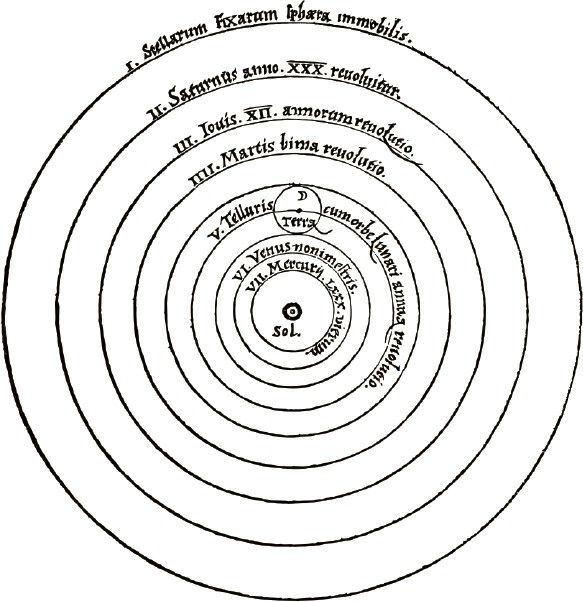
WHEN COPERNICUS (1473–1543) DESCRIBED HOW THE EARTH GOES AROUND THE SUN AND NOT THE OTHER WAY AROUND, THE PRIMACY OF HUMANS IN THE UNIVERSE WAS CHALLENGED.
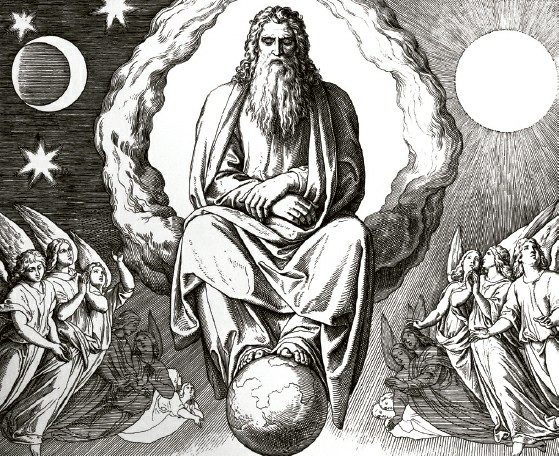
THINGS WERE MUCH SIMPLER WHEN GOD HAD A LONG WHITE BEARD AND KEPT THE EARTH TURNING WITH HIS FEET.
Other similarities between science and religion are the casting out of heretics (which usually happens when a radical new idea comes along), revering saints (Darwin, Newton and Einstein are the scientists who feature most on T-shirts) and a code of ethics (don’t cheat in your research). Science also has its own priesthood who learn secrets (at university), wear special garments (white coats) and perform arcane ceremonies (experiments) in special rooms (laboratories). The scientific priesthood has, however, one big thing going for it: it is much more gender-inclusive. Much of science is also a complete mystery, with things like dark matter, dark energy and quantum strings (all top-line challenges in physics) going unexplained.
Finally, science requires a faith of sorts. When a scientist is asked to explain the existence of the universe, they’ll invoke things like the Big Bang, superstrings and all sorts of concepts. When asked to explain any of them, they won’t be able to, unless of course they are specialists. So they take it on faith, invoking other scientists. The big difference in this regard is that science has evidence to back up these explanations. As the astrophysicist Neil de Grasse Tyson has said: ‘The good thing about science is that it’s true whether or not you believe in it.’ If science is to be viewed as a religion, however, it is one that looks outwards instead of inwards.
The men who went to the moon were interesting in this regard. Once they saw the enormity of the cosmos and the tiny blue dot of the Earth, some were said to marvel at it and praise God. Neil Armstrong said two particularly striking things after the Apollo mission: ‘It suddenly struck me that that tiny pea, pretty and blue, was the Earth. I put up my thumb and shut one eye, and my thumb blotted out the planet Earth. I didn’t feel like a giant. I felt very, very small.’ He also said: ‘Mystery creates wonder and wonder is the basis for man’s desire to understand.’ There may well be wonder in religion, but ultimately it is science that has the best chance of helping us understand more about where we came from, who we are and maybe even where we’re going.