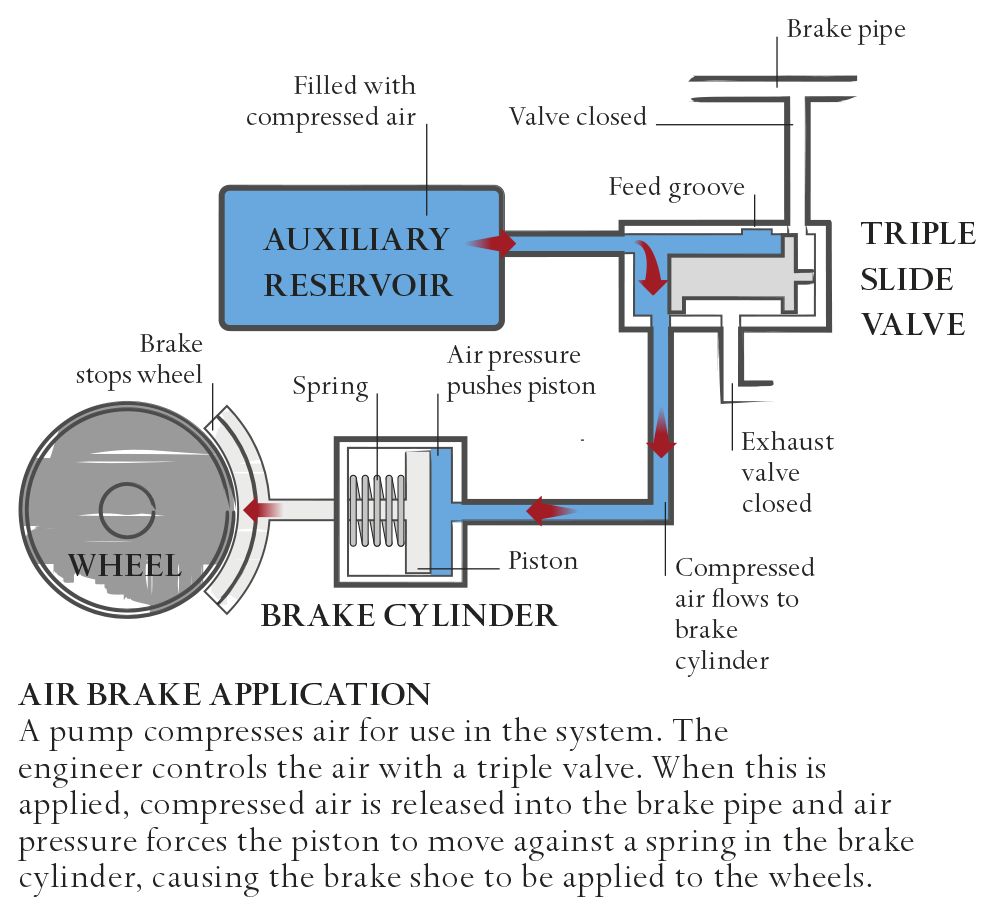
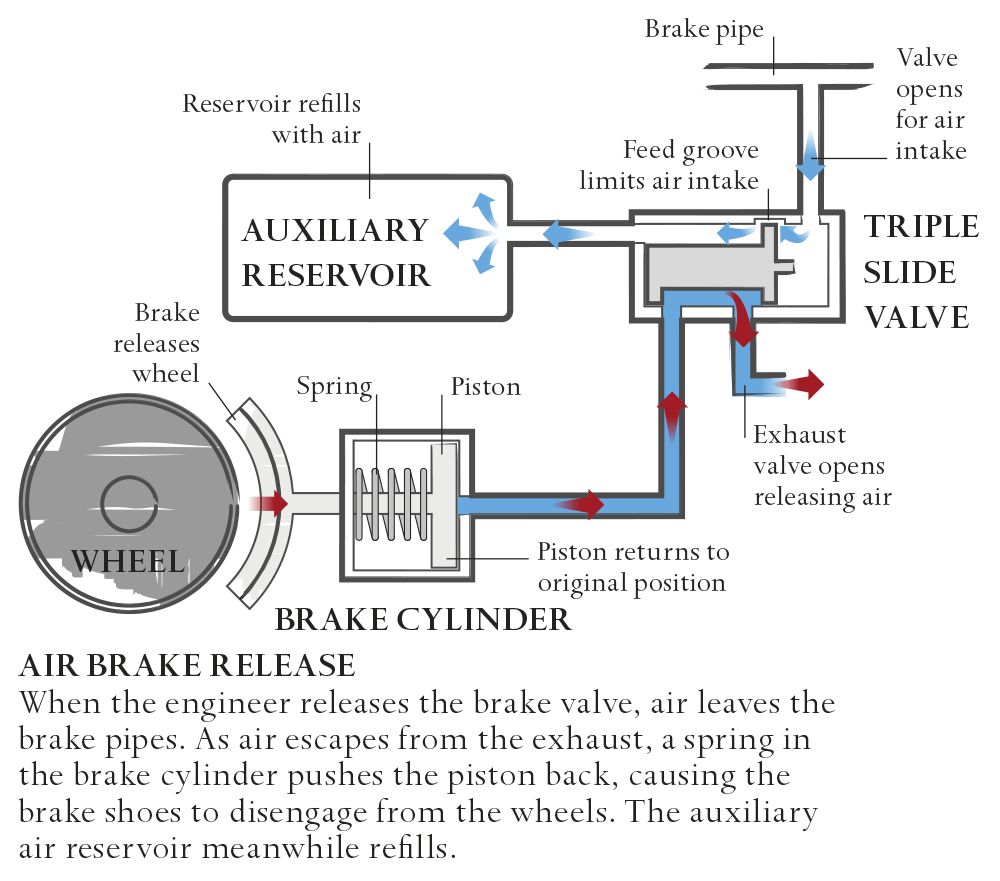
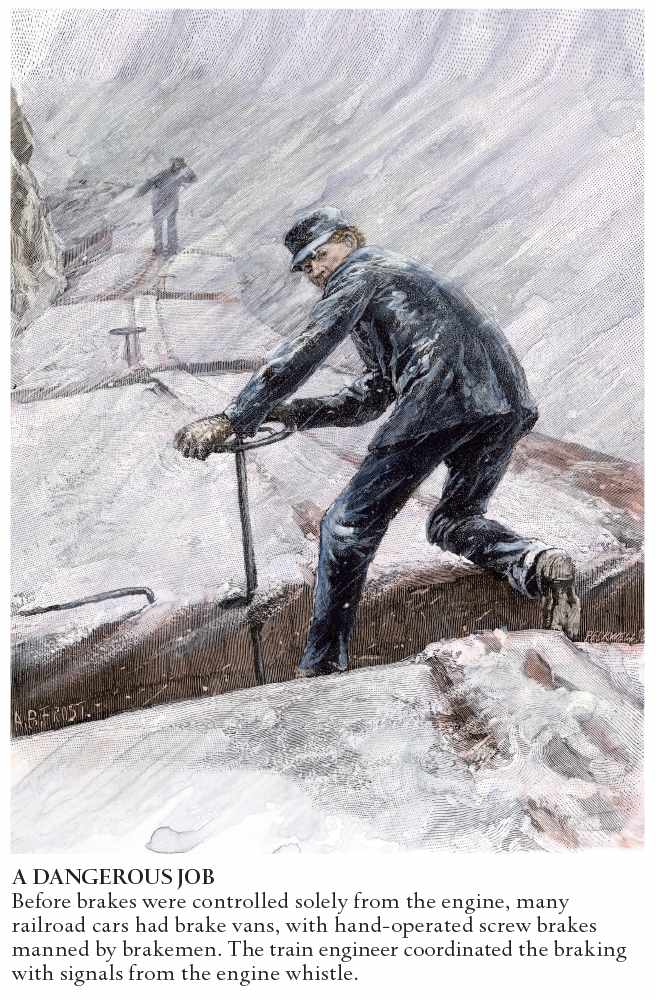
In rail’s infancy, a train’s brakes were simple wooden blocks, called shoes, that were applied to the wheels by turning hand controls at several points along the train’s length. As speeds increased, however, a more effective way of braking was required to stop trains over a shorter distance, and various attempts were made to create a brake with one point of control, operated by the engineer. In 1875, a competition was held in Britain to find the best solution. The clear winner of these Newark Trials was the Westinghouse automatic air brake, which was widely adopted in the US. Britain initially used the less successful vacuum brake, but air brakes have since come into standard usage worldwide.
.
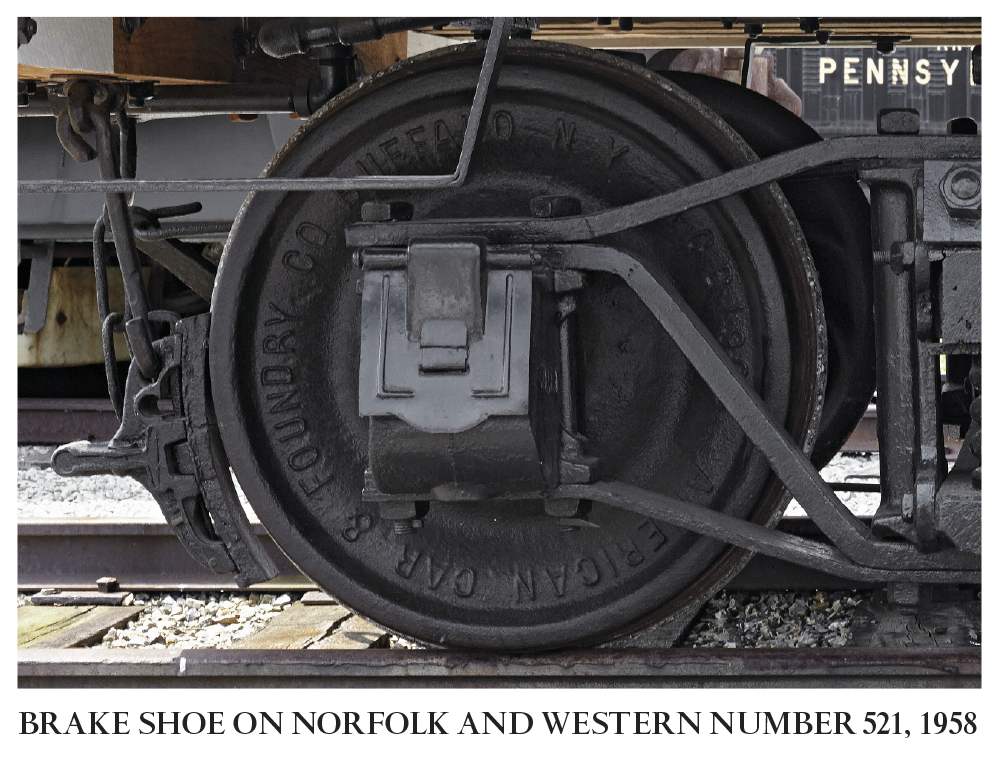
Brake shoes
The first simple brake shoes were soon developed to become “continuous” brakes. In this system, brakes were located on every car and were controlled from the locomotive engine by ropes, chains, or pipes running the length of the train. The wooden shoe was suspended by a lever, or levers, between the brake cylinder and the wheel. As technology progressed, the block was more often made from cast iron, which is still used widely, although modern railroads also use a wide variety of composite materials.
.
Air braking systems
During the 1870s “battle of the brakes,” air brakes could bring a train traveling at 50mph (80kph) to a halt in half the time taken by vacuum brakes: the braking distance for Westinghouse’s automatic air brake was 777ft (237m), compared to 1,477ft (450m) for a vacuum brake—a considerable safety advantage. Today, air or pneumatic brakes are the standard system used by railroads around the world. These brakes use compressed air to apply a shoe block to the wheel.