Steam was recognized as a potential energy source as early as the 1st century CE, when steam-powered devices appeared in the writings of Hero of Alexandria. But it was not until the late 18th century that steam power was put to practical use in the form of stationary engines. The principles behind these engines were refined simultaneously by Owen Evans in the US and Richard Trevithick in England. Trevithick developed the idea of using high-pressure steam, which allowed the engine to be small enough to be mounted on wheels. This meant that, for the first time, steam could be used for propulsion. His engine Puffing Devil—the world’s first steam locomotive—made its first journey on Christmas Eve 1801.
.
How steam is created
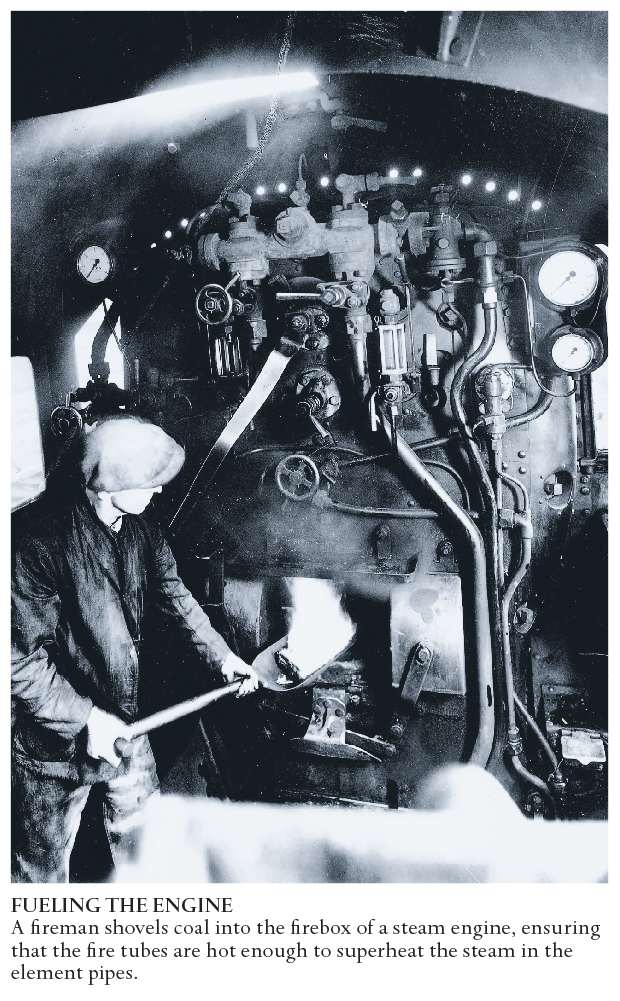
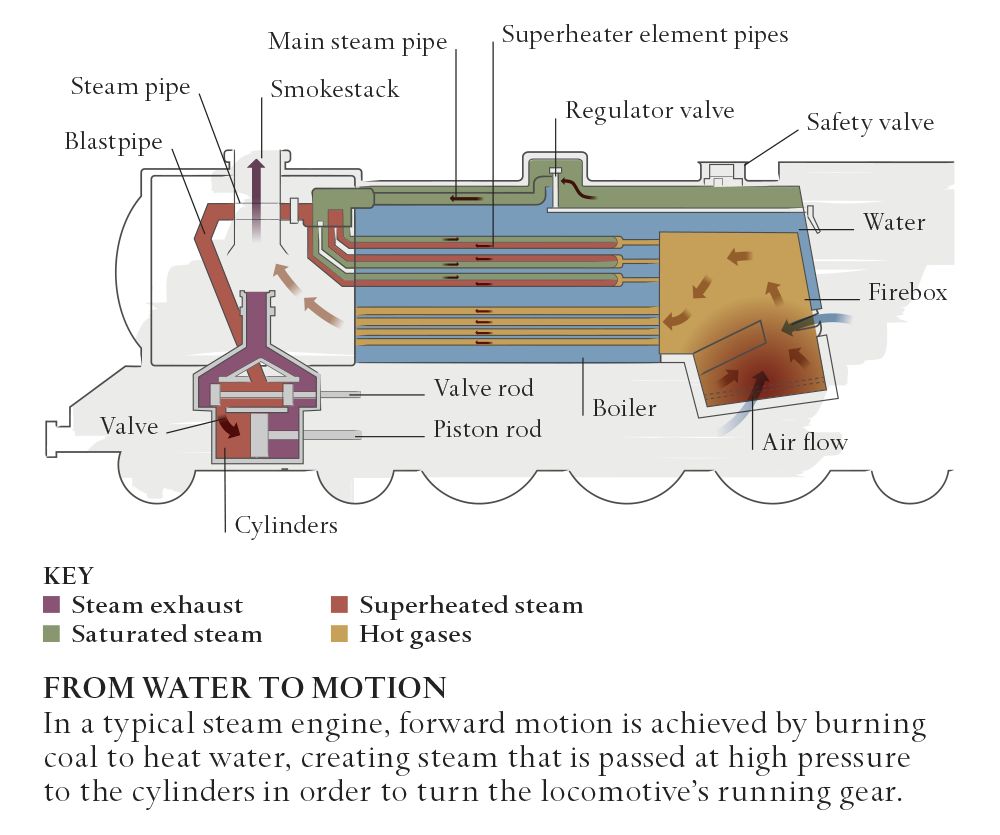
One of the key innovations pioneered by George Stephenson in his 1829 Rocket was the fire-tube boiler, which became a fundamental feature of all steam locomotives. Earlier engines had used a single fire tube to heat the water in the boiler, but Stephenson used 25 copper fire tubes to greatly increase the heat transfer between the firebox and the boiler, meaning that steam could be created much more efficiently. Later engines used superheater elements in place of the fire tubes.
.
Steam propulsion
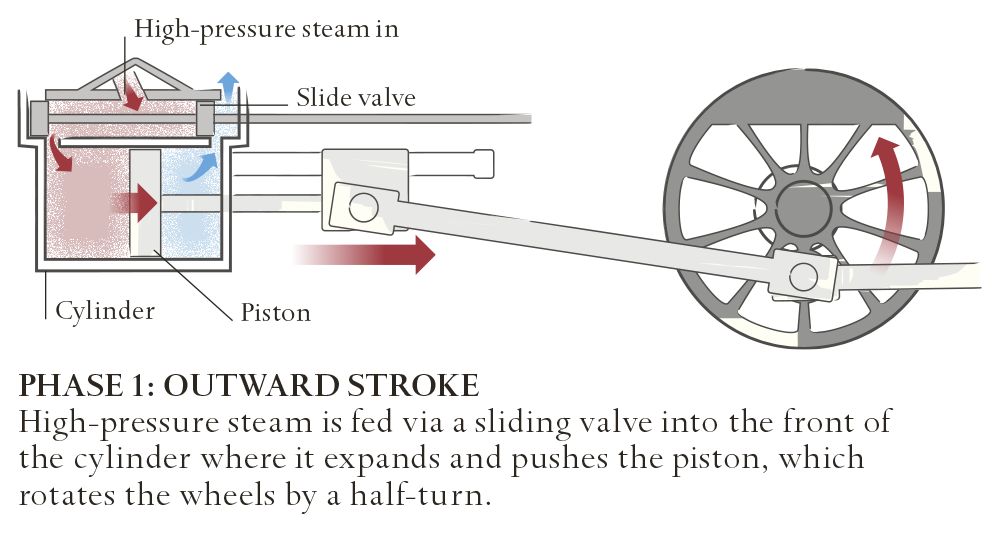
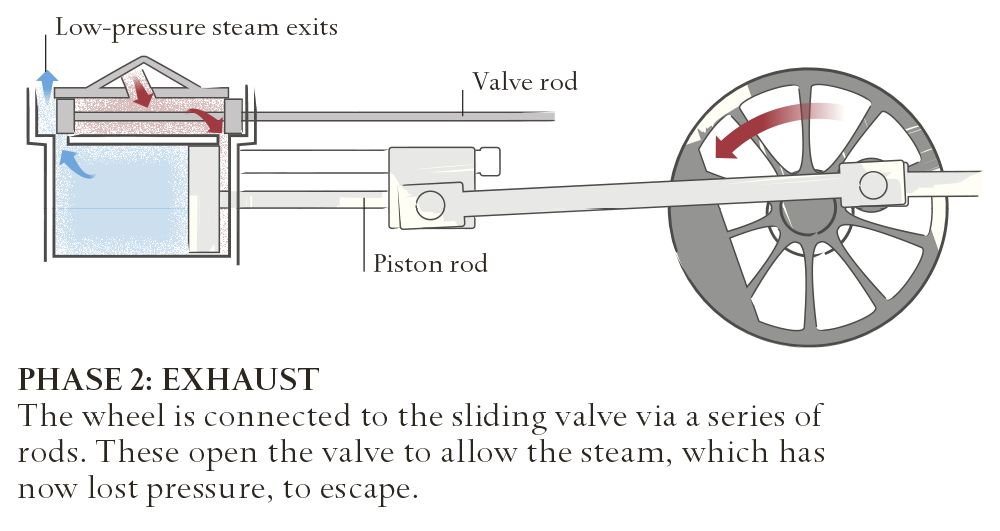
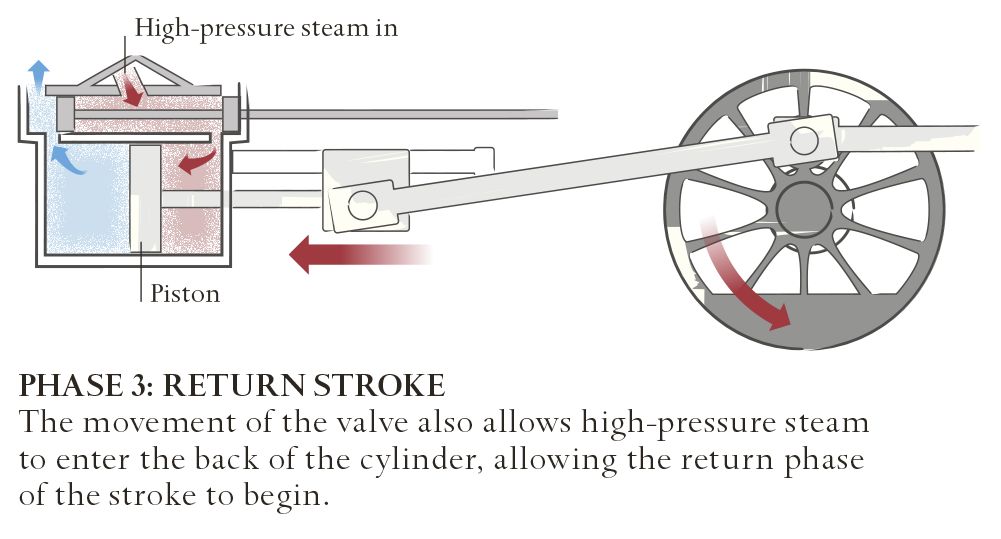
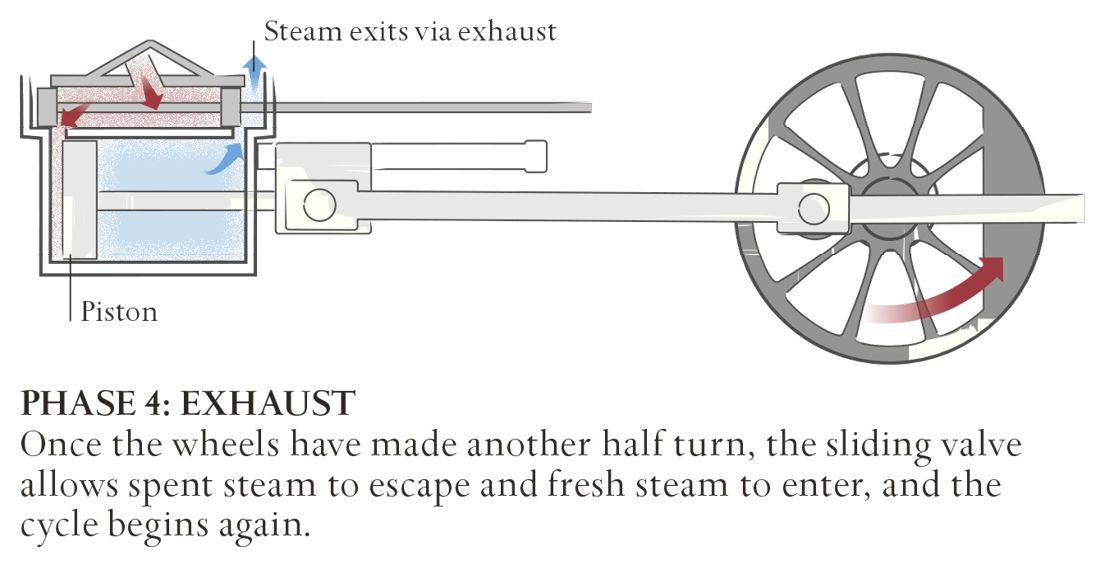
Steam from the boiler is superheated to over 212ºF (100ºC) and transferred to the cylinders at high pressure, pushing the pistons which turn the driving wheels via a series of pivots and rods, converting linear motion to rotation.