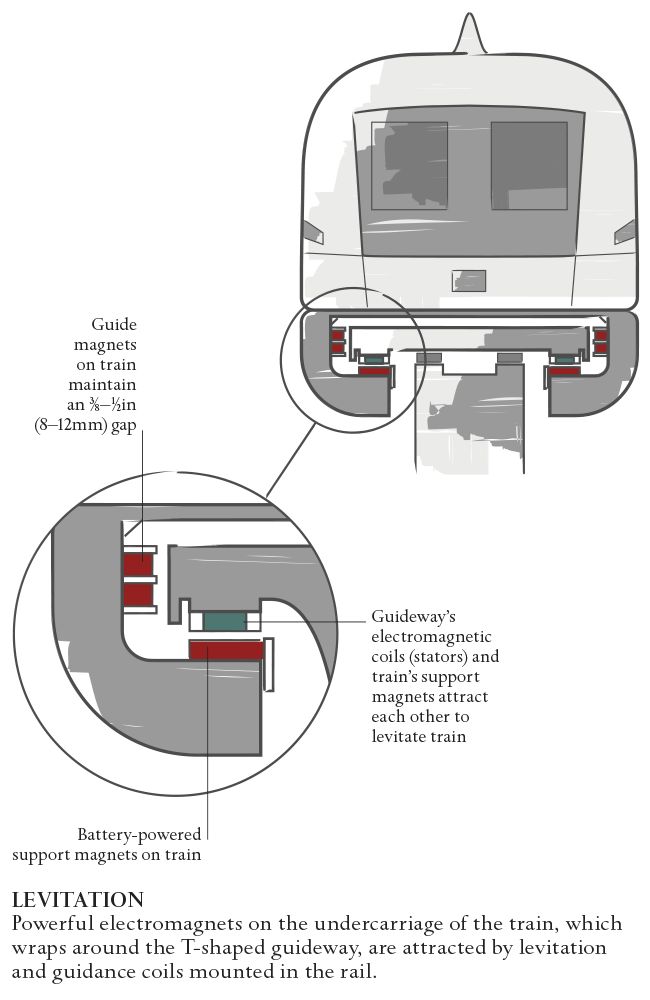
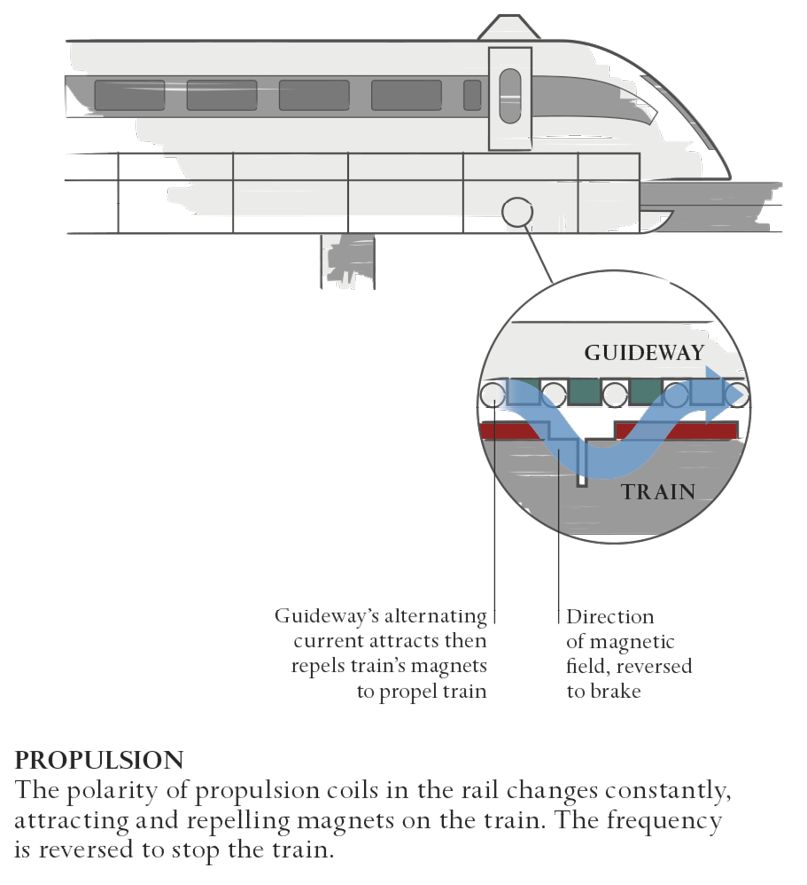
Unlike conventional trains with their track-and-wheel interface, maglev (magnetic levitation) trains literally float on air, using powerful magnets to suspend trains at a constant level above a steel rail or guideway and electromagnetic force to propel the trains. Due to a lack of friction, maglev trains are quiet and stable, can accelerate and decelerate fast, and both trains and guideway suffer little wear and tear. However, due to incompatibility with existing railroads, maglev technology has seen limited adoption—the only working commercial systems are in Japan and China. The maglev infrastructure is expensive to build, but once in place operating costs are low and the trains can achieve very high velocity: maglev trains hold the world speed record for rail transportation.

Alternative Systems
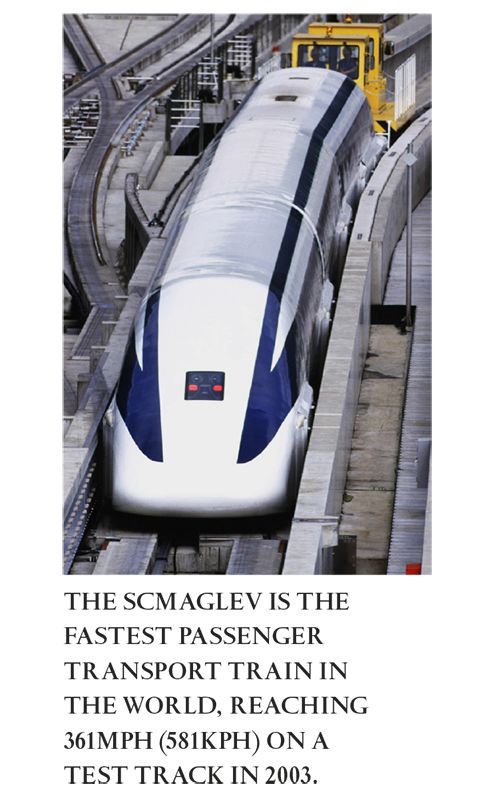
The SCMaglev (Superconducting Maglev, named for the train’s powerful magnets) is the latest in a series of high-speed maglev trains developed in Japan. It makes use of electrodynamic suspension (EDS) on U-shaped rails for levitation and propulsion. It has undergone successful trials, though has not yet progressed to commercial use.
How it works
Existing commercial maglev systems use electromagnetic suspension (EMS), in which magnets in the train are activated for both levitation and propulsion by an electric current in the track. This current can be adjusted to determine the train’s speed, while electronic sensors monitor the gap between train and guideway.