
The idea of furniture is uncertain: it is both singular and plural. A single chair can be described as ‘a piece of furniture’, while a vast expanse of a hotel lobby could be ‘stuffed with furniture’. An aedicule could sit, as a piece of furniture, within a hall or gallery, while the domestic kitchen has also been fitted with furniture. Comfort, which is very much a 17th-century invention, and posture, from the 16th-century Italian for ‘to position’, mean that ergonomics is a vital consideration in all furniture design. This chapter will examine the development of specific pieces and the evolution of fixed positions and functions, while also looking at the cultural value attached to household furniture.
Key words Aedicule , Bed, Chair, Comfort, Ergonomics, Fixed Furniture, Free Furniture, Linen-Hold, Portable Furniture, Sofa, Storage, Table

Fig 23.1 Fortune appearing to Boccaccio: a 15th century manuscript shows how sparsely furnished the room is.
The sofa
For such a culturally recent possession, the sofa has come to occupy a central and pervasive position in our lives, whether as the place we slouch on to watch the telly, or a perch for those difficult conversations, It is a cosy sanctuary with a blanket when we are ill, as well as a trampoline, a spare bed, a love seat, a work desk - and even, for those terrifying Doctor Who encounters, a safe haven.
It has become a mainstay of the TV sitcom, at times perhaps a character in its own right. The big orange sofa that those Friends always managed to secure, however crowded the coffee bar was, definitely places the programme in the kooky shabby chic-era of the mid-1990s - only without the shabby - while also signalling the fundamental niceness of these young, upwardly mobile twenty-somethings. The sofas in The Royle Family or Rosanne portray the complete opposite of this aspirational lifestyle. The heavily worn upholstery, the extreme comfort and the cushions and blankets represent not only the inertia of these characters’ existences, but also the closeness of their family relationships. Probably the most recognisable TV sofa comes from the couch gag at the beginning of every episode of The Simpsons. This opening sequence with the ever-changing sofa-based ending is an element of the cartoon as important as Homer almost never getting his come-uppance, however badly he behaves, (cf. Upholstery)

Fig 23.2 Pepys Estate, Deptford, London: a schoolboy in his living room posing for photographer Tony Ray-Jones in 1966.

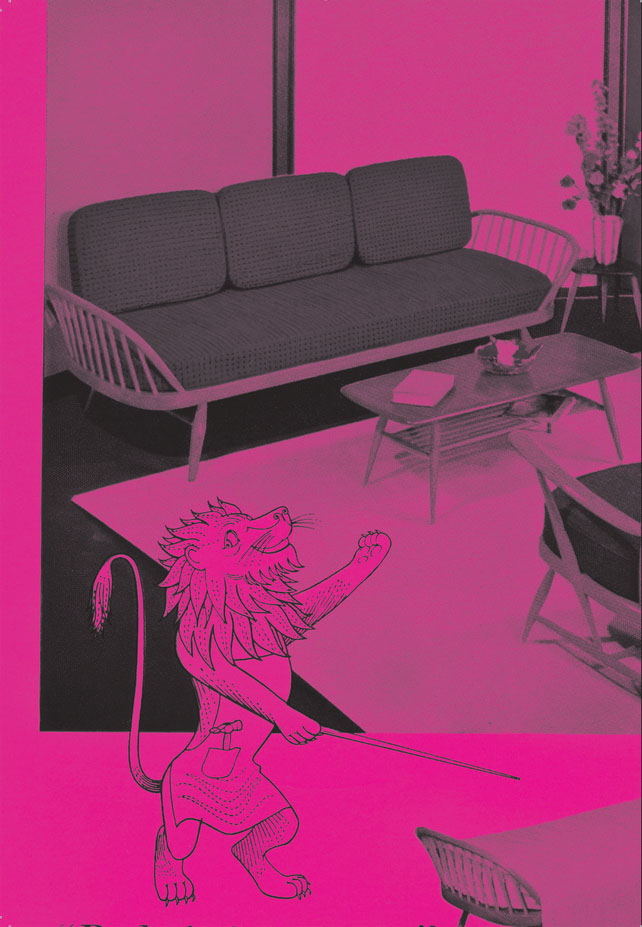
Fig 23.3 The classic clean-lined and timber-framed settee from Ercol advertisement, 1958.
But what is the difference between a sofa and a settee, and where does the couch come in, never mind the divan? The words are very much interchangeable, but their etymology shows a close but different evolution. Sofa originates in the eastern Mediterranean with the Arabic soffah, which is a part of the floor raised by about a foot and covered with rich carpets and cushions. Although the exact spelling took some time to become definite (spellings included sopha or sophee), by the 19th century it was fixed. In a letter Jane Austen mentions the need to repair a ‘sofa-cover’,174 and it had become so commonplace that in William Makepeace Thackeray’s Vanity Fair of 1847, Rebecca had time for ‘several hours of comfortable repose herself on the sofa’ while waiting for her patron to wake up.175 Meanwhile couch originally meant any structure with a soft covering designed for lying upon to sleep, and is actually derived from the French coucher- to sleep. According to the late, great interior educator Martin Pegler, in his Dictionary of Interior Design, the couch is ‘a lounge chair used for resting, with supports and cushions at one or both ends’,176 and therefore no back support! The word ‘couch’ is ancient, appearing in Chaucer’s writings in 1385: ‘I bad men schulde me myn couche make.’177 It is slightly different to chaise-longue, which is basically a chair with an elongated seat. Then settee is derived from ‘settle’, which is a hard, upright timber bench with a back and arms. Some comfort would be gained with individual padded cushions or even one long fitted bench cushion. The classic Ercol Studio Couch is a fine example of this timber-framed settee with a full-sized seat cushion. Finally, a divan does seem to be a more exotic piece of furniture, and originally described an upholstered step or bench of such length as to run along an entire wall, with scattered cushions for comfort. The word is derived from Persian divan councils, and while the French adapted the idea into the upholstered bench, which became fashionable in the Romantic period, it was appropriated in the 20th century to mean a pull-out or occasional bed. (cf. Position)
The bed
The bed was probably the first piece of furniture to be really fixed in place. In the most affluent houses of the 16th century, the four-poster with a raised frame to avoid cold drafts and curtains for extra warmth would have occupied a definite position in the building, (cf. Home) Beds were a sign of esteem and wealth, and possibly the most expensive possession in the house. Certainly beds were items of furniture to be valued, even to extent of being mentioned as bequests in a will. William Shakespeare famously left his ‘second best bed with the furniture’ - that is, the curtains and bed covers - to his wife Anne Hathaway. This was not quite the slight that it initially appears. The best bed was not where they would have slept, but would have been much more visually prominent, probably downstairs in a public room and used as a sign of social status rather than for comfort. The second bed was more personal; the one that William and Anne would have shared as man and wife. As his wife would have been entitled to one-third of his estate, while the best bed went to his son and heir, this personal bequest is much more intimate.
The best bed would also have been used for meeting visitors; indeed, it was quite normal to conduct business from beneath the blankets until well into the 17th century.178 This habit of receiving in bed often led to the public bedroom being decorated with uncommon luxury and pomp not found elsewhere in the building. The King’s Bedchamber in the Palace of Holyroodhouse in Edinburgh is in the middle of the building, at the end of a processional route. The rooms become progressively grander until this elaborately decorated chamber is reached. It was here that the most important guests would have been granted an audience. But this was small in comparison with Louis XIV’s bedchamber in the Palace of Versailles, (cf. x-axis) The magnificent white-with-gold-filigree room is situated in the centre of the eastern facade of the palace, and placed along the central axis of this chamber is the best bed. The four-poster bed was originally hung with brocade curtains - which, during restoration a century later, when Louis XIV ordered them to be burnt, yielded over 60 kilograms of gold.

Fig 23.4 The heavy brocade and gold-thread bedchamber of Louis XIV, Palace of Versailles.
The more modest box-bed would have provided warmth and privacy in a home where the rooms still did not have fixed functions, or indeed if there was only one room in the house. This bed was enclosed on three sides with solid walls - usually the actual walls of the building combined with ornately carved timber panels with intricate ventilation slots - while the front face of the bed needed to provide easy access, so was either a hinged or sliding wooden panel, or a thick curtain. These enclosed beds always look rather small, not just because people were generally shorter in the 16th and 17th centuries, but also because of the belief that to stop the devil entering the sleeping body through the open mouth the body needed to be propped up on bolsters, pillows or even a log to keep the lips together and the soul safe.
A variation on the box-bed, the Breton lit-clos, survived well into the 20th century. This substantial, highly decorated oak chest was often double-storeyed, with a large trunk set next to it to aid access, as even the lower bunk was raised away from the draughts of the floor.
Within the quiet stillness of 17th-century Dutch art, the boxbed can often be seen within the multifunctional private interior spaces. These highly evocative paintings show a society on the brink of change, from somewhat sparse communal living with little privacy and therefore the need to allow for great adaptability of space and furniture, to one in which the interior rooms of the home have clearly demarcated functions and, consequently, fixed positions for the furniture.
Chippendale
The robust chairs made by the cabinetmaker Thomas Chippendale in the second half of the 18th century are necessarily strong; although rooms generally had definite functions, and furniture was placed permanently in organised groupings, society still dictated that any furniture was both visually and physically capable of being moved to the edge of the room when not in constant use. These wide padded chairs, to accommodate the wide padded backsides of the British aristocracy, were made from popular exotic hardwoods such as satinwood, ebony or mahogany collected from the colonies. The beautiful grain intrinsic to this timber was mercilessly exploited and fashioned into an intricate and distinctive interpretation of the British neoclassical style. The French style of elaborately painted furniture is thought to have developed because France’s colonies did not yield the same remarkable timber, so luxury and panache were evoked with gilt and brush.
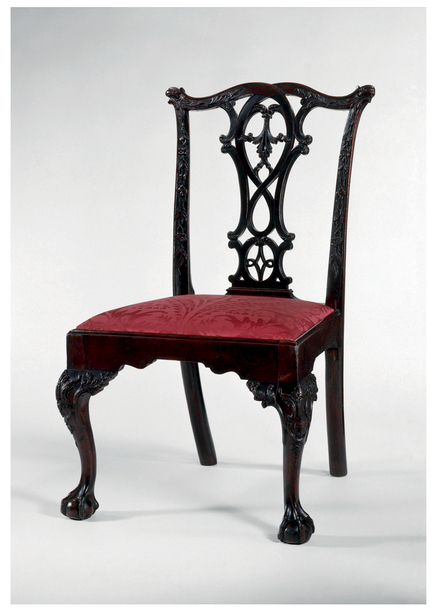
Fig 23.5 Chippendale side chair, 1765: warm wood and wide seat.
What is remarkable about the work of Chippendale is that the style he developed is named after the cabinetmaker himself rather than the ruling monarch; this was after all at the height of the Georgian period. This was probably the first time that an individual craftsman has been so recognised. After the publication of The Gentleman and Cabinet-Maker’s Directory in 1754, Chippendale's influence expanded beyond England to the rest of Europe and the American colonies. Chippendale made far more than chairs; his designs could fill a whole house. (cf. Vanity) The naked beauty of the intricate timberwork combined with the strength of the design was universally admired, and it is still highly valued and regularly reproduced today. Chippendale’s name has become synonymous with polished mahogany, well-toned potency and stripped-bare exhibitionism.
Ergonomics
Ergonomics - the need for furniture to securely fit its user - goes far beyond the idea of comfort. It is greater than the desire for warmth, security and inner contentment, but could be regarded as the scientific discipline concerned with the understanding of how humans interact with the constructed elements around them, and the design principles necessary to optimise well-being and performance. (cf. Quotidian) Ergonomics brings together subjects such as anatomy, physiology, engineering and statistics with interior and furniture design to create environments that are the correct size and shape, with the right support for the people who use them. So rather than the user adapting to fit the machine, the machine should be adapted to fit the user. (cf. Bureau)
The Chartered Institute of Ergonomics and Human Factors explains the complexity of this process:'... we need to understand and design for the variability represented in the population, spanning such attributes as age, size, strength, cognitive ability, prior experience, cultural expectations and goals.’179 Therefore, ergonomic design seeks to understand how a product, workplace or system can be designed to suit the people who need to use it, rather than forcing them to work in an uncomfortable, stressful or dangerous manner. Office furniture has definitely benefited from this approach. Someone will sit in the same chair staring at the same computer for many hours - and if they are at the wrong height, with bad posture or the light level is wrong, permanent damage may occur. Back problems are especially prevalent among sedentary office workers - it seems that keeping still is one of the worst things a human can do.
Interest in increased efficiency in the household kitchen coincided with the lack of servants in the 20th century, and the need therefore for middle-class women to spend more time there. This provoked a tremendous change in kitchen design, and a boom in affordable appliances, (cf. Home)
Household Engineering: Scientific Management in the Home by Christine Frederick was published in 1919.180 This was an early proponent of efficiency in the home. Frederick’s guide was to improve both the look of the kitchen and also its function - for example, placing cupboards next to the sink to save steps when putting things away. A few years later Lillian Gilbreth, an engineer and psychologist who had worked on motion studies aimed at increasing the efficiency of industrial processes, turned her attention to the kitchen. She developed the idea of the ‘work triangle’ (composed of sink, refrigerator and stove), which still guides kitchen design today. The Bauhaus designers Georg Muche and Adolf Meyer, who sought to create a kitchen that combined functional and aesthetic efficiency, effectively appropriated the ideas developed by these women.
However, the idea of the kitchen as a standardised, modular, all-inclusive unit was more fully developed by the Austrian architect Margarete Schütte-Lihotzky (known as Grete Lihotzky) in 1926-7 for Frankfurt’s ambitious programme of municipally funded International Style workers’ housing estates erected at the zenith of the Weimar Republic. The Frankfurt kitchen, though quite small, was full of thoughtful touches designed to ease the burden of housework, including a fold-out ironing board, a wall-mounted washing-up drainer, and aluminium bins for dry goods with handles and spouts for pouring. There was no refrigerator, though - this was thought unnecessary for women who still experienced the delight of daily visits to the shops. These fitted kitchens do not look that dissimilar to those designed today - streamlined horizontal work surfaces with integrated cupboards below and wall cupboards above, and appliances spread economically and conveniently across the room. All kitchens now exhibit this efficiency: fitted, ergonomic workstations for the production of food and the management of the household.

Fig 23.6 Duplex flat, Highpoint Two, London: the fully fitted contemporary kitchen. Lubetkin and Tecton, 1938.