
The Directors of Central Intelligence
1946-2005
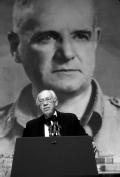
The spirit of Wild Bill Donovan, the American spymaster of World War II, drove many future CIA officers who served under him, among them William Casey, director of central intelligence from 1981 to 1987. Above: Casey speaks at an OSS reunion, Donovan's image above him.
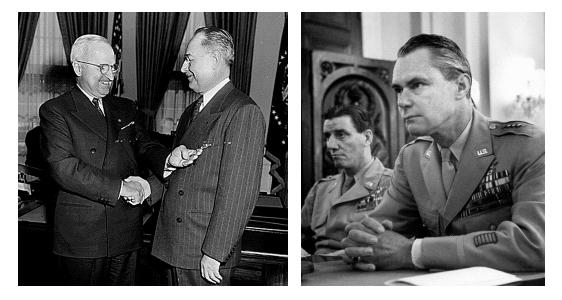
Left: President Truman pins a medal on the first director, Rear Admiral Sidney Souers. Right: General Hoyt Vandenberg, the second director, testifies before Congress.

General Walter Bedell Smith, director from 1950 to 1953, was the first real leader of the CIA. Left: With Ike on V-E Day; Right: with Truman in the White House.

Left: In an October 1950 photo taken at CIA headquarters, Bedell Smith, left, takes command from the ineffectual Rear Admiral Roscoe Hillenkoetter, in light suit. Right: A worried Frank Wisner, who ran the CIA's covert operations from 1948 until his mental breakdown in 1958, stares into space.
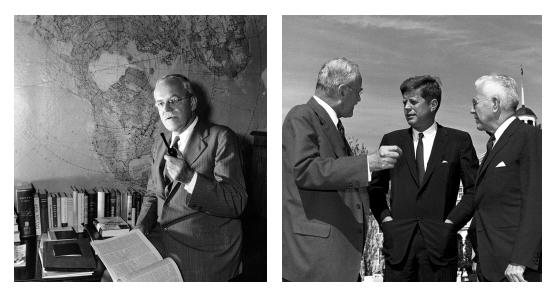
Left: Allen Dulles at his headquarters office in 1954. Right: JFK replaced Dulles with John McCone after the Bay of Pigs.
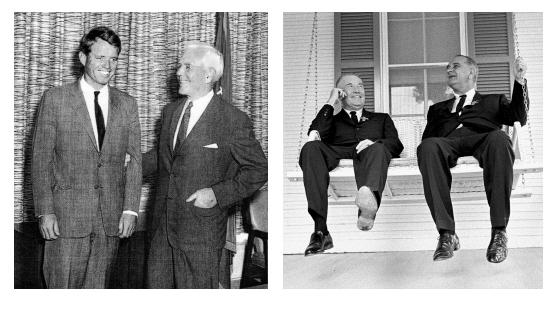
Left: McCone became close to Attorney General Robert Kennedy who played a central role in covert operations. Right: President Johnson rejected McCone and hired the hapless Admiral Red Raborn, at the LBJ Ranch in April 1965.
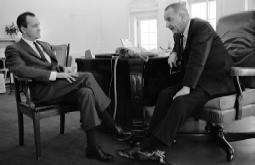
Richard Helms, director from 1966 to 1973, sought and won respect from President Johnson. Above: The week before his appointment as deputy director in 1965, Helms gets to know the president.
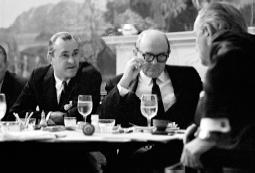
In 1968, a confident Helms briefs LBJ and Secretary of State Dean Rusk at the Tuesday lunch--the best table in Washington.
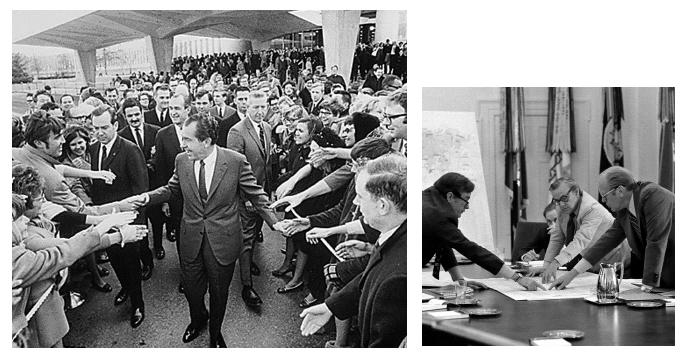
Left: President Nixon presses the flesh at CIA headquarters in March 1969. Nixon distrusted the agency and scorned its work. Right: George H. W. Bush and President Gerald R. Ford discussing evacuating Americans from Beirut with L. Dean Brown, special envoy to Lebanon, June 17, 1976.
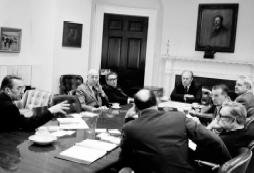
Saigon is falling as director Bill Colby, far left, briefs President Ford in April 1975. Flanking Ford are Secretary of State Henry Kissinger and, far right, Secretary of Defense James Schlesinger.
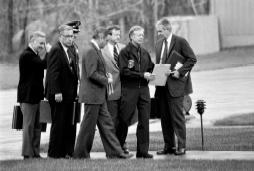
In November 1979, Director Stansfield Turner brings up the rear as President Carter calls his top military and diplomatic advisers to Camp David to assess the plight of the American hostages in Iran.
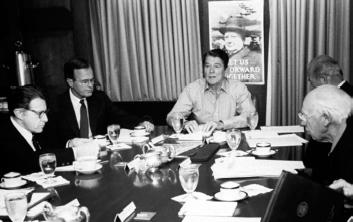
In June 1985, President Reagan and his national security team in the White House Situation Room during the hijacking of a TWA flight bound for Beirut, a hostage drama that ended with a secret deal; Bill Casey is at far right.
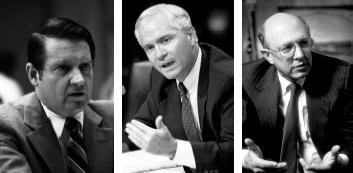
The end of the cold war created a revolving door at the top of the CIA--five directors in six years. The constant changes coincided with an exodus of expertise among covert operators and analysts. Left to Right: William Webster; Robert Gates, the last career CIA officer to lead the agency; and Jim Woolsey.
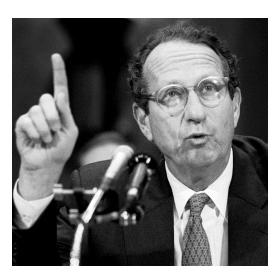
John Deutch.
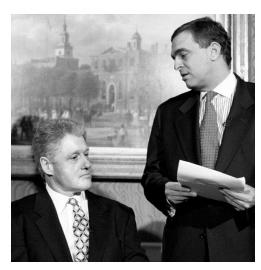
George Tenet, with a wheelchair-bound President Clinton, tried desperately to rebuild the CIA for seven years.
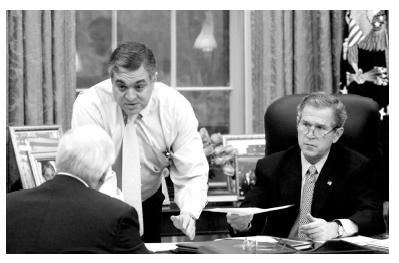
George Tenet at the White House with President Bush and Vice President Cheney as the war on Iraq begins in March 2003. Tenet confidently stood by the CIA in saying that Saddam Hussein's arsenal bristled with weapons of mass destruction.
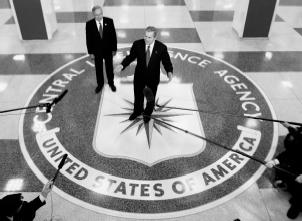
His successor, Porter Goss, with Bush at CIA headquarters in March 2005, proved to be the last director of central intelligence.
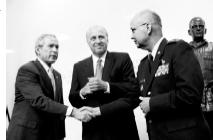
As its sixtieth year approached, the CIA ceased to be first among equals in American intelligence. In March 2006, General Mike Hayden was sworn in as CIA director at headquarters. The new boss, Director of National Intelligence John Negroponte, applauded as Wild Bill Donovan's statue stood watch.