
CHAPTER 12
In 1875, Henry E. Wrigley, the head of the Pennsylvania Geological Survey, issued a doomsday warning that the state—and hence the world—production of oil had peaked and would soon experience a precipitous decline, aggravating fears that had overshadowed the oil industry since its inception. Within months, his forecast was refuted when a new field was discovered in Bradford, Pennsylvania, northeast of the old Oil Creek fields. As thousands of wild-eyed drillers besieged the area, oil production soared, and prices sank from $4 a barrel in 1876 to 70 cents two years later. Once again, the industry’s salvation proved its undoing, with the boom-and-bust cycle unleashing volatile emotions among producers who found themselves rich one moment and then desperate the next.
As the master of storage tanks and pipelines, refineries and by-product plants, Rockefeller had become a byword in the oil fields, a phantom of vast, indeterminate proportions who operated entirely through agents. His remoteness frustrated opponents, who felt they were boxing with a ghost. In the crisis provoked by the new Bradford production, he was blamed for price manipulation even when he simply reflected the law of supply and demand. With the immediate-shipment controversy of 1878, the running warfare between Standard Oil and the producers expanded from minor skirmishes into a large, violent engagement reminiscent of the South Improvement Company furor.
The roots of the controversy were as follows. As oil wells sprang up around Bradford, Standard Oil wanted to retain its pipeline monopoly and worked overtime to connect new wells to its system free of charge. In a bravura performance, Daniel O’Day’s scrappy, hustling teams hooked up five wells a day to the United Pipe Lines network and threw up huge tank farms to store the surplus oil. They moved at a breathtaking tempo: Between April and November 1878, the Bradford tankage swelled from a little more than 1 million barrels to 4.5 million. Nonetheless, the producers, repeating past errors, exercised no discipline and drilled far beyond the system’s capacity. When their oil ran into the ground for lack of storage space, they didn’t praise Standard’s efforts to accommodate them but detected a malevolent conspiracy. O’Day’s letters to Rockefeller reflect exasperation at the misperception. No matter how fast they went, he moaned, “There will be at least ten thousand barrels a day that I don’t know how we can move, no matter how good our disposition to do it might be.”1
Nevertheless, if he didn’t create the crisis, as many producers believed, Rockefeller never passed up a chance to exploit a legitimate advantage against his beleaguered rivals. With its tanks overflowing, Standard Oil issued a sweeping edict that it would no longer accept oil for temporary storage but only for immediate shipment to refineries. Standard Oil quoted a purchase price for crude oil a full 20 percent below prevailing prices, then stalled on payments to desperate producers. One market letter caustically described this policy as a “bull issued by his infallible holiness Rockefeller.” It was a terribly high-handed and insensitive way to respond to the crisis. 2 But even by oil-industry standards, the producers reacted with exceptional fury. Every day, sullen mobs lined up at the Standard Oil office and grudgingly negotiated their oil shipments. With wide room for partiality, Standard Oil favored shipments to its own refiners—a fact that struck Rockefeller as eminently fair—while producers argued that the pipeline network was a common carrier and obligated to treat everyone equally. Producers felt that their fortunes, their very lives, hung in the balance. As one Standard Oil lawyer recalled, “Arson and murder were threatened by the producers, who marched in masked bands at midnight uttering their threats.” 3 One of O’Day’s men reminisced, “They paraded at night in big gangs, covered with sheets from head to foot in regular ku-klux fashion, groaning and booing the Standard.”4 Orators urged the burning of Standard pumping stations, the skulls and crossbones appeared on Standard buildings, and vandalism spread.
To mollify producers, the state of Pennsylvania deputed William McCandless, its commissioner of internal affairs, to study the petroleum industry. Officials of the Standard pipelines, who now arrogantly behaved as if they owned the oil industry, ignored his subpoenas and boycotted testimony. Nevertheless, when McCandless issued a report in October 1878 that exonerated Standard Oil, the producers erupted in hysterical protest. It was widely rumored that McCandless had been bribed, and on the Bradford streets he was hung in effigy with a big, bogus $20,000 check, signed by Rockefeller and endorsed by the Pennsylvania Railroad, protruding from his pocket. Newspapers told how one Bradford man invited Rockefeller to the region but then, remembering the imbroglio, warned him instead, “Don’t you do it, for if you do, you will never come back alive.”5
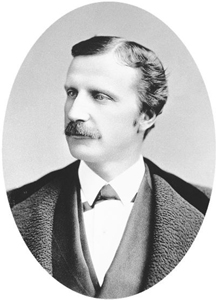
William Rockefeller, brother of John D. and a leading Standard Oil executive. (Courtesy of the Rockefeller Archive Center)
The immediate-shipment controversy engendered mutual enmity, for Rockefeller saw the producers as so many ingrates and malcontents whose oil was worthless without his superefficient United Pipe Lines system, which would soon be connected to twenty thousand wells. He mockingly described his foes’ attitude as follows: “We have disregarded all advice, and produced oil in excess of the means of storing and shipping it. We have not built storage of our own. How dare you refuse to take all we produce? Why do you not pay us the high prices of 1876, without regard to the fact that the glut has depressed every market?”6 The episode convinced Rockefeller that the producers nursed an unreasonable hostility against him, and this inoculated him against even valid criticism. But unlike the producers, Standard Oil paid no real penalty for the Bradford crisis and in 1878 declared an impressive $60 dividend on shares with a $100 par value. Rockefeller had positioned himself exactly where he wished to be—poised to profit from either surplus or scarcity and all but immune to the vagaries of the marketplace.
As masses of drillers descended upon Bradford, this major shift in the geography of oil awakened dormant ambitions in Rockefeller’s foe, Tom Scott of the Pennsylvania Railroad. As Standard Oil erased the surviving independent refiners, competing pipeline and railroad officials were petrified that Standard might soon be in a position to eliminate their oil traffic at whim. Since it had tracks near the Bradford wells, the Pennsylvania spotted a chance to loosen Standard Oil’s grip and win new business. Its vehicle for this challenge was its assertive subsidiary, the Empire Transportation Company, which owned five hundred miles of pipeline and one thousand tank cars. Empire had had the temerity to threaten Standard Oil in its refining strongholds, buying up rivals in New York, Philadelphia, and Pittsburgh and trying to win over new refining customers with bargain transportation rates. Now, as if spoiling for a fight, the Empire began to lay pipes for pumping crude oil from Bradford to the seaboard refineries—a direct challenge to Standard Oil dominance.
The driving force behind this incursion was a man who was almost a match for Rockefeller but who fancied that, had Rockefeller only played fair, he would have been much more than a match: Colonel Joseph D. Potts, president of Empire Transportation. A civil engineer descended from a family of Quaker iron-masters, Potts was a capable man who had attained a colonel’s rank in the Civil War. He had a prominent nose and a long preacher’s face, fringed by a white beard. Gravely earnest, no less conversant with the Bible than with the oil industry, Potts aspired to be Rockefeller’s equal. If Rockefeller respected Potts’s “indomitable will,” he also patronized him as “a shrewd oily man, as smooth as oil.” 7 Potts repaid the compliment, castigating Rockefeller as a merciless predator. Of Rockefeller’s current refiners’ cartel, the Central Refiners’ Association, Potts said memorably, “It resembled the gentle fanning of the vampire’s wing, and it had the same end in view—the undisturbed abstraction of the victim’s blood.”8
When Potts poached on his territory, Rockefeller demanded a meeting with Tom Scott and A. J. Cassatt of the Pennsylvania Railroad. As his private reminiscences attest, Rockefeller was cynical about Empire, which he thought a transparent front for corrupt Pennsylvania officials to line their pockets with profits that belonged rightly to shareholders; it was also, he saw, a handy vehicle for the railroad to cheat on pooling agreements while escaping detection. In confronting the railroad officials, Rockefeller struck a characteristic tone of injured innocence: “Here, I have gone out of my way to be friendly to the Pennsylvania in the allotment of oil shipments and now you gentlemen are permitting your associate, Colonel Potts, actually to invade the Central Association’s field. Why, it is nothing less than piracy! You must call off this poacher, Potts.”9 Although nearly two-thirds of the oil carried by the Pennsylvania Railroad now originated with Standard Oil, Scott decided to flout his biggest customer and, if not annihilate Rockefeller, chop him down to size.
Rockefeller interpreted Scott’s intransigence as a declaration of war. In taking on the Pennsylvania Railroad, he was battling America’s most powerful corporation, yet he proceeded with unwavering confidence. In spring 1877, Rockefeller told railroad officials point-blank that if Empire didn’t retreat from refining, Standard Oil would divert its shipments to other railroads. When they didn’t flinch, Rockefeller launched an all-out attack. To starve out the railroad, he idled all his Pittsburgh refineries and ordered corresponding increases in output in his Cleveland refineries. He sent out word that Standard Oil refineries should fiercely undersell Empire refineries in every market where they vied for kerosene sales. Turning to the two railroads long solidly in his corner, the Erie and the New York Central, Rockefeller had them trim rates to ratchet up the pressure on the Pennsylvania Railroad. To handle the extra volume expected on these two railroads, Flagler negotiated a deal with William Vanderbilt to build another six hundred tank cars. With blazing speed, Rockefeller was on his way to humbling the world’s largest freight carrier, a company long thought invincible in the business and political world. Afterward, A. J. Cassatt admitted that the railroad had to grant such large rebates to keep up with Standard Oil that it ended up literally paying shippers to transport their oil.
In the end, providence itself conspired in the railroad’s comeuppance. As he slashed rates to withstand the Standard onslaught, Tom Scott fired hundreds of workers and reduced wages 20 percent. When he doubled the length of trains without expanding their crews, trainmen walked off the job in protest. After the Baltimore and Ohio Railroad announced comparable wage cuts in 1877, the protest flamed up into a general railroad strike, one of the bloodiest battles in American labor history, resulting in dozens of fatalities. In Pittsburgh alone, 500 tank cars, 120 locomotives, and 27 buildings were torched by union vandals, sabotage so costly that Pennsylvania officials tapped Wall Street for a large emergency loan from Drexel, Morgan and Company. As state governors ordered out their militias and President Rutherford B. Hayes supplemented them with federal troops, the country watched the insurrection in horror. However pleased by the railroad’s travails, Rockefeller must have felt a dreadful chill as rumors circulated that two thousand pistol-packing radicals would march down Euclid Avenue. After the riots ended, one Titusville reporter disclosed that the Oil Creek citizenry had nearly exploited the upheavals to take revenge against Standard Oil: “Had certain men given the word there would have been an outbreak that contemplated the seizure of the railroads and running them, the capture and control of the United Pipe Line’s property, and in all probability the burning of all the property of the Standard Oil Company in the region.”10 Though after burning more than two thousand freight cars the strikers capitulated, their revolt inaugurated a new age of labor militance in American industry.
Reeling from these blows, the Pennsylvania Railroad skipped its dividend, sending its share price tumbling on the stock exchange. Though Potts wished to fight on, Scott was inclined to relent. Although the railroad didn’t wholly own Empire, it had an option to buy the remaining shares, and, faced with Potts’s recalcitrance, Scott did just that. It amused Rockefeller how agilely Scott switched direction when it served his interest and how—without notifying Potts, who would resent his treachery—he dispatched A. J. Cassatt to Cleveland to tell Rockefeller and Flagler that he was “anxious for a settlement.”11 Rockefeller gloated over Potts’s crushing defeat: “The effort of Colonel Potts to make it appear that he was the great Moses failed, utterly failed.”12
Empire’s capitulation represented a greater boon than Rockefeller had envisaged, for the spoils were bountiful. The cash-strapped Scott didn’t simply agree to stop refining oil but offered Standard Oil a huge fire sale of assets—refineries, storage tanks, pipelines, a fleet of steamships, tugboats, barges, loading docks—in fact, far more than Standard could afford. During negotiations with Rockefeller at a Philadelphia hotel in October 1877, Scott swept in with a selfconfident panache that thinly camouflaged his defeat. As Rockefeller recalled, “I can see [Scott] now with his big soft hat, marching into the room in that little hotel to meet us; not to sweep us away as he had always done, but coming in with a smile, walking right up to the cannon’s mouth. ‘Well, boys, what will we do?’ ” In the ensuing talks, Scott drove a tough bargain and refused to budge on two conditions: that Standard Oil buy all of Empire’s assets, including its antiquated lake vessels; and that within twenty-four hours it pay $2.5 million of the $3.4 million offering price by certified check.
This last demand taxed even Standard Oil, which had only about half the necessary cash in its coffers. Rockefeller raced back to Cleveland and flew through local banks in a hectic tour such as he hadn’t made in years. Climbing into his buggy, he approached one bank president after another and told them breathlessly, “I must have all you’ve got! I need it all! It’s all right! Give me what you have! I must catch the noon train.”13 Unable to persuade his Standard Oil confrères to buy the steamships—Rockefeller always operated by consensus— he had the nerve to borrow several hundred thousand dollars on his own account and buy the ships himself. Although these money-losing ships drained him for years, their purchase was dictated by the larger interest of Standard Oil, and he never regretted his snap decision.
In dueling with Scott, Rockefeller didn’t try to demolish him—as Scott might have done to him—but called a truce to strengthen their alliance. His constant aim was to be conciliatory whenever possible and extend his range of influence. In a new pooling arrangement, Standard Oil agreed to ship at least two million barrels yearly over the Pennsylvania Railroad and restore its faded luster in the oil trade; in exchange, Standard would pocket a 10 percent commission (read: rebate) on its shipments over the road. More important, Standard was designated as the evener—that is, the enforcer—of a new master plan brokered by the railroads whereby the railroad would receive 47 percent of all oil traffic; the Erie and the New York Central 21 percent apiece; and the B&O 11 percent. Tightening the vise, Rockefeller’s pipeline chieftain, Daniel O’Day, informed the Pennsylvania Railroad in February 1878 that Standard would henceforth want at least twenty cents for every barrel of crude oil the railroad shipped—an arrangement Standard Oil had foisted upon the Erie and the New York Central. Having outsmarted the largest railroad, Rockefeller had acquired a stranglehold on the three major roads, and his taming of the imperious Tom Scott guaranteed that no railroad president would ever dare to tangle with him again.
The defeat left Colonel Potts a broken, humiliated man. As his son recalled, “He always believed some of the Pennsylvania directors had been approached by the Standard and bought out. Others talked of bribery; of course nothing could be proved.”14 In all likelihood, Potts didn’t want to admit that he had been outwitted by Rockefeller. Ida Tarbell, in her romanticized view of some of Rockefeller’s foes, converted Colonel Potts into an incorruptible martyr, the Abraham Lincoln of the oil industry, crucified by Standard Oil, when he was just an able, aggressive businessman who lost out in a power struggle to a shrewder, bolder opponent. In the early 1880s, Potts renounced his principled opposition to Standard Oil and became an active director of the National Transit Company, a Standard Oil pipeline subsidiary.
The Grand Guignol of the Empire battle diverted attention from another momentous drama that unfolded at about the same time: the purchase of the Columbia Conduit Company from Dr. David Hostetter. For Rockefeller, the Columbia purchase had far-reaching strategic implications, for the pipeline functioned as the B&O’s crude-oil lifeline. Columbia pumped western Pennsylvania crude to the B&O’s Pittsburgh terminal, whence it traveled by rail to Baltimore refineries. Thus, if he could smother Columbia, Rockefeller would be able to conquer the fourth and last major railroad system while also gaining uncontested control of all major pipeline systems connecting oil wells to railroad trunk lines. He would have extended his reach, in short, into every nook and cranny of the oil industry. As Ida Tarbell noted, after the Columbia Conduit fell into Rockefeller’s lap, “Practically not a barrel of oil could get to a railroad without [Rockefeller’s] consent.” 15
By this point, Standard Oil had effectively stamped out competing refiners in Cleveland, Philadelphia, and Pittsburgh and faced only a smattering of weak New York holdouts. The last major pockets of resistance lay in West Virginia and Baltimore, whose refiners relied upon the B&O. Thus, by controlling the Columbia Conduit Company, Rockefeller would be able to snuff out the last independent refiners. Conversely, if he controlled the West Virginia and Baltimore refineries, he could pressure the railroad into submission.
The man assigned to carry out this convoluted campaign was Johnson Newlon Camden, the Parkersburg, West Virginia, refiner whose company had secretly joined Standard some years earlier. Elected to Congress several times, Camden later served as a U.S. senator, but his civic involvement didn’t translate into superior business ethics. On the contrary, Camden dealt with rivals in an especially coercive manner, as he showed in early 1876 when absorbing Pittsburgh refiners. To snuff out the last competitors, he peremptorily informed Alexander McDonald, the leading supplier of barrel staves to the city’s independent refiners, “that no staves must be sold to Pittsburgh, that it was our policy to control the oil business of Pittsburgh by controlling the supply of staves and barrels at that point,” as he told Standard headquarters. Further, McDonald was under strict instructions, he said, “that he must ship no staves to Pittsburgh without [Standard Oil’s] consent.” 16 Whenever competition flared up in Pittsburgh, Rockefeller dispatched Camden to douse the flames, once telling him, “At this particular moment it is especially important that outside Pittsburgh refineries should have no chance whatever in any market for local trade oil. . . . Our feeling of anxiety to accomplish the object of centralization is so strong we want you to yield to it for a few days longer when we hope you will be forever relieved.” 17
Like Rockefeller, Camden had a devious talent for concocting anticompetitive practices and paralyzing the trade. To soften up local competitors, he cornered the supply of West Virginia crude, leaving independent refiners high and dry. When confronted with such shameless manipulation, Rockefeller sighed, disclaimed any knowledge, and blamed overly zealous subordinates—a recurring pose in his career. But Camden, like other subordinates, kept Rockefeller thoroughly posted about his actions and told him apropos of early negotiations with independents, “I am having interviews with all the little refinery men here [Parkersburg] and at Marietta. . . . We will either get them or starve them.”18
Camden was thwarted by the same problems that had confronted Rockefeller in forming cartels in other cities. Aware that Standard would buy ramshackle plants to shut them down, many blackmailers entered the business in order to sell out. The harried Camden groused that small refineries were “multiplying like rats” and concluded despairingly that they would be “as hard to keep down as weeds in a garden.”19 As Standard Oil succeeded in steadying kerosene prices, it drew people back into the business. At this point, Rockefeller took a tougher line with blackmailers who wanted to be bought out. In responding to several Baltimore refiners who had previously rejected fair prices from Standard Oil but now wished to sell, Rockefeller sounded like the voice of divine retribution, telling Camden that “they will be sick unto death now having failed in their wicked scheme. A good sweating will be healthy for them. If . . . these people could wait and sell out their works at a loss, thereby making a poor speculation of blackmailing, it would probably cure this batch and save you endless trouble in future.” 20 Camden’s files support Rockefeller’s contention that he bought loads of worthless junk and enriched men who knew little about refining oil but everything about extortion.
Applying a formula that Rockefeller had perfected in New York, New Jersey, and Philadelphia, Camden bought waterfront property in Baltimore, where he erected wharves and warehouses for a B&O oil-export terminal. With Standard Oil now embedded in the local transportation infrastructure, it became impossible for Baltimore refiners to operate autonomously. Standard Oil had become virtually indistinguishable from the railroad industry. On December 21, 1877, Camden triumphantly told Rockefeller that they had completed their conquest of the last independent refining center. “We have cleared up every seed in which a refining interest could spring up in Baltimore, so far as we can at present determine.”21
Thus, only five years after the Cleveland Massacre, the thirty-eight-year-old Rockefeller, with piratical flair and tactical brilliance, had come to control nearly 90 percent of the oil refined in the United States. Perhaps a hundred tiny refineries still eked out a meager living in the interstices of the industry, but they were mostly tolerated as minor nuisances and scarcely threatened Standard Oil. As Rockefeller himself acknowledged, these isolated cases served a useful political purpose, providing a mirage of competition when it had ceased to exist altogether. He liked to point to these doughty survivors as proof that all the stories about the strong-arm tactics of Standard Oil were grossly exaggerated and that the oil industry was a scene of vibrant competition.
In his implacable quest to rule the oil business, Rockefeller shifted focus in the late 1870s from the railroads to outright ownership of the superior alternative: pipelines. Undeterred by prophecies of exhausted oil fields, Standard Oil had both the capital and the incentive to blanket western Pennsylvania with a gigantic maze of pipelines. By 1879, the combine controlled almost the entire pipeline system, siphoning crude oil from thousands of wells and pumping it to storage tanks or railroad depots. When a driller struck oil, Standard Oil swooped down in a flash to connect his well, assuring both his livelihood and irrevocable reliance on the combine.
Standard’s rough, brawling pipeline boss, Daniel O’Day, made sure that his construction gangs kept pace with the new fields, laying pipe at a furious pace of up to one and a half miles per day. O’Day stood forth as the agent of wealth or ruin for producers. If he wanted to punish a producer, he might hint that the producer’s backcountry well was too inaccessible for Standard to run a line through the woods. And if the producer lacked money to erect storage tanks, he might watch his fortune seep into the ground as he bickered impotently with Standard Oil.
That O’Day exploited his power to silence dissent and cripple refractory competitors is amply documented in Rockefeller’s papers. It is important to recall that O’Day, like other Standard Oil lieutenants in the field, was the executor of Rockefeller’s will, whatever the latter’s disclaimers. When O’Day discovered that a producer named Murphy held a small stake in a competing pipeline, he dispatched to the scene John D. Archbold, who pointedly reminded this upstart that he had expected Standard “to take care of his production that might be located far back in the interior, as we have always done for him, and where such companies as the Pittsburgh line would not care to go.” 22 O’Day scared the daylights out of railroads, too. When one railway official complained that Standard was hogging crude-oil shipments between Olean, New York, and Buffalo, O’Day retorted that Standard Oil might just decide to ship all the refined oil by pipeline as well. As O’Day reported with glee to Rockefeller—who again professed ignorance of such machinations—“This seemed to stagger him a little and we may be able to hold it over him (as a club) successfully.”23 While Rockefeller communicated with his subordinates in genteel fashion, discussing muscular tactics with unctuous euphemisms, his colleagues were less restrained and gloried in their brutal shenanigans.
As Rockefeller consolidated his virtual monopoly over the pipeline network, it provoked pandemonium along Oil Creek, where he was now dubbed the Lord of the Oil Regions. In late 1877, desperate independents thronged a “Petroleum Parliament” in Titusville, hoping to plot their escape from Standard Oil servitude. These extended, crowded sessions generated a host of resolutions, including enactment of a free-pipeline bill and another to prohibit railroad-freight discrimination. But Standard Oil spiked all such reform efforts through the liberal application of backdoor payments to legislators.
In a historic departure, the independents endorsed plans for two long-distance pipelines that would bypass the whole Standard-rigged web of pipelines and railroads and open a path to the sea. The less ambitious project was the Equitable Petroleum Company, formed by Lewis Emery, Jr., to pipe oil from the Bradford fields to a railroad that would then carry the oil to Buffalo, where it would travel east over the Erie Canal. This roundabout route posed only a modest threat to Standard Oil, yet Rockefeller wired Daniel O’Day, “Don’t let them get a pipe to Buffalo.”24 To sabotage the effort, Standard Oil unleashed its full arsenal of obstructive tactics. It bought up the connecting railroad to Buffalo; threatened to yank orders from pipe manufacturers who sold to Equitable; and disconnected pipelines from all Bradford refiners who dealt with it. Despite this intimidation, the pipeline commenced operations in August 1878, exposing the first small chink in Standard Oil’s armor.
The second, far more threatening project, led by Byron Benson, envisaged a pipeline to the seaboard, a revolutionary development in long-distance transport. Before this time, pipelines had never covered more than thirty miles. This seaboard pipeline would eclipse the railroads and shatter the whole complex structure of secret rebates and drawbacks that Rockefeller had cobbled together. Before the seaboard-pipeline battle, one could argue that Standard Oil had been an innovative force, modernizing the industry through up-to-date plants, superior management, and smoother coordination of the oil flow from wellhead to consumer. Now, it became a benighted custodian of the status quo, squelching progress to safeguard its own interests.
At first, the independents (acting through the Tidewater Pipe Line Company) contemplated running a line from Oil Creek to Baltimore, but J. N. Camden quickly dealt a mortal blow to this plan: He bought an exclusive pipeline charter in the Maryland legislature that carried an ironclad guarantee that no other company would receive a charter that session. The Standard Oil hierarchy in Cleveland was kept closely apprised of his underhanded activities. Of the substantial money needed to grease this shady deal, Camden told Flagler: “The price is nominally $40,000.”25
Foiled in crossing Maryland, the Tidewater Pipe Line Company then opted for a 110-mile pipeline from Bradford to Williamsport in central Pennsylvania, where the oil would then journey east by the Philadelphia and Reading Railroad. On November 22, 1878, it began its great race to the sea, laying down a ribbon of pipe at a rapid rate of two miles a day. Since the whole concept was experimental—nobody knew if oil could be pumped over 2,600-foot mountains—the Standard Oil cognoscenti reacted with cynical snickers. Writing to Rockefeller, a smug John D. Archbold professed himself “greatly amused” by the “seaboard scheme.” 26 Rockefeller was dubious yet circumspect, predicting at one point, “They are quite likely to have some disappointments yet, before consummating all their plans in that direction.”27 The Tidewater people mobilized powerful financial interests, and two Wall Street tycoons, George F. Baker and Harris C. Fahnestock of First National Bank, aided them financially.
The fierceness of Standard Oil’s response was previewed in one of O’Day’s first letters to Rockefeller about the mavericks. “I would have no mercy on them that don’t deserve nor appreciate it.”28 In combating this challenge, Rockefeller again showed himself a virtuoso of industrial warfare. He sent his underlings to tank manufacturers, warning them not to deal with Tidewater, and deluged tank-car manufacturers with orders that kept them busy, depriving the pipeline of rolling stock needed to transport construction materials. Refiners who used Tidewater were lured away with concessionary rates on Standard Oil pipelines, and Rockefeller swiftly bought up any remaining independent refineries that might be prospective Tidewater customers.
Standard Oil also embarked on a real-estate spree of monumental proportions, buying up strips of land or “dead lines” that ran in a straight line from the northern to the southern border of Pennsylvania, to block the Tidewater’s advance. Overnight, bewildered farmers became rich by selling parcels for extravagant sums to Standard Oil agents who invaded their sleepy towns. In another tack, Standard Oil placed stories in local papers, warning farmers who sold to Tidewater that their crops would be spoiled by pipeline leaks. And Standard Oil conspired with the railroads to withhold permission from any pipeline wishing to cross their tracks. Quick to exploit this, O’Day told Rockefeller, “The Penna R.R. should be informed of the efforts that are being made towards laying pipe lines from the Bradford District and they should see to it that the right of way secured some time since in their interest ‘across the country’ is well guarded and watched.” 29
Still, Tidewater pushed relentlessly ahead. When Standard Oil bought an entire valley at one point, the unstoppable Tidewater changed course and climbed up over the surrounding hills. It began to look as if it might actually outflank Rockefeller and his resolute henchmen. Right on the eve of Tidewater’s success, Rockefeller decided that he might recoup in the political arena what he was on the verge of losing in the economic sphere. It was in the last-minute effort to halt Tidewater that Standard Oil first resorted to the wholesale bribery of state legislators.
Before wading into the muck of Standard Oil’s political operations, we should note the general squalor of business-government dealings in the Gilded Age. Rockefeller had emerged in a fluid business world, with little government regulation to check entrepreneurs. At the same time, the government was heavily involved in the economy as it awarded land grants, railway franchises, and bank charters. After the Civil War, Washington hotels were crammed with businessmen jockeying for government contracts and toting suitcases full of cash to obtain them. President Grant admired the industrial captains, aspired to their society, and assembled a cabinet full of cronies and mediocrities eager to do their bidding. Government degenerated into a sink of iniquity, reflected in Mark Twain’s witticism at a contemporary banquet, “There is a Congressman—I mean a son of a bitch—But why do I repeat myself?”30 In 1876, politics touched a new nadir when Rutherford B. Hayes defeated Samuel J. Tilden for the presidency in what is now commonly regarded to have been a stolen election. A tremendous amount of money changed hands as businessmen and legislators trafficked in mutual manipulation. Businessmen such as Rockefeller preferred to think of themselves as victims of political extortion, not as initiators of bribes. Yet despite decades of categorical denials, Rockefeller’s papers reveal that he and Standard Oil entered willingly into a staggering amount of corruption. (We should remark in passing that Allan Nevins, who had access to Rockefeller’s papers, somehow managed to document only a single instance of Standard Oil bribery—in the Pennsylvania state legislature in 1887.) Standard Oil officials betrayed no qualms about paying bribes, and there is no recorded instance of Rockefeller rebuking a subordinate for engaging in graft.
During the Tidewater battle, Standard lobbied hard to perpetuate the system that allowed state legislatures to grant exclusive pipeline charters. Representing independent producers, reformers in the late 1870s introduced measures in several states to enact free-pipe bills, which would enable Standard Oil foes to lay competing lines and enjoy the right of eminent domain; under the existing system, Tidewater had to buy costly rights-of-way along its 110-mile east-west route. Standard Oil regarded these bills with such apprehension that Henry Flagler returned from Florida, where he was recuperating from poor health, to spearhead the lobbying campaign. To foster the impression of a popular groundswell against the bill, he hired lawyers to pose as incensed farmers and landowners in favor of the status quo. Flagler and A. J. Cassatt secretly exchanged drafts of the Pennsylvania bill and killed it with crippling amendments.
To stifle a similar pipeline bill in New York, Flagler coordinated efforts with Hugh J. Hewett of the Erie Railroad. Payoffs were an expensive business, and even Standard Oil welcomed rich partners to ease the burden. At one point, Flagler grumbled to a railroad leader, “We have spent a large sum of money to squelch Seaboard Pipe Line Charters,” and he sourly asked that the railroads pick up the tab for these “lobbying” efforts in the future.31 When Flagler recruited an Albany lobbyist, aptly named Smith M. Weed, he was ready to distribute $60,000 to legislators, but Hewett demurred and insisted that $15,000 would suffice. 32 “I send $10,000 currency,” Flagler agreed, adding, “if you need the other $5000 or any part of it, send word by bearer and (we or he) can get it for you.”33That $15,000 would today be worth $220,000.
As always, Rockefeller floated serenely above the bustle, pretending to be oblivious to any wrongdoing, but his correspondence implicates him directly in this skulduggery. On March 4, 1878, A. N. Cole, a New York state senator, wrote to Rockefeller on New York State Senate stationery and presented himself as an “attorney” to be hired by Standard Oil to manage the campaign against the free-pipe bill. Evidently, Rockefeller responded favorably to this overture, for Cole then mapped out an extensive campaign of pressure and subornation, complete with precise money-laundering instructions:
Two or three good attorneys will be wanted in the Senate, and five or six in the Assembly, and these I have no hesitation in undertaking to employ, if authorized to do so. . . . Government bonds are better to deal in than money, since, were “attorneys” to be paid in cash, it might be construed into corruption, but then one can sell bonds, you know, in fact, dealing in them is an eminently becoming business. . . . In Heaven’s name, don’t make this letter public, since, were you to do so, I fear my brethren of the Methodist Church might fear I had so far fallen from grace as to leave no hope of recovery.34
While Standard Oil conducted statehouse offensives against free pipelines, it also put out brushfires in Washington as public sentiment began to lean toward railroad reform. The electorate was beginning to realize that big-business domination of the transportation network was incompatible with a competitive economy. In 1876, a bill was introduced in Congress “to regulate Commerce and prohibit unjust discriminations by Common Carriers.” 35 By this point, J. N. Camden was a West Virginia congressman. Since he also headed the Camden Consolidated Oil Company, covertly owned by Standard Oil, he kept Rockefeller and Flagler minutely informed of legislative developments and swapped messages with them in Standard Oil code. Regarding the railroad bill, Camden assured Flagler, “I have the ear of some half dozen Senators that I will see. I can’t think there is the least probable danger of such a bill getting through the Senate.”36 True to Camden’s words, the railroad bill passed the House of Representatives then faltered in the Senate.
By the late 1870s, as news of his wealth spread, Rockefeller was badgered for campaign contributions, sometimes by the same politicians who lambasted Standard Oil. When Ohio representative James A. Garfield ran for president in 1880, he sounded out a Cleveland source, Amos Townsend, as to whether “Mr. Rockafeller” might be sympathetic. When Garfield asked, “Do you know his state of feeling toward me?” Townsend advised extreme caution. “It would not do for him to visit us, as it would be reported andcut like a knife in Pennsylvania. ”37 A more subtle approach was another matter, and Rockefeller, along with Jay Gould, Chauncey Depew, and Levi Morton, ended up a top contributor to Garfield’s victorious campaign. Garfield was the first of many presidential contenders who grappled with the quandary of whether it made better sense to court Rockefeller’s money or capitalize on public animosity against him.
For all his success in bottling up pipeline bills, Rockefeller couldn’t scotch the Tidewater. As the project neared completion, he executed a flurry of last-minute maneuvers and even tried to buy an interest in the operation for $300,000—all to no avail. On May 28, 1879, the Tidewater people held their breath as the great pumps whirred into motion near Bradford and the oil began to slide eastward through the pipeline. Nobody knew if the crude oil would actually scale the intervening mountains, and for days people expectantly tracked its slow progress. After seven days of suspense, the first oil drops sputtered out the Williamsport end and led to jubilation in western Pennsylvania, where Tidewater promised deliverance from the Standard Oil monopoly. Construction of the pipeline rated as one of the supreme engineering feats of its day, and its impresario, Byron Benson, achieved heroic status.
Faced with a rare defeat, Standard Oil did not react with equanimity. Daniel O’Day wanted to resort to thuggery to smash the pipeline. “I feel extremely satisfied that the Tidewater Pipe Line can be stopped and torn up if it is thought best to do it,” he told Rockefeller. “I also think that the sooner the Tidewater knows this the better, as it might have a healthy effect upon them.”38 Rockefeller vetoed such crude reprisals and conceived a more elegant solution to the Tidewater menace. He had to bide his time, though, because he first had to dispose of two legal challenges that dogged his footsteps throughout 1879.
Some of Rockefeller’s critics weren’t content to expose him but wanted to put this pious churchgoer and Sunday-school superintendent behind bars. The producers were still seething from the immediate-shipment controversy and Standard Oil’s refusal to store their surplus oil. One upshot was that on April 29, 1879, a grand jury in Clarion County, Pennsylvania, indicted nine Standard Oil officials—including Rockefeller, Flagler, O’Day, and Archbold—and charged them with conspiracy to monopolize the oil business, extort railroad rebates, and manipulate prices to cripple rivals. Those who resided in Pennsylvania, such as Warden, Lockhart, and Vandergrift, were arrested and released on bail while those, such as Rockefeller, who lived outside the state were able to evade prosecution. Reformers who stalked the Standard knew they had to get Rockefeller or Flagler on the stand, for many top executives were kept in the dark about the organization’s intricate inner workings. When Captain Jacob J. Vandergrift testified at an Ohio hearing that spring, for instance, Flagler was able to reassure Rockefeller: “If it is a question of railroad freights, and discrimination in them, my judgment is [Vandergrift] knows nothing, or if knowing will not be compelled to answer.” 39
In spring 1879, Rockefeller began a thirty-year career as a fugitive from justice, learning to stay nimbly ahead of the law. For all his scoffing about the Clarion County indictments—“This case will never be brought to trial”—he took no chances.40 Afraid of being extradited from New York, Rockefeller asked Chauncey Depew, the attorney for the New York Central, to approach New York governor Lucius Robinson, who agreed to deny any such requests from Pennsylvania. At the same time, Rockefeller had A. J. Cassatt approach Pennsylvania governor Henry M. Hoyt with a request that he cease further efforts to haul him into court. To make sure that the Pennsylvania Railroad didn’t double-cross him, Rockefeller boosted production at his Philadelphia refineries serviced by the railroad—a generous bonus that could be canceled at any moment for misbehavior. Meticulous in such maneuvers, Rockefeller made sure to leave no fingerprints and told Captain Vandergrift that it was “of utmost importance that nobody knows of [Standard Oil’s] thought of doing something about [the suit] outside the [Clarion] County.”41
From the outset, Standard Oil defendants saw an advantage in the Clarion County affair, which enabled them to refuse to testify at many civil proceedings by claiming it might harm them in the criminal case. Nevertheless, Rockefeller feared that the Clarion suit might set a precedent and adopted a combative approach. “We are disposed to fight the thing and not be subject to this blackmailing process always,” he insisted.42
At bottom, Rockefeller must have been genuinely alarmed by the impending criminal prosecution, for he decided to placate the producers and cut a political deal. On the day before Christmas 1879, Standard Oil rescinded the immediate-shipment policy and agreed to meet with producers at the Fifth Avenue Hotel in New York. In a historic agreement, Standard Oil renounced—or seemed to renounce—the use of secret rebates and drawbacks and consented to publicly posted freight rates; its United Pipe Lines would no longer discriminate among shippers and would transport all oil within reasonable limits. In return, the criminal and civil cases against Standard Oil in Pennsylvania were scuttled. In time, it emerged that Standard’s pledge to repudiate rebates was largely a rhetorical flourish to settle the cases.
Aware that Standard Oil’s fate was now being thrashed out in the political arena, Rockefeller reversed a long-standing prejudice and took shares in two Cleveland newspapers, investing $5,000 in the Herald and $10,000 in the Leader, explaining to Colonel Oliver Payne that since “Mr. Flagler felt perhaps we had given too little heed to influences of this kind, I decided best to do it.”43 While Rockefeller’s official policy remained one of obdurate silence, he now had more avenues of press access than he admitted. Payne, meanwhile, believed that Standard Oil should move from bribing politicians to controlling them directly, telling Rockefeller, apropos of the Ohio legislature, “I wish to say that I have got through with sentiment in politics. . . . We must see hereafter that there is one man in the Legislature from this County that has brains, influence and is our man. ”44Rockefeller told Payne to do “all that is necessary.”45
Around this time, Rockefeller recruited to the Standard legal staff Roger Sherman, who had masterminded the producers’ case against him. For years a champion of Oil Creek, Sherman had fought valiantly to imprison Rockefeller. Now Rockefeller was wily enough to offer him a job, and Sherman was naive enough—or original enough—to accept it. Always proud of his persuasive powers, Rockefeller took special pleasure in wooing opponents whom he had learned to appreciate by tracking their ploys against him. When a lawyer named Virgil Kline won two lawsuits against him in the 1880s, Rockefeller invited him to his office. “Mr. Kline,” he said, “you have given us a good licking. Now I would like to have you come and work for me.” 46 Kline agreed and became a long-standing member of the Standard Oil legal staff.
Things worked out differently for Roger Sherman, who realized after a strangely inactive year on the payroll that Rockefeller had given him a five-year contract expressly to neutralize him. When he tried to wriggle free of the contract, he was able only to strike a compromise that allowed him to resume his general practice in western Pennsylvania while remaining on retainer to Standard Oil. When he later returned to the crusade against Rockefeller, the independents were too disenchanted by his flirtation with Standard to deal with him. True to his wishes, Rockefeller had tarnished Sherman, separating him from his onetime admirers.
Ever since his boyhood as the son of the town pariah, Rockefeller had evinced more than a trace of paranoia. Now, embattled in courts and legislative chambers, he was convinced that evildoers were plotting against him and complained to one colleague about “this iniquitous proceeding of getting the United States out with a drag-net for the Standard Oil Co.”47 As chief instigator of his misery, he cited George Rice, an independent refiner, who would pursue him with the tenacity of a harpy for decades.
Rockefeller’s movements in 1879 were governed largely by the need to duck subpoenas. In July, the New York State Assembly held hearings, chaired by Alonzo Barton Hepburn, to probe clandestine relations between the railroads and various industries. While the panel examined flour millers, meatpackers, and salt makers, it zeroed in on Standard Oil as the most notorious beneficiary of back-scratching with the railroads. That summer, Rockefeller stayed at Forest Hill, safely beyond the committee’s reach.
As was true of many exposés of Rockefeller, the Hepburn hearings fueled public indignation against him while it also inadvertently enhanced his mystique as an invulnerable genius. The committee trotted out William H. Vanderbilt, who paid resounding tribute to the disciplined craft of the Standard Oil executives. “Long ago I said if the thing kept on the oil people would own the roads. . . . These men are smarter than I am a great deal. They are very enterprising and smart men. I never came into contact with any class of men so smart and able as they are in their business.”48
John D. Archbold’s testimony previewed the manner—flippant, arrogant, glib, and high-handed—in which he disposed of future legal challenges to Standard Oil’s authority. Asked about his functions as a director, Archbold retorted, “I am a clamorer for dividends. That is the only function I have in connection with the Standard Oil Company.”49 He blatantly perjured himself when he said that Standard didn’t control Acme Oil Company. When chairman Hepburn asked him to return for further questioning the next day, Archbold dismissed the committee, instead of the other way around. “I have given today to the matter,” he told them. “It will be impossible for me to be with you again.”50 For the most part, Standard officers dodged questions with the ritual evasion, “I refuse to answer on the advice of counsel.”51
When the Hepburn report was issued, it lent credence to what might otherwise have seemed fantastic conjecture, documenting a pattern of pervasive railroad favoritism toward large shippers. The New York Central alone enforced six thousand secret contracts, while the Erie’s business was equally honeycombed with privileged arrangements. The committee assailed Standard Oil as “a mysterious organization whose business and transactions are of such a character that its members decline giving a history or description of it lest this testimony be used to convict them of a crime.”52
For years, refiners had debated whether railroads were unregulated enterprises, free to strike what bargains they pleased, or common carriers, committed to treat all alike. The Hepburn report buttressed the latter view, saying that railroad bias toward Standard Oil was “the most shameless perversion of the duties of a common carrier to private ends . . . in the history of the world.”53 To remedy this, the New York legislature set up a railroad commission to regulate rates in a fair, uniform manner. The Hepburn report, however, was both belated and insufficient in hobbling Rockefeller’s triumphant march, for by this time he had parlayed his secret railroad contracts into preeminence in oil. More important, his firm had now advanced far beyond the railroads to more efficient pipelines. In fact, a cynic might argue that the advent of the Hepburn hearings was incontestable proof that the railroads no longer mattered.
The growing agitation over railway reform hardened Rockefeller’s determination to bring the Tidewater pipeline to bay, and he began to harass his competitor with a bewildering array of challenges. He tried to throttle the pipeline’s access to crude oil and explored the purchase of several New York refineries before they could become Tidewater clients. At one point, he reduced rates on Standard Oil pipelines while the railroads dropped prices to such risible levels that one freight agent said that they scarcely covered the wheel grease. This relentless price war forced Tidewater to operate at half capacity.
It turned out that Rockefeller’s adversary, Byron Benson, was no more enamored of free markets than Rockefeller was and had created the pipeline to join in the feast. In March 1880, Daniel O’Day chanced to meet Benson on a train traveling from Oil City to Bradford and was shocked by his rival’s words. As O’Day reported to Rockefeller, “[Benson] told me that he wanted to ‘let the bars down,’ as he expressed it, for any overtures that might be made to his company, with a view of an adjustment of the pipe line questions. He said that he felt that the time had about come when the companies should work together with a view of preventing other companies from engaging in the business.”54 Benson’s solution suited Rockefeller just fine: Tidewater, instead of cutting rates to compete with the railroads, would collude with them to raise rates. Thus, within a year of its completion, the pipeline that was supposed to emancipate independents from Standard Oil bondage was drawn into a railroad pool supervised by John D. Rockefeller. In 1882, when Byron Benson decided to borrow two million dollars to expand Tidewater, it prompted vigorous opposition from a group of minority shareholders. Exploiting this dissension, parties friendly to Standard Oil bought the minority stake, enabling Rockefeller to strike a bargain with Tidewater the following year. Under this pact, Standard Oil divided the pipeline business in Pennsylvania, taking 88.5 percent of the trade and leaving just 11.5 percent to Tidewater.
It was now abundantly clear to Rockefeller that the railroads represented a fading order. For a long time, he had resisted an irreversible shift to pipes for fear of antagonizing the railroads, but this concern had lost its force. When Standard Oil constructed four pipelines from western Pennsylvania to Cleveland, New York, Philadelphia, and Buffalo, he pressured the railroads to grant it right-of-way concessions, even though the pipelines signaled their doom.
When Standard Oil subdued Tidewater, it again demoralized the independents and suggested that all opposition to the behemoth was a foolish, chimerical dream. While a band of intrepid reformers continued to joust with Standard Oil in courthouses and legislatures, most producers now surrendered hope of any improvement in their plight. They knew they would either have to quit the business or swallow their pride and make peace with the oil giant. With the passing of Tidewater’s complete independence, they could no longer ship oil from Pennsylvania without paying tribute to the all-powerful Mr. Rockefeller.
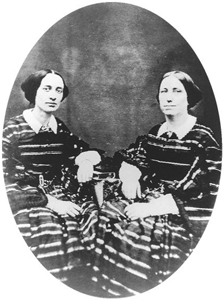
Harriet E. Giles (left) and Sophia B. Packard, the founders of Spelman Seminary, later Spelman College, who recruited Rockefeller as the school’s major donor in the early 1880s. (Courtesy of the Spelman College Archives)