
The Legend of Peugeot
Our chimpanzee cousins usually live in small troops of several dozen individuals. They form close friendships, hunt together and fight shoulder to shoulder against baboons, cheetahs and enemy chimpanzees. Their social structure tends to be hierarchical. The dominant member, who is almost always a male, is termed the ‘alpha male’. Other males and females exhibit their submission to the alpha male by bowing before him while making grunting sounds, not unlike human subjects kowtowing before a king. The alpha male strives to maintain social harmony within his troop. When two individuals fight, he will intervene and stop the violence. Less benevolently, he might monopolise particularly coveted foods and prevent lower-ranking males from mating with the females.
When two males are contesting the alpha position, they usually do so by forming extensive coalitions of supporters, both male and female, from within the group. Ties between coalition members are based on intimate daily contact – hugging, touching, kissing, grooming and mutual favours. Just as human politicians on election campaigns go around shaking hands and kissing babies, so aspirants to the top position in a chimpanzee group spend much time hugging, back-slapping and kissing baby chimps. The alpha male usually wins his position not because he is physically stronger, but because he leads a large and stable coalition. These coalitions play a central part not only during overt struggles for the alpha position, but in almost all day-to-day activities. Members of a coalition spend more time together, share food, and help one another in times of trouble.
There are clear limits to the size of groups that can be formed and maintained in such a way. In order to function, all members of a group must know each other intimately. Two chimpanzees who have never met, never fought, and never engaged in mutual grooming will not know whether they can trust one another, whether it would be worthwhile to help one another, and which of them ranks higher. Under natural conditions, a typical chimpanzee troop consists of about twenty to fifty individuals. As the number of chimpanzees in a troop increases, the social order destabilises, eventually leading to a rupture and the formation of a new troop by some of the animals. Only in a handful of cases have zoologists observed groups larger than a hundred. Separate groups seldom cooperate, and tend to compete for territory and food. Researchers have documented prolonged warfare between groups, and even one case of ‘genocidal’ activity in which one troop systematically slaughtered most members of a neighbouring band.2
Similar patterns probably dominated the social lives of early humans, including archaic Homo sapiens. Humans, like chimps, have social instincts that enabled our ancestors to form friendships and hierarchies, and to hunt or fight together. However, like the social instincts of chimps, those of humans were adapted only for small intimate groups. When the group grew too large, its social order destabilised and the band split. Even if a particularly fertile valley could feed 500 archaic Sapiens, there was no way that so many strangers could live together. How could they agree who should be leader, who should hunt where, or who should mate with whom?
In the wake of the Cognitive Revolution, gossip helped Homo sapiens to form larger and more stable bands. But even gossip has its limits. Sociological research has shown that the maximum ‘natural’ size of a group bonded by gossip is about 150 individuals. Most people can neither intimately know, nor gossip effectively about, more than 150 human beings.
Even today, a critical threshold in human organisations falls somewhere around this magic number. Below this threshold, communities, businesses, social networks and military units can maintain themselves based mainly on intimate acquaintance and rumour-mongering. There is no need for formal ranks, titles and law books to keep order.3 A platoon of thirty soldiers or even a company of a hundred soldiers can function well on the basis of intimate relations, with a minimum of formal discipline. A well-respected sergeant can become ‘king of the company and exercise authority even over commissioned officers. A small family business can survive and flourish without a board of directors, a CEO or an accounting department.
But once the threshold of 150 individuals is crossed, things can no longer work that way. You cannot run a division with thousands of soldiers the same way you run a platoon. Successful family businesses usually face a crisis when they grow larger and hire more personnel. If they cannot reinvent themselves, they go bust.
How did Homo sapiens manage to cross this critical threshold, eventually founding cities comprising tens of thousands of inhabitants and empires ruling hundreds of millions? The secret was probably the appearance of fiction. Large numbers of strangers can cooperate successfully by believing in common myths.
Any large-scale human cooperation – whether a modern state, a medieval church, an ancient city or an archaic tribe – is rooted in common myths that exist only in peoples collective imagination. Churches are rooted in common religious myths. Two Catholics who have never met can nevertheless go together on crusade or pool funds to build a hospital because they both believe that God was incarnated in human flesh and allowed Himself to be crucified to redeem our sins. States are rooted in common national myths. Two Serbs who have never met might risk their lives to save one another because both believe in the existence of the Serbian nation, the Serbian homeland and the Serbian flag. Judicial systems are rooted in common legal myths. Two lawyers who have never met can nevertheless combine efforts to defend a complete stranger because they both believe in the existence of laws, justice, human rights – and the money paid out in fees.
Yet none of these things exists outside the stories that people invent and tell one another. There are no gods in the universe, no nations, no money, no human rights, no laws, and no justice outside the common imagination of human beings.
People easily understand that ‘primitives’ cement their social order by believing in ghosts and spirits, and gathering each full moon to dance together around the campfire. What we fail to appreciate is that our modern institutions function on exactly the same basis. Take for example the world of business corporations. Modern business-people and lawyers are, in fact, powerful sorcerers. The principal difference between them and tribal shamans is that modern lawyers tell far stranger tales. The legend of Peugeot affords us a good example.
An icon that somewhat resembles the Stadel lion-man appears today on cars, trucks and motorcycles from Paris to Sydney. It’s the hood ornament that adorns vehicles made by Peugeot, one of the oldest and largest of Europe’s carmakers. Peugeot began as a small family business in the village of Valentigney, just 300 kilometres from the Stadel Cave. Today the company employs about 200,000 people worldwide, most of whom are complete strangers to each other. These strangers cooperate so effectively that in 2008 Peugeot produced more than 1.5 million automobiles, earning revenues of about 55 billion euros.
In what sense can we say that Peugeot SA (the company’s official name) exists? There are many Peugeot vehicles, but these are obviously not the company. Even if every Peugeot in the world were simultaneously junked and sold for scrap metal, Peugeot SA would not disappear. It would continue to manufacture new cars and issue its annual report. The company owns factories, machinery and showrooms, and employs mechanics, accountants and secretaries, but all these together do not comprise Peugeot. A disaster might kill every single one of Peugeot’s employees, and go on to destroy all of its assembly lines and executive offices. Even then, the company could borrow money, hire new employees, build new factories and buy new machinery. Peugeot has managers and shareholders, but neither do they constitute the company. All the managers could be dismissed and all its shares sold, but the company itself would remain intact.
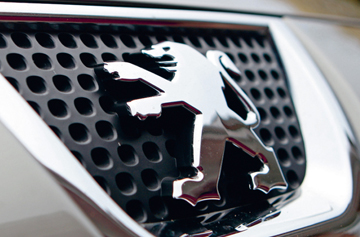
5. The Peugeot Lion
It doesn’t mean that Peugeot SA is invulnerable or immortal. If a judge were to mandate the dissolution of the company, its factories would remain standing and its workers, accountants, managers and shareholders would continue to live – but Peugeot SA would immediately vanish. In short, Peugeot SA seems to have no essential connection to the physical world. Does it really exist?
Peugeot is a figment of our collective imagination. Lawyers call this a ‘legal fiction’. It can’t be pointed at; it is not a physical object. But it exists as a legal entity. Just like you or me, it is bound by the laws of the countries in which it operates. It can open a bank account and own property. It pays taxes, and it can be sued and even prosecuted separately from any of the people who own or work for it.
Peugeot belongs to a particular genre of legal fictions called ‘limited liability companies’. The idea behind such companies is among humanity’s most ingenious inventions. Homo sapiens lived for untold millennia without them. During most of recorded history property could be owned only by flesh-and-blood humans, the kind that stood on two legs and had big brains. If in thirteenth-century France Jean set up a wagon-manufacturing workshop, he himself was the business. If a wagon he’d made broke down a week after purchase, the disgruntled buyer would have sued Jean personally. If Jean had borrowed 1,000 gold coins to set up his workshop and the business failed, he would have had to repay the loan by selling his private property – his house, his cow, his land. He might even have had to sell his children into servitude. If he couldn’t cover the debt, he could be thrown in prison by the state or enslaved by his creditors. He was fully liable, without limit, for all obligations incurred by his workshop.
If you had lived back then, you would probably have thought twice before you opened an enterprise of your own. And indeed this legal situation discouraged entrepreneurship. People were afraid to start new businesses and take economic risks. It hardly seemed worth taking the chance that their families could end up utterly destitute.
This is why people began collectively to imagine the existence of limited liability companies. Such companies were legally independent of the people who set them up, or invested money in them, or managed them. Over the last few centuries such companies have become the main players in the economic arena, and we have grown so used to them that we forget they exist only in our imagination. In the US, the technical term for a limited liability company is a ‘corporation’, which is ironic, because the term derives from ‘corpus’ (‘body’ in Latin) – the one thing these corporations lack. Despite their having no real bodies, the American legal system treats corporations as legal persons, as if they were flesh-and-blood human beings.
And so did the French legal system back in 1896, when Armand Peugeot, who had inherited from his parents a metalworking shop that produced springs, saws and bicycles, decided to go into the automobile business. To that end, he set up a limited liability company. He named the company after himself, but it was independent of him. If one of the cars broke down, the buyer could sue Peugeot, but not Armand Peugeot. If the company borrowed millions of francs and then went bust, Armand Peugeot did not owe its creditors a single franc. The loan, after all, had been given to Peugeot, the company, not to Armand Peugeot, the Homo sapiens. Armand Peugeot died in 1915. Peugeot, the company, is still alive and well.
How exactly did Armand Peugeot, the man, create Peugeot, the company? In much the same way that priests and sorcerers have created gods and demons throughout history, and in which thousands of French curés were still creating Christ’s body every Sunday in the parish churches. It all revolved around telling stories, and convincing people to believe them. In the case of the French curés, the crucial story was that of Christ’s life and death as told by the Catholic Church. According to this story, if a Catholic priest dressed in his sacred garments solemnly said the right words at the right moment, mundane bread and wine turned into God’s flesh and blood. The priest exclaimed ‘Hoc est corpus meum!’ (Latin for ‘This is my body!’) and hocus pocus – the bread turned into Christ’s flesh. Seeing that the priest had properly and assiduously observed all the procedures, millions of devout French Catholics behaved as if God really existed in the consecrated bread and wine.
In the case of Peugeot SA the crucial story was the French legal code, as written by the French parliament. According to the French legislators, if a certified lawyer followed all the proper liturgy and rituals, wrote all the required spells and oaths on a wonderfully decorated piece of paper, and affixed his ornate signature to the bottom of the document, then hocus pocus – a new company was incorporated. When in 1896 Armand Peugeot wanted to create his company, he paid a lawyer to go through all these sacred procedures. Once the lawyer had performed all the right rituals and pronounced all the necessary spells and oaths, millions of upright French citizens behaved as if the Peugeot company really existed.
Telling effective stories is not easy. The difficulty lies not in telling the story, but in convincing everyone else to believe it. Much of history revolves around this question: how does one convince millions of people to believe particular stories about gods, or nations, or limited liability companies? Yet when it succeeds, it gives Sapiens immense power, because it enables millions of strangers to cooperate and work towards common goals. Just try to imagine how difficult it would have been to create states, or churches, or legal systems if we could speak only about things that really exist, such as rivers, trees and lions.
Over the years, people have woven an incredibly complex network of stories. Within this network, fictions such as Peugeot not only exist, but also accumulate immense power. The kinds of things that people create through this network of stories are known in academic circles as ‘fictions’, ‘social constructs’, or ‘imagined realities’. An imagined reality is not a lie. I lie when I say that there is a lion near the river when I know perfectly well that there is no lion there. There is nothing special about lies. Green monkeys and chimpanzees can lie. A green monkey, for example, has been observed calling ‘Careful! A lion!’ when there was no lion around. This alarm conveniently frightened away a fellow monkey who had just found a banana, leaving the liar all alone to steal the prize for itself.
Unlike lying, an imagined reality is something that everyone believes in, and as long as this communal belief persists, the imagined reality exerts force in the world. The sculptor from the Stadel Cave may sincerely have believed in the existence of the lion-man guardian spirit. Some sorcerers are charlatans, but most sincerely believe in the existence of gods and demons. Most millionaires sincerely believe in the existence of money and limited liability companies. Most human-rights activists sincerely believe in the existence of human rights. No one was lying when, in 2011, the UN demanded that the Libyan government respect the human rights of its citizens, even though the UN, Libya and human rights are all figments of our fertile imaginations.
Ever since the Cognitive Revolution, Sapiens has thus been living in a dual reality. On the one hand, the objective reality of rivers, trees and lions; and on the other hand, the imagined reality of gods, nations and corporations. As time went by, the imagined reality became ever more powerful, so that today the very survival of rivers, trees and lions depends on the grace of imagined entities such as gods, nations and corporations.