
It was while he was still teaching at Santa Sabina in Rome that Thomas Aquinas wrote his commentary on Aristotle’s On the Soul. The year was 1268. The following year he would return to Paris and function as one of the two Dominican regent masters for another three-year term. The situation in Paris was such that we can easily find motivation for commenting on Aristotle, but in Rome at Santa Sabina the Parisian turmoil could not have motivated Thomas. Indeed, internal evidence makes it clear that he was not aware of the distortion of Aristotelian doctrine that came to be called Latin Averroism.
Thomas knew the writings of Aristotle from the very outset of his career. At Naples he would also have become acquainted with the interpretations of Averroes and Avicenna. Later at Cologne, he attended Albert the Great’s commentary on the Nicomachean Ethics and prepared the manuscript for the stationer. Father Chenu1 finds it the most natural thing in the world that Dominican theologians would teach courses in such philosophical works as the Ethics. In any case, prior to 1268 there is no such work from Thomas Aquinas.
We can trace through the writings of Thomas a growing confidence in his own reading of Aristotle. Very early on he is taking exception to the Commentator and this is true as well in the Commentary on On the Soul.
Aristotle’s definition of the soul, indeed definitions, figure in Thomas’s writings early and late. In the passage below we have a close textual reading of the passages in Aristotle Thomas had been relying on.
COMMENTARY ON ON THE SOUL
Lesson 1
Let the foregoing suffice as our account of the views concerning the soul which have been handed on by our predecessors; let us now dismiss them and make as it were a completely new start, endeavouring to give a precise answer to the question, What is soul? That is, to formulate the most general possible definition of it.
We are in the habit of recognizing, as one determinate kind of what is, substance, and that in several senses, (a) in the sense of matter or that which in itself is not ‘a this’, and (b) in the sense of form or essence, which is that precisely in virtue of which a thing is called ‘a this’, and (c) in the sense of that which is compounded of both (a) and (b). Now matter is potentiality, form actuality; of the latter there are two grades, related to one another as for example knowledge to the exercise of knowledge.
Among substances are by general consent reckoned bodies and especially natural bodies; for they are the principles of all other bodies. Of natural bodies some have life in them, others not; by life we mean self-nutrition and growth (with its correlative decay). It follows that every natural body which has life in it is a substance in the sense of a composite.
But since it is also a body of such and such a kind, viz. having life, the body cannot be soul; the body is subject or matter, not what is attributed to it. Hence the soul must be a substance in the sense of the form of a natural body having life potentially within it. But substance is actuality, and thus soul is the actuality of a body as above characterized. Now the word actuality has two senses corresponding respectively to the possession of knowledge and the actual exercise of knowledge. It is obvious that the soul is actuality in the first sense, viz. that of knowledge as possessed, for both sleeping and waking presuppose the existence of soul, and of these waking corresponds to actual knowing, sleeping to knowledge possessed but not employed, and in the history of the individual, knowledge comes before its employment or exercise.
That is why the soul is the first grade of actuality of a natural body having life potentially in it. The body so described is a body which is organized. The parts of plants in spite of their extreme simplicity are ‘organs’, for example the leaf serves to shelter the pericarp, the pericarp to shelter the fruit, while the roots of plants are analogous to the mouth of animals, both serving for the absorption of food. If, then, we have to give a general formula applicable to all kinds of soul, we must describe it as the first grade of actuality of a natural organized body. That is why we can wholly dismiss as unnecessary the question whether the soul and the body are one: it is as meaningless as to ask whether the wax and the shape given to it by the stamp are one, or generally the matter of a thing and that of which it is the matter. Unity has many senses (as many as ‘is’ has), but the most proper and fundamental sense of both is the relation of an actuality to that of which it is the actuality.
Aristotle, On the Soul 2.1
211. After Aristotle has set down in the first book the opinions of others concerning the soul, in this second book he begins to treat of the soul according to his own opinion, and the truth. In this regard he does two things. First, he states his intention, linking it to what has preceded. Second, he pursues his intention, when he says, ‘We say that a substance is of one kind…’ First, then, he says that in the first book the views of our predecessors about soul were treated, but it is now necessary to go back again to the beginning in order to determine the truth. This should be done with a keen sense of the difficulty rather than presume that the truth is easily discovered. Earlier, in the preface, it was asked whether the soul itself or its parts ought to be discussed first. As if in answer to that question, he says that we ought first to say what soul is, making known its essence; its parts or powers will be determined afterwards. And, as if to give the reason for this, he adds, ‘to formulate the most general possible definition of it’. For in showing what the soul is one treats what is common. It is when each part and power of it are discussed that what is special with respect to soul is treated. To proceed from the common to the less common is the order of teaching, as the Philosopher shows at the beginning of the Physics.
212. Then, when he says, ‘We are in the habit of recognizing…’ he pursues the intention he stated, and this is divided into two parts. In the first he shows what the soul is; in the second, he treats its parts and powers. He subdivides the first point into two: first, he gives a definition of soul which is as the conclusion of a demonstration; second he gives a definition of soul which is as the principle of a demonstration. We should know that, as is said in Posterior Analytics 1.16, every definition is the conclusion of a demonstration, like ‘Thunder is a continuous sound in the clouds,’ or it is the principle of a demonstration, like ‘Thunder is the extinction of fire in the clouds,’ or it differs only in arrangement from a demonstration, like ‘Thunder is a continuous sound in the clouds because of the extinction of fire in the clouds.’ This gives both the conclusion and principle of a demonstration, although not in syllogistic order. The first task is divided into two, in the first of which he gives the first definition of soul, and then goes on to make it manifest. 1 The first is further subdivided: first, he recalls some divisions which open the way to the investigation of the soul’s definition; second, he seeks the definition of soul, ‘Now given that there are bodies…’ 2
213. Recall that, as the Philosopher teaches in Metaphysics 7.4, the difference between the definition of substance and of accident lies in this that the former introduces nothing outside the substance of what is defined, since a substance is defined by its material and formal principles, but the definition of accident mentions things outside the essence of what is defined, for example, ‘Snubness is the curvature of the nose.’ The reason is that definition signifies the quiddity of the thing, and substance is something complete in its existence and species, whereas the accident, not having complete being, depends on substance. Similarly, no form is a thing complete in species: but the perfection of species belongs to the composed substance. The composed substance is so defined that in its definition nothing outside its essence is introduced, but in the definition of form something outside the essence of the form is mentioned, namely its proper subject or matter. Hence, since soul is form, it is necessary that its matter or subject be put into its definition.
214. His first task involves two things: first, he sets down two divisions necessary for investigating what should be put into the definition of soul in order to express its essence. Next he asks what should be put in the definition of soul in order to express its subject 3 In the first step, he gives three divisions, the first is the division of being into the ten categories. And this is signalled when he says ‘one determinate kind of what is, substance…’
215. The second division is that of substance into matter, form and composite. Matter is not in itself a definite thing [hoc aliquid] but only a potentiality to become such. The form is that thanks to which the definite thing is actual. The composed substance is the definite thing. Something is called a definite thing if it is a demonstrable thing complete in being and kind, and this is only true of the composite substance in material things. Separated substances, although they are not composed of matter and form, yet are definite things, since they are actually subsistent and complete in their own nature. The rational soul can in a certain respect be called a definite thing, insofar as it can subsist by itself, but because it does not have a complete species, being rather part of a species, it is not in every way proper to call it a definite thing. The difference between matter and form is this, that matter is being in potentiality, but form is the entelecheia, that is act thanks to which matter comes to be actual, and it is the composite that is actual being.
216. The third division is of act into two kinds, one way as knowledge is an act, in another as the exercise of knowledge is an act. The difference between these two acts can be investigated from their corresponding potentialities. For someone is called a grammarian potentially before he has acquired the habit of grammar by learning and discovering, and this potentiality is actualized when he acquires the habit of science. But there is also a potentiality with respect to the exercise of the knowledge, before one is actually considering it, and this potentiality is realized when one actually considers. So both knowledge and the use of it are acts.
217. Then he sets down divisions enabling us to see what should be put in the definition of the soul as to its subject. He mentions three divisions, the first of substance into those which are bodies and those which are not. The most manifest instance of substance is bodily substances, for what incorporeal substances are is unclear, because they are remote from sense and knowable only by reason. That is why he says that ‘Among substances are by general consent reckoned bodies…’
218. The second division is of bodies into physical, that is, natural bodies, and artificial. A man, wood and stone are natural bodies, but a house and hatchet are artificial. Natural bodies seem to be substance more than artificial things, because natural bodies are principles of the artificial. For art acts on a matter provided by nature, and the form that is introduced by the artisan is an accidental form, shape and the like. Hence artificial bodies are not in the genus of substance because of their form, but only because of their matter, which is natural. They owe it to natural bodies that they are substances. Hence natural bodies are substance more than artificial bodies, for they are substance not only because of their matter, but also because of their form.
219. The third distinction is of natural bodies into those that have life and those that do not. Those are said to have life which take nourishment by themselves, grow and then decay. Note that this explanation is more by way of example than definition, for something is not alive solely because it grows or ages, but also because it senses and understands and can perform other works of life. Separated substances are alive because they have intellect and will, as is clear from Metaphysics 12.8, although there is no growth and ageing in them. He chooses as his example of living things those that take nourishment and grow because the soul of plants, to which nourishment and growth pertain, is the principle of life, as he said at the end of Book 1. The proper notion of life is drawn from this: anything that can move itself – understanding move broadly, as when intellectual activity is called a kind of motion. We say that those things are without life which can only be moved by an extrinsic principle.
220. Now, making use of these divisions, he investigates the definition of soul, and he will speak first of the parts of the definition, then give the definition, 1 and thirdly handle a difficulty raised by the definition he gives. 2 As to the parts of the definition, he will first discuss those which pertain to the essence of soul, and then those that pertain to the essence of its subject. 3 First, then, he discusses this part of the definition ‘the soul is act’; next he discusses the meaning of ‘first act’. 4
From what has already been said, he concludes that since natural bodies seem especially to be substance, and every body having life is a natural body, we must say that every body having life is a substance. And, since it is an actual being, it must be a composed substance. When I say ‘body having life’ I say two things, namely, that it is a body and that it is a body of a certain kind, that is, one having life, and it cannot be said that that part of ‘body having life’ that is body is the soul. For by soul we understand that whereby one having life lives, so it must be understood as existing in a subject, taking subject largely and not simply insofar as subject is an actual being – thus it is that accidents are in a subject – but insofar as prime matter which is potential being can be called a subject. The body, which receives life, is more like subject and matter than it is something existing in a subject.
221. Substance is of three kinds, the composite, matter and form, and soul is not the composite, which is the body having life, nor is it the matter, which is the body as subject of life. By elimination, then, it must be substance as form or as the species of a certain kind of body, namely of a natural body potentially having life.
222. He says ‘having life potentially’ and not simply ‘having life’, since the body having life is understood to be the living composite substance and the composite is not put into the definition of its form. It is the matter of the live body that is compared to life as potentiality to act. And that is the soul, the act by which the body lives. It is as if we were to say that the shape is the act, not of the actually shaped body, for this is a composite of shape and body, but of the body which is the subject of shape, which is compared to shape as potentiality to act.
223. Lest anyone should think that soul is act in the manner of an accidental form, he adds that the soul is act as substance is act, that is, as form. And since every form is in a determinate matter, it follows that it is the form of the kind of body just discussed.
224. This is the difference between substantial and accidental form, that the latter does not cause something actually to be simply but actually to be such and such, for example large or white or something like that. Substantial form causes actual existence simply. The accidental form comes to an already actually existing subject, whereas the substantial form does not come to an already actually existing subject but to one that exists only in potentiality, namely prime matter. It is clear from this that a thing cannot have two substantial forms because the first would cause actual being simply, and what then comes to an already actually existing subject does not cause it actually to be simply, but only in a certain respect.
225. This refutes the position of Avicebron in the Fountain of Life where he makes the order of many substantial forms in the same thing follow the order of genera and species, such that in the individual there is one form thanks to which it is substance, another by which it is body, a third whereby it is animated body, and so on. On the basis of the foregoing, it must be said that it is by one and the same substantial form that the individual is a definite thing, that is substance, and by which it is body and animate body and all the rest. The more perfect form gives matter everything that the less perfect form does, and more besides. Hence the soul does not only cause substance to be and body, which the form of stone does, but also makes the body animate. We should not understand the statement that soul is the act of body and body is its matter and subject to mean that body is constituted by one form, which makes it actually to be a body, and the soul supervenes to make it be a living body, but rather that it is from the soul that it is and is a living body. But to be a body is less perfect and material with respect to life.
226. So it is that when the soul leaves, the body does not remain specifically the same, for the eye and flesh in a corpse are so called only equivocally, as the Philosopher makes clear in Metaphysics 7. When the soul leaves, it is succeeded by a substantial form which causes another specific existence, since the corruption of one thing is the generation of another.
227. He turns now to the second part of the definition [of soul] and says that act means two things, as exemplified by knowledge and the exercise of knowledge, as was discussed above. Clearly soul is act in the way knowledge is, because when soul is in the animal then sleeping and waking are. Waking is like the exercise of knowledge, because just as exercise is the use of knowledge, so waking is the use of the senses, but sleep is like having knowledge, when one no longer acts by himself, for the animal powers are quiescent.
228. Of these two acts, knowledge is prior in generation in the same person. For exercise is compared to knowledge as act to potentiality. But act, as is said in Metaphysics 9, is naturally prior to potentiality, for it is the end and completion of potentiality. But in the order of generation and of time, universally speaking, act is prior to potentiality, for that which is in potency is brought into act by something actual. But in one and the same thing, potentiality is prior to act, for a thing is first potential, and afterwards comes to be act. That is why he says that knowledge is prior in generation in the same thing to exercise.
229. Hence he concludes that, since soul is act in the way knowledge is, it is the first act of a natural body potentially having life. The Philosopher calls soul the first act, not simply to distinguish it from the act that is operation, but also to distinguish it from the forms of the elements, which always act unless impeded.
230. Now he turns to the part of the definition which takes into account the subject, and because he said that soul is the act of a natural body potentially having life, he also says that every organic body is such. By organic body he means one that has a diversity of organs. Diverse organs are necessary in the body receiving life because of the different activities of the soul. For soul, since it is the most perfect among the forms of bodily things, is the principle of different activities: thus it requires a diversity of organs in that which is perfectible by it. The forms of inanimate things, because of their imperfection, are principles of fewer activities and do not require a diversity of organs in the things perfected by them.
231. The plant soul is the least perfect of souls, which is why there is less diversity of organs in plants than in animals. Therefore, in order to show that every body receiving life is organic, he bases his argument on plants in which there is the least diversity of organs. So he says, ‘The parts of plants in spite of their extreme simplicity are organs.’ These are extremely simple in that they do not much differ from one another as do the parts of animals. For the foot of the animal is composed of different parts, namely flesh, nerves, bones, and the like, but the organic parts of plants are not composed of different parts.
231. He shows that the parts of plants are organic because different parts are for different activities. The leaf shelters the pericarp, the part in which fruit grows, and the pericarp shelters the fruit. The roots of plants are analogous to the mouth in animals, because both take in nourishment, the root in plants, the mouth in animals.
232. From what has been said, he puts together the definition of soul and says that if a general definition had to be given, one that would be true of every soul, it would be this: the soul is the first act of a natural organic body. He need not add now ‘potentially having life’, since organic has been put in place of that, as is clear from what has been said.
234. Now he takes up a difficulty raised by the definition. For many doubted that the soul and body could become one, and some held that there were intermediates by which the soul is united to body and somehow linked together. But this will not do since, as has been shown, soul is the form of the body. ‘That is why we can wholly dismiss as unnecessary the question whether the soul and body are one.’ We do not ask if the wax and its shape are one, nor generally matter and the form of the matter. For it was shown in Metaphysics 8 that form is united to matter per se, as its act, and the same is true of matter united to form, thanks to which the matter exists actually. He adds, ‘Unity has many senses (as many as “is” has),’ since being is said both of potential and of actual being and that which is properly being and one is act. But just as potential being is not being simply, but only in a certain respect, so it is not simply one, but only in a certain respect. So one has as many senses as being. Just as body exists because of soul, as by form, so it is immediately united to the soul, since soul is the form of the body. But insofar as it is a motor, nothing prevents there being something intermediate, insofar as a part is moved by the soul using another as intermediate.
Lesson 2
We have now given an answer to the question, What is soul? – an answer which applies to it in its full extent. It is substance in the sense which corresponds to the definitive formula of a thing’s essence. That means that it is ‘the essential whatness’ of a body of the character just assigned. Suppose that what is literally an ‘organ’, like an axe, were in a natural body, its ‘essential whatness’ would have been its essence and so its soul; if this disappeared from it, it would have ceased to be an axe, except in name. As it is, it is just an axe; it wants the character which is required to make its whatness or formulable essence a soul; for that, it would have had to be a natural body of a particular kind, viz. one having in itself the power of setting itself in movement and arresting itself. Next, apply this doctrine in the case of the ‘parts’ of the living body. Suppose that the eye were an animal – sight would have been its soul, for sight is the substance or essence of the eye which corresponds to the formula, the eye being merely the matter of seeing; when seeing is removed the eye is no longer an eye, except in name – it is no more a real eye than the eye of a statue or of a painted figure. We must now extend our consideration from the ‘parts’ to the whole living body; for what the departmental sense is to the bodily part which is its organ, that the whole faculty of sense is to the whole sensible body as such.
From this it indubitably follows that the soul is inseparable from its body, or at any rate that certain parts of it are (if it has parts) – for the actuality of some of them is nothing but the actualities of their bodily parts. Yet some may be separable because they are not the actualities of any body at all. Further, we have no light on the problem whether the soul may not be the actuality of its body in the sense in which the sailor is the actuality of the ship.
This must suffice as our sketch or outline determination of the nature of soul.
Aristotle, On the Soul 2.1 (contd)
235. Aristotle now clarifies the definition and, that being done, infers a certain truth from it. 1 The clarification involves, first, looking at the part of the definition expressing the essence of soul and, second, looking at the part expressing its subject. 2 As to the first, having manifested the definition of soul by comparison with artefacts, he goes on to discuss the parts of soul. 3
Since the forms of artificial things are accidents that are more known to us than substantial forms because closer to the senses, he clarifies the definition by comparing soul to accidental forms. So too the parts or powers of the soul are more obvious to us than the soul itself, for in our knowledge of soul we proceed from objects to acts and from acts to powers, through which the soul itself is made known to us; it is thus fitting that he should manifest the definition by appeal to such parts.
236. Having given a universal answer to the question, What is soul?, for the definition given applies to every soul, he adds that soul is substance, that is the form from which the definition of the thing is taken. The form which is substance and the form which is not differ. Accidental form is not in the genus of substance and does not pertain to the essence or quiddity of its subject. Whiteness is not of the essence of the white body. But the substantial form is of the essence or quiddity of its subject. So soul is called a substantial form because it is of the essence or quiddity of the animate body. So he adds, ‘That means, etc.’, that the substance that corresponds to the thing’s definitive formula is the quiddity of that body, that is, a body constituted in a species by such a form. For the form pertains to the essence of the thing which is signified by the definition expressing what the thing is.
237. Because substantial forms like the forms of natural bodies are hidden, he clarifies this through artificial forms, which are accidents. ‘Suppose that what is literally an organ…’ That is, imagine that an axe is a natural body whose form relates to it in the way discussed, ‘its essential whatness would have been its essence’, speaking of the form of the axe from which its definition is drawn. He calls it its essential whatness because thanks to it the axe is an axe and this form he calls the substance of the axe. He says this because the forms of natural bodies are in the genus of substance. Further, if the axe were not just a natural body, but a living body, the form of axe would be its soul which, if separated from it, would leave an axe only equivocally such, just as when soul is separated there is flesh and eye only equivocally. Because the axe is not a natural body nor its form the quiddity of such a body, take away the form of the axe and the substance of the axe remains, for the substance of artefacts is their matter, which remains when the artificial form is removed, although the body is not then an actual artefact.
238. When he says, ‘As it is, it is just an axe,’ and is different from animate natural body, he explains this by saying that this is so because the soul is not the quiddity or formulable essence, that is, the form of this kind of body, the artificial body, but of a natural body of such a kind that it potentially has life. To make clear what he means by a natural body, he adds ‘having in itself the power of setting itself in movement and arresting itself’. For natural bodies are those that have in themselves their principle of motion and rest. That principle is called nature, as you will find in Physics 2.
239. Now he clarifies the definition of soul by appeal to its parts, saying, ‘Next, apply this doctrine in the case of the parts of the living body…’ Because if an eye were an animal, sight would be its soul, for sight is the substantial form of the eye and the eye is its matter, as organic body is matter to the soul. When sight goes, the eye remains only equivocally, just as an eye in stone or painted is called an eye equivocally. This is so because things named equivocally have only the name in common and differ in the account of the substance. Therefore, taking away the form from which is drawn the account of the substance of the eye, there remains an eye only equivocally. What is found in a part of the living body can be extrapolated to the whole living body, such that just as sight is the substantial form of the eye, and there remains an eye only equivocally when it is taken away, so the soul is the substantial form of the living body, and when it is taken away there remains a living body only equivocally. As one part of the sensitive soul relates to one part of the sensitive body, so the whole of sense to the whole sensitive body as such.
240. He turns now to clarify the definition of soul with respect to calling it the act of a body potentially having life. But something is said to be potential in two ways: first, when it does not have the principle of operation and, second, when it does but is not using it. The body, whose act the soul is, potentially has life, not in the first way but in the second. That is why he says ‘potentially capable of living’, that is, that having life potentially whose act is the soul is not said to be potentially alive as ‘what has lost the soul it had, but what still retains it’. But it is true that the seed and the fruit in which is preserved the seed of the plant is potentially a living body of such a kind that it has a soul, for the seed does not have a soul. So it is in potency, as deprived of soul.
241. To show how the body whose act is the soul is in potency to life, he adds that as waking is an act of the sensitive soul, so cutting is an act of the knife and seeing is the act of the eye. Each of them is an activity and a use of a principle possessed. But the soul is first act, like the power of sight and the power of a tool, for each of these is a principle of operation. But the body which is perfected by the soul, is a potency having its first act, but sometimes lacking its second act. But just as the eye is something composed of the pupil as matter and sight as form, so the animal is composed of soul as form and body as matter.
242. When he says, ‘From this it indubitably follows…’, he concludes a truth from what has been established. For it has been shown that the soul is the act of the whole body, and its parts are the acts of parts, but act and form are not separated from that whose act and form they are. Manifestly, the soul cannot be separated from body, either the whole, or certain parts of it, if it is so fashioned as to have parts. It is manifest that some parts of the soul are acts of some parts of the body, as sight was called the act of the eye. But with respect to some parts, nothing prevents the soul from being separated, because some parts of the soul are not the acts of the body, as will be proved below with respect to the intellect.
243. Because Plato held that the soul is the act of the body not as form but as motor, he adds that it is not yet clear whether the soul is the act of the body in the way that the pilot is of the ship, namely as mover alone.
244. By way of epilogue, he summarizes what he has said. He says that he has given a sketchy description of the soul which is extrinsic, superficial and incomplete. It will be completed when he has succeeded in determining the nature of each part of the soul.
Lesson 3
Is each of these a soul or a part of a soul? And if a part, a part in what sense? A part merely distinguishable by definition or a part distinct in local situation as well? In the case of certain of these powers, the answers to these questions are easy, in the case of others we are puzzled what to say. Just as in the case of plants which when divided are observed to continue to live though removed to a distance from one another (thus showing that in their case the soul of each individual plant before division was actually one, potentially many), so we notice a similar result in other varieties of soul, that is, in insects which have been cut in two; each of the segments possesses both sensation and local movement; and if sensation, necessarily also imagination and appetition; for, where there is sensation, there is also pleasure and pain, and where these, necessarily also desire.
We have no evidence as yet about mind or the power to think; it seems to be a widely different kind of soul, differing as what is eternal from what is perishable; it alone is capable of existence in isolation from all other psychic powers. All the other parts of the soul, it is evident from what we have said, are, in spite of certain statements to the contrary, incapable of separate existence, though, of course, distinguishable by definition. If opining is distinct from perceiving, to be capable of opining and to be capable of perceiving must be distinct, and so with all the other forms of living above enumerated. Further, some animals possess all these parts of soul, some certain of them only, others one only (this is what enables us to classify animals); the cause must be considered later. A similar arrangement is found also within the field of the senses; some classes of animals have all the senses, some only certain of them, others only one, the most indispensable, touch.
Since the expression ‘that whereby we live and perceive’ has two meanings, just like the expression ‘that whereby we know’ – that may mean either (a) knowledge or (b) the soul, for we can speak of knowing by or with either and similarly that whereby we are in health may be either (a) health or (b) the body or some part of the body; and since of the two terms thus contrasted knowledge or health is the name of a form, essence or ratio, or if we so express it an actuality of a recipient matter – knowledge or what is capable of knowing, health or what is capable of being made healthy (for the operation of that which is capable of originating change terminates and has its seat in what is changed or altered); further, since it is the soul by or with which primarily we live, perceive and think, it follows that the soul must be a ratio or formulable essence, not a matter or subject. For, as we said, the word substance has three meanings – form, matter and the complex of both – and of these three what is called matter is potentiality, what is called form actuality. Since then the complex here is the living thing, the body cannot be the actuality of the soul; it is the soul which is the actuality of a certain kind of body. Hence the rightness of the view that the soul cannot be without a body, while it cannot be a body; it is not a body but something relative to a body. That is why it is in a body, and a body of a definite kind. It was a mistake, therefore, to do as former thinkers did, merely to fit it into a body without adding a definite specification of the kind or character of that body. Reflection confirms the observed fact; the actuality of any given thing can only be realized in what is already potentially that thing, that is, in a matter of its own appropriate to it. From all this it follows that the soul is an actuality or formulable essence of something that possesses a potentiality of being besouled.
Aristotle, On the Soul 21 (contd)
245. Having given a definition of the soul, the Philosopher now intends to demonstrate it; his intention once stated, he goes on to pursue it. 1 First he has to show the kind of demonstration he intends to use, and then show how definitions are demonstrable. 2With respect to the first, it should be known that, since we must come into knowledge of the unknown from things already known, every demonstration is put forward in order to make something else known; every demonstration must proceed from things more known to us by which through demonstration something else becomes known. In some things there is no difference between what is more known to us and more known in its nature, as in mathematicals, which are abstracted from matter; with these demonstration proceeds from the more known simply and according to nature, namely from causes to effects, hence it is called demonstration of the reasoned fact [propter quid]. But in other things, what is more known simply and for us differ, as in natural things, where for the part sensible effects are more known to us than their causes. Thus with respect to natural things, we proceed by and large from things which are naturally less known but more known to us, as is said in Physics 1.
246. This is the kind of demonstration he intends to use here. Thus he says, ‘For it is not enough for a definitive formula to express as most now do the mere fact; it must include and exhibit the ground also.’ That which is certain according to nature and what is according to reason more known, becomes more certain for us from things which are less certain according to nature, though more certain for us. So he means to ‘reconsider our results’ from this point of view, by demonstrating the definition already given.
247. When he says, ‘For it is not enough…’ he gives the reason for his intention, showing that some definitions are demonstrable. And when he speaks of reconsidering the results concerning the soul, he means that the definitive formula should not only state what is the case, as many terms or definitions do, but the cause should be touched on in the definition, and by means of a definition stating the reason or ground the definition stating only the fact must be demonstrated. For there are many accounts of terms or definitions that are, as it were, conclusions. And he gives an example from geometry.
248. In order to understand this we should know that of four-sided figures some have all right angles and are called orthogonia, that is, a surface bounded by right angles, and some do not have right angles, and are called rhomboids. The first kind of four-sided figure may have all sides equal, and is called a tetragone or square, or may not have all sides equal, but opposing sides equal to one another, and it is called an orthogone with one side longer, or a rectangle.
249. Again, it should be known that in any surface of right angles, two straight lines concluded by a right angle are said to contain the whole surface, because when the other two sides are equal to them, each to its opposite, it is necessary one of these lines measure the length and the other the width of the rectangular surface. Hence the whole surface emerges from moving the one along the other. So that if we imagine the one line converging in a right angle moving along the other, the surface is produced.
250. It should also be known that since in the rectangle the two lines containing the angle are unequal, if we take a line that is their proportional
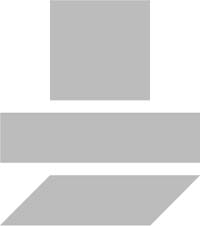
mean and lead it on itself, a square equal to the rectangle will result. Since it would take time to show this by geometrical demonstrations, it will suffice for the present to show it in numbers. Let the long side of the rectangle equal 9 and the short equal 4. Their proportional mean is 6. Because as 6 is to 9, so 4 is to 6. The square of this line will be equal to the rectangle. 4 x 9 = 36 and 6 x 6 = 36.
251. This then is what he means when he says, ‘What is squaring?’ and replies that it is the construction of an equilateral rectangle equal to a given oblong rectangle. Such a definition is the reason for the conclusion, that is, for what is concluded by the demonstration. For if someone were to define it as the discovery of a line which is a mean proportional between the two unequal sides of the given rectangle, he would give us the cause of the thing.
252. Note that the example adduced is similar to what he intends concerning the soul in one respect, namely insofar as the definition of soul might be demonstrated, but dissimilar in another, with respect to demonstrating it by a demonstration of the reasoned fact [propter quid].
253. Then when he says, ‘We resume our inquiry…’, he begins to demonstrate the definition of soul given above in the foregoing manner, namely, through its effect. And this is his demonstration:
That which is the first principle of living is the act and form of living bodies.
But the soul is the first principle of living in those things which live.
Therefore, it is the act and form of living body.
Clearly this is an a posteriori demonstration. It is because the soul is the form of the living body that it is the principle of the acts of life, and not conversely. In this respect, he does two things: first, shows that soul is the principle of living, and second that the first principle of living is the form of the living body, since it is that by which we live and sense. The first task is subdivided into three: first, he distinguishes modes of living; second, he shows that the soul is the principle of living; 1 third he shows how the parts of the souls are related to one another, following which it is the principle of the works of life. 2
254. He says first that in order to pursue our intention of demonstrating the definition of soul, we must take as a principle that the animate is distinguished from the inanimate in living. The animate live, the inanimate do not. But since there are many ways of living, if one alone is in a thing it is called living and animate.
255. He sets down four modes of living, of which one is by intellect, the second by sense, the third by local motion and rest, the fourth by the motion of taking nourishment, and of growth and decay. He mentions only four modes of living whereas earlier he had set down five kinds of activity of soul, because here he means to distinguish modes of living according to the grades of living thing, which are distinguished according to these four. In some living things there is found only nutrition, growth and decay, namely in plants; in some, along with these is found sense without locomotion, as in imperfect animals, like oysters; in some there is further found locomotion, as in perfect animals, which can move themselves in progressive motion, like the cow and the horse; in some, along with all these, is found intellect, namely in man. The appetitive, which is the fifth beyond these four, does not make a difference in the grades of living thing, since wherever there is sense, there is appetite.
256. Then when he says, ‘Hence we think of plants also…’, he makes clear that soul is the principle of living in all the foregoing modes. He does three things in this regard: first, he shows how the soul is the principle of living in plants; second, in animals; 3third, he summarizes what has been said and indicates what remains to be said. 1 The first is subdivided into two, the first showing that soul is the principle of living in plants. He says that since it was said that if one of the four modes of living is in something, it is said to live, it follows that all plants live. For all of them have in themselves a power or principle by which they receive the motion of growth and decay.
257. That this principle is the soul and not nature is clear. For nature does not move to contrary places, but the movement of growth and decay is according to contrary places. For all plants grow, not just up and down but both at once. Therefore it is manifest that the principle of these motions is not nature, but soul. And plants not only live while they grow and decrease but they are nourished as long as they live, as long as they are able to take nourishment by which growth comes about.
258. Second, he shows that the principle of living just discussed is first and separable from the others. 2 And he says that the principle of growth and nutrition can be separated from the other principles of living, but they cannot be separated from it in mortal things. He says this because there are immortal things, such as the separated substances and celestial bodies if they are animate, found to be intellectual but not to take nourishment. That this principle is indeed separable from the others is manifest in plants, in which there is no other power of the soul except this. From which it is clear that that on account of which life is first found in mortal things is the principle of growth and nutrition which is called the plant or vegetative soul.
259. Then, when he says, ‘The primary form of sense…’ he shows how soul is the principle of living in animals. First he says that something is primarily called an animal because of sense, although some animals sense and move. We say that things are animals and not only live which, though they do not change place, yet have sense. There are many animals of this kind, which naturally remain in one place and yet have sense, such as the oyster, which is not moved by progressive movement.
260. Second, he shows that touch of all the senses is primary in animals. He proves it from this that just as the vegetative can be separated from touch and all the senses, so touch can be separated from the other senses. For there are many animals which have only the sense of touch, such as imperfect animals, but all animals have the sense of touch. We call that part of the soul the vegetative principle in which plants too participate. Therefore, three levels of living thing appear against this background. The first is plants, the second is the imperfect immobile animals which have the sense of touch, and there are the perfect animals which move with progressive movement and also have the other senses. Manifestly, on a fourth level are the things which have all these and intellect besides.
261. Finally, he shows what has been said and what remains to be said. Later it will have to be said why both of these occur, namely that the vegetative can be without sense, and that touch can be without the other senses. He will talk about that at the end of the book. Now it is sufficient to say that the soul is the principle of life in the aforementioned modes, and that these four have been distinguished, namely, the vegetative which is in plants and all living things; the sensitive, which is in all animals; and the intellective, which is in all men; and progressive movement, which is in all animals perfected by either sense or intellect.