
As our connectivity and technology increases, so will the importance of how we present ourselves digitally. We have to think beyond platforms and traditional search engines and begin moving towards infinite exchanges between experiences. Omni-channel is the new expected level for marketing programs. Nearly everything in our lives in and outside the home takes place on screens now, whether it’s catching the bus, checking the weather, or finding your eye doctor’s office.
Futurists envision a world where digital technology streams all around, shaping our nonvirtual existence for the better. People will always need help to find what they want, in search engines, apps, social networks, or possibly their own glasses. Search will most definitely extend beyond the devices we’re carrying and using today. Cars have WiFi; soon they will contain Bluetooth everything and drive themselves.
Embracing Expansive Realities
Gadgets and platforms like virtual reality (VR) will create unique challenges for the SEO professional. SEO will migrate beyond the concept of a screen or search engine and become part of life. Search has already become ingrained in our daily lives in a way that could mean the difference between life and death. Devices are connected to each other and where there’s connection and WiFi plus processors in action, there’s search. Mobile phones offer location-based experiences that are increasingly different than the norm, some of which can augment reality. It is left up to the cutting-edge SEO to cultivate new strategies to capture the expanded internet realities.
It’s imperative for us to know how to find new information as members of society, or we inevitably risk getting left behind. For a small business, lack of access to inform or change what appears in search could create major problems at any time. Search pros will get left behind if they do not anticipate what’s next; change is the most built-in part of the job. If you fear or dislike change, SEO may not be the field for you, at least not long term.
We will continue to consume more and more information with some type of virtual or augmented reality enhancement. Adobe states that the number of consumers in America that allow apps to access their phone’s GPS to personalize their experience increased from 49% in 2013 to 58% in 2014. I would expect that to continue. More and more users are showing that they want to engage in location-specific experiences.
Emerging search devices that have been launched at the popular CES conference range from the smart TV and smart watches to smart shoes and underpants. What smart means doesn’t really always makes sense, but it almost always seems to include some type of connectivity between devices. By 2018, smart watches alone will move 100 million units or more. By 2018, over 250 million smart wearables will be in use, 14 times more than in 2013. Beacons are delivering real-time product and service messaging through Apple’s iBeacon, Google Eddystone, and Facebook Beacons. Users will expect more contextual content such as discounts and coupons at live concerts or events. Couponing and incentives will become part of the event experience
POKÉMON GO
In the summer of 2016, a viral phenomenon known as Pokémon Go captured the imagination of the United States. Waves of people downloaded the app and ran around random places willy-nilly. The users went to parks, cemeteries, and all sorts of places in droves, feverishly.
As content creators, there were hundreds of Pokémon-themed blog posts and juicy blogs put out. Empires formed almost overnight. The Pokémon Go craze was linked to such unbelievable things like bolstering the Canadian government worker’s pension fund or murder (wrong place, wrong time). These wide-ranging events resulting from one game seem improbable.
The game became the largest augmented reality app of all time (that summer) and almost surpassed Twitter’s user base in just a few weeks. Then it tanked just as quickly. But during that short time, augmented reality helped build a fast empire in that it generated massive paid revenue for multiple companies in terms of search opportunity.
Augmented reality (AR) is technology that enhances the user’s perception of reality through computer-generated sensory input in a real-world environment. AR has been creeping into many areas of our lives, from the lines superimposed on the screen when watching a football game to the heads-up displays that can now be found in motorcycle helmets and new cars. Augmented reality crept into social with Snapchat, but maybe maps were a form of AR as well.
Marketing exists anywhere there is a screen. For those who are willing to take notice, AR offers exciting new possibilities when it comes to search. It could look something like this: a person searching for a doctor through their wearable device does a Google search and gets a hit from someone that left an AR marker with a review and star rating of a medical practice earlier in the week.
The whole notion of a cardboard virtual-reality headset seemed far-fetched not that long ago. Now all you need to experience VR is a mobile phone, an app, and a compatible cardboard viewer (literally a piece of cardboard). When I first tried out a cardboard virtual reality headset, it was so weird—yet it worked. The cardboard viewers are available for less than $20, making VR and AR-accessible worlds within reach for the masses. The smartphone has been toggled into many different types of wearable computing products that include virtual reality and augmented alike.
Traditional advertisements can no longer offer the same impact as VR ads will. Immersion gives consumers a more meaningful experience. VR monetization revenues are expected to reach $5 billion dollars by 2019, conservatively. Economically speaking, VR could also create billions in spending over the next ten years. As an industry, VR stands to benefit those working in marketing at any level.
Hearing aids and noise-cancelling wireless headphones are starting to evolve and now have tiny supercomputers in them. The top manufacturers claim you can tune in to your music, but also have normal conversations during concerts or tune out the noise around you. Soon we will also be able to receive all types of notifications (email, text, alarms, etc.) through voice (and privately too if you’re using earbuds). Even though it’s not a screen, one can imagine the marketing opportunities that lie therein.
Companies across the globe are running virtual simulations as a part of employee training. In fact, some schools are already planning lessons in VR (Figure 10-1). There are schoolchildren now taking virtual field trips. When consumers look to headsets for entertainment, experiences, and information, companies will need to be there.
VR has historically been associated with gaming, but there have been dramatic advancements into other industries. While the opportunity for the gaming ecosystem is unlimited, practical applications have also flourished. Time Magazine said VR is the technology that is going to change the world. The numbers are astonishing: the industry is projected to hit $6 billion by 2018. The SEO industry, much like the medical field, will be invariably improved through the use of VR technology. One example of industry expansion is Embodied Labs’ VR program “We are Alfred,” which provides medical students with the opportunity to feel what it is like to be elderly. Another example is Solis, the portable VR solution for medical eldercare.

Figure 10-1. VR workshop. Credit: UploadVR.
Expanded virtual realities create an opportunity for shoppers to look at actual products, and virtually feel them in their hands prior to purchasing. I’ve actually test-driven a car, hunted for dinosaurs, and ridden a roller coaster using VR. We expect the VR industry to explode, which will translate to greater profits for SEO professionals that recognize the technology for the power it provides and affords their clients.
The challenge is greater than ever before to be an SEO, but so are the rewards. Input methods for search were always more than text, but now we’re dealing with different planes of existence and media. It is vital for search professionals to take a step back and reassess everything. It’s hard to fully understand how the methodologies change in terms of SEO, but they change because the inputs do. AR markers are largely based on images so we must think about how to optimize them in descriptions, attributes within tags, etc. Also, with AR, location will be of the utmost importance. We’ve seen the differences in local mobile versus nonlocal desktop search results; the differences will only continue to increase.
Augmented reality has the potential to influence almost every aspect of our lives as our existences become omni-screen.
Interfaces Galore!
We are kids in an unfolding candy store. Changes in our input methods for search have created an interesting twist when it comes to reviews of products or services provided by a business. No longer would a one-star review be accompanied by a short statement on why the person was dissatisfied. An entire video or image can be included with some sites. There are hotel review sites like TripAdvisor that allow users (hotel guests) to post what the property actually looks like. Online relevance coupled with the social sharing of life’s experiences have meant a field day for marketers. This is just the beginning.
We’re not in text-land anymore, Dorothy. Many top SEOs are creating not just focused text but also images, gifs, video, and even meme content to be distributed across a litany of sites.
Think about how you can take those new ideas and market them to the masses on all the screens where eyeballs roam. Think of search problems multidimensionally, beyond the current limitations of what is available. As is so common in the search game, additional inputs and types of data add a new layer of challenges but also opportunities. VR and AR together create new chances to link to relevant content or to deep link from mobile apps. As the new ecosystem develops, the opportunities will be endless. Similarly, for businesses that do not jump on board, it becomes harder to successfully compete. This means it’s not good enough to be just found anymore—we have to be fun, too. Usability is a serious function of search domination and ecommerce. Gamification became a way of life for mobile marketing; things have to just need to work the way we want.
Design is not just what it looks like and feels like. Design is how it works.
Steve Jobs, Visionary and CEO of Apple Computer, Inc.
Our mobile lives are 100% lived on the grid; the inner workings of our present is recorded and our future will be predicted. As marketers, we don’t yet fully understand all that we can do with the data that mobile phones collect. There are tools that push us to deeper understanding of mobile usability, but they are in their infancy. It’s OK. AI can improve our lives and it will also improve certain processes if we create them with those goals. I see AI as an opportunity to help us see things we cannot but also to process large pieces of information simultaneously and effortlessly in order to make predictions. There are always those who fight for technology and those who will fight against new ideas in general.
There are both utopian and dystopian AI narratives, according to Professor Shannon Vallor. She suggests that to assuage AI fears, we should avoid the “walks like a duck” fallacy in which we start to view the technology as some form of humanity because it walks, talks, and moves like us. Professor Vallor also has wisely surmised that wisdom leads to intelligence, which leads to knowledge. Just like with coding, we can separate the concerns into the following categories when it comes to understanding AI:
· Imagination
· Experiments
There’s no doubt that we will see changes in search based on artificial intelligence beliefs. It’s staggering. Modern SEO has yet to skim the surface of what predictive algorithms will do to search. Products will be layered upon products wherever the user’s eyeballs go, and products will evolve. Where there could be other applications for AI is where it gets really interesting: we’ll see changes in determining real-life threats like cyber crime and the hacking of our personal data—and even our governments. Technological agents of the robot variety will be able to find unpredicted patterns with increasing complexity and sweep for emerging threats sometimes known as black swans or bad actors.
RANDOM INTERFACES: FROM SMART WATCHES TO BEACONS
You’re probably asking yourself, how does a smart watch relate to SEO? Search is possible on each device that contains a microprocessor and connects to the internet. The Pebble is essentially a little computer that connects to the internet via your phone’s bluetooth. The Pebble has an open API.
Programmers can search for and develop apps on the Pebble platform. This relationship creates a bridge every marketer can cross because it’s another channel of communication to reach people. Right now it’s mostly apps, but soon it could be voice command and gestures as well.
We know that SEO will continue to evolve through different devices and platforms. I believe that search will become largely powered by voice through search assistants and mobile phones. The inputs and outputs are changing for search; the data layers are being mapped but cannot yet be understood or correlated.
If VR expands as rapidly as expected, it will mean a major shift in how companies communicate and market themselves. Today, the push is to optimize for mobile and apps. We must think of tomorrow. Slow adoption means missed opportunities in a market that is rising at a meteoric rate.
There was a time when no business would have been caught dead without a yellow pages ad. Today it would be nearly unheard of for a business to not have a mobile website appear for smartphones and tablets. In five years, it may be similarly rare for there to be a business without VR content for shoppers.
Machine Learning
The future of search means learning to stop worrying and love the machine. Machine learning (ML) is not new as a field. It was first proposed by Arthur Samuel in 1959 as “the ability to learn without being explicitly programmed.” ML is where machines can predict various events using data models. Data models learn from, well, data. Data is being produced from all sides by the petabyte. Machine learning is more of a statistics-based approach to AI versus a symbolic computation, which a lot of people are accustomed to. You might be able to tell an ML practitioner from their strange lingo, such as terms like “SoftMax,” “skip-gram,” “bag of words,” and “one-hot vector.”
Thanks to moves ahead in ML and AI, the capabilities of Siri, Alexa, and Cortana are more mature than earlier iterations. The digital assistive technologies are able to interpret and respond to much longer, multipart, and specific queries. Multipart queries are something voice assistants were unable to do just 12 months ago.
Deep learning is a mix between a buzzword and a concept. The learning part is straight out of AI research, and refers to neural nets. Neural nets are data structures that loosely mimic physical neurons in order to simulate brain-like functioning. Recent computing advances such as cheaper graphic processing units (GPUs) have enabled ever-larger neural nets, stacked in layers, and even layers of layers. That’s where the deep comes from. Of course, since the field has been around for a long time, the inside joke is that deep learning is really deep marketing.
We dream of machines coming to their own conclusions, yet we fear it all at the same time. The funny thing is that ML is not new, nor is it truly automated. Humans still need to engage heavily in training ML projects (for now). Self-directed algorithms are a booming field of research, but humans still have to set the parameters.
In search marketing, we’re constantly looking at how people try to find things they need. Search algorithms have always been and always will be at the core of AI research. The saying “The medium is the message” was one (partial) example of people going “Oh yeah! The power lies in controlling the information!”
You will never reach your destination if you stop and throw stones at every dog that barks.
Winston S. Churchill
In George Orwell’s 1984, history was constantly rewritten so that the victors would always find the “right” information in a search. Studying your potential searchee means following more than keywords; it’s looking at different places and formats. Recent research data indicates that voice search and longer, question-style queries are dramatically on the rise.
When it comes to thinking about what’s on the rise, we have to think about how much money corporations are willing to spend in order to be there. The big players don’t like leaving their money to chance. Google has deals in place with Facebook and Twitter amongst countless others. There’s always going to be a part of the game that is paid. The growth-hacking go-getter type of SEO practitioner must always lust a little for paid. Time spent on site has typically been longer for organic traffic because the trust is there. People greet ads with more skepticism.
Now it’s not so clear to people what’s real and what’s not. Random real-life incidents between strangers have occurred all around the world because of what’s been put out on social.
SPOTTING FAKE NEWS
We’ve all fell for a headline that turns out to not be true—celebrities pronounced dead, pure political propaganda, or maybe that new vitamin that causes you to immediately lose that unwanted belly fat. This fake content trend is poison to brains and our ability to understand what’s happening in the world. Years ago, we laughed at the made-up news and rightly called sources like the Weekly World News “tabloids.”
Because of our peers and various algorithms in the background quietly deciding our preferences, we have come to assume a certain level of couth. Unfortunately the web will always stay uncouth, so we must find a workaround: ourselves. By trusting our instincts and developing mechanisms to report fraud (aside from Snopes) we can move towards a more truth-filled world.
To spot fake news, consider the following factors:
1. Examine the physical URL. Is it actually CNN.com or a weird version of that? Check the spelling and domain extension carefully (e.g., CNNN.com or CNN.us).
2. Is the headline decidedly sensational?
3. Was the news written on a site that lacks the whiff of editorial oversight? Do you see any evidence of research or supporting links?
4. Consider the source and its validity (i.e., did you read it on The Onion?).
5. Are you seeing this news as a result of clicking on an ad or via a social network? Then be twice as scrutinizing.
6. Did you click on it under a news article with the headline “from the web” (Figure 10-2)?

Figure 10-2. Taboola, Outbrain, and other services offer native ads that are commonly used on news sites.
A query that combines multiple disparate sources into one combined search result is known as a federated search. This can sometimes also be called a distributed database search or a universal search. In the future, all searches will be federated searches. Let’s analyze why this is. First of all, consider that all networks have some theoretical value. How much that value is depends on a slew of factors. A major component in this valuation is the connectedness of the network, as in how well it meshes with itself and other (useful) networks. Secondly, smaller niche domain databases will become increasingly more connected. Think about how tightly integrated search engines are to airlines through sites like Travelocity, Kayak, and the like. Also consider that all of your contacts are a small network, as is all that data you’re generating via your present and future IoT devices. Just for kicks, you can then add in your fitness information, your diet information, and the list goes on and on. There is only so much data to be gleaned from public websites, but more knowledge can be gained from rolling in the other networks to get more context about the world at large.
Networks come together to form a giant mathematical graph, and algorithms exists to allow computer scientists and analysts to attack it with Graph Theory. Special graph databases store these special interconnected structures. Previous generations of hardware couldn’t handle the volume! One was incubated at Facebook, yet another at Google. These graphs can have as many as billions of nodes and can be queried in real time. They can also help visualize the structures in the data, and provide the large amounts of data needed for a large machine-learning pipeline. They can also store a large amount of unstructured data quickly, which is also useful for data collection. DBpedia is a one such publicly available data set, obtained from mining Wikipedia (and other sources). More on this later.
Social network graphs tend to be part of things known as Small World networks. This refers to the fact that most social networks tend to be tightly clustered self-selected groups that probably don’t break down into traditional advertising areas for targeting. Data visualization tools can also help highlight structures in the data. Being able to coalesce these connected groups out of the raw data is a valuable marketing skill to expand your reach. What if you could pick up emotional biases on data? That’s actually how sentiment analysis works and it will become an important tool for real-time trend analysis. Eventually, this will become sentiment predictors although they probably won’t get much better than humans, since trend prediction is similar to weather forecasting. We’re really only in the nascent phases of sentiment analysis. Dissecting one simple sentence requires advanced logic mapping (Figure 10-3). Most analysis is based on things like Twitter feeds, but later we can expect more advanced sites like news and content sites. Sentiment has only begun to skew search results.
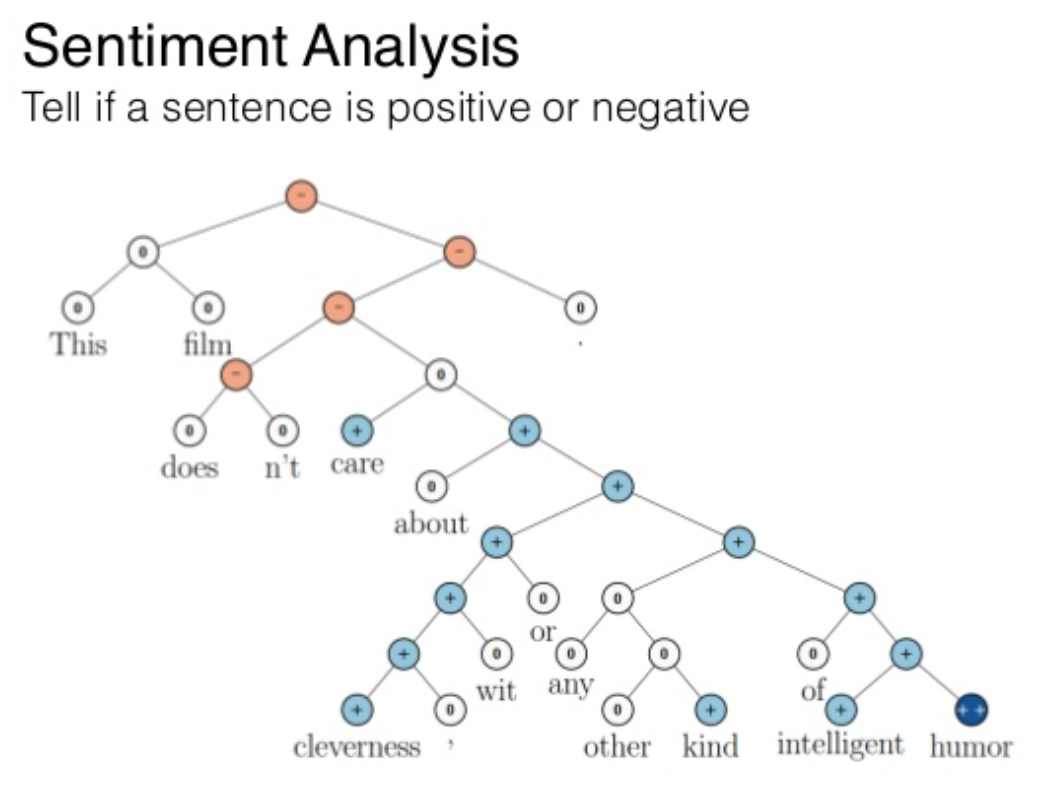
Figure 10-3. An example sentence diagram. Credit: Hacking Human Language (PyData London, slide 16).
How do these programs actually learn? They’re trained. Tools are becoming easier to use so that soon anyone will be able to slap together a pedantic “AI solution.” Even in unsupervised learning, you have some kind of goals. The hardest part of machine learning is supervising your algorithms: aiming for convergence, not divergence. Also, we must ensure we’re not converging on the wrong solution, which can be harder to tell. It’s almost as though if you don’t keep an eye your machines, they will spend half the day smoking in the bathroom instead of doing any actual work.
Ensemble algorithms work to combine different types of more basic algorithms into bigger building blocks for higher accuracy. There are even subtypes with pithy names like boosting and bagging. This culminates on a large scale into things like contextual audience targeting (i.e., Google display network), in which you choose topics based on keywords, and it can decide from those keywords how to target ads based on contextual clues and cutting-edge linguistics algorithms.
Just as an example, let’s talk about word vectors. The word2vec tool is a popular open source program based on a set of linguistic models. You can use it to process a corpus containing thousands (or millions) of natural language documents and it will try to learn the relationships among the words in the documents. It represents these as vectors, and can use vector math to do traditional SAT-like analogy problems. For instance, in one example the authors asked a word model, “As king is to man, what is to woman?” The answer was, of course, “Queen.” It was such a successful concept that it has given rise to corollary concepts such as paragraph vectors to compare meanings of paragraphs, document vectors, and even thought vectors. The latter is a concept championed by Geoffrey Hinton, the prominent deep-learning researcher for both the University of Toronto and Google. Google is using vectors based on natural language to improve its search results.
Ethical Data Science
What will we SEOs do in the future? We will all be aspiring data scientists or actual data scientists with statistical and database-modeling experience. What responsibilities will data scientists have in the future? Responsibility isn’t only up to data scientists, but also anyone handling analytics for organizations. Controlling data for an organization often means you’re controlling finances as well; this is a great responsibility.
There are often accidental biases in the data. In my favorite slightly apocryphal tale of ML lore, researchers were tasked with training a model to determine whether a picture was a dog or a wolf. They started with the test data, used proper techniques, prepared their model, then set it off to train. It’s not unusual in research settings to train jobs for durations of many days or even weeks. As such, the researchers were glad to discover that their model seemed able to predict the difference with almost 100% accuracy. Their hopes were dashed when it was discovered that the machines had learned from the many pictures they had seen: wolves tended to have snowy backgrounds, whereas dogs did not. They had accidentally trained a machine to recognize a white background. While that may be a funny story, the implications of this are definitely serious and should not be taken lightly.
More evidence continues to accumulate that models are being deployed with weaknesses in areas such as discrimination in hiring practices, or even police work. Even if the individuals running the program aren’t shady, the data might be. The program will mirror the likenesses of the implicit biases it receives. Another example could be a prediction model trying to anticipate which customers will buy a toy so that we can best market to them. This might result in marketing computers or other science toys to only boys. Not only would this be a tragedy for young women, but also a catastrophic market failure (missing 50% of your potential customers). Fortunately, you can combat bias by being aware of it and always knowing your model and data.
What is the opposite of creep? It’s not cool, it’s empathy. Some might even say it is empathy bordering on respect. Empathy and respect for what, you might ask. The answer is your users (not just clients), as well as the safety of your data and the individuals it belongs to. When it comes down to it, the data points are all people, just like yourself. Your data might not seem imperatively significant, but big data is made up of all kinds of “little data” that you might be very concerned to see out-and-about in the world. Data might include social security numbers, medical records, credit information, and purchase habits. Sometimes the information can be assembled and correlated to produce a much larger story. It might not even take an AI to reverse-engineer this information out. As such, always consider the privacy of your sources.
Not only is it rude to gossip, but it may potentially become illegal to let information escape in untold ways. Laws cover this differently in different geographical areas. Know your local regulations. Are you worried about adjusting the data to fit your own conclusions? Here’s what to do:
1. Use proper sampling techniques.
2. In a machine learning model, split your test and data sets to make sure there aren’t any unknown correlations.
3. Correlation does not imply causation.
4. Practice responsible reduction of dimensionality.
Don’t just throw your hands up and say it’s too complex. Map it out. A good data practitioner will always understand their own models.
RANDOM FUTURE THOUGHTS
As a Futurist, certain trends seem inevitable to me. Here are a few random future thoughts of how we can expect search technology to shape our lives in the near term.
· Cars will have cognitive and search capabilities, spanning far beyond GPS.
· VR adoption will be massive, but it could take a while to get over creep factors.
· AI is always going to freak out certain people.
· Moore’s Law will be further gamed.
· Machine learning will get less human-dependent, but never all the way.
A Moonshot
SEO and growth hacking have converged, if ever they were that far apart. Data science looms in the background, coming closer. Despite a data modeling background, it’s not exactly data science to perform SEO, but it’s close. I’ve taken to calling myself a “growth scientist,” because of the constant experimentation and general practice of scientific methods in the SEO field of business. The tactics have spread far and wide across a multitude of practice areas. Emerging platforms have created a climate where development is not always necessary. The great division in our search practice will continue to widen between the technical and nontechnical SEOs. It’s the Wild, Wild West! This is an exciting time to fight for search dominance (or any web attention at all).
Social media is not a natural part of the SEO environment, but given that the user experience is changing, search engines have started to favor popular social media updates in the top sections of SERPs. Also, partnerships have been forged and money exchanged. SEOs must mind the relationships of the big search fish. Meanwhile, social media has heralded the introduction of social commerce, a spicy enterprise indeed! Forbes’ Baldwin Cunningham espouses the effect that social commerce has on marketing and sales and driving the two together. I have seen cases where social media has almost entirely eliminated the need for a standalone website. If this trend continues, it will begin changing the entire focus of an SEO strategy onto social media alone. He also points out that 59% of all online retail browsing is done on mobile, which is responsible for 15% of ecommerce sales. Such a low percentage of sales indicates that there is a significant amount of opportunity to drive sales, which is the ultimate purpose of a growth marketer.
Square and other mobile payment services seek to change the mobile payment conversion numbers. Retailers only seek to win from more agile payment systems. Many small retailers can sell wherever they are. About a decade ago, pop-up stores became a popular thing. Now, mobile technology makes it even easier. Kiosks could make a cogent difference in local SEO.
Experiences will continue to be personalized and optimized. There will be a service for everything and everything in a service, because mobile allows for it. Sprig brings healthy gourmet to your house on-demand as easily as pizza; Freshly does fresh food delivery weekly. Rinse (formerly Washio) picks up your dirty clothes and washes and mends them on-demand; Lugg moves your stuff on-demand. R. Buckminster Fuller’s dream of a shared space utopia has started to happen, quite literally. Airbnb, Homeaway, and other services are making unused space used. You can now optimize for search and conversions for guests of your own micro-hotel (guest room). Appearance in the search panopticon matters. Reviews are life or death now and a phonebook is a distant dream of the past.
The types of content we create as marketers should steer away from clickbait, and propaganda (i.e., the things that make the web industry weak). Promoting garbage helps nobody. What influences us negatively in our online experiences also leads us to silo ourselves online. When we narrow our focus of attention, we get weak informationally. I’ve said a myriad of times in this book to diversify. The problem with silos is that they will eventually become information-less tombs. Adam Scott, developer and educator for the Consumer Financial Protection Bureau, discusses the concept of how technology can enable us but also simultaneously leave people behind.
Adam Scott’s four ethical core principles are:
· Web applications should work for everyone.
· Web applications should work everywhere.
· Web applications should respect a user’s privacy and security.
· Web developers should be considerate of their peers.
Huzzah! I love these concepts, which hold true for search efficacy. The future of our data integrity depends on the practice of responsible data management and analysis. Big networks that hold too much power have the ability to influence the world negatively. By remembering the concept of accessibility on every level of what we do, we can find a way towards common ground.
It’s possible that one day pricing models for ads will adapt to what’s happening in reality as a different means to determine renumeration for display ads. There could be multiple payouts spread across advertisers. The ad industry might just standardize like shipping containers did in the 1960s. How will it work when cars have search? Self-driving cars? Will fast-food places throw in a few pennies every time you let the car take you through the drive-through?
Our relationship is changing on every level, from data to platforms. The SEOs who do not abandon less linear ideals will perish.
It’s always time to question what has become standard and established.
David Bowie
SEO as a term feels like it may have come and gone; maybe growth hacking has too. Whatever we decide to call what we’re doing, it’s clear that search is not a fad: it is actually a science. Science! Search is more methodical today than ever and it has become deeper over the years. We’re knee-deep in data, so as practitioners we get to question everything because we can measure it and prove the things we want to prove. Data scientist doesn’t necessarily feel right as a title for what we do because they’re expected to have a thorough background in statistics, not just data modeling alone. Marketing will only keep moving towards the technical so it’s time we use a new term: growth science.
Scientists are merely humans who come from a variety of backgrounds to practice the scientific method out in the field. We should aspire to transcend into growth science. Wikipedia defines the scientific method as “a body of techniques for investigating phenomena, acquiring new knowledge, or correcting and integrating previous knowledge.” SEO is a continuous go-round of investigation, experimentation, and information gathering. If we boil it all down, search is the evolving door to change. It’s how we get there when we’re lost.
In terms of SEO, ASO, and general search engine efficacy, the commonality is they seek to measure and/or create growth. This is the niche for those of us who are emerging as growth scientists. She (or he) strives above all to seek new methods, not magic, to bring new insights into the data. What does a growth scientist practice? It’s Scientific Search Optimization (SSO), which has some defined parameters:
Hypothesis
Study data and form conclusions. Take guesses for what you think might be happening and posit a theory.
Methodical
The method to determine the results was determined beforehand, based on the hypothesis. For example: adding additional schema to the pictures on my homepage will draw more organic search traffic.
Provable
The results are validated, given the inputs.
Reproducible
If the test was re-run the conclusions would be the same.
Growth scientists should also embrace open standards. As data sets become larger and toolsets become more integrated, open standards and open source software are important to maintain transparency. Freedom for independent toolset integrations can help prevent vendor lock-in. This all suggests a future path for the discipline of SEO: it’s SSO.
Just as with science in any other field of expertise, only public experiments contribute to a collective body of knowledge, and improvement to the growth discipline. To truly earn the title of growth scientists, we must also grow into a community of fellow practitioners who share our results, discuss our latest experiments, and peer review our results.
Magic is not a method, hope is not a strategy.